Analysis Of Jet Propulsion System To Increase Its Efficiency By Using
Solar Panal On Their Wings
– A Review
Ashish Wankhede1, Prof. Ritesh Banpurkar2
1
PG Student of Mechanical Engineering Department,
2
Head of Mechanical Engineering Department,
1,2
Abha Gaikwad-Patil College of Engineering,
1,2
Rashtrasant Tukdoji Maharaj Nagpur University, Nagpur.
1
2
Abstract
This paper presents a review on which the main objective is to use of solar energy inside cockpit. With ever increasing demand for aviation fuel to power our aero-planes and its steep rising costs the time has come for us to find a more cost effective, efficient and eco-friendly way to power our aircrafts, thus solar powered aircrafts came into existence. The planes have photo-voltaic cells on their wings which gather solar energy thereby recharging the batteries that powers its propellers.
Generally domain Aircraft uses
conventional fuel. These fuel having limited life, high cost and pollutant. Also nowadays price of petrol and other fuels are going to be higher, because of scarcity of those fuels. So there is great demand of use of
non-exhaustible unlimited source of energy like solar energy. Solar aircraft is one of the ways to utilize solar energy. Solar aircraft uses solar panel to collect the solar radiation for immediate use but it also store the remaining part for the night flight In future solar powered airplanes could be used for different types of aerial monitoring and unmanned flights. This pre-synopsis briefly shows history, application and use of solar aircraft. We are focusing on analysis of efficient solar aircraft. We also modify the handling and stability characteristics. The viscous drag on the wing can be too big, nullifying the reduction of the induced drag. Wings have to be carefully designed so that these and other problems can be overcome.
INTRODUCTION
Lift is the force that directly opposes the weight of an aircraft and holds the aircraft in the air. It is generated by every part of the aircraft, but most of the lift is generated by the wings. This force acts through the centre of pressure of the object and is directed perpendicular to the flow direction. The flow turning theory is used to demonstrate airflow about the airfoil generating lift. Due to the airfoil geometry, the viscosity of an airflow and the effect
different angle of attack, then calculate the lift coefficient and the drag coefficient which are summarized in a graph. We compare our results with other existing results. However, we still observed the same pattern of curve. For the plane we used in this experiment, the plane DC-3, its centre of mass is in front of the focus, as shown on the left figure beneath. In the wind condition, when the angle of attack increases, it is easy to see that the pitch down moment increases as well, and the plane is able to reverse into the previous state. Also, in relative to the centre of mass, the moment of the wing’s lift force and that of the empennage’s force cancel each other, so that the plane achieves a balance even in windy condition. Energy comes in different forms. Light is a form of energy Sunshine is free and never gets used up. Also, there is a lot of it. The dream of flight powered only by the sun’s energy or sunlight has long motivated scientists and hobbyists. A solar aircraft is one which collects energy from the sun by means of photovoltaic solar cells. The energy may be used to drive electric motor to power the aircraft. Such airplanes store excess solar energy in batteries for night use. Also there are rapidly increasing traffic problems in world and in our country also, so it is required to go for such small solar aircrafts which can be used for transporting goods or materials between places at short distance.
1.Nguyen Minh Triet on “Aerodynamic Analysis of Aircraft Wing”, Vietnam Journal on Aeronautical Engineering Vol. 31, No. 2 (2015)
This paper deal with Experimental or numerical simulation that can be used to analyze these computational models. This paper presents the modelling and simulating processes of computational fluid dynamic (CFD) problem on a aircraft wing model, using typical section as model of NACA 2412. This wing model might be chosen in the future experimental design. ANSYS is used to analyze the pressure and velocity distribution on the surface of wing. The lift and drag forces are also determined by ANSYS Structural.. The numerical results shown are compatible with those of the theory, thus suggesting a reliable alternative to predict the aerodynamic characteristics of the tested wing model in fabricating the Unmanned Aircraft Vehicles (UAVs). Aerodynamic problems in general are often difficult to solve by analytics analysis.
2. Alpesh Mehta, Shreekant Yadav, Kuldeep singh Solanki on “SOLAR AIRCRAFT: FUTURE NEED .” Vol.III Oct.-Dec(2015)
This paper intended to stimulate research on renewable energy sources for aviation. In future solar powered airplanes could be used for different types of aerial monitoring and unmanned flights. This review paper briefly shows history, application and use of solar aircraft. They are focusing on design
and fabrication of solar aircraft which is unmanned prototype. In this paper also described how effectively use the solar panel on wings so that Using solar panels there is more space due to escape of engines and turbines. Quite a few manned and unmanned solar aircraft have been developed and flown. The paper deals with the current state of art of empower the aviation industry with solar power and the shortcoming and the future aspect. The Autonomous Systems Lab of EPFL3 has developed with ESA program, an ultra-lightweight solar autonomous model airplane called Sky-Sailor. The main goal of this project is to research on navigation, control of the plane. The airplane will be capable of continuous flight over days and nights, which makes it suitable for a wide range of applications.
3. Andrew Klesh and Pierre Kabamba on
“SOLAR-POWERED UNMANNED
AERIAL VEHICLES:PERPETUAL
ENDURANCE” sept -(2007)
This paper presents the effects of The problem of quantifying a design requirement for perpetual endurance of solar-powered unmanned aerial vehicles (UAVs) is treated. The design requirement is formulated as a threshold of the Power Ratio, a non-dimensional number that characterizes the ability of an aircraft to fly while solar-powered. This so called Perpetuity Threshold is identified, derived and shown to be related to the duration of daylight and length of the solar day. A lower bound on the Perpetuity Threshold is given and comparisons are made of this
threshold between Earth and Mars. To illustrate the difference of requirements for perpetual flight between these two planets, specific aircraft examples are characterized with respect to perpetual flight and discussed. The purpose of this paper is to identify this requirement and show its applicability to solar-powered aircraft design.
4. Shubham patil & Pratik thakur
“SOLAR POWERED AIRCRAFT”,
March- (2016)
This paper discusses the sunlight that heats the Earth in an hour has more energy than the people of the world use in a year. A little device called a solar cell can make electricity right from sunlight. The dream of flight powered only by the sun’s energy or sunlight has long motivated scientists and hobbyists. A solar aircraft is one which collects energy from the sun by means of photovoltaic solar cells. The energy may be used to drive electric motor to power the aircraft. Such airplanes store excess solar energy in batteries for night use This paper discuss over details when a fault occurs in TCSC transmission line, TCSC presents very complicated impedance characteristic and exerts influence on distance relay. In ground faults, the complex changes of sequence currents exert influences on mho characteristic, reactance characteristic and directional characteristic and make protection region unstable. Longitude distance protection with overreaching setting value may be a solution to TCSC line’s protection, but it has difficulty in setting the relay on the
reverse directional line to avoid mis-operation.
5. Gaurav kumar & Shubham sapat on “Solar Powered UAV” feb -(2015)
ln this paper the results of the application of multifunctional photovoltaic cell for the absorption of high wavelength radiation. batteries cannot solve these problems due to the weight restrictions; weight is inversely proportional to the flight time of the UAV. With the implementation of solar cells on UAV, the UAV would be able to collect and store solar energy by the sun to be used for the flight, and thus does not require returning to recharge (R/R) requirements. Again efficiency would play a major role; all the electronic sub-systems must be lightweight
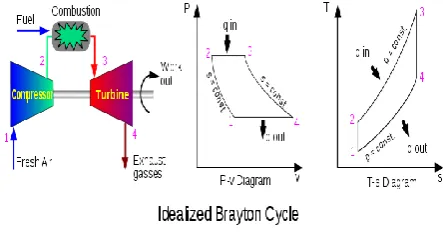
In order to investigate the applicability of proposed propulsion system. The term jet engine loosely refers to an Internal Combustion Air Breathing Jet Engine (a duct engine). These typically consist of an engine with a rotary (rotating) air compressor powered by a turbine ("Brayton cycle"), with the left over power providing thrust via a propelling nozzle. Our mainly focused on improvement of turbojet .It is a reaction engine. A turbojet engine works by compressing air with an inlet and a compressor, mixing fuel with the compressed air, burning the mixture in the combustor, and then passing the hot, high pressure air through a turbine and a nozzle Substantial increases in thrust can be obtained by employing an afterburner Used in planes.
Fig 2: View of the integration of the solar modules on the wing
OBJECTIVE
The objective of this dissertation is to implement propulsion method to decrease the lift of aircraft and will analyses the parameters of solar wings . The objectives are: To decrease the lift of aircraft.Use of re-newable energy to save fossil fuels and reduce aviation.There is no key involved in the solar process. Only sequence counter are used. The main purpose of this research is to improve and avoid the attack by using the aviation fuels. In this scheme we are going to light weight, compact and eco-friendly model in to given types and we provide the mininum lift & improved safety .Employ active cooling. Designing better materials and alloys which retain their strength at high temperature. Smart structures – Structure and material which change their shapes and properties in flight.
DESCRIPTION OF THE PROPOSED WORK
How does the propulsion system work?
Beneath the wings of the solar impulse plane are four gondolas, each containing a 10 HP motor, a lithium polymer battery set and a management system controlling charge/discharge and temperature.
What is the solar impulse aircraft made of?
must be able to carry a large number of passengers. Currently the solar impulse plane is able to carry only one pilot so the
plane requires some significant
modifications which will enable it to carry large number of passengers. Speed of the aircraft is also a very big problem while cruising around the world, since the speed of the solar impulse aircraft is less so it will be requiring a minimum of 20-25 days to fly around the world this means more food and drinking materials have to be loaded in the aircraft thereby further increasing the weight of the plane. So for this reason only the solar impulse team has decided to break the journey into five legs of two to three days each. While a tortoise-like pace saves energy, it introduces several problems. One is adverse yaw. When a plane banks into a turn, the aileron on the outside wing causes the wing to generate more lift than its counterpart on the inside wing. So now the solar impulse team has developed a special rudder which is modified specially for the solar impulse plane such that it can actually control the aircraft while turning even if the yaw effect is severe. The aircraft uses super-efficient solar cells and batteries to stay in the air after the Sun's rays had faded.. Currently the major constraint of the project is storing energy in the lithium polymer batteries.
For Analysis: CAD/CAM & ANSYS, Finite Element Analysis Method.
The solar impulse aircraft is the aircraft of the future being dependent on solar energy and creating no pollution or harm to the environment it is definitely the technology or invention we are looking forward as it has the capacity to bring a revolution in the world of air travel by making it cheaper and more effective. The aircraft has four 10hp motors and 11628 solar cells which charge the batteries during the daytime, the plane also has a highly advanced onboard computer which helps it to conserve maximum amount of energy possible and its state of the art auto pilot system which helps the pilots a lot while flying during night time.
The solar impulse team was also facing certain problems or challenges even while building the aircraft they had to make the aircraft as light as possible thus for this reason they had to remove all unwanted weights but they had to also keep in mind that they should build the aircraft with such a material which was lightweight and yet strong enough to withstand a turbulence, so they finally built the aircraft completely with carbon fiber. Cruising at a speed of 70km/h is also a challenge for the solar impulse team as the slow pace of the aircraft will pose several problems for it when it goes for its journey around the world specially the aircraft might face the yaw problem. In spite of so many challenges and hurdles faced by the solar impulse team they have overcome most of them and that’s why on the plane took off from Payerne, Switzerland at flew straight and landed on So we can say that the solar impulse aircraft is the aircraft of the future and soon in the years to come they will be
METHODOLOGY OF WORK
the planes which will fly in the sky carrying passengers around the world.
REFERENCE
[1]. P. Stella, D. Flood, ”Photovoltaic Options for Solar Electric Propulsion,” AIAA 1990
N. Colella, G. Wenneker, ”Pathfinder and theDevelopment of Solar Rechargeable Aircraft,”
[2]. Energy and Technology Review, 1994S. Brandt, F. Gilliam, ”Design Analysis Methodology for Solar-Powered Aircraft,”
Journal of Aircraft vol. 32, pp 703-709, 1995
[3]. K. Reinhardt, T. Lamp, J. Geis, A. Colozza,”Solar-Powered Unmanned Aerial Vehicles,”
IEEE, 1996
[4]. O. Trifu, G. Savu, ”Unmanned Solar-PoweredAerial Surveyor Configured with an Aerody-
namic Optimization Procedure,” AIAA, 1997
[5]. A. Colozza, D. Scheiman, D. Brinker,”GaAs/Ge Solar Powered Aircraft,” NASA/TM, 1998
[6]. K. Flittie, B. Curtin, ”Pathfinder Solar-Powered Aircraft Flight Performance,” AIAA
1998
[7]. P. Berry, ”The Sunriser - A Design Study in Solar Powered Flight,” AIAA, SAE, 2000C. Wilson, J. Nutbean, I Bond, ”Aerodynam-[22] A. Noth, W. Engel, R. Siegwart, ”Design of an
Ultra-Lightweight Autonomous Solar Airplane for Continuous Flight,” Autonomous Systems
Lab, EPFL, 2004
[8] C. Theodore, M. Tischler, J.
Colbourne,”Rapid Frequency-Domain
Modeling Methodsfor Unmanned Aerial Vehicle Flight Control
Applications,” Journal of Aircraft, 2004