CLEANING METHOD DEVELOPMENT MODELS AND VALIDATION FOR DIFFERENT
PHARMACEUTICAL FORMULATIONS BY USING LC/MS:
Subhashree
1Department of Physics, Dr M.G.R 2PEH R&D
A R T I C L E I N F O
INTRODUCTION
This article will review and describe various
regulation and guidelines which help to build a robust Cleaning Method development Models and Validation for different pharmaceutical Formulations by using the LC/MS.
Measuring cleanliness is the one of the major challenge faced by most of the Pharmaceutical industries in world. Setting strategies in developing the critical cleaning Model to measure the cleanliness is a difficult task especially in sterile environment equipment’s and instruments. Essentially, trace residues on surfaces are the target analyses like equipment, instruments and its subparts. The residue must first be extracted from a surface, recovered from the extraction medium, and then suitably quantitated. Residue analysis is quite different from analyzing bulk or formulated dru
as obtainable precisions and accuracies may be larger than the analyst is accustomed. The first decision to be made is the decision as to which residue will be measured. This residue could be the active drug, formulation excipients, or a component of the cleaner. (Kaiser et al, 1999)
International Journal of Current Advanced Research
ISSN: O: 2319-6475, ISSN: P: 2319-6505,
Available Online at www.journalijcar.org
Volume 7; Issue 12(B); December 2018
DOI: http://dx.doi.org/10.24327/ijcar.2018
Copyright©2018 Subhashree G R and Kamalraj R
which permits unrestricted use, distribution, and reproduction in any medium, provided the original work is properly cited.
Article History:
Received 4th September, 2018 Received in revised form 25th October, 2018
Accepted 18th November, 2018 Published online 28th December, 2018
Key words:
Cleaning Method development model, Swab, liquid chromatography-mass spectrometry
*Corresponding author: Kamalraj R
Department of Physics, Dr M.G.R Educational and Research Institute, Chennai, Tamilnadu, India
CLEANING METHOD DEVELOPMENT MODELS AND VALIDATION FOR DIFFERENT
PHARMACEUTICAL FORMULATIONS BY USING LC/MS: A REVIEW
Subhashree G R
1and Kamalraj R
2*
M.G.R Educational and Research Institute, Chennai, Tamilnadu, India PEH R&D, Pfizer INC, Chennai, Tamilnadu, India
A B S T R A C T
Cleaning Method developmental model and the validation is one of the primary analytical technique need in pharmaceutical industry to establish a positive
of confidence in the results. Since human safety depends on the residues remaining on the equipment which was identified and controlled based on the result of validated analytical cleaning model measurement. Quantitative determination of the residue traces such as the cleaner, primary ingredients, excipients, decomposition products, and preservatives using Liquid chromatography-mass spectrometry technique is the advance model used in the laboratories for the Quantitative and qualitative model
validation consists of two separate activities: the first is the development and validation of the cleaning procedure used to remove drug residues from manufacturing surfaces and the second involves the development and validation of methods for quantifying residuals from the surfaces of manufacturing equipment. This article reviews the most recent advances mathematical models could help in selecting the proper conditions to develop a selective and robust cleaning process and method, using liquid chromatography and Mass spectrometry for technical advancements in the field and also to helps in statistical understanding of the validation issues that generated a variety of interpretations to clarify and understand the practicality of using the current FDA guidance and industrial standards.
This article will review and describe various aspects of regulation and guidelines which help to build a robust Cleaning Method development Models and Validation for different pharmaceutical Formulations by using the LC/MS.
Measuring cleanliness is the one of the major challenge faced Pharmaceutical industries in world. Setting strategies in developing the critical cleaning Model to measure the cleanliness is a difficult task especially in sterile environment equipment’s and instruments. Essentially, trace target analyses like equipment, instruments and its subparts. The residue must first be extracted from a surface, recovered from the extraction medium, and then suitably quantitated. Residue analysis is quite different from analyzing bulk or formulated drug actives, as obtainable precisions and accuracies may be larger than the analyst is accustomed. The first decision to be made is the decision as to which residue will be measured. This residue could be the active drug, formulation excipients, or a
1999)
All pharmaceutical industries develop their own strategies to prove their measuring cleanliness in order to ensure the safety of their drug product. Analytical method development and validation of cleaning by LC/MS is the process by which the analytical scientist obtains the initial information to establish the limits and goals and the specification range finalization during the validation. Understanding the required parameter, strategic model, and finalized goal
successful analytical method validation
This review focusses on Cleaning Method development Models and Validation for different pharmaceutical Formulations by using the LC/MS, used for the quantitative determination of drugs in
monitoring in various Pharmaceutical formulation and API manufacturing industry (Herbertj
Regulations
A regulatory agency like FDA has taken the lead in requiring cleaning validation and in helping shape a cleaning validation program. Pharmaceutical companies have
cleaning, and cleaning has always been a part of Good Manufacturing Practices (GMPs). A review of the cGMPs (21 CFR Parts 210-211)shows many statements that are related to the cleaning process.
International Journal of Current Advanced Research
6505, Impact Factor: 6.614
www.journalijcar.org
2018; Page No. 16476-16482
//dx.doi.org/10.24327/ijcar.2018.16482.3047
G R and Kamalraj R. This is an open access article distributed under the Creative Commons Attribution License, n, and reproduction in any medium, provided the original work is properly cited.
Educational and Research
CLEANING METHOD DEVELOPMENT MODELS AND VALIDATION FOR DIFFERENT
A REVIEW
Chennai, Tamilnadu, India
Cleaning Method developmental model and the validation is one of the primary analytical technique need in pharmaceutical industry to establish a positive cleaning and high degree of confidence in the results. Since human safety depends on the residues remaining on the equipment which was identified and controlled based on the result of validated analytical tion of the residue traces such as the cleaner, primary ingredients, excipients, decomposition products, and preservatives using mass spectrometry technique is the advance model used in the ative model for cleaning analysis. Cleaning validation consists of two separate activities: the first is the development and validation of the cleaning procedure used to remove drug residues from manufacturing surfaces and the nt and validation of methods for quantifying residuals from the surfaces of manufacturing equipment. This article reviews the most recent advances mathematical models could help in selecting the proper conditions to develop a selective process and method, using liquid chromatography and Mass spectrometry for technical advancements in the field and also to helps in statistical understanding of the validation issues that generated a variety of interpretations to clarify practicality of using the current FDA guidance and industrial standards.
All pharmaceutical industries develop their own strategies to prove their measuring cleanliness in order to ensure the safety of their drug product. Analytical method development and /MS is the process by which the analytical scientist obtains the initial information to establish the limits and goals and the specification range finalization during the validation. Understanding the required parameter, strategic model, and finalized goal is a major requirement for successful analytical method validation
This review focusses on Cleaning Method development Models and Validation for different pharmaceutical Formulations by using the LC/MS, used for the quantitative therapeutic drug impurities monitoring in various Pharmaceutical formulation and API
(Herbertj et al, 1999)
A regulatory agency like FDA has taken the lead in requiring cleaning validation and in helping shape a cleaning validation program. Pharmaceutical companies have always practiced cleaning, and cleaning has always been a part of Good s (GMPs). A review of the cGMPs (21 shows many statements that are related to
Review Article
211.42: Buildings shall be of suitable size, construction, and location to facilitate cleaning.
211.42(c)(10)(v): A system shall be maintained for cleaning and disinfecting the aseptic processing room and equipment to produce aseptic conditions.
211.56(a): Buildings shall be maintained in a clean and sanitary condition.
211.56(b): There shall be written procedures assigning responsibility for sanitation and describing in sufficient detail the cleaning schedules, methods, equipment, and materials to be used in cleaning.
211.56(c): There shall be written procedures for the use of cleaning and sanitizing agents.
211.63: Equipment shall be of the appropriate design for its cleaning.
211.67(a): Equipment and utensils shall be cleaned, maintained, and sanitized at appropriate intervals.
211.67(b): Written procedures shall be established and followed for the cleaning of equipment.
These procedures shall include assignment of responsibility for cleaning, maintenance of cleaning and sanitizing schedules, a sufficiently detailed description of methods used for cleaning (including disassembly as well as assembly, protection of clean equipment from recontamination, and inspection of equipment for cleanliness immediately before use).
211.94: Containers and closures shall be clean and where appropriate, sterilized and depyrogenated. Methods of cleaning, sterilizing, and depyrogenating shall be written and followed.
211.105(a): All processing lines and major equipment shall be properly identified to indicate their contents and when appropriate, the phase of processing.
211.111: Time limits for the completion of each phase of production shall be established.
211.113: Appropriate written procedures to prevent microbiological contamination shall be established and followed.
211.182: A written record of major equipment cleaning shall be included in equipment logs.
211.188: Records shall include documentation that each significant step in the manufacture was accomplished. Clearly, these GMPs require that cleaning SOPs (Standard Operating Procedures) be in place and the cleaning processes be documented. What is new is that certain cleaning processes must be validated.
The FDA had issued its Biotechnology Inspection Guide, which called for the "validation of cleaning procedures for the processing of equipment," and this was "especially critical for a multiproduct facility." It was in this guide that the FDA first stated that residue limits must be "practical, achievable, and verifiable". In July 1992, the Mid-Atlantic Region of the FDA published the Mid- Atlantic Region Inspection Guide: Cleaning Validation. This document covered equipment design, SOPs and documentation, analytical methods, sampling procedures, limits, and detergents. This document was revised in May 1993. Although it was not an official FDA guidance document, it stated that the Mid-Atlantic Region would use the document in its inspections.
In July 1993, the official guidance document, Guide to Inspections of Validation of Cleaning Processes, was issued. It followed the same major topics as the earlier Mid-Atlantic guide but included significant changes in wording as related to the various topics. The significant item is that the FDA clearly stated that cleaning processes should be validated and also gave specific guidance on expectations involving some elements of SOPs and validation protocols.
The next major regulatory step was the proposed revision of the GMPs in May 1996. These proposed amendments (Sec. 211.220) require that "the manufacturer shall validate all drug product manufacturing steps in the creation of the finished product including cleaning." This is significant for cleaning validation and it will be clearly written in the GMPs, if the amendments are approved. A note on the requirements of cleaning validation has been stated in “ICH Q7A, GMP for Pharmaceutical Active Ingredients”, in August 2001.
Validation of cleaning procedure is necessary for the following reasons
It is a customer requirement which ensures the safety and purity of the product.
It is a regulatory requirement in API product manufacture.
It also assures from an internal control and compliance point of view the quality of the process.
Identification of potential problems that would alter safety, identity, strength, quality or purity of the drug.
Analysis of low quantities of drug, trying to get a high peak in a short time
Cleaning Procedures
Cleaning procedures can be classified into three categories.
Manual cleaning procedure
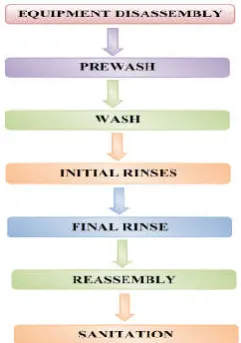
Figure 1 Flow chart for manual cleaning procedure.
1. Equipment disassembly – Equipment parts which come into contact with processed materials should be disassembled before cleaning.
2. Prewash – The objective is to remove all visible accumulation of residual materials. Generally potable water is used as solvent.
Sometimes, the equipment may require sequential use of acid and alkali.
4. Initial rinses – Performed to remove cleaning agent and residual material from previous batch. A series of rinses is effective here. Potable water is used for initial rinse and for subsequent rinses purified water, distilled water or water for injection should be used based on requirement.
5. Final rinse-It reduces the contamination to the defined level. Purified water or water for injection should be used depending on the use of equipment. 6. Reassembly – After cleaning, the disassembled parts
are dried and reassembled. Care should be taken to avoid recontamination.
7. Sanitization – Parts of the equipment which come into contact with medicaments should be sanitized. Sterilants used are live steam, isopropyl alcohol, hypochlorite solution etc.
Semi-Automatic Cleaning Procedure
The semi-automatic equipment has many features of fully automatic equipment but these require more intensive operator’s intervention. Eg. Portable clean-in-place systems and dishwasher type equipment
Portable clean-in-place equipment
Portable clean-in-place equipment usually is tank and pump assemblies on wheels. These are moved near the equipment to be cleaned. The sequence of the operation of this equipment may be controlled by operator or machine. These are generally used for cleaning of closed vessels. E.g. Blenders, tanks etc.
Dishwasher type equipment
Dishwasher type equipment is stationary equipment with hard plumbed utilities. Its operation is automatic but requires loading and unloading of cleaning agent solution, rinse solvent etc manually. Detergents required may be stored in a separate tank and supply may be provided at the time of operation. This equipment can be used to clean containers. E.g. Drums, transport trays, glass wares etc
Fully Automatic Cleaning Procedure
These are clean-in-place systems. These are designed to clean stationary large equipment. The steps involved often are same as in case of manual cleaning procedures. However, the operations are controlled automatically. These procedures have distinct advantage of improved reproducibility. The involvement of operator is reduced. Chances of inspection by the operator are also reduced
Frequency of Cleaning
In the processing of materials, there are different situations. Frequency of cleaning will depend on the situation. These situations can be classified as:
Cleaning between the batches of the same product.
Cleaning between batches of different products.
Cleaning after maintenance.
Cleaning after accidental contamination.
Cleaning Mechanism (Destin et al, 2000)
Cleaning involves removing an unwanted substance from the equipment to be cleaned. The chemistry of cleaning includes several mechanisms that serve to remove or assist in removing
the contaminants from the equipment surfaces. Cleaning mechanisms can assist in the selection of the proper cleaning agent; more importantly, it can assist in the proper design of the overall cleaning process. It includes the following.
Figure 2 Flow chart for Cleaning Mechanism
Solubility
Solubility involves the dissolution of all chemical species in the selected solvent (water or an organic solvent).
Solubilization
Solubilization involves an additive to the pure solvent to render the residuesoluble. Generally if the solvent is water, it involves the addition of a surfactant, a pH modifier, or a water-miscible organic solvent to solubilize the residue
Emulsification
For cleaning purposes, emulsification is the process of "breaking up" an insoluble liquid residue into smaller droplets and then suspending those droplets throughout the water. The breaking up process is usually accomplished by applying mechanical energy to the system. Mechanical energy is supplied in the form of agitation or turbulence. The emulsion is usually stabilized by the addition of surfactants or polymers.
Dispersion
Dispersion involves the wetting and deaggregation of solid particles and then the subsequent suspension of those particles in water.
Wetting
Wetting involves the displacement of one fluid (in most cases air) from a solid surface by another fluid (the cleaning solution). Wetting by water is improved by the addition of surfactants to lower the surface tension.
Hydrolysis
Hydrolysis involves the cleavage of certain bonds in an organic molecule. This cleavage usually involves esters or amides. It should be noted that hydrolysis by itself is not enough; the resultant hydrolyzed residues must either be water soluble or solubilized at the pH of the cleaning solution. It is entirely possible that esters may hydrolyze, but the resultant fragments may not be adequately water soluble for effective cleaning.
Oxidation
cleaning situation include species such as sodium hypochlorite, hydrogen peroxide and peracetic acid. The oxidants may cleave organic molecules at various linkages in the larger molecule. The rationale for this being a cleaning mechanism is that such oxidation will result in smaller molecules and in molecules that are more polar, both of which will tend to increase the water solubility of the degraded components.
Physical Cleaning
The mechanism involved is physical removal by using some mechanical force. This may be hand scrubbing during a manual cleaning operation or cleaning manually with a high pressure water spray. In both of these cases, the objective is to physically dislodge the residue, where it is then carried away from the surface by the high pressure water stream or by the scrubbing action. In such cases, the cleaning may be assisted by use of a surfactant in the cleaning solution to assist in the wetting of the residue. A related form of physical cleaning is the mechanical action due to a moving stream of water (or solvent).
LC/MS Cleaning Method Development (Kamal, 2012)
In early stages of drug development, it is usually not necessary to perform all of the various validation studies. Many researchers focus on specificity, linearity and precision studies for drugs in preclinical through Phase II (preliminary efficacy) stages. The remaining studies penetrating validationare performed during the Phase II (efficacy) stage of development of a drug and have a higher probability of becoming marketed product. But now, for pharmaceutical methods, guidelines from the United States pharmacopoeia (USP), International Conference on Harmonization (ICH) and Food and Drug Administration (FDA) provide a framework for regulatory submission must include study on such fundamental parameters. The theoretical models may help to investigate the robustness of the method by evaluating the variation in the predicted response when varying the analytical conditions. Finally, the models could be used for trouble shooting purposes or for the transfer of work to another person. In this paper, a selection from the enormous number of publications was taken to provide the reader with the necessary equations and algorithms to describe the most often used is HPLC, but in this review attempt made to elaborate the method to evaluate with the cleaning sample using the LCMS using liquid–liquid extraction and solid phase extraction.
Cleaning Sample Preparation and Methods of Evaluation
Based on physical access to surfaces and parts of equipment to be cleaned choice of method was done. Commonly used methods are:
Figure 3 Flow chart for method of evaluation for cleaning sample preparation
Swab Samples (Sharma, 2000)
It is the direct surface sampling technique. After cleaning the equipment, product contact surfaces are swabbed to evaluate cleanliness of the surface. It must be ensured that swabs:
Compatible with actives.
Should not cause degradation of the compound.
Allow extraction of compound absorbed.
The solvent used for the swabs should be such that it provides good solubility of the compound processed in the equipment. Sampling with swabs should be done after final rinse when the equipment is ready for use. In some cases, it may be desirable to swab the entire product contact surface. Usually a known surface area is swabbed. From this, the total amount of actives present in the equipment can be extrapolated. Difficult to clean areas should be chosen for sampling. Swabs should be changed frequently to avoid saturation or physical disintegration of swab. Between sampling and storage of swabs, care should be taken so that these are not contaminated and/or residuals do not degrade. One way is to immerse swabs in a container of solvent immediately after sampling and to transport the container to the quality control laboratory. Alternatively the swabs could be dried carefully and stored before analysis.
Advantages of swab samples
Most complete extractions are possible with this method.
The method is inexpensive.
Appropriate methodology for testing can be developed by use of appropriate solvent.
The method allows direct sampling of surface and allows the use of solvent which could not be used in bulk to rinse the equipment.
Disadvantages of swab samples
Most solvents keep on evaporating which may influence the results.
There may be wide variation in results. It has been attributed to the subjectivity in selecting the site for swabbing.
In case of many equipments, it may not be possible to swab the contact surface.
Swab testing does not simulate the production of subsequent batch in the equipment.
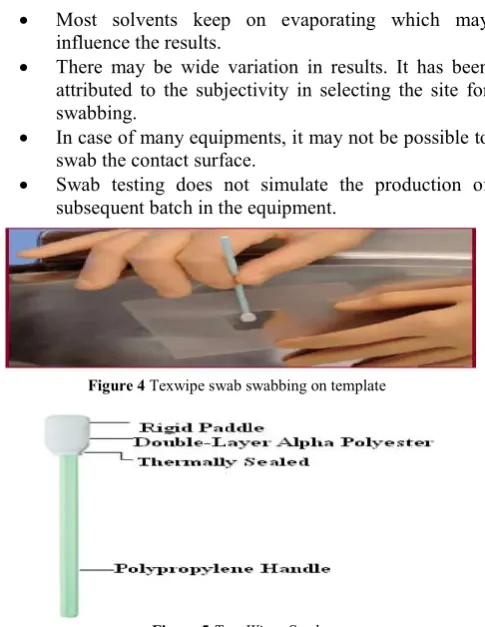
Figure 4 Texwipe swab swabbing on template
Figure 5 Text Wipes Swab
It is indirect sampling technique. It is based on analysis of solutions used for rinsing the equipment. It allows sampling of a large surface area and of inaccessible systems or that cannot be routinely disassembled. This method is used for tanks, blenders, filter housings, liquid circulation systems etc. It is most commonly used for evaluation of cleanliness. In the rinse samples, volume of rinse solvent is important.
Advantages of rinse samples
It provides data for the entire product contact surface.
If the actives have good solubility and sufficient time is given for contact, complete extraction of the compounds is possible.
When sampling is executed properly, variation in assay due to poor sampling techniques is not there.
Disadvantages of rinse samples
When solvents other than water are used, the solvents may have potential of corrosion or the cost of recovery may be prohibitive.
It is less suitable for equipment’s like fluid bed dryers, granulators etc.
If solubility of the actives under study is poor, all the advantages of this method are lost.
This method does not simulate the actual production conditions of subsequent batch in the equipment.
Placebo Samples
Factors in selection of suitable placebo formulation include:
Placebo manufacturability.
Solubility of the compound under study.
Simulation of actual production conditions.
For liquid preparations, water is used. If the preparation is non-sterile, purified water is used, and if the preparation is non-sterile, water for injection is used. If solubility of actives is poor, other liquids like glycols can be used. In case of solid dosage forms, solubility is not important as the extraction of the residuals is achieved through abrasion and physical entrapment. If the testing of final sample reveals results beyond accepted criteria, other samples would be tested to find out the source of contamination and to take corrective action.
Advantages of placebo samples
This method provides more accurate simulation of the process of subsequent production of the batch.
When used with equipment train approach, it permits assessment of cumulative processing steps on residuals.
This method reduces the number of samples for testing.
This is the only method which can be applied to any equipment.
Disadvantages of placebo samples
Full scale placebo studies may be expensive as the resulting material is discarded
Optimisation of Swabbing Solvent
The swabbing solvent is selected based on the solubility of the drug substance, peak shape of analyte, good baseline and high
recovery values. Swabbing solvent should not produce any interference peaks at the retention time of analyte peak.
Recovery of Swabbing
The recovery of the drug is carried out using a Texwipe swab moistened with swabbing solvent on different plates like SS, Glass, PVC, Derlin, Silicone and Teflon. It helps to evaluate possible residual drug after removing from surfaces of pharmaceutical manufacture areas. Each plate was previously cleaned with methanol and then with water. The plates were spiked with 1mL of standard and sample solutions. The plates were left to dry and the drug residues were removed by wiping the surface with the Texwipe swab in a way that assures that the entire plate was thoroughly cleaned (horizontally, vertically, diagonally and back and forth). The recovery on different plates of 10×10cm2 was determined
Selection of the Sampling for Cleaning Sample
Some of the aspects to be considered while selecting a sampling procedure are
The design of the production equipment.
The solubility of the residue to be detected.
Suitable analytical methods available.
Design of the production equipment
For open systems with easily accessible critical points - following disassembly of the equipment if necessary - it is preferable to use the swab test.
For closed systems which do not allow direct surface sampling using the swab test, it is preferable to use the rinse test.
Solubility of the residue to be detected
For detection of water soluble substances a rinse test using water as a solvent is particularly suitable.
For detection of water insoluble substances the swab test is mostly recommended using an organic solvent to moisten the sampling material.
Cellulose, cotton wool and filter paper can be moistened with water. In case of water insoluble materials present, water-alcohol mixtures are preferred.
When carrying out swab tests, the samples must be prepared before the quantitative analytical determination can be carried out. This test offers a high degree of flexibility with regard to subsequent analysis during the extraction of the sampling material and subsequent sample preparation, requirements for the analysis to be conducted can be taken into account.
When a rinse test is carried out, a sample solution is already available, which canideally be analyzed directly.
Setting of optimum parameters for sampling, sampling preparation and analysis must take place as a part of the development The parameters which were evaluated during the development of cleaning method are as follows:-
Selection of Diluent
of the solution in the solvent, it’s possible interference etc. Solubility of the drug substance is an important criterion in selecting a swabbing solvent for residue estimation. In general a solvent in which the drug substance is soluble easily atleast about 1mg/mL is selected. However, if it is not possible, a solvent (for swabbing) in which solubility of drug substance is atleast10 times the acceptance limit is selected. Generally the solvents selected for residue estimation are ethanol, methanol, purified water, isopropyl alcohol or their combination. Selection of solvent was done in which there was no blank interference and the peak symmetry for analytepeak was found to be satisfactory.
Selection of Column
Selection of column was done by using different columns to achieve best separation of analyte peak.
Optimisation of Column Temperature
It is always preferable to optimize the chromatographic conditions with column temperature as ambient. However, if the peak symmetry could not be achieved by any combination of column and mobile phase, then the column temperature above ambient can be adopted.
Optimisation of Mobile Phase
Selection of mobile phase composition was done based on optimum retention time, good peak symmetry, least back pressure and better separation of blank from analyte peak.
Selection of Flow Rate
Selection of flow rate was done based on optimum retention time, good peak symmetry, least back pressure and better separation of blank from analyte peak.
Selection of Injection Volume
Injection volume was selected in such a way that achieves optimum response, good peak shape of the analyte peak and no interference due to non-active compounds.
Selection of Swab
The swab selected for residue analysis should not show any peak at the retention time of analyte peak. Non-interference of swabs was established by preparing the swab blank in duplicate by following the below procedure.
Swab interference
10ml of swabbing solvent was transferred to a cleaned test tube. A cleaned swab was placed into the test tube and sonicated for 10min. The swab was squeezed and taken out; the solution was filtered through 0.45μm membrane filter. This swab blank preparation should not show any peak at the retention time of analyte peak.
Negative control
10mL / 5mL of swabbing solvent was transferred into a cleaned test tube. A cleaned swab was placed into the test tube.1mL of swabbing solvent was spiked on each of 10×10cm2 surface (SS, Silicone, PVC, Teflon, Derlin, Glass etc) dispersing evenly. The surface was dried (or dried with dryer) and swabbing was performed. The swabbing should be done as per the Figure No: 6 - Swabbing directions and motions. The swab samples were collected into above test tube containing 10mL / 5mL of swabbing solvent and sonicated the solution for 10min.The solution was filtered through 0.45μm
membrane filter. This blank preparation should not show any peak at the retention time of analyte peak If the swabbing was performed in 5mL of swabbing solvent, finally the volume should be diluted to 10mL with the suitable diluent.
Figure 6 Swabbing directions and motions
Validation Parameter for the LC/MS
There is a general agreement that at least the following parameters should be evaluated for quantitative procedures.
Selectivity: Selectivity is defined as, “the ability of an
analytical method to differentiate and quantify the analyte in the presence of other components in the sample. The definition of selectivity is quite similar to the definition of specificity “the ability to assess unequivocally the analyte in the presence of components which might be expected to be present. Selectivity is evaluated by injecting extracted blank swap and comparing with the response of extracted LLOQ samples processed with internal standard. There should be no endogenous peak present within 10% window of the retention time of analyte and an internal standard. If any peak is present at the retention time of analyte, its response should be d” 20% of response of an extracted Lower calibration standard i.e. LLOQ standard.
Sensitivity: Sensitivity is measured using Lower Limit of
Quantification (LLOQ) is the lowest concentration of the standard curve that can be measured with acceptable accuracy and precision. The LLOQ should be established using at least five samples independent of standards and determining the coefficient of variation and appropriate confidence interval. The LLOQ should serve the lowest concentration on the standard curve and should not be confused with limit of detection and low QC sample. The highest standard will define the upper limit of quantification (ULOQ) of an analytical method.
Accuracy: Accuracy of an analytical method describes the
closeness of mean test results obtained by the method to the true value (concentration) of the analyte. This is sometimes termed as trueness. The two most commonly used ways to determine the accuracy or method bias of an analytical method, are (i) analysing control samples spiked with analyte and (ii) by comparison of the analytical method with a reference method
System suitability: Standard solution was prepared and six
replicate injections of standard solution were injected into the LC/MS system. The system suitability parameters were evaluated.
System precision: Standard solution was prepared and ten
replicate injections of standard solution were injected into HPLC system. The relative standard deviation of peak area was calculated.
Specificity
Swab interference: The swab interference of the residue
surface area and the swab samples were collected into 10mL of swabbing solvent with gentle stirring. The liquid absorbed by the swabs is then squeezed out against the sides of the test tubes. The above procedure was repeated for one more time. In the same manner the swab interference on Teflon plate 10×10 cm2, Silicone sheets 10×10 cm2, PVC sheets 10×10 cm2, Glass plates 10×10 cm2 and Derlinplates 10×10 cm2 was performed and the percentage interference was calculated against the standard solution.
Recovery: The recovery from the surfaces was studied by
preparing the sample stock solution using sample at concentrations to 50%, 100% and 150% spike levels. 1ml of 50% sample stock solution was spiked over a 10×10 cm2 SS-316 plate and dried. After drying, swab the surface area and the swab samples were collected into 10mL of swabbing solvent with gentle stirring and sonicated for 5min. The liquid absorbed by the swabs is then squeezed against the sides of the test tubes. The above procedure was repeated on one more plate of SS-316.In the same manner the recovery study was performed for 100% and150% sample stock solution. The above entire procedure was repeated on Teflonplate 10×10 cm2, Silicone sheets 10×10 cm2, PVC sheets 10×10 cm2, Glass plates10×10 cm2 and Derlin plates 10×10 cm2.All the solutions were injected and the %recovery against the standard solution was calculated.
Ruggedness
Bench top stability of standard and test preparation: Standard
solution and two sample solutions were prepared by spiking the 100% sample stock solution on any one plate and dried. After drying, swab the surface area and the swab samples were collected into 10mL of swabbing solvent with gentle stirring and sonicated for 5min. The liquid absorbed by the swabs is then squeezed against the sides of the test tubes and analyzed. The standard and test preparations were kept on bench top. The assay of standard and test preparation was determined against a standard prepared freshly at initial and after 24 hrs.
Refrigerator stability of standard and test preparation:
Standard solution and two sample solutions were prepared by spiking the100% sample stock solution on any one plate and dried. After drying, swab the surface area and the swab samples were collected into 10mL of swabbing solvent with gentle stirring and sonicated for 5min. The liquid absorbed by the swabs is then squeezed against the sides of the test tubes and analyzed. The standard and test preparations were kept on refrigerator. The assay of standard and test preparation was determined against a standard prepared freshly at initial and after24 hrs.
Bench top stability of mobile phase: Bench top stability of
mobile phase was performed by injecting standard solution using same lot of mobile phase at initial, 1 day and 2 days.
Robustness: The effect of the filters on the sample
preparations was demonstrated by preparing the test solution in triplicate by spiking 100% sample stock solution on any one plate and dried.
After drying, swab the surface area and the swab samples were collected into 10mL of swabbing solvent with gentle stirring and sonicated for 5min. The liquid absorbed by the swabs is then squeezed against the sides of the test tubes. Each sample was divided into three portions. One portion of each sample was filtered with a 0.45μm PVDF filter and another portion with a 0.45μm Nylon filter. The third portion was centrifuged and all the test solutions were injected. The percentage recovery was calculated for centrifuged and filtered samples against unfiltered standard and compared the percentage recovery of filtered samples with the percentage recovery of centrifuged sample.
CONCLUSION
One of the major challenges facing the pharmaceutical industry today is finding new ways to increase productivity, decrease costs whilst still ultimately developing new therapies that enhance human health. To help address these challenges the utilization of analytical technologies Like developing method like LCMS and high throughput automated platforms has been employed; in order to perform more experiments in a shorter time frame with increased data quality. The validation of an analytical method is the last step in the process prior to implementation. The various parameters required in an analytical method validation are first explore during method development, and then rigorously defined during the method validation process. These parameters are dictated by various regulatory bodies around the world, and necessitated by the need to understand the process. The validation of analytical methods should not only be understood by the chemists who perform them, but also by the personnel involved in cleaning validation, as it is an integral part of the process. It is important that all personnel involved in a cleaning validation understand that changes in the overall process may affect the method and lead to the necessity for revalidation. Industry literature is full of information, resources, and examples that should be called upon and utilized.
Reference
Kaiser HJ, Tirey J F, LeBlanc DA. “Measurement of Organic and Inorganic Residues Recovered from Surfaces” Journal of Validation Technology 1999, 6(1), 424-436
HerbertjKaiser and bruceritts. Validation of Analytical Methods Used in Cleaning Validation. Analytical method validation.1999: Page no 15 -30.
Destin A. LeBlanc. Validated Cleaning Technologies for pharmaceutical manufacturing. Interpharm/CRC press; 2000. Chapter 1 and 2, Cleaning objectives and Cleaning and cleaning agents; p. 4-9 and 20-9
R.Kamalraj. Bioanalytical method development models and validation for drug and its metabolite by using LCMS/MS
Journal of Pharmacy Research. Vol.5 Issue 1.January 2012
Sharma PP. Validation in Pharmaceutical Industry – Concepts, Approaches and Guidelines. Vandana Publications Pvt Ltd, Delhi; Chapter 7, Cleaning Validation; 2000:p. 235-73.
How to cite this article:
Subhashree G R and Kamalraj R (2018) 'Cleaning Method Development Models and Validation for Different Pharmaceutical Formulations by Using LC/MS: A Review', International Journal of Current Advanced Research,
07(12), pp. 16476-16482. DOI: http://dx.doi.org/10.24327/ijcar.2018.16482.3047