Nanofabrication Technologies for Roll-to-Roll Processing
Report from the NIST-NNN Workshop
September 27-28, 2011
Nanofabrication Technologies for Roll-to-Roll Processing
Report from the NIST-NNN Workshop September 27-28, 2011
Edited by:
Dr. Jeffrey D. Morse, Managing Director, National Nanomanufacturing Network
Workshop organizing committee:
Dr. Christopher Soles, NIST
Prof. James Watkins, University of Massachusetts Amherst Dr. Jeffrey Morse, NNN
Dr. Thomas Wiggins, NIST Dr. Michael Schen, NIST
Workshop participants;
Ken Carter University of Massachusetts Amherst Paul Clark University of Massachusetts Amherst Rick Daniels Carestream Advanced Materials Xian Du Massachusetts Institute of Technology Jennifer Ernst Thin Film Electronics ASA
Gregg M. Gallatin National Institute of Standards and Technology Dan Gamota Printovate Technologies
Amit Goyal Oak Ridge National Laboratory Jay Guo University of Michigan
David Hardt Massachusetts Institute of Technology Michael Hunter Liquidia Technologies
James Kadtke National Nanotechnology Coordination Office Nikolaos Kehagias Catalan Institute of Nanotechnology
Hong-Yee Low Institute of Materials Research and Engineering Trevor Niblock Magzor Corporation
Joe Petrzelka Massachusetts Institute of Technology Mark Poliks State University of New York Binghamton Robert Praino Chasm Technologies
George Ranuik Carpe Diem Technologies Dennis Slafer MicroContinuum, Inc.
Chris Soles National Institute of Standards and Technology S.V. Sreenivasan University of Texas Austin/Molecular Imprints, Inc. Ganesh Sundaram Cambridge NanoTech, Inc.
James Watkins University of Massachusetts Amherst
Table of Contents
Executive Summary ... 3
Introduction ... 4
Potential Benefits of Nanofabrication Processes for Roll-to-Roll ... 4
Workshop on Nanofabrication Technologies for Roll-to-Roll Processing ... 5
Pre-Workshop Questionnaire ... 6
Workshop Organization and Format ... 6
Nanofabrication Technologies for Roll-to-Roll Processing ... 7
Industry Assessment: International Electronics Manufacturing Initiative (iNEMI) ... 7
Functional Inks for Active and Passive Devices ... 8
Substrates ... 8
Packaging/Barriers ... 9
Manufacturing Platforms and Processing Equipment ... 9
Testing and Quality Control Tools ... 9
Reliability ... 10
Key Challenges and Gaps... 10
Nanofabication Processes for R2R Platforms ... 10
Solution Casting of Functional Inks ... 10
Self-Assembly and Additive Driven Assembly ... 11
... 12
Nanoimprint Patterning ... 12
R2R Process and Device Integration ... 15
Emerging Tools, Capability, and Infrastructure for R2R Platforms ... 17
Emerging Processes and Tools for R2R ... 17
Atomic Layer Deposition ... 17
Potentiometric Stripping Analysis for Electroplated Alloys ... 18
High Temperature Roll-to-Roll Processes ... 18
Metrology and Inspection ... 19
Process Modeling and Control ... 21
Manufacturing Scale-up and Commercialization ... 21
Standards ... 22
Accelerating Technology Transfer and Advanced Manufacturing Scale-up ... 22
Pilot Line Facility/Manufacturing Hub ... 23
Associated Consortia Models (EU and Asia) ... 24
Summary of Key Challenges ... 24
Conclusions and Recommendations ... 25
Appendix A: Participant Response to Workshop Questionnaire ... 26
Appendix B: About the National Nanomanufacturing Network ... 29
Executive Summary
The roll-to-roll (R2R) platform is an industrial vetted way to handle solution-based processes and coatings for high volume manufacturing. R2R processes are implemented for applications as diverse as instant photographic film, separation membranes, filtration media, advance printing and holographic coatings, polymer anti-shatter films for car windshields, flexible solar panels, composite electrodes on metal foils for lithium-ion batteries, and macroscale patterning of metal interconnects for flexible packaging of electronic components. Currently, manufacturers are looking for new innovative continuous-feed processes for printing materials and structures onto roll-based flexible substrates. In particular there is considerable interest in adapting R2R technologies for the extreme miniaturization of critical feature sizes to the nanoscale. This intersection of nanofabrication with R2R processes has considerable potential to spur innovation and economic growth. Nanofabrication for R2R process platforms represents a disruptive manufacturing technology involving solution-processed, multi-layer precision coatings with functionalized nanostructures, materials, and patterning capability to realize unprecedented properties and functionalities for next generation consumer products. Commercial products and applications impacted by this approach include displays, lighting, energy storage, electronics, solar photovoltaics. These high-value consumer electronics predicted to see double-digit market growth beyond the next decade (IDTechEx 2009-2029 Market Report). Incorporation of emerging nanofabrication methods within R2R manufacturing processes will make it possible to economically generate high value-added technology products at meters-per-minute rates on plastic film, paper, or foil, achieving feature dimensions as small as ten nanometers over areas encompassing billions of identical devices. Meeting this challenge is a key to high-rate manufacturing of nano-enabled products and for establishing viable industrial-scale manufacturing platforms for continuous large-area roll-to-roll processing.
This workshop consisted of a group of 30 experts and stakeholders in the field of R2R processing convened by NIST and the National Nanomanufacturing Network (NNN) to discuss the state of nanofabrication in R2R processes, as well as to identify significant barriers to implementation of emerging process methods and materials. The workshop took place on September 27-28, 2011 at the Seaport Convention Center in Boston in conjunction with the Nanomanufacturing Summit 2011. The agenda included welcoming remarks followed by plenary talks on the nanotechnology roadmap for the International Electronics Manufacturing Initiative (iNEMI), and translational bottom-up nanomanufacturing methods for R2R, with the remainder of the agenda including talks covering a range of nanofabrication methods and topics relevant to R2R process platforms.The participants, representing tool vendors, contract manufacturers, materials suppliers, government, and academia, discussed present status and ongoing development of nanofabrication processes being scaled to R2R platforms. The group also addressed barriers to the commercialization of nanomaterials and nanmanufacturing approaches.
Introduction
Nanofabrication methods are essential elements in the field of nanomanufacturing, which remains the essential bridge between the discoveries of the nanosciences and real-world nanotechnology products. Advancing nanotechnology from the laboratory into high-volume production ultimately requires careful study of manufacturing system issues including product design, reliability and quality, process design and control, shop floor operations and supply chain management. Nanomanufacturing is the controllable manipulation of materials structures, components, devices, and systems at the nanoscale (1 to 100 nanometers) in one, two, and three dimensions for large-scale reproducibility of value-added components and devices. Nanofabrication methodologies encompass bottom-up directed assembly, top-down high-resolution processing, molecular systems engineering, and hierarchical integration with larger scale systems. As dimensional scales of materials and molecular systems approach the nanoscale, the conventional rules governing the behavior and properties of these components, devices, and systems change significantly. As such, the behavior of the final product is enabled by the collective performance of the nanoscale building blocks.
Roll-to-roll (R2R) processing is a broadly defined terminology encompassing a range of processes wherein a substrate is transferred between two moving rolls during which the processes are applied to the substrate. As such, the processes have both a time and spatial occurrence, requiring specific customization to achieve the desired process outcomes. Inherently, R2R processes require flexible substrates, which generally entail plastic or polymer materials, and in limited cases, can also include thin-form glass, metal, or ceramic substrates. Manufacturing processes possible in R2R platforms include the full range of additive and subtractive processes, including vacuum-, thermal-, and solution-based methods. Notwithstanding the range and types of processes possible on R2R platforms, the inherent advantage for many product applications requiring high-rate and low-cost is the economy of scale offered by solution-based processes. R2R manufacturing has transitioned from paper and textiles to advanced multi-layer coatings as exemplified by products from companies such as Polaroid and Kodak for imaging and film products and applications. More recently, new industries with applications in printed electronics have emerged. Initially, these have been in the area of semiconductor integrated circuit packaging and printed circuit board replacement, and are now being considered for a range of integrated device and system applications requiring higher levels of functionality and performance printed directly on the flexible substrate. The printed electronics industry has expanded into a broad range of market applications including flexible electronics, displays, touch screens, sensors, and energy harvesting and storage.
Potential Benefits of Nanofabrication Processes for Roll-to-Roll
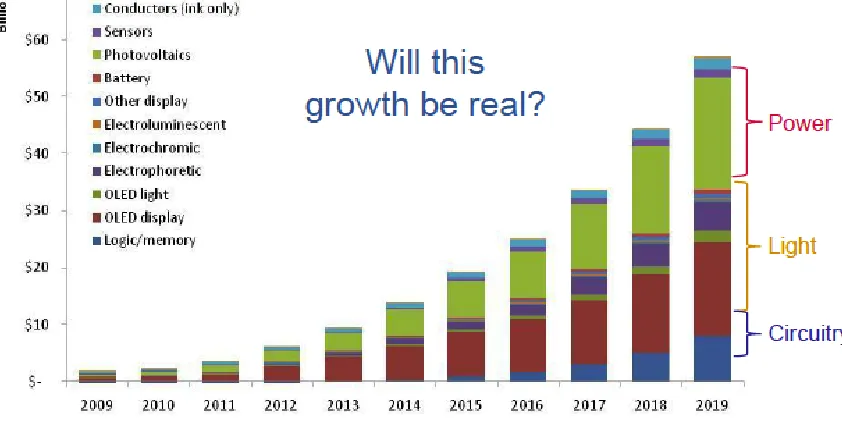
sensors, antennas, memory, displays, capacitors and batteries, but also many other functional materials such as barrier layers, security films, transparent conductor layers, magnetic metamaterials, chem/bio shielding, water-repellent surfaces, filtration/separation membranes and other products incorporating nanomaterials. Figure 1 shows market projections for printed electronics in a range of commercial product areas. As a disruptive manufacturing technology, R2R nanomanufacturing has the opportunity to accelerate the growth rate, substantially increasing the value of nano-enabled components making up such market projections. Roll-to-roll nanomanufacturing comes with many benefits. These include low unit costs, high-volume rates of production, process efficiency through sequential application of successive layers on a web, energy and materials efficiency, versatility in the types of devices that can be made, form-factor benefits of flexibility and low weight, and relatively benign and plentiful constituent chemicals and materials.
Figure 1: Global market projections for flexible electronics
Workshop on Nanofabrication Technologies for Roll-to-Roll Processing
Pre-Workshop Questionnaire
A pre-workshop questionnaire was provided in order to assist both participants in preparing presentations for the workshop, and organizers and participants in assessing the parameters for a technology roadmap covering roll-to-roll (R2R) nanomanufacturing. Questionnaire responses also aided in drafting this workshop report by bringing out pressing technical and infrastructural needs facing different facets of the technology sector, as well as federating portions of various related roadmaps that impact the broader industry landscape. This structured participant feedback may further be useful for both the NNN and NIST in terms of scoping and suggesting research agendas in various government and academic laboratory programs as well as future federal and state funding opportunities.
Five pre-workshop questions were;
1. What are the biggest barriers or process bottlenecks that need to be addressed to realize roll-to-roll nanomanufacturing?
2. Can you foresee enabling/emerging technologies that need to be developed in order to realize roll-to-roll nanomanufacturing?
3. Are there specific materials and/or metrology needs that are needed to realize roll-to-roll nanomanufacturing?
4. What infrastructure needs to be developed to transition roll-to-roll technologies to volume manufacturing?
5. What sorts of partnerships (public, private, academic, consortia) are needed to accelerate progress towards volume manufacturing?
Workshop Organization and Format
The workshop brought together approximately thirty leading experts to identify key issues for nanofabrication in R2R processes, and included an opening evening session with introductory remarks, two plenary presentations and overviews of R2R nanomanufacturing approaches, followed by a full day of presentations and associated topical discussions. Participants prepared presentations and remarks addressing technical topics including:
Generating low-cost, commodity-scale materials sets Demonstrating precision cooperative assembly
Utilization of surface-directed/guided assembly of critical features via imprint stamping
Fabrication of ordered hybrid nanocomposites at high rates Nanoimprint processes
Process integration Online metrology
Workshop information and presentations can be found online at the website http://www.internano.org/r2rworkshop where a list of participants, agenda, and presentations can be found. The workshop was organized in conjunction with the Nanomanufacturing Summit 2011 (http://www.internano.org/nms2011/).
The workshop’s goal was to identify and discuss progress and challenges for successful merging of nanofabrication technologies into advanced device manufacturing. The workshop included discussions of general parameters for a multi-year technology roadmap to guide progress in roll-to-roll processing of nanoscale devices. Specific objectives of the workshop were to:
Identify needs, challenges, and priorities for research and development relative to nanofabrication for R2R processes
Identify and prioritize strategies for catalyzing the transition of emerging R2R nanofabrication methodologies to industrial platforms
Discuss R2R nanofabrication projects and capabilities already underway that address needs within specific industry or application sectors
Produce a report for dissemination to relevant stakeholders that can serve as guidance for future workshops and initiatives in advanced manufacturing.
Nanofabrication Technologies for Roll-to-Roll Processing
Nanofabrication processes incorporate a range of advanced processes, tools, and materials that effectively provide a path towards commercially scalable manufacturing platforms. Such nanomanufacturing capabilities rely on top-down and bottom-up nanoscale processes, including nanoimprint and sub-wavelength lithography, guided self-assembly and directed patterning methodologies, molecular engineering, and hierarchical integration across multiple length scales. Future industrialization of this technology naturally requires scaling system properties while retaining the collective properties of the nanoscopic elements over macroscale dimensions. Meeting this challenge is a key to high-rate manufacturing of nano-enabled products and for establishing viable industrial-scale manufacturing platforms for continuous large-area roll-to-roll processing.
Industry Assessment: International Electronics Manufacturing Initiative (iNEMI)
Daniel Gamota of Printovate Technologies discussed the intersection of R2R processing and nanotechnology from an industry perspective, including perspectives from the iNEMI roadmap. The printing and microelectronics industries are at the intersection of a new industry resulting from the merging of printing, functional inks, and microelectronics technologies: large-area flexible electronics. The driver for large-area flexible electronics is an economic motivation to move away from semiconductor fabrication approaches and to establish manufacturing platforms based on printing equipment that will provide a means for scaling with costs that increase at a rate several orders of magnitude below the rates historically observed for silicon IC manufacturing. Several of the often-stated benefits for printing are:
photolithography for fabrication.
The costs associated with fabricating devices and assembling products designed with several IC chip sets are at least an order of magnitude higher than those that can be realized when using functional inks (organic, organic/inorganic hybrid) and printing-based technologies.
Manufacturing of electronics using solution-processing equipment in large-area form factors versus being limited in size (e.g., 300 mm wafers) will enable several ubiquitous intelligent product platforms.
Large-area flexible electronics will grow into a multibillion-dollar industry over the next decade and will revolutionize our view of electronics and how we as a society interact with intelligent and responsive systems. The unique properties of flexible electronics such as compliant structures, ultra-thin profiles, light weight and potential low cost and high reliability could have enormous impact on consumer electronics, aviation and space electronics, life sciences, military applications and telecommunications. Large-area flexible electronics will enable a broad range of devices and applications not possible today. One of the critical enabling technologies for large area flexible electronics is R2R processing. Today R2R is practiced in many mature industries (paper, film, printing, etc.). Due to its attributes R2R high-volume manufacturing has been proposed for electronics as a means to lower the cost of non-Si wafer-based large-area flexible electronics, such as displays.
iNEMI, in establishing the roadmap for large area flexible electronics, has identified several key technologies at the intersection of nanofabrication processes and R2R platforms.
Functional Inks for Active and Passive Devices
Present printing methods are limited by solubility and processability of the functional ink as nanoparticles very typically have dispersion issues resulting in agglomerations. Additionally, polymer conductors/semiconductors have solubility and stability issues. A range of nanoparticle-based inks is presently available for conductor applications, and while some require sintering post-process, nanoparticle inks have lower sintering temperature requirements. While there exist several organic conductors (e.g. PANI, PEDOT), at present they exhibit 2-3 orders of magnitude higher resistivity. Dielectric films still need work on high and ultra-low permittivity materials. Semiconducting inks still have a long way to go to improve transport properties, but are beginning to exhibit performance improvements. Small molecule, organic semiconducting polymers have solubility issues, and while additive functional groups improve solubility but reduce semiconducting properties somewhat, this approach is promising. Inorganic and hybrid inks are showing the most promise for semiconductors, including metal oxide and chalcogenate thin films, compositional nanowires and carbon nanotubes.
Substrates
application. Nominally, reduced defects will add to substrate cost. Large-area metrology to measure defects will be critical in the next 5-10 years. Substrate thermal stability (Tg, CTE) is critical to process development and manufacturing scale-up. It is better to develop lower temperature processes than to develop higher-temperature and more thermally stable substrates, as the latter will be expensive.
Thermal and mechanical stability, resistance to moisture, gas and vapor transmission, and solvents are important factors to consider in substrate selection. In addition, surface smoothness, surface energy, optical transparency, commercial availability and costs must be considered. As with most materials, costs increase with substrate material property demands. Depending on the requirements of the application, a different flexible substrate will be required and for the more demanding applications the substrate will almost certainly be a multilayer composite structure.
As examples, PET and PEN having excellent dimensional stability up to 150°C are being used for a range of display backplane, RFID applications, data storage and automotive electronic wiring applications. Kapton and metal foils are finding uses in photovoltaics and electronics, and paper is already beginning to be used with printed electronics and batteries, having a demonstrated compatibility with functional inks, good thermal dimensional control and a well-developed supply chain. In addition, nonwoven textiles or engineered fabrics can be imprinted in a similar manner as paper and other substrates, and are finding an emerging range of applications.
Packaging/Barriers
Barrier films and packaging still use vacuum coatings for the best performance. Multilayer organic/inorganic coatings utilizing a solution-based or hybrid process approach are presently the best. Water vapor and oxygen detection limits are also an issue for characterizing barrier coatings.
Manufacturing Platforms and Processing Equipment
Many new processes are designed for production on conventional standard manufacturing equipment, as for example in thick film processing, but require customized steps for new products. In many cases use of an existing tool can reduce the number of process steps. Processes that are compatible with R2R platforms include gravure, flexography, offset litho printing, screen, inkjet, and microcontact printing. Thin film processing can use either vacuum- or solution-based coatings, with the latter being more scalable and economic.
Testing and Quality Control Tools
In-line Characterization
Techniques include imaging and feedback control loops (PLCs), process materials metering, and electrical and optical measurements.
Off-line Characterization
Reliability
Process reliability is critical for scaling to large-area, high-throughput manufacturing lines. As such, process modeling, control, and real-time monitoring is still needed for many emerging product applications. Additional needs are simulation and design tools, and design for manufacturing approaches for flexible electronics devices and systems. Key Challenges and Gaps
iNEMI has identified the “Top Four” Needs and Gaps as;
1. In-line inspection and testing equipment 2. Simulation and design tools
3. Robust R2R, roll-fed, and large format manufacturing platforms 4. Higher performance inks (semiconducting, OLED, PV-active, etc.)
Nanofabication Processes for R2R Platforms
Solution Casting of Functional Inks
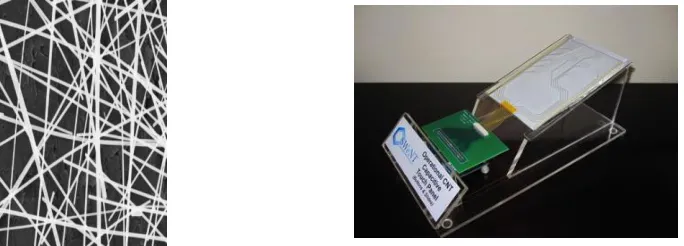
Figure 2: (left) Silver nanowire transparent electrodes. (right) An example of a carbon nanotube touch screen.
Key barriers in developing new materials for these applications include the need to first validate the processing and scalability of the materials, essentially determining that the process conditions do not change the material properties. Subsequent to process validation is generation of data for process controls. As existing manufacturing platforms are often hesitant to take the risk associated with new materials, these materials must establish a relevant platform capable of delivering an equivalent or better product (relative to the existing platform). As a result, materials companies typically face delayed access to the market, and bridging these process gaps is critical for sustainability in the case of small nanotechnology ventures. Additional barriers include identifying product specifications and requirements; understanding product performance tolerance to related defects; incorporating clean manufacturing protocols, rate control and purity levels for nano-morphologies; better understanding of and means for mitigating materials costs; ensuring that materials of interest are compatible with flexible supports and the required process methods; thermal and environmental stability of continuous, flexible substrates when processing functional layers; and incorporating barrier layers that minimize poisoning of functional layers or migration into flexible supports.
Self-Assembly and Additive Driven Assembly
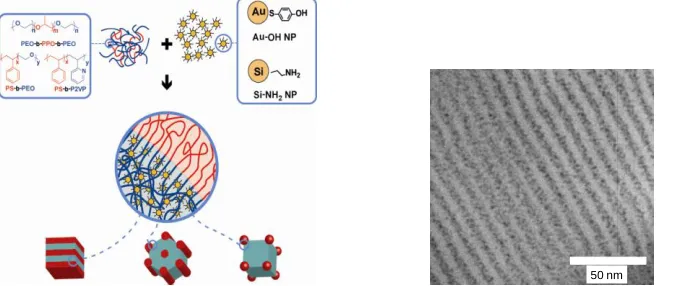
BCP morphology. Typically, such hybrid materials systems are formed through specific functionalization of the NPs, thereby facilitating bonding to targeted ligand sites within one of the polymer blocks. The NPs then follow the domain to which they are attached during phase segregation by solvent annealing of the BCP system, leading to highly ordered distribution and controlled density. Challenges in applying this method to practical applications include required modification to control both the NP loading in the polymer blend, as well as appropriate functionalization of the NPs to control the bonding sites for specific blocks of the BCP system without impacting the ability for the entire system to subsequently phase segregate and achieve order. Ultimately, the specific ligands to which the NPs bond will dictate their position within the ordered BCP domains, which may be critical for a given device or materials application.
James Watkins, director of the NSF Center for Hierarchical Manufacturing (CHM) at the University of Massachusetts Amherst, described the transition of these nanomanufacturing methods to R2R process platforms. Extension of self-assembly for high-volume fabrication of nanostructured materials and devices faces key issues with respect to materials availability and cost, as well as identification of and integration with high-impact technologies and products. Discussion of strategies to mitigate these issues included the availability of commodity-scale materials for low-cost/high-volume systems; the creation of technologically useful materials functionalized to realize electronic, mechanical, optical properties by design; the creation of well-ordered nanoparticle/BCP systems with prescriptive placement of NPs and high NP loadings; and the development of a robust R2R manufacturing platform incorporating scalability, process models, manufacturability, metrology, QA, and process control.
Figure 3: (Left) Scheme for additive-driven assembly of ordered hybrid materials, and (right) example of ordering of functionalized Au nanoparticles at high loadings.
Nanoimprint Patterning
Nanoimprint lithography (NIL) and patterning is a technique that has shown significant promise for high-throughput nanopatterning for a range of device applications. NIL's potential has garnered sufficient attention to place it as a future contender on the semiconductor industry manufacturing roadmap, and as a viable patterning tool for extremely high-rate production platforms such as roll-to-roll processing. Yet challenges remain for NIL in achieving both high-rate and large-area patterning due to the resist materials used for nanoimprint patterning. Widely used thermoplastic polymers have throughput limitations due to high viscosity even at elevated temperatures, resulting in
the need for high pressures and long imprint times, along with the added cost of replacing damaged molds.
With goals of achieving patterned features of 50 nm at process rates of 5 m/min, Kenneth Carter of the CHM at the University of Massachusetts Amherst cited challenges that included both adhesion at the substrate level and long-term durability of ETFE molds in potential manufacturing processes involving UV-assisted roll-to-roll nanoimprint lithography (R2RNIL). Approaches to resolve these challenges include a focus on mold release and improving the etch resistivity of the resist materials. Development of new mold materials such as PFPE would enable R2R patterning of sub-100 nm features while further enabling the development of new processes for device fabrication such as multilayer coating, imprinting, reactive ion etch, metal deposition and lift-off on a R2R platform.
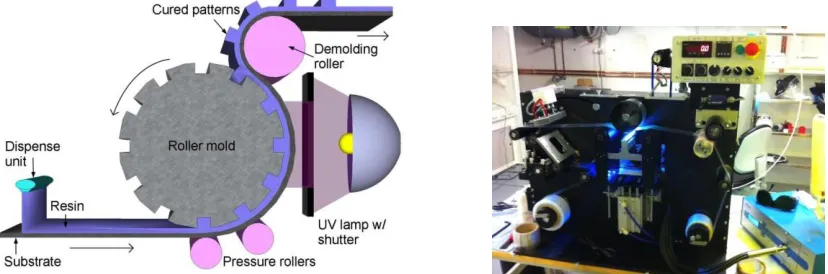
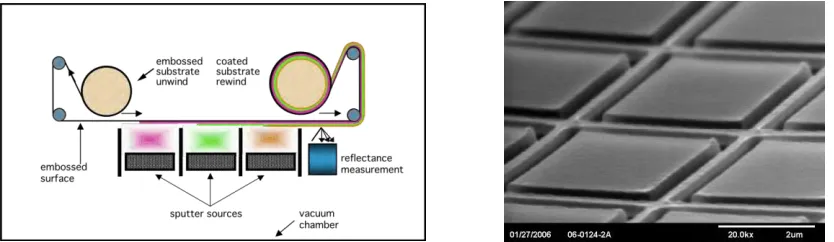
Jay Guo of the University of Michigan discussed R2RNIL efforts using UV curing of ETFE-patterned resists. He further described the development of custom photopolymer resins that were tailored to optimize substrate adhesion and minimize adhesion to the mold. Using glass molds, high-fidelity features having periods of 200 nm were demonstrated at unprecedented rates of 10 cm/sec (6 m/min). Features with added edge roughness having periods as small as 100 nm were also demonstrated. The R2R NIL platform included in-line vacuum coating of metals to facilitate the fabrication of a range of value-added functional nanostructures and surfaces, including transparent conductor grids, plasmonic color filters, organic photovoltaic devices, and optical metamaterials. Another method of creating continuous nanopatterned lines such as grating structures was described. The technique, referred to as continuous dynamic nano-inscribing (DNI), utilized a rigid mold structure, such as grooves etched in a silicon substrate, as a mold pattern which is then heated and drawn across the moving web at speeds of up to 10 cm/sec. The grating patterns scribed in the photopolymer coating on the moving web are then UV-cured, resulting in a continuous, seamless grating pattern from beginning to end. While this approach is limited to straight-line features, the feature size and fidelity, as well as the rates achieved, are impressive.
Figure 4: (left) Schematic of UV R2RNIL patterning method, and (right) image of R2RNIL tool at ICN-Barcelona.
Providing a similar perspective for R2RNIL research activities in Singapore, Hong Yee Low, of the Institute of Materials Research and Engineering (IMRE) under the Agency for Science, Technology and Research (A*STAR), described research focused on functional nanosurfaces. Utilizing direct surface patterning to form permanent nanostructures, IMRE research in this area is targeting a range of biomimetic surface functionalities, including superhydrophobicity, structural color and dry adhesive film, imparted through structural control rather than chemical composition. IMRE has recently launched focused projects in technical areas including R2RNIL, with further research and development in areas such as scaled manufacturing aspects of R2RNIL, including defect analysis and scaled device fabrication. The work on defect analysis for R2RNIL platforms has established a reference database of speckle-images to identify defect type, with capability for identifying the defect classification.
sub-50nm resolution with a current resist aspect ratio of ~3:1. Template longevity consisted of hundreds of imprints with a six-month goal of thousands of imprints. The J-FIL R2R tool was well suited for high-quality pattern transfer and thin uniform RLT, having demonstrated ~20nm mean, <5nm 3s, with targets of <15nm mean. The platform demonstrated the potential for very high throughput exhibiting ~1.5 sec fluid filling and separation time, with a six-month goal of < 1 sec. The tool further demonstrated the ability to protect the film before and after nanopatterning. Several patterns were demonstrated with features approaching 50 nm, with continuous replication over tens of meters and hundreds of imprints with no pattern degradation.
Many issues were mentioned by discussants as key barriers and challenges for R2RNIL to overcome for commercial scale-up of R2RNIL processes. These included limited availability of literature data, lack of proven industrial-scale R2RNIL tools, and challenges for large-area roller mold fabrication from the platform standpoint. These issues were cited as critical as there is a high interdependency among tool design, roller mold, process capability and materials in determining throughput and process design. Other issues discussed included suitability of resist materials (UV and thermal) and availability of web materials, including any form of materials standards. From the process tool and capability standpoint, several items were cited including large-area, cost-effective e-beam patterning tools and capabilities, plasma etching tools for large-area, uniform R2R processing, ink jet applicators compatible with a wide range of UV monomers, the need to develop high-quality Ni electroforming processes for high aspect ratio, large pattern volume structures, the lack of high-durability, low-cost transparent imprinting molds or inexpensive/fast-replacement transparent molds, and the fabrication of seamless cylindrical imprint molds.
R2R Process and Device Integration
Process and device integration approaches will incorporate the value-added functionalities provided by engineered nanostructures and surfaces within a hierarchical device or system design. It is this focus that combines the expertise of R2R processing with the batch processes developed for the semiconductor industry, and that capitalizes on scaling these processes to high-throughput and large-area. As mentioned above, several of the R2RNIL R&D efforts included some form of vacuum coating, with the example of the MicroContinuum R2R lines incorporating a full range of additive/subtractive processes to realize a range of devices and functionalities.
sets and inks (whether UV-cured or sintered by thermal pulse exposure); and a lack of capability to achieve the required line features. This last issue was addressed using gravure offset and reverse gravure coating methods, but still had some limitations in producing the desired line features. In this example, the lack of machines to achieve fine patterns in both line height and width was cited, along with concern about the cost and capabilities of nanoimprint lithography. Other challenges cited for commercial development of printed memory products and applications included economics of materials development and scaling, access to a skilled workforce, and the necessary ecosystem to establish the value chain for negotiating product roadmaps. As such, it is necessary to find opportunities at the systems levels for integration of devices, and to further identify systems that use such devices. Resulting partnership models to foster commercialization would include a range of fundamental research, along with an application focus involving both small and large companies.
Figure 5: (Left) Schematic of inline vacuum coater, and (right) integrated device created using multiple nanofabrication steps.
plastic films, and preliminary integration of TFT prototypes.
Emerging Tools, Capability, and Infrastructure for R2R Platforms
Nanomanufacturing processes for R2R platforms are further supported through a batch fabrication paradigm in terms of emerging process tools, design for manufacturing methodologies, and the necessary ecosystem and value chain that sustains the advancement and acceleration of this manufacturing technology platform. The workshop included discussions in each of these topical areas as described below.
Emerging Processes and Tools for R2R
Atomic Layer Deposition
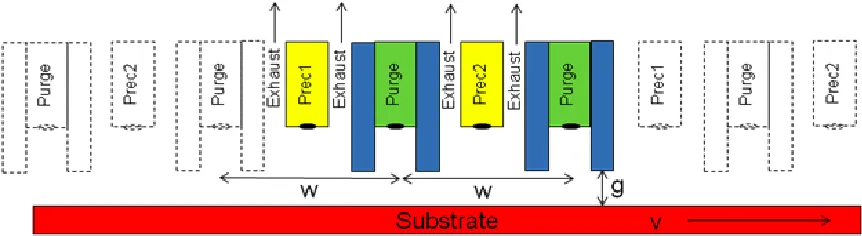
Ganesh Sundaram of Cambridge NanoTech provided an overview of activities in the development of Atomic Layer Deposition (ALD) tools for R2R platforms. ALD is a thin film deposition technique in which films are grown by the sequential pulsing of chemical precursors onto the surface of a substrate. A typical process sequence involves introduction of precursor A, followed by a system purge, then introduction of precursor B, followed by another system purge, after which the steps are repeated. The precursor reactions on the substrate surface lead to the growth of the thin film on a layer-by-layer basis, with the resulting film thickness controlled by the number of cycles of the process sequence. As the deposition process is self-limiting, the films are extremely uniform, pinhole free, and exceptionally conformal. ALD is capable of depositing a range of metal oxide films, as well as a limited number of metal coatings, and has the further advantage of relatively low-temperature processes and reasonably low-cost precursors for most applications. As a result, ALD is finding traction in the semiconductor industry, and has further been scaled to large-area substrate processes for thin film photovoltaics and displays where the metal oxide coatings yield superior barrier coatings and dielectric films. As ALD processes are compatible with low-temperature organic electronics and substrates, a natural extension is to develop R2R platform capabilities. The key difference for adaptation of ALD to a moving web is the need for spatial separation of the process sequence described previously in contrast to the temporal separation. Thus, zone-separated ALD is based on spatial separation of pulses rather than temporal separation of pulses. This alleviates the major time component of temporal ALD, namely the purge time, resulting in a process compatible with R2R schemes and providing a path to highly industrialized applications.
Figure 6: A simplified spatially-separated ALD unit cell configuration (one full ALD cycle) can be comprised of two reactants (precursors 1 and 2) separated by purge gases.
Potentiometric Stripping Analysis for Electroplated Alloys
Electroplating represents an additive, solution-based deposition process suitable for R2R platforms for a range of metals and alloys. A key challenge for continuous, high-speed coating systems is the control of stoichiometry and the depletion the plating baths in web-based systems. Trevor Niblock of Magzor, Inc. described the development of R2R electroplating tools incorporating potentiometric stripping analysis (PSA) techniques to precisely control both stoichiometry and uniformity of metal and alloy coatings on flexible webs. Keys to maintaining sufficient process control in the electroplating steps included keeping the solution at the work surface fresh and evenly biased by agitating the bath, providing adequate circulation, further utilizing an inert environment such as an argon blanket to minimize the effects of oxidation, and utilizing a separate anode for precise control of field distribution. Utilizing the PSA approach, uniform coatings of various alloys have been demonstrated for complex, integrated structures. The tool further represents a rapid prototyping tool for flexible substrates, with initial applications demonstrated for magnetic actuators, and integrated systems for EMI shielding.
High Temperature Roll-to-Roll Processes
for large-area, high-quality semiconductors having electronic transport properties approaching those of bulk materials, thereby enabling high-performance electronic devices and systems.
Metrology and Inspection
Metrology remains a key potential limitation for R2R nanomanufacturing due to stringent requirements for monitoring nanoscale features at extremely high rates. Examples of target requirements include:
Fast, convenient, non-destructive Resolution < 10 nm
Lateral dimension and height of the 3-D structure Suitable for in-line or in-situ operation
Nikos Kehagias of the Catalan Institute of Nanotechnology (ICN) in Barcelona discussed approaches being explored at ICN, including optical sub-wavelength diffraction with resolution of ~50 nm +/-5 nm for both lateral dimension and height, and photoacoustic metrology having depth resolution/acoustic wavelength of ~10nm, providing both dimensional and physical information for the structures being interrogated. Sub-wavelength diffraction utilizes test structures made of blazed gratings of sub-Sub-wavelength sized lines, enabling evaluation of the quality of imprinted sub-wavelength features in blazed grating (e.g., line-width, height, defects, sidewall angle, curvature) that affect the relative intensity of diffraction orders in far-field. The technique has the advantages that it is suitable for either transparent or opaque structures, is non-destructive, and allows rapid collection of data. Sub-wavelength diffraction analysis can be implemented by an optical microscope configuration for in-line metrology utilizing a collinear optical path for the incident and diffracted light, thereby allowing the entire diffraction pattern to be collected through microscope optics, reducing the space and time requirements for measurement. In this configuration, process diagnostics are suitable for use with alignment and imaging optics for in-line or in-situ measurements, as well as for defect detection.
Hong Yee Low of IMRE described the assessment of defects using post-pattern inspection from which a database was established of defect type and classification. Utilizing speckle-image analysis, the database identifies the specific defect types resulting from trapped gas, particles, pull-outs, and missing patterns for both mold and imprinted patterns. The defects were further characterized in terms of size, detection ability, probability of occurrence, and temporal definition. Based on this analysis, particles remained the highest probability defects.
manufacturing--SR imaging techniques use a rapid scanner that can acquire multiple low-resolution (LR) frames over the same region of a work piece or substrate. Image mosaic techniques can then reconstruct the high-resolution, large-range SR image of the substrate by restoring the lost high-frequency features or patterns from LR images. By controlled variation of the conditions of the image acquisition state to capture a set of raw videos, the LR image data can be used to estimate a three-dimensional map of the observed film with a 10x increase in resolution. Using these variations, SR methods can reduce errors due to aliasing and under-sampling. Issues associated with adapting SR imaging to R2R moving webs include the translational motion that introduces vibration; this downgrades inspection speed and quality, and consequently translational scanning cannot generate a full-rank reconstruction matrix. By comparison, rotational scanning has the potential to reduce vibration, improving the acquisition of variations for high-frequency pattern reconstruction, and increasing the field of view. To address the non-uniform distribution of the scanning positions/information in polar coordinates, the design of an innovative rotational sampling method and inspection system for R2R manufacturing was developed using a set of constraints for rotational sampling which preserves the Cartesian-coordinates neighborhood. To demonstrate this, a rotational manufacturing inspection system was designed to integrate the rotational sampling algorithm on rotational stage. The rotational manufacturing inspection system integrated a controller, an open-loop rotational stage stacked on top of the X-Y air bearing stages (allowing rotation of the part around a rotary Z-axis with a resolution of 0.0002º), and a high-speed area-scan camera with high-signification lens and high-speed frame grabber (500 fps). Testing for the SR sampling and control technique in the R2R manufacturing process used a three-roller test frame emulating a moving web. The test frame included a drive roller attached to a motor, an idler roller, and a hanging tension roller with independently controllable tension and position/velocity. Initial results demonstrated an innovative rotation-sampling-based SR imaging platform that has the capability to achieve high frequency and wide field of view. Utilizing a fast-speed inspection system that incorporates rotational scanning to overcome the vibration in translation scanning facilitates the implementation of the rotational sampling in the R2R manufacturing process. This technique further enables high-speed 3D profiling methods for transparent R2R products. Future plans include building an R2R manufacturing prototype to test these metrology and process modeling methods to be implemented on the metrology frame for continuous interrogation of a moving web on the R2RNIL tool at the University of Massachusetts Amherst.
industrially meaningful and scalable environment. Process Modeling and Control
Joe Petrzelka of the David Hardt group at MIT discussed an investigation of scale-up of soft lithography to R2R technology. With a focus on modeling and control of the contact region for R2RNIL platforms, the investigation was represented as a multiscale problem equating force, pressure, and contact area for local deformation of features, and macroscale deformation of the imprint master in order to better understand the critical points for pattern collapse. R2RNIL process models allow a better understanding of frequency and source of errors in the imprint process. Examples of error sources included cylindricity, bending under load, and thermal distortions imparted on the roll; mold errors, thermal shrinkage and ink swelling in the stamp; and planarity, surface roughness, bending, and thermal distortion in the substrate. Error frequency ranges from low to high and is associated with sources such as alignment, stamp-body-to-roll distance, feature scale discontinuities, and nanoscale surface roughness, respectively. In order to control the contact an effective sensing and control feedback loop is necessary. The sensing is accomplished by coupling a quartz prism to the soft mold through which infrared imaging is conducted. Control is accomplished by using images enabling both spatial filtering feedback compensation for the contact controller, and state feedback compensation for position control. For scaling to production level processes, error mapping for feed-forward process control would utilize the transparent substrate method to map the errors in any particular stamp, given an upstream measurement of substrate error. In-process control would utilize a downstream inspection to monitor temporal drift of stamp.
R2RNIL represents an enabling process with growth opportunities in metastructures and high-resolution device patterning. While numerous real mechanical engineering challenges exist, none are show stoppers. In-line process sensing and control are critical capabilities for utilizing robust patterning. Near-term challenges for process control include mid-range error rejection, stamp production and mounting techniques, and full-scale platform integration incorporating inking, steering, and etching processes.
Manufacturing Scale-up and Commercialization
Standards
Daniel Gamota pf Printovate Technologies presented an overview of the IPC Printed Electronics Standards development initiative. Standards are an important aspect of the successful commercialization of any product, and typically are underestimated. Benefits of standards include building end user confidence, creation of a common language between producers and users, promotion of product compatibility and interoperability, overcoming trade barriers to open markets, and fostering diffusion and adoption of technology. As printed electronics and R2R nanomanufacturing transcend from fundamental science to laboratory-scale production platforms within academia and industry, the transition to pilot-scale production is hampered by several factors that can benefit from standards. The resulting delay in the commercialization cycle includes losses resulting from incoming materials variations, process technologies, process tolerances, equipment and operator inconsistencies, and lot-to-lot variations, making it extremely costly and difficult to scale to R2R production capacity. Standards are necessary to assist in the translation of discrete processes to an integrated manufacturing flow. Applying design for manufacturing principles to deliver robust processes and high final product yield will minimize loss in performance, and accelerate the commercialization cycle. Key standards areas relevant to R2R nanomanufacturing include terminology, test and measurement standards (for materials, processes and manufacturing), structures (conductors, resistors, capacitors), inks (copper, silver, aluminum, CNTs), substrates (paper, plastic, metal), encapsulation/barriers, printing processes, and structures for conductive traces/wires. Applications areas include diodes, memory, backplanes, and RFID.
In developing standards, a committee will typically leverage existing standards to help craft new standards. An example was given of a standards development subcommittee for printed electronics materials. The goal is to develop procurement documentation and standard incoming inspection procedures of base (substrate) material for issues such as cleanliness, roughness, surface energy, ink spreading on flex surfaces, hydrophilic/hydrophobic properties, dot gain, and edge definition. In order to establish this, the subcommittee must identify critical substrate properties and generate specification sheets for different substrates. If possible, it must further develop standard test vehicles and methods. Similar standards activities must address all of the topics specified above relevant to R2R nanomanufacturing, thereby providing a consistent base infrastructure for subsequent product development and scaled manufacturing.
Accelerating Technology Transfer and Advanced Manufacturing Scale-up
theme that the U.S. economy relies heavily on small businesses and that much development of nanotechnology is occurring in small businesses. In order to foster successful growth of small and medium enterprises (SME) engaged in nanotechnology-based products, new paradigms must be established that enable technology research and development to occur and for the SME to overcome the so-called “valley of death” scenario. This scenario, in which the proof-of-concept or feasibility has been demonstrated, yet the path to commercialization, scaled manufacturing and sustainability remains in the distance, is potentially prohibitive to a robust, nanomanufacturing ecosystem, mainly due to the long time to market for many nanotechnology products. In this respect, federal and state funding for small companies has a significant impact, since venture capital funding is typically unavailable to early-stage hardware technology companies, and seed/angel gap funding may be too expensive. In discussing this gap for accelerating commercialization of R2R nano-enabled technologies, James Watkins of the University of Massachusetts Amherst described the recently launched R2R nanofabrication facility at the Center for Hierarchical Manufacturing. Supported by an Industrial Advisory Board from the R2R sector, a cluster organization has been formed to address specific technology issues of concern to cluster members. The facility and industry cluster further provides industry training and access to the equipment.
Another concern that may have a long-term impact on technology transfer and collaboration from academic and government research institutions involves the intellectual property maze that exists, given the number of players and technologies. While these issues have not impacted the innovation cycle or development of intellectual property as evidenced by significant increases in nanotechnology-related patent filings and scientific journal publications, they may grow in significance as more nanotechnology-enabled products enter the marketplace.
Pilot Line Facility/Manufacturing Hub
The NNI has described a strategic mission to make available facilities with sophisticated capabilities to support nanotechnology innovation in the U.S. The National Nanotechnology Infrastructure Network (NNIN), consisting of thirteen user facilities located at universities within the U.S., provides fabrication capabilities and equipment that users can access for a sliding fee based on company size. Unfortunately in today’s environment, many small companies don’t have the resources to take adequate advantage of such facilities. Furthermore, while the facilities provide fabrication processes and sophisticated tools and equipment to conduct proof-of-concept work, NNIN facilities often lack emerging nanofabrication processes, as well as scaled platforms leading to pilot scale manufacturing. As a result, this typically leads to slower development cycles and a distraction for the technologist trying to deliver “nanotech” in a form that can move into manufacturing. The NNIN facilities are complemented by user facilities at numerous FFRDCs (DOE, NIST, DoD), which have somewhat different models for industry participation, and in many cases provide more value-added from the standpoint of facility capability and resources. In either case, for effective technology transfer that leads to manufacturing scale-up some investment by the industry partner is necessary.
closely with academic and government researchers to evaluate and transfer newly-developed lab concepts to meaningful pilot and manufacturing environments. Pilot line facilities enable the development, demonstration and optimization of full processes, and remain a vital step between lab coupon demonstration and production line. The ability for industry to understand and validate emerging nanomanufacturing technologies in this type of partnership diffuses critical knowledge in both directions, while reducing risk and cost. A consortium-based organization further enables SME participants to access a wide range of partner capabilities and expertise to achieve their commercialization goals, Increased federal support for small company participation can facilitate such partnerships, but an effective business model that protects intellectual property while enhancing the broader knowledge sharing between all participants is also necessary. Associated Consortia Models (EU and Asia)
Hong Yee Low of IMRE described the Industrial Consortium on Nanomprint (ICON), involving industry participants ranging from SMEs to big companies, with an objective to foster the sharing and transfer of nanoimprint technology with industries, while further enhancing commercial readiness and adoption of the technology through synergistic partnerships. The consortium model takes a holistic approach to address problem-solving, delivering to consortium members a detailed evaluation of roll-to-roll nanoimprinting that can be carried over into a manufacturing context. IMRE has recently launched focused projects in technical areas including R2RNIL. The IMRE projects have further conducted defect analysis for R2RNIL platforms, establishing a reference database of speckle-images to identify defect type and classification. Some of the benefits provided by ICON participation are global perspectives through transnational collaborations; sharing of know-how accumulated; availability of tools, materials, and processes to participants; and future availability of simulation and monitoring tools.
Nikos Kehagias of the Catalan Institute of Nanotechnology (ICN) in Barcelona described ICN’s participation in the NaPANIL program funded by the EU, which consists of 17 partner Institutions from 8 countries developing various aspects of NIL technologies for applications involving the control of light through surface properties such as planar diffractive optical elements, light directional elements, emissive heads up displays, and waveguide backlight sources. Each partner institution had numerous industry partnerships in different applications areas, and provided a mostly open access to process information and results. NaPANIL has posted a NIL process database on its website (www.NAPANIL.org) to better diffuse the knowledge gained from the public-private partnership. Several of the participating institutions have ramped up efforts in pilot-scale process development to assist industry with the next steps in commercialization and scaled process research and development.
Summary of Key Challenges
transparent conductors is sufficient for present market competition, and is beginning to replace ITO in select products, with an assurance of gaining further market share as high-volume R2R processes and associated reliability practices and manufacturing materials and process standards are adopted. Yet this is just one example of a nano-enabled solution-cast product navigating the road to achieving mass-market adoption, and that still remains in the distance. To accelerate the transformation of nano-enabled fabrication methods and materials, the key challenges must be identified and addressed. These key challenges include materials and process costs, planarization and base/barrier layers, including transparent conducting films, coatable dielectrics, the creation of ordered nanoscale hybrid materials as active layers via directed- and/or additive-driven self-assembly, and continuous device-level patterning using roll-to-roll nanoimprint lithography.
R2RNIL barriers and challenges include the limited availability of literature data, lack of proven industrial scale R2RNIL tools, and large-area roller mold fabrication from the platform standpoint. Additional barriers include suitability of resist materials (UV and thermal) and availability of web materials, including any form of materials standards. From the R2RNIL tool and capability standpoint, barriers include the availability of large-area, cost-effective e-beam patterning tools/capabilities, plasma etching tools for large-area, uniform R2R processing, and ink jet applicators compatible with a wide range of UV monomers. Challenges include the need to develop high-quality Ni electroforming processes for high aspect ratio, large-pattern volume structures, and the lack of high-durability, low-cost transparent imprinting molds or inexpensive/fast replacement transparent molds, along with the fabrication of seamless cylindrical imprint molds.
Further challenges relating to patterning and process integration include identifying product specifications, the high expense of materials, understanding product performance tolerance to patterning-related defects, the need for clean manufacturing, rate control and purity levels for nano-morphologies, ensuring that materials of interest are compatible with flexible supports and the required patterning method, the use of primer layers and treatments that enhance resolution and/or adhesion, thermal and environmental stability of continuous, flexible substrates when processing functional layers, registration of multiple layers on flexible substrates, dimensional stability of flexible supports, and barrier layers that minimize poisoning of functional layers or migration into flexible supports.
From the perspective of fostering innovation, enhancing U.S. competitiveness, and accelerating the commercialization of emerging flexible electronics products, key barriers include the availability of collaborative demonstration facilities and well-defined proof-of-concept projects that would not only validate the R2R tool platforms, but facilitate the adoption of emerging processes and materials enabled through select device fabrication and integration examples (e.g., photovoltaics, batteries, flexible memory).
Conclusions and Recommendations
significant potential, the present economic conditions and positioning of industry to gain market share for specific application areas remains a significant barrier to widespread development and adoption of these technologies. At the heart of these issues is the cost and risk involved to incorporate new processes that are not supported by a broader infrastructure involving standards, tools, materials, and reliability/process control through which next generation flexible electronics can be scaled for commercial manufacturing. As a result, adoption of emerging manufacturing processes is slow, leading small businesses and entrepreneurial innovators to delay technology progress, and diminishing the innovation cycle and business growth. Methods to enhance both the transition of emerging research results to industrially meaningful process platforms, along with manufacturing scale-up development of R2R nanomanufacturing processes, are necessary to bridge this critical gap between innovation and commercialization.
Recommendations for follow-up activities that would enhance U.S. competitiveness in R2R nanomanufacturing, thereby impacting the broader flexible electronics application areas, include a cohesive effort combining the need for standards, improved metrology and in-line characterization, scaled process control and modeling, materials, off-line characterization, and advanced tools. Further establishment of infrastructure, including possible shared demonstration facilities where academic research could be transferred and scaled to industrially meaningful process scales in close collaboration with industry, would accelerate the adoption of advanced nanomanufacturing processes. Establishing a relevant industry/academic consortium or innovation hub could both enable broad-based industry growth impacting numerous product and application areas as well as advance the performance of key intermediate technologies (e.g; barrier films, transparent conductors, high-k dielectrics, etc.) that impact a broad range of different product applications. Creation of an industry network to further elucidate and resolve such critical issues would be advantageous to U.S. competitiveness in this area. In this context, R2R nanomanufacturing would be an appropriate theme for an advanced manufacturing institute or center of excellence, either on its own or as part of a larger manufacturing focus.
Appendix A: Participant Response to Workshop Questionnaire
Several key questions were provided to participants in preparation for the workshop. These questions and subsequent responses are presented below.
Response to Key Questions
What are the biggest barriers or process bottlenecks that need to be addressed to realize roll-to-roll (R2R) nanomanufacturing?
emerging process technologies, such as nanoimprinting for example, there is a need to provide training to companies.
In addition to providing a connection between emerging R2R process R&D and scaled manufacturing, several challenges related to process tools and core capabilities remain. These include:
Large-area, cost-effective e-beam patterning tools/capabilities Plasma etching tools for large-area, uniform R2R processing Ink jet applicators compatible with wide range of UV monomers
Development of high-quality nickel metal electroforming processes for high aspect ratio, large pattern volume structures
High-durability, low-cost transparent imprinting of molds, or, inexpensive/fast replacement transparent molds
Fabrication of seamless cylindrical imprint molds
Large-area, real-time metrology and process characterization
Can you foresee enabling/emerging technologies that need to be developed in order to realize roll-to-roll nanomanufacturing?
The challenges in process tools and core capabilities cited above in the previous question represent enabling technologies impacting the extension of R2R processes for a range of applications. For emerging technologies such as nanoimprinting for example, large-scale R2R tools have not been proven. Additionally, the supply chain has not been established. As a result, well-established cost and performance models are not available. In order for R2R nanomanufacturing to gain a foothold as a viable competitive platform for commercialization of value-added products, development in these key areas is critical.
In addition, further development of emerging process tools towards large area processes will be essential for realizing R2R nanofabrication.
Precision ink jet fluid applicators
- Any dot, anywhere; high uniformity and thickness control Atmospheric plasma etching
- Lower-cost surface processing with elimination of vacuum step R2R-ALD (atomic layer deposition)
- Precision application of very thin layers at high rates
- High conformality; uniform coating of aspect ratios up to 1000:1 - High film density, low film stress
- Continuous, pinhole-free ultra-thin films
Are there specific materials and/or metrology needs that are needed to realize roll-to-roll nanomanufacturing?
processes to large area and high throughputs. In nanoimprint technology, the imprint materials need to be developed (especially for UV roll-to-roll imprint). There is also a limited supply of suitable web materials. Examples for a “materials wishlist” include:
UV polymers that resist plasma crosslinking Transparent conductive polymers having:
- Higher conductivity and light transmission - Improved durability/stability
- UV curable
Less costly, higher-temp substrates - (>250C; preferably clear…)
In-line metrology is a must but it is still not clear what technique is going to work best. As such, metrology and inspection incorporating in-line optical techniques is presently being developed, but significant challenges remain for monitoring of high throughput processes having nanoscale features. In combination with this, model-based real-time diagnostics and control would compliment the development of process modeling and control methods.
What infrastructure needs to be developed to transition roll-to-roll technologies to volume manufacturing?
In order to extend R2R nanofabrication technologies to volume manufacturing, several infrastructural needs must be established relevant to emerging processes and tools. For example, parameters affecting throughput and defects control for various processes need to be established. In addition, the necessary supply chain is lacking, and needs to be broadly established, along with standards. Standards developments cannot be underestimated, and a more concerted effort in this area is necessary. One way to address these issues may be through the establishment of pilot line facilities for development, demonstration and optimization of full processes. This infrastructure component would provide a vital step between lab coupon-scale development and production line scale-up, ultimately reducing risk and cost, and providing a more rapid development path for product commercialization. This is due to the high cost of roll-to-roll instruments. This can be alleviated by creating shared facilities that will be accessible for academics and for industrial participants to try out some ideas, as well as establish emerging processes and materials for broader use. In this manner, the process development cycle can address key enabling technologies that are far upstream from large attractive markets, for example, large-format templates for R2R nanoimprint.
What sorts of partnerships (public, private, academic, consortia) are needed to accelerate progress towards volume manufacturing?