GSJ: Volume 7, Issue 8, August 2019, Online: ISSN 2320-9186
www.globalscientificjournal.com
I
MPROVING
A
CADEMIC
P
ERFORMANCE OF
G
RADE
7
S
TUDENTS IN
A
SIAN
S
TUDIES THROUGH
H
ARNESSING
V
OCABULARY
K
NOWLEDGE OF
H
ISTORICAL
T
ERMS
An Action Research Presented to the
Faculty of Holy Trinity Academy
Mrs. Baby Jane C. Alcantara Dr. Gregorio R. Sismondo
March 2019
A. Research Title: Improving Academic Performance of Grade 7 Students in Asian Studies through Harnessing Vocabulary Knowledge of Historical Terms
B. Abstract:
This research aims to improve the academic performance of the students in Asian Studies by harnessing their vocabulary knowledge in historical terms. Qualitative method of research was used in this study with descriptive method as the design. There were 43 students who became participants of the study. The data were analyzed and treated with the used of the percentage, frequency, mean, standard deviation and ranking.
This research revealed that the performance of the students in all parts of the test in Asian studies is within improved level. Meanwhile, if the whole test will be considered it can be seen that the performance of the students is described as improved. This indicates that harnessing the vocabulary knowledge of the students in historical will contribute significantly in improving their performance in the test.
After conducting this study, the researchers realize that harnessing the vocabulary knowledge of the students must be emphasized in any lesson specifically in History subjects. Since some of the words used in the books are not usually used in the daily conversation of the students, it is important that from the beginning of lessons the teachers should unlock the difficulties of the students. In short, the teachers should provide provision for the students to be exposed to difficult historical terms that are unfamiliar to them. They can ask the students to locate these terms in the materials that they are using and look for the meaning of these terms in the dictionary. Once they already find the meanings of these terms, the teachers should use these as springboard of the lesson.
Realizing the benefits of harnessing the vocabulary knowledge in historical terms of the students in improving their performance, the researchers are committed to continue this intervention in Asian Studies and to the other History subjects. There will be 1 or 2 minutes to be allotted in the lesson plan which is intended for unlocking of difficulties. The teachers will also include in the assignment of the students to look for difficult words that they cannot understand and look for the meaning of this words in the dictionary to make their understanding more profound.
Since this research only involved few numbers of the participants, the results of this is not conclusive hence the same study must be conducted in the future which will involve large number of participants. It is recommended that an experimental research should be conducted to verify the result of this study.
Key words: Historical terms, Harnessing Vocabulary Knowledge, Academic performance
C. Introduction:
most of her students have difficulty understanding some Filipino historical terms and do not really understand their meanings. It was proven because every time that students come across with the historical words such as “kabihasnan” it seems to them that this word unfamiliar for them. The researchers are aware of this situation and the principle mentioned beforehand. Because of this she became interested in conducting this study.
There are several ways to harness the vocabulary of the students. One of these is by means of starting the lesson with unlocking difficulties and asking the students to look for and decipher the meaning of words. After the students give the correct meaning of the word, they should be given the chance to use the word by constructing their own sentence. Another way is by emphasizing or highlighting in the discussion the difficult words or asking the students to locate these words in the material that they encounter. The teachers can also use the difficult words in the test provided that their meanings are really emphasized in the previous discussions. Masey (2018) explained that teaching vocabulary for Social Studies can be done using systematic instruction these includes grouping and sorting, mapping and visualizing, comparing and contrasting, defining and associating and reviewing and playing.
It was revealed in several researches that well-harnessed vocabulary knowledge contributes to better understanding of the students. Furthermore, it also contributes in the ability of the students to explain their own understanding about certain concept because they have very rich vocabulary. In the long run, profound vocabulary adds to the confidence of the students because they can share their ideas with ease because they do not catch for words or run out of vocabulary. Hence, they become spontaneous. It is for this reason why the researchers delve on this study.
a. Significance of the Study
This research is of significance to the students because this will help them realize to become more conscious on giving importance or special attention on the meaning of difficult words that they encounter in any material. If they encounter difficult terms they will not only rely to the teachers but they will look for the meaning of these words from different sources. This action will promote metacognition on the part of the students.
Furthermore, this study is beneficial to the teachers because they will understand the importance of requiring the students to be particular on the meaning of the words of historical terms and how these are used in any historical writings. This will lead to more in-depth understanding of the topics in history.
b. Research Problem
The following questions are sought to be answered in this study:
1. What is the performance of the students in the different parts of the test after harnessing their vocabulary knowledge such as:
1.1.knowledge; 1.2.process;
2. What is the performance of the students in Asian Studies as a result of the harnessing their vocabulary?
D. Methodology
a. Participants/ Data Source:
The participants of the study were the grade 7 students from one of the sections in Holy Trinity Academy. There were 43 students who participated in this study. The study was conducted in the school year 2018-2019. The data used in this research were all come from the fourth quarter test of the students. The group was selected because they had poor performance in the previous quarters in Asian Studies. A descriptive method in research was used in this study.
b. Data Gathering Procedure and Instrument:
A quantitative method was used in this research. Specifically, the researcher used descriptive method. Researchers asked first for permission from the principal before the conduct of the study. After the permission was secured, the test was subjected to validation by the subject area coordinator and the principal. These validators made sure that the terms whose meanings were taught to the students during the fourth quarter were also included in the entire test. The test was given to the students. Observation was used to verify the result of the study.
c. Data Analysis:
The data derived from the instrument were analyzed and processed using various statistical treatments such as percentage, mean, standard deviation and ranking. These statistical treatments were used to describe the performance of the student in the test as result of harnessing their vocabulary knowledge. A likert scale was used for this purpose.
E. Results and Discussions:
Table 1: Performance of the Students in the Knowledge Part of the Test
Scale Frequency Percentage Description Rank
9-10 4 9.31 Highly Improved 3
7-8 15 34.88 Improved 2
5-6 22 51.16 Moderately
Improved
1
3-4 2 4.65 Least Improved 4
0-2 0 Not Improved
N 43 100
Mean 6.74 Improved
SD 1.53
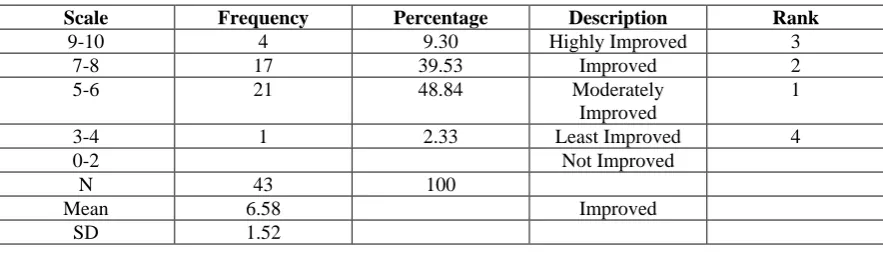
Table 2: Performance of the Students in Process Part of the Test
Scale Frequency Percentage Description Rank
9-10 4 9.30 Highly Improved 3
7-8 17 39.53 Improved 2
5-6 21 48.84 Moderately
Improved
1
3-4 1 2.33 Least Improved 4
0-2 Not Improved
N 43 100
Mean 6.58 Improved
SD 1.52
Table 2 shows the performance of the students in process part of the test. It was revealed that 21 or 48.84 percent of the students got score from 5 to 6 or described as moderately improved. Furthermore, there is one or 2.33 percent who got score from 3-4 or described as least improved. The mean scores of the students in process part of the test is 6.58 or described as improved with standard deviation of 1.52. This indicates that the scores of the students are close with one another and their harnessed vocabulary contributes to improved performance in the test.
Table 3: Performance of the Students in the Understanding Part of the Test
Scale Frequency Percentage Description Rank
13-15 18 41.86 Highly Improved 1
10-12 14 32.56 Improved 2
7-9 8 18.60 Moderately
Improved
3
4-6 2 4.65 Least Improved 4
0-3 1 2.33 Not Improved 5
N 43 100
Mean 11.30 Improved
SD 3.08
Table 4: Performance of the Students in Transfer Part of the Test
Scale Frequency Percentage Description Rank
13-15 9 20.93 Highly Improved 3
10-12 15 34.88 Improved 1
7-9 11 25.58 Moderately
Improved
2
4-6 7 16.28 Least Improved 4
0-3 1 2.33 Not Improved 5
N 42
Mean 9.81 Moderately
Improved
SD 3.19
Table 4 shows the performance of the students in transfer part of the test. There are 15 or 34.88 got scores from 10-12 or described as improved. On the other hand, there is one or 2.33 percent who got a score from 0-3 or described as not improved. The mean score of the students in the transfer part of the test is 9.81 or described as moderately improved. The standard deviation is 3.19 which indicates that the score of the students as balance or equally distributed. The mean score indicates that harnessing the vocabulary knowledge of students quite help in the performance of the students.
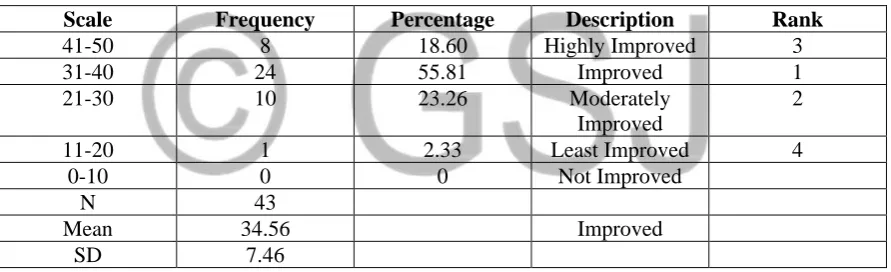
Table 5: Performance of the Students in the Fourth Quarter Test
Scale Frequency Percentage Description Rank
41-50 8 18.60 Highly Improved 3
31-40 24 55.81 Improved 1
21-30 10 23.26 Moderately
Improved
2
11-20 1 2.33 Least Improved 4
0-10 0 0 Not Improved
N 43
Mean 34.56 Improved
SD 7.46
Table 5 shows the performance of the students in the fourth quarter test. It can be gleaned that 24 or 55.81 percent of the students got scores from 31-40. On the other hand, there is one or 2.33 percent who got score from 11 to 20 or described as least improved. The mean score of the students is 34.56 or described as improved. The standard deviation is 7.46. This indicates that when the whole test is considered, the performance of the students is improved because their vocabulary knowledge is harnessed. This leads to the understanding of the subject.
F. Conclusions and Recommendations:
a. Summary of Findings:
b. Implication/Reflection and Recommendations:
After conducting this study, the researchers realize that harnessing the vocabulary knowledge of the students must be emphasized in any lesson specifically in History subjects. Since some of the words used in the books are not usually used in the daily conversation of the students, it is important that from the beginning of lessons the teachers should unlock the difficulties of the students. In short, the teachers should provide provision for the students to be exposed to difficult historical terms that are unfamiliar to them. They can ask the students to locate these terms in the materials that they are using and look for the meaning of these terms in the dictionary. Once they already find the meanings of these terms, the teachers should use these as springboard of the lesson.
Realizing the benefits of harnessing the vocabulary knowledge in historical terms of the students in improving their performance, the researchers are committed to continue this intervention in Asian Studies and to the other History subjects. There will be 1 or 2 minutes to be allotted in the lesson plan which is intended for unlocking of difficulties. The teachers will also include in the assignment of the students to look for difficult words that they cannot understand and look for the meaning of this words in a dictionary to make their understanding more profound.
Since this research only involved few numbers of the participants, the results of this is not conclusive hence the same study must be conducted in the future which will involve large number of participants. It is recommended that an experimental research should be conducted to verify the result of this study.
G. References:
About the Authors
Mrs. Baby Jane C. Alcantara is a teacher in grades 5 and 7. She has been teaching at Holy Trinity Academy for ten years. A loving wife to her husband and mother to her children. She is presently pursuing her Master of Arts in Education major in Curriculum Design Development and Supervision. She also earned some units in the Master of Arts in Education major in Social Science Education at the National Teachers College.