
Historic Victories and New Challenges
2016
Increasing Low-income Mothers’ Educational Attainment:
Increasing Low-income Mothers’ Educational Attainment:
Implications for Anti-poverty Programs and Policy
Implications for Anti-poverty Programs and Policy
Emily Pressler
New York University, [email protected]
C. Cybele Raver
New York University, [email protected]
Michael D. Masucci
New York University, [email protected]
Follow this and additional works at: https://digitalcommons.library.tmc.edu/childrenatrisk
Recommended Citation Recommended Citation
Pressler, Emily; Raver, C. Cybele; and Masucci, Michael D. (2016) "Increasing Low-income Mothers’ Educational Attainment: Implications for Anti-poverty Programs and Policy," Journal of Applied Research on Children: Informing Policy for Children at Risk: Vol. 7 : Iss. 1 , Article 12.
Available at: https://digitalcommons.library.tmc.edu/childrenatrisk/vol7/iss1/12
The Journal of Applied Research on Children is brought to you for free and open access by CHILDREN AT RISK at
Non-Introduction
In much developmental and sociological research, parent educational attainment serves as a cornerstone of family resources and as a robust indicator of human capital and family socioeconomic status. In past research, investigators have often included parents’ educational level at a given point in time as a salient predictor of a range of family and child outcomes, likely based on the assumption that students have completed their education prior to other prevailing adult milestones (e.g., prior to marrying or starting careers or families). However, scholars in fields of labor, education, and workforce development are revising this static conceptualization of parental educational attainment in lieu of a more dynamic approach. Such an approach can help us to better understand patterns of continued investments individuals make in their human capital
throughout adulthood.1-3 This extended and more nuanced approach
recognizes that investments can occur via several “stops and starts” at
multiple points in the life span. Such patterns of investment are especially prevalent among young adults facing higher levels of socio-demographic risk (linked to lower income, racial/ethnic minority category group membership, or documentation status). For young adults who may face more tenuous job prospects and educational opportunities, a discontinuous pattern of participation in education can be a rational method to boost socioeconomic status and may reflect inclusion into, rather than deviance
away from, American cultural norms.1,2
What do demographic trends tell us about these two different models of postsecondary educational attainment? Recent trends indicate that most college students do not fit traditional, static models of human investment, where students enroll at 18 years of age and are single, childless, and continuously enrolled in education. Instead, 26% of all college students in one study reported raising children while pursuing postsecondary degrees, and this rate was even higher among black (47%) and Hispanic (32%)
students.4 When this statistic includes students with other “nontraditional”
characteristics (such as being older than 25, financially independent, a single parent, or enrolled part time), it is clear that the majority of students
enrolled in US colleges are “nontraditional”5 and that the proportion of
nontraditional students enrolled in college has increased over time.6
Ethnographic and qualitative research provides a fuller portrait of students’ discontinuous participation in higher education and helps to elucidate the processes that may lead a parent to re-enroll in school after having children. For example, Edin and Kefalas (2005) describe how many mothers living in poverty maintain high expectations for their future selves despite parenting
of students attending community colleges bolster this perspective, indicating that nearly all students “stop out” (i.e., re-enroll after a period of non-enrollment) and that stopping out is distinct from dropping out when
predicting students’ chances of completing a program of study.8
The overarching goal of the current study is to contribute to literature examining investments parents make in their own educational attainment after enrolling their own children in a publicly funded preschool program, among a low-income sample of families. Much research examining the life experiences of individuals living in poverty describes the toxic impacts
poverty can have on human development.9,10 Although this literature is
valuable, it may mask strengths that parents draw upon and human capital investments they make to improve their own and their children’s life chances, essentially framing educational attainment (and more broadly,
poverty) as “static states.”11 In contrast, increased educational attainment
can be one mechanism that may substantially lift families out of poverty; describing young parents’ participation in their own education and gauging the role these patterns have for familial resources can inform anti-poverty efforts targeting investments in human capital.
How much evidence is there to support this more dynamic model of parents’ continued investment in their own human capital and in concomitant improvements in family economic status? To address this question, we first briefly review demographic trends and theoretical frameworks describing parents’ participation in their own educational attainment over time. We then turn to analyses of educational and economic outcomes for 432 mothers in the Chicago School Readiness Project (CSRP), a longitudinal study of families who were first surveyed when enrolling their children in the publicly funded preschool program, Head Start, in 2004-2005. Using this rich source of data, we first provide a descriptive understanding of the dynamics of educational attainment among the low-income parents in our sample. Second, we examine what characteristics are associated with the likelihood that low-income parents increased their educational attainment using rich measures of child, parental, and household characteristics. Last, we examine whether investing time and money in further educational attainment “paid off”—that is, whether increased educational attainment is positively associated with family socioeconomic well-being 6 years later.
Trends in Education
Estimates from recent empirical examinations of large or nationally representative samples indicate that anywhere from 5% to 26% of parents
Variations in these estimates are likely driven by differences in the ways an increase in education is coded (i.e., increase in years/grade of schooling versus report of additional degree or certificate); characteristics of samples (e.g., nationally representative versus targeted sample); the length of time examined in each study; and the period of development each study spanned. For example, Sabol and Chase-Lansdale (2015) recently found that 9% of parents enrolled in the Head Start Impact Study increased their education over the course of a year (i.e., from the Head Start year through
children’s transition to kindergarten).13 In contrast, one study which
examined educational attainment over longer periods found that 16% of
mothers increased their educational attainment over time.3 However, this
study pulls from the NLSY79, a sample more diverse than the current study and one that contains higher proportions of mothers found to be less likely to increase their educational attainment (e.g., older mothers and mothers
with higher baseline attainment).A set of studies employing samples more
similar to the current study found higher rates of adult persistence in education compared to rates obtained from the NLSY79 (e.g., 39% of urban
African American adults1 and 21% of Mexican immigrant mothers).14
The variability in these studies makes it difficult to predict what fraction of parents are likely to make investments in their own educational attainment while investing in their children’s education—an important policy question given increased interest in “2-generation” approaches to
supporting family well-being in the contexts of poverty.15 Even when
programs do not explicitly emphasize a “2-gen” approach, what might policy makers and educators reasonably expect parents’ re-enrollment in additional schooling to be as they enroll their children in publicly funded prekindergarten programs? To address this question, our first task was to produce a reliable estimate of the number of parents (virtually all of whom were low-income and racial/ethnic minority status) who increased their educational attainment over a 6-year period.
Life Span Approach to Human Capital Investments
The current study considers these demographic trends in education within a developmental framework for understanding human change over a
life span. This life course framework16 describes human development as a
increase their educational attainment may alter aspects of the home learning environment that boost the educational outcomes of their
children.12 At the same time, children’s entrance into publicly funded
education may simultaneously free parents’ time, resources, and energy for
further investment in their own educational attainment.13,14
The current study also draws on sociological frameworks describing education as a means of human capital investment. This literature conceptualizes the American educational system as “diffused,” allowing
individuals to make investments in their education at any age,2,17,18 rather
than a “condensed” system which limits individuals to short, fixed windows of opportunity for further investment. This distinction is not a small one; as discussed above, the majority of students attaining postsecondary degrees do so in discontinuous patterns, making use of the US educational system’s diffused nature. Importantly, it might be argued that developmental and educational research has not fully incorporated this sociologically informed
model of educational attainment in young adulthood, instead
operationalizing educational attainment as a stable characteristic that can
be reliably estimated at a single point in time (often at the first “baseline”
assessment or interview). When educational increases have been examined over time, they are often described as a deviant and risky pattern
of attainment,1 and the focus has been primarily on the returns that
increases in education can bring to children, rather than the factors that
predict these increases or the benefits provided to families.3,12,19 Focusing
more squarely on these questions may aid us in also understanding the dynamic rather than static condition of families’ experiences of income
poverty.20 It is to the potential for education to serve as an anti-poverty
mechanism we now turn.
Education as a Mechanism to Reduce Familial Poverty
Of the small number of studies examining changes in parental educational attainment, the majority has focused on whether increases in
education can positively impact children12,19 This focus is changing. In their
recent review of the future for 2-generation interventions, Chase-Lansdale and Brooks-Gunn (2014) highlight the challenge the field will have to accurately estimate the true impact of educational attainment for families’ living conditions and the role that investments in child and parental education will likely have for those efforts. For example, parent participation in education may yield smaller returns to family income and employment than might be expected—existing evidence suggests that it is the least-educated parents who are the most likely to increase their education after
this result is positive, it may yield a relatively small economic benefit, whereas completion of a postsecondary degree yields substantially larger
economic returns.21 In addition, low-income adults have multiple pathways
to employment that do not require a college degree, making the impact of
parental educational attainment more difficult to detect in “2-generation”
studies.22 Last, the increasing costs of attending college make these
investments risky23; as young heads of households, parents are more likely
to be financially supporting themselves and their children rather than relying on familial assistance. Parents undertaking postsecondary education are also likely to face several additional educational risks, including the risk of taking on too much tuition-related debt and the risk of not completing their program due to the complexities of balancing employment, parenting, and
coursework.24,25 In short, it is an open question as to whether parents who
go back to school themselves in the period between their child’s preschool and elementary years will also be earning more over time. We aim to address that question through analyses of families’ experiences in CSRP across 6 years, below.
Current Study
The current study examines maternal education among a sample of low-income families who participated in a randomized controlled trial of a Head Start preschool intervention and subsequently participated in a long-term longitudinal follow-up study. First, we delong-termine whether mothers within our sample increased their education over time.
Next, we determine whether mothers who increased their educational attainment were significantly different from those who did not. To move beyond descriptive snapshots of women’s educational trajectories, we examine characteristics of mothers (e.g., employment status, mental health), their partnerships (e.g., residential status, relationship conflict), and their households (e.g., financial strain, crowding) as predictors of their educational attainment over time. In addition, we capitalized on an important feature of our study design—that the Head Start centers families were enrolled in were randomly assigned to either “business as usual” or a classroom-based intervention that was found in prior analyses to improve
classroom quality.26,27 Therefore, we leverage parent and child differential
exposure to the quality of early childhood educational settings, among a
Last, we determine whether returning to school “paid off” for the parents in our sample. That is, we examine whether increases in mothers’ education were significantly associated with parallel benefits in familial
socioeconomic well-being. In so doing, we explore an important
“2-generation” question in applied research in child development—whether educational investments offer benefits to children and their families through both direct and indirect means.
Method Data and Sample
Data for this study come from the CSRP, a cluster randomized control trial and longitudinal follow-up of a classroom-based intervention targeting the social-emotional well-being of 602 low-income children attending 18 Head Start centers in Chicago. Child, parent, and household information was collected during the preschool (baseline treatment) school year as well as 1, 4, and 6 years later. Baseline characteristics of the full sample parallel characteristics of the high-risk neighborhoods that surrounded the original Head Start centers children attended. For example, during the preschool wave, 27% of parents had less than a high-school-level education, 61% of parents were single, 93% identified as being a racial/ethnic minority (66% African American and 27% Latino), and 79% reported household incomes below the Federal Poverty Line (FPL).
Analytic Sample
Of the 602 children and their families who participated in the baseline wave, 28% (n = 170) of adult respondents were excluded from this report’s analytic sample. Specifically, 108 respondents were excluded from our analyses because different respondents from the same family provided demographic data at different waves of data collection. If the same respondent did not report at least 3 of the 4 family surveys, we were prevented from coding a reliable profile of educational attainment for the same respondent over time. Another 62 respondents were excluded from analyses due to irreconcilable reports of educational data across the baseline and follow-up waves, leaving 432 respondents in the analytic sample. It is important to note that we refer to respondents as “mothers” and to increases in “maternal” education, as the majority of respondents in the analytic sample reported being the child’s mother (93%) or a female caregiver (4% aunt or grandmother).
educational attainment at baseline; 5th-grade indicators of socioeconomic status; and a host of baseline characteristics of children, mothers, and households. Results from these comparisons indicate the 2 samples did not significantly differ across mothers’ baseline educational attainment or 5th-grade indicators of socioeconomic well-being. Of the 40 baseline characteristics, available in Appendix A, the analytic sample was significantly different from the full sample across 6 characteristics. In the analytic sample, there were fewer children from the first cohort, mothers were significantly younger at the birth of their child, and there were more black families, fewer Hispanic families, more children with single mothers, and more families receiving government assistance at baseline. Taken together, these few significant differences suggest that the analytic sample used in the current study is representative of the larger sample of children and families who participated in the larger CSRP study overall. Correspondingly, our estimates of mothers’ continued involvement in their own educational attainment may be conservative compared to what we would have found with the full sample, given that the analytic sample may be slightly more at risk than the sample on the whole.
Measures and Procedure
Data from this study span 4 waves that correspond to children’s preschool (i.e., baseline treatment wave), kindergarten (i.e., 1 year after baseline), 3rd grade (i.e., 4 years after baseline), and 5th grade school years (i.e., 6 years after baseline). At each survey wave, mothers reported
the highest level of education they completed: “Less than high school,”
“High school diploma/G.E.D.,” “Some college, no degree,” “Associates degree,” “Bachelor’s degree,” “Graduate school, no degree,” and “Graduate degree.” Prior to coding whether maternal education increased over time, each report of educational attainment was examined for inconsistencies and recoded following strategies employed in existing empirical
publications13 and the National Longitudinal Survey of Youth 1979 Cohort.28
Inconsistent or incomplete educational attainment data were recoded so
that: (1) attainment reversalsa were recoded to the highest level previously
reported as long as (2) the respondent did not report the same lower level
of attainment in subsequent wavesb, and (3) missing waves were recoded
a For example, reporting completing less than a high-school-level education the wave after
reporting completing a high school diploma.
b If lower level of attainment was reported consistently in future waves, the higher level of
with previously reported levels of attainment when possible.c Based on
these repeated observations of maternal education, a binary variable was created to indicate whether (1) or not (0) mothers increased their educational attainment after the preschool wave and by the 5th-grade wave. Three indicators of household socioeconomic well-being in the 5th-grade wave serve as the outcomes of interest in the current study. Mothers
reported their total monthly household income (M = 1882.44, SD =
2076.12), unemployment status (1 = unemployed), and an aggregate
indicating the presence of 14 poverty-related risks (M = 4.61, SD = 2.00, α
= .42). The 14 risk indicators included within this aggregate span multiple dimensions of poverty-related risk including whether mothers reported: elevated depressive symptoms on the Kessler Psychological Distress Scale
(K6) (a score of 7 or higher)29; a maternal health issue; a family health issue;
the addition of a new child into the household that year; the addition of a new adult into the household that year; the family moved in the past year; 6 or more people lived in the household; being a single parent; having less than 1 month of savings; trouble accessing medical care; receipt of government assistance (i.e., TANF, WIC, Food Stamps/SNAP, Medicaid/KidCare, housing assistance, free/reduced lunch, SSI, family support); having difficulty paying bills; being unable to afford to do things for fun; and whether a family member was the victim of a crime. These indicators were aggregated into a single measure of poverty-related risk, as research indicates such life events are robustly related to individuals’
psychosocial distress, potentially serving as a barrier to education.30-32
Analytic Plan
Descriptive statistics were calculated and means differences were examined to determine whether mothers within the sample increased their educational attainment over time and whether mothers who increased their education were significantly different than women who did not across a host of covariates. Specifically, chi-square tests were calculated for dichotomous variables and analysis of variance for continuous variables between mothers who increased their education and those who did not. Building upon these comparisons, logistic regression was conducted whereby a binary variable indicating whether mothers increased their educational attainment over time was regressed on a set of characteristics of mothers and their households. Results from this regression helped us determine the predictive power each characteristic or event has on predicting whether
c For example, if the second wave was missing but the first and third waves had valid
income mothers increased their educational attainment, above and beyond other baseline characteristics.
Last, we examined whether increases in maternal education were associated with later indicators of family socioeconomic well-being (when children were in the 5th grade). The goal of this aim, simply put, is to determine whether investments in education appear to “pay off” in terms of household income, maternal employment, or reductions in other poverty-related risks. To answer this question, a set of ordinary least squares (OLS) and logistic regressions were employed. First, family household income at the 5th grade wave was regressed on a binary variable indicating whether mothers increased their education, and controlling for whether mothers maintained their baseline educational attainment and other maternal and household covariates to determine whether net of other characteristics if increased education is associated with family income. Next, this OLS model was repeated with maternal unemployment status during the 5th-grade wave as the dependent variable to determine whether increased education is significantly associated with the likelihood mothers were unemployed in the 5th-grade wave, net of other covariates. Finally, an additional OLS
regression model was conducted to examine whether mothers’ increased
education from preschool to 5th grade was significantly associated with the
number of poverty-related risks families experienced in the 5th-grade
wave.33-35
All analyses were conducted using Stata version 12.1.36 The analytic
sample contained low levels of missing values across variables included in the present study (e.g., 89% of cases within the analytic sample were
missing values for 1 or fewer variables included in analyses, M = 0.48, SD =
0.92). Missing values across all cases were imputed using multiple imputation techniques with chained equations. Specifically, 20 data sets were imputed and estimates were obtained by pooling across all data sets,
in line with recent discussions of best practices for imputing data.37
Results Maternal Education Over Time
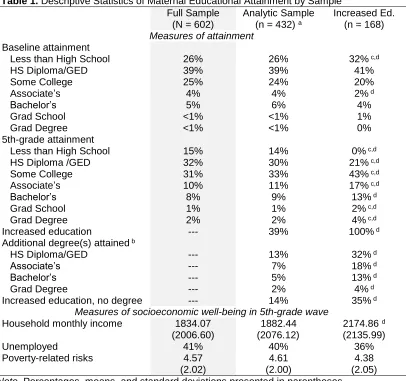
less at baseline. By the time their children were in 5th grade, 39% of mothers in the analytic sample had increased their educational attainment.
[Insert Table 1 about here]
Of mothers who increased their educational attainment, 35% increased their education in ways that did not result in a degree (e.g., began with a high school diploma and took two semesters of college courses), while 65% of mothers increased their education in ways that led to the
attainment of a higher degree.d Mothers who increased their education over
time appear to have started with relatively fewer educational credentials compared to their stably educated peers. On the whole, this group was significantly more likely to have less than a high-school-level education at baseline. However, by the 5th-grade wave, these women appear to have closed a “degree gap,” in that they were significantly more likely to have some college education, an associate’s degree, or a graduate degree.
Examining Predictors of Changes in Maternal Education
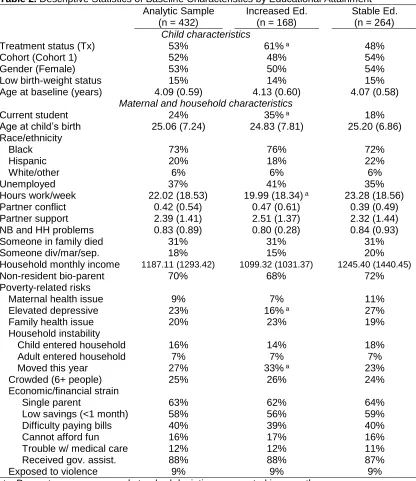
Table 2 presents descriptive statistics across numerous child, maternal, and household characteristics at the baseline wave and whether mothers increased their education over time. On the whole, women who increased their educational attainment appear to be more alike than different from their peers who did not return to school over the same period, with a few notable differences. For example, the 2 samples did not differ
significantly in terms of mothers’ race/ethnicity, their age at their child’s birth,
characteristics of their households, qualities of their relationships, or many indicators of poverty-related risk, but mothers who increased their education over time were significantly more likely to report being a student during the baseline wave. Mothers who increased their education were significantly more likely to have their child randomized to the treatment (versus control) condition and therefore to have had access to higher quality preschool, as compared to mothers whose education remained stable. In addition, mothers who increased their education reported significantly fewer hours of work a week and were more likely to report having moved in the past year, but they were also significantly less likely to report elevated depressive symptoms compared to mothers whose education remained stable over time.
d These categories are not mutually exclusive, as some mothers attained multiple degrees
[Insert Table 2 about here]
Our next aim was to determine which characteristics of mothers may be associated with higher versus lower probability of returning to school. Logistic regression results indicate that net of mothers’ baseline educational attainment and other characteristics, mothers whose children attended treatment sites characterized by higher classroom quality were 87% more likely to increase their education over time as compared to mothers with children enrolled in lower quality control group sites (OR = 1.87, SE = 0.39, p<.001; see Table 3). Mothers’ baseline educational attainment was also significantly and negatively associated with the likelihood of increased education by 5th grade; women with higher levels of educational attainment at baseline were less likely to increase their education compared to their peers with lower levels of education at baseline. Post-hoc inspection of the data suggest that women who reported having some college (OR = 0.49, SE = 0.15, p<.05), an associate’s degree (OR = 0.21, SE = 0.14, p<.05), or a bachelor’s degree or more (OR = 0.45, SE = 0.22, p<.05) were 51%, 79%, and 55% less likely, respectively, to increase their education compared to their peers with less than a high school education at baseline. Last, mental health issues appeared to serve as a barrier to mothers’ re-entrance to the classroom; mothers who reported elevated depressive symptoms at baseline were 53% less likely to increase their educational attainment in the subsequent 6 years from preschool to 5th grade, as compared to their peers
without elevated depressive symptoms (OR = 0.47,SE = 0.47, p<.01). This
finding demonstrates the barriers posed by mothers’ depressive symptoms on potential avenues for economic improvement; although depressive symptomatology was only assessed at baseline, our findings provide evidence that parents’ mental health difficulties serve as a significant hurdle for investments in human capital over the long term.
[Insert Table 3 about here]
Examining the Returns to Maternal Education
We next examined whether mothers’ increased educational
covariates. Results from this model indicate that increased education was positively and significantly associated with greater household income in the 5th-grade wave. On average, we found that mothers who increased their education earned nearly $800 more per month during their child’s 5th-grade year (B = 770.74, SE = 186.23, p<.001) than their peers who did not increase their educational attainment. Further, this association held after including baseline levels of education as well as other covariates (such as their baseline monthly income).
The second column of Table 4 presents the logistic regression results whereby we repeated the model outlined above with maternal unemployment in the 5th-grade wave as the dependent variable. Results from this model indicate that mothers who increased their education over time were 38% less likely to be unemployed in 5th grade than their stably educated peers (OR = 0.62, SE = 0.15, p<.05). These associations
remained statistically significant net of the inclusion of mothers’ baseline
educational attainment and other characteristics (such as maternal depressive symptoms) in our models.
Moving to the third column of Table 4, OLS regression results indicate that increased maternal education is also negatively associated with the number of poverty-related risks mothers reported in the 5th-grade wave (B = -0.48, SE = 0.21, p<.05). This means that, with all other maternal characteristics held constant, a household headed by a mother with less than a high-school-level education at baseline who increased her education over time could expect to experience 5 risks, on average (as compared to non-returning mothers’ estimated rates of about 5.52 risks, on average) at the 5th-grade wave. The implications of these findings across these 3 human-capital-related outcomes are discussed below.
[Insert Table 4 about here]
Discussion
The first goal of the current study was to examine young mothers’
participation in their own education following enrollment of their preschool-aged children into federally funded Head Start programs through the elementary (5th grade) school years. Our second goal was to extend
existing literature on maternal investments in education3,13,14 by examining
the characteristics that distinguish mothers who increased their education over time from those who did not. Our third goal was to explore whether increased educational attainment was associated with clear benefits or “payoffs” in economic terms for the families in our sample. To answer that
was significantly predictive of improved socioeconomic conditions among this sample of low-income families.
Maternal Education Among a High-risk Sample
Our descriptive analyses revealed that many mothers increased their educational attainment over time, despite reporting considerable economic and poverty-related risk. Mothers in our sample increased their education at a rate that far outpaces rates found in other larger studies examining low-income mothers’ educational attainment over time. Specifically, 39% of mothers in the CSRP increased their educational attainment in the period from their child’s preschool enrollment through their child’s 5th-grade school year—this represents a high rate of investment in mothers’ own human capital relative to rates reported in prior research (e.g., with 5% to 16% of
mothers returning to school over time).12,13,19
Our findings make sense when examining the differences between our study and other prior studies. For example, many of the parents in our sample had not completed high school, and only about 12% of mothers within the current sample reported having any postsecondary degree by the time their child was in preschool. Mothers in our samples started with lower average levels of educational attainment at baseline as compared to other, larger, and more heterogeneous samples with higher average levels of education—we suspect that this allowed for more room for improvement for CSRP mothers’ educational trajectories. In addition, our longer-term study design (following families for 6 years) may have contributed to our finding of larger rates of postsecondary education participation among the families in our study relative to the Head Start Impact Study, which followed families for about 3 years and found lower rates of increases in parental educational
attainment (between 9%13 and 16%19). The fact that so many of the mothers
in our study do return to postsecondary education over a longer period of time is promising, suggesting that dual-generation anti-poverty efforts may
yield larger returns in the long run rather than the short run.20
Beyond simply increasing their numbers of years of completed schooling, many mothers in our study also successfully attained additional degrees. By the 5th-grade wave, mothers who increased their educational attainment were significantly more likely to have some college-level education, an associate’s degree, or a graduate degree by the 5th-grade
wave. Parallel to other research,3 these are the same mothers who were
children’s educational opportunities (as indicated by their choice to enroll in Head Start) also make investments in their own educational trajectories.
What Helps or Hurts Changes in Education?
In addition to examining overall changes in maternal education, the current study examined whether mothers who increased their education over time were significantly different from mothers who did not on a set of baseline characteristics. Importantly, our analyses suggest that mothers who pursued more education while their children were in Head Start and early elementary school were more demographically similar than different to those parents who did not go back to school over the same time period. Results from our analyses highlight the potent role of maternal depressive symptoms as a hurdle for educational attainment. Specifically, women with elevated depression symptoms at baseline were 53% less likely to increase their education later on, compared to their peers without elevated depressive symptoms. This finding is supported by much existing research describing the barriers that mental health issues present to
low-income mothers and programs serving low-low-income families.38,39 One
implication is that clinical supports focused on reducing mothers’ risk of
depressive symptoms may not only boost positive parenting behaviors40 but
may also boost maternal educational outcomes and socioeconomic
resources.35 While our findings highlight additional potential benefits of
mental-health-oriented parenting interventions, they also suggest that positive outcomes of education and employment interventions may be hampered by parents’ mental health symptomatology. We take this finding
to demonstrate the importance of addressing mental health
symptomatology in programs and interventions that specifically target
parents’ education or employment.41 This may explain the improvements in
parental education yielded by contemporary 2-generation interventions,
such as AVANCE Parent-Child Education Program,42 that provide support
for mental health in addition to occupational and educational support. Children’s attendance at higher quality programs (as indexed by their programs’ involvement in the treatment condition of our preschool intervention) was also associated with a significant increase in the odds mothers would pursue additional educational attainment over time. Mothers of children randomized to treatment preschool classrooms were 87% more likely to increase their educational attainment compared to their peers with children randomized into control preschool classrooms. It is possible that supporting children’s self-regulation, behavior, and academic skills resulted in more positive exchanges between mothers and teachers, children and
Alternatively, selection may have played an important role in our findings with more educationally oriented parents somehow enrolling their children into higher quality Head Start programs at the outset of the school year, relative to families who enrolled their children in the control-assigned programs. This seems unlikely, given that program assignment to the CSRP intervention was not widely communicated to families and given that it occurred within a very short time period prior to family enrollment in Head Start services. The broader implications of our findings are that parents’ own educational aspirations and values likely play an important (and often under-recognized) role both in families’ participation in interventions and in the long-term returns that may accrue to parents as well as children. These “selection” and “spillover” effects are clearly worth examining in greater detail in future research.
Returns to Increased Education
The current study also tested whether increases in educational attainment were predictive of positive economic returns to household income, maternal employment, and in changes in families’ exposure to poverty-related risks. Results from OLS and logistic regressions confirm that increased maternal educational attainment is positively predictive of improvements in families’ socioeconomic well-being over time. OLS regression results indicate that, above baseline maternal educational attainment and other covariates, mothers’ increased educational attainment was significantly associated with an average increase of about $800 of monthly household income. When placed in the context of low-income families’ yearly income, this translates to an increase of almost $10,000 a year, a sizable improvement in family economic well-being. Furthermore, increased educational attainment among Head Start enrolled parents was associated with 38% lower odds of being unemployed in the 5th-grade wave and significantly lower levels of poverty -related risk. Mothers who returned to school experienced 0.50 fewer risks than their stably educated peers (the equivalent of .25 of a SD of risks.) In short, our non-experimental findings bolster prior evidence that boosting maternal educational attainment is one potential pathway to increasing familial socioeconomic resources and perhaps the well-being of parents and children as a result.
Limitations
characteristics that may mediate associations between increased attainment and family resources. Future research examining educational attainment over time should employ methods that capture the types and timing of fluctuations in marital status or household composition to better answer those questions. Further, the current study did not collect detailed information related to educational costs, nor do we have data on how mothers met those costs. In short, our findings provide only a partial rather than a comprehensive perspective on the costs and benefits of returning to school for the young, low-income mothers in our sample.
An additional limitation is that causal inferences cannot be drawn
using this study’s methodology. However, this paper is a preliminary
empirical step in understanding the ways that low-income parents make investments in their own futures as well as the futures of their children. The data and results serve to highlight the nuanced relationships among environmental factors, increases in maternal education, and families’ socioeconomic outcomes.
We raise several final notes of caution regarding the generalizability of our findings, given that the families in our study were anchored in a particular time and place. For example, they weathered a major recession during the period of our follow-up and faced high unemployment rates and
other poverty-related risks throughout this period.45 Therefore, it is possible
that rates of enrollment and increases in attainment were inflated as parents returned to education as a result of limited options in the labor market.
National enrollment patterns5 and empirical examinations of other periods
of recession46 suggest that spikes in enrollment occur concurrent to the
country’s entrance into an economic downturn. Similarly, CSRP-enrolled families live in an urban center (Chicago) and likely have more opportunities and access to programs to increase their own educational attainment compared to rural or semi-rural families, limiting the generalizability of our findings to other regions.
Conclusions and Implications
In conclusion, our findings are consistent with other recent studies
examining low-income parents’ successful educational trajectories.13,14 It is
improving family resources, which are other important characteristics to
consider for child well-being.33 In sum, this study adds to a small but growing
body of research suggesting the benefits that high-quality early educational
settings may have for the life outcomes of children’s parents.13,20,47 This
References
1. Astone NM, Schoen R, Ensminger M, Rothert K. School reentry in early
adulthood: The case of inner-city African Americans. Sociol Educ. 2000;
73:133-154.
2. Kalil A, Crosnoe R. Two generations of educational progress in Latin American immigrant families in the US: A conceptual framework for a new
policy context. In: Grigorenko EL, Takanishi R, eds. Immigration, Diversity,
and Education. New York, NY: Routledge/Taylor and Francis; 2009:188-204.
3. Magnuson K. Maternal education and children’s academic achievement
during middle childhood. Dev Psychol. 2007;43(6):1497-1512.
4. Gault B, Reichlin L, Román S. College Affordability for Low-Income
Adults: Improving Returns on Investment for Families and Society.
Washington, DC: Institute for Women’s Policy Research; 2014.
5. Choy S. Nontraditional undergraduates, NCES 2002-012. Washington,
DC: US Department of Education, National Center for Education Statistics; 2002.
6. Aud S, Wilkinson-Flicker S, Kristapovich P, Rathbun A, Wang X, Zhang J. The Condition of Education 2013, NCES 2013-037. Washington, DC: US Department of Education, National Center for Education Statistics; 2013.
7. Edin K, Kefalas M. Promises I Can Keep: Why Poor Women Put
Motherhood Before Marriage. Berkeley, CA: University of California Press; 2005.
8. Park TJ. Stopping in and stopping out: Degree trajectories for
community college students. Paper presented at: 38th Annual Conference
of the Association of Education Finance and Policy; March 14-16, 2013; New Orleans, LA.
9. Evans GW, Kim P. Child poverty and young adults’ allostatic load: The
mediating role of childhood cumulative risk exposure. Psychol Sci.
2012;23(9):979-983.
10. Shonkoff JP. Building a new biodevelopmental framework to guide the
future of childhood policy. Child Dev. 2010;81(1):357-367.
11. Sameroff AJ, Bartko WT, Baldwin A, Baldwin C, Seifer R. Family and social influences on the development of child competence. In: Lewis M,
Feiring C, eds. Families, Risk, and Competence. Mahwah, NY: Erlbaum;
1998:161-185.
12. Magnuson KA, Sexton HR, Davis-Kean P, Huston AC. Increases in
maternal education and young children’s language skills. Merrill-Palmer Q.
13. Sabol TJ, Chase-Lansdale PL. The influence of low-income children’s
participation in Head Start on their parents' education and employment. J
Policy Anal Manage. 2015;34(1):136-161.
14. Crosnoe R, Kalil A. Educational progress and parenting among Mexican
immigrant mothers of young children. J Marriage Fam. 2010;72(4):976-990.
15. The Annie E. Casey Foundation. Creating Opportunities for Families: A
Two-generation Approach. Baltimore, MD: The Annie E. Casey Foundation; 2014.
16. Elder GH Jr. The life course as developmental theory. Child Dev.
1998;69(1):1-12.
17. Alexander K, Bozick R, Entwisle D. Warming up, cooling out, or holding steady? Persistence and change in education expectations after high
school. Sociol Educ. 2008;81(4):371-396.
18. Brinton MC. Women and the Economic Miracle: Gender and Work in
Postwar Japan. Berkeley, CA: University of California Press; 1993.
19. Harding JF. Increases in maternal education and low-income children’s
cognitive and behavioral outcomes. Dev Psychol. 2015;51(5):582-599.
20. Chase-Lansdale PL, Brooks-Gunn J. Two-generation programs in the
twenty-first century. Future Child. 2014;24(1):13-39.
21. US Department of Labor; Bureau of Labor Statistics. Earnings and
unemployment rates by educational attainment, 2015.
http://www.bls.gov/emp/ep_chart_001.htm. Published 2015. Accessed
August 20, 2015.
22. Symonds WC, Schwartz RB, Ferguson R. Pathways to Prosperity:
Meeting the Challenge of Preparing Young Americans for the 21st Century.
Cambridge, MA: Pathways to Prosperity Project, Harvard University Graduate School of Education; 2011.
23. US Department of Education; Institute of Education Science; Naitonal Center for Education Statistics. Fast facts: Tuition costs of colleges and
universities. https://nces.ed.gov/fastfacts/display.asp?id=76. Published
May 27, 2000. Accessed January 11 2016.
24. Eyster L, Callan T, Adams G. Balancing School, Work, and Family:
Low-income Parents’ Participation in Education and Training. Washington, DC: Urban Institute; 2014.
25. Nelson B, Froehner M, Gault B. College students with children are common and face many challenges in completing higher education. Washington, DC: Institute of Women’s Policy Research; 2013.
26. Raver CC, Jones SM, Li-Grining C, Zhai F, Bub K, Pressler E. CSRP’s impact on low-income preschoolers’ preacademic skills: Self-regulation as
27. Zhai F, Raver CC, Jones S, Li-Grining CP, Pressler E, Gao Q. Dosage effects on school readiness: Evidence from a randomized classroom-based
intervention. Soc Serv Rev. 2010;84(4):615-655.
28. US Bureau of Labor Statistics; National Longitudinal Surveys. National
Longitudinal Survey of Youth | 1979, Appendix 8: Highest Grade Completed and Enrollment Status Variable Creation.
https://www.nlsinfo.org/content/cohorts/nlsy79/other-documentation/codebook-supplement/nlsy79-appendix-8-highest-grade. Published March 4, 2015. Accessed March 4, 2015.
29. Kessler RC, Andrews G, Colpe LJ, et al. Short screening scales to monitor population prevalences and trends in non-specific psychological
distress. Psychol Med. 2002;32(6):959-976.
30. Hernandez DP, Pressler E. Gender disparities among the association
between cumulative family-level stress & adolescent weight status. Prev
Med. 2015;73:60-66.
31. Raver CC, Blair C, Willoughby M. Poverty as a predictor of 4-year-olds' executive function: New perspectives on models of differential
susceptibility. Dev Psychol. 2013;49(2):292-304.
32. Roy AL, Raver CC. Are all risks equal? Early experiences of
poverty-related risk and children’s functioning. J Fam Psychol. 2014;28(3):391-400.
33. Evans GW. The environment of childhood poverty. Am Psychol.
2004;59:77-92.
34. Harding JF, Morris PA, Hughes D. The relationship between maternal
education and children’s academic outcomes: A theoretical framework. J
Marriage Fam. 2015;77(1):60-76.
35. McLoyd VC. Socioeconomic disadvantage and child development. Am
Psychol. 1998;53(2):185-204.
36. Stata Statistical Software [computer program]. Release 12. College Station, TX: StataCorp LP; 2011.
37. Graham JW, Olchowski AE, Gilreath TD. How many imputations are really needed? Some practical clarifications of multiple imputation theory.
Prev Sci. 2007;8(3):206-213.
38. Love JM, Kisker EE, Ross CM, et al; Mathematica Policy Research, Inc.
Making a Difference in the Lives of Infants and Toddlers and Their Families: The Impacts of Early Head Start—Executive Summary. Washington, DC: Early Head Start Research and Evaluation Project, Administration on Children, Youth and Families, US Department of Health and Human Services; 2002.
39. Schmit S, Golden O, Beardslee W. Maternal depression: Why it matters
to an anti-poverty agenda for parents and children. Washington, DC: Center
40. Lovejoy MC, Graczyk PA, O’Hare E, Neuman G. Maternal depression
and parenting behavior: A meta-analytic review. Clin Psychol Rev.
2000;20(5):561-592.
41. Chase-Lansdale PL, Sommer TE. Addressing poverty through two generation approaches. Paper presented at: BPI/CURL Knowledge Exchange; 2014; Chicago, IL.
42. Parent‐Child Education Program: Study executive summary. San Antonio, TX: AVANCE & Intercultural Development Research Association; file:///C:/Users/epressler/Desktop/AVANCE_Evaluation_Brief_02272013.p df. Published February, 2013.
43. Raver CC, Jones SM, Li-Grining C, Zhai F, Metzger MW, Solomon B. Targeting children’s behavior problems in preschool classrooms: A
cluster-randomized controlled trial. J Consult Clin Psychol. 2009;77(2):302-316.
44. Zhai F, Raver CC, Jones SM. Academic performance of subsequent schools and impacts of early intervention: Evidence from a randomized
controlled trial in Head Start settings. Child Youth Serv Rev. 2012;
34(5):946-954.
45. Pressler E, Raver CC, Friedman-Krauss AH, Roy A. The roles of school
readiness and poverty-related risk for 6th grade outcomes. J Educ Develop
Psychol. 2016;6(1):140-156.
46. Brown JR, Hoxby CM, eds. How the Financial Crisis and Great
Recession Affected Higher Education. Chicago, IL: University of Chicago Press; 2015.
47. Haskins R, Garfinkel I, McLanahan S. Introduction: Two-generation
Table 1. Descriptive Statistics of Maternal Educational Attainment by Sample Full Sample
(N = 602)
Analytic Sample (n = 432) a
Increased Ed. (n = 168)
Measures of attainment
Baseline attainment
Less than High School 26% 26% 32% c,d
HS Diploma/GED 39% 39% 41%
Some College 25% 24% 20%
Associate’s 4% 4% 2% d
Bachelor’s 5% 6% 4%
Grad School <1% <1% 1%
Grad Degree <1% <1% 0%
5th-grade attainment
Less than High School 15% 14% 0% c,d
HS Diploma /GED 32% 30% 21% c,d
Some College 31% 33% 43% c,d
Associate’s 10% 11% 17% c,d
Bachelor’s 8% 9% 13% d
Grad School 1% 1% 2% c,d
Grad Degree 2% 2% 4% c,d
Increased education --- 39% 100% d
Additional degree(s) attained b
HS Diploma/GED --- 13% 32% d
Associate’s --- 7% 18% d
Bachelor’s --- 5% 13% d
Grad Degree --- 2% 4% d
Increased education, no degree --- 14% 35% d
Measures of socioeconomic well-being in 5th-grade wave
Household monthly income 1834.07
(2006.60)
1882.44 (2076.12)
2174.86 d
(2135.99)
Unemployed 41% 40% 36%
Poverty-related risks 4.57
(2.02)
4.61 (2.00)
4.38 (2.05)
Note. Percentages, means, and standard deviations presented in parentheses.
a Participants were excluded from the sample if the same respondent did not answer at least
3 of 4 surveys (n = 108) or were missing baseline educational data (n = 62).
b Not mutually exclusive categories (i.e., some women attained multiple degrees).
(n = 432) (n = 168) (n = 264)
Child characteristics
Treatment status (Tx) 53% 61% a 48%
Cohort (Cohort 1) 52% 48% 54%
Gender (Female) 53% 50% 54%
Low birth-weight status 15% 14% 15%
Age at baseline (years) 4.09 (0.59) 4.13 (0.60) 4.07 (0.58)
Maternal and household characteristics
Current student 24% 35% a 18%
Age at child’s birth 25.06 (7.24) 24.83 (7.81) 25.20 (6.86)
Race/ethnicity
Black 73% 76% 72%
Hispanic 20% 18% 22%
White/other 6% 6% 6%
Unemployed 37% 41% 35%
Hours work/week 22.02 (18.53) 19.99 (18.34) a 23.28 (18.56)
Partner conflict 0.42 (0.54) 0.47 (0.61) 0.39 (0.49)
Partner support 2.39 (1.41) 2.51 (1.37) 2.32 (1.44)
NB and HH problems 0.83 (0.89) 0.80 (0.28) 0.84 (0.93)
Someone in family died 31% 31% 31%
Someone div/mar/sep. 18% 15% 20%
Household monthly income 1187.11 (1293.42) 1099.32 (1031.37) 1245.40 (1440.45)
Non-resident bio-parent 70% 68% 72%
Poverty-related risks
Maternal health issue 9% 7% 11%
Elevated depressive 23% 16% a 27%
Family health issue 20% 23% 19%
Household instability
Child entered household 16% 14% 18%
Adult entered household 7% 7% 7%
Moved this year 27% 33% a 23%
Crowded (6+ people) 25% 26% 24%
Economic/financial strain
Single parent 63% 62% 64%
Low savings (<1 month) 58% 56% 59%
Difficulty paying bills 40% 39% 40%
Cannot afford fun 16% 17% 16%
Trouble w/ medical care 12% 12% 11%
Received gov. assist. 88% 88% 87%
Exposed to violence 9% 9% 9%
Note. Percentages, means, and standard deviations presented in parentheses.
Table 3. Predicting Increases in Maternal Education by Baseline Characteristics (n = 432)
OR (SE) [95% C.I.]
Treatment status (treated) 1.87 (0.39) ** [1.24, 2.82]
Cohort 0.96 (0.24) [0.59, 1.57]
Child age at baseline (in years) 1.14 (0.20) [0.80, 1.61]
Gender (female) 0.83 (0.17) [0.55, 1.24]
Educational attainment
< H.S. (ref) --- ---
H.S. Diploma/GED 0.73 (0.19) [0.44, 1.22]
Some college 0.49 (0.15) * [0.27, 0.90]
Associate’s 0.21 (0.14) * [0.05, 0.78]
Bachelor’s or more 0.45 (0.22) * [0.17, 1.18]
Age at child’s birth 1.00 (0.01) [0.97, 1.03]
Race/ethnicity
Black (ref) --- ---
Hispanic 0.72 (0.23) [0.38, 1.36]
White/other 0.91 (0.41) [0.38, 2.19]
Elevated depressive symptoms 0.47 (0.13) ** [0.28, 0.82]
Single-parent household 0.94 (0.21) [0.61, 1.46]
Household income 1.00 (0.00) [0.99, 1.00]
Unemployed 1.19 (0.28) [0.75, 1.88]
Constant 0.61 (0.59) [0.09, 4.03]
Note. OR = Odds Ratio, SE = standard error, CI = confidence interval. * p<.05, ** p<.01, ***
Table 4. Associations Between Increased Education and Family Social-mobility (n = 432) a
Household Income Unemployment Poverty-related risks
Coefficient (SE) OR (SE) [95% C.I.] Coefficient (SE)
Increased education 770.74 (186.23) *** 0.62 (0.15) * [0.39, 1.00] -0.48 (0.21) *
Baseline educational attainment
Less than high school (ref) --- --- ---
High school diploma/GED 284.12 (2.36.00) 0.38 (0.20) [0.38, 1.20] -0.32 (0.26)
Some college 1014.80 (263.52) *** 0.52 (0.18) [0.27, 1.03] -0.38 (0.30)
Associates degree 2210.18 (459.27) *** 0.72 (0.42) [0.23, 2.23] -0.83 (0.52)
Bachelor’s degree or more 1837.45 (407.09) *** 0.15 (0.11) ** [0.04, 0.60] -1.04 (0.47) *
Constant 1230.68 (816.71) 0.43 (0.45) [0.06, 3.33] 5.52 (0.94) ***
Note. OR = Odds Ratio, SE = standard error, CI = confidence interval. * p<.05, ** p<.01, *** p<.001.
Appendix A. Differences Between the Full and Analytic Samples’ Baseline Characteristics.
Full Sample (n = 602)
Analytic Sample (n = 432) Educational attainment
Less than High School 27% 26%
HS Diploma/GED 39% 39%
Some College 25% 24%
Associate’s 4% 4%
Bachelor’s 5% 6%
Grad School <1% <1%
Grad Degree <1% <1%
Treatment status (treated) 51% 53%
Cohort (Cohort 1) 57% 52% a
Gender (female) 53% 53%
Race/Ethnicity
Black 66% 73% a
Hispanic 27% 20% a
White/Other 7% 6%
Child had low birth weight 13% 15%
Mom age at birth 25.76 (7.66) 25.45 (7.58) a
Child age at baseline (years) 3.76 (.61) 4.09 (0.59)
Child letter naming skills (Fall baseline) 0.22 (.30) 0.22 (0.30)
Child early math skills (Fall baseline) 0.39 (.20) 0.39 (0.20)
Child internalizing behavior (Fall baseline) 0.23 (.25) 0.22 (0.25) Child externalizing behavior (Fall baseline) 0.32 (.32) 0.32 (0.32) Child executive function (Fall baseline) -0.01 (0.82) -0.04 (0.79) Poverty-related risks at baseline:
Maternal health issue 9% 9%
Elevated K6 (depression) 22% 23%
Family health issue 21% 20%
Household instability
New child entered HH 15% 16%
New adult entered HH 7% 7%
Moved this year (moved) 28% 27%
Crowded household (6+ people) 23% 25%
Poverty-related risk
Single-parent household 61% 63% a
Low savings (<1 month) 57% 58%
Difficulty paying bills 40% 40%
Cannot afford fun 17% 16%
Trouble getting medical care 11% 12%
Unemployed 39% 37%
Hours work per week 21.34 (18.65) 22.02 (18.53)
Received public assistance 85% 88% a
Partner conflict 0.41 (.54) 0.42 (0.54)
Partner support 2.39 (1.40) 2.39 (1.41)
Neighborhood and housing problems 0.85 (0.86) 0.83 (0.89)
Household income at baseline 1178.51 (1298.85) 1187.11 (1293.42)
![Table 3. Predicting Increases in Maternal Education by Baseline Characteristics (n = 432) OR (SE) [95% C.I.]](https://thumb-us.123doks.com/thumbv2/123dok_us/8847934.1799038/25.612.106.505.131.391/table-predicting-increases-maternal-education-baseline-characteristics-se.webp)

