Research note
Functionalized Mesoporous Silica Nanoparticles as a Novel
Antioxidant Delivery System
S. Iraji1, L. Rashidi2*, F. Ganji1*1
1Biomedical Engineering Group, Chemical Engineering Faculty, Tarbiat Modares University,
Tehran, Iran
2Food and Agriculture Department, Standard Research Institute, Iranian National Standards
Organization,Karaj, Iran
Abstract
Antioxidants have an important role in control and prevention of dangerous diseases like cancers, but instability and high solubility of the antioxidants are major challenges of pharmaceutical researchers. Thus, using a suitable carrier for an antioxidant can enhance the antioxidant stability and protect it from reacting with the other existing molecules in the blood circulation. Mesoporous silica nanoparticles (MSNs) have been widely used as a carrier for therapeutic applications because of their suitable biological properties. This study attempts to improve the surface properties and increase antioxidant loading by functionaliztion of MSNs with 3-aminopropyltriethoxysilane (AP-MSNs) via post- synthesis grafting method. Synthesized nanoparticles were characterized by Scanning electron microscopy (SEM), Zetasizer and Fourier transform infrared spectroscopy (FTIR). Gallic acid (GA) was loaded into AP-MSNs. To optimize GA loading capacity, two effective parameters: GA concentration and embedding time were investigated. So different concentrations of GA in EtOH (1-50 mg/mL) were prepared and sampling was done in 24 and 48 h. Results showed that the best GA loading capacity was obtained at a concentration of 40 mg/mL in 48 h. The maximum GA loading capacity and entrapment efficiency were obtained 46 and 20%, respectively, determined by spectrophotometry and high-performance liquid chromatography (HPLC) analysis.
Keywords: Nanoparticle, Novel Drug Delivery, Mesoporous Silica, Functionalization, Gallic Acid
Functionalized Mesoporous Silica Nanoparticles as a Novel Antioxidant Delivery System
1. Introduction
Nowadays, many nanotechnology-based
systems for novel drug transporting are being developed. Using nanoparticles as a novel drug delivery system can improve the quality and efficiency of drug delivery [1]. Mesoporous silica nanoparticles (MSNs) possess unique properties such as high surface area, high pore volume, and tunable pore size. They have physicochemical stability, easily modified surface, low toxicity, and potential suitability for delivery of various hydrophilic and hydrophobic active agents such as drugs, proteins, genes, and minerals [2]. Surface modification by different functional groups can improve physical and chemical properties, which results in an increase of capacity for drug loading [3]. In several studies, the application of different materials has been investigated for modification of the surface of MSNs such as gelatin [4], silsesquioxane with Azo groups[5], indium tin oxide-polydopamine
[6], 3-amino prpopyl triethoxy orthodilane [7], (3-glycidoxypropyl) methyl diethoxy silane [8] and so on. Due to high amino
terminal groups, 3-(aminopropyl)
triethoxysilane (APTES) has been chosen in this study for this purpose [9]. Antioxidants have an important role in controlling and preventing dangerous diseases, including cancer, aging and atherosclerosis [10]. Antioxidants reduce or retard free radical and prevent the oxidation of biomacromolecules, including DNA, membrane lipids, and proteins [10]. Therefore, commercial antioxidants have been in high demand, and most of them are synthesized [11]. Several synthetic
antioxidants are extensively used;
however, these antioxidants must be used under strict regulations due to their potential risk in vivo; therefore, much
attention has been given to the use of naturally occurring antioxidants to inhibit
oxidative damage [10]. Health
professionals and consumers welcome
the natural antioxidants and are
searching for alternative ones; especially those from plant extracts, for example, green tea, rosemary and olive oil [12].
Gallic acid (3,4,5-trihydroxylbenzoic
acid, GA) and their esters are common plant constituents that are known for their antioxidant activity. The antioxidant activity of GA has been correlated with the interfacial radical chemistry of its phenolic group [13]. The major interest of GA is related to its antitumor activity [14]. The ability of polyphenols to protect cells from “oxidative stress” has been demonstrated [15]. So MSNs were used for encapsulation of GA and increased the shelf life of it in the body, but it was observed that the quantity of GA loading was 0.5 (w/w%)
[15]. In addition, MSNs were
functionalized by APTES via a grafting method, but were heated in toluene at reflux in high temperature and for a long time (24 h), according to the method described by Zhang et al. 2010 [16]. It was found that GA loading was increased to 11 w/w% [15]. In this study MSNs are functionalized by APTES in a nontoxic solvent and in a short time (3 h) and functional groups are uniformly distributed on the surface of MSNs. The aim of this study is the increase of GA loading efficiency into MSNs and increase of GA
effectiveness in the body. By
functionalization of the MSNs surface, the positive charge of nanoparticles surface
increases, so it is anticipated that
MSNs are obtained by loading of AP-MSNs in different concentrations of GA in ethanol.
The maximum loading and entrapment efficiency percentages were 7.3% and 43%, 11.3% and 18.9% for MSNs, AP-MSNs, respectively, reported by Rashidi et al. (15). In this study, by this new method for synthesizing AP-MSNs, the quantity of GA loading increased up to 46% and GA entrapment efficiency increased up to 20.77%.
2. Materials and method 2-1. Materials
N-cetyltrimethylammoniumbromide (CTAB),
tetraethylorthosilicate (TEOS), sodium
hydroxide (NaOH), hydrochloric acid (HCl,
37%), 3-aminopropyltriethoxysillane
(APTES) and ethanol (EtOH) were obtained from the Merck Company (Germany). Gallic acid was purchased from the Sigma-Aldrich Company (USA).
2-2. Preparation of samples
2-2-1. Synthesis of mesoporous silica nanoparticles (MSNs)
MSNs were synthesized as described in our previous work [2], briefly: 1 g of CTAB was dissolved in 480 mL of pure water. Then 3.5 mL of 2.0 M NaOH was added to the CTAB solution at 80ºC. At this temperature, 5 mL of TEOS was added drop wise at a rate of 1 mL/min to the CTAB solution. The final mixture was stirred vigorously at 80ºC for 2 h. White precipitate was produced and isolated by filtration (0.45 μm polypropylene filter), washed with abundant water and methanol, and then dried under vacuum oven. The surfactant was removed via
calcination at 540ºC for 4 hours at a heating rate of 1ºC/min [2].
2-2-2. Preparation of functionalized mesoporous silica nanoparticles (AP-MSNs)
Powdered MSNs (0.5 g) were dispersed in EtOH (50 mL) by ultra-sonication for 15 min and the pH of this mixture was adjusted to 3.5±0.5. Subsequently, APTES (0.5 g) was quickly injected into this dispersion with magnetic stirring (500 rpm) at room temperature for 3h. The AP-MSNs were collected by centrifugation (7000 rpm) for 5 minutes and washed three times by EtOH, and dried under vacuum at room temperature [9].
2-2-3. Gallic acid loading
For this purpose, different concentrations of GA in ethanol (1, 10, 20, 30, 40, 50 mg/mL) were prepared, and then 10 mg of AP-MSNs was separately added into a vial containing 1 mL of defined concentration of GA in ethanol. The vials were located on the shaker at 155 rpm at room temperature in darkness for 24 and 48 h. Then, AP-MSNs loaded by GA (named AP-MSN-GA) were removed from the ethanol solution by centrifugation, washed by ethanol three times, and dried under vacuum at room temperature. The supernatant was collected to determine GA loading.
Functionalized Mesoporous Silica Nanoparticles as a Novel Antioxidant Delivery System
entrapment efficiency were calculated by using Eqs (1 and 2):
Drug loading [%] = 100×
(𝑊𝐺𝐴 𝑙𝑜𝑎𝑑𝑒𝑑 𝑖𝑛𝑡𝑜 𝐴𝑃−𝑀𝑆𝑁𝑠
𝑊𝐺𝐴 @ 𝐴𝑃−𝑀𝑆𝑁𝑠 ) (1)
Entrapment efficiency [%] = 100×
(𝑊𝐺𝐴 𝑙𝑜𝑎𝑑𝑒𝑑 𝑖𝑛𝑡𝑜 𝐴𝑃−𝑀𝑆𝑁𝑠
𝑊𝐼𝑛𝑖𝑡𝑖𝑎𝑙 𝐺𝐴 ) (2)
In which:
W is the weight of GA
3. Statistical analysis
The experimental data were obtained at least in triplicate averaged. Statistical significance
was determined by using one-way analysis of variance (ANOVA) followed by Duncan post hoc test; P< 0.05. Results are shown as mean ± standard deviation (SD).
4. Results and discussion
4-1. Characterization of synthesized AP-MSNs
AP-MSNs were characterized by several
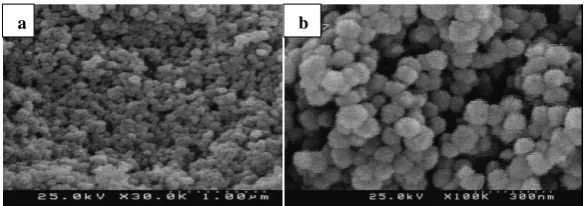
techniques. The SEM images of synthesized AP-MSNs are shown in Fig. 1. As can be seen, the AP-MSNs are spherical with nearly uniform sizes, mostly in the range of 122 nm.
Figure 1. SEM images of synthesized AP-MSNs a) Resolution=30.0 k and b) Resolution=100 k.
The zeta potentials of nanoparticles and GA in alkaline pH are listed in Table 1. The high amine content of AP-MSNs is reflected by a strong positive zeta potential of these particles in water at pH 7.4 , that was, +41±1.1 mV. In comparison, the zeta potential for unfunctionalized MSNs was approximately -10±1.2 mV.
Table 1
Zeta potentials of nanoparticles and GA at pH 7.4.
Samples Zeta potential (mV)
Gallic acid MSNs AP-MSNs AP-MSNs-GA
-10 ± 1.2 -10 ± 3.1 +41 ± 2.1 +25 ±1.1
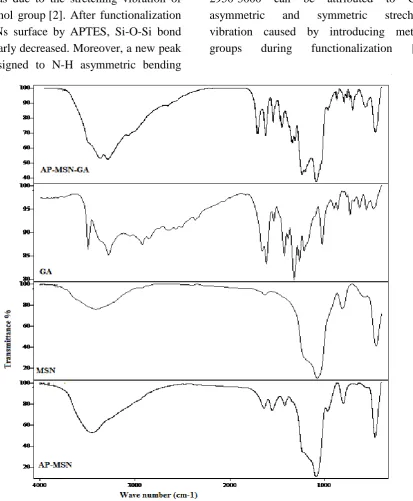
FT-IR spectroscopy measurements were
performed to identify the structural
differences between the MSN, AP-MSN and AP-MSN-GA (Fig. 2). The FTIR spectra of GA indicates bands in the 2820–2926 cm-1 region corresponding to stretching vibrations of aliphatic CH, CH2, and CH3 side chain
groups of the aromatic rings (Fig. 2). In addition, the FTIR spectrum of GA indicates peaks corresponding to be different OH groups at 3494, 3285, and 3080 cm-1. The peaks between 1027 and 1386 cm-1 represent C–O stretching vibrations of carboxylic acids
[16]. The peaks between 1426 and 1660 cm-1
represent C=C stretching and aliphatic C–H bending. The peak at 730 cm-1 is attributed to
groups and the peak at 555 cm-1 to CO-OH deformation [16]. The MSN samples exhibited IR peaks at the bands attributed to
Si-OH bending (431 cm-1), Si-OH symmetric
stretching (801 cm-1) (Fig. 2). The broad adsorption peak in the range of 3750-3000 cm-1 was due to the stretching vibration of the silanol group [2]. After functionalization of MSNs surface by APTES, Si-O-Si bond was clearly decreased. Moreover, a new peak was assigned to N-H asymmetric bending
vibration at 1590.26 cm-1, which confirmed the successful functionalization of MSNs surface by amino groups. The strongest peak in the range of 1033 cm-1 represents the
stretching vibration of Si-O-Si. The
absorption peak in the spectral range of 2950-3000 can be attributed to C-H
asymmetric and symmetric streching
vibration caused by introducing methyl
groups during functionalization [2].
Functionalized Mesoporous Silica Nanoparticles as a Novel Antioxidant Delivery System
Also, for AP-MSN-GA according to the GA, AP-MSNs exhibited strong bonds around 1550 and 1680 cm-1 due to the presence of the N-H bond and the C=O bond of the carboxylic group, respectively, which were decreased after loading of GA. A very
broad absorption band 3450 cm-1
corresponding to Si-OH and NH2 was
decreased after introduction of GA into pores of AP-MSNs.
In addition, decrease of the strong 1110 cm-1band is due to Si-O-Si stretching vibration caused by loading GA into AP-MSNs. In addition, the clear peak observed at 1360 cm-1, shows C-C stretching of the aromatic ring caused by the introduction of GA into AP-MSNs pores.
4-2. GA drug loading/ entrapment efficiency
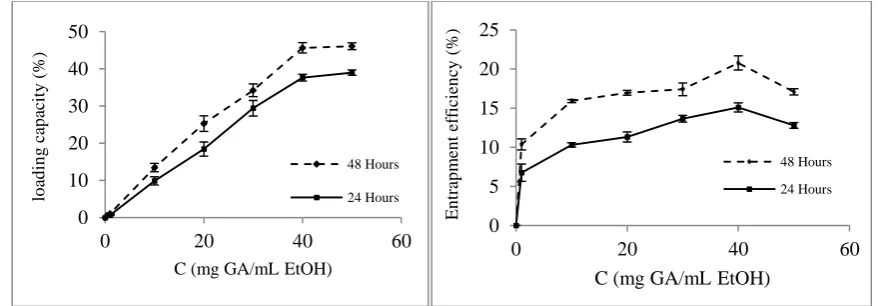
Fig. 3a shows the effect of different concentrations of GA solution in ethanol on
the loading capacity of GA into the pores of AP-MSNs. As it can be seen, an increase of GA concentration in EtOH causes the increasing of GA loading into AP-MSNs. The loading capacity reached a plateau around 40 mg/mL of GA. The maximum loading percentage of GA into MSNs and AP-MSNs was obtained at a concentration of 40 mg/mL of GA in ethanol, and it was obtained 7.3 and 46%, respectively. So an electrostatic interaction between GA and AP-MSNs caused an increase of GA loading. In addition, the effect of time on the loading of GA into nanoparticles is also shown in Fig. 3a. As it can be seen, by increased mixing time, the quantity of GA loading increased. For example, for 25 mg/mL of GA solution, increasing embedded time from 24 h to 48 h resulted in an increase of GA loading from 22% to 30%, while for MSNs, GA loading in 24h was equal as 48h.
Figure 3. Effect of different concentrations of GA in EtOH on, a) GA loading capacity (%) and b) entrapment efficiency (%) (n=3).
Fig. 3b shows the effect of initial
concentration of GA on AP-MSNs
entrapment efficiency. As it can be seen, an increase of GA concentration in EtOH, up to 40 mg/mL causes entrapment efficiency of
the GA in AP-MSNs to increase. After this critical concentration, further increase of GA concentration causes a decrease in GA
entrapment efficiency. The critical
0 10 20 30 40 50
0 20 40 60
lo
ad
in
g
c
ap
ac
it
y
(%
)
C (mg GA/mL EtOH)
48 Hours
24 Hours
0 5 10 15 20 25
0 20 40 60
En
trap
m
en
t
ef
ficie
n
cy
(%
)
concentration of MSNs and AP-MSN was obtained 20 and 40%, respectively.
Fig. 3b also shows the effect of embedding time on AP-MSNs entrapment efficiency. As it can be seen, with increased embedding time, the amount of entrapment efficiency of the GA was increased. As an example, for 25 mg/mL of GA in EtOH, increasing embedding time from 24 h to 48 h causes an increase of AP-MSNs entrapment efficiency from 12 to 17%, but for MSNs the results in 24 and 48 h were not significantly different.
5. Conclusions
In this study, the surface of mesoporous silica nanoparticles was functionalized with 3-aminopropyl triethoxysilane and the effect of this surface modification on the GA loading capacity and entrapment efficiency of the GA, as an active antioxidant, was investigated. It was found that GA loading increased as a result of functionalization of MSNs surface by amine functional groups. Based on the results, GA loading in AP-MSNs at optimum condition reached 46%, with considerable increase compared with unmodified MSNs (about 7%). The increased loading of GA into AP-MSNs can be attributed to hydrogen bond formation between NH2groups of nanoparticles and
COOH and OH groups of GA. These functionalized-MSNs have the high potential for anticancer drug delivery.
Acknowledgment
We acknowledge Iranian National Standardization Organization (INSO) and
and Iran Nanotechnology Initiative Council
for providing instrumental facilities to carry out this study.
References
[1] Kaparissides, C. Alexandridou, S.
Kotti, K. and Chaitidou, S., "Recent Advances in Novel Drug Delivery Systems", Nanosci. Nanotech. J., 2 (1), 1 (2011).
[2] Rashidi, L., Vasheghani-Farahani, E., Rostami, K., Gangi, F. and Fallahour, M., "Mesoporous Silica Nanoparticles as a Nanocarrier for Delivery of Vitamin C", Iran. J. Biotech., 11 (4), 209 (2013).
[3] Chunga, T. H., Wub, S. H., Yao, M., Lu, C. W., Lin, Y. S., Hung, Y., Mou, Ch. Y., Chena, Y. C. and Huang, D. M., "The effect of surface charge on the uptake and biological function of mesoporous silica nanoparticles in 3T3-L1 cells and human mesenchymal stem cells", Biomaterials, 28
(19), 2959 (2007).
[4] Xu, J. H., Gao, F. P., Li, L. L., Ma, H. L., Fan, Y. S., Liu, W., Guo, S. S., Zhao, X. Z. and Wang, H., "Gelatin–mesoporous silica nanoparticles as matrix metalloproteinases-degradable drug delivery systemsin in vivo",
Micropor. Mesopor. Mat., 182 (2), 165
(2013).
[5] Li, X., Tang, T., Zhou, Y., Zhang, Y. and Sun, Y., "Applicability of
enzyme-responsive mesoporous silica supports
capped with bridged silsesquioxane for colon-specific drug delivery", Micropor. Mesopor. Mat., 184 (143), 83 (2014).
[6] Wang, X., Miao, J., Xia, Q., Yang, K.,
Functionalized Mesoporous Silica Nanoparticles as a Novel Antioxidant Delivery System
mesoporous silica nanoparticles",
Electrochimica Acta, 112 (99), 473 (2013).
[7] Tzankov, B., Yoncheva, K., Popova,
M., Szegedi, A., Momekov, G., Mihály, J. and Lambov, N., "Indometacin loading and in vitro release properties from novel carbopol coated spherical mesoporous silica nanoparticles", Micropor. Mesopor. Mat.,
171, 131 (2013).
[8] Hu. X, Wang. Y and Peng. B,
"Chitosan-Capped Mesoporous Silica
Nanoparticles as pH-Responsive
Nanocarriers for Controlled Drug Release", An Asia. J.,9, 319 (2013).
[9] Kamarudin, N. H. N., Jali, A. A.,
Triwahyono, S., Salleh, N. F. M., Karim, A. H., Mukti, R. R., Hameed, B. H. and Ahmad, A., "Role of 3-aminopropyltriethoxysilane in
the preparation of mesoporous silica
nanoparticles for ibuprofen delivery: Effect on physicochemical properties", Micropor. Mesopor. Mat, 180, 235 (2013).
[10] Cho, Y., Kim, S. K., Ahn, CH. B. and Ja, Y., "Preparation, characterization, and antioxidant properties of gallic acid-grafted-chitosans", Carbohydr. Polymer, 83, 1617 (2011).
[11] Cho, M., Lee, H. S., Kang, I. J., Won,
M. H. and You, S. G., "Antioxidant
properties of extract and fractions from Enteromorpha prolifera a type of green seaweed", Food Chem.127, 999 (2011).
[12] Pasanphan, W. and Chirachanchai, S., "Conjugation of gallic acid onto chitosan: An
approach for green and water-based
antioxidant", Carbohydrate Polymer., 72, 169 (2008).
[13] You, B. Y., Moon, M. J., Hwan Han., Y. and Park., W. H., "Gallic acid inhibits the growth of HeLa cervical cancer cells via apoptosis and/or necrosis", Food Chem. Toxicol., 48, 1334 (2010).
[14] Sharma, A., Gautam, S. P. and Gupta,
A. K., "Surface modified dendrimers:
Synthesis and characterization for cancer targeted drug delivery", Bioorg. Med. Chem.,
19, 3341 (2011).
[15] Rashidi, L., Vasheghani-Farahani, E., Rostami, K., Ganji, F. and Fallahour, M. "Mesoporous silica nanoparticles with different pore sizes for delivery of pH- sensitive Gallic acid", Asia Pac. Chem. Eng.,
9 (6), 845 (2014).
[16] Zhang, Y., Zhi, Z., Jiang, T., Zhang, J.,
Wang, Z. and Wang, S., "Spherical
mesoporous silica nanoparticles for loading and release of the poorly water-soluble drug telmisartan", J. Control. Release., 145 (3), 257 (2010).
[17] Rashidi, L., Vasheghani-Farahani, E., Rostami, K., Gangi, F. and Fallahour, M., A
cellular uptake and cytotoxicity properties study of gallic acid-loaded mesoporous silica
nanoparticles on Caco-2 cells , J Nanopart.