CC S.. =
BY NC ND
http://doi.org/10.5114/bta.2019.90247
Sensitivity of mycelial growth of mushroom
Agrocybe semiorbicularis
to different concentrations
of different disinfectants
TOMA BUBA1*, VERONICA AGBO2, ALIYU ABDULLAHI3, JOSEPH EMMANUEL3
1 Department of Ecology, Faculty of Science, Abubakar Tafawa Balewa University, Bauchi, Nigeria
2Department of Microbiology, Abubakar Tafawa Balewa University, Bauchi, Nigeria
3Department of Biological Science, Abubakar Tafawa Balewa University, Bauchi, Nigeria
Abstract
This study was performed to determine the effects of different types of disinfectants (Hypo, Izal, and Dettol) on the mycelial growth of the mushroom Agrocybe semiorbicularis. The more evolutionarily advanced mushroom mycelium was expected to show greater resistance to disinfectants than other fungal and bacterial contaminants. Minimal disinfectant concentration was the one at which contaminants were inhibited, while the growth of the desired mushroom mycelia remained unaffected. Different concentrations of different disinfectants were added to the growth media, and the pure mushroom mycelial culture was inoculated on the media and left to grow. The results revealed that the probability of contamination was higher in all the concentrations of Hypo and in lower concentrations of Dettol and Izal. At 5% concentration of the disinfectants (Hypo, Izal, and Dettol), the mean values of contamination were 0.667, 0.417, and 0.00 (P < 0.001), respectively. At 10% concentration, the mean contamination values were 0.167, 0.583, and 0.333 (P > 0.05), respectively, while at 15% concentration, the mean contamination values were 1.000, 0.417, and 0.250 (P < 0.05), respectively. At higher concentrations of the disinfectants, the growth of contaminants was completely suppressed, and the growth of the desired mycelia was also significantly decreased. At 17% concentration of the disinfectants (Hypo, Izal, and Dettol), the mean values of contamination were 0.833, 0.833, and 0.00 (P < 0.05), respectively. At 18% disinfectant concentration, the mean contamination values were 0.167, 0.00, and 0.00 (P > 0.05), respectively, while at 20% disinfectant con-centration, the mean contamination values were 0.583, 0.00, and 0.00(P < 0.05), respectively. The mean values of the mushroom’s mycelial growth for the three disinfectants (Hypo, Izal, and Dettol) were 6.26, 15.38, and 21.93 mm (P < 0.05), respectively, for 5% concentration; 11.75, 10.08, and 13.90 mm (P > 0.05), respectively, for 10% concentration; and 0.00, 12.88, and 18.33 mm (P < 0.05), respectively, for 15% concentration. At higher concentrations of the disinfectants (Hypo, Izal, and Dettol), the mean values of the mushroom’s mycelial growth were 16.92, 11.90, and 14.33 mm (P > 0.05), respectively, for 17% concentration; 18.54, 3.00, and 8.71 mm (P > 0.05), respectively, for 18% concentration; and 13.50, 13.25, and 0.00 mm (P > 0.05), respectively, for 20% concentration. Disinfectants that yielded 100% (12/12) growth of pure cultures were 18% and 20% concentrations of Izal and 15% concentration of Dettol (P < 0.05). Dettol at concentrations of 10%, 17%, and 18% yielded 66.7% (8/12) of pure cultures, but with a significant decrease in growth (P < 0.05) and viability; moreover, no contami-nants survived at these concentrations. In general, mushroom mycelia were found to exhibit a higher degree of resistance to disinfectants than fungal and bacterial contaminants. Pure mycelial cultures were obtained in almost all the concentrations of all the disinfectants, but there were trade-offs between the levels of contaminations and better growth of the desired mycelia. Dettol was found to have the highest effect on suppressing contaminant growth followed by Izal and the least effective was Hypo. The result of this study will help in the process of mush-room production by reducing the problems of contamination.
Key words: Agrocybe, contamination, disinfectant, Dettol, mycelia, mushroom
Introduction
Mushrooms are spore-bearing distinctive fruiting bo-dies of macrofungi that are produced above ground or on other growth substrates (Wani et al., 2010; Kumar, 2015). Generally, mushrooms are useful in economic, medicinal, and ecological applications. They have been used as food, medicine, and cosmetics in different parts of the world for centuries. Some mushroom species are sources of bioactive compounds such as ascorbic and or-ganic acids, alkaloids, carotenoids, enzymes, flavonoids, folates, glycosides, lectins, and phenolics, which afford them medicinal properties (Kalac, 2013; Kumar, 2015; Valverde et al., 2015). Some mushrooms are ectomycor-rhizal fungi that play important environmental and eco-logical roles. They form mutualistic relationships be-tween plant roots and specific fungi (Rossi et al., 2007). Ectomycorrhizas provide the plants with efficient water and nutrient uptake, while the fungus obtains photosyn-thates from the plant (Jha and Kumar, 2011; Klavina, 2015; Torres-Aquino et al., 2017). Hence, they improve agricultural productivity in nutrient-deficient soils (Hryn-kiewicz and Baum, 2011). Additionally, some ectomycor-rhizas are found to be efficient in preventing uptake and accumulation of heavy metals in plant tissues and are therefore used for reclaiming soils contaminated with heavy metals (Ingrid, 2011; Nanda and Abraham, 2013). However, for practical and extensive exploitation of the benefits of mushrooms, their artificial production is ne-cessary. The business of mushroom production provides job opportunities, thereby providing an alternative source of income in many countries (Celik and Peker, 2009).
Generally, the cultivation of useful fungi involves ob-taining pure mycelia culture of the fungi, followed by the preparation of spawn (Bankole and Salami, 2017). The first critical stage of successful cultivation of any mush-room is the production and maintenance of absolutely pure mycelial culture and spawn. Growth of mushroom mycelial culture is highly affected by several factors such as growth media, pH, temperature, moisture content, high relative humidity, and light intensity. The environ-mental conditions that are optimal for the growth of mushroom mycelia are also, however, ideal for the growth of microbial contaminants (László et al., 2010; Sardar et al., 2015). Maintaining a suitable environment and controlling the contamination during spawn produc-tion are extremely difficult and labor-intensive (Uddin,
2012). The process of suitable spawn production requi-res several operations that are carefully performed in absolute hygiene conditions to avoid any contamination. These requirements make it a highly technical process that requires specialized scientific facilities and equip-ment (Sánchez, 2004; Rosmiza et al., 2016).
The minimal requirements for proper spawn produc-tion include laboratory equipment such as pressure cooker, autoclave, and inoculation box or laminar air flow cabin, which are commonly available in hospitals, re-search institutions, and universities (Van Nieuwen-huijzen, 2007; Dias, 2010). Developed countries usually employ computerized environmental control systems that are capable of monitoring environmental para-meters and thereby increase the production of mush-room cultures at relatively low cost (Sánchez, 2004). In developing countries, mushroom growers use low technology because the knowledge is too complex, equipment for maintaining spawn production is very expensive, and the process is time-consuming (Kües, 2007; Ndem and Martha, 2016).
institu-Agrocybe semiorbicularis tes, which limit their production capacities. These
re-quirements and other technical challenges undoubtedly restrict mushroom production especially in developing countries (Van Nieuwenhuijzen, 2007; Dias, 2010). To boost mushroom production, it is therefore necessary to find cheaper and easier methods of controlling contamina-tions, so that ordinary small-scale mushroom growers can produce their own spawn (Van Nieuwenhuijzen, 2007).
Mushrooms belong to the phylum Basidiomycota, and they are considered to be the most complex and evolu-tionarily advanced members of the fungi kingdom. Their hyphae are uniquely different from those of all other fungi species, with highly characteristic features and “cellular” compositions (Oberwinkler, 2012; De Mattos-Shipley et al., 2016). The present study aimed to deter-mine the effects of different types of disinfectants on the mycelial growth of the mushroom Agrocybe semiorbi-cularis. Specifically, the study’s objective was to deter-mine the minimal concentration of these disinfectants that can inhibit contaminants and at the same time does not affect the growth of the desired mushroom mycelia. We predicted that the mushroom mycelia, being the most complex and evolutionarily advanced, will also show a higher degree of resistance to disinfectants than other fungal and bacterial contaminants.
Materials and methods
Collection of mushrooms
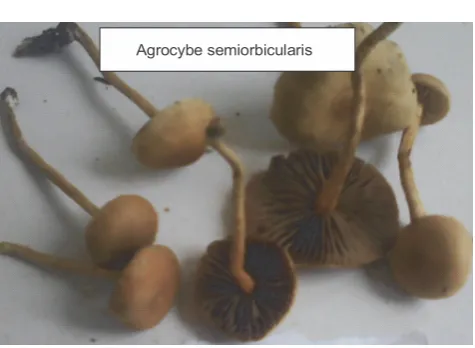
Sporocarps (fruiting bodies) of A. semiorbicularis (family: Strophariaceae) were collected from the wild in the rainy season and transported in plastic bags. The specimens were cleaned of debris and then sun-dried for 5 days. After drying, the specimens were put inanair-tight polythene bag and stored in a cardboard box at room temperature until use (Fig. 1).
Obtaining pure mycelial culture
Three different media were initially used to obtain the pure mycelial culture and to ascertain the best media for mycelia growth (Peksen et al., 2013; Mahadevan and Shanmugasundaram, 2018). The media used were malt extract agar (AccumixTM), yeast extract agar (Accu-mixTM), and potato dextrose agar (PDA, TM MediaTM). They were prepared according to the manufacturer’s instructions. The media were autoclaved at 1.1 kgf/cm2 (121EC) for 20 min. To suppress bacterial growth, chlor
Fig. 1. Mushroom species used in the study
amphenicol (0.03 g/l) was added to the media at 45EC. Approximately 20 ml of the media was then poured into Petri dishes (90 × 15 mm) inside a sterilized laminar flow hood and subsequently solidified (Mendoza et al., 2014). The mushroom samples were then surface sterili-zed by spraying 70% ethanol and cut into pieces (ap-proximately 1 cm2) with a sterile scalpel. The pieces were then placed with a pair of forceps in the prepared media in a way such that their gills were in direct con-tact with the media. The mushrooms placed on Petri di-shes were then incubated at 28EC in complete darkness. After 4–7 days, the mycelia were subcultured into new Petri dishes to obtain a pure mycelial culture. Pure my-celia in Petri dishes without contamination were used for the experiment. PDA was finally adopted as the preferred growth media for the subsequent experiments.
Preparation of media and disinfectants and inoculation of mycelia
periphery by using a cork borer and placed on two points of each Petri dish (90 × 15 mm). To increase the proba-bility of normal aerial contamination, the inoculation was not performed inside the laminar flow hood. Each treat-ment was replicated in six Petri dishes. The Petri dishes were incubated in complete darkness at 28EC for 7days. The optimal concentrations of disinfectants for mycelia growth were determined by measuring colony diameters (Luangharn et al., 2014; Mendoza et al., 2014).
Measurements and data collection
The growth-colony radius of radial mycelia was re-corded using a ruler across the Petri dish (Mahadevan and Shanmugasundaram, 2018; Sharma et al., 2018). The size of the growth-colony radius was estimated by measuring the vertical and horizontal diameters of the mycelia. The sum of the radial measures in millimeter (mm) was divided by four (4) and was regarded as the radial growth for each of the concentrations of the di-sinfectants (Chima et al., 2013). The level of contamina-tion was taken as the ratio between the numbers of con-taminated cultures and the total number of cultures, which were 12. The values ranged from 0.00 to 1.00. Viability of the mushroom mycelia was also taken as the ratio between the number of growing mushroom mycelia inoculums and the total number of inoculums. Here, the values ranged from 0.00 to 1.00.
Data analysis
The data obtained were subjected to analysis of va-riance (ANOVA) followed by Tukey’s Multiple Compari-sons of means using Minitab®18.1.
Results
Effects of different concentrations
of different disinfectants on mycelial growth
The results of this study show that the rate of the mushroom’s mycelial growth, contamination, and the viability of the hyphae from the original mycelia plug inoculums differed depending on concentrations of va-rious disinfectants (Fig. 2). The results also confirmed that mushroom mycelia, being the most complex and evolutionarily advanced, also have a higher degree of resistance to disinfectants than other fungal and bac-terial contaminants. At 5% concentration of disinfectants (Hypo, Izal, and Dettol) in standard of 1 : 20 ml disinfec-tant/media ratio, the mean radial growth of mycelia
co-lony for Dettol and Izal were significantly (P = 0.00; α = 0.05) higher than that for Hypo (Table 1). The mean va-lues of the radial growth for Dettol, Izal, and Hypo were 21.93, 15.38, and 6.26 mm, respectively. All the original mycelia plug inoculums were viable at the time of mea-surements, but the extent of contamination was signi-ficantly higher in Izal and Hypo than in Dettol. All the mycelia cultures in Dettol were pure, i.e., there were no contaminations. This clearly shows that the reduced mycelial growth in Izal and Hypo is due to high rate of the contamination. At 10% concentration of all the three disinfectants, there were no significant differencesin contamination and viability of the hyphae (Table 1). The mean contamination values were 0.167, 0.583, and 0.333 (P = 0.106), respectively. For the mycelial growth, the mean values were11.75, 10.08, and 13.90 mm (P = 0.623) for Hypo, Izal, and Dettol, respectively; their mean viability values were 0.583, 0.667, and 0.667 (P = 0.895), respectively.
Significant differences were observed in the rate of the mushroom’s mycelia growth, contamination level, and the viability of the hyphae from the original mycelia plug inoculums across all the different disinfectants at 15% concentration. There was a significant decrease in mycelia growth (0.00 mm) and increase in contamination (1.00) in Hypo (P = 0.000), and decrease in hyphae viability in Izal, which was 0.583 (P = 0.002) (Table 1). At 17% concentration of Dettol, there was a significant decrease in contamination (0.00) and viability of hyphae (0.583). Decrease in mycelial growth (14.33 mm) was also observed but not statistically significant (P = 0.462). This suggests that the decrease in mycelia growth was due to higher concentration of the disinfectants rather than suppression by the competitive contaminants (Table 1).
A B
C D
Fig. 2. A) mushroom mycelial growth showing pure mycelial culture and suppres-sed growth by bacteria in two different plates, and B) in the same plate; C) com-plete inhibition of growth (nonviable hyphae) and suppression of growth by dis-infectant; D) effect of fungal and bacterial contaminants on the shape of mycelial
growth pattern
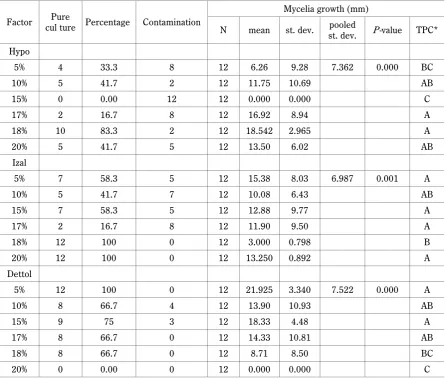
Table 1. Mean values of the effect of 5, 10, 15, 17, 18, and 20% concentrations of disinfectants (Hypo, Izal, and Dettol) on Agrocybe semiorbicularis mycelia in 1 : 20 ml disinfectant/media ratio; significance level (α) = 0.05
Factor 5% 10% 15% 17% 18% 20%
Growth radius [mm] N mean mean mean mean mean mean
Hypo 12 6.26* 11.75 0.00* 16.92 18.542* 13.50*
Izal 12 15.38 10.08 12.88 11.90 3.000 13.250
Dettol 12 21.93 13.90 18.33 14.33 8.71 0.000
Contamination [count]
Hypo 12 0.667* 0.167 1.000* 0.833* 0.167 0.583*
Izal 12 0.417 0.583 0.417 0.833 0.000 0.000
Dettol 12 0.000 0.333 0.250 0.000 0.000 0.000
Viability [count]
Hypo 0.583 1.000* 0.92* 1.000* 1.000*
Izal 0.667 0.583 1.000 1.000 1.000
Dettol 0.667 1.000 0.583 0.583 0.000
*P < 0.05
viability of hyphae. Here, the mean values were 18.54 for the growth, 1.00 for viability, and 0.167 for the conta-minations. In 20% concentration of Dettol, no contami-nation, no viability of mycelia and therefore, no growth
Table 2. Number of pure mycelial cultures and their growth obtained using different concentrations of disinfectants (Hypo, Izal, and Dettol) in growth media; significance level (α) = 0.05
Factor cul ture Percentage ContaminationPure
Mycelia growth (mm)
N mean st. dev. st. dev.pooled P-value TPC*
Hypo
5% 4 33.3 8 12 6.26 9.28 7.362 0.000 BC
10% 5 41.7 2 12 11.75 10.69 AB
15% 0 0.00 12 12 0.000 0.000 C
17% 2 16.7 8 12 16.92 8.94 A
18% 10 83.3 2 12 18.542 2.965 A
20% 5 41.7 5 12 13.50 6.02 AB
Izal
5% 7 58.3 5 12 15.38 8.03 6.987 0.001 A
10% 5 41.7 7 12 10.08 6.43 AB
15% 7 58.3 5 12 12.88 9.77 A
17% 2 16.7 8 12 11.90 9.50 A
18% 12 100 0 12 3.000 0.798 B
20% 12 100 0 12 13.250 0.892 A
Dettol
5% 12 100 0 12 21.925 3.340 7.522 0.000 A
10% 8 66.7 4 12 13.90 10.93 AB
15% 9 75 3 12 18.33 4.48 A
17% 8 66.7 0 12 14.33 10.81 AB
18% 8 66.7 0 12 8.71 8.50 BC
20% 0 0.00 0 12 0.000 0.000 C
* Tukey pairwise comparisons grouping information using the Tukey method and 95% confidence intervals: means that do not share a letter are significantly different
values in both Hypo and Izal were 13.50 and 13.25 mm for growth, 0.58 and 0.00 for contamination, and 1.00 and 1.00 for viability.
Disinfectants and their concentrations that yield desired mycelia growth
According to the aim of this study, the desired results were to determine the optimum concentration of a dis-infectant that yields pure mycelial culture with higher mycelial radial growth. Pure mycelial cultures were ob-tained in almost all the concentrations of all the disinfec-tants tested, although the probabilities of obtaining the pure mycelia culture differed with concentrations of the different disinfectants. There was, however, trade-off be-tween levels of contaminations and the growth of the
120
100
80
60
40
20
0
!20
Hypo
Izal
Dettol
5% 10% 15% 17% 18% 20%
Hypo
Izal
Dettol
5% 10% 15% 17% 18% 20% 30
25
20
15
10
5
0
5
! Fig. 3. Percentages of pure mycelial cultures obtained in diffe-rent concentrations of diffediffe-rent disinfectants (error bars with
standard error)
0.00, 58.3, and 75%, respectively, while at 17% con-centration, the growth percentages were 16.7, 16.7, and 66.7%, respectively. For 18% concentration, the percen-tage growth of the pure mushroom culture was 83.3% for Hypo, 100% for Izal, and 66.7% for Dettol, while at 20% concentration, the percentage growth was 41.7, 100, and 0.00% for Hypo, Izal, and Dettol, respectively. Disinfec-tant concentrations that yielded 100% of pure cultures were 18% and 20% of Izal and 15% of Dettol (Table 2, Fig. 3). Dettol at concentrations of 17% and 18% yielded 66.7% of pure cultures, although there was a significant decrease in mycelia growth, which was 14.33 and 8.71 mm for 17% and 18% concentrations, respectively (Table 2, Fig. 4). Additionally, no contaminants survived these concentrations, and the viability of the desired mycelia decreased to 0.58. The mycelial growth in Izal decreased significantly at these higher concentrations, but there was no contamination. The values of the my-celial growth in Izal at 17, 18, and 20% concentrations were 11.90, 3.00, and 13.25 mm, while that of contami-nants were 0.00, 0.00, and 0.833, respectively.
Discussion
This study revealed that the rate of the mushroom’s mycelia growth, contamination, and the viability of the hyphae from the original mycelia plug inoculums differed with different concentrations of disinfectants used. The results also showed that mushroom mycelia, being the most complex and evolutionarily advanced component, have greater ability to survive higher concentrations of disinfectants than fungal and bacterial contaminants encountered in this study. The mushroom mycelia did
Fig. 4. Mycelial radial growth (mean) in different concentra-tions of different disinfectants (error bars with standard error)
orga-nisms (Dabbagh et al., 2015; Shuaibu et al., 2017). Al-Dabbagh et al. (2015) found that 10% concentration of Hypo killed all the following bacterial isolates: E. coli, Pseudomonas aeruginosa, S. aureus, and Corynebacte-rium renali, while the same isolates showed greater resistance to Dettol. Moreover, some studies on fungi revealed that Hypo at concentrations between 0.03 and 2.4% were effective at killing Penicillium, Cladosporium, Mucor, Rhizopus, Stachybotrys, Alternaria, Aspergillus, Helminthosporium, Trichophytonand Batrachochytrium spp. (Reynolds et al., 2004; Becker, and Gratwicke, 2017; Van Rooij et al., 2017).
There are possibly different factors that led to the different results of the effects of the disinfectants on microbial contamination and mushroom mycelia growth obtained in this study. First, disinfectants differ in their compositions and mode of actions against a wide range of microorganisms (McDonnell and Russell, 1999). For example, Dettol inhibits microorganisms by denaturation of the protein components of their cell wall and cyto-plasmic membrane, while Hypo (sodium hypochlorite) affects microorganisms by oxidizing their cellular compo-nents such as protein, lipid, and nucleic acids (Al-Dab-bagh et al., 2015). Second, the nature and composition of the microbial cell surfaces vary from one species to another; consequently, such surfaces could also be chan-ged due to extremes of environmental conditions (McDonnell and Russell, 1999). As a result of differen-ces in cellular structure, composition, and physiology, microbial contaminants can thus respond variedly to different concentrations of disinfectants (McDonnell and Russell, 1999; Singh et al., 2012; Hammond et al., 2014). While some disinfectants kill nearly all microorganisms, others kill only a smaller range of pathogens (Wijesinghe and Weerasinghe, 2010). Third, microorganisms can de-velop resistance to disinfectants. As Olasehinde et al. (2008) pointed out that dilution of disinfectants renders them less effective and thereby provides the target or-ganisms the likelihood to develop resistance against the disinfectants used. Shuaibu et al. (2017) found that cli-nical pathogens developed resistance against Dettol, Izal and Hypo, with most resistance observed for Dettol and least resistance to Hypo. Additionally, microorganisms develop increased resistance to antibiotics and can share these disinfectant-resistant markers among themselves (Al-Dabbagh et al., 2015). Fourth, the efficacy of most disinfectants can be reduced by the amount of organic
material that reacts with the available chemical compo-nents of the disinfectants, especially chlorine (Boothe, 1998; Shuaibu et al., 2017). More effective disinfection occurs when surfaces to be disinfected are free from or-ganic matter and are smooth and nonporous (Boothe, 1998; Olasehinde etal., 2008). Finally, some disinfec-tants may fail to exert action as result of spoilage or im-proper storage (Shuaibu et al., 2017).
2010; Hiscox et al., 2018). Many abiotic factors can also affect the outcomes of interactions between micro-organisms, which could be of advantage or disadvantage to one another. However, even under apparently identi-cal conditions, the outcomes of interactions are not al-ways consistent, possibly due to immeasurably tiny diffe-rences in conditions (Hiscox et al., 2018). All these inter-actions might have affected the result of the present study in one way or the other through the environment-bacteria-fungi interactions. Nevertheless, the results of this study can be valuable for mushroom growers and producers of ectomycorrhizas as it show a cheaper and simple method of controlling contamination.
Conclusions
The present study found that the mycelia of the mushroom A. semiorbicularis have higher degree of resistance to disinfectants than other fungi and bacteria that contaminate growth media. This might be because mushrooms are known to be more complex and evolutio-narily advanced species among fungi. This study also re-vealed that the rate at which mushroom’s mycelia grow, the level of contamination of the growth media, and the viability of the mushroom’s hyphae varied with different concentrations of different disinfectants used in the growth media. Pure mycelial cultures were obtained in almost all the different concentrations of all the disinfec-tants, although the percentages of these pure mycelial cultures obtained differed with different concentrations of all the disinfectants. However, trade-offs existed be-tween the level of contamination and better growth of the desired mycelia. In general, the result of this study showed that Dettol has the highest effect on suppressing contaminants followed by Izal and the least effective was Hypo. This result will help in mushroom production pro-cesses by solving the problems of contamination.
Acknowledgments
We sincerely appreciate the Department of Ecology, Abubakar Tafawa Balewa University, Bauchi, and TETFUND Institutio-nal Base Research for supporting us to conduct this research.
Funding
The present study was funded by TETFUND Institutional Base Research
References
Al-Dabbagh S.Y.A., Ali H.H., Khalil I.I., Hamad M.A. (2015) A study of some antibiotics; disinfectants and antiseptics effi-cacy against some species of pathogenic bacteria. Assiut Vet. Med. J. 61(147): 210–217.
Bankole F.A., Salami A.O. (2017) Use of agro-wastes for tissue culture process and spawn production of oyster mushroom (Pleurotus florida). J. Appl. Life Sci. Internat. 14(1): 1–9. Becker M.H., Gratwicke B. (2017) Minimum lethal concentra-tion of sodium hypochlorite for the amphibian pathogen Batrachochytrium dendrobatidis. PLoS One, 12(4): e0176439. DOI: 10.1371/journal.pone.0176439.
Bellettini M.B., Fiorda F.A., Maieves H.A., Teixeira G.L., Ávila S., Hornung P.S., Júnior A.M., Ribani R.H. (2016) Factors affecting mushroom Pleurotus spp. Saudi J. Biol. Sci. DOI: 10.1016/j.sjbs.2016.12.005.
Boothe H.W. (1998) Antiseptics and disinfectants. Veterin. Clin. North Amer.: Small Animal Pract. 28(2): 233–248. DOI: 10.1016/j.jaci.2004.01.082.
Celik Y., Peker K. (2009) Benefit/cost analysis of mushroom production for diversification of income in developing countries. Bulgar. J. Agric. Sci. 15(3): 228–237.
Chang S.T., Wasser S.P. (2017) The cultivation and environ-mental impact of mushrooms. DOI: 10.1093/acrefore/ 9780199389414.013.231.
Chima I.U., Uchegbu M.C., Okoli I.C., Ezema C., Wehke S.N. (2013) Evaluation of the efficiency of disinfectants used against bacterial isolates from intensive poultry farming en-vironments in Imo State, Nigeria. J. Biol. Sci. 13: 349–356. DOI: 10.3923/jbs.2013.349.356.
Choi I., Choi J., Sharma P.K., Lee W. (2010) Isolation and identification of mushroom pathogens from Agrocybe aege-rita. Mycobiology 38(4): 310–315. DOI: 10.4489/MYCO. 2010.38.4.310.
Colavolpe M.B., Mejía S.J., Albertó E.O. (2014) Efficiency of treatments for controlling Trichoderma spp during spaw-ning in cultivation of lignicolous mushrooms. Brazil. J. Microbiol. 45(4): 1263–1270.
De Mattos-Shipley K.M.J., Ford K.L., Alberti F., Banks A.M., Bailey A.M., Foster G.D. (2016) The good, the bad and the tasty: the many roles of mushrooms. Stud. Mycol. 85: 125–157.
Dias E.S. (2010) Mushroom cultivation in Brazil: challenges and potential for growth. Ciência Agrotecnol. 34(4): 795–803. Frey-Klett P., Burlinson P., Deveau A., Barret M., Tarkka M.,
Sarniguet A. (2011) Bacterial-fungal interactions: hyphens between agricultural, clinical, environmental, and food microbiologists. Microbiol. Mol. Biol. Rev. 75(4): 583–609. DOI: 10.1128/MMBR.00020-11.
Hammond R., Buah J.N., Asare P.A., Acheampong S. (2014)
Optimizing sterilization condition for the initiation of sweet potato (Ipomoea batatas) culture in vitro. Asian J. Biotechnol. 6: 25–37. DOI: 10.3923/ajbkr.2014.25.37. Hiscox J., O’Leary,J., Boddy L. (2018) Fungus wars:
basidio-mycete battles in wood decay. Studies Mycol. 89: 117–124. Hrynkiewicz K., Baum C. (2011) The potential of rhizosphere microorganisms to promote the plant growth in disturbed soils. [in:] Environment protection strategies for sustainable development: 31–35. DOI: 10.1007/978-94-007-1591-2. Humphris S.N., Bruce A., Buultjens E., Wheatley R.E. (2002)
The effects of volatile microbial secondary metabolites on protein synthesis in Serpula lacrymans. FEMS Microbiol. Lett. 210(2): 215–219.
Ingrid L.D.I. (2011) Evaluation for a plant-assisted bioremedia-tion approach: Zn (Cd) accumulabioremedia-tion properties of indi-genous poplar species and the impact of ectomycorrhizas on phytoextraction characteristics. A doctoral dissertation, Department of Forest and Soil Sciences, BOKU-University of Natural Resources and Life Sciences, Vienna: 68. Jha S.K., Kumar N. (2011) Potential of mycorrhizal fungi in
ecosystem: a review. Intern. J. Res. Bot. 1(1): 1–7. Kalac P. (2013) A review of chemical composition and
nutri-tional value of wild-growing and cultivated mushrooms. J. Sci. Food Agric. 93: 209–218. DOI: 10.1002/jsfa.5960. Klavina D. (2015) Ectomycorrhizas of Norway spruce (Picea
Abies (L.) Karst.) in managed forest stands of Latvia. Doc-toral thesis submitted for the degree of doctor of biology, subfield: Ecology. University of Latvia, Faculty of Biology Latvian State Forest Research Institute “Silava”. Kües U. (2007) Wood production, wood technology, and
bio-technological impacts. Universitätsverlag Göttingen: 635. Kumar K. (2015) Role of edible mushroom as functional foods-a review. South Asian J. Food Technol. Environ. 1(3–4): 211–218.
Künzler M. (2018) How fungi defend themselves against microbial competitors and animal predators. PLoS Pathog. 14(9): e1007184.
Lahlali R., Hijri M. (2010) Screening, identification and evalua-tion of potential biocontrol fungal endophytes against Rhizo-ctonia solani AG3 on potato plants. FEMS Microbiol. Lett. 311(2): 152–159. DOI: 10.1111/j.1574-6968.2010.02084.x. László K., García J.L., Shahram N., Dorina C., Péter U., László M., Csaba V., Lóránt H. (2010) A challenge to mushroom growers: the green mould disease of cultivated champi-gnons. [in:] Current research, technology and education topics in applied microbiology and microbial biotechno-logy. FORMATEX, Badajoz: 295–305.
Luangharn T., Karunarathna S.C., Hyde K.D., Chukeatirote E. (2014) Optimal conditions of mycelia growth of Laetiporus sulphureus sensu lato. Mycology 5(4): 221–227. DOI: 10.1080/21501203.2014.957361.
Mahadevan K., Shanmugasundaram K. (2018) Comparative
effect of different culture media on mycelial growth perfor-mance of Pleurotus sapidus. J. Pharmacogn. Phytochem. 7(4): 874–878.
Mattei A.S., Madrid I.M., Santin R., Schuch L.F.D., Meireles M.C.A. (2013) In vitro activity of disinfectants against As-pergillus spp. Brazil. J. Microbiol. 44(2): 481–484. DOI: 10.1590/S1517-83822013000200024.
McDonnell G.A., Russell D. (1999) Antiseptics and disinfec-tants: activity, action, and resistance. Clin. Microbiol. Rev. 12(1): 147–179.
Mendoza P.C.G., Del-Toro G.V., Carrillo R.R., Martínez F.R., Fernández J.Y., Aguilar M.E.G., Hernández C.G., Villa G.B. (2014) Morphology and mycelial growth rate of Pleurotus spp. strains from the Mexican mixtec region. Brazil. J. Microbiol. 45(3): 861–872.
Mwangi R.W., Kariuki S.T., Wagara I.N. (2017) Biocontrol of green mould disease of oyster mushroom (Pleurotus ostreatus) using Bacillus amyloliquefaciens. J. Biol. Agric. Healthcare 7(10): 25–30.
Nanda S., Abraham J. (2013) Remediation of heavy metal con-taminated soil. Afr. J. Biotechnol. 12(21): 3099–3109. DOI: 10.5897/AJB12.720.
Ndem J.U. Oku, Martha O. (2016) Mushroom production for food security in Nigeria. Food Sci. Qual. Manage. 48: 44–50. Oberwinkler F. (2012) Evolutionary trends in Basidiomycota.
Stapfia 96: 45–104.
Okore C.C., Mbanefo O.N., Onyekwere B.C., Onyewenjo S.C., Ozurumba A.U., Abba-Father C.A.M. (2014) Antimicrobial efficacy of selected disinfectants. Amer. J. Biol. Life Sci. 2(2): 53–57.
Olasehinde G.I., Akinyanju J.A., Ajayi A.A. (2008) Comparative antimicrobial activity of commercial disinfectants with naphtholics. Res. J. Microbiol. 3: 262–268. DOI: 10.3923/ jm.2008.262.268.
Orsi I.A., Villabona C.A., Kameoka E., Christiènne M., Fer-reira C.G., Ito I.Y., Saraiva M.E. (2010) Antimicrobial effi-cacy of chemical disinfectants on contaminated full metal crowns. Brazil. Dental J. 21(3).
Peksen A., Kibar B., Yakupoglu G. (2013) Favourable culture conditions for mycelial growth of Hydnum repandum, a medicinal mushroom. Afr. J. Trad. Compl. Alternat. Med. 10(6): 431–434.
Reynolds K.A., Boone S., Bright K.. Gerba C.P. (2004) Efficacy of sodium hypochlorite disinfectant on the viability and aller-genic properties of household mold. J. Allergy Clin. Immu-nol. 113(2): S180. DOI: 10.1016/j.jaci.2004. 01.082. Rogawansamy S., Gaskin S., Taylor M.. Pisaniello D. (2015)
An evaluation of antifungal agents for the treatment of fun-gal contamination in indoor air environments. Int. J. En-viron. Res. Public Health 12(6): 6319–6332. DOI: 10.3390/ ijerph120606319.
Rosmiza M.Z., Davies W.P., Rosniza A.C.R., Jabil M.J., Mazdi M. (2016) Prospects for increasing commercial mushroom production in Malaysia: challenges and opportunities. Mediter. J. Social Sci. 7(1): 406–415. DOI: 10.5901/mjss. 2016.v7n1s1p406.
Sánchez C. (2004) Modern aspects of mushroom culture tech-nology. Appl. Microbiol. Biotechnol. 64: 756–762. DOI: 10.1007/s00253-004-1569-7.
Sardar H., Ali M.A., Ayyub Chaudhary M., Ahmad R. (2015)
Effects of different culture media, temperature and pH levels on the growth of wild and exotic Pleurotus species. Pakistan J. Phytopathol. 27(02): 139–145.
Sharada M., Ashok J., Savitha H., Mahesh H., Nagaraj E.R. (2013) Comparative effectiveness of disinfectants with phenol on multidrug resistant bacteria and fungi isolated from the clinical sample – an in vitro preliminary study. J. Evolut. Med. Dental Sci. 2(18): 3055–3061. DOI: 10.14260/jemds/659.
Sharma P.K., Singh F., Singh S., Dhawan A. (2018) Effect of physiological parameters on mycelial growth of blue oyster [Hypsizygus ulmarius (Bull.:Fr.) Redhead] mushroom. Intern. J. Curr. Microbiol. Appl. Sci. 7(6): 2440–2445. Shuaibu A.S., Ibrahim Y.K.E., Olayinka B.O., Atata R.F.,
Shua-ibu B.A., Salihu H.. ShuaShua-ibu M.G. (2017) Phenotypic resi-stance of nosocomial bacterial isolates to some routinely used disinfectants. World J. Pharmaceut. Med. Res. 3(7): 52–56.
Singh M., Sharma R., Gupta P. K., Rana J.K., Sharma M., Ta-neja N. (2012) Comparative efficacy evaluation of disinfec-tants routinely used in hospital practice: India. Indian J. Crit. Care Med. 16(3): 123–129. DOI: 10.4103/0972-5229. 102067.
Soyemi E.T., Kolade A.F., Oluwadun A., Effedua H.I. (2018)
In vitro activities of some common disinfectants on as-pergillus fumigatus isolated from selected wards at the University College Hospital (UCH), Ibadan. Nature Sci. 16(9): 30–36.
Torres-Aquino M., Becquer A., Le Guernevé C., Louche J., Amenc L.K., Staunton S., Quiquampoix H., Plassard C. (2017) The host plant Pinus pinaster exerts specific ef-fects on phosphate efflux and polyphosphate metabolism of the ectomycorrhizal fungus Hebeloma cylindrosporum: a radiotracer, cytological staining and 31P NMR spectro-scopy study. Plant, Cell Environ. 40: 190–202. DOI: 10.1111/pce.12847.
Uddin M.J., Nasiruddin K.M., Haque M.E., Biswas A.K., Islam M.S. (2012) Influence of different media variety and growth regulator on mycelial colony proliferation of mush-room. J. Environ. Sci. Natural Resour. 5(1): 223–227. Valverde M.E., Pérez T.H., López O.P. (2015) Edible
mush-rooms: improving human health and promoting quality life. Intern. J. Microbiol. 2015, Article ID 376387: 14. DOI: 10.1155/2015/376387.
Van Nieuwenhuijzen B. (2007) Small-scale mushroom cultiva-tion – 2. Agromisa Foundation and CTA, Wageningen, Digiggrafi, Wageningen, the Netherlands. Agrodok-series No. 41. https://publications.cta.int/media/publications/ downloads/1422_POF.pdf.
Van Rooij P., Pasmans F., Coen Y., Martel A. (2017) Efficacy of chemical disinfectants for the containment of the sala-mander chytrid fungus Batrachochytrium salamandrivo-rans. PLoS One 12(10): e0186269. DOI: 10.1371/ journal. pone.0186269.
Wani B.A., Bodha R.H., Wani A.H. (2010) Nutritional and medicinal importance of mushrooms. J. Med. Plants Res. 4(24): 2598–2604. DOI: 10.5897/JMPR09.565.