219
Agriculture and Biosciences
www.ijagbio.com P-ISSN: 2305-6622 E-ISSN: 2306-3599 [email protected]RESEARCH ARTICLE
Assessment of Activated Charcoal Vs Synthetic Toxin-Binders on Performance, Nutrient
Utilization and Meat-Quality of Broilers Fed Infected Diets
1
Rafiu TA, 2Babatunde GM, 2Akinwumi AO, 3Akinboro A, 1Adegoke ZA and 1Oyelola OB
1Animal Production and Health Department; 2Animal Nutrition and Biotechnology Department; 3pure and Applied
Biology Department, Ladoke Akintola University of Technology, Ogbomoso
A R T I C L E I N F O A B S T R A C T
Received: Revised: Accepted:
August 23, 2014 September 24, 2014 October 20, 2014
A total of one hundred and eighty day old broilers were used to determine the performance and carcass characteristics of broiler birds fed aflatoxin infected diet with or without toxin binders. Six diets were compounded where toxin-binder A, B, C and D were included in treatment 2, 3, 4 and 5 respectively. Treatment 1 (positive control) was infected and 6 (negative control diet) was left uninfected. The birds were randomly allotted into the six (6) dietary treatments of three replicates each, containing ten (10) birds per replicate in a completely randomized design. Parameters monitored were Average Daily Feed Intake (ADFI), Average Daily Weight Gain (ADWG) and Feed Efficiency Ratio (FER). At the beginning of 8th week of the experimental period, three birds per replicate were randomly selected, transferred to metabolic cage where acclimatization prior faecal matters collection for three days was observed. Faecal samples were dried and analyzed for proximate composition. The result together with other parameters was used to calculate the nutrient digestibility of the birds. The birds were starved for 12hours, weighed, slaughtered, dressed, cut to parts and weighed. Segment of breast muscles were analyzed for aflatoxin residue. Significant difference (P<0.05) was recorded in the performance characteristics both at starter and finisher phases especially between those with binder and one without binder. Significantly different (P<0.05) FER was obtained from birds fed infected diets at starter. No significant (P>0.05) difference among ADFI except negative control diet which had lowest (P<0.05) value (78.96g). No difference (P>0.05) among average FER and cost per kg meat produced at finisher phase. Infected diet + binder B gave the best (P<0.05) digestibility potential while others were similar (P>0.05). Only the wing, breast and back cut parts were similar (P>0.05) while others were significantly (P<0.05) different. Abdominal fat was significantly (P<0.05) reduced by the presence of binders in the infected diets. Meat samples from birds fed infected diet without binder had highest (P<0.05) value (3.13ppb) of aflatoxin residue and least value (0.96 ppb) was obtained from negative control. No difference (P>0.05) in the values obtained for treatment 3 and treatment 4. It could therefore be concluded that the aflatoxin residue present in the broiler meat obtained from birds fed all the binder were relatively lower than the safe level recommended by United Food and Drug Administration (UFDA) thereby making the meat safe for human consumption. Activated charcoal is also a promising binder in poultry diet containing aflatoxin.
Key words: Broiler, feeds Meat-quality Performance Toxin-binders
*Corresponding Address: Rafiu TA
[email protected] [email protected]
Cite This Article as: Rafiu TA, GM Babatunde, AO Akinwumi, A Akinboro, ZA Adegoke and OB Oyelola, 2014. Assessment of activated charcoal vs synthetic toxin-binders on performance, nutrient utilization and meat-quality utilization of broilers fed infected diets. Inter J Agri Biosci, 3(5): 219-224. www.ijagbio.com
INTRODUCTION
Poultry is any avian class member that is reared or hunted for a useful purpose. These include domestic fowl,
self-sufficiency in animal protein, because of their short gestation interval, large numbers, fast growth rate, greater affordability, ease of raising as well as absence of taboos to production and consumption. Modern poultry production occurs primarily in enclosed buildings to protect the birds from harsh weather, predators and the spread of diseases from wild bird, the most interesting constraint is the feed which claims 70 percent of total production cost. Aside that, the feed can sometimes contain toxin which are dangerous to the poultry health and promote the manifestation of other diseases as well as claims their lives when ingested at a very high dose. There are many toxins in animal’s feed but the most existing is the mycotoxin (Edds and Bortell, 1983).
Mycotoxins are toxic secondary metabolises produced by fungi. For centuries, these mycotoxins have been associated with quality degradation of many agricultural products which cause considerable changes in texture, flavour and colour. Although many toxins metabolized by moulds have been isolated through laboratory cultures from agricultural products, only seven have been found to have possible significant occurrence in naturally contaminated foods and feeds. These are aflatoxin, zearalenone, ochratoxin A, citrinin, trichothecenes putulin, penicillic acid and the ergot alkaloids. Among these mycotoxins, aflatoxin have gained considerable attention because they are the most toxic and potent carcinogen even in small quantities (Egal et al.,
2005). Lately, several approaches to avoid contamination such as decontamination and remediation of feed and feedstuffs have been proposed (Ledoux et al., 1999). A variety of adsorbents such as bentonite (Rosa et al., 2001), hydrated sodium calcium aluminosilicate (HSCAS) (Kubena et al., 1993), Sacharomyces cerevisae (Celik et al., 2001) and activated charcoal (Jindal et al., 1994) have been successfully utilized in detoxifying aflatoxin in contaminated feeds. Adsorbents are necessary and important and have great impact on improving animal production and health, providing security to consumers of animal products due to the reduction and/or removal of mycotoxins in these products. Activated charcoal is also a good absorbent and readily available than other binders, therefore investigated to establish its potential as a good binder and investigate the save level of product(s) from such infected birds or fed infected feed or diet.
MATERIALS AND METHODS
Test Ingredients
Four varieties of toxin binders were procured and labeled; A, B, C and D. According to the manufacturers, Binder A contains HSCAS as the active ingredient; Binder B contains Bentonite/Montmorillonite Yeast cell walls while Binders C and D contain Aromatic Polyphenols and Activated charcoal, respectively.
Toxin Production and Analysis
Toxin was produced by the inoculation of Aspergillus flavus on semovita. The moistened semovita was stored in a dark cupboard to enable rapid spoilage. Organism (A. falvus) was then isolated and cultured on a petri dish using potato dextrose agar (PDA) as the growth medium. It was incubated at 280C for 7 days. Semi-synthetic medium
containing 2g yeast extract and 20g sucrose in every 100ml of distilled water was used as basal fermenting medium for A. flavus to produce toxin. Fermentation bottles with 2g yeast extract and 20g sucrose were sterilized in an autoclave at 1250C for 15 minutes so as to remove any form of contamination. The fermenting medium was however allowed to cool to 450C following sterilization after which the organisms were inoculated in a sterile environment, placed in a shaker and allowed to stand for 6 days (Yunus and Bohm, 2011).
Experimental diets
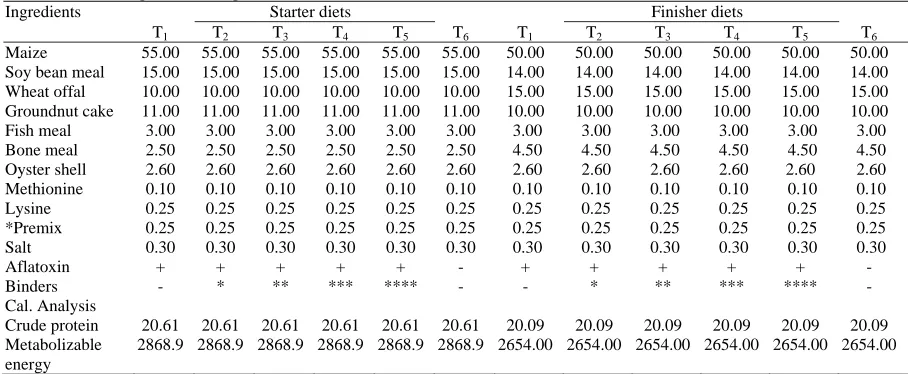
Six experimental diets containing the same percentage crude protein and metabolizable energy (MEKcal/kg) were formulated for the starter phase, likewise for finisher diets (Table 1). Five diets (1-5) were infected with the prepared toxin. Binders (A, B, C and D) were incorporated into diet 2, 3, 4 and 5 respectively. Experimental birds and distribution
One hundred and eighty day old marshal strain of broiler chicks were procured and weighed. They were randomly allotted into six treatments of 3 replicates (10 chicks) each to make a total of 30 birds in each treatment. The birds and treatments were distributed using completely randomized design (CRD). The birds were managed intensively and necessary vaccinations and medications were applied. All the management practices (vaccination and medication) were carried out accordingly and as at when due.
Data collection
Growth performance
Daily feed intake, mean weight gain, average daily weight gain and feed efficiency ratio were estimated.
Procedure and parameters on nutrient digestibility
Nutrient digestibility was done at week eight, three birds were selected at random from each replicate and were transferred to the metabolic cage for faecal collection after four days acclimatization period was observed, feeds were weighed and given to the birds, the left over were collected, weighed and subtracted to calculate the actual feed intake, faecal voided by the birds were collected individually on daily basis and oven dried, replicates of the faecal samples were pulled together and grinded. Samples were analyzed in the laboratory for crude fibre, crude protein, ash content, ether extract and Dry matter digestibility.
Nutrient Utilization = Nutrient intake (g) – Nutrient in faeces (g) / Nutrient intake (g)
Nutrient intake = Quantity of feed intake x % nutrient Nutrient in faeces = Quantity of faeces voided x % nutrient
Carcass Characteristics
Table 1: Gross composition of experimental broiler diets (starter and finisher)
Ingredients Starter diets Finisher diets
T1 T2 T3 T4 T5 T6 T1 T2 T3 T4 T5 T6
Maize 55.00 55.00 55.00 55.00 55.00 55.00 50.00 50.00 50.00 50.00 50.00 50.00
Soy bean meal 15.00 15.00 15.00 15.00 15.00 15.00 14.00 14.00 14.00 14.00 14.00 14.00
Wheat offal 10.00 10.00 10.00 10.00 10.00 10.00 15.00 15.00 15.00 15.00 15.00 15.00
Groundnut cake 11.00 11.00 11.00 11.00 11.00 11.00 10.00 10.00 10.00 10.00 10.00 10.00
Fish meal 3.00 3.00 3.00 3.00 3.00 3.00 3.00 3.00 3.00 3.00 3.00 3.00
Bone meal 2.50 2.50 2.50 2.50 2.50 2.50 4.50 4.50 4.50 4.50 4.50 4.50
Oyster shell 2.60 2.60 2.60 2.60 2.60 2.60 2.60 2.60 2.60 2.60 2.60 2.60
Methionine 0.10 0.10 0.10 0.10 0.10 0.10 0.10 0.10 0.10 0.10 0.10 0.10
Lysine 0.25 0.25 0.25 0.25 0.25 0.25 0.25 0.25 0.25 0.25 0.25 0.25
*Premix 0.25 0.25 0.25 0.25 0.25 0.25 0.25 0.25 0.25 0.25 0.25 0.25
Salt 0.30 0.30 0.30 0.30 0.30 0.30 0.30 0.30 0.30 0.30 0.30 0.30
Aflatoxin + + + + + - + + + + + -
Binders - * ** *** **** - - * ** *** **** -
Cal. Analysis
Crude protein 20.61 20.61 20.61 20.61 20.61 20.61 20.09 20.09 20.09 20.09 20.09 20.09
Metabolizable energy
2868.9 2868.9 2868.9 2868.9 2868.9 2868.9 2654.00 2654.00 2654.00 2654.00 2654.00 2654.00
*Premix: Vit A; 9,000IU, Vit D3; 1,250IU, Vit E; 7,000IU, Riboflavin. Vit; 600mg; Vit B3; 2,200mg; Vit. B5; 14,000mg, Lysine; 12.000mg, Methionine; 6,500mg, Choline chloride; 240,000mg; Mn; 6,000mg; Fe; 35,000mg, Cu; 5,000mg, I2; 1,100mg, Se; 100mg, Anti-oxidants; 125,000mg; +: diet infected with toxin, -: Diet without binder, *: Binder A, **: Binder B, ***: Binder C and ****: Binder D
of the following carcass; drumsticks, back, breast, head, wings, shanks, neck, thigh and abdominal fat.
Meat quality
Meat sample from the breast part of all the slaughtered birds were preserved and taken to the laboratory for determination of aflatoxin residues in the meat samples.
Data analysis
All data obtained were subjected to analysis of variance using statistical analysis system (SAS, 2000), software package and means were separated using Duncan multiple range test of the same software.
RESULTS
Performance characteristics of broiler birds fed diets infected with aflatoxin and inclusion of different toxin binders
Table 2 showed that there was significant difference (P<0.05) in all the parameters measured at for the starter phase. Treatment 4 (infected diet + Binder C) had the highest value (35.12%) of average daily weight gain while treatment 3 (infected diet + binder B) had the least value (21.85%) of average daily weight gain at starter phase. Average daily feed intake at starter phase, revealed that there was significant difference (P<0.05) among the treatments. The values obtained from T1–T6 were 96.12g, 96.49g, 98.21g, 97.98g, 99.93g, and 78.96g respectively. There was significant difference (P<0.05) among the treatments on the birds at finisher phase. Treatment 5 (infected diet+Binder D) had the highest ADWG (50.39g) even than treatment 6 (the negative control) (42.86g). The result obtained from finisher phase showed a significant (P<0.05) difference both in the ADWG and ADFI. Treatment 5 had the highest (P<0.05) value of ADFI (173.57g) while the least (P<0.05) value (149.64g) was obtained from the negative control. Highest ADWG (50.39g) was recorded from the birds fed infected diet +
binder D which was even significantly (P<0.05) higher than the negative control but statistically (P>0.05) similar to others birds on infected diet. There was no significant difference (P>0.05) in terms of feed efficiency ratio at the finisher phase. However, treatments 5 had highest numerical value of 0.290 and treatment 1 having the least value of 0.264.
Table 2: Performance characteristics of broiler chicken fed infected diet with aflatoxin and inclusion of different toxin binders
Parameters T1 T2 T3 T4 T5 T6 SEM(±)
Starter
ADWG (g) 27.93b 31.17ab 21.85c 35.12a 32.61ab 30.49ab 1.04
ADFI (g) 96.12a 96.49a 98.21a 97.98a 99.93a 78.96b 1.47
FER 0.29c 0.33b 0.23c 0.36ab 0.33b 0.39a 0.01
Finisher
ADWG (g) 43.29ab 47.21ab 45.51ab 42.54b 50.39a 42.86b 1.19
ADFI (g) 164.05ab 165.71ab 164.40ab 152.50b 173.57a 149.64b 2.81
FER 0.264 0.285 0.277 0.279 0.290 0.286 0.01
Cost/KG meat produced 343.00 318.05 318.05 318.05 307.36 310.13 11.34
abcMeans on the same row with different superscripts were significantly (<0.05) different; ADWG: Average daily weight gain, ADFI:
Average daily feed intake, FER: Feed efficiency ratio; SEM: Standard Error Mean; T1- positive control; T2- infected diet + binder A;
T3- infected diet + binder B; T4- infected diet + binder C; T5 – infected diet + binder D; T6- negative control diet
Table 3: Nutrient digestibility of broilers fed infected diet with or without toxin binder
Parameters T1 T2 T3 T4 T5 T6 SEM(±)
DMD (%) 66.79e 69.38d 84.84a 82.13b 76.65c 75.45c 1.11
CPD (%) 61.86d 59.83d 83.05a 77.15b 72.90c 73.11c 1.41
EED (%) 76.85cd 63.41e 87.12a 83.90b 74.95d 78.13c 1.30
CFD (%) 57.28e 59.55e 84.15a 74.99b 66.80c 63.58d 1.60
ASHD (%) 40.93e 49.20d 73.43a 65.99b 57.18c 51.04d 1.88
abcdeMeans on the same row with different superscripts were significantly (<0.05) different; DMD: Dry Matter Digestibility; CPD:
Crude Protein Digestibilty; EED: Ether Extract Digestibility; CFD: Crude Fibre Disgestibilty; ASHD: Ash Digestibilty; T1- positive
control; T2- infected diet + binder A; T3- infected diet + binder B; T4- infected diet + binder C; T5 – infected diet + binder D; T6-
negative control diet
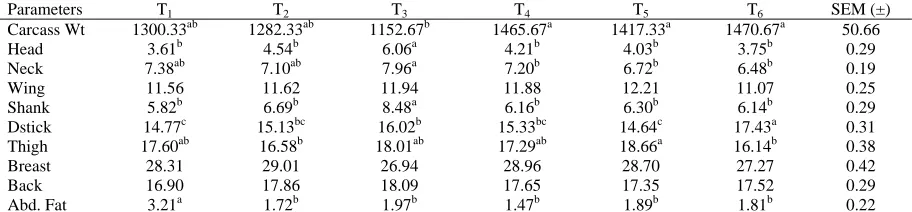
Table 4: Carcass characteristics of the broiler birds fed infected diets fortified with various toxin binders
Parameters T1 T2 T3 T4 T5 T6 SEM (±)
Carcass Wt 1300.33ab 1282.33ab 1152.67b 1465.67a 1417.33a 1470.67a 50.66
Head 3.61b 4.54b 6.06a 4.21b 4.03b 3.75b 0.29
Neck 7.38ab 7.10ab 7.96a 7.20b 6.72b 6.48b 0.19
Wing 11.56 11.62 11.94 11.88 12.21 11.07 0.25
Shank 5.82b 6.69b 8.48a 6.16b 6.30b 6.14b 0.29
Dstick 14.77c 15.13bc 16.02b 15.33bc 14.64c 17.43a 0.31
Thigh 17.60ab 16.58b 18.01ab 17.29ab 18.66a 16.14b 0.38
Breast 28.31 29.01 26.94 28.96 28.70 27.27 0.42
Back 16.90 17.86 18.09 17.65 17.35 17.52 0.29
Abd. Fat 3.21a 1.72b 1.97b 1.47b 1.89b 1.81b 0.22
abcMeans on the same row with different superscripts were significantly (<0.05) different; Dstick- Drumstick; Abd. Fat- Abdominal
fat; T1- positive control; T2- infected diet + binder A; T3- infected diet + binder B; T4- infected diet + binder C; T5 – infected diet +
binder D; T6- negative control diet
Table 5: Result of Laboratory Analysis of Meat of the Experimental Bird Fed Aflatoxin infected diets with Different Toxin Binder
Parameters T1 T2 T3 T4 T5 T6 SEM (±)
Aflatoxin fed (ppb) 278 278 278 278 278 - -
Aflatoxin residue in meat (ppb) 3.13 1.48 2.52 2.50 1.81 0.96 0.125
*United Food and Drug Administration (UFDA) safe level = 20ppb (CAST, 2003); T1- positive control; T2- infected diet + binder A;
T3- infected diet + binder B; T4- infected diet + binder C; T5 – infected diet + binder D; T6- negative control diet
Carcass Characteristics of the Experimental Birds fed infected diets fortified with different toxin binders
Table 4 showed the result of proportion of cut parts under carcass characteristics of broiler birds fed infected diets with or without toxin binders. Significant (P<0.05) differences were recorded in the proportion of parts such as head, neck, thigh, drumstick and shank. The significant differences did not have a definite trend as it can be observed in the table. Another vital information was that the proportions of major primal or high price cuts (breast, wing and back) were not significantly (P>0.05) different among the infected diet with or without toxin binder and the negative control diet. Treatment 6 (negative control diet) had the highest (P<0.05) value of carcass weight (1470.67g) and treatment 3 (infected diet + binder B) had the least value (1152.67g) of carcass weight. There was no significant difference (P>0.05) among head weight
proportion except treatment 3 with the highest (P<0.05) value (6.06%). No significant difference (P>0.05) between treatments 1, 2, 4, 5 and 6, and likewise treatments 1, 2 and 3 in term of their carcass weight and neck proportion. There was significant difference (P<0.05) among drumstick and thigh proportion with highest value of 17.43% and 18.66% in treatment 6 (negative control diet) and treatment 5 (infected diet + binder D) for drumstick weight and thigh weight respectively. No significant difference (P>0.05) among the abdominal fat proportion for all treatments except treatment 1 (positive control) which had highest statistical value (3.21%) of abdominal fat.
Laboratory analysis for residual aflatoxin in experimental birds fed infected diets
differences (P<0.05) among the treatments (Table 5). Treatment 1 (positive control) had the highest value (3.13ppb) of aflatoxin residue while the least value (1.81ppb) of aflatoxin residue in meat was obtained from treatment 6 (negative control diet). Treatment 3 (infected diet + binder B) and treatment 4 (infected diet with binder C) were statistically (P>0.05) similar. Treatment 2 (infected diet + binder A) had the least residual value (1.48ppb) of aflatoxin among infected diets incorporated with toxin binders. However, treatment 6 (negative control diet) recorded the lowest aflatoxin residual value (0.96ppb).
DISCUSSION
Performance characteristics of broilers fed infected diet with inclusion of different toxin binders
The high feed consumption rate observed in all the infected dietary treatments with or without binder at starter phase could be the effect of aflatoxin on the nutrient availability in the diets. It was reported that diet is been fed, and when there is energy loss in feed, the birds tend to consume more to meet up with the energy requirement (Verma et al., 2007). Thus, low consumption rate with highest feed efficiency ratio in treatment 6 (control diet) was concluded to be as result of absence of aflatoxin as it was reported by Tedesco et al. (2004).
At finisher phase, the birds fed infected diets with different toxin binder had a significantly (P<0.05) higher feed intake and efficiency than treatment 1 (positive control) and treatment 6 (negative control diet), this clearly indicated the beneficial effects of toxin adsorbent when incorporated into aflatoxin contaminated diets of poultry bird (Miazzo et al., 2000). Birds in treatment 1 (positive control) recorded high feed consumption which was in agreement with the result obtained by Tessari et al.
(2006), and the low feed efficiency and weight gain are also in agreement with that of Dersjant-Li et al. (2003) which revealed that the impact of high concentration of aflatoxin in poultry diets, leading to growth rate reduction, high feed intake and reduced feed efficiency due to the aflatoxin contamination.
On cost implication of each of the diet, activated charcoal proved to be more economical (N307.36) as it has been observed in feed efficiency ratio.
Nutrient utilization of broilers fed infected diet with inclusion of different toxin binders.
The observed result for Dry Matter Digestibility (DMD) showed that treatment 1 (66.79%) was greatly affected which may be due to the presence of toxin in the diet compared to treatment 6 (uninfected diet) (75.45%). The infected diets that were incorporated with binders had better values than treatment 1 with treatment 3 recording a better digestibility value even than the negative control diet (treatment 6) this fall in line as it was reported that presence of aflatoxin in diets reduces Dry Matter Digestibility and energy utilization in birds (Nelson et al., 1982).
Treatment 2 (infected diet + binder A) revealed low digestibility value for crude protein and was statistically (P>0.05) similar to treatment 1 (infected diet without binder). Meanwhile, treatment 3 (infected diet + binder B)
had the best result. It had been reported that not all mycotoxin binders (adsorbents) have the same capacity to protect livestock against the detrimental effects of mycotoxins. Report has also shown that a number of toxin binders (adsorbents) may impair essential nutrient utilization (Chung et al., 1990).
Ether Extract Digestibility, Crude Fibre Digestibility, Ash Digestibility all followed the same trend while treatment 3 (infected diet + binder B) proved to be the best binder in terms of nutrient utilization.
Carcass characteristics
Carcass characteristic was also significantly (P<0.05) influenced. The treatment 6 (plain diet) recorded the highest carcass weight which was in agreement with Kermanshahi et al. (2007) who reported decrease carcass weight and enhancement of liver weight during aflato-xicosis as a result of fat decomposition in the liver, as well as increase in internal organ weights which may decrease relative carcass weight (Leeson et al., 1995), Treatment 1 (positive control diet) had the highest abdominal fat which showed the effect of aflatoxin as fat enhancer.
However, percentage carcass values of neck, head, drumstick, breast, and thigh for birds fed aflatoxin infected diet fortified with various toxin binders varied significantly (P<0.05). Breast and thigh are the most important economic primal cut in chicken worldwide, values obtained were highest in treatment 2 (infected diet + binder A) and treatment 4 (infected diet + binder C) and least in treatment 3 (infected diet + binder B) and treatment 6 (negative control diet). The values varied among the treatments meaning that the effect does not have a definite trend; it has little effect on the carcass weights and/or proportion, especially the high price cut parts. Meat quality determination
This experiment can also be supported by the laboratory result of the meat samples obtained from experimental birds where the aflatoxin residue in meat for all the treatments fell within the range of 0.96 - 3.13 (positive control inclusive), and United Food and Drug Administration safe level was reported to be 20ppb (CAST, 2003). Also from the laboratory results three treatments (T2, T5 and T6) were found lower to the result obtained from the research conducted in Costa Rica (Mariam and Villalobs-Salazar, 2009) where residual levels expressed in the liver cell from birds consuming aflatoxin contaminated feed was found to be up to 2.5ppb. Also, it was reviewed that carryover of mycotoxin into edible tissue is relatively low and is dependent on the specific mycotoxins and animal species. Poultry species vary in their susceptibility and chicken being one of the most resistant birds (Leeson et al., 1995). Also according to Leeson et al., (1995), residues of aflatoxins can be found in poultry meat and its products in a low amount but results of a withdrawal trial showed that poultry could metabolize and eliminate aflatoxin from their tissue in a relatively short time period (72 to 96 hours) (Miazzo et al., 2005).
Conclusion
efficiency ratio and performance characteristics. However, nutrient utilization revealed that Bentonite/ Montmorillonite (binder B) was the best adsorbent as it recorded the highest values in all the parameters, followed by binder C (Aromatic-polyphenols) and binder D (Activated charcoal). Moreso, feeding aflatoxin infected diet to broilers impair feed intake (increase cost of feeding), growth performance with little or no effect on the meat and carcass characteristics of broilers. Using various toxin binders showed a positive effect to chickens and, nearly cleared the negative effect of aflatoxin. However, the degree of effectiveness of binders is a function of the binder’s active ingredient and inclusion level. Laboratory analysis revealed that birds fed aflatoxin contaminated diet can produce meat safe for human consumption.
Recommendation
Aflatoxin infected diet can be fed to poultry birds such as broiler chickens (especially when the toxin binder is available and utilized), without any deleterious effect on carcass and meat, so as to subjugate the angst of consuming meat of birds fed aflatoxin infected diets.
REFERENCES
CAST Report, 2003. Mycotoxin; risks in plants, animal, and human systems, Richard, J.L and Payne, G.A. (Eds). Council for Agricultural Science and Technology Task Force Report, No. 139, Ames, Iowa, USA.
Celik I, H Oguz, O Demet, M Boydak, HH Donmez, E Surand and F Nizamlioglu, 2001. Embryotoxicity assay of aflatoxin produced by Aspergullus parasiticus NRRL 2999. Br Poult Sci, 41: 401-409. Chung TK, JW Erdman, DH Baker, 1990. Hydrated
Sodium Calcium Aluminosilicate: effects on zinc, manganese, vitamin A and Riboflavin utilization. Poult Sci, 69: 1364-1370.
Dersjant-Li, Y, MWA Verstegen and WJJ Gerrits, 2003. The impact of low concentrations of aflatoxin, deoxynivalenol or fumonisins in diets on growing pigs and poultry. Nutr Res Rev, 16: 223-239.
Edds GT and RA Bortell, 1983. Biological effects of aflatoxin in poultry. In: Aflatoxin and Aspergillus flavus in Corn. Diener U, Asquith R, Dickens J USA, South. Cooper Seri Bull, 279: 56-61.
Egal S, A Hounsa, YY Gong, PC Turner, CP Wild, AJ Hall, K Hell and KF Cardwell, 2005. Dietary exposure to aflatoxin from maize and groundnut in young children from benin and Togo, west Africa, International Journal of Food Microbiology, 104: 215 -224. www.elsevier.com/locate/injfoodmicro. Jindal N, SK Mahipal and NK Mahajan, 1994. Toxicity of
aflatoxin B1 in broiler chickens and its reduction by activated charcoal. Res Vet Sci, 56: 37-40.
Kermanshahi H, MR Akbari, M Maleki and M Behgar, 2007. Effect of prolonged low level inclusion of aflatoxin B1 into diet on performanxe, nutrient
digestibility, histopathology and blood enzymes of broiler chickens. J Anim Vet Adv, 6: 686-692. www.medwelljournals.com/new/5/detail.php?id=5&j. Kubena LF, RB Harvey, TD Phillips and BA Clement,
1993. Effect of hydrated sodium calcium aluminosilicate on aflatoxicosis in broiler chicks. Poult Sci, 72: 651-657.
Ledoux DR, GE Rottinghaus, AJ Bermudez and M Alonso-Debolt, 1999. Efficacy of a hydrated sodium calcium aluminosilicate to ameliorate the toxic effects of aflatoxin in broiler chicks. Poult Sci,78: 204-210. Leeson S, G Diaz and JD Summers, 1995. Poultry
metabolic disorders and mycotoxins. University books, Guelph, Ontario, Canada, pp: 249-298. Japr. fass.org/cgi/reprint/4/2/216.pdf.
Miazzo R, MF Peralta, C Magnoli, M Salvano, S Ferrero, SM Chiacchiera, EC Carvalho, CA Rosa and A Dalcero, 2005. Efficacy of sodium bentonite as a detoxifier of broiler feed contaminated with aflatoxin and fumonisin. Poult Sci, 84: 1-8.
Miazzo R, C Rosa, CE De Queiroz, C Magnoli, S Chiacchiera, G Palacio, M Saenz, A Kikot, E Basaldella and A Dalcero, 2000. Efficacy of synthetic zeolite to reduce the toxicity of aflatoxin in broiler chicks, Poult Sci, 79: 1-6 [pubMed].
Nelson TS, ZB Johnson, LK Kirby and JN Beasley, 1982. Poult Sci, 61: 584-5.
Rosa CA, C Miazzo, M Magnoli, SM Salvano, S Chiacchiera, M Ferrero, EC Saenz, Q Carvalho and A Dalcero, 2001. Evaluation of the efficacy of bentonite from the south of Argentina to ameliorate the toxic effects of aflatoxin in broilers. Poult Sci, 80: 139-144. SAS, 2000. Statistical Analysis System, User’s Guide: Statistics. SAS Institute, Cary, North Carolina, USA. Tedesco D, S Steidler, S Galletti, M Taneni, O Sonzogni
and L Ravarotto, 2004. Efficacy of silymarin-phospholipid complex in reducing the toxicity of aflatoxin B1 in broiler chicks. Poult Sci, 83:
1839-1843.
Tessari ENC, CAF Oliveria, ALSP Cardoso, DR Ledoux, GE Rottinghaus, 2006. Effects of aflatoxin B1 and fumonisin B1 on body weight, antibody titres and histology of broiler chicks. Br Poult Sci, 47: 357- 364.
Verma J, TS Johri, and BK Swain, 2007. Effect of aflatoxin, ochratoxin and their combination on protein and energy utilisation in white leghorn laying hens. J Sci Food Agric,87: 760-764.