HIGH PERFORMANCE IMPLEMENTATION OF RSSI BASED
WI-FI LOCATION TRACKER FOR ANDROID
APPLICATIONS
1S.A. YUVARAJ, and 2Dr.L.C.SIDDANNA GOWD
1
Research Scholar, Department of ECE, St.Peters University, Chennai, TN
2
Professor, Department of ECE, GRT Institute of Engineering & Technology, Tiruttani, TN
E-mail: [email protected], [email protected]
ABSTRACT
Wi-Fi-based positioning system (WPS) is used where GPS is inadequate due to various causes including multipath and signal blockage indoors. Such systems include indoor positioning systems. The advantage of choosing Wi-Fi for a location based service is its high compatibility and frequency of availability. The majority of today’s smart phones also have Wi-Fi connectivity. Newer revisions of Wi-Fi broadcast at the 2.4 GHz frequency, allowing for signals to more easily travel through obstructions like doors and walls. Unlike other wireless technologies such as Bluetooth, Wi-Fi incorporates signal strength functions into all the firmware drivers and Application Programming Interfaces (APIs) which are defined by the manufacturers and backed by IEEE.2 This feature will provide a large benefit when using Wi-Fi to determine a location based on signal strength triangulation. The localization technique used for positioning with wireless access points is based on measuring the intensity of the received signal strength (RSSI). Typical parameters useful to geo-locating the Wi-Fi hotspot or wireless access point include the SSID and the MAC address of the access point. The accuracy depends on the number of positions that have been entered into the database. The possible signal fluctuations that may occur can increase errors and inaccuracies in the path of the user. To minimize fluctuations in the received signal, there are certain techniques that can be applied to filter the noise. The Mobile Nodes will have featured Wi-Fi capabilities and the processing power to deliver accurate results. The Nodes will scan all known access points that in range and determine the signal strength in dBm (or dBmW) and get there respective MAC address. The access point’s MAC address is compared against a database of known access point locations. All of the quantified location coordinates are saved and the location of the each Node is obtained. The more available access points, the more accurate the location reading will be. We are using only 3 access points to obtain the (x,y) coordinate values/location of the mobile device. The calculated position will be displayed in graphical format.
Keywords: Wi-Fi based positioning Systems, IEEE.2, Wi-Fi, API
1. INTRODUCTION
The major challenge is to leverage the extensive Smartphone sensor suite to achieve location tracking with high accuracy, development of navigation algorithm which fuses the Wi-Fi received signal strength indicator (RSSI) and smartphone inertial sensor measurements [1]. The position information can be used as a control input for controlling the audio signal processing algorithms. For this purpose a tracking system was developed. The article also presents simulations of ideal state for a set of selected positions that are defined by coordinates [X, Y] and the practical positions measuring using designed tracking system[2].An optimum strategy for the construction
[11][12][18]. Efficient handoff decision algorithm using differential received signal strength indicator (RSSI) in based mobile IP network. MPLS-based mobile IP integrates mobile IP and MPLS is proposed [13], the feasibility of these algorithms in designing a more accurate real-time position monitoring system[14]. A mathematical model for estimating location of a mobile device using wireless technology developed on Smartphones (Android and iOS) show good accuracy[15][16]. Automation is enabled with the use of a customised Location Server that performs location estimation of all registered devices using the RSSI-based triangulation method [17]. continuous high-precision tracking system based on Received Signal Strength Indicator(RSSI) measurements for small ranges. The proposed system uses minimal number of sensor nodes with RSSI capabilities to track a moving object in close-proximity and high transmission rate developed[18] A mobile ad hoc network consists of devices or nodes that are able to communicate among themselves. These nodes also serve as routers and can dynamically move around arbitrarily at any speed in any direction resulting in an ever-changing topology for the MANET. Due to the node mobility, the most challenging issue is to design a routing protocol that guarantees delivery of packets. In order to improve the network routing performance, a limited casting technique is adopted which requires the ability to establish position information. Once each node's location is determined, the distance between nodes can be derived and the number of hops to the destination can be computed. A GPS-free indoor position tracking system has been developed that provides knowledge of the geometric location of nodes in a MANET.[19]. order to improve the network routing performance, a limited casting technique is adopted which requires the ability to establish position information. Once each node's location is determined, the distance between nodes can be derived and the number of hops to the destination can be computed. A GPS-free indoor position tracking system has been developed that provides knowledge of the geometric location of nodes in a MANET[20]. Using RSSI measurements to predict the position and orientation of a transmitter in an indoor environment. The best estimator tried was an K-nearest neighbours model that gave an accuracy of approximately 83% for position prediction and 93% for orientation prediction[21]. A navigation algorithm which fuses the Wi-Fi received signal strength indicator (RSSI) and Smartphone inertial sensor measurements. A sequential Monte Carlo filter is developed for
inertial sensor based tracking, and a radiolocation algorithm is developed to infer mobile location based on RSSI measurements [22],[23]. Statistical data from several signal strength measurements performed [24][25]. A Kalman filter may be used to estimate position in order to improve position accuracy [27]. Different frequencies on RSSI measurements and proposes how to increase distance measurement accuracy by using these effects as a new method. RSSI values depend on communication frequency and distance between receiver and transmitter. Electromagnetic signals' free space path loss value is related with their frequency. By using different frequencies, distinct RSSI values can be achieved for the same distance. By comparing these distinct RSSI values, it is possible to increase distance calculation accuracy. Higher accuracy at distance measurement provides more sensitive localization and tracking[28]
2. RSSI BASED TRACKING IN WLAN
3. RSSI ANDROID SERVICE IMPLEMENTATION:
In order to plot/locate mobile devices we need (x,y) coordinates which will be calculated using the Trilateration method with the following formulas,
Received Signal Strength is related to distance using the equation (1)
RSSI [dBm] = -10n log10 (d) + A [dBm] (1)
Where n is the propagation pathloss exponent, d is the distance from the sender and
A is the received signal strength at one meter of distance.
value, n=2.2 and A (RSSI value at one meter distance) value.
Then these distances are used to find the (x,y) co ordinate of the particular mobile unit using the below formula,
d a 2
= x − x a 2
+ y − y a 2
(2) d b
2
= x − x b 2
+ y − y b 2
(3) d c
2
= x − x c 2
+ y − y c 2
(4)
By solving the above equation we can get the (x,y) coordinates. After getting the coordinate values we are plotting the location of the mobile on the graph using the GNU plotter. Inorder to get the RSSI values of the Wifi access points for distance calculation and to get the x and y values of access points we need 2 android applications namely InitApp and Updating RSSI Android Service.To receive and store the RSSI and (x,y) values, we need 2 webservices. One is to update the coordinate values into the reference database and second is to update RSSI values into the temporary database.
(i)Independent Application Modules:
InitApp: The InitApp (Android App) will survey the area and detect three access points and calculates the RSSI at various points with in an indoor facility and takes location information (x and y co-ordinates) from the user and stores them in a database along with the MAC id of the access point. In this application we are getting RSSI and MAC address of access points using Android WifiManager function as shown below.
WifiManager=(WifiManager)getBaseContext().get
SystemService(Context.WIFI_SERVICE); publicvoid onReceive(Context c, Intent intent) {
List<ScanResult> wifiScanList =
wifiManager.getScanResults();
NO_AP = wifiScanList.size();
int i=0;
for (ScanResult result : wifiScanList) {
wifis1[i++] = result.SSID; // Name of the Wifi Access point
rssi[i-1] = result.level; // RSSI value of access point
macip[i-1] = result.BSSID; // MAC ID of access point
}
The RSSI and MAC Ids of the access points will be sent to the webservice by using the Soap library functions.
SoapObject request = new
SoapObject("http://192.168.1.10/", "get_message"); request.addProperty("macid", macip[select]); request.addProperty("rssi", rssi[select]); request.addProperty("x_loc",
x_loc.getText().toString());
request.addProperty("y_loc",
y_loc.getText().toString());
SoapSerializationEnvelope soapEnvelope = new SoapSerializationEnvelope(SoapEnvelope.VER11);
soapEnvelope.setOutputSoapObject(request); System.setProperty("http.keepAlive", "false");
HttpTransportSE htse = new
HttpTransportSE("http://192.168.1.10/server.php");
htse.call("http://192.168.1.10/get_message",soapEn velope);
Object response = soapEnvelope.getResponse();
(ii) Services and Application
(a)Android Service: The Android Service App will be running in the background and this will read the RSSI values and the MAC IP from multiple access point and the MAC IP of the mobile and updates them to a server that will then display graphically and textually the location of each mobile node.
(c)GUI Application: In this application we are fetching the stored RSSI and reference (x,y) coordinates from the temporary and reference tables respectively from the MYSQL database using the PHP code. After getting these values we are implementing the above mentioned formulas in PHP to find the (x,y) coordinates of the mobile device. Finally, the coordinates are plotted on the graph using the GNU plotter. This will show the location of the mobile device.
Fig. 2(c) Performance of various Wireless LAN parameters
4. RESULTS AND DISCUSSION
Fig. 2 (a) Performance Of Traffic Service
[image:4.595.302.505.126.416.2]Fig. 2(b) Performance of Packet reception-Power and Threshold.
[image:4.595.87.287.253.387.2]Fig.3 Data Dropper Buffer Overflow And Retry Threshold Exceeded
[image:4.595.87.285.448.579.2] [image:4.595.306.499.546.676.2] [image:4.595.86.283.597.719.2]Fig.4 Delay And Load Characteristics
Fig.4 represents the end to end delay of all the packets Received by the wireless LAN MACs of all WLAN nodes in the network and forwarded to the higher layer. This delay includes medium access delay at the source MAC, reception of all the fragments individually and transfer of the frames via AP, if access point functionally is enabled and also represents the total load submitted to wireless LAN layer by all higher layers in WLAN nodes of the network.
Fig.5 Global Static And Data Traffic Representation Under Capture Mode
Fig.5 represents statistics is dimensioned in order to measure network load separately for each BSS, each dimension is a Global statistics covering one WLAN BSS of the network. The
statistic represents the total data traffic (bits/sec) received by the entire WLAN BSS from the higher layer of MACs that is accepted and queued for transmission. Any data traffic that is relayed by AP from its Source to its destination within BSS is counted twice for this statistics (once at the source and once at the AP), Since such data pockets are double- loads for the BSS because both the source node and AP have to contend for their transmission via the shared medium.
Fig.6 Total Number Of Retransmission Of Wlans And Number Of Bits Forwarded For Sample Mean
Of 100 Values.
Fig.7 Delay And Throughput Performance Of WLAN
[image:6.595.94.339.108.385.2]Fig.7 represents the end-to-end delay of all the data pockets that are successful received by the WLAN MACs and forwarded to the higher layer. This delay include queuing and medium access delays at the source MAC, reception of all the fragments individually, and the relay of frame via AP, If the source and destination MACs are non-AP MACs of the same infrastructure BSS.
Fig. 8Frame Relay Load And Residual Error Rate Of WLAN
[image:6.595.302.490.349.649.2]Fig. 8 represents average rate of traffic submitted to all frame delay access devices (FRADs) in the network by the next-higher layers.The count does not include background utilization traffic. The average bits per second forwarded to the next-higher layers by all frames relay access devices (FRADs) in the network.
Fig. 9Frame Relay Throughput And Packet Received Of WLAN
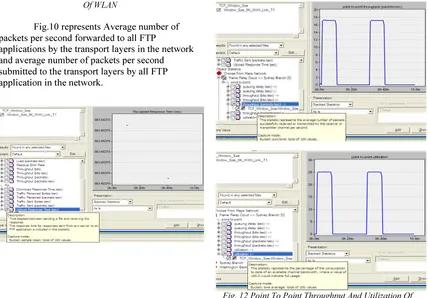
Fig. 10 Traffic Received And Traffic Sent In Packets / Sec Of WLAN
Fig.10 represents Average number of packets per second forwarded to all FTP
applications by the transport layers in the network and average number of packets per second submitted to the transport layers by all FTP application in the network.
[image:7.595.97.379.107.405.2]Fig. 11 Uploaded Response Time And Point-To-Point Queuing Delay Of WLAN System
Fig.11 represents time elapsed between sending a file and receiving the response. The response time for response sent from any server to an FTP application is included in this statistic. This statistic represents instantaneous measurement of packet waiting time in the transmitter channel queue measurements are taken from the time pocket enters the transmitter channel queue to the time the last bit of the pocket is transmitted.
[image:7.595.89.517.413.711.2]Fig.12 this statistics represents the average number of pockets successfully received or transmitted by the receiver or transmitter channel per second. This statistics represents the percentage of the consumption to date of an available channel width, where a value of 100.0 would indicate full usage.
Fig. 13 Point Delay And Utilization Of System
[image:8.595.87.287.562.707.2]Fig.13This statistics represents the average number of bits successfully received or transmitted by the receiver or transmitter channel per unit time, in bits per second.
Fig. 14 WLAN System Architecture
Fig.14 is WLAN hardware initially cost so much that it was only used as an alternative to cabled LAN in places where cabling was difficult or impossible. Early development included industry-specific solutions and proprietary protocols, but at the end of the 1990s these were replaced by standards, primarily the various versions of IEEE 802.11 (in products using the Wi-Fi brand name). An alternative ATM-like 5 GHz standardized technology, has so far not succeeded in the market, and with the release of the faster 54 Mbit/s802.11a (5 GHz) and 802.11g (2.4 GHz) standards, it is even more unlikely that it will ever succeed.
It operates in both the 2.4 GHz and 5 GHz bands at a maximum data transfer rate of 600 Mbit/s. Most newer routers are able to utilise both wireless bands, known as dualband. This allows data communications to avoid the crowded 2.4 GHz band, which is also shared with Bluetooth devices and microwave ovens. The 5 GHz band is also wider than the 2.4 GHz band, with more channels, which permits a greater number of devices to share the space.
5. CONCLUSION
REFERENCES:
[1].
Li, W.W.-L. ; Iltis, R.A. ; Win, M.Z. . (2013). “A smartphone localization algorithm using RSSI and inertial sensor measurement fusion” . Global Communications Conference (GLOBECOM), 2013 IEEE. - (-), 3335 - 3340.[2].
Kouril, J.. (2011 ). “Using RSSI parameter in tracking methods — Practical test” . Telecommunications and Signal Processing (TSP), 2011 34th International Conference on . - (-), 248 - 251.[3].
Chandra-Sekaran, A.-K. ; Dheenathayalan, P. ; Weisser, P. ; Kunze, C. ; Stork, W. . (2009 ).” Empirical Analysis and Ranging Using Environment and Mobility Adaptive RSSI Filter for Patient Localization during Disaster Management” . Networking and Services, 2009. ICNS '09. Fifth International Conference on DOI: 10.1109/ICNS.2009.63 . - (-), 276 - 281 .[4].
Malekpour, A. ; Ling, T.C. ; Lim, W.C.. (2008 ). “Location Determination Using Radio Frequency RSSI and Deterministic Algorithm” .Communication Networks and Services Research Conference, 2008. CNSR 2008. 6th Annual DOI: 10.1109/CNSR.2008.32 . - (-), 488 – 495[5].
Halder, S.J. ; Tae-Young Choi ; Jin-Hyung Park ; Sung-Hun Kang ; Sung-Jo Yun ; Joon-Goo Park. (2008). “On-Line Ranging for Mobile Objects Using ZIGBEE RSSI Measurement” . Pervasive Computing and Applications, 2008. ICPCA 2008. Third International Conference on . 2 DOI: 10.1109/ICPCA.2008.4783693 (-), 662 - 666 .[6].
Liping Zhang ; Yiping Chen. (2011 ). “A newindoor mobile node tracking scheme based on RSSI and Kalman filter” . Wireless Mobile and Computing (CCWMC 2011), IET International Communication Conference on DOI: 10.1049/cp.2011.0878 . - (-), 216 - 220.
[7].
Ceylan, O. ; Taraktas, K.F. ; Yagci, H.B.Broadband, . (2010). “Enhancing RSSI Technologies in Wireless Sensor Networks by Using Different Frequencies” . Wireless Computing, Communication and Applications (BWCCA), 2010 International Conference on DOI: 10.1109/BWCCA.2010.98. - (-), 369 - 372.[8].
Bosisio, A.V. . (2011 ). “Performances of an RSSI-based positioning and tracking algorithm” . Indoor Positioning and Indoor Navigation (IPIN), 2011 InternationalConference on DOI:
10.1109/IPIN.2011.6071952. - (-), 1 - 8 . [9]. Ben Kilani, M. ; Raymond, A.J. ; Gagnon, F. ;
Gagnon, G. ; Lavoie, P.. (2014). “RSSI-based indoor tracking using the extended Kalman filter and circularly polarized antennas” . Positioning, Navigation and Communication (WPNC), 2014 11th Workshop on DOI: 10.1109/WPNC.2014.6843305. - (-), 1 - 6.
[10].
Jia Chen ; Xiao-jun Wu ; Feng Ye ; Ping Song; Jian-wei Liu . ( 2009 ). “Improved RSSI-based localization algorithm for park lighting control and child location tracking” . Information and Automation, 2009. ICIA '09. International Conference on DOI: 10.1109/ICINFA.2009.5205159 . - (-), 1526 - 1531.
[11].Salim, F. ; Williams, M. ; Sony, N. ; Dela Pena, M. ; Petrov, Y. ; Saad, A.A. ; Bo Wu . (2014). “Visualization of wireless sensor networks using ZigBee's Received Signal Strength Indicator (RSSI) for indoor localization and tracking” . Pervasive Computing and Communications Workshops (PERCOM Workshops), 2014 IEEE International Conference on DOI: 10.1109/PerComW.2014.6815270 . - (-), 575 - 580
[12].
Wen Ouyang ; Yi-Hao Chen. (2011). “High-Performance Temporal Object-Tracking Algorithm Using Virtual Targets in Wireless Sensor Networks” . Mobile Ad-hoc and Sensor Networks (MSN), 2011 Seventh International Conference on DOI: 10.1109/MSN.2011.37 . - (-), 403 - 407 . [13].YoungHwan Kwon ; Seong Gon Choi ; JunKyun Choi. (2005). “Efficient handoff decision algorithm using differential RSSI in MPLS-based mobile IP network” . Systems Communications, 2005. Proceedings DOI: 10.1109/ICW.2005.45 . - (-), 40 - 44 .
[14].Erin-Ee-Lin Lau ; Wan-Young Chung . (2007 ,). “Enhanced RSSI-Based Real-Time User Location Tracking System for Indoor and Outdoor Environments” . Convergence Information Technology, 2007. International Conference DOI: 10.1109/ICCIT.2007.253 . - (-), 1213 - 1218 .
[16].Boon-Giin Lee ; Young-Sook Lee ; Wan-Young Chung . (2008 ). “3D Map Visualization for Real Time RSSI Indoor Location Tracking System on PDA” . Convergence and Hybrid Information Technology, 2008. ICCIT '08. Third International Conference on . 1 (-), 375 - 381 . [17].Mohamed, R.R. ; Choong, K.N. ; Hamzah, N. ;
Lee, C.S. ; Wahab, N.H. ; Ariffin, S.H.. (2010). “RSSI-based location tracking method for device switching of real-time application” . Wireless Advanced (WiAD), 2010 6th
Conference on DOI:
10.1109/WIAD.2010.5544941 . - (-), 1 - 4 .
[18].
Salama, A.M.A. ; Mahmoud, F.I.. (2009).“Using RFID technology in finding position and tracking based on RSSI” . Advances in Computational Tools for Engineering Applications, 2009. ACTEA '09. International
Conference on DOI:
10.1109/ACTEA.2009.5227957. - (-), 532 – 536
[19].Blumrosen, G. ; Hod, B. ; Anker, T. ; Dolev, D. ; Rubinsky, B.. (2010 ). “Continuous Close-Proximity RSSI-Based Tracking in Wireless Sensor Networks” . Body Sensor Networks (BSN), 2010 International Conference on DOI: 10.1109/BSN.2010.36 . - (-), 234 - 239 . [20].Ali, A. ; Latiff, L.A. ; Fisal, N.. (2004).
“GPS-free indoor location tracking in mobile ad hoc network (MANET) using RSSI” . RF and Microwave Conference, 2004. RFM 2004.
Proceedings DOI:
10.1109/RFM.2004.1411119. - (-), 251 - 255 .
[21].
Rolfe, B.F. ; Ekanayake, S.W. ; Pathirana, P.N.; Palaniswami, M.. (2007). “Localization with orientation using RSSI measurements: RF map based approach” . Intelligent Sensors, Sensor Networks and Information, 2007. ISSNIP 2007. 3rd International Conference on DOI: 10.1109/ISSNIP.2007.4496862 . - (-), 311 – 316
[22].Li, W.W.-L. ; Iltis, R.A. ; Win, M.Z.. (2013). “A smartphone localization algorithm using RSSI and inertial sensor measurement fusion” . Global Communications Conference
(GLOBECOM), 2013 IEEE DOI:
10.1109/GLOCOM.2013.6831587 . - (-), 3335 - 3340 .
[23]. Chandra-Sekaran, A.-K. ; Dheenathayalan, P. ; Weisser, P. ; Kunze, C. ; Stork, W.. (2009). “Empirical Analysis and Ranging Using Environment and Mobility Adaptive RSSI Filter for Patient Localization during Disaster Management” . Networking and Services,
2009. ICNS '09. Fifth International Conference on DOI: 10.1109/ICNS.2009.63 . - (-), 276 - 281 .
[24].
Malekpour, A. ; Ling, T.C. ; Lim, W.C.. (2008 ). “Location Determination Using Radio Frequency RSSI and Deterministic Algorithm” .Communication Networks and Services Research Conference, 2008. CNSR2008. 6th Annual DOI:
10.1109/CNSR.2008.32. - (-), 488 - 495 [25].Halder, S.J. ; Tae-Young Choi ; Jin-Hyung
Park ; Sung-Hun Kang ; Sung-Jo Yun ; Joon-Goo Park. (2008). “On-Line Ranging for Mobile Objects Using ZIGBEE RSSI Measurement” . Pervasive Computing and Applications, 2008. ICPCA 2008. Third International Conference, DOI: 10.1109/ICPCA.2008.4783693 . 2 (-), 662 - 666 .
[26].Liping Zhang ; Yiping Chen. (2011). “A new indoor mobile node tracking scheme based on RSSI and Kalman filter” . Wireless Mobile and Computing (CCWMC 2011), IET International Communication Conference on DOI: 10.1049/cp.2011.0878. - (-), 216 - 220 .
[27].
Ceylan, O. ; Taraktas, K.F. ; Yagci, H.B..(2010). “Enhancing RSSI Technologies in Wireless Sensor Networks by Using Different Frequencies” . Broadband, Wireless Computing, Communication and Applications (BWCCA), 2010 International Conference on DOI: 10.1109/BWCCA.2010.98. - (-), 369 - 372
[28].Bosisio, A.V. (2011 ). “Performances of an RSSI-based positioning and tracking algorithm” . Indoor Positioning and Indoor Navigation (IPIN), 2011 International
Conference on DOI: