1
A client focused perspective of the effectiveness of
Counselling for Depression.
Anne Stacey Goldman
University of Salford
College of Health and Social Care
School of Nursing and Midwifery, Social Work and Social
Sciences
2
Contents
Tables ... 7
Acknowledgements ... 8
Appendices List ... 9
Abbreviations ... 10
Abstract ... 11
Chapter 1 Introduction ... 12
1:1 A Personal Starting Point ... 12
1:2 Overview ... 13
1:3 Counselling as a profession. ... 14
1:4 Early Beginnings and the development of models of therapy ... 17
1:5 Depression ... 19
1:6 Increase in diagnosis of depression ... 21
1:7 The medical model... 22
1:8 The common factors model ... 24
1:9 The development of IAPT ... 27
1:10 The Ascendancy of CBT... 28
1:11 Counselling for Depression (CfD) ... 29
1:12 Consumer Perspectives ... 34
1:13 The purpose of the study. ... 35
1:14 Reflections - Please follow the highlighted route ... 36
Chapter 2 Literature Review. ... 38
2:1 The purpose of the review. ... 38
2:2 Search Strategy ... 38
2:3 Database search results ... 40
Table 1: Database search Results ... 40
2:4 Explicit inclusion and exclusion criteria ... 41
Table 2: Explicit inclusion and exclusion criteria... 41
2:5 The effectiveness paradox of counselling. ... 42
2:6 Difficulties in Counselling Research. ... 45
2:7 Psychological Therapy for Depression. ... 48
2:8 Different Models of Psychological Therapy for Depression ... 49
2:9 Therapy and Duration ... 50
2:10 Therapy and Age ... 51
2:11 Therapy and Antidepressants ... 51
2:12 The evidence for Counselling for Depression (CfD) ... 52
3
2:14 Research on the Client View ... 59
2:15 Why the client’s view is not considered: ... 60
2:16 Differences between therapist and client reports of therapy: ... 61
2:17 Change process research ... 63
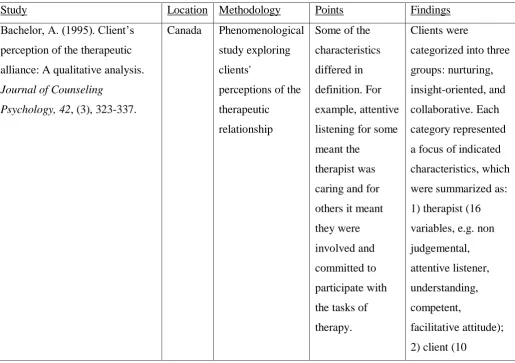
2:18 Studies exploring the client view of the therapeutic relationship ... 63
Table 3: Studies exploring the client view of the therapeutic relationship ... 63
2:19 What clients consider to be helpful to them in therapy. ... 67
2.20 Summary of Helpful Events: ... 69
2:21 What clients consider to be unhelpful to them in therapy: ... 70
2:22 Summary of unhelpful events: ... 72
2:23 Sequential process design: ... 73
2:24 Client characteristics: ... 74
2:25 User Involvement in Research ... 74
2:26 Summary. ... 75
2:27 Reflections - Traffic Jam ... 75
Chapter 3 Methodology ... 77
3:1 Overview of Methodology ... 77
3:2 Positivism and Post-positivism ... 77
3:3 Post-Modernism ... 78
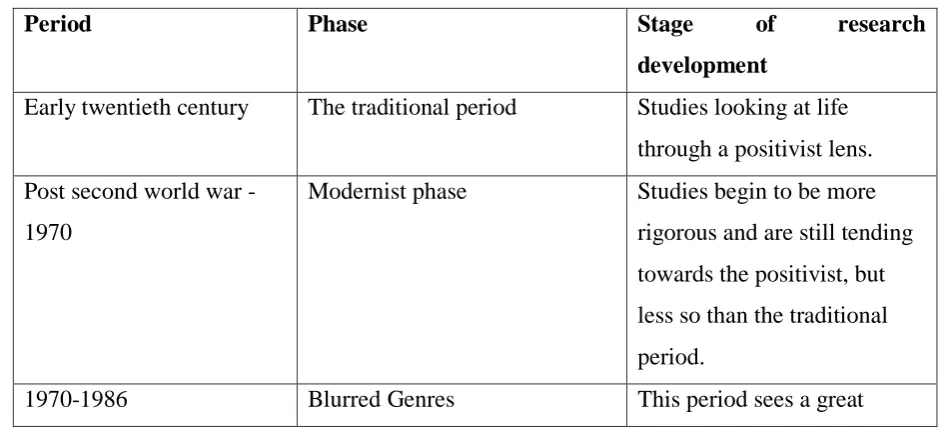
3:4 Development of Qualitative Research. (Denzin & Lincoln, 2005) ... 79
Table 4: Development of Qualitative Research ... 79
3:5 Worldview ... 82
3:6 Paradigms for Counselling... 82
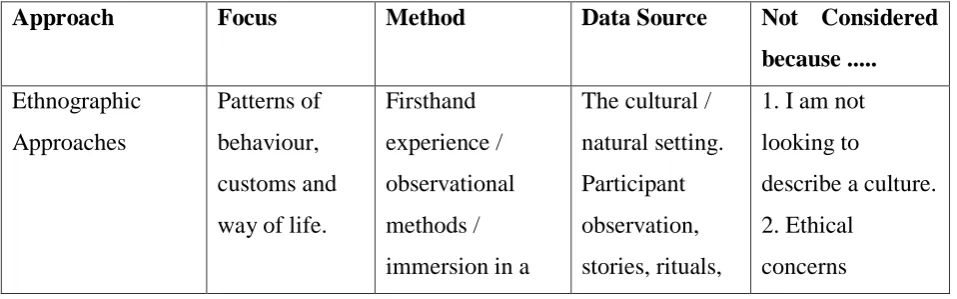
3:7 Approaches to Qualitative Research ... 84
Table 5: Approaches to Qualitative Research ... 84
3:8 My Personal Philosophy for Undertaking this Study ... 88
3:9 Approach ... 90
3:10 Theoretical Foundations of IPA ... 91
3:11 The existential view ... 93
3:11:1 Other influences ... 93
3:12 Limitations of the method ... 94
3:13 Ethics ... 97
3:14 Participants... 99
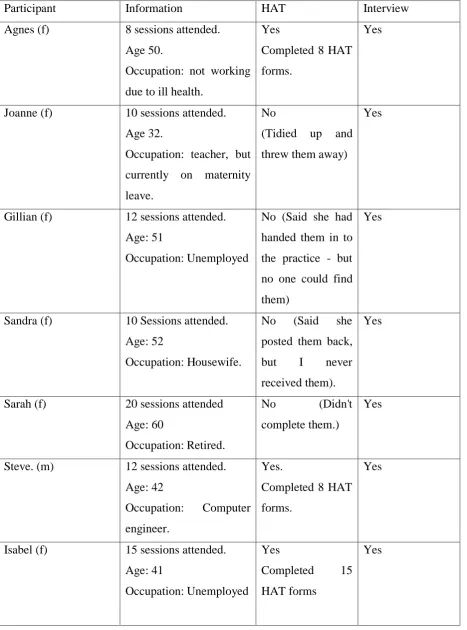
3:14:1 Participant Information ... 102
Table 6: Participant Information. ... 102
3:14:2 Participant Introductions ... 103
4
3:16 Data Protection issues ... 116
3:17 Data Collection ... 117
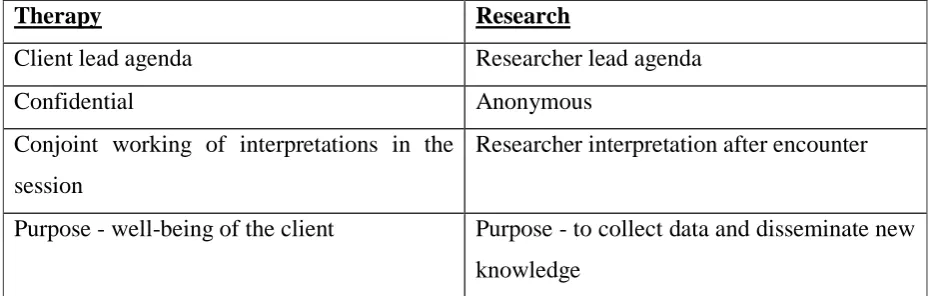
3:18 A consideration of therapy distinct from research ... 119
3:19 Differences between therapy and research ... 120
Table 7: Differences between therapy and research ... 120
3:20 Similarities between therapy and research ... 120
Table 8: Similarities between therapy and research ... 120
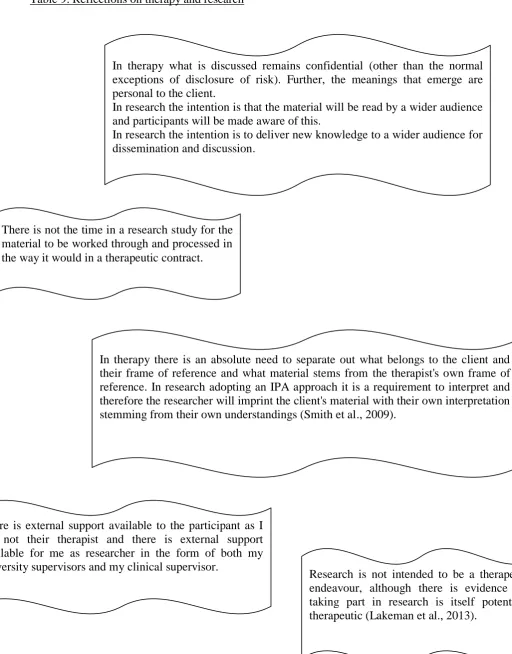
3:21 Reflections on Therapy and Research ... 121
Table 9: Reflections on therapy and research ... 121
3:22 Analysis ... 122
Table 10: Example of interview data analysis ... 127
3:23 The Professional Doctorate ... 131
3:24 Research Difficulties... 132
3:25 Reflections - Perform a U turn where possible ... 134
Chapter 4 Analysis of Findings... 136
4:1 Introduction ... 136
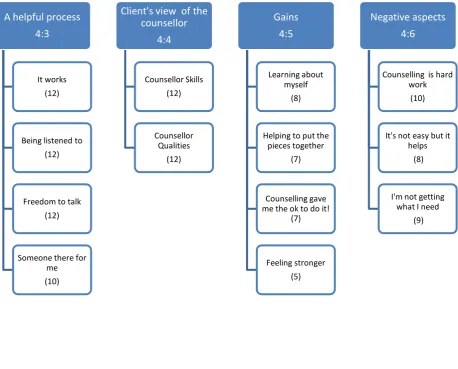
Table 11: Superordinate themes supported by subordinate themes ... 137
4:2 Reflections on the analysis of the themes ... 137
4:3 Superordinate Theme One: A helpful process ... 139
4:3:1 It works ... 140
4:3:2 Being listened to ... 142
4:3:3 Freedom to talk ... 143
4:3:4 Someone there for me ... 146
4:4 Superordinate theme two: Client's view of the counsellor ... 147
4:4:1 Counsellor Qualities ... 148
4:4:2: Counsellor Skills... 149
4:5 Superordinate theme three: Gains ... 151
4:5:1 Learning about myself ... 151
4:5:2 Helping to put the pieces together ... 153
4:5:3 Counselling gave me the ok to do it. ... 154
4:5:4 Feeling stronger ... 155
4:6: Superordinate theme four: Negative aspects ... 156
4:6:1: Counselling is hard work ... 157
4:6:2: It's not easy but it helps ... 158
4:6:3: I'm not getting what I need ... 159
4:7 Effective Therapy ... 161
5
Chapter 5 Discussion ... 167
5:1 Introduction ... 167
5:2 Exploring the client’s experience of receiving CfD therapy ... 168
5:3 Exploring the client’s views of helpful and unhelpful aspects of CfD ... 174
5:3:1 Being listened to ... 174
5:3:2 Freedom to talk ... 175
5:3:3 Someone there for me ... 177
5:3:4: Counsellor qualities ... 178
5:3:5: Counsellor skills ... 179
5:3:6: Gains ... 181
5:3:7: Additional Factors ... 183
5:3:8: Unhelpful Aspects ... 184
5:3:9: Counselling is hard work ... 184
5:3:10: It's not easy but it helps ... 185
5:3:11: I'm not getting what I need ... 185
5:4 What do clients mean by effective therapy ... 187
5:4:1: Definition of effective counselling from the client's perspective ... 188
5:4:2: Study derived client definition of effective counselling ... 189
5:5 Agendas ... 189
5:6 Summary ... 191
5:7 Limitations ... 192
5:8 Reflections - Park up for a moment ... 193
Chapter 6 Conclusion ... 195
6:1 Introduction ... 195
6:2 The research aim ... 195
6:3 Overview ... 196
6:3 Unique contribution to knowledge ... 199
6:4 Recommendations for practice ... 200
6:5 Further Research ... 200
6:6 In conclusion ... 201
6:7 Reviewing the journey. ... 202
THESIS REFERENCES ... 203
Appendix 1: Counselling for Depression Competences ... 253
Appendix 2: Database search results on clients views of counselling for depression. ... 255
Appendix 3: Database search results on clients views of counselling for depression. ... 258
Appendix 4: University of Salford Ethics Approval Letter ... 263
6
Appendix 6: National Research Ethics Service - Minor Amendment Approval Letter ... 266
Appendix 7: Manchester Trust Approval Letter ... 268
Appendix 8: Devon Trust Approval Letter ... 269
Appendix 9: Rochdale Trust Approval Letter ... 272
Appendix 10: Invitation to participate ... 274
Appendix 11 : Participant information sheet ... 275
Appendix 12: Consent form - amended ... 278
Appendix 13: Consent form - original ... 280
Appendix 14: HAT form ... 281
Appendix 15: Interview Guide... 283
Appendix 16: Agnes Transcript ... 284
Appendix 17: Agnes - HAT form specimen ... 320
Appendix 18: Agnes - Developing Emergent Themes ... 321
Appendix 19: Quotes supporting themes ... 345
Appendix 20 : Abstraction of Themes ... 349
Appendix 21 : "Freedom to talk" post-its ... 350
Appendix 22: Themes on post-its ... 351
Appendix 23 : Supervision and Training Record ... 352
Appendix 24 : Effective Therapy ... 364
7
Tables
Table 1: Database search Results
Table 2: Explicit inclusion and exclusion criteria
Table 3: Studies exploring the client view of the therapeutic relationship Table 4: Development of Qualitative Research
Table 5: Approaches to Qualitative Research Table 6: Participant Information
Table 7: Differences between therapy and research Table 8: Similarities between therapy and research Table 9: Reflections on therapy and research Table 10: Example of interview data analysis
Table 11: Superordinate themes supported by subordinate themes
8
Acknowledgements
My sincere thanks go to my supervisors, Dr. Alison Brettle and Dr. Sue McAndrew I will always be grateful for their commitment and guidance.
My thanks go to the counsellors at the IAPT services for their help with recruitment and my heartfelt thanks must go to the study’s twelve participants who gave of their time and shared their experiences with me. I truly could not have done this without you.
Special thanks must go to Peter Pearce of Metanoia who connected me to the second site for the study and to Andy Hill from BACP who has been supportive throughout this project.
The opportunity to discuss my research with others has been invaluable. I appreciate the help and support from all of my tutors at the University of Salford, in particular Dr. Suryia Nayak and Professor Martin Johnson. Also huge thanks go to Jeanne Broadbent, Kate Doran and the members of the IPA forum, you were always there with advice when I needed it. Likewise to my special buddy Karen Higginbotham who has shared the ups and downs of this journey with me. Thanks must also go to Elizabeth Andrew for her time and wisdom in reviewing my analysis.
Of course my deepest thanks must go to my family. They have allowed me to disappear for 5 years and supplied me with tea and sandwiches, proof reading skills and computer guruship that have saved my life on too many occasions to mention. Nick, Hayley, Richard & Emily and Alex, you have kept me going.
9
Appendices List
Appendix 1. Counselling for Depression Competences Appendix 2. Database search - studies included
Appendix 3. Database search - studies excluded
Appendix 4: University of Salford - Ethics Approval Letter
Appendix 5: National Research Ethics Service - Conditions Met Approval Letter Appendix 6: National Research Ethics Service - Minor Amendment Approval Letter Appendix 7: Manchester Trust Approval Letter
Appendix 8: Devon Trust Approval Letter Appendix 9: Rochdale Trust Approval Letter
Appendix 10: Invitation to participate in a Research Study Appendix 11: Participant Information Sheet
Appendix 12: Consent Form
Appendix 13: Original Consent Form Appendix 14: HAT Form
Appendix 15: Interview Schedule Appendix 16: Agnes Transcript
Appendix 17: Agnes HAT form specimen
Appendix 18: Developing Emergent Themes Table Appendix 19: Quotes supporting themes
Appendix 20: Abstraction of Themes Appendix 21: "Freedom to talk" post-its Appendix 22: Themes on post-its
Appendix 23: Supervision and Training Record. Appendix 24: Effective Therapy
10
Abbreviations
BAC = British Association for Counselling
BABCP = British Association for Behavioural & Cognitive Psychotherapies BACP = British Association for Counselling and Psychotherapy
BDI = Beck Depression Inventory CAT= Cognitive Analytical Therapy CBT= Cognitive Behavioural Therapy CfD = Counselling for Depression CPR = Change Process Research
DSM V= Diagnostic and Statistical Manual version V EBP- Evidence-based practice
EFT= Emotion Focused Therapy
HAT = Helpful Aspects of Therapy form
HCPC = The Health and Care Professions Council IAPT= Improving Access to Psychological Therapy IPT = Interpersonal Psychotherapy
ITA = Institute of Transactional Analysis
MBCT = Mindfulness Based Cognitive Therapy NRES = National Research Ethics Service
NICE= National Institute for Health and Care Excellence PCT= Person Centered Therapy
RCT - Randomised Control Trial
SSRI = Selective Serotonin Reuptake Inhibitors STPP= Short Term Psychodynamic Psychotherapy UKCP = United Kingdom Council for Psychotherapy
11
Abstract
Estimates suggest 1 in 4 adults are diagnosed with a depressive episode at some point during their life; however, only one in four people with a diagnosis of depression in the UK receive any form of treatment. To address this, the Improving Access to Psychological Therapies (IAPT) program was established, ensuring people accessing NHS treatment had choice. Initially the only therapy commonly available was Cognitive Behavioural Therapy (CBT), raising concern regarding client choice and prompting the British Association of Counselling and Psychotherapy (BACP) to call for the development of a new evidence-based therapy called “Counselling for Depression” [CfD]. With regard to counselling, it is suggested that without knowing the client's view of their therapy there can be no effective evaluation of that therapy. In light of the above, the focus of this research is on the client's perceptions of CfD, the purpose of the study being two-fold; (1) to explore and evaluate CfD from the perspective of the client (2) to inform the counselling profession of what is taking place within this therapeutic approach as perceived by the client. This qualitative study, using Interpretative Phenomenological Analysis [IPA], focused on twelve clients' perceptions of CfD. Clients receiving CfD completed a Helpful Aspect of Therapy questionnaire after each counselling session and attended a semi-structured interview on completion of counselling. Findings identified four superordinate themes; a helpful process; Client’s view of a counsellor; Gains; and Negative aspects. As no previous study has considered CfD in this way, this study gives voice to the client enabling them to convey their understanding of what they perceive is effective therapy. In addition, this study makes a significant original contribution both to the knowledge base regarding CfD and its effectiveness, and to the professional practice of counselling.
12
Chapter 1 Introduction
1:1 A Personal Starting Point
Whilst working as a Tribunal Advisor for the Citizen's Advice Bureau I became aware that I could manage the litigation and the advocacy, what I found difficult was coping with the emotional states that my clients presented as many of them were distressed at finding themselves in these difficult situations. To learn more about this I thought it would be helpful to explore counselling and in September 2000 I enrolled on the Certificate in Counselling at the University of Salford. I had thought it would just be a matter of tweaking my advice knowledge, but discovered I had to discard what I knew and start again. Thus began a love of understanding the emotional and the psychological makeup of human beings. Every page I turned brought revelations and I was fascinated by the individuality and idiosyncratic nature of people. I proceeded onto the Diploma in Counselling which drew upon the Person Centred approach, very different from advice work, but hugely illuminating in learning about what mattered to each client that I worked with. I went on to complete my Master of Science in Counselling Studies and was now deeply involved in both the practice of counselling and the supervision of other counsellors. As part of my continuous professional development I attended the National Anxiety Conference in 2006. The opening keynote paper was delivered by Professor Paul Salkovskis, who advised the 1000 counsellors sitting in the audience to "either retrain in Cognitive Behavioural Therapy (CBT) or leave the profession". This remark has stayed with me as an example of how erroneous a broad-based judgement can be, where individual need is overlooked when viewed through the narrow lens of schoolism.
13 Social Justice, 2012), hence I wanted to explore the effectiveness of a different approach from the client perspective.
The initial idea for the study was based on wanting to obtain evidence to challenge the monoculture of CBT in the NHS and show that counsellors working routinely in daily practice with their clients were getting good results despite using different therapeutic approaches. Ethical concerns that are discussed later in this report shaped the study into its present form, but the original idea of client need dictating the ways of working still holds.
Within this introductory chapter I will demonstrate how a new therapeutic approach was developed to widen the choice of therapy within the NHS, with the remainder of this Professional Doctorate thesis exploring the client's perceptions of this new therapy, namely Counselling for Depression [CfD]. CfD is described as a manualised form of psychological therapy specifically designed for counsellors working in the Improving Access to Psychological Therapies [IAPT] programme (Hill, et al., 2010). It is a form of Person-Centred/ Experiential [PCE] therapy that aims to help patients access and make sense of underlying feelings and draw on the new meanings which emerge to make positive changes in their lives. CfD focuses on the incongruence between how a person feels they actually are and how they feel they should be (Hill, 2011). This is in keeping with the Rogerian concept of the incongruence between the ideal self and the organismic self (1961). CfD differs from Person Centred therapy in that CfD is a brief therapy which, while taking a therapeutic stance from Person Centred therapy, also has aspects of Emotion Focused therapy (Sanders, 2013). Within CfD the person centred therapeutic conditions are established, but the emphasis is on collaboration and includes the negotiation of the client's therapeutic goals.
1:2 Overview
14 illness (APA, 2012), the differences between the medical model and the common factors movement and the way in which each influences counselling are explored. Finally consideration will be given to the recent development of IAPT and the current concerns of the counselling profession which have led to the need for a different model of counselling such as CfD that can demonstrate evidence of its effectiveness acceptable to the National Institute for Health and Care Excellence [NICE].
1:3 Counselling as a profession.
According to the British Association for Counselling and Psychotherapy [BACP] “counselling and psychotherapy are umbrella terms that cover a range of talking therapies. They are delivered by trained practitioners who work with people over a short or long term to help them bring about effective change or enhance their wellbeing” (BACP, 2010a, para.1). However confusion still occurs in the assumptions made around the roles of both counsellor and psychotherapist. Psychological therapy has traditionally been viewed as a profession with therapists having specialised knowledge and skills to work autonomously, making decisions regarding treatment based on clinical judgement (Bower & Gilbody, 2010). This view is challenged by others who differentiate counselling from psychotherapy, not in their core activities of the relief of psychological distress, but in their historical roots (Dryden et al., 2000). Psychotherapy is described as aligning with a medical model, developed in response to mental illness, where the practitioner sees his/her self as a skilled professional and an expert in the treatment of mental disturbance (Dryden et al., 2000). However, the origins of counselling were in a voluntary capacity and stem from peer to peer support in the marriage guidance field. Counselling is described as being underpinned by educational and spiritual understandings of human dysfunction, growth and development (Dryden et al., 2000).
15 Counselling and thus became the founding divisions of the professional body the British Association of Counselling [BAC] (Dryden et al., 2000). On realising that it was representing not only counsellors but psychotherapists too, BAC changed its name in 2000 and became the British Association for Counselling and Psychotherapy (BACP, 2010b). BACP (2013a, para.1) state that they now have the "first psychological therapists' register to be accredited under a new scheme set up by the Department of Health and administered by an independent body, accountable to Parliament". This landmark event is significant in terms of its ability to provide the public with a means to check that they are receiving therapy from a suitably qualified and professionally accountable practitioner.
16 The split was contested strongly and challenged on the grounds that the vast majority of standards were common for both counsellors and psychotherapists and further there was no evidence to show that the differentiated standards were an accurate reflection of practice (Alliance for Counselling & Psychotherapy, 2009). With the change of government in the 2010 election from Labour to a Coalition Government statutory regulation did not go ahead, however, the two largest professional bodies have since instigated their own voluntary registers. The BACP (2010b) do not distinguish between counselling and psychotherapy, whilst the UKCP (2013) acknowledge there is no commonly agreed definition, but suggest that the difference lies in the length and depth of training and in the quality of the therapeutic relationship. There is no consensus as to whether counselling and psychotherapy cover the same ground.
17 are not trained as professional counsellors, but who use counselling skills; social workers; nurses, teachers, preachers; peer helpers; support workers and informal helpers such as friends, family and work colleagues (Nelson-Jones, 2012). This has been further exacerbated by uncertainty stemming from the use of the seemingly interchangeable terms of counselling and psychotherapy (Dryden et al., 2000). It is hard to ascertain whether greater academic learning creates better practitioners or if life experiences are sufficient to develop the skills required for the role of counsellor and this question continues to form the basis of much debate (Paulson et al., 1999; Ahn & Wampold, 2001; Bambling & King, 2001).
1:4 Early Beginnings and the development of models of therapy
18 by Aaron Beck (1976). However, it was Carl Rogers in the 1950s, (1951, 1989), working in a humanistic and what he termed a “client centred” way, who made a fundamental impression upon the field of counselling. His approach centres on helping a client to “self actualize” and to be empowered. Rogers’ ideas challenge both the psychoanalytic and behavioural approaches as the person centred model places the humanity of the individual at the very core of therapy. Working with the client’s subjective view, the lived experience of the individual is the key concept in much counselling work, but rather than focusing on the unconscious and issues in the past, as in the psychoanalytic approach, Person Centred counselling focuses on the here and now. Rogers categorically challenged the hierarchy of the medical model (discussed below) and the dispute between non medically trained counsellors and the medical model still causes tension today (UKCP, 2011).
19 Iraq were struggling with post traumatic stress or depression but feared asking for support because of the stigma and shame they felt were associated with seeking therapy.
The picture above describes a profession that is not at ease with itself. Power struggles from within and challenges that are both historical and current create an uncertain future for the profession. Cooper (2011) makes a plea for research that delivers trustworthy evidence that will help to increase the prospects of the profession. This may help to challenge the external threat, but only the practitioners themselves can address the internal squabbling that undermines the profession.
1:5 Depression
20 Depression is thought to have been around for thousands of years and there are many theories suggesting why it occurs from some elemental issues concerning earth, fire, water and air, or cycles of the moon, to more socio-cultural explanations such as personality, witchcraft, religious beliefs, sin, the devil, the supernatural or the struggle a person has with their conscience (Carr, 2007). Others see the causes of depression as genetic, a biochemical imbalance in the brain, psychosocial stressors, cognitive distortions, a lack of environmental and social rewards, social inequities, cultural influences, familial influences, dietary issues and a lack of physical exercise (Yapko, 2008). Kraepelin differentiated between depression that was exogenous, being caused by external events which were manifest, identifiable and measurable and endogenous causes stemming from within, being hypothetical and intangible (Lewis, 1971).
21
1:6 Increase in diagnosis of depression
Undoubtedly there has been an increase in the diagnosis of depression (Leader, 2013). Worldwide it has been identified that more than 350 million people have depression (WHO, 2014). In the UK, in the 1950s, depression was formally diagnosed in 0.5% of the population, whereas in 2013, 1 in 4 adults will be diagnosed with a depressive episode (Leader, 2013). This is a large increase in diagnosis. A possible reason for the increase in the diagnosis of depression is perhaps due to pharmaceutical companies advertising their products and people then seeking help (Leader, 2013). Selective Serotonin Reuptake Inhibitors (SSRIs) are now among the best-selling drugs in medical practice and vast sums of money are spent on advertising them (Lacasse & Leo, 2005). However, a meta-analysis of published and unpublished drug trials found that the use of placebo duplicated about 80% of the antidepressant response (Kirsch, 2005). Therefore there is doubt as to the efficacy of these drugs per se, as well as the reliability of the evidence supporting the efficacy of the drugs. Criticisms have been levelled at the pharmaceutical industry regarding the lack of transparency within their clinical data and their hidden negative results (Forbes, 2014; Davis 2013). It has also been suggested that only a quarter of all published biomedical findings can be reproduced successfully (Loscalzo, 2012), yet in 2011 over 43 million prescriptions for anti-depressants were written in the UK alone (Pope, 2013).
22 For some, namely those associated with the anti-psychiatry movement, mental illness is something of a misnomer. For example, Szasz (1974, p34) considered mental illness to be "metaphorical" and not in fact "a real illness" at all. Szasz criticised the way in which mental illness was viewed as separate from its social context and believed it was not possible to disconnect people from their "educational, economic, religious, social and political communities" (Szasz, 1974, p49). Szasz believed that what psychiatrists were working with was not mental illness but "personal, social and ethical problems in living" (1974, p262). Similarly Laing (1969) also challenged the idea of mental illness as a clinical entity and instead viewed the locus of the problem stemming from the environment in which the client was situated. He saw the client as a subject with their own understanding of their own world view, rather than objectified as a series of symptoms. However, these views have been overshadowed by the influence of the DSM (Krueger & Eaton, 2010) and the very act of naming and giving a label to a diagnosis makes it "actual" and therefore influences our beliefs about ourselves, regardless of questionable evidence to support the belief (Greenberg, 2013). Further, this is exacerbated by the demands by insurance companies for a specific diagnosis, requiring therapists to adhere to the categories in the DSM in order be remunerated for the work that they do (Decker, 2013).
Alongside the financial benefits of increased diagnosis of depression to drug companies, there is an identified change in the social understandings around sadness and distress (Mulder, 2008). Mulder (2008) suggests there are three assumptions in place. Firstly that there is a defined illness called depression. Secondly that it has increased and is very common and thirdly that it requires a medical solution. He suggests that lack of motivation, low mood, lack of energy, un-productivity and persistent unhappiness is viewed today as an illness whereas historically it was not seen as a health concern. Psychiatry sees depression separate from social conditions and places little emphasis on the socio-economic conditions that affect lives (Eaton et al., 2001). The increase in the diagnosis of depression could therefore be due to classification bias, financial incentives and socio-cultural acceptability as an illness.
1:7 The medical model
23 their environment (Sanders & Hill, 2014). Conversely it can also be seen as paternalistic, inhumane and reductionist (Shah & Mountain, 2007). It is a model that views illness in terms of causation and remediation as opposed to holistic or social models (Shah & Mountain, 2007). Within the medical model is the implicit understanding that the doctor or another practitioner will have the expertise to implement the necessary treatment. The doctor is seen as more powerful, but the patient is not powerless (Shah & Mountain 2007). One view is that the doctor can advise and treat, but the patient can choose to agree to the treatment and to act on the advice or not. This sees patients as active participants in the interaction. However, where patients hold beliefs about the power of the doctor, they are less likely to challenge the doctor's decisions (Braman & Gomez, 2003).
In counselling and psychotherapy a major reason for the dominance of the medical model, is the emergence of managed care where third parties such as insurance companies use the medical model and evidence based language (Bohart & Tallman, 2003). Therefore, in order that their clients can get their therapy provided, and their work is remunerated, psychotherapists and counsellors have to use the language of the medical model. Problems become pathologised and are talked of as "disorders" with therapists referring to treatments or interventions given to "patients", all of which places the therapist in the role of expert. Clients may come into therapy to create an opportunity for deep experiencing and personal meaning-making (Bohart et al., 1998), but the therapy environment may well be influenced by evidence-based practice guidance invoking the need for a diagnosis to be made in order to adhere to the correct NICE guidance (Clark et al 2009). Indeed the client's agenda is diluted even further when treatment decisions are influenced by treatment purchasers e.g., private health insurers who ask for certain treatments to be delivered (Fairfax, 2009). This moves the agenda even further away from the client and ignores an individual having their own unique set of difficulties and a particular history, as once they are given a diagnostic label it is then the label rather than the individual that is treated (Moncrieff, 2013). In light of this it is little wonder that patients are often left feeling that their concerns are forgotten and that they are little more than a disease being treated (Faulkner & Thomas, 2002).
24 against the format of the medical model where the therapist is guided not by the client, but by the evidence base such as the NICE guidelines (2009) that instructs what should be done in session (Bohart, 2000b).
Since the 1950s there have been claims and counter-claims as to the effectiveness of psychotherapy (Eysenck, 1952, Strupp, 1963, Hunsley & Di Giulio, 2002, Cooper, 2008, Cuijpers, 2015). While people want to know if counselling works and whether it can help them to feel better, the answer to this question often remains elusive. This is because the outcome measures of counselling are subject to interpretation and judgements that may come from the counsellor, the referring doctor or referring agency or even from the outcome measure being used, yet, only the client can know what they are getting from their therapy, how useful it is for them and whether it meets their needs (Rogers, 1961). The understandings of a particular field, such as CBT, are only valid within the theoretical paradigms of that field and therefore there is a judgement in place that is external to the person who is the client (Gergen, 1996). There are ideological tensions between cost-effectiveness and objective evaluation and a conflict between the bio-medical cure orientated model and the non-judgemental core conditions that need to be in place to create the safe space a client needs in order to work through their concerns (House, 1999). Further, there is no evidence that as practitioners we are more expert than our clients in knowing what works for them, the "experts do not know best" (House & Totton, 2011, p.49). Nonetheless, Horvath (2013) still comes from the viewpoint of “We” need to decide what this therapy is for. “We”, being the experts, doctors, practitioners or researchers, but not the client themselves. It is not possible to choose therapeutic solutions outside of the person and their own individual context (Bohart, 1997). It is for the client to decide whether a specific therapy is effective for them, rather than assuming, as in the medical model, that expertise lies with the practitioner.
1:8 The common factors model
25 “common across approaches”, listing factors such as “insight, corrective experiences, opportunity to express emotions and acquisition of a sense of mastery”. These, along with the therapeutic relationship, the client’s emotional experiencing, exploration of their internal frame of reference, changing personal effectiveness and providing hope contribute greatly to positive outcome.
Grencavage and Norcross (1990, p.373) believe there are five areas of commonality: client characteristics, therapist qualities, change processes, treatment structures and relationship elements. They suggest that the most consensual commonalities were the development of a therapeutic alliance, the opportunity for catharsis, the acquisition and practice of new behaviours, clients' positive expectancies, beneficial therapist qualities, and the provision of a rationale as a change process.
It is suggested that the common factors model is beneficial as its focus is on the meanings it gives to procedures rather than their specific psychological effect (Wampold, 2001). Grunbaum (1981, p.164) proposed that characteristics of particular techniques are being dismissed as techniques and called “incidental”, but that actually a therapeutic process is at work.
Others consider that the debate between specific factors or common factors may well be spurious because it is impossible to separate out the technique from the myriad of ways of communicating and relating that take place in the context of the therapy (Watson, 2007). Ultimately, it has not yet been clearly identified what actually is taking place in therapy other than clients find the process helpful.
26 therapy account for only 1% of variance in outcomes, meaning that non-specific factors are responsible for the remainder of improvement. Cuijpers et al. (2012) estimate extra-therapeutic factors are responsible for about one third of the improvement (33.3%), non-specific factors for approximately half (49.6%), and non-specific factors for the remaining 17.1%. There is remarkably little change between such findings in the last 20 years, 1992- 2012.
Orlinsky (2011, p.xxii) suggests, what works in therapy may not be about specific factors or common factors, but rather “therapeutic factors”. These are the factors that contribute to effective change for clients and are present in all therapies with the recognition that some therapists are more responsive and some client are more receptive, but where the constant is a working therapeutic relationship within which the therapy is co-constructed by both participants. Wampold (2010, p.xxii) considers that the differences between the various positions are “fundamentally not reconcilable” and that the only essential question is “whether a psychological therapy is benefiting the particular patient being treated”.
Despite such evidence, the research community still search to identify the ultimate factor responsible for bringing about therapeutic change. Indeed Cooper (2008) highlights that research tends to look upon diversity as random variance, whereas Kiesler (1966, p.117) identified an assumption of the "patient uniformity myth", that people with similar diagnoses need similar things. From a humanistic, Person Centred perspective, Rogers (1957) also challenges the uniformity myth. With a focus on the subjective and the individual, Rogers identified what he felt were the necessary and sufficient therapeutic conditions to bring about personal change. These conditions include; accurate empathy, unconditional positive regard and congruence.
27 However, Watson (2007) acknowledges too much freedom versus too much structure is a difficult boundary to negotiate.
1:9 The development of IAPT
Depression and chronic anxiety have been cited as the biggest causes of misery in the UK with only one in four people suffering depression receiving any form of treatment (Layard, 2006). Further the total loss of output due to depression and chronic anxiety accounts for approximately £12 billion a year (Layard, 2006). NICE make recommendations on the commissioning and delivery of psychological interventions within the NHS. As a result of the prevalence rates, the availability of treatment and cost of depression in the UK, NICE guidelines were established in order to give people a choice of psychological therapy.
One initiative for giving people choice has been the IAPT program, introduced as a way of offering NHS patients “a realistic and routine first-line treatment” (IAPT, 2012, para.2). The service was piloted in two areas Newham and Doncaster, and in 2007-8 it was rolled out to 35 services nationally. By 2014 it is expected that the service will be available to 15 % of the population looking for treatment for depression and/or anxiety. It is difficult for people of low means to access therapy due to costs and availability, however, the IAPT programme has gone some way to ensure the NHS addresses issues regarding inequality of service provision (Pope, 2013).
28 trained. However, if the recovery rate is 45% questions need to be raised as to what happened to the other 55%. Further if one million people entered therapy and 680,000 completed their course of treatment, 320,000 people are unaccounted for. Others have scrutinised the IAPT figures and found them troubling. Sartori (2011) comments there are an estimated six million people in the UK with depression and anxiety, of 210,540 people who were referred to IAPT services only 123,975 actually received treatment. This is only just over 2% of the six million people who are suffering. In addition, for some people treatment has equated to just 2 sessions which is far fewer than recommended by the NICE guidelines of at least 6 sessions, while considerable variance between sites in recovery rates has also been reported (Gyani et al., 2011). Sadly, Lord Layard (2012) noted that in some areas IAPT services have stopped expanding and some have even been cut. This was not what was forecast when IAPT was initially established. A report from the British Psychoanalytic Council and UKCP (2015) states that waiting times, choice of therapies and quality of provision are all getting worse and cutbacks are resulting in 58% of clients with critical mental health needs being unable to get the help they need.
1:10 The Ascendancy of CBT
29 The IAPT programme when initially introduced in 2008 promised to recognise psychological need and to inject the required funds to deliver therapy widely across the UK. However, what has occurred is a huge curtailment of services so that generally in the NHS, the only therapy commonly available is CBT (Platt, 2011). The introduction of IAPT and the privileging of CBT has impacted on existing counselling provision and counsellors, with services being replaced by CBT services that use newly trained psychological wellbeing practitioners (Perren & Robinson, 2010). This has lead to job losses for experienced counsellors, with vacancies not being filled when staff leave. Ballinger (2013) believes this is a threat to the existence of counselling in the NHS. BACP raised concerns regarding counsellor job losses and the lack of choice for clients accessing help from the NHS and responded to this challenge by supporting the development of a new evidence-based therapy called
“Counselling for Depression” [CfD.] (Sanders & Hill, 2014).
1:11 Counselling for Depression (CfD)
CfD is the only humanistic therapy approach in the IAPT programme (Proctor, 2015). It is described by Sanders and Hill (2014, p.3) as a "new integrative counselling approach", being an integration of Person Centred counselling and Emotion-focused therapy. CfD focuses on working with the emotions underlying depression along with the intrapersonal processes, such as low self-esteem and excessive self-criticism, which often maintain depressed mood (Sanders, 2013). CfD is distinguished from traditional person centred practice as it emphasises collaboration and negotiation of client goals as well as counsellor instigated regular reviews of progress and client goals Sanders (2013). Also different from traditional person centred practice, the focus of CfD is on working briefly in that CfD is time limited and usually offered in contracts of up to 20 sessions (Pearce et al., 2012).
30 counselling that may challenge the traditional concepts of person centred practice because of its attention to meeting the demands of evidence-based practice (Sanders & Hill, 2014).
The therapy model of CfD has been designed around a competence framework making it possible for it to be delivered from a manual. (Appendix 1) (Roth et al., 2009; Hill, 2010). The competence framework guides the therapist in how to implement the therapy based on descriptions of "best practice" derived from RCT research evidence supporting the efficacy of therapy (Sanders & Hill, 2014). A core premise of competence frameworks is that "the therapist needs background knowledge relevant to practice and can draw on and apply this knowledge in their therapeutic work" (Sanders & Hill, 2014, p.23). The idea that the therapist "applies" their knowledge in their work with their client places the therapist in the position of expert professional and is a very different stance to the Rogerian ideal of "timeless living in the experience", a unity of experiencing between client and counsellor which Rogers describes as "the height of personal subjectivity" (Rogers, 1961, p202).
31 therapeutic alliance, this is a key competence given that a good, working, therapeutic relationship is associated with positive therapy outcomes. This requires that the therapist can engage with the client, work empathically, and hold a range of emotions expressed by the client and build a safe environment where understanding can take place including a safe ending to the therapy. Ability to undertake a generic assessment, this is seen as a core competency for CfD counsellors. The aim is to understand the client's difficulties; giving consideration to the social situation, relationships, employment and any other matters that impact on the client. Inherent in the assessment is a consideration of risk along with personality factors that contribute to an evaluation of whether therapy is appropriate at this point and what the focus may be, or whether other therapeutic options need to be considered. Ability to assess and manage risk of self-harm in clients presenting with depression, this competency requires CfD counsellors to understand and manage the elevated levels of suicide and self-harm among depressed people. There is a need to develop plans to manage the level of risk whilst continuing to support the client's therapeutic progress. Ability to use measures to guide therapy and to monitor outcomes, the IAPT programme uses session by session outcome measures and CfD counsellors need to have a basic understanding of how the measures are constructed and how to interpret them. It is suggested that the benefits of integrating the outcome measures into routine practice in terms of obtaining feedback from clients and monitoring progress "should be appreciated by counsellors" (2014, p.33). Ability to make use of supervision, this is seen as providing support, guidance and professional development to the counsellor and is viewed as an important factor in the delivery of effective therapy. The ability to adapt practice in view of supervisory guidance is seen as essential.
32 CfD is the ability to help the client develop a focus or aim for the therapy, but care must be taken that the development of a therapeutic aim does not detract from the forming of the therapeutic relationship. Ability to maintain and develop therapeutic relationships, fundamental in this area of competence are the three Rogerian core conditions of empathy, unconditional acceptance and authenticity. Ability to conclude the therapeutic relationship, whilst this is a time to review progress and look to the future it is acknowledged that the brief nature of CfD may for some client's conclude too soon. CfD counsellors are required to help facilitate any negative feelings that the client may have around endings and ensure as far as possible that the ending is associated with increased autonomy and self-awareness for the client rather than experienced negatively.
33 The meta-competencies domain is divided into two sections; general meta-competencies which apply to any therapist and counselling meta-competencies specific to CfD. Generic meta-competences, are high-order skills that any therapist practising any modality should possess, for example to adhere to a model of therapy, but be able to be flexible enough to meet a client's needs. To find a balance between these two aspects is the mark of a competent therapist. Counselling meta-competencies; these are the high-order skills relating specifically to the implementation of CfD. Although similar to the generic meta-competencies, they involve the ability to balance the different aspects of the competence model, for example, balancing a focus on a therapeutic task whilst maintaining a therapeutic relationship. Another example would be balancing a non-directive stance against the need to intervene with issues of risk. It is suggested this involves the need to talk reflectively with the client about the nature of communication in the therapeutic dyad and its impact. The focus is always to maintain the therapeutic relationship and to support the client making therapeutic progress.
34 However, there is a need to be pragmatic about the position of counselling and securing its place within the NHS (Pearce et al., 2012a). Therefore, during 2011, a total of 65 counsellors undertook training for CfD with the intention of meeting the competence requirements for the inclusion of this type of counselling in the IAPT program. At the time of writing this thesis, CfD is now being delivered within the IAPT programme. As there are no randomised controlled trails as yet completed on CfD its inclusion was orchestrated by developing the competence framework using therapy manuals from randomised controlled trials and exemplar texts which have impacted significantly on practice (IAPT, 2011). The therapeutic competences are closely aligned to the evidence-base and hence predictive of good outcomes for patients (IAPT, 2011). CfD is considered a NICE (IAPT, 2011) recommended psychological therapy and this has enabled counselling to be included within the NHS thus widening the choice for clients. As CfD has been designed around a competence framework, in essence this means it will be able to be standardised and therefore make the therapy suitable to be tested in a randomised control trial.
1:12 Consumer Perspectives
35 to understand the lived experience of their service users and to be able to make sense of that experience is seen as vital (Warne & McAndrew, 2010; McAndrew et al, 2014). Likewise and when specifically referring to counselling, it has been suggested that without knowing the client's view of their therapy there can be no effective evaluation of that therapy (Lambert, 2007).
1:13 The purpose of the study.
In light of the above factors the focus of this research study is on the client's perceptions of CfD, with the purpose of the study being two-fold. Firstly, the study explores and evaluates CfD from the perspective of the client. Secondly, the findings from the study will help to inform the counselling profession of what is taking place in this therapy as perceived by the client.
The aim of the study is to explore the client’s experience of receiving CfD therapy. The objectives supporting the aim being:
To explore the client’s views of helpful and unhelpful aspects of this therapy.
To discover what clients mean by “effective” therapy.
In undertaking this research study I will be able to make an original contribution to knowledge as this is the first study on the effectiveness of the CfD model. The study will generate an understanding of what is taking place from the viewpoint of the client experiencing this particular new form of therapy, CfD. Further, this study will provide a platform for valuing client perspectives, raising awareness of their views of CfD and providing insight into what clients consider is effective in terms of their mental wellbeing. In addition, findings from the study will provide guidance that will inform professional practice by obtaining client based evidence of what makes this model of therapy effective or not effective for them.
36 evidence of what constitutes effective therapy from individuals entering therapy in normal everyday clinical practice. Having an understanding of the client view will provide significant information to counsellors, allowing insight into the experience of the other half of the counselling dyad. This new knowledge can help counsellors to adapt therapy to make it as meaningful as possible for their clients. Further, the knowledge this study generates will help to inform counselling provision by illuminating what is taking place in sessions thereby helping to guide decisions around what works in therapy by basing them on client-based evidence.
CfD is a newly developed model of therapy designed on evidence based principles but as discussed above it has not been tested as yet. In addition to evidence regarding its efficacy, in line with person centred principles, it is essential to understand the client's viewpoint (Bohart, 2000a; Lambert, 2007). Given that 1 in 4 adults will be diagnosed with a depressive episode (Leader, 2013), the need for effective therapy to help these people is clear. However, the limited choice of therapy within the NHS currently must be recognised and addressed in order that clients are able to access the therapy that best meets those needs. This study therefore aims to explore how CfD is being experienced by clients and whether they consider this approach effective in meeting their needs.
As no previous study has considered CfD from a client perspective this study is able to make original contributions both to the knowledge base regarding CfD counselling and its effectiveness and to the professional practice of counselling.
1:14 Reflections - Please follow the highlighted route
37
My sat nav usually does get me to my destination, but there have been journeys requiring U turns and occasional arrivals at unexpected destinations. So too with this study. There was always the intention to prize the client perspective, but I had no idea of the detours, road blocks, hold ups and tail backs that I would encounter and that would direct the study to an altogether different destination.
Initially the way forward had seemed so clear. This study was going to try to provide evidence that what I do as a counsellor on a daily basis works and that would challenge the NICE guidelines that express doubt over the evidence that counselling is effective. In the words of a meercat - simples! What has transpired has been anything but simple. I always knew this endeavour would create new learning for me, but I never realised how this would take place or that it would come from so many unexpected avenues. There have been many realisations on route - some absolutely delightful and some totally crushing.
For instance, it was astonishing to realise the different ways of writing that were required; an academic thesis for my supervisors, a lay summary for my participants, an accessible poster version for a conference, an attractive invitation to encourage counsellors, and then a translation of the work into an understandable explanation for those who asked me what I was working on. On the downside, it was heart-breaking to be turned away from one meeting of counsellors and told mockingly "the model doesn't exist".
38
Chapter 2 Literature Review.
2:1 The purpose of the review.
The purpose of this literature review is to ensure a thorough understanding of the topic and its context, and to identify apparent gaps in the current knowledge that require further investigation (Brettle & Grant, 2003). While the nature of key ideas will be discussed, there is an awareness that the subjective position of the researcher will influence the articles chosen for inclusion, although care has been taken to be as impartial as possible in this regard. This review will offer a critique of the studies found relating to the research, providing a context for this study by highlighting how it fits into the current body of knowledge.
Following an explanation of the search strategy undertaken, this literature review begins with a consideration of the literature pertaining to counselling, in particular, studies written about the effectiveness of counselling and the factors that complicate the findings of counselling research. Following that, there is a discussion of the literature focusing on counselling depressed people followed by a review of the studies used to inform the NICE Guideline Development Group that approved models of therapy for depression for delivery in the NHS. Given that the focus of the research is on the client's perspective of CfD, there will then be a review of the body of literature that focuses on the client's perspective of counselling to ascertain where gaps in the literature exist and to identify the relevant place for this study.
2:2 Search Strategy
39 day, other papers to illustrate additional points as needed were added to the review. This included papers collected during the taught programme and throughout the research process as described below.
To obtain an overview and ascertain the gaps in the field of counselling for depression from the perspective of clients, a series of systematic searches were undertaken. The databases searched were PsychInfo (psychological literature), Medline (biomedical information) and CINAHL (nursing and allied health). These data bases were chosen to give a range of perspectives and would be expected to reveal appropriate studies. Alerts that identified when new studies were published relevant to the search criteria were set up to track new material and emailed to the researcher. Additionally, the searches were re-run every 3 months from September 2012 for the duration of the study. In addition to the database search, reference lists of retrieved articles were scoured for further relevant articles and articles were also identified through the online resources Google Scholar, Psychotherapy Networker and Research Gate. As there were limited studies on the client perspective in relation to depression alone, studies of the client perspective of counselling more generally were also included.
As a member of several professional associations BACP, UKCP and CPC, professional journals linked to each organisation were automatically received by the researcher and searched on an ongoing basis. Alerts for new issues were also organized from other key journals in the field. These included: Psychotherapy; Psychology and Psychotherapy: Theory, Research and Practice; American Psychologist; Clinical Psychology and Psychotherapy; Journal of Theoretical and Philosophical Psychology. Also covered was grey literature such as conference abstracts /proceedings, and also government documents as well as theses via the ETHOS database.
40 Expressive Psychotherapy/ or Supportive Psychotherapy/ or Adlerian Psychotherapy/ or psychotherapy.mp. or Integrative Psychotherapy/ or Psychotherapy/ or Eclectic Psychotherapy/ Client Centered Therapy/ or person centred counseling.mp. or "Rogers (Carl)"/ exp Cognitive Therapy/ or Cognitive Behavior Therapy/ or cognitive behavioural therapy/ client. or Clients/ Client Attitudes/ or Client Centered Therapy/ or client views. / client beliefs. / Perception/ or client perceptions in therapy. / Depressive Disorder./ depress$./ counselling for depression./ or Improving access to psychological therapies./ IAPT.
The Boolean operator 'and' was used to combine the different concepts (counselling, depression, client perspectives) in order to narrow the search to appropriate studies.
2:3 Database search results
Table 1: Database search Results
PsychInfo
Counselling (headings include all derivatives)
117563
Depression 108609
Client view 17710
Counselling and depression and client view 81
Medline
Counselling 72430
Depression 76188
Client view 2401
Counselling and depression and client view 3
CINAHL
Counselling 18228
Depression 62915
Client view 50
41 Of the 84 studies that were found in the database searches on the client view of counselling and depression 52 were included in the thesis and 32 were excluded. Details of the studies and the reasons for exclusion are given in appendices 2 and 3).
2:4 Explicit inclusion and exclusion criteria
Both the searches for the effectiveness literature and those from the client perspective only considered articles written in English and covered the years from what was stated to be the start of the evidence based practice movement in "the early nineties" (Hall,2008, p.386), up to present day. However the following seminal studies are included because of the important contributions they have made to the subject being studied:
Rosenweig (1936) - Identification of the Dodo verdict.
Mayer and Timms (1970) - The first study to use interviews to enquire about clients experiences of counselling.
Luborsky (1975) - Reiteration of the Dodo verdict.
Smith & Glass (1977), Smith, Glass & Miller (1980) - First meta-analyses of counselling. Llewelyn (1988) - First study to use the Helpful Aspects of Therapy (HAT) form. (Appendix 14).
Elliott & James (1989) - Meta-synthesis of 40 years of literature on the client experiences of psychotherapy.
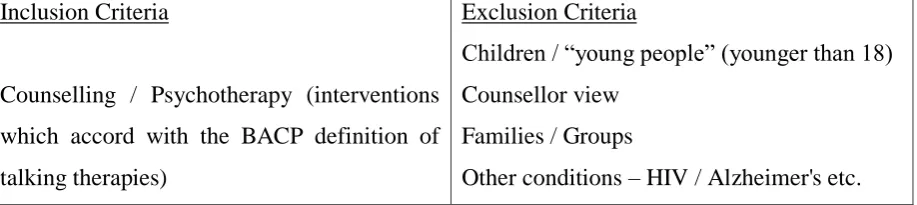
[image:41.595.72.531.660.762.2]To help sift, and manage the large volume of literature obtained from the searches, the following inclusion and exclusion criteria were also used to help determine what should be included in the review.
Table 2: Explicit inclusion and exclusion criteria
Inclusion Criteria
Counselling / Psychotherapy (interventions which accord with the BACP definition of talking therapies)
Exclusion Criteria
Children / “young people” (younger than 18) Counsellor view
Families / Groups
42 Adult – 18 plus
Qualitative studies Quantitative studies
Service users /clients/patients
1990 - The start of the evidence-based practice movement. (Hall, 2008).
Individuals (not couples) Depression
Primary care or other day attendance services.
Inpatient treatment / care homes Drug/ other/ addiction
Personality disorders Psychosis
Eating disorders Imagery
Pain
Clergy / nurses etc (other professionals who may use counselling skills - but using interventions which do not accord with the BACP definition of talking therapies.)
Trauma
Internet interventions / minimal interventions / self help / exercise.
Bibliotherapy.
Animals used in therapy e.g. equine therapy Relapse prevention / Maintenance
Costing exercises Diagnosis
As noted above the volume of literature relating to counselling and depression is vast. It was therefore decided to synthesise the literature according to themes which provided a context to the study and related to the study aims and objectives.
2:5 The effectiveness paradox of counselling.
43 are caused by common, nonspecific factors and not by particular techniques (Cuijpers, 2008b). The finding that all therapies, despite their different practices and different philosophies, all achieve similar results has been consistently found in counselling research. Initially this was highlighted by Rosenzweig (1936) and is known in the counselling profession as the “Dodo bird verdict” after the Dodo bird in Lewis Carroll’s Alice in Wonderland who, when asked to judge a chaotic race, said that “Everybody has won and all must have prizes”(1865/1993, p54). The Rosenweig (1936) finding was reiterated in 1975 with the caveat that any differential treatment effects may be due to the researcher's theoretical orientation (Luborsky et al., 1975). Contemporary research continues to consider that the researcher's belief in the superiority of a treatment is likely to influence the study outcomes in favour of the preferred treatment (Munder et al., 2013). Munder et al. (2013) found that when assessing for researcher allegiance in 30 meta-analyses, investigating the effects of any psychotherapy for any disorder or problem, there was a moderate effect size suggesting that differences in researcher allegiance can indeed threaten the validity of findings from comparative outcome studies.
The first meta-analysis on the effectiveness of counselling and psychotherapy, was undertaken by Smith and Glass (1977) and confirmed that counselling and psychotherapy are effective treatments, with subsequent reviews having drawn similar conclusions (Smith, Glass & Miller 1980; Wampold et al.,1997; Lambert & Ogles, 2004). A meta analysis undertaken by Elliot et al. (2004, p508) of 127 studies focusing on experiential psychotherapy, including person centred counselling, concludes that the psychotherapies are effective and moreover, “when different therapies are compared, all therapies are equivalent in their effectiveness”. Also, Stiles et al. (2008), in a study comparing the outcomes of CBT, Person Centred therapy and Psychodynamic therapy, again concluded each of the therapies are effective and there is an equivalence of outcomes across the approaches. In a review spanning forty years and considering 400 randomised controlled trials Cuijpers (2015, p25) reports that "all therapies are equally effective in the treatment of depression", a conclusive finding that should lay to rest any doubts, but whether it will still remains to be seen.
44 What is key here is the suggestion that "behavioural treatments are scientific and effective " (Wampold, 2013, p.21) and testing of the efficacy of different models of therapy is conducted by estimating the intervention effects under conditions of optimal control and standardization (Baker et al., 2008). This view however, is counter-challenged by those who suggest that “scientific truth is a social construction created by scientists” (Wampold, 2013, p.22) and others who comment that “it is illusory at best and deceptive at worst” to try and standardise an independent variable in therapy, as people are not identical and it is impossible to treat them the same in all respects bar one (Stiles, 2013, p.33-34).
Experiential directive therapies such as Person Centred counselling are seen as non-scientific and often downgraded by researchers who use this approach as the non-active ingredient in their study (Elliot et al., 2004). Cuijpers et al. (2012, p. 289) believe this is set up as an ‘intent to fail’ control and they suggest that this needs to change as their findings confirm that non-directive counselling is effective in itself and should be recognised as such. Elliot et al.(2004, p529) support this view and report that "time and time again non-experiential therapy researchers are surprised by the long term effectiveness of Client Centred therapy" suggesting that it is unwise to dismiss the healing power of the Rogerian model.
The “which therapy is best?” argument has been fiercely debated to the point where on occasions both sides will claim a study supports their case (Hunsley & Di Giulio, 2002; Duncan et al. 2004). Hunsley and Di Giulio (2002) claim a study by Shadish et al. (2000) confirms treatment effect sizes were larger for behavioural treatments. However, the same study is used by Duncan et al. (2004) to demonstrate equivalence between the therapies, maintaining that there is no difference in their effectiveness. The actual meta-analysis undertaken by Shadish et al. (2000) criticises the research methodology of studies where internal validity is based on randomisation and reducing attrition, suggesting that non randomised studies were more clinically representative of routine practice.
45 (Churchill et al., 2001; Wampold, 2002; Cooper, 2008; Elliott, 2013). Yet Cuijpers et al (2010a; 2011a) criticise psychotherapy research and comment that the effects for psychotherapy have been overestimated due to the poor quality of the studies considered in meta-analyses. Hence it would appear the debate continues and whilst this is so, it is vital to the very survival of counselling to strive to produce appropriate, carefully formulated research in order to confirm the value of counselling.
2:6 Difficulties in Counselling Research.
46 what the therapist actually does. Likewise, Jakobsen et al. (2011) note the limitations of their systematic review comparing the effect of psychodynamic therapies versus 'treatment as usual' for major depressive disorder. The problem Jakobsen et al. (2011) identified was only three of the trials included used an intervention that was adequately defined. They state it is imperative that interventions are adequately defined otherwise it is unclear what kind of therapy participants are receiving.
Vague descriptions of what is taking place within intervention studies are also problematic when trying to assess the reliability of the analysis (Cuijpers et al., 2007b). In a meta-analysis of problem solving therapies for depression it was reported that the quality of the studies varied, they were very different from each other and the criteria had not been clearly defined (Cuijpers et al., 2007b). For example, only some participants met the criteria for major depression, some studies used intention-to-treat instead of completers-only analyses, and some studies involved the use of placebo medication and care-as-usual control groups but gave no details as to what they consisted of (Cuijpers et al., 2007b). It is not possible to derive clear understanding of what is being studied when the variables under study are so indistinct. The decision about whether or not the results of individual studies are similar enough to be combined in a meta-analysis is essential to the validity of the result (Cochrane Collaboration, 2002). However, what this would suggest is that estimates of treatment effects are added to assumptions regarding variables which are then taken as evidence of findings. Whilst the number of RCT studies now presents a large body of evidence, they offer very little in actual meaning (Storr, 2011).