
SINR and Cost based Vertical Handoff Scheme for
K-Tier Heterogeneous Wireless Network
Amitav Panda
NIT Rourkela Odisha India
Sarat Kumar Patra
Senior Member IEEE NIT Rourkela Odisha India
India-769008
D P Acharya
Member IEEE NIT Rourkela Odisha India
India-769008
ABSTRACT
The Vertical hand off (VHO) plays the key role in an integrated heterogeneous for mobility. The heterogeneous wireless network (HWN)consists od different kind of networks like 2nd Generation 2G, GSM to 4th Generation 4G Long term evolution LTE. The HWN aims to provide all kind of services like voice, data, web browsing, video streaming with interruption mobility across each tier of the network. An VHO scheme helps to achieve mobility for such HWNs. In this paper we considered the HWN as K-tier and the VHOS decision is analysed based on the best possible decision process of analytical and hierarchical process (AHP). The Saaty’s 9 point decision method is applied considering the key parameters of signal to noise ratio(SINR), traffic cost, Bandwidth and in-order to avoid the ping pong effect the advanced hysteresis buffer time in-cluded during the decision process. The simulation of the proposed VHOS reflects the optimum results.
General Terms:
Vertical handoff in heterogeneous wireless network, K-tier heterogeneous wiresless network
Keywords:
VHOS, Received Signal Strength, SINR, KHWN, AHP 1. INTRODUCTION
There is a demand in next generation wireless networks in access-ing all types of uninterrupted services like voice, video stream-ing, web browsing and telemetry with mobility for end user equipments(UEs)[1]. Different types of networks provide quality services for each of the service. Hence, integration of such het-erogeneous networks necessitates to provide all kind of services to the end user’s demand. The k-tier heterogeneous wireless network (KHWN) is one of the above stated heterogeneous network. The KHWN is architect by integrating the cellular networks, long term evolution(LTE) and wireless local area network (WLAN). The Ver-tical handoff within KHWN allows UEs to get continuous seamless connectivity with the required Quality of service (QoS) along each tier of the network. Practically coverage geometry of wireless net-works is complex and challenging to estimate the QoS for vertical hand off scheme.
Earlier, vertical handoff was based on received signal strength (RSS) criterion. In this the vertical handoff decisions are made by comparing the RSS between the reset threshold and hysteresis val-ues. Now a days, users demand all kind of services with mobility for which, the QoS have important role for providing all services (voice, video streaming, web browsing, telemetry services) with mobility. The QoS directly depends upon the signal to interference and noise ratio (SINR). So the performance of the system based on RSS is far from the desired.[1, 2] The VHOS in KHWN follows a hierarchal process which is based on pairwise comparison of QoS among each tier of the networks. We propose the Saaty’s analytic and hierarchical process (AHP) in this paper for VHOS in KHWN. This process reveals the parameters as well as the various alterna-tives to be considered in the VHOS determination. It is followed by number of pairwise comparisons for determining factor weights and factor evaluations. [2, 3, 4]
The previous studies for vertical handoff in heterogeneous wire-less networks such as combined SINR based vertical handoff (CSVH)[5], multi dimensional adaptive SINR based VHO rithms (MASVHO)[6] and multi-attribute vertical handoff algo-rithm with predictive SINR using GM (1,1) use SINR,[7] user re-quired bandwidth, user traffic cost, utilization of each access net-work, and user preference [8]. However, all these techniques are applied to WLAN and WCDMA networks. Applying these meth-ods for VHOS in KHWN and considering all types of traffics inde-pendently, it is found that the results provide less throughput with no remarkable reduction in traffic cost. Hence we motivate to pro-pose VHOS for KHWN to provide seamless vertical handoff with multi-attribute QoS. The proposed method is superior to the exist-ing methods by three factors:
(1) It deals with different traffic types; (2) Provides high system level throughput; (3) Achieves low cost traffic.
The proposed VHOS uses (i)SINR, (ii)user required bandwidth, (iii)user traffic cost from k-tier access networks and (iv)user pref-erence criterion to make hand off decision. In this method the handoff is fired when the predicted value of SINR is less than a pre-established threshold value determined by user’s application or QoS restrictions [9].
proposed method the analytical and hierarchical structure model (which includes goal level, criterion level, alternative level) is ap-plied over the collected input data by pairwise comparisons of at-tributes. Every compared attributes on each level is again compared with adjacent attributes in order to construct the comparison deci-sion matrix ’M’ based on 9 point AHP methods [2]. For KHWN, we consider the downlink path with an arbitrary number of cellular network, broadly LTE and WLAN. Appropriate weight factors are assigned to the attributes like SINR, COST and bandwidth. These weight factors are derived from eigenvalue of the AHP. The VHOS decision is set up by breaking the decision into a hierarchy of inter-related decisions. The decision matrix is constructed comparing the adjacent of each attributes with respect to its importance. The con-sistency ratio(CR) of 0.1 value is acceptable[7]. Vertical handoff triggering requireCR≥0.1.[5] The VHOS is established accord-ing to the attribute matrix and weight vector.
The organization of the paper is as follows. In Section II back-ground theory behind the proposed method is given. The problem is formulated in Section III. The proposed method is discussed in Section IV. Simulation based performance assessment is done in Section V. Finally the paper is concluded in Section VI.
2. BACKGROUND THEORY
In the KHWN the transceiver for any LTE and WLAN are denoted as e-node B (eNB)and access point (AP).Considering the cover-age ubiquitously for all the UEs, The transceivers can be denoted aseN Bi andeAPi, respectively. If there arenandmnumber of
transceivers for any LTE and WLAN respectively are present in the networks. Collecting all these transceivers into a matrixB, we get
B= [eN B;eAP] (1)
whereeN B= [eN B1, eN B2...eN Bn] T
andeAP = [eAP1, eAP2, ...eAPm] T.
Thus, there arem+ntransceivers whereeN Biis theithtransceiver
of LTE andeAPj is thejthtransceiver of WLAN. The indexing
has been done from 1 tom+nin the set of B. The best possible transceiver channel, which is having best SINR, is assigned to the user equipment UE by the KHWN with the help of an algorithm.
2.1 Signal to Interference and Noise Ratio
The throughput of the transceiver directly depends upon the SINR value of the KHWN. For this the Shannon’s Theorem provides an upper bound to the capacity of a link, in bits per second (bps)[3]. The theorem is stated as
Rk
i =W log2(1 +
γk i
Γ) (2)
where,Rk
i is the maximum achievable data rate ,W is the
band-width,γk
i is the SINR received at the UEkwhen associated with
the transceiverBi andΓis the dB gap between the uncoded
M-QAM and[capacity−coding0gain][10]. Thus, the maximum
achievable data rate for any LTE and WLAN link can be repre-sented as(Rk
eN B,i)and(R k
eAP,i)respectively. Since there is a
re-lation between the data rate and SINR, hence SINR can be used to choose the transceiver from the KHWN. Similar to Equation(2) re-lation between SINR and data rate for individual LTE and WLAN in KHWN can be given as
RekN Bi=W k
eN Blog2(1 +
γk eN B
Γk
eN B
) (3)
RkeAPi =W k
eAPlog2(1 +
γk eAP
ΓeAPk
) (4)
Theγk
eN Bandγ k
eAP are the receiving SINR for LTE and WLAN
networks respectively.We can take the same equation to evaluate the down link data rate in all tiers of the KHWN, and using (3) and (4), the relationship betweenγk
eN B iandγ k
eAP iis given as
γekN B i= Γ((1 +
γk eAP i
Γk
eAP i W keAP i
W keNB i
−1) (5)
, similarlyγk
eAP i can be evaluated fromγ k eN B i.
The received SINR fromeN B ik fori(γeN B) no of UEs is
con-verted to equivalent SINR of(γ0AP)to get the same received data rate.
2.2 Cost and Bandwidth
Considering the set of SINR valuesSfor alleN Bs andeAPs , can
be represented as
S= (SeN B,i∪S 0
AP,i) (6)
For a required bandwidth Ri for a user i, the minimum
receiv-ing SINR fromeN Bandγmin,ican be calculated from LetCbe
the system cost vector. in order to directly associate the cost value with the SINR value, the cost per bit is converted to cost per SINR
(CSINR).
LetWbe the network available bandwidth vector. So the attribute matrix is as following:
Ra=S−γmin1/CSIN RU (7)
3. VERTICAL HAND-OFF SCHEME
Considering the findings of SINR and cost from (7), the parameters can be set for VHOS in the KHWN. In this assumption we have considered the LTE and WLAN as the two tires of the networks as a part. So the VHOS decision making process can be set for the above assumption. We have also considered the four types of traffics in the decision making process.
—Voice
—Video Streaming —Web browsing —Telemetry
To rank the important decision parameters the the decision making process made hierarchical,[10] as shown is the figure-1. The pre-vious study suggests that the AHP method is best suited for such decision making process. [11]
Following this method we have taken the overall score of a target network among KHWN, determined by the weighted sum of all the absolute values obtained from the hierarchy of the network SINR, cost and bandwidth.
In AHP the Saaty’s 9 point method deals with the pairwise compar-ison. The VHOS attributes can be denoted by the matrix.
S= N X
j=1
Wfjrij(8)
where,
—im
—N - is the number of parameters
—m - denotes the number of candidate networks is KHWN —rijvalue of the attributes
—j - the element of the attribute matrixma
—Wf jdenotes the weight factor
which indicates the importance of each attribute.
The highest value of the weighted sum corresponds to the best tar-get network during the VHOS. So the argument maximum value is considered for determining score of the target network can be denoted from (8) as
S∗= arg max
im N X
j=1
, Wfjrij (9)
The AHP method uses the eigenvalue of the matrix to evaluate the relative weights of decision attributes. considering the high prior-ity attributesx0 as the criteria and its dominant level below(dl)
have the elements, x1, x2, x3, , xlThe relative magnitude factors
indlare estimated through AHP pairwise comparison based on the
judgements which is ranked on a Saaty 9-point scale [5]. The re-sults of the comparison are reciprocal of the numbers. The AHP comparison matrixMAHP is consider, Which is a square matrix
. Now we can calculate the eigenvector vector of the matrixMC
with the maximum eigenvalue valueλmax.
According to the demand of traffic within KHWN between LTE and WLAN, the four types of traffic access classes of voice, video streaming, web browsing and telemetry .These four types of traffic access techniques can be represented by Matrix in AHP model as matrixMc1, Mc2 Mc3 andMc4 respectively. For all classes the
attributes are set according to the requirement and the AHP 9 point scale denoted in matrix form
Mc1=
c1 c2 c3
c1 1 1/9 1
c2 9 1 9
c3 1 1/9 1
!
(10)
TheMc1is the comparison matrix for voice traffic of the KHWN.
Similarly for video streamingMc2, for web browsingMc3and for
telemetryMc4are represented as follow:
Mc2= ( 1 ) 1/31/9311/5951 (11)
Mc3= ( 1 ) 951/911/51/551 (12)
Mc4= ( 1 ) 551/5111/511 (13)
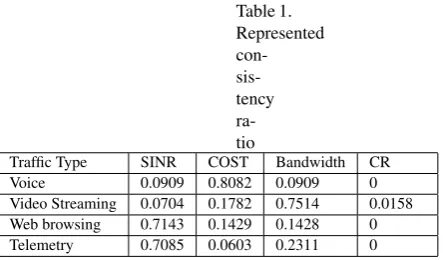
[image:3.595.318.540.65.195.2]Given in the above the decisions for each types of traffic specified
Table 1. Represented con- sis-tency ra-tio
Traffic Type SINR COST Bandwidth CR
Voice 0.0909 0.8082 0.0909 0
Video Streaming 0.0704 0.1782 0.7514 0.0158 Web browsing 0.7143 0.1429 0.1428 0 Telemetry 0.7085 0.0603 0.2311 0
through each type of networks, now we need to take decision for which is the best alternative for VHOS. So the pair wise comparison method of multi criteria decision making process using AHP has been adopted[8]. Here we attempted to determine the relative importance of each attributes. Applying the right principal eigenvector of matrix given the judgement with pairwise comparison and the approximation of the eigenvalue denoted byλx
The consistency index which is the largest eigen value of the matrix can be represented asCI= (λxn−−1n),
—λxis the largest eigen value of the matrix
—nis the size of the matrix
so the consistency ratio CR, which is evaluated as
CR=CI/RCI
to find the best judgement as the comparison is done pair wise among the attributes of networks.[6] Where random consistency index (RCI) is the average value of CI according to Saaty scale[8]. The value ofRCIdepends on the number criteria being compared. The well acceptance scale value for CR isCR <0.1for which the matrix are consistence as shown in table 1.
The decision matrix are considered to be consistence as we get theCRvalue less than0.1. We have considered 4 types of traffic classes and the SINR, cost and bandwidth as the basic parameters for VHOS decision making process, which we got to be consistence as presented in table-1.
4. VHOS DECISION PROCESS
The proposed VHOS is considered with three parameters (1) QoS for each types of access
(2) Available number of choices of Networks from the KHWN (3) Considered Hysteresis time buffer to avoid unnecessary
hand-off s
The QoS refer to the performance reliability of a standard com-munication and also the QoS model of each end user is mapped one-to-one to theψof the SINR. So the QoS can be denoted as
(QoS) =ψ(SIN R)wherem1,2,3...m (14) The above relation shows the objective of achieving QoS for end user’s UE become equivalent to the achieving(SIN R)m ≥ τ(Qm), wherem= 1,2,3..mandτis the inverse function. Hence the SINR is considered for QoS of the KHWN.
VHOS Decision
Hysteresis Time Buffer
Voice
WLAN, WiFi 4G LTE,LTEAdv
3G, UMTS 2G EDGE
COST SINR
Telemetry Web Browsing
Video Streaming
Bandwidth
fig:vd
Fig. 1. The VHOS decision process
present to provide different types of services with ubiquitous pres-ence. Here the consideration is done for one cellular network i.e LTE and WLAN. The traffic cost is also set for the VHOS decision process.[13] As shown in fig
Hysteresis time is the buffer time for an VHO to trigger, denoted as
Ht. The VHO triggers when
{S IN Rcurrentnetwork> SIN Rpredef inedthresholdand if cost f unction valueof target network < cost value of current network
the above condition satisfies.
The buffer hysteresis time included for determining the VHOS process Ht if the above criteria satisfies then the VHO can be
triggered, considering theHt If the handoff latency ishland the
number of evaluationsN then the VHOS triggering time can be represented as
V HOSt=
hl
eNtarget−Ncurrent−1 (15)
TheNtargetandNcurrentare the cost function values of the
cur-rent and target network. Which can change dynamically over short period of time. So theHtis modified as below, to achieve an
adap-tive VHO, which can deal with the dynamic KHWN environment. Considering the total evaluation count as0n0and current evaluation isk. So the process will execute the same tillk=N. So considering
k= 0, hl= 0
φ=eNcurrent−eNtargetφ k=
hl
n+ hl
n(φk−1)
Htk=hl(
φk
n(φk−1) )
(16) The process executed untilk=N
forφk>1evaluating equation (15)we get
Ht= N X
k=0
[hl
N + hl
N(φk−1)
] (17)
5. RESULTS AND DISCUSSION
The performance of SINR and Cost based (SCVHOS) has been evaluated concentrating the download traffic, as the download traf-fic normally required bandwidth more in case of video streaming, web browsing and telemetry. The SCVHOS performance has been simulated with respect to cost and over all system throughput. The performance has been compared to the combined SINR based ver-tical handoff (CSVH) and multi dimensional adaptive SINR based vertical handoff (MASVH)(k= 4)algorithms [11].
0.01 0.015 0.02 0.025 0.03 0.035 0.04 0.045 10
15 20 25 30 35
Session arrival rate
Throughput (Mbps)
System throughput
CSVH MASVH
[image:4.595.344.523.73.220.2]SCVHOS Conversational SCVHOS streaming SCVHOS interactive SCVHOS background
Fig. 2. [Shows the comparison of data throughput within CSVH, MASVH and SCVHOS, The four types of traffics are only contem-plated in SCVHOS]
0.01 0.015 0.02 0.025 0.03 0.035 0.04 0.045 0.05 0.42
0.425 0.43 0.435 0.44 0.445 0.45 0.455 0.46
Session arrival rate
average user cost
Average cost to user traffic of the algorithms
[image:4.595.336.560.289.438.2]cs\h mas\h k=4 SCVHOS Voice SCVHOS Video SCVHOS Web Browsing SCVHOS Telemetry
Fig. 3. [Shown the of traffic cost within CSVH, MASVH and SCVHOS, The four types of traffics are only con-sidered in SCVHOS. For the video streaming traffic cost ([SeN B, S
,
AP,i]videostreaming)]
The simulation is performed to get the best suited overall system throughput and lowest traffic cost for access of voice, video streaming, web browsing and telemetry within KHWN of LTE and WLAN networks. Figure-1 shows the overall system throughput from which it is confirmed that system throughput is balanced in each type of traffic considering the attributes of bandwidth. The highest throughput is achieved for streaming videos as the throughput requirement is more. The cost for each access technique has been represented in the figure-2 the cost is lowest than the earlier discussed CSVH and MASVH algorithms.
considerable reduction in the total unnecessary ping pong handoff. So the simulation results validates the optimum result.
0.010 0.015 0.02 0.025 0.03 0.035 0.04 0.045 0.05 0.2
0.4 0.6 0.8 1 1.2 1.4 1.6 1.8
2x 10 4
Session Arrival Rate (Sessions/Second)
Number of Vertical Handoff
[image:5.595.337.525.73.223.2]MASVH CSVH SCVHOS
Fig. 4. The legend shows the number of VHOs for Voice calls against the session arrival rate
0.010 0.015 0.02 0.025 0.03 0.035 0.04 0.045 0.05 500
1000 1500 2000 2500 3000 3500 4000 4500 5000
Session Arrival Rate (Sessions/Second)
Number of Vertical Handoff
MASVH CSVH SCVHOS
Fig. 5. The legend shows the number of VHOs for Voice calls against the Video Streaming
6. CONCLUSION
The VHOS for KHWN remains a challenging problem in order to provide voice, data, multimedia, telemetry seamlessly in each tier of the network. The proposed VHOS using SINR, Cost and Bandwidth are taken as the key parameters for VHO decision in KHWN. In this paper we have considered the LTE(4G) and WLAN as the two layers for executing the VHO. As the parameters SINR and Cost are proportionate directly to the QoS of the network,the VHOS can be considered as the QoS based handoff in KHWN. The same consideration can be validated for multiple tires of the next generation heterogeneous wireless networks. As per the simu-lation results the proposed scheme of VHO has been achieved QoS, better than the earlier algorithms of CSVH and MSVH and also the data throughputs are better. We deliberate the control of unneces-sary handoffs by setting the adaptive hysteresis time. The simula-tion results are validated for four types of traffics in the KHWN. For future work other than AHP method can be applied for determining
0.01 0.015 0.02 0.025 0.03 0.035 0.04 0.045 0.05 1000
1500 2000 2500 3000 3500 4000 4500 5000 5500
Session Arrival Rate (Sessions/Second)
Number of Vertical Handoff
[image:5.595.79.263.102.252.2]MASVH CSVH SCVHOS
Fig. 6. The legend shows the number of VHOs for Voice calls against the session arrival rate in web browsing
0.010 0.015 0.02 0.025 0.03 0.035 0.04 0.045 0.05 0.5
1 1.5 2 2.5
3x 10 4
Session Arrival Rate (Sessions/Second)
Number of Vertical Handoff
MASVH CSVH SCVHOS
Fig. 7. The legend shows the number of VHOs for Voice calls against the session arrival rate Telemetry communication
the score of the target network during the VHO. The execution part of the VHOS can also optimized.
7. REFERENCES
[1] Amitav Panda, Sarat Kumar Patra, and D P Acharya. Re-ceived Signal Strength Based Vertical Hand Off Scheme for K-Tier Heterogeneous Networks. In2013 International Con-ference on Communication Systems and Network Technolo-gies, volume 769008, pages 327–331. IEEE Computer Soci-ety, 2013.
[2] Industrial Engineering, Evangelos Triantaphyllou, and Stu-art H Mann. Using the Analytic Hierarchy Process for de-cision making in Engineering Applications: some challenges. Interl Journal of Industrial Engineering: Applications and Practice, 2(1):35–44, 1995.
[3] Wen Huang and Kwan L. Yeung. On Maximizing the Throughput of Opportunistic Multicast in Wireless Cellular Networks with Erasure Codes.2011 IEEE International Con-ference on Communications (ICC), pages 1–5, June 2011. [4] Doo-Won Lee, Gye-Tae Gil, and Dong-Hoi Kim. A
[image:5.595.341.525.271.419.2] [image:5.595.75.266.316.462.2]EURASIP Journal on Wireless Communications and Net-working, 2010(1):750173, 2010.
[5] Sheng-mei Liu, Su Pan, Zheng-kun Mi, Qing-min Meng, and Ming-hai Xu. A Simple Additive Weighting Vertical Hand-off Algorithm Based on SINR and AHP for Heterogeneous Wireless Networks. 2010 International Conference on Intel-ligent Computation Technology and Automation, pages 347– 350, May 2010.
[6] Kemeng Yang, Iqbal Gondal, Bin Qiu, and Laurence S. Doo-ley. Combined SINR Based Vertical Handoff Algorithm for Next Generation Heterogeneous Wireless Networks. IEEE GLOBECOM 2007-2007 IEEE Global Telecommunications Conference, pages 4483–4487, November 2007.
[7] Gamal Abd El-fadeel, Abd El-rahman El-sawy, and Michael Joseph Adib. 29 th NATIONAL RADIO SCIENCE CONFERENCE C4 . Vertical Handoff in Heterogeneous Wireless Networks with Predictive SINR using 29 th NA-TIONAL RADIO SCIENCE CONFERENCE. (Nrsc):175– 184, 2012.
[8] I. Gondal. Multi-Dimensional Adaptive SINR Based Vertical Handoff for Heterogeneous Wireless Networks. IEEE Com-munications Letters, 12(6):438–440, June 2008.
[9] Stanford University Sunghyun Cho, Hansei University Ed-ward W. Jang and John M. Cioffi. Handover in Multihop Cel-lular Networks.IEEE Communications Letters, (July):64–73, 2009.
[10] Yuh-yuan Guh and Kuo-ren Lou. An Additive Scale Model for the Analytic Hierarchy Process. International Jour-nal of Information and Management Sciences, 20(December 2007):71–88, 2009.
[11] Mohamed Lahby, Leghris Cherkaoui, and Abdellah Adib. An Enhanced Evaluation Model For Vertical Handover Algo-rithm In Heterogeneous Networks. International Journal of Computer Science Issues, 9(3):254–259, 2012.
[12] Martin Schubert, Holger Boche, and Senior Member. A Generic Approach to QoS-Based Transceiver. IEEE Trans. Commun., 55(8):1557–1566, 2007.
![Fig. 2.[Shows the comparison of data throughput within CSVH,MASVH and SCVHOS, The four types of traffics are only contem-plated in SCVHOS]](https://thumb-us.123doks.com/thumbv2/123dok_us/8026179.767449/4.595.344.523.73.220/shows-comparison-throughput-masvh-scvhos-trafcs-contem-scvhos.webp)

