
Journal of Theoretical and Applied Information Technology 31st July 2017. Vol.95. No 14
© 2005 – ongoing JATIT & LLS
ISSN: 1992-8645 www.jatit.org E-ISSN: 1817-3195
CONCEPT AND APPLICATION OF VIRTUAL REALITY
HAPTIC TECHNOLOGY: A REVIEW
1NURATIQA NATRAH MANSOR, 2MUHAMMAD HERMAN JAMALUDDIN, 3AHMAD ZAKI
SHUKOR
1,2,3
Centre for Robotics and Industrial Automation (CERIA), Universiti Teknikal Malaysia Melaka, Malaysia
E-Mail: [email protected], [email protected], [email protected]
ABSTRACT
Haptics has been a major part of both future virtual reality experiences and everyday consumer electronics. Wearable technology, since it is in contact with human skins, will be the most likely place to deploy these solutions. Haptics platform is a fast-evolving area and the virtual reality technologies has matured and is giving suitable assistance to robotic surgery and people who are handicapped. This paper reviews the general concept of virtual reality haptics, altogether with its applications, previous research findings, the challenge and its superiority for developing a virtual reality prototype/devices and integration of virtual reality concept with the bilateral control system platform. And lastly, potential upcoming works were discussed and suggestions will be put together for melioration of review findings.
Keywords: Virtual Reality, Sensory, Tactile, Haptics, Manipulation, Force Feedback
1. INTRODUCTION
The word haptics originates from the Greek verb “haptesthai” which relates to the ability to touch and manipulate objects [1]. Subsequently the early part of twentieth century, haptics term has become common for the studies of active touch on real objects by humans [2]. While active touch is referred to as bidirectional flow of energy and information between the real, virtual environment and the human sensory modality. The interaction of objects or environment could be made by humans, machines or combination of both and; the object and environments can be real, virtual, or combination of both too. With the technological advances, haptics feedback has been employed to transmute into some specialized tasks by providing an auxiliary sensory channel in addition to its mainstream applications [3]. The interaction may be augmented by other sensory modalities such as vision and audio. The impact from this merge of sensory input and haptics have carried many different disciplines including biomechanics, psychology, neurophysiology, engineering, computer science, medical, agriculture and even aeronautics to review and analyse human touch and force feedback with the external environment. There are also some recent advances in haptics research that develop a system of contactless haptics feedback in 3D space as stated in [4],[5]. Notwithstanding that technological and algorithm challenges, it appears to be inevitable to develop
heaps of haptical active devices for benefits of mankind. So far, the research efforts on particularised tasks in haptics have been dominated by surgical robotics and rehabilitation simulation [6],[7]. Usually, the device enables the interface with virtual or physically vicinity. The action tasks are typically performed by hand in the real daily chores, such as manipulating objects and exploring their properties [8].
algorithms and software are associated with the aid of computer graphics or vision aid; for instance, images or videos taken by the embedded cameras to document renderings of generated touch in virtual objects [11].
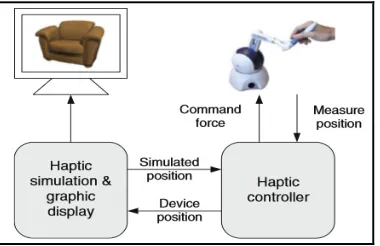
Figure 1: Block Diagram of Machine Haptics [10]
Figure 2 shows the common interaction between human and machine in general haptics system whereby forces and motion area being produced though on different forms of energy through effector, sensors and motor.
Figure 2: Human-Machine Interaction of Haptics
Briefly, this paper is written to present insight about the terms and upper hand of virtual reality only and its relations with the haptic technology. From the existing studies, this research field gave potential to expand and advance in various sphere especially in education, training and clinical therapies to aid people by distracting mind and flooding sensories with a positive experience and safe environment. This reduces the need for physical modifications to machinery and saves material, time as well as financial outlay to get series of treatment or learning. In this paper, the structures are as follows. In Section II, a further elucidation is given on virtual reality haptics
concepts and brief introduction on how the system works. Current experiment, research works and example of commercialized virtual reality haptics devices or robots will be introduced in Section III. Following that, Section IV will discuss about the integration between bilateral control system of haptic that consists of master and slave system with the augmented virtual reality of the system. While in Section V, the benefits of virtual reality into the haptics technology and future humankind will be described. For Section VI, discussion about the review will be stated. Finally, conclusions and recommendations for forthcoming works are drawn in Section VI. Research and work contained within this paper are only about the application and research reviews of virtual reality and haptics technology. This does not include the knowledge about concern and challenges of virtual reality, haptic communication, haptic perception or haptic poetry.
2. VIRTUAL REALITY CONCEPTS
[image:2.612.92.293.402.544.2]Haptic technology has shown blended possibilities of art and science for creating software algorithm that synthesize computer-generated forces and tactile stimulation to be exhibited to user for the perception and manipulation of virtual objects via touch as shown in Figure 3. Virtual environments (VE) or commonly popular as virtual reality is a computer-generated synthetic environment which can interact with a human user to perform perceptual and motor tasks such as squeezing an orange, grasping a bottle and cutting a roll. In particular, a person moving his hand in virtual environment for gripping or touching an object as if the environment is real.
Figure 3: Concept of touch in real and virtual world [11]
[image:2.612.318.519.536.666.2]with this, users will sense influence along with the object’s texture, passing through muscle and mechanoreceptors. The dexterous receptors
stipulate information on the geometry, texture, slippage and ambient temperature of item’s surface.
Being able to trace, experience and
[image:3.612.92.282.415.538.2]manipulate specific object in environments, with aid for seeing or/and hearing them, offers a compelling event and leaving users immersed in the designed atmosphere with awesome satisfaction. It is likely that amazing experience in VE can be achieved by a simple haptic interface with embedded visual and auditory display to create incredible sensation to the users although by true full touch simulation. Researchers in [2] and [12] has discussed that, a real object can be created in a virtual world by generated model in computer, creating from function library and algorithm database in specialized software. Commonly, user’s fingertip or hand gestures can be represented as a point called an ‘avatar’. A typical VE consists of a computer display or a layout that can project computer- generated synthetics environments or visual images to the outlook direction and a special glove or mini device whereby the users can command the computer to reciprocate and do corresponding works as shown in Figure 4 and Figure 5.
Figure 4: Force representation in a virtual world [12]
In scientific understanding, the basic principle to make objects in the virtual environment
touchable is much simple. When initial sense of contact from a person’s hand interacts with an object, the nerve receptors in the skin stimulates and excite. Whereby, the receptors provide tactile information of touched objects to the brain. When the hand applies force, kinesthetic information (force feedback) comes into play by providing physical information about the position and motion of the hand relative to the object. By applying this science concept into virtual reality haptics, after human user controls the generic probe (best known as end-effector) of the haptic device, position sensors of the tools will relay its end position to the computer. In every interval period, computer that controls the end-effector will check for friction or clash between the simulated stylus and the virtual objects positioned in virtual environment.
Figure 5: Haptic system; interaction between a human and the haptic interface represents a bidirectional exchange of information [8]
Figure 6: Example of Virtual Reality Haptics Experiment
3. AVAILABLE RESEARCH WORKS
3.1 Current Experiment and Research Works
In this section, findings from previous existing works will be studied and divided into different type of research fields. Kind of research works are based on clinical training which involve rehabilitation exercises and physiotherapy, medical robotic surgery, virtual simulator for endodontics treatment, pilot simulator, military training, teleoperation and telerobotic, haptics driver support systems and also virtual manufacturing and assembly.
Simulation of real-world tasks in the employment of integrated virtual reality (VR) haptical devices gave significantly attributes in research works. There are numerous research fields studying about this technology. One of it is associated with neural activity that give potential for clinical stroke applications and rehabilitations for patients diagnosed with stroke or experienced accidents as reviewed in [13-18]. In VR based rehabilitation, bimanual exercises can be brought out by making use of haptic rendering techniques
which permit object manipulation by using two haptic devices. For instance, a low-cost haptic aided glove equipped with sensors on the wrist allowing the identification of wrist orientation, by using VR which means that patients are able to make essential motions during the training and are guided to reach different goals of increasing complexity until the completion of rehabilitation [13] while [14] developed the experiments by adding the measurement of associated neural activity by functional magnetic resonance imaging (fMRI) to receive the force feedback in form of brain sensory feedback. To make it more interactive, real-time interaction and to enhancing the rehabilitation session, [15] also has introduced the development of haptic-enabled whack-a-mole games in arcade games. The system introduces a collision handling method to compute feedback force and provide realistic and adequate data through the haptic device in specific exercise.
[image:4.612.126.264.303.414.2]ability to determine the real position of the end effector and dynamically manipulate the object [18]. Thus, with VR technology build on the system, patients and physiologist are able to determine the position of limb and follow the pattern while collecting generated data output for diagnosis and monitoring patient capabilities during physiotherapy.
In parallel to the VR in medical training stations and surgery, the use of VR-robotic technology to aid surgeons and physicians has been actively studied [19-26]. In fact, VR haptic in medical applications are subdivided into human/tool and tool/tissue interfaces. In some advocate observation as reviewed by [19], method for laparoscopic surgical, a minimally invasive surgery (MIS), can be conducted in the operating room, while others promote animal and simulated models or a combination of surgery-related tasks. Minimally invasive surgery is a complex task that requires a synthesis between VR simulations and haptic information. Thus, they introduced a skill scale using Markov Models (MM) to create new quantitative knowledges of the forces and torque applied by surgeons on their instruments during the surgery while developing a modified surgical grasper containing embedded sensors capable of measuring forces and torques being applied during surgery operation. In [20], functional prototype and impedance control of a six degrees of freedom haptic interface has been designed to train surgeons for laparoscopic procedures, through virtual reality simulations. The device features a low apparent inertia with high structural stiffness, cause of parallel kinematics with grounded actuators. Not just that, [21],[22] also proposed the realistic simulation of tool-tissue interactions. [21] has demonstrated deformation and cutting of the oesophagus, where the user can haptically interact with the virtual soft tissues and see the corresponding organ deformation on the visual display simultaneously for training purpose. But then, [22] was dedicated for endoscopic training where endoscope is allowed to react to contact forces along six degrees of freedom, as in [20]. The model takes into account end point position and appropriate contact forces. The illusion of physical movement inside the environment is obtained by computing control inputs based on impedance environment.
Other studies focused in human/tool interaction are stated in [23-26]. [23-25] is a virtual reality simulator for training endodontics operations. But, simulator in [23] consists of a custom 4DOF haptic
device for tracking and force feedback. During the simulation, the movements user does with the manual files are tracked and at the end displayed the forces applied during the procedures, the direction and the amplitude of the movements and the final result of the tooth preparation. A haptic device called as iFeel3 was designed, where it can output force in 3D space and can record real-time six-dimensional motion of the handle as well as increased the stiffness of its previous prototype [24].
In another work, a 3D Virtual Drilling Simulator of the edentulous space of the dental arch in oral rehabilitation, controlled by the Novint Falcon haptic device was designed and recognized the relevance of the simulator as a support tool for training students in Implant Dentistry [25]. Silvio
et. al proposed the Sensimmer platform [26] which
represents research on simultaneous haptics and graphics rendering of 3D models which obtained from medical imaging data, such as Magnetic
Resonance Imaging (MRI) or Computed
Tomography (CT). In this work, image
segmentation techniques are used to determine the anatomies of interest from the images.
In order to achieve satisfactory fidelity and meets the needs of end users, a degree which the simulated tasks reproduce, foster knowledge, skills and behaviours reliably capable are transferred to real-world training applications. It delivers affordable and accessible training systems of virtual simulation technologies in military training and civilian surgical contexts [27].
performance of the system after the controller is configured.
Along with that, there is also an interface designed to give the operator a unique view to remotely navigate the autonomous teleoperated agent with minimal cognitive overload and minimal risk of accidental input, as stated in [30]. Nowadays, with a consistent and high speed for live streaming, researchers in [31-36] promote tele-robotic system which refers to controlling the robot system based on internet connection. These projects are a new field of engineering in current decades and requires an understandable knowledge of virtual reality and haptics for embedding with the system. This architecture is acknowledged to solve the delay time which is unpredictable during the communication in an uncertain environment. Therefore, the advantages for implementing the system is the operator is now able to employ and interact with the robot for task sequences and robotic actions smoothly. Together with haptic feedback, VR technology and less time delay from internet sources, objects will be easy to handle, not get out of control and gives on the spot reaction.
Besides that, Sebastian et. al stated in [37-39] that a large number of haptic driver support systems have been studied in previous years. Haptic driver support systems are all about haptic feedback control stick that aided drivers in a car-following task. This system retained the general idea about virtual reality haptics but developed it into driver systems used in cars. It is equipped with a warning system (using vibrations) and guidance system (using continuous forces), improving the performance of drivers. There are haptic systems that support the human in driving subtasks, such as lateral control, car-following, navigation, and eco-driving. Moreover, various channels through which the haptic systems can communicate with the driver, such as the steering wheel or seat. Some systems use binary warnings to inform the driver that he/she is too close to a lead car, whereas other systems suggest an appropriate action by applying a counter force to the gas pedal.
In view of the fact that haptic VR based were considerable feats for training medium in terms of safety and expenses, it could also support a measurement of competence; much akin to a pilot training in a flight simulator. For instance, the system provides a less stressful learning environment for the surgical student while eliminating risks to the patient in complex surgical procedures. There are also other simulators under
development, coupling the VR computer graphics with haptic (reaction) feedback devices in order to provide a fully immersed virtual environment, combining both visual and haptic feedback.
In industry, companies demand advance technologies and competitive solutions for virtual reality approach to design equipment in shorter production runs and better responses [40],[41]. Research in [42] also concluded that building a model in virtual way is much more interactive than making it in conventional way as it helps users to understand better. Thus, the term of virtual manufacturing is established. Virtual manufacturing concepts originate from machining operations and are available in a lot of applications in different fields such as casting, forging, metalworking and robotics.
Virtual manufacturing idea is simply described as ‘manufacturing in the computer’ [43]. This definition contains two concepts which are the process itself (manufacturing) and environment (computer). Virtual reality (VR) is a new method of visual operating and interacting of complex data that can be realized by computers, in which one would have an immersed sense to observe and operate objects in three dimensions timely and unboundedly as work developed about robotic manufacturing cell in [44] and virtual vehicle manufacturing [45]. With a high degree of detail, different kinds of lights, textures and materials inserted to the scene reached a high degree of realism, at the expense of final performance during handling 3D objects. Generally, VR applications in manufacturing have been classified into three groups; design, manufacturing processes, and operation management [46].
Beneficial to meet the requirements of market competition, VR technologies not only reduce effectively the time and cost, but also optimize complex products in the design process. To validate and provide users on how to work with 1:1 scale digital objects in real world, a virtual environment for a robotic cell is developed with layout design and implementation planning [49]. Virtual reality is a rapidly developing computer interface that strives to immerse the user completely within an experimental simulation, thereby enhancing the overall impact and providing a much more intuitive link between the computer and the human participants. For instance, these devices significantly enhance task performance and help designers and engineers to design and evaluate computer generated mock-ups prior to building any physical prototype or, deciding the most appropriate assembly sequence. Supposing to achieve a multi-modal interface, the second output modality chosen is haptic feedback. With the developments of Vega project, an infrastructure corresponds to one of the manufacturing field which is CAD/CAE [50], this research works proved that virtual reality can be flexible in manufacturing and assembly simulation. In this way, the capability of advanced manufacturing machines and resources can be fully exploited and utilised.
3.2 Commercialized Products of VR
In this section, developed and
commercialize products of VR devices and robots parallel with haptics technology will be introduced. There are various kinds of robots and virtual-haptics devices that suits in different practices and applications such as for cinema and media entertainments, gaming, surgery, 3D object scene, and exoskeleton controller have been developed and have been anticipated gaining interest from societies or organizations.
Entertainment and gaming world are full of excitement, magical events, advance technologies and evoke pleasant response and generate human stimulation. Along with the rapid technology, human tend to feel the realness in virtual milieu although it is just an interaction between the interface of computer-generated surroundings. Example of marketable surgical robotic systems known as ZEUS by Computer Motion and the daVinci system by Intuitive Surgical, Inc. These kinds of robots are still in clinical trials and have limited haptic feedback, may be redefined before considerably guaranteed
for operation theatre use in the future. Nevertheless, due to the robots’ enhanced precision, range of motion, dexterity and 3D endoscopic visualization [51], driven feedback provides medically relevant information that could improve the performance of a surgical task in various ways.
In addition to the VR world, AxonVR [52], a software company based in Washington, created a haptic technology that enables most realistic touch sensations in the world for the first time. It’s product which was commercialized as HaptX™ is a haptic textile that delivers lifelike touch, allowing users to feel the texture, shape, motion, vibration, and temperature of virtual objects. It’s an enormous metal box with some buttons and blinking lights, and it occasionally makes ominous noises. HaptX™ is a thin, flexible haptic textile made up of an array of microfluidic actuators. By varying pressure and temperature at each actuator, HaptX creates sensations ranging from the brush of a butterfly's wings to the impact of a punch. From the warmth of a cup of coffee to the chill of a snowball. HaptX can bring the sense of touch to any surface.
Whereas, HaptX Skeleton is a lightweight exoskeleton that extends the realism by applying physical forces to user’s body. Uniquely, the developer intends to allocate around U$ 5.8 million to build out HaptX platform which will be licensed directly to businesses such as theme parks and VR arcades. The company’s HaptX Skeleton is a full-body exoskeleton that uses force feedback to enable both locomotion and macro-haptic feedback to entire limbs. HaptX Skeleton extends HaptX's immersive capabilities by delivering force feedback. HaptX Skeleton can be programmed to assist or resist motion.
Besides that, AxonVR also offers a HaptX SDK which allows developers to easily add haptic properties and effects to their content. The HaptX SDK includes a plug-in for leading game engines that lets content creators add realistic touch sensations to their projects without writing any code. HaptX SDK is a software toolkit that empowers developers to create touch-enabled experiences. HaptX SDK works seamlessly with leading game engines, making it easy for developers to create VR experiences that leverage advanced haptic capabilities.
technology, where body movements are being interpreted by motion sensors as perceived input and turns it into useful controls. Basically, with this technology, the user himself is the controller. With recent advancements in haptics, body motion tracking has never been left out of the game, and has been a primary focus of third-party developers who envision a more realistic and immersive VR experience made possible with the integration of virtual reality and haptics. One of body motion tracking technologies are Control VR. The wearable controller assures to give a fully immersive virtual reality experience by essentially removing the secondary input mechanisms such as the traditional mouse-and-keyboard combo. Control VR is worn on the user’s body, having multiple sensors built within its unit that work to sense physical movements from the user. The controller is able to make the user as the primary input device for computer games that make use of fast hand and arm movements, such as first-person shooter games and role-playing games.
On top of that, The Dexmo F2 developed by Dexta Robotics and HEXOTRAC [53] are also a VR hand exoskeleton device. Due to the detailed haptic feedback on Dexmo F2; a 5-digit hand exoskeleton, handlers are able to experience the sensation of lifting up objects in virtual content. Aside from its ability to give haptic response, it is capable to replace old-style remote control for radio-controlled toys and remote lighting fixtures. While, HEXOTRAC is a 3-digit hand exoskeleton which proposes a new approach for high resolution finger tracking and force feedback with a single attachment at the fingertip through 6DoF linkage that facilitates with a sensor system for tracking and permits bidirectional feedback force at the fingertips.
Along with it, a virtual reality glove named Gloveone by NeuroDigital Technologies, is able to provide haptic feedback through hands and fingers for user’s felt. With supported VR headset, Gloveone offers user to sense and interact with any virtual object or environment based on the content projected from VR as the glove itself is implanted with numbers of haptic sensors. VR glove lets users to feel object’s physical physiognomies as well as doing object manipulations including throwing and punching as if it was done in real-time. This glove also is much similar like The Hiro III, a robotic hand that transmits touch information to the fingertips of the user.
Initiative by Virtuix and mechanical and electronics engineering students in Rice University, gaming company focusing on VR, Hands Omni was made. The illusion of touching an object and creating the ability to distinguish various physical surface of an object by inflating and deflating tiny air bladders embedded into strategic parts of the glove. With a VR headset linked to this device, allows users to manipulate a virtual object as if it is done outside from virtual reality.
Aside from that, there is also a gaming vest called as KOR-FX that utilized acoustic feedback known as “acousto-haptics”, where in turn processed into haptic feedback. It uses software to finely tune the feedback felt by the user. This vest is also beneficial for games and entertainment experiences wherever it is compatible as it can be linked with some PCs and gaming consoles including X-Box and HoloLens, making it an indispensable tool for haptics in virtual and augmented reality.
Developed by Novint Technologies Inc., a motion controller commercialized as Novint Falcon is a controller that gives haptic feedback to media experiences such as gaming purposes. This 3-DOF translational delta parallel robot can be regarded as the replacement of spherical joints by rotational joints [54]. This device also much more reasonably priced compared to its counterparts and drew attentions for researchers to do robotic control as discussed in [55], which simulates virtual iCub robot to perform tasks. The device also was also used for visual representation and identification purposes.
Meanwhile, haptic-enabled
electromechanical device known as Phantom Omni by SensAble Technologies, is a haptic-enabled device specifically intended for manipulation of virtual objects and applied in various practical applications in aviation, teleoperation, forestry harvesting [56] and robotic industries. The device structure is a controller arm with 6 degrees of freedom movement sensing, and a stylus for object manipulation. Yet, this device has been used for kinematic model for precise motion control identified parameters [57], simulation of sensory mode interaction of different stiffness and friction [58] and coordinate transformation between kinematics model and Touch X device [59].
accurately provide motion tracking with a 360-degree field of view. Unlike any haptics technology initiatives aforementioned, PrioVR is controller-free interface because it is meant to be placed on user’s body. All inertial sensors are strategically placed within the full-body suit and data gathered by these sensors are then translated into interactions on screen in real time with low latent period.
On top of that, Sixense company are currently developing a wireless solution to hand input in virtual reality with the STEM SystemTM. STEM System utilizing alternating current (AC) electromagnetic field [60] to precisely track body movements in terms of position and orientation within a radius of a stationary base. X-ray spectrometers combined with electron microscopes are powerful tool for material micro analysis. The advantage is that it is able to track up to five tracking points, creating an unrestricted level of movement freedom. A handheld wireless controller engaged to create movement data that is transferred onto the base station, turn interpretation into on-screen motion. The technology was demonstrated with demos on virtual shoe shopping and interactive lightsabres for gaming.
Sixense also developed MakeVR software [61],[62] which imitates blocks or Play-Doh in real life to combine objects together like LEGO or Minecraft blocks. MakeVR uses two Razer Hydra controllers, Sixense software, the ACIS CAD engine, THI (Two Handed Interface) Engine, a PC, and a display. This application verge on an accessible digital sandbox for making 3D objects scenes for beginners and with advanced tools for experts. It presents a pro CAD engine through a natural immersive two-handed interface.
There is also a VR accessory called Stompz to be worn on the user’s shoes to provide real-time feedback and control to games. It is also wireless and give free movement for user’s interactions with on-screen objects. A simple run or jump with Stompz can be read as motion, and is processed into input that makes anything on screen to respond based on the user’s movement. Stompz capable to bring VR experiences to a new level of freedom in haptics technology.
Tesla Studios, Scotland-based VR haptics company, is currently developing a full-body haptics suit kind like PrioVR that is made to complement virtual reality experiences. The Tesla Suit is composed of a belt and modular units such
as gloves, a vest, and trousers. The belt acts as the control centre of every haptic feedback felt by the user while, the modular units are filled with tiny electrical impulse units that give off signals felt as haptic feedback [63]. Tesla Suit, is a futuristic way to experience VR while simultaneously feeling every action is almost similar to, an Ironman suit. The suit was built with motion capture system technology specs. This incredible suit was also made to work with VR headsets, gaming consoles and smartphones as well as equipped with climate control system technology.
StrapTM and VestTM by Woojer is also a device that employed particular frequencies signals when attached to the user’s body, creating an impression of tactile feedback through acoustic signals. The technology works by receiving audio signals from the source, and interprets the acoustic signals to produce tactile feedback in the form of rumbles in any media content. Aside from that, a wearable exoskeleton named as CyberGrasp which uses tendons and actuators to apply resistance perpendicularly to individual fingertip of finger [64-65]. However, its usability is restricted since its limited control bandwidth and position sensor resolution not offering stable and realistic force feedback. And lastly, The Hiro III is a 5-fingered haptic interface robotic hand that transmits touch information to the fingertips of the user [66]. The aim of the development of HIRO III is to provide a high-precision three-directional force at the five human fingertips.
Figure 7: Virtual Reality Haptics Devices available in market
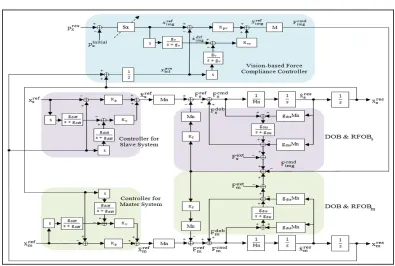
Figure 8: Overall block diagram of bilateral control system with proposed controller that can be integrated with virtual reality platform [72]
4. VIRTUAL REALITY INTEGRATION
WITH BILATERAL CONTROL SYSTEM
As being stated in introduction part, this paper reviews about the VR system and its link with the haptic system. Thus, the concept of bilateral control system in haptic type of communication will be explained and how the concept will be implemented in VR operation are founded from other researchers’ findings and studies about this system.
In robotic technology, haptic system is recognized to be a medium that can give force sensation to user from real environment. This system refers to the application and manipulation of touch (tactile) sensation to the interaction with
[image:10.612.108.503.228.494.2]By refering to Figure 8, virtual reality haptics used concept of master and slave system to achieve same interaction via disturbance observer and reaction force observer (RFOB). DOB is implemented as an acceleration control while RFOB is estimated value of external force from environment [72],[73]. Another controller known as Visual Force Disturbance Observer (VDOB) is integrated into the application of haptic bilateral system. By doing so, the study of the system performance when the generated visual force can be improved and visual information of the target object can be utilized to aware safe physical interaction [74],[75]. The integrated system was also able to distinguish between different types of geometry, materials, distance ranges and object stiffness. In short, vision based-haptic perception relies on the image information of the servoing object and manipulation of touch sense to the creation of virtual forces, allowing illusory haptic shapes with different perceived qualities, which has clear application in this technology.
For instance, bilateral control system applied as in Figure 9 when manipulator that holds the acceleration tool to measure the surface texture named as a Master and Slave is a manipulator holding a vibration actuator. Both are synchronized with sensitivity from 10Hz to 500Hz. Force and acceleration captured over amplitude and phase is made to replicate on vibration actuator [76]. This type of master-slave actuation in Haptics technology is also used in Tele-operations. As we already know, tele-operation has been studied and has capability in recovery tasks in the damaged areas and also exploitation in the extreme working environment which is difficult for mankind to approach. A tele-operation control system of construction robot (TCSCR) [77] developed from master-slave control form, is controlled by servo valve, and two joysticks for operating the robot and 3-dimensional virtual working environment as figured in Figure 10. The teleoperation technology employing virtual reality, improves the task efficiency of a conventional TCSCR by giving the operator a feeling of being at the actual operate site in real-time, system security and surpass the danger exists when operating Remote Construction Robots (RCR).
5. BENEFITS
Human beings have always been
fascinated with entertainment. Feeling virtual objects gave rise to new level kind of entertainment like 6-Dimensional and 4- Dimensional movies
where a person can feel the environment, training simulation, physical challenge and many more. All these haptics modulations use various actuators and devices which makes human feel the existence and sometimes the virtual world. Products like programmable keyboards, exoskeletons, desktop scales, and joystick are all designed by various manufacturers with different names. From last decade onwards, integrated VR haptics have been mostly used in medical sciences, geosciences,
mechanical simulations, 3D modulation,
[image:11.612.327.508.369.478.2]entertainment and most importantly in education. Thereto, about 43% of global market uses haptics for human safety in vehicles, industries, manufacturing and helping the visually impaired people to read and write. All these are cost reductions in global markets and help indirectly to raise the market value of the product. Coming to one of its applications which in recent times has fascinated many researchers round the world on haptics is to store and read texture from various surfaces in different patterns and sensing them over a user affordable device.
[image:11.612.322.514.514.650.2]Figure 9: Phantom manipulator for texture recognition with linear vibrator [73]
Figure 10: Schematic diagram of the tele-operation construction robot system with the virtual reality.
sensation and pleasure of touching certain objects. But unfortunately, a photograph can never achieve a sense of touch through its in-built engineering methods. So how about making a device that can capture this feel? Sense of touch that can be recorded and stored for multiple usage as portrayed in Figure 11.
[image:12.612.101.289.270.393.2]On the other side, repetitious based task supported with virtual reality technology is irrefutable especially for balance training for rehabilitation or physiotherapy. Haptic experience can be used not only for interaction with virtual environment but also for assessment of postural responses.
Figure 11: Different surfaces which humans feel like touching through photographs [12]
The technology ease patients and clinician as the response introduce sufficient information in terms of force feedback and image display to identify the direction and postural responses. Moreover, it helps doctors’ concerning about the difficulty level of exercise to the patients as the system instantly giving necessary postural responses for every assessment. Augmented reality haptic concept obviously brings out favours to society. Haptics platform used in tele operated robots can recognize materials in hazardous conditions, identification of surface for laparoscopic surgery and inspection on damaged machines. Not just that, the concept also can be used on the data-glove for translating sign language for the deaf people [78]. VR also has applied for dental surgery, entertainment and also haptography (sense of touch through photograph). Applications of Haptics Technology is left to the imagination of human brain. Wonderful brain with million responses and size of imagination is compared with universe, will always produce better application for tomorrow’s world.
6. DISCUSSION
As a final point, the area of virtual reality haptics or known as computer haptics will persist to grow and develop, helped along by research findings on perception of multimodal solutions, aided by new devices, technologies and inspired by ever complex information visualization and tactile solutions. From the reviews that have been discussed previously, VR haptics technologies are undoubtedly increasing rapidly. Based on reviews and examples in previous sections, focuses are about knowledge in both VR and haptics system. The applications of VR in haptics technology and other technical and medical field are outspread and in different range. Different from other research paper that focused only on a particular research area or a condition, this paper technically revised about the general condition of VR and covered up numerous investigation fields which applied VR concept in their studies. Expectantly, this paper will help other researcher around the world to gain understanding and better enlightenment about VR with its relation of haptics in one review paper. This is because lots of findings as well as papers are essentially contained in this review paper.
Still, there are gaps in this study field as most system especially haptics system, are having challenges on the feedback response, delay and its stability. Besides that, the work required enormous budget to develop the VR system as the sensor, actuator and materials itself are expensive and demand part replacement after it has been worn-out. This matter will be conferred in future works part in next section.
7. CONCLUSION AND FUTURE WORKS
This paper presented an overview on virtual reality haptics with its concept, applications and research works, integration with bilateral control system and the advantage it carries towards mankind and future technologies. The scope of work presented has been toward the virtual reality concept in haptics technology. In addition to experimental publications, available studies and development of research works that involve haptic virtual reality system were reviewed. These works, some with high level of evidence and others with low levels, shows the benefits of including haptic feedback in specific applications.
robots in institutions’ research laboratory and integrate it with conventional Virtual Robot Experimental Platform (V-REP) simulation software to create a VR environment for development of haptics communications between the real and virtual environment. V-REP is one of reliable computer software to conduct and manipulate haptics experiments using generated coding as users are able to set the parameters and specifications of the robots and applied torques desired. In subject to improve the system stability and feedback output, integration of vision-based observer as well as reaction force observer are expected to make the system respond faster and accurate. This issue will be tackled and explored in our next research.
REFERENCES:
[1]
E. Saddik, “The Potential of Haptics
Technologies,” in
IEEE Instrumentation &
Measurement Magazine
, vol. 10, no. 1, pp.
10-17, Feb. 2007.
[2]
M. Mihelj and J. Podobnik, “Haptics for
Virtual Reality and Teleoperation: Human
Haptic System,” in
Intelligent Systems,
Control and Automation: Science and
Engineering
,
vol.
64.
Netherlands:
Springer Science & Business Media, 2012,
pg.41-55.
[3] N. Enayati, E. De Momi and G. Ferrigno, “Haptics in Robot-Assisted Surgery: Challenges and Benefits,” in IEEE Reviews in Biomedical Engineering, vol. 9, pp. 49-65, 2016.
[4] T. Hoshi, D. Abe and H. Shinoda, “Adding tactile reaction to hologram,” RO-MAN 2009 - The 18th IEEE International Symposium on
Robot and Human Interactive
Communication, Toyama, 2009, pp. 7-11.
[5] F. Arafsha, L. Zhang, H. Dong and A. E. Saddik, “Contactless haptic feedback: state of the art,” 2015 IEEE International Symposium on Haptic, Audio and Visual
Environments and Games (HAVE), Ottawa,
ON, 2015, pp. 1-6.
[6] B. Siciliano and O. Khatib, Eds., “Haptics,” in Springer Handbook of Robotics, Germany: Springer, 2008, pp. 719-739.
[7] K. E. Maclean and V. Hayward, “Do It Yourself Haptics: Part II [Tutorial],” in IEEE Robotics & Automation Magazine, vol. 15, no. 1, pp. 104-119, March 2008.
[8] J. Podobnik, M. Mihelj, “Haptics for Virtual Reality and Teleoperation: Introduction to Virtual Reality” in Intelligent Systems, Control and Automation: Science and Engineering, vol. 64. Netherlands: Springer Science & Business Media, 2012, pg. 1-33. [9] M. A. Srinivasan, “What is Haptics?,” Lab.
Hum. Mach. Haptics Touch Lab, MIT, pp. 1– 11, 1995.
[10] D. Ravikanth, M. Mishra and P. Hariharan, “Review on Haptics technology and its modeling, rendering and future applications on texture identification,” 2015 International Conference on Man and Machine Interfacing
(MAMI), Bhubaneswar, 2015, pp. 1-6.
[11] A. El Saddik et al., “Haptics Technologies: Computer Haptics” in Springer Series on
Touch and Haptics Systems, Springer-Verlag
Berlin Heidelberg, 2011, pp. 105-143. [12] A. El Saddik et al., “Haptics Technologies:
General Principles” in Springer Series on Touch and Haptic Systems, Springer-Verlag Berlin Heidelberg, 2011, pp. 11-20.
[13] D'Auria, F. Persia and B. Siciliano, “A
Low-Cost Haptic System for Wrist
Rehabilitation,” 2015 IEEE International Conference on Information Reuse and Integration, San Francisco, CA, 2015, pp. 491-495.
[14] L. M. Di Diodato, R. Mraz, S. N. Baker and S. J. Graham, “A Haptic Force Feedback
Device for Virtual Reality-fMRI
Experiments,” in IEEE Transactions on
Neural Systems and Rehabilitation
Engineering, vol. 15, no. 4, pp. 570-576, Dec. 2007.
[15] Y. Tokuyama, R. P. C. J. Rajapakse, S. Miya and K. Konno, “Development of a Whack-a-Mole Game with Haptic Feedback for
Rehabilitation,” 2016 Nicograph
International (NicoInt), Hanzhou, 2016, pp. 29-35.
system,” 2016 IEEE International
Conference on Mechatronics and
Automation, Harbin, 2016, pp. 1173-1178.
[17] R. F. Boian, J. E. Deutsch, Chan Su Lee, G. C. Burdea and J. Lewis, “Haptic effects for
virtual reality-based post-stroke
rehabilitation,” 11th Symposium on Haptic Interfaces for Virtual Environment and Teleoperator Systems, 2003. HAPTICS 2003. Proceedings., 2003, pp. 247-253.
[18] C. Vidrios-Serrano, I. Bonilla, F. Vigueras-Gómez and M. Mendoza, “Development of a haptic interface for motor rehabilitation therapy using augmented reality,” 2015 37th Annual International Conference of the IEEE Engineering in Medicine and Biology Society
(EMBC), Milan, 2015, pp. 1156-1159.
[19] J. Rosen, B. Hannaford, C. G. Richards and M. N. Sinanan, “Markov modeling of minimally invasive surgery based on tool/tissue interaction and force/torque signatures for evaluating surgical skills,”
in IEEE Transactions on Biomedical
Engineering, vol. 48, no. 5, pp. 579-591, May 2001.
[20] W. C. Agboh, M. Yalcin and V. Patoglu, “A six degrees of freedom haptic interface for laparoscopic training,” 2016 IEEE/RSJ International Conference on Intelligent Robots and Systems (IROS), Daejeon, 2016, pp. 1107-1112.
[21] C. Choi, H. Han, B. An and J. Kim, “Development of a Surgical Simulator for Laparoscopic Esophageal Procedures,” 2006 International Conference of the IEEE Engineering in Medicine and Biology
Society, New York, NY, 2006, pp. 819-822.
[22] A. Benali, P. Richard and P. Bidaud, “A six DOF haptic interface for medical virtual reality applications: design, control and human factors,” Proceedings IEEE Virtual
Reality 2000 (Cat. No.00CB37048), New
Brunswick, NJ, 2000, pp. 284.
[23] T. Bogoni, R. Scarparo and M. Pinho, “A virtual reality simulator for training endodontics procedures using manual files,” 2015 IEEE Symposium on 3D User Interfaces (3DUI), Arles, 2015, pp. 39-42. [24] C. Li, D. Wang and Y. Zhang, “iFeel3: A
Haptic Device for Virtual Reality Dental Surgery Simulation,” 2011 International
Conference on Virtual Reality and
Visualization, Beijing, 2011, pp. 179-184. [25] L. A. Pires, Y. R. Serpa and M. A. F.
Rodrigues, “SimImplanto - A Virtual Dental Implant Training Simulator,” 2016 XVIII Symposium on Virtual and Augmented Reality (SVR), Gramado, 2016, pp. 193-197. [26] S. H. Rizzi, P. P. Banerjee and C. J. Luciano,
“Automating the Extraction of 3D Models from Medical Images for Virtual Reality and
Haptic Simulations,” 2007 IEEE
International Conference on Automation Science and Engineering, Scottsdale, AZ, 2007, pp. 152-157.
[27] R. J. Stone “The (human) science of medical virtual learning environments.” Philosph. Trans. of the Royal Society of London B: Biological Sciences, vol. 366, no. 1562, pp. 276-285, 2011.
[28] C. H. Kim, S. H. Kim, H. J. Lee, J. K. Lee and K. H. Kim, “A haptic device interface for the operation of the virtual arm,” ICCAS 2010, Gyeonggi-do, 2010, pp. 1755-1758. [29] T. Sansanayuth, I. Nilkhamhang and K.
Tungpimolrat, "Teleoperation with inverse dynamics control for PHANToM Omni haptic device," 2012 Proceedings of SICE Annual Conference (SICE), Akita, 2012, pp. 2121-2126.
[30] J. Regenbrecht, A. Tavakkoli and D. Loffredo, "A Robust and intuitive 3D interface for teleoperation of autonomous robotic agents through immersive virtual reality environments," 2017 IEEE Symposium on 3D User Interfaces (3DUI), Los Angeles, CA, 2017, pp. 199-200. [31] M. Mostefa, L. K. E. Boudadi, A. Loukil, K.
Mohamed and D. Amine, "Design of mobile robot teleoperation system based on virtual reality," 2015 3rd International Conference on Control, Engineering & Information Technology (CEIT), Tlemcen, 2015, pp. 1-6. [32] G. Zhong, Y. Kobayashi, Y. Hoshino and T.
Emaru, "Intuitive teleoperation of
nonholonomic mobile robot with a
manipulator based on virtual reality and WiFi," IET International Conference on
Information Science and Control
Engineering 2012 (ICISCE 2012), Shenzhen,
[33] K. Hertkorn, M. A. Roa, M. Brucker, P. Kremer and C. Borst, "Virtual reality support for teleoperation using online grasp planning," 2013 IEEE/RSJ International Conference on Intelligent Robots and Systems, Tokyo, 2013, pp. 2074-2074. [34] H. Li, Yongsheng Liang, Tao He and Yi Li,
"Research on teleoperation for DFFSR without time delay based on virtual reality," Proceedings of the 10th World
Congress on Intelligent Control and
Automation, Beijing, 2012, pp. 3611-3616. [35] I. G. Polushin, J. P. Rhinelander, P. X. Liu
and C. H. Lung, "Virtual reality enhanced bilateral teleoperation with communication constraints," Proceedings of the 48h IEEE Conference on Decision and Control (CDC) held jointly with 2009 28th Chinese Control
Conference, Shanghai, 2009, pp. 2088-2093.
[36] F. Cui, M. Zhang and X. Mi, "A Semi-Autonomous Teleoperation Method for Mending Robots Based on Virtual Reality and WLAN," 2006 International Conference on Mechatronics and Automation, Luoyang, Henan, 2006, pp. 1430-1435.
[37] S. M. Petermeijer, D. A. Abbink, M. Mulder and J. C. F. de Winter, “The Effect of Haptic Support Systems on Driver Performance: A Literature Survey, in IEEE Transactions on Haptics, vol. 8, no. 4, pp. 467-479, Oct.-Dec.1 2015.
[38] S.Hwang and J.H. Ryu, “The Haptic steering Wheel: Vibro-tactile based navigation for the driving environment,” 2010 8th IEEE
International Conference on Pervasive
Computing and Communications Workshops
(PERCOM Workshops), Mannheim, 2010,
pp. 660-665.
[39] J.Hjelm, “Haptics in cars”, Dept. of Comput. Sci., University of Tampere, Seminar Haptic
Commun. and Interaction in Mobile
Contexts, 2008.
[40] S. Nahavandil and C. Preece, “A Virtual
Manufacturing Environment with An
Element of Reality,” Fourth International Conference on Factory 2000 - Advanced Factory Automation, 1994, pp. 624-629. [41] K. Le, Z. Dong, L. Chuan, “A New
Maintenance Time Measurement Method by Virtual Reality,” Journal of Theoretical and
Applied Information Technology (JATIT), vol. 43, no.1, pp. 74-81.
[42] Q. Bin, Y. Suihuai, S. Xiaoming, F. Wen and Y. Yanpu, “A Comparative Study of The Physical Model and Virtual Model IN Industrial Design,” Journal of Theoretical
and Applied Information Technology
(JATIT), vol. 48, no.2, pp. 1153-1159. [43] M. Mousavi and F. A. Aziz, “State of the art
of haptic feedback in virtual reality in
manufacturing,” 2008 International
Symposium on Information Technology,
Kuala Lumpur, Malaysia, 2008, pp. 1-7. [44] C. J. Luciano and R. S. Apostoli, “Virtual
reality environment for real time simulation, control and monitoring of robotic manufacturing flexible systems,” Advanced Robotics, 1997. ICAR '97. Proceedings., 8th International Conference on, Monterey, CA, 1997, pp. 673-680.
[45] W. Xu and C. Lv, “Research of virtual reality in industrial design manufacture and performance testing,” 2011 2nd International Conference on Intelligent Control and Information Processing, Harbin, 2011, pp. 403-405.
[46] N. S. S. Hamid, F. A. Aziz and A. Azizi, “Virtual reality applications in manufacturing system,” 2014 Science and Information
Conference, London, 2014, pp. 1034-1037.
[47] J. Xu and Q. Gong, “Research on technology development actuality of the virtual reality applied to design& manufacturing processes,” 2008 9th International Conference on Computer-Aided Industrial
Design and Conceptual Design, Kunming,
2008, pp. 307-312.
[48] Z. Wei, Q. Yuan-sheng, X. Chaozhi and G. Wu-shuai, “The application of Virtual Reality Technology in platen die-cutting
machine
design-manufacturing,” International Conference on Advanced Technology of Design and
Manufacture (ATDM 2011), Changzhou,
China, 2011, pp. 1-5.
[49] S. Darmoul, M. H. Abidi, A. Ahmad, A. M. Al-Ahmari, S. M. Darwish and H. M. A. Hussein, “Virtual reality for manufacturing: A robotic cell case study,” 2015
Engineering and Operations Management (IEOM), Dubai, 2015, pp. 1-7.
[50] D. Talaba, C. Antonya, A. Stavar and V. C. Georgescu, “Virtual reality in product design and robotics,” 2011 2nd International
Conference on Cognitive
Infocommunications (CogInfoCom),
Budapest, 2011, pp. 1-6.
[51] O. Mohareri, C. Schneider and S. Salcudean, “Bimanual telerobotic surgery with
asymmetric force feedback: A
daVinci® surgical system
implementation,” 2014 IEEE/RSJ
International Conference on Intelligent Robots and Systems, Chicago, IL, 2014, pp. 4272-4277.
[52] E. Ackerman, (2017, Jan 7), AvonVR CES
2017: AxonVR Brings Touch and
Temperature to VR. [Online]. Available: http://spectrum.ieee.org/tech-talk/consumer- electronics/audiovideo/ces-2017-axonvr-brings-touch-and-temperature-to-vr.
[53] I. Sarakoglou, A. Brygo, D. Mazzanti, N. G. Hernandez, D. G. Caldwell and N. G. Tsagarakis, "HEXOTRAC: A highly under-actuated hand exoskeleton for finger tracking and force feedback," 2016 IEEE/RSJ International Conference on Intelligent Robots and Systems (IROS), Daejeon, 2016, pp. 1033-1040.
[54] N. Karbasizadeh, A. Aflakiyan, M. Zarei, M. T. Masouleh and A. Kalhor, “Dynamic identification of the Novint Falcon Haptic device,” 2016 4th International Conference
on Robotics and Mechatronics (ICROM),
Tehran, 2016, pp. 518-523.
[55] P. Renon, Chenguang Yang, Hongbin Ma and Rongxin Cui, “Haptic interaction between human and virtual iCub robot using
Novint Falcon with CHAI3D and
MATLAB,” Proceedings of the 32nd
Chinese Control Conference, Xi'an, 2013, pp. 6045-6050.
[56] B. J. E. Milne et al., “Verification of sinusoidal steady state system identification of a Phantom Omni haptic device using data driven modeling,” 2015 6th International Conference on Automation, Robotics and
Applications (ICARA), Queenstown, 2015,
pp. 283-288.
[57] A. J. Silva, O. A. D. Ramirez, V. P. Vega and J. P. O. Oliver, “PHANToM OMNI Haptic
Device: Kinematic and
Manipulability,” 2009 Electronics, Robotics and Automotive Mechanics Conference (CERMA), Cuernavaca, Morelos, 2009, pp. 193-198.
[58] Q. Bin, Y. Suihuai, H. Weiping, S. Xiaoming and F. Wen, “Development of Virtual Model Creation System by Real-Time Force Feedback Interactive Technology,” Journal of Theoretical and Applied Information Technology (JATIT), vol. 48, no.3, pp. 1718-1722.
[59] Y. Jiang, C. Yang, X. Wang and C. Y. Su, “Kinematics modeling of Geomagic Touch X haptic device based on adaptive parameter identification,” 2016 IEEE International Conference on Real-time Computing and Robotics (RCAR), Angkor Wat, 2016, pp. 295-300.
[60] H. Muramatsu et al., “A Study of X-Ray
Response of the TES X-Ray
Microcalorimeter for STEM,” in IEEE Transactions on Applied Superconductivity, vol. 27, no. 4, pp. 1-4, June 2017.
[61] J. Jerald, P. Mlyniec, A. Yoganandan, A. Rubin, D. Paullus and S. Solotko, “MakeVR: A 3D world-building interface,” 2013 IEEE Symposium on 3D User Interfaces (3DUI), Orlando, FL, 2013, pp. 197-198.
[62] M. Abrams, (May 2016), Virtual Builds Become Actual Reality. [Online]. Available: https://www.asme.org/engineering-topics/ articles/manufacturing-design/virtual-builds-become-actual-reality.
[63] J. Rigg, (Jun 2016), Teslasuit does full-body haptic feedback for VR. [Online]. Available: https://www.engadget.com/2016/01/06/teslas uit-haptic-vr/
[64] M. Aiple and A. Schiele, “Pushing the limits
of the CyberGrasp™ for haptic
rendering,” 2013 IEEE International
Conference on Robotics and Automation,
Karlsruhe, 2013, pp. 3541-3546.
[66] C. d. C. Teixeira and J. C. d. Oliveira, “Right Hand Rehabilitation with CyberForce, CyberGrasp, and CyberGlove,” 2015 XVII Symposium on Virtual and Augmented Reality, Sao Paulo, 2015, pp. 186-189. [67] T. Endo et al., “Five-Fingered Haptic
Interface Robot: HIRO III,” in IEEE Transactions on Haptics, vol. 4, no. 1, pp. 14-27, January-March 2011.
[68] A. Muis and K. Ohnishi, “Cooperative Mobile Manipulator with Dual Compliance Controllers based on Estimated Torque and Visual Force,” 2006 IEEE International
Conference on Mechatronics, Budapest,
2006, pp. 619-624.
[69] L. J. Wei, A.Z. Hj. Shukor, M.H. Jamaluddin, “Investigation on Force Scaling for Multi Degree of Freedom Bilateral Teleoperation Control System,” International Journal of Mechanical and Mechatronics Engineering, vol.16, no. 16, pp. 1-11, 2016. [70] K. Ohnishi, N. Matsui and Y. Hori,
“Estimation, identification, and sensorless control in motion control system,” in Proceedings of the IEEE, vol. 82, no. 8, pp. 1253-1265, Aug 1994.
[71] T. Shimono, S. Katsura and K. Ohnishi, “Abstraction and Reproduction of Force Sensation from Real Environment by Bilateral Control,” in IEEE Transactions on Industrial Electronics, vol. 54, no. 2, pp. 907-918, April 2007.
[72] N. Tsunashima and S. Katsura, “Bilateral control based on human model for haptic
communication,” 2010 11th IEEE
International Workshop on Advanced Motion
Control (AMC), Nagaoka, Niigata, 2010, pp.
319-324.
[73] L. J. Wei, A.Z. Hj. Shukor, M.H. Jamaluddin, “Investigation on the Effects of Outer-Loop Gains, Inner-Loop Gains and Variation of Parameters on Bilateral Teleoperation Control System Using Geared DC-Motor,” International Journal of Mechanical and Mechatronics Engineering, vol. 16, no. 1, pp. 54-69, 2016.
[74] M. H. Jamaluddin, T. Shimono and N. Motoi, “Motion navigation in haptic bilateral system based on vision-based force compliance controller taking object coordinate into account,” 2014 IEEE 23rd International
Symposium on Industrial Electronics (ISIE), Istanbul, 2014, pp. 2238-2243.
[75] T. Shimono, M. H. Jamaluddin and N. Motoi, “Object Follow-up Control Based on Visual Feedback in Remote Control System,” IEEJ Joint Technical Meeting on Industrial Instrumentation & Control, 2014.
[76] W. McMahan, J. M. Romano, A. M. Abdul Rahuman and K. J. Kuchenbecker, “High frequency acceleration feedback significantly increases the realism of haptically rendered textured surfaces,” 2010 IEEE Haptics
Symposium, Waltham, MA, 2010, pp.
141-148.
[77] X. Tang, D. Zhao, H. Yamada and T. Ni, “Haptic interaction in tele-operation control system of construction robot based on virtual reality,” 2009 International Conference on
Mechatronics and Automation, Changchun,
2009, pp. 78-83.
![Figure 3: Concept of touch in real and virtual world [11]](https://thumb-us.123doks.com/thumbv2/123dok_us/8906514.957088/2.612.318.519.536.666/figure-concept-touch-real-virtual-world.webp)
![Figure 5: Haptic system; interaction between a human and the haptic interface represents a bidirectional exchange of information [8]](https://thumb-us.123doks.com/thumbv2/123dok_us/8906514.957088/4.612.126.264.303.414/figure-haptic-interaction-interface-represents-bidirectional-exchange-information.webp)
![Figure 9: Phantom manipulator for texture recognition with linear vibrator [73]](https://thumb-us.123doks.com/thumbv2/123dok_us/8906514.957088/11.612.327.508.369.478/figure-phantom-manipulator-texture-recognition-linear-vibrator.webp)
![Figure 11: Different surfaces which humans feel like touching through photographs [12]](https://thumb-us.123doks.com/thumbv2/123dok_us/8906514.957088/12.612.101.289.270.393/figure-different-surfaces-humans-feel-like-touching-photographs.webp)
