Technological University Dublin
ARROW@TU Dublin
Dissertations School of Computing
2018
Handwritten Digit Recognition and Classification
Using Machine Learning
Ke Zhao
Technological University Dublin
Follow this and additional works at:https://arrow.dit.ie/scschcomdis Part of theComputer Sciences Commons
This Dissertation is brought to you for free and open access by the School of Computing at ARROW@TU Dublin. It has been accepted for inclusion in Dissertations by an authorized administrator of ARROW@TU Dublin. For more information, please [email protected], [email protected], [email protected].
This work is licensed under aCreative Commons Attribution-Noncommercial-Share Alike 3.0 License
Recommended Citation
Zhao, K. (2018) Handwritten Digit Recognition and Classification Using Maching Learning.M.Sc. in Computing (Data Analytics), Technological University Dublin.
i
Handwritten Digit Recognition and
Classification using Machine Learning
Student Name
Ke Zhao
A dissertation submitted in partial fulfilment of the requirements of
Dublin Institute of Technology for the degree of
M.Sc. in Computing (Data Analytics)
ii I certify that this dissertation which I now submit for examination for the award of MSc in Computing (Knowledge Management), is entirely my own work and has not been taken from the work of others save and to the extent that such work has been cited and acknowledged within the test of my work.
This dissertation was prepared according to the regulations for postgraduate study of the Dublin Institute of Technology and has not been submitted in whole or part for an award in any other Institute or University.
The work reported on in this dissertation conforms to the principles and requirements of the Institute’s guidelines for ethics in research.
Signed: Ke Zhao
iii
ABSTRACT
In this paper, multiple learning techniques based on Optical character recognition (OCR) for the handwritten digit recognition are examined, and a new accuracy level for recognition of the MNIST dataset is reported. The proposed framework involves three primary parts, image pre-processing, feature extraction and classification. This study strives to improve the recognition accuracy by more than 99% in handwritten digit recognition. As will be seen, pre-processing and feature extraction play crucial roles in this experiment to reach the highest accuracy. Firstly, it was found that forms of image pre-processing such as normalization, slant correction or elastic distortion have a significant effect on the feature selection of the sample. In particular, slant correction is the central focus of this work because it can solve the problem whereby different people's handwriting is more or less tilted. In the feature extraction stage, Principal Component Analysis (PCA) and Histogram of Oriented Gradients (HOG) feature descriptor are presented to reduce the dimension of data and extract the relevant information. The classification task is performed by a number of classifiers namely, Support Vector Machine (SVM), Convolutional Neural Network (CNN), K-Nearest Neighbors (K-NN) and Random Forest (RF) to determine which classifier has the highest accuracy rate in this experiment. The experimental results indicated that the entire performance of CNN and K-NN models is superior to SVM and RF in the field of handwritten number recognition. Two combinations can improve the recognition accuracy to over 99% in this study, respectively Pre-processing + CNN and Pre-processing + PCA + K-NN. Moreover, four experimental results are analysed and evaluated by a series of tools such as the confusion matrix, 10-fold cross-validation, error rates, and classification reports. An interesting finding is that the level of accuracy achieved by using the HOG feature descriptor based on K-NN and RF was lower than the raw data. Notably, the combination of pre-processing and CNN reached the highest recognition rate of 99.44% in the experiment.
Key words: OCR; Handwritten digit recognition; Slant Correction; PCA; Accuracy; Confusion Matrix
iv
ACKNOWLEDGEMENTS
In the process of studying for and preparing this dissertation, I was fortunate to obtain the assistance of many people, whom I would like to present my genuine thanks. My appreciation goes first to my supervisor, Dr. John Gilligan. He is an extremely knowledgeable, friendly and patient person who provided me with sufficient guidance and reminders to inspire me to stay focused and reflect deeply on the purpose of this study. His recommendations and inputs dramatically improved this project, and finally producing a dissertation of excellent quality dissertation.
I would also like to take this chance to thank all DIT module lecturers and staff members for their enthusiastic support and attention during my MSc study, especially Dr. Luca and Dr. Sarah. Dr. Sarah gave me some advice and helped me to analyze the pros and cons very patiently when I faced problems with the time conflict between job and dissertation. Studying at the DIT has been a fantastic experience and which has initiated a fresh beginning in my life.
This work would not have been possible without the encouragement and assistance of my dear family. They were always provided me with the unconditional help and valuable recommendations. I state my special gratitude to my mother in law because she came to Ireland to take care of my daughter to let me concentrate on the research. Last but not least, I would also like to thank all friends and classmates for their endless patience, generous support and total criticism which assisted me in improving my research.
v
TABLE OF CONTENTS
ABSTRACT ... iii
ACKNOWLEDGEMENTS... iv
TABLEOFCONTENTS... v
TABLEOFFIGURES ... vii
TABLEOFTABLES ... ix 1 INTRODUCTION ... 10 1.1 Background ... 10 1.2 Research Project ... 12 1.3 Research Objectives ... 13 1.4 Research Methodologies ... 14
1.5 Scope and Limitations ... 15
1.6 Document Outline... 16
2 LITERATURE REVIEW AND RELATED WORK ... 17
2.1 Introduction ... 17
2.2 The Importance of Handwritten Digit Recognition ... 17
2.3 OCR ... 18
2.3.1 Approaches to OCR ... 18
2.3.2 An Overview of Handwritten OCR ... 20
2.4 Preprocessing and Feature Extraction... 21
2.5 Classification Techniques in ML... 24
2.6 Summary ... 27
3 DESIGN AND METHODOLOGY... 29
3.1 Introduction ... 29 3.2 Summary of Requirements ... 29 3.3 Data Collection ... 31 3.4 CNN ... 33 3.5 K-NN ... 35 3.6 SVM ... 37 3.7 RF ... 40
3.8 The Key Techniques in this Experiment ... 41
3.8.1 Normalization and Reshape Data ... 41
3.8.2 Slant Correction and Sharpening ... 42
3.8.3 Elastic Distortion ... 45
vi 3.8.5 PCA ... 47 3.8.6 K-fold Cross-validation ... 49 3.8.7 Confusion Matrix ... 50 3.9 Flow Chart ... 51 3.10 Summary ... 52
4 IMPLEMENTATION AND RESULTS ... 53
4.1 Introduction ... 53
4.1.1 Data Set ... 53
4.1.2 Image Preprocessing ... 54
4.2 The Combination of Preprocessing and CNN ... 56
4.3 The Combination of Preprocessing, PCA and K-NN ... 58
4.4 The Combination of Preprocessing, PCA and SVM ... 61
4.5 The Combination of Preprocessing, HOG and K-NN ... 62
4.6 The Combination of Preprocessing, HOG and RF ... 64
4.7 Summary ... 65
5 ANALYSIS, EVALUATION AND DISCUSSION ... 67
5.1 Introduction ... 67
5.2 Initial Experiment ... 67
5.3 Experiments with Pre-processing Techniques ... 70
5.4 Experiments with Pre-processing Plus PCA ... 73
5.5 Experiments with Pre-processing Plus HOG ... 75
5.6 Summary ... 76
6 CONCLUSION ... 78
6.1 Research Overview ... 78
6.2 Problem Definition ... 79
6.3 Experimentation, Evaluation & Results ... 81
6.4 Contributions and Impact ... 82
6.5 Future Work & Recommendations ... 83
BIBLIOGRAPHY ... 85
vii
TABLE OF FIGURES
Figure 2.1: An example of the transformed images ... 21
Figure 2.2: Block diagram describing system implementation ... 22
Figure 3.1: The several of handwritten digits never seen by the systems ... 31
Figure 3.2: MNIST database: the sample numbers in the training set ... 32
Figure 3.3: The architecture of LeNet5 ... 35
Figure 3.4: The working of the SVM classifier ... 38
Figure 3.5: Class boundaries of OVO (a) and OVA (b) SVM formulation for three-class problem ... 39
Figure 3.6: Some grayscale samples from the MNIST dataset ... 42
Figure 3.7 Some slant samples from the MNIST dataset ... 43
Figure 3.8: Some digits in training set: original (a) and after deskewing and sharpening (b) ... 45
Figure 3.9: The process of elastic deformations on images ... 46
Figure 3.10: Some numbers (a) - (f) generated by elastic distortion ... 46
Figure 3.11: The flow chart for this experiment ... 51
Figure 4.1: The numbers from the MNIST dataset ... 53
Figure 4.2 The similar counts for the digits ... 54
Figure 4.3: Some examples before (a) & (c) and after (b) & (d) tilt correction ... 55
Figure 4.4: (a) represents the number before the elastic distortion, and (b)-(d) display the deformed numbers ... 55
Figure 4.5: The flow chart for the combination of pre-processing and CNN ... 56
Figure 4.6: The flow chart for the combination of pre-processing, PCA and K-NN ... 58
Figure 4.7: First and Second Principal Components colored by digit ... 59
Figure 4.8: The Scree Plot of the Cumulative sum of Variance ... 60
Figure 4.9: The numbers after the preprocessing and PCA ... 60
Figure 4.10: The flow chart of the preprocessing, PCA and SVM ... 61
Figure 4.11: The flow chart of the preprocessing, HOG and K-NN ... 63
Figure 4.12: The flow chart of the preprocessing, HOG and RF ... 64
Figure 5.1: The confusion matrix for CNN ... 69
Figure 5.2: The final classification reports for K-NN (left) and SVM (right) model ... 69
Figure 5.3: The loss and accuracy curves for training and validation from CNN ... 71
Figure 5.4: The confusion matrix for CNN applying Pre-processing ... 71
Figure 5.5: Some error results recognized by CNN model using Pre-processing ... 72
Figure 5.6 The classification reports for K-NN (left) and SVM (right) using Pre-processing ... 72
viii Figure 5.8: The classification reports for K-NN (left) and SVM (right) applying Pre-processing and PCA ... 74 Figure 5.9: The recognition results of some new handwritten digits ... 76
ix
TABLE OF TABLES
Table 2.1: Comparative description of the classification techniques RR for the
handwritten characters from the different database. ... 24
Table 3.1: A confusion matrix for two classes ... 50
Table 4.1: The architecture of CNN model ... 56
Table 4.2: The recognition rate (RR) and Training Time (TT) based on CNN ... 58
Table 4.3: The comparison of RR and TT using preprocessing or PCA based on the K-NN ... 61
Table 4.4: The comparison of RR and TT using preprocessing or PCA based on the SVM ... 62
Table 4.5: The summary of RR and TT with preprocessing, PCA or HOG based on the K-NN ... 63
Table 4.6: The comparison of RR and TT with preprocessing, PCA or HOG based on the RF ... 65
Table 4.7: The summary of handwritten digit RR based on four classifier models ... 66
Table 5.1: The comparison of four classifiers in terms of ER and TT ... 68
Table 5.2: The accuracy of the 10-fold cross-validation based on RF algorithm ... 68
Table 5.3: The ER and TT of four classifiers using Pre-processing techniques... 70
Table 5.4: The accuracy of the 10-fold cross-validation based on RF using Pre-processing ... 72
Table 5.5: The ER and TT of four classifiers using Pre-processing and PCA ... 73
Table 5.6: The10-fold cross-validation based on RF using Pre-processing and PCA .. 74
1
INTRODUCTION
1.1 BackgroundThe rapid growth of new documents and multimedia news has created new challenges in pattern recognition and machine learning (Cecotti, 2016). Handwriting character recognition has become a standard research area due to advances in technologies such as the handwriting capture devices and powerful mobile computers (Elleuch, Maalej & Kherallah 2016). However, since handwriting very much depends on the writer, building a high-reliability recognition system that recognizes any handwritten character input to an application, is challenging.
This work considers the problem of recognizing handwritten digits, i.e. numbers from 0 to 9. Typically, handwritten digit recognition is an essential function in a variety of practical applications, for example in administration and finance (Niu & Suen, 2012). These industries require an excellent recognition rate with the highest reliability. Unconstrained handwritten number recognition has been applied with excellent results, to the amounts in written form on checks, to forms filled by hand such as tax forms or postal zip codes for a postcard (Lauer, Suen & Bloch, 2007). Constraint recognition refers to the extent to which individuals believe that factors beyond their control limit their behavior. By contrast, the unconstrained recognition system can be broken down into several parts: preprocessing, feature extraction, classification, evaluation and verification.
Optical character recognition (OCR) is one of a multitude of research fields in artificial intelligence and character recognition (Pramanik & Bag, 2018). OCR has developed many applications. For example, verification code images, automatic license plate recognition and text information extraction (Sarkhel et al., 2016). Besides, investigators working on the OCR systems have considered extensive features for handwriting digit recognition. While the majority of features are generic, several of them apply the particular attributes to enhance the function of the classifiers such as graph-theoretic methods, shadow based characteristics,
gradient-based characteristics, etc. (Biswas et al., 2017).
Although many researchers have discussed images of isolated handwritten digits, only a few people mentioned pre-processing the image. For example, Niu and Sune (2012) proposed a hybrid model of combining the two superior classifiers: Convolutional Neural Network (CNN)
11
and the Support Vector Machine (SVM), which have been conducted on the non-preprocessing MNIST database and achieved the recognition rate of 94.4% with 5.6% rejection. Image pre-processing which includes filtering, segmentation, normalization, thinning, slant correction, etc. may deliver the dramatic positive effects on the characters and the results of image analysis. Most image preprocessing can reduce noise and reconstruct images so that operations can be easily performed on the image and further improve OCR accuracy. Moreover, different people’s writings are more or less sloped. To correct this, elastic distortion is employed in the process of rotating an image that provides a method to increase the similarity between two samples representing the same digit.
In the domain of OCR handwriting digit recognition has been intensively researched for ten years in many systems and classification algorithms. These include, for example, the SVM, CNN and Random Forest (RF) algorithms. However, the recognition accuracy of the experiments is mostly around 95%. Since lots of classifiers cannot adequately handle the original images or data, feature extraction is one of the pretreatment steps that has the purpose of decreasing the dimension of data and abstracting the valid information (Lauer, Suen & Bloch, 2007).
Traditional manual design feature selection is a cumbersome and time-consuming mission that cannot process the original image, while an automatic extraction method by CNN can detect features directly from the original image (Bernard, Adam & Heutte, 2007). Lauer, Suen, and Bloch (2007) replaced the last layer of the LeNet4 network with the K-Nearest Neighbors (K-NN) classifier to process the abstracted features. A CNN is a feed-forward network that extracts topological attributes from images. It collects features from the original image in the first layer and uses its last layer to classify the pattern. At the classification stage, the SVM constructs the best separation hyperplane in the high dimensional characteristic space. Also, the k-NN algorithm is one of the most straightforward machine learning algorithms, and the input consists of the k nearest training samples in the feature space. RF build various decision trees and associate them to receive more accurate and stable predictions.
The Histogram of Oriented Gradient (HOG) is accessible for object detection that feature extraction needs to invert black/white pixels. In the HOG feature descriptor, the distribution of directions of gradients is used as a features. The gradient image removes a lot of non-essential information but highlights the outline. Moreover, Principal component analysis (PCA)
12
is an eigenvector-based multivariate analysis technique that usually extracts the best data variance. The other main benefit of PCA is that once the patterns are detected in the data, then the data is decreased without much loss of information.
1.2 Research Project
This research aims to recognize the handwritten digits by using tools from Machine Learning to train the classifiers, so it produces a high recognition performance. Furthermore, the use of tools from Computer Vision is explored to investigate the effect of the selection of classifiers, features, and image preprocessing on the entire error rate. The dataset used for the application is a MNIST dataset containing 60,000 training and 10,000 testing images originally, which are
28 x 28 grayscale (0‐255), labelled and bitmap format. It is an excellent database for machine
learning and pattern recognition methods while needing minimal efforts in preprocessing and formatting.
There are many features in this data, so it has many dimensions. PCA is a dimension-reduction tool that is applied to reduce the elements into a small but informative kind of set of characteristics before using the data in the machine learning models.
The research question addresses the following: Can OCR use the combination of image
pre-processing and classifiers to improve the accuracy of handwritten digit recognition to more than 99%?
The OCR technique transforms the input graphics into a flexible format in the computer (Phangtriastu, Harefa & Tanoto, 2017). In OCR applications, the performance accuracy and speed of digital recognition is critical to the overall performance. In a handwriting recognition system, feature extraction is one of the vital factors for success. A good group of features ought to represent traits that are specific to one class (Lauer, Suen & Bloch, 2007). The commonly applied functions in character recognition are crossing points, structures, directions, intersections and contours (Niu & Suen, 2012). However, many classifiers such as SVM and RF cannot process raw images or data efficiently, because extracting appropriate structural features from complex shapes is a considerable challenge (Pramanik & Bag, 2018). While, the automatic extraction method by CNN can extract elements directly from the raw image (Bernard, Adam & Heutte, 2007), as well as the HOG feature vector is also very useful for
13
tasks like image recognition and object detection, as when it fesds into the classification algorithms like SVM or RF it produces good results. Besides, PCA can project digital images onto a low-dimensional interspace composed of few primary images for further feature extraction.
Some problems occur during the development of the OCR system. Firstly, raw image data may have a variety of issues such as blurring or skewing, hence it may not generate the most excellent computer vision results. That is why image pre-processing is considered in depth. Another problem is how to extract features with background noise. One clear example is the contrast between fonts and paper (Phangtriastu, Harefa & Tanoto, 2017). Furthermore, the performance of the classifier can depend on the feature quality of the classifier itself (Elleuch, Maalej & Kherallah 2016). Additionally, a common problem in the digital classification is considered. The similarity between numbers such as 1 and 7, 5 and 6, 3 and 8, 9, and 8 etc., makes recognition a difficult task. Because people write the same number in various ways, the uniqueness and variety in handwriting affect the structure and appearance of the digits. Therefore, how to use the combination of image pre-processing and classifier is the main problem of OCR in handwritten digit recognition.
In this digital epoch, many handwritten forms are still sent out through post. There is still a high number of people who can not access a personal computer or the internet, and in some cases where email addresses are not precise or don’t even existed. Therefore, accurate handwritten character recognition is still a problem for a lot of businesses. The most distinct problem when identifying handwritten forms in the data capture procedure is poor quality or illegible handwriting. One clear example is where Educational Summit in 2012 found that 25-35% of pupils at a secondary school have not obtained competency in handwriting skills. That means the forms filled out by hand could produce an on-going challenge to the data gathering procedure.
1.3 Research Objectives The objectives of this research are:
To find out what opinions of the various image preprocessing techniques can be applied
14
To identify whether can these image preprocessing methods have a significant impact
on the error rate of selected classification models;
To examine the potential of the HOG feature descriptor to predict the model in image
recognition and object detection;
To recommend which algorithms can improve the accuracy of handwritten digital
recognition to up to 99% based on the evaluated findings;
Multiple handwritten digital images are applied to the model with the highest
performance for verification.
1.4 Research Methodologies
Hypothesis: The null hypothesis (H0) of this research is that the accuracy of handwritten digit recognition using the combination of image pre-processing and classifiers based on the OCR will be less than 95%, while the alternative hypothesis (H1) is that accuracy will be no less than 99%.
The objective of the research is to show the particularly template-based model, such as CNN and RF. However, the error rate increases when the number centered on the bounding box rather than the center of mass. So, feature extraction is one of the pretreatment steps, aimed at reducing the dimension of data and extracting the relevant information. On the other hand, image preprocessing such as sharpening, slant correction or elastic distortion is necessary because the oblique numbers and blurred images will affect the accuracy of feature extraction. Traditional manual design feature selection is a cumbersome and time-consuming mission that cannot process the original image, while an automatic extraction method by the LeNet5 CNN architecture can retrieve features directly from the original image and HOG is another feature descriptor.
The research methods used in this paper are quantitative. Specifically, quantitative methods emphasize objective measurements and manipulate pre-existing statistical data using software tools. The MNIST database files are online freely available train.csv of 60,000 examples and test.csv of 10,000 samples that contain images of handwritten English numerals. Also, the RF, CNN, K-NN and SVM in Python were used to study and build prediction models. The four preprocessed models will be evaluated and compared, and then the results will clearly show
15
the difference in performance for the classifiers. Moreover, the accuracy of the classifiers will be assessed to determine whether to reject or accept the null hypothesis.
1.5 Scope and Limitations
The scope of this paper is handwritten digit recognition regarding the application of machine learning algorithms based on image pre-processing and feature extraction. Additionally, the purposes are not only to improve the current recognition performance, but also to seek the highest reliability in the applications of handwritten digits.
This thesis has the following limitations:
A handwritten digit dataset is vague in essence because there may not always be
perfectly straight lines, and different people’s writings are more or less sloped;
The curves are not necessarily smooth like the printed characters;
The recognition system sometimes shows inconsistent results due to the similarly
shaped numerals;
All handwritten digital images that are final tested do not automatically detect
boundaries and cropping as well;
The time assigned to this paper was five months. Due to the limited amount of time,
16 1.6 Document Outline
The rest of the paper consists of five chapters that are organized as follows:
Chapter Two: Literature Review and related work: The second chapter presents an in-depth overview of the domain of handwritten character recognition. It outlines the characteristics and the results of the different methods in machine learning and offers opinions about possible conclusions.
Chapter Three: Design and methodology: The third chapter delimits the research methodology applied involving the research design, data selection, the popular models, and research philosophy. It establishes a process of testing different methods of recognizing handwritten characters. It establishes a role for preprocessing images in these methods.
Chapter Four: Implementation and results: The fourth chapter exposes the actual work of the system implementation and experiment results. It will examine the impact of image pre-processing and different kinds of classifiers on recognition accuracy.
Chapter Five: Analysis, evaluation and discussion: The fifth chapter provides an analysis of the experimental results, the model evaluation and test, and the discussion in line with the literature review.
Chapter Six. Conclusion: The last chapter will present a short account of the work results, including the problems which were addressed, and the limitations of the study. This section will also outline suggestions for future research.
17
2
LITERATURE REVIEW AND RELATED WORK
2.1 Introduction
This chapter will introduce how the image preprocessing, feature selection and the relevant classification techniques contribute to handwritten digit recognition. Also, it provides an in-depth and detailed overview of the recent literature, corresponding to this study. Firstly, the part of this section presents an overview with references to the approaches to OCR and the template matching Machine Learning (ML) techniques. In the second part, an analysis of the factors which affect the recognition error rate is expressed. Furthermore, the applied classification techniques in ML and the evaluation of design will be reviewed in the third part. The final section will provide a summary of the next stage in the study and what will do next and what will come in the design of the experiment in.
2.2 The Importance of Handwritten Digit Recognition
More and more people are focusing on the use of the personal computer rather than acquiring excellent handwriting skills. The one reason is that the internet and applications are becoming more intelligent than before. Additionally, the poor quality or illegible handwriting is the main reason for inaccurate handwritten character recognition.
OCR refers to the recognition of characters on optical scanning and digital text pages by computer (Winkler, 1980). Although many systems are available for identifying printed text, identifying handwritten characters is still a challenge in the field of pattern recognition (Sarkhel et al., 2016). Despite its problems, it widely contributes to the progress of improving the
interface between man and machine in a lot of applications (Sarkhel et al., 2017). Due to a
variety of potential applications such as the reading of postal codes, medical prescription reading, interpreting handwritten addresses, processing bank checks, credit authentication, social welfare, forensic analysis of crime evidence which includes a handwritten note, etc., handwritten digital recognition is still an active area of research (Winkler, 1980). In recent years, the availability of devices has further broadened the range of applications for handwritten digital recognition for multiple personal uses such as note taking and extracting data from filling out forms, etc. (Das et al., 2015).
The handwritten analysis is a cumbersome and organized process that relies on a broad knowledge of the way people form digits or letters, and which exploits the unique
18
characteristics of numerals and letters, for example, the shapes, sizes, and individual writing styles that people use (Winkler, 1980). Even personal writing styles may vary with the writing tools and environment and leave clues about the identity of the author. In the field of forensic analysis which includes crime scene investigation, DNA testing, fiber analysis, fingerprint analysis, to name but a few disciplines, the study of handwriting plays an important role. Questioned document examiners (QDEs) analyze files for signs of changes or forgery, and written comparison to identify or exclude authorship.
Typically, handwriting experts use sophisticated classification models to analyze printed or handwritten character images. As part of this process, they extract features from the samples which include slants, orientation and the center alignment of the letters. Offline digital recognition has many practical applications. For instance, the handwritten sample is analyzed and recognized by the handwriting expert to identify the zip code in an address written or printed on an envelope (Hanmandlu & Murthy, 2007). As a result, the benefits of applying this system at the post office are enormous. The system can realize the automatic sorting of millions of emails, thus reducing the human burden and speeding up the whole process (Mane & Kulkarni, 2018).
2.3 OCR
2.3.1 Approaches to OCR
OCR is a technique that recognizes printed text in scanned documents. But it serves many other purposes as well. For instance, the Google Translate application contains an OCR technique that works with the device's camera. It captures text from magazines, documents, and other handwritten characters and converts it to another language. OCR is a complex process which involves many steps. The steps involved in OCR are preprocessing, feature selection and classification. First capture the image of the digit is categorized in a standard image format such as JPEG, PNG or bitmap. Image formats are broadly categorized as lossy or non-lossy image formats which are used depending on the application. For example, it is usually a requirement that non-lossy image formats are used in medicine. Next, the image is preprocessed to standardize features such as size and resolution. From this, we extract features such as an edge outline or a chain code depending on the algorithm being used. Finally, these features will be passed on to the classification engine.
19
Pre-processing options consist of normalizing the size and aspect ratio of the image, elastic distortions and interpolation techniques for pixel values, and so on. The purpose of preprocessing is to remove noise, smooth and normalize the input data, which is essential for better differentiation of patterns in the feature space (Karimi et al., 2015). Liu et al. (2004) researched a method which is a combination of normalization, feature selection and classification to produce a very high accuracy on famous datasets. Additionally, Simard, Steinkraus and Platt (2003) extended the training set by increasing new forms of elastic distortion data to receive good results for CNN.
For feature extraction, there are multiple feature types, and extraction techniques can be used. The most common is the distribution of directional features because of their high performance and ease of implementation. Directional elements can be measured from the skeleton, chain code or gradient. Among them, the chain code features are extensively adapted, while gradient features are suitable for grayscale and binary images (Liu et al., 2004). Winkler (1980) applied a new feature combination, including of PCA/Modular PCA (MPCA) based statistical features and quad-tree found Longest-Run (QTLR) features for OCR. In general, another feature extraction approaches are mentioned to increase the recognition rate and shorten the time of
recognition mode (Karimi et al., 2015), namely the scale invariant feature transform (SIFT)
descriptor (Lowe, 2004) and HOG (Dalal & Triggs, 2005). Pramanik and Bag (2018) researched a method which is chain code histogram feature set with a multi-layered perceptron (MLP) based classifier provided good recognition accuracy compared with other methods (Pramanik & Bag, 2018).
In developing OCR systems, most classifiers can be used for classification: parametric and nonparametric statistical classifiers, K-NN, SVM, Neural Network (NN), CNN, RF and hybrid classifiers, etc. A multi-column multi-scale convolutional neural network (MMCNN) based structure has been adopted for faster recognition (Sarkhel et al., 2017). Also, Breiman (2001) introduced another class of methods called RF and provided parameter setting rules. One of the research study discussed identifying the mathematical symbols in the figure applying the
SVM (Phangtriastu, Harefa & Tanoto, 2017). In 2012, Niu and Suen designed a hybrid CNN–
SVM model for OCR which was based on the automatic retrieval feature of CNN architecture, where the unknown pattern is identified by SVM recognizer.
20
2.3.2 An Overview of Handwritten OCR
Handwritten OCR applications have been around for ten years, and are still one of the most area of research especially since recent technology, for example on mobile phones, makes it relatively easy to scan the text and capture the image of the digit in a standard image format. Early research involved letter recognition, and mostly it was based on template matching and achieved around 95% accuracy. In recent years, greater emphasis has been placed on the machine-learning technique.
Investigators working on the OCR systems have considered extensive features for handwriting digit recognition. Some features use script-specific attributes to improve the function of the underlying classifier — for instance, features based on syntax or formal grammar, graph theory methods, shadow-based characteristics and gradient-based characteristics (Sarkhel et al., 2017). In OCR applications, the accuracy and speed of digital recognition are critical to overall performance.
Normalization is regarded as the essential pre-processing factor for handwritten OCR (Liu et al., 2004). Moreover, the standardization of character images is provided with impact on the recognition performance and has advanced an aspect ratio adaptive normalization(ARAN) strategy to enhance the property. Elastic deformation is achieved by calculating a new target location relative to the original position for each pixel; some clear examples are translation, rotation, skewing, etc. (Simard, Steinkraus & Platt, 2003).
In a handwriting recognition system, feature extraction is one of the critical factors for success and has a significant impact on the classification. A good group of features should represent characteristics that are specific to one class. The commonly used functions in character recognition are partitions, structures, directions, intersections and contours (Niu & Suen, 2012). Fuzzy model-based recognition of a handwritten digit has been discussed by Hanmandlu and Murthy (2007). They proposed that each feature produces a fuzzy set when collected for all training samples.
Recently, a new method was proposed by Elleuch, Maalej and Kherallah (2016). They applied a CNN and SVM approach as an automatic feature extractor from raw images, and it let SVM classify by analyzing the error classification rate in the handwritten digit recognition. Drop-out
21
training is an effective method to control over-fitting by randomly omitting feature subsets in each iteration of the training process. Das et al. (2015) examined the innovative analysis of handwritten Bangla character recognition applying a soft computing paradigm embedded in the two-pass method. On experimentation, the proposed method showed a significant improvement of recognition rates compared to with the Single-pass approach. In 2018, Wu, Wei and Zhang compared the performance of several classifier algorithms on the MNIST database of handwritten digits. They found that that boosting gives a substantial improvement in accuracy, with a relatively small penalty in memory and computing expense.
2.4 Preprocessing and Feature Extraction
Since there is no standard large dataset available for handwritten Marathi numerals, Mane and
Kulkarni (2018) have performed various transformations to add the size of the data set. For
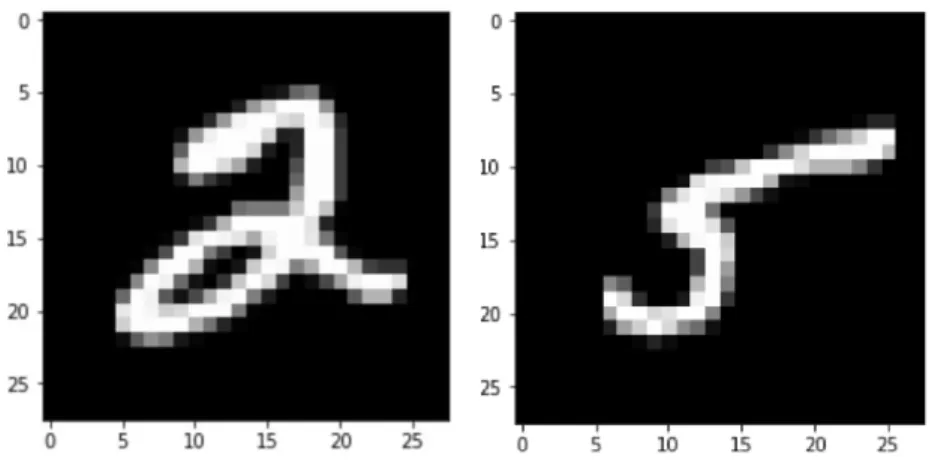
instance, scaling: the stochastic quantity mounted each image and shifted to a new random location; Horizontal and Vertical skewing: each image is tilted vertically and horizontally by a factor of 0.5, which is represented in Figure 2.1. These conversions have increased the dataset fourfold.
Figure 2.1: An example of the transformed images
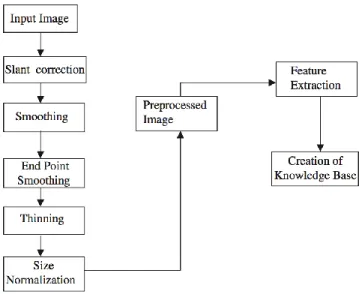
A 2007 paper by Hanmandlu and Murthy proposed the distinct preprocessing techniques specifically slant correction, thinning and smoothing. In other words, the task of recognizing handwritten digits has been broken down into the following steps which are depicted in Fig.2.2. For handwritten characters, one of the first variances in ways of writing ways is caused by slope, which is defined as the slant of the writing trend relative to the vertical line. Besides that, slant correction must precede other pre-processing tasks, which is that correction operations
22
usually create a rough outline of the character and smoothing tends to change the image topology. Bilinear interpolation is useful for generating other distorted character images at the selected resolution (29x29). Furthermore, one method of achieving non-uniform thickness invariance includes determining a constant thickness "middle line" for each letter for
identification purposes. Therefore, the process is called Skeletonization. Also, a new method
was devised by Hanmandlu and Murthy (2007) to smoothing and removing the virtual slant of distorted numbers.
Figure 2.2: Block diagram describing system implementation
Sadri, Suen and Bui (2007) have located characteristic points on the string image according to the developed algorithm and produced possible segmentation hypotheses, as well as finding the group with the highest segmentation recognition reliability. Another group of researchers, Simard, Steinkraus and Platt (2003), mentioned that if the data is scarce and the distribution to be studied has transform-invariant attributes, applying transformations can generate additional data and even improve performance. In the case of handwriting recognition, elastic deformation which can be achieved by calculating a new target position relative to the original post for each pixel, is one of the techniques that can be used to extend the training set. In 2007, Lauer, Suen and Blochhave increased the MINST dataset size by four times by using affine transformations and the prior knowledge of transform invariant properties. In the raised method, the elastic distortions are applied to each sample of the training set to extend nine new samples. Keysers et al. (2007) further suggested that a local deformation technique defined that more complex models (e.g., 2-dimensional warping) do not certainly represent better models than simple image distortion models.
23
Some problems occur during the development of the OCR system. First, a computer can be complicated when identifying values that have similarities to other benefits. Another problem is when extracting features with background noise, such as the contrast of fonts and paper
(Phangtriastu, Harefa & Tanoto, 2017). Liu and Suen (2009)applied the appropriate threshold
and gray standard normalization technologies to standardize the grayscale levels of the background and foreground regions of the target image. In other words, a binary image or a background-eliminated gray-scale image can be obtained by thresholding the grayscale image.
Regarding the fact that the images on the database are not uniform in dimensional sizes, it is clear that the first step is to standardize them (Karimi et al., 2015). The optimal target size for normalization is the all average resolution because of excessive size changes may result in data loss. Therefore, Karimi et al. (2015) have adjusted the TMU database to 40×40 pixel images in Matlab. A 2004 paper by Liu et al. concentrated on the diversity of performance for ARAN and orientation feature extraction. The property of ARAN is based on the aspect ratio mapping function. For this study, three databases namely CENPARMI, NIST and Hitachi have been selected. Notably, the researchers provided ten normalization functions including seven based dimensions; three found moments and eight feature vectors for comparison to discover the excellent choices (Karimi et al., 2015).
The local gradient feature descriptors extract the feature vectors in the handwritten image and then submitted them to a machine learning algorithm for original classification (Surinta et al., 2015). Recently, a new method was proposed by Phangtriastu, Harefa and Tanoto (2017) combining several feature extraction algorithms which are the projection histogram, HOG and zoning algorithm. In the HOG feature descriptor, the distribution of directions of gradients is used as features. Zoning is a way for partial information analysis on partitions of a specific pattern. Moreover, the projection profile that includes two types namely the vertical and horizontal is one of the feature extractions that cumulate black pixels along the rows and columns in the image. PCA is an eigenvector-based multivariate analysis technique that
usually extracts the best data variance (Winkler, 1980). To facilitate calculations, the PCA
24 2.5 Classification Techniques in ML
Digital recognition is one of the most indispensable applications in pattern recognition. Many researchers have studied and identified different datasets. For example, the US Postal Code on the letter was collected into the CEDAR digital database and used as a standard database for researchers to analyze (Sarkhel et al., 2016). Since there is no criterion database available at the moment for Marathi, a dataset of 2000 images containing Marathi numerals from 0-9, has been collected from different age groups (Mane& Kulkarni, 2018). Furthermore, the SD19 database provided by the National Institute of Standards and Technology (NIST) was also viral among researchers (Hochuli et al., 2018). The CMATERdb 3.1.3.3 is a database including 171 unique categories of isolated grayscale images of Bangla compound characters. However, images in the dataset are neither of central nor uniform proportions, resulting in difficult pattern
recognition problems (Roy et al., 2017). Table 2.1 gives a comparison of the classification
techniques recognition rates (RR) for the handwritten characters or digits from the different databases.
Work reference Techniques Database RR
Phangtriastu et al., 2017 SVM, ANN Chars74K 94.43% Mane & Kulkarni, 2018 CCNN Self created 94.93% Sadri et al., 2007 NN, SVM NIST SD19 96.42% Hochuli et al., 2018 CNN NIST SD19 97% Mahto et al., 2015 SVM, KNN Self created 98.06% Hanmandlu & Murthy, 2007 ID-3 CEDAR 98.4% Roy et al., 2017 DCNN CEDAR 90.33% Bernard et al., 2007 RF MNIST 93% Cecotti, 2016 K-NN MNIST 98.54% Karimi et al., 2015 Bagging, Boosting TMU 98.06%
Table 2.1: Comparative description of the classification techniques RR for the handwritten characters from the different databases.
The performance of a classifier can depend on the quality of the features of the classifier itself (Elleuch, Maalej & Kherallah 2016). However, many classifiers such as SVM and RF cannot
25
process raw images or data efficiently, because extracting appropriate structural features from complex shapes is a considerable challenge (Pramanik & Bag, 2018). Therefore, how to use the combination of sophisticated features extraction and classifier is the main problem of OCR in handwritten digit recognition. A 2017 paper by Phangtriastu, Harefa, and Tanoto compared the most commonly used classifiers SVM and ANN, while this experiment achieved the highest accuracy of 94.43% using the SVM classifier with the combination of feature extraction algorithms which are projection histogram and HOG.
In order to improve the high reliability in handwritten digit recognition, a new feature combination, including of MPCA based statistical features and QTLR features has been evaluated on handwritten digits of five prevalent scripts of Indian, viz., Arabic, Bangla,
Devanagari, Latin, and Telugu with SVM based on OCR (Winkler, 1980). Winkler observed
that only the features extracted by the PCA algorithm are not sufficient to solve the variabilit y of the handwritten digit mode, while the QTLR-based topology features also have limitations in classifying digital patterns into individual scripts. Consequently, the combination of MPCA + QTLR is applied to increase the recognition accuracies significantly to 98.7%.
Many researches have been carried out on feature extraction and classifier algorithms for handwritten digit recognition. Most of them got good recognition accuracy. For instance, Mane and Kulkarni (2018) proposed a Customized Convolutional Neural Network (CCNN) that can automatically learn features and predict the categories of numerals in extensive ranged data set such as Marathi which is one of the most diffusely spoken regional languages in India. Besides, the CCNN’s performance reached an average of 94.93% accuracy by using K-fold cross-validation. The proposed CCNN model does not impose any restrictions on the count of layers, but instead optimizes the number to satisfy the demand of the issue. Also, the different filter sizes have been applied for the intermediate convolutional layer.
In 2007, Sadri, Suen and Bui indicated that the correct use of context knowledge in
segmentation, evaluation, and the search could remarkably improve the overall performance of the handwritten digit recognition system. As a result, the recognition system was able to get 95.28% and 96.42% recognition accuracy on handwritten numeric strings using NN and SVM
classifiers, respectively. Hochuli et al. (2018) stated the CNN classifier could handle the
complexities of touch numbers more efficiently than all the segmentation algorithms provided in the literature. The experiments on two famous databases consisting of Touching Pairs
26
Dataset and NIST SD19 highlight the proposed method by achieving an accuracy level of 97% recognition accuracy.
Recently, Mahto, Bahtia and Sharma (2015) designed a combination of horizontal and vertical projection feature extraction to identify Gurmukhi's handwritten characters. The experiment applied linear SVM and k-NN (k = 1, k = 3, k = 5, k = 7) to classify handwritten characters to a maximum accuracy of 98.06%. However, in some other reports, Lauer, Suen, and Bloch (2007) replaced the last layer of the LeNet4 network with a K-NN classifier to process the extracted features. But compared with the regular LeNet4 network, this approach does not improve the results.
A 2007 paper by Hanmandlu and Murthy proposed the recognition of handwritten Hindi and English digits in the form of exponential membership functions as fuzzy models. Furthermore, the defuzzification parameters have been optimized by the double layer perceptron, and the fuzzy rules have been generated based on the ID-3 method. This technique overcame the difficulties of traditional handwritten character recognition syntactic methods and achieved the accuracy of 95% for Hindi digits and 98.4% for English digits.
In the field of pattern recognition, researchers have paid more attention to multi-classifier systems in recent years, especially Bagging, Boosting. Bernard, Adam and Heutte (2007) researched a conventional feature extraction technique based on a greyscale multi-resolution pyramid to find out the effect of the parameter values on the performance of the RF. They have experimented with the Forest-RI algorithm, which is considered as the Random Forest reference method, on the MNIST handwritten digital database and reached a level of accuracy in handwritten digit recognition to greater than 93%.
A 2017 paper by Roy et al. studied the innovative analysis of handwritten Bangla that isolated compound character recognition using a novel deep learning technique. The researchers performed layered training on deep convolutional neural networks (DCNN) and used the RMSProp algorithm to enhance the training process to achieve faster convergence. On experimentation, the proposed DCNN showed significant improvement in recognition rates compared with the standard shallow learning model, reaching 90.33%.
27
In 2018, Shamim et al. completed the comparative analysis of the performance of SVM with
polynomial kernel and radial basis function kernel (RBF) kernel for classifying students with or without handwriting difficulties. Also, cross-validation which is a statistical method for assessing and comparing ML algorithms has been widely used for evaluating the performance of NN and other applications such as SVM and K-NN. Shamim et al. (2018) adopted the ten cross-validation method to select the parameter to gain the highest recognition rates. While, this experiment illustrated that the performance of SVM with RBF is better than with polynomial kernel, reaches more than 93%.
Cecotti (2016) presented a novel active machine learning strategy for the classification of handwritten numerals. Dynamic learning methods solve the problem that large databases are not always immediately available by querying experts to set labels for specific instances. In this paper, Cecotti evaluated the performance of this method on four databases corresponding to distinct scripts (Latin, Bangla, Devanagari and Oriya) and received an accuracy of 98.54% on the MNIST training database.
Recently, Karimi et al. (2015) proposed a method for identifying Persian handwritten digits
consisting of three main sections, preprocessing, feature extraction and classification. In the feature extraction phase, a set of appropriate and complementary features involves in 115 features abstracted from Persian handwritten digits. In the classification phase, the ensemble classifier algorithms such as Boosting and Bagging are used to separate the classes of samples from each other. Moreover, this experiment has been estimated on the Tarbiat Modares University (TMU) digital database, and the result, it was claimed give the highest recognition accuracy of 98.06% for Persian handwritten digits.
2.6 Summary
This chapter has reviewed the existing literature relevant to the research. Notably, it highlighted many operational techniques that have to be considered, namely image preprocessing, feature selection and pertinent classifiers of machine learning. These factors should be addressed in the acquisition of data resources and the preparation of the plan to achieve the highest handwritten recognition accuracy.
28
Firstly, image preprocessing such as normalization, slant correction or elastic distortion is necessary because the slanting numbers and blurred images will affect the accuracy of feature extraction. Besides that, if the data is scarce and the distribution to be studied has transform-invariant attributes, applying transformations can generate additional data and even improve performance, for example, scaling, horizontal and vertical skewing and the elastic distortions, etc. These conversions have expanded the dataset size by four to nine times.
Followed by the feature extraction step, aiming to reduce the dimension of data while extracting relevant information. In a handwriting recognition system, feature extraction is one of the critical factors for success and has a significant impact on the classification. In the HOG feature descriptor, the distribution of directions of gradients is used as features. Zoning is a means for partial information analysis on partitions of a specific pattern. Besides, the automatic extraction method by CNN can extract elements directly from the raw image. PCA can project digital images onto low-dimensional space composed of a small number of elemental pictures for further feature extraction.
The research will provide the summary of requirements which are an in-depth introduction to the principles and design of template-based models such as CNN, SVM, K-NN, and RF in the next chapter. To achieve higher accuracy, the sharpening, normalization, slant correction, and elastic distortion techniques will be more detailed research and discussion in handwritten digit recognition. To facilitate calculations, the PCA will be used to minimize the proportion of the MNIST dataset from 784 to a lower value. Additionally, HOG is a gradient feature descriptor that extracts the feature vectors in the handwritten image. The HOG feature vector is very useful for tasks like image recognition and object detection when it is fed into the classification algorithms like SVM or RF producing good results.
29
3
DESIGN AND METHODOLOGY
3.1 Introduction
The research question is the following: Can OCR use the combination of image pre-processing and classifiers to improve the accuracy of handwritten digit recognition to more than 99%? Here, an approach will be presented to address this question.
This chapter will outline and discuss the structure of the research including the data collection methods, sampling size, the principles and design of template-based models such as CNN, SVM, K-NN, and RF, the comparison of the technical details and the methodology adopted for designing and evaluating the solution. In particular, to achieve higher accuracy, the sharpening, grayscale normalization, slant correction and elastic distortion techniques will be applied to the image preprocessing stage. The PCA will be used to extract the best data variance, and the HOG feature vector will be applied to image recognition and object detection. Finally, the four previously mentioned classification techniques will be evaluated using K-fold cross-validation, error rates, accuracy, classification reports and confusion matrix.
3.2 Summary of Requirements
This study strives to improve the recognition accuracy to more than 99% in handwritten digit recognition. Because some numbers in the script are written in different people's handwriting styles, the machine may encounter difficulty identifying them. Fast and precise handwritten digit recognition is the most important aspect of finance and administration. The handwriting pattern recognition system consists of three main parts, namely preprocessing, feature extraction and classification. The MNIST dataset is an excellent database for machine learning and pattern recognition methods while involving minimal efforts in preprocessing and formatting. That is why it was selected for this study.
As mentioned in the literature review mentioned in the last chapter, some researchers have obtained some achievements in handwritten character recognition. For example, Hochuli et al. (2018) used the CNN classifier to perform experiments on two public databases consisting of Touching Pairs Dataset and NIST SD19, as well as highlighting the proposed method by achieving a 97% recognition accuracy. Recently, Mahto, Bahtia, and Sharma (2015) applied a linear K-NN to classify Gurmukhi handwritten characters with a maximum accuracy of 98.06%. Moreover, Bernard, Adam, and Heutte (2007) experimented with the Forest-RI
30
algorithm on the MNIST handwritten digital database, and the accuracy of handwritten digit recognition reached over 93%. Also, a 2017 paper by Phangtriastu, Harefa, and Tanoto achieved the highest accuracy, namely 94.43% using the SVM classifier. Overall, researchers have used these classifiers to get good results.
Since previous researchers have well verified the four classifiers mentioned above, CNN, SVM, K-NN and RF will be applied and compared in this experiment to determine which classifier delivers the highest performance. However, this research will pay more attention to preprocessing and feature extraction steps than in previous studies to reach the highest accuracy.
Firstly, raw image data may have a variety of issues such as blurring or skewing and thus are less likely to produce optimal computer vision results. That is why careful consideration of image preprocessing is fundamental. In particular, grayscale normalization will decrease the effect of an illumination's differences. Slant correction will be used to solve the problem that different people's handwritings are more or less skewed writing. Furthermore, only a handful of researchers have mentioned the technique of sharpening the blurry image in handwritten digit recognition. There are three primary reasons to sharpen the image, which are to overcome the blur introduced by the camera device, improve the legibility and contribute to the feature extraction in the next step. Also, some researchers have proposed the Elastic distortion technique to increase the training set. Therefore, this experiment will focus on the methods of normalization, slant correction, sharpening and elastic distortion in the preprocessing stage.
In handwriting recognition systems, feature extraction is one of the critical factors for success. However, extracting appropriate structural features from complex shapes is a considerable challenge. CNN will use the LeNet5 automatic extraction method to extract elements directly from the original image. Moreover, the HOG feature vector will be adopted in other classifiers, since it is useful for tasks such as image recognition and object detection. Besides, PCA can project digital images onto low-dimensional space composed of a small number of elemental images for further feature extraction. Therefore, HOG and PCA are the nuclear technologies in the feature extraction phase.
In the evaluation phase, when classifying data, k-fold cross-validation is applied to estimate the skill of the machine learning model for unseen data. Meanwhile, the accuracy of the
31
verification is observed for each epoch to ensure the correct training. After the model is optimized, it is then tested with unknown samples to find the test accuracy and represent it with a confusion matrix. Besides, how the loss changes are maximized and the differences between training accuracy and verification accuracy will be shown on the graph. Also, the error rates of the four models will be compared and analyzed based on the different techniques of pre-processing and feature extraction.
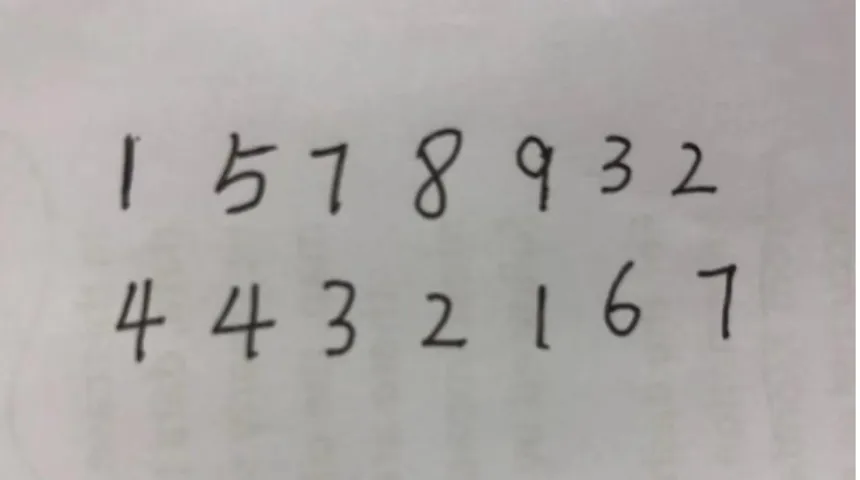
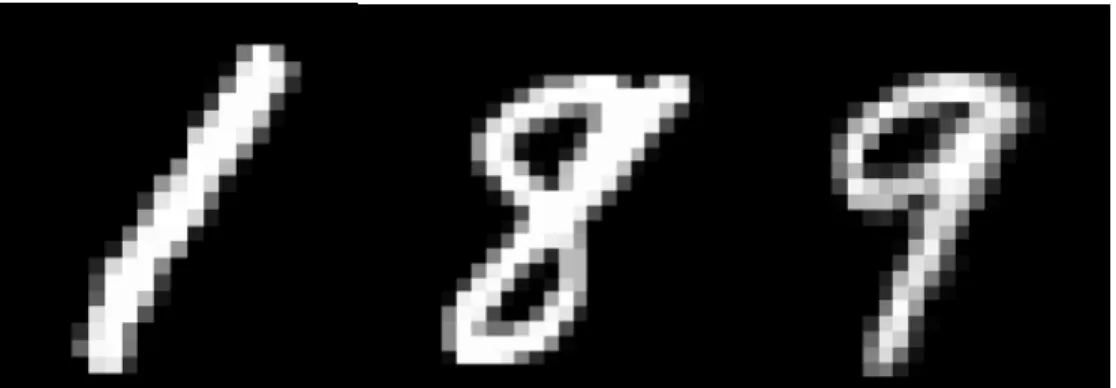
Finally, the handwritten numbers never seen by the systems will be applied to finalize the model. The resulting model with an accuracy of more than 99% will identify the handwritten digits and display the predicted numbers. Figure 3.1 presents some handwritten digits never seen by the systems.
Figure 3.1: The several of handwritten digits never seen by the systems
3.3 Data Collection
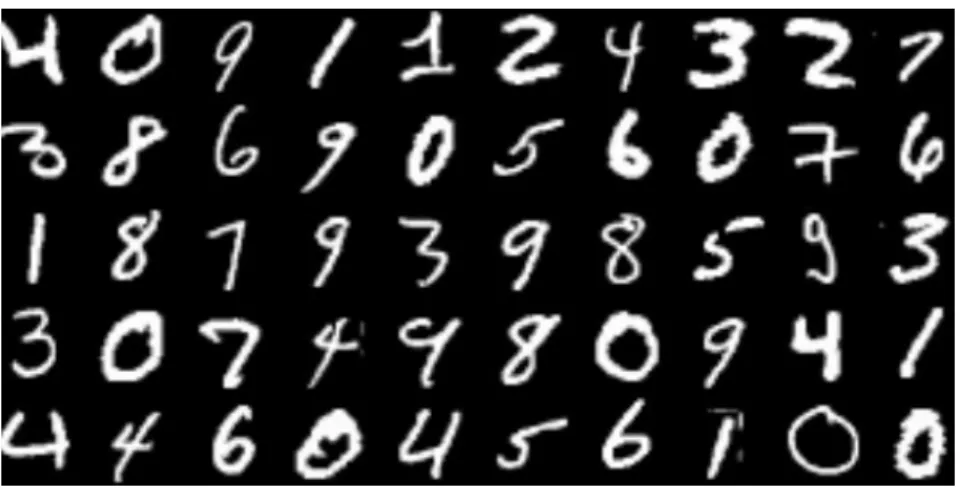
A commonly applied dataset for handwritten digit recognition called MNIST can be searched on the Y. Lecun website. It is a gathering of 70,000 digits written by the different 750 Census Bureau employees and high school students. This dataset is a widely known benchmark that includes a training set with 60,000 images and testing set with 10,000 images. Numerals were size-normalized, centered and stored sequentially as 28 × 28 pixel images in gray-level bitmaps. The resulting datasets are provided with the labels, and each image includes a single digit. This ready-to-use database is the data was applied in the experiments below. Figure 3.2 displays some sample numbers in the training set.
32
Figure 3.2: MNIST database: the sample numbers in the training set
The MNIST dataset consists of NIST's unique database 3 and unique database 1, which involves binary images of handwritten numbers. In particular, the MNIST training set that contained samples from approximately 250 writers is constructed from 30,000 patterns in SD-3 and SD-30,000 patterns in SD-1. Similarly, the test set consists of 5,000 patterns in SD-SD-3 and 5,000 patterns in SD-1. NIST formerly appointed SD-3 as the training set and SD-1 as the test set. However, compared with SD-1, SD-3 is more transparent and more accessible to identification. The reason for this is that SD-3 was collected from Census Bureau staff, while SD-1 was collected from high school students. Since it is essential to ensure that the writers of the training set and the test set are disjoint, a new database MNIST was built by mixing the NIST data sets.
Some researchers have used the database for analysis and have achieved beautiful results. For instance, Bernard and his team (2007) reached an average of 94.93% for handwritten digit recognition accuracy, and Cecotti (2016) gained the highest accuracy of 98.54%. In some experiments, to add the training set, the artificial distortions are applied to each sample to extend new samples.
In the field of handwritten character recognition, there are also other researchers who have used the different script datasets for research and most of them have achieved satisfactory results.
One clear example is that Surinta et al. (2015) who collected a new Thai handwritten script
database from 150 natives who were aged from 20 to 23 years and studied in the university. The Thai handwritten numeric dataset (THI-D10) has 9555 samples consisting of 8055 training
33
samples and 1500 test samples. Surintaet al. (2015) reached a better result of 97.87% on THI-D10 than the results reported in previous studies.
Another example is a dataset of 2000 images containing Marathi numerals from 0-9 which were collected from different age groups since there is no criterion database available at the moment for Marathi (Mane& Kulkarni, 2018). Mane and Kulkarni used CCNN and verified by K- fold cross validation and obtained an average 94.93% recognition accuracy for the testing dataset.
The Bangla language which includes 11 vowels, 39 consonants, 10 modifiers, and 334 compound characters is the sixth most universal language in the world. The CMATERdb 3.1.3.3 is a database including 171 unique categories of isolated grayscale images of Bangla compound characters that have been applied to handwritten Bangla composite character recognition. However, the images in the dataset are neither central nor uniform, resulting in problems with in pattern recognition problems. In contrast, the MNIST dataset is composed
of only 10 categories and is less challenging. Roy et al. (2017) applied Deep Convolutional
Neural Network (DCNN) on the CMATERdb 3.1.3.3 and achieved a recognition accuracy of 90.33%, representing an excellent result in handwritten Bangla compound character recognition.
3.4 CNN
A Convolutional Neural Network (CNN) is a multi-layer neural feed-forward network with deep supervised learning architecture, which can be regarded as a two-part combination: automatic feature extractor and trainable classifier. The classifier and weights of the back-propagation algorithm in the feature extractor are applied. Besides, CNN can also extract topology attributes from images. It abstracts features from the primary image in the first layer and classifies the pattern with the last layer. The best property on pattern recognition mission
was implemented. For example, Hochuli et al. (2018) proposed that the CNN classifier can
handle the complexities of touch numbers more efficiently than all the segmentation algorithms provided in the literature, and achieved a recognition accuracy of 97%.
CNN is utilized to learn complex, high-dimensional data, and differs in how the convolution and sub-sampling layers are queried. The difference is in their structure. Generally, the first
34
layer is an alternation of the convolutional layer and the sub-sampled layer or convolutional filtering and down-sampling. The convolutional layer is used to extract basic visual features from the local receptive domain. It is organized in a plane called a simple unit of neurons, also known as feature mapping. Each group has 25 inputs connected to the 5×5 area in the input image, which is the local receptive area. Furthermore, the down-sampling operation through convolution filtering has a ratio of 2.
Many CNN constructions are proposed for distinct problems such as object recognition and handwriting character recognition. Furthermore, to ensure some level of invariance of scope, shift and distortion, CNN mixes three primary hierarchical fields such as local receptive area, weight sharing and spatial sub-sampling. Trainable weights are assigned to each connection for the standard neural network, but all elements of a feature map share the equal weight. This characteristic is evidenced by the fact that the primary feature detectors useful on a portion of the image may be helpful throughout the image. Also, weight sharing techniques allow for a reduction in the number of trainable parameters. For instance, LeNet5 has only 60,000 trainable parameters out of 345 308 links.
Since the exact position of the abstracted features is insignificant, the spatial resolution of the feature map is reduced by the sub-sampling layer. Such a layer includes as many characteristic maps as the previous convolutional layer, while with half the amount of rows and columns. Specifically, each unit j is related to a 2x2 sensitive area, calculates the average of the four inputs yi, multiplies them with the trainable weight wj and adds the trainable deviation bj to get the activity level vj:
(Equation 1)
The weight sharing technology can be used for the subsampling layer in each feature map, and the trainable parameters consist of the shared weight and the bias. The characterization of a specific convolutional neural network referred to as LeNet5 below and the architecture of LeNet5 as depicted in Figure 3.3.
35
Figure 3.3: The architecture of LeNet5
LeNet5 adopts an original image of 32 × 32 pixels as input. It consists of two convolutional layers (C1 and C2), two sub-sampling layers (S1 and S2), one fully connected layer (N1) and an output layer (N2). It can be seen from Fig.3.3 that the convolution and sub-sampling layers are interlaced. In particular, the first convolutional layer C1is composed of six 28×28 units feature maps. The following S1 reduces the resolution by 2, while the next layer C2 expands the number of feature maps to 16. Here, each feature map of S2 is not connected to each feature map of C2. Each unit of C2 is connected to several receiving fields at the identical position in the subset of S1. These combinations are random, but they also decrease the number of free parameters and compel the different feature maps to draw different features when different inputs are obtained. The layer S2 is used as S1, and the size of the feature map is reduced to 5x5. Finally, the minimum output provides the class of the input mode.
After the model architecture is defined and designed, the model requires to be trained with the training dataset in order to be capable of recognizing the handwritten numbers. So, one epoch implies one forward and the backward pass of all training sets. If we visualize the whole training log, the model will be more stable with more sequences of epochs.
3.5 K-NN
K-NN is one of the most straightforward and well-known non-parametric algorithms which is suitable for large numbers of data. The K-NN algorithm has been applied for the statistical calculation, scene identification and also writer recognition systems. In some previous research studies, K-NN has been used for handwritten character recognition, and a high recognition