Journeys to the Edge: Exploring the
Dimensions of Tacit Knowledge
Sharing in Communities of Practice
David Telford
PGDip, BSc.
Thesis submitted in partial fulfilment of the requirements for the Edinburgh Napier University Degree of Doctor of Business Administration November 2017
Contents
1. Chapter 1: Introduction ... 1
1.1 Chapter overview ... 1
1.2 Purpose of the study ... 2
1.3 Aim and objectives of the research ... 4
1.4 The Higher Education (HE) Information Technology (IT) context ... 5
1.5 The researcher ... 8
1.6 Structure of the thesis ... 8
2. Chapter 2 – Literature review ... 10
2.1 Introduction ... 10
2.2 Social Learning Theory (SLT) ... 10
2.3 CoPs as vehicles for social learning & the sharing of tacit knowledge ... 12
2.4 The value and storage of practice and tacit knowledge ... 15
2.5 Defining Communities of Practice (CoP) ... 17
2.6 Perceived differences between CoPs and teams ... 19
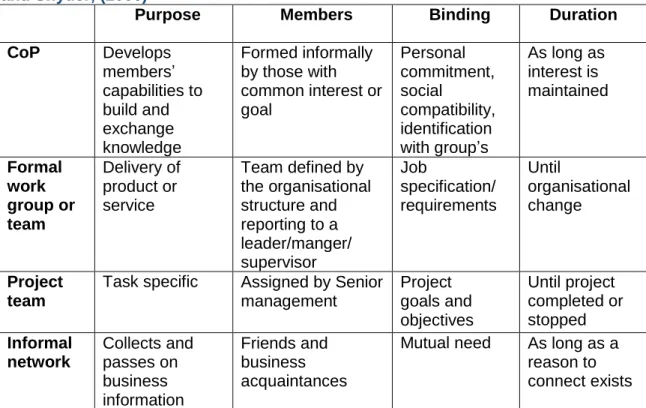
Table 1: Comparative table of CoPs and other structures adapted from Wenger and Snyder, (2000) ... 20
Table 2: Comparing teams using instrumental logic and CoPs with Habermasian ‘life-world’ characteristics (Adapted from O’Donnell et al., 2003) ... 21
2.7 The role of Community of Practice ... 22
2.8 The CoP Domain: ... 23
2.9 The Community: ... 24
2.10 The Practice: ... 24
2-3
2.10.2 Key CoP roles ... 26
2.10.3 The role of the coordinator or facilitator ... 27
2.10.4 The role of the broker ... 27
2.10.5 The role of the leader ... 28
2.10.6 Membership and participation in CoPs ... 30
2.10.7 The benefit to the individual of CoP membership ... 31
2.10.8 CoP Lifecycles ... 32
2.10.9 The benefits of CoPs to organisations ... 33
2.10.10 Good CoP, bad CoP ... 35
2.11 Knowledge sharing & tacit knowledge ... 36
2.12 The value of tacit knowledge ... 37
2.13 Ba and the Socialization, Externalisation, Combination and Internalisation (SECI) Model 39 2.14 The tacit debate and the challenge to the SECI process ... 41
2.15 Emotional Intelligence (EI), learning and tacit sharing ... 43
2.16 Emotional intelligence characteristics ... 44
2.17 Knowledge Management & Emotional Intelligence ... 45
2.18 Conclusion: Research themes and questions ... 46
3. Chapter 3 ... 49
3.1 Research Methodology ... 49
3.1.1 Introduction ... 49
3.1.2 Identification of the research philosophy ... 49
3.1.3 Ontology ... 51
3.1.4 Epistemology ... 52
3.1.5 Axiology ... 52
2-4
3.2.1 Phenomenology ... 57
3.3 The pilot study ... 58
3.4 Process of conducting the main study ... 60
3.4.1 Sampling process ... 61
3.5 Ethical Considerations ... 63
3.6 Individual Interviews ... 64
3.6.1 Transcribing the data ... 65
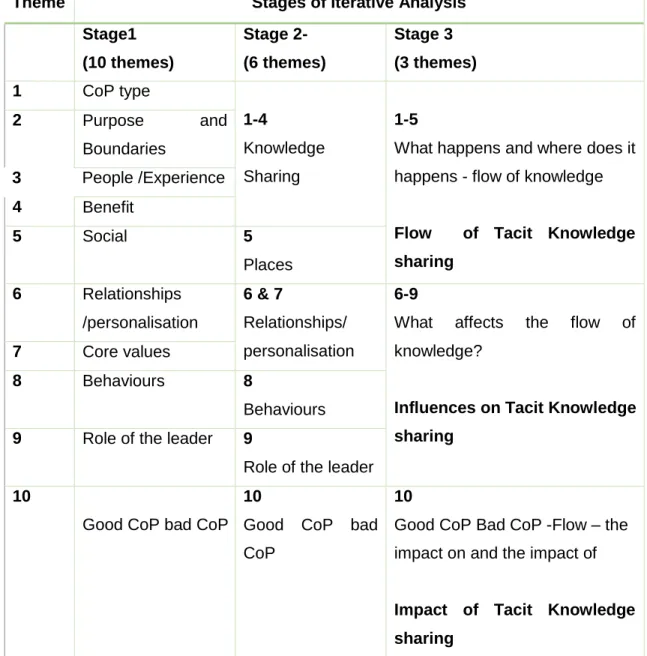
3.6.2 Data Analysis ... 65
3.7 Causal Mapping ... 69
3.7.1 Process of Causal Mapping ... 70
3.7.2 Process of Conducting Causal Mapping in the Study ... 70
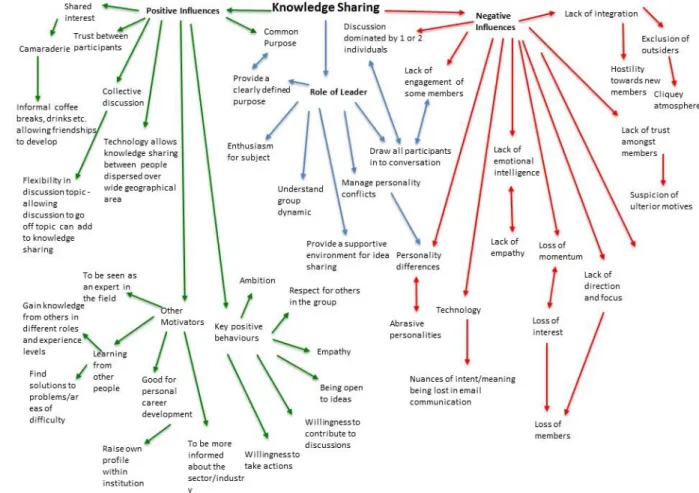
Figure 3: Causal Map- Indicating the complexity of the p o s i t i v e and negative influences on tacit knowledge sharing ... 72
3.8 Criteria for Evaluating Qualitative Research ... 73
3.9 Conclusion ... 74
4. Chapter 4: Findings ... 75
4.1 Introduction ... 75
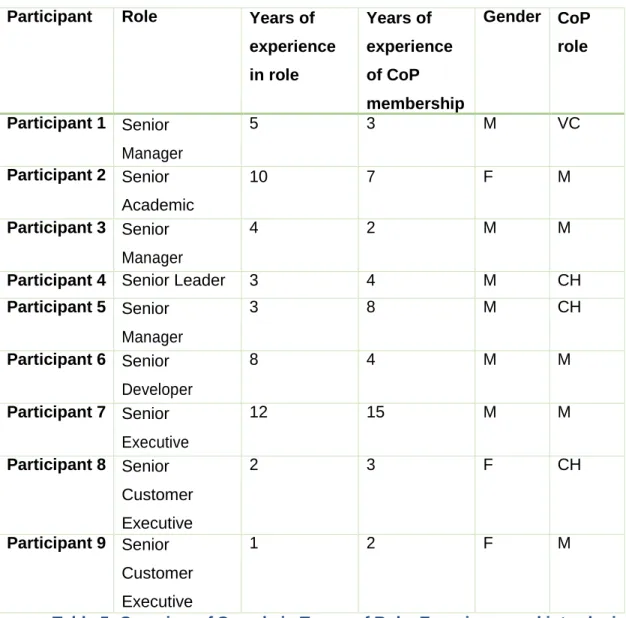
4.2 Introducing the participants ... 75
4.2.1 Participant 1 ... 75
4.2.2 Participant 2 ... 76
4.2.3 Participant 3 ... 78
Exploring the CoP and areas of interest; ... 78
4.2.4 Participant 4 ... 79
4.2.5 Participant 5 ... 80
2-5
4.2.7 Participant 7 ... 82
4.2.8 Participant 8 ... 83
4.2.9 Participant 9 ... 84
4.3 Flow of tacit knowledge sharing ... 85
4.3.1 The CoP internal and external tacit knowledge flow and Integration ... 94
4.4 Influences on tacit knowledge sharing ... 104
4.4.1 Role of the leader: Facilitating tacit knowledge sharing ... 104
4.4.2 Impact of behaviours on tacit knowledge sharing ... 111
4.4.3 Disruptive behaviours ... 111
4.4.4 Relationships and the need for trust ... 117
4.4.5 Listening and Facilitating Trust and Engagement ... 120
4.4.6 Empathy as support for sharing ... 122
4.4.7 Respect: An outcome of listening and empathy ... 124
4.4.8 A Commitment to openness - A willingness to share ... 125
4.4 Impact of tacit knowledge sharing ... 127
4.4.1 Poor leadership ... 129
4.4.2 Dominating characters ... 129
4.4.3 Form of ongoing benefit ... 130
4.4.4 Relevance ... 130
4.4.5 Willingness to share ... 130
4.5 Conclusion ... 131
5 Chapter 5: Discussion ... 132
5.1 Introduction ... 132
5.2 Purpose of the research ... 132
2-6
5.3.1 Tacit knowledge sharing ... 133
5.3.2 The places knowledge sharing occurs ... 137
5.4 Influences on tacit knowledge sharing... 139
5.4.1 The role of the leader ... 140
5.4.2 Behaviours that Impact knowledge sharing ... 142
5.5 The impact of tacit knowledge sharing ... 149
5.5.1 The leadership ... 150
5.5.2 Dominating characters ... 151
5.5.3 Form of ongoing benefit ... 152
5.5.4 Relevance ... 152
5.5.5 Willingness to share ... 153
5.6 Developing future successful CoPs: A conceptual framework ... 153
5.6.1 Introduction ... 153
Figure 6: Boundary Working- Push Pull Effect of CoP Members on Tacit Knowledge Flow and the Role of Leadership... 154
5.6.2 The conceptual framework ... 155
6 Conclusions & recommendations ... 158
6.1 Introduction ... 158
6.2 Research aim and objectives ... 158
6.3 Recommendations ... 160
6.4 Contribution to knowledge and practice ... 161
6.5 Limitations of the study ... 161
6.6 Limitations of the methodology ... 162
6.7 Limitations of the research focus ... 162
2-7 8 References ... 165
Appendix 1: Consent forms ... 183
Figures
Figure 1: Degrees of community participation (Wenger, McDermott & Snyder, 2002)
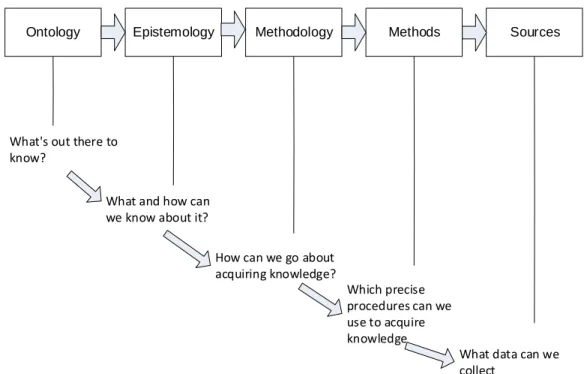
Figure 2: The interrelationship between the building blocks of research (Grix 2010)
Figure 3: Causal map- Indicating the complexity of the positive and negative influences on tacit knowledge sharing
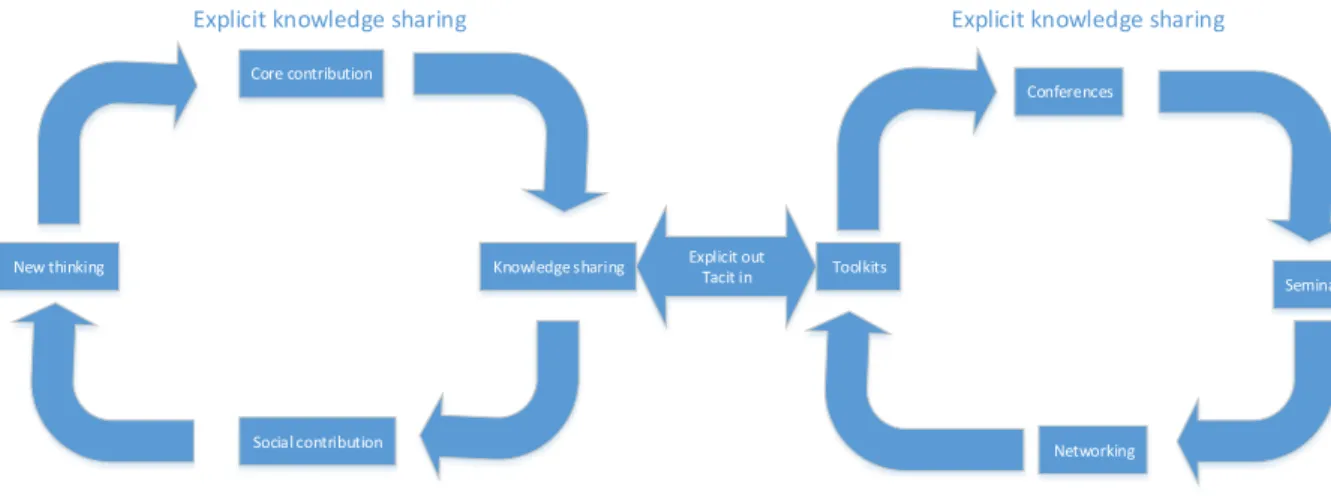
Figure 4: Study finding: The HE IT CoP tacit-explicit-tacit knowledge virtuous circle
Figure 5: tacit sharing moving from the core to the periphery and back
Figure 6: Boundary working- Push pull effect of CoP members on tacit knowledge flow and the role of the leadership
2-9
Abstract
Tacit knowledge sharing has featured strongly in knowledge management literature in the last two decades. Knowledge management is an essential component attributed to underpinning organisational success and tacit knowledge sharing contributes directly to enhancing knowledge creation and to obtaining a competitive advantage in the business environment. Over the same period Communities of Practice (CoP) have risen in prominence as vehicles for tacit knowledge sharing and are seen as hotbeds of informal learning processes. There is, however, limited research into what may influence tacit knowledge sharing in CoPs. Additionally, although recognised as knowledge intensive organisations there has been limited research into knowledge sharing within and across educational institutions. The higher education (HE) sector in general has undergone significant change from a complex evolving landscape of political upheaval, funding divergence and an increasingly competitive worldwide market. Knowledge creation, combining and leveraging to improve an institution’s performance, should therefore be considered of critical importance.
Information Technology (IT) and Digital leadership have a key role in transforming Universities to meet the challenges in a global knowledge economy. The IT community within HE has a Sector Professional Organisation (SPO) that supports a number of voluntary CoPs which have operated over the last twenty years. The aim of the research was to explore the dimensions of tacit knowledge sharing in Communities of Practice working within the Higher Education Information Technology Sector.
The study was undertaken from an interpretivist stance and used a phenomenological design with semi-structured interviews with participants who had experience of membership spanning several CoPs as the key data collection technique. The analysis was thematic in nature and brought to light expected and unexpected themes from the experiences of the participants.
The key contribution is centered on the study findings that link the nature and movement of tacit knowledge from the core to the periphery of the CoP with its membership and leadership behaviors that are impacting on its success. From this a conceptual model that informs future HE IT CoP design and key leadership characteristics necessary for success, whilst supporting transferability, due to the findings’ close association with tacit knowledge sharing was developed and is presented .
2-11
Dedication
For Corinne, Judith, Victoria and Nancy &
Acknowledgements
This thesis would not exist without the support and contribution of many people. First and foremost I must thank those participants who gave of their time and shared their thinking, experiences and inner most feelings in order to inform my research.
I must also thank my supervisory team of Professor Tom Garavan, Dr Janice McMillan and Dr Gerri Matthews-Smith. All challenged me to give of my best and to widen my knowledge and experience. Both Janice and Gerri were extraordinary in their patience, giving of their time and support of this dyslexic, over worked, self-doubting, working class boy. My work colleagues and fellow researchers have been amazing in their support and I owe them all a great debt of gratitude.
Finally, my long-suffering wife and children who have nursed me shouted at me and soothed my furrowed brow as I travelled this often lonely journey of discovery. It is for them I never give up and I will love them until the end of time.
1
1. Chapter 1: Introduction
1.1 Chapter overview
It is generally accepted that knowledge management plays a critical role in the success of many organisations who perceive it as a strategic means for innovation and the management of competitive advantage (Chua, 2009). Consequently, there is a considerable body of research into this in commercial organisations and a growing interest and body of research into public sector organisations and knowledge sharing (Brown and Brudney, 2003; Sandhu et al., 2011). There are two key types of knowledge: explicit and tacit. Explicit knowledge refers to articulated knowledge generally expressed in words and numbers, which are easily transferred from person to person. Whilst tacit knowledge is related to the experiences, skills and wisdom embodied within the individual (Aljuwaiber, 2016). Knowledge management can be defined as “any process or practice of creating, acquiring, capturing, sharing or using knowledge wherever it resides to enhance learning and performance in organisations” (Scarborough et al., 1999: p699). Of the five components identified in this definition the key focus of this thesis is on knowledge sharing. One of the main matters for managing knowledge resources is diffusion of knowledge within organisations. In order to be able to codify knowledge it is necessary to be aware of the different formats in which it is presented. Internal individual processes like experience and talent are forms of tacit knowledge that are difficult to codify. Therefore, it cannot be managed or shared as explicit knowledge.
The shift to more distributed forms of organisation and the presence of inter organisational relationships have led to an increase in the transfer of knowledge between parties with asymmetric and incomplete information about each other (Nemoni, 2011). Therefore, knowledge sharing has taken on an importance in its own right. Fenwick & McMillan (2005) identified knowledge sharing as being a particular problem within public sector organisations and specifically within higher education institutions. Further, Fullwood et al., (2012) suggested that knowledge sharing was deemed by academics to be a good thing that would enhance their
promotion prospects and their external profiles and they had a high level of affinity with their discipline rather than their institution. However, it is suggested that research into knowledge sharing in Universities and in particular within the academic communities is limited despite their role in the creation and exploitation of knowledge through research, teaching and learning (Fullwood et al., 2012). Nonetheless academic communities are only one component of higher education communities and another major and often overlooked one in research is professional services in particular Information Technology (IT).
For the last twenty years within the higher education sector in the UK the IT Sector Professional Organisation (SPO) has been a central contributor to the sharing of IT knowledge through its extensive use of CoPs. SPO as an organisation created by its membership for its membership is a phenomenon distinct from the smaller range of Communities of Practice that operate within the sector. It is highly visible and accessible; it has longevity and has considerable success in retaining its membership and in developing best practice toolkits and case studies that are often innovative and highly influential.
From a personal perspective the membership has long expounded its knowledge sharing capabilities and recognised the value of not simply explicit knowledge but the tacit knowledge and learning that takes place within the CoPs. Although CoP literature is relatively new, first named by Lave & Wenger (1991), there is considerable literature in support of their tacit knowledge sharing properties, their structures and the motivations for individuals to be involved. There is though limited understanding of what characteristics of CoPs are affecting tacit knowledge sharing. Consequently, this study examined the key influencing factors in tacit knowledge sharing within CoPs in a Higher Education in Information Technology professional services setting.
1.2 Purpose of the study
From my experience of CoP membership and wider practice experience of knowledge management and tacit knowledge sharing as a Director of Information Services leading both Library and IT services, it was apparent to me there was a
3
lack of CoPs being used to share knowledge within or across institutions despite their place as knowledge intensive environments. I was increasingly aware of the effectiveness of the CoPs I was involved in and the phenomena that was SPO. Borne out of my experience and growing understanding of the value of knowledge sharing there was an opportunity to look at the characteristics associated with the successful tacit knowledge sharing going on within SPO that could inform and guide future CoP design both for HE IT but also more widely in Education.
The study will therefore look at a cross sector, cross-institutional group of communities of practices (CoP) collectively known as the Sector Professional Organisation (SPO). The SPO executive supports several CoPs based on subject area interest for IT people who volunteer to join and operate the CoPs. The CoPs themselves are currently focused on Corporate Information Systems, Networking, Infrastructure, Programme and Project Management, Learning & Teaching, Staff Development, Enterprise Architecture and Support Services. Many of these CoPs have been highly successful operating for many years despite changing personnel, others however have fallen by the wayside. The CoPs meet regularly around the country reflecting their membership and are seen as highly collaborative forums contributing to best practice, creating toolkits and forming new ideas and solutions to complex industry problems. The CoP volunteers also contribute as sector representatives to other bodies as well as lobbying institutions, government bodies and governments in support of IT and the value it adds to their institutions and the wider communities.
The CoPs themselves are similar to those described by Wenger, McDermott and Snyder (2001). Volunteers populate them with a leader/coordinator known as a ‘chair’ who plays a critical role in bringing the CoP together and focused on its topic area. The volunteers are passionate about their subject area and motivated by this to CoP membership. However, there are other motivations such as mid-career professionals who wish to network with colleagues and who see this as an opportunity to progress their careers.
Critically these CoPs, as suggested in the CoP literature, are viewed as an initiative for knowledge sharing (Aljuwaiber, 2016), antecedents to knowledge
sharing (Zboralski, 2009) and are hotbeds of informal learning processes such as storytelling, conversation, coaching and mentoring. What the CoPs are achieving is the sharing of knowledge but importantly the part known as difficult to codify or document, the ‘know how’ or tacit knowledge, is being integrated, shared and stored by the CoP increasing substantially the knowledge value (Nonaka & Takeuchi, 1995). The CoPs as volunteers can best be described as social structures that continue to share and store this integrated knowledge despite changing membership. Lots of learning may occur even within these CoPs who may run projects, events or develop case studies but the value of these individual activities are time based and therefore short lived. It is the CoP itself that retains the knowledge and importantly the ‘know how’ and evolving experience of those contributing their stories to the knowledge and current best practice.
The CoPs, as indicted above, conform to the known structural model. They have a domain, the sense of common purpose and interest quite clearly exemplified as topics or expertise related to IT. A community, this fosters interactions and relationships and encourages the conversation, storytelling, promotes sharing and fosters the sense of belonging. The practice, which develops the knowledge and understanding of its membership through a set of frameworks or toolkits and, in these examples, events such as seminars and conferences that embed the knowledge and create the basis of knowledge required to be a part of the community.
The CoPs share this basic structure and their membership brings new ‘hot’ topics to them in order to address known issues or identify new or developing problems to be solved. The SPO CoPs are seen as particularly successful because of their longevity and their contribution to the sector and beyond.
1.3 Aim and objectives of the research
The aim of the research was to explore the dimensions of tacit knowledge sharing in Communities of Practice working within the Higher Education Information Technology Sector.
5
The research sought to explore the views and perceptions of the CoP membership on the characteristics affecting tacit knowledge sharing in their CoP environments. The study was bound within four key objectives,
1. To critically examine the literature on CoPs and tacit knowledge sharing 2. Capture through semi structured interviews the lived experience of the
CoP actors
3. Identify the characteristics impacting positively and negatively on the sharing of tacit knowledge through thematic analysis
4. Produce a set of recommendations to inform knowledge and practice and enhance the development of future CoP tacit knowledge sharing processes.
1.4 The Higher Education (HE) Information Technology (IT) context
Higher Education in the UK is delivered principally through publicly funded institutions of which, according to Universities UK (2017), there are 165 Universities or specialist institutions. The aims of Universities were established in the Robbins Report published in 1963 and outlined as: the instruction of skills; the promotion of the ‘powers of the mind’; the advancement of learning; and the transmission of a common culture and common standards of citizenship. However, the Higher Education sector has seen rapid change in recent years with divergent funding models operating between Scotland and England. The Robbins Report (1963) furthered the cause of education in the UK by recommending its growth however, it omitted comment in areas such as research activity and commercial development activities. The Further Education Act (Scotland) 1992 extended the number of Universities to include Edinburgh Napier, Glasgow Caledonian, Paisley, Robert Gordon and Abertay, collectively known as ‘post ‘92’. The continual upheaval occurring within the Education sector mainly due to funding has been added to through emergence of digital economy and technologies. This has seen many disruptive technologies enter into the market economies and an explosion in digital information and its exploitation.
The UK government reports that ‘Today 82% of adults in the UK are online.
Completing transactions online has become second nature, with more and more of us going online for shopping, banking, information and entertainment. Why? Because online services tend to be quicker, more convenient and cheaper to use’.
Universities have been successful over a number of years in centralising, consolidating and designing their IT infrastructure, systems and services to be resilient, efficient and cost effective. IT deployment is seen within the sector as progressive, effective and innovative at implementing technologies, yet avoiding the pitfalls of being at the ‘bleeding edge’. The sector has, however, seen significant impact of changes across the UK including the adoption of different models for funding and the considerable pace of technological change driven by the consumerisation of IT. Add to this the McClelland (2011) and Universities UK (2011) Reports here in Scotland and Department of Business Innovation and Skills (2011) south of the border. We have seen considerable government intervention in not only funding but also the operating models and the impact on the governance and administration of our Universities. The use of technology has also changed at considerable pace with the emergence of Bring Your Own Device (BYOD), Social Media, Software as a consumable item and Massive Open Online Courses (MOOCS), which are often demand-led and outwith the control of IT. Despite this pace of change, there are consistent and recognisable areas of business function for Universities:
• Learning, Teaching and Assessment
• Research
• Administration
• Commercial activity
• Internationalisation
IT systems enable all of these functions to operate under ever-evolving business processes, transactions and engagement with staff, students and partners on everything academic, social and business. IT departments therefore have a critical role in the operation and future aspirations of all areas of a University.
7
IT is now driving technological change in the way universities handle data, information and knowledge, which are now considered as key strategic assets. IT is at the core of the University’s knowledge capital and its effective provision and management underpins what we do in teaching and learning, in research and knowledge transfer, in internal and external communications and in governance, management and decision-making. As such university knowledge and information is extensive and diverse and brings benefits to everyone in the community: students, researchers, teachers, professional services staff and partners across higher education and beyond.
The knowledge landscape is dynamic and much of this is becoming technology-driven with the emergence of ‘big data’. (Brown et al, 2013) All irrespective of time and place require access and increasingly systems must interact effectively with one another to improve efficiencies. It is rapidly becoming the expectation that the provision and availability of electronic information and the analytics that can be drawn from them provide explicit knowledge of the business of universities as well as being at the heart of learning, teaching and research. Responding to these changes and the growing demands of users of information is challenging. The ready availability of information is a positive step but caution is required as t h i s t r e n d needs to progress alongside measures to ensure the security of the systems that supply that information is not compromised. A key operating assumption is that future users of services will be more demanding and discerning and there will therefore be a need to ensure that information and knowledge management continues to be relevant, providing a basis for improving delivery of services and facilitating provision of high-quality information.
Arguably, the Higher Education sector is behind in leveraging the effective knowledge level now evident in the commercial sector. It would though seem that disciplines such as IT within HE have kept pace with commercial and public sector thinking and are exploiting the use of vehicles such as Communities of Practice to share explicit knowledge but critically to enhance knowledge creation and innovation activities through the sharing of tacit knowledge to drive forward their membership and the discipline itself.
1.5 The researcher
I have worked within the higher education sector for 23 years initially as an application developer, designing and developing systems to exploit large bodies of data for the patent and trademark offices through European funding and later as an Assistant Director of IT and now Director of Information Services. As essentially an IT data and information specialist rooted in computer science, my career had influenced my philosophical stance which was positivistic in nature. However, with the assistance and personal development provided by the DBA I considered carefully my area of interest and the opportunities provided by an alternative philosophical approach and world view. It became clear that by adopting an interpretivist approach I would be able to consider more clearly how tacit knowledge may be affected within CoPs. Polanyi (1967) posited that tacit knowledge could not be codified and, although my work with Artificial Intelligence suggested otherwise through coding ‘tacit like responses’ it was evident to me that a positivistic view was unlikely to bring understanding of what was affecting tacit knowledge sharing within CoPs. I therefore made a pragmatic and rationalised decision to adopt the interpretivist philosophy to seek the data I was intent on discovering but also to challenge myself personally and hopefully develop further. I hoped also to inform my future work as an institutional and sector information leader and explore all possibilities to further enhance and improve knowledge share and knowledge creation.
1.6 Structure of the thesis
This thesis consists of 7 chapters with supporting materials in a series of appendices. Having provided the introduction in this chapter with the topic, aim and objectives clearly identified the thesis then follows the following structure:
Chapter 1 Provides an introduction to the thesis topic, and an overview of my own interest in the area.
Chapter 2 reviews and considers the literature on Communities of Practice and their role in tacit knowledge sharing is presented and consideration is given to the relevant tacit knowledge sharing literature. The chapter
9
concludes with a summary of the gaps identified from the review and the support for the questions posed by the study
Chapter 3: Considers the research methodology and the exploration of the options provided by the various philosophical stances. Careful thought and consideration was given to the ontological, epistemological and axiological positions adopted by me. Following a great deal of reading I concluded that as an interpretivist, a qualitative approach using a phenomenological design was the most appropriate for the research questions and the fundamentals of the topic to be explored. The use of semi-structured interviews was considered the most appropriate data collection technique. All ethical issues for this study were identified and addressed. Additionally, the pilot study and the data analysis technique are described.
Chapter 4: Presents the findings from the data collection and considers the emerging themes from the data analysis. From the findings, a conceptual model was developed and is presented on the characteristics associated with tacit knowledge flow from the core of the CoP to the periphery and back. Expanding on this flow was the identification of those behavioural characteristics impacting both negatively and positively on tacit knowledge sharing.
Chapter 5: Discusses the key findings in relation to the main literatures and presents a synthesised conceptual model for the tacit knowledge flow within CoPs and the characteristics identified. Discussion of those emergent themes that were unexpected and those impacting ‘longevity’ are also considered.
Chapter 6: Considers the extent to which the aim and objectives have been achieved, considers the limitations of this study and makes recommendations for both future study and practice.
2. Chapter 2 – Literature review
2.1 IntroductionThis chapter presents a review of the relevant literature related to the research area and key research questions. The review is presented in three sections. Section 1 is concerned with providing an overview of the theoretical background of Communities of Practice (CoP) and their relationship to Social Learning Theory (SLT). Section 2 explores some of the seminal literature definitions of CoPs in particular, their purpose, structure, and their value and the relationship between CoPs and knowledge management. Elements of social interaction and the link with Habermasian communicative theory is also provided here. Finally, the literature on tacit knowledge sharing that indicates the value and contribution of tacit knowledge, its definitions, vehicles used to help its stickiness and exploit its potential and value to organisations is discussed.
2.2 Social Learning Theory (SLT)
Albert Bandura in his seminal work ‘Social Learning Theory’ (SLT) (1971) suggested that learning occurs in a social context. Bandura went on to outline the key features that learning cannot be described as purely behaviour and highlighting it as a cognitive process that occurs in a social context. Furthermore, Bandura correspondingly suggested that learning can happen through observation and indeed by observing the consequences of that behaviour. Although this observational learning occurs it does not necessarily lead to a change in behaviour thus supporting the notion of learning and that reinforcement does have a role to play but is clearly not the whole story. Positive and negative reinforcement or the consequences associated with action does though separate learning from simply imitating others and is referred to by Bandura as vicarious reinforcement. Critically Bandura (1971) posits that the learner is not a passive recipient of information, describing this as ‘reciprocal determinism’ Bandura is suggesting learners do not simply absorb information but are influenced by cognition, environment and behaviour (Bandura, 1971; Grusec, 1992).
11
Bandura’s SLT brought together behavioural and cognitive theories to understand learning and how it occurs in wide ranging scenarios. Bandura explained that learning could occur through someone demonstrating the behaviours or through instructions where the activity was described in detail including all actions and thoughts in detail or through story telling whether fictional, multimedia or illustrations used to impart learning. In these approaches to imparting learning, vicarious reinforcement is described as the positive or negative reasons for changing individual or group’s behaviour (Bandura 1971; Fahle & Edelman 1993).
Social Learning Theory has been linked to CoPs as learning vehicles or learning systems through offering observational learning as a cornerstone of advancement in groups. (Farnsworth, Kleanthouse & Wenger- Trayner, 2016). The more diverse the group participants the more innovative the group is likely to be, supporting the notion that CoPs although bound by a common interest or topic could benefit from the participation of those from different backgrounds with different world views (Zboralski, 2009). Innovation or problem solving thus occurs in social groups through participants’ observing and abstracting from the range of models used to tell the story and impart the learning, recombining all the features to create new possibilities for problem solving or as a start of innovative solutions and ideas (Lee et al, 2010, Gong et al, 2014).
Communities of Practice are seen as vehicles for promoting innovation, developing new ideas and sharing tacit knowledge (Lee et al., 2010; Farnsworth, Kleanthouse & Wenger- Trayner, 2016). It is suggested that identity is central to human learning and this can be extended to describing an individual acting as a member of a group or social community that reaffirms its identity though learning (Wenger 1998). It could be suggested then that learning might be viewed as often incidental to the social processes occurring. Communities of Practice are social in nature often voluntary or informally formed; it should be no surprise that although bound by a common interest or passion for a topic, that learning can occur both within the practice area or entirely coincidental to it (Lave & Wenger 1991).
2.3 CoPs as vehicles for social learning & the sharing of tacit knowledge
The concept of a ‘Community of Practice’ as a way of understanding learning in organisations was discussed initially by Lave & Wenger (1991). They define it as the major element of their theory of ‘situated learning’. This theory referred to workplace learning that takes place through participation, practice, and interaction with colleagues (Sztangret 2014) rather than through the formal learning route. Bredillet (2008) suggests group members learn by participating in the community and practicing their jobs. Yet, the term ‘Communities of Practice’ cannot really be described as a new phenomenon. Anthropologist for decades prior to this understood, from studies of social learning and behaviour within communities, how social groups shared ‘practice’ and ‘learning’ to achieve goals. The collaboration involved in Communities of Practice that share a common goal or interest is suggested as critical to learning and is widely accepted from studies of social constructivist theories. This where learning requires activities associated with the learning and the outcomes o f learning are affected by the context in which it is learned (Brown, Collins & Duguid 1989).
Wenger (1998) suggests the principles that support CoPs emerge from Social Learning Theory (SLT) and that they promote the primary components of learning which are meaning, practice, community and identity. Lave and Wenger (1991) argued that learning requires engagement, rejecting the concept of individual learning and the existing pedagogy based on lone research and study. They went on to propose a model for situated learning, linking knowledge with practice and context. The model originally proposed by Lave (1988) suggested knowledge needs to be shared in real life situations and therefore requires social interaction and collaboration. Through the engagement with the CoP the participant develops expertise from the learning culture. CoPs were believed, by those who formed the Institute of Research on Learning (IRL), to be a way of understanding how competencies are formed and sustained in organisations (Wenger, 1991). This thinking, related to social learning and identity formation in relation to the development of an individual’s or organisation’s research capacity was further developed by Corlett, Bryans & Mavin (2005: p158). They proposed that the process of social learning underpins the CoPs ability to promote reflexive learning
13
as a methodology to explore individual experiences. In their chapter they focus particularly on identity formation suggesting that CoPs enable “identity construction for new researchers and identity transformation for experienced researchers”. (2005:p157).
John Seely Brown, then chief research scientist at Palo Alto Networks and George Pake, who founded the Xerox Palo Alto research corporation, co- founded the IRL in response to the need for a new understanding of learning. This was to be different from the cognitive view of learning as an individual and internalised activity best separated from the rest of our activities. The Institute founders, having invited Etienne Wenger to join in 1990, went on to explore how the CoP concept contributed to the role of social and community learning in embedding expertise and knowledge in those participating in the community. Consequently, CoP theory and research have become increasingly prevalent in management literature and have contributed to knowledge management, the concept of a learning organisation and organisational performance (Senge et al, 1999). From its beginnings and emergence from IRL and its theoretical foundation, CoP literature has explored practical uses and value to organisations and, by the beginning of the last decade, was seen as a way for organisations to share, store and grow knowledge successfully (Wenger, McDermott & Snyder 2002).
Since then CoPs have moved online and become virtualised as technology has impacted on communities extending their boundaries globally. The period from the late 80’s through to the current time has seen an explosion in affordable globally connected computing creating knowledge storage and sharing capabilities for individuals, SME’s and global multinational companies (Couros, 2003; Siau,Erickson & Fui-Hoon Nah, 2010). Those of us working for large organisations may recognise learning through the information provided in training, manuals, directives and even job descriptions which often dictate how we are to work and the expectation of the organisation. But one can question the full extent of the value these organisational objects provide and closer observation of working practices indicate that activities such as storytelling, are often used as a method of sharing information and practice yet not visible in prescribed organisational objects.
Studies of the working practices of technicians have demonstrated that organisations may attempt to describe how an employee should operate and inadvertently get in the way of the essential knowledge sharing and innovative problem solving between colleagues who are sharing experience through the practice of storytelling (Orr 1990). The organisational objects described above are referred to as canonical descriptions and organisations that rely solely on this approach may suffocate creativity and innovation as well as suppress or de skill its work force (Brown & Duguid, 1991). Canonical practice could also damage the relationship between the employee and the organisation as the perception may be that it does not recognise the value of the employee and their contribution (Aydede & Robbins, 2009). Non-canonical practice requires the fostering of communities within a community that supports learning through sharing of experience. This sharing of experience often through storytelling allows for the story to be retold and the new storytellers to add to or share further experience in relation to the original. Such convergence of stories can be more insightful and contribute further to the communities’ knowledge (Brown & Duguid, 1991). These communities are linking knowledge with practice, and if these are separated the experiential knowledge available to the employee and the organisation is limited as vital information is lost (Lave & Wenger, 1990).
The behaviour of large organisations is often inflexible and weak at innovation (Tushman & Anderson, 1986; Raisch, et al., 2009) not just because of their size but because of their prescriptive approach to practice. Linking knowledge with practice and using Communities of Practice to bridge the gap is seen as critical to organisations successfully evolving and innovating. Ensuring opportunities for non-canonical activity to exist through fostering Communities of Practice frees employees to learn, share knowledge and innovate (Brown & Duguid, 1991). Critically knowledge is shared and evolves within the communities stored as stories and shared experience and available for reference and reuse. It could be argued that these communities are a human database adding its own metadata, description and coding to the stories and although factual errors may arise the fundamental practice survives as a pointer to further innovation or creative problem solving. (Moon et al., 2011; Bosua & Venkitachalam, 2013)
15
2.4 The value and storage of practice and tacit knowledge
The value of knowledge and its ability to leverage competitive advantage is seen as strategically important to the commercial and public sectors (Allee, 2000). Many organisations have attempted to influence this advantage through the codification of knowledge with significant investment in IT to support this approach (Hansen, Nohria & Tierney, 1999). Codification attempts to capture ‘explicit’ knowledge in systems that can then be reused using rules, codes and descriptions to store knowledge in a database. However, this has proved problematic as only knowledge that could be easily stated, described, codified and understood could be stored leaving critical ‘tacit’ knowledge which is more difficult to code and record out of the system (Probst, Raub & Romhardt, 2000, Zboralski, 2008).
Tacit knowledge within individuals or groups in an organisation stems from experience, perceptions and values and is further dependent on the organisational or group context. Although difficult to quantify, tacit knowledge combines the experience, analysis and imagination necessary to equip individuals and groups with the intellectual capital to be creative and revise their understanding of a situation in order to achieve deeper understanding or a solution to a problem (Volpel, 2002). It is described by Herrgard (2000) as an iceberg where the ‘below the surface’ element, the analogy for tacit knowledge, is hugely valuable but difficult to see or access, whereas explicit knowledge is the ‘top’, visible above the waterline and easy to see. This know-how and experience referred to by Brown and Duguid (1998) has proved difficult to encode and store and it is argued that Communities of Practice are a mechanism necessary for organisations to utilise valuable shared experience and knowledge to be creative and innovative (Wenger, McDermot & Snyder, 2002).
The Conference Board and the American Management Association conducted a number of surveys in the late 90’s and early 2000. The outcomes indicated that over 72% of organisations had some form of knowledge management initiative. A particular survey undertaken by FUMSI (finding, using, managing and sharing
management initiatives, highlighted that more than one-third of respondents indicated that knowledge management is more important than it was a year ago. More than half report that knowledge management is 'implemented from the top down'. Furthermore, those offline staff meetings are reported as the most effective tool for knowledge management due to the ease of sharing and face to face interaction. Intranets are used in more organisations, but are considered less effective. Online and offline communities of practice are used by similar numbers of respondents; however, offline CoPs are much more likely to be called 'effective' than online CoPs.
The rise of social networking has, not surprisingly, seen CoPs move online. Social networking sites such as Facebook, Instagram and Twitter, through their membership approach to online communities providing a combination of blogs, micro blogs and images, create ways of interacting and information sharing. This recent availability of technology supports CoPs and organisations such as Government, Education and private organisations which have established Virtual Communities of Practice (Siau, Erickson & Fui-Hoon Nah, 2010).
The outcomes of the surveys appear to support the value that organisations are placing on knowledge, with some organisations developing or implementing initiatives in this area. Additionally, the surveys suggest that CoPs are an effective method for successfully sharing and storing knowledge. The ability for any organisation to recall expertise or knowledge about its business or customers saves significant amounts of money and those companies successfully implementing KM solutions such as the World Bank, Dow Jones and Prat & Whitney are demonstrating considerable growth (Murphy 2007). Indeed, the literature suggests that for organisations that require to reuse best practice and achieve operational efficiencies, investment in an IT solution brings many benefits. In contrast, those organisations which require innovative solutions to organisational problems or involved in creative problem solving, benefit more from the sharing and storing of tacit knowledge in groups across the organisation. These groups share common goals and interests and could be described as CoPs (Hansen, Nohria & Tierney 1999; Wenger, McDermott & Snyder, 2002, Ardichvili, 2008, Carso, Giacobbe & Martini, 2009, Brown et al., 2013)
17
2.5 Defining Communities of Practice (CoP)
The reusability of the features associated with CoP theory and its implementation in practice may in part be due to its adaptability to different disciplines as a way of explaining how communities learn and share knowledge in different environments. Communities of Practice have a number of definitions and these have been adapted for their use in the practice of Knowledge Management, Organisational Learning, Social Networking and Information Science. (Kerno, 2008, Chua, 2009, Jeon, Young-Gul, & Koh, 2011) Indeed, the environment will make its own demands on a CoP and demand variation in its structure and scope. This does not necessarily change its basis in theory but rather it adjusts the definition to allow it to be ported to its application in the store of knowledge and its role in learning and innovation, as it responds to changing environmental factors (Brown & Duguid, 1991).
The seminal work by Wenger, McDermott & Snyder (2002: p4 ) describes a Community of Practice as ‘groups of people who share a concern, a set of problems, or passion about a topic, and who deepen their knowledge and expertise in this area by interacting on an ongoing basis’. It is further suggested (Aljuwaiber, 2015) that CoPs are the ‘invisible key to success’ and Stewart (1996) suggests that for global business CoPs are informal groups formed from within by people with a common problem and complementary skills and resources. Wenger-Trayner (2015:p1) updated the definition stating that CoP’s are “groups of people who share a concern or a passion for something they do and learn how to do it better as they interact regularly”. Such groups should be encouraged but not managed, and even allowed to trade secrets with cooperative outsiders. This type of informal network includes small groups of people who have worked together over a period of time and through extensive communication have developed a common sense of purpose and a desire to share work-related knowledge and experience (Sharp, 1997). It could also be argued that the definition can become refined and capable of being ported to different applications as the theoretical definition evolves and then becomes adopted into practice. It has certainly been suggested that Wenger (2002) is moving from a theoretical development of the concept of CoPs circa 1998 to a more
managerialistic viewpoint based on practice in 2002 (Sharp, 1997; Couros, 2003; Cox, 2005).
The CoP relationship to knowledge management is also espoused by Marco & Rodríguez (2010) for fundraisers and is described as; “Knowledge is integrated in the life of communities that share values, beliefs, languages, and ways of doing things”.These are called Communities of Practice. Real knowledge is integrated in the doing, social relations, and expertise of these communities. Virtual Communities of Practice (VCoP) and studies in this area have added to the CoP definition by defining a VCoP as a collective of voluntary knowledge contributors, distributed across traditional organizational boundaries, which enables members to share insights, experiences, and practical knowledge (Zhang & Watts, 2008; Bourhis & Dubé, 2010). This concept of VCoPs does contradict the notion of face to face communication and groups of people sharing knowledge through the non-spoken elements of information exchange. It remains to be seen how these communities will develop and how successful the potentially global distribution of these communities will be without the visual and tonal spoken exchange (Cox, 2005).
It is suggested here that CoPs are recognisable for most of us as something we are all involved in to a lesser or greater extent in our places of work. These communities are often informal gatherings at the vending machine, coffee room or meeting places. We participate in these communities at different levels depending on our interest or motivation and we contribute from our knowledge or experience. In sharing each other’s knowledge we can occasionally solve a problem or discover a new or innovative solution (Wenger, McDermott & Snyder, 2002). However, for many, if asked to define a CoP they may not automatically associate this activity with this terminology.
From the review of definitions of CoPs thus far it is suggested that a CoP could be described as local or remote community informally engaged in sharing information, practice and learning and, through interacting, they perpetuate and disseminate knowledge and experience, leading to problem solving and innovation, mutually benefiting themselves and their organisations. We
19
participate in CoPs informally but they differ from informal networks in having a purpose, common interest or goal. The commonality in the definitions is found in the voluntary and self-organising aspect of CoP formation and operation that is very different from other types of teams.
2.6 Perceived differences between CoPs and teams
Communities of Practice are fundamentally different from teams primarily because they are not associated with any hierarchical or organisational structure (Gilley & Kerno, 2010). The literature on teams and team types is extensive but there is commonality in their construction and characteristics. Teams are specifically organised and designed and importantly they are managed or empowered through their supervisors. Their management or supervision is the binding of the team and the source of their direction. Teams in essence are groups of people that are put together administratively and can be described as ‘primarily a construction of the system’ and are tactical i.e. focused on problem solving, goal delivering or creativity (Larsen & Lafsto, 1989, Melcrum, 2000, O’Donnel et al., 2003, Pryor et al., 2009).
CoPs by comparison are not time bound or goal driven in the manner that project teams or organisational units are (see Table 1). They also lack the accountability normally associated with teams designed and developed for a specific purpose or function. Contrast the above with CoPs that are not formally bound or led and come together informally with a common interest or goal. It becomes apparent that they do not necessarily fit within a structure though they may well exist within a team. They can however extend across teams and organisations evolving and growing as long as a shared interest or goal exists. The membership is fluid and shrinks as individuals lose interest or grows as new members join (Wenger & Snyder, 2000; Wenger, Snyder & McDermott, 2002).
Table 1: Comparative table of CoPs and other structures adapted from Wenger and Snyder, (2000)
Purpose Members Binding Duration
CoP Develops members’ capabilities to build and exchange knowledge Formed informally by those with common interest or goal Personal commitment, social compatibility, identification with group’s expertise As long as interest is maintained Formal work group or team Delivery of product or service Team defined by the organisational structure and reporting to a leader/manger/ supervisor Job specification/ requirements Until organisational change Project team
Task specific Assigned by Senior management Project goals and objectives Until project completed or stopped Informal network Collects and passes on business information Friends and business acquaintances
Mutual need As long as a reason to connect exists
Melcrum (2000) proposed that teams are described by instrumental logic and that CoPs belong to the ‘life-world’ with characteristics associated more with communicative logic. CoPs as discussed earlier are not necessarily goal driven but are driven by common interest and shared values and importantly motivated altruistically rather than by command. However, little is written in academic literature about how agreement between group members is bound and whether a possible unspoken social contract based on a complex natural social bonding exists.
Table 2 links Habermasian life-world communicative logic to CoPs and compares it to a team’s instrumental logic. Jurgen Habermas, a sociologist who developed a theory of communicative rationality, suggested that communication has the potential to formalise into explicit knowledge (Feteris, 1999). Melcrum (2000) and O’Donnel et al., (2003) explore and relate Habermas’ theory to assist
in describing CoPs communication, underpinning the belief they are excellent vehicles for knowledge. Further, it is argued that treating people as instruments of logic is dangerous and believing they will behave as the organisation wishes is a fallacy leading to the belief that any significant organisational change programme that ignores informal networks is a risky strategy (Handy, 1996).
21
Table 2: Comparing teams using instrumental logic and CoPs with Habermasian ‘life-world’ characteristics (Adapted from O’Donnell et al., 2003)
Teams CoPs
Instrumental logic Description Communicative logic
Description
Driven by deliverables
Allocated goals shared by the team. Valued according to their ability in meeting of their goals
Driven by value Common interest Evolving and re-evaluating value
Defined by task Have interdependent tasks with clear team boundaries Defined by knowledge Interdependent knowledge and permeable boundaries Developed through a plan
Tasks and objectives are managed and monitored and related to a work plan
Develops organically Variable contributions facilitated by Informal social connections Bound by a commitment Shared accountability with agreement with manager/supervisor Bound by identification Shared identity based on trust with an emergent leader or coordinator Reflexive learning Cognitive focus:
Which may suggest direction or shifting by management Attribution focus: Possible expected outcomes as prescribed by the organisation
Reflexive learning Dialogical focus: A democratic
approach to action (Laidlaw 1994) Constructive focus
Laidlaw (1994) discussed dialogical focus, which she described as the communication of the positioning and counter positioning between her and her student (Hermans & Hermans, 2010) as a way of enabling her to ‘live out’ her values and enabling others to do the same. An observation could be that in this exchange of values not all values will be explicit and that some level of social agreement is taking place similarly between CoP members, forming a tacit social contract. The democratic discussion that leads to agreement in direction by CoPs and the dialectical relationship between their actions and their mutual facilitation or agreement to share knowledge may be evidence to support why CoPs have agility and the ability to transform the group as well as the individuals. This may suggest that the CoPs’ ability to decide its own outcomes and the tacit
agreement required to shift focus between ‘cognitive focus’ and its ‘attribution focus’ may be part of the complex social interaction and self- awareness required to learn and share quickly. Thus, bypassing the need that teams require to learn to work together and overcome the resistance a team may have to its prescribed direction or goals.
2.7 The role of Community of Practice
According to Bridwell-Mitchell (2016:p165) Communities of Practice are groups of professionals who share practices, communicate frequently through informal channels and develop a set of independent identities that relate to work and cultural understandings of their group. A sense of community of practice seems to play a similar role to that of group cohesion in small groups and according to Nistor et al., (2015:257) both sustain participant’s knowledge sharing, which in
turn substantiates the socio-cognitive structures that make up the CoP such as scholar identities, practical repertoires in research and teaching or relationships between colleagues. When applying a CoP definition to academia there are at least two possible ways to define the CoP boundaries. The first, Academia may be seen as a single, large CoP with individuals being able to share practice in their own and with external institutions and because of the continual evolution of international collaborative academic research (Huang et al., 2014). The second, academic CoPs rooted in their discipline but operating in small clusters are operating in socially connected academic environments (Dornbusch & Brenner 2013).
Wenger, McDermott & Snyder (2002) proposed a structural model that all CoPs can be identified by. As discussed earlier the definition of a CoP has many forms, however identifying the group or team as a CoP regardless of its evolution is suggested as having a ‘unique’ combination of elements. The model itself has three elements which are Domain, Community and Practice. Together these constitute a CoP and define participation as a joint enterprise (Ackerman, Petter & Laat, 2007).
23
2.8 The CoP Domain:
A CoP cannot be described simply as a group of people or connections between them. Networks are groups of interconnected people and the connection may not be obvious nor state any agreement on why the connection exists. It is the domain that defines a CoP and differentiates it from general networking by describing the membership’s common interest. Membership of the CoP and ownership of the domain itself suggests commitment to existing shared or evolving competencies (Wenger, 2006). The shared interest of the domain forms the CoP’s identity and in sharing the interest and the responsibility for it fosters joint responsibility; a key feature in establishing the commitment to the CoP (Allee,2000). It cannot simply be described as a group of people or connections between them. Networks are groups of interconnected people and the connection may not be obvious nor state any agreement on why connections exist. It is argued that the successful development of a CoP and the establishing of its legitimacy in an organisation are dependent on the communal dialogue that shares understanding and brings about agreement to commit to the domain through this shared understanding. The questions necessary in negotiating and agreeing the domain are suggested as;
1. What topics are of interest?
2. Does the topic fit with the aims of the organisation? 3. Are we ready to lead in this topic?
4. What’s in it for us?
5. What is the leading edge of our domain? 6. What kind of influence do we want to have?
(Adapted from Wenger, McDermott & Snyder, 2002: p75)
Collaborative activity and participation realised through people coming together for similar reasons, such as the shared motivation of solving a problem or expanding their skills or knowledge, is strengthened through the members of the community working in a domain that matters to them (Ackerman, Petter & Laat, 2007).
2.9 The Community:
The community is formed by participants engaging in discussion and activities to assist each other to learn and share knowledge and competencies (Wenger 2006). In engaging with the community, members are collaborating and building relationships with each other that allows for openness and ideas sharing based on trust and supportive learning (Wenger, McDermott & Snyder, 2002). Sharing activities and learning from each other within the community does suggest a form of social learning apprenticeship. (Corlett, Bryans & Mavin, 2005) However, this is not depicting adequately that its community members are actively participating in the sharing of knowledge and learning together and describing to each what it represents to them as individuals (Cox, 2005). Communities require to be nurtured and to meet regularly to ensure interest is maintained and that they can mutually reach agreement on any issues or conflict. It is important that the community deals with promoting new membership and to widen its expertise and maintain momentum (Wenger, McDermott & Snyder, 2002).
In his work, ‘Beyond Certainty’, Handy (1996) likened a company to a village with communities as a means of explaining community ownership as a shared entity. In sharing the community social responsibility, members help their community to discover its direction and balance, strengthening its identity and creating the social cohesion that supports its members to bind together (Wenger, McDermott & Snyder, 2002).
2.10 The Practice:
This element suggests CoPs are not simply about sharing interests but that those interests should lead to the participants becoming practitioners (Wenger, 2006; Sim, 2006). Informal participation in networks may facilitate interesting discussion or interaction but is not necessarily strong enough to develop practice. CoPs by developing practice embed resources that can become a toolkit to facilitate capability using vocabulary, routines, documents and artefacts (Allee, 2000). Unlike structured teams that have been established by an organisation and, form as instruments of logic, CoPs do not prescribe behaviour for the community, but rather it agrees behaviour and standards that are expected together and puts
25
them into practice. In essence, the practice element of CoPs defines them for the organisation where they belong by answering key questions such as, ‘What knowledge should be shared?’, ‘When processes should be standardised?’, and ‘What development project should the community tackle?’. This aligns them with the aims and possible goals of their organisation (Wenger, McDermott & Snyder, 2002).
In summary, to ensure its ongoing stability, the CoP requires to address and balance the above criteria for success. This balancing act needs careful attention on an ongoing basis, similar to a business case, to ensure it is meeting its original goals. This potentially benefits the CoP and its members by assisting discussion on the fundamental reason for its existence and allows it to adapt and grow as new understanding is reached. Considering the business case analogy may also assist the business or organisation to understand how the CoP is aligning itself to its aims and goals. (Wenger-Trayner 2015) It may also provide the justification for support or resources from the organisation and present an image that is less challenging or misunderstood. This balancing of the CoP with the organisation could allow the organisation to input into its reason for being while allowing the CoP to form organically and build on its existing personal networks (Wenger, et al., 2002)
2.10.1 Membership
Wenger, et al., (2002) suggested three degrees of separation in CoP membership, those at the core of the community surrounded by those members active in the community and an outer ring of members on the periphery (see Figure 1). Membership of a CoP takes many forms and does not require to be explicit in every CoP formation however there are some key roles required to sustain, motivate and connect CoP membership. As Wenger et al., (2002) allude to only engagement as a feature of the degrees of participation, it is suggested that others may be open to consideration. As an example the researcher suggests what features motivate the CoP knowledge sharing characteristics? and what features of the roles might help connectivity and therefore engagement either consciously or unconsciously? Does the literature explain this adequately
or is there the sense its variously identified characteristics have a role to play but are as yet unexplained?
Figure 1: Degrees of Community Participation (Wenger, McDermott & Snyder, 2002, P.57)
2.10.2 Key CoP roles
The literature identifies a number of key roles which together help the development and functioning of a CoP, for example, the role of the leader, facilitator or co-ordinator is central to the cultivation and ongoing performance of any CoP and if they are to be motivational tools then events, meetings and discussion have to be lively, interesting and inspiring. CoPs should be socially constructed and therefore find their own level and social order and although there are naturally emergent leaders, they cannot act unilaterally given the volunteer and democratic nature of the CoP (Wenger, et al., 2002).
27
2.10.3 The role of the coordinator or facilitator
Alive’ CoPs, a term coined by Wenger, (2009:p2) have a co-ordinator who functions as event organiser and as an integral member of the core group at the heart of the domain and who can communicate and connect to those who may be interested in the CoP activity. The online Oxford English Dictionary defines a facilitator as ‘someone who makes progress easier’ and this assists us in our expectation of this role. Within a CoP, facilitators are believed to support sustainability and play an important role in nurturing it (Fontaine 2001). A facilitator may simply organise events and, like a co-ordinator, manage communication between members to encouraging participation. This role is suggested as the foundation of the success of a CoP and, in those that are more intentionally formed in organisations, can be tasked with identifying new recruits, encouraging new members as well as sourcing support and sponsorship (Wenger, et al., 2002).
More recent research has suggested the need for a facilitator who can break down barriers and display the skill associated with bringing the best out of people to achieve success for the CoP (Tarmazi, Vreede & Zigurs, 2007). Although this tends to focus on the role of a facilitator in online communities, the role of facilitation adds to the co-ordinator role through not only bringing people together but in acting as a signpost for key topics. Additionally, inefficiency that might creep in through loss of focus could ultimately result in the disintegration of the community (Kimball & Ladd, 2004). There is limited research on the role of facilitators in Cops, however there appears to be the beginning of some understanding in comparison to other disciplines and the benefits they can bring (Johnson, 2001).
2.10.4 The role of the broker
The role of the broker has emerged as another fundamental role in negotiating the learning contained within CoPs. The role of the broker is a complicated one in that they support the linking of practices being shared within the CoP. Further, the broker participates in ensuring learning from one practice informs another. If we accept that CoP’s can be heterogeneous and attract people from different