Computational Enzyme Design
Thesis by
Daniel N. Bolon
In Partial Fulfillment of the Requirements
For the Degree of
Doctor of Philosophy
California Institute of Technology
Pasadena, California
2002
© 2002
Daniel N. Bolon
Acknowledgements
I am very appreciative of the good camaraderie and academic guidance that I have enjoyed the last few years. However, the initial transition into graduate school, including moving to a new coast, was a bit bumpy. In addition to missing friends and family, I remember feeling overwhelmed by the speed of research and the amount of knowledge that seemed required to design and carry out a thesis project. Having spent a few more years here, I have developed a deep appreciation for the Caltech community.
I would like to thank my research advisor, Stephen Mayo, for excellent ideas and scientific guidance. When I started in the lab, I proposed many unrealistic research projects to Steve. Instead of kicking me out of the lab, Steve suggested that I work on designing novel enzyme activity into an inert protein scaffold using a model of the reaction’s transition state. It was a great idea, and I was fortunate enough to develop it into a workable foundation. In addition, I thank Steve for imparting his logical and far-sighted approach to scientific research, his attention to detail, and his ability to present complicated ideas with great clarity.
I would like to thank Bill Goddard, Pamela Bjorkman, and Doug Rees for their guidance as my graduate committee. I have benefited greatly from their scientific expertise and career advice.
Sandy Malakauskus, Chantal Morgan, and Monica Breckow for teaching me the basics of circular dichroism, high-pressure liquid chromatography and how molecular biology works in the Mayo lab. Thanks to Ben Gordon and Arthur Street for explaining the details of the ORBIT protein design software and helping me to learn/debug FORTRAN. Thanks to Shannon Marshall for useful discussions and explaining electrostatic modeling. Thanks to Cynthia Carlson, Rhonda Digiusto, and Monica Breckow for making the lab run so smoothly. Thanks to Marie Ary for critical comments that have greatly improved my scientific writing. Thanks to everyone else in the Mayo lab and others involved in protein design at Caltech including: Niles Pierce, Caglar Tanrikulu, Robert Dirks, Bassil Dahiyat, Alyce Su, Cathy Sarisky, Julia Shifman, J.J. Plecs, Julie Archer, Possu Huang, Chris Voigt, Deepshikha Datta, Premal Shah, Geoffrey Hom, Shira Jacobson, Kirsten Lassila, Jessica Mao, Eric Zollars, and Eun-jung Choi.
Thanks to Pavel Strop for scientific discussions, going rock climbing, drinking beer, and blasting music in the lab after everyone had left. In this vein I also thank Lance Martin, Kirk Hansen, Brian King, Isaac Carrico, and Kent Kirshenbaum.
Financially I was supported by the Helen G. and Arthur McCallum Foundation, the Evelyn Sharp Graduate Fellowship, and a training grant from the National Institutes of Health. I also benefited from financial support for the Mayo lab from the Howard Hughes Medical Institute. Because of this funding, I was fortunate to always be able to carry out the experiments that I found worthwhile.
Thanks to my dad for teaching me math in grade school. Not being a teacher by profession, he took the time to prepare lessons every day. In addition to geometry, algebra and calculus, I learned a logical approach to problem solving that continues to help me today. While I didn’t overly enjoy it at the time, today I am very appreciative. Thanks!
Thanks to the late David Bing for giving me my initial research opportunity. While I was an undergraduate he gave me the chance to work in his lab at the Center for Blood Research. His enthusiasm for science and life is something that I will always remember. Thanks to Janice Williamson and Susan Mitchell for teaching me practical molecular biology while in David’s lab.
Thanks to my many inspirational teachers. In particular, thanks to Daniele Armaleo at Duke University for explaining how everything in a molecular biology lab works and making science fun. Thanks to Mrs. Gibbs at Brookline High School for her caring and clear instruction in chemistry.
Thanks to my mom and dad for being very encouraging and providing me with everything that I have needed since I was a wee baby.
Abstract
The long-term objective of computational enzyme design is the ability to generate efficient protein catalysts for any chemical reaction. This thesis develops and experimentally validates a general computational approach for the design of enzymes with novel function.
In order to include catalytic mechanism in protein design, a high-energy state (HES) rotamer (side chain representation) was constructed. In this rotamer, substrate atoms are in a HES. In addition, at least one amino acid side chain is positioned to interact favorably with substrate atoms in their HES and facilitate the reaction. Including an amino acid side chain in the HES rotamer automatically positions substrate relative to a protein scaffold and allows protein design algorithms to search for sequences capable of interacting favorably with the substrate. Because chemical similarity exists between the transition state and the high-energy state, optimizing the protein sequence to interact favorably with the HES rotamer should lead to transition state stabilization. In addition, the HES rotamer model focuses the subsequent computational active site design on a relevant phase space where an amino acid is capable of interacting in a catalytically active geometry with substrate.
Using a HES rotamer model of the histidine mediated nucleophilic hydrolysis of
p-nitrophenyl acetate, the catalytically inert 108 residue E. coli thioredoxin as a scaffold,
addition, the rate enhancement of one of these “protozymes” was the same order of magnitude as the first catalytic antibodies.
Because polar groups are frequently buried at enzyme-substrate interfaces, improved modeling of buried polar interactions may benefit enzyme design. By studying native protein structures, rules have been developed within the scope of protein design that require core polar residues to largely satisfy their hydrogen bonding potential. Using this polar strategy to design the core of thioredoxin resulted in a protein that was thermodynamically stabilized relative to both the wt protein and a protein designed without core polar residues.
Table of Contents
Acknowledgements iii
Abstract vi
Table of Contents viii
List of Tables and Figures xi
Abbreviations xiv
Chapter 1. Introduction 1
References 9
Chapter 2. De Novo Design of Biocatalysts 11
Summary 12 Introduction 13
Rational Computational Design 13
Rational Homology Driven Design 16
Catalytic Antibodies 17
Directed Evolution 18
Conclusions 21 References 22
Chapter 3. Enzyme-like Proteins by Computational Design 28
Summary 29 Introduction 30
Materials and Methods 33
Computational 33
Results and Discussion 37
Computational design 37
Experimental validation 40
Conclusions 47
References 49
Chapter 4. Polar Residues in the Protein Core of Escherichia coli
Thioredoxin Are Important for Fold Specificity 54
Summary 55 Introduction 56
Materials and Methods 58
Analysis of polar residues at core positions in protein structures 58
Computational modeling 59
Mutagenesis and protein purification 59
CD analysis 60
Fluorescence analysis 60
DSC 60
NMR spectroscopy 61
Results 61 Discussion 68
References 74
Chapter 5. Prudent Modeling of Core Polar Residues in Computational
Protein Design 80
Summary 81 Introduction 82
Database analysis and construction of hydrogen bond rules
for protein core design 84
Computational modeling 85
Mutagenesis and protein purification 88
CD analysis 89
DSC 89
Results 90
Discussion 98 Conclusions 104 References 105
Appendix A. Residue Classification is a Good Predictor of Burial 110
Appendix B. Variation in Statistical Secondary Structure Propensity is
Reduced at Core Positions Relative to at Surface Positions 115
List of Tables and Figures
Chapter 1
Figure 1.1 Reaction coordinate illustrating transition state stabilization 3
Figure 1.2 Design of a high energy state rotamer 4
Figure 1.3 Overview of computational enzyme design 5
Chapter 2
Figure 2.1 Comparison of computational enzyme design method with
catalytic antibody method 14
Figure 2.2 Fitness landscape 16
Chapter 3
Table 3.1 Partial charges on computed high energy state 34
Table 3.2 Top ten designs from active site scan 38
Figure 3.1 Structure of the high-energy state rotamer 32
Figure 3.2 Ribbon model of PZD2 40
Figure 3.3 Molecular surfaces comparing the designed active site of
PZD2 with the wt scaffold 41
Figure 3.4 Kinetic model used to analyze the activity of PZD2 42
Figure 3.5 Velocity versus substrate concentration 42
Figure 3.6 Buffer corrected hydrolysis 44
Figure 3.7 Trapping of an acylated intermediate by mass spectrometry 45
Figure 3.8 Inhibitor analysis 46
Chapter 4
Figure 4.1 Number of polar residues at core positions
as a function of protein size 62
Figure 4.2 Ribbon diagrams illustrating core polar residues in thioredoxin 63
Figure 4.3 CD measurements of thioredoxin variants 66
Figure 4.4 Proton NMR spectra of thioredoxin variants showing
the amide region 67
Figure 4.5 Hydrogen-deuterium exchange of thioredoxin variants 68
Figure 4.6 Proton NMR spectra of thioredoxin variants showing
the upfield methyl region 69
Chapter 5
Table 5.1 Hydrogen bonding at core and surface positions 90
Table 5.2 Hydrogen bonding by different amino acid types at core positions 91
Table 5.3 Hydrogen bond requirements for polar residues
at core positions 92
Table 5.4 Experimental thermodynamic data 97
Figure 5.1 Optimization progress as a function of processor time 93
Figure 5.2 Amino acid sequence comparison of thioredoxin core designs 94
Figure 5.3 Molecular models of wt thioredoxin and core designs 95
Figure 5.4 CD spectra of thioredoxin variants 96
Figure 5.5 Correlation of the number of core MCU atoms with protein size 99
Appendix A
Figure A.1 Percent ASA burial of side chains classified as
surface, boundary, or core 111
Figure A.2 Percent ASA burial of main chain carbonyl oxygen and amide
Appendix B
Figure B.1 Normalized deviations of secondary structure propensity
at surface and core positions 117
Figure B.2 α propensity 119
Figure B.3 β propensity 120
Appendix C
Abbreviations
kcat catalytic rate
Km Michaelis constant
TSA transition state analogue
HESR high energy state rotamer
ASS active site scan
E. Coli Escherichia coli
CD circular dichroism
DSC differential scanning calorimetry
Tm melting temperature
+ enthalpy of unfolding
&p difference in heat capacity between the unfolded and folded state
Tm melting temperature
GdmCl guanidinium chloride
* free energy of unfolding
m value VORSHRI *YHUVXVGHQDWXUDQWFRQFHQWUDWLRQ
Cm midpoint of guanidinium chloride unfolding transition
NMR nuclear magnetic resonance
HB hydrogen bond
SC side chain
MC main chain
Chapter 1
The long-term objective of computational enzyme design is the generation of efficient protein catalysts for any chemical reaction. The ability to design enzymes for a given reaction has considerable practical application, particularly for the synthesis of pharmaceuticals.1 However, the design of proteins with novel catalytic properties has met with extremely limited success.2 This thesis develops and experimentally validates a general computational approach for the design of enzymes capable of catalyzing a novel target reaction.
Protein design methods with predictive capability as well as principles of enzymatic catalysis gained from classical biochemistry form the foundations for successful computational enzyme design. The use of rotamer (amino acid side chain identity and geometry) libraries combined with a powerful search algorithm capable of identifying the global minimum energy conformation (GMEC) was initially applied to side chain placement.3 By allowing side chain identity to vary, protein sequences were designed to optimally interact with the folded backbone conformation.4 A design cycle was then used to improve the predictive capability of a force field for protein design calculations.4,5 The resulting ORBIT (Optimization of Rotamers By Iterative Techniques) protein design software successfully designed a 28 amino acid sequence that folded into the target conformation.6 In combination with the basic principles of enzymatic catalysis (e.g., transition state stabilization),7 the ORBIT protein design software was used to computationally design an active site into an inert protein scaffold.
interest as well as arrange the active site to interact favorably with substrate atoms in a
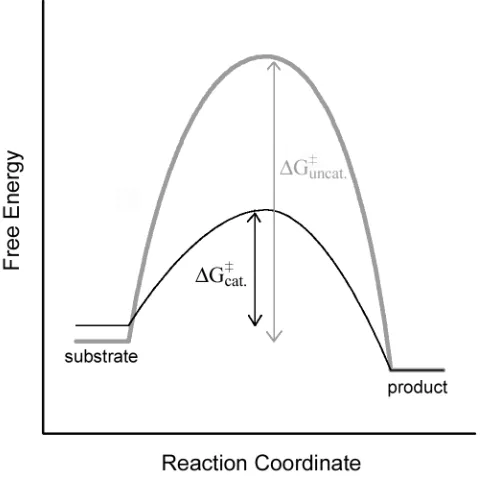
Figure 1.1 Lowering the free energy of activation ∆G , by transition state stabilization and ground state destabilization results in faster reaction rates for the catalyzed reaction (black) compared to the un-catalyzed reaction (grey).
Figure 1.2 Incorporation of catalytic residues and transition state stabilization in
computational protein design through the design of a high-energy state rotamer. The reaction mechanism of histidine mediated nucleophilic ester hydrolysis (a) was used to design a high energy state rotamer for computational design (b).
As an initial experimental validation, we used a HES rotamer model of the histidine mediated nucleophilic hydrolysis of p-nitrophenyl acetate, the catalytically inert 108 residue E. coli thioredoxin as a scaffold, and the ORBIT protein design software to compute sequences (Chapter 3). By scanning this HESR at different positions within the target scaffold, two promising active site designs were identified within the target scaffold (Figure 1.3). Experimentally, both candidate “protozymes” demonstrated catalytic activity significantly above background. In addition, the rate enhancement of one of these “protozymes” was the same order of magnitude as the first catalytic antibodies.
denature the protein.8 In early attempts at computational enzyme design in the scaffold of the 56 residue β1 domain of protein G, predicted sequences failed to fold, frustrating further enzymatic analysis (F. S. Lee, D. I. Bökenkamp, and S. L. Mayo; unpublished results). Therefore, for subsequent enzyme design efforts, the 108 residue Escherichia
[image:19.612.154.496.238.446.2]coli thioredoxin was selected as a scaffold because of its high thermostability9 and moderate size.
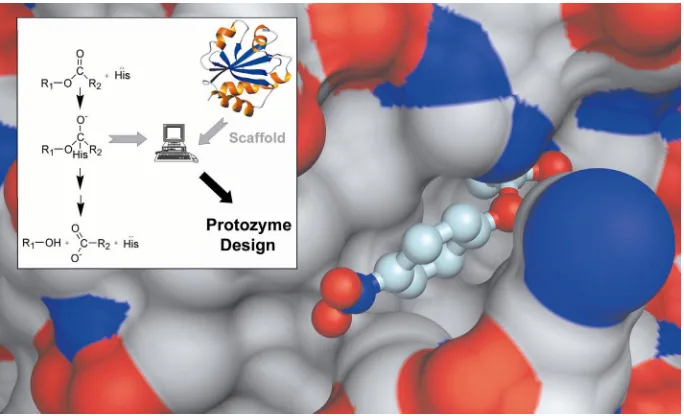
Figure 1.3 Computational design of an active site. A reaction mechanism and backbone
scaffold are used to computationally predict protein sequences capable of binding substrate and catalyzing the reaction of interest. Molecular surface focusing on a designed active site with a catalytic histidine side chain positioned for nucleophilic attack on an activated ester (shown in ball and stick form).
detailed energy bias towards the HESR. For example, if the charge magnitude is increased at a particular substrate atom in the high-energy state relative to the ground state, then favorable electrostatic interactions with this atom in the HESR should lead to a reduction in the activation energy.
In parallel to the incremental development4,6,10,11 of ORBIT for protein design, our initial computational enzyme design strategy forms a basic foundation upon which more detailed modeling methods may be developed. For example, the amino acid identity of non-HESR positions was initially optimized as either alanine or the wt identity (Chapter 3) in order to limit combinatorial complexity. The limited combinatorial complexity of these calculations made it feasible to optimize the entire protein in separate calculations with the HESR at different positions.
While the basic “protozyme” design strategy resulted in proteins with enzymatic activity, increased modeling detail may lead to the design of more efficient catalysts. For example, allowing a more diverse set of amino acid identities at non-HESR positions may allow for improved protein interaction with substrate atoms in the high-energy state. However, this strategy will increase the combinatorial complexity compared to restricting amino acid identity to wt or alanine, making the computational search more difficult. This increase in combinatorial complexity could potentially be offset by focusing the design on optimizing the amino acid identity at positions capable of directly interacting with the HESR.
active site. In order to better understand the scaffold structure used in the “protozyme” designs, ORBIT was used to optimize the thioredoxin core for stability. In order to maximize hydrophobic burial, a driving force in stabilizing native protein conformations,13 core residues were restricted to hydrophobic identity in this optimization. The restriction of residues to hydrophobic identity is common in core protein design.4,6,11,14-19 The amino acid sequence that resulted from the ORBIT optimization of thioredoxin contained eight mutations, five of which were hydrophilic in the wild type (wt) protein. The designed sequence (“Core8”) expressed poorly in E. coli relative to wt, and was dramatically destabilized relative to wt (Appendix, Table C.1). Sequences containing individual polar to hydrophobic mutations predicted by ORBIT were then experimentally characterized (Chapter 4). From this analysis, it was clear that the polar to hydrophobic mutations were largely responsible for the decreased thermodynamic stability of the core design relative to wt. This result prompted a database survey that revealed that the number of polar residues at core positions increases with protein size (Chapter 4). The strength of this correlation suggests that core polar residues play a structural role. Further experimental characterization in thioredoxin demonstrated that core polar residues could aid in fold specificity, the ability to energetically distinguish a single well-folded state from alternative structures (Chapter 4).
burying un-satisfied hydrogen bond donors and acceptors.20 Therefore, it is reasonable for protein design to attempt to fulfill the hydrogen bond potential of buried polar atoms. Based on this premise, hydrogen bonding by polar core side chains was analyzed in a set of protein structures in order to construct a prudent polar strategy for core protein design (Chapter 5). Using the prudent polar strategy to design the core of thioredoxin resulted in a molecule that was thermodynamically stabilized relative to both wt and a sequence designed without core polar residues. The basic concept of attempting to satisfy the hydrogen bond potential of buried atoms should extend to other design targets involving buried polar atoms, including protein-protein interactions and protein-small molecule interactions (e.g., enzyme design).
References
1. Liese, A. & Filho, M. V. (1999). Production of fine chemicals using biocatalysis.
Curr Opin Biotechnol 10(6), 595-603.
2. Corey, M. J. & Corey, E. (1996). On the failure of de novo-designed peptides as biocatalysts. Proc Natl Acad Sci U S A 93(21), 11428-11434.
3. Desmet, J., Maeyer, M. D., Hazes, B. & Lasters, I. (1992). The dead-end elimination theorem and its use in protein side-chain positioning. Nature 356, 539-542.
4. Dahiyat, B. I. & Mayo, S. L. (1996). Protein design automation. Protein Sci 5(5), 895-903.
5. Gordon, D. B., Marshall, S. A. & Mayo, S. L. (1999). Energy functions for protein design. Curr Opin Struct Biol 9(4), 509-513.
6. Dahiyat, B. I. & Mayo, S. L. (1997). De novo protein design: fully automated sequence selection. Science 278, 82-87.
7. Fersht, A. (1985). Enzyme structure and mechanism. 2nd edit, Freeman, New York. 8. Stenesh, J. (1993). Core topics in biochemistry, Cogno Press, Kalamazoo, MI. 9. Ladbury, J. E., Wynn, R., Hellinga, H. W. & Sturtevant, J. M. (1993). Stability of
oxidized Escherichia coli thioredoxin and its dependence on protonation of the aspartic acid residue in the 26 position. Biochemistry 32(29), 7526-7530.
10. Dahiyat, B. I., Gordon, D. B. & Mayo, S. L. (1997). Automated design of the surface positions of protein helices. Protein Sci 6(6), 1333-1337.
12. Shoichet, B. K., Baase, W. A., Kuroki, R. & Matthews, B. W. (1995). A relationship between protein stability and protein function. Proc Natl Acad Sci U S
A 92(2), 452-456.
13. Dill, K. A. (1990). Dominant forces in protein folding. Biochemistry 29, 7133-7155. 14. Hellinga, H. W. & Richards, F. M. (1994). Optimal sequence selection in proteins
of known structure by simulated evolution. Proc Natl Acad Sci U S A 91(13), 5803-5807.
15. Desjarlais, J. R. & Handel, T. M. (1995). De novo design of the hydrophobic cores of proteins. Protein Sci 4(10), 2006-2018.
16. Desjarlais, J. R. & Handel, T. M. (1999). Side-chain and backbone flexibility in protein core design. J Mol Biol 290(1), 305-318.
17. Lazar, G. A., Desjarlais, J. R. & Handel, T. M. (1997). De novo design of the hydrophobic core of ubiquitin. Protein Sci 6(6), 1167-1178.
18. Marshall, S. A. & Mayo, S. L. (2001). Achieving stability and conformational specificity in designed proteins via binary patterning. J Mol Biol 305(3), 619-631. 19. Street, A. G. & Mayo, S. L. (1999). Computational protein design. Structure Fold
Des 7(5), R105-109.
Chapter 2
De Novo Design of Biocatalysts
**
Summary
Introduction
There are many properties of natural enzymes that make them appealing for chemical production. Natural enzymes are highly efficient catalysts with typical apparent second order rate constants (kcat/Km) from 106 to 108 M-1sec-1.1 Naturally occurring enzymes are able to effectively catalyze difficult chemical transformations under mild conditions. Rate accelerations over background (kcat/kuncat) can reach 1017.1 By binding substrates in well-defined active sites with catalytic side chains geometrically positioned, enzymes are highly selective catalysts. The enantioselectivity of enzymes is increasingly being used in the production of chiral pharmaceuticals.2 In addition, the general selectivity of enzymes results in few by-products, which, combined with their energy efficient operation under mild conditions, make enzymes environmentally friendly.3,4 Due to the high selectivity of enzymes, relevant natural enzymes do not exist for many industrially important transformations. For this reason, there is great practical interest in the design of enzymes with novel activities.
This review highlights the strengths of rational design, catalytic antibodies, and directed evolution for the design of novel enzymes. The strengths of different techniques are highly complementary, suggesting that combined approaches may have significant advantages over approaches that rely on a single method.5-7
Rational Computational Design
possible sequences far exceeds that which can be exhaustively searched. The development of powerful search algorithms to find optimal solutions has provided a major stimulus to the field.9 Studies correlating predicted and experimental stability have since been used to iteratively improve an empirical force field for protein design calculations.10 The combination of predictive force fields and fast search algorithms are now being applied to functional protein design.11
Figure 2.1 The similar procedures for computationally designed protozymes and
traditional transition state anologue induced catalytic antibodies are illustrated. Computational enzyme design (a) models a reaction with the involvement of at least one catalytic amino acid side chain. A high-energy state of the reaction is then computationally modeled and used to identify active sites capable of binding substrate and orienting catalytic side chains. Catalytic antibody design (b) identifies a transition state in a reaction pathway. Transition state analogues are then synthesized and used to elicit antibodies with binding sites that are complementary to the transition state.
positions in the protein. This active site scan (ASS) explicitly limited the search to a relevant phase space where the catalytic residue could be positioned to properly interact with the substrate. Ranking of different active sites from the scan based on substrate recognition successfully predicted “protozymes” that were experimentally shown to catalyze the reaction by the designed method of histidine mediated nucleophilic catalysis. While the catalytic activity of the designed protein was very modest, on the same order as the initial catalytic antibodies, the generalness of the approach promises interesting future results, including the ability to design proteins to catalyze reactions that are inaccessible by natural enzymes.
The diverse and powerful chemistry of metals makes design of metalloproteins a promising approach to enzyme design.13 Early pioneering work included the development of a computational method to identify sites in proteins capable of using side chains to complex metal atoms.14 By modeling iron with one primary coordination sphere ligated with di-oxygen, a number of metalloproteins were designed in the thioredoxin fold.15 These proteins were experimentally shown to bind iron and catalyzed a variety of oxygen chemistries.
and protein dynamics. However, current research is actively exploring these issues. The use of a flexible main chain was recently used to successfully design a left-handed coiled coil.16 The backbone geometry and sequence of a β-turn was recently designed in order to increase the folding rate and improve thermodynamic stability.17 Backbone flexibility has also been explored in the design of protein cores.18,19
Figure 2.2 Fitness landscapes, illustrating a path to go from high fitness for function
A to high fitness for a novel function B. The first jump to attain an initial level of Function B requires crossing an inactive region of sequence space. The extremely large sequence space that can be searched by computational design allows it to effectively jump over this inactive space. Directed evolution should then be an effective tool to iteratively improve function B to a high level of activity.
Rational Homology Driven Design
generally focuses on changing residues that contact substrate. The efficiency of most homology-designed enzymes has been poor relative to natural enzymes; however, some experiments have resulted in strikingly efficient enzymes.
The engineering of a catalytic Ser-His-Asp triad into a peptidyl-prolyl isomerase resulted in a remarkably efficient proline specific endopeptidase.20 Based on structural alignment of 4-chlorobenzoyl-CoA dehalogenase and crotonase, engineering of two catalytically active acid/base residues as well as six positioning residues resulted in efficient crotonase activity in the dehalogenase.21 Both of these designs started with significant catalytic machinery in place to polarize a carbonyl group within the substrate, and successfully included additional catalytic residues in order to support a related reaction.
Homology driven design has greatly improved our understanding of enzyme mechanisms and substrate specificity. This information together with more accurate and detailed physical models should greatly benefit future enzyme designs.
Catalytic Antibodies
reactions.22 However, the catalytic efficiency of the resulting antibodies has been low relative to natural enzymes.23
In a significant advance, catalytic antibodies that utilize a nucleophilic mechanism were selected by reactive immunization and resulted in efficient catalysts.22 Rather than a transition state analogue, a mechanism-based inhibitor was used to elicit the immune response. Antibodies that formed stable covalent attachments to the suicide inhibitor were effectively selected. This method was employed in the selection of an efficient abzyme with a nucleophilic lysine for aldol condensations.24 The efficiency of this aldolase demonstrates the effectiveness of covalent catalysis. The ability to select for powerful catalytic groups and active sites with high transition state specificity could theoretically yield more efficient catalysts.
Directed Evolution
effect. For this reason, the method generally requires a starting protein with some activity towards the desired reaction.28
One of the critical steps in directed evolution is the creation of a screen or selection that is rapid enough to process millions of mutants while accurately measuring a desired property.29 Screening by monitoring formation of the exact product of interest is desirable, but limits throughput. For this reason, the development of ingenious high throughput methods is an active area of research. The use of fluorogenic substrates for high throughput screening is a productive field that has been recently reviewed.30 Other methods include the linking of substrate to phage particles, after which, product binding can be used to enrich for phage displaying active enzymes.31-34 The in vivo three hybrid system is based on substrate competition.35 In this system, the substrate of the reaction competes with a synthetic dimerizer and inactivates a transcription factor. Conversion of substrate to product shifts the system in favor of dimerization and can be followed by the expression of a reporter gene.
Because screening is often the limiting step, there have been several studies to optimize the mutation or recombination rate with respect to the number of mutants that can be screened.38 Several groups have developed models that use mutagenesis data to expose the ruggedness of the fitness landscape, where non-additive effects between mutations are more prevalent as the ruggedness increases.39,40 Using these models, it has been found that the optimal mutation rate decreases as the ruggedness increases38,41 and that the ruggedness affects the optimal ratio of parent genes for recombination.42
Mutagenizing restricted regions of the gene can also optimize the search. A difficulty in doing this is deciding where the diversity should be targeted, as improvements can be propagated by subtle changes distant from the active site.43-45 One approach has been to highly mutagenize the active site. The majority of the mutants created by this technique have drastically reduced fitnesses, thus requiring extremely large selection capabilities to discover improvements.46,47 Another successful approach has been to saturate residues where directed evolution previously discovered improvements.48 Overall, there is a need for algorithms that can aid in targeting regions of the protein structure that are likely to demonstrate improvement.
entropy measure to identify those residues that are the most likely to retain the structure. The residues that least perturb the structure can then be mutagenized and screened for improvements in the desired properties.
Conclusions
References
1. Radzicka, A. & Wolfenden, R. (1995). A proficient enzyme. Science 267, 90-93. 2. McCoy, M. (1999). Biocatalysis grows for drug synthesis. Chem Eng News 77,
10-14.
3. Schmid, A., Dordick, J. S., Hauer, B., Kiener, A., Wubbolts, M. & Witholt, B. (2001). Industrial biocatalysis today and tomorrow. Nature 409, 258-268.
4. Arnold, F. H. (2001). Combinatorial and computational challenges for biocatalyst design. Nature 409, 253-257.
5. Cedrone, F., Menez, A. & Quemeneur, E. (2000). Tailoring new enzyme functions by rational redesign. Curr Opin Struct Biol 10(4), 405-410.
6. Petsko, G. A. (2000). Enzyme evolution. Design by necessity. Nature 403, 606-607. 7. Altamirano, M. M., Blackburn, J. M., Aguayo, C. & Fersht, A. R. (2000). Directed
evolution of new catalytic activity using the alpha/beta- barrel scaffold. Nature 403, 617-622.
8. Street, A. G. & Mayo, S. L. (1999). Computational protein design. Structure Fold
Des 7(5), R105-109.
9. Desjarlais, J. R. & Clarke, N. D. (1998). Computer search algorithms in protein modification and design. Curr Opin Struct Biol 8(4), 471-475.
10. Gordon, D. B., Marshall, S. A. & Mayo, S. L. (1999). Energy functions for protein design. Curr Opin Struct Biol 9(4), 509-513.
12. Bolon, D. N. & Mayo, S. L. (2001). Enzyme-like proteins by computational protein design. Proc Natl Acad Sci U S A 98, 14274-14279.
13. Benson, D. E., Wisz, M. S. & Hellinga, H. W. (1998). The development of new biotechnologies using metalloprotein design. Curr Opin Biotechnol 9(4), 370-376. 14. Hellinga, H. W. & Richards, F. M. (1991). Construction of new ligand binding sites
in proteins of known structure. I. Computer-aided modeling of sites with pre-defined geometry. J Mol Biol 222(3), 763-785.
15. Benson, D. E., Wisz, M. S. & Hellinga, H. W. (2000). Rational design of nascent metalloenzymes. Proc Natl Acad Sci U S A 97(12), 6292-6297.
16. Harbury, P. B., Plecs, J. J., Tidor, B., Alber, T. & Kim, P. S. (1998). High-resolution protein design with backbone freedom. Science 282, 1462-1467.
17. Nauli, S., Kuhlman, B. & Baker, D. (2001). Computer-based redesign of a protein folding pathway. Nat Struct Biol 8(7), 602-605.
18. Su, A. & Mayo, S. L. (1997). Coupling backbone flexibility and amino acid sequence selection in protein design. Protein Sci 6(8), 1701-1707.
19. Desjarlais, J. R. & Handel, T. M. (1999). Side-chain and backbone flexibility in protein core design. J. Mol. Biol. 290(1), 305-318.
20. Quemeneur, E., Moutiez, M., Charbonnier, J. B. & Menez, A. (1998). Engineering cyclophilin into a proline-specific endopeptidase. Nature 391, 301-304.
22. Hilvert, D. (2000). Critical analysis of antibody catalysis. Annu Rev Biochem 69, 751-793.
23. Stewart, J. D. & Benkovic, S. J. (1995). Transition-state stabilization as a measure of the efficiency of antibody catalysis. Nature 375, 388-391.
24. Wagner, J., Lerner, R. A. & Barbas, C. F., 3rd. (1995). Efficient aldolase catalytic antibodies that use the enamine mechanism of natural enzymes. Science 270, 1797-1800.
25. Petrounia, I. P. & Arnold, F. H. (2000). Designed evolution of enzymatic properties. Curr Opin Biotechnol 11(4), 325-330.
26. May, O., Nguyen, P. T. & Arnold, F. H. (2000). Inverting enantioselectivity by directed evolution of hydantoinase for improved production of L-methionine. Nat
Biotechnol 18(3), 317-320.
27. Schmidt-Dannert, C., Umeno, D. & Arnold, F. H. (2000). Molecular breeding of carotenoid biosynthetic pathways. Nat Biotechnol 18(7), 750-753.
28. Shao, Z. & Arnold, F. H. (1996). Engineering new functions and altering existing functions. Curr Opin Struct Biol 6(4), 513-518.
29. Zhao, H. & Arnold, F. H. (1997). Combinatorial protein design: strategies for screening protein libraries. Curr Opin Struct Biol 7(4), 480-485.
30. Wahler, D. & Reymond, J. L. (2001). Novel methods for biocatalyst screening.
Curr Opin Chem Biol 5(2), 152-158.
31. Pedersen, H., Holder, S., Sutherlin, D. P., Schwitter, U., King, D. S. & Schultz, P. G. (1998). A method for directed evolution and functional cloning of enzymes.
32. Demartis, S., Huber, A., Viti, F., Lozzi, L., Giovannoni, L., Neri, P., Winter, G. & Neri, D. (1999). A strategy for the isolation of catalytic activities from repertoires of enzymes displayed on phage. J Mol Biol 286(2), 617-633.
33. Jestin, J.-L., Kristenson, P. & Winter, G. (1999). A method for the selection of catalytic activity using phage display and proximity coupling. Angew. Chem. Int.
Ed. 38(8), 1124-1127.
34. Atwell, S. & Wells, J. A. (1999). Selection for improved subtiligases by phage display. Proc Natl Acad Sci U S A 96(17), 9497-9502.
35. Firestine, S. M., Salinas, F., Nixon, A. E., Baker, S. J. & Benkovic, S. J. (2000). Using an AraC-based three-hybrid system to detect biocatalysts in vivo. Nat
Biotechnol 18(5), 544-547.
36. Olsen, M. J., Stephens, D., Griffiths, D., Daugherty, P., Georgiou, G. & Iverson, B. L. (2000). Function-based isolation of novel enzymes from a large library. Nat
Biotechnol 18(10), 1071-1074.
37. Daugherty, P. S., Iverson, B. L. & Georgiou, G. (2000). Flow cytometric screening of cell-based libraries. J Immunol Methods 243(1-2), 211-227.
38. Voigt, C. A., Kauffman, S. & Wang, Z. G. (2000). Rational evolutionary design: the theory of in vitro protein evolution. Adv Protein Chem 55, 79-160.
39. Aita, T. & Husimi, Y. (1996). Fitness spectrum among random mutants on Mt. Fuji-type fitness landscape. J Theor Biol 182(4), 469-485.
landscape: application to prolyl endopeptidase and thermolysin. Biopolymers 54(1), 64-79.
41. Matsuura, T., Yomo, T., Trakulnaleamsai, S., Ohashi, Y., Yamamoto, K. & Urabe, I. (1998). Nonadditivity of mutational effects on the properties of catalase I and its application to efficient directed evolution. Protein Eng 11(9), 789-795.
42. Aita, T. & Husimi, Y. (2000). Theory of evolutionary molecular engineering through simultaneous accumulation of advantageous mutations. J Theor Biol
207(4), 543-556.
43. Spiller, B., Gershenson, A., Arnold, F. H. & Stevens, R. C. (1999). A structural view of evolutionary divergence. Proc Natl Acad Sci U S A 96(22), 12305-12310. 44. Yano, T., Oue, S. & Kagamiyama, H. (1998). Directed evolution of an aspartate
aminotransferase with new substrate specificities. Proc Natl Acad Sci U S A 95(10), 5511-5515.
45. Oue, S., Okamoto, A., Yano, T. & Kagamiyama, H. (1999). Redesigning the substrate specificity of an enzyme by cumulative effects of the mutations of non-active site residues. J Biol Chem 274(4), 2344-2349.
46. Skandalis, A. & Loeb, L. A. (2001). Enzymatic properties of rat DNA polymerase beta mutants obtained by randomized mutagenesis. Nucleic Acids Res 29(11), 2418-2426.
48. Miyazaki, K. & Arnold, F. H. (1999). Exploring nonnatural evolutionary pathways by saturation mutagenesis: rapid improvement of protein function. J Mol Evol
49(6), 716-720.
49. Voigt, C. A., Mayo, S. L., Arnold, F. H. & Wang, Z. G. (2001). Computational method to reduce the search space for directed protein evolution. Proc Natl Acad
Sci U S A 98(7), 3778-3783.
50. Kono, H. & Saven, J. G. (2001). Statistical theory for protein combinatorial libraries. Packing interactions, backbone flexibility, and the sequence variability of a main-chain structure. J Mol Biol 306(3), 607-628.
Chapter 3
Enzyme-like Proteins by Computational Design
**
Summary
Introduction
A prominent goal of protein design is the generation of proteins with novel functions, including the catalytic rate enhancement of chemical reactions at which natural enzymes are so efficient. The ability to design an enzyme to perform a given chemical reaction has considerable practical application for industry and medicine, particularly for the synthesis of pharmaceuticals.1 Significant progress has been made at enhancing the catalytic properties of existing enzymes through directed evolution.2 In contrast, the design of proteins with novel catalytic properties has met with relatively limited success.3,4 We present here a general computational approach for the design of enzyme-like proteins with novel catalytic activities.
The use of transition state analogs as haptens to elicit catalytic antibodies has been the most successful technique to date for generating novel protein catalysts.5 Natural enzymes combine transition state stabilization with precisely oriented catalytic side chains. While a reactive hapten has been used in the generation of an antibody with a powerful nucleophile at the active site,6 current catalytic antibody technology does not efficiently select for both catalytic side chains and tight non-covalent affinity in the same molecule. The relationship between the general backbone fold of an enzyme and its catalytic properties is not well understood. This is particularly relevant to catalytic antibodies that are currently constrained to the antibody fold and which have yet to show catalytic activity on par with natural enzymes.
residues commonly found in serine proteases at the binding cleft.7 In a more complicated design effort, Fersht and co-workers8 were able to convert indoleglycerol-phosphate synthase into phosphoribosylanthranilate isomerase. The naturally occurring versions of these enzymes share a similar fold and catalyze consecutive reactions in the tryptophan biosynthetic pathway with the product of the isomerase being the substrate for the synthase. Based on a comparison of the crystal structures of both natural enzymes, loops were altered in the synthase to resemble the target isomerase, followed by directed evolution. These two successful design efforts both utilized starting proteins with substantial substrate affinity and altered existing active site residues in order to catalyze new reactions.
Compared to altering substrate specificity or catalytic mechanism, one of the most significant challenges of enzyme design utilizes a starting protein scaffold devoid of substrate binding and catalytic activities and introduces residues that convert the scaffold into an enzyme.9 Computational techniques have been used to design novel metal binding sites into proteins.10-12 By leaving one of the primary coordination spheres of the metal un-ligated by the protein, nascent metalloenzymes with a variety of oxygen redox chemistries have been generated.13,14 The general design of metalloenzymes to react specifically with more complicated organic molecules has not been demonstrated.
time to apply our understanding of enzyme mechanism to the rational, computational design of enzymes with novel functions. We model a high-energy state along a specified reaction pathway including the interaction of at least one catalytic residue with the high-energy state. The computational techniques described below, which have been incorporated into the ORBIT (Optimization of Rotamers By Iterative Techniques) protein design software,16 identify catalytic sites within a protein structure as well as mutations necessary to accommodate substrate binding (that is, to build the active site).
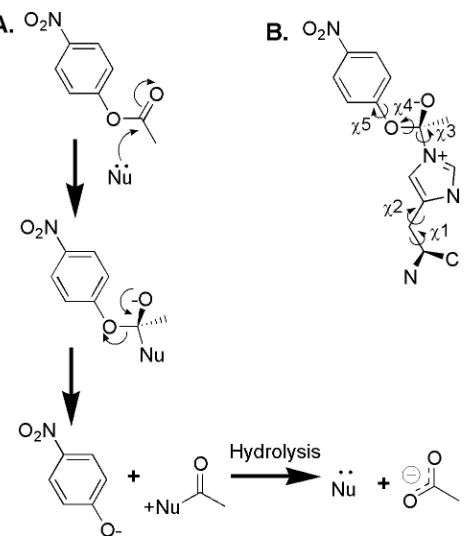
Figure 3.1 A) Nucleophile mediated catalysis of PNPA hydrolysis. B) High-energy
state structure used in the computational active site scan. Labeled dihedral angles were varied as indicated in order to generate the set of high-energy state rotamers used in the design calculations.
Nucleophile catalyzed hydrolysis is commonly achieved using a catalytic serine or cysteine in natural proteases. Histidine is often used as a general acid or base, but occasionally histidine acts as a nucleophile in phosphate transfer reactions. While histidine is not as powerful a nucleophile as activated serine or cysteine, it is sufficient to catalyze PNPA hydrolysis due to the moderate activation barrier of this reaction. The second order hydrolysis of esters by histidine side chains in a peptide based coiled coil system has been analyzed.22 The peptides did not display substrate binding affinity, but the pKa and pH rate profile of reactivity towards PNPA could be modified by varying the local environment of the histidine23 and in one variant, hydrogen bonding to the transition state appeared to provide second order rate enhancement.24 For nucleophilic catalysis to be effective, the acylated enzyme intermediate must be unstable relative to substrate in buffer in order to increase the rate of product formation over the uncatalyzed buffer rate. An histidine intermediate would be less stable than either an serine or an acyl-cysteine intermediate. For these reasons, we modeled histidine as the nucleophile in our design.
Materials and Methods
Computational
for χ3 (+/-30, +/-90, and +/-150 degrees), χ4 (+/-60, and 180 degrees), and χ5 (+/- 90 degrees) were based on canonical values for the relevant central atom hybridizations as described in the DREIDING force field.26 Bond lengths and angles as well as additional dihedral angles were optimized using the DREIDING force field.26 All other side chains were modeled using a backbone dependent rotamer library25 that was expanded about χ1 and χ2 dihedral angles for aromatic residues, expanded about χ1 dihedral angles for aliphatic residues, and unexpanded for polar residues as previously described.27
Table 3.1 Partial charges on computed high-energy state
Nucleophilic attack by Nε Nucleophilic attack by Nδ
Nδ1 -0.3 Nε2 -0.3
Hδ1 +0.5 Hε2 +0.5
Nε2 +0.6 Nδ1 +0.6
Cζ +0.4 Cε3 +0.4
Oη1 -0.4 Oζ1 -0.4
Oη2 -0.9 +Oζ2 -0.9
Cι +0.1 Cη +0.1
Cµ +0.2 Cλ +0.2
Nν +0.6 Nµ +0.6
Oο1 -0.4 Oν1 -0.4
Oο2 -0.4 Oν2 -0.4
40r with partial atomic charges as previously described.29 Partial atomic charges for the high-energy state rotamers were generated using the same bond polarization scheme used for the other amino acids and included a net +1 charge on the histidine moiety and a net – 1 charge on the high-energy state substrate (Table 3.1). A surface area based atomic solvation potential was selectively applied to the high-energy state rotamers in order to favor interaction of the substrate with the protein (i.e., only surface area burial of atoms on the high-energy state rotamers were considered). This selective application of the solvation potential, which differs from our previous work, was required in order to reduce the tendency of generating predominately wild-type amino acid sequence solutions. Surface areas for the solvation potential were calculated using the Connolly algorithm30 and the Lee and Richards definition of solvent accessible surface area31 with unscaled atomic radii and an add-on radius of 1.4 Å. A hydrophobic burial benefit of 48 cal/mol/Å2 and a hydrophobic exposure penalty of 76.8 cal/mol/Å2 were used with the two-body decomposition method of Street and Mayo.32 The solvation potential was not applied to polar atoms.
hydrophobic accessible surface area in the unfolded reference. Computed designs with zero total solvent accessible surface area for the substrates were considered inaccessible to substrate and were eliminated from further consideration.
Experimental
The background mutation D26I was included in both PZD1 and PZD2. D26I was predicted by ORBIT in an independent calculation and results in increased thermodynamic stability similar to the previously reported D26A protein.33 Position 26 is distal in space to the designed active sites in both PZD1 and PZD2.
The genes for PZD1 and PZD2 were constructed by site directed mutagenesis using the wild type thioredoxin gene (Invitrogen) cloned into PET-11A. Protein expression was induced with 0.5 mM IPTG from BL21(DE3) cells grown to mid log phase. Cells were lysed by sonication and pelleted twice at 20,000g for 30 minutes. The soluble fraction was brought to 60% acetonitrile, pelleted and rotory evaporated to half volume. For initial studies, purification was accomplished by reversed phase high performance liquid chromatography. For subsequent studies with PZD2, all protein samples were additionally purified by ion exchange and size exclusion chromatography to a purity of >99% as judged by silver stained PAGE.
PZD2 was dialyzed extensively against 10 mM sodium phosphate buffer at pH 6.95. Kinetic experiments at 22 °C were started by the addition of substrate dissolved in acetonitrile to buffer solution with and without PZD2 (final protein concentration of 4
extinction coefficient for deprotonated PNP of 19700 M-1cm-1. Final acetonitrile concentration was 1% for all experiments. The steady state rate of hydrolysis by PZD2 was corrected for the buffer rate. Burst phase hydrolysis assays were performed at a substrate concentration of 1.6 mM. Protein concentration was 4 µM, with the exception of wild type thioredoxin. Wild type thioredoxin was assayed at 50 µM to improve signal to noise and extrapolated to a protein concentration of 4 µM. The dead time for this experiment was approximately 30 seconds.
The +42 mass unit species detected in the trapping experiment is a result of replacement of a hydrogen (-1) with an acetyl group (+43). 100 µM PZD2 in 10 mM TRIS at pH 7.0 was reacted with 1.6 mM PNPA to steady state conditions and a mass spectrum acquired. The same protein solution without PNPA was used as a control. Burst phase kinetics in this buffer system yielded essentially identical results as in phosphate buffer.
Results and Discussion
Computational design
the vast majority of natural enzymes contain one or more side chains in highly specific geometric relation to substrate. In the case of PNPA hydrolysis catalyzed by histidine, the histidine side chain should be positioned with a nitrogen atom approaching the carbonyl carbon adjacent to the scissile bond. In a procedure reminiscent of transition state analog synthesis for catalytic antibody design, we modeled a high-energy state of histidine catalyzed PNPA hydrolysis as a series of side chain rotamers (Fig. 3.1B). Modeling a high-energy state and optimizing the surrounding protein sequence for binding to the high-energy state may lead to a reduction in activation energy for the reaction and catalytic rate enhancement.35 Substrate affinity is explicitly included in the design because chemical similarity exists between the high-energy state and the substrate.
Table 3.2 Top ten designs from active site scan
Catalytic Fraction
His Hydrophobic
Design Position Exposure Active Site Mutations
PZD1 12 0.11 F12H Y70A
PZD2 17 0.15 F12A L17H Y70A
PZD3 86 0.29 V86H I38A L42A L99A
PZD4 72 0.34 I72H L79A
PZD5 66 0.34 T66H F12A Y70A
PZD6 6 0.36 None
PZD7 39 0.37 A39H K57A
PZD8 91 0.39 V91H T77A
PZD9 49 0.39 Y49H K52A
PZD10 77 0.43 T77H L79A T89A
Ranked based on hydrophobic surface area burial of substrate atoms in the high-energy state complex. The top two designs, PZD1 and PZD2, were experimentally tested for catalytic activity.
catalytic histidine at different positions in thioredoxin were ranked based on recognition of the high-energy state rotamer, using hydrophobic solvent accessible surface area of substrate atoms as a metric, as well as the simple requirement that the total solvent accessible surface area of substrate atoms be greater than zero in order to eliminate designs where the active site would not be accessible to solvent (Table 3.2).
Experimental validation
[image:54.612.189.456.366.598.2]The top two sequences from the limited combinatorial complexity active site scan were selected for experimental analysis. Protozyme design 1 (PZD1) contains two mutations required to introduce the catalytic histidine and to build the active site (F12H and Y70A) while PZD2 contains three mutations (F12A, L17H, and Y70A).
Figure 3.2 Computational design of PZD2. Ribbon diagram41 illustrating the Nε of the catalytic histidine attacking the substrate molecule.
selected for further analysis. The designed structure of PZD2 computed by ORBIT
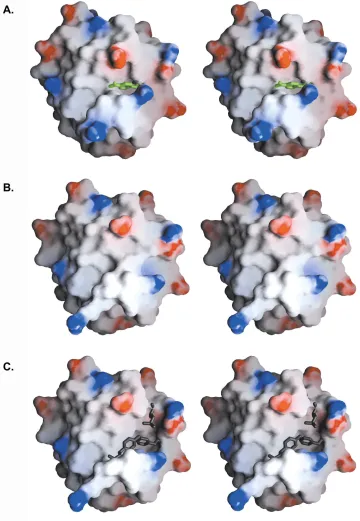
shows the substrate atoms in a cleft created above the β sheet and between two α helices (Fig. 3.2). This cleft (Fig. 3.3A) is not present in the wild type thioredoxin x-ray structure43 (Fig. 3.3B), indicating that the space creating mutations (F12A and Y70A) are necessary to create the putative substrate-binding site (Fig. 3.3C).
Figure 3.4 Kinetic model used to analyze the activity of PZD2.
The rate of PNPA hydrolysis by PZD2 at 22 Û& LQ P0 VRGLXP SKRVSKDWH buffer at pH 6.95 was experimentally determined over a range of substrate concentrations using standard Briggs-Haldane steady state treatment (Fig. 3.4). The reaction velocity of
Figure 3.5 Velocity versus substrate concentration for the hydrolysis
of PNPA by PZD2.
[image:56.612.225.423.401.611.2]substrate affinity and catalytic rate enhancement. Hofstee analysis of the data gives a Km of 170 ± 20 µM, kcat of 4.6 ± 0.2 × 10⁻⁴ sec-1, and kcat/kuncat of 180 where kuncat (2.5 × 10⁻⁶
sec-1) is the rate of hydrolysis under the same conditions. The kinetics of PZD2 are comparable to those of the first catalytic antibodies: Km of 208 µM and kcat/kuncat of 770 for MOPC167,20 and Km of 1.9 µM and kcat/kuncat of 960 for 6D4.21
De novo designed peptides have recently been designed which catalyze
p-nitrophenyl acetate hydrolysis by a second order mechanism (i.e., without substrate saturation). The second order rates for these peptides were determined under different conditions than those used here making direct comparisons difficult. At pH 5.1, rates of 0.29 M-1sec-1 and 0.056 M-1sec-1 have been reported.22,24 Extrapolation based on the pH rate profiles22 reported for the hydrolysis of similar activated esters suggests rates of approximately 0.7 and 0.2 M-1sec-1 for p-nitrophenyl acetate hydrolysis at pH 7, respectively. The second order rate of hydrolysis by 4-methyl imidazole (determined under the conditions used in the analysis of PZD2) is 0.11 M-1sec-1. Computing a second order rate of hydrolysis for PZD2 as kcat/Km gives 2.7 M-1sec-1, which is a factor of 25
better than catalysis by 4-methyl imidazole and about an order of magnitude better than the peptide systems. It is extremely important to note, however, that the lack of substrate saturation in the second order systems complicates this analysis since substrate affinity was determined for PZD2. Substrate affinity is central to enzyme catalysis and clearly will be important in the design of protein-based catalysts for more complicated reactions.
should decrease and plateau as the acyl-enzyme intermediate concentration approaches steady state. PZD2 displays burst phase kinetics at high substrate concentration (Fig. 3.6) consistent with the formation of an enzyme intermediate. The observed burst phase kinetics could also be a result of slow product release; however, this is unlikely given the kinetic parameters of PZD2. Based on the burst phase data, we estimate Ks = 1 mM, k2 = 3 × 10⁻³ sec-1, and k3 = 8 × 10⁻⁴ sec-1. Analysis of the magnitude of the burst indicates that approximately 30% of PZD2 is in an active state. Using the burst magnitude as a metric of the enzyme concentration indicates a kcat of 1.5 ± 0.1 × 10⁻³ sec-1, approximately three times larger than the kinetic analysis using enzyme concentrations determined from protein UV absorbance.
Figure 3.6 Buffer corrected hydrolysis of PNPA by PZD2 (•), PZD2 H17A ( ZLOG type thioredoxin ( DQGZLOGW\SH/+',×). Data are shown for high substrate concentration and equivalent low protein concentration.
protein with catalytic activity similar to wild type thioredoxin indicating that the designed catalytic histidine at position 17 is necessary for the enzyme-like activity in PZD2 (Fig. 3.6). Mutation of the two other active site residues in PZD2 back to their wild type identities (A12F and A70Y) also results in a protein with activity similar to wild type. Additionally, at pH 5.7 the activity of PZD2 is almost entirely eliminated, consistent with protonation of the catalytic histidine (data not shown). The kinetic and mutational evidence strongly indicate that PZD2 is working as designed with H17 acting as a catalytic nucleophile and the space creating mutations (F12A and Y70A) forming a binding site for substrate.
Figure 3.7 Trapping of an acylated intermediate by mass spectrometry: A) PZD2, B) PZD2
reacted with substrate, C) PZD2 H17A, D) PZD2 H17A reacted with substrate. A large increase in the population of a +42 species occurs upon reaction of PZD2 with substrate indicating the buildup of an acyl-enzyme intermediate. This +42 species is dramatically reduced for PZD2 H17A where the designed catalytic histidine was mutated to alanine. A small increase in the population of a +42 species is detected in PZD2 H17A upon reaction with substrate and is likely the result of acylation at the single surface exposed histidine at position 6. Consistent with this analysis, a small increase in the population of a double acetylated +84 product is detected upon reaction of PZD2 with substrate. A copper matrix adduct (+63) is present in all spectra.43
population of an acylated species upon reaction with PNPA (Fig. 3.7A&B). Acylation due to reaction with PNPA is essentially absent for the H17A mutant of PZD2 (Fig. 3.7C&D), indicating that acylation is dependent on H17. From the data it is not possible to distinguish between direct acylation of H17, or H17 mediated (acid/base or acyl transfer) acylation of a different residue.
Figure 3.8 Lineweaver-Burk analysis of PZD2 catalyzed PNPA
hydrolysis in the presence ( DQGDEVHQFH•) of 10 mM PNPG.
hydrophobic regions in the active site or differences in the steric requirements for PNPG and PNPA. p-nitrophenyl phosphate was also tested, but it did not show detectable inhibition at concentrations up to 20 mM, suggesting that PZD2 binds preferentially to uncharged nitrophenyl molecules.
In order to further test the substrate specificity of PZD2 we assayed its kinetics with p-nitrophenyl propionate (PNPP), which has an additional methylene group compared to PNPA. Hofstee analysis indicates within error an identical kcat/kuncat and a
Km of 110 ± 20 µM for PNPP, compared to 170 ± 20 µM for PNPA. Inspection of the designed structure of PZD2 with bound PNPA shows that space exists to accommodate the additional methylene of PNPP. Both favorable van der Waals interactions and hydrophobic burial afforded by the relatively open active site likely explain the slightly increased affinity of PZD2 for PNPP compared to PNPA.
Conclusions
selection, has been an effective method for increasing catalytic activity. The use of computational modeling to focus directed evolution experiments promises to increase the effectiveness of directed evolution methods.44 For the creation and optimization of novel protein catalysts, computational protein design and experimental directed evolution complement each other well. Use of the design methods presented here to generate proteins with novel catalytic activity and directed evolution to further enhance this activity is a promising path to the production of novel high efficiency protein catalysts.
References
1. Liese, A. & Filho, M. V. (1999). Production of fine chemicals using biocatalysis.
Curr Opin Biotechnol 10(6), 595-603.
2. Arnold, F. H. & Volkov, A. A. (1999). Directed evolution of biocatalysts. Curr
Opin Chem Biol 3(1), 54-59.
3. Corey, M. J. & Corey, E. (1996). On the failure of de novo-designed peptides as biocatalysts. Proc Natl Acad Sci U S A 93(21), 11428-11434.
4. Petsko, G. A. (2000). Enzyme evolution. Design by necessity. Nature 403, 606-607. 5. Hilvert, D. (2000). Critical analysis of antibody catalysis. Annu Rev Biochem 69,
751-793.
6. Wagner, J., Lerner, R. A. & Barbas, C. F., 3rd. (1995). Efficient aldolase catalytic antibodies that use the enamine mechanism of natural enzymes. Science 270, 1797-1800.
7. Quemeneur, E., Moutiez, M., Charbonnier, J. B. & Menez, A. (1998). Engineering cyclophilin into a proline-specific endopeptidase. Nature 391, 301-304.
8. Altamirano, M. M., Blackburn, J. M., Aguayo, C. & Fersht, A. R. (2000). Directed evolution of new catalytic activity using the alpha/beta- barrel scaffold. Nature 403, 617-622.
10. Hellinga, H. W. & Richards, F. M. (1991). Construction of new ligand binding sites in proteins of known structure. I. Computer-aided modeling of sites with pre-defined geometry. J Mol Biol 222(3), 763-785.
11. Robertson, D. E., Farid, R. S., Moser, C. C., Urbauer, J. L., Mulholland, S. E., Pidikiti, R., Lear, J. D., Wand, A. J., DeGrado, W. F. & Dutton, P. L. (1994). Design and synthesis of multi-haem proteins. Nature 368, 425-432.
12. Klemba, M., Gardner, K. H., Marino, S., Clarke, N. D. & Regan, L. (1995). Novel metal-binding proteins by design. Nat Struct Biol 2(5), 368-373.
13. Pinto, A. L., Hellinga, H. W. & Caradonna, J. P. (1997). Construction of a catalytically active iron superoxide dismutase by rational protein design. Proc Natl
Acad Sci U S A 94(11), 5562-5567.
14. Benson, D. E., Wisz, M. S. & Hellinga, H. W. (2000). Rational design of nascent metalloenzymes. Proc Natl Acad Sci U S A 97(12), 6292-6297.
15. Fersht, A. (1985). Enzyme structure and mechanism. 2nd edit, Freeman, New York. 16. Dahiyat, B. I. & Mayo, S. L. (1997). De novo protein design: fully automated
sequence selection. Science 278, 82-87.
17. Harbury, P. B., Plecs, J. J., Tidor, B., Alber, T. & Kim, P. S. (1998). High-resolution protein design with backbone freedom. Science 282, 1462-1467.
18. Street, A. G. & Mayo, S. L. (1999). Computational protein design. Structure Fold
Des 7(5), R105-109.
20. Pollack, S. J., Jacobs, J. W. & Schultz, P. G. (1986). Selective chemical catalysis by an antibody. Science 234, 1570-1573.
21. Tramontano, A., Janda, K. D. & Lerner, R. A. (1986). Catalytic antibodies. Science
234, 1566-1570.
22. Broo, K. S., Brive, L., Ahlberg, P. & Baltzer, L. (1997). Catalysis of hydrolysis and transesterification reactions of p-nitrophenyl esters by a designed helix-loop-helix dimer. J Am Chem Soc 119, 11362-11372.
23. Broo, K. S., Brive, L., Sott, R. S. & Baltzer, L. (1998). Site-selective control of the reactivity of surface-exposed histidine residues in designed four-helix-bundle catalysts. Fold Des 3(4), 303-312.
24. Nilsson, J. & Baltzer, L. (2000). Reactive-site design in folded-polypeptide catalysts--the leaving group pKa of reactive esters sets the stage for cooperativity in nucleophilic and general-acid catalysis. Chemistry 6(12), 2214-2220.
25. Dunbrack, R. L., Jr. & Karplus, M. (1993). Backbone-dependent rotamer library for proteins. Application to side- chain prediction. J Mol Biol 230(2), 543-574.
26. Mayo, S. L., Olafson, B. D. & Goddard, W. A., 3rd. (1990). DREIDING: a generic force field for molecular simulations. J Phys Chem 94, 8897-8909.
27. Dahiyat, B. I., Sarisky, C. A. & Mayo, S. L. (1997). De novo protein design: towards fully automated sequence selection. J Mol Biol 273(4), 789-796.
28. Dahiyat, B. I. & Mayo, S. L. (1997). Probing the role of packing specificity in protein design. Proc Natl Acad Sci U S A 94(19), 10172-10177.
30. Connolly, M. L. (1983). Solvent-accessible surfaces of proteins and nucleic acids.
Science 221, 709-713.
31. Lee, B. & Richards, F. M. (1971). The interpretation of protein structures: estimation of static accessibility. J Mol Biol 55(3), 379-400.
32. Street, A. G. & Mayo, S. L. (1998). Pairwise calculation of protein solvent-accessible surface areas. Fold Des 3(4), 253-258.
33. Gleason, F. K. (1992). Mutation of conserved residues in Escherichia coli thioredoxin: effects on stability and function. Protein Sci 1(5), 609-616.
34. Wang, J., Kollman, P. A. & Kuntz, I. D. (1999). Flexible ligand docking: a multistep strategy approach. Proteins 36(1), 1-19.
35. Pauling, L. (1948). Chemical achievement and hope for the future. Am Sci 36, 51. 36. Holmgren, A. (1985). Thioredoxin. Annu Rev Biochem 54, 237-271.
37. Ladbury, J. E., Wynn, R., Hellinga, H. W. & Sturtevant, J. M. (1993). Stability of oxidized Escherichia coli thioredoxin and its dependence on protonation of the aspartic acid residue in the 26 position. Biochemistry 32(29), 7526-7530.
38. Hellinga, H. W., Wynn, R. & Richards, F. M. (1992). The hydrophobic core of Escherichia coli thioredoxin shows a high tolerance to nonconservative single amino acid substitutions. Biochemistry 31(45), 11203-11209.
40. Pierce, N. A., Spriet, J. A., Desmet, J. & Mayo, S. L. (2000). Conformational splitting: a more powerful criterion for dead-end elimination. J Comput Chem 21, 999-1009.
41. Koradi, R., Billeter, M. & Wuthrich, K. (1996). MOLMOL: a program for display and analysis of macromolecular structures. J Mol Graph 14(1), 51-55, 29-32.
42. Nicholls, A., Sharp, K. A. & Honig, B. (1991). Protein folding and association: insights from the interfacial and thermodynamic properties of hydrocarbons.
Proteins 11(4), 281-296.
43. Katti, S. K., LeMaster, D. M. & Eklund, H. (1990). Crystal structure of thioredoxin from Escherichia coli at 1.68 A resolution. J Mol Biol 212(1), 167-184.
44. Voigt, C. A., Mayo, S. L., Arnold, F. H. & Wang, Z. (in press). Proc Natl Acad Sci
U S A.
Chapter 4
Polar Residues in the Protein Core of E. Coli Thioredoxin Are
Important for Fold Specificity
*
Summary