http://go.warwick.ac.uk/wrap/35221
This thesis is made available online and is protected by original copyright.
Please scroll down to view the document itself.
Rational Decision Makers in Supply
Chains
by
Stavrianna Dimitriou
A thesis submitted in partial fulfilment of the requirements for the
degree of Doctor of Philosophy
The University of Warwick, Warwick Business School
List of Figures...9
List of Tables ...11
Acknowledgements...16
Declaration of Authorship...19
Thesis Abstract ...21
Chapter 1 Introduction ...22
1.1 The Effect of Misaligned Objectives in Supply Chains...23
1.2 Supply Chain Contracts ...25
1.3 Boundedly Rational Decision Makers ...29
1.4 What is this thesis about?...31
1.5 Overview of Thesis ...34
Chapter 2 Supply Chain Models and Contracts: Analytical and Experimental Results...36
2.1 The Newsvendor Setting...37
2.1.1 Standard Normative Models ...38
The Centralised Operation ...38
The De-centralised operation ...40
Supply Chain Performance ...45
2.1.2 The Behavioural Newsvendor...48
2.2 The Beer Distribution Game ...65
2.2.1 Standard Normative Models ...67
Centralised operation ...71
De-centralised operation ...75
2.2.2 Behavioural Studies of the Beer Distribution Game...77
Assumptions Revisited...77
The Protocols Applied ...82
Key Findings...87
2.2.3 Summary ...93
2.3 Supply Chain Contracts ...98
2.3.1 Standard Normative Models ...100
The Newsvendor Setting...100
The Beer Distribution Game...104
2.3.2 Behavioural Studies of Supply Chain Contracts...107
Assumptions Revisited...107
The Protocols Applied ...109
Key Findings...111
2.3.3 Summary ...113
3.3 The Approach...132
3.3.2 Stage 2: The Gaming Sessions...138
3.3.3 Stage 3: The Decision Making Strategies ...140
3.3.4 Stage 4: The Agent-Based Simulation Model Runs ...141
3.4 Verification and Validation...142
3.5 Summary ...143
Chapter 4 The Newsvendor Problem Approach ...146
4.1 The Newsvendor Problem...146
4.2 Research Hypotheses ...151
4.2.1 Manufacturers’ w-prices ...152
4.2.2 Retailers’ q-quantities ...152
4.2.3 Efficiency Scores ...155
4.3 The Approach...156
4.3.1 Stage 1: The Decision Making Process...157
Outcome 1: The Agent-Based Simulation Newsvendor Model...160
4.3.2 Stage 2: The Gaming Sessions...165
Outcome 2: The Datasets of Participants’ recorded Decisions...171
4.3.3 Stage 3: The Decision Making Strategies ...172
Outcome 3: The Participants’ Decision Models ...175
Chapter 5 The Newsvendor Problem Results ...183
5.1 Manufacturers’ w-prices ...184
5.2 Retailers’ q-quantities ...186
5.3 Emergent Efficiency Scores...189
5.4 Concluding Discussion ...194
Chapter 6 The Contract Beer Distribution Game...203
6.1 Key Differences between the Contract Beer Distribution Game and Sterman’s Beer Distribution Game ...205
6.2 The Contract Beer Distribution Game ...209
6.2.1 The Contract Beer Distribution Game Board ...209
6.2.2 Playing the Contract Beer Distribution Game ...214
6.3 The Dynamic Transactions of the Contract Beer Distribution Game ...218
6.4 Standard Normative Models ...228
6.4.1 The centralised operation...228
6.4.2 The de-centralised operation...233
6.4.3 Supply Chain Performance ...237
6.5 Summary ...241
Chapter 7The Contract Beer Distribution Game Approach...244
7.1 The Wholesale Price Contract in the Beer Distribution Game ...245
7.2.4 The Bullwhip effect ...253
7.3 The Approach...254
7.3.1 Stage 1: The Decision Making Process...255
Outcome 1: The Agent-Based Simulation Model of the Contract Beer Distribution Game...260
7.3.2 Stage 2: The Gaming Sessions...270
Sample ...271
Computer Interface ...273
Interacting Partners ...274
Scenarios...278
Outcome 2: The Datasets of Participants’ recorded Decisions...281
7.3.3 Stage 3: The Decision Making Strategies ...281
Outcome 3: The Participants’ Decision Models ...286
7.3.4 Stage 4: The Agent-Based Simulation Model Runs ...312
Outcome 4: The Key Outcomes...315
7.4 Verification and Validation...315
7.5 Summary ...321
Chapter 8The Contract Beer Distribution Game Results...323
8.1 Participants’ܹ ܲ݅- prices...324
8.2.2 Wholesalers’ܹܳ ܪܮ– order quantities ...338
8.2.3 Manufacturers’ܱܳܯ ܣܰ– order quantities...343
8.3 Emergent Competition Penalties...347
8.4 Emergence of the Bullwhip effect ...353
8.5 Concluding Discussion ...358
Chapter 9Discussion: Bringing it all Together ...363
9.1 Conclusions from the Newsvendor Problem ...363
9.2 Conclusions from the Contract Beer Distribution Game ...367
9.3 Main Differences between the Newsvendor Problem and the Contract Beer Distribution Game...374
9.4 Common Themes between the Newsvendor Problem and the Contract Beer Distribution Game...381
Chapter 10Conclusions ...384
10.1 Insights on general type serial multi-echelon supply chains...384
10.2 Reflection on Objectives...388
10.3 Contributions of the thesis ...393
10.4 Limitations of the research...396
10.5 Future Research ...398
References...401
A.4 Testing the Assumptions of Multiple Linear Regression...423
Appendix BThe Contract Beer Distribution Game...429
B.1 Retailer’s Instructions ...430
B.2 Wholesaler’s Instructions...439
B.3 Manufacturer’s Instructions ...448
B.4 The team optimal solution of the Contract Beer Distribution Game...458
B.5 The individual optimal solution of the Contract Beer Distribution Game465 Appendix CThe Contract Beer Distribution Game –...469
The experiments...469
C.1 Details about the Gaming Sessions ...470
C.2 Debriefing and End-of-Game interview...479
C.3 Retailer’s Instructions ...481
C.4 Wholesaler’s Instructions...484
C.5 Manufacturer’s Instructions ...487
C.6 Details about the Experimental Protocol...491
C.7 Testing the Assumptions of Multiple Linear Regression ...496
C.8 Details about Generalised Linear Models ...508
Figure 2.2: Thede-centralised operation newsvendorproblem ... 41
Figure 2.3: Thebullwhip effect... 67
Figure 2.4: TheBeer Distribution Gamesetting... 67
Figure 2.5: Lead times in theBeer Distribution Game... 68
Figure 3.1: Fundamental Principles of an ABS model ... 129
Figure 3.2: The Approach (adapted from Robinsonet al, 2005) ... 133
Figure 4.1: Theintegrated newsvendorproblem ... 147
Figure 4.2: Thede-centralised operation newsvendorproblem ... 148
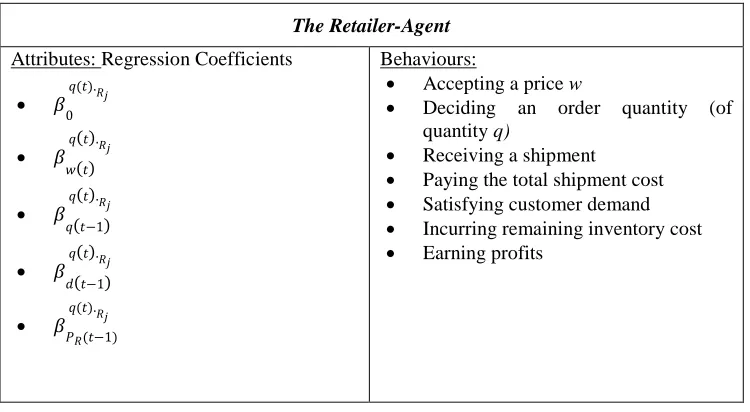
Figure 4.3: The statechart of themanufacturer-agent... 163
Figure 4.4: The statechart of theretailer-agent... 163
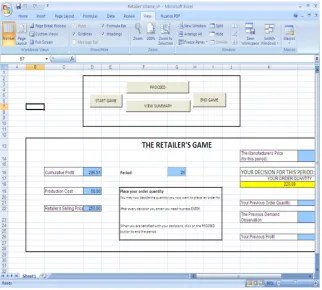
Figure 4.5: The AnyLogic© interface of theABS Newsvendormodel ... 165
Figure 4.6: The computer interface of the simulation game that is faced by the human manufacturers... 168
Figure 4.7: The computer interface of the simulation game that is faced by the human retailers... 169
Figure 4.8: MAN2w-prices, as observed in the laboratory... 171
Figure 4.9: RET1q- quantities, as observed in the laboratory ... 172
Figure 4.10: MAN1 w-decisions over time, according to the simulation model (when in interaction withRET1)... 179
Figure 4.11: RET1 q-decisions over time, according to the simulation model (when in interaction withMAN1) ... 180
Figure 6.1: The board of theContract Beer Distribution Game... 212
Figure 6.2: Lead times in theContract Beer Distribution Game... 214
Figure 7.1: The statechart of the retailer-agent ... 266
Figure 7.2: The statechart of the wholesaler-agent ... 267
Figure 7.3: The statechart of the manufacturer-agent ... 267
Figure 7.3: The statechart of the manufacturer-agent ... 268
Figure 7.4: The computer interface of the simulation game that is faced by the human manufacturers... 275
Figure 7.5: The computer interface of the simulation game that is faced by the human wholesalers... 276
Figure 7.6: The computer interface of the simulation game that is faced by the human retailers... 277
Figure 7.7: WHL2 and MAN0 price decisions, according to the simulation model (treatment combination: RET0 - WHL2 - MAN0) ... 314
Figure 7.8: RET0, WHL2 and MAN0 order decisions, according to the simulation model (treatment combination: RET0 - WHL2 - MAN0 ) ... 315
Figure 7.9: Stability - Order quantity decisions, according to the simulation model (treatment combination: RET3 – WHL1 - MAN0)... 319
Figure 7.10: Transiency - Order quantity decisions, according to the simulation model of the treatment combination: RET2 – WHL3 – MAN2 ... 319
Figure 7.11: Periodicity - Order quantity decisions, according to the simulation model of the ... 320
treatment combination: RET1 – WHL3 – MAN0 ... 320
Figure 7.12: Chaos - Order quantity decisions, according to the simulation model of the treatment combination: RET2 – WHL1 – MAN0 ... 320
Figure 8.1: The decisions of the simulated MAN0, WHL0 and RET0 between
Problemby assumption type...63
Table 2.2: Distribution of experimental protocols applied in theBeer Distribution Gamesetting ...88
Table 2.3: Distribution of behavioural papers in the context of the Beer Distribution Gameby assumption type ...94
Table 2.4: Summary of behavioural papers in the context of Supply Chain Contracts...114
Table 2.5: Summary of the literature gaps that this PhD thesis aims to address 123 Table 4.1: The basic structure of themanufacturer-agent...162
Table 4.2: The basic structure of theretailer-agent...162
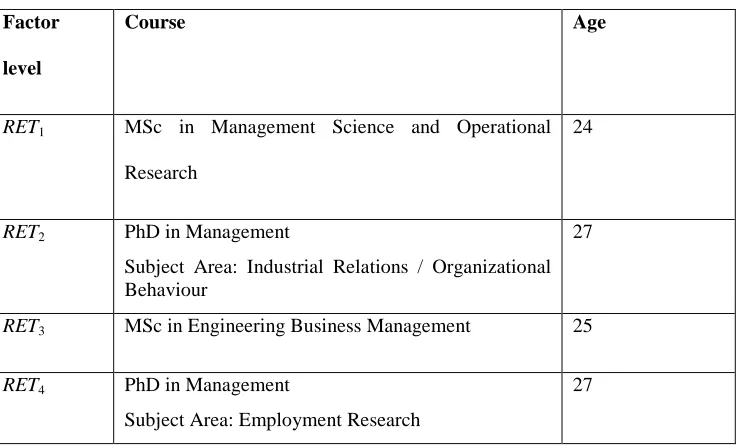
Table 4.3: The human manufacturers - subjects ...166
Table 4.4: The human retailers - subjects ...167
Table 4.5: Human manufacturers’ linear regression decision models ...176
Table 4.6: Human retailers’ linear regression decision models ...177
Table 5.1: Simulated human manufacturers’ steady- stateݓ-prices ...200
Table 5.2: Simulated human retailers’ steady- stateݍ-quantities ...201
Table 5.3: Theemergentsteady-stateefficiency scores...202
Table 7.1: The basic structure of the retailer-agent ...263
Table 7.2: The basic structure of the wholesaler-agent...264
Table 7.7: The human retailers - subjects ...273
Table 7.8: The Experimental Protocol ...280
Table 7.9: Human retailers’ order placement decision models...295
Table 7.10: Human retailers’ order quantity decision models ...297
Table 7.11: Human wholesalers’ pricing decision models ...299
Table 7.12: Human wholesalers’ order placement decision models...301
Table 7.13: Human wholesalers’ order quantity decision models ...303
Table 7.14: Human manufacturers’ pricing decision models ...305
Table 7.15: Human manufacturers’ order placement decision models...307
Table 7.16: Human manufacturers’ order quantity decision models ...309
Table 7.17: Difference of Profits between actual experimental session and inferred decision models ...312
Table 7.18: Example of ‘simplifying assumptions’ under which the ABS model of the Contract Beer Distribution Game is ran ...316
Table 8.1: Simulated manufacturers’ݓܲெ ே– price decisions...327
Table 8.2: Simulated wholesalers’ݓܲௐ ு– price decisions ...329
Table 8.3: Comparison of manufacturersݓܲெ ே and wholesalers’ݓܲௐ ு– price decisions...331
Table 8.4: Simulated retailers’ܳோா்– quantity decisions...335
Table 8.5: Simulated wholesalers’ܳௐ ு– quantity decisions...339
order decisions ...346
Table 8.9: The emergent steady state competition penalties...348
generously offered to me throughout the different stages of completing this
thesis. I also had the unique opportunity to work with and learn from a number of
outstanding researchers. First and foremost, I would like to thank my supervisor,
Professor Stewart Robinson, for his invaluable guidance and, continuous
encouragement over the past four years. Much of Stewart’s enthusiasm, patience,
optimism and never-ending creativity is mirrored in this thesis. Secondly, I am
grateful to my second supervisor, Dr. Kathy Kotiadis, for her constructive
comments and the enlightening conversations that we had over the last 4 years. I
really appreciate the time that Kathy took to discuss with me my concerns and
support me through occasional low-motivation periods. Thirdly, I am largely
indebted to Professor Karen Donohue from Carslon School of Management,
University of Minnesota, for accepting me in her seminar in “Behavioural
Research in Operations Management”, which took place at London Business
School in summer 2009. Karen led intriguing discussions and posed challenging
questions about existing experimental research in the Operations Management
field. These discussions inspired much of the research that is presented in this
thesis. I also enjoyed very much the stimulating conversations that we had with
the other participants of the course both during and after the end of every seminar
(i.e. Ahu, Chris and John). Fourth, I appreciate very much Prof. John Morecroft’s
invitation to the “Simulation Methods for Research” PhD seminar at London
Business School in summer 2007; at the course of which he took the time and
effort to discuss and contribute fresh ideas to my PhD research. I am also
group at Warwick Business School for passing on to me his enthusiasm about
Agent Based Simulation modelling. Finally, special thanks must go to both my
examiners, Professor Sally Brailsford and Dr. Katy Hoad for their constructive
comments that really helped to improve the quality of this thesis.
My research would have been impossible without the support from various
sources, including the financial support from the Operational Research and
Management Sciences group, the Engineering and Physical Sciences Research
Council, the Warwick Postgraduate Research Scheme and the Warwick Business
School. I would like to thank these sources for funding me during the course of
my doctoral studies. I also feel indebted to the student subjects who volunteered
to participate in the two laboratory investigations of this study. Although their
names are kept anonymous, I admit that without their impartial eagerness to
contribute in my work this thesis would not have been possible. I am also grateful
to the UK OR Society for funding my participation to a number of conferences
that helped me gain a valuable insight into OR and its application.
This thesis would not have been completed without the support and
encouragement from an amazing social environment. I want to thank my
colleagues and fellow PhD students (Charoula, Chris, Christina, Kabir, Niran)
and the staff members of the Operational Research and Management Sciences
group, who created a unique work environment and over the years converged
from colleagues to good friends. I also want to thank my friends outside
academia for listening to my worries (Alexandros, Costas, Costis, Veni). Thanks
also go to the secretaries of the Operational Research and Management Sciences
Group, Sue Shaw and Racheal Monnington, for the animated chats and their
Most importantly, I want to mention my parents, Sophia and Emilios and
my brother, Michalis, all of whom I love dearly and know that they love me too,
because they have been supporting me with all possible ways during the different
“The Impact of Prices on Boundedly Rational Decision Makers in
Supply Chains”
and the work presented are my own. I confirm that:
- This work was done wholly while in candidature for this research degree;
- This thesis contains no material which has been accepted for the award of
any other degree or diploma in any university;
- I have acknowledged all main sources of help;
- The work described in this thesis has served the material for several
published papers and conference presentations that are listed below.
Refereed Conference Proceedings
DIMITRIOU S, Robinson S and Kotiadis, K “The Impact of Prices on Boundedly Rational Decision Makers: Evidence from simulating the Beer Distribution Game,”
Simulation Workshop 10.
DIMITRIOU S, Robinson S and Kotiadis, K (2009). “The Impact of Human Decision Makers’ Individualities on the Wholesale-Price Contract’s Efficiency: Simulating the
Newsvendor Problem,”Winter Simulation Conference 2009.
DIMITRIOU S, Robinson S and Kotiadis K (2008) “The Newsvendor Problem: An Agent Based Simulation Perspective,” EurOMA International Conference on
DIMITRIOU S (2008) “Investigating Agent-Based Simulation for the effective Alignment of Supply Chain Partners’ Incentives,” Simulation Workshop 08, pp.
325-329.
DIMITRIOU S (2007) “The Use of Simulation in the Selection of effective Supply Chain Coordination Mechanisms,” OR Peripatetic Post-Graduate Programme 3
Conference, pp. 197-209.
Conference Presentations
DIMITRIOU S (2009). “Human Decision Makers’ Bounded Rationality and the Resulting Efficiency of the Wholesale Price Contract,” Trans-antlantic Doctoral
Conference 2009, May 2009, London.
DIMITRIOU S (2009). “The Effect of Human Decision Makers’ Individualities: The Newsvendor Case,”Young OR 16, March 2009, Warwick.
DIMITRIOU S, Robinson S and Kotiadis K (2008). “Towards Developing Agent Based Simulation Models for effectively aligning Incentives of Supply Chain
Partners,” EIASM 1st Publishing Workshop (presented at theJournal of Operations
Managementworkshop), October 2008, Sophia-Antipolis.
DIMITRIOU S, Robinson S and Kotiadis K (2008). “Towards Developing an Agent Based Simulation Model of the Newsvendor Problem,” The Operational Research
Society 50, September 2008, York.
DIMITRIOU S, Robinson S and Kotiadis K (2008). “The Newsvendor Problem: An Agent Based Simulation Perspective,” EurOMA International Conference on
Tradition and Innovation in Operations Management, June 2008, Gröningen.
DIMITRIOU S (2008). “Investigating Agent-Based Simulation for the effective Alignment of Supply Chain Partners’ Incentives,”Spring Doctoral Conference, April
2008, Warwick.
objectives of distinct supply chain managers are often conflicting. This problem is usually addressed via supply chain contracts that are designed to align the incentives of the different supply chain partners to the overall benefit of the entire supply chain, when seen as a whole. In this way, the long-term prosperity and viability of all the firms that participate in the supply chain can be ensured. In order to study the efficiency of different supply chain contracts in attaining the theoretical optimum performance, there exist a number of standard normative models that predict the decisions of perfectly rational decision makers. But supply chain partners might in reality not make the perfectly rational decisions that these theoretical models predict. This may be because they may lack the required information, or experience cognitive limitations and individual preferences or have only a finite amount of time available. For this reason, they might have to settle atsatisficingchoices. The result of these ‘boundedly rational’ decisions is a real world of different than expected interactions.
Since in this world the standard normative models retain limited predictive power, this PhD thesis aims to explore the true efficiency of the simplest supply chain contractthat can exist, namely, thewholesale price contract. In addition, this PhD thesis provides some useful recommendations that aim to help supply chain managers make price and order quantity decisions that would be better aligned with the interests of the overall supply chain.
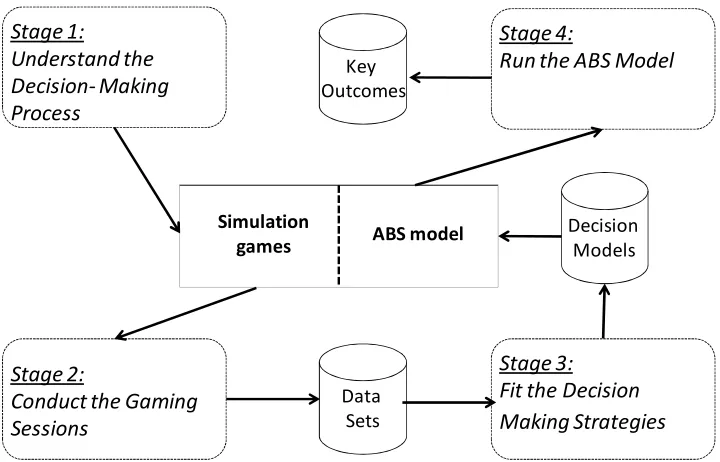
To this end, this study applies an original approach that supplements experiments with human subjects with Agent Based Simulation experiments. In greater detail, informal pilot sessions with volunteers were first conducted, during which knowledge of the underlying decision making processes was elicited. Appropriate Agent Based Simulation models were subsequently built based on this understanding. Later on human subjects were asked to interact with specially designed versions of these Agent Based Simulation models in the laboratory, so that their consecutive decisions over time could be recorded. Statistical models were then fitted to these data sets of decisions. The last stage of this approach was to simulate in the corresponding Agent Based Simulation models all possible combinations of decision models, so that statically accurate conclusions could be inferred. This approach has been replicated for both the simple newsvendor setting and the beer distribution game.
This PhD thesis was motivated by the simple observation that the objectives of
distinct supply chain managers are often conflicting. This is exactly what
constitutes the underlying cause of incentive misalignment in supply chains.
Supply chain incentive misalignment has numerous negative consequences and
can even hurt the long-term prosperity and viability of all the firms that
participate in a supply chain (these are defined as the distinct supply chain
partners). This problem is usually addressed via supply chain contracts that
intendto align these objectives to the overall benefit of the entire supply chain. In
respect to this, there is some analytical evidence. Nevertheless, there still remains
some anecdotal practical evidence that comes in stark contrast with the analytical
expectations. In order to explain this deviation, this PhD thesis identifies the
over-simplifying assumptions that are inherent with the existing analytical
models and, thus, recognises the limited degree to which these analytical models
can predict the decisions of human supply chain managers. To this end, it builds
on the acknowledgment that human supply chain managers may not in practice
be in a position to make perfectly rational decisions and accommodates their need
to make heterogeneous decisions that are specified by their own individual
intentions, actions and reactions. In this regard, it introduces the notion of
bounded rationalityand explores the effect thatbounded rationalitymay bring in
supply chain decision making. Building on this, this PhD thesis presents an
original and novel contribution to knowledge in a number of different aspects that
sets the background of the work that is undertaken, as explained in the following
chapters. It also presents the issues that are inherent with decision making in
supply chains and the associated complications that bounded rationality may
introduce. This chapter serves to provide some principal definitions. It also
briefly explains the reasoning that was behind this study and discusses the initial
thoughts that stimulated it.
This chapter is organised as follows.Section 1.1summarises the effect of
misaligned objectives in supply chains, while Section 1.2 explains how supply
chain contractsserve to address this problem. The notion of bounded rationality
and the effect that it may bring in supply chain decision making are discussed in
Section 1.3. All the above are brought together inSection 1.4that discusses what
this PhD thesis is really about. Finally, an overview of the contents of this PhD
thesis is provided inSection 1.5.
1.1 The Effect of Misaligned Objectives in Supply Chains
A supply chain is defined as an integrated system of firms that are involved,
through upstream and downstream linkages, in the different activities that are
required to produce the final product, which is delivered to the end consumer
(e.g. Chopra and Meindl, 2007; Simchi-Levi et al, 2008). In respect to this
definition, any supply chain consists of multiple firms, each of which is managed
by different managers. Based on the information that is locally available to each
of these individuals, they make their respective pricing and purchasing decisions,
which jointly determine the overall supply chain performance. In case these
individuals share the common goal to optimize the system-wide performance,
thus, prevent the overall supply chain from attaining its optimum performance.
Allowing each organization to implement locally “optimal” policies, thus, may
lead to overall supply chain performances that are much inferior to the optimum
(Lee, 2004; Narayan and Raman, 2004; Li and Wang, 2007).
The latter can sometimes have results that are even catastrophic for the
entire supply chain’s prosperity. For example, “Wall Street still remembers the
day it heard that Cisco’s much-vaunted supply chain had snapped” (Narayan et
al, 2004: pp. 94). This was due to demand forecasts that were over-exaggerated
by $2.5 billion, which is almost half as its sales in the quarter of spring 2001.
Furthermore, “in the summer of 1997, movie fans flocked to their local
Blockbuster video stores eager to rent The English Patient and Jerry Maguire,
only to find that all available copies of it had already been checked out” (Cachon
and Lariviere, 2001: pp. 20). The results were customer frustration and lost sales.
But providing managers with the appropriate incentives that induce
optimal decisions is a non-trivial task, given the complications that the
interactions between numerous decision makers generate. The reason that the
“world's largest network-equipment provider” (Narayan et al, 2004: pp. 94)
suffered from such huge losses was the vast amounts of assembly boards and
semiconductors that Cisco’s suppliers had stockpiled in their warehouses and
over which Cisco had to assume responsibility. Cisco’s suppliers ordered
inconsistently with the sudden decrease in demand that occurred in the economic
downturn of 2001, because they were rewarded only for delivering supplies
Cisco’s.
As for the problems with the video rental industry, they were that the cost
of a video tape was traditionally high relative to the price of a rental and the peak
popularity of a title did not last for very long. The result was that acquisition of a
sufficient number of copies could not be justified and, so, the initial peak demand
could not be entirely covered (Cachon and Lariviere, 2005).
In summary, the objectives of distinct supply chain managers are often
conflicting. In order to align these objectives to theteam overall optimalbenefit,
‘contracts’ or else ‘transfer payment schemes’ are extensively used. The section
that follows briefly introduces how contracts are designed to operate in supply
chains.
1.2 Supply Chain Contracts
A supply chain contractor else a transfer payment scheme fully determines the
terms of trade and the payment agreements that take place between adjacent
supply chain partners (Tsay et al, 1999; Cachon, 2003). A contract or transfer
payment scheme is said to coordinate a supply chain if it forces the aggregate
channel performance to coincide with the first-best case1 optimum performance
1
The term “first-best case” is adapted from the term “first best” that is used by Lee and
Whang (1999) to reflect the overall channel performance that would be attained, if the
team optimal solutionwas adopted by all echelon managers (Chen, 1999) or there was a
central planner (i.e. headquarters) that had access to all sites’ inventory-related
information and made all decisions for the entire system (Lee and Whang, 1999). The
it produces an aggregate channel performance that is not inferior to the first-best
case optimum performance that would be achieved in the case that the distinct
echelon2managers behaved as ateam(Lariviere, 1999; Tsayet al, 1999).
In this regard, the existing contracting literature concentrates on either
assessing acontract’sefficiencyor proposingcontractsthat may induce the
first-best case optimum performance. The simplest contract that can exist is the
wholesale price contract, according to which there is only one incentive that may
coordinatethe distinct echelon managers’ decisions to theteam optimalsolution,
that is, the wholesale price. But this contract has been since long analytically
established asinefficient(Lariviere and Porteus, 2001; Cachon, 2003). In greater
detail, its inability to attain thefirst-best caseoptimum performance is confirmed
via standard normative models that are built on the assumption of perfectly
rational decision makers, who are exclusively interested in optimizing their
performance that can be attained by the entire channel when seen as a whole (e.g.
Cachon, 2003; Cachon and Netessine, 2004).
2
The term “echelon” is used in accordance with Clark’s (1958) definition (as found in
Clark and Scarf, 1960) to reflect a site, in which the inventory for which it is accountable
consists of:i.the inventory that exists in this site,ii.the inventory that is in transit to this
site and iii. the inventory that is on hand at a lower site [Source: Clark, A. 1958, A
dynamic, single item, multi-echelon inventory model, RM-2297, Santa Monica,
perfect symmetric information3.
In order to overcome the inefficiency of the simple wholesale price
contract a number of more sophisticated transfer payment schedules have been
suggested. These proven as efficient supply chain contracts force the team
optimal solution to be adapted and, in this way, the first-best case optimum
performance to be attained. Some indicative examples are the buyback contract
(Pasternack, 1985; Lau et al, 2007), the revenue sharing contract (Cachon and
Lariviere, 2005), the quantity discount contract (Moorthy, 1987; Kolay et al,
2004), the responsibility tokens of Porteus (2000) and the simple linear transfer
payment schemes of Cachon and Zipkin (1999). The supply chain contractsthat
are of relevance to this PhD thesis are reviewed in Sub-section 2.3.1. The
majority of these transfer payment schemes are built on a number of
over-simplifying assumptions, such as, for example: that theteamoptimum solution is
common knowledge to all partners; or that there is one firm that presumes the
responsibility of compensating the other firms and, thus, adequately allocating
the costs between them; or that all echelon managers are always willing to share
all private information with their supply chain partners without the need for being
compensated for doing so; or that the interacting firms are deprived the ability to
3
The term “perfect symmetric information” is used in accordance with Cachon and
Netessine’s (2004) use to reflect the fact that exactly the same information is available to
all interacting supply chain partners. The term comes in opposition to “information
asymmetry”, a popular term in economics and contract theory, according to which one
party has more accurate or better information [Source:
reviews of the analytical results that are acquired so far the interested reader is
referred to Tsayet al. (1999), Cachon (2003) and Simchi-Leviet al. (2008).
In spite of the aforementioned contracts’ efficiency, there is some
anecdotal evidence that the wholesale price contract remains more popular
among supply chain managers, especially in industries such as the publishing and
movie rental industries (Cachon and Lariviere, 2001; Narayan and Raman, 2004;
Cachon and Lariviere, 2005). The practical prevalence of the wholesale price
contract over theefficient transfer payment schemesremains paradoxical. There
are certainly some important benefits associated with its implementation, such as,
for example, it is much simpler to be put in force, easier to administer and it only
requires one transaction to take place between each interacting party. But are
these benefits the only reasons that explain its wide popularity? Could perhaps its
true efficiency be significantly different from its corresponding theoretical
prediction? These are some intriguing questions that this PhD thesis aims to
explore. To this end, this PhD thesis recognises that supply chain managers might
in reality not make perfectly rational decisions. The section that follows discusses
how the notion of bounded rationality could affect the true efficiency that the
wholesale price contractcan in practice attain. Although this PhD thesis restricts
attention to the simplewholesale price contract, similar ideas are also applicable
to the other, more complicatedsupply chain contractsas well. In this regard, their
trueefficiencymay be significantly different from their corresponding theoretical
Supply chain managers, like all decision makers, might in reality not make
perfectly rational decisions. There are three different reasons that explain why
supply chain managers might need to compromise at non-perfectly rational
decisions, namely ‘boundedly rational’ decisions. First, they may lack the
required information, as in practice access to perfect symmetric information
might not always be possible in supply chain settings. The underlying reason is
that most supply chain partners would not be willing to share their private
information with their partners, at least not without being compensated in some
way for doing so (e.g. Cachon and Fisher, 2000; Chen, 2003). Second, supply
chain managers may “experience limits in formulating and solving complex
problems and in processing information” (Simon 1957 in Williamson 1981: pp.
553), and, thus, suffer from limited knowledge and finite cognitive abilities
(Sterman, 1989; Simon, 1996; North and Macal, 2007; Gilbert, 2008). Last,
supply chain managers might only have a finite amount of time available to make
their respective decisions. That is why they might have to settle at reasonable,
thussatisficing, choices.
For these reasons, supply chain partners might not be in a position to
search the entire solution space and, thus, identify the optimal decisions; they are
boundedly rational(Simon, 1996; North and Macal, 2007; Gilbert, 2008). Since,
in view of theirbounded rationality, the standard normative models that are built
on the assumption of optimizing objectives lose their accuracy, the notion of
bounded rationality complicates the decision making that takes place in supply
individual preferences, limited knowledge and finite cognitive abilities, which are
in turn responsible for the behavioural biases that influence significantly their
respective decisions (Camerer, 1995; Loch and Wu, 2007; Gino and Pisano,
2008). In other words, not all supply chain managers are anticipated to have
exactly the same priorities, knowledge and abilities. Further to this, their
preferences, information and limitations are expected to vary to a great extent.
Therefore, their respective decisions are expected to deviate from the perfectly
rational decisions to varying degrees. The result is that different supply chain
managers exhibit different degrees ofbounded rationalityor else are perceived as
heterogeneously boundedly rational. Thus, a “richer real world environment”
(Holmstrom and Milgrom, 1987) of different than expected interactions is
anticipated to emerge.
In this emerging richer world, interactions become very different from
their corresponding analytical expectations. As different supply chain managers
appear to have different priorities and abilities, they adopt different strategies
and, thus, make significantly different decisions. Hence, the theory – driven,
standard normative models retain little power to predict supply chain partners’
decisions. In a similar way, their predictions of a contract’s resulting efficiency
may also become out of date. In respect to this, the wholesale price contract
might perform significantly differently than theoretically predicted. It is also
possible that it leads to the first-best case optimum performance. As such, the
wholesale price contract’s practical efficiency would offer an additional
important explanation for its wide practical popularity, beyond just its simplicity.
It would also justify its dominance over contracts that are analytically proven as
exploring the true efficiencyof thewholesale price contract under conditions of
real human interactions.Section 1.4sheds light on what exactly the object of this
PhD thesis is.
1.4 What is this thesis about?
The purpose of this PhD thesis is to explore the true efficiency of thewholesale
price contract in human supply chain managers’ interactions, that is, given the
heterogeneous bounded rationality that is inherent with their decision making.
Hence, the main question that drives the research that is undertaken in this thesis
is:
“Could thewholesale price contractin practice generate thefirst-best case
maximum performanceof a supply chain setting and if so, under which specific
conditions?”.
The reason that this is an interesting question is because it can explain the
paradoxical wide popularity of the wholesale price contract in a variety of
different settings. As for the conditions under which the wholesale price
contract’s efficiency could be attained (that is provided that this efficiency is
feasible), these conditions could reveal some important managerial insights.
These favourable conditions would also highlight some recommendations that
would help supply chain managers to ensure the efficiency of their interactions
under thewholesale price contract.
In respect to this research question, the main objectives that drive this PhD
of the existing theory-driven, standard normative models. This
methodology needs to be apt to predict accurately the decisions of human
supply chain decision makers.
2. To assess how different the decisions of human supply chain decision
makers are to the corresponding predictions of the standard normative
models when thewholesale price contractis assumed to be in force.
3. To investigate theefficiency of thewholesale price contract when human
supply chain decision makers interact with each other.
4. To consider the impact that different pricing strategies have on the
wholesale price contract’sefficiency.
In order to address these questions, this PhD thesis uses as computational
frameworks two distinct settings: the Newsvendor Problem and the Beer
Distribution Game. TheNewsvendor Problemis the simplest supply chain setting
that can exist, where there is only one supplier and one retailer that interact with
each other. The reason that this setting is studied is because it constitutes the
fundamental building block of any supply chain configuration. The Beer
Distribution Game represents a periodic review production-distribution supply
chain with serial echelons, which operates in ade-centralised fashion. The reason
that this setting is chosen to be studied is it mimics the material, information and
financial flows of any general type, serial multi-echelon supply chain. The reason
that these two settings are selected is because, combined, they provide a broader
view of the way that general type, serial multi-echelon supply chains operate. The
exact specifications of theNewsvendor Problemand theBeer Distribution Game
novel contribution to knowledge for a number of reasons. First, it develops and
applies a novel approach to answer the main research question and, also, address
the research objectives. The reason that this approach is considered novel is
because it is the first study in the field that supplements the laboratory
experiments with simulation experiments. The corresponding simulation models
have been calibrated via the results from the laboratory experiments, which were
run with human subjects. In this way, the requirements of multiple interactions,
prolonged interaction lengths and multiple replications, which would not have
been possible if only experiments with human subjects were run, could be
simultaneously addressed. The end result of this novel approach is that it
successfully addresses the existing literature gaps, which are identified inSection
2.4(s.Table 2.5).
Second, this PhD thesis extends for the first time the wholesale price
contract to a more complicated supply chain setting than the Newsvendor
Problem. It applies for the first time the wholesale price contract to the Beer
Distribution Game, which is an accurate representation of any general type, serial
multi-echelon supply chain. In spite of the contract’s simplicity, only complicated
transfer payment schemes have as yet been implemented in theBeer Distribution
Game setting. In this way, it proves the distinctively different way that the
wholesale price contract operates in the Newsvendor Problem and the Beer
Distribution Gamesettings and, thus, introduces an issue of scalability for most
existing analytical and experimental studies that exclusively study this contract in
the Newsvendor Problem setting. Following this, a deeper understanding of the
way that thewholesale price contractoperates in any serial multi-echelon supply
interesting results about the practical efficiency of the wholesale price contract.
The results that concern the Newsvendor Problem are reported in Chapter 5,
while the results that concern theBeer Distribution Gameare reported inChapter
8. The common managerial implications and insights that can be inferred from
these results are discussed in greater detail in Chapter 9, while some general
lessons about supply chain settings are offered inChapter 10.
1.5 Overview of Thesis
The remainder of this thesis is organized as follows:
Chapter 2 defines the Newsvendor Problem and the Beer Distribution
Game settings and also determines the arrangements of different supply chain
contracts that have been enforced in these two settings. It also reviews the
standard normative models that correspond to these two settings and also
explores which of their simplifying assumptions have been revisited by existing
laboratory – based investigations. The chapter concludes by summarising the
remaining literature gaps.
Chapter 3describes and justifies the approach that this PhD thesis adopts
to address the existing literature gaps. This approach enables one to investigate
the effect that different, prolonged interactions between dynamic, autonomous
and heterogeneous decision makers can have on the wholesale price contract’s
overallefficiency.
Chapter 4 adapts this approach to the needs of theNewsvendor Problem,
whileChapter 5reports on the results that are obtained. A brief discussion and a
reflection on the managerial implications and practical significance of these
thewholesale price contractbecomes the basis of any interaction that takes place
between adjacent supply chain partners. This new version of the game is named
the “Contract Beer Distribution Game”. The chapter also develops the standard
normative models that are associated with theContract Beer Distribution Game,
namely, makes provision for the inclusion of prices in them.
Chapter 7adapts the approach that is proposed in this PhD thesis to the
needs of the Beer Distribution Game. Chapter 8 reports on the results that are
obtained. A brief discussion and a reflection on the managerial implications and
practical significance of these results is provided.
Chapter 9discusses, explains and justifies the differences that are observed
between the results of theNewsvendor Problemand theBeer Distribution Game.
It also critically reflects on the common themes that seem to emerge from these
two settings.
Building on these common themes, Chapter 10 proceeds to the general
lessons about serial multi-echelon supply chain settings that can be gained from
this study. In addition,Chapter 10reflects on whether the objectives of this study
have been satisfied, summarizes the main contribution of this PhD thesis,
Results
The purpose of this chapter is two-fold: The first objective is to define the two
settings that are used as computational frameworks in this PhD thesis; namely,
the Newsvendor Problem and the Beer Distribution Game, and also determine
how the arrangements of differentsupply chain contractscan be applied in these
two settings. The second objective of this chapter is to review the existing
research in the area. In this regard, the standard normative models that
correspond to the aforementioned two settings and thesupply chain contractsare
first described. These are built on the assumption that all supply chain managers
are perfectly rational in their respective decisions, namely they are exclusively
interested in optimizing their individual objectives; to this end, they are assumed
to almost ignore their partners’ corresponding decisions and their surrounding
environment. Since these common assumptions of the existing standard
normative models are over-simplifying, subsequently the experimental studies
that have explored how different the real human decisions that are observed in the
laboratory are from these theoretical predictions are reviewed. The main focus is
to highlight which of these assumptions are successfully revisited. The
experimental protocols that are followed, as well as the key findings are
additionally presented.
The chapter is organised as follows: First, the Newsvendor Problem is
outlined (Section 2.1). Later on theBeer Distribution Game is discussed (Section
Newsvendor Problem and the Beer Distribution Game are separately presented
(Section 2.3). In each of these three distinct sections, the extant analytical results
are first summarised, while the relevant behavioural studies are subsequently
reviewed.
2.1 The Newsvendor Setting
In this section the typical newsvendor setting is considered. First presented by
Whitin (1955), it is still receiving increasing attention, mostly due to diminishing
product lifecycles and dominance of pure service and mixed retail/service
industries, for which it is particularly applicable (Khouja, 1999). For a review of
the existing analytical results and the extensions that have been applied to it so
far the interested reader is referred to Khouja (1999), Lariviere (1999) and
Cachon (2003).
In Sub-section 2.1.1 the standard normative models of the typical
newsvendor setting are described. First is outlined the case, where there is only
one decision maker involved, namely an integrated newsvendorwho replenishes
stock to satisfy customer demand. This centralised operation mimics the
material, information and financial flows of a system that has access to all
available information and, thus, is in a position to optimize the system-wide
performance or else to attain the first-best case maximum profit. Attention is
subsequently turned to the case that the setting operates in a de-centralised
operation fashion; the problems that the manufacturer and the retailer face are
then discussed separately. Since neither of them takes into account the effect of
his/her individual decisions on the other’s profit, a deviation occurs between the
two partners make their decisions independently. This phenomenon is known as
the “double marginalization problem” (Spengler, 1950) and is subsequently
discussed.
In Sub-section 2.1.2the laboratory investigations of decisions that human
decision makers make in the laboratory are reviewed. The assumptions of the
standard normative theories that are revisited by these experimental studies are
first summarised; the experimental protocols that are applied are subsequently
outlined; their key findings are last delineated.
2.1.1 Standard Normative Models
The Centralised Operation
The typical integrated newsvendor setting is illustrated in Figure 2.1. Well in
advance of each time period t, this integrated newsvendor needs to specify the
order quantity q that he/she chooses to satisfy customer demand. This entire
quantity is assumed to be instantaneously delivered to theintegrated newsvendor
at a constant marginal cost of c per unit. The retail price is fixed at p per unit,
which is determined by market competition, as is usual for commodity products
(Hirschey et al, 1993; Chopra and Meindl, 2007). The product under study can
only last for one selling season and no left-over inventories at the end of a season
can be carried over from one period to the next. For each unit of demand that is
not satisfied, a goodwill penalty cost of gis incurred. It is also assumed that the
stochastic customer demandxfollows a continuous distribution F(x)on the
non-negative reals with density f(x). F is invertible, strictly increasing and
differentiable with a continuous derivative ݂ᇱ(ݔ) and F(0) = 0. Also let ܨത(ݔ) =
In summary, the following notation is used throughout this sub-section:
x customer demand, a random variable
f(x) probability density function ofx
F(x) cumulative distribution function ofx
p selling price per unit
c manufacturing cost per unit
g lost sales (goodwill) penalty cost
Co unit overage cost =c
Cu unit underage cost =p+g-c
q order quantity
It is also assumed that all the above information is common knowledge to the
integrated newsvendor. Based on this, the integrated newsvendor’s profit per
period is given by:
In te gr at ed N ew sv en do r Market (stochastic demandx) min{q,x}
q
q
c
q x Material Funds Information Supply qx pmin ,
ߨ௧=൜(−ܿ)∙∙ݍݔ−−݃ܿ∙∙ݍ(ݔ,݂݅ ݔ−ݍ),<݂݅ ݔݍ ≥ݍ
Simplifying and taking the expected value of ߨ௧ gives the following expected
profit:
which can be easily transformed as follows:
ߎ௧=ܧ(ߨ௧) =ܵ(ݍ)−ܿݍ−݃ܤ(ݍ)
or else:ߎ݅݊ݐ=
(
+݃)
ܵ(
ݍ)
−ܿݍ−݃ߤ (2.1)S(q) represents the expected sales quantity and B(q) the unsatisfied customer
demand, in the case that an order quantity ofqis placed.
Let the superscript * denote optimality. Application of the Leibnitz’s rule
about differentiation under the integral sign (Kaplan, 2002) for the derivatives of
first and second order demonstrates that ߎ௧is concave and, thus, there is a
unique ݍ௧∗ that maximises ߎ௧. As proven by Khouja (1999) and Lariviere (1999) the sufficient optimality condition that would maximise the perfectly
rationalintegrated newsvendor’s expected profit ∏݅݊ݐis given by formula (2.2):
ݍ௧∗ =ܨିଵ(ାିା )=ܨିଵ(ାೠೠ) (2.2)
The De-centralised operation
The manufacturer-retailer setting is illustrated in Figure 2.2 that follows. The
simplest contract that can exist is assumed to be in force,i.e. thewholesale price
contract. According to this, there are only two pieces of information exchanged
ߎ
݅݊ݐ=
∫
0ݍݔ݂
(
ݔ
)
݀ݔ
−
ܿ
∫
0ݍݍ݂
(
ݔ
)
݀ݔ
+(
p
+
g
-
c
)
∫
ݍ∞ݍ݂
(
ݔ
)
݀ݔ
−
between the interacting manufacturer and retailer: i. the price that the
manufacturer charges to the retailer andii.the order quantity that is placed by the
retailer (Lariviere and Porteus, 2001; Cachon, 2003). The events in each time
period t unfold as follows: Well in advance of each time period t, the
manufacturer needs to specify the wholesale pricewthat he/she wishes to charge
to the retailer. In response to that, the retailer must choose an order quantity q.
The manufacturer is assumed to instantaneously deliver to the retailer any
quantity that he/she places an order for. The retailer is, in turn, responsible for
satisfying customer demand. The retailer sells each unit of product at the price of
p; the manufacturer has to incur a unitary production cost ofc.
As in the de-centralised operation, the product under study can only last
for one selling season and no left-over inventories at the end of a season can be
carried over from one period to the next. The notation that is used in the previous
section is also used throughout this sub-section.
Figure 2.2:Thede-centralised operation newsvendorproblem
M an uf ac tu re r Re ta ile r Market (stochastic demand D)
min{q,x}
q
q
w
pmin
q,xThe problem that the retailer is facing is now studied. The retailer’s profit
per periodߨ௧is given by:
ߨ=൜(−ݓ)∙∙ݔݍ−−ݓ݃∙∙ݍ(ݔ,݂݅ ݔ−ݍ),<݂݅ ݔݍ ≥ݍ
The same rationale applied for the integrated newsvendor’s problem is
again followed to get the retailer’s expected profit:
ߎ=ܧ(ߨ) =ܵ(ݍ)−݃ܤ(ݍ) −ݓݍ
ߎ=
∫ݔ݂(ݔ)݀ݔ−ݓ∫ݍ݂(ݔ)݀ݔ+ (+݃−ݓ)∫ஶ ݍ݂(ݔ)݀ݔ−
݃∫ஶ ݔ݂(ݔ)݀ݔ
(2.3)
or else:ߎ= (+݃)ܵ(ݍ)−݃ߤ−ݓݍ
From this the order quantity (ݍ∗) that the rationally optimizing retailer would order to maximise his/her expected profitߎcan be easily calculated:
ݍ∗ =ܨିଵ൬+݃+−݃ ൰ݓ =ܨିଵ(ܥ+݃−ݓ +ܥ௨ )
(2.4)
Now the manufacturer’s problem is studied. Acting as the Stackelberg
leader (Stackelberg, 1934 in: Cachon and Netessine, 2004), the manufacturer
initiates any interaction and is, thus, the first who determines the preferred
wholesale price w. While making this decision, the manufacturer correctly
anticipates the retailer’s response order quantity to this price, namely the
period ߨ(ݓ) is given by the following formula, according to Lariviere and
Porteus (2001) and Cachon (2003):
ߨ = (ݓ−ܿ)∙ݍ(ݓ)
Therefore, the manufacturer’s expected profit becomes:
ߎ =߃(ߨ) = (ݓ −ܿ)∙ݍ(ݓ) (2.5)
A rationally optimizing manufacturer would charge as much (w*) as would
maximise his/her expected respective profit, namely:
∏∗ =݉ ܽݔ{∏(ݓ)} = (ݓ∗−ܿ)∙ݍ∗(ݓ∗) (2.6)
In equation (2.6) ݍ∗ represents the order quantity that the rationally
optimizing retailer would place in response to this price w*, or else ݍ∗ =
argൣmax∏୫(ݓ∗,ݍ)൧=ܨିଵ(ାି௪∗
ା ), according to (2.4). According to this,
equation (2.6) gets transformed to (2.7):
∏∗ = (ݓ∗−ܿ)∙ܨିଵ(ାି௪ ∗
ା ) (2.7)
Equation (2.7) can be used to calculate the rationally optimizing manufacturer’s
maximum profit that would be attained if he/she charged w*. But (2.7) does not
provide the actual w*-price that the rationally optimizing manufacturer needs to
charge in order to achieve this maximum profit. In order, thus, to estimate this
rationally optimizing price w* Lariviere and Porteus’ (2001) approach is
followed. According to this, instead of concentrating on the retailer’s demand
curve ݍ∗ =ܨିଵ(ାି௪
ݓ(ݍ∗) = (+݃)ܨത(ݍ∗) = (ܥ+ܥ௨
)ܨത
(ݍ∗), is looked at. From Leibnitz’s ruleand the derivative of (2.5) of first order the manufacturer’s sufficient optimality
condition is calculated for the case of a demand distribution that has an increasing
generalised failure rate (IGFR):
ݓ∗(ݍ
∗ )ቆ1−ݍ݂(ݍ∗ )
ܨത(ݍ∗)ቇ=ܿ (2.8)
Lariviere and Porteus (2001) define a distribution’s generalised failure rate as:
݃(ݔ) =ݔிത((௫௫)). In this regard, a distribution is said to have IGFR if݃ᇱ(ݔ) > 0 for
all x on the non-negative reals that ݂(ݔ) is defined. In the case of any such
distribution (2.8) becomes the sufficient optimality condition of the
manufacturer’s maximum profit and can be used to estimate the rationally
optimizing manufacturer’s w* - price. In addition, Lariviere and Porteus (2001)
describe the elasticity of retailer’s response orders as: ߥ(ݔ) = ଵ
(௫), which allows
for transformation of the first-order optimality condition (2.8) to the following,
much simpler form:
ݓ∗(ݍ
∗)൬1−ߥ(ݍ1
∗)൰=ܿ
The above form is preferred to (2.8), because it can be used more easily to
infer managerial insights (Lariviere and Porteus, 2001).
In the sub-section that follows attention is turned to overall supply chain
performances, in the two distinct cases of centralised operation and
Supply Chain Performance
As already seen in the previous sub-sections, in the case ofcentralised operation
the maximum profit, or else the first-best case maximum profit of the overall
channel can be attained, that is: ߎ∗= ߎ௧∗ . In the case where the rationally optimizing manufacturer and retailer interact with each other, the manufacturer
would charge ݓ∗ (making, thus, a profit of∏∗ ), while the retailer would order ݍ∗ (making, in turn, a profit of ∏∗). When these decisions are combined, they
generate an aggregate channel profit of ∏ୡ= ∏∗ + ∏∗. The overall supply
chain performance is in this case assessed via the “efficiency score” that is
attained. The closer an efficiency score is to one, the better the overall supply
chain performance is, or else the more of the first-best case maximum profit is
attained by the manufacturer – retailer channel that is studied. The efficiency
scoreis defined according to relation (2.9):
ܧ݂݂. =∏∏∗
௧ ∗
(2.9)
Without loss of generality and in order to demonstrate how the double
marginalization problemarises, a simple numerical example is hereby cited. It is
assumed that: p=250 m.u. (i.e. monetary units); c=50 m.u.; g=1 m.u and that
customer demand follows the truncated at zero normal distribution with μ=140
andσ= 80, because it more closely reflects real cases, where limited information
about the distribution of customer demand is available (Gallego and Moon,
1993; Son and Sheu, 2008; Ho et al, 2009). Because of this truncation at zero,
demand mean and variance need to be modified according to Barr and Sherrill
single demand observation D=140 is taken. Under these circumstances the
rationally optimizing integrated newsvendor would order ݍ௧∗ = 202units and
only incur the manufacturing cost ݓ௧∗ =ܿ, leading the entire channel to the
first-best case maximum profit of ∏୧୬୲∗ = 24,900 m.u. As for the rationally
optimizing manufacturer, not taking into account the effect of his/her own
decision on the retailer’s profit, he/she would charge w*=184 m.u., leading the
retailer to place an order ofq*=106 units. The result of this allocation of profits
(i.e. ∏∗ = 14,204 m.u. and ∏୰∗= 6,962 m.u.) would be an aggregate channel
profit of ∏ୡ∗= 21,166 m.u., which is significantly lower than ∏௧∗ . This
phenomenon where neither partner would take into account the effect of his/her
own decision on the other’s profit is known as the “double marginalization”
problem (Spengler, 1950). The result is that the overall efficiency score attained
would be: ܧ݂݂= ∏ౙ∗
∏౪∗ = 0.85. The fact thatܧ݂݂<1 signifies thewholesale price
contract’s inefficiency.
Let’s now consider the case that the manufacturer chargesw=150<184=w*
and the retailer ordersq=125<130=q*(w). The interaction of these two decisions
would generate an aggregate channel profit of ∏ୡ = 24,985 ≈ 24,990 m.u.,
which is the first-best case maximum profit and also ensures a more equitable
allocation of profits between the manufacturer and the retailer (i.e.∏ = 13,500
m.u. and∏୰ = 11,485 m.u.). In practical terms, a sacrifice on the part of the
manufacturer of only 34 m.u.per unit sold and704m.u. in total would increase
the retailer’s profit share by 4,523m.u.and the aggregate channel profit by 3,824
the effect of their own decisions on the aggregate channel profit causes the
double marginalizationproblem.
Yet, very seldom in reality would human decision makers follow the above
decisions (e.g. Benzion et al, 2008; Bolton and Katok, 2008; Bostian, Holt and
Smith, 2008), leading the newsvendor setting to overall performances that are
significantly different from the ones that are theoretically predicted. In
Sub-section 2.1.2 that follows the experimental research that has already been
conducted in the newsvendor area is reviewed. This field of research establishes
the systematic divergence of human newsvendors’ order quantities from the
quantities that are predicted by the standard normative models; this field of
research additionally investigates the individual behavioural biases that could be
held responsible for this deviation. That is why this existing field of research is
here named as the “behavioural newsvendor”.
Since interactions of human manufacturers that on average charge
significantly different prices from ݓ∗ and human retailers that order quantities, which on average diverge significantly from ݍ∗ give rise to widely fluctuating
efficiency scores, the efficiency scores that are attained overall can in practice
deviate significantly from the above theoretical prediction (which for this
particular numerical example becomes equal to 0.85). That is why it becomes
interesting to explore the true efficiency scores that the supply chain contracts
attain in the laboratory and compare them with their respective theoretical
predictions. In this regard, although laboratory investigations of supply chain
contracts are still scarce, there is already a number of papers that are concerned
theories. These are reviewed in Sub-section 2.3.2 that limits attention to the
existing laboratory investigations ofsupply chain contracts.
2.1.2 The Behavioural Newsvendor
Carlson and O’Keefe (1969) and Fisher and Raman (1996) constitute the first
papers that perform controlled human experiments of the newsvendor problem.
Even though for Carlson and O’Keefe (1969) the newsvendor problem only
represents a sub-set of participants’ allocated decision task, both the innate ability
of some participants to make reasonably good decisions without being taught a
formal rule and the tendency of other participants to make “almost every kind of
mistake” (p. 483) are recognised. Fisher and Raman (1996) conduct an industrial
experiment at a fashion apparel manufacturer’s site that enforces a ‘Quick
Response’ system (i.e. they allow placing orders only after and in response to
initial demand observations). Under these conditions, Fisher and Raman (1996)
ascertain that managers order quantities that are systematically inferior from the
quantities that are calculated by their exact Lagrangian decomposition - based
algorithm. Neither Carlson and O’Keefe (1969) nor Fisher and Raman (1996) are
concerned with either explaining this observed behavioural bias or reflecting on
its potential persistence at different settings. The reason is it was not until
relatively recently that a systematic behavioural perspective was brought to the
field of operations management and, thus, to the newsvendor problem (Bendoly
et al, 2006; Loch and Wu, 2007; Gino and Pisano, 2008). In this regard, these
two papers are not considered in the account of existing experimental research on
thenewsvendor settingthat follows. In this elaborate account the assumptions of
the experimental protocols that are applied and the experimental evidence that is
collected.
Assumptions Revisited
In order to review the assumptions that are revisited so far by laboratory
experiments, the Analysis of Assumptions framework is followed, as applied by
Bendoly et al. (2006). According to this, the models’ assumptions are classified
in the following three broad categories: Intentions,ActionsandReactions. In the
paragraphs that follow these are defined and the papers that revisit each of these
assumptions are reviewed.
Intentionsrefer to the accuracy of the studied model in reflecting the actual
goals of the decision maker under study (Bendolyet al, 2006). In this regard, the
standard normative models that are presented in Sub- section 2.1.1 are built on
the common assumption that any decision maker would be exclusively interested
in maximising his/her own individual net profit. But in reality, a decision maker
might display a variety of different objectives: For example, he/she could weigh
profits and/or underage (i.e. p+g-c) and overage (i.e. c) costs in an un-even
fashion, that is, assign different priorities to the different sub-objectives (i.e.
factor weighting). Alternatively, he/she might not be risk-neutral, as assumed by
the aforementioned models that are built on expected value calculations, but
instead adopt a risk seeking (i.e. he/she might prefer a choice with a lower
expected value but a higher risk) or a risk averse attitude (i.e. he/she might be
reluctant to choose an alternative with a lower expected value but a higher risk).
He/she could also exhibit different concerns, of a more social nature, for example