A Study on Nutrient Analysis of Mid-Day Meal
Maria Mansoor 1, Rahila Rawoof2
1, 2
Department Of Nutrition & Dietetics, Anwarul Uloom College, Mallepally, Hyderabad.
Abstract: The Mid Day Meal Scheme initiated by the Government of India is the largest school feeding programme in the world with an aim of providing hot cooked nutritious meal to school students of government schools and government aided centres. The present study was conducted to evaluate the nutritional content of the mid day meal as one of the major objective of this scheme is to improve nutritional status of school going children. The study also focused on the hygienic practices in school among students, cook cum helpers and the lunch area surroundings. Sample of rice and dal with peas and potatoes mid day meal was collected from a government school 5gms of each sample was sent to a laboratory in a dehydrated form to carry out to assess the major nutrient content which included carbohydrate, protein and fat. Observation method was implied to check the hygienic conditions. News about the MDM scheme was kept under track for a period of three months to understand the consequences of the scheme. The study findings suggested that although there is are standard nutritional norms for the MDM, the calorie content of the given sample did not meet the standards both for primary and upper primary students, it was less by 16% and 22% respectively. The protein content was met because of addition of green peas in the dal. 100gms of dal gave 39% protein, 59% carbohydrate and 2% fat and 100 grams of rice gave 87% carbohydrate and 13% protein with NIL fat. The one third RDA of 10-12 year old children was compared to the complete meal nutrient content which resulted in inadequate carbohydrates and fat for both girls and boys. However the protein requirement was met successfully. The fat content in the meal increased when an egg was provided in lunch on alternate days of the week, yet it did not meet the adequate one third of the day fat requirement. Hygienic conditions were observed to be poor with no proper lunch area, no use of gloves and head covers by the food handlers. When the news was kept in check majority of it was reported to be complaints regarding the MDMS be it either unhygienic practices, students falling ill after its consumption or irregular delivery of meals.
I. INTRODUCTION
II. METHODOLOGY
In order to evaluate the nutrient content of mid day meal, a sample of a day’s mid day meal served in a government school in Hyderabad was collected. A well established organization which executes the governments scheme of providing hot and nutritious mid day meal was in charge of suppling the meal in this school along with many other schools of the city. Everything that was being provided was collected as a sample which included a dal preparation and cooked rice. , both the samples were heated to remove all the moisture content completely and dehydrate. 5grams of each sample was sent to the Quality Control Laboratory of Professor Jayashankar Telengana State Agriculture University, Rajendranagar, Hyderabad for the analysis. The 3 major nutrients- carbohydrate, protein and fat of the given sample were examined. the obtained values for the sample were then calculated to check if is meets one-third of a child’s daily nutrient requirement. The age group of 10-12years was selected as the children in upper primary classes (VI-VIII) are of this age group. The Recommended Dietary Allowances for this age group were taken from the ICMR Recommended Dietary Allowances for children 6-12years-2010. Observation method was chosen to asses the hygiene conditions during the serving of mid day meal. It included the delivery of meal, serving methods, hygiene conditions of the staff, utensils used, eating/ lunch area provided to students and the hygiene rules to be followed by students.
[image:2.612.172.441.459.720.2]III.RESULTSANDDISCUSSION
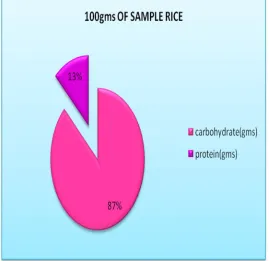
Fig 1 shows the amount of carbohydrate and protein in the given 100grams of rice sample. It is seen that rice sample consists of 87% of carbohydrates and 13% of proteins. There is no trace of fats seen.
Fig 2 shows the amount of carbohydrate, protein and fat in the given dal sample.
Fig 2 shows the amount of carbohydrate, protein and fat in the given sample of 100grams of dal sample. It is seen that dal sample consists of 59% of carbohydrates and 39% of proteins and 2% fat.
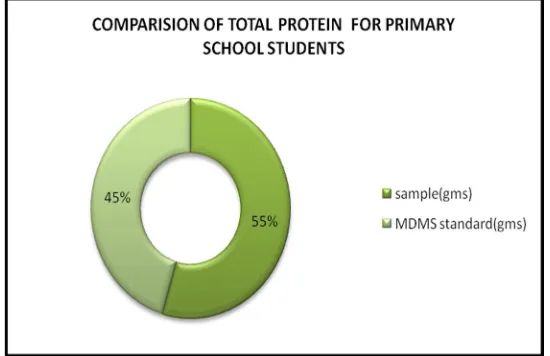
Fig.3 – Calorie Comparision Of The Standard And MDM Sample( Primary)
Fig 3 shows the total calorie content in the mid day meal provided to students on that particular day compared to the actual calorie content the mid day meal is supposed to provide to a student per day. It can be seen that the calorie requirement does not meet. In fact it is 16% less than the standard norms.
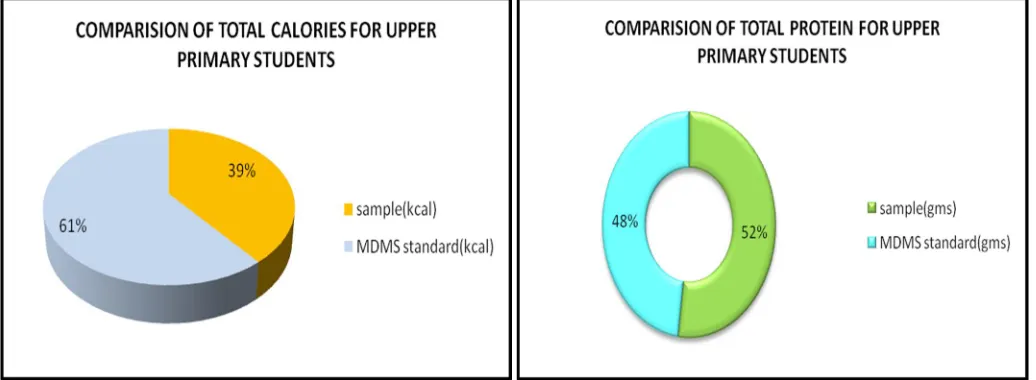
Fig 5 – Calorie Comparison and Protein Comparision Of The Standard And Mdm Sample (Upper Primary Students)
Fig 5 shows the total calorie content in the mid day meal provided to students on that particular day compared to the actual calorie content the mid day meal is supposed to provide to a student per day. It can be seen that the calorie requirement does not meet. it is 22% less than the standard norms. It can be due to nutrients lost during cooking or low quality grains. It also shows the protein content in the mid day meal compared to the standard values. It is seen that the protein requirement is easily met for the primary school children. This might be because on the day when the sample was collected from school there were green peas added to the dal. Peas are also a good source of protein, hence, peas increased the overall protein content of dal preparation by 4%.
Fig 6 – One Third Carbohydrate Rda For Girls 12years) Vs Intake In Lunch And One Third Carbohydrate Rda For Boys (10-12years) Vs Intake In Lunch
[image:4.612.48.565.430.621.2]Fig 7 – One Third Protein RDA For Girls (10-12years) Vs Intake In Lunch & One Third Protein RDA For Boys (10-12years) Vs Intake In Lunch
Fig 7 shows that the mid day meal does a good job of meeting the protein requirement. This is mostly due to the addition of Green Peas in during the dal preparation on the day when sample was collected. The protein content is 24% more than the recommended values.
[image:5.612.173.438.579.717.2]Fig 8 One Third Rda Of Calorie For Girls (10-12years) Vs Intake In Lunch One Third Rda Of Calorie For Boys (10-12years) Vs Intake In Lunch
Fig 8 shows the total calories provided by the mid day lunch compared to the one third of the day’s calories that a lunch must provide to students. It is seen even though the protein requirement is met, the calorie content is not adequate enough. The lunch lacks 20% of calories needed for girls and The calorie content is 24% less than the ICMR RDA for boys of 10-12 years of age.
hygienic state of food handlers and servers, the lunch area for students, serving equipment and utensils etc.
1) It was observed that there no proper place to receive the cooked mid day meal brought to the school in a vehicle from the designated foundation.
2) It was usually received in the school ground or back of the school building.
3) The menu for the day was displayed on the black board just outside the main corridor.
4) The helpers then took the cans containing cooked meal to the serving area which was noted to be an area of the school play ground.
5) No gloves were used by the food servers while serving the meal to students. 6) No appropriate clothing, head cover or apron was used.
7) The students made a proper queue to receive the meal.
8) The students had to bring their own empty lunch boxes, tiffins and plates in order to get the meal. There was no provision of lunch plates by the school authorities.
9) Some students followed the rule of washing hands before eating but most of them were not carrying out this cleanliness measure.
A proper, clean lunch area to be provided by all schools was no where to be seen. Students were observed having lunch in the school playground mostly. There was no specific place provided. In short students had their lunch where ever they could find a place to sit outside the main classrooms.
IV.CONCLUSIONS
From the above graphical representation of the nutrient analysis of mid day meal it can be it can be concluded, even with some benefitting objectives the mid day meal does not meet the daily nutrient guidelines as per the MDMS as well as school lunch requirements.
V. ACKNOWLEDGMENT
The Authors would like to thank the HOD of Anwarul Uloom College for moral support and the laboratory to carry out the nutrient analysis.
REFERENCES
[1] Sushma Sharma, Santosh Jain Passi, Salila Thomas, Hema S Gopalan, Evaluation Of Mid Day Meal Programme In Mcd Schools, Scientific Report 18 2006, Nutrition Foundation Of India.
[2] MDA, http://mdm.nic.in/,http://mdm.nic.in/aboutus.html.
[3] pratap thakur, assessment of children availing mid day meal, 2013, www.researchgate.net
[4] Nutrition Value of Mid Day Meal , 04-August-2016, Press Information Bureau, Government of India, Ministry of Human Resource Development, http://pib.nic.in/newsite/PrintRelease.aspx?relid=148353
[5] http://www.mdmodisha.nic.in/Correspondence/30.06.2015_13271_Notification_on_Centralized_Kitchen_on_MDM_Programme.pdf
[6] Best practices followed by states/ UTs 2015-16, Mid day meal scheme, Ministry of Human Resource Development, Government of India
[7] Dr. T. Vijaya Kumar, 2nd Half-Yearly Monitoring Report on Mid-Day-Meal Scheme for Telangana State, 2015, Districts Monitored Hyderabad Nizamabad Warangal, National Institute of Rural Development & Panchayati Raj (Ministry of Rural Development, Govt. of India) Rajendranagar, Hyderabad
[8] B Srilakshmi, ICMR Recommended Dietary Allowances for children 6-12 years-2010, Dietetics seventh multi color edition, 2014, page no-93,new age
international publications
[9] Siddheshwar Shukla, Nutrition on Paper, Poor Food on the Plate Mid-Day Meal, Vol. 49, Issue No. 7, 15 Feb, 2014, Special Articles,