Communicative Activities in Saudi EFL
Textbooks: A Corpus-driven Analysis
Ahmad Al Khateeb King Faisal University, Saudi Arabia
Sultan Almujaiwel King Saud University, Saudi Arabia
Abstract—This paper investigates the speaking and communication tasks in EFL textbooks in Saudi Arabia by means of corpus analysis. This analysis explores the extent to which the speaking tasks provided in Saudi EFL textbooks are communicatively incompetent, and is important due to the unsatisfactory, limited levels achieved by many learners of English at most educational stages, specifically primary, intermediate, and secondary. The reason for the poor oral skills among many EFL learners is due to the absence of authentic language learning tasks in a wide range of situations. The techniques used to detect the range of communicative tasks are based on sketching and retrieving the n-grams of in pairs and the verbal collocates say, talk, tell, ask, and discuss in a span of n = 2 ≤ ≥ 2. The experimental analysis driven from the intended textbooks shows that speaking tasks lack reasonable distributions of everyday communication examples and speaking/communicative situations.
Index Terms—speaking tasks, communicative competence, intercultural competence, Saudi EFL textbooks, corpus-driven analysis
I. INTRODUCTION
Language textbooks are an essential part of the language learning process itself. In fact, textbooks are regarded as the second core requirement when learning English as a second/foreign language (ESL/EFL) after a teacher/instructor (Riazi, 2003). By the same token, Hutchinson and Torres (1994) emphasize the role of textbooks in innovating and modernizing language learning. Furthermore, within textbooks, there are normally a number of speaking and communication tasks which are carefully designed to promote language learners’ ability to express ideas, opinions and feelings in meaningful and skillful ways. Speaking is one of the productive skills and a communication tool, which is composed of systematic verbal utterances for the sake of delivering specific meanings and exchanging thoughts through language (Mart, 2012).
In the same vein, the communicative language teaching (CLT) approach is seen as a stimulus for creating or fostering speaking and communication skills in a target language (Celce-Murcia, 2001; Nunan, 2004). CLT also puts the emphasis on English language teachers’ and stakeholders’ (instructors, material developers, syllabus designers) responsibility to prepare language learners well to ensure they can speak effectively and communicate meaningfully with their target audience through the use of well-grounded tasks designed in a way that reflects reality and current issues based on real-life situations (Celce-Murcia, 2001; Reiser & Dempsey, 2012).
Due to the prominence given to relevant speaking and communication tasks in ESL/EFL textbooks in general and in the Saudi context in particular, this research aims to extract and classify the kinds of tasks (or activities) which are included in EFL textbooks in Saudi Arabia, and examine whether there are differences between them in the textbooks given. It was decided to investigate the nature of speaking and communication tasks in an entire series of EFL textbooks used in general education across three st ages: primary, intermediate and secondary. The textbooks selected fall under the categories of beginner, intermediate and advanced levels. Through corpus-driven analysis, the focus will be on the status of tasks currently used and will also explore how other common communicative-oriented tasks would conform, specifically discussions, role-playing, problem solving, simulations, information gap and brainstorming, storytelling, interviews, story completion reporting, playing cards, picture narrating/describing and finding the difference (Oradee, 2012).
The objective is to compare the status and category of such tasks with other task types internationally used to help improve language learners’ speaking and communication skills such as imitative, intensive, responsive, transactional, interpersonal and extensive monologue-related tasks (Nunan, 2003). It takes the quantitative analysis approach. Canale and Swain (1980) showed the positive effect grammar knowledge has on speaking and communication skills in the target language. Vocabulary is also considered an important aspect of learners’ speaking and communication ability since words are the building blocks for literacy development (Silverman, 2007).
time-consuming and requires high-level linguistic competence and verbal proficiency along with other personal characteristics such as self-confidence. Therefore, this research addresses three questions:
• What are the communicative competencies/proficiencies served in Saudi EFL textbooks?
• How are they distributed? And to what extent are EFL textbooks used in Saudi schools covering speaking tasks?
II. REVIEWING THE LITERATURE
A. An Overview of Speaking Teaching/Learning
The domination of English as a second or foreign language (ESL/EFL) is undoubtedly increasing worldwide. Yet, when it comes to its use, the English language remains a hurdle for many learners, particularly in settings that require speaking and oral communication. Numerous theoretical perspectives have become supportive of the teaching and learning of speaking and the spoken genre. Two of the principal voices in this field belong to Vygotsky and Bruner, particularly in terms of so-called scaffolding and the Zone of Proximal Development (ZPD) (Lantolf & Appel, 1994; Lantolf, 2000). According to the Vygotskian’s socio-cultural theory, human cognitive development is a socially positioned activity which allows mediation to occur (Vygotsky, 1978a). Mediation underlines the assumption that knowledge is processed through negotiation and the facilitation of others to develop cognitive and problem-based learning abilities (Swain & Lapkin, 2002). Scaffolding is a joint mutual engagement of action that aims to achieve collaboration and interaction (Wood, 1988). Machado (2000) confirmed the constructive role of peer-to-peer and expert-to-novice (with the expert often the instructor) scaffolding during the practice stages of spoken tasks. Indeed, scaffolding contributes to the establishment of meaning and dialogue with the self and others (McCarthy & O’Keeffe, 2004), and the aim of speaking practice is to improve learners' oral production along with maximizing their linguistic skills.
In traditional methodology approaches such as the grammar-translation method, there is a clear emphasis on reading texts, which are translated from the first language to the second language and vice versa. However, Bygate (2009) shows that speaking can also be a channel between learners and instructors through which learners can practice language by using imitation for language development. This means that speaking is the avenue to articulate emotions, ideas, requests and apologies in order to illustrate the various functions of language. Talley and Hui-ling (2014) reported that learners should be informed that speaking and communication are of greater importance than simply having knowledge of the grammar when conversing with other learners. Having a conversation is often considered synonymous with developing one’s speaking skill. Furthermore, speaking is a socially oriented process aimed at creating meaning through the phases of producing, receiving, and processing information. In this regard, Gilakjani (2016) highlighted speaking as the pathway to interact with others everywhere and every day.
The term “speaking” can be defined in various ways, depending on whether the focus is on its form, in other words the grammar, or whether it is understood more broadly by its communicative function apart from its syntactic or prosodic features. Chaney and Burk (1998) argue that speaking is the development of sharing meaning by using verbal and non-verbal symbols in different settings. In fact, speaking is a demanding skill as it involves vowel reduction, elision, slang, and idioms along with other phenomena such as stress, intonation, and rhythm, all of which can make the production of good spoken language difficult to process (Lazaraton, 2001).
Speaking remains a crucial skill, as shown by Leong and Ahmadi (2017), since it cannot be separated from other language skills and contributes to helping learners to enhance their lexical, grammatical, and writing skills. Furthermore, practicing speaking in language learning classes usually adheres to the following stages: preparation, presentation, practice, evaluation, and finally extension. It seems that speaking usually seeks a balance between fluency and accuracy. Fluency relates the use of linking words and phrases in sentences to ensure that language production is coherent, whereas accuracy focuses on the precision of which the language is produced, including grammatical structure and pronunciation (Hedge, 2000). Cognitive complexity has also been considered as a determiner for uttered spoken production (Robinson, 2001). Yuan and Ellis (2003) emphasize the role of deliberate planning prior to speaking as a promoter of accuracy and complexity. Furthermore, engagement in small talk in the target language to create a sense of social communication is a practical step for the development of spoken interaction (Shumin, 2002). The reason for this is that such interactional negotiations can result in valuable output/speaking; i.e., explaining views, defending opinions, or contributing ideas to certain phenomena.
B. EFL Textbooks and Culture
A textbook (or coursebook) is a guide map used for the study of a particular subject. A textbook represents the crucial component of the teaching process and functions as a standard model for classroom practice (Nunan, 1988). Richards (2014) also considered the coursebook as the main resource used by numerous language teachers worldwide, with the analysis of textbooks affording instructors the opportunity to make a decision regarding appropriate and inappropriate materials. English as a foreign language (EFL) textbooks direct L2/FL instructors through various stages of pedagogy to achieve their educational and linguistic goals. As far as the tasks in textbooks are concerned, Granger (1998) states that textbooks should be based on authentic native English. Teaching materials may include events, incidents and actions that embody certain experiences, as this will help learners to construct cognitive and linguistic knowledge. A textbook that includes a teacher’s guide and student’s workbook save instructors’ time, since these resources contain various ideas for the incorporation of the text into classes and the kinds of supplementary tasks or homework that can be given, as well as a sample of tests and quizzes (Nordlund, 2016).
The analysis of EFL textbooks has become an integral part of the process of teaching and learning English as a foreign language. The purpose of textbooks analysis is to examine the effects of the teaching materials, including tasks and how suitable they are for learners (Tomlinson et al. 2001). This was supported by Ellis (1997), who drew attention to the value of predictive analysis (before the implementation) and retrospective analysis (after the implementation) of the course. Generally speaking, effective textbooks feature specific qualities: stimulating learners’ interest, recapping previous learning, preparing for what will be learned later on, explaining new content, providing clear and relevant strategies for learning, providing learning tasks, and supporting learners to monitor their progress (Richards, 2014). Furthermore, Harwood (2010) highlights two fundamental issues related to the analysis of EFL textbooks: the authenticity of the language used and the representation of the content provided.
One of the critical issues relevant to EFL textbooks is culture. Nieto (2010) defines culture as a joint worldview of common history, geographic location, language, social class, and religion. It is also seen as mutual agreement between the members of a certain society who share similar values, rules, role expectations, and meanings. Accordingly, Aldera (2017, p. 221) formulated his thoughts on culture as “the relationship between its beliefs, values, behavior, and communication” and also as “a collective achievement of the arts and manifestations of the human intellect”. Such textbooks should reinforce the root culture among learners, so to avoid any kind of division of local culture. Gray (2010) found that reaching a consensus on the amount of cultural content to be included in textbooks should be decided by the locals as well as considering learners’ backgrounds and their native norms and values. Prodromou (1992) supported the so-called cross-cultural approach in EFL textbooks, which emphasizes a comparison and contrast between the native “local” culture and the target “other/international” culture. Several EFL textbooks which are widely used have been criticized for the language used in general and for speaking tasks in particular (Nordlund, 2016). Such criticism extends to describing speaking tasks as lacking in authenticity and naturalness (Tyler, 2012) and also lacking in satisfactory models for spoken grammar and realistic language use (Gilmore, 2007).
Not only does the lack of authenticity and naturalness affect the quality of speaking tasks, but there are also other factors that have an impact on tasks aimed at improving oral skills. There is no doubt that there is a constant need to explore factors that affect the teaching and learning of speaking and the potential ways that low-level English language learners can enhance their spoken language abilities. Ur (1996) argued that there are several factors that cause difficulties in the practice of speaking and communication; these include lack of motivation, unwillingness to accept personal mistakes, and unequal opportunities for participation among learners. Motivation plays a key role in overcoming such difficulties. Littlewood (1998, p. 53) confirmed that motivation is “the crucial force which determines whether a learner embarks on a task at all, how much energy he devotes to it, and how long he perseveres”. Dil (2009) also found that anxiety and unwillingness during the process of speaking in English are considered among the biggest constraints affecting the learning of speaking and communication in English.
Al-Seghayer (2014) identified four constraints affecting English language teaching and learning in Saudi Arabia. Such constraints include: beliefs constraints, such as an inadequacy in learners’ preparation in English; curriculum constraints, such as limited learning materials; pedagogical constraints, such as inappropriate teaching methods; and administration constraints, such as limited local and international partnerships with specialized centers. Similar factors have been observed by Tuan and Mai (2015), whose findings showed that lack of topical knowledge, use of mother tongue (first language), and low or limited participation are all issues that have a negative impact on learners’ speaking ability. This is consistent with the work of Gani et al. (2015), who found that successful students put most emphasis on four areas to enhance their speaking skills: stating ideas and opinions, making requests and questions, responding to other people’s perspectives, and supporting their arguments.
C. Communicative Language Teaching (CLT)
convey meaning appropriately according to various social settings. Initially, CLT started as a theory of communication, but later became incorporated as an approach in EFL textbooks. Since 1988, Nunan has asserted that CLT should be reflected not just in syllabus plans, but also in classroom tasks, classroom interactions and tests. From a CLT perspective:
language learning success is to be assessed neither in terms of accurate grammar and pronunciation for their own sake, nor in terms of explicit knowledge of the rules, but by the ability to do things with the language, appropriately, fluently and effectively’ (Cook, 2003, p. 36)
CLT emphasizes the use of communicative language, including knowledge of language functions and appropriateness of expressions, for authentic tasks (Johnson and Johnson, 1998). In light of this view, there is a focus on authenticity, spontaneity, and using functional language so as to augment learners’ communicative fluency (Chambers, 2012). This argument is supported by Wong (2005), who advocated that a CLT approach contributes to practice and participation in a second or foreign language in realistic speaking contexts, and also argued that patterned practice and explicit grammar knowledge should be minimized. In view of that, the approach aims to boost learners’ communicative competence and performance (Richards and Rodgers, 2014), and learners are expected to be accountable for initiating, responding, managing, and negotiating during conversation (Talley and Hui-ling, 2014).
As far as speaking skill is concerned, Nunan (2003) suggests six categories of speaking performance in EFL settings: imitative, intensive, responsive, transactional, interpersonal, and extensive. The last three categories aim to establish dialogue and monologue (interaction) with instructors and peers. This indicates that rote learning, which includes imitation and memorization, should be minimized, and further concentration should be placed on extended monologues and communication. It is supported by Pourhosein Gilakjani (2016), who confirms that speaking is the pathway to interacting every day and everywhere. Informative speaking and communicative tasks are those socially oriented and meaningful tasks which focus on input, production, and information processing/feedback (Talley and Hui-ling, 2014). Accordingly, it is suggested to design various types of interactive communicative speaking tasks, including small-group or team-based oral work, full-class discussion, in-class debates, and individual or group reflection.
The designing of tasks should be based on three criteria: authenticity of topics, language level, and cognitive needs of learners. Current EFL textbooks may have also more problem-based, information-gap, role-play, or opinion-exchange tasks. Speaking tasks should focus on cultural elements, as culture is the carrier of language; they should be designed based on what is known as a cross-cultural approach (Prodromou, 1992). Gray (2010), in his analysis of EFL textbooks, has found that some textbooks are mostly lacking in cultural elements for speaking and communicative tasks. Such cultural elements need to be determined by instructors and local learners and by considering their needs.
Speaking tasks should also achieve linguistic competence along with intercultural competence (Byram, 2009; Yang & Fleming, 2013). As a result, speaking demands a communicative approach that targets successful integration of implicit and explicit learning tasks, along with teaching methods, into the EFL textbook. In EFL communicative settings, it is strongly recommended that learners be placed in situational transactions and role-play tasks; consequently, learners are expected to deal with others through output, that is, speaking (Crookall & Oxford, 1991). This output is usually composed of united words, phrases, and sentences so as to achieve meaningful discourse. Thus, the changes in such environments may affect humans’ thought processes, which are reflected in the development of language acquisition involving communication and its relevant speaking skill.
The notion of communicative competence has been extensively described by Canale and Swain (1980) in their influential model. They argue that communicative competence comprises four categories: grammatical competence, referring to learners’ knowledge of various linguistic aspects; sociolinguistic competence, which involves several linguistic uses in their social contexts; discourse competence, which implies the ability to use language adequately for forming meaningful utterances; and strategic competence, the ability to navigate and deal with communication properly. Weir (1990) contends that communicative language consists of language competence, strategic competence, and psychological mechanisms.
Furthermore, the communicative approach has put significant emphasis on target language learning and culture, i.e. “foreign language learning as enculturation” (Alptekin, 2002). As stated earlier, Kramsch (1993) clarified that learners construct expectations based on their actual experiences, which are often formed by local cultures. Accordingly, Alptekin (2002) argues that communicative competence is based on authenticity and representation of reality; nevertheless, this is encompassed by two challenges: teaching the English language is always inseparable from its main culture, leading to minimizing the role of the native language culture, and there is a constant preference for monolingual native speaker norms.
materials, and the tasks included, are designed according to the Common European Framework of Reference (CEFR), with less emphasis on the development of ICC.
III. TOOLS OF PROCESSING EFLTEXTBOOKS:WHICH OF WHICH?
Saudi EFL textbooks analyzed in the present study were designed in 2016 onwards. EFL is taught from the 4th grade. The number of textbooks designed for the Saudi K-12 schools from the 4th grade to the 12th grade is 57, each of which is provided in print and in a readable and searchable PDF format. The latter allows for resaving the files in other formats in order to process them in any computer software tools built for processing. Tables 1, 2, and 3 show the titles of the textbooks, the number of pages, and the basic statistics of words.
TABLE 1
PROCESSED EFL TEXTBOOKS OF PRIMARY SCHOOLS (LAST THREE GRADES) Series type Series name No. of books Size in pages Size in words Exercise book Smart Class 6 799 Tokens: 120,803
Types: 4185 Type/token ratio: 3.46 Student book Get Ready 6 567
We Can! 3 322
TABLE 2
PROCESSED EFL TEXTBOOKS OF INTERMEDIATE SCHOOLS (THREE GRADES) Series type Series name No. of books Size in pages Size in words
Work/grammar Full Blast 6 1062 Tokens: 453,960
Types: 11,820 Type/token ratio: 2.60
Student book Life Off 6 922
TABLE 3
PROCESSED EFL TEXTBOOKS OF HIGH SCHOOLS (THREE GRADES) Series type Series name No. of books Size in pages Size in words
Not specified Traveller 12 1363 Tokens: 957,974
Types: 25,959 Type/token ratio: 2.71
Flying High 12 860
Mega Goal 6 552
The stand-alone corpus processing tools found in the literature and applications of corpus linguistics are as follows: Sketch Engine (Kilgarriff, Rychly, Smrz, & Tugwell, 2004), aConCorde (Roberts, 2014; Roberts et al., 2006), AntConc (Anthony, 2014), WordSmith Tools (Scott, 2012), and IntelliText (Sharoff, 2014). These tools are open sources, except the web-based Sketch Engine and IntelliText tools. The ACPTs (version 4.6) were being enhanced further, but they are still a mishmash computationally (Almujaiwel & Al-Thubaity, 2016).
In processing Saudi EFL textbooks for the purpose of the present study, we use GraphColl (version 1.0.0). It has built-in LancsBox tools (Brezina et al., 2015), which are also used to extract the collocates that identify the types/topics of the nodal item in pairs in the speaking tasks. For the purpose of this study, the technique used to detect the communication tasks in the Saudi EFL textbooks was to process all 57 files by detecting the phrase in pairs. This phrase is used in textbooks in all the tasks that ask learners to use English practically (See appendices 1, 2, and 3 for the top 30 results of the key word in pairs). Any symbols and pronunciation marks were removed from the texts in the Saudi EFL textbooks, via R programming language, in order to gain better results of the word frequencies relevant to the speaking tasks. This justifies the absence of the apostrophes as in “I m” and “Andys,” which are “I’m” and “Andy’s” in the original texts. After these steps, the data were regarded as solid enough to be thoroughly analyzed, and will be discussed in the next section for the purpose of answering the questions formulated in this article.
IV. RESULTS AND DISCUSSIONS
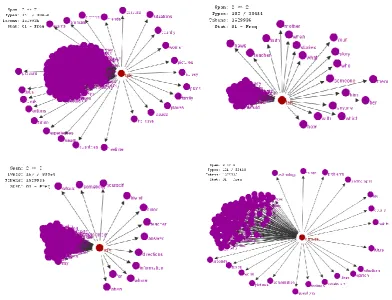
The results were extracted by GraphColl tools (appendix 4), allowing for the detection of the collocates that are relevant to the task of in pairs designed to practice speaking skills in the Saudi EFL textbooks. These verbal collocations are say (Table 5), talk (Table 6), tell (Table 7), ask (Table 8), and discuss (Table 9), which were found to be associated with the node in pairs in a span of n = 2 ≤ ≥ 2 (Table 4). The next step was to detect the content words collocated with those verbal collocations in order to identify the types/topics of speaking activities.
As shown in Table 4, the collocate say is ranked at the top, which means it has the strongest association of the various collocates (2559.0). A comparison of the target verbal collocations indicate that there are more occurrences of
say, talk, and ask than discuss and tell in this type of corpus of EFL textbooks. TABLE 4
RESULTS OF THE RELEVANT KEYS COLLOCATED WITH THE TASKS WITH INSTRUCTIONS IN PAIRS
Target verbal collocations Stat
Say 2559.0
Talk 1675.0
Tell 849.0
Ask 1502.0
As demonstrated in Table 5, the majority of tasks related to the collocate say in fact deal with skills irrelevant to speaking and communication, such as listening and reading. Other tasks seem to concentrate more on linking saying with other general skills, such as drawing or coloring something and repeating the basic phrases: hello, goodbye, and
sorry. The main topics of such tasks are concerned with food, computer numbers, and names.
Generally speaking, primary EFL textbooks appear to focus on tasks which are centered on memorization, repetition, and drill-and-practice. Bygate (2009) argued that such behaviors may result in learners’ gaining improved speaking competence. Consequently, it is evident that using communication tasks from the early stages of learning English is crucial to enhancing a learner’s speaking performance.
TABLE 5
THE COLLOCATE SAY AND ITS TASKS WITH THE STATISTICS OF FREQUENCY (WITHIN) Collocates Stat Collocates Stat Collocates Stat listen 773.0 I m 18.0 Food 8.0 read 203.0 goodbye 18.0 letter 8.0 what 184.0 photographs 12.0 phrases 7.0 sentences 59.0 Draw 12.0 may 7.0
how 57.0 Word 11.0 refuse 7.0
why 53.0 Verb 11.0 names 7.0
words 37.0 chant 10.0 alphabet 6.0 when 34.0 Yes 10.0 sentence 6.0 something 33.0 Sorry 10.0 fish 6.0
no 33.0 numbers 9.0 three 6.0
hello 27.0 whats 9.0 computer 6.0 again 25.0 might 9.0 story 6.0 where 23.0 pm 9.0 anything 6.0
which 21.0 must 9.0 all 6.0
who 20.0 please 8.0 whatever 5.0 things 19.0 colour 8.0
The second target verb in this analysis is talk. As shown in Table 6, there are various collocations. In alignment with this analysis, it is clear that there are tasks which have tackled authentic topics that are relevant to the learners and their past and future experiences. Those topics include holidays, free time, career, and shopping, and the tasks place the emphasis on talking about specific events, situations, feelings, places, issues, habits, dreams, and pictures. Yet, most of the tasks demonstrated the least frequent collocates. Gilmore (2007) and Tyler (2012) claim that speaking` tasks will lose meaningfulness when naturalness in language use and authenticity are disregarded.
The analysis has shown that several speaking-related tasks in intermediate and higher-level EFL textbooks focus on requesting EFL learners to talk about, and sometimes to describe, things such as a picture and house. The analysis has also exposed the need for more opportunities to keep learners engaged in interactive speaking situations.
TABLE 6
THE COLLOCATE TALK AND ITS TASKS WITH THE STATISTICS OF FREQUENCY (WITHIN) Collocates Stat Collocates Stat Collocates Stat about 871.0 Friends 10.0 issues 7.0 Your 92.0 Them 10.0 pictures 7.0 Time 44.0 Jobs 10.0 places 6.0 things 42.0 Riting 10.0 clothes 6.0 past 41.0 Shopping 9.0 habits 6.0 future 25.0 Work 9.0 travel 6.0
him 23.0 Or 9.0 space 5.0
people 22.0 Saudi 8.0 nature 5.0 experiences 21.0 Animals 8.0 peoples 5.0 how 20.0 family 8.0 dreams 5.0 something 19.0 someone 8.0 careers 5.0 school 16.0 events 7.0 free time 5.0 imaginary 13.0 situations 7.0 ailments 5.0 food 12.0 feelings 7.0 holidays 5.0
TABLE 7
THE COLLOCATE TELL AND ITS TASKS WITH THE STATISTICS OF FREQUENCY (WITHIN)
Collocates Stat
what 59.0
him 45.0
story 32.0
them 21.0
taught 20.0
people 13.0
anyone 13.0
his 13.0
friend 12.0
something 9.0
stories 8.0
more 8.0
truth 8.0
news 7.0
her 7.0
someone 7.0
their 6.0
The most frequent collocations of the fourth target verb, ask, are shown below in Table 8. Such tasks comprise the following: asking about specific information, asking for advice, asking for clarification, etc. Those tasks have been identified as situational yet infrequent across the textbooks (with low frequency statistics: 27.0, 22.0, and 6.0, respectively). In line with Nunan (2003), such tasks could also promote transactional and interactional types of speaking tasks and communication skills.
TABLE 8
THE COLLOCATE ASK AND ITS TASKS WITH THE STATISTICS OF FREQUENCY (WITHIN) Collocates Stat Collocates Stat
about 112.0 him her 21.0 questions 102.0 Help 19.0 teacher 45.0 requests 16.0
him 37.0 Her 16.0
me 32.0 yourself 14.0
what 31.0 Like 14.0
how 29.0 Them 14.0
something 29.0 question 12.0 information 27.0 Who 10.0 someone 27.0 many 10.0 friend 25.0 groups 6.0 when 25.0 somebody 6.0 advice 22.0 clarification 6.0 permission 22.0 where 6.0
again 21.0 whats 5.0
The collocate discuss is the fifth target verb in this research, as presented in Table 9, and is considered the least frequently occurring verb. The results show that it is included in tasks which tackle issues related to the engagement of EFL learners in speaking and communication including discussing ideas and sharing opinions, feelings, plans and habits and habits. In this regard, Oradee (2012) suggests that communicative competencies could be achieved through discussion, problem-solving, and storytelling. Nonetheless, such tasks remain inadequate, as their frequency did not exceed 28.0, compared to, for example say (773.0) and talk (871.0).
TABLE 9
THE COLLOCATE DISCUSS AND ITS TASKS WITH THE STATISTICS OF FREQUENCY (WITHIN)
Collocates Stat
Plans 28.0
Future 27.0
Ideas 19.0
Opinion 10.0
Photographs 8.0
Habits 8.0
Problems 7.0
Pictures 7.0
World 6.0
Feelings 6.0
Technology 5.0
Issue 5.0
Corpus-driven analysis has shown that the collocate say has the highest level of frequency, compared to the collocate
discuss, which has been found to be the lowest. It has been found that a few tasks are constructed based on a communicative and situational basis. Most speaking tasks seemed to be distributed randomly, without fully taking into account the scenes of situational performance and also without considering the logical consequences of the Englishes-world ontology. Furthermore, based on the Saudi EFL textbooks that have been investigated, it was evident that there is a need for the inclusion of more communicative tasks to ensure EFL learners to interact and communicate their ideas with peers in English and a wide variety of topics. Lastly, the data also revealed that the majority of tasks are built as one-way rather than reciprocal.
APPENDIX
TABLE 10.
TOP 30 RESULTS OF CONCORDANCE IN PRIMARY SCHOOLS’EFL TEXTBOOKS
Preceding words Node Subsequent words
and repeat Then talk in pairs Hello My names Salim This is
He a book Talk in pairs SA chooses a photo from
Greetings Listen and say in pairs Listening speaking practise formulaic language you Read and say in pairs Listen and match are thanks
Read and say in pairs Listen and say Listening reading short simple questions Read in pairs Ask and answer Listen and questions Read and say in pairs Read and draw Write Lesson
Read and say in pairs Read Listen and find Read
Read and say in pairs Lesson Read and match Write
Read and say in pairs Lesson Read and write Reading
school Read and say in pairs I have Its my calendar
Read and say in pairs Reading understand and complete short say Read and say in pairs Listen draw and write a
you Read and say in pairs Listen and match Writing reading complete Read and say in pairs I m late No you
b Read and say in pairs a Read Listen and number
Read and say in pairs Mum please pass me some
simple questions Listen Say in pairs Listen and find Read and
and Read Say in pairs Wheres the Thank you Its
to Read and say in pairs go on a picnic make
check Read and say in pairs a Read and complete Lesson number Read and say in pairs understand short monologues questions Read and say in pairs Where are you going Im colour Read and say in pairs a Revision Read and find routine Read and say in pairs Ask and answer I have
Read and say in pairs understand specific information Speaking
b Read and say in pairs What animal did you see
do Practice the talks in pairs Practice with actions Unit My hands Practice and do in pairs Unit My Body PM
TABLE 11.
TOP 30 RESULTS OF CONCORDANCE IN INTERMEDIATE SCHOOLS’EFL TEXTBOOKS
Preceding words Node Subsequent words
your name B Talk in pairs Hi Im Whats your name
I cant A Talk in pairs Look at the picture find
and repeat B Talk in pairs C Listen and repeat D
and repeat D Talk in pairs How old are you Im
each colour B Talk in pairs Point to different objects in
at the board Talk in pairs Read the text Write Speak
you Not bad Talk in pairs peak Talk in pairs A
in pairs peak Talk in pairs A Listen and repeat Whats
Then read it out in pairs GUESSING GAME Find the clock
Find the clock Talk in pairs B Read again and complete
favourite player athlete B Talk in pairs D Use the notes below SCORE GUESSING GAME Talk in pairs Student A Read the cards
at Science B Talk in pairs about your best friend Whos
has got peak Talk in pairs Look at the pictures and
check your answers Talk in pairs about your daily routine peak
doesnt B Now talk in pairs Yes very much Its OK
questions A Talk in pairs peak Write sentences about what
Amal Julie Kelly Talk in pairs about the chores you do
the week Then talk in pairs When What Who with Whats
Spot the differences Talk in pairs Look at the two houses her favourite peak Talk in pairs Ask each other about the
not Im tired Talk in pairs Take turns to ask for
your house flat Then talk in pairs Where do you live I
out there peak Talk in pairs Whats your dream house like
to Paul please Talk in pairs Student A Look at the
Speak Stand up Talk in pairs What colour is What does
that please a Talk in pairs I dont understand c
the answers below Talk in pairs Ask and answer personal questions
PM Work in pairs Student A points to something
PM Talk in pairs Ask and answer questions about
TABLE 12.
TOP 30 RESULTS OF CONCORDANCE IN HIGH SCHOOLS’EFL TEXTBOOKS
Preceding words Node Subsequent words
and read B Talk in pairs as in the example Male
surname NOTE B Talk in pairs as in the example Hello Zealander Moroccan B Talk in pairs Where are you from Im
eight nine B Talk in pairs Whats your phone number for
nine NOTE C Talk in pairs How old are you Im
B Read then talk in pairs about objects in your classroom High School SPEAK Talk in pairs Exchange personal information shoes and they have about pairs Men like cars and their words SPEAK GAME Talk in pairs Student A go to page shoes Mohammed has Hana has pairs of shoes This is Hanas are quite expensive I have pairs of shoes High heels are
possible PRACTICE SPEAK Talk in pairs Read the advertisement below Imagine
a b SPEAK Talk in pairs Make plans for today or
about nine SPEAK Talk in pairs Student A Use the prompts
you do Then talk in pairs as in the example and
a friend SPEAK Talk in pairs SUMMER JOB SURVEY STUDENT B
lets go SPEAK Talk in pairs Make plans for today Read
check your answers Talk in pairs Think about how often you about yourself Then talk in pairs Ask and answer questions Sun show you SPEAK Talk in pairs about your likes and dislikes
the study SPEAK Talk in pairs Go to page POSSESSIVE PRONOUNS
for False SPEAK Talk in pairs about your as in
usually Its usually SPEAK Talk in pairs Discuss the weather in the your house flat SPEAK Talk in pairs Ask and answer questions using
SPEAK Talk in pairs Student A Imagine you have
few PRACTICE SPEAK Talk in pairs Student A go to page SPEAK ROLE PLAY Talk in pairs Student A Imagine that you the sentences SPEAK Talk in pairs Read about Andys problem below the situations and talk in pairs Complete the dialogues
Figure 1.Extracting the collocates say, talk, tell, ask and discuss associated with in_pairs by GraphColl.jar (Brezina et al., 2015) version 1.0.0.
REFERENCES
[1] Aldera, A. S. (2017). Teaching EFL in Saudi Arabian Context: Textbooks and Culture. Journal of Language Teaching and Research, 8.2, 221–228. doi.org/10.17507/jltr.0802.03
[2] Almujaiwel, S. and Al-Thubaity, A. (2016). Arabic Corpus Processing Tools for Corpus Linguistics and Language Teaching.
Proceedings of the 2016 International Conference on the Globalization of Second Language Acquisition and Teacher Education (G-SLATE2) 4-6 August, Fukuoka (Japan): INTESDA, 103-108.
[3] Alptekin, C., (2002). Towards intercultural communicative competence in ELT. ELT Journal, 56.1, 57–64. doi.org/10.1093/elt/56.1.57.
[4] Al-Seghayer, K. (2014). The four most common constraints affecting English teaching in Saudi Arabia. International Journal of English Linguistics, 4.5, 17-26. doi.org/10.5539/ijel.v4n5p17.
[5] Anthony, L. (2014). AntConc (Version 3.4.3) [Computer Software]. Tokyo, Japan: Waseda University. Retrieved February 2, 2018, from http://www.antlab.sci.waseda.ac.jp/.
[6] Borghetti, C. (2013). Integrating Intercultural and Communicative Objectives in the Foreign Language Class: A proposal for the integration of two models. The Language Learning Journal.41.3, 254–267. doi.org/10.1080/09571736.2013.836344. [7] Brezina, V., McEnery, T. and Wattam, S. (2015). Collocations in context: A new perspective on collocation networks.
International Journal of Corpus Linguistics, 20, 2, 139–173. doi.org/10.1075/ijcl.20.2.01bre.
[8] Bygate, M. (2009). Teaching and testing speaking. In M. H. Long and C. J. Doughty (Eds.), The Handbook of Language Teaching. Chichester, West Sussex: Wiley-Blackwell, 412–440.
[9] Byram, M. (2009). Intercultural competence in foreign languages–The intercultural speaker and the pedagogy of foreign language education. In D. Deardorff (Ed.), The SAGE Handbook of Intercultural Competence. Thousand Oaks, CA: Sage Publications, 321–332.
[10] Canale, M. & Swain, M. (1980). Theoretical bases of communicative approaches to second language teaching and testing.
Applied Linguistics, 1.1, 1–47. doi.org/10.1093/applin/I.1.1.
[11] Celce-Murcia, M., (2001). Language teaching approaches: An overview. In Celce-Murcia, M. (Ed.), Teaching English as a Second or Foreign Language. Boston, MA: Heinle and Heinle, 3-11.
[12] Chambers, R. (2012). Sharing and Co‐Generating Knowledges: Reflections on Experiences with PRA and CLTS. IDS Bulletin, 43.3, 71–87. doi.org/10.1111/j.1759-5436.2012.00324.x.
[13] Chaney, A. L. and Burk, T. L. (1998). Teaching Oral Communication in Grades K-8. Boston: Allyn and Bacon. [14] Cook, G. (2003). Applied Linguistics. Oxford: Oxford University Press.
[15] Crookall, D. and Oxford, R. (1991). Dealing with anxiety: Some practical activities for language learners and teacher trainees. In E. K. Horwitz and D. J. Young (Eds.), Language Anxiety: From Theory and Research to Classroom Implications. Englewood Cliffs, NJ: Prentice-Hall, 141–150.
[17] Ellis, R. (1997). The Empirical Evaluation of Language Teaching Materials. ELT Journal, 51.1, 36–42. doi.org/10.1093/elt/51.1.36.
[18] Gani, S. A., Fajrina, D. and Hanifa, R. (2015). Students’ Learning Strategies for Developing Speaking Ability. Studies in English Language and Education, 2.1, 16–28. doi.org/10.24815/siele.v2i1.2232.
[19] Gilmore, A. (2007). Authentic Materials and Authenticity in Foreign Language Learning. Language Teaching, 40.2, 97–118. doi.org/10.1017/S0261444807004144.
[20] Granger, S. (1998). The Computer Learner Corpus: a versatile new source of data for SLA research. In S. Granger (Ed.)
Learner English on Computer. Longman: London, 3–18.
[21] Gray, J. (2010). The branding of English and the culture of the new capitalism: Representations of the world of work in English language textbooks. Applied Linguistics, 31.5, 714–733. doi.org/10.1093/applin/amq034.
[22] Harwood, N. (2010). English Language Teaching Materials. New York: Cambridge University Press.
[23] Hedge, T. (2000). Teaching and Learning in the Language Classroom:A guide to current ideas about the theory and practice of English language teaching. Oxford: Oxford University Press.
[24] Hutchinson, T. and Torres, E. (1994). The Textbook as Agent of Change. ELT Journal. 48.4, 315–328.
[25] Johnson, K., & Johnson. H. (1998). Encyclopedic Dictionary of Applied Linguistics: A Handbook for Language Teaching. Oxford: Blackwell Publishers.
[26] Kilgarriff, A., Rychly, P., Smrz, P., & Tugwell, D. (2004). The sketch engine. In G. Williams & S. Vessier (Eds.), Proceedings of the Eleventh Euralex International Congress. Lorient, France: Université de Bretagne, 105–115.
[27] Kramsch, C. (1993). Context and Culture in Language Teaching. Oxford: Oxford University Press.
[28] Lantolf, J. P. (Ed.). (2000). Sociocultural Theory and Second Language Learning. Oxford: Oxford University Press.
[29] Lantolf, J. P. and Appel, G. (Eds.). (1994). Vygotskian approaches to second language research. Norwood, New Jersey: Ablex Publishing Corporation.
[30] Lanzaron, A. (2001). Teaching Oral Skills. In M. Celce-Murcia, (Ed.), Teaching English as a Second or Foreign Language. Boston: Heinle and Heinle, 103-115.
[31] Larsen-Freeman, D. (2000). Second language acquisition and applied linguistics. Annual Review of Applied Linguistics, 20, 165–181. doi.org/10.1017/S026719050020010X.
[32] Leong, L. M., & Ahmadi, S. M. (2017). An Analysis of Factors Influencing Learners’ English Speaking Skill. International Journal of Research in English Education, 2.1, 34–41. doi.org/10.18869/acadpub.ijree.2.1.34.
[33] Littlewood, W. T. (1998). Foreign and Second Language Learning: language-acquisition research and its implications for the classroom. New York: Cambridge University Press.
[34] Mart, C. T. (2012). Developing speaking skills through reading. International Journal of English Linguistics, 2.6, 91–96. doi.org/10.5539/ijel.v2n6p91.
[35] Mattos, A. M. A. (2000). A Vygotskian approach to evaluation in foreign language learning contexts. ELT Journal, 54, 335– 345. doi.org/10.1093/elt/54.4.335.
[36] McCarthy, M., & O'Keeffe, A. (2004). 2. Research in the Teaching of Speaking. Annual Review of Applied Linguistics, 24, 26– 43. doi.org/10.1017/S0267190504000029.
[37] Nieto, S. (2010). Language, Culture, and Teaching. Critical perspectives. New York: Routledge.
[38] Nordlund, M. (2016). EFL Textbooks for Young Learners: A Comparative Analysis of Vocabulary. Education Inquiry, 7.1, 47-68. doi.org/10.3402/edui.v7.27764.
[39] Nunan, D. (1988). Syllabus Design. Oxford: Oxford University Press.
[40] Nunan, D. (2003). The impact of English as a global language on educational policies and practices in the Asia‐Pacific Region. TESOL, 37.4, 589–613. doi.org/10.2307/3588214.
[41] Nunan, D. (2004). Task-Based Language Teaching. Cambridge: Cambridge University Press.
[42] Oradee, T. (2012). Developing speaking skills using three communicative activities (discussion, problem-solving, and role-playing). International Journal of Social Science and Humanity, 2.6, 533–535. doi.org/10.7763/IJSSH.2012.V2.164.
[43] Pourhosein Gilakjani, A. (2016). What Factors Influence the English Pronunciation of EFL Learners? Modern Journal of Language Teaching Methods, 6.2, 314–326.
[44] Prodromou, L. (1992). What culture? Which culture? Cross-cultural factors in language learning. ELT journal, 46.1, 39–50. doi.org/10.1093/elt/46.1.39.
[45] Reid, E. (2015). Techniques Developing Intercultural Communicative Competences in English Language Lessons. Procedia-Social and Behavioral Sciences, 186, 939–943. doi.org/10.1016/j.sbspro.2015.04.011.
[46] Reiser, R. A., & Dempsey, J. V. (Eds.). (2012). Trends and issues in instructional design and technology. Boston, MA: Pearson. [47] Richard-Amato, P. A. (1996). Making it happen. New York, NY: Longman.
[48] Richards, J. C. (2014). The ELT Textbook. In S. Garton and K. Graves, (Eds.), International Perspectives on Materials in ELT. Basingstoke: Palgrave Macmillan, 19–36.
[49] Richards, J. C., & Rodgers, T. S. (2014). Approaches and Methods in Language Teaching. Cambridge: Cambridge University Press.
[50] Roberts, A., Al-Sulaiti, L., & Atwell, E. (2006). aConCorde: Towards an open-source, extendable concordancer for Arabic.
Corpora1.2, 39–60.
[51] Roberts, A. (2014). A ConCorde [Computer Software]. Retrieved February 2, 2018, from http://www.andy-roberts.net/coding/aconcorde.
[52] Robinson, P. (2001). Task complexity, cognitive load, and syllabus design. In P. P. Robinson (Ed.), Cognition and Second Language Instruction, Cambridge: Cambridge University Press.
[54] Shumin, K. (2002). Factors to consider: Developing adult EFL students' speaking abilities. In Richards J. and W. Renandya (Eds). Methodology in Language Teaching: An Anthology of Current Practice. Cambridge: Cambridge University Press, 204– 211.
[55] Silverman, R. D. (2007). Vocabulary development of English-language and English-only learners in kindergarten. The Elementary School Journal, 107.4, 365–383. doi.org/10.1086/516669.
[56] Swain, M., & Lapkin, S. (2002). Talking it through: Two French immersion learners’ response to reformulation. International Journal of Educational Research, 37.3, 285–304. doi.org/10.1016/S0883-0355(03)00006-5.
[57] Talley, P. C., & Hui-ling T. (2014). Implicit and Explicit Teaching of English Speaking in the EFL Classroom. International Journal of Humanities and Social Science. 4.6. 38–46.
[58] Tomlinson, B., Dat, B., Masuhara, H., & Rubdy, R. (2001). EFL Courses for Adults. ELT Journal, 55.1, 80–101. doi.org/10.1093/elt/55.1.80.
[59] Tuan, N. H., & Mai, T. N. (2015). Factors Affecting Students’ Speaking Performance at LE Thanh Hien High School. Asian Journal of Educational Research, 3.2, 8–23.
[60] Tyler, A. (2012). Cognitive Linguistics and Second Language Learning: Theoretical Basics and Experimental Evidence. NY: Routledge.
[61] Ur, P. (1996). A Course in Language Teaching: Practice and Theory. Cambridge: Cambridge University Press.
[62] Vygotsky, L. S. (1978a). Interaction between learning and development. Readings on the Development of Children, 23.3, 34– 41.
[63] Vygotsky, L. S. (1978b). Mind in Society: The Development of Higher Psychological Processes. Cambridge, MA: Harvard University Press.
[64] Weir, C. J. (1990). Communicative Language Testing. Prentice-Hall International (UK) Ltd.
[65] Wong, M. S. L. (2005). Language learning strategies and language self-efficacy: Investigating the relationship in Malaysia.
RELC journal, 36.3, 245–269. doi.org/10.1177/0033688205060050. [66] Wood, D. (1988). How children think and learn. Oxford: Basil Blackwell.
[67] Yalçın, Ö., & İnceçay, V. (2014). Foreign language speaking anxiety: The case of spontaneous speaking activities. Procedia-Social and Behavioral Sciences, 116, 2620–2624. doi.org/10.1016/j.sbspro.2014.01.623.
[68] Yang, L., H. & Fleming, M. (2013). How Chinese college students make sense of foreign films and TV series: implications for the development of intercultural communicative competence in ELT. The Language Learning Journal, 41.3, 297–310. doi.org/10.1080/09571736.2013.836347.
[69] Yuan, F., & Ellis, R. (2003). The effect of pre-task planning and online planning on fluency, complexity, and accuracy in L2 oral production. Applied Linguistics, 24.1, 1– 27. doi.org/10.1093/applin/24.1.1.
Ahmed Abdulateef Al Khateeb has received a PhD from the University of Southampton, Graduate School of Humanities, Modern Languages, United Kingdom in 2015. He is currently working as an Assistant Professor of Modern Languages and Applied Linguistics and the Head of English Language Department at King Faisal University, Al-Ahsa, Saudi Arabia. Dr Al Khateeb research interests include technology-enhanced language learning (TELL), technology-mediated intercultural exchange/ communication for language learning (telecollaboration) and neuro/cognitive Linguistics. He has widely published in scholarly journals in the area of social networking tools and English language learning and teaching. He has also published an edited chapter (Designing a Wiki -Based Course for Enhancing the Practice of Writing Skills in the 21st Century: Moving from Theoretical Grounding into Practical Knowledge) in an eminent book by IGI: Engaging 21st Century Writers with Social Media, 259 – 279.