Executive Summary...I
1. Introduction ... 1
Background ... 2
Overview of the Report ... 2
2. Approach to Developing Ontario’s eHealth Strategy 2009-2012...3
Grounding the eHealth Strategy in the Vision, Mission and Mandate of eHealth Ontario...4
Using Principles to Guide the Development and Implementation of the Strategy...5
Learning from the eHealth Efforts of Others ...7
Ontario Telemedicine Network (OTN)...7
Ontario Laboratory Information System (OLIS)...7
Diagnostic Imaging Repositories (DI/PACS)...8
Wait Times Information System (WTIS)...8
Alberta netCARE...9
UK National Care Records Service (NCRS)...9
Denmark eHealth Portal...10
Engaging Stakeholders in Developing the Strategy...10
3. Overview of the Strategy...11
Ontario’s eHealth Strategy 2009-2012...13
Clinical Priorities...14
Diabetes Management ...15
Medication Management...18
Wait Times... 21
Foundational Priorities...24
Cornerstone Information Systems...25
Clinical Activity Information Systems...28
Technology Services...31
Enabling Practices and Talent Management... 34
How the Strategy will Benefit Ontarians...36
4. Executing the Strategy...37
Leveraging and Partnering with Others to Execute the Strategy...38
Engaging Thought and Delivery Leaders...40
Using the Most Appropriate Delivery Model for Each Initiative...41
Knowing the Risks to the Strategy and Mitigation Tactics...43
5. Conclusion...45
eHealth Ontario’s Strategy Roadmap 2009 - 2012...47
References... 48
Table of Contents
This is the first eHealth Strategy of the new provincial agency, eHealth Ontario. Legally created on September 29, 2008, this new organization has been given the exciting opportunity to take the lead role in harnessing information technology and innovation to improve patient care, safety and access in support of the government’s health strategy. eHealth Ontario is responsible for developing a single provincial eHealth Strategy and aligning all publicly-funded eHealth initiatives through a single point of accountability. Ontario’s eHealth Strategy 2009-2012 was developed after an intensive assessment of Ontario’s eHealth environment, an extensive review of eHealth initiatives in Ontario and other provinces and countries, a wide-spread consultation process with input from over 400 stakeholders, and deliberations by eHealth Ontario’s Board of Directors and senior management.
The eHealth Strategy 2009-2012 is grounded in the vision of the agency: Achieving excellence in healthcare by harnessing the power of information. The Strategy was informed by guiding principles centered on patient-focus, tangible clinical impact, clinically relevant solutions, transparency, active engagement of communities and experts, collaboration and partnerships, effective and efficient use of resources, performance improvements, and public accountability.
Core Priorities of the
eHealth Strategy 2009-2012
The eHealth Strategy has two intrinsically linked core priorities: clinical and foundational. Within each of these priorities, there are explicit solutions that will be achieved, specific actions and performance targets that will be attained, and measurable results that will be realized by 2012.
Clinical Priorities
Clinical priorities are directly related to patients, health and healthcare. The Strategy will provide significant clinical value to patients and clinicians. To ensure the best chance for success, the Strategy’s clinical priorities have a clear and well-defined focus. Over the next three years, eHealth Ontario will focus its efforts on three clinical priorities:
Diabetes Management: to control and manage
diabetes more effectively and reduce associated complications and costs.
Medication Management: to implement on-line
management of prescription medications to minimize preventable adverse drug events. Wait Times: to reduce waits in Ontario emergency
departments and the incidence of inpatients in acute care waiting for alternate levels of care, and to continue improving wait times for acute care services.
It is recognised that there are many other healthcare priorities beyond these three such as other chronic diseases, and mental health and addictions. The progress made in the three selected clinical areas from 2009-2012 will be used to leverage improvements in other clinical priority areas beyond 2012.
Executive Summary
Foundational Priorities
eHealth Ontario will implement information systems that are the foundation to support the Strategy’s clinical priorities. In addition to developing a strong infrastructure of key information systems and tools, foundational priorities include improving the technology services that eHealth Ontario manages and strengthening the agency’s operating practices and human resource talent. Over the next three years, eHealth Ontario will focus its efforts on four foundational priorities all of which are fundamental for building a comprehensive electronic health record by 2015:
Cornerstone Information Systems: these systems
are building block information tools, services and registries that will enable clinical information to be captured and shared effectively and securely. Clinical Activity Information Systems: these systems
will help clinicians to manage care at various points along the service continuum.
Technology Services: eHealth Ontario manages a
number of technology services that were assessed, and issues and actions identified.
Enabling Practices and Talent Management: these
will help eHealth Ontario to deliver the eHealth Strategy.
It is critical to keep in mind that the foundational priorities are the foundation that supports achieving the clinical priorities in 2009-2012. These foundational priorities will then be in place and leveraged to support additional clinical priorities beyond 2012.
Executing the Strategy
eHealth Ontario is committed to successfully executing the Strategy and being held accountable for meeting its clinical and foundational priorities on time and on budget. The Strategy identifies ways in which the agency will:
Leverage and partner with others to
execute the Strategy;
Engage thought and delivery leaders;
Use the most appropriate delivery model
for each initiative; and
Identify and mitigate the risks to the Strategy.
Major risks include insufficient human resources to execute the Strategy, and clinician adoption of eHealth solutions.
In Conclusion
The government of Ontario is investing the political will and the investment capital needed to make this Strategy a success. In May 2008, Cabinet approved the funds to execute the Strategy over four years, from fiscal year 2008-09 through to 2011-12. Since the first of these years is almost finished, this Strategy covers three years from April 1, 2009 to March 31, 2012. The total cost of the Ontario eHealth Strategy over the three years is $2.133 billion.
eHealth Ontario will remain focused and achieve its goals with commitment and conviction. Its true measure of success will be improved health and healthcare for Ontarians. The three clinical priorities will directly impact on the quality of care received by patients and will improve their clinical outcomes. The Strategy’s foundational priorities will also improve patient outcomes by supporting the clinical priorities. Patients will start to see clinical benefits in the first year of the Strategy. This focus on early benefits will generate momentum for eHealth in the province and will encourage clinicians and the public to work together to improve healthcare. eHealth Ontario looks forward to being part of this work, and achieving excellence in healthcare by harnessing the power of information for the benefit of Ontarians.
InTroduCTIon
This is the first eHealth Strategy of the new provincial agency,
eHealth Ontario. Legally created on September 29, 2008, this new
organization has been given the exciting opportunity to take the
lead role in harnessing information technology and innovation
to improve patient care, safety and access in support of the
government’s health strategy.
INTRODUCTION TO ehealTh sTRaTegy INTRODUCTION TO ehealTh sTRaTegy INTRODUCTION TO ehealTh sTRaTegy INTRODUCTION TO
INTRODUCTION TO ehealTh sTRaTegy INTRODUCTION TO ehealTh sTRaTegy INTRODUCTION TO ehealTh sTRaTegy INTRODUCTION TO ehealTh sTRaTegy
Background
This is the first eHealth Strategy of the new
provincial agency, eHealth Ontario. Legally created on September 29, 2008, this new organization has been given the exciting opportunity to take the lead role in harnessing information technology and innovation to improve patient care, safety and access in support of the government’s health strategy. eHealth Ontario is responsible for developing a single provincial eHealth Strategy and aligning all publicly-funded eHealth initiatives through a single point of accountability. This first eHealth Strategy did not begin with a blank slate. Rather, in May 2008, Cabinet approved Ontario’s first significant eHealth plan. eHealth Ontario was created to lead the execution of this plan. The new agency was created out of the Smart Systems for Health Agency and the e-Health Program of the Ministry of Health and Long-Term Care. These two organizations have been managing various initiatives to support their own priorities.
Given this environment, it was challenging for eHealth Ontario to create this first Strategy. The agency had to incorporate the important health priorities of the Ministry, assess the priorities and initiatives of the two previous organizations, and bring an innovative and results-oriented approach to the leadership role that it has been given.
Ontario’s eHealth Strategy 2009-2012 is the result. The Strategy was developed after an intensive assessment of Ontario’s eHealth environment, an extensive review of eHealth initiatives in Ontario and other provinces and countries, a wide-spread consultation process with input from over 400 stakeholders, and deliberations by eHealth Ontario’s Board of Directors and senior management.
The Government of Ontario is investing the political will and the investment capital needed to make this Strategy a success. In May 2008, Cabinet approved the funds to execute the Strategy over four years, from fiscal year 2008-09 through to 2011-12. Since the first of these years is almost finished, this Strategy covers three years from April 1, 2009 to March 31, 2012. The total cost of the Ontario eHealth Strategy over the three years is $2.133 billion.
eHealth Ontario is committed to successfully
executing the Strategy and being held accountable for meeting its priorities on time and on budget. eHealth Ontario will remain focused and achieve its goals with commitment and conviction. We look forward to working with the public, clinicians and others to make this Strategy a success. eHealth Ontario especially looks forward to improving healthcare and empowering Ontarians to be more engaged in their healthcare through information.
overview of
the report
Part Two of this report presents the approach that was used to develop Ontario’s eHealth Strategy 2009-2012. The approach includes: grounding the eHealth Strategy in the vision, mission and mandate of eHealth Ontario, using principles to guide the development and implementation of the Strategy, learning from the eHealth efforts of others, and engaging stakeholders in developing the Strategy. Part Three presents the Strategy. It begins with an overview followed a description of the clinical priorities: diabetes management, medication management and wait times and the Strategy’s foundational priorities which include cornerstone information systems, clinical activity information systems, technology services, and enabling practices and talent management. This is followed by how the Strategy will benefit Ontarians. Details on executing the Strategy are found in Part Four.
Part Five presents concluding remarks followed by supporting appendices.
ApproAch to DevelopIng
onTarIo’S eHEalTH STraTEgy 2009-2012
appROaCh TO DevelOpINg ONTaRIO’s ehealTh sTRaTegy 2009-2012 appROaCh TO DevelOpINg ONTaRIO’s ehealTh sTRaTegy 2009-2012
appROaCh TO DevelOpINg ONTaRIO’s ehealTh sTRaTegy 2009-2012 appROaCh TO DevelOpINg ONTaRIO’s ehealTh sTRaTegy 2009-2012
appROaCh TO DevelOpINg ONTaRIO’s ehealTh sTRaTegy 2009-2012 appROaCh TO DevelOpINg ONTaRIO’s ehealTh sTRaTegy 2009-2012
A comprehensive approach was used to develop
Ontario’s eHealth Strategy 2009-2012. This approach included:
Grounding the eHealth Strategy in the vision, mission and mandate of eHealth Ontario;
Using principles to guide the development and implementation of the Strategy;
Learning from the eHealth efforts of others; and
Engaging stakeholders in developing the Strategy.
grounding the eHealth Strategy in the
vision, mission and mandate of eHealth ontario
The eHealth Strategy supports the vision, mission and mandate of eHealth Ontario.
The vision of eHealth Ontario is:
Achieving excellence in healthcare by harnessing the power of information.
Vision
Mission
Mandate
The mission of eHealth Ontario is to:
Deliver a comprehensive, patient-focused, secure and private
electronic system that will improve the way patients receive care.
The mandate of eHealth Ontario is to:
Play leading role in harnessing IT and innovation to improve patient care,
safety and access in support of the government’s health strategy.
Provide a single, harmonized and coherent eHealth Strategy for Ontario that supports
the government’s health agenda.
Align all publicly-funded eHealth initiatives through a single point of accountability.
Encompass all provincially funded healthcare system information initiatives that support
using Principles to guide the development
and Implementation of the Strategy
The principles that were used to guide the development and implementation of the eHealth Strategy include:
eHealth ontario will focus on enabling clinical
outcomes (value) for better patient care,
not technology for its own sake
eHealth Ontario will understand its customers
and identify where patient care gaps exist eHealth Ontario will, over time, provide patients
with the means and the information necessary to participate in the management of their own care in a privacy-protective manner
Early clinical benefits are the key to
building and sustaining support for
the eHealth Strategy
Meaningful clinical impact must be demonstrated
in the first 18 months of each eHealth initiative
The eHealth Strategy will
be transparent
eHealth Ontario will introduce a new level of
transparency, building trust among those funding and deploying eHealth initiatives across the province Clarity will be provided on what eHealth Ontario is
trying to achieve and how it plans to achieve it Roles and accountabilities will be understood by all
The public will be able to evaluate progress against
the Strategy
advice from experts with a track record
of success will be sought
Seamless ongoing interaction will be created
between eHealth Ontario and experts across the province, country and internationally
People with a track record of successful
engagement of clinicians in eHealth initiatives will be sought to take advisory and leadership positions in eHealth Ontario
Stakeholders across the province will be invited
to voice opinions on the strategic direction of eHealth Ontario and offer recommendations for improvement
Clinical and IT experts will be consulted to provide
direction to specific initiatives
An international expert panel will be engaged
to provide feedback and recommendations to eHealth Ontario
Performance metrics and success indicators
will be measured and reported publicly
eHealth Ontario will introduce a framework for
tracking eHealth metrics for all health IT activities in Ontario
Selected indicators will reflect strategic health
objectives for the province
The public will be able to evaluate where
improvements have been made and where additional effort is required
Goals will be expressed in clinically relevant terms
Partnerships will be established
to deliver eHealth solutions
eHealth Ontario will be a catalyst for the provincial
eHealth agenda; vendor organizations, Local Health Integration Networks (LHINs), hospitals, and other provider organizations will be engaged to deliver solutions and make recommendations on eHealth advancement
eHealth Ontario recognizes that not everything
must be or is best delivered centrally
Currently eHealth Ontario has limited delivery capacity
and is unlikely to build this rapidly enough to deliver the Strategy on its own
eHealth Ontario spends less annually than aggregate
spending on IT by hospitals (~$600M by hospitals) The line between the work required within eHealth
Ontario and that within other parts of the healthcare system is an artificial divide; all must work together to deliver solutions of value to clinicians and the public
deployment models will vary by project
eHealth Ontario recognizes that there is not one correct
way to successfully deliver provincial eHealth solutions Methods for delivering eHealth initiatives, such as a
provincial or regional deployment model, will vary based on the nature of the project
Lessons learned from Early Adopter sites will be used to
inform the roll out of provincially deployed solutions Risk of fragmentation and misalignment will be
mitigated by strong oversight, standards and accountability framework
Wherever possible, legacy systems will be
leveraged to achieve provincial goals
eHealth Ontario will prioritize clinician adoption,
understanding that perfect integration is not possible Clinicians will not log into multiple systems to access or
input information about a patient
If not integrated with local systems, provincial
initiatives will have difficulty engaging clinicians Stand alone legacy systems with strong clinician loyalty
make integrated provincial solutions difficult to deploy Hospital systems and physician office Electronic
Medical Records (EMRs) will always have more content of interest to physicians than provincial applications
Clinical content of solutions
must be relevant and complete
Valuable clinical content is the key to clinician
engagement; functionality is of lesser importance Complete databases are more compelling for
clinicians to use, as this increases the likelihood of finding useful data on a patient
Systems and processes that are relevant to the
clinical workflow allow clinicians to do their job more efficiently
Technology must be used to be effective and
deliver value
Clinicians will be engaged early
and often to ensure project success
eHealth Ontario will engage clinicians early and
consult regularly to gain a deep and profound understanding of clinician needs
Clinical Expert Panel leadership will be critical
to the success of each initiative and the Strategy as a whole
Clinical users will become knowledgeable
partners for delivering solutions
Clinician engagement is a key metric for
measuring the success of the Strategy
learning from the eHealth Efforts of others
A great deal can be learned from eHealth initiatives that have occurred
in Ontario and in other provinces and countries. These experiences can
help identify success factors as well as areas of concern. To inform the
development of the eHealth Strategy, seven eHealth initiatives were reviewed.
The Ontario Telemedicine Network (OTN) was begun by clinicians at Toronto’s Sunnybrook Hospital who wanted to improve access to healthcare services for Ontarians living in northern and remote areas of the province. In the first few years, the network did not have dedicated ongoing operational funding. Hospitals contributed their own resources to support the program in their communities, and volunteers – including clinicians – worked on projects funded by multiple grants.
Even though the network did not have secure funding or a provincial mandate, clinicians and other team members were highly committed because the service had high clinical value. The network also had sustained leadership which helped ensure that it remained focused.
Today, the OTN is an independent, not-for-profit corporation that manages numerous projects funded by the Government of Ontario, Canada Health Infoway and other sources. More than 2,000 healthcare professionals use OTN to provide over 38,000 remote consultations each year. OTN’s programs and services are available in nearly 600 sites across the province.
ontario Telemedicine
network (oTn)
ontario laboratory
Information System (olIS)
The Ontario Laboratory Information System (OLIS) was created in the 1990s to track the volume and cost of laboratory testing in Ontario. Although OLIS was not designed to enhance patient care or be part of an Electronic Health Record (EHR), its role in these areas was promoted in this decade with the emphasis on electronic health records and Canada Health Infoway funding. OLIS is intended to be a cornerstone of Ontario’s EHR.
In April 2006, OLIS began accepting test results from laboratories. OLIS collects a large and growing proportion of test results from hospitals and commercial labs. These results are not available for clinical use. In addition to being the repository for results, OLIS serves as a clearing house by laboratories, hospitals and electronic medical records to exchange information on laboratory test requests and results.
The Smart Systems for Health Agency (which has been integrated into eHealth Ontario) managed the OLIS operation whereas the eHealth Program of the Ministry of Health and Long-Term Care developed the OLIS system. It is estimated that over $80 million has been invested in OLIS (including $19M from Canada Health Infoway). The annual cost to maintain OLIS is $15 million; major infrastructure upgrades are needed. Initiatives that demonstrate clinical value
will be supported.
lESSon lEarnEd
lESSon lEarnEd
Initiatives that do not have clinical adoption as a goal from the very beginning will fail to be adopted by clinicians.
In 2004, the Ontario Government focused on improving access to and reducing wait times for selected clinical services in keeping with a Federal, Provincial and Territorial First Ministers of Health agreement. By reducing wait times, Ontario’s wait time strategy helped reduce morbidity and patient distress, and increased the efficiency of the healthcare system. The strategy included:
Developing a clear definition of “wait time”;
Identifying wait time targets by patient priority
(which were defined by clinical expert panels); Collecting and tracking patient wait times against
targets; and
Increasing capacity in the system with new
investments.
Cancer Care Ontario was given the responsibility of developing the Wait Time Information System (WTIS) on behalf of the Ministry. The WTIS was implemented in hospitals in phases depending on each hospital’s state of readiness. The goal was to produce meaningful province-wide wait times statistics, as soon as possible.
Although reliable baseline data for wait times did not exist when the strategy first began, quite quickly wait times were being collected, monitored and publicly reported. The information was used to assess performance. Precision and quality assurance standards for wait data and reporting workflow were continuously improved after the WTIS went live. This process of continuous improvement is ongoing.
Since the 1990s, Ontario hospitals have been investing in digital repositories for diagnostic imaging (e.g., CT and MRI scans, X-rays, ultrasound). These repositories enhance patient care by providing quicker and more reliable access to digital images, and enabling the sharing of images among many providers which helps reduce patient transfers. Repositories also result in cost efficiencies. Film storage and handling costs are less, radiologists can increase their throughput, and images can be read remotely.
In response to the need to develop large volume repositories to store and retrieve digital images, large vendors (Siemens, Philips, Agfa, GE) developed Picture Archiving and Communication Systems (PACS). By 2000, Ontario hospitals began investing in shared PACS regional image repositories. This enabled hospitals to access images of patients treated at more than one site, and to share capital and operating costs. Groups of Ontario hospitals have voluntarily created regional PACS systems with funding support from the Ministry of Health and Long-Term Care and Canada Health Infoway. Examples of these non-profit corporations – that were established before the Local Health Integration Networks – include Thames Valley, South West Ontario; Pan Northern Ontario; and Hospital Diagnostic Imaging Repository Services (Toronto East Network).
Today, six regional PACS systems – which store millions of images – are being or have been implemented in Ontario. Work is beginning to build an overarching transport layer to allow regional PACS networks to exchange images province-wide.
lESSonS lEarnEd
lESSonS lEarnEd
diagnostic Imaging
repositories (dI/PaCS)
Organizations and people who directly
benefit from an initiative are often the most effective at executing the initiative. Initiatives that leverage standards and
proven technology are often successful.
Wait Times Information
System (WTIS)
It is important to demonstrate early results
based on comprehensive data sets.
A continuous improvement cycle should be
applied to software, workflow, data quality standards and reporting.
The UK National Care Records Service began during the time when:
There were national requirements for a
integrated electronic health record within hospitals; There was a lack of standards preventing true
interoperability and communication between care providers; and
The UK economy had a great deal of money to invest
in health information technology. The UK used a large centralized information project approach:
The country was divided into five regions with
vendors procured for each (known as Local Service Providers or LSPs).
System functionality was established at a national
level through a set of standard requirements.
IT-enabled change management and benefits projects
were initiated along with ambitious timelines. A fully-hosted and integrated solution was used.
A one-model-fits-all approach was developed
with little input from clinicians in the design and implementation phases. No clinical input was obtained during the selection phase.
The program – which is not yet complete – had a number of results. Clinicians did not want to abandon their existing systems which were incorporated into hospitals. The large emphasis on data quality and ownership policies in integrated environments made it difficult to migrate data between different care settings. Two local service providers withdrew from the program due to high risks, continuing losses and payment delays. Currently, the program is not achieving implementation targets, and there are even longer delays realizing clinical benefits.
In 2003/04, the Capital Health Region (greater Edmonton area with approximately 1.1 million people) developed an Electronic Health Record strategy and obtained supporting database and portal software. At the same time, the Alberta Government Health and Wellness (AHW) was building a provincial electronic health record portal linked to some provincial databases (e.g., drug information)
Even though the AHW provincial portal had functional and technical merit, clinicians with access to both systems overwhelmingly favoured the Capital Health portal because it included a richer set of patient data. AHW and Capital Health agreed to make the Capital Health netCARE portal available across the province, and link it to the provincial and local databases. Today, the netCARE portal is used daily by thousands of clinicians. It provides access to demographic data, prescribed/dispensed drugs, known allergies/ intolerances, immunizations, laboratory test results, diagnostic imaging reports, the diabetes registry and other medical reports. netCARE interface capabilities are being included in electronic medical record products which are being funded by the provincial government.
alberta netCarE
uK national Care
records Service (nCrS)
Access to comprehensive and accurate patient information is the principal driver for adopting a clinical system.
lESSon lEarnEd
lESSon lEarnEd
Projects that are driven by a top-down emphasis on technology development without a clear clinical business case will generate resistance, delays and cost overruns.
Engaging
Stakeholders in
developing the
Strategy
A stakeholder engagement process was conducted to inform the development of the eHealth Strategy. The process captured input from a broad range of organizations and individuals:
Individual meetings were conducted by the
CEO of eHealth Ontario.
Group meetings were held with organizations,
associations and committees.
Written input was obtained on the draft eHealth
Strategy. Internal and external stakeholders were invited to comment on the draft document. The majority of respondents provided their input using an open-ended electronic survey. Others provided their input through formal submissions or letters. In total, 441 people and organizations provided input on the Strategy. Of these, 260 people attended individual or group meetings and 181 people or organizations submitted written comments (26 internal stakeholders and 155 external individuals or organizations). The input from the consultations was reviewed and modifications were made to the Strategy, where appropriate.
Physicians began adopting computers voluntarily in Denmark before government mandated their adoption. By 2000, nearly all Danish healthcare providers were storing and sharing patient information electronically with others included in a patient’s circle of care. As a result, Denmark quickly progressed to sharing health information electronically between healthcare professionals and patients.
In 2003, after a national competitive procurement process, work began on developing a portal. Within nine months, the Danish eHealth Portal was launched. By early 2006, 650,000 digital signatures were issued to log into the portal. There are about 175,000 unique patient visits to the portal each month. The information that is available to patients includes:
E-services (scheduling, prescription renewal etc.);
Information about prevention and treatment;
Wait list and mortality statistics from hospitals; and
Personal medical history (since 1977).
The information that is available to physicians includes: Patient appointment calendar;
Web access to laboratory data (pilot);
Patient records (drug profiles, medical records etc.);
and
Secure e-mail communication.
Denmark has a multi-function portal that allows patients, their families and healthcare professionals to access information and communicate with one another. (http://www.sundhed.dk/wps/portal/_s.155/1836 )
denmark eHealth Portal
lESSonS lEarnEd
Automation in physician offices can lead to
faster adoption of centrally-delivered eHealth initiatives.
Patients and physicians are highly interested
in the content of electronic medical records and in tools that enable interactions with other physicians.
ONTaRIO’s ehealTh sTRaTegy 2009-2012 ONTaRIO’s ehealTh sTRaTegy 2009-2012 ONTaRIO’s ehealTh sTRaTegy 2009-2012
ONTaRIO’s ehealTh sTRaTegy 2009-2012 ONTaRIO’s ehealTh sTRaTegy 2009-2012 ONTaRIO’s ehealTh sTRaTegy 2009-2012
ONTaRIO’s ehealTh sTRaTegy 2009-2012 ONTaRIO’s ehealTh sTRaTegy 2009-2012 ONTaRIO’s ehealTh sTRaTegy 2009-2012 ONTaRIO’s ehealTh
ONTaRIO’s ehealTh sTRaTegy 2009-2012 ONTaRIO’s ehealTh sTRaTegy 2009-2012 ONTaRIO’s ehealTh sTRaTegy 2009-2012 ONTaRIO’s
ontArIo’s
eHEalTH STraTEgy 2009-2012
overview of the Strategy
eHealth Ontario’s vision – Achieving excellence in Healthcare
by Harnessing the Power of Information –
reflects the two intrinsically-linked core priorities of
Ontario’s eHealth Strategy 2009-2012:
Clinical priorities which are directly related to patients, health and healthcare; and
Foundational priorities which develop, leverage and support information systems.
Clinical Priorities
For excellence in healthcare, the Strategy must provide significant clinical value to patients and clinicians. To ensure the best chance for success, the Strategy’s clinical priorities need to have a clear and well-defined focus. Over the next three years, eHealth Ontario will focus its efforts on three health priorities:Diabetes Management
Medication Management Wait TimesHarnessing information in these areas will lead to excellent healthcare, provide tangible returns on investment, and will build on successes and lessons learned in Ontario and other jurisdictions. It is recognised that there are many other healthcare priorities beyond these three such as other chronic diseases, and mental health and addictions. The progress made in the three clinical areas from 2009-2012 will be used to leverage improvements in other clinical priority areas in the future.
Foundational
Priorities
When the Minister of Health and Long-Term Care, David Caplan, announced the creation of eHealth Ontario, he noted that the agency “will deliver a comprehensive, patient-focused, secure and private electronic system that will improve the way patients receive care.” To achieve this, eHealth Ontario is expected to “encompass all healthcare system information system initiatives that are provincially funded, support clinicians and the delivery of patient care, and are currently or potentially province-wide in scope.”
This is a major undertaking that involves harnessing many information systems that are the foundation which supports the Strategy’s clinical priorities. These information systems include cornerstone systems that will enable clinical information to be captured and shared effectively and securely, as well as systems that will help clinicians to manage care at various points along the service continuum (i.e., health promotion, primary care, acute care, rehabilitation, long-term care, home care, etc.). In addition to creating a strong infrastructure of key information systems and tools, the foundation also includes the technology services that eHealth Ontario manages and the agency’s operating practices and human resource talent.
Over the next three years eHealth Ontario will focus its efforts on the following foundational priorities:
Cornerstone Information Systems
Clinical Activity Information Systems
Technology Services
Enabling Practices and Talent Management
It is critical to keep in mind that the foundational priorities are precisely that: they are the foundation that supports achieving clinical priorities in 2009-2012. In addition to supporting future clinical priorities beyond 2012, the four foundational priorities are fundamental for building a comprehensive electronic health record by 2015.
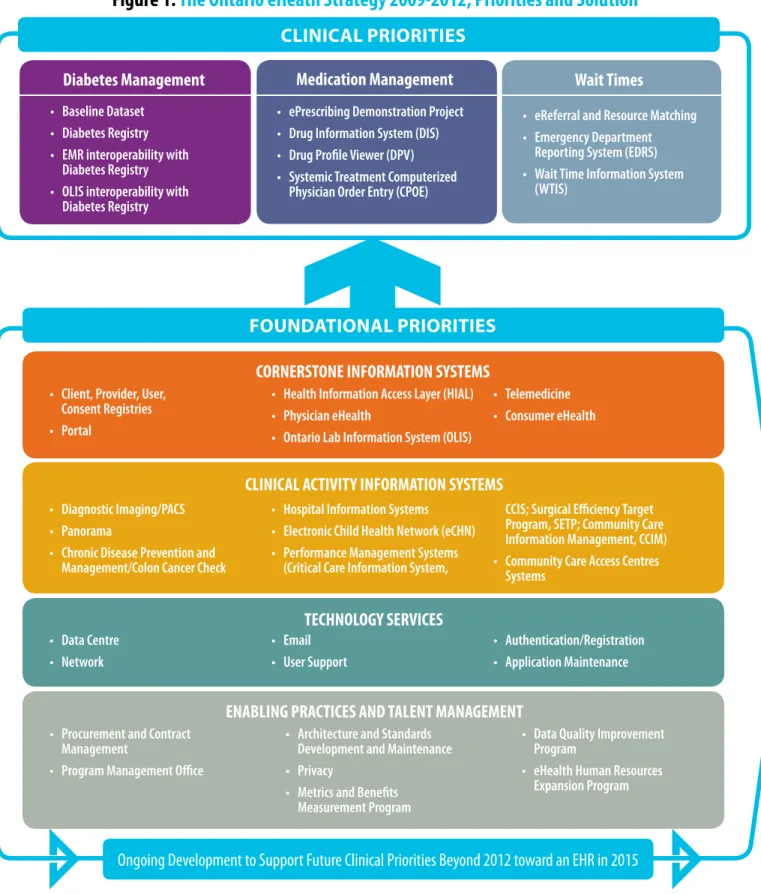
Figure 1:
The ontario eHeath Strategy 2009-2012, Priorities and Solution
CornErSTonE InForMaTIon SySTEMS
ClInICal aCTIVITy InForMaTIon SySTEMS
TECHnology SErVICES
EnaBlIng PraCTICES and TalEnT ManagEMEnT
Client, Provider, User,
•
Consent Registries
Portal
•
Health Information Access Layer (HIAL)
•
Physician eHealth
•
Ontario Lab Information System (OLIS)
•
Telemedicine
•
Consumer eHealth
•
Diagnostic Imaging/PACS
•
Panorama
•
Chronic Disease Prevention and
•
Management/Colon Cancer Check
Hospital Information Systems
•
Electronic Child Health Network (eCHN)
•
Performance Management Systems
•
(Critical Care Information System,
CCIS; Surgical Efficiency Target
Program, SETP; Community Care
Information Management, CCIM)
Community Care Access Centres
•
Systems
Data Centre
•
Network
•
•
User Support
•
Authentication/Registration
•
Application Maintenance
•
Procurement and Contract
•
Management
Program Management Office
•
Architecture and Standards
•
Development and Maintenance
Privacy
•
Metrics and Benefits
•
Measurement Program
Data Quality Improvement
•
Program
eHealth Human Resources
•
Expansion Program
FOUNDATIONAL PRIORITIES
CLINICAL PRIORITIES
diabetes Management
Medication Management
Wait Times
Baseline Dataset
•
Diabetes Registry
•
EMR interoperability with
•
Diabetes Registry
OLIS interoperability with
•
Diabetes Registry
ePrescribing Demonstration Project
•
Drug Information System (DIS)
•
Drug Profile Viewer (DPV)
•
Systemic Treatment Computerized
•
Physician Order Entry (CPOE)
eReferral and Resource Matching
•
Emergency Department
•
Reporting System (EDRS)
Wait Time Information System
•
(WTIS)
ongoing Development to support Future clinical priorities Beyond 2012 toward an ehr in 2015
The ontario eHealth Strategy 2009-2012
The eHealth Strategy includes clinical and foundational priorities, and identifies solutions that will be achieved from 2009 to 2012 (Figure 1). The following sections present more detailed information on the priorities along with the explicit solutions that will be achieved, the specific actions and performance targets that will be attained, and the measurable results that will be realized by 2012.
This section presents the three clinical priorities
of the Ontario eHealth Strategy 2009-2012:
Diabetes Management Medication Management Wait Times
Each section presents background information followed by detailed information on the solutions, actions, performance indicators and targets for each clinical priority in 2009-2012.
Clinical
Priorities
Clinical
diabetes Management
Background
Diabetes mellitus (diabetes) is a chronic or ongoing disease that occurs when the body cannot produce and/or use insulin. This leads to high levels of glucose (sugar) in the blood. People living with diabetes cannot effectively use glucose to fuel their cells. If diabetes is not managed and high levels of glucose remain over long periods of time, diabetes can lead to other illnesses. When combined with high blood pressure, high cholesterol and smoking, diabetes causes damage to large and small blood vessels in many organs resulting in heart attacks, stroke, amputations, blindness, kidney failure and death.
In Ontario approximately 900,000 people live with diabetes. Each year:
350 of these people will go blind,
1,100 will have a limb amputated,
2,300 will have a heart attack, and
3,200 will die.
Each year in Ontario, 23,000 people will discover they have diabetes. People with diabetes account for a high number of hospital emergency department visits. Each year, 165,000 people visit the emergency department due to diabetes compared to 72,000 visits due to asthma, 66,000 visits due to chronic obstructive pulmonary disease, and 26,000 visits due to congestive heart failure. Alarmingly, the number of people in Ontario with diabetes has increased 69% over the last 10 years. The impact of diabetes is dramatic but it can be controlled. In fact, many of the 900,000 Ontarians who have diabetes suffer with preventable complications. To manage diabetes, it is important to control one’s blood pressure, cholesterol and blood sugar with a healthy diet, exercise, appropriate medications and no smoking. Keeping one’s blood pressure, cholesterol and blood sugar in normal ranges helps protect against vascular complications and decreases morbidity and premature mortality.
Common laboratory tests and simple procedures can be used to monitor the health of those with diabetes. Tests include measuring cholesterol levels and a blood sugar test called HbA1c; procedures include blood pressure monitoring and retinal eye examinations.
Effectively managing diabetes will improve the quality of life for Ontarians with this disease, reduce their mortality and morbidity rates, and decrease the cost of this disease to the healthcare system.
In July 2008, the Ministry of Health and Long-Term Care launched the Ontario Diabetes Management Strategy under the guidance of the Diabetes Expert Panel. This strategy will help prevent, manage and treat diabetes, and enable better self-care by providing people with access to information, education and tools. The strategy aims to help prevent – each year – 88 people from going blind; prevent 322 heart attacks, 473 lower limbs from being amputated and 448 deaths (assuming HbA1c level is reduced by 1% for all people with diabetes);
and prevent $300 million in hospital costs.
diabetes Management as a Clinical Priority
Ontario’s eHealth Strategy 2009-2012 has identified diabetes management as one of its clinical priorities. Four solutions will be developed:
Baseline Diabetes Dataset Initiative
Diabetes Registry
EMR interoperability with Diabetes Registry
OLIS interoperability with Diabetes Registry
Diabetes is one of several chronic diseases with a major impact on both the health of Ontarians and the burden placed on the healthcare system. As we focus on Diabetes Management in the 2009-2012 period, we will establish procedures and implement automated solutions that can later be modified to apply to other chronic diseases.
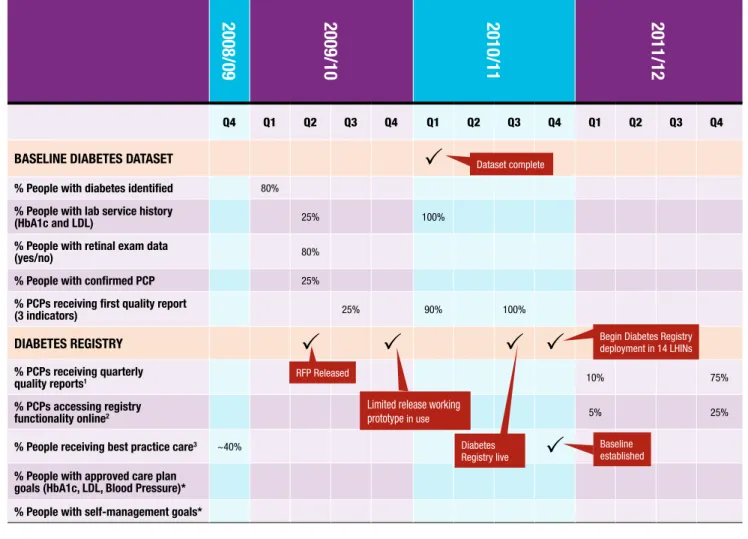
Detailed information on the four Diabetes Management solutions including actions, performance indicators and targets for 2009-2012 are presented in Table 1 and 2.
DIABetes MAnAgeMent DIABetes MAnAgeMent DIABetes MAnAgeMent DIABetes MAnAgeMent DIABetes MAnAgeMent DIABetes MAnAgeMent DIABetes MAnAgeMent
Table 1:
diabetes Management: Solutions and actions 2009-2012
Solution
The Solution Will ...
actions in 2009-2012 to achieve the Solution
Baseline Diabetes Dataset Initiative
Identify Ontarians with
diabetes, match them to their primary care providers and measure the current state of diabetes care in Ontario. Provide a baseline dataset
to populate the provincial Diabetes Registry and accelerate its adoption.
Leverage existing datasets that include patient
demographics, Ontario Health Insurance Plan (OHIP) claims information, and clinical data from the Canadian Institute for Health information. Generate a one time list of patients with diabetes,
and validate and match them to their primary care provider.
Provide physicians with reports that support
improved management of patients with diabetes (HbA1c, LDL cholesterol, retinal exam). Provide Local Health Integration Networks
(LHINs) and Government with reports that support population-based planning for diabetes services, care models, and the planning and allocation of resources.
Diabetes Registry
Manage the disease by
monitoring whether patients receive evidence- based interventions.
Electronically monitor
adherence to best practices for patients with diabetes and provide alerts to physicians when best practices are not being followed.
Measure the baseline level of
care and report on care gaps.
Complete procurement of a provincial Diabetes
Registry.
Populate the Registry with a baseline dataset.
Integrate the Registry with other systems to update
clinical indicators in real-time.
Roll out the Registry starting with LHINs that have
been identified as early adopters.
Generate real-time reports for physicians and LHINs
Explore the applicability of the Diabetes Registry to
management of data on other chronic diseases.
EMR
interoperability with the Diabetes Registry
Enable primary care
physicians to exchange data electronically between their point-of-service Electronic Medical Record (EMR) systems and the Diabetes Registry.
Build an EMR requirement to exchange data
with the Diabetes Registry in the September 2009 OntarioMD EMR specifications.
OLIS
interoperability with the Diabetes Registry
Use the OLIS repository of
lab test results as a resource for diabetes decision-making and treatment.
Interface OLIS with the Diabetes Registry to be the
source of HbA1c and LDL cholesterol lab test results for patients with diabetes.
Table 2:
diabetes Management: Solutions, Performance Indicators and Targets 2009-2012
2008/09
2009/10
2010/11
2011/12
Q4 Q1 Q2 Q3 Q4 Q1 Q2 Q3 Q4 Q1 Q2 Q3 Q4
Baseline DiaBetes Dataset
% People with diabetes identified 80%
% People with lab service history
(Hba1c and lDl) 25% 100%
% People with retinal exam data
(yes/no) 80%
% People with confirmed PCP 25%
% PCPs receiving first quality report
(3 indicators) 25% 90% 100% DiaBetes RegistRy
% PCPs receiving quarterly quality reports1 10% 75% % PCPs accessing registry functionality online2 5% 25%% People receiving best practice care3 ~40%
% People with approved care plan goals (Hba1c, lDl, Blood Pressure)* % People with self-management goals*
1. Quality reports will start with 3 indicators (HbA1c, LDL, retinal exam) and additional indicators will be added as they become available from OLIS and other sources 2. Physicians may access registry functionality through the registry directly, through a portal or through their office EMR
3. Measurement of this indicator is key to measuring the clinical impact of the eHealth Strategy. Currently 40% of people are receiving best practice care based on 4 services - HbA1c, foot exam, retinal exam and LDL (Source: Schoen et al. “Taking the pulse of health care systems: experiences of patients with health problems in six countries.” Health Affairs, Nov 3, 2005). The baseline for Ontario will be established in Q4 2010/11 and targets will be set thereafter.
* Targets to be determined Dataset complete RFP Released Diabetes Registry live Baseline established
Begin Diabetes Registry deployment in 14 LHINs
Limited release working prototype in use
Medication Management
Background
The fourth leading cause of death in Ontario is preventable adverse drug events. These events occur for a number of reasons. Physicians may not be aware of other medications their patients are taking and may prescribe a drug that is contraindicated. This is especially a concern for people who take multiple medications. Physicians may also not monitor drug allergies in their patients, or may prescribe the wrong drug or the wrong dose. Pharmacists – who play an important role in primary care for many Ontarians – are left with insufficient or unclear information to support the most effective outcome for their clients. Finally, since most prescriptions in Ontario are hand-written, a pharmacist who gets an illegible prescription may try to decipher what is being prescribed on his or her own with negative outcomes.
This year in Ontario, there will be 394,000 preventable adverse drug events resulting in:
240,000 physician office visits,
36,000 hospitalizations, and
4,000 deaths.
Implementing on-line management of prescription medications – using solutions such as electronic prescribing, drug information systems, a drug profile viewer and computerized physician order entry systems – will help prevent a significant number of adverse drug events. (For example, it has been shown that computerized physician order entry systems reduce medication error and, thereby, improve patient safety.) The solutions will result in:
Comprehensive medication profiles for Ontarians;
Checks for allergy interactions;
Checks for drug-to-drug interactions;
Checks for drug-to-diagnosis interactions;
Legible prescriptions for pharmacists to read;
Accurate dosing of medications; and
Improved management of complex therapies.
Most importantly, it is expected that these solutions will help prevent – each year – 217,000 adverse drug events, as well as 132,000 physician office visits, 20,000 hospitalizations and 2,200 deaths due to these adverse events. These solutions will also prevent $350 million in healthcare costs due to these events.
Medication Management as a Clinical Priority
Ontario’s eHealth Strategy 2009-2012 supports medical management as one of its clinical priorities. Four solutions will be developed and/or extended. (The solutions that will leverage and extend current successful medication management efforts are noted with an asterisk.):
ePrescribing Demonstration Project
Drug Information System (DIS)
Drug Profile Viewer (DPV) *
Systemic Treatment Computerized Physician
Order Entry (CPOE) *
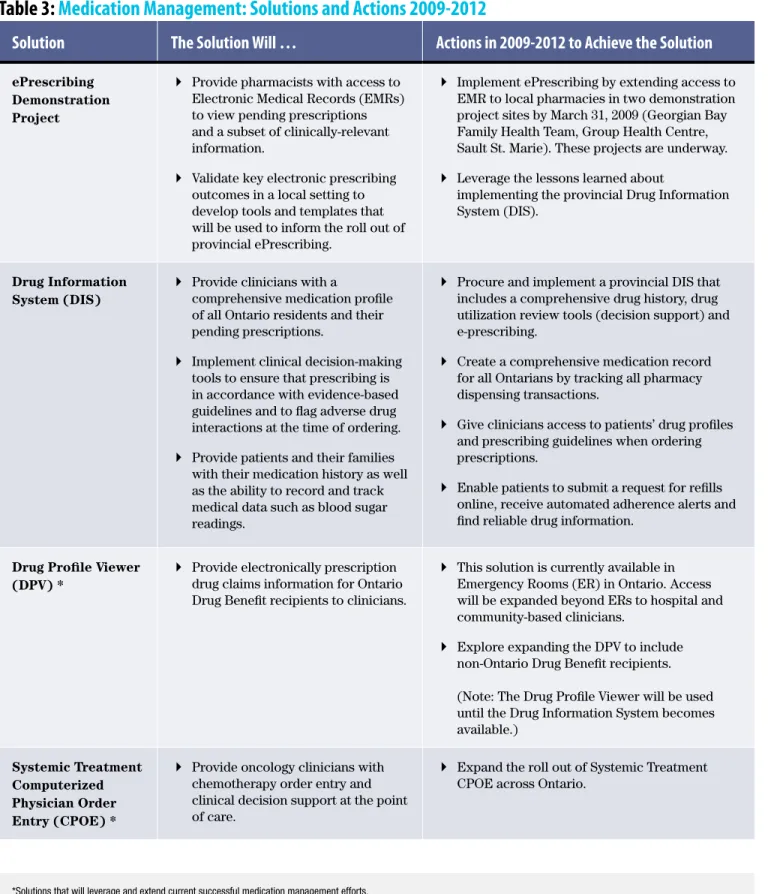
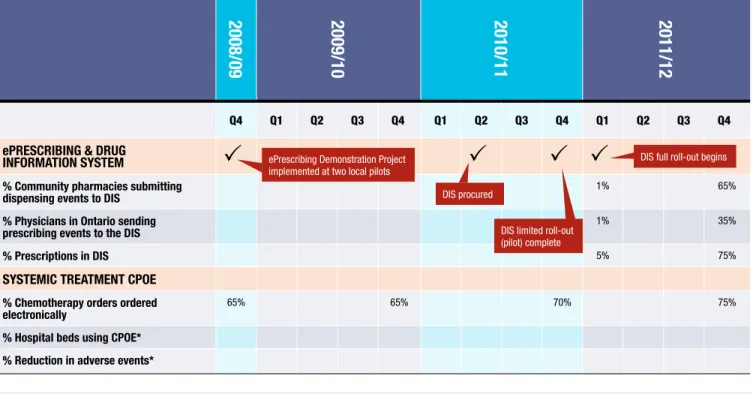
Detailed information on these solutions including actions, performance indicators and targets for 2009-2012 are presented in Tables 3 and 4.
MeDIcAtIon MAnAgeMent MeDIcAtIon MAnAgeMent MeDIcAtIon MAnAgeMent MeDIcAtIon MAnAgeMent MeDIcAtIon MAnAgeMent MeDIcAtIon MAnAgeMent MeDIcAtIon MAnAgeMent
MeDIcAtIon MAnAgeMent MeDIcAtIon MAnAgeMent MeDIcAtIon MAnAgeMent MeDIcAtIon MAnAgeMent MeDIcAtIon MAnAgeMent MeDIcAtIon MAnAgeMent MeDIcAtIon MAnAgeMent
Table 3:
Medication Management: Solutions and actions 2009-2012
Solution
The Solution Will …
actions in 2009-2012 to achieve the Solution
ePrescribing Demonstration Project
Provide pharmacists with access to
Electronic Medical Records (EMRs) to view pending prescriptions and a subset of clinically-relevant information.
Validate key electronic prescribing
outcomes in a local setting to develop tools and templates that will be used to inform the roll out of provincial ePrescribing.
Implement ePrescribing by extending access to
EMR to local pharmacies in two demonstration project sites by March 31, 2009 (Georgian Bay Family Health Team, Group Health Centre, Sault St. Marie). These projects are underway. Leverage the lessons learned about
implementing the provincial Drug Information System (DIS).
Drug Information System (DIS)
Provide clinicians with a
comprehensive medication profile of all Ontario residents and their pending prescriptions.
Implement clinical decision-making
tools to ensure that prescribing is in accordance with evidence-based guidelines and to flag adverse drug interactions at the time of ordering. Provide patients and their families
with their medication history as well as the ability to record and track medical data such as blood sugar readings.
Procure and implement a provincial DIS that
includes a comprehensive drug history, drug utilization review tools (decision support) and e-prescribing.
Create a comprehensive medication record
for all Ontarians by tracking all pharmacy dispensing transactions.
Give clinicians access to patients’ drug profiles
and prescribing guidelines when ordering prescriptions.
Enable patients to submit a request for refills
online, receive automated adherence alerts and find reliable drug information.
Drug Profile Viewer (DPV) *
Provide electronically prescription
drug claims information for Ontario Drug Benefit recipients to clinicians.
This solution is currently available in
Emergency Rooms (ER) in Ontario. Access will be expanded beyond ERs to hospital and community-based clinicians.
Explore expanding the DPV to include
non-Ontario Drug Benefit recipients. (Note: The Drug Profile Viewer will be used until the Drug Information System becomes available.)
Systemic Treatment Computerized Physician Order Entry (CPOE) *
Provide oncology clinicians with
chemotherapy order entry and clinical decision support at the point of care.
Expand the roll out of Systemic Treatment
CPOE across Ontario.
*Solutions that will leverage and extend current successful medication management efforts.
Table 4:
Medication Management: Solutions, Performance Indicators and Targets 2009-2012
2008/09
2009/10
2010/11
2011/12
Q4 Q1 Q2 Q3 Q4 Q1 Q2 Q3 Q4 Q1 Q2 Q3 Q4
ePResCRiBing & DRug
infoRmation system
% Community pharmacies submitting
dispensing events to Dis 1% 65%
% Physicians in ontario sending
prescribing events to the Dis 1% 35%
% Prescriptions in Dis 5% 75%
systemiC tReatment CPoe
% Chemotherapy orders ordered
electronically 65% 65% 70% 75%
% Hospital beds using CPoe* % Reduction in adverse events*
* Targets to be determined
ePrescribing Demonstration Project implemented at two local pilots
DIS procured
DIS limited roll-out (pilot) complete
DIS full roll-out begins
Wait Times
Background
In November 2004, the Ministry of Health and Long-Term Care launched the Ontario Wait Time Strategy to improve access and reduce wait times for clinical services. In October 2007, the government announced that the strategy was being expanded to include emergency room wait times.
Nearly 50% of Emergency Room (ER) visits are made by patients with non-urgent or less urgent care needs. About 90% of ER patients are treated within 9.4 hours from when they are triaged/registered to the time they leave the ER; the average wait time is 7.3 hours. ER wait times are five times longer for patients who need to be admitted to hospital (about 35 hours; about 75% of the total time that these patients wait in the ER is spent waiting for an inpatient bed).
A major factor causing long ER wait times is the high number of alternative level of care (ALC) patients who remain in acute care when they should be receiving more appropriate care elsewhere (e.g., home, rehabilitation hospital, complex continuing care hospital, long-term care facility, etc.). High numbers of ALC patients make it difficult to admit patients from the ER to hospital. Reducing ER wait times and improving access to alternative levels of care will result in better patient care and increased patient satisfaction. It will also help improve:
The ability of ERs to treat patients with the most
urgent care needs more quickly.
The wait time between being designated ALC to
when someone is discharged from acute care. Access to community services so patients can
Remain at home and/or be discharged directly home.
Wait Times as a Clinical Priority
Ontario’s eHealth Strategy 2009-2012 supports wait times as one of its clinical priorities. In particular, this priority will focus on those areas where the greatest results can be achieved: ER length of stay for admitted patients and the wait time from acute care to post-acute care. Three solutions will be developed and/or extended:
eReferral and Resource Matching
Wait Time Information System (WTIS)*
Emergency Department Reporting System (EDRS)*
Detailed information on these solutions including actions, performance indicators and targets for 2009-2012 are presented in Tables 5 and 6.
WAIt tIMes WAIt tIMes WAIt tIMes WAIt tIMes WAIt tIMes WAIt tIMes WAIt tIMes WAIt tIMes WAIt tIMes WAIt tIMes WAIt tIMes WAIt tIMes WAIt tIMes WAIt tIMes
* Solutions that will leverage and extend current successful wait time efforts.
1 All surgeries include surgeries performed in a fully equipped operating room for the following surgical specialties: Oncology, Orthopaedic Surgery, Ophthalmic Surgery, General Surgery,
Plastic Surgery, Neurosurgery, Vascular Surgery, Thoracic Surgery, Otolaryngic Surgery, Dental/Oral Surgery, Urologic Surgery, Gynaecologic Surgery and Paediatric Surgery * Solutions that will leverage and extend current successful wait time efforts
Table 5:
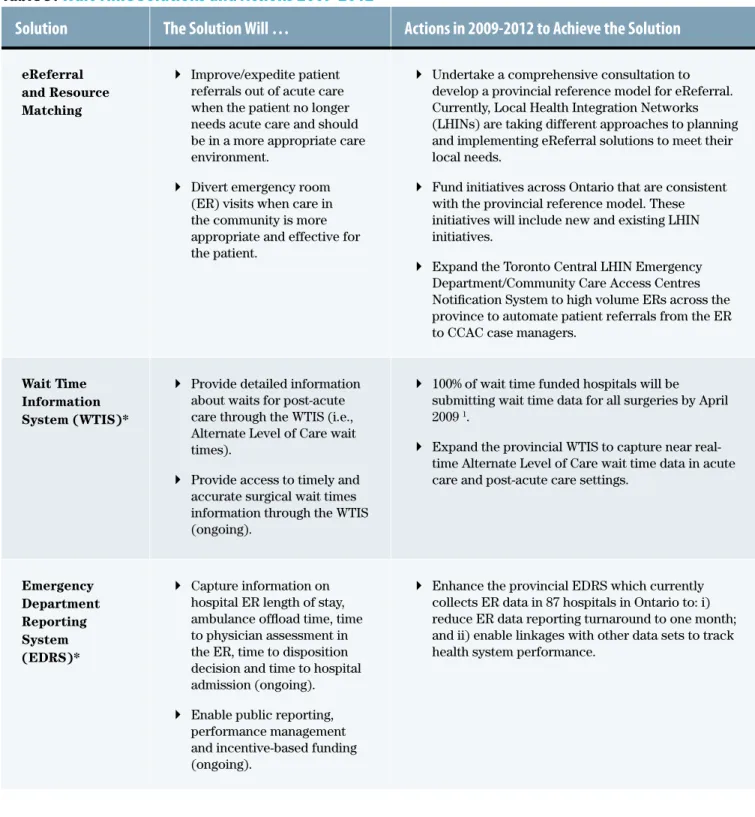
Wait Time Solutions and actions 2009-2012
Solution
The Solution Will …
actions in 2009-2012 to achieve the Solution
eReferral and Resource Matching
Improve/expedite patient
referrals out of acute care when the patient no longer needs acute care and should be in a more appropriate care environment.
Divert emergency room
(ER) visits when care in the community is more appropriate and effective for the patient.
Undertake a comprehensive consultation to
develop a provincial reference model for eReferral. Currently, Local Health Integration Networks (LHINs) are taking different approaches to planning and implementing eReferral solutions to meet their local needs.
Fund initiatives across Ontario that are consistent
with the provincial reference model. These initiatives will include new and existing LHIN initiatives.
Expand the Toronto Central LHIN Emergency
Department/Community Care Access Centres Notification System to high volume ERs across the province to automate patient referrals from the ER to CCAC case managers.
Wait Time Information System (WTIS)*
Provide detailed information
about waits for post-acute care through the WTIS (i.e., Alternate Level of Care wait times).
Provide access to timely and
accurate surgical wait times information through the WTIS (ongoing).
100% of wait time funded hospitals will be
submitting wait time data for all surgeries by April 2009 1.
Expand the provincial WTIS to capture near
time Alternate Level of Care wait time data in acute care and post-acute care settings.
Emergency Department Reporting System (EDRS)* Capture information on
hospital ER length of stay, ambulance offload time, time to physician assessment in the ER, time to disposition decision and time to hospital admission (ongoing). Enable public reporting,
performance management and incentive-based funding (ongoing).
Enhance the provincial EDRS which currently
collects ER data in 87 hospitals in Ontario to: i) reduce ER data reporting turnaround to one month; and ii) enable linkages with other data sets to track health system performance.
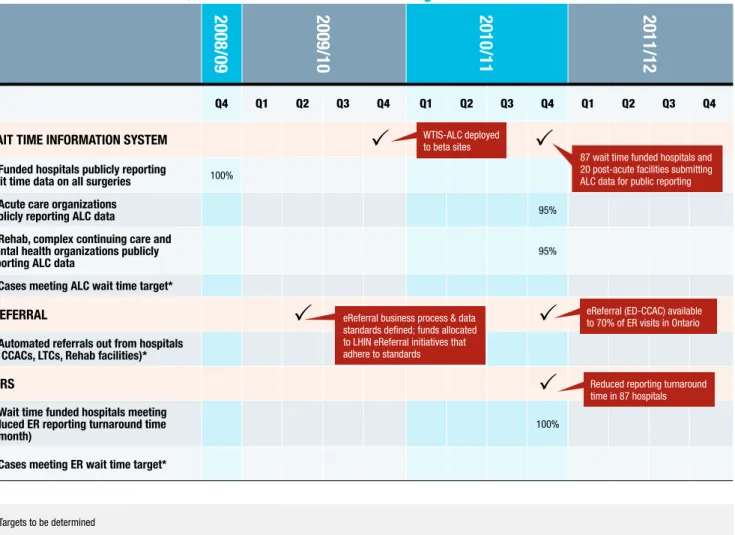
Table 6:
Wait Time: Solutions, Performance Indicators and Targets 2009-2012
2008/09
2009/10
2010/11
2011/12
Q4 Q1 Q2 Q3 Q4 Q1 Q2 Q3 Q4 Q1 Q2 Q3 Q4
Wait time infoRmation system
% funded hospitals publicly reporting
wait time data on all surgeries 100%
% acute care organizations
publicly reporting alC data 95%
% Rehab, complex continuing care and mental health organizations publicly
reporting alC data 95%
% Cases meeting alC wait time target*
eRefeRRal
% automated referrals out from hospitals (to CCaCs, ltCs, Rehab facilities)*
eDRs
% Wait time funded hospitals meeting reduced eR reporting turnaround time
(1 month) 100%
% Cases meeting eR wait time target*
* Targets to be determined
87 wait time funded hospitals and 20 post-acute facilities submitting ALC data for public reporting
eReferral business process & data standards defined; funds allocated to LHIN eReferral initiatives that adhere to standards
WTIS-ALC deployed to beta sites
eReferral (ED-CCAC) available to 70% of ER visits in Ontario
Reduced reporting turnaround time in 87 hospitals
Foundati
This section presents the four foundational priorities of the
Ontario eHealth Strategy for 2009-2012:
Cornerstone Information Systems
Clinical Activity Information Systems
Technology Services
Enabling Practices and Talent Management
Foundational
Priorities
Identity, access and Privacy Solutions (IaP)
IAP solutions include client, provider and user registries which allow all local and provincial systems to
securely identify patients, care providers, and users of information systems. Consent and audit solutions give individuals control over, and let them monitor access to, their personal health information.
Portal
Portals allow authorized users to see a patient’s clinical data and enter clinically-relevant information.
Health Information access layer (HIal)
HIAL allows systems to communicate and share patient record information with each other.
Physician eHealth
The Physician eHealth program provides physician offices with Electronic Medical Record systems which is an absolute requirement for eHealth to have clinical impact.
ontario lab Information System (olIS)
OLIS stores laboratory results from hospitals and private laboratories, and feeds these results to the appropriate systems (e.g., Diabetes Registry) and users, through a portal.
Telemedicine
Telemedicine enables clinicians to perform remote consultations using video conferencing and remote monitoring tools. Tele-homecare lets patients upload their data remotely to a disease registry. For example, patients can upload their blood glucose levels to the Diabetes Registry.
Consumer eHealth
Consumer eHealth includes tools and information that directly support patients, their families and healthcare consumers. Consumer eHealth includes personalized health information that is provided directly to patients in an electronic format (e.g., patient portal).
Table 7 and 8 present detailed information on these solutions, including actions, performance indicators and targets for 2009-2012.
Cornerstone Information Systems
Table 7:
Cornerstone Information Systems: Solutions and actions 2009-2012
Solution
actions in 2009-2012 to achieve the Solution
Identity, Access and Privacy Solutions (IAP)
Complete the deployment of client, provider and user registries to ensure
identity and access management in the Clinical Priorities (diabetes management, drug information system and the Emergency Room/Alternate Level of Care initiatives.)
Develop a comprehensive provincial strategy for managing consent and
implementing and enforcing consent directives for all eHealth solutions in compliance with the Personal Health Information Protection Act (PHIPA). This approach will build on lessons learned from previous projects.
Cornerstone Information Systems support the clinical priorities and are fundamental for building a comprehensive Electronic Health Record (EHR). This foundational priority includes seven solutions: