ILLUMINATING DEMOCRACY: TRENDS, PREDICTORS, AND OUTCOMES OF LIBERAL DEMOCRACY 1972-2013
Mark D. Noble
A dissertation submitted to the faculty at the University of North Carolina at Chapel Hill in partial fulfillment of the requirements of the degree of Doctor of Philosophy in the Sociology
Department in the College of Arts and Sciences.
Chapel Hill 2016
Approved by:
Kenneth Bollen
Neal Caren
Ted Mouw
Lisa Pearce
ABSTRACT
Mark D. Noble: Illuminating Democracy: Trends, Predictors, and Outcomes of Liberal Democracy 1972-2013
(Under the direction of Kenneth Bollen)
This dissertation examines recent trends in liberal democracy from 1972 to 2013 and
addresses the current debate revolving around worldwide democratic stagnation. While some
scholars claim that worldwide democracy is rather stable, this dissertation finds this to be a less
than accurate statement. Going beneath worldwide trends to investigate differences in world
regions as well as differences by income groups, several instances of democratic stagnation and
decline are found that go against the perspective of democratic stability. Viewing 1972 to 2013
as a consistent period belies several sub-periods where the growth of liberal democracy differed
quite markedly. Building on insights from a latent growth curve modeling perspective and the
insights of these distinct sub-periods of growth, a piecewise empirical model is found to describe
these recent trends better than existing models. This model, however, illustrates that common
predictors of liberal democracy from several important sociological perspectives including
modernization theory, dependency/ world-systems theory, world polity theory, as well as other
global factors do not tell us much about the spread of liberal democracy around the world since
the mid-2000s to today. Thus, our current theories cannot illuminate why liberal democracy is
currently stagnating across the world. Finally, this dissertation investigates if liberal democracy
matters for population health and empirically tests the previously identified distributive process.
on health, the evidence is consistent with the distributive effect. In addition, another potential
mechanism mediated by gender equality is found that offers additional insight into this
distributive effect. Beyond these mechanisms there is no evidence that liberal democracy impacts
ACKNOWLEDGEMENTS
I would like to express the deepest appreciation to my committee chair Professor Kenneth
Bollen, whose support and patience helped to sustain this project to its completion. Without his
guidance and persistent advice, this dissertation would not have been possible.
I would like to thank my committee members, Professor John Shandra, Professor Neal
Caren, Professor Ted Mouw, and Professor Lisa Pearce whose advice and feedback were integral
to this dissertation.
I am fortunate to have so many wonderful people in my life that have lent me support
along the way. Thank you to my mother and father, Mary and Douglas Noble, and my sister and
brother-in-law Cathy and Andy Lankford for your loving support and help throughout my time in
graduate school. I would also like to thank my in-laws Cris and Brad Fawcett for their
encouragement and, in addition, I would like to give Brad a special thanks for the countless
hours spent editing this dissertation. Your comments and suggestions helped to make this a better
manuscript. I also want to thank those who are no longer here; even though not alive to witness
my completion of graduate school, you have always been inspirations along the way, especially
in the most trying moments.
In addition, I am extremely thankful to my Ugandan family, the Zaales. Much of this
dissertation was written while on research trips in Bududa, Uganda. Thank you Elizabeth and
David for the encouragement and kindness that you have shown me through the years. Thank
also to my brothers Dezz, John, Touma, and Peter, for making each day in Bududa exciting and
rewarding, and for doing all you could to keep the power running.
Most of all, I have to thank my main collaborator, research colleague, best friend, partner
in all things, and wife, Kelly Austin. You are the love of my life and this dissertation could not
have been completed without your encouragement, guidance, and love. All of my successes are
TABLE OF CONTENTS
LIST OF TABLES xvi
LIST OF FIGURES xvii
CHAPTER 1: INTRODUCTION 1
Modernization Theory 4
Dependency Theory/World Systems Theory 4
World Polity Theory 4
Global & International Factors 5
Methods 6
Contributions 6
Organization of the Dissertation 7
CHAPTER 2: TRENDS IN LIBERAL DEMOCRACY FROM 1972 TO 2013:
STABILITY OR STAGNATION? 9
Introduction 9
What do Modernization Theory, World Systems Theory, and World Polity
Theory Predict for Recent Worldwide Trends in Liberal Democracy? 13
Modernization Theory and Liberal Democracy 13
Dependency/World Systems Theory and Liberal Democracy 14
World Polity Theory and Liberal Democracy 16
How Recent Worldwide Trends in Democracy Have Been Described 18
Recent Worldwide Trends in Democracy 20
Defining Liberal Democracy 24
Binary or Continuous Measures of Democracy? 27
Binary Measures 27
Continuous Measures 31
A Practical Compromise? 33
Four Approximately Continuous Measures of Liberal Democracy 34
Freedom House 34
Polity IV 37
Vanhanen’s Polyarchy or Index of Democratization 39
Bollen’s Liberal Democracy Series I Indicator 41
Comparison of the Indicators Over Time 43
Trends in Liberal Democracy Indicators Compared 46
Similarities in the Three Indicators Over Time 52
Final Choice: Bollen’s Liberal Democracy Series I Indicator 53
Descriptive Analysis 54
Overall Worldwide Trends in Liberal Democracy 54
Regional Trends in Liberal Democracy 55
East Asia and the Pacific 55
Steady growth through the period 56
Relatively low levels of liberal democracy 57
Diversity in trajectories 57
Numerous over-and under-performing countries 58
Europe and Central Asia 59
High levels of liberal democracy throughout the period 60
Low levels of steady growth followed by rapid
Few under-performing countries 61
Latin America and the Caribbean 63
Good performance/relatively high levels of
liberal democracy 63
Two distinct periods of growth 65
Significant regional convergence 66
Many countries with substantial gains 66
Very few under-performing countries 66
The Middle East and North Africa 67
Low starting and ending points with a clear
upward trajectory 67
Steady growth during the period 68
Seemingly untouched by dramatic increases 68
Absence of high-performing countries 70
Few losses 70
North America 71
South Asia 71
Modest growth 71
Volatility with large increases and decreases 72
Muted gains in the early 1990s 73
Large growth in the mid-2000s 73
Regional convergence at low levels of liberal democracy 73
Sub-Sahara Africa 74
Wide variation/volatility 75
Three distinct sub-periods 77
Summary of Regional Trends 79
Income Group Differences 80
Developed Countries 83
Gradual increase 83
Democratic stability? 83
Downward trend in recent years? 83
Less-Developed Countries 84
Pronounced increase from 1972 84
Rapid increase in the late 1980s and early 1990s 84
Smaller period of stagnation 85
World Bank’s Five Income Groups 86
High Income OECD 86
High Income Non-OECD 87
Upper Middle Income 88
Lower Middle Income 89
Low Income 90
Formal Modeling of Trends in Liberal Democracy 91
Method of Analysis: Latent Growth Curve Model 91
Motivation Behind Modeling Strategy 93
Determination of the Best-Fitting Model, Evaluation of the
Different Models 95
Description of the Final Model 99
Robustness Checks 101
Graphs of the Model Implied Means vs Observed Means 101
Implications of the Final Model for the Current Theory of the
Diffusion of Liberal Democracy 105
Conclusions 105
CHAPTER 3: PREDICTING RECENT TRENDS IN LIBERAL DEMOCRACY
1972 TO 2013: TESTING EXISTING EXPLANATIONS WITH NEW METHODS 113
Introduction 113
The Causes of Democracy 114
Democratic Transition 115
Democratic Consolidation/Democratic Stability 121
Quality of Democracy/Levels of Democracy 123
Existing Explanations of Liberal Democracy 125
Modernization Theory 127
Global & International Factors 129
Dependency Theory/World Systems Theory 130
World Polity Theory 133
Recent Debates and Trends of Liberal Democracy 134
Unanswered Questions 140
Data and Methods 142
Operationalizing Liberal Democracy 142
Operationalizing Modernization Theory 144
Operationalizing Globalization Theory 145
Operationalizing World Systems Theory/Dependency Theory 146
Operationalizing World Polity Theory 147
Other Predictors 149
Autoregressive Model in the General SEM Framework 150
Results 155
Autoregressive Model of Liberal Democracy 155
Baseline Model (Including Modernization) 157
Baseline & World Systems Theory 161
Baseline & World Polity Theory 162
Baseline & Globalization Theory 163
Combined Model with All Predictors (Equal Effects Model) 164
Piecewise Equality Constraint Model 169
Robustness Checks 173
Conclusions 175
Assessing Industrialization 175
Assessing World Systems/Dependency Theory 176
Assessing Global Factors 177
Assessing World Polity Theory 177
Broader Impacts 179
Weaknesses and Future Research 180
Final Thoughts 182
CHAPTER 4: DOES DEMOCRACY IMPROVE HEALTH?: TESTING THE
DIRECT AND INDIRECT EFFECTS OF LIBERAL DEMOCRACY 184
The Case for Investigating Liberal Democracy and Maternal Mortality 186
The Problem of Maternal Mortality 189
Causes of Maternal Mortality 192
Clinical Explanations for Maternal Mortality 192
Individual-level Explanations for Maternal Mortality 192
How does Liberal Democracy Impact Population Health? 198
Empirical Research on Liberal Democracy and Population Health 207
Studies that find Liberal Democracy is Associated
with Improved Health 208
Studies that Question the Liberal Democracy and
Population Health Link 215
How to Operationalize Liberal Democracy: Contemporaneous or Cumulative? 218
Critique of Previous Studies 220
The Mediating Effect of Public Health Resources 221
The Mediating Effect of Gender Equality 222
Unanswered Questions 224
Methods 229
Sample 229
Analytic Strategy 229
Variables Used in the Analysis 232
Outcome (Dependent Variable) 232
Covariates 233
Results 239
Robustness Check 250
Choice of Indicator of Liberal Democracy 250
Choice of Dependent Variable 252
Logging MMR and Fertility 254
Outliers and Influential Cases 254
Conclusions 255
CHAPTER 5: CONCLUSIONS 259
Limitations and Future Research 267
APPENDIX 1: CHAPTER 2 COUNTRY CLASSIFICATIONS 270
APPENDIX 2: CHAPTER 3 ANALYSES 272
LIST OF TABLES
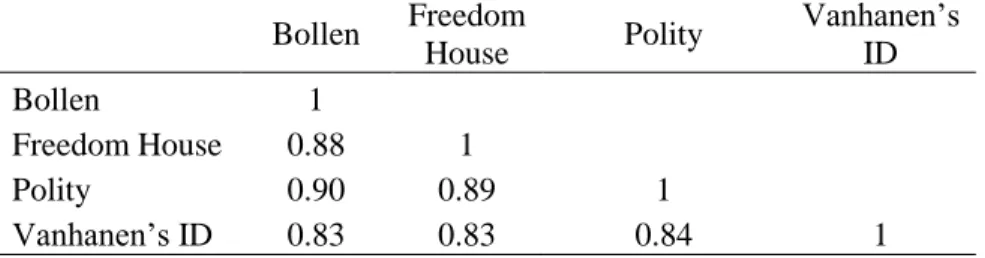
Table 1: Pairwise Correlation Matrix of 4 Indicators of Liberal Democracy
(All Years Combined) 44
Table 2: Mean Liberal Democracy Scores for all Regions from 1975-2010 80
Table 3: Overall Fit for Bollen's Liberal Democracy Series I Indicator 100
Table 4: Overall Fit for Freedom House Democracy Indicator 106
Table 5: Overall Fit for Polity IV Democracy Indicator 107
Table 6: Assumptions of the AR Model 153
Table 7: Comparison of R2 Values 160
Table 8: Overall Model Fit of All Models 160
Table 9: Results of Final Models - Equal Effects and Piecewise Equality Constraints 165
Table 10: Countries in the Analysis and Maternal Mortality Ratio (MMR)
in 2012 (N=181) 235
Table 11: Correlation Matrix, Means, and Standard Deviations 237
Table 12: Direct, Indirect, and Total Effects of the Predictors of Maternal
Mortality Ratio (MMR) with Contemporaneous Effects of Liberal Democracy 243
Table 13: Direct, Indirect, and Total Effects of the Predictors of Maternal
Mortality Ratio (MMR) with Cumulative Effects of Liberal Democracy 245
Table 14: Regression Estimates for SEM Equations Predicting Maternal
Mortality Ratio (MMR) in 2012 (Contemporaneous Effects) 247
Table 15: Regression Estimates for SEM Equations Predicting Maternal
Mortality Ratio (MMR) in 2012 (Cumulative Effects) 248
Table 16: Comparison of Bollen’s Liberal Democracy Series I Indicator to
Polity IV’s polity2 indicator for Life Expectancy 251
Table 17: Comparison of Bollen’s Liberal Democracy Series I Indicator to
Polity IV’s polity2 indicator for Life Expectancy 253
LIST OF FIGURES
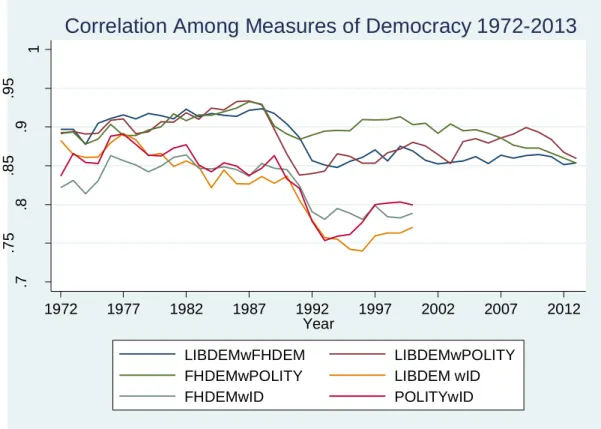
Figure 1: Correlation among Measures of Liberal Democracy 1972-2013 45
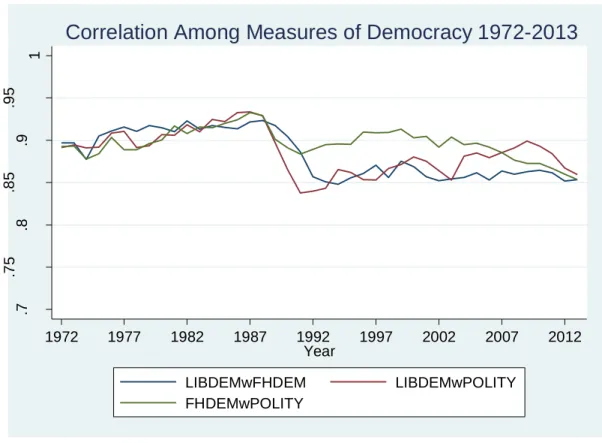
Figure 2: Correlation Among Measures of Liberal Democracy 1972-2013
(excluding ID) 46
Figure 3: Worldwide mean value of Polity IV’s polity2 indicator of liberal
democracy 1972-2013 47
Figure 4: Worldwide mean value of Freedom House’s democracy indicator
of liberal democracy 1972-2013 48
Figure 5: Worldwide mean value of Bollen’s Liberal Democracy Series I
Indicator of liberal democracy 1972-2013 50
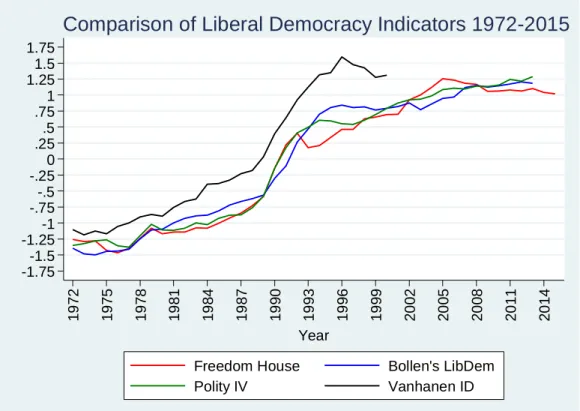
Figure 6: Comparison of liberal democracy indicators 1972-2013 51
Figure 7: East Asia & Pacific mean of liberal democracy 1972-2013 56
Figure 8: Europe and Central Asia mean of liberal democracy 1972-2013 60
Figure 9: Latin America and Caribbean mean of liberal democracy 1972-2013 64
Figure 10: Middle East and North Africa mean of liberal democracy 1972-2013 68
Figure 11: South Asia mean of liberal democracy 1972-2013 72
Figure 12: Sub-Saharan Africa mean of liberal democracy 1972-2013 75
Figure 13: Liberal Democracy by the Level of Development 82
Figure 14: Liberal Democracy by the World Bank’s Five Income Groups 85
Figure 15: Path Diagram of an Unconditional Latent Growth Curve Model 93
Figure 16: Observed sample means and the model implied means plotted by year 102
Figure 17: Observed sample means on the y-axis and the model implied means 103
Figure 18. The Autoregressive Model 153
Figure 19: The Autoregressive Model with One Predictor 154
Figure 20: SEM Predicting Maternal Mortality Ratio (MMR) Displaying Standardized
Regression Coefficients for Contemporary Effects of Liberal Democracy 240
Figure 21: SEM Predicting Maternal Mortality Ratio (MMR) Displaying Standardized
CHAPTER 1: INTRODUCTION
There are numerous reasons why it is important to study the recent trends, causes, and
consequences of liberal democracy today. After the breakup of the former Soviet Union, liberal
democracy was championed as the world’s gold standard in terms of types of political regimes.
Fukuyama made even stronger comments on liberal democracy’s place in the post-Cold War
world. “What we may be witnessing is not just the end of the Cold War, or the passing of a
particular period of postwar history, but the end of history as such: that is, the end point of
mankind's ideological evolution and the universalization of Western liberal democracy as the
final form of human government.” (Fukuyama 1989:1). The United Nations has ideals such as
democratic rule, respect for political liberties, and equality embedded into its Universal
Declaration of Human Rights. Other highly influential international organizations such as the
World Bank and the IMF have liberal democracy promotion embedded into key international
policies (Hobson 2009: 384) and frequently make aid packages that are often contingent on
countries making greater overtures toward democracy (Brown 2005). Indeed, these overtures
toward liberal democracy are not a thing of a bygone era. In the recently released 2017
Development and Humanitarian Assistance Budget request made by the United States Agency
for International Development (USAID) 2.3 billion dollars is earmarked for promoting
democracy abroad. “This assistance will help USAID establish and strengthen inclusive and
accountable democracies to advance freedom, dignity and development” (USAID 2016). Even
international non-governmental organizations (INGOs) promote liberal democratic ideals abroad,
The attention on liberal democracy does not stop there. There are vibrant research
programs in comparative politics and political sociology that speaks to the importance of liberal
democracy in today’s world. Significant research examines the causes of democratization
(Acemoglu, Johnson, Robinson, and Yared 2009; Barro 1999; Bollen 1979, 1983; Fish 2002;
Huntington 1991; Mainwaring and Perez-Linan 2005; Muller 1995; Przeworski et al. 1996,
Woodberry 2012), democracy’s diffusion (Wejnert 2014, Huntington 1991, Kurzman 1999), and
a variety of democracy’s consequences. These consequences include health outcomes such as
infant mortality (Shandra et al. 2004) and HIV (Shircliff and Shandra 2011), to name just a few.
In summary, a better understanding of liberal democracy is vital because there is international
consensus on the importance of liberal democracy as key international governmental
organizations (IGOs), national governments, and INGOs all seek to promote democracy on the
worldwide stage.
This dissertation will take a three-pronged approach. First, it will examine the trends of
liberal democracy over time. Following that it will carefully examine the cause of liberal
democracy investigating key perspectives found to be relevant from prior research.
Subsequently, I will look at the outcomes of democracy by focusing on a key population health
outcome. Thus, the goal of this dissertation is three-fold as it focuses on the recent trends, the
causes, and the consequences of liberal democracy in the world from 1972 to 2013.
Decades of research on liberal democracy often has produced disparate results. It is hard
to pinpoint what leads researchers to different conclusions but they often stem from differences
in sample composition, in the conceptual and operational definition of liberal democracy utilized,
the methodologies employed (and the assumptions which underlie these methods), and the range
of these problems and truly speak to global trends in liberal democracy by including as many
countries as possible in the analyses, clearly stating the conceptual definition of liberal
democracy and operationalizing it in a matching manner, utilizing a newly updated indicator of
liberal democracy that accounts for measurement error, bringing new methodological techniques
to the question that allows the researcher to impose modeling assumptions rather than being
straight-jacketed by them, and will investigate liberal democracy over 40 years from 1972 to
2013. All of this will be explained in chapter two. An additional goal will be to examine recent
worldwide trends and also disaggregate these trends by income group and world region. There is
likely to be substantial variation by world region in the recent experience with liberal democracy.
In addition, as one of the longest standing findings in this literature is the close association of
liberal democracy with industrialization, it is likely that trends will also vary by income group.
This chapter will carefully examine if these differences exist. The second chapter culminates
with an exploration of the best-fitting unconditional model of liberal democracy throughout this
time period. Once this task is complete the stage will be set to add predictors to the model in
chapter three.
Chapter three will predict the recent trends in liberal democracy identified in chapter two.
This task starts by examining several prominent theories of social change and development and
how they relate to the expansion of liberal democracy around the world. Three prominent
sociological theories of social change will be engaged: modernization theory, world
systems/dependency theory, and world polity theory. In addition, I will also look at the influence
of global factors as well as other predictors that have been used to predict democracy in the
Modernization Theory
The modernization school of thought (known as modernization theory) was formed in the
United States in the 1950s to evaluate the prospects for development in the Third World.
Under-development in the Third World was seen as a consequence of traditional values, psychological
and cultural traits (Lerner 1958; Inkeles and Smith 1974). Early Modernization theorists have
posited that modernization causes changes within the social and economic landscape of
developing countries, making them fertile grounds for democracy and democratic transition:
(Deutsch 1961, Lerner 1958, Lipset 1959).
Dependency Theory/World Systems Theory
Dependency theory formed in reaction to modernization theory, taking issue with how
modernization theory places the blame for underdevelopment on internal deficient characteristics
of developing nations. A state’s underdevelopment, then is not the consequence of the nation
itself but rather is due to the disadvantaged position that a state has with the world capitalist
economic system (Petras 1981).
World Polity Theory
World polity theory is a theory of the global system that seeks to explain global social
change as a result of the diffusion of universal cultural scripts containing Western ideas, norms,
and policies. It investigates the global level and how it creates or impacts social structures at
national and even local levels (Holzer et al. 2015:1). World polity theory can be considered, in
some ways, a more contemporary take on modernization. Both are theories of convergence,
positing that countries will become more similar over time. Modernization theory posits that
when poorer countries adopt western models of economic growth, they will catch up to
convergence is not a result of the acceptance of western models of economic development, but is
driven by the existence of a common world culture that plays a key role in how governments and
societies are structured.
Global & International Factors
Beyond these theories this dissertation will also incorporate other global processes that
have been recently shown to be intimately tied to modernization process. One such global
process identified here was impact that Protestant missionaries had on shaping the countries
where they worked. Historically, missionaries have had a significant role in propagating modern
innovations, such as increased literacy and education for the masses and religious liberty (the
so-called missionary roots of liberal democracy) (Woodberry 2012). These processes were initiated
simply as a means to convert natives to Protestantism as well as laying the foundation for liberal
democracy.
These different factors, along with some other prominent causes, will be integrated into
the model developed in chapter three to predict liberal democracy from 1972 to 2013. In addition
to estimating the effects of these variables on liberal democracy throughout the period the
modeling technique employed will allow for these effects to vary over time. This will give an
indication if these explanations are found to have consistent effects over time or if they change
over time and will help to better assess what we know about recent trends.
Chapter four will shift the focus from the causes of liberal democracy to its consequences
and evaluate how it predicts population health. In doing so it will use an indicator that has
seldom been examined in this literature yet represents one of the best overall population health
indicators, maternal mortality. It will engage existing demographic accounts as to why women
explanations. Two important debates will be engaged in this chapter. First, the literature
hypothesizes that liberal democracy influences health via its distributive effects. These effects
are indirect and have not been explicitly tested as such in previous research. Second, there is
debate revolving whether liberal democracy has contemporaneous effects on population health or
if there is a stock or cumulative effect.
Methods
This dissertation will employ a variety of related modeling techniques to answer the
questions described above, yet they are all related. A general structural equation modeling
framework is the main underlying theme that relates all of these techniques together. In the
examination of trends in chapter two, several different growth curve models are modeled within
this framework to search for the model which best summarizes these recent trends. The final
model identified, an autoregressive model, can be viewed as a special case of a structural
equation model (SEM). This autoregressive model lends itself to incorporating time varying and
time invariant predictors in chapter three. In chapter four classic SEMs are utilized to evaluate
the short and long-term effects of liberal democracy on health as well as the indirect nature as to
how these effects operate.
Contributions
This dissertation contributes to our understanding of liberal democracy in several ways.
In chapter two it describes recent trends in liberal democracy from 1972 to 2013 at the
worldwide level and engages recent arguments in the literature as to the nature of these trends. It
brings to the debate new evidence from a disaggregated analysis of trends by world regions and
income groups that helps to clarify the current state of liberal democracy in the world. In
quite well. It leaves to the third chapter how to integrate this descriptive model with theoretical
predictors to predict recent trends.
Chapter three seeks to see how well our current theories do at predicting these recent
trends. In doing so it makes a methodological contribution by utilizing a new modeling technique
that has yet to be applied to this research question. This technique allows me to relax a common
assumption made in most longitudinal studies of liberal democracy and uncover that the effects
of some of the most prominent predictors of liberal democracy may not be consistently
experienced throughout the entire period under examination. This methodological contribution
leads to new insights about the causes of liberal democracy and points to where there is a void in
our current state of knowledge. As such, it invites follow-up analyses seeking to address the
short-comings of the current state of the literature.
Chapter four seeks to see why liberal democracy matters by investigating the short- and
long-term consequences of liberal democracy as well as its direct and indirect effects on
population health. Though this analysis I explicitly model the theorized causal pathways that
have thus far only been speculated in the literature. By placing what we know about maternal
mortality and liberal democracy in the same structural equation model (SEM) I am able to
evaluate the current theorized distributive effect of liberal democracy on health but also uncover
another mechanism on how it affects rates of maternal mortality. In addition, I am able to
empirically test whether or not other nondistributive effects that have recently been theorized are
likely.
Organization of the Dissertation
As stated above, the next chapter turns to an analysis of liberal democracy’s recent trends
predictors from several key theoretical perspectives in sociology (modernization theory, world
systems/dependency theory, world polity theory) as well as other prominent explanations.
Chapter four will turn to the outcomes of liberal democracy for population health and well-being
and specifically examine the consequences of liberal democracy for maternal mortality. Finally,
chapter five will summarize the key findings from each of the chapters and offer more general
contributions of this research as well limitations, policy recommendations, and avenues for
CHAPTER 2: TRENDS IN LIBERAL DEMOCRACY FROM 1972 TO 2013: STABILITY OR STAGNATION?
Introduction
A greater understanding of liberal democracy and its recent trends is important for a
variety of reasons. Since the end of the Cold War, liberal democracy clearly represents the
international world’s gold standard in terms of types of political regimes. As some have argued,
(Chan 2002; Fukuyama 1989, 1992) with the close of the Cold War and the fall of the Berlin
Wall, liberal democracy has triumphed over the two most important ideological alternatives of
fascism and communism. As such, the form of government at the end of history would not be
communism as Marx predicted but rather liberal democracy “What we may be witnessing is not
just the end of the Cold War, or the passing of a particular period of postwar history, but the end
of history as such: that is, the end point of mankind's ideological evolution and the
universalization of Western liberal democracy as the final form of human government.”
(Fukuyama 1989:1). Amartya Sen concurs that liberal democracy as a type of political model is
favorable, “While democracy is not yet universally practiced, nor indeed uniformly accepted, in
the general climate of world opinion, democratic governance has now achieved the status of
being taken as generally right” (Sen 1999:5).
This is not to say that liberal democracy is the only form of government today;
democracy does have its challengers. The China model, for example, is highly influential in the
developing world, especially in East Asia and more recently in Africa (Jacques 2012). The
these countries could take on features of the Chinese model. Another threat to liberal democracy
is posed by radical Islam and its negative reaction toward Western reformers and the principles
of liberal democracy (Ball et al. 2014). However, Fukuyama (2014) dismisses current alternative
models to liberal democracy today including the Islamic, Russian, and Chinese models, and
continues to argue that liberal democracy is the final form of government. He does concede that,
although liberal democracy faces challenges from within (e.g., rising inequality, corruption, etc.),
it is still the best form of government (2014). Indeed, while liberal democracy has threats and
produces contradictions, it still has ideologically won the day and is highly influential in the
international development world.
Second and relatedly, trends in liberal democracy around the world demand attention
because the United States (U.S.) and other western states devote a lot of resources to spreading
democracy around the globe (e.g., Iraq and Afghanistan). Democracy promotion is deeply
institutionalized in the policies of the U.S., the European Union (EU), the United Nations (UN),
and other international organizations. It is estimated that over 1.8 billion dollars are used
annually in the name of democracy promotion (Coppedge et al. 2011). There are several reasons
why democracy promotion is seen as favorable. Two specific reasons have been invoked by the
U.S. in defense of its activist foreign policy. First, democracy promotion also promotes world
peace; this rationale is founded in the democratic peace theory - the idea that democracies do not
go to war with each other (Maoz and Russett 1993). Second, democracy promotion is seen as a
counter-measure to combat anti-American terrorism. For instance, democracy promotion was a
cornerstone of U.S. foreign policy under George W. Bush (Epstein, Serafino, and Miko 2007).
Even recent backlashes against the promotion of democracy have not led to a diminished role for
Third, the promotion of the principles of liberal democracy is not just the domain of
national governments. The United Nations and other international organizations have an agenda
of liberal democracy promotion embedded in their international policies (Hobson 2009: 384).
This can be seen in supra-national developmental agencies such as the World Bank and the IMF
when they make aid packages contingent on countries making greater overtures toward
democracy (Brown 2005). Further, ideals such as democratic rule, respect for political liberties,
and equality are intimately linked in the UN’s Universal Declaration of Human Rights, as
expressed in article 21(3), “The will of the people shall be the basis of the authority of
government; this will shall be expressed in periodic and genuine elections which shall be by
universal and equal suffrage and shall be held by secrete vote or by equivalent free voting
procedures” (UN 1948). In the 2000s the UN’s former Commission on Human Rights passed
several important resolutions that placed democratic consolidation at the forefront of its efforts
(resolution 2000/47) and in 2002 proclaimed that democracy should include several key elements
such as freedom of expression and opinion and freedom of association, amongst others. Further,
international non-governmental organizations (INGOs) also promote liberal democratic ideals
abroad, especially American ones, and have had a large impact on the global stage (Schofer et al.
2012).
The proliferation of vibrant research programs in comparative politics and political
sociology speaks to the importance of liberal democracy in today’s world. Significant research
examines the causes of democratization (Acemoglu, Johnson, Robinson, and Yared 2009; Barro
1999; Bollen 1979, 1983; Fish 2002; Huntington 1991; Mainwaring and Perez-Linan 2005;
Muller 1995; Przeworski et al. 1996, Woodberry 2012), democracy’s diffusion (Wejnert 2014,
consequences include economic outcomes (Boix 2003; Przeworski et al. 2000), income
inequality (Bollen and Jackman 1985; Muller 1988), the democratic peace (Enterline and Greig
2005; Maoz and Russett 1993), infant mortality (Shandra et al. 2004), and HIV (Shircliff and
Shandra 2011), to cite just a few.
In summary, a better understanding of liberal democracy is vital because it is the major
form of government today. Indeed, some argue that it represents the final evolution of
government. The invocation of the ideal of democracy lends legitimacy to governments; the
promotion of democracy around the world represents an enormous outlay of public and private
resources; ideals such as democratic rule, respect for political liberties, and equality are
embedded in international norms. As a result, there is a vibrant research program examining the
causes and consequences of liberal democracy.
The purpose of this chapter is to investigate recent trends in worldwide liberal
democracy. In doing so, this study will examine several prominent theories of social change and
development and how they relate to the expansion of liberal democracy around the world. I will
start with a short description1 of three prominent theories: modernization theory, world
systems/dependency theory, and world polity theory. After the introduction to each of these
theories, I will describe what we would expect to occur in liberal democracy trends if each
theory were accurate. Following this I will describe how recent trends have been described by
other social scientists. Then I will more formally define liberal democracy and introduce and
compare different indicators that have been developed to measure it, evaluating recent trends
using each of these indicators. A descriptive analysis follows, examining overall worldwide
trends, as well as how these trends vary for different regional and income groupings of countries.
This leads to the development of a formal model of liberal democracy from 1972 to 2013 that
accounts for recent trends. In doing so, I will evaluate several different types of models within a
longitudinal structural equation model (SEM) framework to uncover the one that best fits the
observed data. I will also undertake several sensitivity analyses to verify the robustness of my
results. Finally, I will offer conclusions and compare my results to those of other social scientists
studying recent trends in liberal democracy.
What do Modernization Theory, World Systems Theory, and World Polity Theory Predict for Recent Worldwide Trends in Liberal Democracy?
This section describes three prominent theories of social change: modernization theory,
world systems/dependency theory, and world polity theory. Then, for each of these theoretical
perspectives, this study will examine what would be expected to occur in liberal democracy
trends if each theory were true. These theories are presented in roughly the same chronological
order in which they were developed in the literature.
Modernization Theory and Liberal Democracy
Modernization theory generally states that (1) development is an evolutionary process in
which states progress from underdeveloped to modern, developed societies; (2) the different
stages in this evolutionary process need, for the functional maintenance of society, different
patterns of social differentiation and a reformulation of cultural and structural elements; (3)
developing countries will eventually take on the characteristics of the already developed
countries in Western Europe and North America when they reach the last stage of development;
and (4) the process will cause a discarding of traditional cultures and structures that are
incongruent with modern life and they will be replaced with modern ones (Deutsch 1961, Lerner
Early Modernization theorists have posited that modernization causes changes within the
social and economic landscape of developing countries that make them fertile grounds for
democracy and democratic transition: (Deutsch 1961, Lerner 1958, Lipset 1959). The main idea
is economic development leads from a traditional to a modern society and these become too
complex and, therefore, to unwieldy to be maintained by authoritarian political regimes. The
mechanisms of how this may happen differ depending on the shade of the modernization
argument being put forth, but include increasing levels of education (Lipset 1959), the expansion
of individual values congruent with political freedoms (Inglehart and Welzel 2005), the
diversification of individual interests and increasing social ties (Dahl 1971, Rustow 1970), new
constellations of class power, such as the acquisition of increased power by a growing middle
class (Moore 1966) or a growing working class (Collier 1999; Rueschemeyer, Stephens, and
Stephens 1992), growing economic inequality (Boix 2003; Acemoglu and Robinson 2006; Houle
2009), and the emergence of a civil society (i.e., those relations outside of the family, church,
government, or businesses) (Cheibub and Vreeland 2011).
Thus, it seems clear that modernization theory would predict that, as countries around the
world continue to develop economically and socially, increasing levels of liberal democracy are
expected as well. Thus, modernization predicts that liberal democracy moves in conjunction with
economic development. As a country develops economically, so do the advances in liberal
democracy.
Dependency/ World Systems Theory and Liberal Democracy
Dependency theory is a theory of development and underdevelopment formed in reaction
to modernization theory and taking issue with how modernization theory places the blame for
innovation brought to this perspective is that, when seeking to explain nations’ development and
underdevelopment, the unit of analysis is not the nation but rather the world-system - the
capitalist economic system (Petras 1981). Events in any one place cannot be explained without
considering the entire system as a whole. In order to understand local actions, such as political
struggles in a particular nation, it is necessary to consider the entire world system and view this
struggle from that perspective. Whereas modernization theory focused on the internal
characteristics of nations, dependency theory posited that it was these external characteristics of
the capitalist economic system that are useful for predicting liberal democracy.
A large part of the explanation for why core countries were successful at developing (that
is often overlooked by those in modernization school) is that the core countries that developed
early enjoyed a structural advantage. The world system is comprised of three types of nations:
core, semi-periphery, and periphery. Peripheral countries are at a structural disadvantage. They
are not able to reap the benefits of the exploitation of other countries. As a result, the peripheral
nations are seeking to develop politically even as they are being exploited by core countries for
their resources, labor, and markets. This exploitation of the foreign capitalist system often has
influential domestic partners (usually elites, such as large land-owners or merchants). These
domestic partners align their interests with the core countries, resulting in processes that suppress
a peripheral country’s development of liberal democracy. One line of argument made by world
system theorists is that as the elites and merchants receive outside support from core countries,
they have less of a need to rely on the support of the middle class within their own country. In
essence, a mini world system plays out domestically in the periphery, where the middle class is
exploited and their potential for political power undercut (Chase-Dunn 1975). Another line of
middle class in peripheral nations instead become complicit in the system that upholds the
exploitation of the peripheral nation. Regardless of the reasoning, the end result is the same, the
middle class, seen by the modernization school as an important agent to the entire modernization
process, do not fulfill the same role that they did in core countries that developed earlier.
Thus, if world systems and dependency theories were true, we would suspect that the
effects of the world system on liberal democracy might operate in two ways. First, the message
of capitalism as the dominant economic model is without a doubt intimately tied to democracy;
we would expect that, as this message is broadcast to the rest of the world, it would be a
mutually re-enforcing message. However, the world system is, by definition, one in which the
core countries will always have the advantage over the peripheral countries. Thus, despite the
message of capitalist development and liberal democracy going hand in hand, it is likely that
these may not turn into realities everywhere evenly around the world. It is quite likely that world
system theory would say that semi-peripheral and peripheral countries may start to exhibit some
of the trappings of liberal democracy, such as elections, but these countries will never be able to
fully develop economically or politically because of their unequal relationship to the dominant
countries in the world system.
World Polity Theory and Liberal Democracy
Based on sociological institutionalism, world polity/institutional theory/world society
theory is a theory of the global system that seeks to explain global social change as a result of the
diffusion of universal cultural scripts containing Western ideas, norms, and policies. It
investigates how global forces create or impact social structures at national and even local levels
(Holder et al. 2015:1). World polity theory is a response or corrective to modernization theory,
that different nations at different locations in their march toward greater economic development
still shared some striking similarities in terms of their governments and policies. World polity
theory would explain these similarities not by saying that internal factors (or domestic
socio-economic conditions) matter most, but rather the existence of a common world culture plays a
key role in how governments and societies are structured.
If world polity theory were true, then we would anticipate that the global diffusion of
democracy is taking place in countries that are more closely tied to the world system. The ties
that are often thought to hold the most significance are those to IGOs and INGOs. These
organizations are at once seen as carriers and manifestations of the world polity. As stated above,
the United Nations and other international organizations have an agenda of liberal democracy
promotion embedded in their international policies (Hobson 2009: 384). Thus, it makes sense
that the more closely a nation is to the world polity, the greater the likelihood that it will enact
and reproduce democratic policies and institutions. Thus, it seems clear that world polity
theorists would predict that there would be expanding levels of liberal democracy around the
world since the 1970s.
In summary, these theories hold much for the prediction of liberal democracy. Both
modernization theory and world polity theory would predict the inevitability that, over time,
higher levels of liberal democracy will be achieved. Modernization theory argues that economic
development and increases in liberal democracy will go hand-in-hand. World polity theory
predicts that, as countries are more tied to the world system, they will incorporate the dominant
cultural scripts containing Western ideas, norms, and policies. Liberal democracy is a part of this
dominant cultural script. From 1972 to 2013 it would be hard to argue that the world did not
dependency theories were accurate, we would still suspect that the capitalism-liberal democracy
link would be a mutually reinforcing message. However, these two may not come in tandem
everywhere in the world. Semi-peripheral and peripheral countries may start to exhibit some of
the trappings of liberal democracy, such as elections, but these countries will never be able to
fully develop economically or politically because of their unequal relationship to the dominant
countries in the world system. Thus, we would suspect that non-core nations will show lower
levels of political democracy, or at the least slow increases compared to core nations.
How Recent Worldwide Trends in Democracy Have Been Described
The study of the spread of democracy has a rich history in the political science and
sociology literature, and is perhaps most famously explained using the metaphor of waves and
reverse waves (Huntington 1991). The spread of democracy was posited to occur in waves
followed by periods of democratic reversal. Huntington conceptualized three waves and two
reverse waves occurring since the beginning of the 19th century. Between 1828 and 1926, there
was the first wave of democratization, characterized as a long, slow wave. From 1922 to 1942 a
democratic reversal was characterized by the failure of some of these democracies. From
approximately 1943 to 1964, the world experienced the second democratic wave, followed by its
reverse wave from 1961 to 1975. This study will focus on the time period from the beginning of
the third wave (originating in Portugal in 1974) to the present day.
However, let me be clear from the outset that, regardless of the fact that Huntington’s
thesis is influential, it may not be that useful to conceptualize democracy. First, it is unclear
exactly what is meant by a wave. As Kurzman (1998) discusses there are at least three different
ways that waves have been discussed in the literature. First, there are democratic waves defined
each county’s democracy score, increases in the number of democracies in the world, increases
in the percent of all regimes that are democratic, or increases in the percent of the world’s people
that live in a democracy. Clearly, some of these possibilities would rely on a continuous
indicator of democracy, and others would rely on a dichotomous one, further confusing the issue.
As discussed later, Huntington relies most often in his writing on a dichotomous indicator and
finds fault with Bollen’s continuous operationalization of the concept (Huntington 1991:318).
However, there are times in Huntington’s writings where he subscribes to a continuous definition
by acknowledging the fact that there are “semidemocracies” (1991:12). Beyond that important
issue and the confusion it creates for conceptualizing waves of democratization, Kurzman points
to two other ways in which waves have been conceptualized. The first is when there are more
transitions to democracy than democratic reversals during a certain period of time. The second is
that a wave is really a “linked sets of transitions to democracy” (Kurzman 1998:42). By
Kurzman’s count there have been eight waves of democracy while Huntington counts three.
Observations that governments in this period that may nominally be called “democracies”
are really hybrid regimes (Diamond 2002) even further confuse the issue of “waves of
democratization”. Not fully autocratic or democratic, these regimes exhibit some middle area or
“gray zone” where some components of democracy exist, such as elections, but other
components such as personal freedoms (e.g., freedom of expression or organization) are lacking.
The wave analogy just does not stand up to scrutiny where there exists a middle ground. Sure,
there may be some sort of energy that spreads around the world or a particular region, bringing
with it some components of liberal democracy, but all of these components do not always take
root. The reality is that some regimes fall short of the ideal of liberal democracy and occupy
democracy, Huntington himself ascribes to it several times in his 1991 book, The Third Wave:
Democratization in the Late Twentieth Century, apparently undermining his entire thesis.
To summarize, the idea of the third wave of democratization does not seem that useful as
an analogy to view worldwide trends in liberal democracy since 1972. According to Kurzman
(1998) a wave can mean one of several different things. In addition, this analogy is too infused
with the conceptualization of democracy as a dichotomy, one to which I do not subscribe, as will
be stated below. In addition, the wave analogy implies that there is an ebb and flow that periods
of democracy are followed by periods of non-democracy. While this has occurred, it certainly
has not happened in all countries in the world. This study examines roughly the same time period
that Huntington has identified as the third wave of democratization but I do not subscribe to this
analogy. Further additional evidence will be provided below in the analysis of an alternative
manner in which to view trends in liberal democracy during this time, as well as evidence
demonstrating that this theoretical wave has not affected all regions of the world in the same
manner, if at all.
Recent Worldwide Trends in Democracy
Due to the major democratic gains occurring toward the end of the 1980s and early 1990s
(with the fall of the Berlin Wall, the dissolving of the Soviet Union, and a plethora of newly
independent states) there is no surprise that a favorable opinion coalesced about the future of
democracy. However, with the failure of the Arab Spring and recent anti-democratic
developments in Russia and parts of Latin America, this optimism has been dampened. While it
appears as if, ideologically, the concept of liberal democracy has won the day, it begs the
question as to why descriptive reports by Freedom House and other recent assessments of liberal
If the concept of liberal democracy truly represents an “end of history” and the final form
of government, then we might anticipate that there would be world-wide convergence of all
countries, or at least a majority of countries, toward more democratic institutions. However,
initial descriptive analysis suggests that this might not be the case. Even while the U.S. and other
Western countries have tried to spread democracy around the world, it appears as if a prolonged
and persistent period of democratic stagnation has occurred. An examination of world-wide
trends in political rights and civil liberties reveals that, over the last decade, not much
improvement has taken place, in terms of the number of countries considered to be democracies.
In fact, the most recent Freedom House annual report on democracy sums up the current crisis of
democracy thusly, the “acceptance of democracy as the world’s dominant form of government—
and of an international system built on democratic ideals—is under greater threat than at any
point in the last 25 years” (Freedom House 2015). While not all countries have experienced
declines in terms of political rights and civil liberties, there is a noticeable attack on the
supremacy of liberal democracy world-wide.
In its 2015 Freedom in the World report, Freedom House examined levels of political
rights and civil liberties worldwide. They discovered that, during 2014, 61 countries experienced
declines, while only 33 countries experienced gains. This pattern of decline is pervasive and
affects almost all regions of the world, excepting the Asia-Pacific region. In 2014, some large
and influential countries, such as Azerbaijan, Egypt, Hungary, Kenya, Nigeria, Russia, Thailand,
and Turkey, all regressed.
In fact, it appears as if authoritarian governments may no longer feel the need to pay
lip-service to liberal democracy. According to Freedom House, even the language used by
rights and free elections are in jeopardy. Authoritarian regimes are “beginning to abandon the
quasi-democratic camouflage that allowed them to prosper in the post-Cold War world”
(Freedom House 2015:5). In 2014, this was especially true for Russia, with its annexation of
Crimea, disregard for press freedoms, and repression of minorities, such as the LGBT
community. “President Vladimir Putin has made his contempt for the values of liberal
democracy unmistakably clear.” (Freedom House 2015:2). For a brief moment in early 2014,
when the eyes of the world were on Russia for the Sochi Winter Olympics, Putin seemed
unabashed in continuing his hardline stance toward minorities, despite criticism and outrage
from much of the rest of the world.
As stated earlier, 2014 witnessed declines in several countries, not just Russia. The
Egyptian government attempted to reverse gains resulting from the Arab Spring. The president of
Turkey “consolidated power during the year and waged an increasingly aggressive campaign
against democratic pluralism” (Freedom House 2015:2). Governments in Venezuela, Kenya, and
China have used the rising threat of terrorism to repress minorities and imprison their opposition
under the guise of controlling what they perceive as dissidents.
This world-wide trend of simultaneous gains and reversals in democracy is evident when
examining the continent of Africa. In the last five years, Africa has witnessed large increases in
liberal democracy in some countries, with meaningful declines in others. The Ivory Coast, Niger,
Madagascar, Senegal, and Zimbabwe have experienced some of the biggest gains in freedom
around the world. Meanwhile, Burkina Faso, the Central African Republic, Gambia, Mali, and
Uganda have been amongst the largest decliners. Governance problems in Uganda are illustrative
of these democratic declines. Although corruption among top government officials is considered
military coup, and was “re-elected” in 2016. Personal freedom has been under attack, as
exemplified by the harsh treatment of homosexuals.
It should be noted that militaries are involved in the political sphere in African countries
such as Uganda, Burkina Faso, Egypt, Ethiopia, Rwanda, and Zimbabwe, and, beyond Africa, in
Thailand and Venezuela. This harkens back to an earlier time when many countries in the world
were run by men in mufti.
Based partly on the gloomy picture of the past decade portrayed in Freedom House’s
annual reports and other writings, such as Diamond’s “Democracy’s Deepening Recession,”
(2014) and “Facing Up to the Democratic Recession,” (2015) and Kurlantzick’s “The Great
Democracy Meltdown” (2011), a new debate has emerged in the democratization literature.
Specifically, are we starting to see the beginnings of a democratic rollback or the erosion of
democracy worldwide? As of now, there has been little empirical analysis that has addressed this
issue head-on at the worldwide level, thereby testing these assertions by Freedom House,
Diamond, and Kurlantzick. A recent exception is Levitsky and Way in the 2015 article entitled,
“The Myth of Democratic Recession”. Based on their reading of the recent evidence, they do not
conclude that democracy is in a recession. Instead, they paint the current decade long period of
democratic stagnation in a positive light and call this “stability”. This study supported their claim
utilizing the normalized scores of four measures of democracy, and concluded that these scores
have remained level rather than indicating a decline. Based on their empirical evidence this is
one interpretation, but is it the only or even the best interpretation of the empirical data? Their
claim is further examined in the following analysis.
One major gap in the current debate is a failure to examine how liberal democracy varies
potentially vast inequalities in worldwide trends in liberal democracy. For instance, if we take a
disaggregated look at democratic trends by region, would all regions follow worldwide trends or
would we see divergent trends? What if we look at the trends of democracy by level of
development? These seem like odd omissions, especially when considering the known vast
regional differences in the experience with liberal democracy over the last 40 years, and that
entire theoretical perspectives such as modernization theory predict that countries at higher level
of development tend to have higher levels of democracy. There is little doubt that a more
nuanced analysis of regional trends, as well as analysis of how trends differ by level of income,
is needed to compliment current literature focused only at the worldwide level. Addressing this
gap will be one of the unique contributions of the present study.
Defining Liberal Democracy
There is not a universally agreed upon definition of democracy that has found prominence in
the literature. In fact, Collier and Levitsky (1977) identified over one hundred subtypes of the
literature on democracy. The different definitions of democracy can be placed on a continuum
from minimalist definitions to more substantive ones. More minimalist definitions focus on the
idea that democracy is equivalent to holding competitive elections. Minimal is then the “the
smallest number of attributes that are still seen as producing a viable standard for democracy”
(Collier and Levitsky 1997:433). Democracy is then reduced to a process that is use to decide
who will run the government and fill legislative bodies. A classic example of a minimalist
definition is offered by Schumpeter (1976). "The democratic method is that institutional
arrangement for arriving at political decisions in which individuals acquire the power to decide
by means of a competitive struggle for the people's vote” (Schumpeter 1947:269). These
who can participate (i.e., is there universal suffrage). Another important procedural definition of
democracy is given by Huntington (1991) “democratic to the extent that its most powerful
collective decision-makers are selected through fair, honest and periodic elections in which
candidates clearly compete for votes and in which virtually all the adult population is eligible to
vote” (7). Clearly, Huntington’s definition incorporating the concept of universal suffrage is
located a little further up the continuum.
At the other end of the continuum are the more maximalist definitions - those
conceptualizations of democracy focused on substantive reduction of social inequality. Thus,
civil rights and political liberties are not enough. In a maximalist conception of democracy, the
government has to provide the mechanisms to ensure that all people have equal opportunity and
resources to utilize these rights to the fullest. This conceptualization is not part of the mainstream
work on democracy.
Other conceptualizations of democracy fall somewhere between these two extremes and are
often considered liberal democracies. The concept of polyarchy probably falls somewhat shy of
liberal democracy, but is close. For Dahl, a polyarchy is defined by the presence of particular
government institutions, such as elected officials, free and fair elections, inclusive suffrage, and
several rights and privileges associated with people, including the right to stand for public office,
freedom of expression, the right to alternative information (not from the government), and the
right to have associational autonomy. This definition of polyarchy obviously goes beyond
elections and includes expanded civil liberties and political rights, with more than a hint of
protecting people from an abusive state. I favor a similar conception of democracy as Dahl,
In order to clearly situate this study in the present literature, it will focus on liberal
democracy. Following Bollen (1980, 1990, 1993, 2009), I offer a straight-forward yet
sophisticated definition of liberal democracy as “the extent to which a political system allows
political liberties and democratic rule” (Bollen 2009:369). Political liberties refer to concepts
such as freedom of expression and the right for people to organize freely in either defense or
opposition to the current government. Democratic governance refers to concepts such as free and
fair elections and democratic participation in governmental affairs by either direct or indirect
means (Bollen 2009:369). Thus, this definition of liberal democracy is two-dimensional,
consisting of democratic governance and political liberties. In the study of democracy (like many
academic endeavors), there are debates over the meaning, conceptualization, and
operationalization of key concepts; this need not present an insurmountable obstacle to the study
of democratic trends over time. As such, this definition of liberal democracy is two-dimensional,
clear, easily measured and will facilitate the investigation of trends in liberal democracy from
1972 to present.
Cross-national Measurement of Liberal Democracy
There is a lack of consensus on how to best measure democracy, and subsumed in this
debate is conflict over whether democracy is best measured by a dichotomous variable or
captured by a continuous measure. The following section, discusses the cleavage between those
who measure democracy as a binary variable as opposed to those supporting a continuous
concept. Following this discussion, I will briefly review four of the most utilized measures of
democracy and how they relate to this analysis.
Initially, dichotomous measures of democracy were used in studies on the relationship
Muller 1988) because it was hard to gather more precise information on regimes. However, not
all early studies utilized a dichotomous measure of democracy, and certainly the idea of
continuous measures was well established early on in the literature (see Mulgan 1968). For
example, Lerner (1958), used a continuous proxy for democracy, voter turnout, although the
validity of this indicator is debatable (Bollen 1990:8). The major stumbling ground between
those that subscribe to the binary indicator representing the presence or absence of democracy
view democracy in minimalist terms—yet, as explained below, this is not always the case.
Binary or Continuous Measures of Democracy?
Binary Measures
This section briefly discusses the main proponents behind the use of binary indicators. It
could be argued that binary measures of democracy are useful to answer some research questions
regarding democracy (e.g., democratic transitions); however, they are not appropriate to assess
recent trends in liberal democracy. Since the focus of this current research is on trends of liberal
democracy, most of the discussion in this section centers on continuous (or nearly continuous)
measures of democracy. The criticism of binary measures will be introduced in the discussion of
continuous measures. This section also discusses a practical compromise offered by Collier and
Adock (1999) as a way to move beyond this debate. Below that I will introduce the four
continuous measures of liberal democracy, and identify the indicator chosen for use in this study.
There are two main arguments made by the major proponents of binary measures of
liberal democracy (Alvarez et al. 1996 aka Przeworski and colleges). One argument is made on
behalf of validity and the other made on behalf of reliability. I will focus most of my emphasis
on their first claim, as the second claim seems to have less weight if their first claim is incorrect
Bollen’s Liberal Democracy Series I Indicator). The first claim, the validity issue, is that
nondemocracies and democracies are two different types of regimes and, therefore, should not
both be placed on a single scale (Alvarez et al. 1996:21-22).
“The main difference between our approach and the alternatives is that we use a nominal
classification, rather than a ratio scale. We believe that while some regimes are more
democratic than others, unless offices are contested, they should not be considered
democratic. The analogy with the proverbial pregnancy is thus that while democracy can
be more or less advanced, one cannot be half-democratic: there is a natural zero point”
(Alvarez et al. 1996:6).
As is evident in the quote above, they view democracies and nondemocracies as two
completely different types of regimes (as discussed above). It is also clear that the authors
subscribe to a minimalist definition of democracy based on elections. However, it is also clear
that they do not see a problem with using a graduated measure to compare democracies with
each other. Thus, they view democracy simultaneously in terms of elections (the minimalist
definition) and as a continuum (as some regimes can be “more democratic than others”).
Further evidence for this claim appears later in their article when, surprisingly, they state
“[c]onceptually, our scale is close to those of Bollen (1980) …. Bollen used four indicators: 1)
whether elections were fair, 2) whether the chief executive was elected, 3) whether the
legislature was elected, and 4) whether the legislature was effective” (Alvarez et al. 1996:20).
Yet, in that article, Bollen’s conception of political democracy (i.e. liberal democracy) is the
same as it in subsequent works “…at a minimum, a measure of political democracy should
include indicators of both political liberties and of popular sovereignty” (Bollen 1980:375). I do