ARTIGO ORIGINAL
ABSTRACT
Introduction: Breastfeeding has unique health benefits. Exclusive breastfeeding is recommended during the first six months of life and should be maintained during complementary feeding. Alternatively, infant formulas, which are designed to mimic human breastmilk to promote similar metabolic and growth profiles, can be used. This study aimed to assess the opinion of Portuguese paediatricians with expertise in nutrition on the composition, benefits and indications of commercialised infant formulas.
Material and Methods: A survey based on the Delphi method with application of a questionnaire developed by a scientific committee was issued to a panel of paediatricians with expertise in nutrition. An initial questionnaire that included 65 items covering 11 areas was administered in two rounds.
Results: Twenty-one experts participated, and the final response rate was 87.5%. The panel was in agreement in 68.3% of the enquired items, namely that infant formulas should be used only when breastfeeding is not possible. Notwithstanding, the opinion of the panel was heterogeneous on a number of issues, particularly those related to the advantages and indications of ‘special’ or modified infant formulas (partially hydrolysed formulas and anti-colic, anti-constipation and anti-regurgitation formulas) and of young child formulas (‘growing-up formulas’).
Discussion: A wide consensus was recorded on the nutritional quality, food safety and indications attributed to commercialized infant formulas.
Conclusion: The opinion of Portuguese experts was consensual in most of the enquired topics. The absence of consensus was mostly related to issues that remain under debate in the literature and lack robust scientific evidence.
Keywords: Consensus; Delphi Technique; Infant Formula RESUMO
Introdução: O aleitamento materno tem benefícios únicos, sendo recomendado em exclusividade até ao sexto mês de idade e mantido durante a diversificação alimentar. Como alternativa, podem ser usadas fórmulas infantis, as quais procuram mimetizar o leite humano, promovendo um perfil metabólico e de crescimento semelhantes. Este estudo pretendeu avaliar a opinião de pediatras portugueses relativamente à composição, alegados benefícios e indicações das fórmulas infantis comercializadas em Portugal.
Material e Métodos: Estudo baseado no método de Delphi, com a aplicação de um questionário desenvolvido por uma comissão científica a um painel de pediatras peritos em nutrição pediátrica. O questionário foi aplicado em duas voltas, tendo a versão inicial 65 itens abrangendo 11 temas.
Resultados: Participaram 21 peritos, tendo sido atingida, após as duas voltas, 87,5% de respostas. Este painel foi consensual em 68,3% dos itens, nomeadamente na indicação das fórmulas infantis apenas nos que não podem beneficiar de aleitamento materno. O painel teve opiniões heterogéneas numa série de questões, destacando-se as relacionadas com vantagens e indicações das fórmulas ‘especiais’ ou modificadas (hidrólise parcial da proteína, anticólica, antirregurgitação e antiobstipação) e das fórmulas ‘de crescimento’ durante o segundo ano de vida.
Discussão: Houve um consenso alargado dos peritos quanto à qualidade nutricional, segurança alimentar e indicações atribuídas às fórmulas infantis comercializadas, nomeadamente as fórmulas para lactente e de transição.
Conclusão: O painel foi consensual relativamente à maioria dos tópicos inquiridos. A ausência de consenso verificou-se, de forma geral, em questões que na literatura permanecem em debate e carecem de evidência científica robusta.
Palavras-chave: Consenso; Fórmulas Infantis; Técnica Delphi
CoFI - Consensus on Infant Formulas: The Opinion
of Portuguese Experts on Their Composition and
Indications
CoFI - Consenso Sobre Fórmulas Infantis: A Opinião
de Peritos Portugueses sobre a Sua Composição e
Indicações
1. Centro da Criança e do Adolescente. Hospital CUF. Porto. Portugal.
2. Center for Research in Health Technologies and Services – CINTESIS. Faculdade de Medicina. Universidade do Porto. Porto. Portugal. 3. Centre of Biotechnology and Fine Chemistry. Escola Superior de Biotecnologia do Porto. Universidade Católica Portuguesa. Porto. Portugal.
4. Medicina da Mulher, da Infância e da Adolescência. NOVA Medical School. Faculdade de Ciências Médicas. Universidade NOVA de Lisboa. Lisboa. Portugal. 5. Área da Mulher, da Criança e do Adolescente. Hospital Dona Estefânia. Centro Hospitalar de Lisboa Central. Lisboa. Portugal.
6. Dietética e Nutrição. Escola Superior de Tecnologias da Saúde de Lisboa. Instituto Politécnico de Lisboa. Lisboa. Portugal. 7. Hospital Pediátrico de Coimbra. Centro Hospitalar e Universitário de Coimbra. Coimbra. Portugal.
Autor correspondente: Carla Rêgo. [email protected]
Recebido: 05 de abril de 2018 - Aceite: 24 de agosto de 2018 | Copyright © Ordem dos Médicos 2018
Carla RÊGO1,2,3, Luís PEREIRA-DA-SILVA4,5,6, Ricardo FERREIRA7
Acta Med Port 2018 Dec;31(12):754-765 ▪ https://doi.org/10.20344/amp.10620
INTRODUCTION
Infant feeding within the initial 1,000 days of life is cru-cial for infant’s health status in both the short and the longer term.1,2 Different widely recognised benefits are involved in
breastfeeding, particularly regarding the immunological pro-tection and metabolic programming.3 Exclusive
ARTIGO ORIGINAL the World Health Organization (WHO) and the European
Society for Paediatric Gastroenterology, Hepatology and Nutrition (ESPGHAN), as breast milk is the preferential milk source during dietary diversification.4,5
However, breast milk should be supplemented or re-placed under different circumstances. In Portugal, a median four-month exclusive breastfeeding has been found and only 20.6% of the infants have remained on breastfeeding up to the age of six months.6 Infant formulae are the safest
alternative in these situations as its composition is designed to mimic breast milk and to promote similar growth, meta-bolic, immune and body composition profiles to those found in breastfed infants.
Infant formulae optimisation has been found over the past few years, not only regarding its content in macro and micronutrients as well as regarding supplementation with specific nutrients7 including polyunsaturated fat acids, alpha-lactalbumin, beta-palmitate, nucleotides, prebiotics and probiotics. Even though these are present in breast milk, supplementation remains controversial as some nu-tritional allegations and theoretical advantages lack robust scientific evidence and these doubts have been reflected in the most recent publication of the European Food Safety Authority (EFSA).7
This study aimed at the assessment of an expert panel’s opinion – Portuguese paediatricians with expertise in nu-trition and gastroenterology – on major aspects regarding composition, alleged benefits and indications of infant for-mulae currently on the market.
MATERIAL AND METHODS
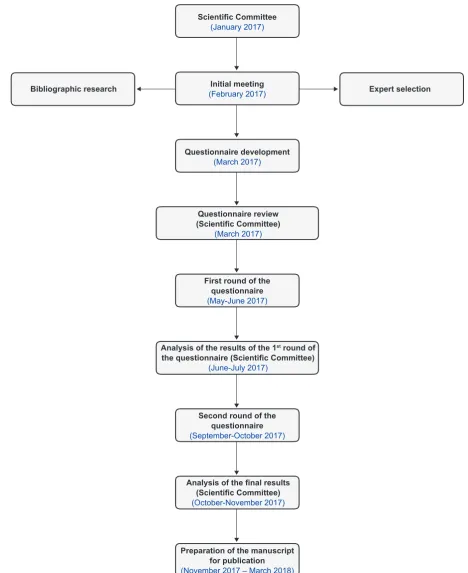
The present study [Consenso sobre Fórmulas Infantis (CoFI) (Consensus on Infant Formulae)] was based on a four-phase structured survey carried out between Novem-ber 2016 and DecemNovem-ber 2017 (Fig. 1): (i) phase 1, cor-responding to the setting up of a scientific committee; (ii) phase 2, to the selection and invitation of a national expert panel by the scientific committee; (iii) phase 3, to the devel-opment and delivery of a questionnaire addressed to ex-perts and (iv) phase 4, to result analysis and interpretation, in addition to the assessment of results and conclusions. Three paediatricians with expertise in nutrition were in-volved in the scientific committee and were responsible by the project management. A set of 65 items (statements) on nutritional quality, food safety and indications of infant for-mulae were selected by the committee, based on national and international databases, with the following distribution: general aspects (7), lipids (2), carbohydrates (3), proteins (14), special and modified formulae (6), immune system / brain and retinal development (4), vitamin D (3), calcium (5), prebiotics (9), probiotics (7), iron (2) and ‘growing-up’ formulae (3).
Portuguese paediatricians with expertise in nutri-tion were selected and distributed as evenly as possible throughout the country, meeting the following requirements: i) paediatrician with expertise in nutrition and gastroenterol-ogy and ii) member of the Portuguese Society of
Paediat-ric Gastroenterology, Hepatology and Nutrition (Sociedade Portuguesa de Gastroenterologia, Hepatologia e Nutrição Pediátrica). Upon online registration at a specifically de-signed site, the questionnaire was sent to the experts who have signed up for the participation in the study.
A modified Delphi method has been used for the ques-tionnaire application.8,9 Originally, the Delphi method was
aimed at reaching a consensus through a systematic and iterative data collection.10 One of the characteristics of the
method regards a procedure in which the panel is informed on the result of the previous iterations before each new round, which is followed until an appropriate consensus is reached. Panel opinions were collected through the com-pletion of the questionnaire previously developed by the scientific committee and the presence of a consensus was quantitatively assessed by use of a statistical approach based on median and interquartile range of the responses. In short, the questionnaire was delivered to panel members, to whom an opinion on each item/statement was requested, by using an ordinal Likert-type 1-9 scale (1: I strongly disa-gree, 9: I strongly agree). Upon the first round of responses, results were analysed and non-consensus items were re-assessed by the committee and a new round of an updated questionnaire was carried out. The presence of a consen-sus was defined by the median of the responses to each item: the presence of an expert disagreement was reached with a median score of 1-3; the presence of consensus with a 7-9 median score and no consensus with a 4-6 median score. The presence of <33.3% (less than one third of the total number of experts) responses outside the 1-3 or 7-9 intervals and an interquartile range ≤4 were required for the definition of an expert consensus. Charts with Micro-soft® Excel for Mac (version 15.27) and Prism 7 for Mac OS X (version 7.0a) software were obtained. The study was deployed and supervised by a technical team at Springer Healthcare Communications.
RESULTS
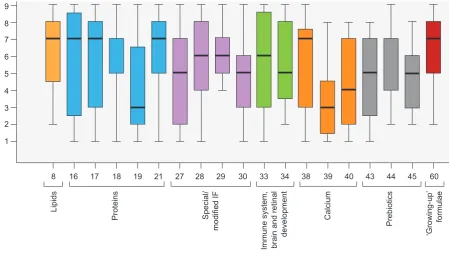
ARTIGO ORIGINAL An expert consensus was reached in 40 items while an ex-pert disagreement was reached in only one (item 56). Non-consensus remained at the end of the second round regard-ing items 8 (lipid content), 16-19 and 21 (protein content), 27-30 (special or modified formulae), 33 and 34 (immune system / brain and retinal development), 38-40 (calcium content), 43-45 (prebiotic content) and 60 (‘growing-up’
for-mulae); medians and response distribution are shown in Fig 3.
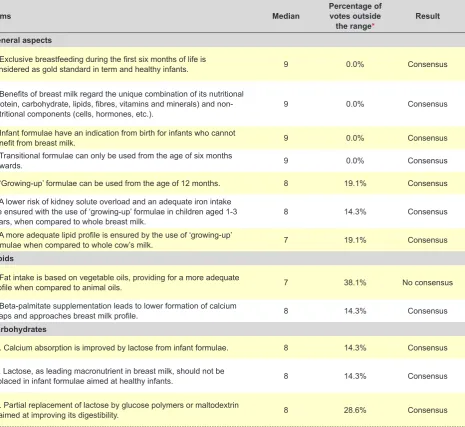
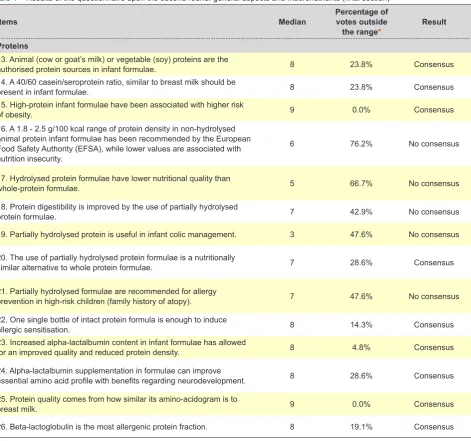
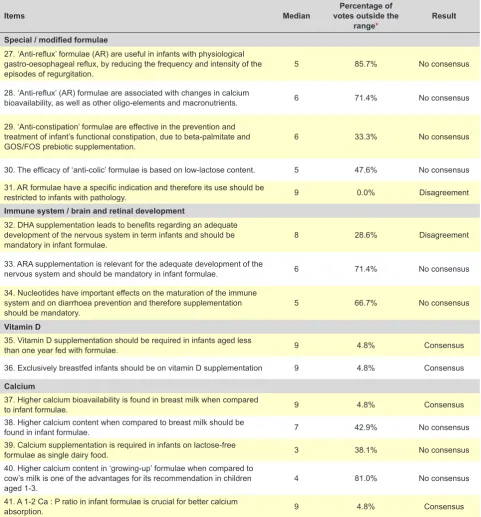
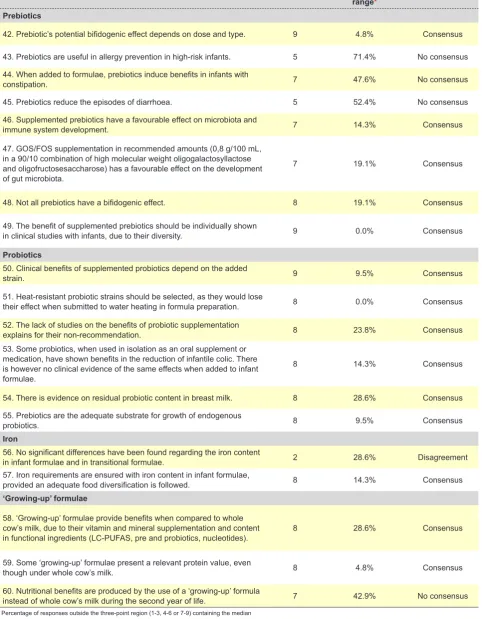
Consensus has been reached in all general aspect items and those regarding carbohydrate (Table 1), vitamin D, probiotics and iron content (Table 2); a consensus was obtained within the first round of the questionnaire in items within the latter three groups (Fig. 2).
Figure 1 – CoFI study layout
Scientific Committee
(January 2017)
Initial meeting
(February 2017) Expert selection
Bibliographic research
Questionnaire development (March 2017)
First round of the questionnaire (May-June 2017)
Second round of the questionnaire (September-October 2017)
Questionnaire review (Scientific Committee)
(March 2017)
Analysis of the results of the 1st round of
the questionnaire (Scientific Committee)
(June-July 2017)
Analysis of the final results (Scientific Committee)
(October-November 2017)
ARTIGO ORIGINAL
DISCUSSION
The results of the questionnaire have shown that a consensus was obtained in most (68.3%) of the items. A similar Spanish study has found a slightly lower consensus (64.6%).11
An expert consensus was reached on the recommenda-tion of exclusive breastfeeding up to the end of the first se-mester of life, as well as on the benefits of breast milk based on the specificity of nutritional and non-nutritional compo-nents and on its impact on growth and health promotion. This is in line with the WHO and the ESPGHAN guidelines on the relevance of breastfeeding.4,5
Whenever breastfeeding is not possible, a consensus has been reached on the use of ‘toddler’ (from birth), ‘transi-tional’ (from the age of six months onward) and ‘growing-up’ formulae (from the age of 12 months). A consensus was also obtained on the benefit of the use of ‘growing-up’ for-mulae when compared to whole cow’s milk. Even though there are no official recommendations in support of the pref-erential use of ‘growing-up’ formulae after the first year of life, their nutritional benefits as regards its protein and lipid content are obvious, when compared to cow’s milk, as re-cently recommended by the ESPGHAN.12
An expert consensus was reached as regards
Figure 2 – Percentage of consensus for each domain upon the first and the second round of the questionnaire (compared to the final
number of items upon the second round)
IS: immune system
First round Second round
100% 80% 60% 40% 20% 0%
Consensus
General aspects Lipids Carbohydrates
Proteins Special/modified formulae IS, brain and retinal development
Vitamin D Calcium Prebiotics Probiotics
Iron ‘Growing-up’ formulae
No consensus
0% 20% 40% 60% 80% 100%
Figure 3 – No consensus reached upon the second round of the questionnaire and position of responses in the Likert scale
IF: infant formulae
Responses
1 2 3 4 5 6 7 8 9
8 16 17 18 19 21 27 28 29 30 33 34 38 39 40 43 44 45 60
Lipids
Proteins Special/
modified IF
Immune system, brain and retinal
development
Calcium
Prebiotics
‘Growing-up’
ARTIGO ORIGINAL
beta-palmitate supplemented formulae, seeking to ap-proach breast milk profile and reducing calcium soap for-mation. This concept has been supported by literature, showing an association between beta-palmitate and an im-proved lipid and calcium absorption, as well as a favourable microbiota modification, with improved intestinal transit and reduced constipation.13 As regards the vegetal origin of fat in
infant formulae, a consensus was not reached within the ex-pert panel, despite a median result of seven. Some formu-lae contain a certain rate of dairy lipids or fish oil although all formulae mostly or exclusively contain vegetable oils (such as soy, coconut and/or sunflower oil). The blends of vegeta-ble oils in formulae are aimed at mimicking the relation be-tween saturated, monounsaturated and polyunsaturated fat acids in breast milk. It is worth mentioning that fat amount and quality in infant food are crucial for the maturation of the central nervous system, retina and cell membranes.14–16
A full consensus was reached regarding the group of items on carbohydrate after the second round of the
ques-tionnaire: the experts have agreed on the relevance of lac-tose in infant formulae, considering its crucial role in calcium absorption, as well as in its association with a beneficial bal-ance within gut microbiota, with benefits to future health.17 A
consensus regarding the benefits of partial replacement of lactose by glucose or maltodextrin polymers has also been found, aimed at an easier digestibility. It is worth mentioning that low lactose formulae are associated with lower calcium absorption, even though without compromising infant re-quirements, provided these are taken in the recommended amounts.18
Items related to protein content have stood out by the lack of consensus in many aspects. A consensus was reached regarding the authorised protein sources for infant formula manufacturing (animal - cow or goat or vegetable - soy) and regarding the recommended content in casein and seroprotein, aimed at approaching the amino acid supply of breast milk. The association between high protein infant formulae and the risk of obesity has also been recognised
Table 1 – Results of the questionnaire upon the second round: general aspects and macronutrients
Items Median Percentage of votes outside
the range* Result
General aspects
1. Exclusive breastfeeding during the first six months of life is
considered as gold standard in term and healthy infants. 9 0.0% Consensus
2. Benefits of breast milk regard the unique combination of its nutritional (protein, carbohydrate, lipids, fibres, vitamins and minerals) and
non-nutritional components (cells, hormones, etc.). 9 0.0% Consensus
3. Infant formulae have an indication from birth for infants who cannot
benefit from breast milk. 9 0.0% Consensus
4. Transitional formulae can only be used from the age of six months
onwards. 9 0.0% Consensus
5. ‘Growing-up’ formulae can be used from the age of 12 months. 8 19.1% Consensus
6. A lower risk of kidney solute overload and an adequate iron intake are ensured with the use of ‘growing-up’ formulae in children aged 1-3
years, when compared to whole breast milk. 8 14.3% Consensus
7. A more adequate lipid profile is ensured by the use of ‘growing-up’
formulae when compared to whole cow’s milk. 7 19.1% Consensus
Lipids
8. Fat intake is based on vegetable oils, providing for a more adequate
profile when compared to animal oils. 7 38.1% No consensus
9. Beta-palmitate supplementation leads to lower formation of calcium
soaps and approaches breast milk profile. 8 14.3% Consensus
Carbohydrates
10. Calcium absorption is improved by lactose from infant formulae. 8 14.3% Consensus
11. Lactose, as leading macronutrient in breast milk, should not be
replaced in infant formulae aimed at healthy infants. 8 14.3% Consensus
12. Partial replacement of lactose by glucose polymers or maltodextrin
is aimed at improving its digestibility. 8 28.6% Consensus
ARTIGO ORIGINAL
by all the experts, reflecting a high sensitivity of physicians towards this issue. Amazingly, no consensus has been reached as regards protein density in infant formulae with non-hydrolysed animal protein (1.8 – 2.5 g/100 kcal),19–21
which could deserve some reflection. A protein content above this interval, particularly during the first year of life, is associated with a higher risk of obesity in childhood and in adulthood, as suggested by different studies. In addition, a content of 1.8 g/100 kcal has been considered by the ref-erence committees in childhood nutrition as the minimum required to ensure an adequate growth and development during the first months of life, which is supported by the cur-rent legislation.4,19,22 Protein requirements decline from the
fourth month of life onwards, in line with the lower protein content in breast milk from the end of the first trimester of breastfeeding. At the moment, the approval by the EFSA of a proposal of protein content reduction in transitional for-mulae (upon the 4-6 months) to 1.6 g/100kcal is expected,
keeping a lower safety limit of 1.8 g/100kcal up to the age of six months unchanged.23 It is worth mentioning that the
highest minimum safety value for these formulae depends on the limiting effect of some essential amino acids, namely tryptophan and cysteine.24,25 The lack of consensus
regard-ing this issue, which was previously mentioned, may be due to the possible confusion generated by the very recent proposal of a reduction in transitional formulae protein con-tent.23
Partially-hydrolysed protein formulae have been con-sidered by experts as an overlapping nutritional alterna-tive to whole protein formulae and no consensus has been reached on their indication in the presence of bowel dis-comfort (aimed at an easier digestibility), reducing infan-tile colic or preventing allergy in children at family risk. In fact, the benefit of the use of these formulae in reducing bowel discomfort and colic have not been strongly sup-ported in literature, even though the possible use of a
Table 1 – Results of the questionnaire upon the second round: general aspects and macronutrients (final section)
Items Median Percentage of votes outside
the range* Result
Proteins
13. Animal (cow or goat’s milk) or vegetable (soy) proteins are the
authorised protein sources in infant formulae. 8 23.8% Consensus
14. A 40/60 casein/seroprotein ratio, similar to breast milk should be
present in infant formulae. 8 23.8% Consensus
15. High-protein infant formulae have been associated with higher risk
of obesity. 9 0.0% Consensus
16. A 1.8 - 2.5 g/100 kcal range of protein density in non-hydrolysed animal protein infant formulae has been recommended by the European Food Safety Authority (EFSA), while lower values are associated with nutrition insecurity.
6 76.2% No consensus
17. Hydrolysed protein formulae have lower nutritional quality than
whole-protein formulae. 5 66.7% No consensus
18. Protein digestibility is improved by the use of partially hydrolysed
protein formulae. 7 42.9% No consensus
19. Partially hydrolysed protein is useful in infant colic management. 3 47.6% No consensus
20. The use of partially hydrolysed protein formulae is a nutritionally
similar alternative to whole protein formulae. 7 28.6% Consensus
21. Partially hydrolysed formulae are recommended for allergy
prevention in high-risk children (family history of atopy). 7 47.6% No consensus 22. One single bottle of intact protein formula is enough to induce
allergic sensitisation. 8 14.3% Consensus
23. Increased alpha-lactalbumin content in infant formulae has allowed
for an improved quality and reduced protein density. 8 4.8% Consensus
24. Alpha-lactalbumin supplementation in formulae can improve
essential amino acid profile with benefits regarding neurodevelopment. 8 28.6% Consensus
25. Protein quality comes from how similar its amino-acidogram is to
breast milk. 9 0.0% Consensus
26. Beta-lactoglobulin is the most allergenic protein fraction. 8 19.1% Consensus
ARTIGO ORIGINAL
partially-hydrolysed seroprotein formula for a short period of time in infants with severe pain has been considered.17,26
A high consensus has also been reached regarding the potential allergenic effect of a single administration of one bottle of intact protein formula. As regards the prevention of atopy, literature is not consensual either. The reduction in allergenicity comes not only from hydrolysed protein, as also from which protein component is submitted to hy-drolysis (casein or seroprotein), hyhy-drolysis degree (partial or extensive), type (thermal or enzymatic) and location (epitope) and these factors are different among the
formu-lae available in the Portuguese market. Therefore, varying associations have been found between the expression of the allergic disorder in adolescence (namely asthma, rhini-tis and eczema) and the different hydrolysed formulae that are used within the first months of life in children with an increased risk for atopic disease.27,28 The recommendations
of nutrition committees are also in line with this, although based on a ‘modest evidence’ or on a possible risk reduc-tion.29,30 The lack of scientific strength for the use of
hydro-lysed protein infant formulae in the prevention of atopy in high-risk infants explains the lack of consensus among
Table 2 – Results upon the second round of the questionnaire: special / modified formulae, immune system, cell and retinal development,
vitamin D, calcium, prebiotics, probiotics, iron and ‘growing-up’ formulae
Items Median votes outside the Percentage of
range* Result
Special / modified formulae
27. ‘Anti-reflux’ formulae (AR) are useful in infants with physiological gastro-oesophageal reflux, by reducing the frequency and intensity of the
episodes of regurgitation. 5 85.7% No consensus
28. ‘Anti-reflux’ (AR) formulae are associated with changes in calcium
bioavailability, as well as other oligo-elements and macronutrients. 6 71.4% No consensus
29. ‘Anti-constipation’ formulae are effective in the prevention and treatment of infant’s functional constipation, due to beta-palmitate and
GOS/FOS prebiotic supplementation. 6 33.3% No consensus
30. The efficacy of ‘anti-colic’ formulae is based on low-lactose content. 5 47.6% No consensus 31. AR formulae have a specific indication and therefore its use should be
restricted to infants with pathology. 9 0.0% Disagreement
Immune system / brain and retinal development
32. DHA supplementation leads to benefits regarding an adequate development of the nervous system in term infants and should be
mandatory in infant formulae. 8 28.6% Disagreement
33. ARA supplementation is relevant for the adequate development of the
nervous system and should be mandatory in infant formulae. 6 71.4% No consensus
34. Nucleotides have important effects on the maturation of the immune system and on diarrhoea prevention and therefore supplementation
should be mandatory. 5 66.7% No consensus
Vitamin D
35. Vitamin D supplementation should be required in infants aged less
than one year fed with formulae. 9 4.8% Consensus
36. Exclusively breastfed infants should be on vitamin D supplementation 9 4.8% Consensus
Calcium
37. Higher calcium bioavailability is found in breast milk when compared
to infant formulae. 9 4.8% Consensus
38. Higher calcium content when compared to breast milk should be
found in infant formulae. 7 42.9% No consensus
39. Calcium supplementation is required in infants on lactose-free
formulae as single dairy food. 3 38.1% No consensus
40. Higher calcium content in ‘growing-up’ formulae when compared to cow’s milk is one of the advantages for its recommendation in children
aged 1-3. 4 81.0% No consensus
41. A 1-2 Ca : P ratio in infant formulae is crucial for better calcium
absorption. 9 4.8% Consensus
ARTIGO ORIGINAL
Table 2 – Results upon the second round of the questionnaire: special / modified formulae, immune system, cell and retinal development,
vitamin D, calcium, prebiotics, probiotics, iron and ‘growing-up’ formulae (final section)
Items Median votes outside the Percentage of
range* Result
Prebiotics
42. Prebiotic’s potential bifidogenic effect depends on dose and type. 9 4.8% Consensus
43. Prebiotics are useful in allergy prevention in high-risk infants. 5 71.4% No consensus 44. When added to formulae, prebiotics induce benefits in infants with
constipation. 7 47.6% No consensus
45. Prebiotics reduce the episodes of diarrhoea. 5 52.4% No consensus
46. Supplemented prebiotics have a favourable effect on microbiota and
immune system development. 7 14.3% Consensus
47. GOS/FOS supplementation in recommended amounts (0,8 g/100 mL, in a 90/10 combination of high molecular weight oligogalactosyllactose and oligofructosesaccharose) has a favourable effect on the development of gut microbiota.
7 19.1% Consensus
48. Not all prebiotics have a bifidogenic effect. 8 19.1% Consensus
49. The benefit of supplemented prebiotics should be individually shown
in clinical studies with infants, due to their diversity. 9 0.0% Consensus
Probiotics
50. Clinical benefits of supplemented probiotics depend on the added
strain. 9 9.5% Consensus
51. Heat-resistant probiotic strains should be selected, as they would lose
their effect when submitted to water heating in formula preparation. 8 0.0% Consensus
52. The lack of studies on the benefits of probiotic supplementation
explains for their non-recommendation. 8 23.8% Consensus
53. Some probiotics, when used in isolation as an oral supplement or medication, have shown benefits in the reduction of infantile colic. There is however no clinical evidence of the same effects when added to infant formulae.
8 14.3% Consensus
54. There is evidence on residual probiotic content in breast milk. 8 28.6% Consensus
55. Prebiotics are the adequate substrate for growth of endogenous
probiotics. 8 9.5% Consensus
Iron
56. No significant differences have been found regarding the iron content
in infant formulae and in transitional formulae. 2 28.6% Disagreement
57. Iron requirements are ensured with iron content in infant formulae,
provided an adequate food diversification is followed. 8 14.3% Consensus
‘Growing-up’ formulae
58. ‘Growing-up’ formulae provide benefits when compared to whole cow’s milk, due to their vitamin and mineral supplementation and content
in functional ingredients (LC-PUFAS, pre and probiotics, nucleotides). 8 28.6% Consensus
59. Some ‘growing-up’ formulae present a relevant protein value, even
though under whole cow’s milk. 8 4.8% Consensus
60. Nutritional benefits are produced by the use of a ‘growing-up’ formula
instead of whole cow’s milk during the second year of life. 7 42.9% No consensus
ARTIGO ORIGINAL Portuguese experts and this is one of the areas most de-prived of evidence-based recommendations. On the other hand, a consensus has been reached on the potential al-lergenic effect of a single bottle of intact protein formula, as well as low allergenic potential of alpha-lactalbumin and its relevance in improving protein quality of infant formulae. Finally, all the experts have agreed on the fact that protein quality depends on how close the formula’s amino acid pro-file approaches breast milk.
The poorest consensus has been found in the group of items on ‘special or modified formulae’. A consensus has been reached regarding the indication of anti-reflux formu-lae (AR) in infants with pathology, even though its efficacy in reducing the number and intensity of the episodes of regurgitation in infants with physiological gastro-oesopha-geal reflux was not consensual. This is in line with litera-ture, showing that AR formulae are moderately effective in healthy infants, only regarding the reduction in regurgitation episodes and no significant reduction in gastro-oesoph-ageal reflux.31,32 No consensus has been reached on the
reduction in bioavailability of macro and micronutrients in AR formulae. The risk of an inadequate use of AR formu-lae in infants with physiological gastro-oesophageal reflux has been made aware by the ESPGHAN, due to the fact that bioavailability of some nutrients may be impaired, as these are not standard formulae.19 Therefore, AR formulae
are only recommended in infants with pathological gastro-oesophageal reflux and impaired growth, for the shortest possible time, associated with other measures and always under medical advice.19,31,32
A consensus was also not reached regarding the effi-cacy of special (so-called functional) formulae. An expert consensus was not reached regarding anti-constipation formulae (based either on the modification of triglyceride in order to obtain a palmitic acid bound to glycerol in the beta position or on prebiotic supplementation) and anti-colic formulae (based on low-lactose content). Breast milk contains 70% of palmitic acid bound to glycerol in the beta position, making fat acids resistant to hydrolysis through pancreatic lipase and subsequently leading to a more easy digestion by bile acids and an almost absence of calcium soaps. This is one of the reasons for softer stool consist-ency in breastfed infants which is emulated by industry in anti-constipation formulae.17 There is no scientific support
regarding low-lactose content in anti-colic formulae as to be considered an efficient alternative aimed to relieve this type of infant discomfort, such as what has been described regarding partially hydrolysed protein.33,34
A consensus has been reached on the recognition of the relevance and requirement of the supplementation with docosahexaenoic acid (DHA), regarding the group of items on immune system, brain and retinal development; never-theless, no consensus was reached regarding arachidonic acid and nucleotide supplementation. Both arachidonic acid (ARA) and DHA are part of retinal and brain phospholip-ids and are also eicosanoid precursors acting as local and systemic coagulation mediators, immune and
inflamma-tory responses and vascular dynamics.35–38 Its relevance
for an adequate neurodevelopment, particularly during the first semester of life, led to the recommendation of its sup-plementation in infant formulae and is currently mandatory and should be presented as a nutritional and health re-quirement.17-19,21 Nucleotides represent 0.1-0.15% of
nitro-gen content in breast milk and supplementation has been recommended by the ESPGHAN, assuming a possible future nutritional requirement, even though there is still no scientific strength. In fact, these have been considered as functional ingredients with a role in DNA and RNA synthesis with probable immunological action, as well as with a role in increased iron bioavailability, in a favourable modification of gut microbiota and in lipoprotein metabolism.39–44
A consensus has been reached regarding vitamin D supplementation during the first year of life, both in breast-fed infants and in infants on formulae, in line with the recom-mendations of the Nutrition Committee of the ESPGHAN.45 A consensus was also reached regarding a higher cal-cium bioavailability in breast milk vs. formulae as well as on the relevance of Ca:P ratio in formulae for an optimised calcium absorption. However, no consensus has been reached on the need for higher calcium supplementation in formulae compared to breast milk or on calcium sup-plementation in infants fed with lactose-free formulae. This seeming discrepancy may be explained by knowing that a lower calcium absorption is offset by higher calcium content in formulae and nearly twice the calcium content is usually found in these when compared to breast milk (48 vs. 72 mg / 100 kcal). On the other hand, calcium absorption and the development of a healthy gut microbiota are made easier with lactose supplementation.46 Even though lower calcium
absorption is found with the use of lactose-free formulae, calcium content is just enough to meet infant requirements, provided that an adequate volume intake is ensured.18
Finally, no consensus has been reached on the benefit of higher calcium content in ‘growing-up’ formulae when compared to cow’s milk. In fact, nutritional benefits of ‘grow-ing-up’ formulae when compared to cow’s milk upon the age of 12 months is not based on higher calcium content, rather on low amount and rich protein and fat quality, low sodium content and iron fortification, among other characteristics. As regards prebiotics, fructo-oligosaccharides (FOS) and galacto-oligo-saccharides (GOS) supplementation in the recommended dose, their beneficial effect in promot-ing a healthy gut microbiota and subsequent benefits have been recognised by experts. A consensus has also been reached on the fact that not all prebiotics have that abil-ity and bifidogenic effect is determined by prebiotic dose and type, as described in literature.47 A consensus was not reached, in line with literature, regarding the role of prebiot-ics in allergy prevention in high-risk infants, as well as in reducing constipation or episodes of diarrhoea.47,48
ARTIGO ORIGINAL role of prebiotics in the growth of endogenous probiotics.
A consensus has also been reached on the lack of strong evidence on their benefits and scientific support in order to recommend the universal supplementation in infant formu-lae, even though safety of the addition of these microor-ganisms has been recognised.47,48 A consensus has been
reached on the recognition that clinical benefits depend on the added strain and the importance of its resistance to heat inactivation.
An expert consensus has been reached regarding the fact that iron content is enough to ensure requirements, as long as an adequate food diversification is followed, in line with literature.49 In addition, a disagreement has been found
regarding the presence of no significant differences in iron content among infant formulae and transitional formulae. It is worth mentioning that these content values are very similar, at least regarding the formulae available in the Por-tuguese market.17
Finally, there was no consensus on nutritional benefits of ‘growing-up’ formulae used in the second year of life, even though a consensus has been reached on the fact that these formulae have some advantages when compared to whole cow’s milk. In fact, its use as part of the strategy for an increased intake of iron, vitamin D and long-chain poly-unsaturated fat acids (LC-PUFAs) and reduced protein in-take during the second and the third years of life has been recognised by the Nutrition Committee of the ESPGHAN.12
The fact that not all the formulae available in the Portu-guese market were included in the study was a limitation, namely regarding preterm (generally available for in-hospi-tal use and upon discharge), semi-elemenin-hospi-tal and elemenin-hospi-tal formulae. This was due to the fact that our study was more focused on those formulae that are usually prescribed with-in the community, providwith-ing more with-information to physicians (general practitioners and paediatricians). It is worth men-tioning that the opinion of 12.5% of the eligible experts was not available. However, responses that were considered correspond to an adequate representativeness of the Por-tuguese paediatricians with expertise in nutrition, members of the Portuguese Society of Paediatric Gastroenterology, Hepatology and Nutrition.
Regular surveys on infant formulae have been consid-ered as very useful, considering the technological improve-ments and scientific research. In fact, frequent changes in the composition of formulae explain for the regular knowl-edge on the alleged benefits, not always consensual, in or-der to support their recommendation.
CONCLUSION
A relatively comprehensive consensus has been reached (68.3%) with this survey involving Portuguese pae-diatricians with expertise in nutrition and gastroenterology as regards nutritional quality, food safety and indications of infant formulae.
No consensus has been reached on different issues, in line with literature and these remain under discussion, with-in the role of early nutrition with-in promotwith-ing future health. From
these, the indication of partially hydrolysed formulae for atopy prevention in high-risk infants, functional formulae to control gut discomfort (colic, diarrhoea, and constipation), nucleotide-supplemented formulae for immune stimulation and the role of prebiotics for allergy prevention in high-risk infants, as well as for the reduction of constipation and epi-sodes of diarrhoea, are worth mentioning.
ACKNOWLEDGEMENTS
The authors (scientific committee) wish to acknowledge Springer Healthcare Communications for the implementa-tion, supervision and financial support to participants, as well as to Nutricia Early Life Nutrition for logistics and sup-port services during the implementation of the project.
HUMAN AND ANIMAL PROTECTION
The authors declare that the followed procedures were according to regulations established by the Ethics and Clini-cal Research Committee and according to the Helsinki Dec-laration of the World Medical Association.
DATA CONFIDENTIALITY
The authors declare that they have followed the proto-cols of their work centre on the publication of patient data.
CONFLICTS OF INTEREST
This study was supported by Nutricia Early Life Nutri-tion during the implementaNutri-tion. Springer Healthcare Com-munications was hired by Nutricia Early Life Nutrition for the development and supervision of the project, as well as for the financial support to the scientific committee and experts regarding their intellectual contribution, in order to ensure scientific independency. Nutricia Early Life Nutrition had no influence whatsoever on the scientific project, namely on its design, questionnaire development and expert selection and had no participation in any of the work meetings and was unaware of any previous outcome before public disclo-sure.
Carla Rêgo: fees were received from Azevedos, Danone-Milupa-Nutrícia, Merck and Nestlé for isolated training actions, lectures and travels according to her col-laboration.
Luís Pereira-da-Silva: fees were received from Alter, Baxter, Danone-Milupa-Nutrícia and Nestlé for isolated ac-tions of consulting, training, lectures and travels according to his collaboration.
Ricardo Ferreira: fees were received from B-Braun, Danone-Milupa-Nutrícia, Fresenius Kabi and Nestlé, Labo-ratórios Vitória for isolated actions of training, lectures and travels according to his collaboration.
FINNANCIAL SUPPORT
ARTIGO ORIGINAL REFERENCES1. Good nutrition in the 1,000 days between a woman’s pregnancy and her child’s second birthday sets the foundation for all the days that follow. [consultado 2017 out 1]. Disponível em: https://thousnaddays.org. 2. Pietrobelli A, Agosti MA, Zuccotti G, The MenU Group. Putting the
barker theory into the future: Time to act on preventing pediatric obesity. Int J Environ Res Public Health. 2016;13:1151.
3. Victora CG, Bahl R, Barros AJ, França GV, Horton S, Krasevec J, et al. Breastfeeding in the 21st century: epidemiology, mechanisms, and lifelong effect. Lancet. 2016;387:475-90.
4. Fewtrell M, Bronsky J, Campoy C, Domellöf M, Embleton N, Fidler Mis N, et al. Complementary feeding: a position paper by the European Society for Paediatric Gastroenterology, Hepatology, and Nutrition (ESPGHAN) committee on nutrition. J Pediatr Gastroenterol Nutr. 2017;64:119-32. 5. WHO. Report of The Expert Consultation on The Optimal Duration of
Exclusive Breastfeeding. Optim Durat Exclus Breastfeed. 2001;65:1311-3.
6. Rêgo C, Lopes C, Pinto E, Nazareth M, Graça P. Estudo do padrão alimentar e de crescimento infantil: EPACI Portugal 2012. Porto: Universidade do Porto; 2012.
7. EFSA Panel on Dietetic Products nutrition and allergies. Scientific opinion on the essential composition of infant and follow-on formulae. EFSA J. 2014;12:3760.
8. Fitch K, Bernstein SJ, Aguilar MD, Burnand B, LaCalle JR, Lazaro P, et al. The RAND / UCLA appropriateness method user’s manual.; 2001. [consultado 2017 out 1]. Disponível em: http://www.rand.org.
9. Slade SC, Dionne CE, Underwood M, Buchbinder R. Standardised method for reporting exercise programmes: protocol for a modified Delphi study. BMJ Open. 2014;4:1-6.
10. Dalkey NC, Brown B, Cochran S. The Delphi Method, III: use of self rating to improve group estimates. Santa Monica: Rand Corporation; 1969.
11. Barrio J, Díaz-Martín JJ, Manrique I, Martín Martínez B, Ortega E. Consenso experto sobre los aspectos nutricionales de las leches infantiles de inicio y continuación. An Pediatr. 2015;83:376-86. 12. Hojsak I, Bronsky J, Campoy C, Domellöf M, Embleton N, Fidler Mis, et
al. ESPGHAN Committee on Nutrition. Young child formula - a position paper by the ESPGHAN Committee on Nutrition. J Pediatr Gastroenterol Nutr. 2018;66:177-85.
13. Havlicekova Z, Jesenak M, Banovcin P, Kuchta M. Beta-palmitate - a natural component of human milk in supplemental milk formulas. Nutr J. 2016;15:1-8.
14. Koletzko B, Lien E, Agostoni C, Böhles H, Campoy C, Cetin I, et al. The roles of long-chain polyunsaturated fatty acids in pregnancy, lactation and infancy: Review of current knowledge and consensus recommendations. J Perinat Med. 2008;36:5-14.
15. Department of Health and Human Services and Department of Agriculture. Dietary Guidelines for Americans 2005, chapter 6 fats. [consultado 2018 mar 18] Disponível em. http://www.health.gov/ dietaryguidelines/dga2005/.
16. FAO/WHO Report of a Joint Expert Consultation (1994): Fats and Oils in Human Nutrition. FAO Food and Nutrition Paper No 57. Rome: Food and Agricultural Organization; 1994. p. 49-55.
17. Rêgo C, Teles A, Nazareth M, Guerra A. Leites e fórmulas infantis: a realidade portuguesa revisitada em 2012. Acta Pediatr Port. 2013;44:50-93.
18. Abrams SA, Griffin IJ, Davila PM. Calcium and zinc absorption from lactose-containing and lactose-free infant formulas. Am J Clin Nutr. 2002;76:442-6.
19. Koletzko B, Baker S, Cleghorn G, Neto UF, Gopalan S, Hernell O, et al. Global standard for the composition of infant formula: Recommendations of an ESPGHAN coordinated international expert group. J Pediatr Gastroenterol Nutr. 2005;41:584-99.
20. Directiva 2006/141/CE da Comissão de 22 de Dezembro de 2006. Jornal Oficial da União Europeia. 30.12.2006.
21. Directiva 2009/39/CE do Parlamento Europeu e do Conselho de 6 de Maio de 2009. Jornal Oficial da União Europeia. 20.5.2009.
22. Ministério da Saúde. Decreto-Lei no217/2008 de 11 de Novembro. Diário
da República, 1a série. Lisboa: MS; 2008. p. 219.
23. Turck D, Bresson J, Burlingame B, Dean T, Fairweather-Tait S, Heinonen M, et al. EFSA Panel on Dietetic Products, Nutrition and Allergies (NDA). Scientific Opinion on the safety and suitability for use by infants of follow-on formulae with a protein content of at least 1.6 g/100 kcal. EFSA J. 2017;15.
24. Wharton BA. International recommendations on protein intakes in
infancy: some points for discussion. Nestle Nutr Work Ser. 1994;33:67-86.
25. Dupont C. Protein requirements during the first year of life 1 – 4. Am J Clin Nutr. 2003;77:S1544-9.
26. Lucassen P. Colic in infants. Clin Evid. 2010:1-11.
27. Osborn DA, Sinn JK, Jones LJ. Infant formulas containing hydrolysed protein for prevention of allergic disease and food allergy. Cochrane Database Syst Rev. 2017;5:CD003664.
28. Von Berg A, Filipiak-Pittroff B, Schulz H, Hoffmann U, Link E, Sußmann M, et al. Allergic manifestation 15 years after early intervention with hydrolyzed formulas - the GINI study. Allergy. 2016;71:210-9.
29. Muraro A, Halken S, Arshad SH, Beyer K, Dubois AE, Du Toit G, et al. EAACI Food Allergy and Anaphylaxis Guidelines. Primary prevention of food allergy. Allergy. 2014;69:590-601.
30. Greer FR, Sicherer SH, Burks AW. Effects of early nutritional interventions on the xevelopment of <topic disease in infants and children: the role of maternal dietary restriction, breastfeeding, riming of introduction of Complementary foods, and hydrolyzedf formulas. Pediatrics. 2008;121:183-91.
31. Agostoni C. Antireflux or antiregurgitation milk products for infants and young children: a commentary by the ESPGHAN Committee on Nutrition. Acta Paediatr. 2004;93:456.
32. Horvath A, Dziechciarz P, Szajewska H. The effect of thickened-feed interventions on gastroesophageal reflux in infants: systematic review and meta-analysis of randomized, controlled trials. Pediatrics. 2008;122:e1268-77.
33. Dalmau JS. Fórmulas especiales para lactantes. An Pediatría. 2001;54:157-9.
34. Martinez JA, Ballew MP. Infant formulas. Pediatr Rev. 2011;32:179-91. 35. Oh R. Practical applications of fish oil (Omega-3 fatty acids) in primary
care. J Am Board Fam Pract. 2005;18:28-36.
36. Arterburn L, Hall E, Oken H. Distribution, interconversion, and dose response of n− 3 fatty acids in humans. Am J Cinical Nutr. 2006;83:1467S-76.
37. Akabas SR, Deckelbaum RJ. Summary of a workshop on n-3 fatty acids: current status of recommendations and future directions. Am J Clin Nutr. 2006;83:1536S-8.
38. Mena P, Uauy R. Fats. Nutritional needs. In: Koletzko B, editor. Pediatric nutrition in practice. Basel, Karger; 2008. p. 47-51.
39. Maldonado J, Navarro J, Narbona E, Gil A. The influence of dietary nucleotides on humoral and cell immunity in the neonate and lactating infant. Early Hum Dev. 2001;65:69-74.
40. Cordle CT, Winship TR, Schaller JP, Thomas DJ, Buck RH, Ostrom KM, et al. Immune status of infants fed soy-based formulas with or without added nucleotides for 1 year: part 2: immune cell populations. J Pediatr Gastroenterol Nutr. 2002;34:145-53.
41. Pickering LK, Granoff DM, Erickson JR, Masor ML, Cordle CT, Schaller JP, et al. Modulation of the immune system by human milk and infant formula containing nucleotides. Pediatrics. 1998;101:242-9.
42. Morillas J, Molto L, Robles R, Gil A, Sanchez-Pozo A. Lipoprotein changes in small-for-gestational-age infants fed nucleotide-supplemented milk formula. Acta Paediatr. 1994;83:481-5.
43. Axelsson I, Flodmark CE, Räihä N, Tacconi M, Visentin M, Minoli I, et al. The influence of dietary nucleotides on erythrocyte membrane fatty acids and plasma lipids in preterm infants. Acta Paediatr. 1997;86:539-44.
44. DeLucchi C, Pita M, Faus M, Molina J, Uauy R, Gil A. Effects of dietary nucleotides on the fatty acid composition of erythrocyte membrane lipids in term infants. J Pediatr Gastroenterol Nutr. 1987;6:568-74.
45. Braegger C, Campoy C, Colomb V, Decsi T, Domellof M, Fewtrell M, et al.; ESPGHAN Committee on Nutrition. Vitamin D in the healthy European paediatric population. J Pediatr Gastroenterol Nutr. 2013;56:692-701. 46. Girardet JP, Fournier V, Bakhache P, Beck L, Kempf C, Lachambre
E. Tolérance et adéquation pour la croissance d’une préparation pour nourrissons contenant du lactose comme seule source de glucides. Étude contrôlée randomisée en double insu chez 178 nourrissons. Arch Pediatr. 2012;19:693-9.
47. Braegger C, Chmielewska A, Decsi T, Kolacek S, Mihatsch W, Moreno L, et al. Supplementation of infant formula with probiotics and/or prebiotics: a systematic review and comment by the ESPGHAN committee on nutrition. J Pediatr Gastroenterol Nutr. 2011;52:238-50.
ARTIGO ORIGINAL
49. Jovaní M, Barberá R, Farré R. Effect of lactoferrin addition on the