ORIGINAL RESEARCH ARTICLE
Reaching the Youngest Moms and Dads: A Socio-Ecological View of
Actors and Factors Influencing First-time Young Parents’ Use of
Sexual and Reproductive Health Services in Madagascar
DOI: 10.29063/ajrh2019/v23i3.2
Susan Igras
1, Melanie Yahner
2*, Haingo Ralaison
3, Jean Pierre Rakotovao
3, Rachel Favero
4,
Sandrine Andriantsimietry
3and Justin Ranjalahy Rasolofomanana
5Independent Consultant1; Save the Children USA2; Jhpiego Madagascar3; Jhpiego USA4; Tandem5.
*For Correspondence: Email: [email protected]; Phone: +1-475-999-3011
Abstract
Globally, few programs consider the needs of first-time young parents (FTYPs), who face disproportionate negative health consequences during pregnancy and childbirth. Scant evidence exists on FTYPs‘ broader health needs. Formative research in two regions of Madagascar used a socio-ecological lens to explore, via 44 interviews and 32 focus group discussions, the influences on FTYPs at the individual, couple, family, community, and system levels. We spoke with FTYPs who had, and who had not, used sexual and reproductive health (SRH) services, their parents/kin and influential adults, and community health workers and facility health providers. Data analysis, guided by a codebook, used Atlas.ti. Age, social position, and implicit power dynamics operating within and across socio-ecological levels affected FTYPs‘ service-seeking behaviors. The nature and extent of influence varied by health service type. Cross-cutting social factors affecting service use/non-use included gender dynamics, pressures from mothers, in-laws, and family tradition, and adolescent stigmatization for too-early pregnancy. Structural and economic factors included limited awareness of and lack of trust in available services, unfriendliness of services, and FTYPs‘ limited financial resources. A socio-ecological program perspective can inform tailoring of activities to address broader SRH issues, including how relationships, gender, power, and intergenerational dynamics influence service use. (Afr J Reprod Health 2019; 23[3]: 19-29).
Keywords: Adolescents, First-time parents, Madagascar, Sexual and reproductive health, Socio-ecological
Résumé
À l'échelle mondiale, peu de programmes prennent en compte les besoins des jeunes gens devenus parents pour la première fois (JPPPF), qui font face à des conséquences négatives sur la santé disproportionnées pendant la grossesse et l'accouchement. Il existe peu de preuves sur les besoins de santé plus généraux des JPPPF. La recherche formative menée dans deux régions de Madagascar a utilisé une lentille socio-écologique pour explorer, par l‘intermédiaire de 44 entretiens et 32 discussions de groupe, les influences sur les JPPPF aux niveaux de l'individu, du couple, de la famille, de la communauté et du système. Nous avons parlé avec les JPPPF qui avaient utilisé, et ceux qui n‘avaient pas utilisé les services de santé sexuelle et de la reproduction, leurs parents/relations et des adultes influents, ainsi que des agents de santé communautaires et des prestataires de soins en établissement. L‘analyse des données, guidée par un livre de codes, a été réalisée par Atlas.ti. L‘âge, la position sociale et les dynamiques de pouvoir implicites opérant à l‘intérieur et entre les niveaux socio-écologiques ont affecté les comportements de recherche de services des JPPPF. La nature et l'étendue de l'influence variaient selon le type de service de santé. Les facteurs sociaux transversaux ayant une incidence sur l'utilisation/la non-utilisation des services comprenaient la dynamique de genre, les pressions exercées par les mères, la belle-famille et les traditions familiales et la stigmatisation des adolescentes pour une grossesse trop précoce. Les facteurs structurels et économiques comprenaient une connaissance limitée et un manque de confiance dans les services disponibles, un manque de convivialité des services et des ressources financières limitées des JPPPF. Une perspective de programme socio-écologique peut aider à adapter les activités aux problèmes plus généraux de la SSR, notamment en ce qui concerne l'influence des relations, du genre, du pouvoir et de la dynamique intergénérationnelle sur l'utilisation des services. (Afr J Reprod Health 2019; 23[3]: 19-29).
Introduction
The disproportionate negative consequences of early pregnancy and childbirth on the health and well-being of young mothers and their children are well-documented in low- and middle-income countries. Young parents (under age 24) have fewer educational and subsequently fewer well-paying job opportunities1,2. Pregnancy in adolescence (under age 20) increases the risk of maternal and newborn mortality and morbidity3. There is a critical need to reach young people to further reduce adverse consequences.
A specific adolescent/youth segment- first-time mothers, fathers, and young parent-couples- is increasingly seen as critical, not only demographically, but marking an important social transition4. Newly married youth and parents must assume new gender and household/family roles and fulfill other social expectations for which many are unprepared. Few tested program responses exist; most youth-serving programs aim to delay marriage and first pregnancy, but do not engage youth who have started childbearing. Programs targeting parents do not account for the unique needs of those parents who are themselves still young: a recent global review found a wide-ranging absence of relevant programming at the facility and community levels for parents aged 15-245.
In Madagascar, a significant proportion of youth marry and bear children early, quickly transitioning reproductively and socially from an unmarried adolescent life phase to a married childbearing life phase. The median age for first sexual intercourse is 17.1 years for women and 17.8 for men. By age 15, 8.0% of girls have already become mothers or are pregnant; by age 19, 36.9% of women have started their reproductive lives6. National averages mask sharp urban/rural contrasts; 35.0% of 19-year-olds in rural areas have started childbearing, compared to just 15.4% of their counterparts in the capital area. The median age of marriage is 19 for women and 23 for men. Service use is uneven: for women of all reproductive ages, 82% reported at least one antenatal care (ANC) consultation, but only 44% reported delivery with a skilled birth attendant7.
Survey indicators show that young people‘s use of health services is lower than that of adults. Beyond health, early childbearing by Malagasy youth limits women to low-paying jobs in the informal sector8.
The complexities and interdependencies between an individual and his/her environment, particularly adolescents and youth who are often disadvantaged socially and economically, indicate the need to understand better the influences exerted by families, communities, and services on first-time young parents (FTYPs) as individuals and as couples. What supports, and barriers exist for FTYPs during pregnancy, childbirth, and postpartum care, and for healthy spacing of the next birth? What factors influence their behaviors for seeking and using health services? With an aim of developing and piloting a holistic program, we undertook formative research applying a socio-ecological lens to explore factors influencing FTYPs‘ access to and use of ANC, delivery, and contraceptive services. This research builds upon previous studies exploring cultural, social, and care-seeking norms among adolescents9,10.
Methods
Study design
The qualitative study used a descriptive, cross-sectional design, guided by a socio-ecological model of healthy adolescence11 recognizing that layers of social and institutional influences, as well as life course contexts, can lead or create barriers to sustained individual behavior change. Individual/couple, family, community, and health system levels were explored to deepen understanding of the interests, behaviors, needs, and assets influencing FTYPs‘ actions related to sexual and reproductive health (SRH).
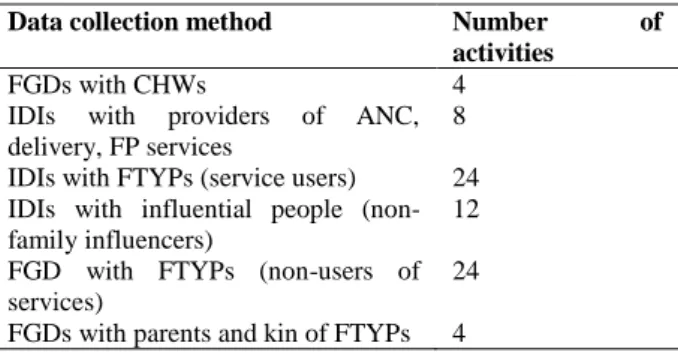
Table 1: Summary of data collection activities and participation
Data collection method Number of
activities
FGDs with CHWs 4
IDIs with providers of ANC, delivery, FP services
8
IDIs with FTYPs (service users) 24 IDIs with influential people (non-family influencers)
12
FGD with FTYPs (non-users of services)
24
FGDs with parents and kin of FTYPs 4
Research sites and participant selection
In Menabe and Vakinankaratra, two regions supported by the Maternal and Child Survival Program, six facilities were purposively selected, representing rural, peri-urban, and urban contexts.
FTYPs that had used health services were sampled from facility registers, stratified by age (15-17 and 18-24). Based on these age stratifications, community health workers (CHWs) purposively identified both individuals and FTYPs who resided in their catchment area and who had not used health services during their most recent pregnancy and delivery. CHWs also recruited parents of FTYPs and other influential people outside of the family identified by FTYP service users. At least one service provider and 4-8 CHWs associated with each sampled facility were expected to be sampled (see Table 1). All participants had to live within 10 kilometers of a sampled health care facility and could not be kin with another participant.
Research methods
The study used focus group discussions (FGDs) and semi-structured in-depth interviews (IDIs). To elicit normative influences, expectations, and actions from FTYPs‘ perspectives, FGDs with non-users used a vignette about a young couple preparing to welcome their first child. The participants were asked open-ended questions at key points about who supported the couple and what preparations were made during pregnancy, delivery, and postpartum care, and about planning child spacing. During IDIs, FTYPs who had used
services created a visual representation (influence map) using sticky notes to depict the types of people who were most influential at each life course stage and discussed the nature of the influence. IDIs with users allowed exploration of satisfaction with services used in a private setting; FGDs with non-users explored social and other factors limiting use of services.
Qualitative data analysis: Digital recordings of FGDs and IDIs were transcribed in Malagasy, translated into French, and entered Atlas.ti. A data analysis plan and code book guided analysis by socio-ecological level and service outcomes. The analysis team coded transcripts using these pre-established and emergent codes, with cases named to allow sorting by facility and participant sex/age groups.
Results
Characteristics of respondents
A total of 283 participants were sampled (Table 2). Nearly all FTYP participants were married or living in union. The mean age of FTYP participants was 19. The two FTYP age groups (15-17 and 18-24) had nearly equal numbers of respondents. Influential family members included mothers, mothers-in-law, and fathers. Less frequently cited kin (and thus not interviewed) included sisters or brothers, aunts, and grandmothers. Influential persons who were not kin included church officials, teachers, traditional birth attendants (matrones12), neighbors, and young mothers‘ friends/former classmates.
FTYPs’ experience with first pregnancy,
childbirth, and becoming a family
Table 2: Characteristics of respondents
FTYPs
Parents, relatives (n=32)
Influential persons (n=12)
CHWs (n=31)
Health care providers (n=8) Service
users (n=24)
Service non-users (n=176) Age (years)
Mean 18.9 19.2 43.8 35.5 44.9 37.4
Education (%)
No education 0.0 9.1 6.3 0.0 0.0 0.0
Primary (1 to 4 years) 16.7 36.9 28.1 0.0 22.6 0.0
Beyond primary 83.3 54.0 65.6 100.0 77.4 100.0
Profession (%)
Student 8.3 9.1 0.0 0.0 0.0 n/a
Service 4.2 5.1 9.4 63.6 9.7 100.0
Business 20.8 16.5 9.4 0.0 16.1 n/a
Agriculture 58.3 61.4 75.0 27.3 71.0 n/a
Other 8.3 8.0 6.2 9.1 3.2 n/a
Marital Status (%)
Single 0.0 0.0 6.3 16.7 3.2 n/a
Married/in-union 100.0 95.5 81.3 66.7 83.9 n/a
Other, e.g., separated, widowed 0.0 4.6 12.5 16.6 12.9 n/a
Table 3: Roles of young mothers and fathers in each reproductive life course phase
Antenatal Delivery Postpartum/newborn care
Yo
u
n
g
m
o
th
er
s Care for self, fetus
With female relatives, prepare for delivery, arrival of baby
Lead decision around delivery place with input from female relatives
Care for self, infant
Seek, follow advice of female relatives, matrones, health care providers
Yo
u
n
g
fa
th
er
s Provide moral, emotional support during pregnancy
Support with household chores Encourage young mother to use ANC services
Look for work to support family
Participate in discussions about delivery place, deferring to preference of partner, broader family
Provide financial, logistical support, when able
Seek, follow advice of female relatives,
matrones, health care providers
Accompany for postpartum care, vaccinations
Support baby care
They also feared physical changes that came with pregnancy and adverse outcomes during delivery. Both young mothers and young fathers expressed apprehensions about their ability to care and provide financially for their child. Many young fathers questioned paternity and expressed a sense of being forced to grow up and enter marriage/union. In many cases, if pregnancy occurred outside of wedlock, the couple quickly married before delivery, with support or explicit pressure from their families; this may explain the high rates of marriage among FTYP participants.
Despite fears and hesitations, though, FTYPs agreed that having a child was a positive, exciting life event, viewed their child as a
successor, a blessing, a companion, a pillar maintaining the family‘s honor and legacy.
―It's not nothing to have a first child; it's the first treasure, this child.‖
-Young father, aged 18–24
Figure 1: Key health and non-health actors who influenced young couples during life course phases, according to FTYP service users
Table 4: Factors influencing service use by FTYPs that operate across socio-ecological levels
Socio-ecological level
Type Factor Family Community Services
Individual FTYP
Personal security concerns x
Knowledge and attitudes x X
Services
Cost and quality x
Trust in information and services (giving/receiving)
x X x
Interpersonal support
Perceived support for service seeking x X
Moral support x X x
Socio-normative
Traditional values and practices x X
Gender and other norms x X x
Social stigma (giving/receiving) for early pregnancy
x X x
preparation for delivery, young mothers lead decisions around the place of delivery, again in consultation with female relatives, while young fathers‘ role is primarily to provide financial and logistical support and to participate in decisions around the delivery place, deferring to the preferences of female relatives. Following
delivery, young mothers care for themselves and their infant, guided by advice of female relatives and health providers and supported by young fathers.
provided moral, logistical, and financial inputs when able. Notably, women held much of the power in influencing key decisions across the life course, and men played a secondary role of supporting and providing input but not leading decisions.
Support to FTYPs by family and community
actors
Influence mapping with FTYP service users revealed key actors who provided specific kinds of support and influenced FTYPs‘ decisions to use services at different life course stages (Figure 1). Family members and health workers were most frequently cited as influential. CHWs provide important health information and foster system linkages. Both female and male relatives played supportive roles, particularly during the pregnancy and postpartum periods. Mothers/mothers-in-law, themselves influenced heavily by matrones, encouraged or discouraged FTYPs‘ service use through all stages. Interestingly, friends of FTYPs were not frequently mentioned as influential in-service use, though they influenced in less direct ways.
Factors influencing health service use
As implied in socio-ecological models, many factors could be accurately associated with multiple levels. Study results reaffirmed that multiple factors influenced service use both positively and negatively. Factors were organized by socio-ecological level, with several found to cut across all levels, highlighting the importance of interactions between people at each level and the influence on FTYPs‘ attitudes and decisions of those in their social sphere.
Table 4 shows different types of influence on FTYPs. Some operated mostly at family level, others had a wider-level influence. Those most tightly held within the FTYPs‘ family sphere related to concerns for individual security to travel to/from services and concerns related to service cost and quality. Conversely, normative and traditional beliefs and stigma, that is, norms of when to become pregnant and start a family, cut
across all levels. The exception was traditional values and practices, which were not embraced by the formal health system. Moral support, trust in the service system, and other intangible, interpersonal support mechanisms also had a wide-reaching influence.
Trust and moral support were key cross-cutting factors in decisions to use or not use SRH services. FTYPs trusted the guidance of their key influencers, namely older female relatives, who often placed great trust in the skills and experience of matrones, who held high community status.
Although trust also was found in health services, the health systems current reliance on nurse/midwifery trainees compromised FTYPs‘ and their influencers‘ confidence in health service quality.
Gender-related norms defined FTYPs‘ and their family members‘ roles throughout all reproductive life stages. Although FTYPs and their families held gendered views espousing traditional
male and female roles for ANC and
delivery/postpartum care, they assumed more gender-egalitarian roles regarding decision-making and support. Gender norms directed young mothers to assume primary responsibility for family health, and young fathers to provide and manage finances. Fathers were usually empathetic and present during pregnancy, delivery, and the postpartum period to help young mothers, but tended to defer to women‘s judgment as to the delivery place. Men‘s roles extended to male relatives (father, father-in-law) who with young fathers assumed responsibility for transportation for delivery, including arranging safe travel in insecure areas.
Health service non-use can be influenced by beliefs in following traditional care and by social stigma. Community perceptions of and attitudes toward FTYPs were important, regardless of respondent type. When FTYPs were older youth, the community perceived them as mature, independent youth ready for parenthood. However, when FTYPs became parents before age 18, the community perceived and addressed them as immature, incapable, and dependent. FTYPs
unfulfilled desire for respect as an adult and as a parent. Consequently, some FTYPs did not attend ANC because they were ashamed.
―I would like to be treated the same way as other mothers. The neighbors do not consider me as a mother; they still see me as a teenager.‖
-Young mother, aged 15–17
Underlying economic issues (and related stigma of poverty) limited choices about service use. FTYPs‘ socio-economic situation was precarious: FTYPs‘ options for income were limited to agriculture, animal husbandry, or small business. Many young fathers were unemployed, forcing young couples to be dependent on and live with their parents. For many FTYPs, service costs (including transport, drugs and supplies, and incidental costs) posed a significant barrier. Financial constraints further exacerbated shame; FTYPs may not have delivered in a facility due to shame about lacking essential items for baby and mother. The following sections present findings from analyses more closely tied to each socio-ecological level.
Individual/couple
Frequently, FTYPs started life as a couple following an unexpected pregnancy. Often, they had little-to-no prior SRH-related communication and were unprepared emotionally.
―Even an insignificant problem can become unbearable for the young couple. A glass that falls and breaks can cause a major argument.‖
-Influential individual
FTYPs were not well-positioned to face pregnancy and described harmful practices during and after pregnancy, such as doing manual labor during pregnancy to open the cervix and reduce pain during delivery and giving sugar water to newborns.
However, some FTYPs were clearly aware of the benefits of health services and convinced of their usefulness. Service users (sometimes non-users) valued being healthy as a
family and understood the potential of health services to achieve those goals. ANC service users appreciated certain aspects of care, particularly measurement of blood pressure, discussion of the estimated delivery date, and getting advice and answers to questions. Importantly, service users believed that facility delivery could reduce risk of adverse outcomes and that staff were capable of properly managing complications.
―If you want the pregnancy to have a good outcome, you need to attend the antenatal clinic to monitor the baby‘s health.‖
-Young mother, aged 15-17
Husband/partner support for young women could influence SRH practices and service use or non-use. Husbands/partners were willing and motivated to help their wives to the extent of their means and
capacity. Sometimes, they expressed
encouragement by self-adjusting their behavior (coming home on time, abstaining from alcohol). A young father could encourage his wife to attend ANC visits, reminding her of appointments and sometimes accompanying her, and could also perform household chores and run errands.
―I must help my wife because carrying a pregnancy is really important, she should not get tired.‖
-Young father, aged 15-17
Family
Discussions with FTYPs and family members themselves indicated that the strongest family influences were mothers and mothers-in law, who had an important support role in all phases. Other female relatives were important for sharing advice and experiences and may have served as a birth companion. As noted above, male relatives mostly provided financial and logistical support, including safe transfer in insecure areas.
relatives provided guidance and psychological support, performed daily chores, and may have accompanied a young mother to an ANC visit or referred her to a CHW for pregnancy monitoring.
―My mother made me take a walk every morning and advised me: 'Go get a massage from the matrone, it‘s not expensive.‖
-Young mother, aged 18-24
Family members encouraged young mothers to deliver at the health care facility or, more frequently, with a matrone. Delivery was a time that family gathered to support FTYPs, helping to overcome difficulties, including lack of financial means. On the delivery day, mothers, mothers-in-law, or sisters continued to provide encouragement and psychological support to young mothers. Parents provided financial and logistical support to supplement FTYPs‘ limited resources. When able, parents provided supplies and gifts (money, farmable land).
―Sometimes childbirth occurs during the hot months when [FTYPs] have no money... So [parents] help financially if the birth happens.‖
-Parent/relative
Mothers or mothers-in-law provided postpartum support. Contributions included encouraging a young mother to follow the instructions of the
matrone or midwife, keeping her warm, closely monitoring her diet to maintain quality breast milk, following up important health-related aspects, such as encouraging use of immunization services, performing chores, preparing food, and teaching baby care.
Despite social support offered by older female relatives, their influence on SRH service use was not always positive, often preferring
matrones‘ for delivery due to tradition and trust in their skills. Although FTYPs may be convinced of the value of facility delivery, they experienced family pressure to continue to use matrones
services.
Community
Community actors were identified through influence mapping with FTYPs. Neighbors and friends supported FTYPs, primarily at the time of delivery by keeping them company and going with young mothers to deliver.
Findings indicated that a mix of social norms, stigma, and tradition worked against use of services by FTYPs. Community beliefs and traditional practices influenced service use. In Menabe, health seeking during pregnancy may have been further limited by taboos forbidding preparation for the baby‘s arrival. Reinforced by precarious economic situations, FTYPs waited until the baby was delivered and survived before preparing for its arrival.
Stigma was pervasive at the community level and strongly contributed to limited service use, as young mothers, particularly the youngest and unmarried mothers, felt unwanted and unwelcome at facilities. FTYPs reported that friends provided limited support and were mocking and critical. Some encouraged pregnant girls to abort and young fathers to pressure the girl to abort. Many mocked and discouraged FTYPs by saying that their youth was over. Young mothers especially felt belittled and criticized by peers, who treated them as oblivious, stubborn, frivolous, and disrespectful to their parents.
Further limiting service use was the influence of matrones. FTYPs own limited SRH knowledge was reinforced by sometimes-harmful traditional practices prescribed by matrones
(including performing manual labor to open the cervix and to reduce pain during childbirth, or drinking infusions prepared by matrones). Many participants perceived a low risk of complications during delivery, negating the need for formal services, which was reinforced by confidence in
matrones‘ skills.
―[Pregnant girls] do not frequent the hospital much since matrones here are very competent.‖
Health services
Interpersonal relationships, particularly trust in providers‘ skills, are important factors. Regardless of facility type and sex, FTYPs who used services were generally satisfied with the reception by and communication with providers, and they described trusting relationships with health care providers. Service users reported taking comfort in having delivery managed at the facility and appreciated the advice provided.
In contrast, some FTYPs, particularly non-users, reported doubts about the skills of nurse/midwifery trainees at the facilities. Contrasted with confidence in matrones, this lack of trust was a key barrier to service use. Complicating the building of trusting relationships, numerous ANC service users reported that providers, notably trainees, could be stern and unfriendly and that some gave vague answers or failed to address the concerns expressed by patients.
According to FTYPs and their families, CHWs were appreciated and influential in all reproductive life stages, playing important roles in encouraging ANC service use and facilitating delivery. They shared information on services available at health care facilities or provided/arranged transportation. CHWs taught breastfeeding and were noted as the only group of influential people to play a significant role in advising on healthy timing and spacing of pregnancies and contraception.
Service quality was another key factor. FTYPs noted that sometimes services at health care facilities were only partially available due to occasional stock-outs or malfunctioning equipment. Others noted prohibitive ANC wait times. Service costs were another significant barrier for FTYPs, who often lack steady income. Costs associated with accessing services were high and could increase according to complication or the need for referral.
Discussion
Previous research has demonstrated the critical importance of considering the influence of social factors on individual behaviors13. The application
of the socio-ecological model as an analytical framework deepens insights into the range of influences, and related age, social position, and implicit power dynamics operating within and across levels that affect service-seeking behaviors of FTYPs as individuals and couples, an assertion supported by Pulerwitz et al through their conceptual framework to address social norms influencing adolescent sexual and reproductive health14. Analyses revealed that many influences were socially driven, including direct social and moral support of family members and CHWs, as well as normative forces, including traditional values relating to care and support, and generalized stigma against individuals and couples perceived as too young to start a family. Structural influences accessible, quality, trusted health care services responsive to FTYPs‘ needs were important, but use was dependent on influences operating outside health care facilities. The research confirmed macro-level factors, such as poverty and limited income that influenced service seeking. Although no project alone can address all factors, it is important to consider collective efforts by different actors to address a core set of factors across socio-ecological levels. Given limited resources, targeting program activities to address cross-cutting factors may be most effective.
segmentally. Programs should identify and address the broad SRH needs of FTYPs during their transition to parenthood rather than using messages around segmented health services (ANC, delivery, postpartum). A life course focus may further increase the perceived value of health care services by building on existing foundations of certain aspects of services that many already appreciate, such as esteem for and perceived value of ANC. FTYPs‘ continued use of ANC, delivery, and postpartum contraceptive services requires positive health care facility interactions for FTYPs and their influencers. Importantly, unwelcoming treatment of FTYPs by facility-based providers reflects community norms that stigmatize young mothers and ensuring welcoming treatment of FTYPs by facility staff will require a social norms transformative approach. These findings are mirrored in a study in Uganda, where results show that pregnant adolescents often lack support from facility-level providers and are unaware of adolescent-friendly services, challenges respondents felt reflected the attitudes of their own parents at home16.
Findings showed important gender-defined roles and existing gender role gaps offering potential to expand fathers‘ roles. Young mothers are often empowered to make key decisions about their and their baby‘s care, particularly the decision of whether and where to seek services. Young fathers may be involved but generally defer to the wishes of their wives or broader family. While young mothers were supported throughout their transition through pregnancy to motherhood by a range of family and community members, young fathers did not report receiving equivalent support in their transition to fatherhood. Findings indicated young fathers‘ involvement and desire to play a supportive role in their new family unit. One four-country study showed a growing acceptance for girls and women to participate in traditionally male-oriented activities, while the reverse is not true for boys17. This may be one reason why young fathers‘ potential remains unfulfilled, as does that of older men, to shape younger generations transition to fatherhood.
Lımıtatıons
Qualitative methods allowed identification and understanding of key factors influencing FTYPs‘ use of services, but not ranking of factors by order of importance, which would have been useful for program design. Findings are from two regions of Madagascar and are not generalizable. The use of different methods (IDIs, FGDs) for different FTYP groups (users and non-users) may have influenced responses.
Conclusion
A socio-ecological model provides a useful framework for understanding factors facilitating and limiting use of SRH services. It allows a human-centered rather than service-centered approach to consider how relationships, influences, gender, power, and intergenerational dynamics reflect how young men and women live their sexual and reproductive lives. The findings confirm the importance of considering intersecting streams of socio-ecological influences and life course perspectives for FTYPs during their period of rapid change and transition. In the context of addressing broad factors that influence service use, programs must still invest in service system strengthening. Specifically, efforts are needed to ensure that health care workers provide unbiased, quality services that address FTYPs‘ needs. As noted above, the findings highlight the importance of meaningful male engagement of young Malagasy fathers.
Acknowledgements
who led data collection and analysis. The following individuals contributed to different stages: Eva Bazant, Adelaida DeGregorio, Julie Denison, Madeline Gray, Karine Nankam, Anne Pfitzer, Marc-Eric Rajaonarison-Razakariasy, Toky Rakotondrainibe, Barbara Rawlins, and Eliane Razafimandimby.
Contribution of Authors
Susan Igras designed the study, supported data collection and analysis, and led the writing of this manuscript. Melanie Yahner supported data collection and analysis and contributed to the writing of this manuscript. Haingo Ralaison contributed to data collection and analysis. Jean Pierre Rakotovao supported study design, data collection, and analysis. Rachel Favero reviewed the study design and contributed to the writing of this manuscript. Sandrine Andriantsimietry supported study design and data collection. Justin Ranjalahy Rasolofomanana led data collection and analysis. All authors approved the manuscript.
References
1. Coyne CA and D‘Onofrio BM. Some (but not much) progress toward understanding teenage childbearing: A review of research from the past decade. Adv Child Dev Behav 2012; 42:113–52.
2. Korenman S and Fales S. The socioeconomic effects of teenage childbearing: A review of the recent literature. New York: Baruch College, City University of New York, 2011.
3. Ganchimeg T, Ota E, Morisaki N, Laopaiboon
M, Lumbiganon P, Zhang J, Yamdamsuren B, Temmerman M, Say L, Tunçalp Ö, Vogel JP, Souza JP, and Mori R. Pregnancy and childbirth outcomes among adolescent mothers: a World Health Organization multicountry study. BJOG 2014; 121(suppl1): 40–8.
4. Norton M, Chandra-Mouli V and Lane C. Interventions for preventing unintended, rapid repeat pregnancy among adolescents: A review of the evidence and lessons from high-quality evaluations. Glob Health Sci Pract 2017; 5(4): 547–70.
5. Greene ME, Gay J, Morgan G, Benevides R and Fikree
F. Reaching young first-time parents for the healthy spacing of second and subsequent pregnancies. Washington, DC: Evidence to Action Project, 2014. 6. Institut National de la Statistique (INSTAT) et ICF
Macro. Enquête Démographique et de Santé de Madagascar 2008-2009. Antananarivo, Madagascar : INSTAT et ICF Macro, 2010.
7. Institut National de la Statistique (INSTAT).
Madagascar Millennium Development Goals National Monitoring Survey. Madagascar: INSTAT, 2013.
8. Herrera C, Sahn DE and Villa K. Teen fertility and labor market segmentation: Evidence from Madagascar. Institute of Labor Economics IZA Discussion Paper No. 10464. Bonn, Germany: IZA, 2016.
9. Ramsey M and Razafinimanana M. Madagascar gender assessment. Intrahealth International and PSI-Madagascar, September 2013.
10. Morris JL, Short S, Robson L and Andriatsihosena MS. Maternal health practices, beliefs and traditions in Southeast Madagascar. Afr J Reprod Health 2014; 18(3): 101-17.
11. Blum RW, Bastos FFI, Kabiru CW and Le LC.
Adolescent health in the 21st Century. Lancet 2012; 379: (9826): 1567-68.
12. Collins L, Mmari K, Mullany LC, Gruber CW and Favero R. An exploration of village-level uterotonic practices in Fenerive-Est, Madagascar. BMC Pregnancy Childbirth 2016; 16: 69.
13. McDonald, RI, and Crandall CS. Social Norms and Social Influence. Current Opinion in Behavioral Sciences 2015; 3: 147–51.
14. Pulerwitz J, Blum R, Cislaghi B, Costenbader E, Harper C, Heise L, Kohli A, Lundgren R. Proposing a Conceptual Framework to Address Social Norms That Influence Adolescent Sexual and Reproductive Health. J Adolesc Health 2019; 64: S7–S9.
15. Sinai, Irit, Anyanti J, Khan M, Daroda R, Oguntunde O. Demand for Women‘s Health Services in Northern Nigeria: A Review of the Literature. Afr J Reprod Health 2017 21(2): 96-108.
16. Rukundo G, Abaasa C, Natukunda P B, Allain D. Parents‘ and caretakers‘ perceptions and concerns about accessibility of antenatal services by pregnant teenagers in Mbarara Municipality, Uganda. Midwifery. 2019; 74-79.