WORK VALUES AND CONTROL: A LONGITUDINAL ANALYSIS OF THE STRUCTURAL, CULTURAL AND PSYCHOLOGICAL PREDICTORS OF WORK
VALUES IN THE HIGH SCHOOL CLASS OF 1972
Jennifer Marie Ashlock
A dissertation submitted to the faculty of the University of North Carolina at Chapel Hill in partial fulfillment of the requirements for the degree of Doctor of Philosophy in the
Department of Sociology.
Chapel Hill 2014
ii ©2014
iii ABSTRACT
Jennifer M. Ashlock: Work Values and Control (Under the direction of Arne L. Kalleberg)
Work values, the importance placed on various job characteristics, are key to understanding the quality of work experiences. Resources, opportunities and roles shape values starting in childhood, influencing the choices that people make about schooling, marriage, and preparation for the labor market. Experiences in the labor market also shape work values but the process by which this takes place has been the subject of debate. Evidence from multiple cohort studies suggests that income and other job rewards may reinforce work values such that declines in pay eventually come to decrease the importance that people place on income. According to national-level cross-sectional studies, the importance of income and other extrinsic rewards has increased over the past thirty years, however, at the same time that the value of wages has declined.
iv
that people seek out to validate perceptions of personal agency. From this context, it is possible to identify two main mechanisms that shape work values. People are continually selected into social contexts and socialized by their experiences. First, non-work
resources and roles influence work values via socio-economic status (SES), gender role socialization, educational attainment, psychological agency (“locus of control” or LOC) and work experiences. Then, as people become employed, they come to value specific job characteristics according to interpretations of their work experiences. This project considers the hypothesis that people who have less control over their job rewards as a result of the disadvantages of structural position, role constraints and “external” LOC come to place more emphasis on the extrinsic aspects of work than other, more advantaged groups because low pay is problematic. Alternatively, people may simply come to value the kinds of jobs they have experienced. This alternative hypothesis suggests that job rewards reinforce work values.
To test the control framework, work values are examined in the last three waves of a nationally representative cohort of young people, the National Longitudinal Survey of the High School Class of 1972. The first time point used in this study, administered when respondents are 22, is used to establish the effects of socialization in social contexts and therefore the ways that work values reflect respondents’ characteristics and
v
analysis female respondents value income and job autonomy less than males, suggesting that their work preferences are shaped by gender socialization and conflict between work and home life.
In the second empirical chapter, two job characteristics, weekly income and job autonomy, are incorporated into the analyses to test the idea that less control over job rewards is problematic. All else held equal, the results indicate that income and job autonomy reinforce their respective work values. Groups in the analysis that tended to earn low pay, however, tended to value it more than other, more advantaged groups. Female respondents earned considerably less than male respondents and have less job autonomy, but they value extrinsic rewards slightly more than males, suggesting that their work experiences became problematic as they accumulated labor market experience. Black respondents and those with low educational attainment also earn less income than advantaged groups and place more emphasis on extrinsic rewards. There is also some evidence that job autonomy reinforces intrinsic work values. Men with internal LOC have access to jobs with more autonomy and also come to place more emphasis on this job characteristic than external LOC men. Married women do not place more emphasis on income than single women even though they earn less, suggesting that financial aspects of jobs are not problematic due to their family roles.
vi
characteristics in the labor market. Men’s ability to access jobs with the freedom to make decisions at work may explain why their internal LOC predicts greater interest in job autonomy over time.
vii
In Memory of my Father William Ernest Ashlock
viii
ACKNOWLEDGEMENTS
Many people helped me to complete this project. First and foremost, I thank my advisor, Arne L. Kalleberg, for his expertise, kindness and incredible patience throughout this project. I greatly admire his impressive scholarship, generosity and wisdom. I am most thankful and grateful for his time, effort and encouragement.
I also thank the members of my committee, Howard E. Aldrich, Sherryl
Kleinman, Victor W. Marshall, Andrew J. Perrin, and Catherine Zimmer. They were very generous in their support of this project.
I also thank my family. My parents instilled the values that I carry with me today, curiosity, intellect, and perseverance. My sister, Susan, was also a source of great help throughout this project, providing encouragement when it was severely needed.
ix
TABLE OF CONTENTS
LIST OF TABLES ... xivv
LIST OF FIGURES ...xv
CHAPTER 1: WORK VALUES IN SOCIAL CONTEXT ...1
1.1 Statement of problem ...1
1.2 What are work values? ...2
1.3 The importance of studying work values ...4
1.4 General values ...6
Structural explanations...7
Cultural explanations ...9
Psychological explanation ...12
1.5 Theories of work values ...15
Structural explanations of work values ...15
Cultural explanations of work values ...18
Psychological explanations of work values ...21
1.6 Combining structural, cultural and psychological explanations of work values ...23
1.7 Summary ...24
x
CHAPTER 2: THE CONTROL FRAMEWORK OF WORK VALUES ...26
2.1 Socialization mechanisms ...27
Socio-economic status ...28
Gender ...31
Race and ethnicity ...34
Education ...38
Marriage and parenthood ...42
Job characteristics ...45
Summary of socialization ...51
2.2 Selection mechanisms ...52
Gender ...55
SES ...57
Race and ethnicity ...58
Education ...59
Marriage and parenthood ...59
Summary of selection ...61
2.3 The role of LOC as a mediator ...61
Structural and cultural predictors of LOC ...62
LOC and work values ...69
xi
Summary of LOC ...73
2.4 Chapter summary and hypotheses ...74
General hypotheses ...77
CHAPTER 3: DATA AND METHODS ...79
3.1 Data set...79
3.2 Limitations ...83
3.3 Sample design ...85
3.4 Measures ...90
Dependent variables ...90
Independent variables ...92
3.5 Analytical strategy ...96
3.6 Descriptive statistics ...97
Dependent variables ...97
Independent variables ...98
3.7 Conclusion ...100
CHAPTER 4: INITIAL WORK VALUES...101
4.1 Work values in 1976 ...102
Hypotheses ...102
Methods...107
xii
4.2 Independent variables and LOC ...112
Hypothesis...112
Methods...113
Results ...113
4.3 Discussion ...117
4.4 Conclusion ...121
CHAPTER 5: WORK VALUES, JOB REWARDS AND CONTROL ...123
Methods...123
5.1 Job rewards ...124
Hypotheses ...124
Results ...130
5.2 Work values ...138
Hypotheses ...138
Results ...145
5.3 Discussion ...149
5.4 Conclusion ...159
CHAPTER 6: CONCLUSION ...161
6.1 Summary of results ...161
6.2 What was not substantiated? ...162
xiii
6.4 Policy implications...166
6.5 Limitations of the study ...168
6.6 Future work ...169
APPENDIX 1: UNABRIDGED DIAGRAM OF SEM ...171
APPENDIX 2: OLS ESTIMATION OF PAY AND AUTONOMY JRS, 1976 ...172
xiv
LIST OF TABLES
Table 1.1 – Three theoretical conceptualizations of values ...7
Table 3.1 – Response rates for the 3rd, 4th, and 5th follow-ups to the NLS-72 ...88
Table 3.2 – Detail of response rates for the 3rd, 4th, and 5th follow-ups to the NLS-72 ...88
Table 3.3 – Response rates from 3rd follow-up through 5th follow-up survey ...89
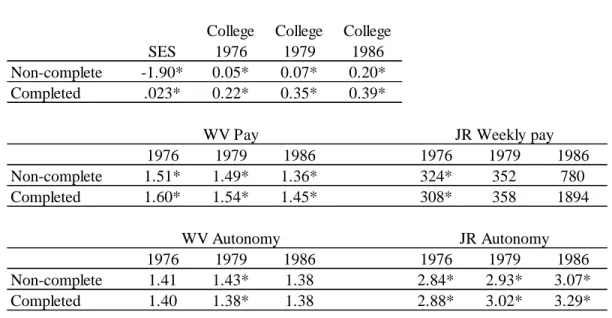
Table 3.4 – Differences between completers and non-completers of the 3rd, 4th, and 5th follow-up surveys of the NLS-72 ...90
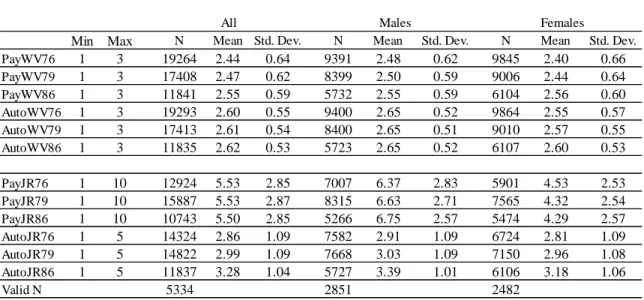
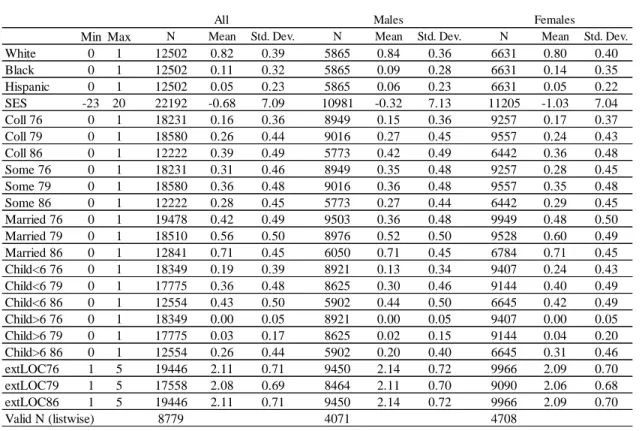
Table 3.5 – Descriptive statistics for work values and job rewards by gender, 1976, 1979 and 1986 ...98
Table 3.6 – Descriptive statistics for independent variables by gender, 1976, 1979 and 1986 ...99
Table 3.7 – Mean SES origins of White, Black and Hispanic respondents ...99
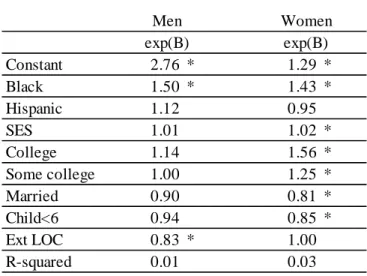
Table 4.1a – Logistic estimation of pay WV, 1976 ...108
Table 4.1b – Logistic estimation of autonomy WV, 1976 ...108
Table 4.2 – OLS estimation of external LOC scores, 1976 ...115
Table 5.1 – Mean job rewards by gender, 1976, 1979, and 1986 ...131
Table 5.2 – Mean job rewards by gender and education, 1976, 1979, and 1986 ...131
Table 5.3 – Longitudinal predictors of job rewards (N=4649) ...132
xv
LIST OF FIGURES
1
CHAPTER 1: WORK VALUES IN SOCIAL CONTEXT
1.1 Statement of problem
Work values are shaped by many factors but it is not currently understood exactly how job characteristics impact them. Scholarship has identified the ways that work values are shaped by socialization mechanisms in family, educational and labor market
experiences but few have also accounted for the more recent research which shows that work values play a role in selecting people into these contexts. The nature of the
relationship between job characteristics and work values is also a matter of some debate. Cohort studies that tend to span short periods of time find that job characteristics have a reinforcing impact on work values (Johnson et al. 2012, Johnson 2001b, Mortimer et al. 1996) while cross-sectional studies have found that financial work values become more important since the 1970s, the same period in which extrinsic rewards have decreased (Kalleberg and Marsden 2013). The latter finding suggests that people may emphasize those aspects of jobs that are problematic. The two explanations have different
implications for mental health. A reinforcing relationship between job rewards and work values suggests that people only value those job characteristics that have been
forthcoming in their lines of work, thus closing any cognitive gaps between what they originally valued and their actual job rewards. An alternative hypothesis, that work values come to reflect the job characteristics that have been difficult to find, suggests that
2
attainable. Repeated exposure to work experiences that are incongruent with expectations may therefore negatively affect mental health.
An improved approach to understanding work values may come from an examination of the major themes in classical social theory that explain general values. Classical structural and cultural social theory suggests that values develop as a result of selection into social contexts and socialization from these experiences. If this is the case, work values may be impacted by the paths that individuals take in the life course and cumulative advantage. Control over work experiences is likely to be a large advantage and can be conceptualized in terms of a person’s characteristics and capabilities, as well as the characteristics of jobs that are available in the labor market in a particular time period (Kalleberg 1977). In addition, significant psychological and sociological research suggests that individual perceptions of agency which accumulate as a result of
experiences may influence work values. The ability to find valued job rewards may be evaluated in light of previous experiences. This dissertation considers the hypothesis that people who have less control over their job rewards as a result of the disadvantages of structural position, role constraints and “external” LOC (low agency) come to place more emphasis on the extrinsic aspects of work than other, more advantaged groups because low pay is problematic. I present four general hypotheses and evaluate them using a nationally representative panel data set.
1.2 What are work values?
3
collectively constructed. “Whatever the effects of his work, known to him or not, they are the net result of the work as an activity, plus the meanings he brings to it, plus the views that others hold of it” (215). This body of work has grown to include work values, job satisfaction, commitment, work centrality, and motivations for working.
The subjective experience of work is a product of individual meanings, the characteristics of the work one does, and societal values of work. Kalleberg summarizes Kohn’s definition of work values:
The concept of “work value”… may be defined as the conceptions of what is desirable that individuals hold with respect to their work activity. Work values reflect the individual’s awareness of the condition he seeks from the work situation, and they regulate his actions in pursuit of that condition (1977, p.129).
Work values are distinguished from expectations, that which we think may happen, job values, specific to a particular workplace, and needs, the “objective requirements of an organism’s well-being” (Kalleberg 1977:129).
4
1.3 The importance of studying work values
Work values are a means to understand socialization, social institutions, social stratification and the nature of work itself. Trends in work values reflect changes in the economy, family, culture, and social structure (Katzell 1979). Religious upbringing is related to work values in terms of the ways that religion “limits one’s freedom in thought and action” (Schooler 1972:305). Early in childhood, boys and girls differ in their work values (Marini and Brinton 1984) and work values predict pathways into different social contexts such as marriage and postsecondary education (Johnson 2005, Johnson and Elder 2002).
Work values are impacted by political and economic changes as well. Economic recessions and involuntary unemployment can depress expectations for promotion (Gamberale et al. 1995) and reduce the emphasis that people place on extrinsic and intrinsic rewards (Mortimer et al. 1986). Kalleberg and Stark (1993) found that work values significantly differed between then-socialist Hungary and the United States, suggesting that economic systems shape worker orientations. In international studies, the relationship between social structure, values and personality in Poland and Ukraine has come to more closely resemble Japanese and American patterns since their transition to capitalism (Kohn 2006).
5
are strongly correlated (Mannheim 1993; Neil and Snizek 1987). Work values also impact daily experiences. When work values and job rewards are a fit between people and jobs, people experience greater job satisfaction and feel more committed to their jobs (Kalleberg 1977; Mortimer and Lorence 1979a).
Work values are also a factor in the kinds of jobs that people seek and find.
Children from working class families, for example, are less likely to be interested in work that offers freedom on the job than children from middle and upper class families. As they grow into young adults, people from lower socio-economic status (SES) origins tend to have lower educational attainment and are matched to jobs with lower rates of
autonomy and income than those from higher SES groups. Work experiences, in turn, affect values, but as discussed above, it is not clear how. Some studies suggest that work experiences reinforce values (Kohn 1969, Kohn and Schooler 1982, Johnson 2001a, Johnson 2001b, Johnson et al. 2012). But people with the same amount of control over their work experiences sometimes have different work values (Kalleberg 1977; Kalleberg and Marsden 2013). If control over job rewards is impacted by an individual’s resources and by the demand for their services in the labor market as Kalleberg suggests, work values reflect shifts in structural resources, cultural norms, access to jobs with valued characteristics as well as individual capabilities (Kalleberg 1977).
6
personal agency tend to have occupational aspirations that correspond with higher pay and job autonomy (Korman 1970, Super 1995). In turn, some kinds of jobs facilitate a sense of well-being. Professional occupations offer contexts in which workers build psychological skills that make their job stress more manageable (Tausig and Fenwick 2011) and useful in other domains of life in addition to future jobs (Cunnien et al. 2009). There are many methodological challenges in determining how these mechanisms may affect work values over time. While cohort analyses can observe the ways that job rewards impact work values to the extent that they impact individuals in the life course, they are typically limited by the window of time that can be observed. Work values may respond to slow but overall dramatic shifts that have occurred in the labor market since World War II such as the growth of the service industry and women’s increased labor force participation. What is a good framework for understanding work values,
considering all of these different social elements? Below I approach this question with an overview of the different mechanisms of general values. The remainder of this chapter serves as an overview of the classical social thought concerning the origins and effects of general values and the way these different paradigms have been used in the key research on work values.
1.4 General values
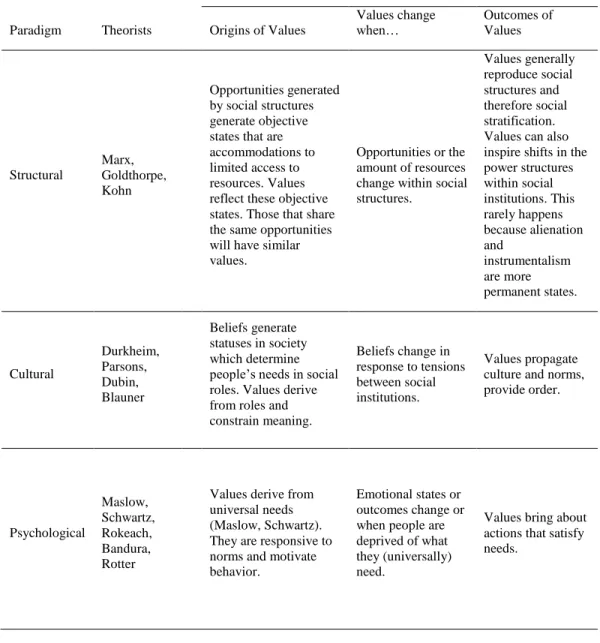
7
social order and propagation of norms. Table 1.1, below, summarizes the perspectives that will be the subject of the remainder of this chapter.
Table 1.1. Three theoretical conceptualizations of values
Relationship to Values
Paradigm Theorists Origins of Values
Values change
when… Outcomes of Values
Structural Marx, Goldthorpe, Kohn Opportunities generated by social structures generate objective states that are accommodations to limited access to resources. Values reflect these objective states. Those that share the same opportunities will have similar values.
Opportunities or the amount of resources change within social structures. Values generally reproduce social structures and therefore social stratification. Values can also inspire shifts in the power structures within social institutions. This rarely happens because alienation and instrumentalism are more permanent states. Cultural Durkheim, Parsons, Dubin, Blauner Beliefs generate statuses in society which determine people’s needs in social roles. Values derive from roles and constrain meaning.
Beliefs change in response to tensions between social institutions.
Values propagate culture and norms, provide order. Psychological Maslow, Schwartz, Rokeach, Bandura, Rotter
Values derive from universal needs (Maslow, Schwartz). They are responsive to norms and motivate behavior.
Emotional states or outcomes change or when people are deprived of what they (universally) need.
Values bring about actions that satisfy needs.
Structural explanations
8
disadvantaged groups are denied access to purposeful action on the part of powerful groups in order to maintain their hold on resources. Social structural positions eventually impact internal states and values derive from these states. For example, Marx argued that alienation is a state of mind derived from the opportunity structures in capitalism.
Culture, attitudes and values thus adapt to these opportunities and values reflect one’s accumulation of social power. The objective features of social organization essentially “constrain individual thought and action” (Rubenstein 1992:4). From a Marxist
perspective, opportunities limit attitudes and orientations that would otherwise change the social structure.
One of the assumptions of the structural paradigm is that everyone will seek the highest opportunity possible and that individual differences in preference are not
variations in subjective processes but “variations in the situations that determine people’s possibilities” (Stinchcombe 1968:140). In this view, values are calculations about the kinds of opportunities that the future will hold. They are rational responses and assessments of risk given one’s structural constraints.
9
have histories, memories, and personalities and thus should not be assumed to take advantage of every opportunity (Rubenstein 1992).
If the structural explanation of values is valid, values can be ascertained by considering social status and the distribution of opportunities in the population.
Resources tend to be accessed in social structures such as family, schools, governments and the labor market. Thus, opportunities and resources likely vary by social class, gender, race, educational attainment, and family roles. If values are affected by risk assessment, these measures may serve as proxies for the kinds of accommodations that people make in response to structural constraints. Changes in social structures or the processes by which resources are distributed, then, will bring about changes in risk assessments and values. Social structures are fairly stable at a macro level, but as people move through the life course, values may change with respect to the different
opportunities in the life stages.
Cultural explanations
10
When passed on through action, values help to assign people to statuses. Values structure group experiences and these experiences are key to meaningful activity. People are therefore dependent on the consensus of norms and values because it is the basis of social structural cohesion. The more societal rules, the more people will feel
meaningfully integrated into cohesive social groups. In this way, a cultural approach takes values to be the most important aspect of society because they provide structure for group experience.
In order to know how to act, values must be clearly transmitted in social groups. According to cultural theorists, beliefs shape the ways that statuses are assigned.
11
have greater priority than achieved ones because the cultural beliefs behind them are stronger and therefore more meaningful for individuals.
When social institutions change, the ways that beliefs and therefore statuses are socially constructed can change over time and correspond with different role sets. When this happens the old roles may become difficult to manage. Some roles may become more demanding than others and over time this can develop into role strain, role conflict or status inconsistency. If it is difficult to manage role sets or statuses, or if there is only one way to express a role and the opportunities are not available to express it (Merton 1968), people may become constrained by their roles. Their roles may limit their integration into social structures and thus the ways that they can derive meaning. This can become
confusing and frustrating.
Values can therefore reflect poor social integration into social structures. People have more options when social institutions function well and provide clear cut statuses that can be performed without too much difficulty and role conflict. When there is dysfunction, categories and roles can become unmanageable. Meaning becomes
endangered and possibly lost. Durkheim argues that in the extreme, a pathological state of anomie emerges, a state of dysfunction and lawlessness (1951).
12 Psychological explanation
A psychological perspective aids in the understanding of the ways that
predispositions and perceptions of agency influence values. From this perspective, values reflect universal needs, as well as experiences and thus statuses that tend to have similar experiences.
One of the main tenets of psychological theory is that values reflect universal human needs. While values are subjectively experienced, all humans generally share the same ones. Maslow (1954) argued that values are the product of a set of ordered needs that all human beings share in the pursuit of self-esteem. People first look for
physiological needs to be satisfied, then safety, love and belonging, self-esteem and confidence and, ultimately, self-actualization. Needs, therefore, are hierarchical and people tend to formulate values in the order that their needs are fulfilled. Values do not reflect higher order needs unless the lower order ones have been satisfied.
Highlighting Maslow’s ideas, psychologists Schwartz and Bilsky (1987, 1990) also argue that values have structure. Values represent a conscious response to three types of human needs that ensure group survival and welfare: physiological, coordinated social interaction, and “social institutional demands for group welfare and survival” (Feather 1995:1137). Schwartz (1992) proposed that there were ten value types: universalism, power, self-direction, security, benevolence, achievement, stimulation, hedonism and conformity/tradition. Analyses of data from 155 samples in 55 countries have
13
Scholarship in the field of psychology conceptualizes values as a lens through which people interpret actions of themselves and others. Erickson (1995) wrote that values transcend situations and help people to determine appropriate conduct and end states. This happens because, as Rokeach (1973) suggests, individuals use values to make evaluations. A value is an “enduring belief that a specific mode of conduct or end state of existence is personally or socially preferable to an opposite or converse mode of conduct or end state of existence” (Rokeach 1973:5). Values reflect desired outcomes according to this view.
Rokeach argued that expectations are the product of reinforcement. People generally understand their own values and their implications. People therefore change their values if it helps them to meet their goals or change their behavior to match their values (Mayton et al. 1994). People adjust values to avoid the cognitive dissonance that derives from incongruent values and experiences (Petty et al. 1997). This idea has been influential because it references the personal aspect of values and incorporates social aspects such as norms. Rokeach argued that demographically similar people should also share values. The categories he thought important were gender, age, ethnicity, religion and social class (Mortimer et al. 1986). Values, therefore, may reflect internal processes that involve cognition, learning and self-concept. Belief system theory is the perspective that values are central to self-esteem (Ball-Rokeach et al. 1984). In fact, “values serve as the central components that surround the self to maintain one’s self-esteem whenever necessary and to enhance one’s self-esteem whenever possible” (Mayton et al. 1994).
14
increase their perceptions of agency, and, by extension, their beliefs about their degree of influence on the world. Outcomes that confirm perceptions of agency therefore
strengthen beliefs. A concept related to this idea in the field of psychology, locus of control (LOC), came out of the social learning theory literature and refers to the degree to which an individual perceives success and failure as being contingent upon personal initiative (Rotter 1966). LOC ranges from "highly internal", those who feel that success is a result of personal initiative, to "highly external", those who feel that environmental aspects, powerful others and luck determine success. People who believe that their efforts will be rewarded tend to acquire an internal LOC.1 External LOC, in its extreme, is associated with a sense that efforts are caused by external forces. Those with internal LOC are able to wait longer to obtain results and gratification (Miller et al. 1986). Some psychologists argue that LOC is stable over time as a primary component of personality (see Phares 2001) but some research suggests that LOC can change over the life course as a result of different experiences. Experiences which repeatedly illustrate that one’s efforts are not fruitful tend to develop external LOC (Rotter 1975, Gecas 2000, Mirowsky and Ross 2003, Twenge, et al. 2004) which can then come to influence values. If internal LOC increases over time as values and expectations are perceived to match up with experience, as suggested by Rotter (1966), then groups that tend to have the similar experiences may have similar LOC and therefore similar values.
1
15
In summary, the psychological research suggests that values may reflect fulfillment of basic needs as well as LOC. The aforementioned proxies for control, i.e. SES, race, gender, educational attainment and family roles, may indicate experiences that impact levels of LOC.
1.5 Theories of work values
Like general values, work values both derive from and play a part in the creation of structure and culture. Work values, then, are likely to reflect access to resources in various social structures, the navigation of culturally constructed role sets and statuses, and psychological agency or “LOC”. These three paradigms are represented in the key research on work values. Over time the scholarship has identified a variety of
socialization and selection mechanisms that shape work values. Structural explanations of work values
In general the interpretation of the structural approach has been that work values reflect the availability of job characteristics in the labor market. Alienated workers who lack challenging or meaningful work will come to see it instrumentally as a means to funding other pursuits such as growing a family or leisure activities. An influential work in this vein is The Affluent Worker, a book by a group of sociologists, Goldthorpe,
16
counterparts. This instrumentalism, Goldthorpe wrote, was produced by a combination of past experiences that led workers to bring a calculative rationality to the work role and, as a result, they did not derive belongingness or authenticity from work. They were also less likely to unionize than those who had experienced continuous employment. Expressive and fulfilling work was not attainable so it was not valued. This perspective has been used to explain why working class people tend to be in unrewarding jobs (see Gruenberg 1980).
17
Importantly, Kohn and Schooler found that socialization processes which shaped work values were independent from processes whereby work values select people into jobs. Kohn suggested a “learning generalization model” of work orientations, the idea that from structure comes a variety of different opportunities that affect people’s
preferences over time. Job characteristics tended to reinforce work values, at least for the aspects that were his focus, primarily work that developed skills and offered freedom on the job. Work characteristics affect internal processes such as the ability to manage stress and “self-directed orientations” and then these preferences select people into certain kinds of jobs.
Although some have been critical of Kohn and Schooler’s dimensions of personality, writing that they used fuzzy concepts, omitted dimensions, and failed to address master personality dimensions or processional dimensions of personality (Spenner 1988), other scholarship has generally found similar patterns. Worker preferences impact job rewards and the jobs that they choose are an additional social context that influences future work values (Lorence and Mortimer 1979a, 1979b; Lindsay and Knox 1984; Mortimer et al. 1986; Johnson 2001a; Johnson et al. 2012).
Extending Kohn’s scholarship to the study of the ways that job characteristics influence work values, the use of psychological constructs to predict SES has been forthcoming. Freedom on the job can be beneficial to mental health. For example, Link, Lennon, and Dohrenwend (1993) found that direction, freedom and planning
18
market. “…Occupational differences in stress have less to do with differences in levels of job demands (risks) than with differences in amounts of resources available to manage demands (e.g., decision latitude), as well as differences in rewards, opportunities, and job security” (80). Over time, work trajectories which include repeated access to jobs with the leverage needed to manage demands may increase overall mental health and thus enhance people’s aspirations and capabilities both in the labor market and in other areas of life. Routine jobs in which people are not given freedom to direct their work lack this opportunity. They may also be more stressful which could decrease aspirations and capabilities.
Cultural explanations of work values
Scholarship on work values that has been influenced by the cultural paradigm tends to emphasize the ways that individuals interpret and choose work experiences based on the ways that they manage different statuses and roles. In contrast to the structural paradigm, work does not create deprivations but roles can (Gruenberg 1980:253). Other concepts in the meaning of work literature specifically address this idea. Dubin
19
Work values are important to take into consideration when understanding the ways that people experience their jobs. Relatively poor job rewards, for example, do not necessarily bring about dissatisfaction. Studying varying degrees of technology-based work, Robert Blauner (1964) argued that orientations are the product of educational attainment and status, not the degree to which it was objectively alienating as Marx argued. People are instrumentally oriented or expressively oriented based on their socially prescribed needs. In Alienation and Freedom (1964), Blauner argues that while technology is a source of objective alienation, it did not have a linear relationship with dissatisfaction. He studied textile workers and found that they are “objectively alienated”, experiencing a high degree of powerlessness. He saw that they were constantly tending to their machines, had little freedom of movement and supervisors acted effectively to police the work. Standardization of the end product and division of labor prevented employees from taking pride in their work. Blauner found that despite the objectively alienating character of the work, however, the textile workers were not subjectively alienated. They were satisfied with their work. He reasoned that this was because they lived in small communities with strong ties to kin and religion. They tended also to be less educated than average Americans and to have relatively low aspirations. They expected work to be monotonous and lived accordingly.
20
If experiences in non-work social structures such as family come to shape work values, then job experiences will be interpreted differently according to social class, race and gender, for example.
An important example of the ways that cultural norms shape work values is in the intersection between the social contexts of gender, family and work. Women used to have fewer roles than they do now because it was believed that they had inherent
characteristics that made them better at childrearing than formal, paid work. In
industrialization, women’s statuses and corresponding roles changed because the social institutions of family and the economy started to shift in the way that they functioned. Since the United States has become a more secular and industrialized, gender roles have become more flexible, especially for females, but still conflict and limit the ways that individuals can derive meaning. Women may still be sanctioned for behavior that falls outside of the boundaries of traditional beliefs about femininity but the worker status can be shed more easily, especially by middle and upper class women, if it cannot be
performed authentically. Middle and working class men have fewer options for the ways that they can derive meaning and place significant emphasis on work as a means of performing masculinity. Working class families have had to navigate the ideal version of femininity and develop different role sets since their husbands’ masculinity has been endangered by the decline in real wages and uncertainty of employment (Hochschild 1989, Gerson 2010).
21
2010). Beliefs in the workplace influence hiring practices, for example, and the value assigned to different kinds of tasks. For individuals, beliefs inspire culturally constructed normative action which then brings about additional forms of socialization that further influences interpretations. The beliefs that people have about work and their options in this domain tend to influence their occupational aspirations and choices about educational attainment and marriage.
Psychological explanations of work values
The psychological approach to work values emphasizes how psychological attributes select people into jobs and the importance of labor market experiences as sources of need fulfillment and personal agency. Herzberg (1966), influenced by
Maslow’s idea of ordered needs, argued that extrinsic rewards satisfy lower order needs and intrinsic rewards satisfy higher order needs. A modified idea that values are cognitive responses to fulfillment of basic needs has been influential in the field of the
psychological study of work (Schwartz and Bilsky 1987, 1990; Schwartz 1992; see also Feather 1995). Schwartz and others have validated in work settings and elsewhere two main scales that measure human values. The first scale, “openness to change versus conservation” has higher order values on one end (self-direction, meaningful stimulation) and lower order values on the other (security, conformity and traditional values). The second dimension, “self-transcendence versus self-enhancement” ranges from values relating to altruism and benevolence to values which indicate the importance placed on wealth, status, prestige and power.
22
acceptance of financial insecurity, positive attitudes towards risk and openness to change characterize college students that intend to be business entrepreneurs (Hirschi and Fischer 2013). Self-transcendence values in military personnel are associated with
non-calculative motivation to be leaders (N=231; Clemmons and Fields 2011).
A psychological perspective suggests that work values may also be influenced by cognitive processes that reflect basic needs, past efforts and perceptions of outcomes. As described above, LOC indicates the kinds of reinforcement to which a person responds. Externally oriented people are more likely to value extrinsic job rewards and internally oriented people are more likely to value intrinsic job rewards (Mortimer and Lorence 1979a). While there is some debate as to malleability, some research suggests that LOC changes over time. The more feedback one receives over the life course, the more learning can take place about what is causally related to behavior and what is not.
Therefore, it would follow that internal LOC increases as people enter the labor force and decreases when people retire (Knoop 1989). In interviews, Legerski, Cornwall and O’Neil (2006) found that over time involuntarily unemployed steelworkers became more externally oriented than their employed cohort and intermittent unemployment increased external LOC. Even with controls for education, minority status, age and gender,
employed persons report greater internal LOC than the unemployed (Ross and Mirowsky 1992). Individuals who have had a history of interrupted employment are more likely to have external LOC as well (Ross and Mirowsky 1992). Those who have repeated
23
1.6 Combining structural, cultural and psychological explanations of work values
The evidence above suggests that all three paradigms are likely valid and function simultaneously. Work values influence and are influenced by structural and cultural aspects of social life. LOC is also likely influenced by structural and cultural processes and then selects people into various experiences. The review of general values identified the variables that are necessary to evaluate the ways that socialization and selection mechanisms shape work values.
The present project proceeds in the vein of Kohn and Schooler’s scholarship by examining the socialization and selection mechanisms that shape work values. Their research provided support for a connection between social structure, internal states and values. Importantly, the reviews above suggest that work values are shaped by
interpretations of experiences, not the objective conditions themselves. Work values may be the product of the degree of control that people come to have over their work
experiences and then the interpretations of these experiences. Kalleberg (1977) suggests that socialization shapes ideas about work prior to labor force entry, non-work roles impact the kinds of jobs that are meaningful to people, and work experiences impact people’s ideas about the kinds of characteristics that are attainable.
As shown above, psychological considerations such as fulfillment of basic needs and LOC likely affect work values. There is evidence that structural and cultural
24
evaluating the ways that LOC mediates the relationships between demographic characteristics, work values and job characteristics.
1.7 Summary
This review shows that classical social theories of general values identify the ways that work values may be shaped by socialization and selection mechanisms in different social contexts. Structural opportunities, culturally prescribed statuses and their corresponding roles affect work values first in families and schools, and then later in life as people embark on careers. This review also highlights the role of work values in various selection mechanisms. Values affect a variety of actions and choices which, in turn, introduce pathways into additional social contexts. Finally, psychological
perceptions of agency that reflect fulfillment of basic needs and previous experiences may impact work values over the life course. An examination of the research concerning socialization and selection mechanisms, then, may provide hypotheses for testing the ways that work values are patterned by control over job rewards. Chapter two will proceed in this vein.
1.8 Plan for dissertation
25
In chapter 3, I describe the data, methods, and measures I will use to evaluate the proposed control framework of work values. The benefits and the constraints of the methodological choices in this project are presented.
In chapter 4, I evaluate the mechanisms that shape work values prior to entering the labor force and the predictors of external LOC.
In chapter 5, I evaluate the selection and socialization mechanisms in work experiences that shape work values. Two different hypotheses for the ways that job rewards affect work values are evaluated, the reinforcement hypothesis and the problematic rewards hypothesis.
26
CHAPTER 2: THE CONTROL FRAMEWORK OF WORK VALUES In the last chapter a review of three main paradigms of general values suggests that structural, cultural and psychological factors influence work values in different mechanisms. In this chapter I proceed by developing a framework that incorporates a consideration of the ways that work values are affected by socialization and selection mechanisms. I argue that the research tends to show that work value trajectories are shaped by control over job rewards.
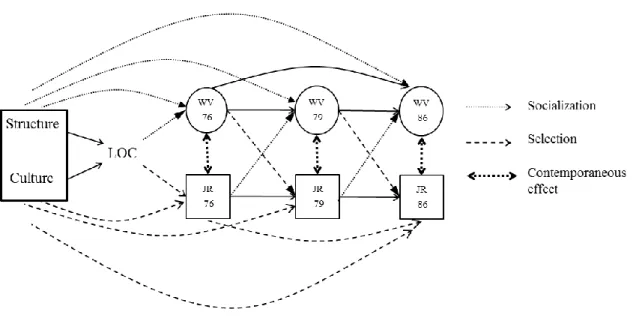
In the control framework, socialization in family, community and school shape ideas about work prior to entering the labor force. Resources, roles, locus of control (LOC) and labor market forces then select people into jobs. The characteristics of jobs then provide an additional source of socialization, shaping ideas about the kinds of characteristics that are attainable. An assessment of the relevant literature indicates that people who have less control over their ability to attain job rewards are more likely to value extrinsic rewards. The control framework may provide an explanation of why people have different work values, as well as how work values are related to the social psychological concept of locus of control. Drawing on this scholarship, general
hypotheses are presented at the conclusion of this chapter.
27
the dotted lines) such as the ways that family, school and work affect work values. Section 2.2 will examine the ways that non-work roles and access to resources such as educational attainment then select people into jobs with different characteristics (depicted as dashed lines). Section 2.3 reviews the ways that LOC mediates structural and cultural factors, work values and job rewards. Section 2.4 will propose how these different mechanisms function over time to impact work values.
Figure 2.1 The control framework of work values
2.1 Socialization mechanisms
Starting in childhood, access to resources and role socialization in families shape the ideas that people have about work. As shown in chapter one, values are influenced by risk assessments in light of past experiences. Values can also be shaped by the
28
cultural aspects of socialization indicated by each of the major demographic variables used in this project, as well as by job characteristics.
Socio-economic status
Experienced primarily in the family but also at school and in communities, social class affects resources and opportunities as well as cultural beliefs. Over time social class shapes the way that children and adults come to view the world and their place in it. The degree to which social class is reproduced by values and resources varies significantly and there are many intervening factors.
The characteristics of parents and their role in the reproduction of social class has been studied extensively and most famously by Melvin Kohn, as noted in the last chapter. People in the working classes develop orientations which have tended to bring them success in the labor market, conformity to external rules and obedience to authority. Middle class parents are more likely to work in occupations that offer more freedom at work and skill which tends to bring about emphasis on independence and creativity (Kohn 1969, Xiao 2000).
29
stressful environments. Middle and upper class parents are more likely to provide their children freedom in their daily activities which leads them to value autonomy and intellectual challenge (Kohn 1969, see also Mortimer and Kumka 1982, Gecas 1979).
Parents’ educational aspirations and educational attainment influences their children’s approach to academic development. Children from middle class backgrounds tend to have different educational aspirations than poor and working class children. They are more likely to believe that independence is a means of success and a path to self-actualization. Children from middle and upper class backgrounds also place more
importance on intellectual development than poor and working class children (Bandura et al. 1996). When measures of family income, parents’ occupational prestige scores, and parental educational attainment are used to estimate adolescents’ extrinsic and intrinsic work values, the latter appears to be the only significant variable (Johnson and Mortimer 2011).
More so than middle and upper class communities, the social structural
30
respondents were twice as likely as high SES respondents to agree with the statement that “it was better for a person to have a child rather than to go through life childless”
(Thomson 2001). The social structure and location of poor neighborhoods can be more isolating in terms of the kinds of information to which children have access. Children in poor communities may have limited information about employment opportunities, different types of careers and world events. Social networks in poor neighborhoods may be especially isolated (Wilson 1987). The use of neighbors and other strong ties to search for work may not be as effective as weak ties (Granovetter 1995, Elliott 1999).
Children from poor and working class origins tend to aspire towards occupations that are lower in terms of average pay, prestige and autonomy than middle and upper class families. Children from poor and working class families tend to have more siblings which divides resources into fewer amounts for each child. They also have fewer
resources to achieve their occupational aspirations. Young people from low SES
backgrounds are also inclined to enter the labor force earlier than middle class children. Their lower occupational aspirations are less likely to require human capital investment that might otherwise delay entry to the labor force (Shu and Marini 1998). Teenagers who work can be disadvantaged over time by jobs that offer limited opportunity to develop transferable skills or long hours that reduce investment in educational attainment (Etzioni 1986, Gould 2010, see also Mortimer and Staff 2004).
31
seniors in the cross-sectional segment of the Monitoring the Future Study (1976-1991), respondents were less likely to place emphasis on extrinsic and security values and more emphasis on intrinsic values if they came from families in which both parents were college educated (Marini et al. 1996). People from high SES backgrounds also have more stable aspirations over the life course (Reynolds et al. 2007). They come from better schools and their expectations tend to be better informed.
Gender
Men and women’s work values are indicative of their socialization in families, transitions into new contexts as they age, and generational shifts in the social construction of gender. The influence of gender role socialization on general life values is apparent very early in life. Girls tend to emphasize the importance of family and community more so than work outside the home while boys emphasize the importance of working in the formal labor force and providing for the family (Bielby 1992). More so than males, adolescent females value compassion and care for others and in surveys rate finding purpose and meaning in life as more important than materialism. Adolescent males are more likely than females to value competition and material things. Even when controls are included for parental education, religiosity and perceptions of social support, gender differences in values generally remain. When asked the reasoning behind their answers, boys cite status and financial reasons while girls indicate altruistic and personal
fulfillment (Marini and Brinton 1984). The degree to which boys and girls value
32
To some extent, adolescents and adults continue to value the domains of home and work life in ways that echo traditional gender role socialization and this affects their work values. In the late 1970s, women’s commitment to family roles generally exceeded men’s, and men’s commitment to paid work exceeded women’s (Bielby 1992). Among female adolescents in the Monitoring the Future Study, a study which took place in the 1990s, the importance of having a good marriage and family was still much higher than it was for the males, even with the effects of race and class controlled statistically. With the same controls, the importance of “having lots of money” was still greater for males even though no significant gender difference was found for “being successful in one’s career” (Ovadia 2001). Females are more likely to emphasize compassion and life purpose (Beutel and Marini 1995) and an emotional connection to people (Gilligan and Attanucci 1988 in Xiao 2000). On average, women place more emphasis on accomplishment at work, an opportunity for social interaction with the public and with co-workers, and for meaningful work. A repeated cross-sectional analysis of high school seniors from 1975 to 1991 shows that young women consistently place more emphasis on altruistic and social rewards than young men (Marini et al. 1996). The Monitoring the Future panel indicates similar gendered patterns in intrinsic work values (Johnson 2001b).
As young people age and move into life stages that include marriage, college and employment, women continue to place more emphasis than men on intrinsic, social and altruistic job rewards but there are fewer gender differences when it comes to extrinsic work values. Male senior high school students in 1975 place more emphasis than females on extrinsic rewards and the influence on the job, but, in the 1991 cohort, these
33
convergence for a cohort that graduated high school in the late 1970s, though females placed slightly less emphasis on extrinsic job rewards (security, promotion and income) than males (Johnson 2001b).
Research derived from cross-sectional studies of adults show that there are generally fewer gender differences amongst individuals who are employed full-time. Working men and women value income and promotion at similar levels in the late 1970s and 1980s, roughly the period of study for this dissertation. Slightly more than men, women value meaningful work and jobs that give them a sense of accomplishment. Men are slightly more likely than women to value promotion (Rowe and Snizek 1995,
Bokemeier and Lacy 1986, Lacy et al. 1983) and women are more likely to value shorter hours (Menaghan, 1991; Moen, 1992). This suggests that work experiences influence women and men’s work values but that gender roles continue to be a factor.
34
another cultural shift underway, perhaps towards greater materialism, or a mechanism which leads individuals to place more emphasis on pay as real wages have declined.
Scholarship also suggests that there are class differences in the ways that men and women come to value job rewards. Parents with college degrees are more likely to have egalitarian views about gender roles than less educated parents, partly because their jobs are less likely to be sex typed themselves and because prior beliefs influenced mothers’ entrance into college. While working and middle class parents tend to transfer
occupational aspirations to their children that are correlated with their own jobs, typically sex-typed in the 1970s and 1980s, daughters from upper class households in this era were more likely than previous generations of women to have aspirations that included
historically male-dominated, white-collar occupations. This trend consequently raised the earnings potential of upper class women’s preferred occupations (Shu and Marini 1998). In addition to the egalitarian values learned in the household, it is possible that the second wave of the Women’s Movement influences young women in this era. Gender
differences in high school seniors’ work values from 1975 to 1991, however, do not appear affected by controls for parents’ education, race or mother’s employment (Marini et al. 1996).
Race and ethnicity
35
communities and divided the remaining residents geographically from centers of
commerce. Federally institutionalized redlining practices by banks also prevented many Black families from the wealth generating investment of home ownership. Housing loans that Black individuals were able to secure often did not have the guarantees that Whites were granted (Pietila 2010). In addition, the GI Bill that provided access to loans and college tuition for many WWII vets did not benefit African Americans as much as Whites due to racist admissions policies at colleges and discriminatory lending. Discrimination contributed to fewer job opportunities and less resources for schools in predominantly Black neighborhoods. More so than poor White neighborhoods, poor African American neighborhoods have more close ties. They are more socially isolated and have fewer social resources available in their social networks (Tigges et al. 1998) thus decreasing the amount of information about occupations available to young people (Wilson 1987).
36
emphasis on family and interdependence, Mexican American mothers value conformity, politeness and obedience more than independence (Rodriguez and Olswang 2003) which likely reflects an intersection of ethnicity, gender and socio-economic status.
In comparison to their parents, Black youth in the 1970s and 1980s aspired to occupations that were associated with higher incomes and educational requirements. A comparison of adolescents and young adults in the mid-1960s (the NLS) and the 1980s (the NLSY) shows that Black men in the latter cohort are more likely than previous generations to aspire to occupations that had more prestige, educational requirements and were more male-dominated (Shu and Marini 1998). The shift in occupational aspirations was especially large for young Black men in less educated families. The earnings
potential of their aspirational occupations was much higher than that of their parents. Black women of the younger cohort also had slightly higher aspirations than the women before them. They aspired to occupations that tended to be paid more, an effect that lasted even through the economic recessions of the 1970s and early 1980s (Shu and Marini 1998). While the SES of White fathers’ occupations tend to positively impact their children’s aspirations in the late 1970s, no significant effect was found for Black fathers (Shu and Marini 1998).
37
Cultural shifts may have also influenced the occupational aspirations of Black and Hispanic youth of this period. Researchers Shu and Marini (1998, 2008) attribute the shift in Black aspirations to the Civil Rights Movement. Black youth in the 1970s would have grown up learning about young people protesting discriminatory practices and laws, successful Black leaders, and positive representations of African heritage. Shu and Marini (2008) argue that it was not until later periods that Black Americans actually experienced upward intergenerational mobility. They find a similar cultural influence from the Women’s Movement which appears to have affected White women’s occupational aspirations.
Although the evidence suggests that Black youth in the late 1970s and 1980s had higher educational and occupational aspirations than their parents, it is not entirely clear how this change impacted this cohort’s work values. This question is particularly relevant for the current study as it follows young people in this time period. Black respondents rate extrinsic rewards higher than Whites, even when the effect of SES is controlled statistically, but race differences in intrinsic values have been more difficult to determine. In the GSS, employed Black adults consistently rank income much higher and intrinsic rewards lower than employed White adults (Martin and Tuch 1993, Kalleberg and Marsden 2013). In a panel survey from the 1990s, Black youth are more likely to value extrinsic rewards and intrinsic rewards than White respondents (Johnson 2001a, Kashefi 2011). Some evidence suggests that Black youth may decrease their emphasis on
38
occupational aspirations in this period are generally less likely to be influenced by their parents’ occupations. While White children in the NLSY tended to be influenced by their parents’ occupations through gender-linked role modeling, this relationship was not significant for Black youth (Shu and Marini 1998). Influenced by contexts beyond their parents’ occupations, young Black women in the mid-1970s and early 1980s may have placed more emphasis on intrinsic and extrinsic job rewards than White women. Education
School resources, class size, the skill level of teachers and curriculum impact the kinds of job characteristics that young people eventually come to value. Educational funding impacts school characteristics and classroom experiences. Schools tend to have fewer resources if they are located in poor and working class communities due to the lower tax revenue, typically from property tax, that is generated from citizens in
corresponding school districts. Schools with more funding have smaller classes and better prepared teachers (McPartland and McDill 1982, Ritter and Boruch 1999) and students perform better in small classes (Finn and Achilles 1999). Those who teach the courses in the lower tracks tend to have less experience and ability (Gamoran and Berends 1987) and those who teach in higher tracks have more experience (Ball 1981).
School experiences also impact the degree to which young people attach
importance to educational attainment. Historically, teachers and administrators in primary schools have shared the paradigm that children should seek out and consume knowledge politely and attentively and it is assumed that all children seek out intellectual
39
performance increased when teachers gave more attention to those randomly labeled by researchers as “intellectually gifted”. Children who were thought to be “average” received less attention than the “gifted” children and in time their achievement scores declined by comparison. The idea of the self-fulfilling prophecy in educational settings illustrates the ways that norms and socio-economic status are reinforced in schools. Working class children, girls and non-Whites might be less likely to be thought of as intellectually engaged because they do not appear to communicate values that are congruent with teacher expectations.
Children thought to have less intellectual promise or interest in school may receive less attention from teachers. Students who do not feel smart or confident may consequently feel less efficacious at school and are less likely to develop aspirations that include additional education. Children who perceive their teachers to be warm and supportive of their efforts tend to become more engaged in the classroom. Student engagement positively impacts academic performance. Children who do not perceive their teachers to be supportive tend to perform at lower levels which can, in turn, lead them to doubt their academic abilities (Skinner et al. 1998).
Tracking is another way that education affects aspirations. Research has found disproportionate placement of lower socio-economic and minority students into non-college tracks (Vanfossen et al. 1987). Higher SES parents are able to place their children in more advanced courses or tracks (Laureau 1987). Students in higher tracks tend to like school more than those in the lower tracks (Gamoran and Berends 1987) and
40
perceive that they have academic ability place less emphasis on extrinsic rewards (Anderson 1985, Johnson and Mortimer 2011).
Educational aspirations positively impact occupational aspirations (Jencks et al. 1983). Rindfuss, Cooksey and Sutterlin (1999) find that students in academic as opposed to vocational or private high schools have more consistent occupational aspirations. Good academic performance increases the chances of meeting occupational goals, suggesting that academic achievement is positively correlated with better “occupational knowledge”.
College
Values select young people into college and then, once engaged in institutions of higher education, students are further socialized by their experiences with professors, peers and curricula. Scholarship in this area indicates that the values of those who attend college tend to diverge significantly from the values of their peers in the years that follow high school graduation.
41
Experiences while attending college also shape values. Earlier research suggests that even when the gender of the instructor is controlled in college courses, male students are more likely to be called on and to receive greater attention from teachers in general than female students (Karp and Yoels 1976). More often than female college students, young male students perceive that their input is valuable (Crombie et al. 2003). If male students perceive that their classroom participation is valuable, they may feel more efficacious about their college experience. Female representation among faculty is associated with higher educational attainment for female undergraduates (Sonnert et al. 2007).
Aspirations and ideas about jobs influence selection into undergraduate majors. Students planning to choose architecture, art, journalism, or drama as their occupational field have highly intrinsic values, whereas those planning to enter such fields as real estate, finance, law, and business have highly extrinsic values (Rosenberg 1957). First generation college students are less likely to select majors that they perceive to have ambiguous vocational applications such as English, art, and philosophy, instead choosing majors that might better translate into direct employment such as criminal justice,
business and education (Mullen 2013).
42
Cultural norms taught in college such as self-actualization through work, independence and leadership are likely to influence students. Long-term educational investment tends to raise expectations for jobs that offer prestige, monetary rewards of work, and
independence on the job (Ross and Reskin 1992).
Those who do not attend college tend to experience a shift in values much greater than that of their peers. Groups that select vocational paths instead of college increasingly value security and influence in this period of their lives (Johnson and Elder 2002).
Meanwhile, college choosers continue to decrease emphasis on job security. By the end of their four years of schooling, college graduates have increased their emphasis on meaningful work and a chance to use their abilities while their peers have decreased emphasis on these aspects (2002). Job security becomes more important and intrinsic rewards become less important to those without college experience, likely due to growing financial needs and restricted access to better quality jobs.
Marriage and parenthood
Ideas about work influence the choices that people make about marriage and parenthood. Experiences in young families then further shape values. Married women and men often have different sets of roles that highlight the intersections of gender and social class.
43
families (Edin and Kafalas 2005, Thomson 2001) and in the period of study (the mid-1970s and 1980s), marriage was seen as a path towards starting a family. Occupational aspirations are also a factor in the timing of marriage. For young men in the 1960s, neither marriage nor parenthood significantly affected occupational aspirations, at least in terms of prestige, earnings potential and educational requirements. But for women in the 1960s, marriage is associated with aspirations for occupations that have fewer
educational requirements in comparison to their single counterparts (Shu and Marini 2008). Parenthood further downgrades women’s occupational aspirations in terms of the pay, prestige and their associated educational requirements (Shu and Marini 2008). An analysis of the NLS-72 indicates that educational attainment increases the likelihood that men and women will delay parenthood (Rindfuss et al. 1987). Young people with strong intrinsic work values may delay marriage in order to pursue the educational requirements and experiences needed to realize their occupational goals. Those with lower intrinsic work values may take a more instrumental view of work and start families sooner.
Although previous generations of women tended to make more trade-offs between work and family, women of the Baby Boomer generation began to engage in both
domains due to financial necessity and changing gender roles. While married men
44
1989). In 1980, husbands brought home more pay than their wives in 90 percent of married couples and role conflict was an issue for many women in the period of study.By 2007, this number had declined to 76 percent (Taylor et al. 2010).
Married women who are secondary wage earners are more likely to value flexible and convenient jobs than married women who do not work (Martin and Hanson 1985, Walker, Tausky, and Oliver 1982). The traditional division of labor within the family is also likely to lead women to value short hours more than men (Menaghan 1991; Moen 1992). Johnson (2005) finds that both married men and women value intrinsic job characteristics slightly less than their single counterparts, net of prior selection effects. The meaning and rewards of family relationships may become more important than the intrinsic characteristics of jobs.
The degree to which women and men value extrinsic rewards appears to be dependent on the assignment of the economic provider role and family size. Women marry earlier when they have greater emphasis on extrinsic job rewards, but, net of this effect, married women generally place less emphasis on extrinsic job rewards than single women. Married women may be less concerned about the financial aspects of jobs than single women because they are supported by their male spouses. Men with greater emphasis on extrinsic job rewards select into marriage earlier than other men but
subsequently, married men and single men do not have significantly different preferences towards extrinsic aspects of jobs. Fathers prefer extrinsic job rewards more so than single men, suggesting that family size tends to expand men’s role as economic provider
45
secondary wage earner. When women are breadwinners, however, extrinsic rewards are much more important to them. Single mothers place much greater emphasis on extrinsic job rewards than single women without children, at about the same level as single fathers (Johnson 2005).
Job characteristics
The kinds of jobs that people find in the labor market shape their ideas about what is attainable in the labor market. The body of research on the subject of work
socialization provides evidence to support two possible conceptualizations of the way that this mechanism operates, the reinforcement hypothesis and problematic rewards hypothesis. People may come to value the kinds of jobs that they have experienced in the past and make downward adjustments in preferences if they come to find that their valued job characteristics are not attainable. Alternatively, jobs that do not pay well and do not satisfy basic needs may be distressing. People may focus preferences more intensely on income in these circumstances.
Reinforcement explanation
A popular perspective in the current research on work values is that people learn to value aspects of their jobs and devalue aspects that they are unable to attain. Work values thus come to reflect job characteristics over time. The reinforcement explanation thus suggests that job rewards positively impact work values in quantitative analyses.