LINKING SOCIAL AND STRUCTURAL DRIVERS, POLICY,
AND HUMAN RIGHTS
by
Sara Zizzo
Chapel Hill. N.C
April 04,2011
A paper presented to the faculty of The University of North Carolina at Chapel Hill in partial fulfillment of the requirements for the
degree of Master of Public Health
in the Department of Maternal and Child Health.
The Kingdom of Lesotho has the third highest HIV/AIDS prevalence rate in the world currently estimated at 23.6%. Women in Lesotho are disproportionally infected with HIV, accounting for 56% of the national cases. Social and structural factors that create gender
inequality and violence against women have been identified as key drivers of the epidemic. This paper examines social structural drivers of HIV/AIDS in Lesotho pertaining to women’s
empowerment: gender inequality; GBV; and human rights violations. These drivers are explored through an examination of Lesotho’s laws, commitments to international protocols and
declarations, and attitudes of Lesotho’s people (Basotho) toward sexual negotiation and GBV.
Table of Contents
I. Introduction 3
II. Lesotho 4
III. Women and HIV in Southern Africa 6
IV. Social/Structural Drivers in Lesotho pertaining
to women’s empowerment 9
V. Legal Status of Women in Lesotho 12
VI. Regional and International Protocols and Commitments s 14
VII. Intersection of Violence and HIV 15
VIII. HIV Testing in Lesotho 19
IX. Women and Testing In Lesotho 22
X. Human Rights and HIV Testing 25
XI. Conclusion 33
I. Introduction
Sub-Saharan Africa (SSA) bears the greatest burden of the global HIV/AIDS pandemic, accounting for 68.7% of the world’s infections, and contains the highest number of people living with HIV/AIDS (PLWHA) at an estimated 23.5 million, five times as many as any other region in the world (1). Located within this region is the Kingdom of Lesotho where there HIV/AIDS prevalence rate is currently estimated at 23.6% (1). The vulnerability of women and girls to HIV is critically important in the region, with about 76% of all HIV positive women in the world residing in SSA. Consistent with these findings, women in Lesotho are disproportionally
infected with HIV, accounting for 56% of the national cases (2). Consistent with other countries in the region, Lesotho iscurrently experiencing both a generalized and highly gendered
HIV/AIDS epidemic. Social and structural factors that create gender inequality and violence against women have been identified as key drivers of the epidemic. The Joint United Nations Programme on HIV/AIDS (UNAIDS) has declared that all forms of gender-based violence (GBV) and discrimination against women and girls should be recognized as both human rights violations and elements that can increase vulnerability to HIV infection (3).
This paper will examine social structural drivers of HIV/AIDS in Lesotho pertaining to women’s empowerment: gender inequality; GBV; and human rights violations. These drivers will be explored through an examination of Lesotho’s laws, commitments to international protocols and declarations, and attitudes of Lesotho’s people (Basotho) toward sexual
policies that implement routine testing and de-emphasize pre-test counseling may reinforce these social structural drivers and negatively affect the human rights of Basotho women. This paper also analyzes national HIV testing policies in Lesotho through a human rights framework and explores linkages of these policies and social structural factors of the HIV/AIDS epidemic.
II. Lesotho
“There are two types of people in Lesotho; those infected and those affected by HIV/AIDS.”
-Care Lesotho (2004)(2)
Figure 1: Political Map of Lesotho (4)
constitutional monarchy ruled by His Majesty King Letsie III with daily leadership provided by a multi-party National Assembly, according to the provisions of the constitution. Lesotho relies heavily on assistance from development partners as well as inflow of remittances from migrant workers and receipts from the Southern African Customs Union which together account for 60% of the government’s annual budget (5). Lesotho ranks among the 48 least developed countries in the world. In 2011, Lesotho ranked 160 out of 187 countries on the United Nations
Development Program’s (UNDP) Human Development Index (HDI) (6).
The ecological terrain of Lesotho divides the country into four main regions: lowlands; foothills; mountains; and the Senqu River Valley which encompass all ten administrative districts. Lesotho implements a decentralized, local governance structure though 74 local community councils which are administered through these districts (5). Most districts have a combination of terrains with the exception of Mokhotlong, the entirety of which is mountainous. This is important to note due to the geographical isolation that is experienced by the inhabitants of the rural, mountainous areas. An estimated 77% of the population lives in these remote, mountainous locations, while 23% of the population lives in the urban areas clustered around the northern borders near South Africa (5). The life expectancy at birth is currently estimated at 52 years(7). Almost 60% of the population is under 19 years old (5). Lesotho has one of the lowest population growth rates in the region at 0.33. The impact of the HIV epidemic has been cited as a major factor in the country’s population decline (5).
The HIV prevalence in Lesotho is currently estimated at 23.6%. HIV/AIDS was declared a national disaster by King Letsie III in 2003 (5). Prevalence rates have held at this level since 2005, signaling a continued stabilization of the epidemic (8). Districts with the highest
Figure 2: New infections by mode of transmission
lowest prevalence rates are Thaba-Tseka (20%) and Buthe-Buthe (16%) (9). However, gender disparities in HIV prevalence remain: 26.7% of all adult women are HIV-positive as compared to
18% of all adult men; and approximately 60% of all HIV-positive adults and children are female (5). Figure 2 shows the percentage of new HIV infections in Lesotho by mode of transmission; demonstrating that horizontal transmission between stableheterosexual couples accounts for over half of all new infections. A 2009 report by the Southern Africa Development Community (SADC) states that national development
Data from UNAIDS (3) indicators for the country conceal significant gender and geographical disparities in the realization of gender equality and human rights (10).
III. Women and HIV in Southern Africa
“If it can be said, as it can, that by the year 2020, the number of deaths from AIDS in Africa will approximate the number of deaths, military and civilian combined, in both world wars of the 20th century, then it should also be said that a pronounced majority
of those deaths will be women and girls. The toll on women and girls is beyond human imagining; it presents Africa and the world with a practical and moral challenge which places gender at the centre of the human condition. The practice of ignoring a gender analysis has turned out to be lethal. . . .For the African continent,
it means economic and social survival. For the women and girls of Africa, it's a matter of life or death.”
The 2012 UNAIDS report, Together We Will End AIDS, estimates that there were 34.2 million PLWHA globally in 2011. SSA bears the greatest burden of the global HIV/AIDS pandemic. The region accounts for 68.7% of the world’s infections and contains the highest number of PLWHA at an estimated 23.5 million, five times as many as any other region in the world (1). There is considerable variation within the region. The epidemic remains most severe in the Southern Africa sub-region, where one-third of all PLWHIV globally reside in ten
countries with generalized epidemics. The three highest prevalence rates in the world continue to be in the countries of Swaziland (25.9%), Botswana (24.8%) and Lesotho (23.6%) (12). South Africa, with an estimated 5.4 million-5.8 million HIV-positive people, continues to have the world’s largest HIV epidemic (1). The majority of people newly infected with HIV in SSA acquire the virus during unprotected heterosexual intercourse (horizontal transmission) or as newborn and breastfed babies (vertical transmission). Southern Africa is projected to fall short of Millenium Development Goal 6 which aims to halt and reverse the spread of HIV/AIDS by 2015. The region has already failed to meet another target—the acheivement of universal access to treatment for all those infected with HIV by 2010.
7.8 24.5 35 26.3 4.1 24.1 37.2 26.7 0 5 10 15 20 25 30 35 40
15-19 20-24 25-49 Total (15-49)
2004 DHS
2009 DHS
Figure 3: HIV prevalence among the general female population in Lesotho (15-49 years)
in the country have remained consistent from 2004 to 2009, as demonstrated through findings from the Lesotho Demographic and Health Survey (DHS) taken in those years at 26.3% and 26.7%, respectively (9,13).
Data from Lesotho DHS (9,13)
long-term one requires intervention strategies to move from targeting individuals to a more comprehensive approach which include social and structural factors (16). However, as UNAIDS reported in 2011, most funding dedicated to women is allocated towards antiretroviral therapy (ART) to prevent vertical transmission and not the full range of women’s vulnerabilities (3).
IV. Social/Structural Drivers in Lesotho pertaining to women’s empowerment
“Countries should ensure a massive political and social mobilization to address gender
inequities, sexual norms, and their roles in increasing HIV risk and vulnerability”
-UN Secretary-General Ban Ki-moon, 1 April, 2008 (17)
Gender Inequality
definitions of rape, divorce and child custody laws; inheritance laws; and women’s representation in government (15).
The 2011 United Nations General Assembly Special Session (UNGASS) Country Report for Lesotho identifiessocial and cultural factors affecting women and girls as a primary structural driver of the gendered epidemic in the country. The National AIDS Commission (NAC), the Government of Lesotho’s coordinating body for HIV/AIDS multi-sectoral programming, identified gender inequality and GBV as a driver of the epidemic in the country stating they are “promoted by the low socioeconomic and legal positions of women where they are not
empowered to make decisions in their lives, thus, predisposing them to sexual abuse and
violation of their rights and increased risk to HIV transmission” (5). Among these, it is reported thatLesotho continues to have troubling trends in discriminatory attitudestowards women and girls which fuel GBV (5). This is demonstrated by findings in the 2009 Lesotho DHS in which 37.1% of women and 47.9% of men agreed that there could be at least one reason for a husband to legitimately beat his wife. In the lowest wealth quintile, this rose to 55% of women and 59% of men (9).
At the core of gender dynamics and differences are issues of power inequalities which result
in the subordination of women to men, distributing the power to the men over women (or
female-identified people) (17). The health status of Basotho women is adversely affected by their minority status in society as well as religious and cultural beliefs (2). These factors make it difficult for them to negotiate for safer sex within a relationship. The cultural practice of paying
a bride price, referred to as labola or bohali, is argued to further reinforce this notion that women
are “owned” and thus, subservient to their husbands. Lobola is the provision of gifts in exchange
agree on the amount of payment (18). The payment usually takes the form of livestock or cash and the woman has no autonomy in the transaction. It also symbolizes a transfer of a woman’s
reproductive capacity to bear children from the woman’s family to her husband’s. Thereafter, it
is said locally that n’goana ke oa likhomo (the child belongs to the cattle) (18).
Education and Employment
Literacy (defined as people over the age of 15 who can read and write) rates are high in Lesotho with an estimated 90% of the total population literate. Females in Lesotho have higher literacy rates than their male counterparts at 96% and 83%, respectively (7). Additionally, there is a predominannce of female students across all levels of education including primary,
V. Legal Status of Women in Lesotho
“Punitive laws, gender inequality, violence against women and other human rights violations
continue to undermine national AIDS responses.”
-UN Secretary-General Ban Ki-moon (19)
Over the last decade, Lesotho has adopted a comprehensive framework promoting gender equality. However, legal changes do not always ensure gender protection. Despite recognition for having one of the highest levels of gender equity on the African continent, deeply engrained cultural gender norms and inequities are drivers of Lesotho’s HIV epidemic (20).
inheritance and custody rights. Without supportive, enabling legal environments to support equality in property and inheritance rights, women in Lesotho will not achieve full economic and social empowerment. Widows who need to support their families may turn to transactional sex, sex work, or cross-border migration, which will lead to increased vulnerability to HIV infection.
While the Lesotho Constitution does provide for freedom from discrimination, it carves out an exception in matters involving the application of customary law, for example land allocation. The Amended Constitution of Lesotho (1993) provides protection of and the right of every citizen to own property, regardless of gender; but all its provisions, particularly those that affect women, are subject to Customary Law. This means that the Amended Constitution of Lesotho of 1993 is not above Customary Law when it comes to the rights of women. These constraints on women are prominent especially with regard to women married under Customary Law. This includes the majority of women, especially in the rural areas of the country (23). Although Lesotho signed onto the Convention of all Forms of Discrimination against Women (CEDAW), the dual customary and common laws encourage discrimination (24).
law (10). The Obama administration’s 2011 Global Health Initiative Strategy for Lesotho calls for the gender policy to take statutes from the legal code to the community (20).
VI. Regional and International Protocols and Commitments
"The human rights of women include their right to have control over and decide freely and responsibly on matters related to their sexuality, including sexual and reproductive health, free
of coercion, discrimination and violence. Equal relationships between women and men in matters of sexual relations and reproduction, including full respect for the integrity of the person, require mutual respect, consent and shared responsibility for sexual behaviour and its
consequences."
-Paragraph 96, Beijing Platform for Action (25)
By ratifying various international treaties, resolutions, and declarations, governments are committed and accountable to implement them.
However, studies have indicated that adopted policies often remain on paper and are seldom implemented. Political leadership to implement new policies is still lacking in most countries and there are significant gaps between what is promised and what is delivered. A reported 123 Governments have done little to implement
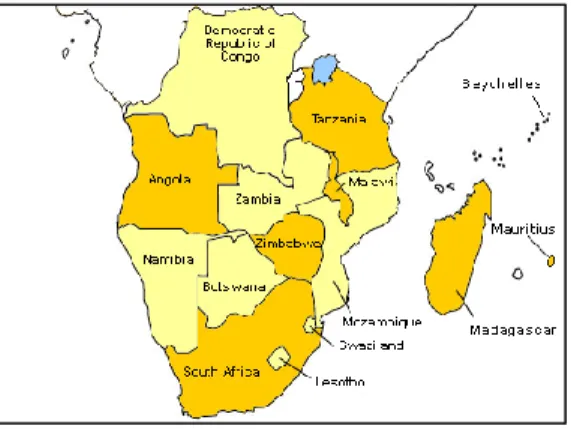
international human rights agreements that they have Map of SADC(26)
ratified for the advancement of women and more equitable gender relations (27).
Lesotho has ratified and is signatory to many international commitments to advance the rights of women. Many of the legal advancements made for women in the country are
comparable to other international initiatives. Lesotho is a member of SADC which is currently comprised of 15 countries from Eastern and Southern Africa (seeFigure 4). The organization
has beenlegally governed for the past 20 years by the SADC treaty and works toward regional economic growth and stability, peace, security, social justice, and improved quality of life for all its citizens. In addition, these countries have committed to achieving regional integration of human rights—including the rights of women. The SADC Declaration on Gender and Development was ratified in support of this aim and declares to reaffirm the region’s commitment to the Beijing declaration (28). This document resulted from the 1995 Beijing conference which pronounced that the human rights of women include the right to control their own sexual and reproductive health, and that women should be granted the freedom to make their own decisions from discrimination, coercion, and violence. In addition, all SADC member states have declared a commitment to improve accessibility of quality reproductive health services, protect and promote the human rights of women, and recognize, protect, and promote the reproductive and sexual rights of women and girls (28). Most recently, Lesotho signed the SADC Protocol on Gender and Development in 2008. This document aims to provide for the empowerment of women, to eliminate discrimination and achieve gender equality by
encouraging the development and implementation of gender responsive legislation, policies, programs, and projects. The Government of Lesotho has a commitment to uphold these obligations and should keep these international commitments at the forefront of national HIV/AIDS policies and programs.
VII. Intersection of Violence and HIV
you come together. But he didn’t listen to me. I tried to insist on using a condom but he refused. So I gave in because I really feared [him].
- Woman from Uganda in Human Rights Watch Report (27)
Violence has been clearly demonstrated as a risk factor for HIV (12,29-31). Violence can increase a woman’s risk of acquiring HIV infection in three ways: through forced or coercive sexual intercourse with an infected partner; by limiting a woman’s ability to negotiate safer sexual behaviors; and by establishing a pattern of sexual risk-taking for those who experience sexual assault in the period of childhood and adolescence (32). The second pathway illustrates the ways in which GBV and HIV infection goes beyond the associated physical risk factors (established biomedical increased risk of transmission associated with forced sex and dry sex), capturing the incapacity of women who fear violence from their partner to protect themselves from HIV infection.
The Lesotho DHS includes questions that gauge attitudes towards negotiating safer sex. Respondents were asked two questions: (1) if a woman is justified in refusing to have sex with her husband if she knows he has had sex with other women; and (2) if they think a woman in the same circumstances is justified in asking her husband to wear a condom if she knows that he has a sexually transmitted infection (STI) (9). The results for the first question were almost even with 52% of women and 53% of men affirming that a woman is justified in refusing sex with her husband if she knows he is having sex with another woman. A larger proportion of urban men and women responded this way. The results for the second question differed more by sex with 90% of women and 86% of men agreeing that a woman is justified in asking her husband to wear a condom if she knows he has a STI (9).
A study in South Africa found that an estimated one in seven cases in which women aged 15-26 years acquired HIV infection was associated with gender imbalances and IPV (34). Women in abusive relationships are at higher risk of infection regardless of their own sexual behaviors because men who perpetuate violence are themselves at higher risk of HIV and other STIs. Another South African study found that young men who perpetrate partner violence engage in significantly higher levels of risky behaviors associated with contracting HIV than non-perpetrators, and more severe violence is associated with higher levels of risky behavior (31).
In addition to being more at risk of infection, HIV positive women are also more likely to experience violence, from both an intimate partner and a community member, as a result of their infection status. A cross-sectional household survey in 2002 ascertaining risk factors for
variables (age, income, education, household size and occupation) had no significant association (35). Community-based studies in SSA have found that HIV positive women report
experiencing GBV at higher rates than their HIV negative counterparts (36).
As in many other countries of the developing world, there is limited data available about sexual violence and its determinants in Lesotho (15). The 2002 Lesotho Reproductive and Health Survey found that 13% of male respondents (age 12-59) and 14% of female respondents (age 12-49) reported knowing someone who had been raped in the past 12 months (15). In January 2003, a midterm evaluation of a program implemented by CARE International aimed at intervening in HIV transmission on the household level was conducted by MEASURE
Evaluation. Qualitative and quantitative data were collected in the urban centers of Maseru and Maputsoe (located in the northern district of Leribe) through focus groups, household surveys, and interviews. Results of the household survey of 949 women (aged 18-35) revealed that 31% reported that they had been touched against their will and 25% reported ever being physically forced to have sex. Additionally, 13% reported that forced sex had been attempted and 11% reported being forced to touch a man’s genitals. These results included women from both the intervention and comparison groups (15).
Studies among women in SSA show the most commonly reported barriers to HIV testing and disclosure of status is fear of a partner’s negative reaction. These include abandonment, violence, rejection, loss of economic support, and accusations of infidelity (38). Since testing serves as both a prevention tool as well as an entry point into HIV/AIDS care, treatment and support services, it is important to examine barriers to testing in particular countries and create a supportive legislative and policy environments to mitigate them.
VIII. HIV Testing in Lesotho
“It is critical that we expand access to HIV testing. But testing programs will fail if they do not also provide people protection from stigma, discrimination and abuse.”
-Joe Amon, director of the HIV/AIDS program at Human Rights Watch(39)
History
68.6 68.9 68.4
40.6 48
37.8
14.5 18.2 13.4
10.6 14.8 9.4
0 10 20 30 40 50 60 70 80 Total Female Urban Female Rural Female Total Male Urban Male Rural Male
Lesotho 2009 DHS
Lesotho 2004 DHS
Figure 5: Percent of population ever tested for HIV (15-49 years)
In addition to collecting biomarker data, the surveys included questions about the experience of HIV testing. Figure 5 compares the percent age of the population that have ever tested for HIV, disaggregated by sex
and residence, for the 2004 and 2009 LDHS.
There are four primary contexts of HIV/AIDS testing: mandatory testing; voluntary counseling and testing (VCT); routine testing; and
diagnostic testing in the Data from the 2004 and 2009 Lesotho DHS (9,13)
HIV test (13). In response to low testing rates, the Lesotho government has taken action to increase the number of its citizens getting tested.
Know Your Status Campaign (KYS)
In 2005, Lesotho developed a highly ambitious community-based HIV testing program, with the full support of the WHO, in which thousands of lay counselors were trained to administer door-to-door testing to everyone over 12 years of age (an estimated 1.3 million citizens at the time) over the course of two years. The kick off of the KYS campaign featured King Letsie III and Prime Minister Pakalitha Mosisili publicly testing for HIV. The program is regarded as the entry point to access prevention and treatment services, and is backed up by a policy of “routine
offer” of HIV testing at health facilities. Lesotho was following in the footsteps of neighboring
Botswana, in the adoption of routine testing policies and the implementation of national testing
campaigns. Additionally, both countries were aligned with the policy debates and shifts
occurring at the WHO at the time.
At the time of the launch of this campaign, Lesotho like many other SSA countries was experiencing a critical shortage of health care personnel; there were less than 90 physicians in Lesotho and only six out of the 171 health centers met minimum staffing requirements (43). The program utilized community-based lay health counselors to make up for this critical shortage, to access those hard to reach remote locations, and reach people who do not come into regular contact with the formal healthcare system.
The Lesotho KYS campaign fell short of its testing goals and was heavily criticized by the
international community for failing to safeguard the human rights of its citizens. Twenty-one
counselors. Additionally, by late August 2007, fewer than 25,000 people had tested through the
KYS program, just 2% of the 1.3 million target by the end of that year (43).
The Human Rights Watch published a report in 2008 which found that in its quest to test every “household”, the campaign failed to ensure that each individual within a household is able to consent or decline to be tested. (39). Both pre- and post-test counseling were found to be inadequate as was linkages to care and treatment (43). Another cited shortfall of this campaign was that the government had budgeted $12 million for testing, but only $385 million for post-test referrals (39).
Although the continued trend toward task-shifting and the decentralization of services in
Lesotho is crucial to dealing with severe shortages of health care personnel in the country, every
effort should be made to ensure that lay counselors are well trained and monitored in the field.
Community-based testing has potential in Lesotho and addresses the challenge of geographical
isolation experienced by many of its citizens. The Human Rights Watch reported that the
curriculum to train lay field counselors contained no guidance on informed consent, or what
elements needed to be covered in pre-test counseling (43).
IX. Women and Testing In Lesotho
“Men are very reluctant to test. Sometimes they make the decision, and the women in the household can’t test. I just keep going back to such houses
[hoping to encounter the woman alone].”
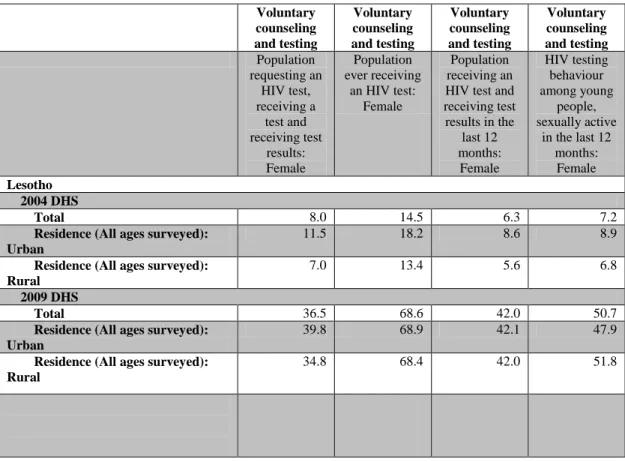
There has been increased uptake of testing in Lesotho in the last decade. Table 1 shows the increase in women reporting testing for HIV from the 2004 and 2009 LHDS. An estimated 42% of adult women reported that they had been tested for HIV and received their results in 2009 compared to about 6% in 2004 (1). It is not clear if the test was provided at a facility or as part of a community-based testing program.
Table 1: Percent of females testing in 2004 and 2009 LDHS (44)
Voluntary counseling and testing Voluntary counseling and testing Voluntary counseling and testing Voluntary counseling and testing Population requesting an HIV test, receiving a test and receiving test results: Female Population ever receiving
an HIV test: Female
Population receiving an HIV test and receiving test results in the
last 12 months: Female HIV testing behaviour among young people, sexually active
in the last 12 months:
Female
Lesotho 2004 DHS
Total 8.0 14.5 6.3 7.2
Residence (All ages surveyed): Urban
11.5 18.2 8.6 8.9
Residence (All ages surveyed): Rural
7.0 13.4 5.6 6.8
2009 DHS
Total 36.5 68.6 42.0 50.7
Residence (All ages surveyed): Urban
39.8 68.9 42.1 47.9
Residence (All ages surveyed): Rural
34.8 68.4 42.0 51.8
Routine testing in ANC
Another strategy to increase uptake to HIV testing is the adoption of routine and opt-out
testing into national policy. Lesotho incorprated both these in its 2006 policy framework (45).
DHS data collected before and after national policies promoting routine testing for HIV/AIDS
population is limited to women who were pregnant at any time during the two years preceeding
the survey.
Figure 6: Pregnant women tested for HIV during ANC Visit (44)
the opportunity to learn her status (5). Routine testing has been cited as problematic by human rights critics who point out that pregnant women who go in for an ANC visit do not necessarily do so in order to seek out an HIV test and therefore may be unprepared to handle a positive result (46).
X. Human Rights and HIV Testing
“Recent and justifiable interest in scaling up HIV testing has resulted in a discourse that is highly politicized and that once again appears to be pitting public health goals
against human rights norms. We must not allow public health and human rights to be framed as diverging concepts.”
-Sofia Gurskin 2004 (47)
Ethical and human rights debates have surrounded HIV/AIDS testing since the first antibody test became available in 1985 (47). Activism campaigns emerged at the onset of the epidemic which set a global precedent (48). It is important to note that at this time, there was no treatment available for those who tested positive. By 1992, a broad consensus had emerged from international health governing bodies around ethical and human rights standards of HIV testing. This led to criticism from many clinicians and public health officials about what they referred to as the “exceptionalism” of HIV (47).
Testing guidelines focused on the three C’s of testing, namely: pre- and post-test
policy-framework that protects people from potential harms associated with disclosure of status, and mechanisms for redress for peoples whose rights are infringed upon during testing. In 2006, the CDC revised their HIV/AIDS testing guidelines eliminating the informed consent component and shifted to a provider-initiated model. The following year, UNAIDS/WHO issued revised guidelines stated that, in generalized epidemics, such as Lesotho, HIV/AIDS tests should be given to all members of the population who have contact with a provider regardless of the reason for attending the health facility and whether or not the client exhibits signs or symptoms of HIV infection (49).
that the reality of this policy in Africa would mean that more women and girls would be receiving the “opt-out” testing as they have more contact with formal health care systems than their male counterparts, placing them at risk of violence and abuse (50). The letter goes on to implore governments who adopt these policies to do so alongside well-funded, wide spread measures to protect HIV-positive women and girls from abuse (50).
WHO and UNAIDS disseminated new testing guidelines on May 30, 2007, which called for various sets of policies for different regions of the world. These guidelines were met with disagreement, caution, and harsh criticism by human rights activists and some international NGOs. That same year, the UNAIDS Reference Group publicly disagreed with its parent
organization, UNAIDS, by stating their concerns that the “opt-out” policy approach would result in the practice of involuntary testing without informed consent (47). The international NGO, CARE, appealed that any new guidelines must consider the gender dimensions and the women’s ability to protect herself (47) . The Global Network of People Living with HIV/AIDS voiced concern that the international community acknowledges stigma, discrimination, and violence as serious issues that affect those receiving a positive test; however they not accounted for in policy formation due to a lack of evidence (47). Figure 6 (43)
Human Rights Watch cites five important aspects of
HIV testing and counseling campaigns from the
perspective of human rights principals and public
health ethics (see Figure 6).
A 2012 publication analyzing national HIV testing policies of 19 countries adapts a UNDP tool for examining governments obligations to protect the
Five aspects of testing
1. Informed consent and counseling
2. Confidentiality
3. Linkages between HIV testing and prevention 4. Accountability mechanisms 5. The adequacy of the policy
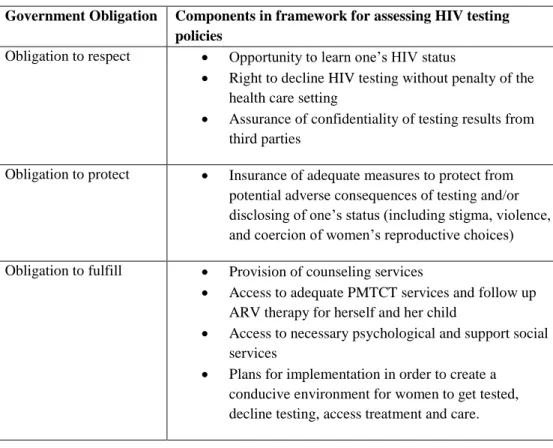
right to health, to create a human rights framework for analyzing HIV testing policies (51). This framework (see Table 2) incorporates the five aspects of testing and includes the following three components: obligation to respect; obligation to protect; and obligation to fulfill. Lesotho was not included in this analysis. Using this framework, Lesotho’s most recent testing policies will
be analyzed under each of the three components.
Table 2: Human rights framework for analyzing HIV testing policies (51)
Government Obligation Components in framework for assessing HIV testing policies
Obligation to respect Opportunity to learn one’s HIV status
Right to decline HIV testing without penalty of the health care setting
Assurance of confidentiality of testing results from third parties
Obligation to protect Insurance of adequate measures to protect from potential adverse consequences of testing and/or disclosing of one’s status (including stigma, violence, and coercion of women’s reproductive choices)
Obligation to fulfill Provision of counseling services
Access to adequate PMTCT services and follow up ARV therapy for herself and her child
Access to necessary psychological and support social services
Plans for implementation in order to create a conducive environment for women to get tested, decline testing, access treatment and care.
The most recent National HIV and AIDS Policy document was released in 2006. According to a 2009 document of partnership framework between the U.S. Government and the Government of Lesotho, the Ministry of Health and Social Welfare was in the process of revising national HIV counseling and testing policy to allow for couples counseling, and discordant couple
has been obtained from the 2006 National HIV and AIDS Policy document, the Lesotho HIV & AIDS National Strategic Plan (2006-2011), and a working draft of the Lesotho National ART Guidelines (45,53,54).
Obligation to Respect
In order to examine national HIV testing policies for evidence of the Government of Lesotho’s obligation to respect (or not violate the rights of women), the primary focus will be informed consent and confidentiality.
Informed Consent
The WHO/UNAIDS guidelines recommend that providers inform clients about HIV testing through a pre-test information session that can be given either individually or in a group setting (46). In order for the client to decline a test, the client must explicitly state that they do not want to be tested. Replacing pre-test counseling with information sessions allows providers to recommend testing to clients without also explaining the risks and benefits associated with the test (46). Human rights advocates point to power differentials between the women that the health care provider as a potential barrier to women feeling that they can really “opt-out” of an HIV test (46). A study in Botswana, where “routine testing” was made widespread in 2004, showed that 69% of participants believed that they could not refuse the test (55). Additional research has shown that women may feel they need to test in order to receive services from their health care provider (51).
consult a partner before testing (55). A lay counselor for the KYS campaign in Lesotho reported:
Women are afraid to tell their husbands. They fear beatings, insults. They worry that disclosure will destroy peace in their house. Some men may start calling them names, accuse them of sleeping around (43).
Given that women, especially pregnant women, come into contact with the formal health care sector more frequently than men, they are often diagnosed with HIV before their male partners and tasked with disclosing that diagnosis. Therefore, they risk being blamed by him for bringing HIV into the partnership whether that is true or not (55). This leaves her susceptible to violence and abandonment by her partner. This process underscores the social/structural factors that link GBV and HIV and increased her vulnerability to acquire HIV infection in the first place.
Lesotho’s National HIV/AIDS Policy identifies routine testing as vital for the prevention of mother to child transmission (PMTCT). The policy also states that guidelines for routine testing should be established by the government, and that guidelines should ensure informed consent. However, there is no further guidance as to how this consent should be obtained. The same occurs for provider-initiated testing (45). There is no explicit protocol mentioned in the policies about what to do if a woman refuses to test. At the 2008 International AIDS Conference in Mexico City, Lesotho’s Minister of Health, Mphu Ramatlapeng stated that all women coming
Confidentiality
Lesotho’s national policies use the word confidential in the definition of counseling which is referred to as a “confidential dialogue” (45). Additionally, confidentiality is mentioned in the context of the human rights and of PLWHA, in that they should be able to undergo prevention, care, treatment and support services with respect to their privacy and confidentiality. The term is used again with regards to STI testing, but does not appear in the sections directly pertaining to routine or provider-initiated testing.
The policy identifies beneficial disclosure as a component of theguiding principal of a public health approach to the epidemic (45). Beneficial disclosure is the notification of an individual’s HIV test results to a partner. Disclosure is described as a sensitive issue in this section and the development of guidelines to “encourage and persuade” HIV-positive people to report to their partners promoted. However, this is followed by a statement calling for the legal authority of health care providers to inform sexual partners of an HIV-positive person’s status. Furthermore, development of governmental guidelines and legislation of mandatory disclosure is advocated (45).
Obligation to protect
Lesotho’s national HIV/AIDS policies stress the importance of protection for vulnerable and marginalized populations including women and PLWHA. Considering the evidence
guarantee the right to equal protection before the law and freedom from discrimination and provision of protection for vulnerable groups (45). However, it is important to keep in mind the dual role that customary law holds in the country as well as the lack of legislation regarding violence against women. Within the policy framework, it is acknowledged that it does not fully encompass some of the challenges related to gender inequality in the traditional context (45).
Obligation to fulfill
Counseling
Another point of concern about the routine testing guidelines from the human rights perspective is in regards to counseling. Although the guidelines explicitly state that post-test counseling should remain, the elimination of the pre-test counseling session raises concern. The provision of counseling before and after an HIV test has been demonstrated as an important mechanism to help positive individuals cope and both positive and negative individuals devise a plan of action based upon their results. Human Rights Watch points out that in order to make an informed decision about an HIV test adequate information must be provided through a pre-test counseling session (43). If this is not done, or if it is done poorly, this may result in a violation of the principal of informed consent.
The current WHO/UNAIDS guidelines de-emphasize pre-test counseling. The
XI. Conclusion
On World AIDS Day December 1, 2011, former U.S. Secretary of State, Hillary Clinton, announced a U.S. Government policy priority to create an AIDS-free generation. A highly effective, evidenced-based intervention, full coverage PMTCT services is crucial to achieving this vision. Integrated HIV testing as a part of routine ANC is the first step to implementation. HIV-positive women must be indentified in order to receive ART in a timely and effective way. Lesotho continues to expand the provision of PMTCT interventions to reach all pregnant women in every household and community in the country and PMTCT coverage reached 80% in 2011. In addition, the Strategic Plan for Elimination of Mother-to-Child Transmission of HIV and for Pediatric HIV Care and Treatment (2011-2016) was launched with the full commitment of all stakeholders to reach zero vertical transmission of HIV by 2015 (5). Lesotho’s progress in PMTCT service provision and potential to attain full coverage is a remarkable achievement. Rather the social and structural context of Lesotho where these gains are being achieved should always be taken into consideration. Policies and programs should be examined through both a human rights and gender lens.
rights advocates should continue to campaign for policies and programs that uphold the rights of women.
Substantial gaps of information in national policies are another point of concern.
Lesotho’s National HIV/AIDS policy lacks clear guidelines and procedures for how to carry out
its objectives of complete testing coverage. There is also a lack of clear plans for
implementation and monitoring of these policies. If such plans and indicators exist, they should be clear and available to all decentralized governmental facilitates, implementing partners and stakeholders, and national and international NGOs. Testing guidelines and policies should not be written in dissonance with human rights, rather in harmony with them.
Recommendations
1. More research is needed.
There is little evidence specific to the country of Lesotho regarding the effects of routine testing on women living there. Qualitative and quantitative data should be collected to study this. Mix method studies need to be conducted in order to provide a platform for the creation of evidence-based policies and interventions for women and girls. Specifically, policies that promote the exclusion of pre-test counseling sessions should be reexamined in light of this new data.
3. National policies and HIV testing guidelines should be clear and meet the criteria of the human rights framework. These policies should be effectively monitored and evaluated.
References
(1) Joint United Nations Programme on HIV/AIDS (UNAIDS). Together We Will End AIDS. 2012.
(2) Hlalele D, Letsie PR. Gender Inequality and HIV/AIDS in Lesotho: A Human Disease Ecological Perspective. Journal of Human Ecology-New Delhi 2011;36(3):159.
(3) Joint United Nations Programme on HIV/AIDS (UNAIDS). UNAIDS 2011-2015 Strategy: Getting to Zero. 2010.
(4) Ezilion Maps. Political Map of Lesotho.
2009(http://www.ezilon.com/maps/images/africa/political-map-of-Lesotho.gif).
(5) National AIDS Commission, Bophelo Lesotho Ministry of Health and Social Welfare. Lesotho Global AIDS Response Country Progress Report: January 2010-December 2011. 2012. (6) United Nations Development Programme (UNDP). Human Development Report 2013. The Rise of the South: Human Progress in a Diverse World. 2013.
(7) Central Intelligence Agency. CIA The World Factbook: Lesotho. 2012; Available at:
https://www.cia.gov/library/publications/the-world-factbook/geos/lt.html. Accessed October 10, 2012.
(8) AVERT. HIV/AIDS in Lesotho. 2013; Available at: http://www.avert.org/aids-lesotho.htm. Accessed March 17, 2013.
(9) Ministry of Health and Social Welfare (MOSHW) Lesotho and ICF Macro. Lesotho Demographic and Health Survey 2009. 2010.
(10) Mapetla MM. Gender Inequality in SADC, The time is now: Gender Protocol Baseline Study Lesotho. 2009.
(11) Human Rights Watch. Policy paralysis: a call for action on HIV-related human rights abuses against women and girls in Africa. 2003.
(12) Joint United Nations Programme on HIV/AIDS (UNAIDS). Global Report: UNAIDS Report on the Global AIDS Epidemic: 2010. 2010.
(14) Gouws E, Stanecki KA, Lyerla R, Ghys PD. The epidemiology of HIV infection among young people aged 15-24 years in southern Africa. AIDS 2008;22:S5-S16.
(15) Brown L, Thurman T, Bloem J, Kendall C. Sexual violence in Lesotho. Stud Fam Plann 2006;37(4):269-280.
(16) Auerbach JD, Parkhurst JO, Cáceres CF. Addressing social drivers of HIV/AIDS for the long-term response: conceptual and methodological considerations. Global Public Health 2011;6(sup3):293-309.
(17) Greig A, Peacock D, Jewkes R, Msimang S. Gender and AIDS: time to act. AIDS 2008;22(Suppl 2):S35.
(18) Ansell N. 'Because it's Our Culture!'(Re) negotiating the Meaning of Lobola in Southern African Secondary Schools. Journal of Southern African Studies 2001;27(4):697-716.
(19) UNAIDS. UN Secretary-General issues recommendations to bolster AIDS reponse in order to meet 2015 targets. 2012.
(20) United States Government. United States Government Global Health Initiative Lesotho Strategy: November 2011. 2011.
(21) Millennium Challenge Corporation. Promoting Gender Equality in Lesotho: Maleribe's Story. 2011; Available at: http://www.mcc.gov/documents/press/action-2011002056901-maleribe.pdf. Accessed March 9, 2013.
(22) BUREAU OF DEMOCRACY, HUMAN RIGHTS, AND LABOR. 2010 Human Rights Report: Lesotho . 2011(2010 Country Reports on Human Rights Practices).
(23) OECD Development Center. Social Institutions and Gender Index (SIGI): Lesotho. 2012; Available at: Social Institutions and Gender Index (SIGI). Accessed March 8, 2013.
(24) Shisana O, Davids A. Correcting gender inequalities is central to controlling HIV/AIDS. Bull World Health Organ 2004;82(11):812-812.
(25) Klugman B. Sexual rights in Southern Africa: A Beijing discourse or a strategic necessity? Health Hum Rights 2000:144-173.
(26) Southern Africa Development Community. The SADC Member States. 2012; Available at:
http://tis.sadc.int/english/sarn/about-sarn/. Accessed 03/05, 2013.
(27) International Council of AIDS Service Organizations. Gender, Sexuality, Rights and HIV: An overview for community sector organizations. 2007.
(29) Andersson N, Cockcroft A, Shea B. Gender-based violence and HIV: relevance for HIV prevention in hyperendemic countries of southern Africa. AIDS 2008;22:S73.
(30) Jewkes R, Dunkle K, Nduna M, Levin J, Jama N, Khuzwayo N, et al. Factors associated with HIV sero-status in young rural South African women: connections between intimate partner violence and HIV. Int J Epidemiol 2006;35(6):1461-1468.
(31) Dunkle KL, Jewkes RK, Brown HC, Gray GE, McIntryre JA, Harlow SD. Gender-based violence, relationship power, and risk of HIV infection in women attending antenatal clinics in South Africa. The lancet 2004.
(32) Maman S, Campbell J, Sweat MD, Gielen AC. The intersections of HIV and violence: directions for future research and interventions. Soc Sci Med 2000;50(4):459-478.
(33) Pettifor AE, Measham DM, Rees HV, Padian NS. Sexual power and HIV risk, South Africa. Emerging infectious diseases 2004;10(11):1996-2004.
(34) Jewkes RK, Dunkle K, Nduna M, Shai N. Intimate partner violence, relationship power inequity, and incidence of HIV infection in young women in South Africa: a cohort study. The Lancet 2010;376(9734):41-48.
(35) Andersson N, Ho-Foster A, Mitchell S, Scheepers E, Goldstein S. Risk factors for domestic physical violence: national cross-sectional household surveys in eight southern African
countries. BMC Womens Health 2007;7(1):11.
(36) Campbell J, Baty M, Ghandour R, Stockman J, Francisco L, Wagman J. The intersection of intimate partner violence against women and HIV/AIDS: A review. International journal of injury control and safety promotion 2008;15(4):221-231.
(37) Dude AM. Spousal intimate partner violence is associated with HIV and other STIs among married Rwandan women. AIDS and Behavior 2011;15(1):142-152.
(38) Garcia-Moreno C, Jansen HA, Ellsberg M, Heise L, Watts C. WHO multi-country study on women's health and domestic violence against women: initial results on prevalence, health outcomes and women's responses. : World Health Organization; 2005.
(39) Human Rights Watch. AIDS Conference: Drive for HIV Testing Must Respect
Rights: WHO, UNAIDS Policies Must Link Testing to Consent, Counseling and Treatment . 2006; Available at: http://www.hrw.org/news/2006/08/09/aids-conference-drive-hiv-testing-must-respect-rights. Accessed March 18, 2013.
(41) De Cock KM, Mbori-Ngacha D, Marum E. Shadow on the continent: public health and HIV/AIDS in Africa in the 21st century. The Lancet 2002;360(9326):67-72.
(42) AVERT. HIV and AIDS in Africa. 2013; Available at: http://www.avert.org/hiv-aids-africa.htm. Accessed March 16, 2013.
(43) AIDS Rights Alliance for Southern Africa (ARASA), Human Rights Watch. A Testing Challenge The Experience of Lesotho’s Universal HIV Counseling and Testing Campaign. 2008. (44) ICF International. MEASURE DHS STAT Compiler. 2012; Available at:
http://www.statcompiler.com. Accessed March 15, 2013.
(45) Government of Lesotho, National AIDS Commission. National HIV and AIDS Policy. 2006.
(46) Maman S, King E. Changes in HIV testing policies and the implications for women. Journal of Midwifery & Women’s Health 2008;53(3):195-201.
(47) Bayer R, Edington C. HIV testing, human rights, and global AIDS policy: exceptionalism and its discontents. J Health Polit Policy Law 2009;34(3):301-323.
(48) Gruskin S, Mills EJ, Tarantola D. History, principles, and practice of health and human rights. The Lancet 2007;370(9585):449-455.
(49) WHO, UNAIDS. Guidance on Provider-Initiated HIV Testing and Counselling in Health Facilities. 2007.
(50) Csete J, Schleifer R, Cohen J. “Opt-out” testing for HIV in Africa: a caution. The Lancet 2004;363(9407):493-494.
(51) King EJ, Maman S, Wyckoff SC, Pierce MW, Groves AK. HIV testing for pregnant women: A rights-based analysis of national policies. Global Public Health 2012(ahead-of-print):1-16.
(52) U.S. President's Emergency Plan for HIV and AIDS Relief (PEPFAR). Partnership Framework to support Implementation of the Lesotho National HIV and AIDS Response
between the Governement of the United States of America and the Government of the Kingdom of Lesotho. 2009.
(53) Government of Lesotho, National AIDS Commission. National HIV & AIDS Strategic Plan (2006-2011). 2006.
(55) Gruskin S, Ahmed S, Ferguson L. PROVIDER‐INITIATED HIV TESTING AND
COUNSELING IN HEALTH FACILITIES–WHAT DOES THIS MEAN FOR THE HEALTH AND HUMAN RIGHTS OF PREGNANT WOMEN? Developing World Bioethics
2008;8(1):23-32.
(56) The Global Fund Coordinating Unit Lesotho. King launches Lesotho prevention strategy 2011-2015 during World AIDS Day. 2011; Available at: