An Interactive Web-Based Teaching Tool for Childbirth Education: Informing Expectations, Choices, and Birth Satisfaction for Millennial Learners
Kristy Hansen
A project presented to the faculty of The University of North Carolina at Chapel Hill
in fulfillment of the requirements for Undergraduate Honors
Date Completed: April 6, 2016
Introduction
Background
The term “childbirth education” can be used as a general term for the process by which prospective parents learn about and prepare for birth. Topics covered in childbirth education can include a wide variety of subjects including the physiological process of giving birth; the physical, cultural, and emotional environment in which birth takes place; and tools and strategies for coping with the events of labor. There are many forms of childbirth education, including both informal learning that takes place among family and peers and more formal learning that takes place in a classroom setting led by instructors. Instructors can be entirely independent in their training and education, or they can be supported by organizations that provide formal training and curriculum development. Among these organizations is Lamaze International, established in 1960. Its childbirth educator training program is the only program meeting the standards of both National Commission for Certifying Agencies (NCCA) and the American Nurses Credentialing Center (ANCC) (“Today’s Lamaze”, n.d.).
In the course of its history, Lamaze International has adapted its content and focus to reflect changes in childbirth education. Certainly, the physical and cultural
environment in which birth takes place has changed drastically since 1960. So, too, have the tools parents have available to them to cope with the events of labor. Additionally, with the significant increase in cesarean sections, it could be argued that even the
In addition to the changing nature of childbirth education content, the audience to which childbirth education applies has also changed significantly. Today’s learners are vastly different than those of generations past. They have unique learning needs and styles; even the environment in which they prefer to learn is different. Lamaze
International is responding to this phenomenon in a variety of ways, including offering on-line education. Classroom education must also adapt and offer activities that appeal to the current generation of learners. Thus, there is a need to develop learning tools that both meet the standards of Lamaze education and the needs of Millennial learners.
Purpose
The purpose of this project is to develop a teaching tool intended to complement the Lamaze curriculum and appeal to the unique learning needs of Millennials. In particular, the tool focuses on synthesizing much of the information typically taught in Lamaze classes into a single exercise. It is designed to encourage prospective parents to consider common decisions and scenarios that often take place during labor and birth, and apply their newly-gained knowledge to make personalized decisions in light of those scenarios.
Development of the Tool
Literature Review
A review of the literature pertinent to the development of the tool covers many topics that span multiple disciplines. First, it is helpful to understand the preferred
expectations for birth and how those expectations are developed; the notion of “control” and informed decision-making; and the role that childbirth education plays in each of these subjects. At the conclusion of the discussion of each of these topics, the relevance of the content to the development of the teaching tool will be described.
Search strategy. Using the CINAHL, PubMed, and PsychInfo databases, article keywords and subject headings were searched for relevant terms, their derivatives, and Boolean combinations. The terms included the following: childbirth, intrapartum, education, decision tools, decision-making, satisfaction, expectations, locus of control, technology, and adult learning. Search techniques included truncation of terms; the use of wildcards; the search for terms adjacent to each other; and the search for combinations of terms using “and,” “or,” and “not” operators. The search was not limited by date of publication, but date of publication was considered when evaluating the articles for inclusion in the literature review. Only journals published in English were included.
Articles were initially appraised based on a review of the abstract and an
evaluation of the number of times the article had been cited in other articles (within the database). If the abstract revealed that the article was unlikely to offer relevant
background information, the article was dated, or the article was not often cited in
Learning needs of Millennials as adults. It is important to identify the learning characteristics specific to childbirth education class audiences. Currently, that audience falls almost entirely into the “Millennial” generation (those born between 1981 and 2004, approximately). Additionally, an understanding of general learning needs of adults, regardless of the generation to which they belong, is pertinent.
There is a vast amount of commonly accepted information available on the
learning needs of adults. Two relevant and important principles of teaching adults include the convention that adults are most interested in learning material that directly impacts them and that is problem-centered (Knowles, Holton, & Swanson, 2015). Content-oriented material is of less direct value to adult learners; understanding how to apply content to solve a problem directly related to them is of more importance to adult learners (Knowles, et al. 2015). A final component of effective adult education is a respect for the experiences that the learners bring to the table, offering opportunities to share those experiences as appropriate (Knowles et al., 2015).
laptops). Millennials prefer a relaxed, collaborative relationship with instructors and find value in the use of games and simulations in learning complex or otherwise difficult-to-visualize systems (Northern Illinois University, 2012).
Millennials and childbirth education.In addition to understanding the general characteristics of the Millennial learner, understanding how Millennials learn about childbirth in particular is pertinent to designing this teaching tool. First, it is interesting to note that Millennials have shown a desire for structure in their general education (Woods, Wilson, & Walkovich, 2011), and yet appear to abandon that need when they seek out childbirth education. Attendance at in-person childbirth education classes has dropped as Millennials have turned to friends, family, social media, and the Internet for much of their childbirth education needs (Daniels & Wedler, 2015). Significant numbers of Millennial mothers cite receiving weekly emails (67%), text messages (27%), and also rate “apps” as “very valuable” in their information-seeking process (Declercq, Sakala, Corry, Applebaum & Herrlich, 2013). Much of this information is gathered early in pregnancy or even before pregnancy begins (Daniels & Wedler, 2015). This time frame is months before traditional childbirth education classes are offered.
for their information, eschewing non-profit organizations and professional unions, which are more likely to be thorough and unbiased (Lima-Pereira, Bermúdez-Tamayo, & Jasienska, 2012). Mothers rely minimally on their care providers as sources of information, particularly as a consequence of limited time spent with their providers during prenatal appointments (Fleming et al., 2014; Declerq et al., 2013). Additionally, material is often received out of context, without background and preparation sufficient to meaningfully analyze and apperceive the information (Fleming et al., 2014). Daniels and Wedler (2015) suggest that, considering how Millennials are gathering their information, childbirth education should seek to fill the unique niche of teaching
expectant parents to interpret the information gained online and apply it to their situation. Implications for development of the tool.The teaching tool takes into account many of Millennials’ learning needs, both as adults and as a unique generation. Honoring the general principles of adult education, the tool provides information about an event that is sure to have a significant impact on their lives. It allows users to synthesize the content of their childbirth education course to hypothetically “solve” potential problems and challenges they may face during their upcoming labor and birth. The tool emphasizes a reliance on individual preference to make personalized decisions, and, when using this tool in a group setting, allows learners to bring their own experiences to the discussion that this tool encourages.
thus, is portable as well. Finally, presented as a game, the teaching tool uses simulation to help the participants understand the dynamic nature of the labor and delivery experience.
In addition to appealing to the learning needs of the millennial generation, this tool can also overcome some of the shortcomings of the particular methods by which Millennials are receiving information about childbirth. With the potential to link to web- based content, including videos, images, and info-graphics, the content of the tool can be controlled and ensured to be credible and unbiased, while still making use of a multi-media platform familiar to Millennials. Used in class or outside of the classroom, it can serve to help users process the fragmented information they have obtained by searching the Internet and consulting social media, fulfilling Daniel and Wedler’s (2014) vision for the appropriate use of formal childbirth education for Millennials.
Childbirth satisfaction. A mother’s satisfaction with her birth can improve self-esteem and provide a sense of accomplishment from which she can draw as a resource for subsequent experiences (Simkin, 1991, 1992). Childbirth satisfaction can also contribute to the well-being of an infant by improving maternal bonding (Simkin, 1991, 1992). Conversely, dissatisfaction with childbirth can negatively affect both mother and infant (Reynolds, 1997).
The connection between childbirth satisfaction and positive outcomes from mother and infant is established in Simkin’s classic, often-cited work (1991, 1992). Her research provides the basis for subsequent research on particular elements of the
Indeed, mothers appear to be motivated to participate in some form of childbirth education prior to labor, believing that it is better to be prepared. In a survey of 758 women at a private university, Edmonds, Cwiertniewcz, and Stoll (2015) found that a significant number of women (45.3%) indicated a lack of confidence in their level of knowledge about pregnancy and birth. Even more respondents (56.1%) indicated a desire for more information (Edmonds et al., 2015).
Additionally, mothers appreciate the value of childbirth education after birth has occurred. Underscoring this connection, a review of patient comments on the Birth Satisfaction Survey (an instrument validated to measure maternal levels of satisfaction with birth) found that patients perceived education as critical to their actual outcomes and put value on the education that they received prior to labor (Hollins-Martin & Robb, 2013). This finding was repeated in the “Listening to Mothers III: Pregnancy and Birth” survey, a survey of 2400 mothers who had given birth in 2011 and 2012 (Declercq et al., 2013).
Implications for development of the tool.Understanding that childbirth education is a component of childbirth satisfaction is an important consideration in developing this teaching tool. If effective, it has the potential to affect a mother’s sense of satisfaction with her birth; in turn, it can potentially affect maternal and infant well-being.
Forming expectations.Expectant mothers see education as a means to gain insight into the upcoming experience; in particular, education helps them know what to expect; this was an additional finding in the previously cited work by Hollins-Martin & Robb, 2013. Malacrida & Boulton’s (2014) analysis of qualitative, narrative interviews of 22 mothers provides further evidence of this connection. Their research indicated that mothers saw themselves as responsible for knowing about birth and its risks, so that they could better plan for it.
Unfortunately, informational resources may mislead mothers into setting unrealistic expectations. Daniels & Wedler (2015) point out that childbirth educators stress the normalcy of childbirth, yet the reality is that birth in a hospital setting – the setting in which the vast majority of mothers give birth in the United States – is
increasingly medical. One mother exhibited frustration with this tendency: “The prenatal classes just make it so ideal, like you can do what you want, whenever you want, but you can’t” (Malacrida & Boulton, 2015, p. 50).
The media fare no better in setting realistic expectations: one labor and delivery nurse illustrated this point well as she recounted telling her patient, “There was a lot of editing in that 7 minute birthing video you watched on TV” (Fleming et al., 2014, p. 243). Finally, the Internet often (but not exclusively) offers frightening depictions, descriptions and images of birth, often without any context, which can evoke fear and anxiety among expectant parents (Fleming et al., 2014).
Bussel, Spitz, & Demettenaere, 2010). These personal influences lead mothers to form expectations along a wide spectrum that reflect the unique needs of each individual.
Parents’ presumptions about childbirth.What kinds of expectations do mothers have about their upcoming births? The literature contains several themes around which mothers form their expectations: outcomes and processes. Most women hold expectations for the mode of birth, with the vast majority expecting a vaginal birth (Hollins-Martin & Robb, 2013). Most women expect to experience pain (Hollins-Martin & Robb, 2013), though many women feel unable to qualify or quantify that pain (Gibbins & Thompson, 2001). Additionally, women tend to form their expectations about pain around the experience of contractions, not pushing (Hollins-Martin & Robb, 2013), which is a distinct sensation. Most mothers also expect a healthy baby (Hollins-Martin & Robb , 2013). Included in their expectations about their upcoming birth are both hopes and fears. Among the hopes mothers form is a desire for a short labor with minimal pain; they tend to fear interventions and complications (Gibbins & Thompson, 2001).
Women often convey their expectations in the form of a “Birth Plan”, typically a written document used as a communication tool to express their desires for an upcoming birth. Common elements included in birth plans also tend to be outcome- or experience- centric, including pain management, comfort measures, postpartum preferences, and atmosphere (Aragon et al., 2013).
(physician or midwife) – will interact. Some mothers offer very simplistic, or inaccurate, descriptions of the healthcare team members’ roles (Hollins-Martin & Robb, 2013). Some mothers express an expectation that the care provider “is in charge, and what he or she says goes” (Hollins-Martin & Robb, 2013, p. 107), whereas others express an
expectation to be involved in decision-making and to have support from their providers in that decision-making process (Hauck, Fenwick, Downie, & Butt, 2007). Still others express an openness to the process, using “phrases such as ‘take it as it comes’ or ‘be as open as much as possible’ … elaborate[ing] on the importance of being receptive and open to changing circumstances” (Hauck et al., 2007, p. 239).
Expectations and satisfaction.A discussion of childbirth expectations would likely be irrelevant if they had no implications. However, much research points to expectations having a significant impact on maternal satisfaction and its sequelae.
In a qualitative study by Hauck et al. (2007), the authors found that mothers expressed a consistent relationship between their perceptions of their births and how well they matched their expectations. Their analysis of pre-partum and postpartum interviews with 20 primiparous and multiparous women concluded that those who felt their
The research surrounding expectations and subsequent satisfaction identifies some interesting nuances that are of interest. Cook & Loomis’ (2012) analysis of 15 semi-structured interviews about women’s birth experiences noted that very specific birth plans tended to reflect the level of flexibility women had with respect to changes in their birth plan; when those expectations were not fulfilled, it caused significant distress. When expectations about outcomes were instead flexible, mothers were more likely to report their births positively.
Additionally, those whose expectations were about process (e.g., being supported, being involved in decision-making) reported more positive feelings about their births (Cook & Loomis, 2012). This distinction between process and outcome was also validated by Hauck et al. (2007). Researchers noted that those who received supportive care – a process, not an outcome – in the midst of circumstances that did not fulfill their expectations still often reported their births positively.
Indeed, expectations centering on particular outcomes or experiences as opposed to processes seem to require the most significant readjustment by mothers. In a
Implications for development of the tool. Because childbirth expectations are tied
to childbirth satisfaction, it is important that this tool to makes a deliberate effort to help form them accurately. The tool does not present labor and birth as an entirely ideal experience; at the same time it provides the context in which otherwise frightening scenarios can be understood. The tool focuses on setting fair outcome-based expectations based on reliable and relevant data (e.g., the probability of a spontaneous vaginal delivery versus an operative vaginal delivery versus a cesarean section). The tool promotes
flexibility by encouraging discussion on how to best respond to changes in plans brought on by circumstances outside of parents’ control. Additionally, it strives to provide a fuller understanding of often-misunderstood experiences, such as the experience of pain and the effectiveness of methods to relieve that pain. Finally, by personalizing questions for users to consider, it emphasizes developing process-centric expectations and respects unique personality differences.
Choice, decision-making and control. Decision-making, control, and choice are unique but inter-related factors in childbirth. The literature reveals much related to these
concepts that inform the development of the tool.
The concept analysis offered by Meyer (2012) offers an excellent framework by which control can be understood in the context of childbirth, and demonstrates the interrelatedness of choice and decision-making in that concept. Meyer presents four components of control in childbirth: participation in decision-making, access to information, personal security, and physical functioning (Meyer, 2012).
participants noted that among the most distressful events in labor were the drastic changes to their expectations over which they had little or no control. Such events included pre-eclampsia, breech presentation, and prolonged labor, events very much related to Meyer’s “physical functioning” component of control. In a qualitative review of first-time mothers’ written narratives of their births, Nillson and associates (2013) noted that some mothers reacted to prolonged labors by “blaming” themselves for not having enough patience to positively cope with the situation; by lacking that coping tool, mothers felt a loss of control. The researchers also noted that some mothers found that pain relief (particularly in the form of an epidural) promoted a sense of control in that mothers felt they actively and positively managed one component of their body’s physical functioning (Nilsson, Thorsell, Hertfelt Wahn, & Ekstrom, 2013).
The components of Meyer’s framework related to decision-making and access to information are reinforced in the literature as well. Heatley (2015) analyzed responses of over 3000 women to a questionnaire about their participation in decision-making during pregnancy and noted a relationship between access to information, communication, and subsequent confidence in decision-making. This study specifically found that women’s positive perceptions about their childbirth knowledge was a significant factor in enabling communication with their care provider.
these decision aid tools contribute significantly to mothers’ knowledge base. In turn, they decrease decisional conflict and anxiety.
It is also important to note a strong conflict with respect to the concept of control in childbirth. This conflict stems from the unique character of the relationship between care provider and mother in childbirth and is exacerbated by widely varying clinical practice, organizational factors, and medico-legal pressures (Goldberg & Shorten, 2014b). Malacrida and Boulton (2014) assert that, in reality, childbirth takes place in an environment that is characterized by relationships between mothers and care providers that are unequal in power and knowledge. While some care providers perceive that they facilitate informed decisions on the part of mothers (Goldberg & Shorten, 2014a), there is evidence that they often support mothers’ decisions only when it is the decision that they themselves prefer (Kruske, Young, Jenkinson, & Catchlove, 2013; Goldberg & Shorten, 2014b). This conflict arises based on providers’ convictions that they hold legal
responsibility for decisions, even when they are made in a collaborative model (Kruske et al., 2013).
having no choice in some procedures, including episiotomy, cesarean surgery, and access to VBAC (Declercq et al., 2013).
Implications for development of the tool. Understanding this framework of
control to include decision-making, access to information, personal security, and physical functioning guides the development of the teaching tool in several ways. The tool
encourages women and their partners to take an active role in decision-making in their birth, but at the same time highlights that there are some events of labor and birth over which they have no control. It does this, quite literally, by rolling dice. It asks parents to identify, throughout each scenario, specific things (e.g., pain relief options) over which they have decision-making control, as well as things over which they have lost control. It also highlights the unique nature of the relationship between their care provider and themselves and the factors that play into that relationship. The tool then asks parents to make hypothetical decisions in the context of the pressures of that relationship.
Review of the Lamaze Curriculum and Existing Teaching Tools
Lamaze certification is considered a “gold standard” in childbirth education. Lamaze International’s childbirth educator certification program is the only program that has met the standards of both the National Commission for Certifying Agencies (NCCA) and the American Nurses Credentialing Center (ANCC) (“Lamaze Today”, n.d.). As such, it makes an excellent standard upon which to ground the principles of this teaching tool.
Initial efforts to find literature about the Lamaze curriculum revealed little information. Lamaze International’s website offers only general information;
specific details about their curriculum. Thus, in order to develop the foundational knowledge of the current Lamaze curriculum and popular Lamaze teaching methods required to inform the development of the tool, a small study was conducted.
Methods. The proposed study was submitted to the University of North Carolina at Chapel Hill IRB, and deemed to be exempt. Interviews were conducted to gather information about the Lamaze curriculum and associated teaching methods. Potential interviewees were identified from the author’s extended network of colleagues developed over the course of an eight-year career as a childbirth educator.
Seven experienced Lamaze educators were interviewed. These educators included independent teachers, those teaching in a hospital setting, and those tasked with training future Lamaze Certified Childbirth Educators. Interviewees’ experience teaching the Lamaze curriculum ranged from two years to 33 years (mean = 15). Additionally, interviewees’ experiences included multiple past-presidents of Lamaze International and the current manager of Lamaze’s “Science and Sensibility” blog, a research blog about pregnancy, birth, and postpartum.
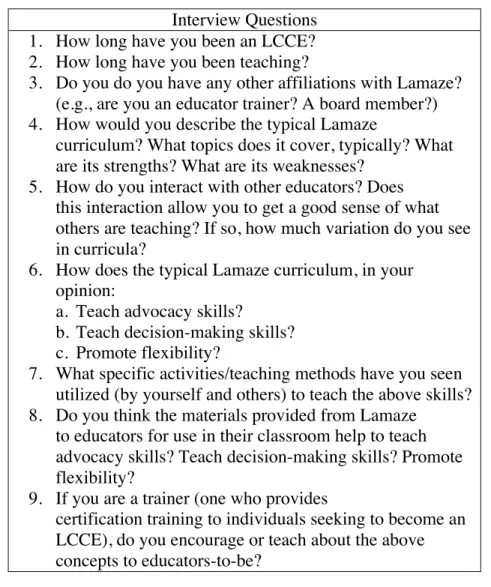
Table 1: Interview Questions for Lamaze Certified Childbirth Educators (LCCE) Interview Questions
1. How long have you been an LCCE? 2. How long have you been teaching?
3. Do you do you have any other affiliations with Lamaze? (e.g., are you an educator trainer? A board member?) 4. How would you describe the typical Lamaze
curriculum? What topics does it cover, typically? What are its strengths? What are its weaknesses?
5. How do you interact with other educators? Does this interaction allow you to get a good sense of what others are teaching? If so, how much variation do you see in curricula?
6. How does the typical Lamaze curriculum, in your opinion:
a. Teach advocacy skills?
b. Teach decision-making skills? c. Promote flexibility?
7. What specific activities/teaching methods have you seen utilized (by yourself and others) to teach the above skills? 8. Do you think the materials provided from Lamaze
to educators for use in their classroom help to teach advocacy skills? Teach decision-making skills? Promote flexibility?
9. If you are a trainer (one who provides
certification training to individuals seeking to become an LCCE), do you encourage or teach about the above concepts to educators-to-be?
Interviewees were given the interview guide and were asked to respond via email or phone conversation. Three participants responded via email; four participants opted to interview over the phone. Phone interviews were recorded with the participants’
permission. The interview guide formed the basis for phone interviews; as appropriate, additional questions were asked for clarification or expansion. There were no additional questions asked of those responding to the interview guide via email.
of their curricula and teaching tools. Minor differences were not contradictory; instead they appeared to be variations on the same themes. As such, the results of the interviews offer a sound basis by which to describe the Lamaze curriculum and typical teaching methods and tools used in the curriculum.
Curriculum content. The concept of a standard or typical Lamaze curriculum
must be framed by the fact that Lamaze Certified Childbirth Educators teach in a variety of settings (e.g., hospital, private) and to a diverse population. Each educator is tasked with developing her/his own curriculum; however, part of the certification process includes a review of the prospective educator’s curriculum by certified educator trainers. This review verifies that the curriculum meets standards set forth by Lamaze
International. Among these standards is a list of topics that should be covered; therefore, a curriculum “standard” is established in as much as each educator is expected to cover these topics. However, there is a sentiment that, in practice, many educators do not (or cannot, for a host of reasons) cover all these topics.
Lamaze’s “Six Healthy Birth Practices” are a significant focus of the Lamaze curriculum. These practices are as follows:
• Let labor begin on its own.
• Walk, move, and change positions in labor.
• Have continuous labor support.
• Avoid routine interventions.
• Push spontaneously and in an upright position.
• Keep mother and baby together.
induction in place of spontaneous labor). Fundamentally, these practices confirm birth as a normal, physiological process, which is another significant theme in Lamaze curricula.
Another significant focus of Lamaze curricula is teaching parents how to make informed decisions for their birth. An emphasis is placed on communicating evidence-based practice, upon which parents can make their decisions. Additionally, the
curriculum covers communicating with care providers to make their wishes known. Educators often encourage the use of a “birth plan” to communicate with their care provider.
Lamaze instructors also emphasize approaching birth with flexibility. The Lamaze curriculum checklist includes complications of labor and birth, such as unexpected
outcomes and traumatic birth. Instructors imply the potential for deviations from normal physiological birth when they prepare parents to ask questions of their care provider, when they discuss evidence-based information on interventions, and when they teach about minimizing the effects of interventions should they occur. One interviewee indicated that she hoped that her students “leave [her] class knowing that birth is unpredictable but [that] they are prepared for variations”.
Common teaching tools and methods. The methods used to teach
declining the intervention or waiting to proceed with the intervention (Nothing, Not now). While instructors provide information about benefits, risks, and alternatives in class, they also encourage parents to ask their care providers about the benefits, risks, and alternatives to interventions proposed during labor. At least one instructor utilizes a role-play in which students ask these questions under specific scenarios. Thus, the BRAIN mnemonic provides parents with a framework for communicating with their care providers and for evaluating the information to make individualized decisions.
Another instructional strategy used by Lamaze educators is a “card-flipping” tool to teach the concept of prioritization. This tool consists of many cards, each printed with paired but reversed outcomes, interventions, or scenarios. For example, one card may have “vaginal birth” on one side and “cesarean birth” on another. Other examples include “epidural/no epidural,” “spontaneous labor/induced labor,” and “freedom to walk
Lamaze educators may use additional methods to approach lessons in
unpredictability and flexibility. Many cite the use of anecdotal stories to illustrate how each birth experience is unique. The element of luck as it relates to unpredictability is often discussed in class; several instructors indicated they have their students play dice games to simulate luck, and one instructor presents her students with a box of chocolates, referring to a quote from the movie Forrest Gump: “Life is like a box of chocolates. You never know what you’re gonna get.” Instructors noted that they often adapt the concept of a “birth plan” into one that implies flexibility; by renaming it a “birth preferences list,” they place an emphasis on setting priorities. Additionally, removing the word “plan” in turn eliminates any implication of rigidity.
Implications for development of the tool.Based on the findings from the interviews, the teaching tool is designed to complement the content of Lamaze classes, extend the teaching methods currently in use, and address some of the perceived weaknesses of those methods.
First, each of the scenarios (e.g., breech presentation, spontaneous onset of labor, prolonged labor) fulfills at least one of the required curriculum topics (See Table 2). All told, the material that the teaching tool covers meets almost all of the minimum standards to qualify as Lamaze curriculum. Each of the “Six Healthy Birth Practices” is covered, and the theme of informed decision-making is evident throughout.
illustrates that a choice is actually out of the parents’ control. For example, the “choice” to have an operative vaginal delivery comes only when the scenario has resulted in a prolonged second stage of labor. This is a distinct improvement on the “card-flipping” tool often used in Lamaze classes, which presents the “choice” of an operative vaginal delivery disconnected from any sort of storyline. Indeed, the manner in which the “card-flipping” tool is used encourages parents to prioritize specific outcomes over which they have no control, setting up a false sense of influence.
In the teaching tool, playing out full experiences also requires parents to consider very specific contexts in which decisions are made. This element of contextual decision-making is not present in the “BRAIN” paradigm of decision-decision-making. For example, instead of simply considering an immutable set of pros and cons of an intervention, the tool allows the user to understand the events leading up to such an intervention and the impact that context has on those elements to consider.
The Teaching Tool
Structure and format of the teaching tool. The teaching tool is an interactive web-based application that presents the user with labor and birth scenarios determined by random selection. The prototype is built on a third-party application framework; the author wrote the code to customize the framework to serve the purposes of the teaching tool. See Appendix A for a link to the tool.
Randomization is achieved by users rolling dice and inputting their results; users can bypass the act of rolling dice by entering numbers only “as if” they had rolled them. Where it applies, the probability of a scenario coming up in the tool approximately matches the incidence of the event in reality. For example, breech presentation occurs in 3-5% of all term births (Hickok, Gordon, Milberg, Williams & Daling, 1992); the application statistically presents breech presentation as a scenario approximately 5% of the time by tying it to the event of the sum of two dice being either 2 or 12 (each
representing a 2.78% probability). In other scenarios the use of the concept of the normal distribution applies. For example, it is assumed that the start of labor is normally
distributed around a mean of approximately 40 weeks gestation; the tool uses the results of the roll of the dice to achieve this distribution.
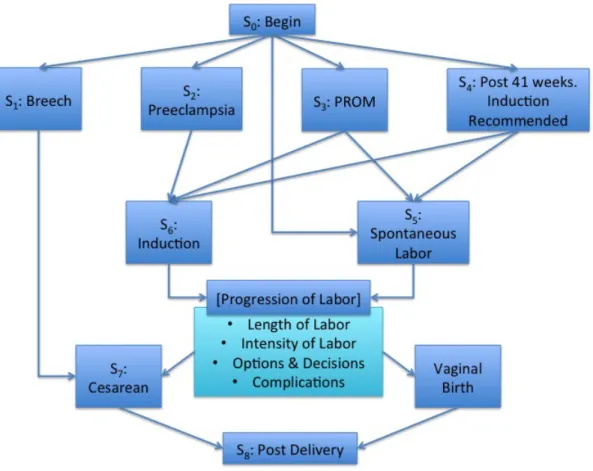
The scenarios presented to the user encompass a full range of outcomes (e.g., vaginal birth, cesarean, etc.). In addition to outcomes, the scenarios include a wide range of intrapartum and postpartum experiences. The tool offers questions for users to
The tool can be used in the classroom setting, guided by an instructor. Used in this manner the class participants “share” a single scenario and group discussion is encouraged to answer the questions posed by the tool. Alternately, parents can use the tool individually. In either case users are encouraged to run through the application multiple times to experience a variety of scenarios.
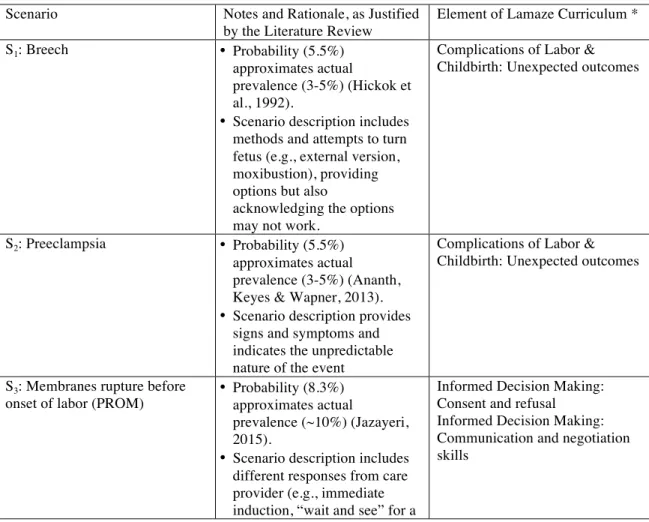
Content. The content of the teaching tool is presented in Table 2. Each possible scenario is listed with a fuller description of the simulated situation, the questions presented to the user, and additional information offered to the user. See Appendix B for screenshots of the teaching tool.
Table 2: Details and Explanations of Scenarios
Scenario Notes and Rationale, as Justified
by the Literature Review
Element of Lamaze Curriculum *
S1: Breech • Probability (5.5%)
approximates actual
prevalence (3-5%) (Hickok et al., 1992).
• Scenario description includes methods and attempts to turn fetus (e.g., external version, moxibustion), providing options but also
acknowledging the options may not work.
Complications of Labor & Childbirth: Unexpected outcomes
S2: Preeclampsia • Probability (5.5%)
approximates actual prevalence (3-5%) (Ananth, Keyes & Wapner, 2013).
• Scenario description provides signs and symptoms and indicates the unpredictable nature of the event
Complications of Labor & Childbirth: Unexpected outcomes
S3: Membranes rupture before
onset of labor (PROM) • Probability (8.3%) approximates actual
prevalence (~10%) (Jazayeri, 2015).
• Scenario description includes different responses from care provider (e.g., immediate induction, “wait and see” for a
short amount of time)
• Scenario encourages
consideration of how to react to providers offering opinions in conflict with their own.
• Scenario introduces pressure they may encounter from their care provider.
S4: Induction Recommended • Scenario is presented at 41 weeks.
• Scenario description includes common reasons for induction.
• Scenario offers individuals questions to think about prior to making the decision, and allows the user to make an individualized choice.
• Scenario encourages
consideration of how to react to providers offering opinions in conflict with their own.
• Scenario introduces pressure they may encounter from their care provider.
Healthy Birth Practice #1: Induction of labor
Informed Decision Making: Consent and refusal Informed Decision Making: Communication and negotiation skills
S5: Spontaneous Labor • Date of onset (relative to due date) is discussed. Discussion includes maternal reaction to onset taking place before vs. after due date.
• Time of onset of labor is determined by roll of dice.
• Discussion points include maternal state of rest, appropriate activities, and strategies to employ.
Natural, Safe and Healthy Birth: Phases and stages of labor Healthy Birth Practice #2: positions and movements that aid progress and comfort
Healthy Birth Practice #3: Comfort measures (various) Healthy Birth Practice #4: Evidence based information about interventions (various)
S5.1 Early Labor • Both length of this phase and intensity of contractions as perceived by the user are determined by roll of dice.
• Pain perception is presented on a scale of 1 to 10.
• Emphasizes significant variation in intensity of contractions as perceived by individual.
• Emphasizes significant variation in length of labor.
• Discussion points include reaction to scenario so far, and comfort measures available for use.
[See S5]
S5.2 Active Labor • Both length of this phase and intensity of contractions as perceived by the user are
determined by roll of dice.
• Pain perception is presented on a scale of 1 to 10, and is designed such that perception of pain is increased over early labor.
• Emphasizes significant variation in intensity of contractions as perceived by individual.
• Emphasizes significant variation in length of labor.
• Discussion points include reaction to scenario so far, and comfort measures available for use, concerns, potential decisions, and rest.
S5.2.1 Augmentation • Users are asked the likelihood of this scenario, given their current labor (as determined by the roll of the dice).
Healthy Birth Practice #4: Augmentation
Informed Decision Making
S5.2.2 Narcotic Pain
Relief • Presented as user’s choice.
Health Birth Practice #4: Analgesia
Informed Decision Making S5.2.3 Epidural Pain
Relief •
Presented as user’s choice. Health Birth Practice #4: Epidural analgesia/anesthesia
Informed Decision Making
S5.3 Transition [See S5.2] [See S5]
S5.3.1 Stalled Labor • Users are encouraged to think of options available to them.
• Resolution (or lack thereof) is determined by chance
(approximately 15%, given the scenario), but not statistically linked to actual prevalence.
Healthy Birth Practice #3: Challenges
Informed Decision Making
S5.4 Second Stage • Both length of this stage is determined by roll of dice.
• Discussion points include reaction to scenario so far, and comfort measures available for use, positions available for pushing, concerns, potential decisions, and rest.
Healthy Birth Practice #5
S5.4.1 Arrest of Descent
• Occurrence is determined by chance.
Complications of Labor & Childbirth: unexpected outcomes Healthy Birth Practice #3, Challenges
Informed Decision Making S5.4.2 Fetal Distress • Occurrence is determined by
chance.
Complications of Labor & Childbirth: Unexpected outcomes S5.4.3 Operative
Vaginal Delivery
• Occurrence is determined by chance.
Instrumental delivery
S6: Induction • Context in which induction
takes place includes preeclampsia, late-term (41 weeks), and premature rupture of membranes
• Scenario includes Foley bulb ripening and Pitocin induction.
• Discussion includes reactions to scenario, concerns, strategies for coping, and empowerment.
Healthy Birth Practice #1: Induction of labor Healthy Birth Practice #3, Challenges: Induced
S7: Cesarean • Context in which Cesarean
takes place includes breech presentation, stalled labor, arrest of descent and fetal distress.
• Discussion includes reaction to scenario, concerns, decisions, and advocacy.
*** Not on checklist ***
S8: Post Delivery • Summary of labor is included
(e.g. length, mode of delivery.)
• Discussion includes reaction to scenario and decision making leading up to the scenario.
Healthy Birth Practice #6
S8.1 Skin-to-Skin • Presented as user’s choice. [See S8]
S8.2 Temperature
Regulation •
Presented as user’s choice. Informed Decision Making
S8.3 Glucose Regulation • Presented as user’s choice. Informed Decision Making
S8.4 Bath • Presented as user’s choice. [See S8]
* Taken from “Checklist for Required Topics In Curriculum Design” (Lamaze International, 2011)
Figure 1: Flow of Scenarios (overview)
Validity
Content-area experts reviewed the teaching tool and provided feedback on the validity of its content and format. Three of the four reviewers were registered nurses with advanced nursing degrees, each with experience in labor and delivery nursing and
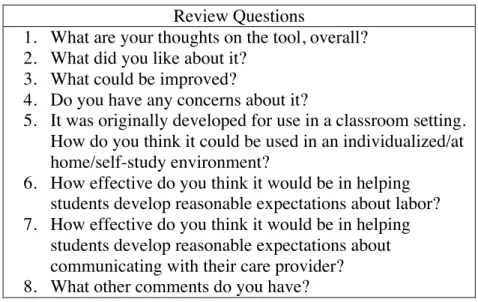
Table 3: Questions for Content/Validity Reviewers Review Questions
1. What are your thoughts on the tool, overall? 2. What did you like about it?
3. What could be improved?
4. Do you have any concerns about it?
5. It was originally developed for use in a classroom setting. How do you think it could be used in an individualized/at home/self-study environment?
6. How effective do you think it would be in helping students develop reasonable expectations about labor? 7. How effective do you think it would be in helping
students develop reasonable expectations about communicating with their care provider? 8. What other comments do you have?
The majority of the reviewers were supportive of the fact that the tool
complemented the Lamaze curriculum; one reviewer thought it could be best used as a method by which parents could, at the end of their class, synthesize all of the information that had presented to them throughout their Lamaze class. The reviewers also supported the content of the scenarios presented in the tool, indicating they offered an accurate set of possibilities, and agreed that the questions posed to parents were appropriate to elicit thought and consideration. Finally, several reviewers noted that the online “game” structure of the teaching tool was particularly appropriate for active learning.
Discussion
Uses of the Tool
The tool can potentially be used in a variety of settings. Developed as an adjunct to Lamaze education, its most natural use is in a Lamaze classroom. In that setting, Lamaze educators can facilitate the activity in a group setting, guiding discussion and adding supplemental commentary and explanations as appropriate. In its current form, the tool relies heavily on a facilitator to reinforce what has been taught in class and to
articulate points not explicitly stated in the written content in the tool itself. Given that many scenarios are possible, not all of which can be covered in a class due to time limitations, learners should be encouraged to run through the exercise multiple times outside the classroom setting. This would ideally take place after learners have been introduced to the tool and have used it in a classroom setting.
The tool could also be used as a part of Lamaze’s new online childbirth education program that consists of a series of self-study modules designed for parents who choose not to participate in in-person classes, but who still would like to have access to the information taught in Lamaze classes. These self-study modules include videos, quizzes, resources, and interactive activities, and are moderated by a Lamaze Certified Childbirth Educator. As an interactive activity that encompasses the content of a Lamaze
Another use of the tool is to offer it outside of the context of Lamaze classes. The options here are many. It could be used in a non-Lamaze childbirth education class, such as those offered by hospitals or by instructors in private education settings. The tool could also be used by parents in self-study not moderated by an instructor or outside resource. Finally, the tool could be developed as a web application or “app” for mobile phone use.
There are, however, drawbacks to using the tool in any manner that does not include moderation by an instructor or similar resource. Parents would not necessarily have acquired or had access to the childbirth education material the tool is meant to synthesize. The tool does not provide links or resources to this information; it assumes the learner has received this information previously. That said, the tool does have value for the non-Lamaze participant. It underscores the unpredictable nature of labor and birth and can help realistically adjust any expectations the parent has formed, regardless of their source of childbirth education – or lack thereof. It can also be the impetus for parents to seek resources about the topics presented.
Limitations of the Tool and Implications for Further Development
In its current form, the tool faces several limitations. Each of these limitations represents a potential for further development.
Given that a convenience sample of instructors was the manner by which the content of a typical Lamaze curriculum was determined, it is possible that the results do not fairly or fully represent the larger population of Lamaze curricula. Further
investigation using a wider sample would be appropriate. This sample should include instructors teaching in a broader geographic area and in additional settings. Feedback from official representatives at Lamaze International would also be suitable.
While the tool was reviewed by experts in the field, a more structured review by additional experts is warranted. Reviewers of the current implementation were not required to investigate all scenarios in the tool; additionally, the reviews were guided by an informal set of questions from the author that may not have elicited detailed feedback. Subsequent reviews by experts should include a structured review guide to ensure a more complete evaluation of the tool; additional reviewers should also be added to increase the amount, quality, and scope of feedback received. In particular, reviewers with a strong background in adult health education would be of value; the tool may currently pose problems from a health literacy point of view, and particular attention should be paid to this need in future revisions.
it. Additionally, the tool should be tested in the classroom setting, as it is likely to draw out different observations in the group environment, both from instructors and parents alike.
Given that the tool does not include any links to resources and information – a significant drawback to its use as a stand-alone tool – this content could be added in future revisions. Ideally, the content would be evidence-based videos or other digital material that appeals to the Millennial learner; material and resources managed by Lamaze International would be of particular value and address the potential for outdated content.
The tool is currently in a “beta” state, not having been fully tested or put through any quality assurance process. In addition to a detailed review of the functionality, the tool would also benefit from updated graphics and design.
Finally, a significant potential for further development is to test the tool as an intervention in an experimental study. It would be revealing to investigate any effect this tool has on developing expectations, improving satisfaction, and promoting empowered decision-making.
Conclusion
The teaching tool developed in this project is designed to augment the Lamaze curriculum and appeal to the unique learning needs and styles of Millennials. The
References
Ananth, C., Keyes, K., Wapner, R. (2013). Pre-eclampsia rates in the United States, 1998-2010: Age-period cohort analysis. The BMJ, 347.
Aragon, M., Chhoa, E., Dayan, R., Kluftinger, A., Lohn, Z., & Buhler, K. (2013). Perspectives of expectant women and health care providers on birth plans. Journal of Obstetrics and Gynaecology Canada: JOGC, 35(11), 979-985. Bahrami, N., Simbar, M., & Bahrami, S. (2013). The effect of prenatal education on
mother's quality of life during first year postpartum among Iranian women: A randomized controlled trial. International Journal of Fertility & Sterility, 7(3), 169-174.
Cook, K., & Loomis, C. (2012). The impact of choice and control on women's childbirth experiences. Journal of Perinatal Education, 21(3), 158-168.
Dahlen, H. G., Barclay, L., & Homer, C. S. (2010). ‘Reacting to the unknown':
Experiencing the first birth at home or in hospital in Australia. Midwifery, 26(4), 415-423.
Daniels, M., & Wedler, J. (2015). Enhancing childbirth education through technology. International Journal of Childbirth Education, 30(3), 28-32.
Declercq, E., Sakala, C., Corry, M., Applebaum, S., & Herrlich, A. (2013). Listening to mothers III: Pregnancy and birth. New York: Childbirth Connection.
Derbyshire, E., & Dancey, D. (2013). Smartphone medical applications for women’s health: What is the evidence-base and feedback? International Journal of Telemedicine and Applications, 2013.
Dugas, M. (2012). Decision aid tools to support women's decision making in pregnancy and birth: A systematic review and meta-analysis. Social Science & Medicine, 74(12), 1968 -1978.
Edmonds, J., K., Cwiertniewicz, T., & Stoll, K. (2015). Childbirth education prior to pregnancy? Survey findings of childbirth preferences and attitudes among young women. Journal of Perinatal Education, 24(2), 93-101.
Fleming, S. E., Vandermause, R., & Shaw, M. (2014). First-time mothers preparing for birthing in an electronic world: Internet and mobile phone technology. Journal of Reproductive & Infant Psychology, 32(3), 240-253.
Goldberg, H., & Shorten, A. (2014 A). Differences between patient and provider perceptions of informed decision-making about epidural analgesia use during childbirth. Journal of Perinatal Education, 23(2), 104-112.
Goldberg, H., & Shorten, A. (2014 B). Patient and provider perceptions of decision making about use of epidural analgesia during childbirth: A thematic analysis. Journal of Perinatal Education, 23(2), 104-112.
Hauck, Y., Fenwick, J., Downie, J., & Butt, J. (2007). The influence of childbirth expectations on Western Australian women's perceptions of their birth experience. Midwifery, 23(3), 235-247.
Heatley, M. L., Watson, B., Gallois, C., & Miller, Y. D. (2015). Women's perceptions of communication in pregnancy and childbirth: Influences on participation and satisfaction with care. Journal of Health Communication, 20(7), 827-834. Hickok, D., Gordon, D., Milberg, J., Williams, M., Daling, J. (1992). The frequency of
breech presentation by gestational age at birth: A large population-based study. American Journal of Obstetricians and Gynecologists, 166(3), 851-852. Hildingsson, I. (2006). Women's birth expectations, are they fulfilled? Findings from a
longitudinal Swedish cohort study. Women and Birth: Journal of the Australian College of Midwives, 28(2), 7-13.
Hollins-Martin, C. J., & Robb, Y. (2013). Women's views about the importance of education in preparation for childbirth. Nurse Education in Practice, 13(6), 512-518.
Jazayeri, A. (2015). Premature rupture of membranes. Medscape. Retrieved from: http://emedicine.medscape.com/article/261137-overview#showall
Kamel-Boulos, M. N., Brewer, A. C., Karimkhani, C., Buller, D. B., & Dellavalle, R. P. (2014). Mobile medical and health apps: State of the art, concerns, regulatory control and certification. Online Journal of Public Health Informatics, 5(3), 1-23.
Kipnis, G. (2011). Baccalaureate nursing students learn labor support through customized childbirth education. International Journal of Childbirth Education, 26(4), 56-59. Knowles, M., Holton, E., Swanson, R. (2015). The adult learner: The definitive classic in
adult education and human resource development, 7th
edition. New York: Elsevier.
“Lamaze healthy birth practices.” (n.d.). Retrieved from
http://www.lamazeinternational.org/HealthyBirthPractices.
Lamaze International (2011). Childbirth educator program 2011 study guide. Washington, DC.
Lima-Pereira, P., Bermúdez-Tamayo, C., & Jasienska, G. (2012). Use of the internet as a source of health information amongst participants of antenatal classes. Journal of Clinical Nursing, 21(3), 322-330.
Malacrida, C., & Boulton, T. (2014). The best laid plans? Women’s choices, expectations and experiences in childbirth. Health: An Interdisciplinary Journal for the Social Study of Health, Illness & Medicine, 18(1), 41-59.
Meyer, S. (2013). Control in childbirth: A concept analysis and synthesis. Journal of Advanced Nursing, 69(1), 218-228.
Nilsson, L., Thorsell, T., Hertfelt Wahn, E., & Ekstrom, A. (2013). Factors influencing positive birth experiences of first-time mothers. Nursing Research and Practice, 2013.
Northern Illinois University, Faculty Development and Instructional Design Center. (n.d.). Millennials: Our newest generation in higher education. Retrieved from http://www.niu.edu/facdev/resources/guide/students/millennials_our_newest_gen eration_in_higher_education.pdf.
Papp, R., & Matulich, E. (2011). Negotiating the deal: Using technology to reach the millennials. Journal of Behavioral Studies in Business, 4, 1-12.
Simkin, P. (1991) Just another day in a woman’s life? Women’s long-term perceptions of their first birth experience. Part I. Birth 18(4), 203–210.
Simkin, P. (1992) Just another day in a woman’s life? Part II: Nature and consistency of women’s long-term memories of their first birth experiences. Birth, 19(2), 64–81. “Today’s Lamaze.” (n.d.). Retrieved from http://www.lamazeinternational.org/History. van Bussel, J., Spitz, B., & Demyttenaere, K. (2010). Childbirth expectations and
experiences and associations with mothers' attitudes to pregnancy, the child, and motherhood. Journal of Reproductive & Infant Psychology, 28(2), 143-160. Woods, T. A., Wilson, T., & Walkovich, D. E. (2011). Targeting instructional strategies
Appendix A: Link
The tool can be temporarily accessed via the following link:
http://tinyurl.com/21016honorskbh