Geschke Center
Master's Theses Theses, Dissertations, Capstones and Projects
Summer 7-18-2016
Supporting Emerging Multilingual Newcomer
Students and their Teachers in California Public
High Schools
Rosa Lea V. Ojeda
University of San Francisco, [email protected]
Follow this and additional works at:https://repository.usfca.edu/thes Part of theSecondary Education and Teaching Commons
This Thesis is brought to you for free and open access by the Theses, Dissertations, Capstones and Projects at USF Scholarship: a digital repository @ Gleeson Library | Geschke Center. It has been accepted for inclusion in Master's Theses by an authorized administrator of USF Scholarship: a digital repository @ Gleeson Library | Geschke Center. For more information, please [email protected].
Recommended Citation
Ojeda, Rosa Lea V., "Supporting Emerging Multilingual Newcomer Students and their Teachers in California Public High Schools" (2016).Master's Theses. 181.
University of San Francisco
Supporting Emerging Multilingual Newcomer
Students and their Teachers in California Public High Schools
A Thesis Presented to
The Faculty of the School of Education
International and Multicultural Education Department
In Partial Fulfillment
Of the Requirements for the Degree
Master of Arts in Teaching English to Speakers of Other Languages Concentration in Digital Media Learning
by Rosie Ojeda
TABLE OF CONTENTS
Page
List of Figures………..i
Acknowledgement ………..ii
Abstract………...iii
Chapter I – Introduction………...1
Statement of the Problem……….1
Background and Need for the Study………5
Purpose of the Study………8
Research Questions………..8
Theoretical Framework………8
Methodology………9
Limitations of Study………....9
Significance of the Study……….9
Definition of Terms………11
Chapter II - Review of the Literature……….12
Overview………....…12
Deficit Discourse...………13
Instruction of Emerging Multilingual Students……….15
Political Landscape………....22
Summary………26
Chapter III – Results.………...………..28
Introduction………....28
Findings……….32
Summary………35
Chapter IV - Discussion, Conclusions, and Recommendations………38
Discussion……….….38
Conclusions………39
Recommendations………..41
References………..48
Appendices……….…52
Appendix A. Stories from Emerging Multilingual Students
Appendix C. EdCamp Notes from November Professional Learning Day for Math and Science Teachers and Bilingual Instructional Assistants
Appendix D. Collaboration Group Notes from Math and Science Teachers on February 4, 2016
Appendix E. Documented Needs Assessment and Parking Lot from November Professional Learning Day
Appendix F. Parking Lot from February Professional Learning Days
Appendix G. Evaluation from Professional Learning Day for English, Social Science, and Elective Teachers on November 17, 2015
Appendix H. Evaluation from Professional Learning Day for Math and Science Teachers on November 17, 2015
Appendix I. Evaluation from Professional Learning Day for English, Social Science, and Elective Teachers on February 2, 2016
Appendix J. Evaluation from Professional Learning Day for Math and Science Teachers on February 4, 2016
Appendix K. Slides Used to Inform Teachers about the Course Taking Placement and Pathway for English Learners in the District
i
LIST OF FIGURES
ii
ACKNOWLEDGEMENT
I would like to thank my family for their support of my continued education as well as
their interest in the content of my studies over the past two years. I would not have been able to
carry out this study if it was not for the support of the Multilingual and Migrant Education
Programs Department – I would like to thank my director, and my fellow TOSAs (past and
present) for their assistance, passion, and dedication to students. I also appreciate the support,
investment, and assistance from my professors as well as my classmates throughout the MA
TESOL program. Finally, I would like to acknowledge the role that God has played in my
iii ABSTRACT
This study focuses supporting emerging multilingual newcomer students and their teachers. The
study examines research regarding deficit mindset that has led to student labels that perpetuate
negative school and teacher views of culturally and linguistically diverse students. Additional
research used for this study includes studies on what has been determined to benefit emerging
multilingual students, as well as studies about the role of globalization and politics in the
education of emerging multilingual and other culturally and linguistically diverse students. The
study seeks to further the research on what changes in practice and mindset need to take place in
the system of education, as well as what can be done at the district, school, and classroom level
to meet the needs to emerging multilingual students. The study was done in a public high school
district in the state of California, and carried out by reviewing comments and feedback from
participants - teachers and bilingual instructional assistants - during professional development
sessions regarding emerging multilingual students. The feedback and comments were used to
determine what teachers need to effectively teach emerging multilingual students. Additional
data was collected from the school data system. The results of the study show that the teachers
have a desire to teach their emerging multilingual students, but that their view of how to meet
student needs is clouded by deficit mindset. Additionally, the study determines that teachers and
students need proper materials, teachers, administrators, and school staff need professional
learning that is based on current research, and teachers need time to collaborate with colleagues
and plan for instruction.
Keywords: newcomer, emerging multilingual, English learner, high school, public school,
professional learning, professional development, culturally and linguistically diverse students,
1 CHAPTER I INTRODUCTION
Statement of the Problem
The school district used for this study is a high school district (grades 9-12) in California.
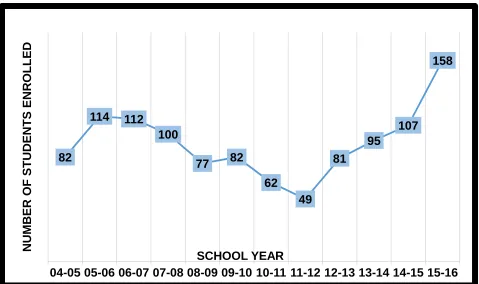
In the district used for the study there has been an increasing number of newcomer students, as
shown in Figure 1, and because of this, certificated teachers of core subjects, college preparatory
subjects such as math, science, English, social science, and electives (i.e. foreign language,
health, PE, etc.) reached out to the Multilingual and Migrant Education Programs Department for
guidance. As a Teacher on Special Assignment, or TOSA, in the Multilingual and Migrant
Education Programs Department, I, along with other TOSAs was able to plan and facilitate the
professional learning for the teachers of newcomer students in the sample district.
The term newcomer has a variety of definitions, but the widely accepted definition is that
of an English learner who has recently arrived to the United States; recently ranging between one
to two years, depending on the institution. The sample district defines a newcomer as an English
learner, enrolled in the district, who has been in U.S. schools for eighteen months or less.
Of the existing research regarding emerging multilingualstudents, much of it uses deficit
language and perpetuates negative school and teacher views of culturally and linguistically
diverse students (Alford, 2009). This is one reason why the department of Multilingual and
Migrant Education Programs decided to use the term emerging multilingual instead of
newcomer. The term newcomer is one-dimensional – it focuses only on students’ newness –
linguistically, socially, and culturally. The term bilingual is two-dimensional because it only
looks at two languages; however, the term multilingual is multi-dimensional. Though not
commonly used as a description, the term multilingual is important because it takes the focus
2
that students who are learning English bring. The word learning is a verb; therefore, learning
English is an action, not a definition. Yet, it is commonly used as a definition or a label of a
student who is learning English. Since using the term English learner is limiting and
one-dimensional, throughout this study, the term culturally and linguistically diverse will be used
instead.
Additionally, the district’s Multilingual and Migrant Education Programs department is
seeking to use more positive language to describe English learners; therefore, throughout the
professional learning as well as throughout this study, newcomers will be identified as emerging
multilingual students. Emerging Multilingual refers to students’ linguistic diversity. Using the
term shows that we, as educators, recognize that many students enroll in schools already having
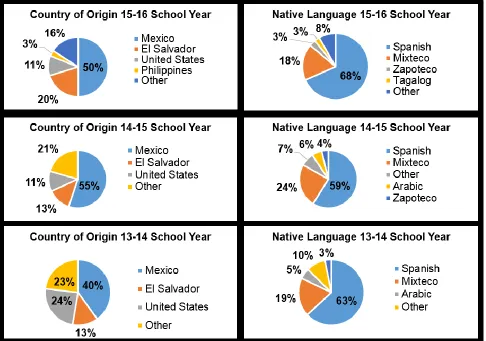
acquired more than one language, and then add English to that multilingualism. For instance,
many of the emerging multilingual students in the sample district speak an indigenous dialect,
such as Mixteco or Zapoteco, in addition to Spanish, as shown in Figure 2.
Additionally, the term emerging shows that students’ multilingualism is in progress, and
is on-going. The term also shows respect because it recognizes students’ current linguistic
identity, and sets an expectation that their multilingualism will continue to emerge. The
Multilingual and Migrant Education Programs Department does not want English to replace a
student’s native language(s); they want emerging multilinguals to maintain their native
languages in their journey to acquire English.
Due to the limited amount of resources and research regarding emerging multilingual
students, teachers are not prepared to teach them. Lee (2012) reports that “...small towns,
suburbs, and rural communities…[have] little experience dealing with cultural, racial, or
3
resources and expertise to address the education needs of immigrant ELLs” because “these
districts and their teachers are generally isolated from institutions that could provide support” (p.
69). The school district used in this study has a student population of nearly 8,000 students.
Although the town is defined as metropolitan, it is located 170 miles from the nearest
“metropolitan statistical area” (State of California). There is one California State University 30
miles away, and a University of California that is 60 miles away; these universities may do
occasional research with the school district, but it is neither ongoing nor regular. Essentially, the
area in which this study was conducted may appear to be urban, but in terms of experience with
diversity and available resources, the area is more similar to a rural area than an urban one. Due
to teachers’ inexperience with diversity, many see academic success in only one way, and do not
think that newcomer students should pass college preparatory classes when the work they do is
different from the work that native English speakers do. Furthermore, because of the district’s
lack of resources, teachers do not know how to teach students using the English language in a
way that emerging multilingual students are still be able to understand the content.
Though there is an increasing amount of information on teaching refugee students, there
is very little research regarding how to teach adolescent emerging multilingualstudents. These
students are not necessarily recognized as refugees in the United States, but many would be
considered refugees according to the United Nations because they are leaving their home
countries out of “fear of being persecuted” (Convention and Protocol, 1951/1996, as cited in
McBrien, 2005, p. 333), and due to their traumatic immigration experiences; however, they do
not have the benefit of government support or acknowledgement. For instance, in the Stories
from Emerging Multilingual Students (see Appendix A) in six out of the sixteen stories, students
4
stories, it is evident that the students experienced trauma due to their immigration experience
and/or the absence of one or both of their parents for several years.
Additionally, of the existing research on emerging multilingual students, very little of it
pertains to adolescents or high school students, and of that, there is even less regarding emerging
multilingual students in comprehensive (not charter or alternative) public high schools.
Figure 1. Number of Emerging Multilingual Newcomer Students Enrolled in the District
by School Year. This figure illustrates that, overall, there has been an increasing
amount of newcomer enrollment in the district. 82
114 112
100
77 82
62
49
81
95
107
158
04-05 05-06 06-07 07-08 08-09 09-10 10-11 11-12 12-13 13-14 14-15 15-16
NU
M
BER
OF
S
TU
DENTS E
NR
OLLE
D
5
Background and Need for the Study
I still remember my first day of teaching ELD (English Language Development); I felt
very confident about the “get to know you” activities I had prepared. I remember asking the
students questions, but getting no answers or reactions from them. I had a funny feeling that none
of my students understood what I was saying. I soon found out that my students could not yet
speak English, despite being in their second year of ELD at the high school level. Needless to
say, I made many mistakes that year, including having students repeat first-year ELD for a
second time, requiring that students read in only English, and rigorously following the curricular Figure 2. Emerging Multilingual Students’ Country of Origin and Native Language by School
Year. This figure illustrates the diversity and multilingualism of emerging multilingual
6
materials that I was expected to use. I later learned that re-taking courses is not effective, largely
due to the discouragement students feel when they are required to repeat a course. Additionally, I
discovered that when students build literacy in their first language, they also build literacy in
their second language, so requiring that students read books in English was unnecessary and
ineffective. Furthermore, rigorously following the curricular materials led to my disengagement
from the content, and also caused the students to become disengaged. If students are not
engaged, they are not learning (Hammond, 2010). I developed a strong desire to learn how to
help my students acquire English, which led me to discover that what I thought or assumed was
best, was actually erroneous.
Although I was only in my second year of teaching, and my first year of teaching ELD,
the other teachers in my department knew as little as I did about working with culturally and
linguistically diverse students. Eventually, I met other teachers, outside of my department, who
had my students in their classes. As I talked to them, I learned how to look up my students on the
computer to find out where they were from, how long they had been enrolled in our school, what
their test scores were, and how to look at their transcripts. Before long, I learned that, for many
of my students, their native language was not Spanish, but Mixteco (an indigenous Mexican
dialect that is solely oral), and that many were former newcomers or emerging multilinguals
(students who had been in the U.S. for less than twelve months). That same year, I attended
many professional developments about English learners, and though I learned valuable
information that could be applied to some of my other students, I never learned how to help my
emerging multilingual students acquire English. In fact, beginning level English learners were
7
It wasn’t too long before I enrolled in the MA TESOL program, and I learned that my
students were actually Students with Limited or Interrupted Formal Education or SLIFE (now I
recognize how negative that acronym and label is, but am not aware of another way to refer to
these students). Throughout my studies, I have discovered that there is not very much research
about emerging multilingual students, newcomers, or SLIFE – who will remain at the emerging
level of English proficiency without better materials, knowledgeable teachers, and system,
district, and school-wide support. Though they still fall under the umbrella term, English learner,
SLIFE have specific needs. Similarly, emerging multilingualstudents also have specific needs,
and some emerging multilingual students may also be SLIFE.
By talking with colleagues, I have learned that, despite being studied for years, SLIFE are
not commonly known. This means that many teachers are not prepared to teach them, and when
their needs go unmet, these students acquire very little English. When I attended the Critical
Questions in Education Conference in February, 2015, I learned, for the first time, about Mixtec
languages (Mixteco, Zapoteco, and Triqui), and I felt validated knowing that other schools had
Mixtec speaking students. However, the presentation I attended was about elementary school
students, so I was still missing knowledge about how to work with high school students who
enter schools speaking only a Mixtec language, experiencing limited education, and/or being a
new student in a new country.
Through my studies and discussions with my professors, I have learned that the way
teachers think of and talk about both SLIFE, newcomer, and even English learner students is
negatively charged. Since emerging multilingual students are not yet able to speak in English, it
is difficult for teachers to be able to build relationships with them. A lack of understanding,
8
unconsciously hold are rarely challenged. Meeting the needs of emerging multilingualstudents
requires a much different approach to both teaching and learning. In order for teachers to be
willing to try new methods, they must first understand why they are being asked to do so, which
will require a shift in mindset. It is because of my investment in emerging multilingual students
that I wanted to lead the organization of the professional development day in the district, which
is how this study came about.
Purpose of the Study
The overall purpose of this study is to determine the school to nationwide changes that
need to take place in order to meet the needs of emerging multilingual and culturally and
linguistically diverse students. This study draws attention to the emerging multilingual
population in public high schools, so that it will be recognized and assisted through research.
Additionally, this study is used to determine what is preventing teachers from meeting the needs
of multilingual students.
Research Questions
The study was guided by the following research questions:
1. What do emerging multilingual students need in order to be successful in U.S. schools?
2. How can teachers of emerging multilingual students be supported to meet the needs of their
students?
3. How does race, culture, and ethnicity influence teaching and learning?
Theoretical Framework
This study is based on two theoretical areas, Critical Race Theory and Interlanguage
Theory. Both Critical Race Theory and Interlanguage Theory have influenced both the design
9
The first area is Derrick Bell’s Critical Race Theory based on Delgado and Stefancic’s
Critical Race Theory: An Introduction. Delgado and Stefancic (2012) state that race is a social
construct, not a biological reality (pp. 7-8). The Critical Race Theory is reflected in this thesis
because the way that emerging multilingual students are viewed and subsequently treated is a
reflection of how Latino/Hispanics are typically viewed as inferior in the United States and how
indigenous groups are discriminated against on a global level.
The second area is Larry Selinker’s Interlanguage Theory. According to Hüttner (2012),
interlanguage theory has influenced the “speakers…need to find appropriate language forms and
features for their purposes….” and that they start second language learning (L2) because of its
favourite role in the process of social redemption, integration, and cultural identity formation”
(pp. 51-52). Interlanguage theory is reflected in this thesis because emerging multilinguals’
difficulty in the global context, language is connected to power; therefore, language learning,
particularly English language learning is related to globalization and politics. Culturally and
linguistically diverse students are “bound to their first language (L1)” (p. 52) because of how
they are viewed and subsequently placed in the context of politics and globalization, which
correlates with Critical Race Theory.
Methodology
The study is carried out by reviewing comments from teachers about what they need to
know and do in order to effectively teach emerging multilingual students. The research setting is
in a professional development. The participants are certificated teachers, long-term substitutes
who are substituting for certificated teachers, and bilingual instructional assistants who support
emerging multilingual students in the classroom by translating, helping students with their work,
10
math, science, English, social science, and electives (Spanish and health). Additional data is
collected by running queries in the school district’s data system, then using that data to create
charts in Microsoft Excel.
Participants took notes using Google Docs, and they shared their ideas with the
Multilingual and Migrant Education Programs Department by using post-it notes. Participant
comments (via post-it) were categorized by topic and then documented.
Limitations of the Study
One of the main ways that this study was limited is there were no student participants.
This limited the results of the study to be determined solely by teacher feedback. Additionally,
the study was limited because the participants were not interviewed or asked directed questions.
If the participants had been interviewed, the study would have had more findings regarding the
mindset of the teachers. The study was also limited because of its scope – this study would have
been benefited by including multiple districts and states. Working with multiple researchers
would have also greatly impacted the ability to move forward with the findings and
recommendations in order to determine their validity and effectiveness.
Significance of the Study
The study shows that emerging multilingual students are not widely known, especially
those that are in high school. It also examines race, culture, and ethnicity, and their place in the
context of globalization and politics. Additionally, the study elucidates that the western style of
teaching and learning has caused teachers to see success in only one way, and this idea must be
altered in order to effectively teach emerging multilingual students. Furthermore, it addresses the
shortage of resources for both teachers and students on how to teach emerging multilingual
11
Definition of Terms
The following words and acronyms will be used throughout the study. The following is a
list of those terms and acronyms, what they mean, and/or stand for.
BIA: Stands for bilingual instructional assistants. The bilingual instructional assistants are
paraprofessionals who are classified staff. They work with emerging multilingual students in the
classroom.
Core: Refers to course that are college preparatory. Students must take certain courses to meet
university entrance requirements – college preparatory refers to those courses. These courses are
described as core. The courses that are considered core courses are math, science, English, social
science, and certain electives such as foreign languages, visual and performing arts, health,
physical education, among others.
Culturally and linguistically diverse student: A student who speaks at least one language in
addition to English or instead of English and whose culture is typically not represented in the
school culture or curriculum. Culturally and linguistically diverse students are usually referred to
as English learners.
ELD: Stands for English Language Development. This is similar to ESL or English as a second
language.
English language development: Refers to the English courses that culturally and linguistically
diverse students in the district are enrolled in.
Emerging multilingual: A more equitable way to describe a newcomer.
12
English learner or English language learner: A label often used to describe a student who is
learning the English language. Emerging multilingual or newcomer students are also English
learners.
Newcomer: A culturally and linguistically diverse student who has been in the U.S. and/or U.S.
schools for 12 consecutive months or less.
MMEP: Stands for Multilingual and Migrant Education Programs.
Multilingual and Migrant Education Programs: Is the department in the district that is
primarily responsible for the support of multilingual and migrant students in the district.
PD: Stands for professional development.
PLC: Stands for professional learning community
PLD: Stands for professional learning day.
Professional development: A day or part of a day devoted to improving the learning and
professionalism of teachers.
Professional learning community: A group of teachers who attend professional learning days
together, and/or department meetings together. A PLC is a group of teachers with a common
subject and/or student demographic.
Professional learning day: Similar to a professional development, but it is more interactive. The
Multilingual and Migrant Education Program calls their professional developments professional
learning days because they are days devoted to teacher learning, and the facilitators learn with
the participants.
Refugee: Who the United States defines as a refugee and what the United Nations recognizes as
a refugee differs. In this study, some research refers to the United Nation’s definition while other
13
similarities, in terms of experiences and needed supports, which the emerging multilingual
students in this study share with refugees both nationally and internationally.
SLIFE: Stands for students with limited or interrupted formal education. Another acronym used
is SIFE which stands for students with interrupted formal education (omits the word limited).
Teacher on special assignment: A teacher with a more administrative role which is focused on
teacher and student support; this role is typically out of the classroom.
TOSA: Stands for teachers on special assignment. In this study, the TOSAs work out of the
12 CHAPTER II
REVIEW OF LITERATURE
Overview
The review of literature is centered around three categories: Deficit Mindset, Instruction
of Emerging Multilingual Students, and the Political Landscape. The Deficit Mindset category
contains studies that refer to the way in which instructors and school staff, including school
leaders, view their culturally and linguistically diverse students. Deficit refers to what students
lack (Dooley, 2012, as cited in Alford, 2009); the studies in this category address the deficit
mindset (also referred to as deficit discourse and the deficit paradigm) by providing evidence and
examples of its prevalence, as well as discuss reasons why it is pervasive, and also recommend
ways to counter it. The Instruction of Emerging Multilingual Students category contains studies
about newcomer students, students who have experienced limited or interrupted formal
education (SLIFE or SIFE), as well as refugee students. Many of the emerging multilingual
students the thesis focuses are similar to SLIFE as well as refugee students in terms of
experiences, needs, and characteristics, although they may not be formally identified with those
labels. The Instruction of Emerging Multilingual Students category contains studies that describe
how to serve emerging multilingual student in the classroom as well as school, district, and even
nationwide. Many of these studies also mention deficit discourse, but they do not focus on it. The
Political Landscape Category ties the previous categories together as it contains studies that put
the instruction of students of color (of which culturally and linguistically diverse and emerging
multilingual students are a part) in the political context, which includes acknowledging the
13
Deficit Discourse
Alford (2014) explores the deficit discourses that are ingrained in teachers and
consequently articulated to their students. The purpose of the study is not only to identify
discourses that teachers use, but also to “report on the ways teachers position ...their learners in
relation to critical literacy” (p. 73), as well as provide a way to counter deficit discourse. Alford
conducted and analyzed interviews with teachers of English language learners, and by doing so,
identified “five competing discourses: “deficit as lack; deficit as need; learner difference as a
resource; conceptual capacity for critical literacy; and linguistic, cultural and conceptual
difficulty with critical literacy” (p. 71). Alford reports that critical literacy is a way to counter or
disrupt deficit discourse. Critical literacy means that students think critically about language and
its “relationship to power” (p. 73). Alford claims that critical literacy “can help dispel dominant
deficit views” about students’ “capacity for learning” (p.73). The thesis seeks to add to Alford’s
recommendations by offering more ways in which deficit discourse can be dispelled besides
critical literacy alone.
In “Deficit Thinking and Hispanic Student Achievement,” Bruton and Robles-Piña
(2009) studied the implications of deficit thinking. The purpose of their study was to “examine
current research on how deficit-thinking has impacted” Hispanic/Latino students and the
Hispanic/Latino achievement gap (p. 42). Burton and Robles-Piña looked at several factors: “(a)
historical roots of deficit thinking, (b) deficit thinking in recent years, (c) studies in achievement
gap among Hispanic students, (d) deficit thinking in the classroom, (e) deficit thinking in
pre-service teachers, and (f) deficit thinking in school district leaders” (p. 42). Regarding these areas,
the researchers determined that deficit thinking is prevalent in schools and classrooms, as well as
14
(Marx, 2004; Rojas-Cortez, as cited in Bruton & Robles-Piña, 2009, p. 42). The researchers
recommend that pre-service programs bring attention to deficit thinking and help pre-service
teachers become aware of their biases towards culturally and linguistically diverse students, as
well as understand cultural difference between themselves and their students. They also propose
that Critical Race Theory be used to “prepare teachers to recognize racism and stereotypes”
(Bruton & Robles-Piña, 2009, p. 46). Moreover, they suggest that schools and districts “provide
the appropriate and necessary staff development to educate” school faculty, staff, and leaders, “to
recognize deficit-thinking practices and develop awareness of the harmful effects of deficit
thinking” (p. 47). Burton and Robles-Pina’s study is both needed and accurate, yet the
conclusion that the achievement gap cannot be closed until “deficit thinking is completely
eradicated from education practices” (p. 47) discourages moving forward with the researchers
suggestions. One intent of professional learning day examined in the thesis is to counter deficit
mindset. Additionally, since the thesis provides insight to teachers’ reception of asset-based
thinking, the thesis can provide evidence, to a degree, about the effectiveness of professional
development meant to alter teachers’ deficit mindsets.
Kinney (2015) conducted a qualitative study to counter “pervasive deficit discourses” by
focusing on funds of knowledge which “reframes…language, culture, and intellectual capacities
as resources - rather than problems to be remedied” (p. 5). The purpose of Kinney’s study was to
“document the resources possessed by students and their families” (p. 3). Additionally, Kinney
“gets behind” the negative and limiting “labels that many schools assign to learners” (p. 7).
Kinney interviewed five of her former (elementary aged) students and their families over the
course of one week per student. In Kinney’s study, the contrast between students’ family
15
relationships are (p. 5). Kinney concluded that, the households she interviewed “had access to
and employed a number of social and cultural tools and specialized knowledge” (p. 18).
Kinney’s research offers evidence to counter teacher assumptions that working with parents will
solve and end the challenge of working with ELLs. Kinney’s study connects to additional studies
about deficit discourse showing that students do not have deficits but rather, they are viewed by
teachers and schools to be deficits. The thesis builds upon Kinney’s study because it also seeks
to counter deficit mindset, and used student stories as a way to do so, similar to how the
interviews were utilized in Kinney’s study. However, the thesis focuses on students in high
school, while Kinney’s study was solely on elementary students and their families. Additionally
Kinney’s study focused on five students in one class, while the thesis will examine teachers of
emerging multilingual students in a school district, as well as their students.
Instruction of Emerging Multilingual Students
Lee (2012) addresses current trends regarding ELL students in U.S. schools. She states
that “6% of newcomer immigrant students have experienced interrupted formal education in their
home countries” (p. 66). Lee advocates for ELLs’ placement in courses with academic subject
matter. She indirectly references deficit mindset by stating that “Educators often view immigrant
cultures and languages as barriers to academic success” (p. 66). As Lee and her colleagues have
studied the Internationals High Schools, for “recently arrived immigrant youth who are English
learners” (p. 67), the article provides an overview of what Lee and her colleagues have been able
to determine. The article states that the reason why the Internationals High Schools are
successful is because teachers work in “interdisciplinary teams, which foster teacher
collaboration.” An ESL-certified teacher is a member of most of these teams, and “all teachers
16
help students simultaneously develop content knowledge and the academic English associated”
with that content (pp. 67-8). Even though the article focuses on schools who are only work with
emerging multilingual students, Lee suggestions can be adapted and implemented in any school.
Lee states that in order to serve emerging multilingual students, there needs to be “school-wide
investment in working with immigrant English learners. She recommends that all school staff
members view students as assets that can be built upon. Additionally, she recommends that
teachers “draw on student experiences and cultures” to “make sense of classroom material” (p.
67). This article relates to the thesis because one of the goals of the thesis is to determine what
public high schools can do to serve emerging multilingual students. The thesis aims to provide
suggestions on how to implement Lee’s recommendations in a public high school setting.
Cohen and Daniel’s article (2013) gives advice to teachers of newcomer students. They
begin by stating that cultural norms unique to the U.S. need to be taught, and that it is unwise to
make assumptions about a newcomers’ readiness to function in a U.S. school. They recommend
that classroom teacher’s first step in working with a newcomer is to teach the student the
language of the classes routines (p. 27). The article also suggests that emerging multilingual
students sit in the “teacher’s sight” (pp. 28-9) and that they are assigned an “empathetic” rather
than sympathetic “buddy” (p. 28). The researchers recommend that teachers “devise a signal” (p.
28) so the student can communicate non-linguistically with the teacher, that teachers allow
students to use their native language (p. 29), and that teachers, schools, and districts evaluate
students fairly – “evaluation is only fair when the EL understands the language of the questions”
(pp. 31-2). Some instructional strategies Cohen and Daniel suggest, that can be implemented in
high school classrooms, include, asking students both comprehension and inferential questions,
17
reading), role playing as often as possible, and incorporating dialogue journals (p. 31). The thesis
utilizes the suggestions in this article and builds upon them by suggesting ways in which the
strategies can be implemented in a high school class (the article mainly gives examples from
elementary classrooms); with various proficiency and educational levels. The article was also
used as one of the readings for the professional learning day.
DeCapua and Marshall’s study (2009) was driven by several identified problems
associated with students with limited or interrupted education (SLIFE), such as, students not
receiving support, lack of teacher training, lack of adequate materials, lack of a support structure
for SLIFE and their families, which has resulted in high drop-out rates among SLIFE. DeCapua
and Marshall interviewed several SLIFE, and in analyzing the interviews, they determined that
SLIFE have had less education than their ELL peers, are not prepared for grade level work in
required subject areas, yet are enthusiastic and motivated (p. 18). What they suggest to counter
these challenges is that SLIFE be properly identified, and they suggest ways and offer included
materials for doing so. The study also discusses assessment and suggests that the assessments be
used to screen or place SLIFE should be the same across school populations. They recommend
that schools conduct interviews with students, and their parents/guardians. In the interview,
schools should give information on resources available to students and their families as well as
share a plan for the student’s education. DeCapua and Marshall conclude by stating that SLIFE
“should not be considered deficit, but rather as coming with funds of knowledge that should be
used as building blocks for the acquisition of new academic knowledge” (p. 19). Although the
conclusion of the study attempts to dispute deficit discourse, the label SLIFE is in itself deficit.
18
utilizes DeCapua and Marshall’s research to make recommendations, and also adds to the study
by putting needs of SLIFE in the context of politics and deficit mindset.
McBrien’s (2005) study focused on refugee students in U.S schools who had resettled in
the U.S. (p. 337). The purpose of the study was to find out what students need to succeed in U.S.
schools, what obstacles prevent them from being successful, and how to help them overcome
those obstacles (p. 332). In the study, McBrien determined that refugee students need
psychosocial well-being, and the acquisition of language (p. 344). The obstacles the students face
include, trauma, the concept of parent involvement being interpreted differently by parents and
school staff, and social and individual rejection. To overcome the obstacles, McBrien
recommends that school provide social services (p. 353) and language instruction for students
and parents, and that teachers replace stereotypes with accurate images (p. 355). McBrien states,
“Misunderstanding the dire situations of parents, the role of trauma in refugee behaviors, cultural
differences, and best practices in language acquisition has caused many school personnel to hold
prejudiced attitudes that lead to discrimination” (p. 344). The thesis adds to the
misunderstanding that McBrien refers to because documentation of teacher thought process and
feedback shows evidence of discriminatory attitudes. Additionally, McBrien’s study focused
specifically on refugee students, while the thesis focuses on newly arrived English learners in
general.
Miller (2009) also reported on refugee students, but specifically regarding supporting
vocabulary learning in mainstream science for refugee students. Data was collected via teacher
interviews, student journal writing, and the science text (p. 571). The study focuses on learners
“facing compounded difficulties of minimal literacy in their first language” (p. 572). In this
19
specialist area,” “...most science textbooks are wildly inappropriate resources,” and “...there is an
urgent need for collaboration between science teachers and ESL or literacy specialist” (p. 589).
Additionally, Miller stated that “...developing science language awareness and specific strategies
to scaffold...generally lies outside of science teacher education programs” (p. 590.) The thesis
uses Miller’s research to make recommendations for science teachers. Additionally, since the
study was solely focused on science teachers, the thesis will add to it by including needs of
teachers of all content areas.
In order to influence researchers, practitioners, and policy makers to improve education
for adolescent refugee students with limited or interrupted formal education in secondary school
newcomer programs, Hos (2012) explored and examined student experiences (pp. vii-viii). Hos
observed participants in the classroom, and used audio and recordings, field notes, transcriptions
of interviews, curriculum materials, school records, student work, and a researcher journal to
conduct this study. Hos determined that, in the classroom, best practices include having
“predictable routines,” using literacy centers, modeling tasks, providing explicit expectations by
using rubrics, scaffolding tasks by using graphic organizers and visuals, and incorporating group
work. To meet the needs of SLIFE, Hos recommends that teachers be trained in how to offer
“ethical care” by being patient, flexible, and empathetic, being prepared to teach, advocating for
students, and building students confidence” (p. 171). Additionally, Hos suggests that teachers get
to know students pasts (histories and experiences) (pp. 172-3), and that schools offer mental
health services so that students can deal with traumatic experiences. Hos states that students and
their parents need to be informed about the requirements for high school graduation and college
entrance - students need to be given options and one of those should be extra time to meet
20
allow students to “access appropriate academic content knowledge while developing English
language proficiency” (p. 175). The thesis builds upon Hos’ study by providing additional
evidence for the recommendations made. Additionally, as stated previously, in this study, Hos
only focused on refugees, the thesis will focus on all emerging multilingual students in the
district, not just one demographic. The thesis also highlights some of the struggles newcomer
students face due to their lack of support from the U.S. government.
In the study, “Oaxaqueño/a Student’ (Un)Welcoming High School Experiences,”
Barillas-Chón (2010) investigated the schooling experiences of recent Oaxaqueño/a immigrants
of high school age, to (in part) contribute to the theory that social integration in schools prevents
students from being integrated (p. 304). Barillas-Chón interviewed four students, their teachers,
and the bilingual resource teacher over a period of six months. Data was also collected by
reviewing school documents. The researcher discovered that the “colorblind” model does not
help students, that the students did not feel comfortable in the classes that were mixed with
bilingual and monolingual students, and that the school’s cultural events “excluded the culture”
of Oaxaqueño/a students (pp. 308-313). On the other hand, the students did feel welcomed by
Spanish speaking staff, and felt that there were safe spaces for them such as the Migrant
Education Program office, the newcomer classroom, and the library (pp. 308-310). The study
also determined that the students felt discriminated against because of the language they spoke
(Zapoteco and Mixteco), felt they were perceived as dumb and inferior, and felt they were
perceived to be different or inferior because of their physical appearance. It was also determined
that this discrimination came from the Spanish-speaking students. Barillas-Chón concluded that
schools need to be aware of the discrimination that the Oaxaqueño/a students face so that they
21
by providing information on the histories of oppression and success of indigenous groups in
Mexico. The thesis builds upon this study by looking at a larger group of emerging multilingual
students, which also includes Oaxaqueño/a students, and their teachers. The thesis utilizes the
findings and suggestions of this study to make recommendations for the school district that the
thesis focuses on.
In the book Culturally Responsive Teaching and the Brain: Promoting Authentic
Engagement and Rigor Among Culturally and Linguistically Diverse Students, Hammond’s
(2014) purpose is to highlight the intersection between brain-based research and culturally
responsive teaching or CRT to acknowledge the impact that CRT has on student learning, and
expand teachers’ vocabulary for talking about CRT, as well as provide concepts and frames for
thinking about CRT as an extension to brain-based learning (pp. 4-5). The book provides
research on the neuroscience behind why culture is connected to learning. Hammond reports on
how culture affects the brain and how teaching should reflect culture in order for students of
color to learn. Hammond does not directly address English learners, but she does state that when
she refers to students of color, this includes English learners as well. The thesis adds to
Hammond’s research by providing examples of how the strategies that Hammond recommends
are being used by teachers of emerging multilingualstudents, how effective those strategies are,
and how effectively those strategies are being used. Additionally, excerpts of Hammond’s book
were used in the professional learning days, which means that the thesis will include some
teacher perceptions about the book, as well as the implementation of the instructional strategies
obtained from it.
The purpose of the report, “Students with Interrupted Formal Education: A Challenge for
22
contribute to efforts to address needs of students experiencing limited or interrupted formal
education and suggest future efforts. The study used individual student stories, interviews from
school staff, and existing research and data. The report recommends that the state New York
Department of education revise their definition of SLIFE to include immigrants with low literacy
due to inadequate or interrupted education, establish requirements for screening students,
develop screening tests in languages other than Spanish, track student performance and measure
outcomes, review SLIFE programs, provide professional development for staff, develop goals
and benchmarks for SLIFE, train special education evaluators on how to identify special needs in
SLIFE, extend graduation timelines, and increase capacity of adult literacy and GED programs.
Additional recommendations are to involve content teachers in efforts to address students’ needs,
allow students to cross school and district boundaries to receive support, and group students
together to overcome their feelings of isolation (pp. 41-4). The thesis will add to the findings in
this report by providing data specific to the state of California as well as specific to an area
typically overlooked in ELL data collection because it is not a metropolitan statistical area.
Political Landscape
In the essay, “What’s the Problem?” Constructing Different Genres for the Study of
English Learners,” Gutierrez and Orellana (2006) counter “deficit constructions” by offering
“alternative ways of conceptualizing, examining, and reporting” on culturally and linguistically
diverse students as well as “members of other non-dominant groups.” Their essay poses
important questions, such as, “why do we categorize some students as English Learners and not
others if we are all learning English every day?” They also state that we can “counter deficits” by
considering what students do know, what they can do, and “what their skills, contributions,
23
claims that studies that focus solely on academic language acquisition “are set up to identify
deficits” because those kinds of studies are focusing on the language that students lack rather
than the complex “cognitive skills” multilingual and multicultural students engage in. The essay
states that studies regarding culturally and linguistically diverse students, need to move beyond
changing the discourse, such as deficit discourse, and instead look at the “historical and local
processes by which inequities are forged” (Gutierrez & Orellana, 2006, p. 122). The thesis seeks
to build upon the suggestions of this study by exploring how the findings in the thesis contribute
to the field of TESOL as well as education and educational policy. The thesis seeks to connect
the findings to the system of education of which they are a part.
Lam (2006) explores the relationship between globalization, education, and adolescent
identity in “Culture and Learning in the Context of Globalization: Research Directions.” Lam
states that “sociocultural changes” such as views and debates regarding immigration policy
“...are affecting how young people grow up” (p. 214). Deficit discourse is recognized in that
“cultural and linguistic diversity in education” have actually been “centered around a
deficit-difference paradigm.” Lam also clarifies that the “deficit model...is still” present, and is
manifested “in the racial connotations of terminologies such as ‘inner-city’ and ‘at-risk’
children” (Lee, 2003, as cited in Lam, 2006). Due to the relationship between globalization,
education and identity, a way to counter and resolve these issues in education is to bring these
sociopolitical issues to the attention of adolescent students(p. 216). Lam also discusses how art
forms such as anime and rap, allow students to construct a multilingual and “transnational”
identity, transnational meaning that a student doesn’t have multiple identities but rather that their
identity crosses country borders. In order to proceed with Lam’s proposal to “[look] at how
24
workers, citizens, and intercultural bridges…” (p. 228), requires that students become part of the
reframing process. Lam’s article shows that education in intricately tied to the political context.
Lam’s study suggests that regardless of how much education is reformed, it will be unable to
change unless the sociopolitical view on globalization changes. One cannot force or foresee
changes; however, the thesis may shed light on the sociopolitical context that affects emerging
multilingual students. Additionally, the thesis uses Lam’s proposals to connect the findings of
the study to the larger context of politics and globalization. Furthermore, the recommendations in
this thesis can only be carried out by reshaping the way culturally and linguistically diverse
students are perceived, and the way that perception will change is through reshaping education in
context to politics or at least exposing how politics has shaped and continues to shape education.
English (2009) examined professional development that took place over the course of a
year in an elementary school in Washington State (p. 488). The inquiry team (three classroom
teachers and one paraprofessional) was “[concerned] about the instruction for ELLs at their
school,” while English focused on discourses that were part of the “inquiry conversations.” In
her study, English states that professional development for teachers of ELLs “needs to increase
pedagogical knowledge while challenging teachers’ ideological assumptions” (Bartolome, 1994,
as cited in English, 2009). English’s study identifies and discusses many of the problems that are
identified in this thesis. She reports that teachers’ “prejudices and assumptions shape the
educational opportunities they create for ELLs,” and that they often “assume that ELLs must be
fluent in English before they can learn subject matter, as well as “correlate language ability with
cognitive ability” (p. 489). English’s study concluded that “classroom teachers need support in
both improving their instructional practices and developing shared responsibility with [their]
25
take on a “systems-based approach” so that it moves “beyond...instructional change to recognize
the classroom teacher as one member of a system that is responsible for delivering ESL services”
(p. 504). The thesis seeks to build upon English’s study, but from the high school perspective,
and with a focus on emerging multilingual students - a subgroup of ELLs. The findings of the
two studies may be similar, but the way that elementary and high school teachers instruct ELLs
is different, which means the way that the teachers, whom the thesis focuses on, can be
supported will differ as well.
In their study “What’s Race Got to Do with It? Preservice Teachers and White Racial
Identity,” Peters, Margolin, Fragnoli, and Bloom (2016), “examined changes in student teachers’
White racial identity and color-blindness...as well as their perceptions of working with students
of color” (p. 1). The researchers used qualitative data, and responses to open-ended questions of
White student teachers enrolled in the same university’s pre-service program. In their conclusion,
the researchers agreed with Critical race theorists belief that “it is paramount that schools of
education address issues related to historical oppression... as well as White privilege... to explore
the effects of institutionalized education on those who have historically been marginalized” (p.
14). The results of the study determined that the “…student teachers did not exhibit any
introspective remarks recognizing that Whiteness carries a sense of dominance and superiority
that students feel and react to…” (p. 14). Moreover, when “White teachers fail to openly discuss
racial issues or lack acknowledgement of historical oppression and racism, students of color will
receive teaches to be biased” (p. 15). Additionally, the study concluded that the pre-service
teachers “...felt uncomfortable in a setting that was incongruent with their past experiences,” and
that “...very few expressed any need to adapt their teaching to meet a range of student needs” (p.
26
issue in teaching, yet many remained oblivious or convinced that race did not matter (p. 15). The
researchers recommend that teacher “preparation programs include critical content on racism,
historical oppression and White privilege, along with immersion experiences and constant
reflection” (p. 15-6). The researches specify that teacher preparation programs “train faculty on
critical race theory, and White racial identity and privilege, and also be trained on how to
integrate this knowledge into teacher programs and courses, incorporate critical race theory, and
White racial identity and privilege throughout teacher preparation curriculum, and explore
counter-narratives so that pre-service teachers understand what it means to be a member of a
marginalized group, as well as a reflection on how students of color perceive White teachers” (p.
16). One detail missing from the methodology was how the qualitative data was obtained. Two
scales were mentioned, yet it was unclear how they were used. The thesis will add to this study
because the thesis focuses on new and veteran teachers, as well as bilingual instructional
assistants. Documentation of participant feedback can provide insight regarding race and
ethnicity. Additionally, the recommendations of this study become part of the reasoning for the
recommendations of the thesis.
Summary
These studies reveal that the instructional practices that are currently being used or
suggested are connected to the political landscape and subsequently affected by deficit discourse.
They also illustrate that emerging multilingual students come from diverse backgrounds and
have a variety of needs which districts, schools, and teachers are not prepared to address. This
lack of knowledge and subsequent preparation is manifested in the abundant use of deficit
discourse that is used when discussing the newcomer population, culturally and linguistically
27
As many of the studies in the Instruction of Emerging Multilingual Students category
articulate, districts, schools, and teachers need to be informed on what emerging multilingual
students have faced, what they need, and how to view them as assets rather than deficits. For this
reason there is a great need to give professional developments to teachers and school staff around
this population. Additionally, teachers and school staff need to be given the opportunity to see
who their students really are so they can change their mindset.
Furthermore, as the studies in the Political Landscape category suggest, the obstacles
students of color face are connected to a larger sociopolitical landscape. For instance, in
Barillas-Chón’s study, students faced discrimination from Spanish speaking students, which
shows that the obstacles facing students of color are not just present in the United States, but that
the obstacles are an effect of globalization. Deficit mindset, instruction of emerging multilingual
students, and politics are all connected, and all must be considered when making
28 CHAPTER III
RESULTS
Introduction
The project consists of three parts, part one is the development of the professional
learning day, part two is the documentation of teacher feedback, and part three is the review of
that documentation. The professional learning day was developed due to the request from
teachers of emerging multilingual students to receive assistance in meeting the needs of their
students. Since this was something I was currently studying, I asked the MMEP director if I
could take the lead on the organization of the professional learning day. I worked with the
director as well as the other TOSAs, and also received some guidance from my graduate advisor.
After reviewing the teacher evaluations, we, the facilitators, saw that teachers felt they did not
receive many strategies to use in the classroom, so we the decided to incorporate more strategies
into the second professional learning day. Preparing for the professional developments required
research to determine what to share with the teachers. We also used strategies, which can be used
in the classroom, to share information with teachers.
After reading some of the teacher notes, comments, and feedback, I realized how much
authentic teacher discourse was present. This is how the second part of the project was
developed. I documented teacher notes, comments, and feedback, and organized them by
methodology or strategy (See Appendices B-J).
Part three consists of the reviewing participant feedback for common questions, themes,
concerns, etc. This is consolidated in the Findings section. In analyzing these three parts, the
findings of the study moved beyond what teachers and students need in the classroom, to looking
at the system of education as a whole. The analysis of these three parts is what comprises
29 Participant Profiles
The participants in this study all work for the same school district and work at one of the
three comprehensive high schools in the district. The participants included 7 BIAs (bilingual
instructional assistants), who work regularly with emerging multilingual students in the
classroom, 2 Spanish teachers (one of which only attended the PLD in November), 1 health
teacher, 7 English teachers (2 of these teachers only attended the PLD in November), 7 social
science teachers, 6 math teachers, and 10 science teachers (one only attended the PLD in
February). This means that 33 out of the 40 participants were teachers, and 7 out of the 40
participants were BIAs. The teachers had a range of teaching experience, as well as a range of
experience working with culturally and linguistically diverse students. Two of the attendees for
the November PLD were long-term substitutes; they only attended the training in November
2015 because the certificated teachers they were substituting for returned in January 2016.
An additional purpose for the professional learning day was for teachers to be able to
collaborate with the BIAs. The BIAs meet with the MMEP department at least once per month,
so they have had more time to get up to date on current research than the certificated teachers.
The BIAs are caring and dedicated, but have found that the teachers often do not know how to
utilize them, and sometimes ask them to do things that are not part of their job description. This
is part of the reason why we wanted the BIAs to attend all of the professional learning days
(rather than just one session) – we wanted to give them time to collaborate with the very teachers
they work with on a daily basis.
Methodology
The professional development titled, Supporting Emerging Multilingual Students and
30
November 2015, and the second was in February 2016. The professional learning day was
organized and facilitated by district TOSAs (this includes the author) who worked for the
Multilingual and Migrant Education Programs Department (MMEP), as well as the director of
the MMEP department. When I use the word we, I am referring to myself (the author), the other
TOSAs, and the MMEP director.
Due to a limited amount of substitute teachers available in the district, the participants
had to be split into two groups, and subsequently two days per session. We divided the groups
based on the content area of the teachers. The first group, which met on November seventeenth
(Session 1) and February second (Session 2), was comprised of English, social science, and
elective (health and Spanish) teachers – there were a total of 24 participants in this group. The
second group, which met on November eighteenth (Session 1) and February fourth (Session 2),
was comprised of math and science teachers – there were a total of 23 participants in this group.
We collected feedback from each group’s sessions in several different ways, which are explained
in the table below.
Strategy Methodology Participants Session/Date
Collected Needs (i.e. materials, knowledge, structure, etc.) Assessment
Poster where participants put up ideas on post-it notes. The notes were categorized and then typed
All participants Session 1, November 17 & 18
EdCamp Teachers choose topics they want to discuss by putting post-its on a poster. Facilitators categorize post-its and arrange them into participant-led workshops. Participants choose where to go. Each group had a designated note-taker.
31 Parking lot A designated poster where
participants can put up big ideas or questions that do not directly relate to the objectives for the day.
All participants Session 1, November 17 & 18 and Session 2 February 2 & 4
Evaluation Participants fill out an
evaluation that the facilitators created.
In November, we asked participants to complete the evaluation online using Google Forms, however, we realized that not as many participants complete the evaluation when it is done online. Therefore, in February we asked participants to complete the evaluation by hand.
20 out of 24 participants in the English/Social Science/Elective group completed the evaluation
19 out of 23 Math/Science participants completed the evaluation
Session 1, November 17 & 18 and Session 2 February 2 & 4
Collaboration Group Notes
Participants took notes while in their groups
At first, we did not have the participants take notes, so the English/ Social science/ Elective group did not take notes. However, upon
reflection, we realized that we wanted the groups to take notes, so we had the Math/ Science group take notes on Google Docs.
All participants Session 1, November 17 & 18 and Session 2 February 2 & 4
Due to the identical agenda for both groups, and since the MMEP Department organized
and facilitated all of the professional learning days, we were able to reflect and adjust the
strategies and methodology for the math and science group, simply because their professional
learning day was always second. Despite how the feedback was collected, it was all documented
(see Appendices B-J). The information was used to help the MMEP department understand what
teachers of emerging multilingual students are in need of. It has also helped the MMEP
32
following is a summary of overall teacher questions, concerns, responses, and feedback
organized by methodology.
Findings
The findings of the study examine participant feedback and have been organized by
methodology used.
Participant Feedback
Needs assessment and parking lot. We began the first professional learning day in
November by conducting a needs assessment; however, the responses from the needs assessment
were combined with the parking lot (see Appendix E). One main topic on both the needs
assessment and parking lot was grading and credit. This included inquiries about how to grade
emerging multilingualstudents and how to go about giving course credit to emerging
multilingualstudents who arrive mid-semester.
Another common topic was instruction, strategies, and approaches. Participants wondered
about how to both relate to and understand their students’ culture and background – prior
schooling, health issues, languages spoken, family situation, and learning challenges – and help
emerging multilingualstudents be included by their peers. Participants asked about how core
teachers were differentiating instruction for emerging multilingualstudents. Many asked about
how to deliver content without speaking Spanish, how long they should use Spanish to deliver
content, or how to teach content without relying on language. Participants also requested
pronunciation activities and strategies for teaching vocabulary. Many teachers asked for help on
varying lessons for multiple proficiency levels, as well as strategies for English learners that are