Mokori A, PhD Candidate, Institute of Food, Nutrition and Well-being, University of Pretoria, Pretoria Hendriks SL, PhD,Director, Institute for Food, Nutrition and Well-being Associate Professor, Department of Agricultural Economics, Rural Development and Agricultural Extension, University of Pretoria Oriskushaba P, MSc, Programme Coordinator, Lutheran World Federation Uganda, Uganda Oelofse A, PhD, Professor of Human Nutrition, Department of Human Nutrition Faculty of Health Sciences and Institute of Food, Nutrition and Well-being, University of Pretoria Correspondence to: Sheryl Hendriks, e-mail: [email protected] Keywords: complementary feeding, nutritional status, behaviour, practices, children, 6-23 months
Changes in complementary feeding practices and
nutrition status in returnee children aged 6-23 months
in northern Uganda
Introduction
Northern Uganda was the most politically instable region in the country for 25 years until 2008, when the government and the Lord’s Resistance Army signed an agreement to stop fighting. The instability caused people to flee their villages for internally displaced persons’ camps, and thus rely mainly on relief support for survival.1 By 2009,
most of the people had returned to their ancestral villages from the camps. The return to the ancestral villages that had been deserted for over a decade meant starting life from scratch. This was likely to compromise the dietary intake and health care of children younger than two years of age, thus exacerbating acute malnutrition. Hence, with support from the United Nations’ World Food Programme,
Abstract
Objectives: Evaluate changes in underweight and wasting, feeding patterns, water use, sanitation, immunisation, disease episodes, deworming and vitamin A supplementation in children aged 6-23 months in returnee villages benefiting from a community-based supplementary feeding programme in northern Uganda. Community perceptions on the causes and effects of childhood malnutrition, the use of community volunteers, the involvement of the men in the promotion of child nutrition and changes in childhood nutrition and feeding practices were also assessed.
Design: Programme impact evaluation.
Setting: The study was carried out in the districts of Pader and Agago in northern Uganda.
Subjects: Children aged 6-23 months (207), and adult men and women.
Outcome measures: Weight and mid-upper-arm circumference were used to determine underweight and wasting, respectively. Immunisation, deworming and vitamin A supplementation status was assessed. Oedema and morbidity or disease episodes were also determined. Community perceptions on the quality, utilisation and types of supplementary feeding services offered, understanding of malnutrition and the involvement of the men were also assessed. Finally, the impact of mother care groups and village health teams, as well as changes in child nutrition status and feeding, were assessed.
Results: The prevalence of wasting (11.1%) and underweight (22.7%) is higher than the baseline of 11% and 17.8%, respectively. Eighty-six per cent of the children were still breastfeeding. A high percentage (79.2%) of children were exclusively breastfed. The largest proportion of children (42.3%) ate two times a day, and 55.6% of them consumed food from their own plates. Over three quarters (75.8%) and 93.7% of the children had received measles and diphtheria, pertussis and tuberculosis vaccines (DPT3), respectively. Ninety-five per cent and 66.7% had received vitamin A supplements and deworming tablets, respectively. The water usage rate was 19.2 l/person/day. Sixty per cent of the households had their own pit latrines. The programme was perceived to have improved the nutritional knowledge and feeding practices of the community. The use of volunteer mothers for nutrition education encouraged other community members to take childhood nutrition seriously.
Conclusion: Childhood wasting and underweight rates have remained high in the two districts, despite an improvement in nutrition-related knowledge and practices. Advances in complementary feeding and related sanitation practices were recorded. An increase in vitamin A supplementation, with reductions in DPT3 immunisation and deworming were observed at the end of this community-based supplementary feeding programme. Community volunteers, through the provision of education and the identification of malnourished children, were pivotal in changing nutrition knowledge and the attitudes of community members. The support of volunteers with savings, loans and seeds were important incentives when promoting nutrition. Given the reliance of the volunteers on incentives from the project, we are sceptical as to whether nutrition education and the screening of acutely malnourished children will continue in these communities post the project.
Original Research:
Changes in complementary feeding practices and nutrition status in returnee children
Original Research:
Changes in complementary feeding practices and nutrition status in returnee children
the Lutheran World Federation implemented a community-based supplementary feeding programme in northern Uganda from 2009 to 2012. The main objective of the programme was to support the returnee families by helping to promote good nutritional status in vulnerable individuals. This was to be achieved by treating moderate acute malnutrition in the 17 most vulnerable subcounties of the Pader and Agago districts. The programme utilised social and behaviour change communication, using community volunteers (mother care groups and village health teams) to encourage community members to improve childhood feeding practices and behaviour.
Supplementary feeding programmes are often temporary, and provide targeted interventions for the treatment and prevention of moderate acute malnutrition in critically vulnerable groups, such as pregnant and lactating mothers, and children younger than five years of age, during emergency periods.2 Whereas blanket and targeted
supplementary feeding programmes were implemented in northern Uganda during the emergency period when people were in internally displaced persons’ camps, the community-based supplementary feeding programme was specifically carried out as a development initiative in returnee communities. Using mid-upper-arm circum-ference (MUAC) tapes, the village health teams and mother care group members screened children younger than three years for acute malnutrition in the villages benefiting from the programme. The children who were identified as acutely malnourished were referred for supplementary feeding at the nearby health centres, where the caretakers were given a bi-monthly premix of supplementary food ration (corn soy blend, vegetable cooking oil and sugar), in addition to nutrition education and other child health services, such as immunisation, deworming and vitamin A supplementation. Mother care groups, comprising mothers whose children were cured of malnutrition through the programme, were supervised by village health teams. In addition to screening the children for acute malnutrition, these mothers also actively promoted health-seeking behaviour, such as the treatment of childhood illnesses and immunisation of the children. In return, the programme provided livelihood support through the supply of free seeds and capital to village savings and loan associations annexed to the mother care groups. This was intended to enhance food production and income generation to prevent childhood malnutrition.
There is little information on the impact of community-based supplementary feeding programmes for non-emergency cases on population-based childhood nutritional status and related feeding, hygiene, sanitation, immunisation, deworming and vitamin A supplementation practices. Thus, the current study set out to evaluate the changes in underweight and wasting, feeding patterns, water use, sanitation, immunisation and vitamin A supplementation patterns in children aged 6-23 months in returnee villages in the Pader and Agago districts in northern Uganda where the programme was implemented.
Method
Target population
The target population included children aged 6-23 months and their mothers and fathers, village health teams and mother care groups.
All of the participants were beneficiaries of the two-year, community-based supplementary feeding programme.
Study design
This was an impact evaluation that was carried out in March 2012. The study design was similar to that used during the baseline conducted in May 2010, before implementation of the programme.3
There was a lapse of two years between the baseline and the end-of-project evaluation. A control group was not used in the study as the children in the communities benefitted through nutrition education and/or supplementary feeding.
Study coverage
The study included 17 subcounties: Awere, Arum, Omot, Lira-Palwo, Puranga, Pajule, Atanga, Laguti and Angagura in the Pader district; and Adilang, Wol, Lukole, Kotomor, Paimol, Omiya-Pacwa, Parabong and Patongo in the Agago district. These were the intervention subcounties identified by the baseline assessment as being the most vulnerable in terms of acute malnutrition in 2010.
Sample size calculation and sampling procedures
The two-stage cluster sampling methodology, following probability proportional sampling based on the Uganda National Guidelines on Nutritional Survey Methodology,4 was used. Emergency Nutrition
Assessment for Systematic Measurements and Relief Transitions software® (ENA-SMART®) was used to determine the sample size
of the children. The 2002 Uganda Census results were the basis for the population data and the Pader and Agago prevalence of global acute malnutrition, as reported in the nutrition and food security assessment in Acholi,5 used to calculate the sample sizes
(194 in Agago and 168 in Pader). Thirty-six clusters were selected from the parishes in the 16 targeted subcounties. Ten households were randomly selected from each cluster (village). A total of 363 households and 412 children aged 6-59 months were recruited for the evaluation. However, for this paper, the data for 207 and 219 children, aged 6-23 months, assessed in 2010 and 2012, respectively, were used. The choice of this age group was based on evidence from the Uganda Demographic and Health Surveys, which indicated that children aged 6-23 months were the most affected by undernutrition.6,7 Of the 36 clusters, 24 were randomly selected for
focus group discussions. Twenty-four focus group discussions (eight with men or fathers, eight with women or mothers, four with mother care groups, and four with village health teams) were conducted. There were 10 participants in each cluster.
Data collection
perceptions of the mother care groups and village health teams, as well as changes in child nutrition status and feeding practices.
Weight
Weight was measured using a digital Seca® scale according to
World Health Organization (WHO) standards. The final weight was recorded to the nearest 0.1 kg. The height of the children was not measured during the baseline evaluation as studies have confirmed a close relationship between MUAC and wasting.8 In addition,
MUAC is increasingly being recommended as an indicator of choice for screening and admitting clients into the community-based management of acute malnutrition.9,10 Since the programme planned
to use MUAC instead of weight for height z-scores for the admission and discharge of malnourished children, it was not cost-effective to take the height of the children.
Mid-upper-arm circumference
Standard MUAC tapes or children under five years of age provided by the United Nations Children’s Fund were used to determine the MUAC of the children. The final reading was recorded to the nearest 0.1 cm. The distance between the tip of the shoulder bone and the elbow was obtained, with the arm bent 90 degrees to the chest. The half distance of the upper arm was obtained to determine the location of the mid-upper arm. The distance around the mid-upper arm was measured by placing the tape around it.11
Bilateral oedema
Thumb pressure was applied to the child’s feet and released. Three seconds were counted after the release of the thumb from the feet. If a skin depression remained on both feet, the child was noted to have oedema.11
Morbidity
Recent episodes of disease that had affected the children were obtained retrospectively by asking the caregivers about instances that had occurred in the previous two weeks prior to the assessment.
Complementary feeding practices
Current breastfeeding status, the introduction of food before six months of age, and the duration of breastfeeding and care during feeding was obtained. In addition to key complementary feeding indicators, the length of exclusive breastfeeding was assessed.
Water, hygiene and sanitation situation
Information on the household source of water, water accessibility, daily water usage and the availability of latrines was obtained.
Immunisation, supplementation and deworming
Vitamin A supplementation (in the last six months), measles and DPT3 vaccination coverage, as well as deworming in the last six months, were determined from mothers’ recall and the children’s health cards.
Data collection tools
The data were collected using a nutritional status appraisal form, health questionnaire and a focus group discussion guide. The guide was written in English, translated into the local language (Acholi), and then back translated into English.
Data analysis
ENA-SMART® (the May 2010 version) and WHO Anthropac® (the
June 2010 version) software packages were used to determine the nutritional status of the children. MUAC was used to determine measure wasting in the children using four cut-off points: < 11.5 cm (severe wasting), 11.5-12.5 cm (moderate wasting), 12.6-13.5 cm (at risk of wasting) and > 13.5 cm (normal).11 Underweight
was determined using weight-for-age z-scores, using cut-offs < -2 z-score and ≥ -3 (moderate underweight) and < -3 (severely underweight).11 Final analysis of the data was carried out using
percentages, absolute numbers for categorical variables and regression in IBM SPSS® 19. Binary logistic regression was used
to determine the relationship between undernutrition and other variables (feeding, illness, sanitation, sex and age). The statistics were considered to be significant at p-value < 0.05. Qualitative data from recorded focus group discussions were transcribed, translated and edited. The edited transcripts were merged and coded into themes. Analysis of the coded data was performed using the Atlas. ti® (Berlin, Germany) computer software for Windows®.
Ethical considerations
Consent to participate in the interview was sought from the household head, while individual consent was obtained from the focus group discussions. Consent was also sought to have the proceedings of the discussions audio recorded for detailed transcription later. To conceal the identity of participants, they were given a number (1-10 according to their sitting arrangement), and they were referred to by their numbers throughout the discussions. Assurance was given to the participants that their identity would not be disclosed to anyone outside the research team without their consent. Verbal clearance to undertake the survey was obtained from the district local authorities of Pader and Agago, through the Lutheran World Federation office.
Results
Findings from the quantitative data analysis
Sex and age distribution of the children
Gender and age distribution of the children are shown in Table I. As was the case at baseline,3 there was equal representation of the
boys and girls in the assessed sample. No mean difference in age existed between the boys and the girls.
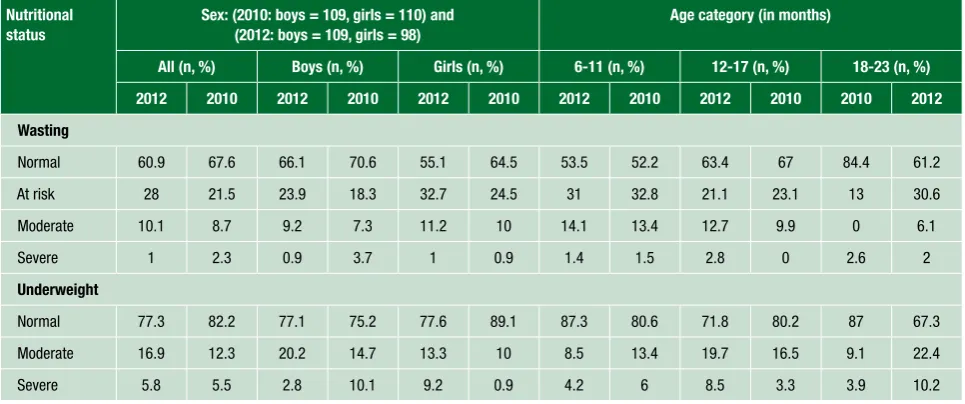
Prevalence of wasting and underweight
Original Research:
Changes in complementary feeding practices and nutrition status in returnee children
increased from 17.8% to 22.7%. As expected, more boys (23%) than girls (22.5%) were underweight. However, more girls (12%) than boys (11%) were wasted. In addition to underweight and wasting, the data indicated that there was an increase in the number of children with oedema from 2 (0.9%) in 2010 to 11 (5.3%) in 2012 (not shown in Table II). Generally, wasting decreased with the age of the children, but no significant association existed between age and wasting or underweight. No significant mean difference was found between the baseline and endline weight-for-age z-scores and MUAC.
Immunisation, vitamin A supplementation and deworming coverage
The results indicated that 75.8% and 93.7% of the children had received measles and DPT3 vaccines, respectively. This shows a nonsignificant decrease from 89.3% and 94.8% in measles and DPT3 vaccination, in 2010, respectively. The percentage of children receiving vitamin A supplements increased from 94% in 2010 to 95.1% in 2012, while that for deworming reduced significantly from 91.5% in 2010 to 66.7% in 2012. No significant association existed between immunisation, vitamin A supplementation or deworming with wasting in the children. However, vitamin A supplementation, DPT3 vaccination and deworming were significantly associated with underweight (p-value 0.016, p-value 0.037 and p-value 0.033, respectively).
The prevalence of common childhood illnesses
Malaria and fever were the most common illnesses (42.5%), closely followed by diarrhoea (37.2%) and coughing (26.6%). The study confirmed there was an increment in the percentage of children suffering from diarrhoea and coughing compared to the baseline prevalence of 17% and 4%, for diarrhoea and coughing, respectively. Children aged 12-17 months were the most affected by fever, diarrhoea and coughing. A significant association existed between diarrhoea and underweight (p-value 0.021), coughing and underweight (p-value 0.031).
Complementary feeding practices in children aged 6-23 months
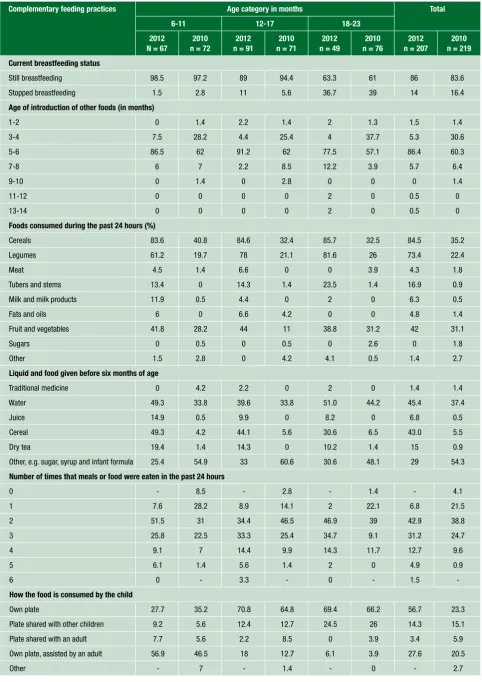
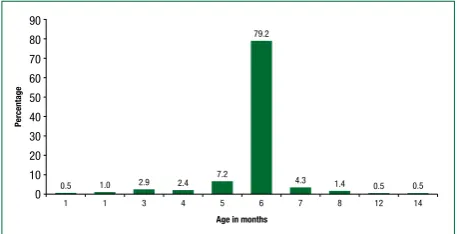
The post-intervention results (Table III) indicate that the majority of the children were still breastfeeding (86%). Over three quarters (79.2%) of the children were exclusively breastfed until the age of six months (a mean length of breastfeeding of 5.8 ± 1.1 months) (Figure 1).
The most common food and liquid offered to children before six months of age were cereals, water, traditional medicine and dry tea. According to the dietary diversity score, most of the children consumed an average of three food groups/day. The mean number of times that the children consumed food was 2.2 ± 1 time/day. Over half of the children consumed food from their own plates, without sharing (55.6%). Compared to the baseline findings in
Table I: Sex and age distribution of the children aged 6-23 months, after implementation of the community-based supplementary feeding programme
Boys, n = 109 N Total,
n = 219
Ratio Overall mean
age
No (%) x ± SD No (%) x ± SD No (%) Boy to girl x ± SD
6-11 38 (34.9) 8.3 ± 1.5 29 (29.6) 8.7 ± 1.5 72 (32.9) 1.3 8.4 ± 1.5
12-17 44 (44) 14.7 ± 1.8 43 (43.9) 14.4 ± 2 71 (32.4) 1 14.5 ± 1.9
18-23 23 (21.1) 20.2 ± 1.9 26 (26.5) 20.2 ± 1.8 76 (34.7) 0.9 20.2 ± 1.8
Total 109 (100) 13.6 ± 4.8 98 (100) 14.2 ± 4.7 219 (100) 1.1 13.9 ± 4.7
SD: standard deviation, x: mean
Table II: Prevalence of wasting and underweight in children aged 6-23 months before (2010) and after (2012) implementation of the community-based
supplementary feeding programme Nutritional
status
Sex: (2010: boys = 109, girls = 110) and (2012: boys = 109, girls = 98)
Age category (in months)
All (n, %) Boys (n, %) Girls (n, %) 6-11 (n, %) 12-17 (n, %) 18-23 (n, %)
2012 2010 2012 2010 2012 2010 2012 2010 2012 2010 2010 2012
Wasting
Normal 60.9 67.6 66.1 70.6 55.1 64.5 53.5 52.2 63.4 67 84.4 61.2
At risk 28 21.5 23.9 18.3 32.7 24.5 31 32.8 21.1 23.1 13 30.6
Moderate 10.1 8.7 9.2 7.3 11.2 10 14.1 13.4 12.7 9.9 0 6.1
Severe 1 2.3 0.9 3.7 1 0.9 1.4 1.5 2.8 0 2.6 2
Underweight
Normal 77.3 82.2 77.1 75.2 77.6 89.1 87.3 80.6 71.8 80.2 87 67.3
Moderate 16.9 12.3 20.2 14.7 13.3 10 8.5 13.4 19.7 16.5 9.1 22.4
Table III: Complementary feeding practices in children aged 6-23 months before (2010) and after (2012) the intervention programme
Complementary feeding practices Age category in months Total
6-11 12-17 18-23
2012 N = 67
2010 n = 72
2012 n = 91
2010 n = 71
2012 n = 49
2010 n = 76
2012 n = 207
2010 n = 219
Current breastfeeding status
Still breastfeeding 98.5 97.2 89 94.4 63.3 61 86 83.6
Stopped breastfeeding 1.5 2.8 11 5.6 36.7 39 14 16.4
Age of introduction of other foods (in months)
1-2 0 1.4 2.2 1.4 2 1.3 1.5 1.4
3-4 7.5 28.2 4.4 25.4 4 37.7 5.3 30.6
5-6 86.5 62 91.2 62 77.5 57.1 86.4 60.3
7-8 6 7 2.2 8.5 12.2 3.9 5.7 6.4
9-10 0 1.4 0 2.8 0 0 0 1.4
11-12 0 0 0 0 2 0 0.5 0
13-14 0 0 0 0 2 0 0.5 0
Foods consumed during the past 24 hours (%)
Cereals 83.6 40.8 84.6 32.4 85.7 32.5 84.5 35.2
Legumes 61.2 19.7 78 21.1 81.6 26 73.4 22.4
Meat 4.5 1.4 6.6 0 0 3.9 4.3 1.8
Tubers and stems 13.4 0 14.3 1.4 23.5 1.4 16.9 0.9
Milk and milk products 11.9 0.5 4.4 0 2 0 6.3 0.5
Fats and oils 6 0 6.6 4.2 0 0 4.8 1.4
Fruit and vegetables 41.8 28.2 44 11 38.8 31.2 42 31.1
Sugars 0 0.5 0 0.5 0 2.6 0 1.8
Other 1.5 2.8 0 4.2 4.1 0.5 1.4 2.7
Liquid and food given before six months of age
Traditional medicine 0 4.2 2.2 0 2 0 1.4 1.4
Water 49.3 33.8 39.6 33.8 51.0 44.2 45.4 37.4
Juice 14.9 0.5 9.9 0 8.2 0 6.8 0.5
Cereal 49.3 4.2 44.1 5.6 30.6 6.5 43.0 5.5
Dry tea 19.4 1.4 14.3 0 10.2 1.4 15 0.9
Other, e.g. sugar, syrup and infant formula 25.4 54.9 33 60.6 30.6 48.1 29 54.3
Number of times that meals or food were eaten in the past 24 hours
0 - 8.5 - 2.8 - 1.4 - 4.1
1 7.6 28.2 8.9 14.1 2 22.1 6.8 21.5
2 51.5 31 34.4 46.5 46.9 39 42.9 38.8
3 25.8 22.5 33.3 25.4 34.7 9.1 31.2 24.7
4 9.1 7 14.4 9.9 14.3 11.7 12.7 9.6
5 6.1 1.4 5.6 1.4 2 0 4.9 0.9
6 0 - 3.3 - 0 - 1.5
How the food is consumed by the child
Own plate 27.7 35.2 70.8 64.8 69.4 66.2 56.7 23.3
Plate shared with other children 9.2 5.6 12.4 12.7 24.5 26 14.3 15.1
Plate shared with an adult 7.7 5.6 2.2 8.5 0 3.9 3.4 5.9
Own plate, assisted by an adult 56.9 46.5 18 12.7 6.1 3.9 27.6 20.5
Original Research:
Changes in complementary feeding practices and nutrition status in returnee children
2010, there was an improvement in all aspects of breastfeeding and complementary feeding practices studied after implementation of the community-based supplementary programme. However, only the age at which the child was given other liquid or fluid was significantly related to underweight (p-value 0.004).
Water, hygiene and sanitation
The results revealed that there was an increase in the percentage of households using borehole water, from 75.2% in 2010, to 82.1% in 2012. A recorded decrease in the use of unprotected water source from 17.8% in 2010 to 15.4% in 2012 was also obtained. Finally, there was also a decrease in the percentage of households using protected water from 4.2% in 2010 to 2.5% in 2012 (Figure 2).
There was an increase in the number of households with their own pit latrines, from 42.5% in 2010 to 60.1% in 2012. The majority of the households that did not have their own pit latrines disposed of faeces in the bush (35%). Others used the neighbour’s latrine (3.3%), community latrine (4.1%) or buried the faeces in the backyard (0.4%). The water usage rate was 19.2 l/person/day after the intervention versus 13.3 l/person/day before it. A significant negative association (p-value 0.05) existed between the amount of water used in the household and underweight in the children.
Results from the qualitative data analysis regarding changes in childhood nutrition and feeding practices
Perceptions of the community about the nutrition services offered
Generally, community members had positive perceptions about the nutrition services which were believed to have contributed to a reduction in malnutrition cases. The quality of the services was also considered to be good. People said that the programme provided high-quality food (a corn-soy blend) which reduced childhood sicknesses that relate to poor nutrition. Community members felt that the programme contributed to making a difference in the quality of the household food consumed because of the nutrition knowledge gained. “Nutritional education is good because we are able to put into practice what we learn. For example, many families here now eat a variety of foods at meal times,” reported a female participant in Agago.
Suggestions by community members on increasing community engagement in nutrition programmes
“The programme should encourage agriculture, the community’s main activity. More varieties of seeds, especially those that are not easily found here, should be brought, especially nutrient-rich foods, like carrots and yellow-fleshed potatoes. Many people will adopt the idea. This will attract more people,” advised a participant in Arum. The participants pointed out that, in future, to increase community participation in nutrition-related programmes, targeting of the entire community was required, i.e. men and women, irrespective of their nutritional status, as well as providing services that would be of interest to people, e.g. that indirectly relate to nutrition, such as agriculture and revolving funds. The revolving funds would need to be expanded to include other members of society, and not just mothers of malnourished children. Others suggested that MUAC tapes should be distributed to women who benefited from the training so that they could conduct the measurement themselves. As a means of sustaining the supplementary feeding programme, it was suggested that the supplementary food should be made locally. Community participation could also be enhanced by recruiting community-based facilitators, the involvement of local councils, and establishment of coordination offices in each area where the groups were formed. Additionally, community groups, such as mother care groups and village savings and loan associations, should be registered with local government so that they could be legally recognised, and therefore be in a position to benefit from other programmes. Importantly, meetings between the community and the health workers should be held continuously.
Respondents’ perceptions of malnutrition causes
The main perceived causes of undernutrition in children in Pader and Agago were:
• Mothers giving birth to too many children, without spacing them. This results in mothers being unable to adequately attend to all of their children and to properly breastfeed them.
• Poor feeding, e.g. giving the children cold food, or letting them go hungry for long periods.
• Poverty, which in many cases means lack of food in the house to feed the family.
• Frequent sickness, e.g. diarrhoea, fever, malaria and nodding disease.
6
90 80 70 60 50 40 30 20 10 0
1 0.5
Age in months
Percentage
1 1.0
3 2.9
4 2.4
5 7.2
79.2
7 4.3
8 1.4
12 0.5
14 0.5
Figure 1: Duration of exclusive breastfeeding after the programme
intervention
90 80 70 60 50 40 30 20 10 0
Borehole 82.1
Protected water source 2.5
Unprotected source 15.4
Source of household water
Percentage
Figure 2: Mainsource of water used in the households after the programme
• Giving the child solid food before the age of six months. (Lack of breast milk was cited as a reason why mothers introduced other food to the child prematurely.)
These perceptions were no different to those reported by the participants during the baseline evaluation in 2010.
Respondents’ perceptions of the consequences of undernutrition in children
The participants cited several consequences of undernutrition in children, the most severe of which was death. Others were that it made the child look like a miserable old man, delayed child growth, and caused stunted growth with mental retardation and general body weakness which rendered them unable to play or perform tasks, and resulted in frequent illnesses and reduced body immunity, leading to death after illness.
In addition, the focus group discussion participants believed that undernutrition in children greatly burdened families economically and socially. They said that it led to loss of money for the family because managing it required considerable money to pay for medical expenses and to buy food for the undernourished children. They also believed that it created gender-based violence in the home because the children cried a lot, for which the men blamed the women, eventually leading to violence. Malnutrition in children was believed to contribute to poor hygiene in affected households because malnourished children tend to defecate everywhere. Malnutrition was perceived to be a contributory factor to reduced productivity in households as undernourished children need substantial care and distract their mothers from carrying out chores. Finally, it was believed that there is always considerable hunger in families with malnourished children as most of the food has to be given to the children.
Respondents’ perceptions of the management of undernourished children
The respondents took their children to the health centre as soon as undernutrition was observed. They sought advice from village health teams before presenting at health centres. Others commenced treatment at home by giving the children food before going to the health centre. This was carried out by preparing nutritious food for the children, like porridge with simsim paste and silver fish, as well as giving them fruit. Herbs were given to stimulate the children’s appetites. Children were bathed using local herbs to remove the wrinkles in their skin. If the mother was breastfeeding and realised that she was pregnant, she stopped breastfeeding and introduced other food to the infant.
Community perceptions of factors that make the management of malnourished children easier
An improved understanding of how malnutrition could be managed through nutrition education contributed greatly to easier management of the malnourished children. Supplementary food (a corn-soy blend, sugar and vegetable oil) also aided the process. People grew a variety of food in the community which wasn’t the case when they
were in the camps. The involvement of men in agriculture was also important, and a good harvest helpful. Respondents believed that the timely seeking of nutritional and health services as soon as undernutrition was observed in their child was important in managing undernutrition. Good mobilisation work carried out by the village health teams included the timely identification and referral of malnourished cases within the community. It also helped that the Lutheran World Federation staff was based in the subcounties and coordinated these efforts. Proper communication between the village health teams and local health workers was reportedly also a good driver. Increased awareness by the community of the dangers of malnutrition helped them to take it seriously. “I think the mother care group that we are in has also played a big role in fighting malnutrition, especially the village savings and loan associations, which have given us additional income to purchase nutrient-rich food that we could not previously afford, like fish and liver,” said a Kotomor community member.
Community perceptions of barriers to managing malnutrition in the community
The community perceived the main barriers to managing malnutrition to be:
• A shortage of food in the community, especially during a drought.
• Constant illness in the community, e.g. nodding disease, which drain the family of time and money.
• Long distances and poor means of transport to the health centre to obtain assistance.
• Domestic violence, because of misunderstandings between the men and women.
• Alcoholism.
• Poor hygiene in the community.
• Delays in treating childhood illnesses.
• Not following the instructions of the health workers and the village health teams on how to feed the child.
• Lack of parental care, e.g. prioritising work at the expense of taking care of the child.
• Inadequate numbers of village health teams to carry out screening in the villages, resulting in severe malnutrition in some children.
• Failing to respond timeously, or at all, to referrals of the children to the health centre.
• Husbands preventing their wives from obtaining supplementary food because they were ashamed: “Lack of support from the men is a big barrier.
The men behave as if the children are not theirs, and leave fending for the child entirely to the mother of the child, who cannot do it alone”, said one participant from Adilang.
The extent to which the programme was successful in managing malnutrition
Original Research:
Changes in complementary feeding practices and nutrition status in returnee children
The distribution of supplementary food rations within families
In general, rations were consumed within the household only and were meant for malnourished child. However, because of the African culture of sharing, mothers were sometimes reluctant to let their other children go hungry while the malnourished child ate. Once the child had made a significant recovery, and if there were still large quantities of food available, it was given to the other children as well, especially if they were feeling unwell: “Once in a while, some of the food is given to relatives, friends and neighbours if their children are not doing well. Sometimes, it is given to other children in the family because the children always eat together. We cannot prevent them from eating food with the other children in the family”, said Agago participants.
Factors that affected utilisation of the supplementary food
The extent to which the food rations were utilised to treat malnourished individuals was largely dependent on the severity of malnutrition, the sick child’s appetite level, availability of other types of food in the house, how the other children in the household reacted to food being given to one child only, the household size (the number of children needing to be fed), and the mother’s level of awareness about the dangers of malnutrition.
Factors that influenced beneficiaries in selling the supplementary food rations received
The major drivers for selling the supplementary food rations included the need to buy other food, such as sugar, eggs and fish, to acquire money for paraffin, the perception that the food was free and that the beneficiaries would receive more even if was sold, not caring about the malnourished children (especially in the case of alcoholic mothers), children disliking the food so that it was sold to buy food that they would eat, ignorance about the intended purpose of the rations, rapid recovery of the children, and the ease at which the food could be sold to a captive audience because it was expensive to obtain from the market.
Interventions by mother care groups and village health teams to stop the sale of food rations
Sensitisation and counselling of households selling the food was carried out to make them understand that selling food placed the malnourished child in great danger. The mothers were encouraged to avoid the temptation of selling the food rations. Home visits were carried out to determine the extent to which the caretakers followed the instructions. In particular, village health teams tried to work with local councils and health centres to handle reported cases of food misuse so that counselled could be administered. Monitoring of the market took place to identify sources of supplementary food on sale. However, these efforts did not stop people from selling the food.
Community perceptions about village health teams as community mobilisation agents
The village health teams reported that they were accepted by the community and that their work was generally well supported as they educated people on important health and nutrition issues. They
were also trusted because they were part of the larger community. However, there was an element of resentment because they didn’t supply medication, only advice. Some community members thought that the village health teams were biased in their nutritional assessment of beneficiaries of the community-based supplementary feeding programme, and therefore not to be respected.
Discussion
This evaluation has provided details of changes in wasting and underweight, complementary feeding practices, immunisation, vitamin A supplementation in children aged 6-23 months, and water use and sanitation patterns in households which benefited from the community-based supplementary feeding programme implemented by the Lutheran World Federation in the Pader and Agago districts in northern Uganda. It also documented the perceived understanding of malnutrition, its causes and consequences, as well as the perceptions of community members on mother care groups and village health teams, the management of malnutrition, and utilisation of the supplementary feeding rations.
The Global Acute Malnutrition prevalence of 11.1%, derived from 10.1% and 1% of severe wasting and moderate wasting, respectively, was not significantly different from the baseline figure of 11% in May 2010. Thus, it is evident from these results that the prevalence of wasting and underweight in children aged 6-23 months in the two districts remained high, despite implementation of the programme. There was variability in the prevalence of malnutrition by age. Specifically, wasting significantly decreased with the age of children. Those aged 6-11 months were the most wasted. These findings on wasting are similar to those reported at baseline in 2010, the Uganda Demographic and Household Survey 2006,6 the Uganda
Demographic and Household Survey 2011,7 and the food security
and nutrition assessment in Acholi in 2011.
Wasting tended to peak at approximately 9-11 months, when children were introduced to complementary food owing to an increased risk of diarrhoeal diseases from the unhygienic handling of the food and the use of inappropriate and/or inadequate feeding practices.12 The
prevalence of underweight of 19.4% and 18.4% was higher than the 19% and 11.3% for underweight in Agago and Pader, reported by Wamani in 2011. It is evident that although the programme treated and cured 16 605 of 21 159 children with moderate acute malnutrition between 2009 and 2012 in the study areas,13 there was
a high prevalence of children at risk of wasting at any one time, implying that they could become moderately or severely acutely malnourished if conditions worsened.
acutely malnourished in any one family or community at any one time. Hence, it was possible that the premix of supplementary food ration was shared among the children in the family. Similarly, the a large percentage of children at risk of acute malnutrition were left out of the programme. This category of children is likely to drift into moderate and severe acute malnutrition if the situation changes. For instance, in the event of a reduction in the availability and accessibility of food, or an increase in disease incidence, these children would obviously become undernourished. Since the programme focused mainly on treating moderately acutely malnourished children, limited interventions were provided that checked for underweight. The prevention of underweight extends beyond treating children for moderate acute malnutrition, and therefore the latter may not be significantly reduced using this approach. The evaluation was also conducted during a hunger period in which most households had inadequate food. It is likely that this contributed to the recorded high prevalence of undernutrition in these areas. It is also important to note that it was common practice for mothers and caretakers to share the supplementary food meant for malnourished children with the rest of the healthy children. This could have adversely affected the nutritional status of the already malnourished children, as well as that of the children who were apparently healthy, since neither could obtain sufficient food to meet their daily dietary requirements.
The child healthcare services of immunisation, vitamin A supplementation and deworming had significantly increased in the intervention villages following the intervention. Vitamin A supplementation and deworming coverage was much higher than the previously reported values for the region of 59.4% and 48.2%.6 DPT3 coverage was also higher than the regional coverage
of 73.4% reported in the Uganda Demographic and Household Survey of 2011. The current findings are in line with the Uganda Demographic and Household Survey of 2011, whereby younger children were more likely to have received vitamin A supplements than the older children. It is important to note that there was a significant association between immunisation, deworming or vitamin A supplementation, and underweight status, in the children studied. This means that children who were fully immunised and received vitamin A supplementation and deworming were more likely to grow well than those who did not. The increment in immunisation, vitamin A supplementation and deworming coverage in children aged 6-23 months in the study areas could relate to the attachment of the community-based supplementary feeding programmme to health facilities. Beneficiaries had to receive these services prior to being given the supplementary food rations. Community members were often reluctant to seek child health services, such as immunisation, vitamin A supplementation and deworming from the health facilities. Therefore, making it mandatory for beneficiaries to obtain these services before receiving the supplements meant that most of them had no alternative. In addition, there was an increased immunisation outreach in the communities when the village health teams screened the children for acute malnutrition. This outreach took the services closer to the communities. Many community members were represented in large numbers and benefited from them when their
children were screened. Whereas this approach was effective in motivating people to obtain these services, it might not be once the community-based supplementary feeding programme ceased.
As we documented at baseline (carried out in 2010),3 the findings
from the focus group discussions confirmed that community members greatly understood the presentation, causes and effects of undernutrition in children. The participants also demonstrated a good level of understanding of the community-based supplementary feeding programme and approaches used to mobilise community members to adopt the nutrition services. Participation in the programme could have been increased as a result of the recovery of malnourished children, and after testimonies provided by mother care group members actively involved in providing nutrition education to caretakers. However, there was limited participation by the men in the nutritional care of children through the supplementary feeding programme. We identified and reported this low participation of men in nutritional care of children in Mokori and Orikushaba.3 However, there was no remarkable improvement
in male involvement in nutrition care for children throughout the project implementation period. Whereas some of the participants reported that the beneficiaries used the supplementary food to treat moderate acute malnutrition, the sale of food rations for economic reasons still took place. Future efforts should actively involve local councils and village health teams with regard to monitoring proper utilisation of the food rations and penalising those selling the food. Several other studies have indicated that beneficiaries often sell the supplementary food that is provided to them for various reasons.14,15
Hence, it is important that the nutrition programmers consult widely with community members to understand their livelihood in totality, so that other initiatives to address socio-economic demands are addressed appropriately. This would ensure that the food rations are well utilised, otherwise people will always use whatever is within their reach to meet other economic needs.
The results on complementary feeding patterns showed there were improvements in feeding practices in the Agago and Pader districts. The results from the end of the intervention evaluation indicated that the reported percentage and mean length of exclusive breastfeeding for six months in Pader and Agago was higher than the reported national figures of 63%, and 4.6 months, respectively, in 2011.7 In
the current study, over half of the children experienced the timely introduction of complementary food, which is similar to the figure of 49% reported in the internally displaced persons’ camps in 2008. However, the dietary intake confirmed the poor quality of food that the children were fed. These findings are similar to those reported before the start of implementation of the community-based supplementary feeding programme in 2010, and by the food security and nutrition assessment in Acholi of 2011, and the Uganda Demographic and Household Survey of 2011.7 These findings indicate that the
Original Research:
Changes in complementary feeding practices and nutrition status in returnee children
to feed children on demand, caretaker ability to feed the children as recommended is affected by a myriad of factors.20,21 Therefore, we
cannot establish with certainty what could have contributed to this observation in the Pader and Agago districts.
Although prevalence differs, the most common illnesses in children in northern Uganda remain the same.7 In 2008, children in internally
displaced persons’ camps in northern Uganda suffered mainly from fever (84.8%), coughing (81.7%) and diarrhoea (62%). Another survey on internally displaced persons’ camps also found fever to be the most common illness (37%), followed by respiratory infections (19.8%). Diarrhoea was specifically associated with wasting.16-18 The
promotion of the timely treatment and management of diarrhoea in children is required, especially in infants aged 6-11 months. However, it should be noted that there are contentious findings around the association of diarrhoea and nutritional status in children. A study by Poskit et al19 recorded that a reduction in the clinical presentation
of diarrhoea in young Gambian children was not associated with nutritional status. Hence, reducing diarrhoea incidence alone, without promoting child health and reducing morbidity, cannot be expected to prevent childhood malnutrition. Dietary intake, while maintaining a high degree of food hygiene and sanitation, is more likely to enhance nutrition status.
The study provided an understanding of the water and sanitation situation in the two districts. Compared to the baseline findings of 2010, there were some improvements in the situation, especially with regard to pit latrine ownership and the use of safe water. It is necessary for agencies and local government departments to continue to campaign for better sanitation and hygienic practices in the districts in order to better maintain environmental and personal health. Lack of appropriate faecal disposal facilities increases the risk of disease, such as diarrhoea and dysentery, which are immediate causes of wasting in children, and especially in infants aged 6-11 months. There is a need to support pit latrine construction, and mobilisation for the utilisation thereof, through community-led initiatives, such as community-led total sanitation.
This evaluation reinforced the need for holistic approaches that address the challenge of wasting and underweight in children aged 6-23 months in the Pader and Agago districts in northern Uganda. The interventions need to target improvements in complementary feeding, particularly in infants aged 6-11 months. Addressing pertinent issues of water and sanitation, food production, storage and income generation and savings hold more potential for success. Some additional research into the factors that affected complementary feeding in these communities is necessary in order to draw evidence-based conclusions.
Conclusion
Childhood wasting and underweight rates have remained high in the two districts, despite the provision of supplementary food, nutrition education and health care for the households. However, significant improvements were recorded with regard to nutrition-related knowledge and practices, water, sanitation and hygiene,
complementary feeding, DPT3 and measles vaccination, and vitamin A supplementation and deworming. The Lutheran World Federation achieved all of its targets; specifically providing the identified moderately acutely malnourished individuals with supplementary food rations. Mother care groups, village health teams and the Lutheran World Federation nutrition extensionists played an important role in changing the knowledge and attitudes of community members with regard to malnutrition prevention and management. Support for the mother care groups, by supplying savings, loans and seeds, was important in uniting community members and promoting nutrition. Strategies which focus on entire family and community members, including local council leaders, are needed to improve feeding practices and nutrition in these communities. Although the programme reached its targets, this did not translate to significant improvements in the nutritional status of the children in the targeted communities. The scaling up of savings, loans and agricultural support to community members and village health teams is vital to improve the likelihood of sustained efforts to manage and prevent malnutrition in northern Uganda in future. Given the reliance of the volunteers on incentives from the project, we are sceptical as to whether nutrition education and screening of acutely malnourished children will continue in these communities post the project.
Recommendations
From this evaluation, it is recommended that efforts are made to increase food production and the acquisition of food (either through the market or produced by the community), as well as its optimal utilisation (proper preparation, hygienic handling and timely feeding) to ensure community-wide reduction in childhood undernutrition.12,13
Targeted communication that has an influence on social and behavioural change, when carried out with these interventions, is likely to contribute to improvements in complementary feeding practices, and hence nutrition in the area. However, on its own, it may not be sufficient.
improvement of nutritional status, income and savings levels, household security and level of agricultural output. This would add more value to the programme.
Efforts to identify better ways of ensuring that community health volunteers are continuously engaged in promoting complementary feeding, water, sanitation and hygiene sustainably would be useful for future programming. We are sceptical about the continuity of volunteers educating communities on nutrition and screening for acutely malnourished children after the end of the project. To confirm this, it would be good to conduct a follow-up assessment one year after the closure of the project.
Conflict of interest
There is no conflict of interest to be declared.
Declarations
The research was funded by the United Nations’ World Food Programme, through its support to the Lutheran World Federation Pader field office, for the community-based supplementary feeding programme.
References
1. International Medical Corps. Healthy practices, strong communities program baseline assessment report. International Medical Corps; 2008.
2. Navarro-Colorado C, Mason F, Shoham J. Measuring the effectiveness of supplementary feeding programmes in emergencies. Humanitarian Practice Network, Overseas Development Institute; 2008.
3. Mokori A, Orikushaba P. Nutritional status, complementary feeding practices and feasible strategies to promote nutrition in returnee children aged 6-23 months in northern Uganda. S Afr J Clin Nutr. 2012;25(4):173-179.
4. Ministry of Health. Guidelines on nutrition survey methodology in Uganda. Part B. Operational manual for conducting nutrition survey in Uganda. Ugandan Ministry of Health; 2009.
5. Wamani H. Nutrition and food security assessment in Acholi. United Nations World Food
Programme; 2011.
6. Uganda Bureau of Statistics and Macro International. Uganda Demographic and Health Survey 2006. Calverton: UBOS and Macro International Inc; 2007.
7. Uganda Bureau of Statistics and ICF International Inc. Uganda Demographic and Health Survey 2011. Kampala: Uganda Bureau of Statistics and Calverton, 2012. Maryland: ICF International Inc; 2012.
8. Guevarra E, Norris A, Guerrero S, Myatt M. Assessment of coverage of community-based management of acute malnutrition. CMAM Forum [homepage on the Internet]. 2012. Available from: http://www.cmamforum.org/
9. Mid upper arm circumference and weight-for-height z-score as indicators of severe acute malnutrition: a consultation of operational agencies and academic specialists to understand the evidence, identify knowledge gaps and to inform operational guidance. ENN, SCUK, ACF, UNHCR; 2012.
10. Gibson RS. Principles of nutritional assessment. 22nd ed. New York: Oxford University Press; 2005.
11. UNICEF and Botswana University. Thari ya bana. Reflections on children in Botswana, 2010. The United Nations Children’s Fund Botswana Country Office; 2010.
12. Evaluation of community based supplementary feeding program in Pader and Agago districts. Lutheran World Federation and United Nations World Food Program; 2012. 13. Duffield A, Reid G, Walker D, Shoham J. Review of the published literature for the impact
and cost effectiveness of six nutrition related emergency interventions. Emergency Nutrition Network; 2004.
14. Masset E, Haddad L, Cornelius A, Isaza-Castro J. A systematic review of agricultural interventions that aim to improve nutritional status of children. London: EPPI-Centre, Social Science Research Unit, Institute of Education, University of London; 2011. 15. Linnemayr S, Alderman H. Almost random: evaluating a large-scale randomized nutrition
program in the presence of crossover. World Bank.
16. Kabir I, Khanam M, Agho KE, et al. Determinants of inappropriate complementary feeding practices in infant and young children in Bangladesh: secondary data analysis of Demographic Health Survey 2007. Mat Child Nutr. 2012;8 Suppl 1:11-27.
17. Behrman JR, Alderman H, Hoddinott J. The challenge of hunger and malnutrition. Lowell: Copenhagen Consensus 2004; 2004.
18. Lopez-Alarcon M, Villalpando S, Fajardo A. Breast-feeding lowers the frequency and duration of acute respiratory infection and diarrhea in infants under six months of age. J Nutr. 1997;127(3):436-443.
19. Poskitt EME, Cole TJ, Whitehead RG. Less diarrhoea but no change in growth: 15 years’ data from three Gambian villages. Arch Dis Child. 1999;80(2):115-120.
20. Jones AD, Agudob YC, Galwayc L, et al. Heavy agricultural workloads and low crop diversity are strong barriers to improving child feeding practices in the Bolivian Andes. Soc Sci Med. 2012;75(9):1673-1684.