Environmental, and Sustainable Development Law
Summer 2011
July 2011
Now We're Cooking!: Adding Practical Application to the Recipe
Now We're Cooking!: Adding Practical Application to the Recipe
for Teaching Sustainability
for Teaching Sustainability
Jonathan Rosenbloom
Drake University Law School
Follow this and additional works at: https://digitalcommons.pace.edu/pelroc
Recommended Citation Recommended Citation
21
Now We’re Cooking!
Adding Practical Application to the Recipe
for Teaching Sustainability
JONATHAN ROSENBLOOM∗
This essay explores the benefits and challenges presented by incorporating experiential learning into the Drake University Law School course, Sustainability & Its Application. The course combined academic inquiry with actual, practical experience to facilitate student professional development, enhance practice skills, and explore a new and rapidly developing area of law concerning sustainability. This essay provides the core details of the course, and hopefully serves as a guideline for similar courses.
INTRODUCTION: COURSE OVERVIEW
The course, Sustainability & Its Application, was designed to mimic a small law firm focusing on sustainability. The firm was divided into four student groups with each group being responsible for developing a proposal for our “client,” a public/private non-profit called the Greater Des Moines
Partnership (“Partnership”). The Partnership is a public/private non-profit comprised of twenty-three local chambers of commerce and 4,200 for-profits and non-profits.1
In retrospect, the process of implementing lessons with practical import in this course (and in consideration of methodological components that might be adaptable to similar courses) could be compared to creating and modifying a recipe for baking cookies from scratch.
For each group proposal, the students analyzed a narrow area of local law and proposed concrete changes to the law to increase sustainability in the City of Des Moines (“City”). Throughout the semester, the students had access to members of the Partnership as well as numerous guests, including: the Mayor of Des Moines; a Councilmember At-Large; and non-lawyer experts in engineering, environmental sciences, biology, ecology, and local government. By the end of the semester, each student group had produced a thorough report including a description of the problem and applicable law, alternative courses of action and/or solutions, and most notably, actual language to amend the local code. The reports were presented before the Partnership and a very receptive City Council. On April 25, 2011, the City Council referred all four reports to the City’s Sustainability Committee for further consideration.
2
1. About the Greater Des Moines Partnership, THE GREATER DES MOINES
PARTNERSHIP, http://www.desmoinesmetro.com/about-us-partnership/ (last
visited June 27, 2011).
The first step in designing the course was to identify the core ingredients, such as the substantive content needed to understand sustainability and the law. The second step was to design the recipe by exploring a variety of mechanisms, and an organization for delivering the content in a manner most accessible to students and with the greatest likelihood of effective results (several different batches of flavorful, edible cookies). Finally, the course employed two types
2. For additional analogies, see generallyMADELEINE SCHACHTER,THE LAW
PROFESSOR’S HANDBOOK: A PRACTICAL GUIDE TO TEACHING LAW 41 (2004)
(comparing to a chef preparing and serving a multi-course dinner); LOUISE
HARMON &DEBORAH W.POST,CULTIVATING INTELLIGENCE:POWER,LAW, AND THE
POLITICS OF TEACHING 56 (1996) (comparing to gardening); DONALD H.ZEIGLER,
HOW I TEACH: SUCCESSFUL TECHNIQUES FOR THE LAW SCHOOL CLASSROOM 6, 19
of “taste tests,” peer review and formative evaluation, to assess how well the students incorporated the course ingredients and followed the recipe, as well as how successfully they added new ingredients and took ownership of the product.
The following are some thoughts and highlights from each of these three steps and what might be applicable to similar courses, particularly to those courses incorporating practical application for teaching sustainability and the law.
I. CURRICULAR CONTENT - THE INGREDIENTS
In many ways, identification of the course content was the key decision that led to the use of practical application.3 This
section highlights four of the most important ingredients that made up the course content. Arriving at these four began by confronting a few initial challenges. For one, as a rapidly developing area of the law, sustainability instruction has not achieved a conventional framework. There were few, if any, legal textbooks to help identify, organize, and prioritize content.4
Further, because sustainability is a new area of the law, the role lawyers play and should play is only beginning to be understood.5
To further complicate matters sustainability implicates both law and policy.6
3. See MICHAEL HUNTER SCHWARTZ ET AL., TEACHING LAW BY DESIGN:
ENGAGING STUDENTS FROM THE SYLLABUS TO THE FINAL EXAM 138 (2009).
4. For a discussion concerning teaching without a textbook, see Keith Hirokawa, Teaching from the Dirt: Best Practices and Land Use Law Pedagogy, 2 PACE ENVTL.L.REV.ONLINE COMPANION 68 (2011).
5. See John C. Dernbach, The Essential And Growing Role Of Legal Education In Achieving Sustainability, 60 J.LEGAL EDUC. 489, 491 (2010) (“New
laws and institutions—and lawyers to design, draft, implement, and manage them—are essential for sustainability.”); KLAUS BOSSELMANN,THE PRINCIPLE OF
SUSTAINABILITY: TRANSFORMING LAW AND GOVERNANCE 41 (2009)
(“[Sustainability] provides crucial guidance for the interpretation of legal norms and sets the benchmark for the understanding of justice, human rights and state sovereignty. In doing so, sustainability represents the foundational concept of emerging ‘sustainability law’ based on ecological justice, human rights and institutions.”).
6. BOSSELMANN, supra note 5, at 54 (“The concept of sustainable
The first course ingredient was to expose the students to several perspectives on sustainability and the varied methods of describing it. Similar to other areas of law, the term “sustainability” struggles with multiple definitions.7
I next turned to a review of doctrinal areas where sustainability arises. The vast doctrinal content implicating sustainability is overwhelming, ranging from corporations, to The assigned readings incorporated discussions from a variety of viewpoints to introduce and define sustainability.
7. There are multiple definitions for the term “sustainability,” “sustainable,” and “sustainable development.” See, e.g., WORLD COMMISSION ON ENVIRONMENT AND DEVELOPMENT,OUR COMMON FUTURE 8 (1987), available at
http://www.un-documents.net/wced-ocf.htm (commonly called “The Brundtland Report”) (“development seeks to meet the needs and aspirations of the present without compromising the ability to meet those of the future.”); MARIE-CLAIRE SEGGER &
ASHFAQ KHALFAN, SUSTAINABLE DEVELOPMENT LAW: PRINCIPLES, PRACTICES, &
PROSPECTS 26 (2005) (describing integration of social, environmental and
economic objectives to be the goal of the 2002 UN World Summit on Sustainable Development);ROBIN MORRIS COLLIN &ROBERT WILLIAM COLLIN,ENCYCLOPEDIA OF SUSTAINABILITY, vol.1 at xi (2009) (defining “sustainability” as environment
and ecology, business and economics, and equity and fairness); See generally John C. Dernbach, Sustainable Development in the United States, in AGENDA FOR A SUSTAINABLE AMERICA 9 (2009) (“Of course, there continue to be questions
about the meaning of sustainable development.”); Elements of Sustainability, MICRODOCS, http://www.stanford.edu/group/microdocs/elements.html (last
updated Nov. 5, 2010) (“Maintaining a sustainable ecosystem relies on the interaction of four elements: (1) Productivity; (2) Diversity; (3) Resilience; and (4) Disturbance. Ecosystem sustainability is determined by the relationship between these elements, and together they determine the level of resources that can be taken from an environment and still maintain it sustainably.”); OXFORD
ENGLISH DICTIONARY (John Simpson & Edmund Weiner, eds. 2d ed. 1989)
(Sustainability is a derivative of sustainable, which means: “Capable of being borne or endured; supportable, bearable,” “Capable of being upheld or defended; maintainable,” “Capable of being maintained at a certain rate or level,”); OXFORD ENGLISH DICTIONARY (draft ed. 2002) (amended to include “Of, relating
to, or designating forms of human economic activity and culture that do not lead to environmental degradation, esp. avoiding the long-term depletion of natural resources.”); Richard L. Revesz, Environmental Regulation, Cost-Benefit Analysis, and the Discounting of Human Lives, 99 COLUM.L.REV. 941, 1010-11
torts, to contracts, to land use, etc.8 Further complicating my
content choices was the recognition that legal issues concerning sustainability arise at all levels of government – local, regional, state, federal, and international.9
Figure 1: Sustainability arising in many areas of doctrinal law and levels of government.
8. See also E.O. Wilson, Editorial on Sustainability, 1 SUSTAINABILITY:SCI.
PRACTICE & POL’Y 1, 1-2 (2005), available at http://sspp.proquest.com/
archives/vol1iss1/editorial.wilson.html (“Because studies of sustainable practice problems are, by nature, cross-disciplinary, stakeholders are forced to read and interpret language, models, and references that are outside their home domains.”); see, e.g., COLLIN,supra note 7, at51, 76-79, 82-86, 110-21, 143-42,
156-64, 169-81 (discussing sustainability in environmental, agricultural, land use, property, energy, taxes); CHRISTOPHER A.SIMON, ET AL.,STATE AND LOCAL
GOVERNMENT: SUSTAINABILITY IN THE 21ST CENTURY 122-27, 270-80, 312-19
(2010) (discussing sustainability in health, constitution, worker’s compensation, emergency management).
9. See generally BOSSELMANN,supra note 5, at 63-72 (noting sustainability
in domestic law, international judicial law, and international law); see, e.g., COLLIN, supra note 7, at 90-108 (noting involvement of United Nations and
international governments in general); Id. at 108-39 (federal government in general); SIMON ,supra note 8, at 148-49, 171-74, 201-02, 225-27, 287-93 (state
legislative branches, state executive branches, and state courts); Id. at 21-6, 294-307 (counties, townships, school districts, and municipalities).
Levels of Government (e.g. international, local, state)
Doctrinal Area of Law
It quickly became apparent that I would have to make some critical curricular decisions relating to content. A typical survey course that addressed all aspects of sustainability and the law was simply not possible. Conversely, focusing on one specific legal area could distract the students from the larger picture of how sustainability could apply to many legal areas and many levels of government. Thus, for the second course ingredient I chose to focus instruction on ensuring that students understand that sustainability has multiple applications. Included in this discussion was an introduction to the cross disciplinary nature of sustainability. In terms of course time allocation, we dedicated about five out of twenty-seven classes to understanding the multiple levels of government where sustainability may arise, and the rest of the semester discussing the horizontal application by example through the students’ projects, which are also discussed below.10
The third course ingredient I selected was instruction on the types of tools employed by lawyers and policymakers to incorporate sustainability into the law. My sense was that if the students understood the tools, they could analyze how the law shapes society in regards to sustainability. A solid familiarity with assessment, evaluation and measurement tools, and their incorporation into the law would also illustrate what encourages and discourages sustainability, regardless of the legal area or level of government. Because common tools used to measure sustainability, such as life-cycle assessment or ecological footprint, may have only limited application in any one area,11
10. For example, to illustrate the vertical application and diversity of sustainability we compared climate change and the Kyoto Protocol (a United Nations Protocol directed at global warming) at the international level with climate change and U.S. Conference of Mayors’ Climate Protection Agreement (an agreement among U.S. mayors to beat the Kyoto Protocol targets) at the local level. To illustrate the horizontal application and diversity of sustainability, we explored numerous local government functions, including land use, procurement, transportation, and waste removal.
the
11. The U.S. Environmental Protection Agency defines life-cycle assessment as:
discussion was expanded to tools that had wide applicability, such as baselines.12 We studied what qualities are important in
legislation and regulation to help achieve sustainability and what interplay exists between the tools and the law. We then explored mechanisms for incorporating the tools into legislation and regulation through incentives, mandates, and the removal of obstacles from the existing law.13 We dedicated approximately
three classes to specifically exploring these topics, and then continued to discuss them throughout the semester as they were incorporated into the students’ projects. Several of these classes included expert guests relevant to the students’ projects in order to expose the students to the cross-disciplinary nature of sustainability as it pertains to topics such as baselines and metrics.14
environmental releases; evaluating the potential environmental impacts associated with identified inputs and releases; interpreting the results to help you make a more informed decision.
Life-Cycle Assessment, EPA, http://www.epa.gov/nrmrl/lcaccess/ (last visited May 16, 2011). For a more in-depth discussion of life-cycle assessment, see C.T. HENDRICKSON ET AL., ENVIRONMENTAL LIFE CYCLE ASSESSMENT OF GOODS AND
SERVICES:AN INPUT–OUTPUT APPROACH (2006). For an in-depth discussion of
ecological footprint, see William E. Rees, Ecological footprints and appropriated carrying capacity: what urban economics leaves out, 4 ENV’T.&URBANIZATION
121 (1992), available at http://eau.sagepub.com/content/4/2/121.full.pdf+html; see also MATHIS WACKERNAGEL & WILLIAM E.REES,OUR ECOLOGICAL FOOTPRINT:
REDUCING HUMAN IMPACT ON THE EARTH (1996).
12. “Baselines” are “a minimum or starting point used for comparisons.” Baseline, OXFORDDICTIONARIES, http://www.oxforddictionaries.com/definition/
baseline?view=uk (last visited May 16, 2011). They help establish a point for which we can then measure improvement, stagnation, or failure. For specific examples of baselines in the context of sustainability, see Jody M. Endres, Agriculture at a Crossroads: Energy Biomass Standards and a New Sustainability Paradigm?, 2011 U.ILL.L.REV. 503, 519 (2011) (use of baselines
in measuring sustainability of energy policies); Kamaal R. Zaidi, Environmental Mitigation Aspects of Water Resources in Geothermal Development: Using a Comparative Approach in Building a Law and Policy Framework for More Sustainable Water Management Practices in Canada, 23 GEO.INT'L ENVTL.L.
REV. 97, 144 (2010) (same for water policies); Andrew Long, Auditing for Sustainable Forest Management: The Role of Science, 31 COLUM.J.ENVTL.L. 1,
36 (2006) (same for forestation and ecological diversity).
13. We discussed incentives, mandates, and the removal of obstacles within the context of legislation and regulation, although the discussion could easily be expanded to judicial decisions.
The final, and possibly the most important, course ingredients were those added by the students. The theory behind the course (in retrospect and in keeping with the metaphor) was that I would provide basic recipe ingredients to bake a batch of cookies, and students would begin with the basics to recognize and analyze sustainability. It was up to them, however, to add their own touches and creativity – the chips, nuts, and berries that make a distinctive cookie recipe. In other words, I hoped to enable them to take the core content and propose initiatives in which they would bake a unique cookie to enhance the sustainability in a specific and narrow area of the law.15
II. CURRICULAR ORGANIZATION - THE RECIPE
Once the course content, or ingredients, had been established, the next issue was to determine the best mechanism to deliver that content. I decided to implement practical application with a real-world, live-client as the primary method to convey the course content and to incorporate collaborative learning as part of the format.
The decision to use practical application with an actual client in this course was a direct extension from the content. Different decisions on content would have likely resulted in a different strategy to deliver the content. For each of the four course ingredients mentioned above, the use of practical application established an ideal structure to explore the issue. For example, the students would not only passively explore different definitions of sustainability (the first course ingredient), but also would be actively involved with adopting a definition and applying it to
from the larger community, several Ph.D. experts came directly from Drake University environmental undergraduate programs. They provided outstanding advice and stimulating educational discourse.
15. See JOHN O. SONSTENG ET AL., A LEGAL EDUCATION RENAISSANCE: A
PRACTICAL APPROACH FOR THE TWENTY-FIRST CENTURY 119 (2008) (“[an] area in
need of reform is the failure to recognize students’ pre-existing knowledge. It must be accounted for and incorporated into the learning process. The perception of students as blank slates influenced entirely by the formal education process is false. Individual knowledge, skills, and beliefs can significantly affect how a student remembers, organizes, and interprets the curriculum.”); see also SCHWARTZ, supra note 3, at 27-29 (discussing the
their project (the second, third, and fourth course ingredients). The latter aspects happily required a much more intensive and recursive understanding of the materials than was likely to be present in a traditional lecture instruction, final exam evaluation type course.
The use of practical application provided a great opportunity to facilitate an understanding of the tools to evaluate sustainability (the third course ingredient). Anyone who has ever read a cookbook knows it is hard to master the recipe without actually executing it.16 Likewise, lecturing about analysis and
application in this context and on such a broad topic was going to be less effective than having the students actually apply the concepts themselves.17 Moreover, the use of practical application
was invaluable to allow students to be as innovative as possible during the final course ingredient that required them to explore their ability to think creatively, something that was evident in their creative solutions and important in this rapidly changing area of the law.18
The use of practical application also provided the students with an opportunity to bridge the gap between theory and practice. We discussed theory in the classroom and then explored how to translate it into reality. Particularly relevant to this context is the following paragraph discussing the theory versus practice divide in law schools:
16. See also SCHWARTZ,supra note 3, at 29 (“Repeatedly, students talk about
how easy it is for them to tune out when they sit through lectures.”); SONSTENG, supra note 15, at 125 (“Learning is not a spectator sport. Students do not learn much just by sitting in class listening to teachers, memorizing pre-packaged assignments, and spitting out answers. They must talk about what they are learning, write about it, relate it to past experiences and apply it to their daily lives. They must make what they learn part of themselves.” (quoting Arthur W. Chickering & Zelda F. Gamson, Seven Principles for Good Practice, 39 AM.ASS’N
FOR HIGHER EDUC.BULLETIN 3 (March 1987), available at http://www.aahea.org/
bulletins/articles/sevenprinciples1987.htm)).
17. SCHWARTZ,supra note 3, at 29 (“While such activities probably do limit
the amount of material we can expose our students to, our students’ greater engagement during the activities will produce deeper understanding and will be far more memorable years later.”); SONSTENG, supra note 16, at 120 (“When
students learn through the performance of actual lawyering tasks, they are able to encode learning in distinctive, active, and multiple ways.”).
Over the past decade or more, educators and practitioners have expressed the need to bridge the gap between theory and practice in law school education. The mission of the law school should be not only to teach the controlling black-letter law, but also the underlying values and the practical skills needed to prepare a young lawyer entering the field. The furthering of these objectives has been facilitated by the proliferation of law school clinics, and especially the use of clinical methodology in the more traditional law school classroom. This methodology is student centered and hands-on, with an emphasis on experiential
learning in context.19
A secondary consideration for using practical application in this course and context was to develop the students’ professionalism.20
Structuring the course design for practical application was a challenge. The first step was to dive into the local community to find a willing and supportive partner practicing in this area. In retrospect, deciding which entity to partner with was one of the Throughout the course, students worked on client interaction with a heavy emphasis on presenting research and proposals to the client and public entities. Using practical application provided a series of opportunities to further enhance their education and expose the students to real life professional circumstances.
19. Jennifer L. Rosato, Bringing the Outside in Recipes for Integrating Child Protection Policy and Practice into Our Classrooms, 41 FAM.CT.REV. 439,
440-41 (2003); See generally ROY STUCKEY ET AL., BEST PRACTICES FOR LEGAL
EDUCATION: AVISION AND A ROADMAP 97 (2007) (“The separation of theory and
doctrine from practice in the law curriculum was an unfortunate fluke of history that hinders the ability of law schools to prepare students for practice.”); see also WILLIAM M. SULLIVAN ET AL., EDUCATING LAWYERS: PREPARATION FOR THE
PRACTICE OF LAW 194 (2007) (“A theoretical and practical emphasis on
inculcation of the identity, values, and dispositions consonant with the fundamental purposes of the legal profession.”). As it turned out, bridging this gap ended up being one of the more challenging aspects of the course because the theory on sustainability was often extremely content specific and the students struggled with how to apply it to other legal areas.
20. See A.B.A., LEGAL EDUCATION AND PROFESSIONAL DEVELOPMENT – AN
EDUCATIONAL CONTINUUM:REPORT OF THE TASK FORCE ON LAW SCHOOLS AND THE
PROFESSION: NARROWING THE GAP 233-35, 330-33 (1992), available at
http://www.americanbar.org/groups/legal_education/publications/maccrate.html; see also SULLIVAN,supra note 19, at 194 (recommending an “[i]ntroduction to the
most important decisions, as the Partnership made enormous contributions to the course. Selecting the partner required a significant amount of work, including numerous meetings, emails, and phone calls to important entities in the Des Moines region. I strongly recommend several characteristics to consider when choosing an outside partner: a willingness to contribute to the course, a relatively significant influence in the community, an ability to participate with all groups, and possibly most important, a supportive and energetic personality who is interested in the course.
Taking the time to select a good partner has enormous long-term course benefits. For this course the Partnership was chosen because it was the most enthusiastic about the course, was excited about working with students, and was spearheaded by two wonderful and energetic personalities.
After selecting the Partnership as our “client,” I began identifying topics the student groups would analyze. The topics were chosen in advance of the semester to engage the Partnership in the selection process. The more the Partnership participated with selecting the topics, the more involved and interested it and its members became. Additionally, knowing the topics before the semester began gave me an opportunity to tailor some of the readings to the topic areas.
To begin the process of selecting topics, I presented a list of ten potential topics to the Partnership. After several discussions and meetings, the following topics were selected to pursue:
• Sustainable procurement. This is the purchase of
anything from cars to pencils by the City.
• Urban forest in the City. This was an exploration of the
current tree canopy in the City and the laws governing it.
• Sustainable building and design of commercial buildings.
• Run-off from agricultural land and its impact on the City
and the rivers that run through it.
informed of the topics before the first day of class and were asked to express any special interest in one of the topics.
The next step was to focus in on what I wanted students to specifically accomplish, and the format of the final work product. With help from the Partnership, we decided that each group would draft a report and give oral presentations on their respective topic, including a final presentation before the City Council.21 To assist the students with direction and to give them
a potential methodology to analyze sustainability in the law, a basic structure for the report and presentation was created.22
The students were encouraged to follow the structure, but were specifically informed that it was not necessary if the project lent itself to an alternative format. The beginning structure included: (a) Description of the subject matter (for example, what is procurement?); (b) Legal structure governing the subject matter (for example, what laws govern municipal procurement?); (c) Analysis of the legal structure and how do the laws implicate sustainability (for example, what is the goal of sustainable procurement? What baselines or metrics do the students adopt to measure the goal?); (d) Exploration of what other cities are doing to address similar challenges; and (e) The students’ proposals for the City. At most of these stages the students gave a presentation either in front of the class, billed as working sessions in our small law firm, or in front of guest speakers, and then ultimately before the City Council. This incremental building of the report and presentation gave the students a forum to bake several batches of cookies throughout the semester. They could test a variety of different approaches; even burn a couple of batches, without the risk that they might fail the course if one lot is unsuccessful.23
The course recipe was ultimately formulated as a Project Guide, as opposed to a syllabus. The Guide, a portion reproduced
21. See Hirokawa, supra note 4 (citing Nancy Levit, The Theory and the Practice – Reflective Writing Across the Curriculum, 15 J.LEGAL WRITING INST.
253, 260 (2009) ("Students will learn best by writing about a subject; thus, they need to write in every one of their doctrinal classes to get the most out of them.")).
22. SCHWARTZ,supra note 3, at 33 (“Students will work hard so long as they
know why and what they are trying to achieve by doing so.”).
Figure 2. Three of the twenty-seven classes set forth in the Project Guide.
Identifying assigned readings for the course was a difficult task. The readings were selected to discuss different aspects of sustainability from a variety of legal areas and levels of government. The readings were a mixture of books and articles directly relevant to the student project topics and more broadly relevant to the general concept of sustainability. They came from social science, engineering, biology, and legal literature. Expanding the legal area beyond the four groups allowed me to use the readings as additional examples of sustainability and its diverse application. It also provided a broader swath of material to choose from in identifying a good and clear discussion on a narrow topic.
As shown in Figure 2, to enhance the practical nature of the course, the assigned readings were supplemented with guest experts, many from disciplines outside the law, including the Mayor, a Councilmember At Large, technical experts, and members of the Partnership.24 The guests provided invaluable
information that connected the assigned readings on sustainability to its application in the real world.25 The idea was
to expose the students to important information concerning sustainability from a variety of real world, and maybe conflicting, perspectives.26
24. See generally Barbara Bennett Woodhouse, Mad Midwifery: Bringing Theory, Doctrine, and Practice to Life, 91 MICH.L.REV. 1977, 1984-85 (1993)
(“Many of the guest experts hail from disciplines other than law. They describe their attempts - through their own work, through program development, through litigation, legislation, or promulgation of professional standards. . . .”).
As one author noted:
25. See Christian C. Day, Teaching Students How to Become in-House Counsel, 51 J.LEGAL EDUC. 503, 509-510 (2001) (“[Outside guests] ha[ve] proved
to be one of the most rewarding aspects of the course for both the students and the teachers. . . . [The students] are exposed to different management, legal, and personal styles, and they see many types of corporate and legal environments . . . . We find it gratifying that all of our speakers typically stress ethics, professionalism, preparation, and dedication to the law and the client.”); see also Rosato, supra note 19, at 443-44.
26. SCHACHTER,supra note 2, at 96 (“[Integration of guest lecturers] has the
The use of invited guest professionals brought to the class a depth and breadth of experience, knowledge and personal perspectives, that could not have been easily duplicated if those roles had been filled only by faculty or other students. It also added a sense of reality and a level of performance anxiety for
the students that heightened the seriousness . . . .27
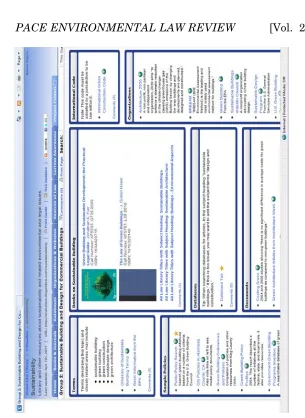
The students also had wonderful support for their research through Drake’s law library, which established a web page for each group. Set forth in Figure 3 is a screen shot of one of the four student topic library sites. It was clear that the students who took advantage of the web sites received an enormous benefit from them. The librarian visited our class to introduce the web site and to encourage the students to take advantage of it.
Figure 3. A screenshot of one of the four student group library web sites.
success of the course, I have considered increasing the number of total students to sixteen.
As part of the recipe, collaborative learning opportunities were incorporated into the use of practical application at two different stages.28 First, each group was comprised of several
students who were required to collaborate on a joint report and presentation. Second, the entire class was encouraged to participate in the development of each project. Several classes involved student presentations and collaborative critiques of those presentations. These collaborative efforts were some of the most remarkable aspects of the course. Students gave perceptive and insightful critiques of their colleagues’ presentations. The drawback, of course, was that the presentations and critiques consumed a significant amount of class time. For this particular course, the collaboration was well worth it, as it fostered a creative atmosphere, established strong bonds among the students, and allowed the students to share similar experiences, but in different contexts, highlighting the diversity of sustainability.29
28. STUCKEY,supra note 19, at 120 (“Collaborative learning involves placing
students in a wide variety of team projects and group assignments which allows the students to ‘compare and challenge perspectives, add insights, and strengthen their grasp of academic material. In the role of law firm partners and supervisors, they put pressure on each other to meet deadlines, to produce their best work, and to be accountable to affected third parties.’”).
As one author noted:
29. SCHWARTZ, supra note 3, at 19, 30-31, 142 (“In college education,
cooperative learning fosters . . . (1) more student learning and better academic performance, especially when the task is complex and conceptual; (2) development of problem solving, reasoning, and critical thinking skills; (3) positive student attitudes toward the subject matter and course; (4) closer relationships among students and between students and teachers; and (5) students’ willingness to consider diverse perspectives. Legal educators note additional benefits of cooperative learning. Cooperative learning enables students to learn to work in a team and develop collaborative approaches to negotiation and mediation. Moreover, cooperative learning helps students build community in and out of the classroom and to develop greater respect for one another.”); SONSTENG,supra note 15, at 119-20, 122 (“Students in small groups
may demonstrate subject mastery to peers, to create an encouraging and empowering environment. A cooperative learning environment embraces diversity by recognizing differences such as prior education, experience, background, learning style, race, and gender, which are relevant to a student’s education.”); STUCKEY,supra note 19, at119-20 (“Over the past 100 years, more
The benefits of cooperative learning are well documented. Research on adult learners has revealed that cooperative learning – learning that takes place when peers share experiences and insights – is not only the most common type of adult learning, it is perhaps the most effective style. Cooperative Learning produces higher achievement, reduces student attrition, increases critical thinking, betters attitudes toward subject matter, increases social support, improves social
adjustment, and increases appreciation for diversity.30
III. ASSESSMENT - THE TASTE TEST
Once the content (course ingredients) and the mechanisms and organization (course recipe) for teaching that content were in place, the last step was to determine the methods of assessment (taste test). Two of the most important decisions concerning assessment for this course were the use of formative evaluation and peer reviews.
The Carnegie Report noted, “the decisive assessment” in law schools was summative evaluation: “The end-of-semester essay examination holds a privileged, virtually iconic place in legal education.”31
healthier students than competitive or individualistic learning.”); SCHACHTER, supra note 2, at163 (“Collaboration also potentially builds confidence; a forged consensus may inspire a member of the team to articulate the conclusion, secure in the belief that others have vetted its soundness.”).
For this course, however, I chose formative or on-going evaluation as the principal mode of assessing the students’
30. SONSTENG, supra note 15, at 122 (internal quotations and citations
omitted).
31. SULLIVAN,supra note 19, at 164; see also Greg Sergienko, New Modes of Assessment, 38 SAN DIEGO L.REV. 463, 465 (2001) (“Summative evaluation is
given at the end of the course and examines how well students have achieved the course goals.“); see STUCKEY,supra note 19, at 255; Heather Zuber, A Fresh Look At Assessing Students’ Work Product: What Is Assessment, Why We Assess, And How To Do So Effectively And Efficiently, 19 PERSP.: TEACHING LEGAL RES.
&WRITING 20, 21 (2010) (“Summative assessments . . . serve to assign a grade or
otherwise indicate a student's level of achievement in relation to other students rather than to provide extensive feedback about the quality of his performance. Their ‘after-the-fact character forecloses the possibility of giving meaningful feedback to the student about progress in learning.’”) (citation omitted). See generally Phillip C. Kissam, Law School Examinations, 42 VAND.L.REV. 433,
performance.32 Formative evaluation has been described as
“ongoing assessments designed to make students’ thinking visible to both teachers and students.”33 It “can be given in many forms,
including: writing essays or drafting legal documents . . . self- or peer-assessment assignments . . . or quizzes. The determinative factor as to whether it is a formative assessment is if it provides feedback and opportunities to improve learning by forming a learning loop.”34 In addition, it “may be conducted at any stage of
a program and may involve anything from the evaluation of first-draft materials to the evaluation of an on-going and well-established program.”35
While the benefits of formative evaluation have been clearly articulated by others,36
32. This is not to suggest that one method of evaluation is better than another in all circumstances, nor is it to suggest that the two cannot be combined. See Andrea A. Curcio, Assessing Differently and Using Empirical Studies to See If It Makes A Difference: Can Law Schools Do It Better?, 27 QUINNIPIAC L.REV. 899, 931 (2009) (“Summative assessments are used to grade
students. Of course, summative assessments can be formative. Education theorists assert that more frequent law student assessments, both of a formative and summative nature, will improve student learning.”); see also Kevin H. Smith, Program Evaluation: Defining and Measuring "Success" in Academic Support Programs, 2003 MICH.ST.L. REV. 177, 198 (2003) (“The particular type
of evaluation (formative, summative, or confirmative) that is appropriate in a specific instance is a function of the type of questions the evaluator wishes to answer and the time frame the evaluator is interested in examining.”).
the decision to adopt it as a primary mode of assessment in this context stemmed from my architectural undergraduate experience. In architecture, courses relied heavily on formative evaluation through “crits” (critiques), where students would stand in front of their designs and present them before their colleagues and guests. Crits were held at several points during the semester, giving students an opportunity to reconsider many aspects of their design, ranging from isolated details to overall direction. While it was an incredibly
33. Zuber, supra note 31, at 21 (quotation omitted). 34. Id.
35. Smith, supra note 32, at 197.
36. See, e.g., SONSTENG,supra note 15, at 135; STUCKEY,supra note 19, at
255; SCHWARTZ,supra note 3, at 35, 166 (“[s]tudents’ perspectives on this issue
racking and stressful experience, it was also an invaluable educational benefit.
Formative evaluation was implemented in this course by having the students present their reports to the class and guests during crits at several points during the semester. The students and guests then had the opportunity to ask questions and make comments.37 Consistent with assessment literature, assessments
were “accomplished by gathering and discussing feedback from multiple and diverse sources to understand what one knows and how to improve subsequent learning.”38
The interim assessments compelled the students to push themselves at several stages because they had to defend their recommendations and final work product. Because many of the presentations were given before a real client, who was also providing the students with feedback, I suspect the students took their role seriously. Similarly, the clients’ receptiveness to the students’ ideas and work product often further inspired the students and motivated them to work even harder.
The final evaluation for the course was based on a compilation of the students’ performance during the intermittent on-going evaluations. Final grades were based on numerous evaluations given to the students throughout the semester on their student presentations, reports, and peer feedback (discussed below).
The on-going assessments also gave me several opportunities to determine whether the students understood the materials. “Generally speaking, [formative] assessments are used to determine whether students are learning what we intend them to learn.”39
37. See infra notes 45-57 and accompanying texts for a further discussion of peer reviews in this context.
Assessment “includes reinforcement and feedback, which can include praise, constructive criticism, and any other verbal or written critique that enables students to understand
38. Zuber, supra note 31, at 20.
their mastery of a particular topic or learning objective.”40
Formative evaluation also provided me with the flexibility to change the direction of the course if I determined a need to do so. As one author has noted:
This was important in this course because each component or ingredient in the recipe was foundational to the next, giving me an opportunity to ensure that students understood material before moving to the next phase.
Formative evaluation examines an educational program in order to generate information that will be used to decide whether and how to modify the program . . . . Because formative evaluation assesses strengths and weaknesses and provides information that can be used to modify a program, it ‘is both diagnostic and developmental in nature.’ Formative evaluation is used ‘[i]n
order to foster [the] continuous improvement’ of a program.41
Because sustainability is a new and rapidly changing area of the law, it was essential to have the flexibility to reconsider assessment criteria throughout the semester where needed. I was concerned that criteria established at the beginning of the semester would become stale or outdated, or that I might discover new content more important to the curriculum or appropriate to the course projects.
For the student presentations, I adopted a rubric to structure the evaluations. A portion of the rubric is set forth in Figure 4. I used the rubric to establish a baseline for grading and facilitated simultaneous grading of presentations.42
40. SONSTENG,supra note 15, at 135; see also SCHWARTZ,supra note 3, at 166
(“Formative feedback is critical to improving teaching and learning. To make effective changes in teaching, we need to know the strengths and weaknesses of our current practices and their effect on students’ learning. We can gather that information from ourselves, students, colleagues, and consultants.”).
In addition, I distributed the rubric to the students to provide them with necessary guidance for their presentations, and to the Partnership to allow them to give additional feedback, if they
41. Smith, supra note 32, at 197.
42. See STUCKEY,supra note 19, at 245-53 (discussing the use of assessment
to inform students of professional development); see also SCHWARTZ,supra note
wished.43 Although the rubric was distributed before the first
presentation, the first presentation was not graded.44
43. SCHWARTZ, supra note 3, at 33 (“Because our expectations are usually
complex, it helps when we are explicit and put our expectations in writing.”).
This gave the students comfort to take risks and be creative from the very beginning of the course.
Figure 4. This represents a portion of the rubric that was used in the course. The rubric changed several times with each revision provided to the students.
In conjunction with formative evaluation, students were asked to review their peers at several stages. The decision to use peer review logically extended from the collaborative learning process.45 “Students learn a lot from each other. They learn from
verbally analyzing problems together and reading and commenting upon each other’s work. They value being part of a community rather than trying to learn difficult material in isolation. They appreciate focusing on learning rather than on grades.”46 In addition, peer reviews fostered the creative
atmosphere the course needed.47 It also asked the students to
“review[], summariz[e], clarify[], giv[e] feedback, diagnos[e] misconceived knowledge, identify[] missing knowledge, and consider[] deviations from the ideal . . . . all cognitively demanding activities.”48
For this course, peer review was implemented in two fashions. For ease, I will refer to them as “informal” and “formal” peer review.49
45. See also STUCKEY, supra note 19, at 256 (“Formative assessments can
take many forms . . . . There are various forms of peer-assessment or self-assessment exercises that can be used in class or between classes.”); Lisa E. Gueldenzoph & Gary L. May, Collaborative Peer Evaluation: Best Practices for Group Member Assessments, 65 BUS.COMM.Q. 9, 11, 14, 16 (2002) (“Research
studies indicate that students find peer evaluations to be a fair assessment tool for group projects, and they often find completing peer evaluations to be an effective learning activity in itself, especially when they conduct both peer and self-evaluations.”) (citations omitted).
After each student presentation, the class was
46. SCHWARTZ,supra note 3, at 30.
47. See also Kristin B. Gerdy, Teacher, Coach, Cheerleader, and Judge: Promoting Learning through Learner-Centered Assessment, 94 LAW.LIBR.J. 59,
80-81 (2002) (“Students who critique another’s work are able to identify the strengths and weaknesses in their own work.”).
48. Keith Topping, Peer Assessment Between Students in Colleges and Universities, 68 REV.EDUC.RES. 249, 254 (1998) (citations omitted); see also id.
at 256 (“Peer assessment can develop teamwork skills and promote active rather than passive learning.”).
49. See, e.g., Terri LeClercq, Principle 4: Good Practice Gives Prompt Feedback, 49 J. LEGAL EDUC. 418, 425 (1999) (hereinafter Principle 4) (“A
turned over to the students for informal peer review in which the students commented on the presentation. These classes were portrayed as “working sessions” within our firm, an aspect that fostered a team environment.50
The students were also responsible for a more “formal” peer review. Each group was responsible for a one-page peer-to-peer review of another group’s presentation. I provided the students with a list of preliminary or suggested questions, but they were free to comment on what they wished.
Due to time restraints, students were asked to provide additional comments via email. This turned out to be a positive development, as students provided extensive advice in this setting. It also provided a wonderful opportunity to cross-pollinate with the other groups. The result was that many of the non-presenting groups also benefited from the peer review.
51
• Was it clear from the presentation and report what the
issue, challenge, or problem is?
Some of the recommended questions included:
• Was the connection between the issue, challenge, or
problem and the current state of the law clear from the presentation and report?
• Were the proposals or solutions relevant to the issue,
challenge, or problem?
The students were provided with the questionnaire to
not only help[] the reviewer learn substantively and summarize concisely, but it also confirm[ed] that he ha[d] diligently and thoroughly read his colleague’s paper. . . . The visceral task of having to complete a prepared form tacitly suggest[ed] that the student [wa]s expected to delimit strengths and weaknesses,
listen to oral arguments. In cooperative or collaborative projects, peers can help each other with research and act as sounding boards for ideas.”).
50. See also SCHACHTER,supra note 2, at165 (“Try to convey the notion that
collaborative and cooperative learning tasks presuppose mutual respect amongst students as the techniques essentially are premised on the belief that all students have the potential for achieving and sharing scholarship.”).
rather than to engage in only a cursory review and merely offer a
conclusory overall comment.52
The formal peer review comments often went above and beyond the one-page assignment, providing several pages worth of detailed information. In fact, “[t]hroughout the semester . . . the students display considerable professionalism both in the substance of their comments and in how they [were] conveyed.”53
One of the biggest challenges of the course was monitoring peer review.54 There was a constant struggle to balance
critiquing a student’s comments and feedback where necessary to ensure accurate instruction, and stifling commentary.55 I wanted
the “[s]tudents . . . to confront challenging tasks with no intimidation or humiliation, which may cause withdrawal from participation and learning.”56 The course was designed to have
the students feel free about commenting on others work, but at the same time, there was a risk that the student receiving the criticism would get poor advice.57
52. SCHACHTER,supra note 2, at 210.
The most effective method for dealing with this, although by no means exceptional, was to ask follow up questions to the student and class. If targeted correctly, the questions would lead the student to understanding the
53. Sergienko, supra note 31, at 483.
54. See also Topping, supra note 48, at 254-57 (“Some authors have reported disadvantages or problems with their implementation of peer assessment. Poor performers might not accept peer feedback as accurate. Students might not be willing to accept any responsibility for assessing their peers, especially initially, in a small socially cohesive group or if they see it as substitutional. . . . [S]tudent groups can be inhibited and constrained, and the use and abuse of peer power relationships should be monitored.”).
55. Principle 4, supra note 49 (“An important mode of feedback is the reaction of peers. Students receive peer feedback within a study group. They are aware of peer feedback when they are called on in class: the slightest moan or a reassuring smile from a classmate can help keep them on track as they recite key issues. Without additional feedback from faculty, though, students worry that peer responses are as uninformed as their own and not really trustworthy.”).
56. SONSTENG,supra note 15, at 121.
57. See also SCHWARTZ,supra note 3, at 34 (“Most humans respond better to
difficulty with his comment or critiques, and ideally, enable the student to revise and correct the comment.
CONCLUSION
This process yielded impressive student work that included three recommended changes to the code and three council resolutions (see Figure 5 for the proposals front pages). 58
The course has been a wonderful learning experience for me. The combination of practical application, collaborative learning, formative evaluation, and peer review in teaching sustainability has the potential to give the students a real understanding of the law, to get them engaged, and to have them take ownership over the content. This was clear in the high level of student competency. The use of practical application for this course was an overall success that produced thoughtful, professional, and creative student outputs. The students took giant steps to understanding sustainability, learning the responsibilities of lawyers, and becoming young professionals.
The proposals were presented before a very receptive City Council, which wishes to continue to develop the ideas. The students are ready to continue working with the City to take the proposals to the next step, even though the course has finished.