The Problems of Quantitative Evaluation of Socio-Economic Systems’ Development:
Review
Oleg Kaplinski
1, Friedel Peldschus
21Poznan University of Technology Piotrovo 5, 60-965, Poznan, Poland e-mail: [email protected]
2Leipzig University of Applied Science
132 Karl Liebknecht St, 04227 Leipzig, Germany e-mail: [email protected]
The economic development of socio-economic systems (SES) largely depends on our understanding of their nature and formation mechanisms. Quantitative evaluation of the state of the systems is also an important problem because the effective management ensuring their effective performance strongly depends on it.
Quantitative evaluation of socio-economic systems may be performed by using multicriteria evaluation methods. These methods allow us to generate an integrated criterion reflecting various SES aspects observed in the reality.
Given the methods of quantitative SES evaluation, we can solve such important problems associated with the economic development of a country as the determination of enterprise development strategy, the formation of flexible enterprise organizational structures, etc.
Keywords: socio-economic systems, MCDM, cooperation of enterprises, market concentration, diversification of enterprise activities, organization theory.
Introduction
The world around us is getting more and more complicated, while the amount of information we have to handle is growing fast. In this environment, proper decision making often becomes a problem. Therefore, various researchers and practitioners are searching for the ways of simplifying the reality in their descriptions and to alleviate the problems of decision making (Ginevicius, 2009a). The solution was offered by the systems theory allowing complicated objects, phenomena and processes to be considered from various perspectives as systems. This implies that their interrelationships should be analysed. The fundamental works describing further development of the systems theory were published by Bertalanffy (1973) and Rapoport (1978). A description of further development of the systems theory and the comparative analysis of some new works on this topic were presented by Mulej 2007,
Bailey 2006, Troncale 2006, Samuelson 2006,
Schwaninger 2007, Mlakar & Mulej 2008. A consistent analysis of the transition from post-socialism to capitalism was made by Martin 2008, Melnikas (2008, 2010), Brauers et. al. (2007, 2010), Brauers and Zavadskas (2006, 2010), Balezentis et. al. (2010). Though the investigations of this kind are made in various scientific fields and areas of practical application, there is still a lack of publicly
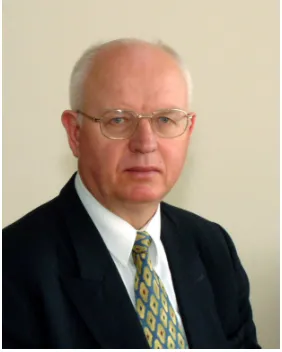
Figure 1. Professor Romualdas Ginevicius
One of the exceptional authors, continuously working on the problems of socio-economics is Professor Romualdas Ginevicius. This article is an attempt to systemize his research and achievements in the field of socio- economics during the last decade.
Reviews of Professor Romualdas Ginevicius
activities
Professor Romualdas Ginevicius is celebrating his 65th birthday this year. He was born on September 9, 1946 in Valkininkai (Varena distr.), Lithuania.
In 1969, he received a diploma in Engineering Economics in Construction from the Vilnius Branch of Kaunas Polytechnic Institute. In 1975, he was awarded a PhD in Engineering Economics by Vilnius Civil Engineering Institute (now Vilnius Gediminas Technical University) (Ginevicius, 1975).
In 1978, he became an Associated Professor at Vilnius Gediminas Technical University, in 1997 – obtained a Doctor of Science degree at Vilnius Gediminas Technical University (Ginevicius, 1997). Since 1999 till now he is a professor of Vilnius Gediminas Technical University.
Professor Romualdas Ginevicius is the chair of the Department of Economy and Management of Enterprises at the Faculty of Business Management and Rector (since 2002) of Vilnius Gediminas Technical University.
Professor is a president of Lithuanian Universities’ Rectors (since 2006) and a member of the working group “Commercialization of sports“ of the European Sport Conference (1993-1998). He is also an Honorary Doctor of Belorussian State Technological University, Tbilisi David Agmashenebeli Technical University, Karaganda State Industrial University, Kiev National Aviation University, Georgian Technical University and an academician of
International Academy of Information, Russian
Engineering and Georgian Engineering Academy.
Professor Romualdas Ginevicius is the editor and member of the editorial board of the following journals:
• Journal of Business Economics and Management, editor in chief (ISSN1439-0833)
• Business: Theory and Practice, editor in chief (ISSN 1648-0627)
• Evolution of Science and Technology, editor in chief (ISSN 2029-2430)
• Journal of Civil Engineering and Management, Member of the Editorial Board (ISSN 1392-3730) • Technological and Economic Development of
Economy, Member of the Editorial Board, (ISSN 2029-4913)
• Ekonomska Istraživanja – Economic research , Member of the Editorial Board (ISSN 2217-2386) • Panoeconomicus, Member of the Editorial Board
(ISSN 2217-2386)
• International Journal of Strategic Property Management, Member of the Editorial Board (ISSN 1648-715X)
• Public Administration, Member of the Editorial Board (ISSN 1648-4541)
Professor Romualdas Ginevicius was the member of organizing and scientific committees of numerous international conferences. Professor Romualdas Ginevicius is also one of the organizers and active participants of the Colloquiums in the German–Lithuanian–Polish Scientific Triangle. The initiating members of the first colloquium held in 1986 were Prof. K. Fiedler (Leipzig Higher Technical School), Dr F. Peldschus (Leipzig Higher Technical School) and Dr E. K. Zavadskas (Vilnius Civil Engineering Institute). The second colloquium was held in 1989, and a representative from Poland Prof. O. Kaplinski was invited. In 1990, Romualdas Ginevicius joined their activities.
During thirty years of scientific cooperation of three academic centres, i.e. Leipzig University of Applied Sciences, Vilnius Gediminas Technical University and Poznan University of Technology, the active collaboration has been supported due to the efforts of the main initiators. Research topics of the Colloquia covered the important fields of the research associated with the systems theory and social economics:
1. Operational Research: operations research theory,
MCDM, MADM methods, statistics, optimization,
strategies, games theory, intelligent support systems, etc.; 2. Civil Engineering: building life-cycle, urban development, construction and management, maintenance, various approaches to construction problems, assessment of effectiveness and automation in construction;
3. Sustainable Development: developing of the alternative construction processes, economic and other aspects, sustainable development challenges for business and management at construction enterprises, political influence dimensions of sustainability, technological changes, innovation and sustainability, sustainable building design and environmental impact.
2010, 2008a,b; 2009a,b; Zavadskas & Kaklauskas, 2001; Kaplinski & Zavadskas, 2002; Kaplinski et. al., 2004; Kaklauskas et al., 2005; Zavadskas, 2008; Tamosaitiene et. al., 2010; Kaplinski & Tamosaitiene, 2010).
Professor Romualdas Ginevicius supervised nine PhD dissertations and successfully participated in the presentation of numerous PhD theses. He is the author of 3 monographs (Ginevicius 1995, 1996, 1998) and co-author of 14 monographs (Ginevicius et. al., 2005 c,d,e; 2006 c,d), and textbooks (Ginevicius & Auksciunas 2007; 2008; Ginevicius & Hink 2006; Ginevicius & Sudzius 2005, 2007; Ginevicius & Silickas 2008).
The above-mentioned achievements of Professor Romualdas Ginevicius are further discussed in this article.
Quantitative evaluation of socio-economic
systems
In addition to the problem of quantitative evaluation of socio-economic systems, R. Ginevicius analysed the problems of cooperation of enterprises, market concentration, organizational theory, diversification of enterprise activities, etc. (Figure 2).
Figure 2. Research problems investigated by professor Romualdas Ginevicius
In Lithuania, multicriteria methods have been developed and used for evaluating the performance of socio-economic systems and for solving the problems associated with engineering systems (Ginevicius & Podvezko 2006c, 2007, 2008; Ginevicius & Ginevicius, 2008; Ginevicius et. al., 2006a, 2007e, 2008a,c; Ginevicius & Zubrecovas, 2009; Kaklauskas et. al., 2006; Zavadskas et. al., 2004). The evaluation is performed in several steps. First, a set of evaluation criteria is defined and their values are normalized (Ginevicius & Cirba, 2005; Ginevicius, 2008), then, the weights of the criteria are determined and the criteria are combined into one integrated criterion (Ginevicius & Podvezko, 2008c). Romualdas Ginevicius made his contribution to the research of the considered problems at the particular stages. First, he offered some new methods, such as the use of mathematical statistics in developing a set of criteria for evaluating a research object (Ginevicius & Podvezko, 2005; Ginevicius, 2007a). Second, he suggested the way of arranging a large number
of evaluation criteria into the hierarchical structure (Ginevicius & Podvezko, 2003 a,b, 2004 a,b) and thereby to reduce the number of criteria which should be assigned the weights by experts (Ginevicius, 2003a, 2007 a,b). Third, Romualdas Ginevicius offered a new method of determining the criterion weight, allowing us to considerably increase the number of criteria whose weights should be determined (Ginevicius, 2006). Fourth, he suggested the way of applying the well-known methods of multicriteria evaluation to the analysis of a hierarchically structured system of criteria. Fifth, he suggested a graphical-analytic multicriteria evaluation method (Ginevicius & Podvezko, 2008).
university departments (e.g. chairs, faculties, etc.) (Ginevicius et. al., 2004a) and the professional training as well as the quality of the work of research and academic institutions, etc. were assessed (Ginevicius et. al., 2007a; Ginevicius et. al., 2005a; Tvaronaviciene & Ginevicius, 2003; Ginevicius & Rimkus, 2007; Ginevicius, 2003a; Korsakiene et. al., 2006; Gineviciene et. al., 2006, 2007; Tvaronaviciene et. al., 2006).
The main factor determining enterprise survival under market conditions is the effective development strategy. This has been shown by a recent economic crisis. Enterprises, which could not develop such strategies, were bankrupted. This makes the research of R. Ginevicius into diversification of enterprise activities as one of the main strategies of its development, particularly important (Ginevicius, 1998; Ginevicius & Petraskevicius, 2008; Kutut & Ginevicius, 2005). He suggested a new criterion for the quantitative evaluation of enterprise diversification (Ginevicius, 2009c) and demonstrated by calculations that this criterion is more accurate than Herfindahl–Hirschman index, which is most widely used now (Ginevicius, 2009c; Ginevicius & Andriuskevicius, 2008; Ginevicius et. al., 2008d). Romualdas Ginevicius has been studying the problem of construction enterprise diversification and its effect on commercial-economic activities for several decades. He determined the importance and effectiveness of diversification, depending on the type of the market (Ginevicius & Rutkauskas, 2003).
Another enterprise development strategy is cooperation. It has been highly developed abroad. However, the works on this topic in Lithuania are scarce. Romualdas Ginevicius offered a way of quantitative evaluation of the extent of enterprise cooperation (Ginevicius, 2010; Stein & Ginevicius, 2010 a, b), which helped him to determine its effect on enterprise performance.
A state and its region may be viewed as a macrosystem. Quantitative evaluation of its economic and social development is of theoretical and practical value. This value allows us to rank state regions in the order of the degree of their development, which is the basis for reducing differentiation between the development of regions, and thereby the tension within the country. Romualdas Ginevicius used multicriteria evaluation methods for quantitative evaluation of social and economic development (Ginevicius & Tvaronaviciene, 2005; 2003 a,b,c; 2004 a, b; Ginevicius & Korsakiene, 2005; Ginevicius & Mikelis, 2002; Tvaronaviciene et. al., 2008) of particular states (Ginevicius et. al., 2006b; Ginevicius et. al., 2005b, 2007d; Ginevicius & Podvezko, 2004c; Ginevicius, 2004; Brauers et. al., 2010) and their regions (Ginevicius & Podvezko, 2006b, 2008 a,d, 2009; Brauers et. al., 2006, 2007; Brauers & Ginevicius, 2010, 2009).
One of the main factors determining enterprise competitiveness is its ability to adapt to ever changing market conditions. Therefore, R. Ginevicius extended the research to include situational analysis and the formation of organizational management structures at construction enterprises. The main idea of the research is that the external structure of an organization should proceed from the market requirements. Only in this case, it can adapt to
them (Ginevicius & Podvezko, 2004a; Sturm & Ginevicius, 2004; Ginevicius & Gudaciauskas, 2004; Ginevicius & Andruskevicius, 2004; Ginevicius, 2004b; Ginevicius et. al., 2002, 2004b; Ginevicius & Podvezko, 2006a, 2008; Ginevicius et. al., 2005d,e,f, 2007 c,f, 2008 b,e). For this purpose, he offered a set of criteria for describing enterprise organizational management structure. He also formalized them and used in calculations (Ginevicius & Bruzge, 2008; Ginevicius & Podvezko, 2008; Ginevicius, 1997; Ginevicius & Korsakiene, 2005 a; Ginevicius & Stankeviciene, 2008).
The economic development of a country largely depends on the state of the markets, i.e. on the level of their concentration and liberalization. Therefore, Romualdas Ginevicius performed a comprehensive analysis of market concentration, using quantitative evaluation methods. He also suggested the indicators of concentration and performed the calculations based on them. This allowed him to determine the effect of market concentration both on enterprises and their performance (Ginevicius & Krivka, 2010; Ginevicius et. al., 2010 a,b, 2009, 2008 a,b, 2006, 2005c; Ginevicius & Krivka, 2009 a,b, 2008 a,b; Rutkauskas et. al., 2008; Ginevicius & Cirba, 2007, 2009; Rutkauskas et. al., 2008; Ustinovicius et. al., 2006; Ginevicius & Tvaronaviciene, 2003b).
Conclusions
According to the area of research, the investigations performed by R. Ginevicius may be subdivided into four main groups as follows: systems theory, organizational theory, enterprise development strategies and market concentration.
The main results obtained in the first research area include: a description and thorough analysis of the mechanism of systems formation and the suggestion of a universal system definition; a description of the mechanism of socio-economic system formation and the suggestion of a formalization model allowing for quantitative evaluation of the state of these systems.
The main results obtained in the second research area include: the suggestion of the methods of a thorough analysis and formation of the organizational management structures of construction enterprises, allowing for the formation of flexible organizations structures easily adaptable to ever changing internal conditions.
The main results obtained in the third research area include: a thorough analysis of the problem of enterprise activity diversification, the suggestion of a more accurate indicator of diversification level (compared to the currently used ones), the determination of the dependence of a diversification effect produced on enterprise performance on the market state; the selection of the indicator of the cooperation level of enterprises and its use for calculating the cooperation effect on enterprise commercial activities.
References
Acar, C., & Sakici, C. (2008). Assessing Landscape Perception of Urban Rocky Habitats. Building and Environment, 43(6), 1153-1170.
Backer, G. S., & Murphy, K. M. (2001). Social Economics: Market Behavior in a Social Environment. Harvard University Press.
Bailey, K. D. (2006). Living Systems Theory and Social Entropy Theory. Systems Research and Behavioral Science, 23(3), 291-300.
Balezentis, A., Balezentis, T., & Valkauskas, R. (2010). Evaluating the Situation of Lithuania in the European Union: Structural Indicators and MULTIMOORA Method. Technological and Economical Development of Economy, 16(4), 578-602.
Bazaras, Z., & Miceviciene, D. (2010). Issues on Measurement of the Benefits of Improved Highway Infrastructure. Inzinerine Ekonomika-Engineering Economics, 21(4), 344-351.
Bertalanffy, L. (1973). General System Theory: Foundations, Development. Applications. New York: George Braziller.
Brauers, W. K. M., & Zavadskas, E. K. (2010). Project Management by MULTIMOORA as an Instrument for Transition Economies. Technological and Economical Development of Economy, 16(1), 5-24.
Brauers, W. K. M., & Ginevicius, R. (2010). The Economy of the Belgian Regions Tested With MULTIMOORA. Journal of Business Economics and Management, 11(2), 173-209.
Brauers, W. K. M., Ginevicius, R., & Podvezko, V. (2010). Regional Development in Lithuania Considering Multiple Objectives by the MOORA Method. Technological and Economic Development of Economy, 16(4),613-640.
Brauers, W. K. M., & Ginevicius, R. (2009). Robustness in Regional Development Studies. The Case of Lithuania. Journal of Business Economics and Management, 10(2), 121-140.
Brauers, W. K. M., Ginevicius, R., Zavadskas, E. K., & Antucheviciene, J. (2007). The European Union in a Transition Economy. Transformations in Business & Economics, 6(2), 21-37.
Brauers, W. K. M., & Zavadskas, E. K. (2006). The MOORA Method and its Application to Privatization in a Transition Economy. Control and Cybernetics, 35(2), 445-469.
Brauers, W. K., Ginevicius, R., Zavadskas, E. K., & Antucheviciene, J. (2006). The Future of Sustainable Development in Some Baltic States by Application of the MOORA Method, in 4th International Conference Citizens and Governance for Sustainable Development. Vilnius, Lithuania, 156-161.
Breslin, D. (2008). A Review of the Evolutionary Approach to the Study of Entrepreneurship. International Journal of Management Reviews, 10(4), 399-423.
Cassel, G. (1932). The Theory of Social Economy. Reprinted 1967, Augustus M. Kelly Publishers, New York, 1967. Coelho, D., Antunes, C. H., & Martins, A. G. (2010). Using SSM for Structuring Decision Support in Urban Energy Planning. Technological and Economical Development of Economy, 16(4), 641-653.
Chen, C. K. (2008). Causal Modeling of Knowledge-Based Economy. Management Decision, 46(3), 501-514. Ciegis, R., Ramanauskiene, J., & Startiene, G. (2009a). Theoretical Reasoning of the Use of Indicators and Indices for Sustainable Development Assessment. Inzinerine Ekonomika-Engineering Economics(3), 33-40.
Ciegis, R., Ramanauskiene, J., & Martinkus, B. (2009b). The Concept of Sustainable Development and its Use for Sustainability Scenarios. Inzinerine Ekonomika-Engineering Economics(2), 28-37.
Dalavande, A., Gine, X., & McKenzie, D. (2011). Measuring Subjective Expectations in the Developing Countries: A Critical Review and New Evidence. Journal of Development Economics, 94(2), 151-163.
Ejdys, J., & Matuszak-Fleiszman, A. (2010). New Management Systems as an Instrument of Implementing Sustainable Development Concept at Organizational Level. Technological and Economical Development of Economy, 16(2), 201-218.
Entwell, J., Milgate, M., & Newman, P. (1989). Social Economics, The New Palgrave.
Etzioni, A., Piore, M. J., & Streeck, W. (2010). Does „Behavioral Economics“ offer an Alternative to the Neoclassical Paradigm? Socio-Economic Review, 8(2), 377-397.
Gineviciene, V., Tamosauskas, P., & Ginevicius, R. (2007). The formation of a unified system of higher education in Lithuania, in 11th Baltic region seminar on engineering education, Jun 18-20, 2007 Vilnius, Lithuania, 17-20.
Gineviciene, V., Ginevicius, R., Korsakiene, R., & Tamosauskas, P. (2006). The Efficiency of Engineering Education in English at Vilnius Gediminas Technical University, in 9th UICEE Annual Conference on Engineering Education, February 11-15, 2006 Vilnius, Lithuania, 43-46.
Ginevicius, R., Petraskevicius, V., & Simkunaite, J. (2010a). The Influence of Market Concentration on the Results of Enterprise Commercial Activities. Business: Theory and Practice, 11(3), 185-193.
Ginevicius, R., Krivka, A., & Simkunaite, J. (2010b). The Model of Forming a Competitive Strategy of an Enterprise under the Conditions of Oligopoly Market. Journal of Business Economics and Management, 11(3), 367-395.
Ginevicius, R., & Krivka, A. (2010). The Model of the Integrated Competitive Strategy of an Enterprise in Oligopolic Market. Business: Theory and Practice, 11(2), 87-95.
Ginevicius, R. (2009a). Some Problems of Quantitative Evaluation of the State of Social-Economic Systems. Business: Theory and Practice, 10(2), 69-83.
Ginevicius, R. (2009b). Constructing Abstract (Theoretical) Models of Actual (Material) Systems. Inzinerine Ekonomika-Engineering Economics(5), 7-13.
Ginevicius, R. (2009c). Quantitative Evaluation of Unrelated Diversification of Enterprise Activities. Journal of Civil Engineering and Management, 15(1), 105-111.
Ginevicius, R., Zubrecovas, V., & Ginevicius, T. (2009). Methodologies of Real Estate Investment Projects’ Efficiency Evaluation. Business: Theory and Practice, 10(3), 181-190.
Ginevicius, R., & Krivka, A. (2009a). The Research on Business Concentration in Lithuanian Economy. Business: Theory and Practice, 10(3), 191-203.
Ginevicius, R., & Krivka, A. (2009b). Multicriteria Evaluation of the Competitive Environment in the Oligopolic Market. Business: Theory and Practice, 10(4), 247-258.
Ginevicius, R., & Gineviciene, V. B. (2009). The Compliance of Master’s Degree Studies with the Economic Needs of the Country. Technological and Economic Development of Economy, 15(1), 136-153.
Ginevicius, R., & Podvezko, V. (2009). Evaluating the Changes in Economic and Social Development of Lithuanian Counties by Multiple Criteria Methods. Technological and Economic Development of Economy, 15(3), 418-436. Ginevicius, R., & Cirba, S. (2009). Additive Measurement of Market Concentration. Journal of Business Economics and
Management, 10(3), 191-198.
Ginevicius, R., & Zubrecovas, V. (2009). Selection of the Optimal Real Estate Investment Project Based on Multiple Criteria Evaluation Using Stochastic Dimensions. Journal of Business Economics and Management, 10(3), 261-270. Ginevicius, R. (2008). Normalization of Quantities of Various Dimensions. Journal of Business Economics and
Management, 9(1), 79-86.
Ginevicius, R., & Andruskevicius, A. (2008). The Influence of Diversification of Construction Enterprises on the Efficiency of their Commercial and Economic Activities, in 5th International Scientific Conference Business and Management'2008, May 16-17, 2008, Vilnius, Lithuania, 44-46.
Ginevicius, R., & Ginevicius, A. (2008). Sustainability Decisions in Marketing Complex Cost Optimization Process, in 12th World Multi-Conference on Systemic, Cybernetics and Informatics. June 29-July 02, 2008 Vilnius, Lithuania, 35-40.
Ginevicius, R., & Podvezko, V. (2008a). Housing in the Context of Economic and Social Development of Lithuanian Regions. International Journal of Environment and Pollution, 35(2-4), 309-330.
Ginevicius, R., & Podvezko, V. (2008b). Determining the Optimal Number of Enterprise Activities, in 5th International Scientific Conference Business and Management'2008, May 16-17, 2008 Vilnius, Lithuania, 47-50.
Ginevicius, R., & Podvezko, V. (2008c). The Problem of Compatibility of Various Multiple Criteria Evaluation Methods. Business: Theory and Practice, 9(1), 73-80.
Ginevicius, R., & Podvezko, V. (2008d). Multicriteria evaluation of Lithuanian banks from the perspective of their reliability for clients. Journal of Business Economics and Management, 9(4), 257-267.
Ginevicius, R., & Podvezko, V. (2008e). A Feasibility Study of Multicriteria Methods’ Aapplication to Quantitative Evaluation of Social Phenomena. Business: Theory and Practice, 9(2), 81-87.
Ginevicius, R., & Podvezko, V. (2008f). Evaluating the Financial Activities of Construction Enterprises by Multicriteria Graphical-Analytical Method. Technological and Economic Development of Economy, 14(4), 452-461.
Ginevicius, R., & Silickas, J. (2008). Fundamentals of System Enterprise Management. Vilnius: Technika. 276 p. ISBN 978-9955-28-355-3.
Ginevicius, R., & Stankeviciene, J. (2008). Integrated Asset and Liability Portfolio Management as Base for Development Sustainability Quantitative Description, in International Conference on Marketing and Management Sciences 23-25 May 2008, Athens, Greece. p. 484-487.
Ginevicius, R., & Krivka, A. (2008a). Application of Game Theory for Duopoly Market Analysis. Journal of Business Economics and Management, 9(3), 207-217.
Ginevicius, R., & Bruzge, S. (2008). Possibilities of Using the Cost-Benefit Analysis for the Evaluation of the Government Regulation Measures. Business: Theory and Practice, 9(3), 180-189.
Ginevicius, R., & Petraskevicius, V. (2008). Some Problems of Determining Diversification level of Enterprise Activities. Business: Theory and Practice, 9(3), 215-220.
Ginevicius, R., Podvezko, V., & Raslanas, S. (2008a). Evaluating the Alternative Solutions of wall Insulation by Multicriteria Methods. Journal of Civil Engineering and Management, 14(4), 217-226.
Ginevicius, R., Hausmann, T., & Schafir, S. (2008b). Lean Management – a Form of Management with Increasing Relevance for Tourism. Business: Theory and Practice, 9(2), 137-147.
Ginevicius, A., Gineviciene, V. B., & Podvezko, V. (2008c). The Effectiveness of Enterprise Marketing System, International Conference on Marketing and Management Sciences (ICMMS 2008), May, Athens, Greece 31-32. Ginevicius, R., Podvezko, V., & Andruskevicius, A. (2008d). The Effectiveness of Diversification of Construction
Enterprise Activities, in 25th International Symposium on Automation and Robotics in Construction. June 26-29, 2008 Vilnius, Lithuania, 759-763.
Ginevicius, R., Podvezko, V., & Bruzge, S. (2008e). Evaluating the Effect of State Aid to Business by Multicriteria Methods. Journal of Business Economics and Management, 9(3), 167-180.
Ginevicius, R. (2007a). Hierarchical Structuring of Processes and Phenomena. Business: Theory and Practice, 8(1), 14-18. Ginevicius, R. (2007b). Generating a Structured System of Criteria for Describing a Complicated Phenomenon. Business:
Theory and Practice, 8(2), 68-72.
Ginevicius, R., & Auksciunas, V. (2007). The Economics of Construction Resources and Expenses: a Methodical Book. Vilnius: Technika, 131.
Ginevicius, R., & Podvezko, V. (2007). The Influence of Complex Evaluation Methods on Rating the Alternative Solutions of wall Insulation, in 9th International Conference: Modern Building Materials, Structures and Techniques. May 16-18, 2007 Vilnius, Lithuania, 248-251.
Ginevicius, R., & Cirba, S. (2007). Determining Market Concentration. Journal of Business Economics and Management, 8(1), 3-10.
Ginevicius, R., & Rimkus, L. (2007). Commercialization of Research Results in Higher Schools. Technological and Economic Development of Economy, 13(1), 10-18.
Ginevicius, R., Podvezko, V., & Ginevicius, A. (2007a). Assessing the Performance of Universities in a Country, in 10th UICEE Annual Conference on Engineering Education, Mart 19-23, 2007 Vilnius, Lithuania, 269-272.
Ginevicius, R., Podvezko, V., & Andruskevicius, A. (2007b). Quantitative Evaluation of Building Technology. International Journal of Technology Management, 40(1-3), 192-214.
Ginevicius, R., Tvaronaviciene, M., Korsakiene, R., & Kalasinskaite, K. (2007c). Lithuania – Belarus Economic Relations: How the EU Accession Impacted Bilateral Trade. Journal of Business Economics and Management, 8(2), 137-144. Ginevicius, R., Hausmann, T., & Schafir, S. (2007d). Senior citizen tourism – the target group of old age pensioners in
hospitality industry and tourist companies. Business: Theory and Practice, 8(1), 3-8.
Ginevicius, R., Hausmann, T., & Schafir, S. (2007e). Business Tourism in the Focus of Reversed Trends. Business: Theory and Practice, 8(3), 139-145.
Ginevicius, R. (2006). Multicriteria Evaluation of the Criteria Weights Based on Their Interrelationship. Business: Theory and Practice, 7(1), 3-13.
Ginevicius, R., Martinkute, R., & Podvezko, V. (2006a). Multicriteria Decisions in Capital Markets, in 10th World Multi-Conference on Systemic, Cybernetics and Informatics/12th International Multi-Conference on Information Systems Analysis and Synthesis, July 16-19, 2006 Vilnius, Lithuania, 36-40.
Ginevicius, R., Butkevicius, A., & Podvezko, V. (2006b). Complex Evaluation of Economic Development of the Baltic States and Poland. Ekonomicky Casopis, 54(9), 918-930.
Ginevicius, R., Hausmann, T., & Schafir, S. (2006c). Projektmanagement - Wege Zum Erfolgreichen Projekt. Vokietija, Gernsbach : Deutscher Betriebswirte – Verlag, 195. ISBN 3-88640-122-7.
Ginevicius, R., Paliulis, N. K., Chlivickas, E., & Merkevicius, J. (2006d). Challenges of the 21st Century: Changes in Organizations and Society. Vilnius, Technika, 548.
Ginevicius, R., & Podvezko, V. (2006a). Assessing the Financial State of Construction Enterprises. Technological and Economic Development of Economy, 12(3), 188-194.
Ginevicius, R., & Podvezko, V. (2006c). The Uncertainty Factor in Multicriteria Analysis, in International Conference on Operational Research: Simulation and Optimization in Business and Industry, May 17-20, 2006 Vilnius, Lithuania, 136-140.
Ginevicius, R., Korsakiene, R., & Tvaronaviciene, M. (2005a). The Motivation of Engineering Students: Challenges for High Schools Teachers, in 4th Asia-Pacific Forum on Engineering and Technology Education, September 26-29, 2005 Vilnius, Lithuania 173-176.
Ginevicius, R., Butkevicius, A., & Podvezko, V. (2005b). Multicriteria Evaluation of Economic Development of New EU Member-States. Business: Theory and Practice, 6(2), 85-93.
Ginevicius, R., Rakauskiene, O. G., Patalavicius, R., Tvaronaviciene, M., Kalasinskaite, K., & Lisauskaite, V. (2005c). Measuring Export and Investment in Lithuania. Vilnius, Technika, 364. ISBN 9986-05-937-2.
Ginevicius, R., Hausmann, T., & Schafir, S. (2005d). Projektmanagement - Einführung. Vokietija, Gernsbach: Deutscher Betriebswirte – Verlag, 210. ISBN 3-88640-111-1.
Ginevicius, R., Bivainis, J., Melnikas, B., Paliulis, N., Rutkauskas, A. V., Staskevicius, A. J., Pabedinskaite, A., Seckute, L., & Tamosiunas, A. (2005e). Modern Business: the Priorities of Development. Vilnius, Technika, 448. ISBN 9986-05-832-5.
Ginevicius, R., & Cirba, S. (2005). Normalization of the Criteria Values in Multicriteria Evaluation. Business: Theory and Practice, 6(3), 125-130.
Ginevicius, R., & Podvezko, V. (2005). Generation of a set of Evaluation Criteria. Business: Theory and Practice, 6(4), 199-207.
Ginevicius, R., & Korsakiene, R. (2005a). Exploration of Strategy: Objectives, Competencies and Competitive Advantage, Journal of Business Economics and Management, 6(1), 13-22.
Ginevicius, R., & Korsakiene, R. (2005b). The Knowledge-Based Economy in Lithuania: Analysis of Tendencies. Journal of Business Economics and Management, 6(4), 231-239.
Ginevicius, R., & Sudzius, V. (2005). The Theory of Organizations. Vilnius: Technika. 279. ISBN 9986-05-819.
Ginevicius, R., & Tvaronaviciene, M. (2005). Inward and outward FDI in Lithuania and Estonia: review of patterns in neighboring countries. Journal of Business Economics and Management, 6(3), 179-188.
Ginevicius, R. (2004a). Statistical view of the development in Lithuania: prospects of competitiveness in the enlarged European Union. Journal of Business Economics and Management, 5(4), 229.
Ginevicius, R. (2004b). Quantitative Evaluation of Technology used by Construction Enterprises. Technological and Economic Development of Economy, 10(3), 83-87.
Ginevicius, R., & Podvezko, V. (2004a). Quantitative Evaluation of the Strategic Potential of Enterprises. Business: Theory and Practice, 4(1), 3-9.
Ginevicius, R., & Podvezko, V. (2004b). Hierarchical structuring of elements based on their transitivity. Business: Theory and Practice, 4(3), 85-89.
Ginevicius, R., & Podvezko, V. (2004c). Complex Evaluation of the use of Information Technologies in the Countries of Eastern and Central Europe. Journal of Business Economics and Management, 5(4), 183.
Ginevicius, R., & Tvaronaviciene, M. (2004a). Some Aspects of Offshore Business. Business: Theory and Practice, 4(2), 47-51.
Ginevicius, R., & Tvaronaviciene, M. (2004b). Tax Evasion Through Offshore Companies: how Important the Phenomenon is?. Journal of Business Economics and Management, 5(1), 25-30.
Ginevicius, R.; Gudaciauskas, D. (2004). Brand Valuation Model. Journal of Business Economics and Management, 5(3), 143-153.
Ginevicius, R., & Andruskevicius, A. (2004). Modeling Maintenance Costs of Buildings under Warranty. Technological and Economic Development of Economy, 10(1), 22-25.
Ginevicius, R., Podvezko, V., & Gineviciene, V. (2004a). A Complex Evaluation of the Work Productivity of University Teaching Staff, in 8th Baltic Region Seminar on Engineering Education. September 02-04, 2004 Vilnius, Lithuania, 44-46.
Ginevicius, R., Podvezko, V., & Andruskevicius, A. (2004b). Determining of technological effectiveness of building systems by AHP method. Technological and Economic Development of Economy, 10(4), 135-141.
Ginevicius, R. 2003a. Hierarchical Structuring of Complex Phenomena and Values by Successive Comparison of Particular Criteria. Business: Theory and Practice, 3(4), 147-154.
Ginevicius, R. (2003b). The Development of Vilnius Gediminas Technical University in the Years of Independence. Technological and Economic Development of Economy, 9(4), 257-267.
Ginevicius, R., & Tvaronaviciene, M. (2003b). What Drives Foreign Direct Investments Into Baltic Countries? The Case of Lithuania, Latvia and Estonia. Ekonomicky Casopis, 51(8), 963-981.
Ginevicius, R., & Tvaronaviciene, M. (2003c). Stock Exchanges of Baltic Countries: Development and Prospectives. Journal of Business Economics and Management, 4(2), 130-143.
Ginevicius, R., & Podvezko, V. (2003a). Quantitative Evaluation of the Significance of Hierarchically Structured Indices. Business: Theory and Practice, 3(3), 111-116.
Ginevicius, R., & Podvezko, V. (2003b). Quantitative Evaluation of Significance of Hierarchically Structured Indexes, in International Conference on Modeling and Simulation of Business Systems. May 13-14, 2003 Vilnius, Lithuania 22-25.
Ginevicius, R., & Rutkauskas, A. V. (2003). Sales Risk Diversification as Strategy of Firm's Sustainable Development, in International Conference on Modeling and Simulation of Business. May 13-14, 2003 Vilnius, Lithuania, 128-131. Ginevicius, R., & Mikelis, D. (2002). Efficiency of Investments into Socio-economic Development of Regions. Business:
Theory and Practice, 2(2), 89-95.
Ginevicius, R.; Hausmann, T.; Schafir S. (2002). Change management – a business challenge to develop the prosperity. Business: Theory and Practice, 2(2), 84-88.
Ginevicius, R. (1998). Diversification of Enterprise Activities (a monograph). Vilnius Gediminas Technical University, Vilnius: Technika, 152 p. ISBN 9986053668.
Ginevicius, R. (1997). Situational Analysis and Formation of Organizational Management Structures. Vilnius: Technika, 336. Ginevicius, R. (1975). On the Problems of Reliability of Production Flow lines at House-Building Factories. Vilnius. Grundey, D. (2008). On Developments in Economics: Social, Financial, Agricultural and Behavioral Aspects.
Transformations in Business & Economics, 7(2), 18.
Hartford, D. (2009). Legal Framework Considerations in the Development of Risk Acceptance Criteria. Structural Safety 31(2), 118-123.
Hink, W., & Ginevicius, R. (2006). Time Management. Vilnius, Technika. 142 p. ISBN 9955-28-039-5.
Yay, T., & Tastan, H. (2010). Invisible Hand in the Process of Making Economics or on the Method and Scope of Economics. Panoeconomicus, 57(1), 61-83.
Kaklauskas, A., Zavadskas, E. K., Raslanas, S., Ginevicius, R., Komka, A., & Malinauskas, P. (2006). Selection of Low-E Windows in Retrofit of Public Buildings by Applying Multiple Criteria Method COPRAS: A Lithuanian Case, Energy and Buildings, 38(5), 454-462.
Kaklauskas, A., Kaplinski, O., Peldschus, F., & Zavadskas, E. K. (2005). Historie und Trends des Kolloqiums, in 20 Jahre Wissenschaftlicher Gedenkenaustausch. Podium. Sonderheft, 11, 3-9.
Kaplinski, O., & Tamosaitiene, J. (2010). Game Theory Applications in Construction Engineering and Management, Technological and Economic Development of Economy, 16(2), 348-363.
Kaplinski, O. (2009a). Professor Edmundas Kazimieras Zavadskas: the Research Achievements and Trans-Border Cooperation. Archives of Civil Engineering, 55 (3), 287-300.
Kaplinski, O. (2009b). Sapere Aude: Professor Edmundas Kazimieras Zavadskas. Inzinerine Ekonomika-Engineering Economics(5), 113-119.
Kaplinski, O. (2008a). Development and Usefulness of Planning Techniques and Decision Making Foundations on the Example of Construction Enterprises in Poland. Technological and Economic Development of Economy,14(4), 492-502. Kaplinski, O. (2008b). Planning Instruments in Construction Management. Technological and Economic Development of
Economy, 14(4), 449-451.
Kaplinski, O., Zavadskas, E. K., Peldschus F., & Kaklauskas, A. (2004). Problems and Evolving Trends of Construction Colloquia on Decision Making and Operational Research. Foundations of Civil and Environmental Engineering, 5, 83-90.
Kaplinski, O., & Zavadskas, E. K. (2002). An Overview of Problems Related to the Research in Construction Engineering, Management and Economics in Poland. Journal of Civil Engineering and Management, 8(4), 231-239.
Kaplinski, O. (2000). Collaboration of Two Universities: Poznań University of Technology and Vilnius Gediminas Technical University. Technikos mokslų raida Lietuvoje (Evolution of Technical Sciences in Lithuania), Vilnius, Technika, 16-24.
Karazijiene, Z. (2009). Modeling of the Effect of the Public Sector Borrowing on the Lithuanian Economy. Inzinerine Ekonomika-Engineering Economics(4), 24-31.
Korsakiene, R., Tvaronaviciene, M., & Ginevicius, R. (2006). The application of Problem-Based Learning in engineering education at Vilnius Gediminas Technical University. in 10th Baltic Region Seminar on Engineering Education, Seminar Proceedings, September 04-06, 2006 Vilnius, Lithuania, 40-42.
Kutut, I., & Ginevicius, R. (2005). The Impact of Industrial and Geographical Diversification on Firm Value. Business: Theory and Practice, 6(1), 56-61.
Lutz, M. A. (2009). „Social Economics“, in Jan Peil and Irene van Staveren, ed., Handbook of Economics and Ethics, Edward Elgar Publishing, 516.
Martinkus, B.; Lukasevicius, K. (2008). Investment Environment of Lithuanian Resorts: Researching National and Local Factors in Palanga Case. Transformations in Business & Economics, 7(2), 67-83.
Martin, R. (2008). Post-Socialist Segmented Capitalism: The Case of Hungary. Developing Business Systems Theory. Human Relations, 61(1), 131-159.
Melnikas, B. (2010). Sustainable Development and Creation on the Knowledge Economy: the new Theoretical Approach. Technological and Economical Development of Economy, 16(3), 516-540.
Melnikas, B. (2008). Integration Processes in the Baltic Region: the New Form of Regional Transformations in the European Union. Inzinerine Ekonomika-Engineering Economics(5), 54-64.
Mlakar, T., & Mulei, M. (2008). On the Concept of the „Control Systems Theory“ as a New Model of Systemic Consideration. Kybernetes, 37(1-2), 215-225.
Mulej, M. (2007). On the Concept of the „Control Systems Theory“ as a New Model of Systemic Consideration. Kybernetes, 37(1-2), 215-225.
Orcutt, G. (1957). A New Type of Socio-Economic Systems. Review of Economics and Statistics, 39(2), 116-127.
Peldschus, F. (2009). The Analysis of the Quality of the Results Obtained With the Methods of Multi-Criteria Decisions. Technological and Economic Development of Economy, 15(4), 580-592.
Pettman, B. O. 1977. Socio - Economic Systems, International Journal of Social Economics 4(2): 101-119. Rapoport, A. (1978). Remarks on General Systems-Theory. General Systems, 23, 175-176.
Riberio, F. L. (2008). Urban Regeneration Economics: The Case of Lisbon’s old Downtown. International Journal of Strategic Property Management, 12(3), 203-213.
Roggeri, P., Belward, A., Mayaux, P., Hugh, E., Brink, A., Dubois, G., Peedell, S., & Olivier L. (2010). Sustainable Development in Developing Countries: The African, Caribbean and Pacific Observatory. Technological and Economical Development of Economy, 16(4), 736-752.
Rutkauskas, A. V., Stasytyte, V., & Ginevicius, A. (2008). Three-Dimensional Measurement of Market Behavior, in 5th International Scientific Conference Business and Management, 10, 222-227.
Samuelson, K. (2006). The System Symbols, From Deep - Insights to Universal Applications. Systems Research and Behavioral Science, 23(3), 349-363.
Schwaninger, M. (2007). Optimal Structures for Social Systems. Kybernetes, 36(3-4), 307-318.
Sturm, R., & Ginevicius, R. (2004). Konflikte überwinden mit mediation. Business: theory and practice, 4(4), 157-166. Stein, H. D., Ginevicius, R. (2010a). The Experimental Investigation of the Profit Distribution in Industrial Supply Chains
With an Outside Option. Technological and Economical Development of Economy, 16(3), 487-501.
Stein, H. D., & Ginevicius, R. (2010b). Overview and Comparison of Profit Sharing in Different Business Collaboration Forms. Journal of Business Economics and Management, 11(3), 428-443.
Supriyasilp, T., Pongput, K., & Boonyasirikul, T. (2009). Hydropower Development Priority Using MCDM Method, Energy Policy, 37(5), 1866-1875.
Troncale, L. (2006). Towards a Science of Systems. Systems Research and Behavioral Science, 23(3), 301-321.
Tamosaitiene, J., Bartkiene, L., & Vilutiene, T. (2010). The new Development Trend of Operational Research in Civil Engineering and Sustainable Development as a Result of Collaboration Between German-Lithuanian-Polish Scientific Triangle. Journal of Business Economics and Management, 11(2), 316-340.
Turskis, Z., Zavadskas, E. K., & Peldschus, F. (2009). Multi-Criteria Optimization System For Decision Making in Construction Design and Management. Inzinerine Ekonomika-Engineering Economics(1), 7-17.
Tvaronaviciene, M., Ginevicius, R., & Grybaite, V. (2008). Comparisons of Baltic Countries' Development: Practical Aspects of Complex Approach. Business: Theory and Practice, 9(1), 51-64.
TvaronavicienE, M., Korsakiene, R., & Ginevicius, R. (2006). Factors Fostering the Implementation of Innovations in Business: Engineering Education Versus Government Support, in 5th Global Congress on Engineering Education, July 17-21, 2006 Vilnius, Lithuania, 93-96.
Ustinovichius, L., Podvezko, V., & Ginevicius, R. (2006). A Method of Determining Risk Zones of Investment in Real Estate. Control and Cybernetics, 35(2), 471-486.
Valackiene, A. (2009). Theoretical Model of Employee Social Identifications in Organization Managing. Crisis Situations, Inzinerine Ekonomika-Engineering Economics(4), 95-102.
Zabinski, A. (2010). Fiscal Instruments for Reaching Economic Goals in Central an Eastern Europe. Transformation in Business & Economics, 9(2), Suppl. B: 432-446.
Zavadskas, E. K. (2008). History and Evolving Trends of Construction Colloquia on Sustainability and Operational Research. Technological and Economical Development of Economy, 14(4), 578-592
Zavadskas, E. K., Ginevicius, R., & Andruskevicius, A. (2004). Multicriteria Evaluation for the Sequence of the Technological Operations in Construction, in 8th International Conference on Modern Building Materials, Structures and Techniques, May 19-21, 2004 Vilnius, Lithuania, 326-329.
Zavadskas, E. K., & Kaklauskas, A. (2001). History and Trends of Development of Colloquy. Journal of Civil Engineering and Management, 7(4), 265-275.
Zvirblis, A., & Buracas, A. (2010). The Consolidated Measurement of the Financial Markets Development: The Case of Transitional Economies. Technological and Economical Development of Economy, 16(2), 266-279.
Weber, M. (1978). Economy and Society. University of California press.
Wieser, F. (1928). Social Economics. Foreword by Wesley C. Mithell. Reprint 2003, Routledge.
Oleg Kaplinski, Friedel Peldschus
Socioekonominių sistemų pl÷tros kiekybinio įvertinimo problemos: apžvalga Santrauka
Norint valdyti reiškinius, procesus, galų gale mus supantį pasaulį, reikia giliau skverbtis į jų prigimtį, t. y. pažinti vidinę sandarą, tarpusavio sąveiką ir pan. Pad÷tį komplikuoja tai, kad šis pasaulis tampa vis sud÷tingomis, dinamiškesnis, informacijų centrai taip pat tampa vis intensyvesni. Žmogus negali suvokti viso jį supančios tikrov÷s kompleksiškumo, tod÷l ieško būdų, kaip ją adekvačiai supaprastinti. Išeitis – sistemų teorija, kurioje struktūrizuojami sud÷tingi dariniai, reiškiniai ir pan. ir kartu jie nagrin÷jami kompleksiškai, sistemiškai, t. y. įvertinami jų sud÷tinių dalių tarpusavio ryšiai.
Sistemų teorijos požiūriu visus mus supančius reiškinius galime traktuoti kaip sistemas. Iš esm÷s tai socioekonomin÷s sistemos (SES), kadangi technin÷s yra tik sud÷tin÷ jų dalis.
Siekiant kryptingai valdyti SES pl÷trą, siekti, kad ši pl÷tra būtų darni, šias sistemas reikia ne tik pažinti, bet ir kiekybiškai įvertinti jų būklę. Ne veltui sakoma, kad valdyti galima tik tai, ką galima įvertinti. SES tikrov÷je reiškiasi daugeliu aspektų. Siekiant kiekybiškai įvertinti jų būklę, šiuos aspektus reikia keisti į kriterijus, rodiklius. Kiekybinio įvertinimo problemą apsunkina tai, kad šie rodikliai gali būti išreiškiami skirtingomis dimensijomis ir kisti priešingomis kryptimis, t. y. padid÷jus vienų rodiklių reikšm÷ms SES būkl÷ gali pager÷ti, kitų – blog÷ti. Tokioje situacijoje sistemos būklei kiekybiškai vertinti tinka daugiakriteriai metodai, leidžiantys visus rodiklius paversti bedimensiais, kintančiais ta pačia kryptimi ir sujungti juos į vieną apibendrinantį dydį, kiekybiškai atspindintį SES būklę nagrin÷jamu laiko momentu.
Socioekonominių sistemų pl÷trai reikia įvairaus pobūdžio, visų pirma piniginio, sąnaudų. Pl÷tros efektyvumui nustatyti reikia įvertinti SES būklę ataskaitinio laikotarpio pradžioje ir pabaigoje. Tod÷l lyginamos pl÷tros išlaidos su pasiektu jos mastu ir taip nustatomas sistemos valdymo efektyvumas.
Išsprendus įvairaus pobūdžio SES daugiakriterio vertinimo uždavinius (regionų ekonomin÷s ir socialin÷s pl÷tros, aukštojo mokslo ir švietimo institucijų, jų padalinių darbo kokyb÷s, įmonių strateginio potencialo, finansin÷s veiklos ir pan. įvertinimas) galima tvirtinti, kad SES kiekybinis daugiakriteris vertinimas yra universalus metodas, padedantis efektyviai valdyti kryptingą jų pl÷trą.
Rinkos sąlygomis aktualu nagrin÷ti ne tik socioekonominių sistemų būkl÷s kiekybinio vertinimo problemas, bet ir jų efektyvaus funkcionavimo sąlygas. Tokių tyrimų pagrindas yra organizacijų teorija, kurioje pateiktos efektyvių organizacinių valdymo struktūrų formavimo sąlygos ir galimyb÷s.
Prie pagrindinių įmonių, kurios priklauso socioekonomin÷ms sistemoms, efektyvaus funkcionavimo sąlygų, priskiriamos jų veiklos profilio išpl÷timo, arba veiklos diversifikavimo, kooperavimosi, rinkų koncentracijos ir kt. problemos.
Įmon÷s veiklos diversifikacija yra viena iš pagrindinių pl÷tros strategijų, padedančių išgyventi rinkos nuosmukio sąlygomis. Tai, galima sakyti, parod÷ masinis statybos įmonių bankrotas, sukeltas ekonomin÷s kriz÷s. Analiz÷ rodo, kad išliko tos įmon÷s, kurios tur÷jo daugiau nepriklausomų įplaukų šaltinių.
Kooperaciją taip pat galima traktuoti kaip pl÷tros strategiją, padedančią smulkioms ir vidutin÷ms įmon÷ms išlikti didel÷s konkurencijos sąlygomis. Tiek diversifikacijos, tiek kooperacijos atveju svarbu adekvačiai įvertinti esamą pad÷tį tam, kad būtų galima kryptingai valdyti šiuos procesus.
Įmon÷s komercin÷s veiklos rezultatai priklauso ne tik nuo jos pačios pastangų, bet ir nuo situacijos rinkose, kuriose ji veikia. Vienas pagrindinių šios situacijos požymių – rinkų koncentracijos, atspindinčios konkurencijos galimybes, laipsnis. Siekiant ištirti rinkų koncentracijos poveikį įmonių komercin÷s veiklos rezultatams, jas reikia įvertinti kiekybiškai.
Taigi siekiant giliau pažinti SES, kurių pasaulyje mes gyvename, kryptingai keisti jų būseną, visų pirma reikia mok÷ti ją įvertinti kiekybiškai dabartiniu laiko momentu. Atlikti tyrimai rodo, kad tai s÷kmingai galima atlikti.
Raktažodžiai: socioekonomin÷s sistemos (SES), įmonių kooperacija, rinkos koncentracija, įmonių veiklos diversifikacija, organizacijų teorija, daugiakriteriai sprendimų metodai.
The article has been reviewed.