! ∀# ∃
!% &∋∋(∋∋
UNIVERSITY OF SOUTHAMPTON
FACULTY OF SOCIAL AND HUMAN SCIENCES
Southampton Education School
Creative Learning Approaches for Undergraduate Self-Development
by
Timothy McClellan
Thesis for the degree of Doctor of Philosophy
UNIVERSITY OF SOUTHAMPTON
ABSTRACT
FACULTY OF SOCIAL AND HUMAN SCIENCES
SOUTHAMPTON EDUCATION SCHOOL
Doctor of Philosophy
CREATIVE LEARNING APPROACHES FOR UNDERGRADUATE
SELF-DEVELOPMENT
by Timothy McClellan
This thesis investigates creativity in the undergraduate curriculum and how students respond to creative approaches to learning within their studies. Specifically, the thesis considers how the use of multiple creative learning methods may enhance undergraduate learning and the role that creative visualisation and guided imagery can play in this experience.
The thesis presents the learning stories of six undergraduates in the main study who took one of these modules. Interviews were conducted and a range of other documentary data, such as learning journals and assignments, was collected and analysed in order to detail each student’s journey through and experience of the module. The analysis is presented in three separate sections; firstly, as individual student case studies; secondly, as a thematic cross-case analysis; and thirdly, as a synthesis of the data with theoretical constructs and current debates surrounding creativity in higher education with conclusions and recommendations for individual and sector practice.
The thesis discusses the ‘messy’ nature of research, highlights the compromises
Table of Contents
ABSTRACT ... iii
Table of Contents ... v
Appendices ... vii
List of Figures ... ix
Declaration of Authorship ... xi
Acknowledgements ... xiii
Definitions and abbreviations ... xv
Chapter One: Introduction ... 1
Introduction ... 1
Thesis structure ... 5
The two modules ... 6
The guided imagery and creative visualisation workshops ... 12
Honest research: Situating myself in the work ... 13
Situated research: My own professional context ... 14
The wider context ... 19
Relevance of the research to higher education with reference to policy ... 20
Pedagogical developments in higher education ... 23
Creativity in Subject Benchmarks across higher education courses and the demands for graduates with skills in creativity ... 26
Chapter Two: Literature Review ... 31
The contextual setting ... 31
Teaching creatively ... 36
Teaching creativity: ‘Creativity in Action’ ... 38
Teaching creative self-development: ‘Creative Personal Development’ ... 42
Creative visualisation, guided imagery, relaxation and education ... 43
Chapter Three: Methodology ... 51
My rationale and research motivation... 53
Epistemology ... 57
Ethics specific to the research topic ... 61
Pilot study: Methods and data collection ... 66
Pilot study: Data analysis and reporting ... 75
Main study: Methods and data collection ... 78
Chapter Four: The Pilot Study - Case Studies ... 95
Angela ... 96
Mark ... 101
Stephanie ... 106
Conclusion ... 110
Chapter Five: The Student Case Studies ... 113
Introduction ... 113
Sarah – Growing through creativity ... 114
Simone – The power of the image ... 131
Mike – Living the creative life ... 144
Anna – Creativity: a passport to employment ... 153
Carl – A structured approach to study ... 159
Peter – A story of logic and reason ... 164
Chapter Six: Cross-Case Thematic Analysis ... 171
Introduction ... 171
Overarching Theme One: Student engagement with creative approaches to learning173 Theme One: Student approach and attitude ... 174
Theme Two: Development of self ... 181
Theme Three: the student journey – starting points and previous life experiences .... 194
Theme Four: Accessing deeper student learning through creative approaches in delivery ... 199
Overarching Theme Two: The role of creative visualisation and guided imagery in the creative learning process ... 208
Theme One: Polarisation of reported experiences ... 209
Theme Two: Intensity of feelings - negative experiences ... 212
Theme Three: Intensity of feelings - positive experiences ... 219
Theme Four: Intensity of feelings - selective acceptance ... 227
Chapter Seven: Conclusion ... 233
Introduction ... 233
How might the use of multiple creative learning methods enhance undergraduate education? ... 233
What is the role of creative visualisation and guided imagery in this process? ... 238
Contribution to knowledge ... 239
Dissemination of research ... 247
Lessons learned from the research process ... 247
Implications for research and practice ... 249
Appendices
Appendix 1.1: Creativity in Action Module: Scheme of Work
Appendix 1.2: Creative Personal Development Module: Scheme of Work
Appendix 1.3: Conference Paper: Guided Imagery as a Trigger for Creativity
Appendix 1.4: Professional Journal Article: Sound, music and radio in the creative
curriculum
Appendix 3.1: Completed Ethics Review Checklist
Appendix 3.2: Ethical Protocol and Rationale
Appendix 3.3: Research Participant Information Sheet 2008-9
Appendix 3.4: Research Participant Agreement Sheet 2008-9
Appendix 3.5: Research Governance Approval
Appendix 3.6: Public Liability Insurance Certification
Appendix 4.1: Week One: Creative Visualisation and Guided Imagery –
Introduction to these approaches to creative learning
Appendix 4.2: PowerPoint learning material: Week One – Creative Visualisation
and Guided Imagery: Introduction to these approaches to creative
learning
Appendix 4.3: Week Two – Taking Guided Imagery and Creative Visualisation
further
Appendix 4.4: PowerPoint learning material: Week Two – Taking Guided Imagery
and Creative Visualisation further
Appendix 4.5: Guided imagery and creative visualisation scenarios used in the
List of Figures
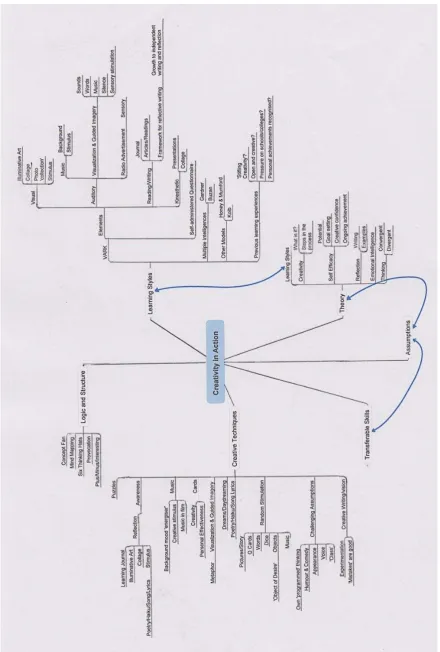
Figure 1.1: Creativity in Action: mind map of topics ... 8
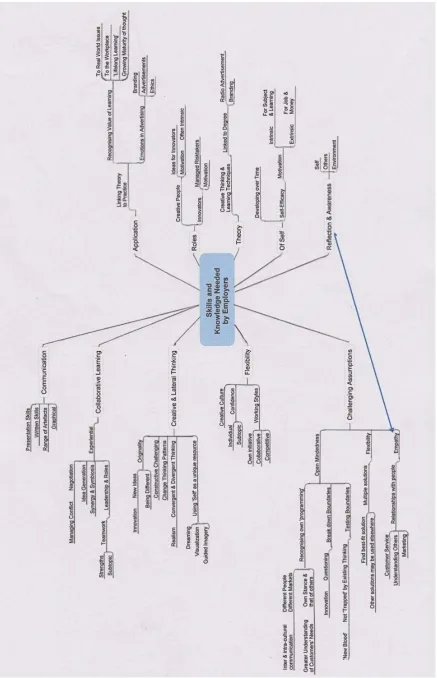
Figure 1.2: Creativity in Action: mind map of transferable skills ... 9
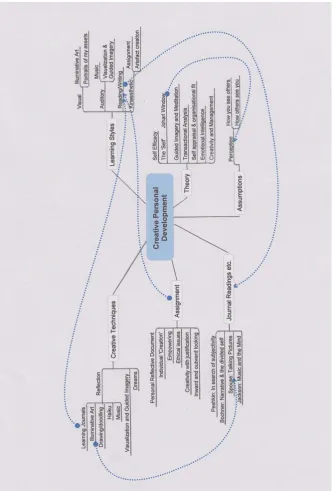
Figure 1.3: Creative Personal Development: mind map of topics ... 11
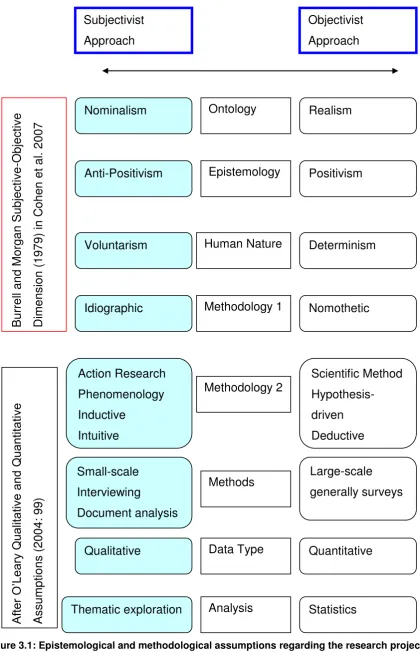
Figure 3.1: Epistemological and methodological assumptions regarding the research project .... 59
Figure 3.2: Research Phase One – Preparation for and implementation of pilot study ... 67
Figure 3.3: Research timeline – initial methodology and pilot study ... 68
Figure 3.4: Pilot Study Participants: Interview schedule ... 73
Figure 3.5: Pilot Study participants: Data collected ... 74
Figure 3.6: Research Phase Two - Preparation for and implementation of main research ... 80
Figure 3.7: Research Timeline – Main study: initial research interviews ... 81
Figure 3.8: Research Timeline – Main study: Data collection – interviews used in reported research ... 85
Figure 3.9: Main Research Participants: Interview schedule ... 87
Figure 3.10: Main Research participants: Data collected ... 88
Figure 3.11: Chart to illustrate analysis and presentation of participant data ... 91
Figure 4.1: Angela: Treasure Map ... 100
Figure 4.2: Stephanie: Smoking mirror vortex ... 108
Figure 5.1: Sarah: ‘Assumptions’ page from Creative Personal Document ... 118
Figure 5.2: Sarah: ‘Johari window’ page from Creative Personal Document ... 120
Figure 5.3: Sarah: ‘SWOT analysis closed’ page from Creative Personal Document ... 124
Figure 5.4: Sarah: ‘SWOT analysis open’ page from Creative Personal Document ... 125
Figure 5.5: Sarah: ‘Positive flower’ page from Creative Personal Document ... 126
Figure 5.6: Sarah: ‘What makes me happy’ page from Creative Personal Document ... 127
Figure 5.7: Sarah: ‘Portraits of my assets’ page from Creative Personal Document ... 128
Figure 5.8: Sarah: ‘What has this module taught me?’ page from Creative Personal Document 129 Figure 5.9: Simone: Illuminative art from in-class work ... 132
Figure 5.10: Simone: Illuminative art, end of module / year-independent work... 134
Figure 5.11: Simone: Illuminative art at end of second year – independent work ... 136
Figure 5.12: Simone: Creative visualisation treasure map from in-class work ... 138
Figure 5.13: Simone: Illuminative art at end of final year – independent work ... 141
Figure 5.14: Simone: Additional illuminative art at end of final year – independent work ... 142
Figure 5.15: Mike: Illuminative art at start of module - in-class work ... 146
Figure 5.16: Anna: Creativity diagram ... 155
Figure 5.17: Anna: Illuminative art ... 155
Figure 5.18: Anna: Blog header ... 158
Figure 5.20: Peter: ‘Treasure Map’ from work outside class ... 168
Figure 6.1: Cross-case thematic analysis structure ... 172
Figure 6.2: Creative approaches to learning: student polarisation ... 176
Figure 6.3: Continuum for students demonstrating high engagement with traditional approaches to learning and low engagement with creative approaches ... 177
Figure 6.4: Continuum for students demonstrating high engagement with creative approaches to learning ... 178
Figure 6.5: Model of student engagement ... 179
Figure 6.6: Student journey of self-discovery (‘Active Engagement’ and ‘Active Positive Engagement’ students) ... 192
Figure 6.7: Student journey with negative view of creative approaches to learning (‘passive engagement’ students) ... 193
Figure 6.8: Simone: Abstract drawing ... 205
Figure 6.9: Creative visualisation and guided imagery: student polarisation ... 209
Figure 6.10: Carl: ‘Treasure Map’ from in-class work ... 217
Figure 6.11: Mike: ‘Treasure Map’ from in-class work ... 224
Figure 6.12: Anna: ‘Treasure Map’ from in-class work ... 230
Figure 7.1: Chart to illustrate student engagement with creative learning methods ... 241
Figure 7.2: Chart to illustrate student engagement with creative visualisation and guided imagery242 Figure 7.3: Creative Learning Cycle ... 243
Declaration of Authorship
I, TIMOTHY McCLELLAN, declare that the thesis entitled ‘Creative Learning
Approaches for Undergraduate Self-Development’ and the work presented in the
thesis are both my own, and have been generated by me as the result of my own
original research. I confirm that:
this work was done wholly or mainly while in candidature for a research degree at this University;
where any part of this thesis has previously been submitted for a degree or any other qualification at this University or any other institution, this has been
clearly stated;
where I have consulted the published work of others, this is always clearly attributed;
where I have quoted from the work of others, the source is always given. With the exception of such quotations, this thesis is entirely my own work;
I have acknowledged all main sources of help;
where the thesis is based on work done by myself jointly with others, I have made clear exactly what was done by others and what I have contributed
myself;
none of this work has been published before submission.
Signed:
Acknowledgements
I would like to thank sincerely all the students who took the time to participate in
this research and whose work and thoughts are included in this thesis. I am also
extremely grateful to my two supervisors over the period of my studies, Professor
Melanie Nind and Professor Helen Simons, for their guidance, knowledge and
support.
Finally, thanks go to my children, Katrina and Patrick, and to my wife Karen for
Definitions and abbreviations
All Our Futures National Advisory Committee on Creative and
Cultural Education. (1999). All Our Futures:
Creativity, Culture and Education. London: DFEE.
Report commissioned by the Government to make
recommendations regarding the creative and
cultural development of young people through
formal and informal education. Chaired by Sir Ken
Robinson, also known as The Robinson Report and
The NACCCE Report
CAQDAS Computer Assisted Qualitative Data Analysis
Software
CATS Credit Accumulation and Transfer Scheme
CATS points Credit points which are attributed to individual
modules at undergraduate level. 360 CATS points
are generally required for the award of an
undergraduate degree; 120 at Levels Four, Five and
Six, respectively (Undergraduate Years 1, 2 and 3)
Creative approaches
to learning
The pedagogical approaches and strategies used in ‘Creativity in Action’ and ‘Creative Personal
Development’ in pursuit of the learning outcomes of each module
‘Creative Personal Development’
10 CATS module at Level Six (Year 3) of
under-graduate programme involved in this research.
Three of the research participants studied this
module (two from main research and one from pilot)
Creative visualisation The technique of using your imagination to create
what you want in your life (Gawain 2002: 3) ‘Creativity in Action’ 20 CATS module at Level Four (Year 1) of
undergraduate programme involved in this research.
(four from the main research and two from the pilot)
DCMS Department for Culture, Media and Sport
Experiential Learning from experience or ‘learning by doing’. This
is in learning contrast to didactic learning or ‘learning by rote’
Guided imagery A story or scenario which is listened to in a quiet and
calm environment (Grace 2001: 118)
HE Higher Education
HEA Higher Education Academy
NACCCE National Advisory Committee on Creative and
Cultural Education
QAA Quality Assurance Agency for Higher Education
Teaching creatively Using imaginative approaches to make learning
more interesting, exciting and effective (All Our
Futures: 102)
Teaching creativity Defined as ‘Teaching for Creativity’ in the All Our
Futures Report (pp.103-106). Teaching for creativity
aims to encourage autonomy on the part of the
teacher and student; authenticity in responses - the
student making decisions based on own judgment;
openness to new and unusual ideas; respect for
each other and the ideas that emerge; fulfilment - a
feeling of anticipation, satisfaction and enjoyment of
the creative relationship (p.106)
VARK Visual, Auditory, Reading/Writing and Kinaesthetic
learning styles
Visualisation A combination of guided and independently
generated imagery with a view to generation for the
individual of ideas for creative or personal
Chapter One: Introduction
Introduction
The central focus of this research is creativity in the undergraduate curriculum,
specifically the student experience of creative approaches to learning and the
implications for practice and research in higher education. This thesis tells the
stories and experiences of individual students who have completed an experiential
module covering either Creative Thinking or Creative Personal Development as
part of their undergraduate programme. In particular, this research examines the
ways in which and the extent to which students engage with the experiential
process in these sessions, which require both student participation and reflection
for successful completion. The thesis also includes a proposal for a revised model
of student engagement, a number of models detailing the student creative journey
and an innovative workshop programme in creative visualisation to trigger student
imagination and creative thought.
This thesis, though, is not just about the learning journey of the students; it is also
the story of my own PhD research. When I started the project I had no idea where
the research would take me. Over time and through the narratives of the nine
students whose stories are told in this thesis, themes and threads began to
emerge from the raw data that are subsequently woven together in a series of
student participant case studies leading to cross-case thematic analysis and finally
the proposal of new models in the concluding chapter. The ethos and delivery of
the modules, being experiential, is at variance with much of the other learning
undertaken by the students in their studies and this research follows the learning
journeys of a number of these undergraduates, some of whom prefer a more
traditional learning approach and others for whom a fresh way of learning can offer
a gateway to a new perspective on their studies and their preferred methods of
learning. The research is set in the context of a post-1992 university based in the
south of England, where the courses are largely practice-based with a focus on
employment in industry sectors associated with the specific degree programmes.
As a part-time, mature PhD student also employed as a full-time university
lecturer, I have had to balance the demands of my paid work with those of the
research with my family life. As a result, this research journey has been long, with
many twists and turns. With necessary gaps from study, it has taken nine years
since I enrolled on the programme for the research to be completed and presented
as a thesis. Despite this, the data are not compromised by the length of time taken
to submit, as I discuss in the methodology chapter. The research is original in that
(based on more than one systematic library search) there is currently no published
material regarding the application of guided imagery and visualisation in higher
education. Similarly, there is no published qualitative work using case studies to
examine the learning journeys of undergraduate students taking modules with a
generic ethos of fostering creativity and personal development. The research
presents new models for learning and modified models of undergraduate student
engagement. It also presents an integrated short course in and a critique of the
application of visualisation and guided imagery in the undergraduate curriculum.
The idea for this research has evolved over a number of years through my own
interest in both creativity and creative approaches to generate active
undergraduate learning. I am currently a principal lecturer at the university in which
the research was conducted, but had previously been a senior radio journalist in
local radio in the UK for around ten years. As a lecturer, or teacher, I use a number of what can be described as ‘creative approaches to teaching’ in the delivery of these and other modules. These include such approaches as using
picture-dice as a means of random stimulation, drawing, colouring and collage as
means of accessing and verbalising thoughts and emotions, and guided imagery
to help students focus on goals and to enhance their awareness of the senses as
a means of creative thought. The rationale is that students who learn creatively
can transfer that creative perspective into their academic work and future
workplace in their careers. It can also broaden their outlook on and participation in
cultural life and inform their overall approach to life.
Creative learning as a concept, in my view, falls into two areas. The first is
creative output, that is to say one which is subject-based. The second area relates
to the methods employed to facilitate that student creativity, that is to say a
creative approach to pedagogy. This is also the line taken in the influential All Our
Futures report (National Advisory Committee on Creative and Cultural Education
1999: 102-107).
In keeping with good practice in research, anonymity of the participants is
maintained throughout. To this end, pseudonyms for the participants will be used,
the name of the post-1992 university where the research has been conducted will
not be revealed, and the names of the modules have been changed to correctly
reflect the nature of the content and learning approach but to prevent identification
of the participants.
Reflecting on the content of a number of articles and conference papers as author
and co-author of a book on educational communication (McClellan & Gann 2002),
I became aware that my interests and published writings, over the years, had
become more focused on imaginative, unusual and different approaches. These
can influence the perception of others and enable others to reassess and take
control of particular situations effectively. Whilst a number of these earlier writings
and papers had been largely either business oriented (McClellan 1995, 1998) or
approaches to pedagogy in undergraduate business courses (McClellan 1996,
1997), there was a noticeable shift in my published output towards more creative
aspects of learning in higher education in recent years (McClellan 2001, 2004,
2007, 2009). In addition, I have run Continuing Professional Development (CPD)
creativity workshops for the Chartered Institute of Public Relations (in 2006, 2008
and 2009), a national charity (2005), together with a series of creativity workshops
for the University of Southampton (2009). The evolution of this research and the
development of the thesis have continued this trend.
The approaches that are the subject of this thesis have been developed and
employed in the university learning environment. They have been the subject of my
reflection during the course of the research with a view to enhanced delivery, initially
The two modules in question also formed a central plank in a successful accreditation
(2009) for my Faculty by the professional body for the media industry, Skillset.
This thesis details the rough and the smooth of this learning and teaching project.
In particular, a number of compromises had to be made in the course of the
research so as to make the project both manageable and academically viable. Any
researcher has to set a framework of boundaries in order to complete a project
which is on time, within budget and within the researcher’s existing and developing knowledge base. The project also has to fulfil the needs of a publisher or, in this
case the requirements for the award of a PhD. Initially, I sought data from many
students but discovered that I had produced a mass of data that had limited
application. In other words, I had opted for data quantity rather than data quality. In
the final data gathering, I selected six students for inclusion in the main study. The
compromise is that I could have chosen more to generate more data but the
earlier experience convinced me that this was not a wise move. I maintain that
little could have been added to the work with a wider sample base. Indeed, given
the constraints on a PhD thesis length, depth of analysis would probably have had
to have been sacrificed to include the data of more participants. Compromise was
also part of the generation of the final research questions. Following the pilot I
broadened my research questions, detailed below, to encompass a range of
creative learning approaches instead of a tight focus on visualisation and guided
imagery, as originally envisaged.
A number of ethical issues had to be addressed over the course of the research
and data collection difficulties also had to be overcome in the journey towards
completion. This PhD started out as research into the effectiveness of guided
imagery and creative visualisation in higher education. Over time, I became
convinced that these approaches should not be researched as discrete learning
components but had to be viewed in the broader context of the learning of specific
cohorts of undergraduate students. I decided that it was inappropriate to isolate
the visualisation and guided imagery learning approaches from a range of others
delivered in the modules that I taught. The decision to make this change in focus is
The main research question of this thesis is:
How might the use of multiple creative learning methods enhance undergraduate education?
With a subsidiary question of:
What is the role of creative visualisation in this process?
Thesis structure
The remainder of this chapter introduces the content of the two modules forming
the basis for this thesis, and explores how I, as a researcher, academic and
individual, am situated within the research. The chapter concludes with an
assessment of the role of creativity in both a wider public policy context and in the
broader higher education arena beyond the research classroom. The literature
review in Chapter Two considers the nature of creativity, creative learning and its
relevance to student engagement and output.
The methodology chapter describes and justifies the primary research process. It
explains the nature of the research approaches adopted, together with the reasons
for the choice of methods. The ethical questions that needed to be answered to
allow the primary research to take place, both at the outset and for the duration of
the work, are also addressed. Chapter Four concerns the outcomes of the pilot
study and how these informed the subsequent development of the research.
The findings of the main primary research are laid out in the form of vignettes or
student profiles of some of the individual learners who agreed to take part in the
research in Chapter Five. Some were at the beginning of their university journeys
when they participated; others were approaching the end. Each individual portrait
or profile is based on interview data, artefacts and extracts from learning journals.
Data were obtained with the individual students on a number of occasions through
interviews and the examination of artefacts such as journals and other creative
The analysis develops these individual student profiles with a cross-case thematic
analysis of the research findings in Chapter Six. The thesis concludes in Chapter
Seven with a distillation of new knowledge generated by this work, together with
observations on the implications for higher education courses of a creative
curriculum and the extent to which a creative approach to learning can enhance a student’s motivation to learn.
The two modules
This research is centred within the undergraduate classroom and specific
consideration is given to my classroom in particular. The aim of this project is to
gauge the extent to which undergraduate students can use creative learning
approaches to enhance their learning experience and output, both within their
individual degree programmes and, in a broader transferable context,
academically, personally and professionally. It is appropriate at this stage to
introduce the two modules used as the basis for this research. Below is a brief
description of the content for each module and a positioning of each module in its
wider degree programme.
The names of the modules have been changed from the official titles so that no
search could directly identify the modules. I also believe that it is important to give
a personality to the modules, as they are dynamic and are an integral part of the
study and development of the students concerned, so do not think it is appropriate to name them ‘Module A’ and ‘Module B’ or other such construct. Just as
pseudonyms have been given to the student participants to personalise individual
accounts, I have done the same for the modules. The pseudonyms for the
modules reflect the content and ethos of the learning and teaching outcomes, but
are completely different to the actual module identities to assist in anonymity. An
outline of each module presented here is designed merely to give a flavour of the
learning carried out within each unit and to avoid a flood of detail that might hinder
‘Creativity in Action’ module
This experiential (20 CATS points) module adopts a questioning approach to the
world around us and the assumptions that underpin our thoughts and actions. This
is delivered as a two-hour weekly workshop throughout the whole of the first year
of the degree. Situated as a core subject in Year One of a full-time creative and
industry-oriented undergraduate programme, this module seeks to help open students’ minds to new possibilities of thinking and new methods to access their own creativity and that of a group. Lateral thinking strategies such as structured
approaches to problem solving form a substantial part of the material delivered in
the module. Collaborative and co-operative learning are used extensively within
the workshop sessions, together with a range of other creative learning
approaches such as mind mapping and the concept of multiple intelligences.
Assessment at the time of the research was by the submission of extracts from an
individual weekly compiled reflective journal plus a second-order reflective paper
at the conclusion of the module. The module also encourages students to develop
a reflective and reflexive approach to their studies and to integrate this with their
own life perspectives and frames of reference. The content for this module is
shown in Figure 1.1 and illustrates the topics and themes and how they
inter-connect over the course of the module. The transferable skills developed by the
students through the learning are shown in Figure 1.2. The undergraduate course
and the module have a strong emphasis on future student employability and so
this is the focus of this diagram. The scheme of work for this module is included in
‘Creative Personal Development’ module
This optional module (10 CATS points) operates in the final year (Year Three) of a
different full-time undergraduate programme to ‘Creativity in Action’. It is also
delivered as a two-hour experiential workshop but, at the time the research, was
conducted only in the second semester of the final year of the degree. In essence,
this is a personal development module that requires students to reflect on their
individuality and to explore this aspect of their self to identify their own strengths
and areas for development. Students also appraise their personal profiles and
influences to assist in their own preparation for interview and job orientation. A
goal of this unit is to embed a reflective approach to study and broader aspects of
life with a view to the students achieving greater effectiveness in the workplace
and for the remainder of their undergraduate studies.
It is not a careers-based set of workshops, but a module whose rationale
recognises that students who are able to demonstrate a greater understanding of
themselves, through reflective thought and reflexivity for example, may be in a
better position to manage others. This is because they may have developed a
number of reflexive and transferable ‘soft’ skills in the process. The module
requires students to create their own analytical structures and develop their own
methods of presentation to tackle assessment. This works on the assumption that
each student is an individual and can be empowered to voice thoughts in media
that are best suited to him or her.
Using a range of stimuli such as pictures, poems, histories, biographies, music
compilations, writing, drawing and collage, students express their own thoughts,
feelings and ideas in the production of their own creative output and by
synthesising the creative artefacts of others. This could be the combination of, for
instance, lyrics or elements of collage, with their own drawing, writing,
photography or finished collage, for example. Students can find challenging the
creation of their own structure to a problem. I argue that, because many issues
and problems do not have a set structure for solution, the ability to think creatively
around issues is a key criterion for successful study and subsequent graduate
student scaffolding, empowerment and growing independence in learning at
undergraduate level. Assessment in this module is by a Personal Reflective
Document submitted at the end of the module. The media and style of submission
is potentially wide-ranging but discussion and guidance is offered to help mould the individual students’ desires into a realistic and meaningful format. The content for this module is illustrated in Figure 1.3. There is a stronger focus on
development of the self in this module when compared with the ‘Creativity in Action’ module. The scheme of work is included in Appendix 1.2.
The guided imagery and creative visualisation workshops
Guided imagery and creative visualisation form a major part of this research. Both
approaches have been described and their relevance to the research fully
explained in the literature review. There is a commonality of material and delivery
with regard to this part of the curriculum in both the first year ‘Creativity in Action’ and the third year ‘Creative Personal Development’ modules. The curriculum delivery in both modules with regard to this area of study took place in two
two-hour workshops on successive weeks. There were minor variations and
refinements in the weekly activities between the pilot study and the main research,
but the overall thrust was the same. A detailed description of all the visualisations
and accompanying music and sounds and guided imagery scenarios used
throughout this research project, together with associated learning material is
included as Appendices 4.1 to 4.5.
Visualisation and guided imagery are novel and, prior to this research, untested
means to access and facilitate undergraduate creativity. There is no published
research on the use of these approaches in higher education with minimal
reference to the primary and secondary education sectors. Before I embarked on
this project I had discovered that these techniques were useful for me in creative
idea generation, reflection and personal development through regular weekly
workshops that I had attended for several years prior to the research. It was my
contention at the outset that these approaches could also be useful to
undergraduates in pursuit of their own academic studies and their own
development. This thesis examines the extent to which my positive experience of
visualisation and guided imagery was mirrored by students following an
undergraduate creative business-type programme together with the reasons for
student acceptance, ambivalence towards or rejection of the approaches. This
thesis also examines the attitudes of students towards the broader creative
curriculum and the linkage between the two main thrusts of this work, creative
approaches to learning and guided imagery.
Through the research conducted with students who have taken these modules,
curriculum on the undergraduate learning experience. Areas of particular
significance and developed in the later chapters of this work are concerned with
how students respond when faced with a need to develop different ways of
studying and the growth of independence and responsibility for their own learning.
Specific issues include differences in student engagement, maturity, self-efficacy
and self-confidence and factors which are external to the academic programme.
Honest research: Situating myself in the work
Increasingly in qualitative research projects, the role of the researcher together
with the perceptions and biases he or she brings to a particular project need to be
recognised and reflected upon. Peshkin (1988), Bochner (1997), Ellingson (1998),
Saukko (2002), Coffey (1999), Bentz and Shapiro (1998) and others assert that, in
order for qualitative research to be meaningful and have validity, the researcher
should identify his or her stance and make this explicit. Stance is a term used by Carr and Kemmis (1986) and Schön (1971) to denote ‘attitudes, values, beliefs, expectations and assumptions’ (Schön, cited in Hutton 1989: 53). An example of this in action is a researcher’s (Saukko 2000) use of personal experience of anorexia (2000: 251) to analyse ‘the subjective self’ with this condition. It is clear
that she could not have written the article without the personal knowledge gained
through her own experiences that she brings to bear on interpretation and
presentation of the data. Her experiences may have also influenced the choice of
research topic. As unique individuals, we have our own perceptions on the world,
how it operates and how we believe it should function. Each has a unique set of
personal and professional experiences that is brought to the world of research and
impacts upon all other aspects of our lives. Coffey (1999) maintains that these all
have a bearing on how we, particularly ethnographers and insider researchers,
conduct research: ‘as a positioned and contexted individual the ethnographer (researcher) is undeniably part of the complexities and relations of the field’ (p.22). In short, the essence of qualitative research is in making judgments as to
relevance of various elements of transcribed or other collected data. These data
will either be selected or not included by the professional researcher in the
production of a report, which should be transparent and trustworthy. In declaring
framework within which the work can be read or judged. I regard this as ‘honest research’.
In qualitative research, the position of the researcher needs to be stated and thus
that person is situated in the research, article, thesis or other output. Readers
need to be aware of the relevant background and personal motivations of the
researcher so they can read the work both in context and with information which will help them reach a conclusion as to the researcher’s positionality and
subjectivities. The researcher needs critically to consider what motivates him or
her to follow certain paths of inquiry and not others. The answer can usually be
found in an evaluation of our own thoughts, past experiences, desires, interests
and beliefs coupled with an ongoing process of reflection.
In the following section, I explore one of the key writings regarding situated
research to provide a framework that identifies my motivation within this project
and, in turn, helps establish boundaries. These allow valid recognition and
incorporation of my own educational beliefs and motivations, together with a
reflective and often reflexive track back to their origins and their impact on the
research.
Situated research: My own professional context
This thesis, by its very nature, centres on the reported experiences of a number of
undergraduate students, but it is also an account of my own learning journey or
narrative which runs alongside that of the students.It is crucial in a qualitative work
such as this for the researcher to identify their own stance and motivations in
undertaking the work and to reflect on this as the research progresses (Simons,
2009; Bold, 2012)
Peshkin (1988) maintains that researchers need to identify their own subjectivity at
making him the person he is and contribute to the perspectives and approaches he adopts in relation to research. The subjective ‘I’s for any researcher are usually built up through reflection and reflexive activity or a ‘subjectivity audit’. An
individual’s ‘I’s are produced through reflection and can appear as discrete building blocks when put on paper. In reality they are largely interdependent and
contribute to forming me and my approach to life and research.
My work in a number of modules on the research training programme has led me
to reflect about the professional choices I have made over the years and continue
to do so in choice of careers, published written output and my decision to embark on a PhD. Work on ‘The Self in Case Study’ introduced the notion of the subjective self and required introspection and application to my individual project. The
module ‘Communicating and Disseminating Research’ also, somewhat unexpectedly, revealed pathways of my previous written work on a variety of
subjects moving towards this project as a convergence and an integration of these
varied writing directions, and led to a published conference paper (2007) and a
professional journal article (2009) based on this research included as Appendices
1.3 and 1.4.
Peshkin (1988) uses rather complex (at times, even pretentious) titles to express the analysis of his various elements of ‘Self’. His ‘Pedagogical Meliorist “I”’ means he wants to be a better teacher, whilst his ‘E-Pluribus-Unum “I”’ means that he
celebrates being a member of a multicultural American society. I prefer to describe
mine in more everyday language. I work in a School of Communication, and
communication does not depend on using the most complex vocabulary. This is an element of one of my own ‘I’s, described below.
My enabling ‘I’
I work as a lecturer at a post-1992 university in the United Kingdom. I enjoy
working with students in the creative, production and
management/business-based areas which I teach. I believe that I am enthusiastic and encouraging about
my subjects and this enthusiasm and supportive outlook is picked up by my
students – at least, that is what they report on evaluation forms. I can remember
points of work were not praised and the faults were the elements that were
highlighted. As a lecturer I try to seek out the ‘good’ in every piece of student work and to sandwich areas for further student development between genuinely positive
comments. I feel that these elements of my own educational past have contributed
to my approach towards my own undergraduate students.
My fairness ‘I’
Peshkin (1988) includes a ‘Justice Seeking “I”’ as one of his own characteristics. I prefer not to use the word ‘justice’, which is frequently not an outcome within our current society in legal, social and governmental terms. I choose the word
‘fairness’, which I see as more accurately representing my own position. In relation to my teaching and professional position I help students identify and access
appropriate support mechanisms for difficulties or issues they encounter. I will
always speak out in Committees and Boards with justifications if I believe that an
inequitable or unfair decision has been or is likely to be made.
My Diversity in Self ‘I’
The students in my classes come from a wide range of backgrounds, whether
social, economic, ethnic or geographic. I believe that each brings to the classroom
a variety of experiences from which others can learn. Sometimes this involves
opposing views or personal examples, which can help illustrate a particular point. I
studied French and German as a first degree and spent study periods in France,
West Germany and the former East Germany. I remember, some thirty years ago,
that I looked forward to immersion in these different societies and wanted to learn
more about different societies to more readily understand the people, the culture
and systems which operated in these countries at the time to broaden my
horizons. My hobby since a teenager of short-wave listening brought me into
contact over the airwaves with people from vastly different political, economic,
social-cultural and economic lives than my own. In recent years, I have noted an
increase in the number of overseas students in my classes, most recently from
states in Eastern Europe and Russia. Their experiences enrich my own
perspective and can provide a different standpoint for UK-based students. Equally,
there are varieties in thought and community within UK-based students; religion,
My humanistic ‘I’
This ‘I’ is something of a composite ‘I’, drawing on the previous three. The
humanistic orientation to learning, drawing on philosophies of Maslow and Rogers
and developed in the 1970s and 1980s treats people as individuals with feelings
and who seek to grow, in contrast to more scientific management approaches
where individuals are treated as objects. Tennant (1997:12) states that
consideration of ‘self’ is ‘a hallmark of humanistic psychology’. My wish to include this ‘I’ stems from the previous three and is an extension of my belief in personal self-development, not just for myself as an individual but as a facilitator for my
students and colleagues in the university.
My experiential ‘I’
One of my core educational beliefs is that I learn through experience and that I
need to repeat and revisit experiences in order to become more proficient in any
particular area. In order to learn, I need to find things out for myself. I believe that
this deep learning-based ‘I’ is central to what has been described by many as a ‘PhD journey’. For me, the PhD is an accumulation of experiences, revelations, bouncing back from setbacks, finding things out for yourself, juggling competing
demands and, above all, growing in confidence and finding your own voice.
Focusing, organising and carrying out the main research for the project was
problematic at times and is fully explained in the methodology (Chapter Three). In
relation to whether I would change anything on my journey, there are several
aspects of the research methodology that would have made for an easier life if
they had been carried out differently in the first place. However, I firmly believe
that for the PhD learning experience to be productive and ultimately successful
one has to face challenges, come across obstacles over a marathon course and
overcome them. I have been able to transfer my learning and experiences
throughout the PhD process to my own practice. Two published examples are
included as Appendices 1.3 and 1.4.
My adaptable ‘I’
As well as learning from others with regard to different perspectives on life and
diversity of ‘self’ from a professional perspective. I have always sought variety in my professional life. Starting off as a radio broadcaster, and then becoming
lecturer, chartered marketer, university programme group leader and, of course, postgraduate researcher, I like to keep all these pots ‘boiling’. Achieving one goal or target leads to the creation of another. I started off teaching international
marketing, now I teach radio production, public relations and creative approaches
to learning. I am not afraid to adapt to change – indeed, I welcome it, particularly when I am the initiator of this change, as has been the case to date. ‘My Adaptable “I”’ differs from ‘My Diversity in Self “I”’ in that the former relates specifically to employment outcomes and career directions that build transferable experiences,
whereas the latter are not specifically employment related but aspects of
personality.
My teacher ‘I’ versus researcher ‘I’
This comparative ‘I’ illustrates a tension and conflict generated by role ambiguity.
These are discussed fully from an ethical perspective in Chapter Three.
Essentially, the teacher ‘I’ seeks the best experience for the students and takes an active approach to their learning and my professional development and
attunement to their requirements. The researcher ‘I’ is more of an observer, recorder and reporter in this research. As a teacher, I take risks in introducing
unconventional curriculum areas into my teaching, such as visualisation, and I am
responsible for the actions and responses this causes. My researcher ‘I’ collects
data, analyses and reports findings and reflects on all this. The two roles can sit
together, but sometimes the fit can be uncomfortable. Only through analysis of my ‘I’s can I try to minimise these tensions and the possible impact on the collection of data and interpretation of the results.
My creative ‘I’
I have a strong belief in my own creativity, or exploration of self and individuality.
In the courses I teach creativity is a basic tenet, whether in spoken word and use
of sound in radio or through artistic, literary, musical or thought-based attributes. In
a world of increasing conformity, I believe creative approaches to employment and
approaching the research with an inherent desire for creative learning approaches
to work and be seen to work. I have a professional interest in seeing a positive
outcome as it is what I teach and I want to be a better teacher.
The wider context
This section of the thesis specifically addresses the relevance of the research to
higher education in the United Kingdom today. In particular, it positions the
activities carried out and the student learning achieved in the two modules
involved in the research in relation to a number of issues which drive current
higher education policy.
There is no shortage of supporters for the promotion of creativity and creative
thinking in higher education. Jackson (2006: 1) maintains that ‘students will
become more effective learners and, ultimately, successful people if they can
recognise and harness their own creative abilities and combine them with more
traditional academic abilities’.
Csikszentmihalyi, (2006: xx) argues for the systematic introduction of creativity into
higher education ‘to help students come up with original answers and original questions’. He maintains that many students, through previous educational
experience, accept what is taught in the classroom and that they are not
encouraged to question when they arrive at university. This call was echoed by the
Commons Education and Skills Committee in October 2007, which recognised that ‘much still remains to be done to embed creative teaching and learning [in the primary and secondary curriculum]’ (p.4). Sir Ken Robinson, author of the influential 1999 NACCCE report, went further in a 2006 lecture when he argued
that creativity is as important as literacy and that it should be treated with the same
The support goes on: Grove-White (2008: 205) maintains that a high degree of
career and skills flexibility will be the key for successful graduates in coming years.
She argues that creativity in higher education is central to this process to allow students to ‘negotiate their environments and to flourish personally and
professionally’. Walker-Gibbs (2006: 345) notes the shift in economies around the world from the creation of products ‘to ideas, intellectual capital and the acquisition of knowledge’, with an emphasis on originality and creativity. These comments alone suggest that creativity and innovation are increasingly necessary skills in
degree programmes generally, and that underpinning work has not been carried
out particularly effectively at primary and secondary school. They also indicate that
creative thinking skills will not only be of particular use to undergraduates in their
studies, but will also be attractive to employers on graduation and throughout their
working lives.
Relevance of the research to higher education with reference to policy
There have been a number of official reports and papers in recent years that
underpin the relevance of this doctoral research to national policy in higher
education and industry. Recent years have seen the introduction of Foundation
degrees, a widening participation agenda and the introduction of student fees. But
the main area of relevance of this research to recent public policy is the match
between graduates and their skills, knowledge and abilities and the needs of
industry and the economy, the knowledge economy in particular. The need for this
joined-up thinking was made clear in ‘The Future of Higher Education’
(Department for Education and Skills 2003). This White Paper announced plans to
expand the university sector, but it also spelled out the need for a close match
between skills and knowledge acquired by students through course curricula and
the needs of the economy (p.57). This imperative was repeated by the
Government in its response to The Gateway to the Professions Report
(Department for Education and Skills 2005: 7). The report stated that there needed
to be a strong linkage between course curricula and future careers. In particular, courses should provide students with ‘the skills and attributes that individuals need to meet the demands of the modern global economy’ (p.7). The Lambert Review of
determining the role of universities. In particular, it recognises (p.107: 8.2) ‘that the
role of universities is to educate students, rather than to train them for the specific
needs of businesses. But it is important for the UK economy that students leave
universities with skills that are relevant to employers’. It states that in some
(unspecified) areas, there is a mismatch between the needs of industry and the
courses run by universities. The report goes on to say that, in some areas of
science, engineering and technology, companies find it difficult to recruit graduates
of a suitable quality. This aspect, particularly in relation to the creativity skills gap,
is developed in the final section of this introduction.
There are many reports, policy documents and reviews concerning the promotion
of creativity specifically at primary and secondary schools. The major recent policy
documents and reports including the NACCCE ‘Robinson’ Report (1999) and the
21 other policy reports released between 2000 and 2006 within the United
Kingdom relate specifically to compulsory primary and secondary education and
FE colleges or sixth forms. These reports are not developed for the tertiary
university sector, but they inform practice in higher education as part of a
continuum of learning.
The term ‘creativity’ seems to disappear in government reports outside the
primary, secondary and college sector. When applied to higher education, the term
creativity tends to evolve into terms such as ‘innovation’ and ‘entrepreneurship’.
Whilst these are not synonymous with creativity, Smith-Bingham (2006: 11) makes
a pertinent point on the subject. He argues that entrepreneurship and innovation
are underpinned by creativity. In other words, creativity is a prerequisite for
innovative and entrepreneurial activities. Consequently, such references are
particularly relevant to the development of creative thinking within the
undergraduate curriculum.
The Enterprise and Learning Committee of the National Assembly for Wales
(National Assembly for Wales Enterprise and Learning Committee 2009: 3) makes
a strong economic case for a positive approach to creativity in the higher
education curriculum. It reports that ‘there is a symbiotic relationship between
wealthy regional and local economies’. The European Commission (2002: 11) also
cites innovation as a cornerstone for future success. The knowledge economy, or
use of knowledge to create jobs, will demand creativity and innovation. For the future, a third generation innovation policy ‘would place innovation at the heart of each policy area’.
Just as creativity disappears as a term from educational government policy
documents and reports in favour of ‘innovation’ and ‘entrepreneurship’ in the
university sector, business and enterprise has a similar, strange disconnect from
the word ‘creativity’. A distinction has to be made in analysis of government policy
concerning creativity directed towards the so-called creative industries, on the one
hand, and creativity that is applied within industry in general, on the other. The
creative industries in the UK are 13 industry sectors defined and designated by the
Department of Culture, Media and Sport (DCMS 2001) that cover areas such as
advertising, crafts, design, radio and television. As such, Government reports
largely consider creativity in this tightly defined context.
One of the more recent reports (DCMS 2006) considers the role of higher and
further education in developing entrepreneurship for the creative industries. The
report highlights the continued growth of the creative industries sector in the UK
and recognises that entrepreneurship needs to be encouraged. The report
identifies (p.6) that there is a lack of a national policy framework to develop
entrepreneurship in the creative industries and that this should be embedded
within the curriculum (p.7). This point is an echo from the 1997 National
Committee of Inquiry into Higher Education, the Dearing Report (p.201), which recommended that universities should ‘consider the scope for encouraging entrepreneurship through innovative approaches to programme design’.
One report which bucks the trend and focuses on creativity across a range of
businesses is the Cox Review of Creativity in Business (HM Treasury 2005). In
this, the need for the integration of creative and lateral thinking approaches in
undergraduate curricula is made explicit: ‘Creativity needs to pervade the whole of
an organisation and, for this reason, the nature and value of creativity needs to be
services are produced through a combination of talents, not just the divergent
thinking of creativity but through the convergent analytical thinking of the business mind. ‘The requirement is simple. We need business people who understand creativity, who know when and how to use the specialist, and who can manage
innovation’ (p.28). This report is at the heart of the rationale for this research
reported in this thesis. It argues that children are channelled into arts or science
streams at school (p.29), which reinforces the notion that creativity relates to artistic people when ‘it should pervade every aspect of modern life, including business. Creativity needs to be part of technological and scientific learning, and
also of management or business studies’ (p.29). One contributor to the report,
Hamish Pringle, Director General of the Institute of Practitioners in Advertising, is
in no doubt that the ability for staff in his industry to meld creative and analytical thinking together is crucial for success. ‘Advertising agencies look for … thinkers– those who can move comfortably and rapidly between linear and lateral thought processes, people who think ‘creatively but commercially’.(pp.31/32) The report says the same applies to students from other disciplines:
The outcome would be executives who better understand how to exploit creativity
and manage innovation, creative specialists better able to apply their skills … and
more engineers and scientists destined for the boardroom. (p.33)
As far as policy is concerned, the relevance of the research in this project is clear.
There is a growing link between learning on undergraduate courses and careers.
This is not just for individual career progression but for the success of the wider
economy. This extends further to European policy and the global competitive
environment through improved communications and movement of labour and
capital. Appreciation and application of creativity is crucial not just to individuals in
the government-designated ‘creative industries’ sector, but in the wider industrial
marketplace.
Pedagogical developments in higher education
The Futurelab report by Loveless (2007: 5) provides a useful definition of
learning for others that makes an effective connection between creative teaching
and teaching for creativity. For Loveless, ‘pedagogy for creativity needs… to be
able to design learning experiences and spaces which allow incubation,
generation and analysis both in the curriculum and in the community’.
A number of key drivers stemming from the above policy pronouncements have
influenced pedagogical developments in higher education in recent years. The
issues of employability and entrepreneurship in particular have been discussed in
policy terms in the previous section. These broad policy issues need to be
translated into action in the classroom through pedagogical developments and the
further reflection on and refinement of existing pedagogy. This section identifies
the key pedagogical goals and approaches relevant to this research and illustrates
how the actions and findings of this project can contribute to a more efficacious
delivery in pursuit of these goals.
One of the main players promoting a creative HE curriculum is the Higher
Education Academy (HEA). The Imaginative Curriculum Network and the
Imaginative Curriculum Project are both central to this, each ‘a cross-disciplinary
group of individuals interested in promoting creativity and who care about Higher
Education’s role in students’ creative development’ (Palatine-HEA 2010).
Peter Knight, from that network, argues that ‘transfer’ is important for creativity
(2002). This means the use of knowledge applied in novel ways to address a
particular issue, either academic or practice-related. This is very much in keeping
with the lateral thinking approach to creativity and creative thinking. He argues a
creative curriculum should be underpinned by learning approaches with creative
potential. This is the main component of the Creativity in Action (Year One)
module discussed in my research. He also maintains that understanding the
development of strategies for tackling problems and metacognition are central to
the creative curriculum; in other words, greater self-awareness and second-order
reflection. Both these points are the basis of the Creative Personal Development
(Year Three) module. Other elements include learning for understanding rather
than learning for extensive content mastery, a portfolio ‘owned’ by the student,
the student as well) and ‘knowing’ students. This final point is a classroom culture where students need to be aware of the expectations of the module teaching
content and the assessed outcomes. He cites Doyle (1983) by maintaining that
students need to become immersed in a culture of creativity and so be prepared to
take risks and enter into the spirit of challenging assumptions. Students who do not, he claims, ‘are likely to try much harder to bargain (their learning) into familiar and safe shapes’. Knight (2002) goes further and suggests that portfolios of work
are a positive way of creative student learning. The student needs to use the skills
of metacognition or second-order reflection to ‘sustain their own claims to achievement’. Portfolio building forms part of both the taught modules.
Whilst Knight stresses the conditions for a successful creative curriculum in the
classroom, the HEA proposes the strategic implications for a curriculum which
addresses student employability and student engagement (2006: 13). These
implications, developed from earlier work by Yorke and Knight (2004), are aimed
at optimising student academic development. They focus on four main areas:
Firstly, real-world learning activities, activities which replicate industry practice (as
in Creativity in Action) or of activities which are based on the self (as in Creative
Personal Development); second, collaborative work where appropriate; thirdly, the
provision of cognitive scaffolding to enable students to achieve outcomes which
otherwise would not be possible with a progression towards independent learning;
and fourthly, encouraging the development of metacognition through reflection and
self-regulation. These approaches are used in both the modules discussed in this
research.
A study by Ball et al. (2010) seeks to identify and match the future needs of
creative industries and creative graduates and reinforces the need to align
learning outcomes on undergraduate courses with a changing job market. There is a growth in ‘portfolio working’, where graduates have a number of different jobs, including self-employment. Graduates identified that creativity and innovation were
the skills that they rated most highly. Those which were least well developed were ‘client-facing skills’ such as assessing client needs and interpersonal
communication. The concept of universities enhancing employability through the
Ranchhod (2010). In relation to their focus on developing appropriate student
creative skills demanded by the advertising industry, they argue that lateral
thinking skills and creative problem-solving skills are in high demand by various
stakeholders within the industry. When advertising agencies seek to recruit
creative staff such as art directors and copywriters, the employers rank lateral
thinking skills first in a list of 35 desirable skills, and problem solving at number
three. These are core competences in both modules featured in this research.
When seeking to recruit account handlers and planners, lateral thinking skills rank
seventh and fourth out of 35, and problem solving fifth and eleventh out of 35
desirable skills, respectively. The relevance of this research project in relation to
these drivers is that there is a strong link between the ethos of both the modules in
this research and the pedagogical implications of a curriculum, with relevant
graduate employment and ability to be creative within it, as a final desired
outcome.
Creativity in Subject Benchmarks across higher education courses and the demands for graduates with skills in creativity
Jackson and Shaw’s work on subject perspectives on creativity (2005) and Jackson’s (2005) associated work on indicators of creativity in QAA Subject Benchmarks show clearly that creativity, however one defines it, is embedded in
HE curricula across a range of disparate disciplines. Jackson and Shaw (2005)
examined 18 QAA Subject Benchmark statements for elements of creativity.
These subjects included accountancy, biosciences, business and management,
environmental sciences, maths, medicine and nursing, to name a few. Art and
Design, and Dance, Drama and Performance, both overtly creative disciplines,
were also included in the study. Only five subjects made explicit mention of
creativity as a desirable outcome. These were English, Medicine, Geography,
Nursing and Business and Management. Another six subject statements said that
students should think creatively and the remaining seven made no reference to
creativity at all.
However, the interpretation of creativity in a higher education context is crucial to