Vol. 5, Issue 3, March 2017
Relevant Feature Discovery from Text
Documents Using Text Mining
Vaibhav Kudke
1, Akash Tapkir
2, Shubham Salunke
3, Yuvraj Kunjir
4, Prof. N.S. Shirsat
5BE Students, Department of Information Technology, PVG’s COET, Pune, SavitribaiPhule Pune University Pune
India1,2,3,4
Professor, Department of Information Technology, PVG’s COET, Pune, SavitribaiPhule Pune University Pune India 5
ABSTRACT: In this paper we introduce a method to select irrelevant documents for weighting features. We continued to develop the RFD model and experimentally prove that the proposed specificity function is reasonable and the term classification can be effectively approximated by a feature clustering method. This paper presents an innovative model for relevance feature discovery. It discovers both positive and negative patterns in text documents as higher level features and deploys them over low-level features (terms). It also classifies terms into categories and updates term weights based on their specificity and their distributions in patterns. Substantial experiments using this model on RCV1, TREC topics and Reuters-21578 show that the proposed model significantly outperforms both the state-of-the-art term-based methods and the pattern based methods.
KEYWORDS: Data mining feature selection, information retrieval, text classification.
I. INTRODUCTION
The objective of relevance feature discovery (RFD) is to find the useful features available in text documents, including both relevant and irrelevant ones, for describing text mining results. This is a particularly challenging task in modern information analysis, from both an empirical and theoretical perspective. This problem is also of central interest in many Web personalized applications, and has received attention from researchers in Data Mining, Machine Learning, and Information Retrieval and Web Intelligence communities. There are two challenging issues in using pattern mining techniques for finding relevance features in both relevant and irrelevant documents. The first is the low-support problem. Given a topic, long patterns are usually more specific for the topic, but they usually appear in documents with low support
or frequency. If the minimum support is decreased, a lot of noisy patterns can be discovered.Web search engines return
Vol. 5, Issue 3, March 2017
(e.g. term, pattern) discovery. These tasks include sequential pattern mining, frequent pattern mining and closed pattern mining. The synonymy and polysemy are the main issues associated with term-based methods [3], [9], and [11]. Polysemy implies same word has numerous meaning while synonymy implies a different word has the same meaning [3].Also pattern-based methods face low frequency and miss understanding problems [3]. A highly relevant pattern is usually a specific pattern of low frequency. Many noisy patterns are discovered, if we reduce the minimum support. The measures used in pattern mining (support and confidence) turn out to be not suitable to discover useful patterns which lead to miss understanding. In text document, the complicated task is how to use discovered patterns to precisely evaluate the weights of useful feature [3], [12].
1.1 Motivation
Search engine retrieve a list of thousands or millions of web pages based on user query. Manydata mining techniques have been proposed for mining useful patterns in text documents. However, how to effectively use and update discovered patterns is still an open research issue,especially in the domain of text mining. Pattern based approaches have shown encouragingimprovements on effectiveness. However, two challenging issues have arisen when pattern mining techniques were introduced for IR systems. In the presence of these set backs, some studies adopted data mining to discover various patterns in text. Such patterns have the potential for text mining since they have predictive power, and allow to capture semantic relationships existing Department of Computer Engineering among terms in sentences, paragraphs, or even the whole document. Moreover, data mining has developed advanced methods for eliminating redundant patterns and noisy patterns. Motivated by the above problems researcher introduce an pattern discovery approach.
1.2 Objectives
2. Ranking the relevant document according to the topic specific term occurrence.
3. Categories the terms from the relevant documents into three categories: Positive, Negative, General categories.
II. LITERATURE SURVEY
Vol. 5, Issue 3, March 2017
and closed patterns,taxonomy models have been developed in pattern discovery technique [18].Feature classificationis assigning different task according to predefine group of documents. There is numerousclassification methods, such as Rocchio, Naive Bayes, KNN and SVM have been used in InformationRetrieval [14], [15], [16]. SVM is one of the main classification strategies used inmachine learning domain [14]. The grouping issues incorporate the single and multi-markedissue.Term based model documents having semantic meaning and documents are analyzed onthe basis of the term. The regular arrangement [13] to the numerous named issues is to breakdown it into a few classifiers, where a classifier allocates two predefined classifications. Thetwo classifications are positive or negative classification. Term based technique suffer from theissue of polysemy and synonymy [10]. Polysemy implies a word has numerous meaning and synonymy implies different words having the same meaning. IR gave numerous term-basedstrategies to this test [2], [3]. The similar research was also available in [2], [11] for developinga new techniques of post-processing of pattern mining, pattern summarization, which groupedpatterns into some clusters. Further patterns in the same clusters are into a master pattern thatconsists of a set of terms which are composed into a term-weight distribution. It is still a challengingproblem for pattern-based technique to deal with low frequency patterns (noise).In summary, the existing methods for finding relevance features are divided into threeapproaches. The first approach considers feature terms that come out in both positive samplesand negative samples that are Rocchio-based models [19] and SVM [14]. The second approachis based on probabilistic based models [15] in which terms show or do not show in positivedocuments and negative documents which defines their importance. The third approach considersonly positive patterns from the documents [11].
III. SOFTWARE REQUIREMENT SPECIFICATION
A. User Classes and Characteristics
To design products that satisfy their target users, a deeper understanding is needed of their user characteristics and product properties in development related to unexpected problems that the user’s faces every now and then while developing a project. The study will lead to an interaction model that provides an overview of the interaction between user characters and
the classes.It discovers both positive and negative patterns in text documents as higher level features and deploys them over
low-level features (terms).
B. Nonfunctional Requirements
We continued to develop the RFD model and experimentally prove that the proposed specificity function is reasonable and the term classification can be effectively approximated by a feature clustering method. This paper presents an
innovative model for relevance feature discovery. With pout any design consideration it will be difficult to specify the
performance criteria. But if developer did not define particular criteria the it is like to lose the performance of the system. The criteria which are defined to meet the performance are: Response Time, Workload, Scalability, and Platform.
IV. IMPLEMENTATION STATUS
In this paper, we proposes an innovative technique for finding and classifying low-level terms based on both their appearancesin the higher-level features (patterns) and their specificityin a training set. It also introduces a method to selectirrelevant documents (so-called offenders) that are closed tothe extracted features in the relevant documents in order toeffectively revise term weights.Compared with other methods,the advantages of the proposed model include:
1. It discover both negative and positive patterns in text documents as higher level features and deploys them over
low-level features(terms).
2. It also classifies terms into categories and updates term weights based on their specificity and their distributions in
Vol. 5, Issue 3, March 2017
V. COMPARISON BETWEEN EXISTING SYSTEM AND PROPOSED SYSTEM
Item Existing System Proposed System
Algorithms 1. SP Mining
2. FClustring
3. WFeatures
1. HLF Mining
2. NRevision
3. Top K algorithm
Accuracy Low High
Complexity Low High
Explanation In Existing system for relevance feature
discovery SP mining algorithm was used. FClustring algorithm Categories terms from the relevant document into three categories and WFeature calculate the weight of term. Finally display the relevant document.
In our Proposed system, we used HLF Mining algorithm which is helpful to overcome the limitations of term based approaches. We also used SP mining algorithm for increase the accuracy of relevance feature discovery. After grouping the terms into three categories, the next step is to review the weight of the terms based on specific score. Ones we got a terms weight then we used different algorithms for ranking the document or terms. We used any one of the following algorithms for ranking.
1. Relevancy Ranking
2. TF-IDF
3. Top-k
4. Ranking SVM
VI. SYSTEM ARCHITECTURE
In this paper, we proposes an innovative technique for finding and classifying low-level terms based on both their appearancesin the higher-level features (patterns) and their specificityin a training set. It also introduces a method to selectirrelevant documents (so-called offenders) that are closed tothe extracted features in the relevant documents in order toeffectively revise term weights.Compared with other methods,the advantages of the proposed model include:
3. It discover both negative and positive patterns in text documents as higher level features and deploys them over
low-level features(terms).
4. It also classifies terms into categories and updates term weights based on their specificity and their distributions in
Vol. 5, Issue 3, March 2017
Fig.1 System Architecture.
Proposed system flow
1. Generate set of relevant and irrelevant documents from the RCV1 dataset.
2. Extract sequential pattern from relevant document.
5. Categories terms from the relevant document into three categories and rank the documentsaccording to the
importance of category terms.
VII.ALGORITHM FOR RELEVANT FEATURE DISCOVERY USING TEXTMINING
The mainly the all system depend on efficient text document. Efficient Algorithms playimportant role in the relevant feature discovery from text document using text mining.The following steps explain the relevance feature of text documents:
1. Start.
2. Select the folder contain all documents.
Vol. 5, Issue 3, March 2017
6. Assign term class specification using clustering algorithm. 7. Stop.
VIII. MATHEMATICAL MODEL
Let, S be the System having Input, Functions and Output. It can be represented as, S = { I, F, O }
Where,
I is a set of all inputs given to the System, O is a set of all outputs given by the System, F is a set of all functions in the System.
• I =Text Documents
I1 = a1,a2,a3....n (relevant documents) I2 = u1,u2,u3....n(non-relevant documents) • I=I1 U I2
• F = F1, F2,F3,F4
• F1=spe(t) (Find specificity of term) Where,
a= minimum boundary of general terms b= maximum boundary of general terms 19
• F2=SPMining(D+; minsup)(Clustering of Patterns on the basis ofspecificity) D+isallrelevantdocuments
• F3=FClustering(T,DP+,DP-,spe) (sequential pattern mining) where,
T = a single cluster of all documents DP+ = PositivePatterns
DP- = NegativePatterns
F4=WFeature(Updated training set, Extracted Features, term initial weight function w)
• F={F1 U F2 U F3 U F4}
• O = {Positive Terms, General Terms, Negative Terms}
IX. SOFTWARE REQUIREMENT SPECIFICATION
In proposed work is designed to implement above software requirement. To implement this design following software requirements are used.
• Operating system: Windows XP/7.
• Coding Language :JAVA/J2EE
• Database : MYSQL
• Tool : Eclipse Luna
X. EXPERIMENTAL SET UP AND RESULT TABLE
Vol. 5, Issue 3, March 2017
Model Top-20 b/p MAP FB=1 IAP
RFD1 0.5570 0.4724 0.4932 0.4696 0.5125
RFD2 0.5610 0.4729 0.4930 0.4696 0.5136
%chg 0.71% 0.11% -0.04% 0.06% 0.21%
2. Result Evaluation
This paper also includes a set of experiments on RCV1 (TREC topics), Reuters-21578 and LCSH ontology. Theseexperiments illustrate that the proposed model achieves the best performance for comparing with term-based baselinemodels and pattern-based baseline models. The results also show that the term classification can be effectively approximated by the proposed feature clustering method, the proposed function is reasonable and the proposed modelsare robust. The experimental resultsdemonstrate that we can roughly choose the same amount of positive specific terms and general terms, and assign large weights to the positive specific terms.
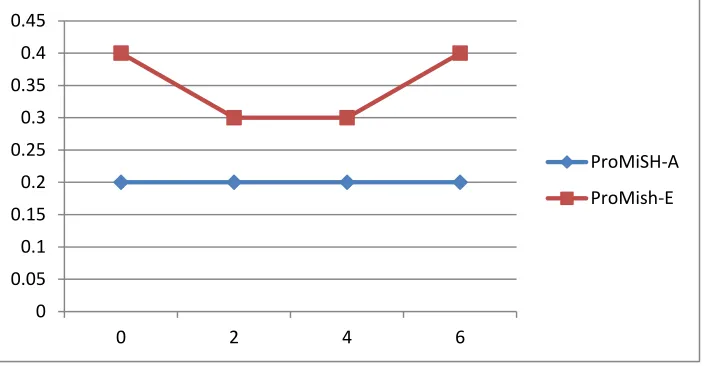
Fig. 02 Comparison for using different combinations of categories of terms for RFD2.
XI.CONCLUSION
The research proposes an alternative approach for relevance feature discovery in text documents. It presents a method to find and classify low-level features based on both their appearances in the higher-level patterns and their specificity. It also introduces a method to select irrelevant documents for weighting features. In this paper, we continued to develop the RFD model and experimentally prove that the proposed specificity function is reasonable and the term classification can be effectively approximated by a feature clustering method. The first RFD model uses two empirical parameters to set the boundary between the categories. It achieves theexpected performance, but it requires the manually testing of a large number of different values of parameters. The new model uses a feature clustering technique to automatically group terms into the three categories. Compared with the first model, the new model is much more efficient and achieved the satisfactory performance as well. This paper also includes a set of experiments on RCV1 (TREC topics), Reuters-21578 and LCSH ontology. These experiments illustrate that the proposed model achieves the best performance for comparing with term-based baseline models and pattern-based baseline models. The results also show that the term classification can
0 0.05 0.1 0.15 0.2 0.25 0.3 0.35 0.4 0.45
0 2 4 6
ProMiSH-A
Vol. 5, Issue 3, March 2017
be effectively approximated by the proposed feature clustering method, the proposed spe function is reasonable and the proposed models are robust. This paper demonstrates that the proposed model was thoroughly tested and the results prove that the proposed model is statistically significant. The paper also proves that the use of irrelevance feedback is significant for improving the performance of relevance feature discovery models. It provides a promising methodology for developing effective text mining models for relevance feature discovery based on both positive and negative feedback.
REFERENCES
[1] Jaillet, S., Laurent, A., Teisseire, and M: Sequential patterns for text categorization. IntelligentData Analysis 10 (3), 199214 (2006).
[2] Wu, S., Li, Y., Xu, Y., P. Chen and B. Pham: Automatic pattern-taxonomy extraction for web mining. In: 3th IEEE/WIC/ACM WI International Conf. In Web Intelligence, pp.242248 (2004).
[3] Zhong, N., Li, Y., Wu, S.: Effective pattern discovery for text mining. IEEE Transactions on Knowledge and Data Engineering, 24(1):30 44,,2011 [4] D.B. Liu. Web data mining: exploring hyperlinks, contents, and usage data. Data-centric systems and applications. Springer, Berlin, 2007. [5] A. Rakesh and R. Srikant.Mining sequential patterns.In proceedings of the 11th InternationalConference on Data Engineering, pages 3.14, 1995. [6] R. Afshar, X. Yan, and J. Han.Clospan: Mining closed sequential patterns in large data sets. In Data Mining (SDM03), pages 166.177, 2003. [7] J. Han and K. Chang.Data mining for web intelligence. IEEE Computer, 35 (11): 64:70,2002.
[8] M. Zaki. Spade: an efficient algorithm for mining frequent sequences. In Machine Learning Journal, special issue on Unsupervised Learning, pages 31-60, 2001.
[9] Y. Xu and S. T. Wu, Y. Li, Deploying Approaches for Pattern Refinement in Text Mining, Proc. IEEE Sixth Intl Conf. Data Mining (ICDM 06), pp. 1157-1161, 2006.
[10] C. Buckley and G. Salton, Term-Weighting Approaches in Automatic Text Retrieval, InformationProcessing and Management: An Intl J., vol. 24, no. 5, pp. 513-523, 1988.
[11] N. Zhong and Y. Li, A. Agony. Mining positive and negative patterns for relevance feature discovery. In Proceedings of KDD10pages 753762, 2010. [12] C. C. Yang. Search engine information retrieval in practice. J. Am. Soc. Inf. SCI. Technol., 61:430430, 2010.
[13] C. D. Manning, P. Raghavan, and H. Sects. Introduction to Information Retrieval.CambridgeUniversity Press, 2009.
[14] D. D. Lewis, Y. Yang, F. Li. Rcv1 and T. G. Rose: A new benchmark collection for text categorization research. J. Mach. Learn. Res., 5:361397, December 2004.
[15] X. Li and B. Liu. Learning to classify texts using positive and unlabeled data.In Proceedingsof IJCAI03, pages 587592, 2003.
[16] X. L. Li, S. K. Ng and B. Liu. Learning to classify documents with only a small positive training set. In Proceedings of ECML07, pages 201213, Berlin, Heidelberg, 2007.
[17] S. E. Robertson and I. Soboroff. The trek 2002 filtering track report. In Proceedings of TREC02, 2002.
[18] Y. Li, X. Zhou, P. Bruce, R. Y. Lau and Y. Xu. Two-stage Decision Model for Information Filtering. Decision Support Systems, 52 (3): 706-716, 2012.
[19] T. Joachims. A probabilistic analysis of the rich algorithm with tfidf for text categorization.In Proc.On ICML97, pages 143151, 1997.
[20] N. Azam, and J. Yao. Comparison of term frequency and document frequency based feature selection metrics in text categorization. Expert Systems with Applications, 39(5):47604768, 2012.
[21] R. Bekkerman and M. Gavish. High-precision phrase-based document classification on a modern scale. In Proc. of KDD11, pages 231239, 2011. [22] G. Ifrim, G. Bakir, and G. Weikum. Fast logistic regression for text categorization with variable-length n-grams. In Proceedings of KDD08:, pages 354362, 2008.
[23] X. Geng, T.-Y.Liu, T. Qin, A. Arnold, H. Li, and H.-Y.Shum. Query dependent ranking using k-nearest neighbor. In Proceedings of SIGIR08, pages 115122, 2008.