MANAGERIAL ATTITUDES, ETHICS
AND
FOREIGN LABOUR
Aster Yong
Master of Arts (Applied Social Research), Monash University Bachelor of Arts (Multidisciplinary), Victoria University of Technology
A thesis submitted in total fulfilment
of the requirements for the degree of
Doctor of Philosophy
VOLUME I
Centre for International Corporate Governance Research (CICGR)
Faculty of Business and Law
STILL THEY COME – grape-pickers and bricklayers, nannies and schoolteachers, computer programmers and sex workers, these and millions more head for foreign lands in search of work, or higher pay, or just the opportunity to make a better life. Around 150 million people are ‘foreign-born’, living outside their country of origin, and every year they are joined by two to three million more emigrants. This number also includes 12 million or so refugees, driven from their homes by war, or famine, or persecution.
These 150 million people may only represent three percent of world population. But they generate controversy and debate out of all proportion to their modest numbers, largely because as they travel, migrants expose many of the social and political fault lines – of race, gender, social class, culture and religion – that underlie the seemingly settled terrain of modern nation states.
- Peter Stalker (2001, p. 8)
On a technology campus off the bustle of the Hosur Road in Electronics City, Bangalore, engineers are fiddling with the innards of a 65-inch television, destined for American shops in 2006. The boffins in the white lab coats work for Wipro, an Indian technology company.
McKinsey looks at possible shifts in global employment patterns in various service industries, including software engineering, banking and IT services. Between them, these three industries employ more than 20 million workers worldwide. The supply of IT services is the most global. Already 16 percent of all the work done by the world’s IT services industry is carried out remotely, away from where these services are consumed, says McKinsey. In the software industry the proportion is 6 percent. The supply of banking services is the least global, with less than 1 percent delivered remotely.
ABSTRACT
The phenomenal increase of foreign labour employment (FLE) in the last three decades has brought about numerous socio-economic problems for receiving, sending and hosting nations of foreign workers. As a consequence, these have triggered many clamours for justice and equity for foreign workers from less developed countries especially. These circumstances have provided an opportune setting for a cross-cultural investigation into prevailing FLE attitudes and ethics (teleological or deontological) among managers from three countries (Australia, Singapore and Malaysia), two race/ethnic (Caucasian and Chinese) groups and three religious (Christian, Buddhist and Malay Muslim) denominations.
Both qualitative and quantitative methodologies were employed to enable cross-data reliability checks among random and quota samples. The qualitative interview random sample consisted of managers from 36 Australian-owned Melbourne-based companies. The case study sample composed of two Singaporean-born expatriates in Melbourne. The quantitative survey sample comprised 120 randomly selected and 83 quota selected respondents from Australia (105), Singapore (55) and Malaysia (43). Procuring “suitably qualified” respondents was difficult and this probably explains the response rates of 34 and 24 percent among random samples.
Even though the responses of managers were very favourable towards FLE (foreign skilled particularly), they had their reservations about FLE in other countries (company relocation especially). Job and wealth losses were their foremost concerns. The degree of support for FLE correlated with the ethical stances. Singaporeans were entirely teleological and the most favourable of the three country groups toward FLE. Conversely, Australians were totally deontological and the least favourable of the three country groups toward FLE.
DECLARATION OF ORIGINAL AUTHORSHIP
“I, Aster Yong, declare that the PhD thesis entitled ‘Managerial Attitudes, Ethics and Foreign Labour’ is no more than 100,000 words in length, exclusive of tables, figures, appendices, references and footnotes. This thesis contains no material that has been submitted previously, in whole or in part, for the award of any other academic degree or diploma. Except where otherwise indicated, this thesis is my own work”.
Signature:
TABLE OF CONTENTS [VOL.I]
PAGE
ABSTRACT i
DECLARATION OF ORIGINAL AUTHORSHIP ii
LIST OF ABBREVIATIONS xviii
LIST OF FIGURES xix
LIST OF TABLES xix
ACKNOWLEDGEMENTS xx
CHAPTER I
INTRODUCTION 1.1 Foreign Labour Employment – The Research Issue 1
1.2 Foreign Labour Defined 2 1.3 The Cycle of Foreign Labour Employment 3 1.4 Research Objectives 6 1.5 Justification for Objectives of Research 7 1.6 Significance of Research 10
1.6.1 Practical Implications 10 1.6.2 Conceptual Contributions 12 1.7 Guide to the Thesis 13
CHAPTER II
FOREIGN LABOUR EMPLOYMENT – FORCES AND EFFECTS
2.1 Introduction 15
2.2 Foreign Labour Employment and Migration – Theoretical Models
15
2.3 Globalisation, Technological Development and International Migration Impact on Foreign Labour Employment before 1914
20
2.4 Globalisation, Technological Development and International Migration Impact on Foreign Labour Employment from 1945 onwards
22
2.5 Work Revolution – Transformations to Work and Workplace – Effects on Foreign Labour Employment
26
2.6 Foreign Labour Employment Effects on Individuals as Foreign Labour
28
2.6.1 Women 30
2.6.2 Undocumented/Illegal Workers 32 2.7 Foreign Labour Employment Effects on Labour Receiving
Countries
33
2.7.1 Labour Force 34
2.7.2 Population 36
2.7.3 Other Social and Cultural Effects 37 2.8 Foreign Labour Employment Effects on Labour Sending
Countries
37
2.8.1 Labour Force 38
2.8.2 Population 39
2.8.3 Remittances 39
2.9 Effects of Multinationals on Labour Hosting Countries 41 2.9.1 Labour Force 42 2.9.2 Other Social and Cultural Effects 45
2.10 Summation 45
CHAPTER III
STUDY OF THREE COUNTRIES
3.1 Introduction 47
3.2 Country Study I: Australia 48 3.2.1 Australia: Its Population and Labour Force 48
3.2.2 Australia: Its Religions 49 3.2.3 Australia’s Immigration Policy 49
3.2.4 Australia’s Foreign Labour Force 50 3.3 Country Study II: Singapore 53 3.3.1 Singapore: Its Population and Labour Force 53 3.3.2 Singapore: Its Religions 53 3.3.3 Singapore’s Immigration Policy 54 3.3.4 Singapore’s Foreign Labour Force 57 3.4 Country Study III: Malaysia 59 3.4.1 Malaysia: Its Population and Labour Force 59 3.4.2 Malaysia: Its Religions 60 3.4.3 Malaysia’s Immigration Policy 60 3.4.4 Malaysia’s Foreign Labour Force 62
3.5 Summation 66
CHAPTER IV
INDIVIDUAL, ORGANISATION & ENVIRONMENT EFFECTS ON ETHICAL DECISION MAKING OF FOREIGN LABOUR EMPLOYMENT
4.1 Introduction 68
4.2 Definition of Terms 68
4.2.1 Culture 69
4.2.2 Ethics 69
4.2.3 Culture and Ethics Link 70 4.2.4 Psycho-biology, Culture and Ethics Link 71 4.3 Ethical Decision Making Issues 71 4.4 Ethical Decision Making Models 72 4.5 Individual Factors 74
4.5.1 Effects of Genes and Culture 74 4.5.2 Effects of Cognition 76 4.5.3 Effects of Work and Job Characteristics 77 4.6 Organisational Factors 78
4.6.1 Effects of Organisational Culture & Climate 78 4.6.2 Effects of the Organisation’s Cognitive Moral
Development
79
4.6.3 Influences of Referent Others 80 4.6.4 Effects of Profit-Making 81 4.6.5 East-West Cultural Differences 82 4.7 Environmental Factors 85 4.8 Ethical Theories involved in Decision Making Models 86
CHAPTER V
THEORETICAL FRAMEWORK, RESEARCH QUESTIONS & HYPOTHESES
5.1 Introduction 90
5.2 Objectives of Research 90 5.3 Theoretical Framework for Foreign Labour Employment 90 5.4 Culture – Its Levels Explained 92
5.4.1 Gender 93
5.4.2 Age 93
5.4.3 Country 94
5.4.4 Race/Ethnicity 94
5.4.5 Religion 95
5.4.6 Organisational 96
5.4.7 Industry 96
5.4.8 Professional 96
5.5 Prior Research Findings on Culture Variables 97
5.6 Summary 97
5.7 Research Questions 98
5.8 Hypotheses 99
5.9 Summary 100
CHAPTER VI
METHODOLOGY AND EMPIRICAL RESULTS
6.1 Introduction 101
6.2 Research Methodology in Brief 101 PART ONE
6.3 Exploratory Qualitative Interview Sample 103 6.4 Methodology of Random Sample 105
6.4.1 Sampling Procedure 105
6.4.2 Data Collection 107
6.4.2.1 Use of Vignettes 108
6.4.2.2 Response Rate 108
6.4.2.3 Description of Interview Sample 109 6.4.3 Data Preparation for Analysis 110 6.4.3.1 Validity and Reliability Distinction 110 6.4.3.2 Initial Exploration of Test Reliability 112 6.4.3.3 Address Issues Arising from Initial
Exploration of Test Reliability
122
6.4.3.4 Second Test of Reliability 123 6.5 Empirical Results of Interview Sample 126 6.5.1 Human Resource Management Challenges 127 6.5.2 Business Priorities and Values 131 6.5.3 Respondents’ Personal Values 137
6.5.4 Foreign Labour 137
6.5.5 Summation of Empirical Results – Interview Sample 144 PART TWO
6.6 Case Studies 148
6.6.1 Case Study #1 – Mr A 148 6.6.2 Case Study #2 – Mr B 151 6.6.3 Summation of Empirical Results – Case Studies 153
PART THREE
6.7 Quantitative Survey Sample 154 6.8 Pilot Methodology 155
6.8.1 Pilot Results 156
6.8.2 Amendations from the Pilot Study 158 6.9 Random Sample Methodology 159 6.9.1 Response Rate of Random Sample 160 6.9.2 Description of Random Sample 161 6.10 Stratified Quota Sample Methodology 164 6.10.1 Quota Sample Design 164 6.10.2 Search for Participants 166 6.10.3 Difficulties Encountered in Finding Participants 169 6.10.4 Quota Sample Response 171 6.10.5 Description of Quota Sample 172 6.10.6 Aggregate of Samples 174 6.11 Empirical Results of Survey Sample 174
6.11.1 Australian Sample 175
6.11.1.1 Attitudes of Australians 175 6.11.1.2 Reasons for Foreign Labour Employment
- Australians
176 6.11.1.3 Practice of Foreign Labour Employment
by Australian Companies
178
6.11.1.4 Other Foreign Labour Employment Considerations by Australians
181
6.11.1.5 Ethics of Australians 182 6.11.1.6 Australian Sub-Groups – Key Differences 182
6.11.2 Singaporean Sample 187
6.11.2.1 Attitudes of Singaporeans 187 6.11.2.2 Reasons for Foreign Labour Employment
- Singaporeans
188
6.11.2.3 Practice of Foreign Labour Employment by Singaporean Companies
190
6.11.2.4 Other Foreign Labour Employment Considerations by Singaporeans
192
6.11.2.5 Ethics of Singaporeans 193 6.11.2.6 Singaporean Sub-Groups – Key
Differences
194
6.11.3 Malaysian Sample 199
6.11.3.1 Attitudes of Malaysians 199 6.11.3.2 Reasons for Foreign Labour Employment
- Malaysians
200
6.11.3.3 Practice of Foreign Labour Employment by Malaysian Companies
202
6.11.3.4 Other Foreign Labour Employment Considerations by Malaysians
204
6.11.3.5 Ethics of Malaysians 205 6.11.3.6 Malaysian Sub-Groups – Key Differences 206 6.11.4 Total Country Sample 212 6.11.4.1 Attitudes of Total Country Sample 212 6.11.4.2 Reasons for Foreign Labour Employment
- Total Country Sample
213
6.11.4.3 Practice of Foreign Labour Employment - Total Country Sample
221
6.11.4.4 Other Foreign Labour Employment Considerations - Total Country Sample
6.11.4.5 Ethics - Total Country Sample 227 6.11.5 Total Race/Ethnic and Religious Samples 228
6.11.5.1 Attitudes of Anglo-Celtic/Caucasian (CA), Chinese (CH), Buddhist (B) and Malay Muslim (MM) Sub-Groups
228
6.11.5.2 Reasons for Foreign Labour Employment of Anglo-Celtic/Caucasian (CA), Chinese (CH), Buddhist (B) and Malay Muslim (MM) Sub-Groups
230
6.11.5.3 Practice of Foreign Labour Employment - Anglo-Celtic/Caucasian (CA), Chinese (CH), Buddhist (B) and Malay Muslim (MM) Sub-Groups
236
6.11.5.4 Other Foreign Labour Employment considerations of Anglo-Celtic/Caucasian (CA), Chinese (CH), Buddhist (B) and Malay Muslim (MM) Sub-Groups
240
6.11.5.5 Ethics of Anglo-Celtic/Caucasian (CA), Chinese (CH), Buddhist (B) and Malay Muslim (MM) Sub-Groups
242
6.12 Summary 244
CHAPTER VII
DISCUSSION OF RESULTS
7.1 Introduction 246
7.2 Foreign Labour Employment – Attitudes and Practice 246 7.3 Reasons Favouring Foreign Labour Employment 252 7.4 Reasons NOT favouring Foreign Labour Employment 255 7.5 Practice of Foreign Labour Employment 257 7.6 Other Foreign Labour Employment Considerations 258 7.7 Foreign Labour Employment – Ethics of Respondents 259
7.8 Summation 263
CHAPTER VIII
CONCLUSION
8.1 Introduction 273
8.2 Research Objectives Reviewed 274 8.3 Empirical Investigation in Summary – Methodology and
Results
274
8.3.1 Part One 275
8.3.2 Part Two 275
8.3.3 Part Three 275
8.4 The Limitations 278
8.5 Future Research Directions 279 8.6 The Implications for Managers and Policy Directions 280
GLOSSARY 283
REFERENCES 285
LIST OF ABBREVIATIONS
ABS Australian Bureau of Statistics ACA Australian Anglo-Celtic/Caucasian ACH Australian Chinese
ACR Australian Christian
AB Australian Buddhist
B Buddhist
CA Anglo-Celtic/Caucasian
CH Chinese
CR Christian
CMD Cognitive Moral Development
DIMA Department of Immigration and Multicultural Affairs, Australia
EDM Ethical Decision Making
EPZs Export Processing Zones
FDI Foreign Direct Investment FLE Foreign Labour Employment
FTZs Free Trade Zones
GDP Gross Domestic Product
GLC Government-linked Companies (Singapore)
HRM Human Resource Management
MB Malaysian Buddhist
MCA Malaysian Anglo-Celtic/Caucasian
MCH Malaysian Chinese
MCR Malaysian Christian
MDS Malaysian Department of Statistics
MM Malay Muslim
MNCs Multinational Corporations
NES Non-English-speaking
NIEs Newly Industrialising Economies
SB Singaporean Buddhist
SCA Singaporean Anglo-Celtic/Caucasian SCH Singaporean Chinese
SCR Singaporean Christian
SDS Singapore Department of Statistics
TNCs Transnational Corporations
US United States
LIST OF FIGURES
1.1 The Cycle of Foreign Labour Employment
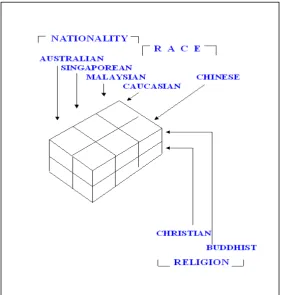
1.2 Factorial Design of the Combination of Seven Variables 4.1 Factors Affecting FLE Decision-Making in the Manager 5.1 Dependent and Independent Variables in EDM of FLE
LIST OF TABLES
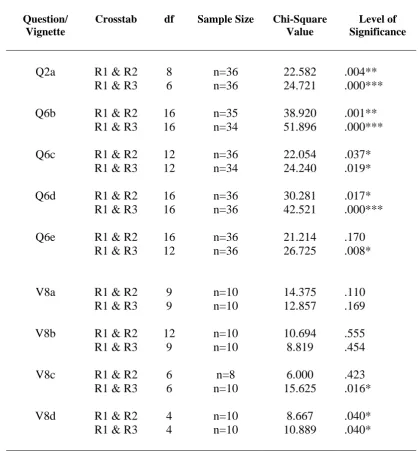
6.1 Response Rate of Exploratory Qualitative Interview Sample 6.2 Results of Chi-Square Tests of Independence
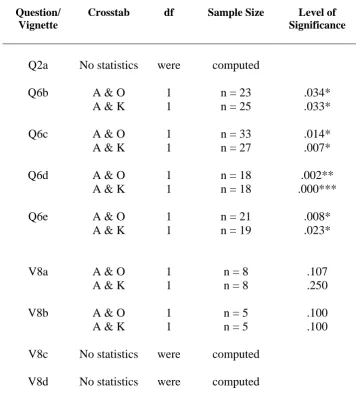
6.3 Results of the Fisher Exact Probability Tests
6.4 Measures of Central Tendency, Variability and Correlation 6.5 Measures of Central Tendency, Variability and Correlation 6.6 Results of Spearman’s Rank Order Correlation
6.7 2nd Test Results of Chi-Square Tests of Independence 6.8 2nd Test Results of Spearman’s Rank Order Correlation
6.9 Summary of ‘Other Business Priorities’ 6.10 Summary of Social Responsibility Items
6.11 Summary of Company Values Expressed by Respondents 6.12 Summary of ‘Respondents’ Personal Values’
6.13 Viewpoints of Six Different Categories of FLE
6.14 Random Survey Response Rate from Australia and Singapore 6.15 Sample and Population Comparisons for Australia
6.16 Sample and Population Comparisons for Singapore 6.17 Quota Sample Respondent Participation
ACKNOWLEDGEMENTS
All praises to God Almighty for the work He began in me
My thanks for all He has done and seen me through
This work is to His glory.
Who would have thought that I could go on to university and complete a PhD? I had missed the opportunity back in Singapore where I grew up and was educated till pre-university. Yet, a year after I migrated to Melbourne, I was engaging in undergraduate studies in Western Institute, which later merged with Footscray Institute of Technology to become Victoria University of Technology (VUT). My greatest thanks to Australia and Australians, who through their generosity have demonstrated that this indeed is the land of opportunities, where dreams do come true, when you work hard and believe.
Going back to studies after a good 14 years was not an easy thing to do. I am grateful to the teaching staff at VUT and Monash (where I undertook my Masters) for they have not only encouraged but equipped me well to go on and face the challenges of a PhD.
VUT opened the door for me to begin my university studies. By giving me a PhD scholarship, it gave me another chance at a higher level of education. My most sincere thanks to the people of the university who gave me such opportunities to discover the latent talents within myself and I believe that by completing my PhD, I am demonstrating my appreciation where words alone could never suffice.
say, the contribution of my two supervisors has been extremely invaluable. One could not have asked for better expert guidance. Thank you Professor Anona Armstrong and Professor Ronald Francis for coming alongside and helping me complete my quest.
Special thanks also to Associate Professor Patrick Foley and Dr Prasuna Reddy for your coaching on SPSS. The seminars organised by the Postgraduate Research Unit (PRU) were useful too and my appreciation to Professor Elaine Martin and her staff for their contribution. Assistance with necessary articles by the library staff at VUT (and the others in Melbourne universities) has been nothing short of wonderful. Over the last 15 years, I have been able to witness the growth and development of the VUT library and I applaud the dedication of the staff at making this library one of the finest in the country.
The three volunteers who helped with the coding of the qualitative data are not forgotten. My thanks to you and also to Suane and Linda who came to “rescue” with typing when my arm was “at rest” with RSI. A PhD undertaking can be akin to a Robinson Crusoe experience and I am especially grateful to Suane for her prayers and support and intermittent calls now that she has moved to Queensland. I am also very appreciative of Mr Lim and Angela Rojter (formerly from SLU and now with PRU) for perusing my thesis and for their helpful suggestions. I am most grateful to my husband, a man many regard as having a BIG HEART and whose love and support have been beyond measure.
To name and thank everyone who has made a contribution is close to impossible and because I feel it is important to acknowledge the prayers and encouragement by my family, friends and church community, I will say,
A
BIG
THANK YOU
to one and all for what you have given
CHAPTER I
INTRODUCTION
1.1 FOREIGN LABOUR EMPLOYMENT - THE RESEARCH ISSUE
Foreign labour employment (FLE) has been gaining significance as ‘the new international division of labour’ as more and more businesses increasingly alter their work practices to remain competitive in today’s fast growing global economy. Foreign nationals serving as an alternative or back-up resource of labour, whether as slaves, indentured labour or economic migrants, are by no means new or recent (Stalker 1994). Most certainly, the spread of internationalisation and the global integration of economies since the latter half of the twentieth century, have opened up many more opportunities for businesses to tap into the human resource pool of countries other than their own (Rodrik 1997).
Traditionally, businesses within a country have taken on foreign nationals already in the country or brought them from another country. Whilst foreign workers from these avenues have been growing in large numbers, particularly since the mid-eighties, businesses are also increasingly out-sourcing work to companies located in other countries or employing ‘locals’ in their subsidiaries located across national and transnational borders (Castles & Miller 2003; Debrah & Smith 2002). The employment of foreigners as a labour resource thereby has not been limited to those within the country but included those from other countries as well.
1.2 FOREIGN LABOUR DEFINED
FLE comes under the umbrella term of ‘international labour movement’ (Smart & Casco 1988, p. 8), which considers not only the different types of labour migration (eg contract/guest/seasonal, professionals/skilled, unskilled) but also those related to settlement, refugee, irregular and undocumented migration (ibid). Most publications tend to refer to FLE as ‘international labour migration’ (Stalker 1994) or the ‘new international division of labour’ (Kaur 2000, p. 3; Stalker 1994, p. 159; Papastergiadis 2000, p. 37; Castles 1989, p. 116). Castles (1989) identifies the employment of foreign workers as the ‘international mobility of labour’ (p. 1). This probably can be ascribed to the labour market’s fast growing image as a ‘global cultural interchange’ (Castles & Miller 2003, p. 4).
As a concept, foreign labour has been perceived also as migrant labour. Given labour’s close association with migration, authors like Castles (1987, 1989) and Stalker (1994, 2000) amongst others, have tended to look upon employment by foreigners/foreign nationals as migrant labour. This latter term does, however, convey the idea that the foreigner has intentions of not only working but also of taking up a more permanent residency, even citizenship, in the country of employment.
Foreign labour in this thesis will pertain only to the employment per se and not to the settlement considerations of nationals from other countries. The term will refer to any worker who is either a non-national in the country of employment or employed by a company set up away from its country of origin.
In the first instance, the workers are non-nationals employed within the resident country. These foreign workers have been
- brought in by the company/recruitment agency or
- individuals job seeking whilst already resident in the country.
[i] settlers or people who come to live permanently in a country.
[ii] contract workers or people who enter a country to work for an arranged and limited period. Stalker (1994) has suggested that these transient residents could either be short-term (staying for a period of less than one year) or long-term (staying for a period of more than one year). In the main, they tend to be unskilled or semi-skilled and include seasonal workers commonly employed in tourist-dependent and agricultural type of industries.
[iii] professionals or people with a higher educational or training level (including academics and students) whose skills can be transferred from one country to another.
[iv] illegal immigrants or people who have come into the country illegally or overstayed on their visas or taken on work when they have only tourist visas. Should these people be employed, they will be regarded as “undocumented workers” (Stalker 1994, p. 4).
[v] asylum seekers and refugees or people who have had to leave their home country because of political persecution, war or famine, represent the only group of ‘non-economic’ migrants.
In the second instance, the FLE is in other countries. Workers are classified as “foreign” labour if employment is
- work that has been outsourced/subcontracted to the company by a company from another country, or
- through a relocated “foreign” company or subsidiary of a multinational overseas.
1.3 THE CYCLE OF FOREIGN LABOUR EMPLOYMENT
Businesses/Individual(s)
History & Macro-
Environment Culture
Countries’
FLE Policies Profit Making Levels & Practice
Ethics
FLE Levels/Strategies
International Migration & its Networks
Global Market Environment Technological Developments
& Work Revolution
International Regulatory Bodies
Figure 1.1: The Cycle of Foreign Labour Employment
At the global level, international migration and its networks (formal and informal) mediate with the global market environment, technological developments/work revolution and international regulatory bodies to affect fluctuations in the overall FLE cycle. These four global factors simultaneously influence the FLE levels/strategies at the country, organisation and individual levels.
organisation with respect to stakeholders and future public policy. Technological issues relate to present and future decisions regarding feasible technological employment. Social issues concern the potential impact of the decision on the local community and society at large. Ethical issues are focused on the general moral standards of behaviour (ibid).
At the individual level, two kinds of persons are involved: those contemplating the decision for FLE and those considering employment as foreign labour. An individual’s cultural and ethical attributes (discussions in Chapter IV) would become central to either outcome.
The levels/strategies of foreign labour employed at the country level can lead to either positive or negative responses from the government (as discussions in Chapter III reveal), which ultimately will ascertain the number and type of foreigners permitted into the country via immigration policies. Policies pertaining to the exit or entry of workers are used to regulate FLE not only by receiving/hosting countries but also by sending countries of foreign labour (Castles 1992; Castles & Miller 2003; Hugo 2001a & 2001b; Hui 1998; Kanapathy 2001; Kassim 2001a; Low 1995; Ruppert 1999; Turnbull 1980). These policies will in turn require businesses and individuals to re-evaluate their FLE levels/strategies.
FLE policies are influenced to a large extent by the history and macro-environment (physical geography, economic, political/legal, socio-cultural, demographic and technological factors) of countries, emigrant as well as immigrant (Kotler 2003). Triandis and Suh (2002) suggested that history and ecology are linked to the maintenance system and to the shared elements such as attitudes, norms and values, which reflect the predominant attributes of a nation’s culture (eg. individualistic or collectivistic). History takes into account factors like migrations, wars, revolutions and inventions. Ecology consists of the terrain, climate, natural resources, flora and fauna, which invariably affects the level of cultural diffusion. For example, large mountains and expansive seas reduce the probability of cultural diffusion. The maintenance system is made up of subsistence and settlement patterns, social structures and means of production (agriculture, manufacturing, services).
1.4 RESEARCH OBJECTIVES
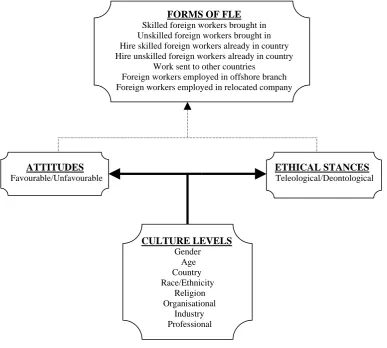
The first objective of this thesis was to investigate the current perceptions of managers regarding the employment of foreigners as a labour resource in seven various categories. It would include the reasons for their preferences of these seven categories of FLE and wherever possible, the practices of businesses to add insight into contemporary managerial thinking and organisational behaviour concerning FLE. The seven categories of FLE are as follows:
[1] Skilled foreign workers brought in [2] Unskilled foreign workers brought in
[3] Hire of skilled foreign workers already in the country [4] Hire of unskilled foreign workers already in the country [5] ‘Work sent’ to other countries
[6] Foreign workers employed in offshore branch [7] Foreign workers employed in relocated company.
These seven categories of FLE could be looked upon as two broad classifications of foreign workers, with the first four referring to those employed within the country and the remaining three concerning those employed in other countries.
The second objective was to find out what ethical stance present-day managers would take in regard to each of the seven categories of FLE. In other words, would their ethical considerations toward FLE be based on the teleological (consequential) or deontological (duty) type of ethics.
The third objective was to determine the impact of culture on managerial attitudes and ethics towards FLE in its seven categories. Although the investigation would involve eight cultural variables, the focus rested mainly with three main variables – country, race/ethnicity and religion - to ascertain how these could account for variations in attitudes and ethical stances of managers. Respondents were obtained from
[2] two race/ethnic groups – Anglo-Celtic/Caucasian1 and Chinese;
[3] three religious denominations – Christian, Buddhist and Malay Muslim.
1.5 JUSTIFICATION FOR OBJECTIVES OF RESEARCH
Foreign nationals have become an important labour resource for today’s businesses engaging in a global economy that is competitive and fast changing. As a research topic, FLE has been of interest to scholars through the centuries (Stalker 1994). In the last thirty years or so, the trail of research conducted on FLE and its corollaries has been prolific. To a large extent, this has been fuelled by the growing commissions from governments (Castles 1987, 1989; Nayagam 1992; Pang 1988) and international regulatory bodies such as International Labour Organisation (Abella 1989, 1991, 1997; Bohning 1996; Stalker 1994, 2000), International Organisation for Migration (Appleyard 1991), Organisation for Economic Co-operation and Development (Appleyard 1989; Kassim 2002; Pang 1993; Wickramasekara 2001), United Nations Educational, Scientific and Cultural Organisation (Appleyard 1988; Stahl 1988) and The World Bank (Ruppert 1999).
According to Castles and Miller (2003), Papastergiadis (2000), Stahl (1988) and Stalker (1994, 2000) amongst other authors, the interest has been sparked also by the magnitude of population movements worldwide resulting from post-World War II globalisation amidst political upheavals in the former Soviet Bloc, South Africa, Latin America and China. More importantly, it has become a cause arising out of concern [1] for the discrimination, exploitation, mistreatment and abuse of foreign workers in labour receiving countries and [2] to improve the welfare of foreign workers in third world nations.
The research on FLE has been extensive in covering various domains (individual, gender, occupational, organisational, community/national, regional and international), with empirical and theoretical explanations on the totality of the FLE phenomenon taking inter- as well as multi-disciplinary approaches. Incorporated in
1
the research also have been agents such as multinational corporations, international labour regulatory bodies, labour recruiting networks and trade unions. However, prior studies bear mainly upon the advantages and disadvantages of FLE from the economic, political or social viewpoints, focusing on foreign workers in receiving labour countries or on (local) workers in hosting countries of multinational corporations.
From the beginning, this thesis had aimed to consider FLE in its entirety. It is important to understand the changes that have taken place in FLE and the impact it has made on work, the workplace environment and individuals, on the personal as well as on the organisational, societal and global levels. These effects have to be considered in terms of receiving/hosting2 as well as sending nations of foreign labour. Because of this, it became necessary for FLE to be defined as a construct that took into account foreign workers employed not only within the country but also in other countries. Those employed within the country refers to skilled and unskilled foreign nationals who had either been brought in or hired whilst they were already in the country. Those employed in other countries pertains to (local) workers of that country hired for (a) out-sourced work (b) offshore branch operations (c) relocated foreign companies, within their country. In all, FLE is characterised in seven different categories.
The growing attention from both the public and academia directed at the shortfalls in the morality standards of business conduct has made pertinent a survey of prevailing attitudes and ethics amongst managers. There has also been the growing call for cross-cultural research and a greater cultural sensitivity for issues related to business ethics in recent times. All in all, these circumstances have made this an opportune time to investigate the FLE attitudes and ethical stances of managers from distinctly dissimilar cultures such as those recognised between the east and west. This has not been canvassed before as a topic of investigation even though research done on FLE is not only expansive but also very comprehensive.
The main sample in the study was sourced from three countries (Australia, Singapore and Malaysia), two race/ethnic groups (Anglo-Celtic/Caucasian and Chinese) and two religious denominations (Christian and Buddhist) to enable a
2
factorial analysis of a cross-combination of seven variables [see Figure 1.2 & app. I.1]. These three countries were selected because they share some common features. All three were former British colonies and subsequently inherited the same legal, political and education systems. With early beginnings as migrant settler colonies, these three countries have now become multicultural nations (Baker 1999; Castles 1992; Chiew 1995; DIMA 2001a; Leggett 1993; Turnbull 1980). Despite these similarities, Australia is known as a western cultured society whereas Singapore and Malaysia represent eastern cultured societies. Although the latter two nations comprise three major people groups of similar race/ethnic and religious origins, Singapore is recognised as predominantly a Chinese Buddhist country whilst Malaysia is acknowledged as a Malay Muslim country (Baker 1999; Lian 1995; MDS 2005a; SDS 2005a; Turnbull 1980). Australia is regarded essentially an Anglo Christian nation (Milner &Quiltry 1996; Yearbook Australia 2005).
At the initial stage of investigation, the plan was to gather from two countries (Australia and Singapore), samples comprising cross-combinations of three race/ethnic (Caucasian, Chinese and Malay) and three religious (Christian, Buddhist and Muslim) groups. This was abandoned when participants of Malay and Muslim cross-combinations could not be obtained from both countries. The study proceeded with two race/ethnic (Caucasian and Chinese) and two religious (Christian and Buddhist) cross-combination variable group samples from three countries (Australia, Singapore and Malaysia) instead. A small Malay Muslim sample was also obtained from Malaysia given that this race/ethnic and religious group forms the majority in the country.
Executives (for example, Managing Directors) and Human Resource Managers were the choice of participants because of their direct experience with labour employment. Even though these participants were assessed on their ethical perceptions concerning FLE, Burns and Brady (1996) contended that these would be more reliable than those obtained from a sample of respondents with no personal experience of the situation they were being questioned about, for example, students. It is important to note also that judgements of responsibility tend to be influenced by role expectations based on professional as well as organisational rank/position (Akaah & Riordan 1989; Ferrell & Gresham 1985). That is, these individuals at higher hierarchical levels might be held to stricter moral standards (Trevino 1992). Therefore, it could be inferred that their responses on the subject of FLE would carry a greater degree of reliability as well as validity.
1.6 SIGNIFICANCE OF RESEARCH
1.6.1 PRACTICAL IMPLICATIONS
was aimed at filling this gap by its comparative cultural investigation of managerial attitudes and ethics among three countries, two race/ethnic groups and three religious denominations in the employment of seven categories of foreign workers.
It has been said that attitudes cannot be relied on for determining behavioural outcome because people might not always do, as they believe. Nonetheless, they can give an indication of people’s predisposition to act in a certain way to a given situation (Allport 1937; Mann 1969; Oskamp 1991). According to Alreck and Settle (1995), attitudes are ‘psychological predispositions’ (p. 13) because they can affect the way individuals will act. Fishbein and Ajzen (1975) viewed attitudes as ‘learned’ (p. 113) response tendencies whilst Eagly and Chaiken (1998) stated that they function to facilitate adaptation to the environment. To top it all, Oskamp (1991) and Rajecki (1990) indicated that attitudes have significant effects on how situations are perceived and consequently the stances and evaluations corporate individuals form will guide decision-making and behavioural outcomes, ethical or otherwise. Knowles (1990) stated that the judgements and decisions play a pivotal role in affecting the effectiveness of the organisation, which in turn can create ripple effects within the immediate society and its surrounds.
1.6.2 CONCEPTUAL CONTRIBUTIONS
Lu et al. (1999) stated that cross-cultural differences in ethical beliefs have become an important emerging area of research. Current studies, however, suffered from two limitations. Firstly, these studies have been utilising nationality as a proxy for culture. In so doing, there is no overall framework for determining which particular dimensions of culture cause differences in ethical decision-making (EDM). Without this framework, these researchers contended that it would not be possible to make generalisations (ibid). Goodwin and Goodwin (1999) found that ethical attitudes were affected not just by nationality but also by ethnic origin and religion.
Secondly, with the notable exception of the study by Nyaw and Ng (1994), previous investigations have failed to take into consideration the stakeholder group(s) that were affected. This in itself would not place EDM in its proper context whilst making assessment and comparison of the degree of ethical/unethical behaviour across cultures impossible. Nyaw and Ng (1994) argued that measuring ethical beliefs in terms of stakeholder groups makes for better validity because respondents’ perceptions toward specific issues such as bribery and fraud tend to depend, inter alia, on who was affected by the behaviour. Lu et al. (1999) suggested that it could well be that individuals would be more willing to undertake unethical behaviours toward a competitor or an employer but less willing to do so if such behaviours affected a fellow employee or a customer.
1.7 GUIDE TO THE THESIS
In this first chapter, FLE was introduced as an alternative source of labour supply that has fast been gaining popularity in a growing and changing global economy. Owing to this and the vested interests amongst local, national and international business, government and non-government associates, it has also become a significant research topic with scholars and non-scholars alike. Whilst these two reasons could have contributed to the birth of this thesis, the objectives were not to add on more research to the ever-increasing volume of investigation on FLE (as outlined in this chapter). Instead, this thesis was geared towards a new perspective of looking at how culture might affect managerial attitudes and ethics on FLE. The findings could serve to improve our cognisance of the cultural differences that exist in attitudes and ethics and these include those not related to FLE as well.
Chapter II describes the forces that affect the cycle of FLE. Beginning with global migration history and colonisation in the sixteenth century, FLE had been mostly ‘forced and coercive’ (Stalker 1994). It has since progressively become more voluntary, economic related employment. International migration, the global market environment, international regulatory bodies, technological development and its impact on work and the workplace operate at the global level to affect FLE at the country, organisation and individual levels. FLE affects individuals not only in labour receiving and hosting countries but also in labour sending countries. These effects can be positive as well as negative. The unsavoury aspects of FLE, most unfortunately, tend to be experienced more by individuals of the fairer sex, the unskilled and the illegals.
Chapter III reviews the three countries of Australia, Singapore and Malaysia with regards to country population and labour force, religion, immigration policy and FLE.
Chapter V introduces a theoretical framework proposing that attitudes and ethical stances of managers toward FLE can differ because of culture operating at eight different levels. The research questions and hypotheses are also introduced.
Chapter VI presents the research methodology and empirical results in a single chapter because of the complexities involved in this multiple stages study. In three separate sections, Part One focuses on the qualitative interview sample of Australians, Part Two is on the two case studies of Singaporeans and Part Three concentrates on the quantitative survey sample comprising respondents from Australia, Singapore and Malaysia.
CHAPTER II
FOREIGN LABOUR EMPLOYMENT – FORCES AND EFFECTS
2.1 INTRODUCTION
FLE can be seen as an occurrence involving people (or business) movement from one country to another for economic-related employment. But individuals (or organisations) by themselves represent only one level of factors engaged in the cycle of foreign worker employment. Global, country, organisational and individual factors interact to simultaneously ‘force’ a greater or lesser movement in the overall FLE cycle (discussion in Section 1.3).
This chapter will discuss the corollary factors and their effects on FLE by a review of [1] the theoretical models that explain migration and [2] the impact caused by globalisation, technological development and international migration. The effects of FLE are also important and these will need to be considered in regards to work and the workplace environment, individuals as foreign workers, labour receiving, sending and hosting countries.
2.2 FOREIGN LABOUR EMPLOYMENT AND MIGRATION –
THEORETICAL MODELS
Never before our time have so many people been uprooted. Emigration, forced or chosen, across national frontiers or from village to metropolis, is the quintessential experience of our time.
- Berger (1984), And Our Faces, My Heart, Brief as Photos
Many theoretical models have been developed within the social-scientific disciplines to explain migration. These can be categorised into three main perspectives: [1] voluntarist, [2] structuralist and [3] systems. Despite their limitations, the relevant contribution given from each perspective will be discussed in order to foster a better understanding of the relationship between migration and FLE and amongst the key players: migrants, business organisations and the sending and receiving nations.
The voluntarist perspective views migration as the consequence of ‘twin and counterbalancing forces’ and is thus best characterised by the ‘push-pull’ model (Papastergiadis 2000, p. 30). According to Castles and Miller (2003), migration alone can hardly ever be simply an action on the part of the individual to move from their area of origin. Stalker (2000, p. 131) suggested that migration might be the decision-making by family or household members rather than by individual choice. Whatever the case may be, individuals get ‘pushed’ out because of
[1] underlying forces (eg. overcrowding, low living standards, lack of economic opportunities, political repression or ecological disasters);
[2] medium-term crises (associated with the downward turn of economic cycle); [3] enabling components (including technological changes, for example, shift
from tall ships to steamships in transport).
They would be ‘pulled’ to certain new areas by the
[1] preferential immigration policies offered by the country;
[2] economic benefits in the forms of state incentives or attraction to improve on life chances found in availability of employment, economic opportunities, land, political freedom, etc.;
[3] personal contacts in securing passage and resettlement assistance.
Movements of individuals would thus be from rural peasant economies towards industrial urban centres, from densely to sparsely populated areas or from low- to high-income areas and these could be associated with fluctuations in the business cycles (Castles & Miller 2003, p. 20-22; Papastergiadis 2000, p. 30; Stahl 1988, p. 11).
differences or following earlier trajectories, according to Papastergiadis (2000, p. 31). He added that the push-pull model’s main emphasis on the individual and their calculation of economic opportunity (or utility maximising) is limited. This is because it presupposes that the labour market is free and the only constraints upon that freedom are the differential resources of individuals and the imposition of state regulation. Ultimately, the model is suggesting that external constraints determine the directions and flows of migration (ibid, p. 30-31; Borjas 1989, p. 461).
This push-pull model can also be applied to an organisation. That is, businesses could be ‘pushed’ to look for an alternative source of labour when they meet with difficulty in finding local workers who would be prepared to do work that is physically onerous or associated with ‘flexible’ or ‘seasonal’ short periods. On the other hand, the need to look to foreign labour could be due to the lack or shortage of skill(s) available in the country (Papastergiadis 2000, p. 30; Stalker 2000, p. 133). Businesses would be ‘pulled’ to employ the cheaper labour resources in another country when escalating domestic wages begin to affect production costs and thereby their competitiveness in the global market (Bailey & Parisotto 1993, p. 145).
It is also possible to explain the motivations of labour sending and receiving nations by the push-pull factor theory. For example, the push effect of a dissatisfied labour force from sending (donating) countries can be seen to be in response to the pull effect of employment and other economic opportunities from receiving countries. Castles and Miller (2003) stated that the states of both nations play an important role in initiating, shaping and controlling labour and organisation movements in and out of their country. This role may assume a greater prominence for labour receiving rather than sending countries because as the labour recruiter on behalf of domestic employers, the former is able to mediate the demand for foreign workers along with other considerations such as demographic, humanitarian, etc. issues. But when countries ‘donate’ labour or play host to multinationals, they are in better command to sanction the establishment of “foreign” organisations in their environment.
analysis that tends to marginalise these factors. These same criticisms have also been directed at the models within the structuralist perspective (ibid, p. 33-36).
The structuralist perspective has come largely from the influential work of Stephen Castles’ account of postwar European migration and Karl Marx’s capitalist politico-economic systems theory (Castles & Miller 2003, p. 20-27; Papastergiadis 2000, p. 32).
Castles and Kosack (1973) argued that a model drawn from political economics would explain the movement of labour better as they were situated within the context of global and national economic systems. Instead of the individual and singular choices of migrants seen in the voluntarist perspective, these trajectories were described in terms of economic differentials between developing and industrialised countries. They were not viewed as a ‘one-off’ (ibid, p. 32) event but as a dynamic process, whose size and direction were impacted by the dual forces of state regulation and industrial development. Most important were the linkage between state-driven immigration policies and the structural forces of capitalist expansion. By regulating the flows of migrant labour in response to the needs of the economy in the post-war years, the state was ‘basically underwriting the interests of capital’ (ibid, p. 32). The state was, as Papastergiadis (2000, p. 32) explained, ‘the conduit by which capital could draw a supply of cheap labour in times of need, and also the valve that could restrict flow in times of economic recession and stagnation’.
The relationship between the structural position of the migrant workers and their general patterns of movement developed under western capitalism is better explained by Marx’s concept of the ‘reserve army’ (ibid, p. 32), which comes in three forms.
[1] The floating surplus population consists of workers taken on in times of business growth or dismissed in times of recession.
[2] The latent surplus comprises rural displaced workers seeking work in urban industries.
[3] The stagnant surplus is made up of the most marginalised of workers.
cheap labour is obtained at the sending nation’s expense, both in terms of costs (production as well as reproduction) and sacrifice of the most dynamic members from its labour force (ibid, p. 33).
Both Castles’ and Marx’s contribution to the historical-structuralist approach accounts for mass labour migration as a legacy of colonialism and consequences of war and regional inequalities. The basic tenets of this approach was incorporated within the migration systems perspective to support the idea that migratory movements generally occur because of previous ties between sending and receiving nations, either from colonisation, political influence, trade, investment or cultural links (Castles & Miller 2003). Stahl (1991, p. 32) had likewise suggested that migratory flows ought to be viewed as the product of some historical connection, whether they be social, cultural, political and economic between sending and receiving countries.
Migration, in the systems perspective, is an exchange of individuals between two or more nations. By investigating both ends of the flow and all the linkages between the areas involved, this perspective takes into account the result of interacting macro- and micro-structures. Macro-structures refer to larger-scale institutional factors such as the political economy of the world market, interstate relationships, policies set up in place by the states of sending and receiving nations to control migrant settlement and employment. Microstructures include the formal economic and informal social networks, practices and beliefs of the migrants themselves that are linked to vital resources related to migration, settlement and economic opportunities. The systems perspective of migration thus emphasises international relations, political economy, collective action and institutional factors (Castles & Miller 2003).
A man’s resolution to emigrate needs to be seen within the context of a world economic system. Not in order to reinforce a political theory but so that what actually happens to him can be given its proper value.
2.3 GLOBALISATION, TECHNOLOGICAL DEVELOPMENT AND
INTERNATIONAL MIGRATION IMPACT ON FOREIGN LABOUR
EMPLOYMENT BEFORE 1914
The central focus of many contemporary authors on the period following World War II can mislead many readers into believing that globalisation, as the process involving labour migration or the international division of labour along with the spread of industrialisation and the integration of economies worldwide, is a recent phenomenon. Kaur (2000, 2004) was quick to point out that globalisation which means ‘the integration of separate national markets into a single global marketplace with cross-border flows of goods, capital and people’ (p. 3), has an earlier history. He advised that the period from around 1840 to 1914 was significant because it drew Asia and Africa into the “old” (Kaur 2004, p. 4) international division of labour and integrated their economies with those of Europe and the United States. This was a period of “imperial-led” (ibid, p. 3) globalisation, trade and capital flows from Europe or the era best recognised as the formal domination of European colonial powers in Asia and Africa.
forms of migrant employment when sailors, soldiers, farmers, traders, priests and administrators migrated from Europe, first to Africa and Asia, later to the Americas and then to Oceania. These overseas migrations resulted in significant changes, both in the economic structures as well as in the cultures of European sending countries and the colonies (Castles & Miller 2003, p. 49-51).
Colonisation was not the only process that generated a mass migration of people in these earlier centuries. According to Papastergiadis (2000), ‘the process of industrialisation and depeasantization of the west’ (p. 27), which took place from the early nineteenth to mid-twentieth century, also brought about a mass exodus transfer from rural communities to new urban centres of the industrialising nations within Europe as well as internationally. Stalker (1994, p. 13-16) suggested that the onset of industrialisation was marked by the year when railway tracks first exceeded 1,000 kilometres, starting with the British Isles in 1838 and the whole of Europe by 1879. During the period of industrial transformation (1846-1924), about 48 million people or roughly 12 per cent of the population in Europe at 1900 left the continent. Rural poverty and crop failures like the potato famine, which affected Ireland in 1845-47, also contributed to this impetus for mass migration.
As it happened, Kaur (2004) disclosed, the global economy was impacted not only by this outmigration from Europe to the New World but also by the outflows from China and India into Southeast Asia. Large-scale migration associated with poverty, overpopulation and political dissension inflated the workforce numbers of most Southeast Asian colonies and caused them to grow in importance in the world economy (Kaur 2004; Tan 1986).
world countries such as the Philippines, Thailand, Bangladesh etc. (Stalker 2000, p.122-128).
An era (1914-1945) of trade restrictions and protectionism followed the end of the First World War. This led to the banning of indentured labour migration and mass repatriation of workers to their countries of origin. Some countries such as Malaya, Burma and Thailand, imposed restrictions on economic migration and foreign labour employment. However, following the end of the Second World War, the dominant world powers of the United States, Britain etc., moved to reinstate globalisation to aid war-ravaged countries and to assist with the economic development of many less-developed countries (Kaur 2000, p. 17-18).
2.4 GLOBALISATION, TECHNOLOGICAL DEVELOPMENT AND
INTERNATIONAL MIGRATION IMPACT ON FOREIGN LABOUR
EMPLOYMENT FROM 1945 ONWARDS
The process of globalisation that occurred after World War II took on a ‘new international economic order’ (Kaur 2000, p. 17), known otherwise as the ‘new imperialism’ (Wood 2003, p. 9). In the words of Smith (1990), the world became anew with ‘economic giants and superpowers, of multinationals and military blocs, of vast communication networks and international division of labour’ (p. 174).
Instead of European colonialism, the world economy began to be monopolised by multi- or trans-national corporations (MNCs or TNCs) of industrialised countries from Europe, United States and Japan (Bailey & Parisotto 1993, p. 140; Castles 1989, p. 1; Kaur 2000, 2004; Papastergiadis 2000, p. 81; Stalker 1994, p. 29). There has been a continuous growth of multinationals, both in size and numbers, and in recent years this has been taking place even in newly industrialising economies and developing countries in Latin America, South Asia and South Africa (Debrah & Smith 2002; Dow & Parker 2001).
such pervasive adoption of free market ideology there was a greater need for organisations to become more competitive on price, productivity and profits, both locally as well as internationally. The third was technological advancements that have been instrumental in not only reducing much of the cost but also increasing the efficiency of global communications, information processing and transportation, especially that of air, shipping and freight (Debrah & Smith 2002, p. 2-5).
Together these factors have enabled multinationals to make quite an impact on the international economy, both in terms of their contribution to national outputs and employment (Panic 2003). According to Korten (2001), approximately 70 per cent of the world trade is being managed by 500 multinationals. Seventy of the largest multinationals, Handy (1998, p. 76) asserted, have revenues larger than the GNP of Cuba. Findlay (1993, p. 153) suggested that the largest companies in the world have labour forces that are many times the size of the populations from some of the world’s smaller nations.
The employment and deployment of personnel from multinationals around the globe has contributed to the rise of an international form of labour employment, more commonly referred to as the ‘new international division of labour’ by many present day authors such as Kaur (2000), Stalker (1994), Papastergiadis (2000), Castles (1989) and Findlay (1993).
Findlay (1993) acknowledged Petras’ (1981) work as one of the first to make the link between the hierarchical system of large-scale production and patterns and types of labour migration. Technological progress has made specialisation of the production process possible, adding at the same time not only to its differentiation but also to its task and labour content. As companies grew in size, expanding from regional multi-branches into multinationals, larger scale production inevitably promoted greater specialisation of tasks and more skilled workers. But more importantly, the changes in technology (mechanisation, improved international communication and transportation) and the evolution of new management forms permitted the spatial separation of production functions from those of management and research and development. Fundamentally, this is what has transformed the organisation of the patterns of production on a global scale (Findlay 1993, p. 153-154).
their steady dispersion of manufacturing, distribution and sales operations worldwide have caused a corresponding distribution of personnel internationally. For example, a survey of 190 American companies conducted by the US Employment Relocation Council in 1982 indicated that of the American expatriates, 30 per cent were in Europe, 20 per cent in Asia and 15 per cent in Central and South America.
The temporary movements-cum-transfers of professionals (known also as ‘professional transients’ by Appleyard 1989, p. 32) do not just take place within the same company (Stalker 1994, p. 38; Papastergiadis 2000, p. 40). Many appointments have been carried out by international recruitment agencies, largely specialising in matching specific countries or industries with high-technology personnel. The increasingly integrated nature of higher education has been another way by which the flows of professionals have been encouraged. Students pursuing higher studies in Western universities make up a labour reserve, which is receiving similar methods in training in a common language and thus provide a ready pool of substitutable workers (Stalker 1994, p. 38).
From the 1960s, these flows have together generated a growing class of professionals or highly qualified technicians/specialists in addition to the predominantly and ever increasing class of low and semi-skilled foreign workers (Findlay 1993). The latter comprises not only of labour migrants driven by economic opportunities but also of illegal or undocumented immigrants, asylum seekers and refugees. In the final decades of the last century, the general tightening of entry labour quotas by many countries around the globe has led to the swelling numbers of clandestine foreign workers. Ecological disasters, wars and political/geopolitical crises in, for example, Europe, Africa, Latin America and China, have also caused unprecedented numbers of asylum seekers and refugees to abandon their home countries for neighbouring countries as well as classical countries of immigration like USA, Canada, Australia and New Zealand (Castles & Miller 2003, p. 5; Debrah & Smith 2002; Papastergiadis 2000, p. 38-43; Stalker 1994, p. 4).
Temporary and clandestine arrival of immigrant workers is gradually replacing legal settlement.
Skeldon (1995, p. 532-536) declared that there has been a major global change of international population movements over the past two and a half decades. Instead of migrations out of Europe across the Atlantic and to Australasia, the movements have become trans-Pacific movement out of Asian countries to traditional destinations for European settlement. Papastergiadis (2000, p. 38) added that the manufacturing base of the global economy’s move to the Pacific Rim in the early 1980s directed greater flows of migrations towards and within non-western directions.
Since 1945, international employment related migration has increased significantly and thus been identified as one of the important factors in global change (Castles & Miller 2003). Comparisons made recently of these movements have shown five general tendencies that will likely be, according to Castles and Miller (2003, p. 4-16), pivotal for global migration in the next 20 years.
[1] Globalisation of migration – Migratory movements are affecting nations worldwide, whether they are countries of emigration, receiving/hosting or both. Entrants have been coming from an increasingly diversity of areas of origin and possessing a broad spectrum of economic, social and cultural backgrounds. Growing ethnic diversity within the society will prove to be challenges for social policies and national identity.
[2] Acceleration of migration – The expanding volume of migrations taking place in all major regions presently has intensified the urgency and difficulties of government policies curb on international migration.
[3] Differentiation of migration – Most countries provide a whole range of immigration possibilities such as labour migration, refugee or permanent settlement etc. Despite government efforts, migratory chains, which might begin with one type of movement typically, continue on to other forms and become a hindrance to national and international policy measures.
[5] Politicisation of migration – Domestic policies, bilateral and regional relationships and national security policies of nations (as with three countries to be reviewed in Chapter III) worldwide are continually affected by international migration.
Likewise, reforming global institutions or international regulatory bodies, for example, the World Trade Organisation, International Labour Organisation, International Monetary Fund, World Bank etc, have effectually during this latter period of globalisation become the watchdogs of global labour migration (Bezuidenhout 2002; Moran 2002). Considered as ‘high-status standard setters’ (Weaver, Trevino & Cochran 1999, p. 43) along with government agencies, professional and accrediting bodies, interest groups and other loci of public opinions, they carry sufficient institutional status to influence formal/informal standards of corporate ethical programs. For example, high publicity by academic researchers and the media on the perils of FLE, particularly of the less-skilled and least-skilled workers in foreign–owned or foreign-controlled organisations who labour for paltry wages in poor unfavourable work conditions and are subject to mistreatment or abuse, contributed greatly to the development of employment and industrial relations obligations and sanctions by these institutions, including core labour standards for multinationals. These developments have been responsible for the growing importance given to international corporate governance and corporate social responsibility issues (Andrews, Chompusri & Baldwin 2003, p. 307; Birch 2001; Blanpain 2000; Moran 2002, p. 2).
2.5 WORK REVOLUTION – TRANSFORMATIONS TO WORK &
WORKPLACE – EFFECTS ON FOREIGN LABOUR EMPLOYMENT
Since the 1980s and 1990s, rates of employment have been declining in primary (agriculture, forestry, mining etc) and secondary (manufacturing) areas of economic production and increasing in tertiary (service) sector employment in all advanced economies (Brown 1997, p. 4). Organisations were also turning away from the Fordist modes of mass manufacturing associated with ‘industrial capitalism’ (Dow & Parker 2001, p. 4) to systems characterised by smaller scales of production, a leaner and less labour intensive workforce, a greater emphasis on highly and multi- skilled employees and flatter hierarchies.
To compete more effectively in the global market environment, businesses began adopting cost reduction and quality enhancement strategies. Downsizing and more significantly, the introduction of non-standard forms of employment such as temporary and casual contracts provided organisations with greater wage, functional and numerical flexibility and diversity. Organisations were thus able to vary the nature and composition of their workforce, including inter-temporal deployment of workers, to suit labour requirements. The rapid decline in full-time permanent employment gave rise to significant losses in jobs and job security for employees. The growth of management unilateralism in the workplace also contributed to the progressive undermining of the collective bargaining power of unions and consequently, ‘the erosion of the psychological contract between employer and employee in terms of reasonable permanent employment for competent work effort’ (Debrah & Smith 2002, p. 9).
2.6 FOREIGN LABOUR EMPLOYMENT EFFECTS ON INDIVIDUALS
AS FOREIGN LABOUR
They are coming to offer their labour. Their labour power is ready-made. The industrialised country, whose production is going to benefit from it, has not borne any of the cost of creating it; any more than it will bear the cost of supporting a seriously sick migrant worker, or one who has grown too old to work. So far as the economy of the metropolitan country is concerned, migrant workers are immortal: immortal because continually interchangeable. They are not born: they are not brought up: they do not age: they do not get tired: they do not die. They have a single function – to work. All other functions of their lives are the responsibility of the country they come from.
- Berger & Mohr (1975, p. 64)
As previously explained, individuals undertaking FLE can come in three forms as:
[1] foreign nationals employed in companies of labour receiving nations;
[2] locals (natives) who conduct the work that has been subcontracted to their company by a company from another country;
[3] locals (natives) employed in “foreign-owned” companies or multinational subsidiaries located in their country.
(1991) discussed the tragic circumstances when prospective foreign women workers find themselves as victims of traffickers in sex slaves.
Vasquez (1991) stated that the extent of the nature and intensity of problems that foreign workers to receiving nations were inclined to face, both in and outside the work environment, would vary amongst individuals. His study of the social and economic costs and benefits associated with temporary labour emigration from the Philippines suggested that these individuals experienced harsh working conditions and discrimination in the workplace and faced problems of maladjustment and non-acceptance by the hosting community as well. He asserted that both the legal and institutional limits placed by the hosting country upon these workers provide the immediate factors for adaptation or non-adaptation. These restrictions determine the time and location of stay of the foreign worker, the inclusion/exclusion of family members into the country, the frequency and quality of contact with the local community both in and outside the workplace, and the degree of interest the hosting community has in integrating the worker into its society and culture. Other factors related to adaptation include access to education, media and social and support groups.
By way of example, Vasquez (1991) described the employment situation in the Middle East as providing the least reasons and motivations for the socio-cultural adaptation of Filipino foreign workers. Except for those in management positions, most foreign workers were segregated in workers’ housing and given no other forms of socialisation other than what was work-related. Restrictions on their physical and social mobility generated boredom and loneliness. In addition, the cases of verbal, physical and sexual abuse amongst foreign domestics, who were mainly women, were not uncommon because of the seclusive nature of their job (ibid, p. 9-10).
Foreign workers also suffer from the strain of separation from the family for lengthy periods although modern technology by way of cheaper air travel and communications have alleviated this to some degree. Nevertheless, this problem could be exacerbated by marriage break up resulting from the separation or infidelity (ibid, p. 12).