University of South Carolina
Scholar Commons
Theses and Dissertations
2017
The Effects Of Student Involvement In Writing
Topic Selection On Achievement And Motivation
Henry D. Tindal
University of South Carolina
Follow this and additional works at:https://scholarcommons.sc.edu/etd
Part of theCurriculum and Instruction Commons
This Open Access Dissertation is brought to you by Scholar Commons. It has been accepted for inclusion in Theses and Dissertations by an authorized administrator of Scholar Commons. For more information, please [email protected].
Recommended Citation
THE EFFECTS OF STUDENT INVOLVEMENT IN WRITING TOPIC SELECTION ON ACHIEVEMENT AND MOTIVATION
by
Henry D. Tindal
Bachelor of Arts Coker College, 2002
Master of Arts Clemson University, 2007
Submitted in Partial Fulfillment of the Requirements
For the Degree of Doctor of Education in
Curriculum and Instruction
College of Education
University of South Carolina
2017
Accepted by:
Kenneth Vogler, Major Professor
Susan Schramm-Pate, Committee Member
Suha Rahif Tamim, Committee Member
Victoria Oglan, Committee Member
Dedication
It is with an incredible sense of gratitude that I dedicate this work to my wife,
Linda, and children, Greyson and Molly, for their patience and understanding. I also
dedicate this to my parents who have taken great pride in my work. Finally, I would like
to dedicate this to my students—past, present, and future—who make me strive to be a
Acknowledgments
I would like to express my sincere gratitude to all of the instructors in the online
Curriculum and Instruction program, but especially Dr. Kenneth Vogler and Dr. Susan
Schramm-Pate for their guidance throughout this entire process. It is because of their
Abstract
This action research study examined 18 high school student-participants’
perceptions of essay writing both with teacher-generated standardized prompts and
prompts where students were included in the development of the writing assignment. The
students consisted of 12 white females, 2 Asian females, and 4 white males enrolled in an
Advanced Placement English Language and Composition class from a rural, southern
school located in South Carolina. Quantitative methods were used to determine the
impact of the prompts on the students’ motivations for writing essays. Writing samples,
surveys and observations comprised the data. Teacher-participants and instructional
leaders reflected on the data with the participant-researcher to determine an instructional
strategy to implement for the ELA curriculum in the 2017-2018 academic school year. As
a group, a large portion of the students mostly felt that they did higher quality work on
the writing assignment where the teacher created the writing prompt, but only slightly
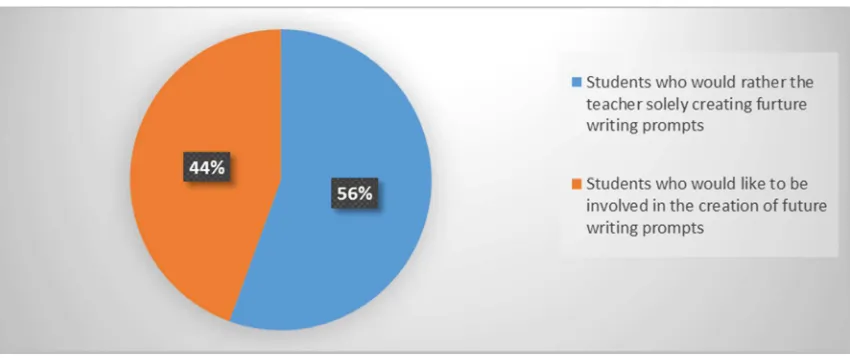
more students reported that they would rather the teacher-researcher create future writing
prompts. A significant amount of students still wished to be included in the formation of
the writing prompt. These findings are evident in the Action Plan that includes
differentiation of instruction that allows both groups of students to feel successful in their
future writing assignments.
Table of Contents
Dedication ... iii
Acknowledgments... iv
Abstract ...v
List of Figures ... ix
Chapter 1: Research Overview ...1
Introduction ... 1
Problem of Practice ... 3
Research Questions ... 4
Purpose of the Study ... 5
Scholarly Literature ... 5
Key Words ... 11
Potential Weaknesses ... 12
Significance of the Study ... 12
Conclusion ... 14
Chapter 2: Literature Review ...15
Introduction ... 15
Importance of Literature Review ... 16
Theoretical Base ... 17
Historical Context ... 22
Conclusion ... 38
Chapter 3: Methodology ...39
Introduction ... 39
Action Research Design ... 43
Researcher ... 45
Sample ... 47
Setting ... 47
Instrumentation and Materials ... 48
Data Collection ... 48
Data Analysis and Reflection ... 48
Conclusion ... 49
Chapter 4: Findings and Interpretation of Results ...50
Introduction ... 50
Data Collection Strategy ... 53
Ongoing Analysis and Reflection ... 55
Reflective Stance ... 55
Data Analysis ... 56
Data Interpretation ... 58
Answering the Research Question ... 63
Conclusion ... 63
Chapter 5: Summary and Discussion ...65
Introduction ... 65
Developing an Action Plan ... 69
Action Plan ... 70
Facilitating Educational Change ... 72
Summary of Research Findings ... 72
Summary of the Study ... 73
Discussion of Major Points of the Study ... 75
Suggestions for Future Research ... 76
Conclusion ... 76
References ...78
Appendix A: Student Survey ...83
Appendix B: Consent Form ...85
List of Figures
Figure 4.1. Results from Question 1 of Student Survey ...58
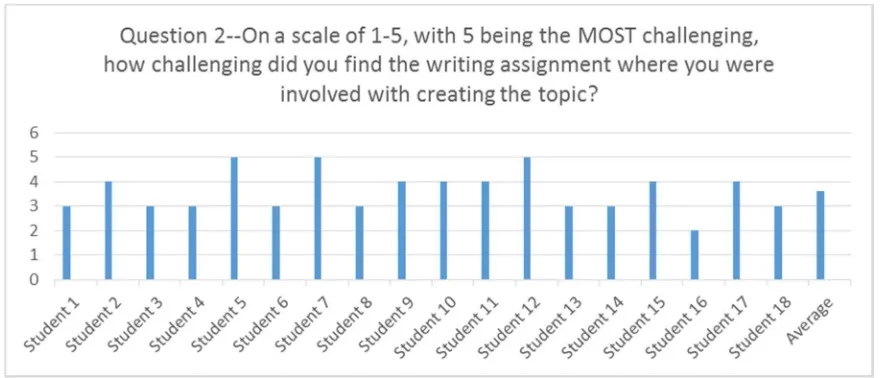
Figure 4.2. Results from Question 2 of Student Survey ...58
Figure 4.3. Results from Question 3 of Student Survey ...59
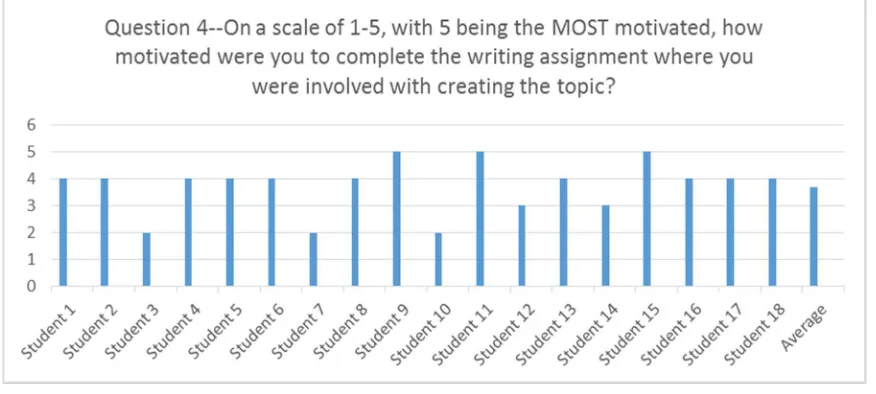
Figure 4.4. Results from Question 4 of Student Survey ...59
Figure 4.5. Results from Question 5 of Student Survey ...60
Figure 4.6. Results from Question 6 of Student Survey ...61
Figure 4.7. Results from Question 7 of Student Survey ...61
Figure 4.8. Results from Question 8 of Student Survey ...62
Figure 4.9. Student perceptions of their work ...62
Chapter 1: Research Overview
Introduction
The class had completed studying The Catcher in the Rye and the unit had been
better received than the teacher-researcher could have imagined. Each day was filled with
robust, lively discussion about Holden Caulfield and what makes him the character that
still enthuses audiences today. When the teacher collected the writing assessments he
could not wait to read what the students had submitted—based on the quality of the
classroom discussions, he knew this would be amazing work. However, after reading a
class set of boring, drab, lifeless essays, he began to wonder what had gone wrong. Upon
returning the papers to the students, he expressed his dismay and asked them what had
happened. One brave student raised her hand and boldly stated, “The book was fantastic,
but your prompt was so boring. I could have answered it in one paragraph.”
Unfortunately, this scenario is all too common. Teachers do not intend to create
boring, lifeless writing prompts; on the contrary, good teachers spend a great deal of time
and effort trying to create prompts that students will enjoy and at the same time assess
what the teachers are trying to measure with that particular assessment. However, in this
era of high-stakes testing that not only assess the student, but also the teacher, the teacher
is forced to create prompts that more closely mirror those that appear on standardized
tests—boring, lifeless, and dull prompts that have little or nothing to do with the students
The dilemma is that writing assessment is one of the most powerful assessments
at a teacher’s disposal, yet standardized tests have, by and large, bastardized the practice
and, many argue, have actually done more harm than good. Writing assessment, in its
truest form, should allow the student to communicate to the teacher what he thinks, what
he has learned, and how the teacher’s instruction has affected that learning.
Unfortunately, teachers currently think they have to mimic standardized test
prompts, and those prompts often require formulaic responses that focus more on form
than on content. In the language arts classroom, however, depending on what the teacher
is trying to assess, both content and form are of great importance. Many researchers now
are arguing that one of the best ways that teachers can improve their writing instruction
and truly assess what the student has learned is by bringing the student into the
development of the assessment.
Chan, Graham-Day, Ressa, Peters, and Konrad (2014) discuss the difficult
position teachers find themselves in with the balance of preparing students for the test,
yet wanting to provide meaningful writing instruction: “At this time, when teacher
performance is being measured as a function of student performance, teachers may be
reluctant to actively work on increasing student ownership of the learning process” (p.
106). By contrast, they also point out the necessity of including students: “Granting
students an active role in their learning can increase school completion; teach students
valuable skills, like setting and attaining goals; and help students develop independence”
(p. 106). Stiggins and Chappuis (2010) agree and add that, “Student-involved classroom
assessment opens the assessment process and invites students in as partners…to play a
Lorna Earl (2003) asserts that the assessment must be relevant to the student in
order to achieve optimum results. She states that, “When assessment capitalizes on
students’ interests, enthusiasm, and talents and provides images of the world that lies
ahead of them, it is much more likely to engage and inspire them so that the learning is
itself the motivator” (p. 68). All of this functions to build a sense of empowerment and
ownership in the student and their writing benefits from this.
Problem of Practice
The problem of practice for the action research study involves a rural, southern
Advanced Placement English Language and Composition classroom where students
report that while they enjoy the assigned readings for the course and engage in vigorous
in-class discussions about the readings, they feel they would be able to produce better
writing assignments if they had more input into the development of the writing prompts
assigned to them. These students also argue that when essays and writings are assigned to
them that they are boring and lifeless and that they do not reflect on the discussions that
took place in my class or the students’ writing ability. These students report that when
asked about a particular text or text analysis problem, that they had so much to say about
the reading, but that the teacher-made or text-book-made prompts did not inspire them.
These students requested the opportunity to be able to write about topics of their choice
and they argue that given the opportunity to do so that they will be enabled to write much
better essays.
The problem of practice also involves the high-stakes testing that these students
are required to excel on in the Advanced Placement course and the ways in which the
and also have the best ELA experience possible to ensure they have a life-long love of
reading and success in higher education and their chosen careers.
Research Questions
The over-arching question for this study is how do students perceive their own
writing abilities when faced with standardized, teacher-generated prompts compared to
writing prompts that they help to develop? That large, over-arching question will have to
be addressed, initially, with smaller questions: How do students respond to assigned
writing prompts? How do students respond when they can create their own writing
topics? How do those two writing samples compare? How do students feel about
assigned writing prompts? How do students feel about the writing when they can create
their own topic? If the feelings are more positive towards the student-generated writing
topic, does that affect the quality of the writing sample? If the feelings and the
achievement are both positive, how can the teacher then incorporate student-generated
writing topics and still prepare for high stakes tests?
The teacher-researcher collected writing samples from a teacher-generated
prompt, designed to mirror those that appear on the College Board’s Advanced
Placement English Language and Composition exam, and then samples from a
student-produced prompt on the same reading. The teacher-researcher than had students complete
a Likert-type scale survey that allowed them to report their perceptions of the two
assignments.
Participants in the study were high school juniors and seniors enrolled in the
teacher-researcher’s Advanced Placement English Language and Composition classes. 18
teacher-researcher, in accordance with advisor suggestions, purposely worked with a smaller,
more manageable sample size as appropriate for action research. The students consisted
of 12 white females, 2 Asian females, and 4 white males from an Advanced Placement
English Language and Composition class from a rural, southern school located in South
Carolina. All students were native English speakers and none had any special
accommodations recorded. In order to maintain ethical standards for action research,
identities remained anonymous and each participant was assigned a numerical identifier
and the information was kept in an encrypted electronic device by the researcher. The
student and parent/guardian were informed that they were able to withdraw from the
study at any time with no penalty. Data collected in the form of surveys were strictly
confidential and remained with teacher-researcher at all times under lock and key or
password protected on electronic devices.
Purpose of the Study
The purpose of this study was to examine the effects of writing to a prompt and
then writing to a topic of choice. After the analysis of the writing, another aspect of
analysis is to determine the effect these different types of writing have on student attitude
and if that attitude affected student motivation. To clarify, the specific purpose of the
study (the quantitative component) is to examine student perception of achievement for
teacher-generated prompts compared to topics they choose themselves.
Scholarly Literature
Vygotsky’s “Mental Development of Children and the Process of Learning”
(1978) discusses the interaction between learning and development. He asserts that
proximal development. The zone of proximal development “is the distance between the
actual development level as determined by independent problem solving and the level of
potential development as determined through problem solving under adult guidance or in
collaboration with more capable peers” (p. 86). While Vygotsky was one of the first
modern psychologists to explore the role of social situations in learning, he also studied
the importance of language in learning and development. He “saw the linguistic and
cognitive development of children as growing out of social interactions” (Buoncristiani
and Buoncristiani, 2012, p. 58). Further, Vygotsky’s work, “assumes that teachers can
create environments that support students as they engage in these complex tasks”
(Hillocks, 1995, p. 55).
Famed educators John Dewey and Lev Vygotsky share similar ideas on learning
and development and especially concerning the role of social interaction. In his My
Pedagogic Creed, Dewey opens with the statement that he believes “all education
proceeds by the participation of the social consciousness of the race” (Dewey, 2013, p.
33). Dewey specifically addresses the importance of the social element to the
development of language:
At present we lose too much of the value of literature and language studies
because of our elimination of the social element. Language is almost always
treated in the books of pedagogy simply as the expression of thought. It is true
that language is a logical instrument, but it is fundamentally and primarily a social
instrument. Language is the device for communication; it is the tool through
which one individual comes to share the ideas and feelings of others. When
showing off what one has learned, it loses its social motive and end. (Dewey,
2013, p. 37)
Eisner (2005) says Dewey saw human beings as organisms who live in and through their
environment and, therefore, a child is not a creature to be molded, but an individual who
“brings with him needs, potentialities, and experiences with which to transact with the
environment” (p. 28). Eisner also states that, for Dewey, what was important
educationally “was for the child to obtain increasing, intelligent control in planning their
own education” (p. 28). The true goal of any educator should be that they have nurtured a
desire to learn and grow long after the child has left the classroom. This learning can
continue through a social interaction with the individual’s environment.
Writing assessment is also beneficial as it helps to develop metacognitive skills—
especially when the student either creates, or has a hand in creating, the writing prompt.
Buoncristiani and Buoncristiani (2012) discuss metacognition as “an essential skill for
learning because it enables the learner to take control of the learning process by revealing
his thought processes to himself, thereby enabling him to monitor his own understanding
and refine his learning strategies” (p. 64). They claim that it is only through developing
metacognition skills that students can become independent learners. They also make a
very clear and close connection between metacognition and language development,
especially concerning writing skills: “As our children develop greater facility with the
written language, they have another essential tool of metacognition” (p. 64). The authors
elaborate on this by adding, “By developing the ability to write our thoughts down, we
increase both the breadth and the depth of metacognition because we are no longer
and reflect on what was learned, in order to appropriately develop a topic and respond to
it, is one of the most powerful tools to develop metacognitive skills.
While so many researchers see the importance of the writing process to the
development of the learner, others see what has happened to writing through the
development of objectives, or standards, and standardized testing as doing the reverse—
actually eliminating any positive aspect of the writing assessment. Learning objectives
and standards were created in order to ensure that the proper concepts and strategies
where being taught to all children and to provide a sort of uniformity to the education
process. Eisner (2013) states that educational objectives need to be clearly specified for at
least three reasons: “first, because they provide the goals toward which the curriculum is
aimed; second, because once clearly stated they facilitate the selection and organization
of content; third, because when specified in both behavioral and content terms they make
it possible to evaluate the outcomes of the curriculum” (p. 109). Eisner admits that it is
difficult to argue that these objectives would be anything but rational in an approach to
curriculum development. However, that is exactly what he continues to do throughout the
rest of his essay. He states,
I want to argue in this paper that educational objectives clearly and specifically
stated can hamper as well as help the ends of instruction and that an unexamined
belief in curriculum as in other domains of human activity can easily become
dogma which in fact may hinder the very functions the concept was originally
designed to serve. (p. 109)
He continues by saying that when teachers begin to plan their curriculum guides for the
that if the objectives were useful instruments, then teachers would use them. He carefully
develops four main points that he argues through the rest of his paper.
His first point is “that the dynamic and complex process of instruction yields
outcomes far too numerous to be specified in behavioral and content terms in advance”
(p. 111). In other words, too much takes place in the day-to-day classroom instruction to
be able to accurately predict in the development of the objective or standard. Classroom
discussion could veer off into an unexpected, but worthy, avenue in a literature study. A
mathematic concept may be especially challenging for a group and the pace of instruction
would have to be slowed. The process of teaching is often too unpredictable to establish
and maintain rigid objectives or standards set at the beginning of a unit of instruction.
Eisner continues by stating that a “second limitation of theory concerning
educational objectives is its failure to recognize the constraints various subject matters
place upon objectives” (p. 111). He explains that in some subject areas like math and
science it may be easier to predict the particular operation or behavior the student is to
perform, but in other subject areas like the arts or literature study, the operation may not
be predictable at all; often times the student responds to the art or literature in an
unexpected manner. The unexpected is not incorrect, it is simply not plannable. Eisner
contends that the strict adherence to these standards could be “due to the fact that few
curriculum specialists have high degrees of intimacy with a wide variety of subject
matters and thus are unable to alter their general theoretical views to suit the demands
that particular subject matters make” (p. 112).
Eisner’s third point “deals with the belief that objectives stated in behavioral and
and instruction” (p. 112). He argues here that application of a standard is not a measure of
achievement, but rather a judgement. He uses several examples in this section to illustrate
his point, but especially useful is the example of a literary critic. Eisner states that the
judgement of the critic is not achieved “merely by applying standards already known to
the particular product being judged” but that it requires a judgement based on experience
and sensibilities (p. 112). He claims that it is only in a “metaphoric case that one can
measure the extent to which a student has been able to produce an aesthetic object or an
expressive narrative” and that standards, in these cases are inapplicable as judgements are
required (p. 112).
The final point Eisner makes “deals with the function of educational objectives in
curriculum construction” (p. 113). Essentially, Eisner here is arguing that a teacher can
develop activities and assessments at the beginning of the curriculum development
process, but then, through the course of the instruction, realize that these activities and
assessments are not adequate in measuring the growth of the student. If teachers are
limited to constricting objectives and standards, they are then unable to adjust their
instruction to best meet the needs of their students. Eisner quotes MacDonald to
succinctly argue his point:
There is another view, however, which has both scholarly and experiential
referents. This view would state that our objectives are only known to us in any
complete sense after the completion of our act of instruction. No matter what we
thought we were attempting to do, we can only know what we wanted to
provide initiating consequences which become altered in the flow of instruction.
(p. 113)
These researchers argue the valid point that while standards and objectives are clearly
written, they provide solid goals and focus for quality instruction; however, when the
standards, and not the instruction itself, becomes the focus, the spirit of the standards has
been compromised.
Key Words
There are a few key terms that, for the sake of this research, should be clarified
for thorough understanding. While most of the terms are common knowledge, it is
important that the author and readers have the same understanding of some terms.
1. Assessment is used as any means to evaluate student learning. Many people use
assessment and evaluation interchangeably. Eisner (2002) explains, “assessment
is more an aspiration than a concept that has a socially confirmed technical
meaning…evaluation, although not particularly ancient in the literature of
American education, is no longer as popular as it once was; the term assessment
has given it a gentle but firm nudge” (p. 195).
2. A writing assessment is simply an assessment where the student is required to
provide an extended written response, typically consisting of more than one
paragraph.
3. Advanced Placement (AP) refers to courses designated by The College Board as
4. Prompt is another word for writing assignment or topic. The College Board uses
the term and it is used in the teacher-researcher’s Advanced Placement classes in
this study.
5. When assessments are given on a larger scale, it is often referred to as a
high-stakes test or high-high-stakes assessment. Wayne Au (2012) defines an assessment as
high-stakes “when its results are used to make important decisions that affect
students, teachers, administrators, communities, schools, and districts” (p. 236).
Potential Weaknesses
Assumptions. It was assumed that all study participants were genuinely interested
in improving their writing skills and the content of the teacher-researcher’s writing
curriculum. It was assumed that study participants were honest in response to the survey
questions. It was assumed that study participants comprehended the survey questions.It
was assumed that study participants saw participation as a way to guide future
educational practice and provided thoughtful feedback.
Limitations. As this is an action research study, the sample size was limited to
the teacher-researcher’s students. In particular, the teacher-researcher conducted the
study with his Advanced Placement English Language and Composition classes. Possible
response bias due to the study being conducted early in the school year before a sense of
trust has been established between the teacher-researcher and the students, students may
be reluctant to share their honest opinions.
Significance of the Study
The significance of the study is the belief that students will be more motivated
the writing topic. This participation will lead to a sense of ownership of their own
learning. These ideas are grounded in constructivism, which states that learning is an
active process of constructing knowledge rather than acquiring it. By creating, or
contributing to, a writing topic, the student has reflected on previous knowledge and is
making assessment part of the learning process. Vygotsky argued that allowing students
to problem-solve instead of simply examining what they already know is important to the
learning process. Allowing students topic choice follows this line of thinking.
Assessment is such a vital part of what the teacher does, it is easy to understand
that there is a multitude of research on the topic. However, most of the research involves
assessing the student product and creating the ideal assessment that gives teacher and
student feedback on what has been learned in the classroom. And while recent studies
have turned to the student’s role in the assessment process, most of that research
examines the student’s involvement in the middle (peer revisions and edits) and end
(self-assessment) of the process. This inquiry will be about bringing in the student from the
beginning of the process—at the development of the topic for writing assessment.
If teachers can trust students to provide feedback for each other through peer
revising opportunities, or trust students to use rubrics or other tools to self-assess, why is
it that teachers are reluctant to give up control in the developing of the assessment itself?
High-stakes testing environments have led teachers to believe they must control the type
of assessment, or writing topic, because teachers have knowledge of the type of prompts
being presented on those tests. Since both students and teachers are being evaluated on
many of these high-stakes tests, teachers want to ensure that students are prepared to
Ressa, Peters, and Konrad (2014) argue that “granting students an active role in their
learning can increase school completion; teach students valuable skills, like setting and
attaining goals; and help students develop independence” (p. 106). Further, many believe
that student choice in writing topic leads to greater motivation. Because the students
either developed their own topic, or helped develop the topic, they are more interested in
the topic and that, hypothetically, will lead to greater achievement. Not only will students
be more motivated if they have created or chosen their own topic, but, as Stiggins (1999)
argues, empowering the students in this manner results in, “…classrooms in which there
are no surprises and no excuses. This builds trust and confidence” (p. 196).
Conclusion
In Chapter 2, the literature review cites research on the theoretical base that
grounds the rest of the work as well as analyzing the points of view of leading researchers
and summaries of their work, both with primary and secondary sources. The literature
review will provide analysis of writing as assessment, standards of writing and
standardized tests, and student involvement in writing prompt creation. Chapter 3 details
the research methodology of the study and includes a description of the research site,
study participants, and the instruments used in data collection. A description of the data
analysis procedure is also included. Chapter 4 will report the findings of the study
through analysis and reflection of the research process. The findings focus on student
perceptions of the quality of their writing samples. Chapter 5 summarizes the findings of
the study and provides an action plan that facilitates educational change in the
Chapter 2: Literature Review
Introduction
Many educators believe that one of the best, most accurate forms of assessment is
a writing assessment where students can explain what they think and what they have
learned instead of selecting a best answer from a multiple-choice list. Writing essays or
papers provide for a deeper level of thinking; analysis is a more sophisticated example of
the students’ level of cognitive and affective learning objectives. Further, when a student
is involved in the development of the writing assessment prompt, metacognitive skills are
developed as the writer must think about his or her thinking and learning process in order
to develop a prompt with a well-developed response. Unfortunately, standardized tests, or
teacher-generated prompts designed to imitate standardized test prompts, are robbing the
writing assessment of its value. The standardized test teacher-made prompt is usually
generic at best and an inaccurate tool of students’ thinking at worst. And because these
standardized tests have become high-stakes assessments, used to rank and measure not
only students, but teachers, schools, districts and states, teachers often feel that they must
mimic these inadequate prompts in their classroom instruction in order to better prepare
their students for the tests. Standardized tests seem to be a part of the education system
for the foreseeable future—educators have little to no control over that aspect. However,
ideally, writing curricula should be in the hands of the teachers. Unfortunately,
standardized testing companies and textbook companies have dominated the landscape
skills will enable the student to write well for life as well as for a standardized test. The
difficult part is convincing the general public and the federal government that teachers
know best how to create constructivist progressive classrooms where students generate
knowledge and make meaning for themselves.
This chapter will briefly provide an understanding of the importance of a
literature review to action research and then move on to provide a theoretical base for the
grounding of the research. Then, themes in writing curricula are explored, as well as
points of view and summaries of the literature from the leading experts and researchers in
the field of writing instruction. The ideas of writing as assessment, standardized testing
and the complications involved therein, and student choice in writing will all be carefully
analyzed.
Importance of Literature Review
Mertler (2014) borrows Johnson’s definition of a literature review and states it is
“an examination of journal articles, ERIC documents, books, and other sources related to
your action research project” (p. 60). Conducting a thorough review of the literature
available for a topic is of utmost importance for several reasons. By reviewing related
literature, one is able to more carefully determine, focus, and narrow a topic. The
researcher can also find research that has already been conducted to help determine if the
study is even necessary so as not to be redundant or, as Mertler (2014) puts it, “there is no
reason to reinvent the wheel when it may not be necessary” (p. 61). Reading what
previous researchers have already discovered makes the new research more efficient and
effective. It is important to use both primary and secondary sources. Primary sources are
compilations, analyses, or interpretations of primary information” (p. 63). Further, and
perhaps most obviously, the researcher needs to be fully educated on the topic so that
he/she can present an informed, articulate response to the issue being researched.
Theoretical Base
Vygotsky’s “Mental Development of Children and the Process of Learning”
(1978) discusses the interaction between learning and development. He asserts that
learning and development are interrelated and describes this connection as the zone of
proximal development. The zone of proximal development “is the distance between the
actual development level as determined by independent problem solving and the level of
potential development as determined through problem solving under adult guidance or in
collaboration with more capable peers” (p. 86). While Vygotsky was one of the first
modern psychologists to explore the role of social situations in learning, he also studied
the importance of language in learning and development. He “saw the linguistic and
cognitive development of children as growing out of social interactions” (Buoncristiani
and Buoncristiani, 2012, p. 58). Further, Vygotsky’s work, “assumes that teachers can
create environments that support students as they engage in these complex tasks”
(Hillocks, 1995, p. 55).
Famed educators John Dewey and Lev Vygotsky share similar ideas on learning
and development and especially concerning the role of social interaction. In his My
Pedagogic Creed, Dewey opens with the statement that he believes “all education
proceeds by the participation of the social consciousness of the race” (Dewey, 2013, p.
33). Dewey specifically addresses the importance of the social element to the
At present we lose too much of the value of literature and language studies
because of our elimination of the social element. Language is almost always
treated in the books of pedagogy simply as the expression of thought. It is true
that language is a logical instrument, but it is fundamentally and primarily a social
instrument. Language is the device for communication; it is the tool through
which one individual comes to share the ideas and feelings of others. When
treated simply as a way of getting individual information, or as a means of
showing off what one has learned, it loses its social motive and end. (Dewey,
2013, p. 37)
Eisner (2005) says Dewey saw human beings as organisms who live in and through their
environment and, therefore, a child is not a creature to be molded, but an individual who
“brings with him needs, potentialities, and experiences with which to transact with the
environment” (p. 28). Eisner also states that, for Dewey, what was important
educationally “was for the child to obtain increasing, intelligent control in planning their
own education” (p. 28). The true goal of any educator should be that they have nurtured a
desire to learn and grow long after the child has left the classroom. This learning can
continue through a social interaction with the individual’s environment.
Writing assessment is also beneficial as it helps to develop metacognitive skills—
especially when the student either creates, or has a hand in creating, the writing prompt.
Buoncristiani and Buoncristiani (2012) discuss metacognition as “an essential skill for
learning because it enables the learner to take control of the learning process by revealing
his thought processes to himself, thereby enabling him to monitor his own understanding
metacognition skills that students can become independent learners. They also make a
very clear and close connection between metacognition and language development,
especially concerning writing skills: “As our children develop greater facility with the
written language, they have another essential tool of metacognition” (p. 64). The authors
elaborate on this by adding, “By developing the ability to write our thoughts down, we
increase both the breadth and the depth of metacognition because we are no longer
limited by what we can actually recall” (p. 64). In other words, the ability to think about
and reflect on what was learned, in order to appropriately develop a topic and respond to
it, is one of the most powerful tools to develop metacognitive skills.
While so many researchers see the importance of the writing process to the
development of the learner, others see what has happened to writing through the
development of objectives, or standards, and standardized testing as doing the reverse—
actually eliminating any positive aspect of the writing assessment. Learning objectives
and standards were created in order to ensure that the proper concepts and strategies
where being taught to all children and to provide a sort of uniformity to the education
process. Eisner (2013) states that educational objectives need to be clearly specified for at
least three reasons: “first, because they provide the goals toward which the curriculum is
aimed; second, because once clearly stated they facilitate the selection and organization
of content; third, because when specified in both behavioral and content terms they make
it possible to evaluate the outcomes of the curriculum” (p. 109). Eisner admits that it is
difficult to argue that these objectives would be anything but rational in an approach to
curriculum development. However, that is exactly what he continues to do throughout the
I want to argue in this paper that educational objectives clearly and specifically
stated can hamper as well as help the ends of instruction and that an unexamined
belief in curriculum as in other domains of human activity can easily become
dogma which in fact may hinder the very functions the concept was originally
designed to serve. (p. 109)
He continues by saying that when teachers begin to plan their curriculum guides for the
year, the standards or objectives are often the last component they consider. Eisner argues
that if the objectives were “really useful tools…teachers…would use them” (p. 111). He
carefully develops four main points that he argues through the rest of his paper.
His first point is “that the dynamic and complex process of instruction yields
outcomes far too numerous to be specified in behavioral and content terms in advance”
(p. 111). In other words, too much takes place in the day-to-day classroom instruction to
be able to accurately predict in the development of the objective or standard. Classroom
discussion could veer off into an unexpected, but worthy, avenue in a literature study. A
mathematic concept may be especially challenging for a group and the pace of instruction
would have to be slowed. The process of teaching is often too unpredictable to establish
and maintain rigid objectives or standards set at the beginning of a unit of instruction.
Eisner continues by stating that a “second limitation of theory concerning
educational objectives is its failure to recognize the constraints various subject matters
place upon objectives” (p. 111). He explains that in some subject areas like math and
science it may be easier to predict the particular operation or behavior the student is to
perform, but in other subject areas like the arts or literature study, the operation may not
unexpected manner. The unexpected is not incorrect, it is simply not plannable. Eisner
contends that the strict adherence to these standards could be “due to the fact that few
curriculum specialists have high degrees of intimacy with a wide variety of subject
matters and thus are unable to alter their general theoretical views to suit the demands
that particular subject matters make” (p. 112).
Eisner’s third point “deals with the belief that objectives stated in behavioral and
content terms can be used as criteria by which to measure the outcomes of curriculum
and instruction” (p. 112). He argues here that application of a standard is not a measure of
achievement, but rather a judgement. He uses several examples in this section to illustrate
his point, but especially useful is the example of a literary critic. Eisner states that the
judgement of the critic is not achieved “merely by applying standards already known to
the particular product being judged” but that it requires a judgement based on experience
and sensibilities (p. 112). He claims that it is only in a “metaphoric case that one can
measure the extent to which a student has been able to produce an aesthetic object or an
expressive narrative” and that standards, in these cases are inapplicable as judgements are
required (p. 112).
The final point Eisner makes “deals with the function of educational objectives in
curriculum construction” (p. 113). Essentially, Eisner here is arguing that a teacher can
develop activities and assessments at the beginning of the curriculum development
process, but then, through the course of the instruction, realize that these activities and
assessments are not adequate in measuring the growth of the student. If teachers are
instruction to best meet the needs of their students. Eisner quotes MacDonald to
succinctly argue his point:
There is another view, however, which has both scholarly and experiential
referents. This view would state that our objectives are only known to us in any
complete sense after the completion of our act of instruction. No matter what we
thought we were attempting to do, we can only know what we wanted to
accomplish after the fact. Objectives by this rationale are heuristic devices which
provide initiating consequences which become altered in the flow of instruction.
(p. 113)
These researchers argue the valid point that while standards and objectives are clearly
written, they provide solid goals and focus for quality instruction; however, when the
standards, and not the instruction itself, becomes the focus, the spirit of the standards has
been compromised.
Historical Context
Writing as assessment. Lorna M. Earl (2003) believes that there are three roles
of assessment in the classroom: assessment of learning, assessment for learning, and
assessment as learning. Assessment of learning is typically done at the end of something
like a unit or a course or a program. Assessment for learning “shifts the emphasis from
summative to formative assessment, from making judgments to creating descriptions”
and usually consist of “observation, worksheets, questioning in class, student-teacher
conferencing, or whatever mechanism is likely to give them information that will be
useful for their planning and teaching” (p. 24). Assessment as learning emphasizes the
information, relate it to prior knowledge, and master the skills involved” (p. 25). Writing
assessment is such a powerful tool because it has the potential to involve all three of
those purposes. Certainly students compose essays at the end of a unit in order to
communicate to the teacher (and themselves) what they have learned throughout the unit;
written responses can be used for learning as a way for the teacher to monitor the
student’s progress and then adjust his/her instruction in order to meet the needs of the
student; and written responses also can be used as learning if the student has been
involved in the development of the prompt so that he can display internalization of the
knowledge gained.
Writing assessment is particularly interesting because the educator must consider
what exactly is being evaluated—the content, or message of the writing, the writing
proficiency of the student, or a combination of the two. Richard J. Stiggins (1997)
explains that, “We can use essays assessments…only if we remain constantly aware of
the fact that being able to write about a good product and being able to create that product
are different things” (p. 165). When an educator uses a writing assessment to focus on the
student’s mastery of the content, the ideas that are expressed are the focus of the
assessment, “but when writing is the medium used to produce a term paper or research
report, the criteria used to evaluate performance typically include issues of form as well
as those of content” (Stiggins, 1997, p. 166). A classroom educator typically uses writing
assessment to evaluate mastery of content. In an English/Language Arts classroom, form
is obviously added to the evaluation as well as content. With standardized tests, however,
the assessment is mostly for form and the prompts are disconnected to the student and
instead of content mastery. Most researchers argue that this is the least effective type of
writing and that a student should have a connection to the writing assignment in order to
be truly successful.
James H. McMillan, in his Classroom Assessment—Principles and Practice for
Effective Instruction (2001), elaborates on the importance of the writing assessment. He
explains that essay writing requires a more complex level of thinking from the student as
the student must accomplish several different tasks through the writing process, including
organizing thoughts, integrating and interpreting information, arguing, reasoning, and
evaluating as a few examples. Further, McMillan argues that students learn more when
they know they will have a writing assessment because they prepare more for that
assessment:
Research on student learning habits shows that when students know they will face
an essay test they tend to study by looking for themes, patterns, relationships, and
how information can be organized and sequenced. In contrast, when studying for
objective tests students tend to fragment information and memorize each piece.
(p. 184)
However, McMillan acknowledges that constructing the essay prompt is key in obtaining
the higher-level thinking that the evaluator desires.
While it is certainly more challenging, one could argue that even writing prompts
that appear on large-scale standardized test have their place, if constructed well. Dahl and
Farnan (1998) suggest that there are a few such benefits from these types of tests: “these
assessments and their results keep the importance of writing to the front of the public”
consistent scoring criteria and processes” (p. 112). Teachers benefit as well in that they
have the opportunity to read a wide variety of student work outside of their own
classrooms. And, finally, the most significant contribution of these assessments is that
they have raised student performance expectations. And while this is all data that is
beneficial for different reasons, it does little to tell the educator what the student has
learned. These large scale standardized tests provide valuable information, but not
necessarily the type of information that is most useful for the classroom teacher.
Standards and standardized writing. After the creation of the standards and
objectives, educators had to find ways in which to evaluate if teachers were adequately
teaching those standards—part of the responsibility of the standardized test. These
assessments, in their various forms, exist at the local, state, and national level and are not
new to academia. However, where standardized tests once held the title for most
nerve-wracking experience for students and teachers, now the world of education has the
“high-stakes” test. Since standardized tests are now being used to measure everything from
student learning to teacher effectiveness to quality of a school district, these tests that
once simply measured student growth (and many argued against the effectiveness of even
that function) now garner more attention than ever. Wayne Au (2012) defines an
assessment as high-stakes “when its results are used to make important decisions that
affect students, teachers, administrators, communities, schools, and districts” (p. 236). Au
goes on to claim that these high-stakes tests do not do what they were designed to do, but
instead “undermines education because it narrows curriculum, limits the ability of
teachers to meet the sociocultural needs of their students, and corrupts systems of
Au analyzed and studied the data from 49 qualitative studies conducted by the
Educational Resources Information Center (ERIC), Academic Search, and Education Full
Text databases to examine the relationship between high-stakes testing and curriculum at
the K-12 classroom level. Essentially, Au was seeking to discover if teachers tailored
their curriculum to align more closely to what was being expected from the standardized
tests. The findings of his study “suggest that there is a significant relationship between
the implementation of high-stakes testing and changes in the content of a curriculum, the
structure of knowledge contained within the content, and the types of pedagogy
associated with communication and the content” (p. 242). Further, “a more detailed
analysis finds that the narrowing of curricular content was strongest among participants
in the studies that focused on secondary education, with the most narrowing found in
studies of social studies and language arts classrooms” (p. 243). And while writing
assessment or instruction is not specifically mentioned in Au’s study, one can
acknowledge that writing is a significant part of the language arts classroom and,
therefore, part of the narrowing of curriculum that Au found.
Brimi (2012) conducted a similar study in Tennessee where he studied the impact
of the Tennessee Comprehensive Assessment Program (TCAP) on the curriculum
formatted by the teachers. With Brimi’s studies, writing assessment was the emphasis of
his research. The teachers he worked with indicated that the “TCAP palpably affected
their instruction” in that they “struggled to teach the writing process and showed
reluctance to teach or assign multi-genre writing” (p. 52). Teachers felt the need to focus
on the five paragraph persuasive essay as that is the type of prompt that appears on the
and pass the test” (p. 71). Further, the teachers believed that the content was not of great
importance but that the structure and format of the persuasive essay take precedence.
Persuasive writing is certainly a valuable skill to teach students; however, the focus
should be on content just as much, if not more, than the mere structure. Further, educators
need not feel as if they have to sacrifice a well-rounded writing program in order to focus
on the mode mandated by the standardized test.
George Hillocks (2015) spent several years studying the writing assessments of
five states—Illinois, Kentucky, New York, Oregon, and Texas. He and his assistants
interviewed “about eighty teachers and administrators in six school districts in each state;
examined state, local, and commercial materials related to the assessments; and examined
the writing assessments produced by the other forty-three states that have them” (p. 63).
The most significant finding of his study is that writing assessment heavily influences
instruction. Hillocks found that most states use a similar writing assessment—format is of
greater value than content. Hillocks found that the standard for proficient, for most of
these assessments, may be developed and grammatically sound, but are not
well-reasoned or developed in an effective manner. Hillocks was particularly troubled by his
findings in Illinois where he saw a focus on the five paragraph essay, a lack of fiction in
the curriculum, and a format for writing that specifically instructed students where to
place certain sentences and what those sentences should look like. He found that students
are subjected to this type of writing instruction for eight to ten years and it becomes so
ingrained in them that it follows them to college where “Directors of freshman English at
three Illinois state universities have complained about the extent of the problem (p. 70).
manual “advising their incoming freshmen that while the five paragraph essay may have
been appropriate in high school, it is not appropriate in college and should be seriously
avoided. It shuts down thinking” (p. 70).
Eisner (2012) also agrees that standards have veered from their original intent. He
states that “standards and the measurement of performance were intended to tidy up a
messy system and to make teachers and school administrators truly accountable. The aim
was then, as is today, to systemize and standardize so that the public will know which
school are performing well and which are not” (p. 279). However, “with 50 departments
of education…16,000 school districts…more than 100,000 schools” and each district
shaping its own education policy, the tidying up that standards were supposed to
accomplish does not appear to have occurred (p. 279). One of those approaches to reform
that standards addressed was the standardized test. Eisner argues that because everything
else in education is so messy, standardized tests seem to offer one of the only true,
definitive forms of measurement to know how schools are performing. Unfortunately,
those tests are having a negative impact as well.
Eisner points out that tests have come to define the education system’s priorities.
He discusses the focus on the core subjects and the marginalization of the arts. The
education system has chosen to focus on the core subjects because it is easy to test for
core subjects. As Eisner states, “Our idea of core subjects is related to our assessment
practices and the tests we use to determine whether or not schools are doing well” (p.
281). However, Eisner argues that “what test scores predict best are other test scores” (p.
the context of the school and what would enable students to be successful for life outside
of school and for the rest of their lives.
While many educators would argue that standardized testing and the problems
that accompany it have been around for quite some time, Bronwyn T. Williams (2005)
contends that No Child Left Behind Act (2002) and its “focus on broad comparisons of
students, with little regard to their differences, and severe punishments for schools and
teachers who fail to meet the ‘standards’” has led to the current pressure of high-stakes
testing (p. 152). He asserts that writing is about an individual’s opinion and what they
bring to the topic at hand. Writing is how we communicate and no one thinks,
communicates, or writes exactly the same. However, “Standardized testing, to be
standardized, must create questions and answers that leave no room for interpretation” (p.
154). Williams claims that the writing prompts that students face on standardized tests
have no connection to their lives, communities, or interests. Then their writing samples
are graded by anonymous, disinterested readers or even computers. All of this teaches
students, and administrators, that the final grade is what matters and not the content or
who it is communicated. Williams uses the Scholastic Aptitude Test (SAT) and its
writing prompt as an example. The SAT is the main factor many universities consider
when determining to accept a student. The 25 minutes limit for the writing portion of the
test is taken by thousands of students hoping to attend college, but surely a 25 minute
response to a generic prompt really is not what the admissions officers want to determine
if that student is ready for college courses. Williams states that the writing samples on the
SAT “are apparently scored on such generalizable characteristics of writing as smooth
to wonder if the SAT is truly accomplishing anything by offering this type of writing
assessment.
Standardized writing prompts encourage, as already shown in studies by Hillocks
and Brimi, a certain type of formulaic writing. One of the most common formulas for
responding to standardized prompts is the five paragraph essay; but there are several
different models and methods that encourage quick, efficient writing to prompts. Vicki
Spandel (2005) has studied the effects on formulaic writing and insists that the type of
writing some teachers use to prepare for standardized tests is not the type of writing that
English teachers should be teaching. Spandel disagrees with these advocates and says, “It
can have the opposite effect. Struggling writers who follow a formulaic approach may
seem to improve significantly at first, but in fact it is very hard for them to rise above a
level we might call functional” (p. 121). Spandel states that offering students a formula
essentially tells them that the teacher does not trust them enough to create their own ideas
in their own way, so the teacher will provide the formula for the student. She says,
We must remain open, always, to the possibility that students are capable of
thinking at a much deeper level than their initial attempts at writing would
indicate. And we must remember that formulas, drills, and fill-in-the-blank
exercises have one important feature in common: They are deadly dull. (Spandel,
2005, p. 121)
Dull formulas are used to respond to dull prompts and these combine to form dull writing
from students. This was not the goal, obviously, when standards were created and then
assessments devised to measure the implementation of the standards, but this is what
Student involvement. The dilemma is that writing assessment is one of the most
powerful assessments at a teacher’s disposal, yet standardized tests have, by and large,
bastardized the practice and, many argue, have actually done more harm than good.
Writing assessment, in its truest form, should allow the student to communicate to the
teacher what he thinks, what he has learned, and how the teacher’s instruction has
affected that learning.
Unfortunately, teachers currently think they have to mimic standardized test
prompts, and those prompts often require formulaic responses that focus more on form
than on content. In the language arts classroom, however, depending on what the teacher
is trying to assess, both content and form are of great importance. Many researchers now
are arguing that one of the best ways that teachers can improve their writing instruction
and truly assess what the student has learned is by bringing the student into the
development of the assessment.
Chan, Graham-Day, Ressa, Peters, and Konrad (2014) discuss the difficult
position teachers find themselves in with the balance of preparing students for the test,
yet wanting to provide meaningful writing instruction: “At this time, when teacher
performance is being measured as a function of student performance, teachers may be
reluctant to actively work on increasing student ownership of the learning process” (p.
106). By contrast, they also point out the necessity of including students: “Granting
students an active role in their learning can increase school completion; teach students
valuable skills, like setting and attaining goals; and help students develop independence”
assessment opens the assessment process and invites students in as partners…to play a
role in defining the criteria by which they will be judged” (p. 3).
Lorna Earl (2003) asserts that the assessment must be relevant to the student in
order to achieve optimum results. She states that, “When assessment capitalizes on
students’ interests, enthusiasm, and talents and provides images of the world that lies
ahead of them, it is much more likely to engage and inspire them so that the learning is
itself the motivator” (p. 68). All of this functions to build a sense of empowerment and
ownership in the student and their writing benefits from this.
Kelly Gallagher (2006) argues that one reason students do not write well is
because they do not care what they are writing about. He asserts that teachers have to
move away from requiring what he called fake writing. Gallagher states that giving
student choice in their writing assessment is one way to try to generate interest in the
assignment. Students have a choice in the writing when they are included in the
development of the writing prompt. Gallagher says, “Choice generates a welcome chain
reaction: it creates student buy-in, which in turn generates writing motivation, which in
turn causes students to write better” (p. 91). He claims that there are two main benefits to
allowing students that level of choice in their writing assessment:
1. Choice fosters a feeling of ownership in the writer. When a student develops
ownership, she is much more likely not only to start a paper, but to maintain a
stronger work ethic while in the drafting process.
2. Choice drives better revision…A student who cares about her paper is much more
likely to closely revise; a student who does not care about her paper will treat the
Students should care about what they are writing. It only makes sense that they would do
a better job when they care about the topic. Unfortunately, standardized test prompts do
not make the needed connection with students and their lives or studies in order to
promote that level of devotion.
Because writing is a fluid process, having students involved from the beginning of
the assessment enables them to become active participants in their learning. In other
subject areas, a final assessment stands alone. For example, a math test is given at the end
of a unit to determine how well the student has learned those math concepts. However,
with a valuable writing assessment, the teacher must function more as a coach—working
and developing the student’s skills as he progresses. Townsend, Fu, and Lamme (2015)
argue that teachers should act more like coaches and not judges. They insist that young
writers should see their work not as an end product up for evaluation, but as something
more fluid and malleable. They continue by stating that in order for this to take place
“requires a curriculum that integrates reading and writing, requires children to choose and
develop topics that matter to them personally, builds a sense of real audience and real
purpose in their writing…” (p. 72).
Since writing is a fluid process that utilizes the teacher as a coach, teachers need
to look at the writing process for instructional purposes as well as assessment purposes.
Nagin (2003) asserts that there are five components for teachers to incorporate in order to
ensure that they are properly monitoring their students’ progress: “(1) extended writing
samples; (2) writing in multiple genres; (3) valid rubrics; (4) writing over time, across
genres and content areas; (5) student participation in developing assessments (emphasis
students in the assessment process is important as it enables the students to assume more
responsibility for their learning and it also helps them develop as writers. When they
create their own writing topics they have reflected on their own learning to develop
further learning. This requires metacognitive thinking that leads to better, more proficient
writers.
One of the most challenging aspects of the writing process to teach is voice—the
personality of the writer shining through their words. When a writer develops, or helps to
develop, their own topic, voice is easier to detect because the writer initiates this process
from the beginning. Vicki Spandel and Donald Graves have both conducted research on
topic choice and the development of voice in writing. Spandel (2005) states that “Writers
who discover their own topics write with voice and commitment…When the voice is
strong, the writing literally becomes an extension of self” (p. 18). Graves (1994) refers to
voice as the “driving force” of the writing process (p. 81). He continues by saying that
voice is the “imprint of ourselves on our writing” and that it “underlies ever part of the
process” (p. 81). Graves asserts that what happens when voice is absent results in dry,
lifeless, mechanical writing—the type of writing all too often seen in standardized
testing. He reinforces his point by stating, “Our data show that when a writer makes a
good choice of subject, voice booms through. When voice is strong, writing improves,
along with the skills that help to improve writing. Indeed, voice is the engine that sustains
writers through the hard work of drafting and redrafting” (p. 82). Unfortunately,
standardized tests and their time constraints prevent this drafting and redrafting that is
However, both of these authors also recognize the limitations to allowing student
choice in developing their own writing prompt as well. This is where the coaching aspect
of the writing teacher is developed. Spandel (2005) clearly argues for the continued
valued presence of the teacher when she says that allowing students to “write about
anything you want” is, in effect, like pushing our students off a cliff: “If we teach them to
hang glide, and provide the necessary equipment (and confidence), they’ll leap from the
cliff themselves” (p. 19). Calkins and Harwayne (1987) concur and state that when
teachers allow free reign without proper coaching and development, that there is the
potential to see trivial self-chosen topics like, “My Summer Vacation” and “When I Went
to My Aunt’s House” (p. 23). Instead, through careful coaching and working with the
students, teachers need to encourage “students to write about the topics that matter most
to them” (p. 23).
Another reason that voice is such a difficult concept in writing is because the
voice that most assessors, especially of standardized tests, expect to read is from the
perspective of a white, middle-class student. Asao Inoue (2014) explains that
Past discussions about…basic writing…have questioned the nature and
production of failure by questioning who the basic writer is, the inherent racism in
basic writing programs and concepts, and the relationship between the kinds of
languages used by students (often marked by culture, class, gender, and race) and
dominant, White, middle-class, academic discourse. (p. 330)
The classroom teacher can honor and respect the diverse background and abilities of
students, whereas a standardized test seeks a standardized perspective—the dominant