Photo: Image of a grid powered national government street light (left) adjacent to a solar powered county government street light in Lodwar, Turkana county (12/05/2017). The two placed so closed to one another indicative of certain coordination issues which have impeded aspects of decentralised energy governance. Source: author’s own photograph.
Decentralised Energy Governance in the Global South:
The Case of Kenya since the Implementation of Devolution
Richard Sieff
Loughborough University
A thesis submitted in June 2019 in partial fulfilment of the requirements for
the award of Doctor of Philosophy
ii
Abstract
Drawing on nine months’ field research in Kenya and using a predominantly qualitative methodology, this thesis investigates the role of decentralised governance in addressing Global South energy access issues. The study explores the concepts of decentralisation, governance, and energy access, engaging with overlooked debates concerning how these concepts interrelate and under what circumstances decentralised energy governance might help address Global South energy access issues. Concepts of scale and power are also explored, enabling new insights into the understudied area of how cross-scalar power relations play out in decentralised energy governance, while extending debates over whether the state should be viewed relationally. Critically, a spatial lens is applied to the aforementioned concepts and debates, developing new knowledge on how and the extent to which decentralised energy governance is spatially contingent.
Framed within debates on multilevel governance, the thesis shows cross-scalar power imbalances have led to a more hierarchical form of energy governance emerging in Kenya relative to that intended by legislation – this has led to excessive emphasis on grid electricity which has been detrimental to addressing energy access inequities. The emergent decentralised energy governance is also found to have marked geographical variations, underpinned by a range of spatially contingent historical, socio-economic, and political factors. The overarching conclusion is that Kenyan decentralised energy governance needs to develop robust networks of local actors to provide effective checks and balances to ‘top-down’ governance: without which, energy access inequities are likely to persist.
These findings have broader conceptual and theoretical implications for decentralised energy governance in the Global South. Decentralisation is shown to have distinct relevance to energy as grid electricity remains one of the few remaining de facto state monopolies in the Global South: the implication being central governments will see this control as too lucrative and politically important to cede to decentralisation reforms. The findings also highlight marked geographical variations, revealing that decentralised energy governance needs to be understood not only relationally, as typically seen in political economy analyses, but also spatially. This understanding has important methodological implications as it signals that geographical empirical approaches are required if on the ground practices of decentralised energy governance are to be better understood and more effectively developed.
iii
Acknowledgements
Overseas research projects are reliant on cross-country partnerships and I am highly indebted to the support and assistance I have received from a large number of people in the UK and Kenya.
I feel very fortunate to have been supervised by Prof. Ed Brown and Dr. John Harrison. Both were incredibly supportive and always approachable and giving of their time. Their different strengths and academic areas of expertise complimented each other and were of enormous benefit to the development of the PhD and my research skills and helped make the four years working on this project an enjoyable and rewarding experience.
I am also thankful for the contributions of other members of staff within the Geography Department at Loughborough. Prof. Kate Gough, my internal upgrade supervisor, was very supportive and provided me with useful alternative perspectives. Dr. Jon Cloke’s expertise and insights into the energy sector and working in Kenya greatly assisted fieldwork while Dr. James Esson’s advice on the PhD process and postgraduate teaching was highly valuable. I am also grateful to the administrative team for the work they do which enables research projects to take place and many thanks to the Geography postgrads for making the department a fun place to work - Andreas Culora probably suffered more than most having to sit next to me for two years.
As stressed at the start, this PhD is the result of a cross-country partnership and I am particularly grateful to everyone at Strathmore University Energy Research Centre (SERC) in Nairobi where I was based during fieldwork. I can’t thank everyone there enough for the advice, support, contacts, time and perspectives offered which proved incredibly valuable for the research, and also for making me feel incredibly welcome and part of the group. Thank you also to Fred Ajwang and Declan Murray for easing me into life in Nairobi and the process of conducting research there.
In Kenya, the efforts and support of certain individuals allowed the research to achieve much greater depth than would otherwise have been possible – for which I am very grateful. Tameezan wa Gathui’s advice before, during and after fieldwork helped shape the study to local realities. Anne Nyambane provided valuable sector insights and knowledge of local stakeholders, enabling the fieldwork in Trans Nzoia and Usain Gishu to take place. Ewa Sawe was instrumental in supporting the county questionnaire, circulating it among all 47 counties and providing a platform for me to present directly to county energy officers. I am also very grateful to Faith Odongo for backing the research and providing official support from the Ministry of Energy.
Similarly, the visits to Nakuru, Migori and Turkana would not have achieved what they did without the input, advice and suggestions of the research assistants I worked with: Evan Kimani, Michael Ongei and Jackson Angiror. Thank you for your company and insights during these visits. Thanks also to Aran Eales and the team at the University of Strathclyde for integrating me into the Community Energy Malawi project. I am also hugely thankful to all those who gave up their time to take part in the study but are not listed for reasons of participant confidentiality.
Lastly, but very much not least, I am incredibly grateful for all the support my parents have provided me throughout my life, always being there for me, and giving me the opportunities to enable me to choose the paths I’ve wanted to take.
iv
Contents
Abstract ... ii
Acknowledgements... iii
Contents ... iv
List of Tables ... viii
List of Figures ... ix
List of Abbreviations ... x
Chapter 1 - Energy governance in the Global South: a critical research agenda ... 1
1.1 The urgent need to address energy access issues ... 2
1.2 Decentralised energy governance as a response... 3
1.3 Sub-Saharan Africa and Kenya as a case study region and country ... 6
1.4 Research aim and questions ... 8
1.5 Thesis structure ... 10
Chapter 2 - Understanding Energy Access in an Era of Decentralisation ... 12
2.1 Paradigm shifts and energy governance ... 12
2.1.1 From paradigm to policy: international interventions and their impact on energy governance ... 17
2.2 Energy Studies: limitations impede the development of decentralised energy governance ... 21
2.2.1 Concepts of energy access: flawed rationales, flawed governance ... 21
2.2.2 Imbalances in the energy studies literature and their implications for energy governance ... 23
2.3 Decentralisation: a key research agenda for energy governance ... 25
2.3.1 Concepts of decentralisation and their implications for governance ... 26
2.3.2 The rise of decentralisation and its impact on governance ... 28
2.3.3 Potential impacts of decentralisation for energy governance ... 29
2.3.4 Lack of engagement between the decentralisation and energy literatures ... 31
2.4 Concepts of governance in the era of decentralisation ... 33
2.5 Conclusion ... 38
Chapter 3 - Global Goals, sub-Saharan African Realities: The Energy Governance Challenge in Kenya ... 39
3.1 Sub-Saharan Africa: the energy access front line ... 39
3.1.1 Decentralisation in sub-Saharan Africa ... 41
3.1.2 Energy policy and governance in sub-Saharan Africa ... 44
3.2 Exploring Kenya’s extensive decentralisation process ... 47
3.2.1 Decentralisation in Kenya 1963-2010: a conflicting legacy ... 48
3.2.2 Energy policy and governance 1963-2010: centralisation and inequality in Kenya ... 50
v
3.3.1 Interpreting devolved energy in the Constitution of Kenya ... 57
3.3.2 Devolved energy: interpreting the broader legislative framework ... 60
3.4 Conclusion ... 63
Chapter 4 - Methodology ... 65
4.1 Research Approach ... 65
4.2 Data Collection and Methods ... 67
4.2.1 Semi-structured interviews ... 72
4.2.2 Focus group discussions ... 77
4.2.3 Questionnaires ... 80
4.2.4 Conferences and workshop attendance ... 83
4.2.5 Use of secondary sources ... 85
4.2.6 Fieldwork notes ... 86
4.3 Data analysis ... 87
4.4 Positionality and ethics ... 89
4.5 Conclusion ... 92
Chapter 5 – Developments in Kenyan Decentralised Energy Governance: The Reticence of National Government to Devolve ... 94
5.1 The impact of post-2013 energy legislation on decentralised energy governance ... 94
5.1.1 Energy Bill 2015 & 2017 ... 95
5.1.2 Clean cooking in post-2013 legislation ... 99
5.1.3 The Climate Change Act 2016 ... 100
5.1.4 Promulgation issues with energy legislation ... 100
5.2 Institutional developments since 2013 ... 102
5.3 Developments in grid electricity since 2013 ... 105
5.4 Developments in off-grid electricity since 2013 ... 107
5.5 Developments in clean-cooking since 2013 ... 110
5.6 The development of county governments since 2013 ... 112
5.6.1 Developments in county institution building ... 113
5.6.2 Developments in county capacity building ... 115
5.6.3 Developments in county energy initiatives... 117
5.7 Conclusion ... 120
Chapter 6 - Power Relations between Key Stakeholders in Decentralised Energy Governance: The Difference between Rhetoric and Reality ... 124
6.1 Transnational actor interactions with decentralised energy governance ... 124
6.2 National government interactions with decentralised energy governance ... 128
6.2.1 Interactions over grid electricity ... 129
6.2.2 Interactions over off-grid electricity ... 135
6.2.3 Small scale off-grid electricity and clean cooking ... 136
6.3 Community level interactions with decentralised energy governance ... 138
6.3.1 Community expectations of devolution ... 138
vi
6.3.3 Community level interactions with decentralised energy governance over land rights ... 147
6.4 Conclusion ... 150
Chapter 7 - Decentralised Energy Governance and its Impact on the Local Level: Spatial Variations of Four County Case Studies ... 153
7.1 Migori ... 153
7.1.1 Developments in decentralised energy governance ... 154
7.1.2 Transnational actor interactions with decentralised energy governance ... 155
7.1.3 National government interactions with decentralised energy governance ... 156
7.1.4 Key county issue: uncoordinated power structures and their impact on the community level ... 160
7.1.5 Migori conclusion ... 161
7.2 Nakuru ... 161
7.2.1 Developments in decentralised energy governance ... 162
7.2.2 Transnational actor interactions with decentralised energy governance ... 162
7.2.3 National government interactions with decentralised energy governance ... 164
7.2.4 Key county issue: geothermal energy and its impact on the community level ... 167
7.2.5 Nakuru conclusion ... 168
7.3 Turkana ... 168
7.3.1 Developments in decentralised energy governance ... 169
7.3.2 Transnational actor interactions with decentralised energy governance ... 170
7.3.3 National government interactions with decentralised energy governance in Turkana .... 171
7.3.4 Key county issue: oil and its impact on the community level ... 174
7.3.5 Turkana conclusion ... 177
7.4 Nairobi ... 177
7.4.1 Developments in decentralised energy governance ... 178
7.4.2 Transnational actor interactions with decentralised energy governance ... 179
7.4.3 National government interactions with decentralised energy governance ... 180
7.4.4 Key county issue: grid electricity cost and reliability and its impact on the community level ... 183
7.4.5 Nairobi conclusion ... 184
7.5 Conclusion ... 185
Chapter 8 - Conclusion: the role of decentralised energy governance ... 188
8.1 Empirical contributions ... 188
8.2 Methodological contributions ... 193
8.3 Conceptual and theoretical contributions ... 194
8.4 Wider applicability of research: implications for policy and practice ... 198
8.5 Future research: where do we go from here? ... 200
8.5.1 Additional case studies ... 200
8.5.2 Interrogating recent developments ... 201
8.5.3 Nexus approaches ... 202
vii
Appendix ... 230
1. Table of key stakeholder interviews ... 230
2. Semi-structured interview guide ... 233
viii
List of Tables
Table 1.1 Dimensions of the term ‘energy access’ ... 3
Table 1.2 Governance links to missing research themes in current UK energy research ... 4
Table 1.3 Types of Multilevel governance ... 6
Table 1.4 Electricity access in the Global South by region... 7
Table 1.5 Clean cooking access in the Global South by region ... 7
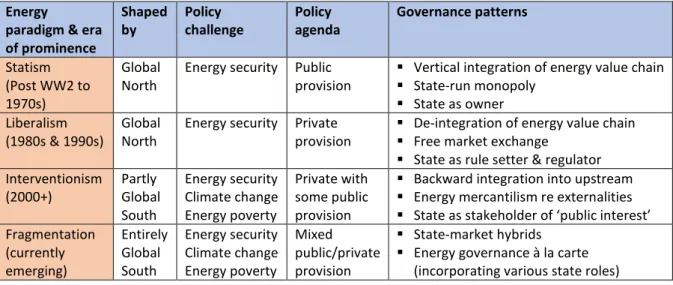
Table 2.1 Summary of Goldthau’s energy paradigms and corresponding governance patterns. ... 13
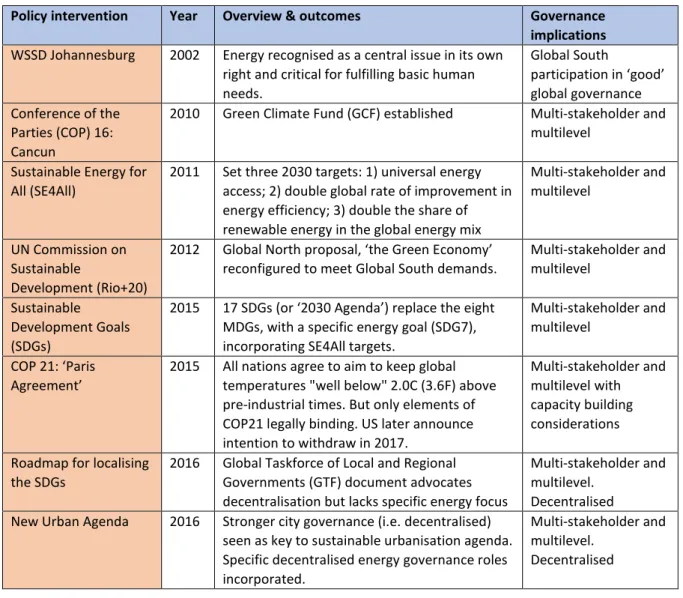
Table 2.2 Key international policies interventions impacting energy and their implications for governance... 19
Table 2.3 Definitions of decentralisation forms ... 26
Table 2.4 Multilevel Governance Type 1 ... 35
Table 2.5 Multilevel Governance Type 2 ... 36
Table 3.1 Predicted population without access to modern energy services ... 40
Table 3.2 2017 Energy access in Africa by region. ... 40
Table 3.3 Historical context of Kenyan decentralisation: timeline of key events ... 49
Table 3.4 Key Kenyan agencies established after 1995 neoliberal reforms ... 53
Table 3.5 Key Kenyan energy policies launched before the Constitution ... 54
Table 3.6 Key articles governing concurrent functions in the Constitution of Kenya ... 57
Table 3.7 Objects of devolved government in the Constitution of Kenya,Article 174 ... 58
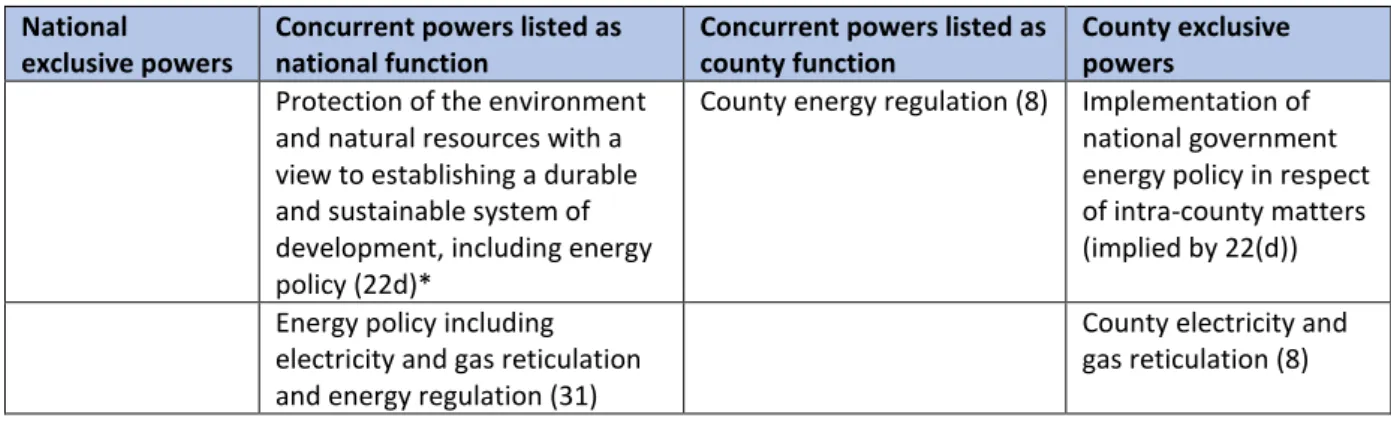
Table 3.8 Allocation of energy functions in the Constitution of Kenya ... 59
Table 3.9 Allocation of agriculture and health functions in the Constitution of Kenya ... 59
Table 3.10 Kangu’s Interpretation of concurrent energy functions ... 60
Table 3.11 Deduced county energy roles from legislation enacted before the Kenyan constitution .. 61
Table 3.12 Effect of Energy Act 2006 amendments on devolved roles in Kenya ... 61
Table 3.13 2010 - 2013 post-Constitution legislation and its effect on devolved energy roles in Kenya ... 63
Table 4.1 Varying disciplines of leading academics in decentralisation and energy governance ... 67
Table 4.2 Site visits to Kenya ... 67
Table 4.3 Six key stakeholder groups engaged in decentralised energy governance ... 69
Table 4.4 Transnational actor categories 1-3 (TAC1-3) ... 71
Table 4.5 County administrations engaged during fieldwork ... 72
Table 4.6 Number and location of semi-structured interviews with each stakeholder group ... 73
Table 4.7 Interview guide topic areas and the research questions they primarily address ... 75
Table 4.8 Community focus group locations and attendees ... 78
Table 4.9 Questionnaire responses ... 83
Table 4.10 Key events attended during fieldwork ... 84
Table 5.1 Post 2013 election legislation affecting devolved energy roles ... 95
Table 5.2 Planning functions in the Energy Bill 2015 ... 96
Table 5.3 Regulation functions in the Energy Bill 2015 ... 97
Table 5.4 Operations and development functions in the Energy Bill 2015 ... 98
Table 5.5 Concurrent or overlapping operations & development functions in the Energy Bill 2015 .. 99
Table 5.6 Largest national government led initiatives in each energy sub-sector by US$ of investment ... 106
ix
Table 5.7 Perceived level of inter-departmental coordination in county ministry containing energy
... 115
Table 5.8: Potential factors contributing to county energy plan completion ... 118
Table 6.1 Stakeholder discussions with communities on energy issues... 143
Table 7.1 Presidential and governor election results for Migori county in 2013 and 2017. ... 154
Table 7.2 Migori energy related polices developed since 2013 ... 154
Table 7.3 Energy access in Migori in 2013 (% of households) ... 155
Table 7.4 Presidential and governor election results for Nakuru county in 2013 and 2017. ... 162
Table 7.5 Nakuru energy related polices developed since devolution ... 162
Table 7.6 Energy access in Nakuru (Nakuru County, 2016) ... 162
Table 7.7 Presidential and governor election results for Turkana county in 2013 and 2017 ... 169
Table 7.8 Turkana energy related polices developed since devolution ... 169
Table 7.9 Energy access in Turkana ... 170
Table 7.10 Presidential and governor election results for Nairobi county in 2013 and 2017 ... 178
Table 7.11 Nairobi county energy polices developed since 2013 ... 178
Table 7.12 Energy access in Nairobi ... 179
Table 7.13 Cooking fuel costs ... 182
Table 7.14 Factors increasing the chance of a move to MLG2 and their discernibility in case study counties………186
Table 8.1 Reasons why sectors conventionally perceived as natural monopolies are not in Kenya..195
Table 8.2 Model predicting the likelihood of a movement towards MLG2-esque decentralised energy governance in a sub-national territory………..197
List of Figures
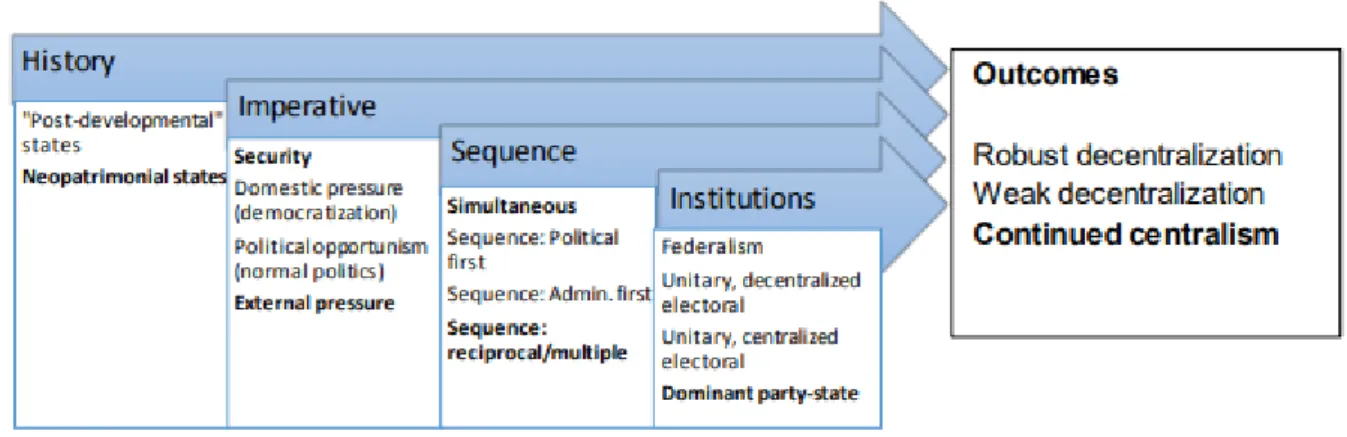
Figure 3.1 Map of sub-Saharan Africa ... 41Figure 3.2 Model of sub-Saharan African decentralisation ... 43
Figure 3.3 Chinese-added generation capacity mix in sub-Saharan Africa, 2010-20 ... 45
Figure 3.4 Access to clean cooking and electricity in Kenya ... 48
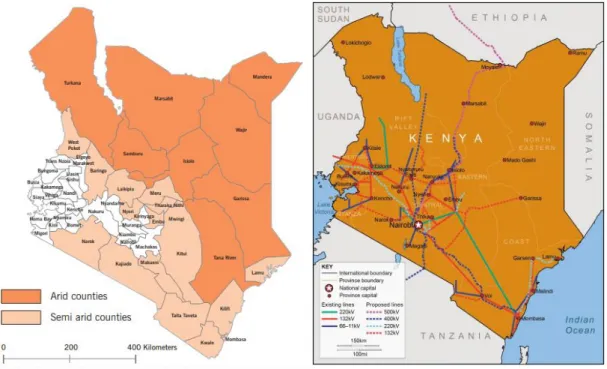
Figure 3.5 Lack of grid electricity coverage in ASAL areas of Kenya in 2013 ... 51
Figure 3.6 Institutional structure of grid electricity in Kenya in 2017 ... 53
Figure 3.7 Political map of Kenya pre- and post-implementation of the 2010 Constitution ... 55
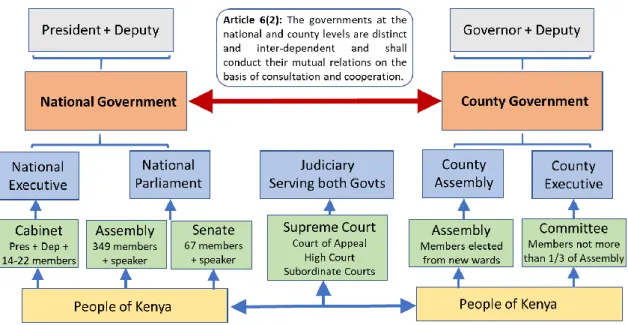
Figure 3.8 Structure of governance under the new Kenyan Constitution ... 56
Figure 5.1 Departments found in county ministries containing energy ... 114
Figure 5.2 Example county government structure ... 114
x
List of Abbreviations
ACTS African Centre for Technology StudiesAfDB African Development Bank ASALs Arid and Semi-arid Lands
AU African Union
CAFOD Catholic Agency for Overseas Development CAPEX Capital expenditure
CAQDAS Computer Assisted Qualitative Data Analysis Software
CBO Community Based Organisation
CCAK Clean Cooking Association of Kenya CEC County Executive Committee member CEO Chief Executive Officer
CF County Function
CIDP County Integrated Development Plan
CO Chief Officer
CoG Council of Governors
COP Conference of the Parties
Cordaid Catholic Organisation for Relief and Development Aid CSO Civil Society Organisation
DECC Department for Energy and Climate Change DfID Department for International Development DLP Digital Literacy Programme
E4D Energy for Development
EC European Community
EDM Energy Delivery Model
EnDev Energising Development project EOPS Early Oil Pilot Scheme
ERC Energy Regulatory Commission
ESMAP Energy Sector Management Assistance Program ESPRC Engineering and Physical Sciences Research Council ETTI Extractive Industry Transparency Initiative
EU European Union
FGD Focus Group Discussion
FPIC Free, Prior and Informed Consent GACC Global Alliance for Clean Cook Stoves
GCF Green Climate Fund
GDC Geothermal Development Company
GDP Gross Domestic Product
GE Green Economy
GIZ Deutsche Gesellschaft für Internationale (German Corporation for International Cooperation)
GMG The Green Mini Grid Facility Kenya
GPOBA World Bank Global Partnership on Output-Based Aid GTF Global Taskforce of Local and Regional Governments
Hivos The Humanist Institute for Cooperation with Developing Countries ICLEI Local Governments for Sustainability
ICT Information and Communications Technology IEA International Energy Agency
xi
IIED International Institute for Environment and Development IMF International Monetary Fund
IPP Independent Power Producer
KADU Kenyan African Democratic Union KAM Kenyan Association of Manufacturers KANU Kenyan African National Union
KenGen Kenyan Electricity Generation Company KETRACO Kenya Electricity Transmission Company KNEB Kenya Nuclear Energy Board
KOSAP Kenya Off-Grid Solar Access Project
KPC Kenya Pipeline Company
KPLC Kenya Power and Lighting Company KPRL Kenya Petroleum Refineries Limited
Ksh Kenyan Shilling
kW Kilowatt
LA21 Local Agenda 21
LAPSSET Lamu Port and Lamu South Sudan Ethiopia Transport Corridor LCEDN Low Carbon Energy Development Network
LCPDP Least Cost Power Development Plan LMCP Last Mile Connectivity Project
LPG Liquid Petroleum Gas
MCA Member of County Assembly
MDGs Millennium Development Goals MECS Modern Energy Cooking Services
MLG Multilevel governance
MoE Ministry of Energy
MoEP Ministry of Energy and Petroleum MOU Memorandum of Understanding
MoWEFNR (Nairobi county) Ministry of Water, Energy, Environment, Forestry & Natural Resources
MP Member of Parliament (Kenya)
MW Megawatt
NCCAP National Climate Change Action Plan NDCs Nationally determined contributions NETFund National Environment Trust Fund
NF National Function
NGO Non-governmental organisation NOCK National Oil Corporation of Kenya NTA National Transition Authority
NUA New Urban Agenda
ODM Orange Democratic Movement PSC Production Sharing Contract
PPA Power Purchase Agreement
PPP Public Private Partnership
PS Principal Secretary
PV Photovoltaic
PWC Post Washington Consensus
RA Research Assistant
REA Rural Electrification Authority
xii
REEPASA Renewable and Efficient Energy for Poverty Alleviation in Southern Africa
RQ Research question
SACCO Savings and Credit Cooperative Organisation SCODE Sustainable Community Development Services SDGs Sustainable Development Goals
SE4All Sustainable Energy for All SEI Stockholm Environment Institute
SERC Strathmore University Energy Research Centre
SHS Solar Home System
SONG Solar Nano Grid project TAC Transnational Actor Category TEA Transforming Energy Access
UCLG United Cities and Local Governments
UK United Kingdom
UN United Nations
UNCED United Nations Conference on Environment and Development UNCSD United Nations Commission on Sustainable Development UNDP United Nations Development Programme
UNEA United Nations Environment Assembly UNEP United Nations Environment Programme
UNFCCC United Nations Framework Convention on Climate Change UNIDO United Nations Industrial Development Organisation UNSD United Nations Statistics Division
US United States (of America)
USAID United States Agency for International Development USD United States Dollars
USES Understanding Sustainable Energy Solutions programme
VAT Value Added Tax
WSSD World Summit on Sustainable Development
WW2 World War Two
1
Chapter 1 - Energy governance in the Global South: a critical research agenda
“Underpowered, inefficient and unequal”, Kofi Annan’s damning verdict of Africa’s highly centralised energy systems, based on an assessment that such systems “benefit the rich and bypass the poor … undermining sustainable growth, jobs and investment … [and] reinforce poverty, especially for women and people in rural areas” (Africa Progress Panel, 2015, p.8). A major factor underlying the former United Nations (UN) Secretary-General’s criticism is governance, particularly the failings of central governments. In Annan’s words:
Governance of power utilities is at the heart of Africa’s energy crisis. Governments often view utilities primarily as sites of political patronage and vehicles for corruption, providing affordable energy can be a distant secondary concern (Africa Progress Panel, 2015, p.23).
Annan’s critique stresses the acute need to address the challenges centralised governance and centralised energy systems pose for greater and more equitable energy access, issues disproportionately affecting countries of the Global South. These challenges are particularly pressing as they have the potential to undermine ongoing, high-profile international efforts to address energy access issues, most notably the call of the UN ‘Sustainable Energy for All’ (SE4All) and ‘Sustainable Development Goals’ (SDGs) initiatives “for universal access to modern energy services” by 2030 (SE4All, 2015, p.1).
This PhD directly engages with these concerns by investigating the role of decentralised governance in addressing energy access issues in the Global South. Using Kenya as a case study, the research centres on the interactions and power dynamics between key stakeholders operating in and through decentralised energy governance and explores how these exchanges have shaped the quality of governance emerging. Stakeholders clearly operate at multiple scales. Accordingly, the thesis draws on key human geography perspectives of scalar governance involving multiple stakeholders (e.g. Bulkeley, 2005; Brown et al., 2015; Ockwell & Byrne, 2017) and contested theories of multilevel governance (e.g. Hooghe & Marks, 2003; Jessop, 2016) to better understand the assumed spatial variations in decentralised energy governance.
This introductory chapter first highlights the urgent need for research in this area in section 1.1, emphasising how energy access and governance issues have disproportionately affected the Global South (and in particular sub-Saharan Africa). Section 1.2 then explores the rationale for decentralised energy governance as a response to energy access and governance issues, noting the lack of coverage in the wider literature which has predominantly treated the energy and decentralisation discourses as separate entities. The reasons why sub-Saharan Africa and Kenya were selected as the focal points for the study are then discussed in section 1.3. Lastly, the overall aim and research questions are provided in section 1.4, followed by an outline of the thesis structure in section 1.5.
Global South and Global North: definitions and debates over usage
Used throughout this PhD, the terms ‘Global South’ and ‘Global North’ have become prominent within academia to describe the economic inequalities between the poorer ‘South’ and richer ‘North’, largely because they are considered less hierarchical than their predecessors: the ‘First and Third World’ and ‘Developed and Developing countries’ (Hollington et al., 2015). Yet, these terms are contested and
2
have been critiqued, notably in the development studies and development geographies discourses, for reflecting a Global North blanket term imaginary which fails to capture the considerable diversity between localities in the South or acknowledge that many contemporary challenges of development are common to both South and North (Maxwell, 1998; McFarlane,2006; Pieterse, 2001). Despite these criticisms, this study sees value in arguments which understand the term Global South as a political statement for highlighting a part of the world “systematically subordinated both intellectually and in practical terms” (Allen et al., 2014). In addition, this study concurs with Arabindoo (cited in Allen et al., 2014) who finds ‘Global South’ a useful designation for framing research localities without a superlative lens; the geographer also posing the question, “what are the alternatives otherwise?”. This question and the surrounding debate are clearly not settled and whilst this PhD uses and finds value in the terms Global South and North, I recognise the need for continual engagement with debates concerning this terminology in subsequent research. In line with contemporary revisions of Brandt’s (1980) original demarcation, the Global South is understood in this thesis to encompass Africa, Latin America, Asia (except Japan, Russian Asia, Singapore, Hong Kong, South Korea and Taiwan), and Oceania (except Australia and New Zealand). However, there is recognition that as the term is largely geopolitical, the geography of the two terms is contested and thus subject to change.
1.1 The urgent need to address energy access issues
The need to address barriers to energy access is clear and pressing. Globally, 992 million people lack access to electricity (International Energy Agency (IEA), 2018b), while more urgently, the cooking needs of 2.7 billion are met by the traditional use of solid biomass or coal (IEA, 2018a). The latter is significant because of the severe detrimental environmental and health impacts: the resultant air pollution attributable to 4 million premature deaths annually (World Health Organisation, 2018). Energy access is geographically uneven with data from the IEA (2018) showing how countries of the Global South are faring worst, particularly those in sub-Saharan Africa. Only 54% of the population of the Global South have access to clean cooking facilities; the remainder are reliant on the traditional use of biomass (IEA, 2018a). Electricity access rates fare better, with 83% of the Global population having access although this drops to 73% in rural locations (IEA, 2018b). This falls dramatically in sub-Saharan Africa where access to clean cooking facilities and electricity stands at 16% and 43% respectively (ibid). Further discrepancies are shown between different socio-economic groups within the Global South’s urban context, with the urban poor more likely to be disadvantaged by low-quality, unreliable electricity services and by having to use and pay more for polluting cooking fuels (UNDP, 2016).
Recognition of the urgency of addressing energy access has also been spurred by a growing acknowledgement of the key enabling role energy plays in a range of transformational benefits critical to human well-being. The globally agreed water, sanitation, education, health and poverty targets of the Millennium Development Goals (MDGs) were deemed unachievable by the IEA (2010) without energy provision. Similarly, the UN Development Programme (UNDP, 2016) stressed direct linkages between SDG7, ‘modern energy for all’, and all of the other 16 SDGs. The internationally renowned energy for development specialist, Subhes Bhattacharyya (2012, p.261), concluded that “consensus seems to exist that without affordable, reliable and clean energy services to the population,
3
sustainable development cannot be achieved”. Scientific consensus on the anthropogenic causes of climate change has also contributed significantly to the prioritisation of the pursuit of sustainable energy on international development agendas (IPCC, 2014).
Definition of energy access
The term ‘energy access’ is multidimensional (Table 1.1) and no universally agreed definition exists (Bhattacharyya, 2012). For this study, energy access will be defined as that which enables the provision of services to address broader developmental objectives such as those shown in Table 1.1. This definition incorporates the minimum basic needs of lighting, heating, cooking, cooling, communications and earning a living prescribed by Practical Action (2010) and agrees with Bhattacharyya (2012) that clean cooking is a higher priority than electrification due to the severe health impacts of solid fuels and because cooking forms the vast majority of energy demand in the Global South. Viewing energy in terms of services also reflects increasing consensus within the energy studies literature that energy is a means to an end rather than an end in itself and that the development it entails and the accompanying living standards benefits are the real markers of progress (Pachauri, 2011).
Table 1.1 Dimensions of the term ‘energy access’ (Bhatia & Angelou, 2015)
Dimensions Examples
Scales Households, community institutions, industry Services
(household)
Cooking, lighting, heating, cooling communication, income generation, refrigeration, entertainment, commercial/industrial, transport
Services (shared)
Street lighting, water pumping, health facilities, education facilities, government offices Carriers Electricity (grid and off-grid), renewable energy sources, solid fuels (e.g. biomass, coal),
liquid fuels (e.g. petroleum, Liquid petroleum gas (LPG), kerosene, biogas), gaseous fuels (e.g. natural gas)
Quantity and quality
Connectivity, availability, quantity, convenience, safety and standards, health impact, reliability, affordability, environmental impact, legality
Developmental objectives
Gender equality, education, health, food security, rural development, poverty reduction, sustainable development
1.2 Decentralised energy governance as a response
Research addressing the pressing energy access issues facing the Global South has tended to be technocentric and econocentric, resulting in social science approaches and the critical human aspects of energy being overlooked (Watson et al., 2012; Sovacool, 2014). Ockwell & Byrne (2017, p.5) concur with this interpretation, citing the lack of socio-cultural and political approaches as a “scholarly deficit”. A recent review of ongoing UK energy research noted a predominant engineering focus on developing new technologies along with delivery models designed to scale these technological developments, the authors arguing “what has largely been missing in this effort has been an adequate appreciation of the broader social context of these interventions” (Bagley et al., 2018, p.32). Nine key themes were identified by Bagley et al. (2018, p.46) as lacking from the current energy studies literature; among which, governance, and in particular “how energy interventions are governed at a variety of different scales”, were emphasised as
4
absolutely crucial to grasping how new forms of energy access will affect the lives
of the poor across the Global South … [and] when considering the kinds of skills
and capacities that need to be developed if the current wave of energy sector interventions are to bring sustainable and equitable benefits.
The quote reinforces the importance of the scalar approach to decentralised energy governance adopted by this PhD whilst also emphasising how governance is a major underlying factor to effective energy access interventions; a view signalled by other leading energy scholars: Ockwell & Byrne (2017, p.205) stressing that “By far the most critical issue that remains to be addressed relates to the governance of socio-technical innovation system building. Table 1.2 further reinforces these arguments, underlining how governance is a significant factor in the other eight missing themes cited as missing by Bagley et al. (2018, p.46).
Table 1.2 Governance links to missing research themes in current UK energy research (Bagley et al., 2018)
Missing themes Links to governance
Research & innovation
Call for research into the different forms of support needed to facilitate the “huge”
potential for innovation to challenge incumbent technologies in Africa. This implies the governance conditions required to facilitate these different forms of support for innovation and how these conditions link to theoretical understandings of innovation
(e.g. ‘disruptive innovation theory’ and ‘theory of social change’.
Longitudinal studies &
differential impact
Call for research on the medium to longer-term assessment of the wider impacts of energy access interventions, their unintended consequences, and differentiated
impacts (e.g. gender, age, class, ethnicity). This will require “engagement with the
complex political economy of energy issues at multiple scales of analysis”.
User demand The political context (and by implication the governance context) is seen as an
underlying factor in the call for “sociology-based research on the nature of social
practices of women and men in consuming and paying for energy”.
Energy planning and governance
Call for more research on how governance affects “social and economic relationships
that make changes to livelihoods and living standards possible”. Governance factors seen as “absolutely crucial” to understanding how new forms of energy access will
affect the Global South poor. Understanding how energy interventions are governed at different scales also deemed absolutely crucial, particularly in terms of the
capacities needed to be developed in light of current new energy sector interventions. Reaching the
poorest
Need for research into the governance conditions which can help “[ensure] adequate
support for enterprises and practitioners seeking to reach the ‘last mile’”.
Energy for productive uses
Call for wider barriers to productive use uptake to be explored, which includes key aspects underlain by governance such as local/national policies, corruption and an enabling institutional environment.
Scaling up of mini and micro-grids
Call for “sustained work on the forms of governance through which mini-grids are developed and managed and also how they intersect with household levels systems
and with the extending national grid” (community involvement particularly stressed). Transforming
clean cooking
Call for “more holistic thinking about the clean cooking challenge” This necessitates
incorporating governance into the understudied areas of distributing and marketing cleaner fuels and enabling more sustainable forms of biomass production.
Energy access in urban areas
Call for “further expansion on research into sustainable urban governance” to “identify the specific needs of the urban poor, and to integrate them into energy and
urban planning processes”.
The term ‘governance’ has also assumed added importance in the light of increasing decentralisation, a process commonly understood as the transfer of authority from central to lower-level actors
5
(Wunsch, 2014), which Berkes (2010, p.491) sees as “a kind of governance reform, a mechanism to bring citizens, local groups and organizations into the policy and decision-making process”. Proponents of decentralisation also argue the process facilitates more informed, responsive, and accountable governance, enabling more effective delivery of services (Bennett, 1990; Donahue, 1997). Governance derived from decentralisation has also been viewed favourably in the context of energy by leading social science contributions to energy studies. Brown et al. (2015, p.9) emphasise governance in the context of decentralisation has particular relevance to energy due to “the challenges that the highly complex nature of energy infrastructures pose for effective governance”. This complexity is elaborated upon by Goldthau (2014, p.134), who stresses the particular challenges of infrastructure solutions spanning multiple scales, problems concerning common pool resources, and the interactions between the existing dominant “socioeconomic institutions, regulatory agencies, incumbent market actors and social norms”. Sovacool (2011, p.3832) notes that such polycentric governance approaches – i.e. which mix scales, mechanisms, and actors – “can foster equity, inclusivity, information, accountability, organizational multiplicity, and adaptability that result in the resolution of climate and energy related problems”. Goldthau (2014, p.134) is similarly supportive, arguing:
the governance of energy infrastructure needs to be polycentric. This allows for contextualization, experimentation and innovation, which can lead to sustainable infrastructure solutions and learning across scales.
Yet, within these espoused polycentric approaches, a critical research gap remains concerning the role of decentralised energy governance in Global South contexts and under what circumstances multi-scale governance arrangements work. Whilst attention has been paid to the impact of decentralisation on the governance of other sectors in the Global South (e.g. water) and on energy in the Global North, it has been critically overlooked in the context of energy governance in the Global South (Brown et al., 2015). Thus, given the increasing trend of decentralisation in the Global South, along with the prioritisation of energy access on international development agendas, the focus of this thesis on appraising the role of decentralised energy governance is both timely and urgently needed.
Multilevel governance: concept and analytical framework
Integral to this study’s main focus of enquiry are the concepts of ‘governance’ and ‘multilevel governance’. Widely used, the former generally describes the interactions between a broad range of actors (public and private sector, government and non-government) involved in the governing process (Kooiman & Bavinck, 2005; Bache & Flinders, 2004). Governance is thus distinct from ‘government’ as it is not simply the latter exercising its authority, but instead depicts a shared responsibility. In doing so, it incorporates the ideals of greater stakeholder collaboration, citizen participation, and community empowerment that the process of decentralisation is assumed to engender.
‘Multilevel governance’ builds on the notion of governance by asserting that the interactions between actors operate on multiple scales. For over two decades multilevel governance (MLG) has provided an important analytical framework to understand the forms of governance stemming from decentralisation and has been applied to a wide range of sectors but as far as the author is aware never to decentralised energy governance. It is the contention of this study that multilevel governance
6
also provides a framework to develop new knowledge and understanding of the understudied forms of decentralised energy governance emerging from the Global South, and in doing so facilitate normative judgements as to their appropriateness for particular localities. To this end, this research uses Hooghe and Mark’s (2003) seminal intervention differentiating between ‘Multilevel Governance Types I and II’ (MLG1 & MLG21) (outlined in Table 1.3) as the primary theoretical tool within the study’s
conceptual framework2. A fuller discussion of the different concepts of MLG is provided in Chapter 2.
Table 1.3 Types of Multilevel governance (Hooghe & Marks, 2003)
Multilevel Governance Type 1 (MLG1) Multilevel Governance Type 2 (MLG2)
Structure Hierarchical structure Multiple, often overlapping, structures Characteristics ▪ General-purpose jurisdictions
▪ Nonintersecting memberships ▪ Jurisdictions at a limited number of
levels
▪ Systemwide architecture
▪ Task-specific jurisdictions ▪ Intersecting memberships ▪ No limit to the number of
jurisdictional levels ▪ Flexible design 1.3 Sub-Saharan Africa and Kenya as a case study region and country
The particular urgency of addressing energy access issues in sub-Saharan Africa is clear as the region has fared significantly worse compared to other parts of the Global South, particularly in comparison to Developing Asia, which has the second worst energy access rates (%) after sub-Saharan Africa. Table 1.4 shows the proportion of the population with electricity access in ‘Developing Asia’ rose from 79% in 2010 to 91% in 2017, resulting in a 277 million fall in the number of people without electricity (IEA, 2018b). In contrast, although electricity access in sub-Saharan Africa increased from 32% to 43% between 2010 and 2017, the number of people without electricity grew by 14 million due to a significantly higher population growth rate. In 2010, sub-Saharan Africa held approximately 47% of the world’s population without electricity. By 2017 this had increased to 61%. Further regional discrepancies are evident in the disparity between rural and urban locations: a gap far wider in sub-Saharan Africa than the rest of the Global South.
1 Marks and Hooghe term the concepts using Roman numerals (i.e. Type I and Type II). For ease of reading, this study prefers Arabic numbers.
2 The thesis uses Imenda’s (2014, pp.189-193) definition of conceptual framework as “[a synthesis of] a number of concepts, research findings and theoretical perspectives … to explain or predict a given event, or give a broader understanding of the phenomenon of interest – or simply, of a research problem” which the author notes as differing from a theoretical framework which is “the application of a theory, or a set of concepts drawn from one and the same theory, to offer an explanation of an event”. This study concurs with Imenda (2014, p.193) that despite the terms conceptual and theoretical framework often being used interchangeably within academia, the two are not synonyms and that conceptual frameworks are usually more appropriate for social sciences where “research problems cannot ordinarily be explained by one theoretical perspective”.
7
Table 1.4 Electricity access in the Global South by region (IEA, 2012; IEA, 2018b)
Region*
Population with access (%) Population without
access (million)
Total Urban Rural
2010 2017 2017 2017 2010 2017
Developing countries 74% 83% 93% 73% 1265 992
Sub-Saharan Africa 32% 43% 67% 28% 589 603
Developing Asia 79% 91% 98% 85% 628 351
Central & South America 94% 96% 98% 86% 29 20
Middle East 91% 92% 98% 78% 18 18
*The naming of regions follows IEA conventions. The term ‘Developing countries’ is broadly equivalent to the Global South, while ‘Developing Asia’ constitutes all of Asia except Central Asia and the Middle East.
Access to clean cooking facilities highlights a far starker contrast between the progress made in sub-Saharan Africa and the rest of the Global South. Table 1.5 shows access rates are far higher in the other Global South regions, with considerable progress made in Developing Asia (IEA, 2018a). In Developing Asia, clean cooking access increased from 42% to 56% of the population between 2010 and 2017, resulting in the total number of people without clean cooking facilities falling by 495 million. This contrasts markedly with sub-Saharan Africa, with the IEA (2018a, p.1) stressing that “The challenge in sub-Saharan Africa remains acute, with a deteriorating picture”. Only 16% of the population had access to clean cooking in 2017 (from 13% in 2010) while the high population growth means 193 million more people now lack access to clean cooking compared with 2010.
Table 1.5 Clean cooking access in the Global South by region (IEA, 2012; IEA, 2018a)
Region
Population with access (%) Population without access
(million)
Total Urban Rural
2010 2017 2017 2017 2010* 2017
Developing countries 45% 54% % % 2588 (+ 400) = 2988 2677
Sub-Saharan Africa 13% 16% % % 696 (+ 4) = 700 893
Developing Asia 42% 56% % % 1814 (+ 396) = 2210 1715
Central & South America 86% 89% % % 65 56
Middle East 95% 95% % % 10 11
*For population without access in 2010, IEA (2012, p532) only gives data for the traditional use of biomass but estimates a further 400m coal users “mainly in China but [with] significant numbers in South Africa and India”. Exact numbers of coal users per region are not given for 2010, so estimates extrapolated from 2015 IEA data are provided in brackets. Kenya as a case study
Within this regional context, Kenya is a particularly relevant case study as the political and energy context suggests the country is well placed to establish effective decentralised energy governance. Kenyan decentralisation has been particularly extensive (Cheeseman et al., 2016), described by the World Bank (2015, p.1) as “among the most rapid and ambitious devolution processes in the world”. Key energy powers have been devolved, such as county energy planning, suggesting a more significant role for decentralised energy governance than other nations engaged in a devolution process. The country’s infrastructure also seems facilitatory: Kenya has the world’s largest per capita photovoltaic solar market, aided by the ubiquity of mobile money (e.g. M-PESA3) which mitigates the issue of
upfront equipment costs by facilitating payment on a ‘pay as you go’ basis (Ondraczek, 2013).
8
Despite this seemingly conducive context for decentralised energy governance, at the inception of this study Kenya paradoxically had energy access rates below average for sub-Saharan Africa. 80% of the population relied on solid biomass for cooking, while 32% had access to electricity, dropping to 19% in rural areas (Sustainable Energy for All, 2016; African Development Bank Group, 2014). This paradox initially present in Kenya questioned the validity of the assumption that decentralisation improves service delivery, and thus indicated an ideal testing ground for investigating the circumstances in which decentralised energy governance arrangements work most effectively.
Over the course of the study, significant investment in electricity (predominantly grid electricity initiatives) saw access increase to 73% of all households by April 2018 according to national government figures (KPLC, 2018), although the validity of the stated increase, and the quality and affordability4 of the electricity provided has been questioned by several sources (Lee et al., 2016).
Although these criticisms are valid, electricity access has nevertheless improved by a fairly considerable margin. This adds further weight to the choice of Kenya as a case study as it prompts the question to what extent the increase can be attributed to effective decentralised energy governance, particularly as this period of increasing electricity access coincides with the era since the first county governments were installed in 2013.
Kenya was also selected as the Geography Department at Loughborough University have established connections with a range of Kenyan energy stakeholders, including national and local government officials, NGOs, universities, research groups and private sector actors. Many of these contacts are a result of the earlierRenewable Energy and Decentralisation (READ5) and Solar Nano Grid (SONG6)
projects, which were partly sited in Kenya and led by my supervisor, Professor Ed Brown. Both projects are concerned with the themes of decentralised energy governance and provided an invaluable entry point from which to ground this thesis and an opportunity to build on leading research in the field. The experience the department has of working in the Kenyan context and its extensive contacts was also anticipated to help avoid extractive research and foster collaborations with local stakeholders, aiding the development of Global South/Global North partnerships and diminishing the scope for the study to exacerbate existing geographical inequalities in the knowledge economy.
1.4 Research aim and questions
The aim and research questions were informed by findings in the wider literature, specifically the critical lack of attention paid to decentralised governance in addressing energy access issues in the Global South (Brown et al., 2015). This is of particular surprise given the Global South is the site of increasing and, in many cases, extensive decentralisation, a process implying changing national-local political relationships and a more prominent role for decentralised governance.
4 Affordability has been particularly controversial of late as electricity prices were kept artificially low in the run up to the 2017 election to favour the incumbent coalition, only to be significantly increased post-election (Wafula & Achuka, 2018). 5 Funded by the UK Engineering and Physical Sciences Research Council (ESPRC) and the UK Government Department for International Development (DFID), the READ project (2013-15) scoped the implications of decentralisation for energy governance, including an exploration of energy literacy capacity amongst local authorities in Kenya and Rwanda.
6 The ESPRC, DfID, and UK Department for Energy and Climate Change (DECC) funded SONG project (2014-18) investigated the viability of ‘nano-grid systems’ (1-5kW) for small off-grid communities in Kenya and Bangladesh.
9
This study seeks to bridge the gap between the discourses on decentralisation and energy access, which have hitherto largely been discussed as separate entities. Through empirical research and critical engagement with the theoretical and conceptual debates of the aforementioned two literatures, the principal aim is to investigate the role of decentralised governance in addressing energy access issues since the devolution process was instituted in Kenya in 2013. Developed from this aim are three research questions which centre on the experiences, interactions, and agendas of the wide range of stakeholders operating at multiple scales in and through decentralised energy governance. The specific research questions (RQs) are:
RQ1: How has the process of decentralisation and decentralised energy governance unfolded in Kenya?
RQ2: How have the interactions and agendas of various energy stakeholders shaped the decentralised energy governance which has emerged in Kenya?
RQ3: How has the process of decentralisation and the interactions and agendas of various energy stakeholders shaped the development of decentralised energy governance at the local level in Kenya?
These research questions respond to specific gaps identified in the literature. RQ1 addresses the lack of research concerning local level energy governance in the context of decentralisation, building on the more macro regional scale analysis offered by the few existing studies (e.g. Havet et al. (2009); Brown et al. (2015)) by providing a specific in-depth country analysis of Kenya. RQ2 focuses on the interactions and power dynamics between key energy stakeholders to better understand how they have helped shape developments in Kenyan energy governance, responding to Goldthau’s (2014, p.139) call for research which investigates “when multi-scale governance arrangements work, and under what circumstances they deliver –or not”. In contrast to the broader state level analysis of power relations in RQ1-2, RQ3 provides a county level response to Goldthau’s call which is deemed critical if the likely geographical disparities in local energy governance are to be better understood. Together, these research questions address the issue of whether the intended devolution process and its envisioned implications for decentralised energy governance (and consequently energy access) match the realities experienced by stakeholders operating on the ground. This issue is of importance as a disconnect between intended policy and reality has a number of significant implications. It could indicate decentralised energy governance has not been prioritised, that top-down centralised decision-making and energy systems still predominate, redolent of a more hierarchical MLG1 system of governance. Alternatively, it may suggest particular challenges, such as capacity issues, facing the newly installed county administrations, which may hinder the implementation of a more representative MLG2 form of governance.
Overall, it is envisioned that the findings from the study will contribute to key conceptual and theoretical debates concerning the changing spatial and scalar realities of power implied by decentralisation and their consequences for the role of the state and energy governance. In addition, the thesis’s novel application of MLG to energy governance is expected to develop new knowledge concerning the effectiveness of MLG as a means to better understand decentralised energy governance in the Global South. Ultimately, it is intended that the findings from the PhD will inform
10
policy making which enhances decentralised energy governance and energy access more broadly across a range of sub-Saharan Africa and Global South contexts, acknowledging, as Sovacool (2014, p.17) does, that such approaches “do not come without risks” and there is a need to better understand “how … the advantages of decentralization [can] be synergized with those of centralization”. Thus, it is hoped the learnings from the Kenyan experience will contribute to an enhanced understanding of how decentralised energy governance might most effectively be applied across the Global South.
1.5 Thesis structure
The thesis is composed of seven further chapters, structured as follows:
Chapter 2 reviews the decentralisation and energy studies literatures, and explores the contested debates concerning the central themes of the PhD: energy access, decentralisation, and governance. The chapter contends there has been a critical lack of engagement between the decentralisation and energy literatures in a global South context, undermining decentralised governance as a potential means to address energy access issues, whilst also justifying the focus of this study. The use of multilevel governance as the analytical framework of the study is then introduced and the reasons behind its appropriateness explored.
Chapter 3 builds on the previous chapter, focussing the global debates on decentralisation and decentralised energy governance within the realities of the regional context of sub-Saharan Africa, and more specifically, Kenya, the site of the empirical research of this thesis. The region is seen to be significantly underrepresented in the literature despite being the most deprived in terms of energy access. An overview of the main drivers behind Kenyan devolution is then presented, with the post 2007 election violence seen as the main spur. The chapter argues the resulting haste to implement the devolution process led to ambiguous legislation which undermined the decentralisation of sectors such as energy which previously had little to no local level representation.
Chapter 4 critically appraises the methodology of the thesis and explores the debates surrounding the use of predominantly qualitative approaches in studies investigating energy governance in the Global South. It is argued that a predominantly qualitative approach is required to measure the overlooked human dimensions present within the energy sector and the quality of governance they shape. Quantitative methods are deemed useful in a supportive role to help determine the representativeness and scalability of qualitative findings. Positionality issues are also emphasised, notably the impact of Global North researchers on existing geographical inequalities in the knowledge economy. Findings drawn from the chapter are intended to be practical, with the hope that lessons learned from the research process will be of use to other researchers working in the Global South. The first of three empirical chapters, Chapter 5 addresses RQ1 by exploring the developments in Kenyan decentralised energy governance since the implementation of the county governments in 2013. It provides an analysis of how legislative developments in this period (or lack thereof) have shaped the energy governance which has evolved and assesses the impact of county governments on decentralised energy governance during their first term. It is argued that the inability or unwillingness of national government to cede effective power to devolved units has so far presented the most significant barrier to decentralised energy governance playing an effective role in delivering more locally appropriate energy services.
11
Chapter 6 focuses on RQ2 and adopts a scalar approach, exploring the interactions of stakeholders operating at transnational, national and community scales with decentralised energy governance. These power relations are argued to have resulted in decentralised energy governance bearing more of the hallmarks of MLG1; a significant departure from the rhetoric of Kenyan devolution which appears to embody much of MLG2. The chapter concludes by proposing that governance arrangements have worked most effectively when one key stakeholder group is not operating at an overwhelming position of strength compared to the other(s). Such imbalances in power dynamics are not readily identified by MLG, raising questions over the validity of using Hooghe and Mark’s framework to understand the changing realities of power and governance emerging from a decentralisation process.
Building on the findings of the previous chapter, Chapter 7 addresses RQ3 by examining how the inequities in power relations found at the broader state level are being experienced in the energy governance present in four individual counties: Migori, Nakuru, Turkana, and Nairobi. Replicating the approach in Chapter 6, stakeholder interactions with decentralised energy governance at transnational, national, and local scales are explored in each county. The chapter finds many of the inequities in inter-scalar power relations seen at state level are also present in the four counties, but argues important spatial variations exist; a more representative MLG2-esque system of governance emerging in counties which have prioritised the energy sector and where non-governmental stakeholders are actively involved.
Chapter 8 draws together the main empirical, methodological, conceptual and theoretical contributions of the thesis. Addressing the overall aim and research questions, the thesis contends that the Kenyan experience of decentralised energy governance has been spatially uneven, influenced primarily by inequities in inter-scalar relations which owe more to MLG1 forms of governance than the more MLG2 system devolution proports to attain. Within this milieu, it is argued that facilitating MLG2-esque networks of local actors to provides checks and balances to top-down governance is the key role of decentralised energy governance. The wider conceptual and theoretical of the research are then highlighted, with the Kenyan experience argued to have significant applicability for broader debates concerning the role of the state and the concept of decentralised energy governance in the Global South. Possible directions for future research are also examined. The thesis suggests that additional case-study analyses and nexus-based approaches are required to enhance the understanding and implementation of decentralised energy governance in the Global South.
Overall, this thesis offers a better understanding of the role of decentralised energy governance in addressing energy access issues in the Global South and Kenya. It delineates in what circumstances decentralised multilevel governance arrangements function most effectively and carves a distinct facilitator role for local government that has applicability not only in Kenya, but broadly across the Global South. In doing so, the thesis questions the validity of Hooghe & Marks’ MLG framework to fully account for the effectiveness of multilevel decentralised energy governance as the twin concepts of MLG1 and MLG2 do not identify critical power differentials. As these power imbalances vary according to spatially contingent factors, it therefore follows that further geographical based empirical research is required to build on this study’s findings and develop deeper understandings of how the two forms interrelate in various Global South energy contexts.
12
Chapter 2 - Understanding Energy Access in an Era of Decentralisation
There is an urgent need to address the ways in which energy access issues are being framed in the Global South, and in particular the overlooked but potentially crucial role of decentralised energy governance. The aim of this chapter is to unpack these thematic priorities by providing a critical analysis of the two key areas of literature most relevant to this study: energy studies and decentralisation. Exploring the intersection of these two literatures is considered critical as they have largely been discussed as separate entities in a Global South context (Brown et al., 2015). This scholarly deficit undermines the potential for decentralised governance to address energy access issues and reinforces the need for this study.To achieve this aim, the chapter begins by examining the discursive framing of the energy studies and decentralisation literatures. It does this by assessing the influence of prevailing economic paradigms on the energy sector and its governance. Section 2.2 then turns to the energy studies literature, highlighting how limited understandings of energy access and a lack of social science-based approaches have impeded the development of an evidence base to better inform energy policy on effective energy governance. Turning to the decentralisation literature, section 2.3 argues the issues found within the energy studies discourse have been compounded by a lack of attention paid to energy and its governance within the context of decentralisation in the Global South. Representations of governance are then critically examined in section 2.4, providing explanation for the use of Hooghe and Mark’s seminal ‘Multilevel Governance Types I and II’ as the analytical framework for this study. Lastly, section 2.5 concludes by summarising the key knowledge gaps this study seeks to address.
2.1 Paradigm shifts and energy governance
Energy, like almost no other sector, reflects changing economic paradigms on a global scale.
This is the assessment of Andreas Goldthau (2012, p.200) on the impact of paradigmatic shifts on energy policy and governance7, the leading international relations and energy governance scholar
explaining how:
paradigms are lenses on reality and hence determine policy agendas. As a result,
… they are also the basis of energy governance arrangements set in place to deliver on these agendas (Goldthau, 2012, p.206).
Given their impact on governance, paradigm shifts are therefore highly relevant to the multilevel governance focus of this thesis (on multilevel governance), particularly as the various shifts have largely concerned changing attitudes towards the role of the state. Goldthau (2012) delineates a series of ‘energy paradigms’ emerging in response to their economic counterparts, which provides a useful means to explore the impacts that shifts in paradigm have had on energy policy and governance in the Global South. While other authors have also explored energy paradigms, notably to discuss shifts in national and geopolitical energy policy objectives (e.g. Flavin & Dunn, 1999; Helm, 2007), the use of Goldthau’s paradigmatic framework in this study is justified as its explicit focus on governance 7In line with conventional academic thinking, this thesis takes ‘paradigm’ to mean “an accepted model or pattern” (Kuhn, 1962, p. 23)