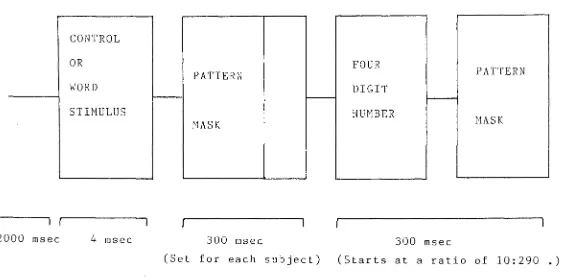
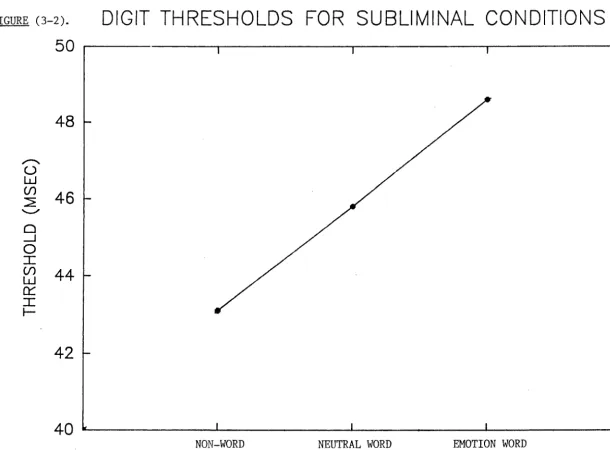
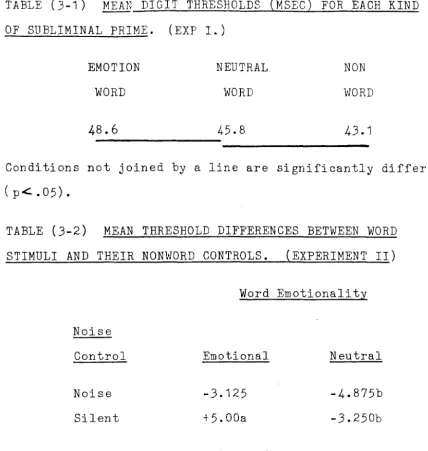
TO THE STUDY OF PERSONALITY.
A thesis
submitted in fulfilment
of the requirements for the Degree of
Doctor of Philosophy in the
University of Canterbury by
Robert Garth Ritchie.
=
109'1,
I<
0/1;1
AcknowledgementsThanks are due to the many people who have provided support, encouragement, advice and their skills. Without this assistance, this thesis would not have been possible. I with to thank
Mr. P.N.
Russell and Prof.K.T.
Strongman of the University of Canterbury Psychology department for their valuable supervision. Having such affable supervisors has played a large part in insuring the completion of this project.Thanks to my typist Mrs.
A.
Kirk, who has done so well with my scrawled manuscripts.Thanks are also due to many fellow students who have provided a network of information and advice during the
varieus stages of this thesis. I would like to make special mention of Richard Tan who's friendship, help and sporting prowess has made my work on this project not only bearable, but enjoyable.
Finally, I would like to mention my friends and flatmates who have been good to a cranky individual. My sincere thanks to them for ensuring that other areas of living were not
CONTENTS
CHAPTER PAGE
ABSTRACT
. .
.
.
.
.
.
. . .
.
.
. .
. .
.
. . . .
.
. .
. .
. . .
. .
. . .
xiv NOTE TO THE READER ••••••••••••••••••••••••• xvONE. AN INTRODUCTION TO APPROACHES TO THE
STUDY OF EMOTION FROM AN INFORMATION
PROCESSING PERSPECTIVE
...
Meta-Theory and Theory
.
. . .
. .
. . .
.
. . .
.
.
. . .
The importance of culture and content ....•Schema invariance assumptions ••••••.•..•..
Self-schema and emotion ••••••••.•••.•..••.
1
5
9
10
14
Detachment of cognition and emotion ••••••• 17
Arousal: (a) Arousal as a theoretical
con s t ru c t . • • • • • • • • • • • • • . . . • 20
Attention
(b) Arousal influences on
information processing
...
...
23
29
Process analysis or seperate system? •..••. 31
Emotion and Memory data:
(a) Congruity of presented material
with current mood at encoding
(b) Congruency between recalled
material and retrieval mood
(c) Congruency between moods at
...
37
37
encoding and retrieval... 39
(d) The emotional content of
remembered material •••••••••..•••. 39
(e) The emotional structure of
CHAPTER
(f) Other emotion related factors ••••• Limi ta tions in the research ••••••••••••••• The influence of affect on decision
PAGE
41
43
processes . . .
45
Implications of the emotion-decision
making research
...
Chapter overview and general discussion49
53
TWO. GENETIC SYSTEMS, EMOTION SYSTEMS,PERSONALITY SYSTEMS •••••.••••••.••••.•.•.• 60 Introduction •••••••••••••••••••••••.•..••• 60' The structure of personality theory.... ... 61 Concrete and abstract systems •••••••••••••
63
Examples of abstract personality theory 66 Some recent developments in personalityresearch. . . . .. . . . . . . . . . ... . . . .. 73
Sociobiological insights:... 76 (I) Evolutionary stable strategies:
Implications for personality
theory . . . 77
(II) Social orientation and processing: Implications for personality
theory . . . • . . . 81
Genetic classifications and concrete
personality systems •••••••••.••••••..••..• 85
Biometrics and personali ty factors •....•.• 89 Non-selected traits •••••••••••••••.•.•.••• 95
validation of traits... 97 Philosophical justification of
CHAPTER
Are emotions microprocesses? ••••••••.•.•••
Th~ microprocess assembly model of
PAGE
103
personali ty and emotion ••••••••••••••••••• 106
Microprocesses and microprocess
assemblies... ... . . 110
Implications of the model for
personality research •••••••••••••••• .•••.• 113
Personality and temperament are not
seperable . . . 116
Other theories of personality and
emotion
...
118Omnibus personality models are not
personality models •••••••••••••• ••••...•.• 120
The level and units of the microprocess
assembly model. .•. ..•.. . . ... ... 123
Summary and con cl u si on s •••.•••••••...••. 126
THREE. PERCEPTUAL DEFENCE: EXPERIMENTS
INVESTIGATING THE INFLUENCE OF AROUSAL
ON PERCEPTUAL PROCESSES ••••••.•••••••..••• 129
Exp erim en t I . . . • . . . 1 31
Method • • . • . . . • • • • • • • . . • • . . . . • • . . • . . . 132
Subjects
...
Stimulus materials and design ••••.••..•
Pro cedure . . . .
Results . . . .
Discussion
...
132
132
133
135
136
Experiment II •••••••••••.••••••••••••....• 141
Method •.•••.•..•••.•.••..•••.•....••...••• 142
CHAPTER
FOUR.
stimulus materials and design
.
.
. .
.
.
. . .
.
Procedure
·
.
. . .
.
. .
.
. . . .
.
. . . .
.
. .
.
. . .
.
. . . .
Results
·
. . .
.
.
.
.
.
.
. .
.
. .
.
. .
. .
. . .
.
. .
Discussion
Conclusion
· . . .
.
.
. .
.
. . .
. .
. . .
.
. .
.
. .
.
·
.
. . .
. . . .
.
.
.
. .
.
.
. . .
.
. . .
.
.
.
AN INVESTIGATION OF THE CONSEQUENCE OF
EMOTION FOR SPREADING ACTIVATION IN THE
SEMANTIC NETWORK
. . .
.
. . .
. . .
. .
.
.
.
.
.
.
.
.
. . . .
. .
Experiment I
· . . .
.
.
.
.
. .
.
.
. . .
.
.
. .
.
. .
.
.
Method
. . . .
.
.
. . .
.
. .
.
.
.
. . .
.
. .
.
. . .
.
.
. .
Subjects
.
. .
.
. .
.
. . .
.
.
. . .
.
.
.
. . .
.
.
.
.
. . .
.
design
(within
Stimulus materials and
Stimulus conditions
subjects design)
.
. . .
.
. .
.
.
.
.
. . .
.
. .
. .
.
Between subjects design
Procedure
Results
·
... .
Discussion
·
... .
Differences between subjects
Differences between stimulus
condi tions
.
.
. .
.
.
.
.
. .
.
.
.
.
.
. .
.
.
. .
. .
.
. . .
Experiment
11-. . . .
.
.
.
. .
.
. . . .
.
.
.
. . .
.
. . .
. .
Method
. . .
.
. .
. .
. . .
.
. . . .
.
. . .
.
. .
.
. .
.
. . .
.
. . .
Subjects
...
Stimulus materials and design
Procedure
·
... .
Results
· . .
.
.
. . .
.
. . .
.
. .
.
. . .
.
.
. .
.
. .
.
.
Discussion
·
.
. .
.
.
. .
. . .
.
.
.
.
.
.
.
.
.
.
. . .
.
.
.
.
.
.
.
.
CHAPTER
FIVE
Experiment III
.
.
. .
. .
. .
. .
. .
.
.
.
.
.
. .
.
. . . .
.
. . .
Method
·
.
.
.
.
.
.
.
. .
.
.
.
.
.
. .
.
.
.
.
.
. .
.
.
.
.
.
.
.
. .
.
.
.
Subjects
.
.
. .
.
.
.
.
.
.
.
. .
. . .
.
.
.
. . .
. .
.
.
.
.
Stimulus materials and design
...
Procedure
· . .
.
.
. . .
.
.
. .
.
.
. . .
.
.
.
.
. . . .
.
.
.
Results
.
.
. .
. .
.
. .
.
.
. .
.
. .
.
.
.
.
.
. .
.
.
. . .
. . .
.
Discussion
·
.
.
.
.
.
.
.
. .
.
.
.
.
.
.
.
. .
.
. . .
.
. .
.
. .
.
. .
Further analysis
. .
.
.
.
.
. .
. .
.
.
.
. . .
. .
. .
. . . .
.
.
Discriminant analysis
.
.
.
.
.
.
. .
.
. . .
.
. .
. .
.
Cluster analysis
.
.
.
.
.
. .
.
.
.
.
. . .
. . .
. . .
Age and sex profiles ••••.•••••.•.•.•..•
General Discussion
.
.
.
.
.
. .
.
.
.
.
. .
. .
.
.
.
. . . .
. .
Conclusion
· .
.
.
.
.
.
.
. . .
.
. .
. .
.
.
.
.
. . .
.
. .
.
. .
. .
.
AN INVESTIGATION OF THE CONSEQUENCS
OF EMOTION ON EARLY ATTENTION
ALLOCATION
·
. ·
... .
I
·
.
.
. .
. .
.
.
. . .
.
.
.
. .
.
.
.
.
.
. .
.
. . . .
.
Experiment
Method
· ... .
Subj ects . . . .
Stimulus materials and design
The nature of the gambling
...
environment
...
Array conditions
...
Procedure
·
... .
Results
Discussion
·
.
. .
. . .
. .
.
. . .
.
. .
. . .
.
.
. . . .
. . .
.
.
.
.
...
Experiment II . . . .
Method
·
.
.
. .
.
. .
.
.
.
. .
.
.
. . .
.
. . .
.
.
.
.
. .
.
.
.
.
Su bj ects . . . .
CHAPTER
Stimulus materials and design •••...••.•
PAGE 257 Procedure . . . 260
Resul ts . . . 262
Discussion Conclusion
.
. .
.
.
. .
.
.
.
.
.
.
. . .
.
.
. . . .
.
. .
.
.
.
.
.
.
.
.
.
.
.
. . .
.
. .
.
. . .
.
.
.
. . . .
.
.
270 274 SIX. AN ACCOUNT OF THE EMOTION SYSTEM: A FINAL
LOOK AT THE RELATIONSHIP BETWEEN EMOTION
AND COGNITION
.
.
.
.
. .
.
. . .
. . .
. . .
.
.
.
.
.
.
. .
. .
277 A speculation on an evolutionarypathway . . . 277
Emotion and cognitive skills ••.•••..•.••.• 284 The ACT model of cognitive skills ••...•• 285 Questions about the influence of
cognition in the development of affect 288 The application of ACT to the development
of the fear production system
...
Differentiation of emotional states •...•289 298 Some puzzles answered by the model.... . . 300 Experiments reported here in light of
the ACT model ••.••••••••..••.••••••.•...•• 305 An analysis of two real life elicitors
of emotion . . . . , . . . 309
Sport and Emoti on .•••...•••.•.•••••.•.• 309 (I) Sporting goal s . • . • . • • . . . • 309 (II) The problem solving
heuristics (III) Monitoring Gambling and Emotion
...
criteria •.•••..•... . .
.
. .
.
.
.
.
. .
.
.
.
CHAPTER
PAGE
Implications for the model for emotion
theory and personality
theory...135
SEVEN.
CONCLUSION:
OLD QUESTIONS, OLD ANSWERS,
NOTES
NEW METHODS
The enquiry
. . .
.
.
.
. . .
.
.
.
.
.
. .
.
.
.
. .
.
.
. . .
. .
.
. . .
.
.
. . .
.
. . .
. .
.
.
. . .
319
319
Directions for personality research ••...
322
Cognitive learning, genetic learning
and
personality...324
Systems theory insights into theory
construction . . . 325
Forerunners of the ACT model of emotion •••
327
The value of the ACT
model...329
A reservation about the ACT
model...331
Concluding comments:
cognitive psychology
Directions for
.
.
.
.
.
.
. .
. .
. . .
.
. . .
. . .
. .
...
REFERENCES
...
331
333
334
364
364
369
371
375
APPENDICES
...
Appendix 1
Appendix 2
Appendix
3
Appendix
4
·
. . .
.
.
.
. .
.
.
.
. .
. . . .
.
.
. . .
.
. . .
. .
.
·
.
. .
.
.
. . .
. . . .
. . .
.
.
.
.
.
. .
.
.
.
. .
. . . .
·
... .
TABLE (3-1 )
(3-2)
(3-3)
LIST OF TABLES
PAGE Mean digit thresholds (msec) for each
kind of subliminal prime ••••.•••••...•..•• 138 Mean threshold differences between word
stimuli and their nonword controls
Experiment II . . . 138
Digit thresholds (msec) in Experiment II 138 (4-1a) Prime and target category pairings for
Experiment I •••.••••••.•.•••••..•••••.•..• 165 (4-1b) Stimulus conditions for Experiment I .••••. 166 (4-3) Correlations between emotion-times and
corresponding rating scale scores
-Experiment I . . . 173
(4-4a) Analysis of variance table for ratings
of fear...
174(4-4b) Analysis of variance table for ratings
(4-5)
(4-6)
(4-8)
(4-9)
of
joy... ...
174Mean levels of experimental groups on
emotional rating scales . . . • • . • . • . . . • . 174 Mean reaction times (msec) for main
stimulus conditions
. . .
.
. .
. . .
. .
.
. . .
.
.
. .
.
.
.
.
Significant End near significanteffects of word stimuli - Experiment I •••. Colour naming latency (msec) and
cue-target validity condition . . • . . • . . . Colour naming latency (msec) and
175
179
179
stimulus
category... ...
180 (4-10) Colour naming latency (msec) andTABLE
(4-11) Correlations between emotion-times (msec) and corresponding rating scale
scores
.
. .
.
. . .
.
.
.
.
. .
. . .
.
.
.
. .
.
. . .
.
.
.
.
. .
.
. . .
.
(4-12) Significant and near significant effectsPAGE
195
of the word stimuli in Experiment II ••...• 195 (4-13) Mean reaction times (msec) for main
stimulus conditions - Experiment II 196 (4-15) Reaction times for emotion and validity
conditions for stimulus sets I
&
II • . . . 199 (4-16) Reaction times for all categories inExperirnen t II . . . • . . . 199
(4-17) Reaction times (msec) for emotion and category conditions for lists I
&
II (4-18) Reaction times (msec) for emotionaland neutral colour words in
...
Experiments I
&
II...
(4-19) Correlations between emotion-times with200
205
(selected) emotion rating scales • . . . 205 (4-20) Correlations between fear and joy scales
and mean reaction times - Experiments
I & II . . . 205
(4-24) Emotion times (colour different - colour same) correlated with the corresponding emotion scale measure
...
(4-25) Significant and near significant effects216
in Experiment III •.•..••.•.•••..•... .... 216 (4-26) Mean reaction times for each list group
TABLE PAGE (4-27) Mean reaction times for each list
group in Experiment II ••••••••••••••••••.• 217 (4-28) ANOVA Table for a seperate analysis of
the anger category reaction times
-Experiment III •••••••••••••••••••.•••.•••• 218 (4-29) Correlations of the discriminant function
for distinguishing List groups 1 and 2 with the emotiontimes for each category
-( 4-
30)(4-
31 ) (4-32)( 5-1)
( 5-
2)( 5- 3)
(5-5)
(5-6)
(5-7)
Experiments
I,
II Cluster analysis Cluster analysis Cluster analysis Table of amounts& III
. .
.
.
. . .
.
.
.
. .
. .
. . .
of Experiment I...
of Experiment II...
of Experiment III...
won/lost when target218 225 226 227
letter located in various groups ••••••••.• 239 Table of stimulus array conditions for
Experiment I showing affect levels
Correlations between emotion scales and attention allocation as measured by
241
reaction time difference measures ••••••••• 249 Correlations between monetory outcome
indexe s and emotion scales •••••••••••••••• 250 Correlations between monetory outcome
indexes and reaction time difference
measures
...
Table of stimulus array conditions for Experiment II showing affect levels Mean emotion scale scores for251
259
TABLE
(5-8) Intercorrelations between emotion
scales and attention allocation measures as provided by reaction time difference
PAGE
measures .. '. . . . . . . . . . . . . . .
263
(5-9)
Raw reaction times (in msec) for targetand distractor combinations on winning
trial s . . . 265
(5-10) Raw reaction times (in msec) for target and distractor combinations on losing
trials . . . 265
(5-11) Differences in reaction time (in msec) for target and distractor combinations
between winning and losing trials ••••••••• 266 (5-12) Table of tests of main effects and
interactions . . . 267
(5-13) Intercorrelations between monetary outcome indexes and emotion scales
in Experiment II ••• •••••.•••••••••• ..••••• 269 (5-14) Intercorrelations between monetary
outcome indexes and mean reaction time
....
( 6-1 ) Productions evoked in fright reaction ...•• [image:13.582.65.488.66.627.2]LIST OF FIGURES
FIGURE PAGE
(1-1) Cycles of behaviour causation considered
( 1 -2)
(2-1a)
(2-1b)
( 2-1 c)
(2-2) ( 3-1)
(3-2)
(3-3)(4-2)
( 5-1)(5-2)
within rationalistic and mechanistic
theories of emotion ••••••••••••••••••••••• 8
A diagram of a modified version of the
model of Epstein (1982) ••••••••••••••••.•• The full microprocess assembly model
...
The emotion characteristics submodel...
The microprocess assembly submodel •••.•••• Methodology of personality research for the microprocess assembly model •••.•..••.• Timing sequence for Experiment IDigit thresholds for subliminal
...
conditions
...
Perceptual defence produced by words56
107 108 108 115134
137
and noise . . .
144
Example prime and target stimuli for
Experiments I, II
&
III •••••••••••••.•..•. Naming latencies for Validity164
conditions - Experiment I ••••.••••••...•.• 178 Naming latencies for Validity
conditions - Experiment II
...
201 Naming latencies of target categoriesExperiment II .• ••••••••••.•••••••...•••••• 202 Stimulus for Experiment I •••••••••••••••••
Stimulus for Experiment II ••••••••••••••••
FIGURE
PAGE
(6-1) stages of learning for the act
production system ••••••••••••••••••.•••.•• 287
(6-2)
A representation of the flow of controlin reaction to an unexpected fear
ABSTRACT
The literature on information processing approaches to emotion is surveyed. It is concluded than an approach that looks at the way ·in which the emotion system employs the cognitive system has merit.
In Chapter two Miller's (1978) criticism of abstract system theory is applied to personality theory. It is argued in the light of this criticism that psychologists should
identify the cognitive microprocesses associated with emotion as the first step in a concrete theory of personality.
Chapters three, four, and five, detail a series of experiments towards identifying the microprocesses of
emotion. Chapter three details how perceptual defence was found to decrease with increased levels of arousal. Chapter four details an investigation of the effects of emotion upon the semantic network. Some indication of subject differences in th~ processing of threat related material was obtained. In chapter five, experimental evidence of attention biasing towards affect congruent material is outlined. Momentary affect states seem to have a strong influence on attention.
A theory of emotions as problem solving heuristics is put forward in Chapter six. The theory is formulated in the terminology of Anderson's (1983) ACT model of cognitive skills. It is used to account for experimental and
phenomenological data.
Lastly, the promise and limitations of the ACT model of emotion are noted in Chapter seven. It is concluded that research into the influence of emotion on information
Note to the Reader
The reader of this thesis will be assisted if they
adopt the same meaning of the words affect, emotion and mood as has the author. As much as possible, throughout the
thesis, these terms have been used interchangeably to indicate enduring emotional states. When momentary emotional states are considered, these are indicated by the use of the word momentary.
Chapter One: An introduction to approaches to the
study of emotion from an information processing perspective. This chapter deals with the psychological literature on emotion which is either in the form of an information processing account, or is material which should be accounted for within an information processing model. The aim is
not to provide an exhaustive review of all the relevant
literature, nor to provide a total systhesis of the theories and frameworks reviewed. Rather the aim is to highlight the issues of emotion research that a comprehensive
information processing theory of emotion should incorporate, and to do so by discussing the manner in which extant
theories and paradigms have succeeded or failed in addressing the problems in the field. The chapter ends with a
recommendation for research goals, and a general framework for incorporating research. A chain of connecting issues is presented with no particular issue having paramount importance, although a clearly discernible subfield of memory research will be addressed in a unitary manner.
(That is, the issues most central to human information storage and retrieval under emotion will be looked at successively).
It is perhaps obvious that emotions are not just
phenomenological experiences, but are important determiners of the course of action. For Arnold (1960) the felt
should be manifest in the correlation between reported. emotional experience and actual and desired behaviour. There have been various demonstrations of c6rrelations between experimentally induced affect and behaviour. For example
several studies (e.g. Barden, Garber, Duncan
&
Masters, 1981, Alderman 1972) have demonstrated an effect of mood state on the tendency of children to engage in helping behaviour. These mood states also affect learning and have been shown to produce emotion state dependent learning effects(e.g. Masters, Barden
&
Ford 1979). Such studies, taken together with everyday observational evidence that emotion and action covary would be convincing evidence to a naive observer that emotions are determiner~ of the course ofaction. However, the scientific observer should not confuse covariation with causality and so in the case of studies that are purported to establish the influence of emotional states on behaviour, i t is important that observation of the emotional state can be established prior to extensive change in the behaviour being influenced. To ensure that such a
temporality occurs, is to ensure that measures of emotionality are purely measures of emotional experience and are
uncontaminated by inferences about what everyday emotions would be responsible for behaviour. Inferences based upon implicit theories of personality organisation have been
shown to be very unreliable (Shweder, 1982) and implicit
theories of emotion are unlikely to be better. Unfortunately, there is a great difficulty with approaches in psychology
responsible for the state induction, may be removing an essential component of the meaning of emotion. Thus, we may find ourselves in the position of attempting to build a psychology of real-world emotion, from laboratory findings based upon quasi-affective states. Consider for example four major methods of affect induction:
(a) Drug induced arousal states and an appropriate Situational context for emotion. (e.g. Schacter and Singer, 1962; Marshall
&
Zimbardo, 1979) (b) Mood induction by having subjects repeat selfreferent statements. (e.g. Velten 1968; Sherwood Schroeder, Abrami
&
Alden 1981; Natale&
Bolan, 1980)(c) Mood induction by hypnosis (e.g. Bower 1981; Bower, Gilligan
&
Montero 1981; Bower, Monteiro&
Gilligan 1978).(d) Emotional states produced by winning or losing in a game situation, or by an unexpected event (e.g. Isen 1978, Isen
&
Means, 1983; Boggiano&
Hertel, 1983).Of these methods, the first and the last require interactions within the emotion eliciting situation and will thus be
triggering an emotionally significant behavioural sequence upon which an inference process acts resulting in the
attribution of an emotional state. In short, while there is evidence that behaviour and reported emotional states are highly correlated, i t is hard to establish that this is because of the influence of emotional states over behaviour. Indeed, when evidence is collected purely from the
behavioural domain one can argue that any influences reported can just as readily be attributed to dissonance reduction (Festinger, 1957) as to the influence of emotional states. Such a position receives support from the work of Robinson (1981) who shows that prior cognitive contexts (in terms of evaluation judgements), can affect the rating of the
emotionality of personal memories. Such a result is
consistent with Robinson's conclusion that remembered affect does not consist of an unmediated report of affect memories,
!
but that i t can be more properly viewed as the product of judgement processes. While this conclusion is for judgements of the affective intensity of life experience memories, i t does highlight the possibility that the internal physiological symptoms of different emotions are not readily discernible, and what is used to assess the intensity and direction of affect is cognitive construals based on situational inputs
(cf Mandler, 1975).
The referencing of affective state to the inducing
environment, is the subject of much research of the kind seen in emotion misattribution experiments. (e.g. Deinstbier 1979; Kelley and Michela, 1980; Liebhart, 1979 for reviews). While there is difficulty in replicating affects such as the
researchers conclude that the effects showing the situation-ally obtained misattribution of arousal are real. Nisbett and Wilson (1977) criticise much of this research on the
grounds that verbal reports are very unreliable indicators of change. We argue here however, that the demonstration that judgements of emotional states are influenced by
situational factors (mediated by cognitions), indicates that emotional states are inferred states, and are not immediately reportable. If this is the case, then the question of the relationship between emotional states, and behaviour is to be resolved by acknowledging that emotions are indefinable without reference to behaviour, and thus i t is tautological to suggest that they are a cause of behaviour. This does not mean that emotional states are not important variables in the prediction of subsequent behaviour, merely that their status derives from socially defined (or conditioned) rules, and like implicit theories of personality, they cannot be assumed to have predictive utility.
Meta-Theory and Theory
The possibility that emotions are not just innate physiological responses that occur to evolutionarily
programmed situations is put forward in the most direct form in the constructivist theory of emotion of Averill (1980, 1983). Averill (1980) defines emotions as 'Transitory social roles (socially constituted syndromes) that are based on
emotions are a particular class of social event construction. One of the most significant aspects about emotions for
Averill, is that we classify the syndromes associated with emotion as passions rather than actions. Thus, emotions correspond more to a classification of subjective passivity than subjective control. This way of looking at emotions places the essential function of emotion at the social and not evolutionary-biological level. The theory then, directs us towards research which seeks to encidate the patterns of social meaning that support emotional acts, rather than concentrate on the physiological processes that permit emotion. The theory thus acknowledges the three-way
interaction between verbal responses, physiological arousal, and the experience of emotion put forward by Schacter and Singer (1962), but instead of concentrating on emotional plas.ticity i t seeks to elucidate the social rules that support the emotional syndromes. It escapes the criticism that i t is a theoretical framework from which 'reasons' are excluded in favour of analysis of variance corroborated
'causes'. In the terminology of Semin (1980) who devastatingly criticises the ideological status of attribution theory, the theory recognises the importance of the socio-logic of
everyday life.
of emotional acts, and on the other hand, there is an approach exemplified in Descartes that places emotion as arising outside of mind, but exerting influences on it. The Kantian approach is expressed i n : "Passion always
presupposes a maxim of the subject according to a purpose prescribed to him by the inclination. Consequently i t is always connected with his practical reason, and passions cannot be ascribed to mere animals, any more than (they can be ascribed) to purely rational beings." (Kant (1978)
p.266). The emphasis is on purpose and the ascription of reasons based on non coerced rules. These rules are absent in animals and so they do not share the complexes termed passions in humans. For the more mechanistic approach of Descartes however, the agitation of animal spirits that produces passions is a purely bodily function that only appears to occur in the mind. The two divergent approaches find their modern exemplars in the emotion attribution
paradigms (Deinstbie~ 1979), and the constructivist theory of emotion already outlined. The issue is not as trivial as whether cognitions are regarded as phenomena or
epiphenomena: the methods of investigation, and the language of explanation are determined by which approach to the
Cultural forms and motives
Personally determined
Physical and social conditions
RATIONALISTIC AND MECHANISTIC THEORIES OF EMOTION.
>
<
Ac.tivated Schema Need States
Emotional feelings
+
Environmentally determined actions
Culturally decided attributions
Physical and
social connitions <' ...
::2:::---',
Activated Schema Need States
Emotional feelings
+
Environmentally determined actions
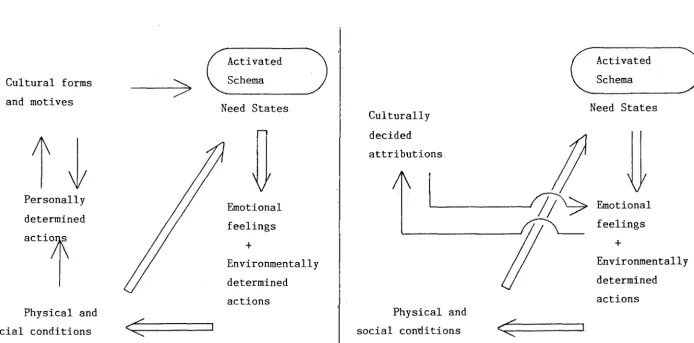
[image:25.840.47.742.155.498.2]causation in rationalistic theories of emotion with that of more mechanistic theories. The main difference between
the two types of theory is that 1(a) includes cultural forms and motives in the cycle of emotion directed processing and behaviour whereas the mechanistic type of theory (1-1(b)), regards cultural forms and motives as being important only in the attribution of feeling (and consequently the
direction for appropriate behaviour). Rationalistic theories view culture as being a necessary condition for emotion
instigation, mechanistic theories will tend to view culture as unnecessary for the instigation of emotional experience, and necessary only for its categorisation. At least one major theorist in cross-cultural psychology (Binnie-Dawson 1982) provides a metatheory congruent with the rationalist position. The final choice of which metatheory will prove most useful will have to wait until the analysis of emotion becomes fine-grained enough to distinguish the predictive utility of the two approaches. Both metatheories provide a framework sufficient for the explanation of presently
studied phenomena.
The Importance of Culture and Content
ascribed to human nature. Tuan reviews evidence of 'fearless' societies, and points out the specific cultures and
environmental characteristics which produce such a relative paucity of fear in their members. Such evidence again
highlights the difficulty in generalising the results of specific experiments across cultures: the paradigms that induce emotions, and demonstrate the influence of emotion on response or recall processes are not likely to be immune from cultural factors. This will be so in spite of the fact that the specific induction procedure used to produce the emotion is chosen to be efficacious within the culture of the induction group.
The culture will also be defining in the case of the appropriate response processes (which cannot be seperated from the emotion complex). For instance Beigel (1951) traces the origins of romantic love and shows that i t derives from courtly love but that i t differed in that i t transformed the ideal from that of love after marriage to that of love before marriage. Such socially prescribed behavioural mores are likely to be inte~~al parts of the
social schema, that allow the evaluation of social interaction processes. They are emotion defining (love versus lust),
and emotion directing. The later point is made by Pope (1980) who traces the changing focus of romantic love from that of knowing, to that of union and finally today to participation in a shared life. These focuses determine the ideal action sequences and cognitive strivings between lovers and so will dictate the direction of romantic
between Odysseus and Penelope from the Iliad. He points out that on Odysseus's return, i t is the process of
reaquaintance in a 'knowing' sense that is pursued, and the fond embrace comes much later.
A final example of how i t is impossible to divorce the study of emotion from the content of emotion is taken from Schoeck's (1970) theory of social behaviour mediated by
envy. Schoeck points out that for feelings of envy to arise we have to experience a state of impotence with respect to
the possession of the envied, and the envied has to be
experienced as the cause of the failure to have the possession. Here, the view of the world will have an important influence on whether or not envy is experienced; some cultures attribute i l l health to witchcraft by an envious party, and Schoeck
argues that where equality is supposed to be the natural order of things, inequalities in an attribute will be prone to envy. Thus, culture and custom will determine what are possible cases for envy. If psychologists attempt to study an emotional state without its concommittant content, the danger is that they overlook specific culture-state linkages that make an emotional state unique to a culture. The
psychology thus derived could be more one of description of common tendencies than the analysis of naturally occurring categories.
Schema Invariance Assumptions
The relationship between socially transmitted schema and emotional experience raises several issues about the kinds of information that such schema operate on, and the
a number of studies have investigated the relationship between expressive tende,ncies and emotional experience,
and important differences in people have been obtained. The division of people into those that tend to facially express changes of emotion (expressors), and those that are facially non responsive (inhibitors) has been made (the terminology is that used by Notarius and Levenson (1979), although
other labels have been used to characterise these different groups). The evidence supports the explanation that the two groups attend to different kinds of information during
emotional epidodes; expressors attend more to self produced cues; inhibitors tend to give precedence to situational cues. Consistent with this interpretation, Laird and
Crosby (1974) found that expressors tend more than inhibitors to see emotion as closer to a sensation than a cognition. Laird, Wagener, Halal and Szegda (1982) show that only expressors show material expression congruity effects in a series of experiments on the effect of emotion on memory. These results cannot be interpreted simply as indicating that facial feedback is the critical source of emotional experience as some researchers would have i t
(e.g.
Izard, 1977; Tomkins, 1962). This is because other researchhas indicated that inhibitors tend to be more autonomically liable to threat than expressors (Notarius and Levenson,
1979). Further, under some circumstances greater expressivity can be accompanied by a reduction in reported affect
(e.g.
Yet other researchers have shown that man~pu1ation of facial expressiveness is correlated with autonomic responses and subjective reports of emotional experience (e.g. Zuckerman, K1orman, Larrance
&
Spiegel,1981).
The important lesson is that results in the research literature on expressivity andemotion are not integrable unless the assumption of emotion schema invariance is dropped.
The fact that individual differences in the use of emotion cues are apparent
aAd
important, highlights that emotion researchers should be very cautious in drawinggeneral conclusions from specific paradigms. It is of course desirable that psychologists should strive towards broad
theories. The results discussed above point towards two serious sources of error for theories that are too tied to particular experimental procedures:
a) There are acute dangers of lack of generality because subjects are not properly sampled. In information processing theory based research, the tende~c is towards smaller
samples of volunteer subjects, and i t is quite possible that the typical method of obtaining volunteers produces an over representation of externa1isers or interna1isers in the sample. Notarius et.a1.
(1979)
report that externa1isers score significantly higher on an empathic tendency scale, and obviously if persons differ in terms of personality dimensions, preference for taking part in unexplained experiments is likely to be different.Scbeier
&
Carver (1977) showed that the presence of a mirror in the experimental setting made subjects more responsive to their transient affective states. Other studies have called into question some predictions (~.g. McDonald, Harris,&
Maher, 1983) but in view of the pervasiveness of self directed attention effects (e.g. Scheier and Carver 1981, Scheier and Carver 1982), i t is more likely that such minor deviations just show the sensitivity of results to small paradigm shifts. Recently, Hoover, Wood and Knowles
(1983) have demonstrated that a brief early interaction that induced self-focused attention had considerable influences on ongoing behaviour tendencies. This result indicates that even slight changes in subject briefing between experiments can conceivably have major effects on experiment outcomes.
Self Schema and Emotion
The discussion on the problems that arise because of individual differences, and within-subject differences
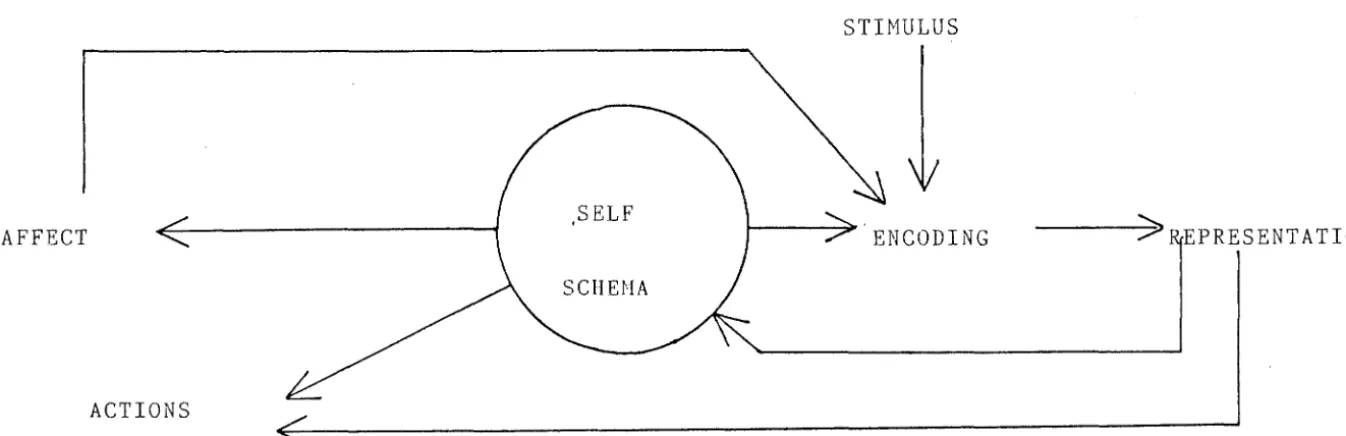
implicates the importance of self schema for an understanding of emotion. Epstein (1979), has a theory which combines the self schema with the world view in development of affective responses. While Epstein does not provide direct evidence linking self schema and affect, his evidence for temporal stability of emotion Epstein,(1982), is consistent with a self schema component in affective processes. The utility of the kind of emotional profiles that are obtained from individual subjects, and whether they can be connected to a
self structure will provide surer evidence of the theory (if obtained). Linville (1982) has reviewed several
self-representation, the more extreme affective responses seem to be. This result mirrors earlier work by Linville (1982), in which i t was established that evaluation of out-group members was more extreme the less complex the rater's schema for the outgroup was. Once again the self schema seems important to the study of affect. Linville's results relate to the intensity of affect. Other research has been done on the relationship between cognitive complexity and the range of affect. Sommers (1981) has found a positive relationship between emotional range and cognitive complexity in the description of persons. This raises the possibility that Linvilles results are artifacts of using scales that do not encompass the full extent of evaluative reactions that a subject may experience. However, even i f this last explanation is correct, there is no question that the extent of the self schema is implicated in affect patterns.
On the other hand, there are formulations which suggest that the relationship between self schema and affect, is not integral, but rather the interaction between two function-ally distinct systems. Roger (1981) in reviewing his work on memory and reaction time to self referent statements' provides a two factbr theory with the self prototype
providing the analytic nodes wbich are amplified by emotional reactions. Further empirical evidence for the sep~ratness of the self-schema and the emotion system is to ~be seen in a series of studies by Mueller, Heesacker, Ross, and Nicodemus
(1983) which shows that for face recognition, encoding faces via decisions about similarity of target face to the face of the encoder, is inferior to encoding the face via
co~bined emotional quality decisions and self-referent judgement, failed to improve performance above that of
self-referent judgements alone. This implies that for facial recognition, the activation of the self schema ensures an
encoding and retrieval route independent of emotional content. (That conclusion applies only for pictorial material; for verbal material Mueller et.al. replicated the recall
superiority of self-referentially encoded material found by Rogers, Kuiper and Kirker 1977).
The literature which relates affect induction to the
self schema provides the link which could allow the integration of the apparently conflicting claims about emotion and self schema. Sherwood, Schroeder, Abriami and Alden (1981)
predicted that in accord with Weiners (1974) attribution theory, self-referent statements would induce a higher level of experienced affect than would non-self-referent statements. This prediction was confirmed, suggesting that self-reference of material may enhance its ability to trigger affect.
However, any differential memory effects are likely to result from two factors; firstly the extent to which the information may be processed by the existing cognitive schema; secondly
the degree to which emotion schema are called into play by the relevance of the information to salient aspects of the self-schema. Thus, i t is understandable that individual
differences (Linville, 1982) in the extent of the self-schema are correlated with recall by the first mechanism mentioned above. The second mechanism can explain the lack of a
part of the self schema. Lord
(1980)
has reviewed evidence that suggests the distinction between schema and self-image, and the face recognition results relate to the latter. Finally, the study by Sherwood et.al.(1981),
and another study by Riskind, Rholes and Eggers(1982)
confirm the importance of the self-schema in moderating affect. But as well, these two studies demonstrate that i t is not just that material needs to be in the same content area as the self-schema for affect to occur; the material needs also to be related to the self schema. This is consistent with the two principles by which we have explained the results of this section.Detachment of cognitions and Emotion
A major issue that emerges out of the previous section on emotion and the self schema, and an earlier section
questioning the causality of emotions is the extent that emotional processes can be viewed as sepQrate from the attendant cognitions. Zajonc
(1980, 1984),
for examplesuggests that affect and cognition are under the control of sep~rate ~nd partially independent systems, and that the output from the 'af-fecti ve subsystem precedes that of the cognitive subsystem. Lazarus
(1982, 1984)
takes issue with Zajonc over whether i t is possible to have affect without a cognitive encoding. He concludes that Zajonc1s conclusion about the partial sepqrabi]ity of the affective and cognitivesubsystems is based on the incorrect assumption that
being made before other judgements does not indicate anything more than a judgement made via a partial cognitive encoding. Leventhal (1980, 1982) takes a middle position between
those put forward by Zajonc and Lazarus. While acknowledging that some components of the emotion experience are handled by a subsystem devoted exclusively to emotion, he argues that two other processing levels are also called into play. Firstly, he postulates emotional schema which integrate the perceptual codes of emotional experience and form an emotional memory. Secolldly, Leventhal has a conceptual component in the interactions defining emotion, which
operates by attributing causes to typical emotional episodes and also by following emotional scripts which can regulate emotional life. These two processing levels (schematic and conceptual), interact with the more fundamental levBl of expressive-motor behaviour to produce emotional experience.
It is clear that while the above three theories seem to be making widely disparate claims, they have certain elements in common. None denies the fact that there are cognitions and judgement processes attendant to emotional experience, and therefore comprising part of the experience. Nor do any of the theories question that emotional experience
can be relegated to 'nothing but' cognition. The real issues seem to be those of degree and not of kind. Explicitly
-a) To what extent a cognitive involvement is necessary for emotional experience?
b) To what extent does the analysis of an aspect of emotional experience (e.g. schematic,
of emotional experience for the development of a psychology of emotion?
Issue a) separates Lazarus who suggests that cognitive mediation is always a necessary condition for emotion from Zajonc whose experiments purport to demonstrate that
affective significance can arise prior to knowing. Issue b), is one which will determine at which level our scientific efforts are pitched. For Leventhal, i t is necessary to
incorporate considerations of all three components of emotional experience in order to understand emotion in everyday life. For example Leventhal (1982) recounts an example of a cancer patient who gained joy from the act of being capable of obtaining a glass of water. This example does require an understanding of schematic and conceptual levels to appear sensible. But, to a large extent issue b) is also a non issue because as becomes evident from
considering other fields of science such as general systems theory (e.g. Miller, 1978) has done, i t is necessary to study both at the level of the organism as a concrete system, and also at the level of the subsystems that are components of the system. The polemic that arises because of issue b) (theorists differing in their levels of analysis), is unjustified.
maintained by different aspects of stressful situations. They concluded that worry mayor may not accompany the
emotional component. Other researchers question whether test anxiety is best conceptualised in terms of the two component theory. For instance the review by Morris et.al. notes that there is much evidence that worry may be reduced without a reduction in the emotionality component. Finger and Galassi (1977) provide evidence that interventions that should act exclusively on one or other component, tend to act on both, and that performance measures were unaffected by changes in the scores of the components. Thus the
question remains of whether the cognitive component (worry) is requisite, or whether i t is just an undesirable
accompanying phenomena to the emotional state. The position that seems most likely is that meanings given to the test situation are necessary conditions for the experience of test anxiety (e.g. Weiner 1982). However, once a pattern of affective responses to test situations is established,
cognitive evaluations need no longer be consciously processed. Restating this a little differently - the interplay between affective states and cognition must be acknowledged, and the question of whether overlearned affective responses retain a cognitive component should be bypassed. (Until psychologists are prepared to distinguish clearly between cognitive structures and cognitive acts.)
Arousal
(a) Arousal as a Theoretical Construct
Closely akin to the question of whether cognitions
best exemplified by Schachter and Singer (1962) or Mandler (1975) has arousal as one of the factors of emotion, the other factor is cognitive, involving assessment of the situation for explanation of the arousal. Two factor
theories such as these assume that cognitions are essential to emotion. They are conditio sine qua non for emotion. Such theories in general, do not concentrate on the details of the processing that underlies the cognitive evaluations but tend to concentrate on attribution paradigms e.g. (Kelley and Michela, 1980; Zillman, 1978). Plausible processing mechanisms are often put forward (e.g. Mandler 1975), but
to date the specifics of the cognitive processes have not been investigated. Instead, two factor theorists have
tended to concentrate on trying to understand the conjunctive rules that tie together situations, arousal and behaviour/ experience.
Some typical examples of the social psychology experiments that take their germ from the two factor theory are now
detailed. Dutton and Aron (1974) showed how the implications of two factor theory are confirmed in the area of
inter-personal attraction. They showed that male subjects produced more sexual imagery to TAT stories when they
Another study that operates within a two factor frame-work is that undertaken by Gibbons and Wright (1981). They
showed that high sex guilt subjects when confronted with an erotic stimulus, chose to attribute the arousal to a bogus source (non existent drug effects). Interestingly, in spite of the greater attribution of arousal to placebo effects, the high sex guilt subjects showed no corresponding reduction in sexual arousal. Gibbons and Wright attribute this last result in terms of two factor theory. They suggest that in spite of different causal attributions for their arousal, subjects did not assign a different emotional label to it.
Finally, Clark (1982) has conducted research that calls into question the explanation of experiments investigating two factor theory. She induced arousal in subjects through exercise and later had subjects rate their courses either after positive feedback, or neutral feedback. The results which she obtained showed that subjects in the high arousal, positive feedback condition rated their courses more
positively than subjects in any of the other conditions.
This result is not entirely encompassed by two factor theory, which does not predict that arousal can lead to access to more affectively toned memories. Thus, the two factor theory would assume that subjects in the high-arousal positive condition, would misattribute the arousal to the positive feedback, and that they would be no more inclined to rate the courses as positive than any other group.
that arousal acts as a cue for arousal related material in memory. This suggestion has considerable implication for the utility of two factor theory as an explanative theory. The results mentioned earlier of Dutton and Aron, could entail mediating memories that link fear and sexuality. Certainly, changes in arousal are likely to be coincidental with the heights of the bridges that subjects crossed, but this in itself is not an argument for the validity of two factor theory. Without a more extensive study of these classical experiments i t can only be said that this account is plausible. Equally plausible is the proposition that any emotional state will have ongoing consequences for
subsequent emotional states. The fact that arousal accompanies each emotional state does not ensure that i t is the carrier of the influence of one state on another. Besides some researchers (e.g. Marshall
&
Zimbando, 1979; Maslach, 1979) have suggested that unexplained arousal biases subjects towards negative affective states.(b) Arousal Influences on Information Processing Aside from the issue of whether arousal states are
explanatory in the psychology of emotion, there is the question of what consequences arousal has for human
information processing. The question is important because arousal has been posited as an accompanier of most emotions and understanding of arousal-information processing
interactions thus forms part of the understanding of the total consequences of emotion.
(1983) indicating that arousal does have an effect on the accessibility of arousal related material in memory, has been noted. Another way in which arousal effects have been shown to influence cognitive processes is the relative
strength of short term memory and long term memory. Eysenck (1977) reviews the effects that arousal has on the recall of to-be-remembered lists. Considerable data comparing the recall of emotional/arousing material with neutral material, are explanable in terms of action decrement theory (Walker
- - ./\
1958). The theory suggests that higher levels of arousal make for greater trace consolidation which results in better long term recall for list items, but worse short term recall. Several different procedures have been used, and they have come up with results that are broadly interpretable in terms of action decrement theory. For instance, Kleinsmith and Kaplan (1963) had subjects listen to lists of paired
associates, and they recorded skin resistance to index the level or arousal associated with to-be-recalled items. Berlyne, Borsa, Craw, Gelman
&
Mandell (1965), Berlyne, Borsa, Hamacher&
Koenig (1966) used a different procedure which associated arousal with items by bursts of white noise. Other experimenters using paired association have had subjects associate to either neutral or emotional words(e.g. Levinger
&
Clark, 1961; Parkin, Lewinsohn&
Folkard, 1982).There has been quite an impressive measure of support for action decrement theory as a predictor of effects, but Eysenck (1982) suggests that there are enough unpredicted
arousal may act by reducing contextual encoding, and biasing against a semantic encoding of material. The explanation is plausible but i t tends to downplay explanations in terms of arousal in favour of explanations in terms of the effects that noise has on processing. New explanations might not just be necessary for experiments dealing with noise induced arousal ana memory, but might also be needed for experiments where arousal is manipulated in other ways. Eve.,", results which
are in accord with Walkers hypothesis might need reexamination. For example, Kennan, MacWhinney and Mayhew (1977) found that high interactional content sentences in natural conversation are better remembered than low interactional content sentences. Subsequent investigation by MacWhinney, Keenan and Reinke (1982) revealed that such sentences were more arousing than low
interaction sentences, but that there was very little relation-ship between arousal and memory. It is therefore concluded by them that factors other than arousal underlie their
original results. Another way that arousal affects information processing, is through attention processes. Easterbrook (1959), has suggested that high arousal produces a restricted range of cue utilization. That is usually taken to mean that the aroused system devotes a higher proportion of its' resources to the intake of information from dominant sources, and less to intake from relatively minor ones. There is much