Clinical Studies Evaluating Effects of Probiotics on
Parameters of Intestinal Barrier Function
Saskia van Hemert1*, Jurre Verwer1, Burkhard Schütz2
1
Winclove Probiotics, Amsterdam, the Netherlands 2
Biovis Diagnostik MVZ GmbH, Limburg-Offheim, Germany Email: *[email protected]
Received March 6, 2013; revised April 4, 2013; accepted May 4, 2013
Copyright © 2013 Saskia van Hemert etal. This is an open access article distributed under the Creative Commons Attribution Li-cense, which permits unrestricted use, distribution, and reproduction in any medium, provided the original work is properly cited.
ABSTRACT
The intestinal barrier is important in preventing translocation of bacteria, toxins and antigens from the lumen of the gut into the body. Enhanced permeability, or gut leakiness, has been associated with different diseases. Probiotics can, strain-specifically, improve the epithelial barrier function. However, so far most researches have used cell lines or ani-mal models due to the difficulty of measuring the effects of products on the epithelial barrier function invivo in humans. Here a systematic literature search was performed to find articles addressing the effects of probiotics on the barrier function in human trials. The Pubmed database was searched (January 2013) to identify human invivo studies with pro-biotic products in which parameters for epithelial barrier function were measured. In total 29 studies were identified, but patients, bacterial characteristics and methods to measure intestinal barrier function caused large heterogeneity among these studies. About half of the studies showed positive results of probiotics on the epithelial barrier function, indicating a clear potential of probiotics in this field. In a case series of 14 patients using Ecologic825, a probiotic food supple- ment with known effect on epithelial barrier function, different markers of intestinal integrity improved significantly. Further studies in this field should consider strain(s), dose and duration of the probiotic supplementation as well as the markers used to measure epithelial barrier function. Besides the lactulose/mannitol test, zonulin and α1-antitrypsin might be valuable markers to measure epithelial barrier function in future experiments.
Keywords: Bacteria; Epithelial Barrier; Gut Permeability; Intestinal Barrier Function; Intestinal Integrity; Probiotics; Review; Vivo Studies
1. Introduction
The intestinal epithelial cells have a dual function. On one hand they facilitate absorbance and transport of nu-trients, electrolytes and water. On the other hand they also form a barrier between the body and the bacteria, toxins and antigens present in the gut. The ability to con-trol the invasion of harmful content from the lumen to the body is called the intestinal barrier function. This defense mechanism consists of multiple elements, like the mucous layer, secretory IgA, antimicrobial peptides, and the apical junction complex. The latter is composed of tight junctions, adherence junctions and desmosomes. The tight junctions seal the paracellular pathway and are the rate-limiting step in the transport between adjacent epithelial cells [1].
The intestinal barrier can be disturbed by various causes, like certain medicines, exercise, mast cell activation, high
fat diet, stress, etc. [1]. This can lead to an increased permeability, allowing amongst others enhanced entrance of lipopolysaccharides (LPS) into the body. LPS are parts of the outer membrane of Gram-negative bacteria and are strong endotoxic compounds. They can cause the release of pro-inflammatory cytokines in the body, leading to inflammation. Increased permeability of the epithelial bar-rier has been associated with many gastrointestinal in-flammatory disorders, like inin-flammatory bowel diseases (IBD, Crohn’s disease and ulcerative colitis), irritable bowel syndrome (IBS), food allergies and celiac disease [2]. In addition, increased permeability can also lead to systemic inflammatory diseases, like allergy, metabolic syndrome, diabetes, atherosclerosis, chronic fatigue syn-drome, autism, migraine and rheumatoid arthritis [3].
Probiotics are living microorganisms that have benefi-cial effects on the health of the host [4]. Strains docu-mented as probiotic tend to be species of Lactobacillus or
Bifidobacterium. More and more is known that probiotic
effects are species- and even strain-specific. Certain pro-biotics have shown to be effective in different gut-related diseases, like antibiotic-associated diarrhea and necrotiz-ing enterocolitis in premature infants [5,6]. For some other diseases, including IBD the effects of probiotics are promising, but so far results from clinical trials have been inconsistent [7]. Probiotics have proven strain-de- pendent capabilities invitro as well as invivo to improve the epithelial barrier function via different mechanisms [8,9]. Most work has been done in cell culture systems or in animal models [9-11]. Effects in humans are difficult to measure invivo due to the inaccessibility of the intes-tine. One way to overcome this problem is by oral ad-ministration of test substances and measurement of uri-nary excretion. The lactulose/mannitol (L/M) test or a comparable sugar test is the most used method to meas-ure intestinal permeability. Lactulose is a disaccharide which is passively absorbed through the paracellular path-way via the tight junctions. Mannitol, which is a mono-saccharide, is transported via the transcellular pathway. In the case of heightened permeability, more lactulose passes the barrier and eventually ends up in the urine. Therefore, a high lactulose/mannitol ratio represents a high, i.e. pathological, intestinal permeability. Other test substances that are used, are 51Cr-EDTA or polyetylene glycols (PEG). The 51Cr-EDTA test has been used to detect increased intestinal permeability in Crohn’s Dis-ease, celiac disDis-ease, and non-alcoholic fatty liver disease [12-14]. Urinary excretion of PEG was significantly higher in patients with alcoholic liver disease and with acute pancreatitis compared to healthy controls [15,16]. Disadvantages are that all these methods are not very sensitive, and that they are affected by intestinal transit and the renal elimination rate [16]. Alternatively, other biomarkers for intestinal permeability are sometimes meas-ured, like intestinal fatty acid binding protein (IFABP), C-reactive protein (CRP), tumor necrosis factor α (TNF- α), alpha1-antitrypsin, calprotectin, eosinophil cationic protein (ECP) and zonulin [17,18]. These biomarkers have been correlated with barrier function, but do not measure it directly. IFABP is a protein specifically located in the apical villi of small bowel mucosa that is released into the systemic circulation in the event of enterocyte death and is a marker for enterocyte damage and intestinal ischemia [19,20]. CRP, TNF-α and ECP are general mar- kers for inflammation, whereas α1-antitrypsin and cal-protectin are markers for intestinal inflammation. Zonulin is a relatively novel marker of permeability [3]. It is a phy- siologic modulator of the intercellular regulation of tight junction proteins and thereby the paracellular epithelial intestinal permeability [21-23]. Moreover, the intestinal permeability can also be assessed by measuring the bac-terial translocation (BT) through analysis of mesenteric lymph nodes (MLN) or blood plasma by quantitative or qualitative PCR.
In this review an overview of human studies is given in which effects of probiotics on the intestinal barrier function are investigated. Also a case series with Ecolo-gic®825 is described, a potential probiotic product which has shown positive effects on epithelial barrier function in both a cell culture system (Saskia van Hemert, per-sonal communication), as well as in a rat model of chronic water avoidance stress [24].
2. Material and Methods
2.1. Literature Review
The systematic literature search was conducted in Pub-Med up to 1 January 2013, using the following (truncated) keywords “probiotic*, lactobacill* or bifidobact* AND trial AND barrier or permeability”. A second search was performed with “probiotic*, lactobacill* or bifidobact* AND epithelial barrier, intestinal integrity or tight junc-tions”. The search was limited to full-text English written papers. This resulted in 205 hits. By screening the titles and abstracts, studies performed invitro, in animals and reviews were subsequently excluded. Full text of the re-maining 25 papers was checked. Additional papers were found by checking references of pertinent articles and by searching on “probiotic*” and different methods of meas-uring intestinal permeability.
2.2. Case Series
In the case series 14 patients, 3 male and 11 female, be-tween 18 and 65 (mean 46) years of age were included in September 2011. The participants were informed by their physician and gave their informed consent to the physi-cian. All procedures were in accordance with the Hel-sinki Declaration of 1975. Exclusion criteria were known inflammatory gastrointestinal diseases, use of probiotics or antibiotics four weeks prior to the study, use of gastric acid inhibitors, presence of known diabetes type II and pregnancy. The patients were supplemented with a daily dose of >7.5 × 10⁹ cfu Ecologic®825 (Winclove Probiot-ics) for 8 weeks. Ecologic®825 is a food supplement con-taining a mixture of 9 bacterial strains: Bifidobacterium
bifidum W23, Bifidobacteriumlactis W51,
Bifidobacte-riumlactis W52, Lactobacillusacidophilus W22,
Lacto-bacilluscasei W56, Lactobacillusparacasei W20,
Lac-tobacillusplantarum W62, Lactobacillussalivarius W24 and Lactococcuslactis W19. Before the start of the sup-plementation (t = 0 weeks) and at the end (t = 8 weeks) blood serum and faeces samples were collected to deter-mine parameters for impaired barrier function.
2.3. Analyses
earlier [25]. In the serum levels the following parameters were measured with standard procedures (Biovis Diag-nostik): IgG4 antibodies against banana, egg, hazelnut, cow milk, soy beans and wheat, and high sensitive (hs)CRP. IgG4 antibodies were measured by DST Ag Schwerin and the hsCRP on Siemens Immulite 2000. A lactulose/mannitol test was performed by giving the pa-tients a mixture of 30 mg mannitol and 150 mg lactulose stirred into 50 mL non-carbonated mineral water. Urine samples were analysed by applying the HPLC method of Immuchrom GmbH Heppenheim.
2.4. Statistics
For the case series, a paired student t-test was used to measure the significance of the parameters before and after the intervention period. Differences were consi- dered significant at 2-tailed p < 0.05.
3. Results and Discussion
3.1. Literature Study
In total 29 studies were found by systemic literature search, which investigated the effect of a single bacterial strain or a bacterial mixture on the human intestinal bar-rier function invivo (Tables 1 and 2). This was often a secondary endpoint, as the primary endpoint in most cases was a decrease in a clinical endpoint. More than half of the studies (17/31) showed a positive effect of the used probiotics on epithelial barrier function, whereas the other studies (13/31) did not show an effect. One study had two arms and a placebo whereby a positive effect was found in only one of the arms [26]. In general, the study groups were small, ranging from 4 to 81 persons per group. For some studies the small numbers of par-ticipants might be an explanation for the fact that no sig-nificant effects were found, for example the study of Al-berda etal., showed a trend (p = 0.06) with groups of 7 patients only [28]. Most studies (n = 20) had treatment or alleviation of clinical symptoms as purpose, while a small group of studies (n = 9) aimed for a preventive effect [18,28-35]. This effect was sought for example in preventing bacterial infections in infants, [33] or pre-venting post-infectious complications [18,30-32,34]. At first sight, the result consists of a very heterogeneous assembly of investigations. This variety is reflected in a number of factors related to the probiotics, to the patient population and the methodology. The probiotics used in the studies varied in daily dose, duration of supplementa-tion and number and type of bacterial strains. The patient population ranged from healthy volunteers to critically ill patients and preterm infants. The use of medicines like non-steroid anti-inflammatory drugs and antibiotics are an additional factor of variation in the patient population. There were also marked differences between the power
of the studies, methodological quality of the studies and the analytical methods to measure intestinal barrier func-tion. The heterogeneity found in this literature review, is also found in other recent reviews summarizing for ex-ample the role of probiotics in the treatment of eczema, IBD and IBS [36-38]. The heterogeneity caused by the probiotic regime, the patient population and the method-ology of measuring epithelial barrier function will be discussed below.
3.1.1. Probiotic Regime
One of the variables related to the used probiotics is the daily dose. This ranged from 1 × 10⁹ colony forming units (CFU) [28] to 1 × 10¹² CFU [35] of the studies yielding positive effects and from 1 × 10⁹ CFU [39] to 9 × 10¹¹ CFU [27] of the studies with no clear benefit on barrier function. When looking at the mean daily dose, the positive studies administered on average 1 × 10¹¹ CFU, while the studies without positive effects used 8 × 10¹⁰ CFU, a negligible difference on the log-scale used to determine the CFU. Also the medians were very similar, 1 × 10¹⁰ CFU in both groups. These results imply that a relatively high dose is not principally necessary to result in a positive effect nor does it give any guarantee of such. Moreover, different patient groups might benefit from different daily doses to elicit effects.
The duration of supplementation in the studies also varied strongly, from 1 [35] to 183 days [40] in the posi-tive studies and from 2 [41] to 92 day [42] in the studies without an effect. The mean durations were 40 vs. 28 days for studies with a positive effect and no effect re-spectively, whereas the medians were 28 days for both groups of studies. Some authors suggested that the lack of a positive outcome was due to a too short intervention duration [31,43]. However other longer studies did not find any positive effect as well [42,44]. One interesting finding is the loss of the beneficial effect over time. In the study of Gupta etal. [40] a positive effect on intesti-nal permeability was found after 12 weeks, but this effect was lost after 24 weeks, despite a supplementation during 24 weeks. Finally, studies were also checked for a fol-low-up period, to speculate on the persistence of a bene-ficial effect of probiotics. Only two studies specifically defined a follow-up test but neither of both tested the intestinal permeability at that time [45,46]. Although the clinical symptoms remained lower in the probiotics group, nothing can be said about the persistent effects on intes-tinal permeability.
aAT =
α
1-an
tit
ry
psi
n
; B
T
= bact
eri
al tr
ans
lo
cat
io
n; C
= cel
lob
ios
e; C
R
P = C
-r
ea
cti
ve p
rot
ei
n; IFA
B
P = inte
sti
n
al
fat
ty
acid b
in
d
ing p
rot
ei
n; L
= lact
ul
ose
; L
PS = lip
op
oly
sa
cc
ha
ride
n; M
= m
an
nit
ol;
PE
G
= poly et
h-y
len
e gl
yc
ol
; s
C
D14
=
s
o
lu
bl
e CD1
4
;
TJ
=
t
ig
ht
j
u
nc
ti
on
;
b B =
Bifido
ba
ct
eri
um
; E =
En
te
ro
co
cc
us
; L =
Lact
ob
ac
ill
us
; Lc =
L
act
oc
oc
cu
s
; L
euc =
Le
uc
on
os
toc
; LGG =
Lact
ob
aci
llus r
ham
nos
us
GG; P
=
P
ropi
oni
ba
c-teri
um
; S =
Str
ep
to
co
cc
us
; n.
d.
= n
ot
d
es
cr
ib
ed.
Table
1. Studie
s with pr
obioti
cs
showing an improvement in
ep
ithelial bar
ri
aAT =
α
1-an
tit
ry
psi
n
; B
T
= bact
eri
al tr
ans
lo
cat
io
n; C
= cel
lob
ios
e; C
R
P = C
-r
ea
cti
ve p
rot
ei
n; IFA
B
P = inte
sti
n
al
fat
ty
acid b
in
d
ing p
rot
ei
n; L
= lact
ul
ose
; L
PS = lip
op
oly
sa
cc
ha
ride
n; M
= m
an
nit
ol;
PE
G
= poly et
h-y
len
e gl
yc
ol
; s
C
D14
=
s
o
lu
bl
e CD1
4
;
TJ
=
t
ig
ht
j
u
nc
ti
on
;
bB =
Bifido
ba
ct
eri
um
; E =
En
te
ro
co
cc
us
; L =
Lact
ob
ac
ill
us
; Lc =
L
act
oc
oc
cu
s
; L
euc =
Le
uc
on
os
toc
; LGG =
Lact
ob
aci
llus r
ham
nos
us
GG; P
=
P
ropi
oni
ba
c-teri
um
; S =
St
re
pt
oco
cc
us
.
Table
2. Studie
s with pr
obiotic
s not showing
an impr
ove
me
nt in e
p
ithe
lial barr
ier
func
between strains. It has been suggested that multispecies probiotic products (products with multiple strains, pref-erentially of different genera) are in general more effec-tive compared to monospecies products (containing a single strain) [48,49], but for the studies in this review the results were comparable for monostrain and multis-pecies products. Monostrain products were used in 10 studies with a positive outcome and 8 studies without a beneficial effect on barrier function, whereas multispe-cies products were involved in 8 studies with a positive outcome and 7 studies without beneficial effect. How-ever, for the large majority of the studies it was not de-scribed how the used strains were selected or why these specific strains were used.
3.1.2. Patient Groups
Another point of interest is the variation of patient groups in the studies reviewed. While patients with atopic ec-zema/dermatitis suffer from inflammatory processes lead-ing to or even might be caused by barrier dysfunctions in the skin and gut, the clinical manifestation in acute pan-creatitis or other critically ill patients is quite different. Different pathological mechanisms can lead to various problems with the epithelial barrier, perhaps requesting diverse probiotic approaches.
3.1.3. Measurement of Intestinal Permeability Besides heterogeneity in the bacterial strains and the pa-tient group, the method of measuring the intestinal per-meability was a third source of heterogeneity. While the majority of the studies used a sugar absorption test (19 out of 29), the used sugars were variable (lactulose, man-nitol, cellobiolose, sucrose or rhamnose). Other methods were PEG and in some studies tight junction protein staining was used. IFABP or IgA/IgG were additionally measured in some studies [17,18,50] as indirect indices of the epithelial barrier integrity. CRP, TNF-α, α1-anti- trypsin, mesenteric lymph nodes biopsies and PCR were often used to assess inflammatory and/or bacterial activ-ity or translocation. Measuring bacterial translocation to the mesenteric lymph nodes can only be done in studies with operations. This method does not seem to correlate with results of a sugar test [51] and it has been suggested that bacterial translocation after abdominal surgery may be part or normal antigen-sampling processes of the gut [18]. The two studies with HIV-infected individuals both used PCR on blood plasma to determine microbial trans-location, whereas this method has not been used in any of the other studies with probiotics. Whereas this method is relevant to measure intestinal barrier function remains to be determined, as liver function might also influence the levels of bacterial DNA in blood plasma. A relatively novel marker of barrier function is zonulin, which was used in a recent study with probiotics [25]. Zonulin has been suggested as one of the most valid surrogate mark-
ers to estimate intestinal barrier function in humans [52]. There is no evidence that one specific method is more sensitive than another. In studies using the L/M ratio an effect was not found more often than studies using other sugar tests. However, in all studies using PEG no effect was observed [17,18,53]. Interestingly in one study ef-fects of probiotic supplementation on plasma levels of LPS were observed, despite a lacking effect as measured with PEG [53]. Although the L/M test or a comparable sugar test was often used, this method had some draw-backs. First, due to the lack of a standardization [54], the L/M ratio varies considerably even among healthy indi-viduals. Indeed, the investigators of the current articles differ in their normal values of the L/M ratio regarding what is physiological and pathological. Second, the quantity of sugars used varied from 250 mg to 10 g for lactulose and from 100 mg to 5 g for mannitol. Although the absolute quantities used might not be of major influ-ence, as the eventual ratio is a relative value, the osmo-larity of the test solution can have influenced the out-comes [54]. Other methods to measure intestinal perme-ability are 51Cr-EDTA and 99mTcDTPA, which are non- degraded radio-labeled chelates used to measure intesti-nal permeability [55], but so far they have not been used by studies with probiotics.
3.2. Case Series
To investigate which parameters are useful to measure in relation to probiotics and epithelial barrier function, we measured different parameters related to barrier function in a case series of 14 patients.
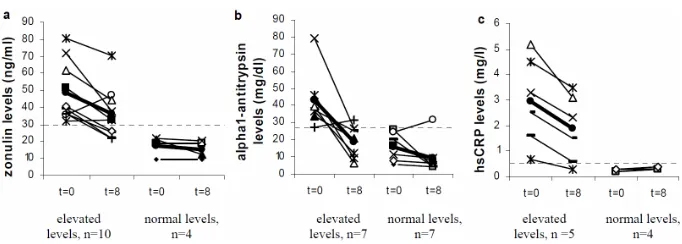
Figure 1. Effect of 8 weeks supplementation with Ecologic825 on the average levels of (a) zonulin; (b) α1-antitrypsin and (c) hsCRP. Normal values are indicated with a dotted line. The average values are indicated in bold .
(>0.55 mg/l). Those levels were decreased in all five par-ticipants which had elevated levels before the start of the intervention, but not in the persons which started with normal values (Figure 1(c)). The IgG4 antibodies against food allergens (measured in 9 of the 14 people) did not show any differences before and after the intervention (results not shown). Calprotectin levels were in all cases under the detection limit of 10 mg/l. In addition there were also no differences found with the L/M test.
The participants in these case series visited their phy-sician due to gastrointestinal complaints. In our study elevated levels of three markers of intestinal permeability were found in the majority of the participants. These markers were zonulin, α1-antitrypsin and CRP. In this cases series, zonulin levels were measured in faeces, as was also done in a study investigating the effects of pro-biotic supplementation in trained men [24]. Measure-ments of zonulin have also been performed is intestinal tissue and serum. Tissue levels of zonulin in the intestine were much higher in celiac patients compared to controls [21]. Higher levels of zonulin in serum correlate with higher intestinal permeability as measured with the L/M test [56,57]. This is in contrast with our study, where no abnormal L/M ratio was measured while we did find changes in zonulin levels. This might indicate that zonu-lin is a more sensitive marker of intestinal barrier func-tion than the L/M test.
Alpha1-antitrypsin is a marker used as a measure of protein leakage into the intestinal tract and for inflamma-tion in individuals with IBD [58]. In the case series a significant decrease in the levels of α1-antitrypsin in fae-ces was detected. A similar decrease of levels of α1-an- titrypsin was found in a study with probiotics in children with cow-milk allergy [26], but not in a study with pro-biotics in trained men [25]. This latter finding might be due to the fact that the α1-antitrypsin levels were not elevated before the start of the study in the study popula-tion, whereas this was the case in the described case se-ries and the study of Viljanen etal. [26]. As inflamma-tion is linked to impaired intestinal barrier funcinflamma-tion [59] it is not surprising that a marker for inflammation might also be valuable as a marker for barrier function. Faecal
calprotectin is, similar as α1-antitrypsin, used as marker in IBD [60], but the levels of calprotectin were below the detection limit of 10 mg/L in the studied patient group. This might indicate that in contrast to α1-antitrypsin, calprotectin is not a useful marker for subtle intestinal barrier problems, but more relevant in diseases like IBD with marked inflammation of the epithelial barrier func-tion. Another marker for inflammation is CRP, which was also identified in the case series. In another study CRP tended to be higher in obese patients compared with healthy weight controls [61]. CRP levels were associated with certain faecal metabolites and were inversely corre-lated with the total microbial counts, indicating a possi-ble influence of the gut microbiota on CRP levels. Ele-vated CRP levels were correlated with enhanced L/M ratios in some studies [62,63], but not in all [64]. This suggests that increased levels might be caused by en-hanced intestinal permeability, but can also have other causes. These elevated levels of CRP might indicate a systemic response to increased LPS in the body due to an enhanced permeability of the gut. From that perspective, CRP is not a direct measurement of intestinal permeabil-ity, but is probably more an indirect measurement.
3.3. Wider Implications
hsCRP might be valuable markers to measure intestinal permeability invivo. Clearly, more investigations have to be conducted to draw strong conclusions. For these in-vestigations consensus is necessary on standardized meth-ods to measure barrier function.
4. Acknowledgements
The authors like to thank the participants of the case se-ries for their participation in the study.
REFERENCES
[1] A. Farhadi, A. Banan, J. Fields and A. Keshavarzian, “Intestinal Barrier: An Interface between Health and Dis-ease,” JournalofGastroenterologyandHepatology, Vol. 18, No. 5, 2003, pp. 479-497.
doi:10.1046/j.1440-1746.2003.03032.x
[2] A. M. Marchiando, W. V. Graham and J. R. Turner, “Epi- thelial Barriers in Homeostasis and Disease,” Annual
Re-viewofPathology-MechanismsofDisease, Vol. 5, 2010, pp. 119-144. doi:10.1146/annurev.pathol.4.110807.092135
[3] A. Fasano, “Leaky Gut and Autoimmune Diseases,” Cli-
nicalReviewofAllergyandImmunology, Vol. 42, No. 1, 2012, pp. 71-78. doi:10.1007/s12016-011-8291-x
[4] FAO/WHO, “Evaluation of Health and Nutritional Prop-erties of Probiotics in Food Including Powder Milk with Live Lactic Acid Bacteria,” 2001.
[5] E. J. Videlock and F. Cremonini, “Meta-Analysis: Probi-otics in Antibiotic-Associated Diarrhoea,” Alimentaryand
PharmacologyTherapy, Vol. 35, No. 12, 2012, pp. 1355- 1369. doi:10.1111/j.1365-2036.2012.05104.x
[6] K. Alfaleh, J. Anabrees, D. Bassler and T. Al-Kharfi, “Probiotics for Prevention of Necrotizing Enterocolitis in Preterm Infants,” CochraneDatabaseSystematicReviews, No. 3, 2011, Article ID: CD005496.
doi:10.1002/14651858.CD005496.pub3
[7] I. R. Rowland, et al., “Current Level of Consensus on Probiotic Science-Report of an Expert Meeting-London, 23 November 2009,” GutMicrobes, Vol. 1, No. 6, 2010, pp. 436-439. doi:10.4161/gmic.1.6.13610
[8] E. Miyauchi, etal., “Mechanism of Protection of Transe-pithelial Barrier Function by Lactobacillus Sali- varius: Strain-Dependence and Attenuation by Bacteriocin Pro-duction,” AmericanJournalofPhysiologyand
Gastroin-testinal Liver Physiology, Vol. 303, No. 9, 2012, pp. G1029-G1104. doi:10.1152/ajpgi.00003.2012
[9] C. L. Ohland and W. K. Macnaughton, “Probiotic Bacte-ria and Intestinal Epithelial Barrier Function,” American JournalofPhysiologyandGastrointestinalLiver Physi-ology, Vol. 298, No. 6, 2010, pp G807-G819.
doi:10.1152/ajpgi.00243.2009
[10] F. J. Penna, L. A. Peret, L. Q. Vieira and J. R. Nicoli, “Pro- biotics and Mucosal Barrier in Children,” CurrentOpinion inClinicalNutritionandMetabolicCare, Vol. 11, No. 5, 2008, pp. 640-644. doi:10.1097/MCO.0b013e32830a70ab
[11] R. Mennigen and M. Bruewer, “Effect of Probiotics on Intestinal Barrier Function,” AnnalsoftheNewYorkAca-
demyofScience, Vol. 1165, 2009, pp. 183-189. doi:10.1111/j.1749-6632.2009.04059.x
[12] K. Teahon, S. Somasundaram, T. Smith, I. Menzies and I. Bjarnason, “Assessing the Site of Increased Intestinal Per- meability in Coeliac and Inflammatory Bowel Disease,”
Gut, Vol. 38, No. 6, 1996, pp. 864-869. doi:10.1136/gut.38.6.864
[13] L. Miele, et al., “Increased Intestinal Permeability and Tight Junction Alterations in Nonalcoholic Fatty Liver Disease,” Hepatology, Vol. 49, No. 6, 2009, pp. 1877- 1887. doi:10.1002/hep.22848
[14] A. Parlesak, C. Schafer, T. Schutz, J. C. Bode and C. Bode, “Increased Intestinal Permeability to Macromole- cules and Endotoxemia in Patients with Chronic Alcohol Abuse in Different Stages of Alcohol-Induced Liver Dis-ease,” JournalofHepatology, Vol. 32, No. 5, 2000, pp. 742-747. doi:10.1016/S0168-8278(00)80242-1
[15] B. J. Ammori, etal., “Early Increase in Intestinal Perme-ability in Patients with Severe Acute Pancreatitis: Corre-lation with Endotoxemia, Organ Failure, and Mortality,”
JournalofGastrointestinalSurgery, Vol. 3, No. 3, 1999, pp. 252-261.doi:10.1016/S1091-255X(99)80067-5 [16] H. Lennernas, “Human Intestinal Permeability,” Journal
of Pharmaceutical Sciences, Vol. 87, No. 4, 1998, pp. 403-410. doi:10.1021/js970332a
[17] M. G. Besselink, etal., “Intestinal Barrier Dysfunction in a Randomized Trial of a Specific Probiotic Composition in Acute Pancreatitis,” Annalsof Surgery, Vol. 250, No. 5, 2009, pp. 712-719. doi:10.1097/SLA.0b013e3181bce5bd [18] G. M. Diepenhorst, etal., “Influence of Prophylactic Pro-
biotics and Selective Decontamination on Bacterial Tran- slocation in Patients Undergoing Pancreatic Surgery: A Randomized Controlled Trial,” Shock, Vol. 35, No. 1, 2011, pp. 9-16. doi:10.1097/SHK.0b013e3181ed8f17
[19] T. Kanda, etal., “Intestinal Fatty Acid-Binding Protein Is a Useful Diagnostic Marker for Mesenteric Infarction in Humans,” Gastroenterology, Vol. 110, No. 2, 1996, pp. 339-343. doi:10.1053/gast.1996.v110.pm8566578 [20] J. M. Lieberman, J. Sacchettini, C. Marks and W. H.
Marks, “Human Intestinal Fatty Acid Binding Protein: Report of an Assay with Studies in Normal Volunteers and Intestinal Ischemia,” Surgery, Vol. 121, No. 3, 1997, pp. 335-342. doi:10.1016/S0039-6060(97)90363-9 [21] A. Fasano, etal., “Zonulin, a Newly Discovered
Modu-lator of Intestinal Permeability, and Its Expression in Coeliac Disease,” Lancet, Vol. 355, No. 9214, 2000, pp. 1518-1519. doi:10.1016/S0140-6736(00)02169-3 [22] W. L. Wang, S. Uzzau, S. E. Goldblum and A. Fasano,
“Human Zonulin, a Potential Modulator of Intestinal Tight Junctions,” Journal of Cell Science, Vol. 113, No. 24, 2000, pp. 4435-4440.
[23] A. Tripathi, etal., “Identification of Human Zonulin, a Physiological Modulator of Tight Junctions, as Prehap-toglobin-2,” ProceedingsoftheNationalAcademyofSci- encesoftheUnitedStatesofAmerica, Vol. 106, No. 39, 2009, pp. 16799-16804. doi:10.1073/pnas.0906773106 [24] F. Lutgendorff, “Defending the Barrier,” Ph.D. Thesis,
Universiteit Utrecht, Utrecht, 2009.
Markers of Intestinal Barrier, Oxidation, and Inflamma-tion in Trained Men; A Randomized, Double-Blinded, Placebo-Controlled Trial,” Journal of the International
SocietyofSportsNutrition, Vol. 9, No. 1, 2012, p. 45. doi:10.1186/1550-2783-9-45
[26] M. Viljanen, etal., “Probiotic Effects on Faecal Inflam-matory Markers and on Faecal Iga in Food Allergic Ato- pic Eczema/Dermatitis Syndrome Infants,” Pediatric
Al-lergyandImmunology, Vol. 16, No. 1, 2005, pp. 65-71. doi:10.1111/j.1399-3038.2005.00224.x
[27] C. Alberda, etal., “Effects of Probiotic Therapy in Criti-cally Ill Patients: A Randomized, Double-Blind, Placebo- Controlled Trial,” AmericanJournalofClinicalNutrition, Vol. 85, No. 3, 2007, pp. 816-823.
[28] E. Garcia Vilela, et al., “Influence of Saccharomyces Boulardii on the Intestinal Permeability of Patients with Crohn’s Disease in Remission,” ScandanavianJournalof
Gastroenterology, Vol. 43, No. 7, 2008, pp. 842-848. doi:10.1080/00365520801943354
[29] M. Gotteland, S. Cruchet and S. Verbeke, “Effect of Lac-tobacillus Ingestion on the Gastrointestinal Mucosal Bar-rier Alterations Induced by Indometacin in Humans,”
AlimentaryandPharmacologyTherapy, Vol. 15, No. 1, 2001, pp. 11-17. doi:10.1046/j.1365-2036.2001.00898.x [30] Z. Liu, etal., “Randomised Clinical Trial: The Effects of
Perioperative Probiotic Treatment on Barrier Function and Post-Operative Infectious Complications in Colorec-tal Cancer Surgery—A Double-Blind Study,” Alimentary
Pharmacology&Therapeutics, Vol. 33, No. 1, 2011, pp. 50-63. doi:10.1111/j.1365-2036.2010.04492.x
[31] C. E. McNaught, N. P. Woodcock, J. MacFie and C. J. Mitchell, “A Prospective Randomised Study of the Probi-otic Lactobacillus Plantarum 299v on Indices of Gut Bar-rier Function in Elective Surgical Patients,” Gut, Vol. 51, No. 6, 2002, pp. 827-831. doi:10.1136/gut.51.6.827
[32] B. S. Reddy, etal., “Randomized Clinical Trial of Effect of Synbiotics, Neomycin and Mechanical Bowel Prepara-tion on Intestinal Barrier FuncPrepara-tion in Patients Undergoing Colectomy,” BritishJournalof Surgery, Vol. 94, No. 5, 2007, pp. 546-554. doi:10.1002/bjs.5705
[33] Z. Stratiki, etal., “The Effect of a Bifidobacter Supple-mented Bovine Milk on Intestinal Permeability of Pre-term Infants,” EarlyHumanDevelopment, Vol. 83, No. 9, 2007, pp. 575-579.
[34] J. W. Zhang, etal., “Preoperative Probiotics Decrease Post- operative Infectious Complications of Colorectal Cancer,”
AmericanJournalofMedical Science, Vol. 343, No. 3, 2012, pp. 199-205. doi:10.1097/MAJ.0b013e31823aace6 [35] J. Karczewski, et al., “Regulation of Human Epithelial
Tight Junction Proteins by Lactobacillus Plantarum in Vivo and Protective Effects on the Epithelial Barrier,”
AmericanJournalofPhysiologyandGastrointestinalLi- verPhysiology, Vol. 298, No. 6, 2010, pp G851-G859. doi:10.1152/ajpgi.00327.2009
[36] R. J. Boyle, F. J. Bath-Hextall, J. Leonardi-Bee, D. F. Murrell and M. L. Tang, “Probiotics for the Treatment of Eczema: A Systematic Review,” Clinical and Experi-
mentalAllergy, Vol. 39, No. 8, 2009, pp. 1117-1127. doi:10.1111/j.1365-2222.2009.03305.x
[37] D. Jonkers, J. Penders, A. Masclee and M. Pierik, “Probi-
otics in the Management of Inflammatory Bowel Disease: A Systematic Review of Intervention Studies in Adult Pa- tients,” Drugs, Vol. 72, No. 6, 2012, pp. 803-823. doi:10.2165/11632710-000000000-00000
[38] P. Moayyedi, etal., “The Efficacy of Probiotics in the Treatment of Irritable Bowel Syndrome: A Systematic Review,” Gut, Vol. 59, No. 3, 2010, pp. 325-332. doi:10.1136/gut.2008.167270
[39] T. A. Sentongo, etal., “Intestinal Permeability and Ef- fects of Lactobacillus rhamnosus Therapy in Children with Short Bowel Syndrome,” Journal of Pediatric Gas-
troenterology and Nutrition, Vol. 46, No. 1, 2008, pp. 41- 47. doi:10.1097/01.mpg.0000304452.92175.f5
[40] P. Gupta, H. Andrew, B. S. Kirschner and S. Guandalini, “Is Lactobacillus GG Helpful in Children with Crohn’s Disease? Results of a Preliminary, Open-Label Study,”
Journal of Pediatric Gastroenterology and Nutrition, Vol. 31, No. 4, 2000, pp. 453-457.
doi:10.1097/00005176-200010000-00024
[41] E. Isolauri, M. Juntunen, T. Rautanen, P. Sillanaukee and T. Koivula, “A Human Lactobacillus Strain (Lactobacil- lus casei SP Strain GG) Promotes Recovery from Acute Diarrhea in Children,” Pediatrics, Vol. 88, No. 1, 1991, pp. 90-97.
[42] B. Leber, etal., “The Influence of Probiotic Supplemen- tation on Gut Permeability in Patients with Metabolic Syndrome: An Open Label, Randomized Pilot Study,”
EuropeanJournalofClinicalNutrition, Vol. 66, No. 10, 2012, pp. 1110-1115. doi:10.1038/ejcn.2012.103
[43] B. Sharma, etal., “Role of Probiotics on Gut Permeability and Endotoxemia in Patients with Acute Pancreatitis: A Double-Blind Randomized Controlled Trial,” Journalof ClinicalGastroenterology, Vol. 45, No. 5, 2011, pp. 442- 448. doi:10.1097/MCG.0b013e318201f9e2
[44] C. Gore, et al., “Treatment and Secondary Prevention Effects of the Probiotics Lactobacillus paracasei or Bifi-
dobacterium lactis on Early Infant Eczema: Randomized Controlled Trial with Follow-Up until Age 3 Years,” Cli-
nicalandExperimentalAllergy, Vol. 42, No. 1, 2012, pp. 112-122. doi:10.1111/j.1365-2222.2011.03885.x
[45] H. L. Qin, etal., “Effect of Lactobacillus plantarum En- teral Feeding on the Gut Permeability and Septic Com- plications in the Patients with Acute Pancreatitis,” Euro- peanJournalofClinicalNutrition, Vol. 62, No. 7, 2008, pp. 923-930. doi:10.1038/sj.ejcn.1602792
[46] R. Francavilla, etal., “A Randomized Controlled Trial of
Lactobacillus GG in Children with Functional Abdominal Pain,” Pediatrics, Vol. 126, No. 6, 2010, pp. e1445-e1452. doi:10.1542/peds.2010-0467
[47] R. C. Anderson, A. L. Cookson, W. C. McNabb, W. J. Kelly and N. C. Roy, “LactobacillusPlantarum DSM 2648 Is a Potential Probiotic That Enhances Intestinal Barrier Func- tion,” FEMSMicrobiologyLetters, Vol. 309, No. 2, 2010, pp. 184-192. doi:10.1111/j.1574-6968.2010.02038.x [48] C. M. Chapman, G. R. Gibson and I. Rowland, “In Vitro
Evaluation of Single- and Multi-Strain Probiotics: Inter- Species Inhibition between Probiotic Strains, and Inhibi- tion of Pathogens,” Anaerobe, Vol. 18, No. 4, 2012, pp. 405-413. doi:10.1016/j.anaerobe.2012.05.004
bouts and A. C. Beynen, “Monostrain, Multistrain and Multispecies Probiotics—A Comparison of Functionality and Efficacy,” InternationalJournalofFoodMicrobiol-
ogy, Vol. 96, No. 3, 2004, pp. 219-233. doi:10.1016/j.ijfoodmicro.2004.05.012
[50] M. Nermes, J. M. Kantele, T. J. Atosuo, S. Salminen and E. Isolauri, “Interaction of Orally Administered Lactoba-
cillus rhamnosus GG with Skin and Gut Microbiota and Humoral Immunity in Infants with Atopic Dermatitis,”
ClinicalandExperimentalAllergy, Vol. 41, No. 3, 2011, pp. 370-377. doi:10.1111/j.1365-2222.2010.03657.x [51] C. J. O’Boyle, et al., “Alterations in Intestinal Barrier
Function Do Not Predispose to Translocation of Enteric Bacteria in Gastroenterologic Patients,” Nutrition, Vol. 14, No. 4, 1998, pp. 358-362.
doi:10.1016/S0899-9007(97)00488-7
[52] M. Lamprecht and A. Frauwallner, “Exercise, Intestinal Barrier Dysfunction and Probiotic Supplementation,” Me-
dicalSportScience, Vol. 59, 2013, pp. 47-56. doi:10.1159/000342169
[53] E. J. Schiffrin, et al., “Probiotic Yogurt in the Elderly with Intestinal Bacterial Overgrowth: Endotoxaemia and Innate Immune Functions,” BritishJournalofNutrition, Vol. 101, No. 7, 2009, pp. 961-966.
doi:10.1017/S0007114508055591
[54] M. A. van Nieuwenhoven, B. J. Geerling, N. E. Deutz, F. Brouns and R. J. Brummer, “The Sensitivity of the Lac- tulose/Rhamnose Gut Permeability Test,” EuropeanJour-
nalofClinical Investigations, Vol. 29, No. 2, 1999, pp. 160-165. doi:10.1046/j.1365-2362.1999.00421.x
[55] F. Scaldaferri, M. Pizzoferrato, V. Gerardi, L. Lopetuso and A. Gasbarrini, “The Gut Barrier: New Acquisitions and Therapeutic Approaches,” Journal ofClinical Gas- troenterology, Vol. 46, 2012, pp. S12-S17.
doi:10.1097/MCG.0b013e31826ae849
[56] D. R. Duerksen, C. Wilhelm-Boyles, R. Veitch, D. Krys- zak and D. M. Parry, “A Comparison of Antibody Testing, Permeability Testing, and Zonulin Levels with Small- Bowel Biopsy in Celiac Disease Patients on a Gluten- Free Diet,” Digestive Disease Science, Vol. 55, No. 4, 2010, pp. 1026-1031. doi:10.1007/s10620-009-0813-5 [57] A. Sapone, et al., “Zonulin Upregulation Is Associated
with Increased Gut Permeability in Subjects with Type 1 Diabetes and Their Relatives,” Diabetes, Vol. 55, No. 5, 2006, pp. 1443-1449. doi:10.2337/db05-1593
[58] K. Becker, T. Frieling and D. Haussinger, “Quantification of Fecal Alpha 1-Antitrypsin Excretion for Assessment of Inflammatory Bowel Diseases,” EuropeanJournalofMe-
dicalResearch, Vol. 3, No. 1-2, 1998, pp. 65-70. [59] S. Y. Salim and J. D. Soderholm, “Importance of Dis-
rupted Intestinal Barrier in Inflammatory Bowel Dis- eases,” InflammatoryBowelDisease, Vol. 17, No. 1, 2011, pp. 362-381. doi:10.1002/ibd.21403
[60] L. Biancone, et al., “Non-Invasive Techniques for As- sessing Postoperative Recurrence in Crohn’s Disease,”
Digestive Liver Diseases, Vol. 40, Suppl. 2, 2008, pp. S265-S270. doi:10.1016/S1590-8658(08)60536-8 [61] K. Tiihonen, A. C. Ouwehand and N. Rautonen, “Effect
of Overweight on Gastrointestinal Microbiology and Im- munology: Correlation with Blood Biomarkers,” British
JournalofNutrition, Vol. 103, No. 7, 2009, pp. 1-9. doi:10.1017/S0007114509992807
[62] J. Holland, etal., “Intraoperative Splanchnic Hypoperfu- sion, Increased Intestinal Permeability, Down-Regulation of Monocyte Class II Major Histocompatibility Complex Expression, Exaggerated Acute Phase Response, and Sep- sis,” AmericanJournalofSurgery, Vol. 190, No. 3, 2005, pp. 393-400. doi:10.1016/j.amjsurg.2005.03.038
[63] Z. F. Tang, Y. B. Ling, N. Lin, Z. Hao and R. Y. Xu, “Glutamine and Recombinant Human Growth Hormone Protect Intestinal Barrier Function Following Portal Hy- pertension Surgery,” WorldJournalofGastroenterology, Vol. 13, No. 15, 2007, pp. 2223-2228.
[64] J. Brignardello, etal., “Pilot Study: Alterations of Intes- tinal Microbiota in Obese Humans Are Not Associated with Colonic Inflammation or Disturbances of Barrier Function,” Alimentary Pharmacology & Therapeutics, Vol. 32, No. 11-12, 2010, pp. 1307-1314.
doi:10.1111/j.1365-2036.2010.04475.x
[65] V. Rosenfeldt, et al., “Effect of Probiotics on Gastrointes- tinal Symptoms and Small Intestinal Permeability in Chil- dren with Atopic Dermatitis,” Journal of Pediatrics, Vol. 145, No. 5, 2004, pp. 612-616.
doi:10.1016/j.jpeds.2004.06.068
[66] B. Klarin, et al., “Lactobacillus Plantarum 299v Reduces Colonisation of Clostridium Difficile in Critically Ill Pa- tients Treated with Antibiotics,” Acta Anaesthesiologica Scandinavica, Vol. 52, No. 8, 2008, pp. 1096-1102. doi:10.1111/j.1399-6576.2008.01748.x
[67] J. Zeng, et al., “Clinical Trial: Effect of Active Lactic Acid Bacteria on Mucosal Barrier Function in Patients with Diar- rhoea-Predominant Irritable Bowel Syndrome,”
Alimen-tary Pharmacology & Therapeutics, Vol. 25, No. 8, 2008 pp. 994-1002. doi:10.1111/j.1365-2036.2008.03818.x [68] L. A. Gonzalez-Hernandez, et al., “Synbiotic Therapy
Decreases Microbial Translocation and Inflammation and Improves Immunological Status in HIV-Infected Patients: a Double-Blind Randomized Controlled Pilot Trial,” Nu- trition Journal, Vol. 11, 2012, p. 90.
doi:10.1186/1475-2891-11-90
[69] P. K. Jain, C. E. Mcnaught, A. D. Anderson, J. Macfie and C. J. Mitchell, “Influence of Synbiotic Containing
Lactobacillus acidophilus La5, Bifidobacterium lactis Bb 12, Streptococcus thermophilus, Lactobacillus bulgaricus and Oligofructose on Gut Barrier Function and Sepsis in Critically Ill Patients: A Randomised Controlled Trial,”
Clinical Nutrition, Vol. 23, No. 4, 2004, pp. 467-475. doi:10.1016/j.clnu.2003.12.002
[70] C. E. Mcnaught, N. P. Woodcock, A. D. Anderson and J. Macfie, “A Prospective Randomised Trial of Probiotics in Critically Ill Patients,” Clinical Nutrition, Vol. 24, No. 2, 2005, pp. 211-219. doi:10.1016/j.clnu.2004.08.008 [71] L. Galpin, et al., “Effect of Lactobacillus GG on Intesti-
nal Integrity in Malawian Children at Risk of Tropical Enteropathy,” American Journal of Clinical Nutrition, Vol. 82, No. 5, 2005, pp. 1040-1045.
[72] M. Schunter, et al., “Randomized Pilot Trial of a Syn-biotic Dietary Supplement in Chronic HIV-1 Infection,”