IJPSR (2014), Volume 5, Issue 9 (Research Article)
Received on 26 February 2014; received in revised form, 09 April 2014; accepted, 23 May 2014; published 01 September 2014
PHYTOCHEMICAL, FT-IR, AND GC-MS ANALYSIS OF STEM AND LEAF OF TILIACORA
ACUMINATA (LAN.) HOOK F & THOMAS(MENISPERMACEAE)
A. Nishanthini 1, V. R. Mohan * 1 and S. Jeeva 2
Ethnopharmacology Unit 1, Research Department of Botany, V. O. Chidambaram College, Tuticorin -628008, Tamil Nadu, India.
Department of Botany 2, Scott Christian College (Autonomous), Nagercoil - 629003, Kanyakumari, Tamil Nadu, India.
ABSTRACT: The present study deals with the phytochemical examination of therapeutic importance of Tiliacora acuminata (Lan) Hook. F & Thomas an important medicinal plant. Qualitative phytochemical analysis of the methanol and ethanol extracts prepared from Tiliacora acuminata stem and leaf revealed the presence of alkaloids, anthraquinones, catechins, coumarins, flavonoids, phenols, quinones, saponins, steroids, sugar, glycosides, tannins, and xanthoproteins. The FT-IR spectrum confirmed the presence of alkyl group, methyl group, alcohol group, ethers, esters, carboxylic acid, and anhydrides. The bioactive components of the ethanol extract of Tiliacora acuminata stem and leaf were investigated using Perkin-Elmer Gas Chromatography-Mass Spectrometry (GC-MS), while the mass spectra of the compounds found in the extract were matched with the National Institute of Standards and Technology (NIST) library. GC-MS analysis of ethanol extract of stem of Tiliacora acuminata revealed the existence of 9,12,15-Octadecatrienoic acid (Z,Z,Z) (85.6%), 9,12,15,Octadecadienoic acid (Z,Z) (7.2%), Asarone (3.5%), Hexa-decanoic acid, ethyl ester (1.6%), Methyl-α-d-ribofuranoside (1.4%) and 9,12,15,Octadecadienoic acid, methyl ester (E,E)- (0.8%) and leaf of Tiliacora acuminata revealed the existence of 3,7,11,15-Tetramethyl-2-hexadecen-1-ol (14.9%), Squalene (14.5%), Phytol (9.5%), Vitamin E (8.3%) and Heptadecane, 2, 6-dimethyl- (7.9%).
INTRODUCTION: The medicinal actions of
plants unique to particular plant species or groups are consistent with the concept that the combination of secondary products in a particular plant is taxonomically distinct 1, 2. Screening active compounds from plants has to lead to the invention of new medicinal drugs which have efficient protection and treatment roles against various
diseases including cancer and Alzheimer's disease 3, 4. QUICK RESPONSE CODE
DOI:
10.13040/IJPSR.0975-8232.5(9).3977-86
This article can be accessed online on www.ijpsr.com
DOI link: http://dx.doi.org/10.13040/IJPSR.0975-8232.5(9).3977-86
Plants remain a vital source of drugs, and nowadays much emphasis has been given to neutraceuticals.A large number of medicinal plants and their purified constituents have shown beneficial therapeutic potentials 5. To promote the use of medicinal plants as potential sources of antimicrobial compounds, it is important to thoroughly investigate their composition and activity and thus validate their use 6.
Some phytochemicals produced by plants have antimicrobial activity and used for the development of new antimicrobial drugs 7. It has been shown that in-vitro screening methods could provide the needed preliminary observations to select crude plant extracts with potentially useful properties for
Keywords:
Tiliacora acuminata, Phytochemical screening, FT-IR,
Phytol, Phytocomponents
Correspondence to Author: Dr. V. R. Mohan
Associate Professor and Head, Ethnopharmacology Unit, Research Department of Botany, V. O. Chidambaram College, Tuticorin -628008, Tamil Nadu, India.
further chemical and pharmacological investigations 8. The determination of phyto-constituents is largely performed by relatively expensive and often laborious techniques such as gas (GC) and liquid (LC) chromatography combined with specific detection schemes 9, 10. Analysis of small amounts of chemicals has become easier and more cost-effective owing to the development of hyphenated chromatographic techniques such as GC or LC-MS. GC-MS analysis can identify pure compounds present at less than 1gm 11. However, simple, cost-effective, and rapid tests for detecting phyto components are necessary. Spectroscopic (FTIR) methods together or separate can be used in this sense as well as conventional methods 12-14.
Tiliacora acuminata is a large woody climber; branches cinereous, striate. Leaves are long, ovate, acuminate, cordate, truncate or rounded at the base, flowers yellow in elongate, lax, axillary, racemose panicles belonging to the family Menispermaceae. This plant has been used as an ingredient in many of the ayurvedic preparations and regarded as an antidote for snake bite 15, 16. Taking into consideration of the medicinal importance of this plant, the ethanol extract of Stem and leaf of
Tiliacora acuminata were analyzed for the first time using GC-MS. This work will help to identify the compounds of therapeutic value. A majority of the rich diversity of Indian medicinal plants is yet to be scientifically evaluated for such properties. With this background, the present study was aimed to identify the phytoconstituents present in
Tiliacora acuminata using MS analysis. GC-MS is the best technique to identify the bioactive constituents of long-chain hydrocarbons, alcohols, acids esters, alkaloids, steroids, amino acid and nitro compounds 17.
MATERIALS AND METHODS: The stem and
leaf of T. acuminata were collected from Ulakaruvi, Kanyakumari District, Tamil Nadu. The plant was identified with the help of local flora and authenticated in Botanical Survey of India, Southern circle, Coimbatore, Tamil Nadu.
Preparation of Extracts for Phytochemical Screening: Freshly collected stem and leaf samples of T. acuminata were dried in the shade, and then coarsely powdered separately in a willy mill. The
coarse powder (100g) was extracted successively with petroleum ether, benzene, ethyl acetate, methanol and ethanol, every 250 ml in a Soxhlet apparatus for 24 h. All the extracts were filtered through Whatman no. 41 filter paper. All the extracts (petroleum ether, benzene, ethyl acetate, methanol, and ethanol) were subjected to qualitative tests for the identification of various phytochemical constituents as per standard procedures 18-20.
FT-IR Analysis: A little powder of plant specimen was mixed with KBr salt, using a mortar and pestle, and compressed into a thin pellet. Infrared spectra were recorded as KBr pellets on a Thermo scientific Nicot iS5 iD1 transmission, between 4000-400 cm-1. 21
Preparation of Extracts for GC-MS: Stem and leaf of T. acuminata were cleaned, shade dried and pulverized to powder in a mechanical grinder. The required quantity of powder was weighed and transferred to Stoppard flask and treated with ethanol until the powder is fully immersed. The flask was shaken every hour for the first six hours, and then it was kept aside and again shaken after 24hours. This process was repeated for three days, and then the extract was filtered. The extract was collected and evaporated to dryness by using vacuum distillation unit. The ethanol extracts thus obtained was used for GC-MS analysis.
to 450 Da. Total GC running time was 36 min. The relative % amount of each component was calculated by comparing its average peak area to the total areas, software adapted to handle mass spectra, and chromatograms was a Turbo mass. Identification of Compounds: Interpretation of mass spectrum GC-MS was conducted using the database of National Institute Standard and Technology (NIST) having more than 62,000
patterns. The spectrum of the unknown component was compared with the spectrum of the known components stored in the NIST library. The Name, Molecular weight, and structure of the components of the test materials were ascertained.
[image:3.612.45.568.212.419.2]RESULTS: Phytochemical screening of petroleum ether, benzene, ethyl acetate, methanol, and ethanol extracts of stem and leaf of T. acuminata were presented in Table 1.
TABLE 1:PRELIMINARY PHYTOCHEMICAL SCREENING OF STEM AND LEAF EXTRACT OF TILIACORA ACUMINATA Bioactive
components
Nature of extract
Petroleum ether Benzene Ethyl acetate Methanol Ethanol
Stem Leaf Stem Leaf Stem Leaf Stem Leaf Stem Leaf
Alkaloids + + + + + + + + + +
Anthraquinones - - - - - - + + + +
Catachins + + - - + + + + + +
Coumarins - - - - + + + + + +
Flavonoids - - - - - - + + + +
Phenols + + + + + + + + + +
Quinones - - - - + + + + + +
Saponins + + + + + + + + + +
Steroids + + + + + + + + + +
Tannins + + + + - - + + - -
Terpenoids - - - - - - - - - -
Sugar + + + + + + + + + +
Glycosides + + + + + + + + + +
Xanthoproteins + + + + + + + + + +
Fixed oil + + + + + + - - - -
Methanol and ethanol extracts of stem and leaf of
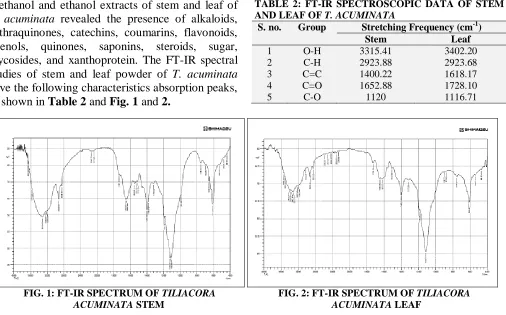
T. acuminata revealed the presence of alkaloids, anthraquinones, catechins, coumarins, flavonoids, phenols, quinones, saponins, steroids, sugar, glycosides, and xanthoprotein. The FT-IR spectral studies of stem and leaf powder of T. acuminata
gave the following characteristics absorption peaks, as shown in Table 2 and Fig. 1 and 2.
TABLE 2: FT-IR SPECTROSCOPIC DATA OF STEM
AND LEAF OF T. ACUMINATA
S. no. Group Stretching Frequency (cm-1)
Stem Leaf
1 O-H 3315.41 3402.20
2 C-H 2923.88 2923.68
3 C=C 1400.22 1618.17
4 C=O 1652.88 1728.10
5 C-O 1120 1116.71
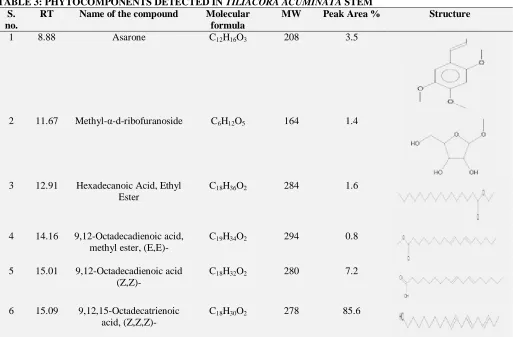
[image:3.612.60.566.432.747.2]Six compounds were identified in T. acuminata
stem by GC-MS analysis. The active principles with their Retention time (RT), Molecular formula
[image:4.612.51.564.110.447.2](MF), Molecular weight (MW) and Concentration (%) are presented in Table 3 and Fig. 3.
TABLE 3: PHYTOCOMPONENTS DETECTED IN TILIACORA ACUMINATA STEM
S. no.
RT Name of the compound Molecular
formula
MW Peak Area % Structure
1 8.88 Asarone C12H16O3 208 3.5
2 11.67 Methyl-α-d-ribofuranoside C6H12O5 164 1.4
3 12.91 Hexadecanoic Acid, Ethyl Ester
C18H36O2 284 1.6
4 14.16 9,12-Octadecadienoic acid, methyl ester, (E,E)-
C19H34O2 294 0.8
5 15.01 9,12-Octadecadienoic acid (Z,Z)-
C18H32O2 280 7.2
6 15.09 9,12,15-Octadecatrienoic acid, (Z,Z,Z)-
C18H30O2 278 85.6
*Parameters tested are not covered under the scope of NABL accreditation
FIG. 3: GC-MS CHROMATOGRAM OF ETHANOL
EXTRACT OF STEM OF TILIACORA ACUMINATA
The prevailing compounds were 9,12,15-Octadecatrienoic acid (Z,Z,Z) (85.6%), 9,12,15,Octadecadienoic acid (Z,Z) (7.2%), Asarone (3.5%), Hexadecanoic acid, ethyl ester (1.6%), Methyl-α-d-ribofuranoside (1.4%) and 9,12,15,Octadecadienoic acid, methyl ester (E,E)-
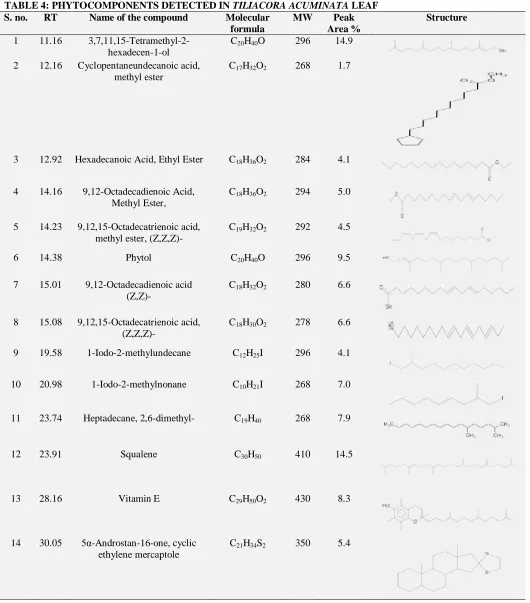
(0.8%). Fourteen compounds were identified in T. acuminata leaf by GC-MS analysis. The active principles with their Retention time (RT), Molecular formula (MF), Molecular weight (MW) and Concentration (%) are presented in Table 4 and Fig. 4.
FIG. 4: GC-MS CHROMATOGRAM OF ETHANOL
[image:4.612.47.297.473.635.2] [image:4.612.314.566.560.725.2]TABLE 4: PHYTOCOMPONENTS DETECTED IN TILIACORA ACUMINATA LEAF
S. no. RT Name of the compound Molecular
formula
MW Peak
Area %
Structure
1 11.16 3,7,11,15-Tetramethyl-2-hexadecen-1-ol
C20H40O 296 14.9
2 12.16 Cyclopentaneundecanoic acid, methyl ester
C17H32O2 268 1.7
3 12.92 Hexadecanoic Acid, Ethyl Ester C18H36O2 284 4.1
4 14.16 9,12-Octadecadienoic Acid, Methyl Ester,
C18H36O2 294 5.0
5 14.23 9,12,15-Octadecatrienoic acid, methyl ester, (Z,Z,Z)-
C19H32O2 292 4.5
6 14.38 Phytol C20H40O 296 9.5
7 15.01 9,12-Octadecadienoic acid (Z,Z)-
C18H32O2 280 6.6
8 15.08 9,12,15-Octadecatrienoic acid, (Z,Z,Z)-
C18H30O2 278 6.6
9 19.58 1-Iodo-2-methylundecane C12H25I 296 4.1
10 20.98 1-Iodo-2-methylnonane C10H21I 268 7.0
11 23.74 Heptadecane, 2,6-dimethyl- C19H40 268 7.9
12 23.91 Squalene C30H50 410 14.5
13 28.16 Vitamin E C29H50O2 430 8.3
14 30.05 5α-Androstan-16-one, cyclic ethylene mercaptole
C21H34S2 350 5.4
The prevailing compounds were 3,7,11,15-Tetramethyl-2-hexadecen-1-ol (14.9%), Squalene (14.5%), Phytol (9.5%), Vitamin E (8.3%), Heptadecane, 2,6-dimethyl- (7.9%), 1-Iodo-2-methylnonane (7.0%), 9,12,15-Octadecatrienoic acid (Z,Z,Z) (6.6%), 9,12,Octadecadienoic acid
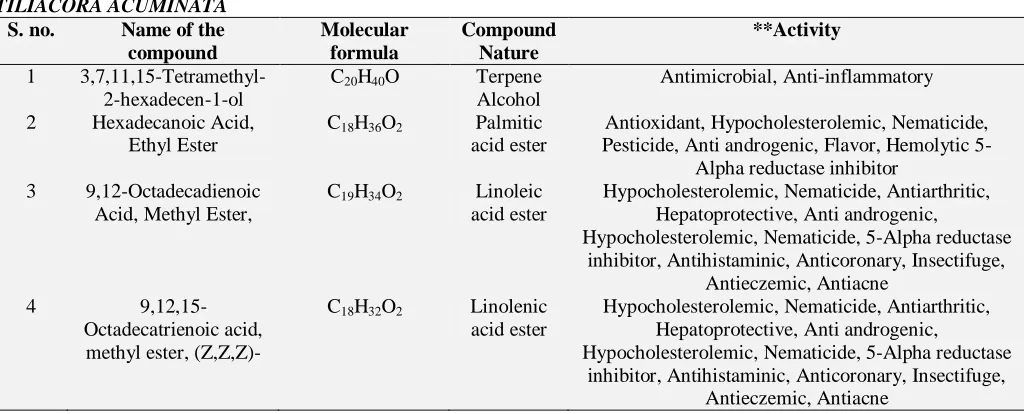
ester (1.7%). Table 5 and 6 listed the major phytocomponents and its biological activities obtained through the GC-MS study of stem and leaf of T. acuminata. The biological activities listed are
based on Dr. Dukes Phytochemical and Ethnobotanical Databases by Dr. Jim Duke of the Agricultural Research Service, USDA.
TABLE 5: ACTIVITY OF PHYTO-COMPONENTS IDENTIFIED IN THE ETHANOL EXTRACT OF STEM OF
TILIACORA ACUMINATA
S. no.
RT Name of the
compound
Molecular formula
MW Peak Area
%
Compoun d Nature
**Activity
1 8.88 Asarone C12H16O3 208 3.5 Alkaloid Antipyretic, Antispasmodic, Emetic,
Fungicide, Mutagenic, Sedative, Myorelaxant, Tranquilizer, Pesticide,
Cardiodepressant, Psychoactive, Anticonvulsant
2 11.67 Methyl-α-d-ribofuranoside
C6H12O5 164 1.4 Sugar
content
Preservative
3 12.91 Hexadecanoic Acid, Ethyl Ester
C18H36O2 284 1.6 Palmitic
acid ester
Antioxidant, Hypocholesterolemic, Nematicide, Pesticide, Antiandrogenic,
Flavor, Hemolytic, 5-Alpha reductase inhibitor
4 14.16 9,12-Octadecadienoic acid, methyl ester,
(E,E)-
C19H34O2 294 0.8 Linoleic
acid ester
Hypocholesterolemic, Nematicide, Antiarthritic Hepatoprotective, Antiandrogenic Hypocholesterolemic, Nematicide, 5-Alpha reductase inhibitor Antihistaminic, Anticoronary Insectifuge,
Antieczemic, Antiacne 5 15.01
9,12-Octadecadienoic acid (Z,Z)-
C18H32O2 280 7.2 Linoleic
acid
Hypocholesterolemic, Nematicide, Antiarthritic, Hepatoprotective, Anti
androgenic, Hypocholesterolemic, Nematicide, 5-Alpha reductase inhibitor Antihistaminic, Anticoronary, Insectifuge,
Antieczemic , Antiacne 6 15.09
9,12,15-Octadecatrienoic acid, (Z,Z,Z)-
C18H30O2 278 85.6 Linolenic
acid
Hypocholesterolemic, Nematicide, Antiarthritic, Hepatoprotective, Antiandrogenic, Hypocholesterolemic, Nematicide, 5-Alpha reductase inhibitor Antihistaminic, Anticoronary, Insectifuge,
Antieczemic, Antiacne **Activity source: Dr. Duke's Phytochemical and Ethnobotanical Database
TABLE 6: ACTIVITY OF PHYTO-COMPONENTS IDENTIFIED IN THE ETHANOL EXTRACT OF LEAF OF
TILIACORA ACUMINATA
S. no. Name of the
compound
Molecular formula
Compound Nature
**Activity
1 3,7,11,15-Tetramethyl-2-hexadecen-1-ol
C20H40O Terpene
Alcohol
Antimicrobial, Anti-inflammatory
2 Hexadecanoic Acid, Ethyl Ester
C18H36O2 Palmitic
acid ester
Antioxidant, Hypocholesterolemic, Nematicide, Pesticide, Anti androgenic, Flavor, Hemolytic
5-Alpha reductase inhibitor 3 9,12-Octadecadienoic
Acid, Methyl Ester,
C19H34O2 Linoleic
acid ester
Hypocholesterolemic, Nematicide, Antiarthritic, Hepatoprotective, Anti androgenic,
Hypocholesterolemic, Nematicide, 5-Alpha reductase inhibitor, Antihistaminic, Anticoronary, Insectifuge,
Antieczemic, Antiacne
4
9,12,15-Octadecatrienoic acid, methyl ester, (Z,Z,Z)-
C18H32O2 Linolenic
acid ester
Hypocholesterolemic, Nematicide, Antiarthritic, Hepatoprotective, Anti androgenic,
Hypocholesterolemic, Nematicide, 5-Alpha reductase inhibitor, Antihistaminic, Anticoronary, Insectifuge,
[image:6.612.33.579.136.500.2] [image:6.612.51.563.537.744.2]5 Phytol C20H40O Diterpene Cancer preventive, Diuretic, Antimicrobial,
Anti-inflammatory 6 9,12-Octadecadienoic
acid (Z,Z)-
C18H32O2 Linoleic
acid
Hypocholesterolemic, Nematicide, Antiarthritic, Hepatoprotective, Anti androgenic,
Hypocholesterolemic, Nematicide, 5-Alpha reductase inhibitor, Antihistaminic, Anticoronary, Insectifuge,
Antieczemic, Antiacne
7
9,12,15-Octadecatrienoic acid, (Z,Z,Z)-
C18H30O2 Linolenic
acid
Hypocholesterolemic, Nematicide, Antiarthritic, Hepatoprotective, Anti androgenic,
Hypocholesterolemic, Nematicide, 5-Alpha reductase inhibitor, Antihistaminic, Anticoronary, Insectifuge,
Antieczemic, Antiacne
8
1-Iodo-2-methylundecane
C12H25I Iodine
compound
Antimicrobial
9
1-Iodo-2-methylnonane
C10H21I Iodine
compound
Antimicrobial
10 Squalene C30H50 Triterpene Antibacterial, Antioxidant, Antitumor, Cancer
preventive, Immunostimulant, Chemo preventive, Lipoxygenase-inhibitor, Pesticide Diuretic 11 Vitamin E C29H50O2 Vitamin
compound
Antiageing, Analgesic, Antidiabatic Antiinflammatory, Antioxidant, Antidermatitic,
Antileukemic, Antitumor, Anticancer, Hepatoprotective, Hypocholesterolemic Antiulcerogenic, Vasodilator, Antispasmodic,
Antibronchitic, Anticoronary 13 5α-Androstan-16-one,
cyclic ethylene mercaptole
C21H34S2 Sulfur
compound
Antimicrobial
**Activity source: Dr. Duke's Phytochemical and Ethnobotanical Database
DISCUSSION: The plants are known as medicinal rich in secondary metabolites, which include alkaloids, glycosides, flavonoids, insecticides, steroids, related active metabolites. They are of great medicinal value and have been extensively used in the drug and pharmaceutical industry. Recently, several studies have been reported on the phytochemistry of plants across the world. In the present investigation, the qualitative phytochemical investigation revealed that the methanol and ethanol extracts contained some phytoconstituents. Alkaloid, anthraquinone, catechins, coumarins, flavonoids, phenols, quinones, saponins, steroids, sugar, glycosides and xanthoproteins are found in both the extracts. Alkaloids possess anti-inflammatory, antiasthmatic, and antianaphylaxis properties with consequences of altered immunological status in-vivo. Furthermore, an alkaloid, which is one of the largest phytochemical groups in plants has an amazing effect on humans, and this has led to the development of powerful painkiller medicines 22.
Flavonoids, the major group of phenolic compounds are reported for their antimicrobial, antiviral, and spasmolytic activity. Flavonoids can
scavenge hydroxyl radicals, superoxide anion radicals and lipid peroxy radicals, which high lights many of the flavonoids health-promoting functions in organisms. They are important for the prevention of diseases associated with oxidative damage of membrane, proteins, and DNA. Flavonoids, on the other hand, are potent water-soluble antioxidants and few radical scavengers, which prevent oxidative cell damage and have strong anticancer activity 23. Flavonoids have been referred to as nature’s biological response modifiers because of strong experimental evidence of their inherent ability to modify the body’s reaction to allergen, virus, and carcinogens. They show anti-allergic, anti-inflammatory and anticancer activities 22, 23. Phenolics have antioxidative, antidiabetic, anticarcinogenic, antimicrobial, antiallergic, antimutagenic and anti-inflammatory activities 24,
25
treatment of burns as they precipitate the proteins of exposed tissues to form a protective covering. They are also medicinally used as healing agents in inflammation, leucorrhoea, gonorrhea, burns, and piles and as an antidote. Tannins have been found to have antiviral, antibacterial, antiparasitic effects, anti-inflammatory, antiulcer and antioxidant property for possible therapeutic applications. Tannins are known to possess general antimicrobial and antioxidant activities. Recent reports show that tannins may have potential value as cytotoxic antineoplastic agents 28. It was also reported that certain tannins were able to inhibit HIV replication selectively and was also used as diuretic25. Coumarin has been used as anticoagulant drugs and to treat lymphedema (Online). Plant steroids are known to be important for their cardiotonic activities, posse’s insecticidal and antimicrobial properties 29.
These observations cited on phytochemical compounds support the present findings on the usefulness of stem and leaf of T. acuminata in various medicaments. It suggests that the T. acuminata plant can be used as antimicrobial
activity, antioxidant, antiallergic, anti-inflammatory, antidiabetic, anticarcinogenic, anticancer agents in the future.
From the FT-IR spectral data, the presence of C=O, C-H, C=C, C-O, and O-H was identified. These bonding structures are responsible for the presence of alkyl group, methyl group, alcohol group, ethers, esters, carboxylic acid, and anhydrides.
The more intense bands occurring in stem 3315.41 cm-1, 2923.88 cm-1, 1652.88 cm-1, 1400.22 cm-1 and 1120 cm-1 and in leaf 3402.20 cm-1, 2923.68 cm-1, 1728.10 cm-1, 1618.17 cm-1 and 1116.71 cm-1 corresponds to OH, C-H, C=O, C=C and C-O stretching/bending vibrations respectively indicate the presence of amino acids, alkanes, ethers, organic halogen compounds and carbohydrates in plants. Carboxylic acids present in the medicinal plant serves as a main pharmaceutical product in curing ulcers, jaundice, headache, stomatitis, hemicranias, fever, pain in the liver, treatment of edema, and rheumatic joint pains. Amines, amides, and amino acids are the main groups of protein synthesis, and herbs serve as herb oil and hair tonic.
Among the identified phytochemicals, 9, 12, 15-Octadecatrienoic acid, methyl ester, (Z, Z, Z) have the property of anti-inflammatory and anti-arthritic as reported by earlier workers 30, 31. Phytol is one of the fourteen compounds of the present study. Phytol was observed to have antibacterial activities against Staphylococcus aureus by causing damage to cell membranes as a result there is a leakage of potassium ions from bacterial cells 32. Phytol is key acyclic diterpene alcohol that is a precursor for Vitamins E and K1. It is used along with simple or
corn syrup as a hardener in candies. Phytol has detected in T. acuminata leaf, which was also found to be effective at different stages of arthritis. It was found to give good as well as preventive and therapeutic results against arthritis. The results show that reactive oxygen species promoting substances such as phytol constitute a promising novel class of pharmaceuticals for the treatment of rheumatoid arthritis and possibly other chronic inflammatory diseases 33. 9, 12-Octadecadienoic acid (Z-Z) has the property of anti-inflammatory and antiarthritic as reported by earlier works. Squalene has the property of antioxidant.
Recently squalene possesses chemopreventive activity against colon carcinogenesis. The results show that, reactive oxygen species-promising novel class of pharmaceutical for the treatment of rheumatic arthritis and possibly other chronic inflammatory diseases 34, 35. Thus, this type of GC-MS analysis is the first step towards understanding the nature of active principles in this medicinal plant, and this type of study will helpful for further detailed study. Further investigation into the pharmacological importance of T. acuminata and their diversity and detailed phytochemistry may add new knowledge to the information in the traditional medicinal systems.
CONCLUSION: The presence of various
bioactive compounds justifies the use of the whole plants for various ailments by traditional practitioners. So it is recommended as a plant of pharmaceutical importance. However, further studies will need to be undertaken to ascertain their bioactivity fully.
ACKNOWLEDGEMENT: We would like to
of Food Processing Industries, Government of India), Tanjavore, Tamil Nadu for providing all the facilities and support used to carry out the work.
CONFLICT OF INTEREST: Nil
REFERENCES:
1. Mamza UT, Sodipo OA and Khan IZ: Gas Chromatography-Mass Spectrometry (GC-MS) analysis of bioactive components of Phyllanthus amarus leaves. International Research Journal of Plant Science 2012; 3: 208-15.
2. Janakiraman N, Johnson M and Sahaya SS: GC-MS analysis of bioactive constituents of Peristrophe bicalyculata (Retz.) Nees (Acanthaceae). Asian Pacific Journal of Tropical Biomedicine 2012; S46-S49.
3. Sheeja K and Kuttan G: Activation of cytotoxic T lymphocyte responses and attenuation of tumor growth
in-vivo by Andrographis paniculata extract and
andrographolide. Immunopharmacology and Immuno-toxicology 2007; 29: 81-93.
4. Mukherjee PK, Kumar V and Houghton PJ: Screening of Indian Medicinal Plants for acetylcholinesterase inhibitory activity. Phytotherapy Research 2007; 21: 1142-45. 5. Khalaf NA, Shakya AK, Al-othman A, Ahbar Z and Farah
H: Antioxidant activity of some common plants. Turkish Journal of Biology 2007; 31: 1-5.
6. Nair R and Chanda S: Activity of some medicinal plants against certain pathogenic bacterial strains. Indian Journal of Pharmacology 2006; 38: 142-44.
7. Packia Lincy M, Paulpriya K and Mohan VR: Pharmacochemical characterization and in-vitro antibacterial activity of leaf of Sesuvium portulacastrum L. (aizoaceae). International Journal of Pharmaceutical Research and Bio-Science 2013; 2: 140-55.
8. Packia-Lincy M, Daffodil ED, Ponesakki D and Mohan VR: Pharmacochemical characterization and antibacterial activity of Ventilago maderaspatana Gaertn. Pharmanest 2013; 4: 578-86.
9. Uzer A, Ercag E and Apak R: Selective spectrophotometric determination of TNT in soil and water with dicyclohexylamine extraction. Analytica Chimica Acta 2005; 534: 307-17.
10. Eisenhauer N, Klier M, Partsch S, Sabais ACW, Scherber C, Weisser W and Scheu S: No interactive effects of pesticides and plant diversity on soil microbial biomass and respiration. Applied Soil Ecology 2009; 42: 31-36. 11. Liebler DC, Burr JA, Philips L and Ham AJL: Gas
chromatography-mass spectrometry analysis of vitamin E and its oxidation products. Analytical Biochemistry 1996; 236: 27-34.
12. Aysal P, Ambrus AD, Lehotay SJ and Cannavan A: Validation of an efficient method for the determination of pesticide residues in fruits and vegetables using ethyl acetate for extraction. Journal of Environmental Science and Health 2007; 42: 481-90.
13. Ibrahim M and Abd-El-Aal M: Spectroscopic study of Heavy Metals Interaction with organic acid. International Journal of Environment and Pollution 2008; 35: 99-110. 14. Ibrahim M, Hameed AJ and Jalbout A: Molecular
Spectroscopic Study of River Nile Sediment in the Greater Cairo Region. Applied Spectroscopy 2008; 62: 306-11 15. Selvaraj SJ, Alphonse I and Britto SJ: A new lactone from
aerial parts of Tiliacora acuminata. Indian Journal of Chemistry 2008; 47B: 942-44.
16. Sri BS and Reddi TWWS: Traditional phyto-antidotes used for snakebite by Bagata tribe of Eastern Ghats of Visakhapatnam district, Andhra Pradesh. International Multidisciplinary Research Journal 2011; 1: 42-45. 17. Muthulakshmi A, Jothibai-Margret R and Mohan VR:
GC-MS analysis of bioactive components of Feronia elephantum Correa (Rutaceae). Journal of Applied Pharmaceutical Science 2012; 2: 69-74.
18. Saraf A: Phytochemical and antibacterial studies of medicinal plant Costus specious Koer. E-Journal of Chemistry 2010; 7: S405-S413.
19. Shajeela PS, Kalpanadevi V and Mohan VR: Potential antidiabetic, hyperlipidaemic and antioxidant effects of Nymphaea pubescens extract in alloxan induced diabetic rats. Journal of Applied Pharmaceutical Science 2012; 2: 83-88.
20. Murugan M and Mohan VR: Evaluation of phytochemical analysis and antibacterial activity of Bauhinia purpurea L. and Hiptage bengalensis (L.) Kurz. Journal of Applied Pharmaceutical Science 2011; 1: 157-60.
21. Kareru PG, Keriko JM, Gachanja AN and Kenji GM: Direct detection of triterpenoid saponins in medicinal plants. African Journal of Traditional, Complementary and Alternative medicines 2008; 5: 56-60.
22. Jeeva S and Johnson M: Antibacterial and phytochemical studies on methanolic extracts of Begonia floccifera Bedd flower. Asian Pacific Journal of Tropical Biomedicine 2012; 2: S151-S154.
23. De Sousa RR, Queiroz KC, Souza AC, Gurgueira SA, Augustro AC and Miranda MA: Phosphoprotein levels. MAPK activities and MFK appa B expression are affected by Fisetin. Journal of Enzyme Inhibition and Medicinal Chemistry 2012; 22: 439-44.
24. Arts IC and Hollman PC: Polyphenols and disease risk in epidemiological studies. American Journal of Clinical Nutrition 2005; 81: 3175-55.
25. Mithraja MJ, Johnson M, Mahesh M, Paul ZM and Jeeva S: Phytochemical studies on Azolla pinnata R.Br. Marsilea minuta L. and Salvinia molesta Mitch. Asian Pacific Journal of Tropical Biomedicine 2011; 1: S26-S29. 26. Kala SMJ, Tresina PS and Mohan VR: Antioxidant,
antihyperlipidaemic and antidiabetic activity of Eugenia singampattiana Bedd. leaves in alloxan induced rats. International Journal of Pharmacy and Pharmaceutical Sciences 2012a; 4: 412-16.
27. Kala SMJ, Tresina PS and Mohan VR: Antioxidant, antihyperlipidaemic and antidiabetic activity of Eugenia floccosa Bedd leaves in alloxan-induced diabetic rats. Journal of Basic and Clinical Pharmacy 2012b; 3: 235-40. 28. Rievere C, Van Nguyen JH, Pieters L, Degaegher B,
Heyder YV and Minh CV: Polyphenols isolated from antiradical extracts of Mallotus metcalfianus. Phytochemistry 2009; 70: 86-91.
29. Jeeva S, Johnson M, Aparna JS and Irudayaraj V: Premilary phytochemical and antibacterial studies on flower of selected medicinal plants. International Journal of Medicinal and Aromatic Plants 2011; 1: 107-14. 30. Lalitharani S, Mohan VR, Regini GS and Kalidass C:
GC-MS analysis of an ethanolic extract of Pathos scandens L. leaf. Journal of Herbal Medicine and Toxicology 2009; 3: 159-60.
31. Maruthupandian A and Mohan VR: GC-MS analysis of ethanol extracts of Wattakata volubilis (L.F) Stapf leaf. International Journal of Phytomedicine 2011; 3: 59-62. 32. Inoue Y, Hada TA, Shiraishi K, Hirore HH and Kobayashi
Phytol on the growth of Staphylococcus aureus. Anti-microbial agents and Chemotherapy 2005; 49: 1770-74. 33. Ogunlesi M, Okiei W and Osibote AE: Analysis of the
essential oil from the dried leaves of Euphorbia hirta Linn. (Euphorbiaceae), a potential medication for asthma. African Journal of Biotechnology 2009; 8: 7042-50. 34. Balamurugan K, Nishanthini A, Lalitharani S and Mohan
VR: 2012. GC-MS determination of bioactive components
of Melastoma malabathricum L. International Journal of Current Pharmaceutical Research 2012; 4: 24-26. 35. Jegadeeswari P, Nishanthini A, Muthukumarasamy S and
Mohan VR: GC-MS analysis of bioactive components of Aristolochia krysagathra (Aristolochiaceae). Journal of Current Chemical and Pharmaceutical Science 2012; 2: 226-32.
All © 2013 are reserved by International Journal of Pharmaceutical Sciences and Research. This Journal licensed under a Creative Commons Attribution-NonCommercial-ShareAlike 3.0 Unported License.
This article can be downloaded to ANDROID OS based mobile. Scan QR Code using Code/Bar Scanner from your mobile. (Scanners are available on Google Playstore)
How to cite this article: