Learning Environment in Brazil:
A Phenomenographic Approach
Santos, J. A. dos
Submitted for the Degree of
Doctor of Philosophy
in Management Learning
August 2008
Abstract
This research deals with how students of a particular learning environment in management education, which I call here the Practice Firms Network Learning Environment (PFN), describe their relationship with this learning environment. In the PFN model students conceptualise, design and sell ‘virtual’ products and services to other people within the model, constituting a market that only exists by the
pedagogical intentions of those involved with the model. The research was carried out to explore the relationship between students and the PFN model, and to describe the variation in perception of how students experienced this relationship, from their perspective.
The research sample was composed of twenty-nine students from two educational institutions in Brazil, using a phenomenographic approach. The students were interviewed and their narratives were analysed and categorised.
The analysis showed that the variation in students’ descriptions of their relationships with the PFN model could be synthesised in seven different categories. The students experienced their relationship with the PFN as a:
5) Simulated experience; 6) Way of Learning experience; 7) Realistic experience.
The conclusions extracted from the data were that
a) Students experienced the PFN in qualitatively different ways;
b) The range of variation could be arranged to show that students categorised their experiences in the PFN from a completely pointless experience on one hand to a realistic engagement in the PFN on the other hand;
c) From within a meaning dimension, students devalued the PFN model when they perceived it as a ‘pointless’ experience and valued it when they perceived it as adding meaning to their experience;
d) From within a structural dimension, students perceived the PFN model as structured forms of experience to deal with tasks or situations. Whether or not they learned from these structures was situational.
In summary, the study concludes that students engage in learning activities in search of meaning. Nevertheless, the structures of educational activities influence if and how students will achieve their meaning purposes.
Keywords:
Table of Contents
Abstract ... 2
Table of Contents ... 4
List of Tables ... 10
List of Figures ... 10
Declaration ... 12
Acknowledgments ... 13
Section 1 – Introduction ... 17
1 Chapter One ... 21
Introduction ... 21
1.1 Introduction ... 21
1.2 The Research Problem ... 22
1.3 The Research Questions ... 31
1.4 The Research Aims ... 32
1.5 Justification for the Research ... 33
1.6 The Methodology ... 34
1.7 The Sample and the Method of Data Collection ... 36
1.8 The Data Analysis ... 37
1.9 The Categories of Description ... 38
1.10 Conclusions and Contribution of the Research ... 40
1.11 Boundaries of the Research... 42
1.12 Summary of Chapter One ... 42
2 Chapter Two ... 44
The Characteristics of the Practice Firms Network Learning Environment (PFN) .... 44
2.1 Introduction ... 44
2.2 Origin and Purposes ... 45
2.3 The Elements of the Model ... 48
2.3.1 Europen ... 50
2.3.2 The Central Offices ... 50
2.3.3 The Practice Firm Unit (Pfu) ... 52
2.3.4 The PFN Market ... 53
2.4 The PFN in Brazil ... 55
2.5 Summary of Chapter Two ... 57
Section Two – The Literature Review ... 58
3 Chapter Three ... 60
The Learning Experience ... 60
3.1 Introduction ... 60
3.2 Studies on the Learning Experience ... 61
3.3 The 3 P Model of Teaching and Learning ... 63
3.4 Studies on Teachers’ Approaches to Teaching ... 67
3.5 Studies on Students’ Approaches to Learning ... 71
3.6 The Constitutionalist Perspective of the 3 P Model ... 76
3.7 The 3 P Model of Teaching and Learning in This Research. ... 79
3.8 Summary of Chapter Three ... 83
4 Chapter Four ... 85
The Learning Context: Education and Learning ... 85
4.1 Introduction ... 85
4.2 The Concept of Education ... 86
4.3 The Concept of Learning ... 94
4.4 Process and Context of Learning ... 97
4.5 Summary of Chapter Four... 104
5 Chapter Five ... 106
On Management Education ... 106
5.1 Introduction ... 106
5.2 The Concept of Management Education ... 107
5.3 Management Education in the Early Stages of the Educational Process .. 122
5.4 Summary of Chapter Five ... 125
6 Chapter Six ... 127
Learning Environments and How Students Approach them ... 127
6.1 Introduction ... 127
6.2 Learning Environments ... 128
6.3 Learning Environments in Management Education ... 134
6.3.1 Lectures ... 137
6.4 Students’ Perceptions of Learning Environments ... 144
6.5 Summary of Chapter Six ... 150
7 Chapter Seven ... 152
The Practice Firms Network Learning Environment Concept in the Literature ... 152
7.1 Introduction ... 152
7.2 The PFN Concept in the Literature ... 153
7.3 Summary of Chapter Seven ... 166
8 Chapter Eight ... 168
The Methodological Approach ... 168
8.1 Introduction ... 168
8.2 Finding a Methodological Approach ... 169
8.3 Methodology ... 171
8.4 Understanding Phenomenography ... 175
8.4.1 The Concept of Intentionality ... 177
8.4.2 The Concept of Relationality and the Object of Study ... 178
8.4.3 The Empirical Approach ... 180
8.4.4 The Variation Theory ... 181
8.5 Exploring the Object of Study ... 182
8.5.1 The Categories of Description ... 183
8.5.2 The Outcome Space ... 185
8.6 Summary of Chapter Eight ... 187
9 Chapter Nine ... 188
The Methodological Journey ... 188
9.1 Introduction ... 188
9.2 The Approach Phase ... 189
9.2.1 The Approach Phase in Austria ... 190
9.2.2 The Approach Phase in Brazil ... 194
9.3 The Sites of the Research ... 197
9.3.1 MTS/SEBRAE ... 197
9.3.2 Faculty Pitágoras ... 199
9.4 The Exploration Phase ... 201
9.4.1 Constituting the Sample ... 201
9.4.2 Interviewing ... 204
9.5.1 Organising the Interviews ... 209
9.5.2 Listening Carefully to the Data ... 211
9.5.3 Looking for the Structure of the Data ... 212
9.5.4 Identifying or Constructing Categories? ... 212
9.5.5 Validating the Categories with Data ... 214
9.5.6 Structuring the Outcome Space ... 215
9.6 Summary of Chapter Nine ... 216
Section Four – Data Analysis and Conclusions ... 218
10 Chapter Ten ... 220
Organizing the Data and the Data Analysis ... 220
10.1 Introduction ... 220
10.2 The Data ... 222
10.3 The Interventions of the interviewer ... 223
10.3.1 Social Protocol Interventions ... 223
10.3.2 Major Interventions ... 225
10.3.3 Inadequate Interventions ... 226
10.4 The Interviewees’ Outcomes ... 228
10.4.1 Trade Fairs ... 231
10.4.2 The Final Stage ... 232
10.4.3 Being a Manager ... 233
10.4.4 Working in the Model ... 234
10.4.5 Conflicts ... 235
10.4.6 Dealing with Errors ... 235
10.4.7 The Teacher's Role ... 237
10.4.8 Working in Groups ... 237
10.4.9 The Initial Stage ... 238
10.4.10 Choosing the Business Sector ... 239
10.4.11 Organizing the Practice Firms Units ... 240
10.4.12 Creating Real Products ... 240
10.4.13 Growing Up ... 241
10.4.14 Negative Points ... 242
10.4.15 The Complexity of the Model ... 243
10.4.16 The Physical Integration of the Environment ... 244
10.6 Summary of Chapter Ten ... 247
11 Chapter Eleven ... 249
The Case Study of Pitágoras’ Students ... 249
11.1 Introduction ... 249
11.1.1 The Outcomes ... 250
11.2 Pitágoras Students’ Theme Table ... 251
11.3 Pitágoras Students’ Categories of Description of the PFN ... 253
11.3.1 The PFN as a Pointless Experience ... 253
11.3.2 The PFN as a Discipline experience ... 254
11.3.3 The PFN as a Group Work Experience ... 255
11.3.4 The PFN as a Competitive Experience ... 256
11.3.5 The PFN as a Simulated Experience ... 256
11.3.6 The PFN as a Way of Learning Experience ... 257
11.3.7 The PFN as a Realistic Experience ... 258
11.4 Summary of Chapter Eleven ... 259
12 Chapter Twelve ... 261
The Case Study of MTS’ Students ... 261
12.1 Introduction ... 261
12.2 MTS Students’ Theme Table ... 262
12.3 MTS Students’ Categories of Description of the PFN ... 264
12.3.1 The PFN as a Pointless Experience ... 264
12.3.2 The PFN as a Discipline experience ... 265
12.3.3 The PFN as a Group Work Experience ... 266
12.3.4 The PFN as a Competitive Experience ... 267
12.3.5 The PFN as a Simulated Experience ... 268
12.3.6 The PFN as a Way of Learning Experience ... 268
12.3.7 The PFN as a Realistic Experience ... 269
12.4 Summary of Chapter Twelve ... 271
13 Chapter Thirteen ... 272
The Structure of the Outcome Space ... 272
13.1 Introduction ... 272
13.2 The Overall Structure of the Outcome Space –Version I ... 273
13.2.1 The PFN as a Pointless Experience ... 276
13.2.3 The PFN as a Group Work Experience ... 280
13.2.4 The PFN as a Competitive Experience ... 282
13.2.5 The PFN as a Simulated Experience ... 283
13.2.6 The PFN as a Way of Learning Experience ... 286
13.2.7 The PFN as a Realistic Experience ... 288
13.3 The Outcome Space – Version II ... 290
13.4 Conclusions of the Research ... 295
13.5 Summary of Chapter Thirteen ... 298
Section Five – Discussion and Implications ... 300
14 Chapter Fourteen ... 302
Discussion ... 302
14.1 Introduction ... 302
14.2 The Characteristics of the Outcome Space of Students’ Experience of the PFN Model. ... 304
14.3 Learning in the PFN Model ... 316
14.3.1 Inconsistencies of the PFN Model ... 324
14.4 The Teachers’ Approach to the PFN Model ... 333
14.5 Reconsidering the PFN Model ... 339
14.6 The PFN and the Concept of Management Education ... 342
14.7 Summary of Chapter Fourteen ... 350
15 Chapter Fifteen ... 352
Summary of the Research and Implications ... 352
15.1 Introduction ... 352
15.2 Summary of the Thesis ... 352
15.3 Main Conclusions ... 357
15.4 Implications ... 359
15.4.1 Implications for the Practice in the PFN ... 359
15.4.2 Implications for Theory ... 364
15.4.3 Implications for Curriculum and School Programmes ... 367
15.4.4 Implications for Student’s Employability and his/her Relationship with the World-of-Practice ... 369
15.5 Some Limitations of the Research ... 371
15.6 Further Research ... 374
Appendix A – List of Web Sites ... 377
Bibliography ... 378
List of Tables
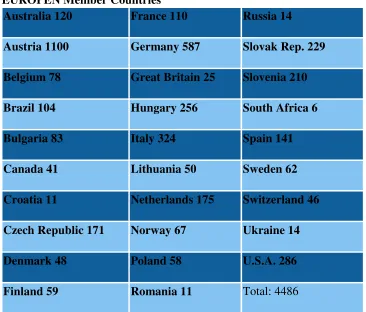
Table 1 - Number of Practice Firms in different countries ... 46Table 2 – Comparison of Arts Education and Management Education ... 115
Table 3 – Summary of the Characteristics of the Sample ... 203
Table 4 – Summary of the Data: Interviews ... 223
Table 5 – The Themes ... 230
Table 6 – A Logical Organisation of the Themes ... 247
Table 7 –Themes Described by Pitágoras Students ... 251
Table 8 – Themes described by MTS Students ... 262
Table 9 – The Overall Structure of the Outcome Space –Version I ... 275
Table 10 – The Overall Structure of the Outcome Space –Version II ... 294
Table 11 – The Overall Structure of the Outcome Space –Version I ... 306
Table 12 – The Overall Structure of the Outcome Space –Version II ... 315
Table 13 – The Overall Structure of the Outcome Space –Version II ... 356
List of Figures
Figure 1 – A Practice Firm Network Learning Environment Model ... 49Figure 2 - The Practice Firm Environment in SEBRAE/Mg-Brazil ... 53
Figure 3 – A Trade Fair in Brazil ... 54
Figure 4 – A Model for the Study of Classroom Teaching ... 64
Figure 5 – The 3 P Model of Classroom Learning ... 66
Figure 6 – Model of Teaching and Learning ... 66
Figure 7 - A Constitutionalist Model of Teaching and Learning ... 78
Figure 8 –The Constitutionalist Approach to the 3 P Model of Teaching and Learning in this Research ... 81
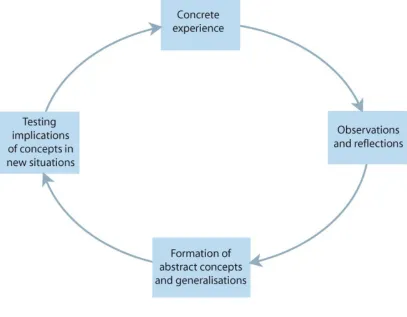
Figure 9 – Kolb’s Learning Cycle... 98
Figure 10 – The Phenomenographic Relationality ... 179
Figure 11 – The Object of Study ... 183
Declaration
This thesis is my own work and it has not been submitted for the award of a higher degree elsewhere.
Acknowledgments
After four years of researching and writing up I have gained many new friends and accumulated many debts. Firstly, I wish to thank my supervisor Professor Vivien Hodgson for her unfailing patience, kindness, and guidance, especially in my very first steps in Lancaster. My thanks to her is in Shakespeare’s words
Only I have left to say, more is thy due than more than all can pay (Macbeth).
The panellists Professor Michael Reynolds and Dr. Paul Ashwin were extremely helpful with the regular revisions of the work; they helped me to keep focus and gave me very useful advice. Other academics in the Department, in the school and in the University, with whom I had contacts personally through lectures, seminars and workshops, also had some helpful and constructive influence on how I developed my way of thinking. I wish to thank them all.
Many thanks also to the administrative staff, who were always very professional and cooperative. At the very end, Abigail Balfour was essential with her careful
proofreading of the thesis.
The Director of The Managerial Technical School, MTS/SEBRAE in Brazil, Mrs. Maria Lúcia Rodrigues Correa, the School supervisor, Mrs. Cássia Barbosa and the School staff with whom I had contact were all very kind in allowing me to collect data and helped me with unexpected situations in my data collection in Brazil. I thank them all.
The interview participants from MTS/SEBRAE and Faculty Pitágoras in Brazil are the main voices in this research. If, as I hope, I have made some contribution to
knowledge, they are the true contributors.
My office-mates (Janice, Marcela and Sarah) and other fellow-research-students (Philip and Kewal especially) made me feel a part of a real international research community. I wished I could have appreciated this atmosphere better.
Outside the research environment, I have benefited from the kindness of a number of people. In particular, I would like to thank Judith and Charles Wilson, who were fundamental in supporting and caring for our (my family and I) integration into the British way of life. The vibrant Brazilian community in Lancaster – as well as that in Manchester – made the British winter much more tolerable and the British summer much more enjoyable.
This work is especially dedicated to Cliver,
Section 1 – Introduction
An Overview of the Work
This thesis is presented in five sections. Before I outline the content of Section One, however, I want to make clear the rationale behind the structure of the whole work.
This thesis structure is based on Perry’s (1998) five-chapter model of presenting theses; a model to which I was introduced in a seminar that I attended at Lancaster University. I have used Perry’s five-chapter model as a guideline and adapted it where necessary. For instance, I would call it more properly a “five-section structure” rather than a “five-chapter structure”. In turn, each section is divided into two or more chapters. The five sections are: the introduction (Section One); the literature review (Section Two); the methodology (Section Three); the data analysis (Section Four); and discussion and implications (Section Five).
Perry’s five-chapter model proved ideal for my need for clarity, organisation and control. This model has also been widely recognised as reducing the difficulties of writing and evaluating a PhD thesis (Love, 2001). Additionally, the structure makes reading and finding information easier for the reader. A brief description of each section of my work is provided below.
Section One
define as the relationship between students and their learning environment in
management education. I then pose my research questions, which were produced with
the aim of understanding the relationship between students and a specific learning environment in management education – a model I called the Practice Firms Network Learning Environment (PFN)1 – from the student’s point of view. Following this, I present the justification for the research, claiming that the Practice Firms Network (PFN) learning environment is a step forward in the search for a real-world learning environment. After that, I explain my methodology, the methods I used to collect data and how I analysed the data. Finally, I describe briefly the main findings of the research and the general conclusion.
The second chapter of this section (Chapter Two) describes the characteristics of the PFN. It is a short descriptive chapter about the concept of the PFN model based on information provided by the organisations that are responsible for the design and operation of the model. It is set out as a separate chapter near the beginning of this thesis to familiarise the reader with the concept of the PFN and the functioning of the model.
Section Two
Section Two deals with the literature review in five chapters. The first chapter, Chapter Three, presents a model for the study of the learning experience. A learning experience is defined as the encounter of students and teacher(s) in a context. Chapter
1 Sometimes mentioned as Practice Enterprises, Training Firms, Training Offices, Virtual Enterprises,
Four follows with a discussion of two broad concepts which I found important in the learning context in order to understand the PFN model: the concept of education and the concept of learning. In Chapter Five, I explore the literature concerning
management education, and follow with a discussion about learning environments in Chapter Six. Finally, Chapter Seven presents a discussion of the theoretical papers written about the PFN concept.
Section Three
Section Three concerns the methodology I used in the research, and is composed of two chapters. The main objective of the first chapter, Chapter Eight, is to present the concepts of my methodological approach: phenomenography. Chapter Nine describes how I applied the phenomenographic methodological concepts in the field.
Section Four
Section Five
1
Chapter One
Introduction
1.1
Introduction
This thesis is about how students describe their experience with the Practice Firms Network learning environment (PFN), and how these descriptions can be analysed from a phenomenographic perspective. The PFN is a learning environment in management education where groups of around fifteen students run simulated enterprises performing the roles of the staff (i.e. clerical officers and managers) of these enterprises. Each group of students constitutes a simulated enterprise – called here a Practice Firm Unit (Pfu), or simply a Practice Firm (Pf).
Each Pfu conceptualises and trades a range of virtual products with people within the model (students, teachers and other Pfus). The set of all Pfus and people around this model of management education constitutes a network that I will hereafter call the PFN – Practice Firms Network Learning Environment. It should be noted that the PFN model constitutes a network of students and staff potentially connected in 29 countries around the world through ICT (Information and Communication Technology). This network is controlled by Europen (http://www.europen.de/). In this study, the
In this chapter, my intention is to present an overview and a summary of the whole thesis. I begin by describing some problems that seem to persist in management education, especially those at the operational level. I have decided that this research aims to focus on one specific detail of one specific problem located at the operational level of management education, namely, the relationship between students and their learning environment.
I follow with the explanation of two key terms that are essential to understand my perspective within this thesis: firstly, the concept of the Practice Firms Network Learning Environment (PFN); and secondly, my limitation of the concept of
management education. Subsequently, I explicitly pose the research questions and the research aims, pointing out that my main interest here is in the nature of the PFN concept from a student’s point of view. I also briefly justify the need for researching this theme.
I then explain briefly my methodological approach, that of phenomenography, and how I used it in the field. A summary of the major findings and conclusions of the research is then presented. To conclude, I justify some of the boundaries which I applied to my efforts such as why I decided to collect data in Brazil. All these subjects will be explored further in separate chapters.
1.2
The Research Problem
level] …implying a local focus and an emphasis on techniques and methods used within particular institutions” (Easterby-Smith and Thorpe, 1997: 38). Researchers have acknowledged that management education seems to have serious problems both at the policy level and at the operational level.
Mintzberg (2004), for example, believes that Gordon and Howell’s (1959) report about management education dealt with business education but that “management
education [has never] been seriously considered” (p. 378). The author’s conclusion is that “it is time for the schools to heed their own prescription – namely, that change should come while things seem to be going well, before the fall” (p. 378).
As long ago as 1989, Jones had already expressed the concern that,
In most countries students go into the world of work believing that their examination successes will help them not only to get a job but also to do a job. It is an assumption which is usually shared by their teachers and by business management. Consequently it is usually with surprise and disappointment in their voices that managers and trainers complain that school leavers ‘are not very good at thinking for themselves’ and ‘they show no initiative and can’t cope with simple jobs’ (Jones, 1989: 22).
considered that the course they had concluded offered them a “very good” preparation for the work of management. One of the reasons pointed out by the professionals was that their “university degree [was] excessively generic [and] diverted from a
commitment with a work-based area”1 (p. 80). Specifically, the group of managers complained that
a) The fragility of the “practical training” jeopardised the immediate utilisation of the acquired content;
b) The content of each discipline was very generic and superficial;
c) The content of each discipline did not reflect the needs of the labour market;
d) The course was out-of-date, unable to deal with the rapid micro and macro transformation of the modern world;
e) The course gave you an illusion that the great opportunities were in the big companies, while the great majority of job opportunities occurred in small and medium companies (Andrade et al., 1999: 82).
In the same survey, the teachers pointed out the following deficiencies in the training of management students:
a) The inadequate link between theory and practice,
b) The lack of connection between the course and the necessities of the market,
c) The limited space of time dedicated to research;
d) The unmotivated, uninterested and apathetic student;
e) The inadequacy of the newcomers’ profile and
f) The lack of unity and coherence in the curriculum (Andrade et al.,
1999: 17).
Moreover, according to the employers questioned in the same survey, the main limitations of management graduates were:
a) Their excessively theoretical outlook;
b) The lack of an integrated perspective of the enterprise;
c) The domain of useless content, and
d) The immaturity and the inexperience of the newcomers (Andrade et al., 1999: 19).
These survey data suggest the existence of many gaps between the world of work and the academic realm. It seems that “we do not yet know well how to design effective instruction for complex domains” (Spector, 2000). This situation calls for research on diverse aspects of learning in complex domains, as management education seems to be an example of such a complex domain.
because learning environments are the embodiment of what we may term ’the institutional understanding of learning’ or more appropriately, the understanding which institutional learning designers have of learning and of the purposes of
education. I underpin my interpretation of the relationship between students and their learning environment in a constitutionalist version of the 3 P Model of teaching and learning (Prosser and Trigwell, 1999). The 3 P Model of teaching and learning tries to show the holistic relationship of the elements of a learning situation, and is fully explained in Chapter Three.
Learning environments are understood here in three perspectives: as places, as structures, and as activities (Wilson, 1996; Illeris, 2002). From the perspective of activities, the dominant pedagogical instrument of offering instruction in the
educational system (schools, colleges and universities) continues to be lectures, which have been studied thoroughly (see Hodgson, 1980; 1997 and Bligg, 1971; 2000). Nonetheless, Mintzberg (2004) notes that “business schools have not been inclined to stop [in classroom-based experience] … and have looked far and wide for other pedagogical methods, especially in search of that “real world” of managing” (p. 43). Some of these methodologies include action learning (Revans, 1971; 1998), venture planning courses (Pittaway, 2004) and service-learning (Wankel and DeFillippi, 2002).
Nonetheless, this form of learning has been more appropriately applied to groups in real-world organisations than to student groups in schools.
Venture planning courses “seek to simulate learning in entrepreneurship by engaging in experiential learning and reflective practice” (Pittaway, 2004: 2). Students are encouraged to “develop a business idea and work on practical plans to turn the idea into reality, the outcome of which is the development of a comprehensive business plan” (p. 2). This type of learning organisation is believed to create a strong link between theory and practice. However, it deals with a specific problem of
management education, the business plan, and is frequently and explicitly used for the training of entrepreneurs.
Service-learning is defined as “the process through which students combine their personal learning with work which is of direct and tangible benefit to other people” (Goodlad and Hughes, 1992: 39). Service-learning is directed at young people who apply academic skills to solving real-world issues, using problem-solving skills and critical thinking. The concept is closely linked to what have been called junior
enterprises, in which students manage non-profit organisations related to their field of studies. Nevertheless, service-learning is mainly intended to be oriented to a particular problem or to a specific community need.
linkages between their learning experiences and understand the potential for cross-fertilisation without help and support” (p. 59).
Moreover, the task of designing instruction methods in management education is fragmented. The programme and the course contents are generally a collegiate matter, but the means of achieving the learning aims are, as a rule, left as the individual responsibility of the teacher, even when heads of departments, counselling advisors and pedagogical supervisors are able to influence them by exercising authority or providing guidelines. I was intrigued, then, when I heard about the learning
environment called the PFN. It seemed to me that it could be a potential alternative format of management education that could bridge some of the gaps between theory and practice.
The PFN model also seemed to be a unique learning environment. Different to
management games and other business simulations, for example, the PFN model is not embedded within some software with pre defined relationships between variables. Compared to more real-world-like learning environments such as venture planning courses or service-learning, the PFN also presents some noticeable unique
characteristics. It has completely different purposes from action learning, for example, in which the learner is an actual manager who should be involved in an actual
In contrast, the PFN model is an organized system that constitutes a pedagogical unit in which students, regardless if they are experienced or not, are supposed to be learning by doing activities and reflecting on the experiences they have. The model is also enduring, independently of specific students that enter and leave the model as long as their learning experiences are completed.
My first contact with institutions that used this model appeared to indicate that staff were very enthusiastic about it. However, institutional discourses should be checked out in practice in order to be confirmed or otherwise. Is the PFN model a real
contribution to the development of a learning environment in management education which brings students to a ‘real world’ of management? This thesis was constructed to explore this problem from a student’s perspective.
At this point, in order to delimitate the scope of the research, it is important to introduce the meaning of two key concepts: that of the PFN and that of management education. I deliberately chose to name my phenomenon of study in this research ‘the Practice Firms Network Learning Environment’ (PFN). I decided to use ‘Practice Firms’ instead of ‘Virtual Enterprises’ or ‘Training Offices’, as are sometimes used in the literature, in order to be consistent with Europen’s1 designation
(http://www.europen.de/), which gave birth to the model. I added the word ‘network’ to the term to emphasise the networked nature of the model and the links that exist between all the units.
Within this thesis, the operational unit of the model is called a Practice Firms Unit (Pfu), or simply a Practice Firm (Pf). A Pfu runs “like a ‘real’ business silhouetting a ‘real’ firm’s business procedures, products and services” (Europen folder). Generally, several Pfus will exist in each school operating the PFN model, each one consisting of a group of students who work and manage that specific Pfu. Therefore, when referring to a Pfu or a Pf, I will be referring to an operational unit of the model, not to the model as a whole.
The second concept that I would like to clarify from the beginning is what I call in this research ‘management education’. Management education as a field of study and practice has increasingly been considered important (Abbot, 2003); the demand for this kind of education has grown constantly during the last three decades (Watson, 2003). Yet what is meant by management education is large and broad. It may mean on-job training for new staff, further education for senior staff, development of leadership in society, academic research, and much more.
However, in this research, management education has a more limited definition. Management education will be considered here as a concept that gives high school or university students a basic understanding of how to perform tasks with and within organisations. I will therefore be interested in management education as an
educational activity that introduces the messy world of management both to students from the age of 16 in secondary schools and to undergraduate students in
1.3
The Research Questions
The core purpose of this research is to answer the question, “how do management students relate to their learning environments?”, and to describe this relationship. The relationship in which I am interested here, however, is not the relationship of any student with any learning environment, but of specific students in management education and a specific learning environment that is called the PFN in this thesis. Few works have addressed the question of the nature of the PFN concept, and none of them has specifically studied the nature of the relationship between students and this learning environment from a student perspective. Therefore, the specific question that this work addresses is ‘what is the PFN as described by the students?’ Another
question that could be derived from this study is concerning students’ perception of the relevance of the model. Do students perceive the model as relevant to their understanding of management?
Although the focus of the questions in this research is on the operational level, I acknowledge and refer to the importance of paying attention to other levels of influence on the operational issues. The action of agents in a learning situationis generally part of a broader enactment inserted in aneducational institution; the educational institution is embodied in organisational networksthat, in turn, are affected by regional and nationalculturalcontexts and governmental policies.
1.4
The Research Aims
There are two related aims in this research. The first aim of the research is to discuss the relationship between management students and their learning environments, in a specific format of management education referred to as the PFN, in order to make a contribution to the knowledge base of this kind of relationship in management education. As I have already stated, this knowledge base is still sparse. As a result of this, the research operates in a design mode (Bereiter and Scardamalia, 2003); it is
interested in local and concrete uses of knowledge creation. I acknowledge nevertheless that this is a partial contribution, since it is based on the students’ perception of the model only.
a) Firstly, to know how things are and what are the possibilities of modifying them;
b) Secondly, to concern themselves with how things can be constructed or modified to serve specific goals.
That is the reason why this research hopes to go beyond the description of students’ perception or experience of the PFN and contribute to the debate of how management education can be improved in the light of students’ experiences of the PFN. To achieve these aims, the research provides an in-depth description of the PFN model from a phenomenographic perspective.
1.5
Justification for the Research
There are three types of justification for this research: one is theoretical, the other two are practical. The theoretical justification for this research follows Hounsell and Entwistle’s (2005) recent proposition that empirical research across disciplines demonstrates the need to treat each subject area as having distinctive teaching methods which reflect the nature of that particular subject.
PFN model, one should research the learning and teaching conventions of this specific model of learning environment rather than those of different models.
The other two justifications for this research are practical. The first one is the scant literature about the model, as outlined above. As the PFN model has been increasingly adopted throughout the world, the importance of providing a theoretical discussion about the model has also increased.
The second practical justification for this research comes from my personal position as a management teacher in the higher education sector in Brazil. This research is a personal project that helps me to develop my future pedagogical practice in management education, and to answer intellectual questions about the relationship between theory and practice. I also hope to contribute to the development of management education in my country.
It is apparent, however, that my interest in the PFN model in this research is purely academic. Despite the fact that I am a manager educator, I am not and was not involved with the design or implementation of the PFN model in any way. I also am not, and was not, a member of the staff in any institution in which the model was used. I neither claim that this was an advantage nor a disadvantage; I mention this here to state clearly my academic position.
1.6
The Methodology
approaches among those who conduct qualitative research. Choosing a
methodological route was a very difficult task personally. The reason, I think, is because I came to Lancaster with a very positivist bias. I felt that my beliefs were not satisfactory, but it took me time to consider and choose between qualitative
methodological alternatives.
In the battle between idealists and materialists, I align with Popper’s (1974) observation: he asserts that there is no way to prove who is wrong or who is right. According to Popper, an idealist can always claim that our proofs of realism are a mind-made conception, and all our provisional attempts to ascertain reality are dreams. On the other hand, a materialist can always points to common sense to
support his view. In summary, Popper concludes that “idealism is irrefutable…realism is indemonstrable” (p.39).
Ontologically speaking, I assume that reality is dual. There is an external and
independent reality which is concrete but meaningless; and there is an internal reality, a mind construction represented and shared through communicative discourse. One way of making sense of this dual character of reality is through experiencing it and engaging in discourse about the experience; phenomenography fits this purpose.
Phenomenography is defined in the literature as an empirically-based approach to research that aims at “mapping the qualitatively different ways in which people experience, conceptualise, perceive, and understand various aspects of, and
phenomena in, the world around them” (Marton, 1986: 31). Phenomenography can be used when the intention is to explore some aspects of a “hidden world of human conception” (p.33).
Phenomenography approaches the phenomenon of study by means of a second-order perspective (Marton, 1981). A ‘second-order perspective’, requires that the answer to the question “what is the PFN?” considers the descriptions of those who have
experienced the phenomenon; instead of imposing a structure of my own on the PFN model, I looked carefully into the huge amount of empirical data produced in
interviews with students of educational institutions which had used the model, and then constructed a set of categories that arose from this data.
Following Bowden (2000), I also adopted a ‘developmental perspective’ to
phenomenography, that is, I considered that my work was seeking “to find out how people experience some aspect of their world, [and enable] them or others to change the way their world operates” (p.3). The full description of the phenomenographic perspective employed in this research is given in Chapter Eight.
1.7
The Sample and the Method of Data Collection
entrepreneurial education technologies, through the use of innovative pedagogical practices” (ETFG, 2005a: 8).
The second educational institution is Faculty Pitágoras. According to its pedagogical project, the goal of the Faculty Pitágoras is “the intellectual autonomy of the student” (http://www.faculdadepitagoras.com.br/). To achieve these aims, according to the school website, the methods of learning focus on the ‘applicability’ of what is learned.
In order to collect the data, I used semi-structured interviews. I began the interviews with a general indication of where my interest lay; I usually used a phrase such as: ‘Would you tell me about your experience in the Practice Firm?’ After the interviewee had responded, I followed up with questions that helped me to understand further the meaning of their experiences and the meaning of the learning outcomes that derived from those experiences. The details of this journey are explored in Chapter Nine.
1.8
The Data Analysis
The interviews produced a large stream of audio data that I listened to many times until I felt familiar with them. The interviews were then separated into two case studies to facilitate their analysis. One case study was constructed using students from Faculty Pitágoras, and the other case study was constructed using students from MTS. The analysis was done in such a way that phenomenographic ‘categories of
elaborated and described. Section Four shows in detail the construction of this analysis.
Below, I relate and describe briefly the meaning of each one of the seven categories of description that were constructed through the analysis of data.
1.9
The Categories of Description
The data showed that students described their experience in the PFN model as a: 1) Pointless experience;
2) Discipline experience; 3) Group Work experience; 4) Competitive experience; 5) Simulated experience; 6) Way of Learning experience; 7) Realistic experience.
1) The PFN as a ‘pointless’ experience
In this category, students perceived the PFN as meaningless and not contributing to their educational needs. According to these students, the experience had not been what they had expected and so they were disappointed with the model.
2) The PFN as a ‘discipline’ experience
academic discipline in the school, and that they should be attentive to teachers’
requests and assessment standards. In other words, students were basically occupied in satisfying the academic requirements laid down by tutors, especially those relating to how the discipline was assessed and how the marks were allocated.
3) The PFN as a ‘group work’ experience
The idea expressed by students in this category was that the PFN was a good space and opportunity to learn about working in groups and working as a team. The group work in the PFN was seen at some times as similar to schoolwork groups and at other times as similar to sectors, departments and functions of real enterprises. In all cases in this category, however, the PFN work groups were seen as the relevant unit of practice in the learning environment.
4) The PFN as a ‘competitive’ experience
The PFN seen as a competitive experience emphasised the rivalry students
experienced in the learning environment either between different Pfus, or between individuals within the same Pfu.
5) The PFN as a ‘simulated’ experience
6) The PFN as a ‘way of learning’ experience
In this category specifically, what students tried to express about their experiences was that the PFN gave them different ways of learning, whether by instruction, by doing tasks themselves, or by committing mistakes; they were in the learning environment to experience and to learn by those experiences, even if they were unpleasant.
7) The PFN as a ‘realistic’ experience
In this category, students experienced the PFN as engaging in real processes; although the participants recognised the pedagogical and virtual nature of the model, they considered that the processes that happened in the learning environment could be seen as real in their own right.
1.10
Conclusions and Contribution of the Research
From a phenomenographic perspective, the main conclusions of the research are:
a) Students experience the PFN in qualitatively different ways;
c) In a meaning dimension, students devalue the PFN model when they perceive it as a ‘pointless’ experience and students value the PFN model when they perceive it as aggregating learning to their experience;
d) In a structural dimension, students experience the PFN model in ways (whether these be academic disciplines, group work, competition or
simulations) that help them to deal with tasks and situations in the model. The kind of learning they take out of these events and situations was perceived as contextual;
e) Students’ approach to the PFN model nevertheless was neither fixed nor unidirectional. Students described their experience as evolving and the change occurred in both directions: either from ‘pointless’ to ‘realistic’ or from ‘realistic’ to ‘pointless’;
f) Teachers’ approach to the model had considerable effects upon students’ experience of the model.
1.11
Boundaries of the Research
Finally in this chapter, I wish to present the boundaries which I chose to establish in the definition of my research object and in the conduct of my research process. These boundaries were consciously traced to delimit what I was interested in researching from what I considered to be outside the scope of my study. For instance, I had to decide where to investigate my object of study. Although the PFN is a concept presented in 29 countries throughout the world, I chose to investigate the use of the PFN concept solely in the Brazilian educational setting. It would be interesting in future research to study the model in other countries and to compare the different uses of the model across countries.
Another boundary I deliberately chose was on the type of participant I decided to analyse. Although I initially interviewed students, teachers and technicians of the model, I came to the conclusion that it would be more appropriate only to use students’ descriptions of the learning environment in this research. This provides a more consistent way to look at the literature and the data, and to discuss the results. Future studies could also include the perceptions of the model held by teachers and technicians, and the relationship between these conceptions.
1.12
Summary of Chapter One
environment called the PFN. I identified that my main aim in this research was to understand the relationship between students and the PFN.
My research was defined as exploratory and inductive in a second-order perspective. Phenomenography was chosen as my research approach as I was interested in
mapping the different ways in which students conceptualised their experience with the PFN model. To collect data, I interviewed 29 students from two different educational institutions in Brazil.
2
Chapter Two
The Characteristics of the Practice Firms Network
Learning Environment (PFN)
2.1
Introduction
In this chapter, I present a detailed description of the characteristics and the functioning of the Practice Firms Network Learning Environment (PFN). The theoretical discussion of the PFN concept, however, is left to Chapter Seven. It is important to introduce the description of the characteristics and functioning of the PFN model here to make clear to the reader the structure of the model and how it operates, and also to introduce the PFN concept into the theoretical discussion about education, learning and learning environments in management education.
This chapter begins with some information about the origin of the model and its characteristics in certain countries. I then define the PFN model as a set of five elements. I explain the function of each element in the system, and how they interact. Finally, I give some information about the use of the model in Brazil.
The chapter is based on documents that I collected on the internet and from
2.2
Origin and Purposes
The origin of the PFN model is Austria: according to Philipp (1998), the concept of practice enterprises has a tradition in Austria stretching back over more than 200 years, with roots that can be traced back to the 17th century in the Austro-Hungarian monarchy. At that time they set up in the commercial colleges, the so-called
“Musterkontor” or model office, and “offered over-sleeves, stand-up collars, inkpots and writing stands” (http://www.act.at/). Gramlinger (2004) adds that at that time
the merchants were interested in providing a better commercial education for their apprentices, with more realistic exercises and simulations. […] By the second half of the eighteenth century, the first practice offices had been established in the German commercial colleges in Hamburg, Nurnberg and Erlangen. These ‘Übungskontore’ (an
obsolete German word for training office) were the forerunners of the Practice Firm of today (p. 82).
Table 1 - Number of Practice Firms in different countries
(April 2006)
EUROPEN Member Countries
Australia 120 France 110 Russia 14
Austria 1100 Germany 587 Slovak Rep. 229
Belgium 78 Great Britain 25 Slovenia 210
Brazil 104 Hungary 256 South Africa 6
Bulgaria 83 Italy 324 Spain 141
Canada 41 Lithuania 50 Sweden 62
Croatia 11 Netherlands 175 Switzerland 46
Czech Republic 171 Norway 67 Ukraine 14
Denmark 48 Poland 58 U.S.A. 286
Finland 59 Romania 11 Total: 4486
Source: http://www.europen.de/, last accessed on 05/04/06.
the Government passed a law that guaranteed all interested people an apprenticeship (Johansen, 2000).
Depending on national and regional needs, the model has slightly different
characteristics and is used in slightly different applications. These include vocational orientation of pupils, training and promoting human resources, updating competences, and assisting people with special needs. It has been used in high schools and colleges, in universities, in adult education institutions and in medical rehabilitation as a full- or part-time operation (http://www.act.at/).
In the Netherlands, for example, the PFN has been used by vocational
schools/colleges as an instrument for competency-based vocational education
(Boering, 2005). The French network of Practice Firms has been applying the concept within the penitentiary system for its adult detainees, with the aim of developing the PFN as a tool of socialisation, of training, and as an aid to social reintegration (Troton, 2004). In Australia, there was an initiative to use the concept of PFN as a means to provide parents up to the age of 25 with the opportunity to complete their secondary schooling. The concept was also used by the Enterprising Young Mothers Project, in which a Pfu was created to test a new social enterprise before its formal establishment and real-world operation (Dalgleish, 2004).
languages (English and German). The program of the PFN is extended throughout the four years of high school education (http://www.vb-zagreb.org/).
In the United Kingdom, the model is considered to enable the “students/trainees/ employees [to] learn to work as a team and develop interpersonal skills by working with others, improving their own learning and experience and performing the various jobs” (http://egni.morgannwg.ac.uk/) required in an enterprise. This includes the use of information technology, the organisation and monitoring of work, the preparation of minutes of meetings, the design of documentation, and many other activities.
The PFN model is believed to provide a safe and secure learning environment in a comprehensive, student-oriented approach towards teaching and working with
practical, task-oriented instruction (http://www.nycenet.edu/). It is also intended to be beneficial not only to students, but also to the hiring organisations. In addition, the model comprises a network of similar Pfus in different countries, linking students from different cultures, business practices and currencies and providing them with the opportunity to practice another language or improve their English language skills in real situations.
2.3
The Elements of the Model
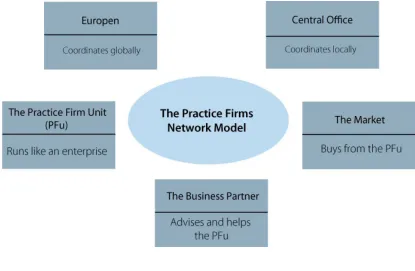
To have a further understanding of how the PFN concept is constituted and how it works, one should consider five major elements in the model. These elements are:
• The Practice Firms Units; • The Market of Practice Firms;
[image:49.595.107.522.239.510.2]• The Business Partners.
Figure 1 – A Practice Firm Network Learning Environment Model
Source: Research Data
2.3.1
Europen
Europen is a non-profit international organisation that coordinates and operates the PFN model globally. Europen was established on 27th October 1997 and is located in
Germany. The founder members were educational institutions from Austria, Canada, Denmark, Finland, France, Germany, Great Britain, Italy, the Netherlands, Sweden, Spain and Switzerland. At the time of this research, several other associated countries were involved with Europen and participating in the model. These other countries were Argentina, Australia, Brazil, Bulgaria, Croatia, the Czech Republic, Hungary, Latvia, Lithuania, Norway, Poland, Romania, the Slovak Republic, Slovenia, South Africa, Ukraine and the USA.
Europen's mission is to co-ordinate, develop and support services, adding value to the activities carried out in its members’ national networks, to promote and enhance the concept of learning in and from a simulated business environment, and to expand the number of its regional and national networks. This Coordination Centre has among its roles those of the presidency and co-ordination of the various Central Offices, and is funded by the participating members.
2.3.2
The Central Offices
Central Offices perform four different tasks within the model. Firstly, the local Central Office is the Pfu reference point when this has to relate to an ‘outside world’: the organisations which would be essential for the operation of an enterprise in the real world but with which the Pfu does not actually make contact. For example, every economy needs to have a financial coordinator (a Federal Reserve). The Central Office provides this service within the model. Other services, including insurance services (health, social, and possessions), governmental agencies and tax offices are provided by the Central Office. It also functions as an accountancy counsellor, a supplier centre, and a financial market.
Secondly, the Central Office has the responsibility of coordinating the Pfus within its concession area, providing the link between all Pfus, both in the national and in the international market. In the international market, it provides the conversion between different currencies when a Pfu needs to sell or buy abroad.
Another role of the Central Office is to promote and coordinate Pfu trade fairs in its concession area. Pfu Trade Fairs imitate real trade fairs, occurring in a face-to-face basis and providing the Pfus with the opportunity to trade their products, and the students to hone their negotiating skills. I explain this concept in more detail in item 3.4.
Finally, the Central Office supports the expansion of the model by promoting
2.3.3
The Practice Firm Unit (Pfu)
Another element of the model is the Practice Firm Unit (Pfu). The Pfu corresponds to an enterprise that is organised within the participating educational institutions, with groups ranging from five to fifteen students who perform the roles of employees and managers of these enterprises. The Pfu conceptualises, ‘produces’ and sells a range of products or services in the PFN simulated market. In general, the products and
services of a Pfu are not real, although in some cases they may be. That means that the products are conceptualised, projected, accounted and sold, but they are neither
physically ‘produced’ nor ‘delivered’.
Figure 2 - The Practice Firm Environment in SEBRAE/Mg-Brazil
Source: SEBRAE/Mg-Brazil
2.3.4
The PFN Market
In the PFN model, the market is constituted, on the supply side, by the set of products and services that are offered by the Pfus; and on the demand side, by the students, teachers, other Pfus and people that surround the model. From this ‘pedagogical community’ arise the ‘economic needs’ which the Pfus have to furnish.
Figure 3 – A Trade Fair in Brazil
Source: Research Data
2.3.5
The Business Partners
• Information about the business (for example, number of staff,
salaries, capital, its own organisation chart and copies of procedures manuals to help in setting up the simulated business);
• Access to their premises (such as an initial introductory tour for
students and teachers);
• Advice on business problems as they occur;
• In-house training and staff development for the practice firm
teachers;
• Ideas for project work;
• Work placements for students;
• Industry placements for students;
• Employment for practice firm graduates
(http://www.anpf.cit.act.edu.au/).
The Business Partners also benefit from working with Practice Firms. Usually, the associate Pfu promotes the Business Partner’s brand, products and services, especially at the PFN trade fairs. The PFN can also be a potential source of new employees.
2.4
The PFN in Brazil
medium-size businesses throughout the country. SEBRAE was created in 1972 as a governmental agency, and privatised in 1990. SEBRAE is represented in all twenty-six states of Brazil.
SEBRAE's main budget comes from compulsory contributions of companies; on average 0.6% of their employees’ salaries. One of the main purposes of SEBRAE is to promote education in entrepreneurship. Therefore, SEBRAE promotes qualification courses, facilitates access to financial services, stimulates cooperation between companies and organises business-oriented fairs. It also helps to develop activities for the generation of jobs and income. Each state agency of SEBRAE is autonomous; as I did this research with the SEBRAE agency in the state of Minas Gerais, hereafter all references to SEBRAE indicate this particular agency.
Managerial Technical Schools were one type of initiative performed by SEBRAE in Minas Gerais State. These schools run secondary technical degrees in management. The first SEBRAE Managerial Technical School (MTS) was created in the city of Belo Horizonte, MG in 1994. At the time of this research, there were twenty MTS in different cities of the state of Minas Gerais, Brazil, using the PFN model. In Belo Horizonte MTS, the PFN model has run since the foundation of the school.
The Central Office in Brazil is known as CESBRASIL, and is based in Belo Horizonte MTS. At the time of research, the model was also used in seven other partner
institutions: UNIPAC, Faculty Pitágoras, the Catholic University, UNA Business School, UNATEC, UNIVALE and Faculty of Management-Passos. All these
My research was carried out in two of these institutions in Brazil: the Managerial Technical School of SEBRAE/Mg (MTS) and Faculty Pitágoras. Both institutions are located in Belo Horizonte, the capital of the State of Minas Gerais. In Chapter Nine, I will mention the pedagogical characteristics of the PFN model both in MTS/Sebrae and in Faculty Pitágoras’ educational institutions.
2.5
Summary of Chapter Two
In this chapter, I described the main characteristics of the PFN, and how the model is used with different purposes in different countries. Five major elements of the model were defined: a) Europen, the global coordination centre; b) the Central Offices, local coordination centres; c) the Pfus, the operational units of the model; d) the PFN market, that is, people and other units of Practice Firms which trade in the model; and e) the Business Partners, real organisations that support and advise each specific Pfu. I then provided some information about the use of the model in Brazil, since the focus of the research is on the Brazilian experience of the model.
The description provided in this chapter was based on information that was available about the model on the Internet, in promotional material produced by the promoters of the model, and in private conversations with members of the staff. It does not
constitute, however, a review of the literature about the model; this will be carried out in Chapter Seven. Before that, I aim to place my research in a wider context and begin to insert the discussion of the PFN model into a theoretical framework about
Section Two – The Literature Review
The PFN as a Learning Experience in Management Education
Section Two is dedicated to a review of the literature. Perry (1998) claims that the aim of the literature review is to ground the work within a “theoretical foundation”.
According to Perry, the literature review should be based on “the relevant literature to identify research issues which are worth researching because they are controversial and have not been answered by previous researchers” (p. 72). I would argue in my case that, because of the exploratory and descriptive nature of my research and the lack of literature about the concept of the PFN model, I initially need to locate my object of study into a broad discussion about education and learning.
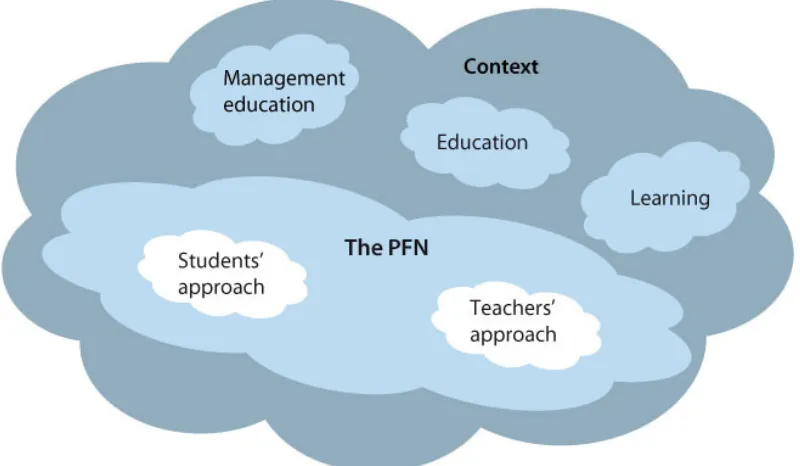
This section comprises five chapters. The rationale behind the scope and the sequence of the chapters is as follows: in Chapter Three I began with a holistic perspective, situating this work into a model called the 3 P Model of Teaching and Learning. A brief history of the 3 P Model is provided, then I discuss the model from the “constitutionalist” (Prosser and Trigwell, 1999) perspective.
Chapter Five reviews the concept of management education, its nature, different perspectives and the many problems that this concept faces. It is included to stress the challenges that management education meets and the fundamental premise that, as Hounsell et al. (2005) have found, different disciplines need different WTP (Ways of
Thinking and Practising). The final part considers the introduction of management education concepts at early stages of the educational process.
In Chapter Six, I turn to the concept of the learning environment. I explore the characteristics of learning environments in general, and of particular learning
environments such as lectures and simulations. I also look at what have recently been described in the literature as ‘powerful learning environments’ (Merrienboer and Paas, 2003). Additionally, I explore how the literature has described students’ approaches to, and their views about, these learning environments. These topics are important because they involve concepts directly linked to that of the PFN model.
3
Chapter Three
The Learning Experience
3.1
Introduction
The experience of learning has been extensively researched from a variety of
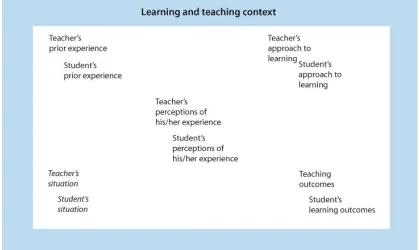
perspectives. In this chapter, I will situate my phenomenon of study (the PFN) into a holistic and relational model for the study of the learning experience. This model originated from Mitzel’s concepts in the 1960s, and is called the 3 P Model of teaching and learning.
More recently, Prosser and Trigwell (1999) suggested that the model could be seen in a constitutionalist perspective. According to Prosser and Trigwell, in a
constitutionalist perspective, knowledge about the following three elements and their relationships is important to understand a learning experience: teachers (and their concepts of, and approaches to, teaching); students (and their concepts of, and approaches to, learning); and the context in which the learning occurs.
Finally, I delineate how the constitutionalist approach of the 3 P Model of teaching and learning can be adapted to my purposes within this research. A modified version of the model is proposed which is then used to inform the development of my
literature review.
3.2
Studies on the Learning Experience
Many factors seem to be important to the understanding of a learning experience, and there are many influential studies that have researched the learning experience. These studies vary immensely in epistemological and methodological perspectives but, in general, they have in common an interest in understanding the teaching-learning process and in enhancing the outcomes of its participants, in particular students, as a result of this experience.
Many of these studies emphasise the influential role of the teacher. These studies assume that, when the teacher is working at his or her best, s/he is able to illuminate the minds of students and inspire them with a real passion for his or her academic field (Popper, 1966). Studies centred on the quality of teaching proclaim, for instance, that teachers should develop good teaching material, be it presentations or class
discussion. They should also be rewarded for good teaching delivery (Gibbs, 1996).
There is another set of studies which take yet another perspective, calling for research into broader aspects of the learning experience, contending that the relationship between learners and their environment is the special feature that influences student outcomes. This view is especially influenced by the work of Lave and Wenger (1991), who proclaimed that the social relations of newcomers and old timers within
communities of practice are responsible for transformation in the way apprentices construct the general idea of what constitutes the practice of the community. One theory which takes this viewpoint is that of Fox (1997), who states that “situated learning theory (SLT) is distinctive because it perceives learning to be a socially relational rather than a mentalist process” (p. 727). I will explore SLT in greater detail later in Chapter Four.
Although Anderson et al. (2000) have contended that both individual and social
perspectives on learning are needed, my purpose in this research is to examine the learning experience from a holistic and situative perspective. I am using the term ‘holistic stance’ to denote the attention to and the integration of issues such as subject matter, learners, teachers, technology (Spector, 2000), and the identification and analysis of “discontinuities between different phases and settings for learning” (Goodyear, 2000). The situative stance concerns the attention to the relationship between teachers, students, their learning environment, and their context,
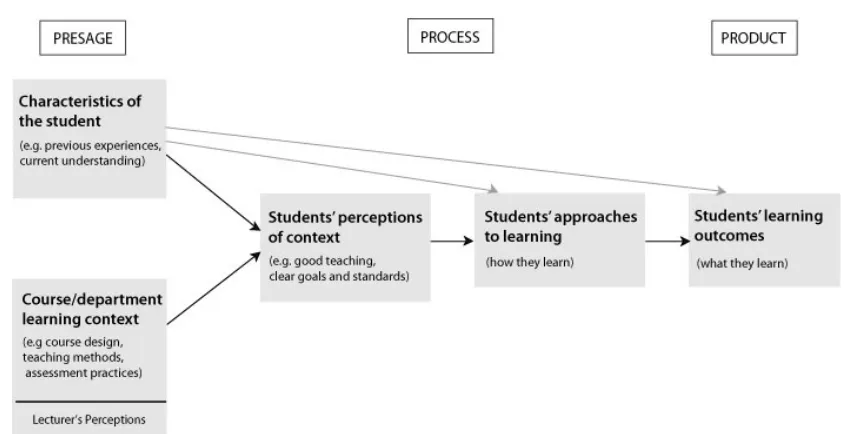
Because my declared aim is to locate my study within a holistic theoretical framework of educational research, my starting point in the research was a model of looking at the learning experience called the 3 P Model of Teaching and Learning. This model evolved from Mitzel’s concepts in the 1960’s. In the last 40 years or so it has been adapted to show the relationships between the elements of a learning experience. Nevertheless, before I explain the version of the model that I employ to develop my work, I offer some comments on how the model has been developed in the literature.
3.3
The 3 P Model of Teaching and Learning
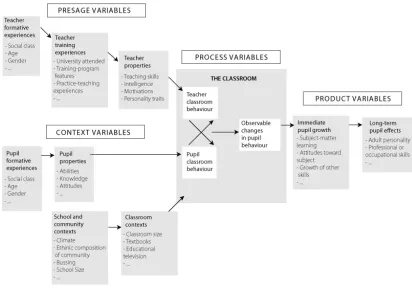
The concepts of teaching and learning as a 3 P (Presage – Process – Product) model were first elaborated by Dunkin and Biddle (1974). Dunkin and Biddle’s model suggests that, within an educational organisation, a teaching situation can be seen as a
configuration of 13 classes of variables that account for differences in performance in the classroom (see Figure 4). To make these variables manageable, Dunkin and Biddle reduced the variables to four larger classes and treated them as ‘regions’. They called these classes of variables: “presage, context, process, and product variables for
research on teaching” (p. 39; emphases in original).
Presage variables “concern the characteristics of teachers that may be examined for
their effects on the teaching process” (p.39). They cite as causative factors of teaching effectiveness the formative experiences of teachers, the teacher-training experiences,
and such other teacher properties as teaching skills, intelligence, motivation, and