ISSN:1992-8645 www.jatit.org E-ISSN:1817-3195
AVOIDING BOUNDARY ARTIFACTS IN IMAGE USING
DECONVOLUTION TECHNIQUE
S. MARY IMMACULATE
Assistant Professor, Faculty Of Computing, Sathyabama University, Chennai. Email: [email protected]
ABSTRACT
Deconvolution is the process used to reverse the effects of convolution on image.The concept of deconvolution is popular used in the techniques of signal processing and image processing.It is the process of separation of blurred image from the original image. The objective is to find the original image from the observed blurred image which is degraded by an additive Gaussian noise and blur kernel.The noise from the given input image is found by using Fourier domain deconvolution.We can retain the spatial information of the image using Fourier domain.To remove the artifacts from the image without excessive slow down in computation,iterated shrinkage deconvolution technique used.With these results will be improved in both visual quality and mean square error. In fact, the wiener filter method is used for deconvolution.Its purpose to decrease the amount of blur available in the image by comparison with an estimation of the desired noiseless image.This technique gives proper solution for multiple images by removing artifacts without excessive slow down.This algorithm can computationally be improved by providing very low complexity. To apply the MATLAB edge taper function is to smooth the transition between the opposite sides of the images(part of the Image Processing Toolbox).
Keyword: Deblurring, Deconvolution, Image Processing, Image Restoration, Iterated Shrinkage
Thresholding, Primal-Dual Methods, Sparsity, Wiener Filter.
1. INTRODUCTION
Deblurring is a fundamental problem of image processing. Now a day’s many real life problems can be modeled as deblurring problems. Artifacts area rise because the periodic extension of the blurred image is not blurry, but discontinuous across the periodic boundaries. This type of inconsistency creates an artifact in the restored image in the form of ringing, due to that fact the artificially sharp boundaries appears as edges. The restoration filter accentuates the high-frequency components of these edges. In this case where the dimensions of the images are small, severe boundary artifacts can reduce the useful size of the restored image to a very small region in the center deconvolution. This is a longstanding problem in many areas of signal and image processing (e.g.Bio-medical Imaging, astronomy, Remote-Sensing, to quote a few).
Deconvolution may then prove crucial to exploiting the images and extracting scientific content.The most well-known fast algorithms for image restoration involve the use of fast Fourier transforms (FFTs) to implement shift-invariant deblurring operators. Unfortunately, these fast algorithms assume that the blurred image is periodically replicated, which forces the restoration filter to have the form of a circular convolution. Artifacts arise because the periodic extension of the blurred image is not blurry, but discontinuous across the periodic boundaries. To solve an ill posed problem using regularization approaches its have demonstrated and their effectiveness i.e., Images are displaying a unique type of sparseness in the active pixels that is tending to cluster together.
Fast Fourier transforms
ISSN:1992-8645 www.jatit.org E-ISSN:1817-3195
opposite sides of the image do not match in intensity, it can create a significant artifact across the image. If measure the pixel from outside the image window, these are modeled with an unknown value in the restored image and boundary artifacts are avoided.However, this technique destroys the structure that makes use of the FFT directly applicable given that the unknown image is no longer the same size of the measured image. Thus, the restoration techniques are available for that problem no longer has the computational efficiency of the FFT.there are two independent restorations for decomposing the restoration. One restoration used to produce an image that comes directly from a modified FFT-based approach. Another one restoration technique used for involves a set of unknown boundary values.
2. RELATED WORK
Stanley J. Reeves [1] Fast Fourier transforms (FFT) restoration technique is fast, but the expense of deblurring and blurring are based on circular convolution. Inappropriately, when the either sides of the image do not match in intensity, it can create significant artifacts across the image. If measure the pixel of the outside image window, these are modeled with an unknown value in the restored image and boundary artifacts are avoided.
Beck et al.[2] described Constrained Total Variation Image Denoising and Deblurring Problems by Fast Gradient-Based Algorithms.
Esser et al.[4] proposed a Primal-Dual Hybrid Gradient Algorithm is efficient for convex optimization.
J.-F. Cai et al.[6] proposed a split Bregman methods and frame-based image restoration Multiscale Model for blurring and deblurring problem
Pustelnik et al.[9] solve an ill posed problem using regularization approaches its have demonstrated and their effectiveness. However, In the context of differential restoration methods, a challenging question remains, that is how to find a good regularizer. At the same time, It was shown to provide a good result for solving deconvolution problems and an important issue for noise model to efficiently deal with interbred regularization in the presence of
additive Gaussian noise. To take a convex optimization framework that is used to minimize the criterion and its split more terms to solve this problem. This approach is considered the various gradients for spatial domain regularization, isotropic or anisotropic total variation definitions.
3. PROPOSED SYSTEM
An iterative deconvolution method is more general and can always be applied. Furthermore, the correct noise modeling can much more easily be taken into account. This approach consists of detecting and all the significant coefficients with all multiscale transforms used.
3.1 Advantage
It may be advantageous to use the minimal restored image size so that the number of unknowns in the boundary is not unnecessarily increased.
3.2 Proposed System Algorithm
The wavelet based non-iterative algorithm, the wavelet-vaguelette decomposition, consists of first applying an inverse filtering, N is not white, but remains Gaussian. It is amplitude when the deconvolution problem is unstable. Then, a wavelet transform is applied on F,the wavelet coefficients are soft or hard threshold and the inverse wavelet transform furnishes the solution.
ISSN:1992-8645 www.jatit.org E-ISSN:1817-3195
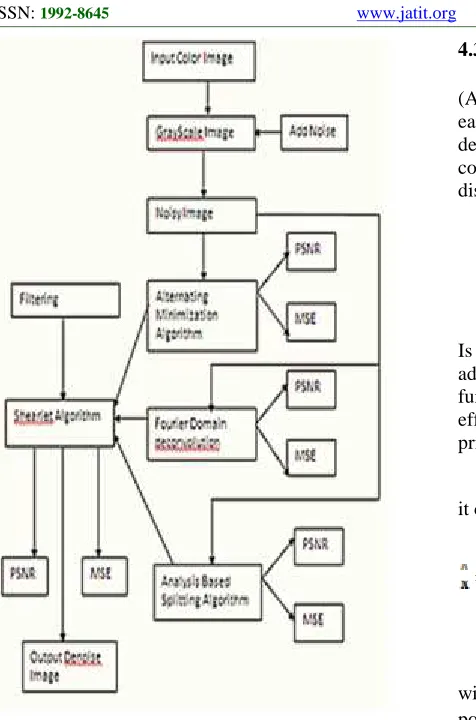
Figure 1: Avoiding Boundary Artifacts In The Restored Image
4. METHODOLOGY
4.1 Derive The Kernel And Noise
In deconvolution consists of classical problem, i.e., to find the original image when we know an observed image blurred by a known blur kernel and degraded by an additive Gaussian noise.
4.2 Alternating Minimization Algorithm The blurred images and corresponding PSFs. The user can adjust the number of iterations and parameters and T. This algorithm(Algorithm I) is basically the original algorithm extended with the possibility of multiple images and with a simple treatment of boundary artifacts.
4.3 Fourier Domain Deconvolution
The new modified algorithm (Algorithm II) treats boundaries rigorously in each main-loop iteration according to formulas derived earlier. This results in the almost complete removal of boundary artifacts. Its main disadvantage is a relatively slow speed.
The prior probability distribution
Is unknown exactly but it can be estimated. In addition, its form must be chosenthat’s why the functional equation could be minimized efficiently. If H is a circular convolution and the prior distribution can be expressed as
, then
it can be solved in the Fourier domain exactly as
Which is the well-known Wiener filter with signal variance given by the inverse sum of power spectra of kernels .For the Tikhonov
regularization with the image gradients, And,
Are derivatives in x and y directions.
4.4 Analysis Based Splitting Algorithm With Tight Frame Regularization
This is a simpler and faster alternative. However, the more elaborate solutions can yield considerably better results for motion blur and, In general, for images with large differences in the intensity of the opposing sides of the image.
For this, we split variable and estimate
Where represents the unknown
image in the sparse domain . The middle
ISSN:1992-8645 www.jatit.org E-ISSN:1817-3195
equivalent to infinity. This equation is alternately minimized with respect to and its sparse
representation .
Let us assume that Is diagonal in
the Fourier domain. This assumption clearly holds for tight frames, where , with
.
If also Were simple circular
convolutions,It could minimize
Over exactly in the Fourier domain.
For being a tight frame, we get
Where
And .
5. RESULT AND DISCUSSION
To find the original image to observed blurred image of a known blur kernel and degraded by an additive Gaussian noise.The original color image is converted to the grayscale image.The resulting procedures include relatively time-consuming estimation of borders that the input images framed to estimation in every iteration, the artifacts are almost removed perfectly, but the computation is slower than the original image.
Original image converted into a grayscale image to add blurred with a noisy image, estimate to remove the blurred can be computed in the analysis based splitting algorithm with the only change that the blurred image. The algorithm minimizing alternates between shrinkage thresholding and deconvolution, which converges to a satisfactory solution in a few iterations.
Fourier domain can retain the image spatial information and use it to effectively rank images. This results in the almost complete removal of boundary artifacts. In the analysis based splitting algorithm with tight frame
regularization, we can yield considerably better results, particularly for motion blur and for images with large differences in the intensity of opposing sides of the image.Shearlet technique based is on the iterated shrinkage thresholding in a sparse domain.
Fourier domain deconvolution. It analyses the input image as Grayscale to retrieve the noise and deblurr image by implementing the PSNR and MSE to get the output of denoise image.
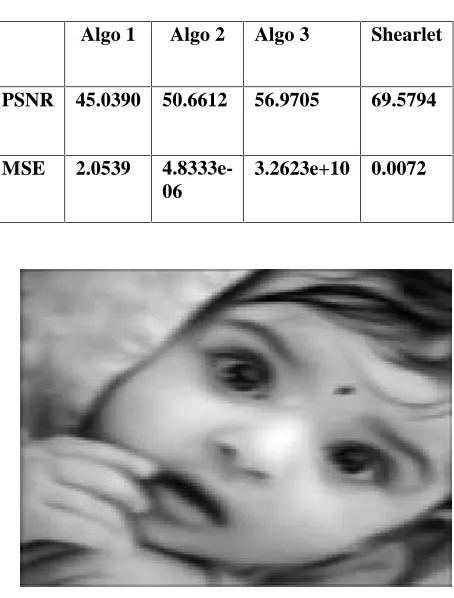
[image:4.612.314.541.255.554.2]6. PERFORMANCE ANALYSIS:
Figure 1:Blur With Noisy Image
Algo 1 Algo 2 Algo 3 Shearlet
PSNR 45.0390 50.6612 56.9705 69.5794
MSE 2.0539
4.8333e-06
ISSN:1992-8645 www.jatit.org E-ISSN:1817-3195
Figure 2:Restored From The Blur Image
7. CONCLUSION
Shearlet technique is used to solving the problem in the restoration of the image. These algorithms are based on the uncouple of deblurring and denoising steps in the restoration process. The resulting algorithms can be very efficient, and can produce better restored image quality and signal-to-noise ratio those restoration methods using the combination of blurred images can be retrieved from the deblurred images.
REFERENCES
[1] J Stanley. Reeves, “Fast image restoration without boundary artifacts “IEEETrans. Image Process., vol. 14, no. 10, pp. 1448 -1453, Nov.2005.
[2] A. Beck and M. Table, “Fast gradient-based algorithms for constrained total variation image denoising and deblurring problems,”IEEETrans. Image Process., vol. 18, no. 11, pp. 2419–2434, Nov.2009. [3] A. Chambolle and T. Pock, “A first-order
primal-dual algorithm for convex problems with applications to imaging,” J. Math.Imaging Vis.,vol. 40, no. 1, pp. 120– 145, May 2011.
[4] E. Esser, X. Zhang, and T. F. Chan, “A general framework for a class of first order primal-dual algorithms for convex optimization in imaging science,” SIAM J.
Imaging Sci., vol. 3, no. 4, pp. 1015–1046, 2010.
[5]H. Attouch, “Convergence of descent methods for semi-algebraic and tame problems: Proximal algorithms, forward-backward splitting, and regularized Gauss-Seidel methods,”Convergence, pp. 1–35, 2010. [6] J.-F. Cai, S. Osher, and Z. Shen, “Split
Bregman methods and frame-based image restoration,” Multiscale Model. Simul., vol. 8, no. 2, pp. 337–369, 2009.
[7] J. Portilla, “Image restoration through l0 analysis-based sparse optimization in tight frames,” in Proc. 16thIEEE ICIP, 2009, pp.3865–3868.
[8] M. ˇ Sorel and F. ˇ Sroubek, “Space-variant deblurring using one blurred and one under exposed image,” in Proc. Int. Conf. Image Process., 2009, Pp. 157–160.