purposes without any charge and permission. The thesis cannot be reproduced or quoted as a whole without the permission from its rightful owner. No alteration or changes in format is allowed without permission from its rightful owner.
THE THEORY OF PLANNED BEHAVIOUR
By
SITI NORFATIN AFIQAH BT ISMAIL
Thesis Submitted to
Othman Yeop Abdullah Graduate School of Business, Universiti Utara Malaysia,
In Partial Fulfillment of the Requirement for the Master of Sciences (International Accounting)
ii
In presenting this dissertation in partial fulfilment of the requirements for a postgraduate degree from Universiti Utara Malaysia, I agree that the University Library make a freely available for inspection. I further agree that permission for copying of this dissertation in any manner, in whole or in part, for scholarly purpose may be granted by my supervisor(s) or, in their absence by the Dean of Othman Yeop Abdullah Graduate School of Business. It is understood that any copying or publication or use of this dissertation or parts thereof for financial gain shall not be given to me and to Universiti Utara Malaysia for any scholarly use which may be made of any material from my dissertation.
Request for permission to copy or make other use of materials in this dissertation, in whole or in part should be addressed to:
Dean of Othman Yeop Abdullah Graduate School of Business Universiti Utara Malaysia
06010 UUM Sintok Kedah Darul Aman
iii
This study implemented Theory of Planned Behaviour in examining environmental knowledge sharing behaviour among the undergraduate Accounting students from Tunku Puteri Intan Safinaz School of Accountancy, Universiti Utara Malaysia (TISSA-UUM). The aim of this study is to examine if the attitudes, subjective norms, perceived behavioural control and environmental knowledge will have impact on the intention and behaviour towards environmental knowledge sharing and whether the intention mediates the influence of attitudes, subjective norms, environmental knowledge and perceived behavioural control towards environmental knowledge sharing behaviour. Survey method research has been implemented by distributing 250 questionnaires to the accounting students of TISSA-UUM chosen as the respondents. The data collected was then analysed applying Partial Least Square (PLS) path modelling. The results from the study showed significant relationship between the variables tested which are attitude, subjective norms, possession of environmental knowledge, perceived behavioural control and intention to share environmental knowledge with their influence towards environmental knowledge sharing behaviour. The results indicated that all hypotheses constructed are supported. This study contributes to the knowledge sharing behaviour literature in terms of environmental knowledge sharing behaviour in the academics context especially from students‘ perspective. Keywords: environmental knowledge sharing behaviour, knowledge sharing behaviour, theory of planned behaviour.
iv
perkongsian pengetahuan alam sekitar dalam kalangan pelajar ijazah Perakaunan dari Pusat Pengajian Perakaunan Tunku Puteri Intan Safinaz, Universiti Utara Malaysia (TISSA-UUM). Tujuan kajian ini adalah untuk mengkaji kesan sikap, norma subjektif, kawalan gelagat yang terlihat dan pengetahuan alam sekitar akan memberi kesan ke atas niat dan gelagat untuk berkongsi pengetahuan alam sekitar dan sama ada niat menjadi pengantara dari pengaruh sikap, norma subjektif, pengetahuan alam sekitar dan kawalan gelagat yang terlihat terhadap gelagat perkongsian pengetahuan alam sekitar.. Kaedah tinjauan telah dilaksanakan dalam penyelidikan dengan mengedarkan sebanyak 250 soal selidik kepada pelajar perakaunan TISSA-UUM yang telah dipilih sebagai responden. Data yang dikumpul kemudiannya dianalisa menggunakan kaedah Partial Least Square (PLS) path modelling. Dapatan kajian menunjukkan hubungan positif yang signifikan di antara pemboleh ubah diuji iaitu sikap, norma subjektif, pemilikan pengetahuan alam sekitar, kawalan gelagat yang terlihat dan hasrat untuk berkongsi pengetahuan alam sekitar dengan pengaruh terhadap gelagat perkongsian pengetahuan alam sekitar. Dapatan kajian membuktikan bahawa kesemua hipotesis yang dibina disokong. Kajian ini menyumbang kepada literatur mengenai gelagat perkongsian pengetahuan dari segi gelagat perkongsian pengetahuan alam sekitar dalam konteks akademik terutama dari perspektif pelajar.
Kata kunci: gelagat perkongsian pengetahuan alam sekitar, gelagat perkongsian pengetahuan, teori gelagat terancang.
v
Alhamdulillah. Praises be to Allah for granting his consent and blessing to me in preparing and gave me strength to finish this project completely. First and foremost, I would like to dedicate my gratitude to Prof. Madya Dr Che Zuriana bt Muhammad Jamil for her assistance and guidance throughout the completion of this project. Furthermore, she provided me with valuable knowledge from her experience in many sorts of thing to let me understand and completely come to an end in this project.
I would also like to devote thankfulness to my mom, Pn Nor Azurawati Ahmad Zuhdi and other family members for giving me support and encouragement in doing this project. Their efforts and contributions in this project are countless. They even sacrificed their time in giving me the ideas and comments and most importantly often act as a supportive individual in my study and educations.
Last but not least, I would like to thank the students participated in this study as valuable respondents, for giving commitments and cooperation in completing the survey. Without these, this project might not be completed as well as it should be.
Thank you to every party who had invested their effort, encouragement and their willingness to provide ideas and support. Thank you very much and I humbly appreciate all your kindness and humanity.
vi Permission to Use ... ii Abstract ... iii Abstrak ... iv Acknowledgement ... v Table of contents ... vi List of tables ... ix List of figures ... x List of abbreviations ... xi CHAPTER 1: INTRODUCTION 1.0 Introduction ... 1
1.1 Background of the study ... 2
1.2 Research problem ... 6
1.3 Research questions ... 8
1.4 Research objectives ... 9
1.5 Significance of the study ... 9
1.6 Population and scope of the study ... 10
1.7 Definition of terms ... 11
1.8 Conclusion ... 12
CHAPTER 2: LITERATURE REVIEW 2.0 Introduction ... 13
2.1 Conceptual review ... 13
2.1.1 Environmental knowledge ... 13
vii
2.2.1 Components of TPB ... 21
2.2.3 Inclusion of environmental knowledge construct in TPB ... 24
2.3 Empirical review ... 25
2.3.1 Knowledge sharing behaviour ... 25
2.3.2 Environmental knowledge ... 27
2.4 Conclusion ... 28
CHAPTER 3: RESEARCH METHODOLOGY 3.0 Introduction ... 30 3.1 Conceptual framework ... 30 3.2 Hypotheses development... 31 3.3 Sampling Method ... 35 3.3.1 Population ... 35 3.3.2 Sampling technique ... 35 3.3.3 Sample size ... 36
3.4 Data Collection Method ... 36
3.4.1 Questionnaire development ... 37
3.4.2 Response Rate... 38
3.4.3 Validation of instrument ... 39
3.5 Data Analysis ... 39
3.6 Conclusion ... 40
CHAPTER 4: FINDINGS AND ANALYSIS 4.0 Introduction ... 41
4.1 Descriptive analysis... 41
viii
4.4 Hypotheses testing... 54
4.5 Structural model analysis ... 56
4.6 Conclusion ... 59
CHAPTER 5: DISCUSSION AND CONCLUSION 5.0 Introduction ... 60
5.1 Summary of the study ... 60
5.2 Discussion on research hypotheses ... 62
5.2.1 Hypothesis One... 62 5.2.2 Hypothesis Two ... 63 5.2.3 Hypothesis Three ... 65 5.2.4 Hypothesis Four ... 66 5.2.5 Hypothesis Five ... 67 5.2.6 Hypothesis Six ... 69 5.2.7 Hypothesis Seven ... 70
5.3 Limitation and recommendation ... 71
5.4 Conclusion ... 73
References ... 74
ix
Table Page number
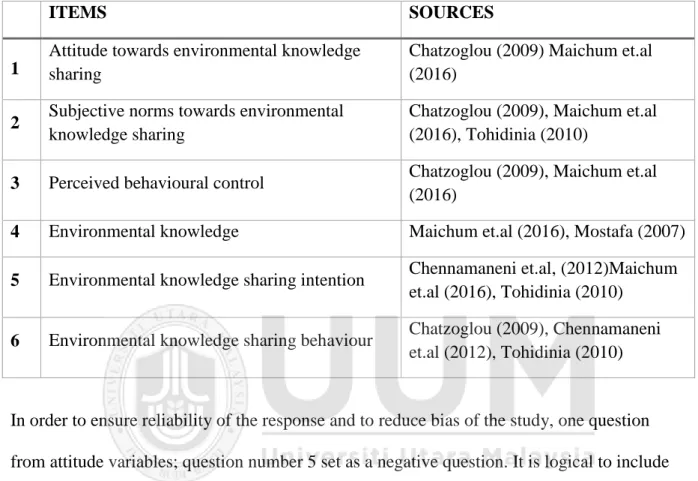
Table 1: Source of questionnaire questions... 38
Table 2: Profile of respondents ... 42
Table 3: Measurement model ... 46
Table 4: Revised measurement model ... 47
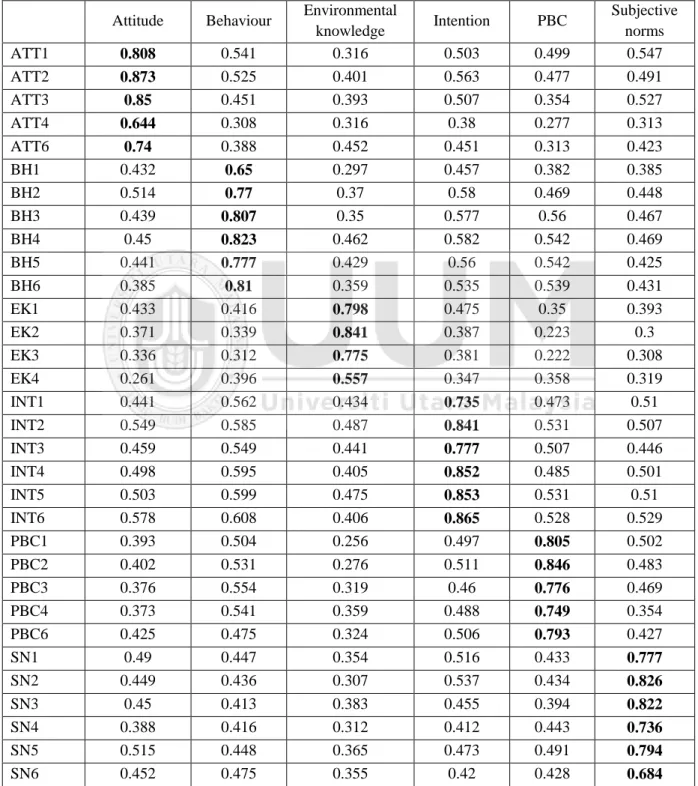
Table 5: Cross-loading criterion ... 49
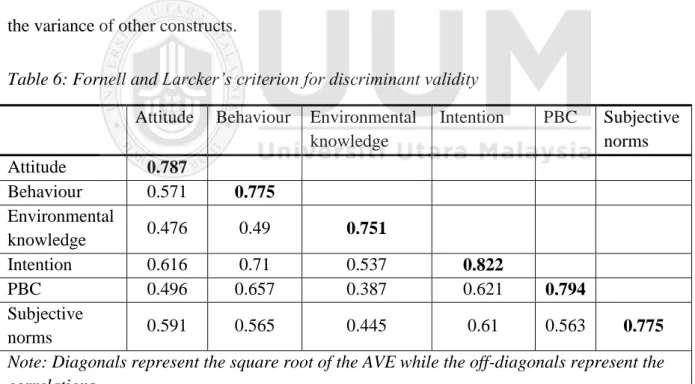
Table 6: Fornell and Larcker‘s criterion for discriminant validity ... 50
Table 7: HTMT criterion ... 51
Table 8: Lateral Collinerity Assessment ... 53
Table 9: Standardised path coefficient ... 56
x
Figure Page number
Figure 1: Theory of Planned Behaviour (Ajzen, 1991) ... 21
Figure 2: Conceptual Framework ... 31
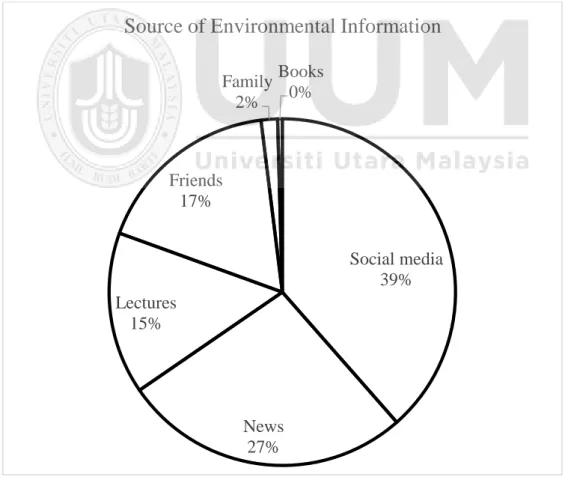
Figure 3: Source of Environmental Information ... 43
xi TPB Theory of Planned Behaviour TRA Theory of Reasoned Action PBC Perceived behavioural control
TEK Traditional environmental knowledge UUM Universiti Utara Malaysia
TISSA Tunku Puteri Intan Safinaz School of Accountancy BACC Bachelor of Accounting (Hons)
BAIS Bachelor of Accounting (IS) (Hons)
1 CHAPTER 1 INTRODUCTION 1.0 Introduction
The importance of environmental conservation has been continuously delivered to the society. A lot of measures had been done in effort to raise the environmental awareness from the young age. Amran, Abdul Khalid, Abdul Razak, and Haron (2010) addressed their concern on the urgency for sustainable development education especially in the higher education study in Malaysia. Environmental sustainability is very crucial in today‘s world since every activity performed either by individuals or organisations can affect the surrounding environment. Gray and Collison (2002) expressed this condition as ―everything we have and everything we are is intertwined with the natural environment‖.
Furthermore, without possession or practise of environmental knowledge, the environmental issues will keep on deteriorating. The natural environment is in a dangerous state and is worsening steadily as a consequence of man‘s activities (Gray and Collison, 2002). Since attention towards environmental awareness becomes more significant, sustainable development issue become a topic of interest globally and there has been growing pressure for organisations to adopt more environmental friendly practices (Dezdar, 2017). Environmental knowledge sharing is very useful in spreading the environmental awareness in the community as well as organisation.
Knowledge sharing behaviour is an important part and a foundation of knowledge management (Bock and Kim, 2001). The contribution of an individual‘s knowledge is depends on the individual‘s knowledge sharing behaviour (Reychav and Weisberg, 2010). There are various factors determined influencing individual‘s behaviour towards
2
environmental knowledge sharing including individual behaviour and also environmental influence (Chennamaneni, 2006; Killingsworth, Xue, and Liu, 2016; Tohidinia and Mosakhani, 2010; Tsai, Chen, and Chien, 2012).
On the other hand, past researches (Abd Rahman, 2016; Ali, 2011; Mathews, 1997, 2001; Sales De Aguiar and Paterson, 2017) had shown lacking in the environmental knowledge despite the efforts in delivering the environmental knowledge through education, media as well as corporate involvement. Although environmental knowledge as well as knowledge sharing practice are important especially in education, the environmental sustainability awareness and knowledge sharing behaviour is considered low among the higher education students who will be the future professionals responsible in ensuring the sustainable development particularly in the organisations (Gray and Collison, 2002; Niaura, 2013). This chapter explains the background of the study and discusses on the research problems providing a better understanding on the issue addressed by this study. Then, the research questions and objectives are developed based on the research problems. Next, the significance and scope reflect the importance of the study and followed by the definition of significant terms to provide basic insight and knowledge on the issue concern. Finally the organisations of paper are detailed out.
1.1 Background of the study
Environmental sustainability has been the global concern for the past decades. Varieties of measures have been undertaken by the global organisation in delivering environmental sustainability awareness to people around the world. The United Nation (UN) defines sustainable development as ―the development that meets the needs of the present generation
3
without compromising the ability of future generations to meet their own needs‖. In 2015, UN has welcomed a new sustainable agenda which is ―Transforming our World: The 2030 Agenda for Sustainable Development‖ (Agenda 2030). It has highlighted 17 Sustainable Development Goals (SDGs) to be achieved by all countries and stakeholders by 2030 (United Nations Development Programme, 2016). Besides the corporate agenda from the establishment of this project, UN also targeted to deliver the importance of environmental sustainability knowledge from various unique measures undertaken. It is proven that adequate environmental knowledge is as important as other basic knowledge for any sustainable development goal to be achieved either nationally or globally (Aminrad, Sayed Zakariya, Hadi, and Sakari, 2012; Hungerford and Volk, 1990).
On the other hand, as a developing country, Malaysia has a tight timeline to achieve developed nation status by the year 2020. The former Prime Minister of Malaysia, Tun Dr. Mahathir Mohamed has listed the Vision 2020 plans to be achieved in realising Malaysian target being a developed nation status by 2020. One of the big plans is Malaysia‘s Commitment towards Sustainable Development. This vision shows that environmental sustainability is not only important in enhancing an individual living style and a firm performance but it is as important as bringing a country to a status of developed nation. In realising this dream, the Eleventh Malaysian Plan has been released in 2015 outlining the strategies in achieving the 2020 vision. In the view of the environmental awareness importance, ―Pursuing green growth for sustainability and resilience‖ listed as one of the goals towards the development of the nation. The public awareness on the importance of sustainable awareness has been growing since past decades (Aminrad, Sayed Zakariya, Hadi, and Sakari, 2012; Ballantyne and Packer, 1996; Mohammad, 2012; Pudin, 2006). The organisations especially put in efforts in ensuring the environmental sustainability in their
4
operation and compliance to the corporate sustainability reporting requirements (Lee and Hutchison, 2005; Nik Ahmad and Sulaiman, 2006).
Sustainable development and environmental knowledge can be easily gathered and obtained from various medium such as news, social media, lectures and many others. Moreover, in this technological development era, little effort done in gathering information resulted in obtaining adequate knowledge regarding certain concerns. Therefore, education and delivery of information in either formal or informal manner can be a powerful means to promote sustainability (Sales De Aguiar and Paterson, 2017).
Nowadays, the environmental education in accounting study is becoming more important due to multiple environmental damages from non-environmental compliance activities carried out by the organisations (Christ and Burritt, 2013). This raised the alarm in order to ensure current accounting students representing future professionals in the organisations to have environmental knowledge and be able to share their knowledge in future. Ali (2011) did rise up his concern that social and environmental sustainability education is now an important issue and challenge facing accounting education and educators in addition to technical and generic skills in accounting education. As a result to this concern, environmental management accounting has been included in the accounting education besides the sustainability reporting requirement imposed to the public listed companies around the world especially in Malaysia (Ali, 2011).
While environmental education is taking place in Malaysia education program, the knowledge sharing behaviour among Malaysian especially in the higher learning institution is regarded low (Ramayah, Yeap, and Ignatius, 2013) despite the development of technology. Most researchers believe the knowledge sharing practices is somehow related to individual behaviour (Huang and Chen, 2015). The awareness regarding the importance of knowledge
5
sharing practices is growing especially in the organisation context (Killingsworth et al., 2016; Zhang and Jiang, 2015). This situation probably gives a shine of hope towards the expansion of knowledge sharing practice. However, the practice of knowledge sharing in developing the chain of environmental knowledge especially in the context of higher learning institution is hard to determine mainly due to limited of study focusing on this issue.
The Theory of Planned Behaviour (TPB) has been widely used and recognised in determining, explaining and predicting human behaviour in any specific contexts of study (Ajzen, 1991). The use of TPB in determining the environmental knowledge sharing behaviour in this study is useful in unveiling the behavioural factors affecting environmental knowledge sharing behaviour in the academics context. In addition to the traditional TPB, environmental knowledge is added as an additional construct to the theory in order to execute the study regarding environmental knowledge sharing behaviour.
6 1.2Research problem
Nowadays, research on knowledge sharing behaviour is continuously growing that shows the increasing importance of knowledge sharing practice in today‘s world. Despite the importance highlighted, the literatures on knowledge sharing indicated low level of knowledge sharing behaviour in the particular context of the researches (Abdur-Rafiu and Opesade, 2015; Evangelista and Durst, 2015; Ramayah et al., 2013; Stenius, Hankonen, Ravaja, and Haukkala, 2016). The state of knowledge sharing behaviour is in alarming condition considering its significant role as one of the main component of knowledge management (Saade, Nebebe, and Mak, 2011). This situation calls for further research in discovering the factors for knowledge sharing behaviour especially environmental knowledge sharing behaviour in the context of this study.
There are numerous studies found investigating the knowledge sharing intention and behaviour within the organisational context (Bock, Zmud, Kim, and Lee, 2005; Chennamaneni, Teng, and Raja, 2012; Huang and Chen, 2015; Kuo and Young, 2008; Reychav and Weisberg, 2010; Stenius et al., 2016; Tsai et al., 2012; Yang and Chen, 2007) while little has been found related with the academics community (Abdur-Rafiu and Opesade, 2015; Isika, Ismail, and Ahmad Khan, 2013; Jolaee, Md Nor, Khani, and Md Yusoff, 2014; Ramayah et al., 2013). However, there is very limited information regarding the environmental knowledge sharing behaviour. Therefore this paper aims to fulfil the gap in determining the influence promoting environmental knowledge sharing behaviour. While multiple studies done using TPB in analysing the knowledge sharing behaviour (Chennamaneni, 2006; Chennamaneni et al., 2012; Isika et al., 2013; Reychav and Weisberg, 2010; Stenius et al., 2016; Wu and Zhu, 2012), very little recent study has been done incorporating the environmental element knowledge sharing in the developing countries
7
environment. Besides, most of the researches conducted with regards to environmental behaviour focused more on the general ecological behaviour towards the environment and its element (Albayrak, Aksoy, and Caber, 2013; Onel and Mukherjee, 2016; Suki, 2013) however, the study in environmental knowledge sharing area remain scarce.
Besides, regardless of vast studies conducted incorporating TPB in determining knowledge sharing behaviour, the study that tested the mediation role of behavioural intention is lacking (Mafabi, Nasiima, Muhimbise, Kaekende and Nakiyonga, 2017). Even some studies in this field tend to focus on additional elements predicting knowledge sharing behaviour such as trust and commitment (Abdur-Rafiu and Opesade, 2015), organisational environment as well as technological factors (Tohidinia and Mosakhani, 2010; Haque, Ahlan and Razi, 2016) rather than the mediation role of behavioural intention from the theory. Theoretically, behavioural intention element in TPB acts as a mediator towards the relationship between the predictors attitude, subjective norms and perceived behavioural control with behaviour (Ajzen, 1991).
This study will attempt to identify the environmental knowledge sharing behaviour using TPB focusing the Malaysian environment representing developing country. Besides, this study also seeks to examine the environmental knowledge sharing behaviour from the context of accounting education. From the literature review, it has been found that most of the studies related to the environmental knowledge sharing are considered open focus on the public responsibility towards the environment and hardly any study conducted relating to environmental knowledge sharing from students‘ point of view as the future accountants or professional. Consequently, this study will examine the environmental knowledge insight from a different perspective as this study will focus on the environmental knowledge sharing behaviour among accounting students representing the future accountants in Malaysia.
8
Hence, the main purpose of this study is to examine if the attitudes, subjective norms, perceived behavioural control and environmental knowledge will have impact on the intention and the behaviour to share the knowledge and responsibility on environmental knowledge as well as the mediating role of intention to share environmental knowledge towards environmental knowledge sharing behaviour. Also the study sought to incorporate environmental knowledge construct in the Theory of Planned Behaviour in examining the environmental knowledge sharing intention and behaviour among accounting students.
1.3 Research questions
This study seeks to examine if the attitudes, subjective norms, perceived behavioural control and environmental knowledge will have impact on the intention and behaviour towards knowledge sharing of environmental issues and whether the intention mediates the influence of attitudes, subjective norms, environmental knowledge and perceived behavioural control towards environmental knowledge sharing behaviour. Therefore, the research questions this study attempts to answer are:
1. Does the attitude, subjective norms, perceived behavioural control and possession of environmental knowledge influence the intention to share environmental knowledge? 2. Does perceived behavioural control and intention to share environmental knowledge
influence the environmental knowledge sharing behaviour?
3. Does intention to share environmental knowledge mediates the influence of attitude, subjective norms, perceived behavioural control and possession of environmental knowledge towards environmental knowledge sharing behaviour?
9 1.4 Research objectives
The objectives of this research are:
1. To examine the relationship between attitudes, subjective norms, perceived behavioural control and possession of environmental knowledge to the intention to share environmental knowledge.
2. To examine the relationship between perceived behavioural control towards environmental knowledge sharing and intention to share environmental knowledge to the environmental knowledge sharing behaviour.
3. To examine the relationship between attitudes, subjective norms, perceived behavioural control and possession of environmental knowledge to the environmental knowledge sharing behaviour by the mediating role of intention.
1.5 Significance of the study
The reviews done in performing this study found that there are very limited literatures concerning environmental knowledge sharing behaviour especially in the higher learning institute or related to accounting education. This study will contribute to the knowledge sharing behaviour literature by providing useful information relating to environmental knowledge sharing behaviour from the academics context particularly in the students‘ perspective in addition to existing knowledge sharing behaviour literatures in organisational setting.
In addition, this study contributes to the extension of study in Theory of Planned Behaviour by incorporating environmental knowledge as additional construct in determining the
10
environmental knowledge sharing behaviour. Since this study is performed as a preliminary study on environmental knowledge sharing behaviour, therefore the results and information obtained from this study can be a basis that provide required basic information in relation to the topic researched. Besides, this study also stresses on the importance adequate environmental knowledge specifically in accounting studies to the students since it might be useful in fulfilling the organisation sustainability responsibility in the corporate world later.
1.6 Population and scope of the study
This study is conducted to identify the factors influenced the environmental knowledge sharing behaviour among the Accounting students in Universiti Utara Malaysia (UUM). The data for this study is mainly concentrated by selecting sample from the accounting students from Tunku Intan Safinaz School of Accountancy (TISSA) of Universiti Utara Malaysia (UUM). These students vary from different undergraduates programs which are Bachelor of Accounting (Hons) and Bachelor of Accounting (IS) (Hons). The accounting students in higher learning institutions are chosen as the focus area because of their status as the future accountants and accounting professionals. Besides, there are less empirical study has been conducted on environmental knowledge sharing in education context as compared to an organisational context (Yuen and Majid, 2007). Therefore, this study in conducted with the view from students‘ perspective.
This study focuses on the accounting students as knowledge obtained in the higher learning institutions can help students to become a good future accountant for various organisations. As for now, many countries including Malaysia emphasise on the importance to embed and report the sustainability activities of their respective organisations in the annual report. This
11
situation reflects the increasing responsibility for the accountants in promoting the organisational operation as well as the environmental sustainability. The significant social and environmental challenges require accountants to have ability and capability to supply and report such environmental information to the stakeholders. Serious environmental issues and worsening environmental condition resulting from organisational operation lead to the world community concerned about the state of the environmental accounting and auditing systems as it bears sustainability on the mother earth for future generations (Mohammad, 2012). Therefore, as accounting students will become a future accountant, the exposure to environmental education begins at the university level. With the acquisition of adequate environmental knowledge, there is higher tendency for them to share this knowledge when they start working and directly involved in the real world as an accountant. From this knowledge, they will be able to well understand the environmental issues and challenges as well as able to play a significant role in preparing sustainability report and capturing non-financial information regarding sustainability (Gray and Collison, 2002). Jones and Abraham (2008) stated that ―while the traditional technical accounting skills are greatly valued by the profession, there is also recognition that interpersonal attributes are highly desired and need to be developed further‖.
1.7 Definition of terms
Environmental knowledge
Environmental knowledge is the amount of information that individuals have concerning environmental issues and their ability to understand and evaluate the positive and negative impact on society and the environment (Chekima, 2016; Ergen, 2014).
12 Knowledge sharing behaviour
Knowledge sharing behaviour refers to the act of communicating and disseminating ones acquired job-related knowledge, either explicit or tacit, with other members within one‘s organisation (Pangil and Mohd Nasurdin, 2008).
Theory of planned behaviour
Theory of Planned Behaviour (TPB) is a theory designed to predict and explain human behaviour in specific contexts of three variables; attitude, subjective norms and perceived behavioural control (Ajzen, 1991).
1.8 Conclusion
This chapter has outlined the introduction of the study, problems under investigation, research objectives, purpose and significance of the study, scope as well as definition of terms used. The remaining of this study is organised as follows. Chapter 2 reviews the literature related to the concepts of the study, discusses on the underlying theory which is the Theory of Planned Behaviour and reviews on the empirical studies relating to the topic. Chapter 3 presents the conceptual framework, development of hypotheses, sample, data collection method and method use for data analysis. The results of the study will be then discussed in Chapter 4. The final chapter, Chapter 5 presents the discussion of the results highlights the implications of the results, limitation of the study and recommendations for future research.
13 CHAPTER 2 LITERATURE REVIEW 2.0 Introduction
This chapter introduces the literatures related to the study academically especially in the scope of environmental knowledge and knowledge sharing behaviour. This chapter will discuss about concept and dimensions of study that has been explain in previous research and provide the fundamental information useful to better understand the topics. In addition, this chapter discusses the theoretical perspective of environmental knowledge sharing behaviour using Theory of Planned Behaviour (TPB). The empirical review in this study based on the past research will provide the overview on the studies performed in this field of research as well as the related findings.
2.1 Conceptual review
This conceptual review aims to highlight the concept of the variables and terms used in this study as being discussed in the previous literatures. The review will be able to provide insight and explanations on the related concept used and promote the understanding on the study. 2.1.1 Environmental knowledge
The attention towards environmental knowledge is developing consistently with the growing of sustainability awareness. Environmental knowledge is basically the understanding regarding environmental problems and issues as well as possible ways and responsible steps to solve the problems (Kaufmann, Panni, and Orphanidou, 2012; Zsóka, Szerényi, Széchy,
14
and Kocsis, 2013). Environmental knowledge related to one‘s ability to identify or define environmental symbols, concepts and behaviours influence by the attitudes and behaviour toward the environment (Laroche, Bergeron, and Barbaro‐Forleo, 2001).
The concern on the environmental issue is growing tremendously due to major environmental events and phenomena happening around the globe such as greenhouse effect, scarcity of natural resources, global warming and many more. Knowledge and insights regarding the environmental condition is very important for environmental sustainability as they provide the understanding and awareness on current environmental condition which can be obtain through continuous environmental education not limited to any group of people. The campaign for spreading environmental knowledge had started way back in 1972 in the United Nations Conference on the Human Environment. The conference which had brought to agreement 26 environment and development principles as one major effort to protect the environment for future generation (United Nations, 1972). This conference had been the pioneer for many more environmental programs and agreements held by the major world power.
The development of environmental efforts and growing awareness in environmental knowledge brought the global organisations to the world‘s first Intergovernmental Conference on Environmental Education from the collaboration of UNESCO (United Nations Education, Scientific and Cultural Organisation) with United Nation Environment Program (UNEP) in Tbilisi back in year 1977. The conference gave attention on the importance of developing environmental knowledge at all levels regardless local or global concern as well as basic environmental education either in formal school system or informal learning background. The environmental education has been formally defined as ―a process aimed at developing a world population that is aware of and concerned about the total environment and its associated problems, and which has knowledge, attitudes, motivations, commitments
15
and skills to work individually and collectively towards solutions of current problems and the prevention of new ones‖ (UNESCO, 1977).
Consequently, it signifies the serious importance of environmental knowledge in the early years and the increasing importance of environmental knowledge and awareness considering current worsen environmental condition (Lateh and Muniandy, 2010). The conference had greatly contributed to the development of environmental knowledge and awareness around the world. Years had passed and several series of campaign on environmental awareness conducted. As of today, the latest Sustainability Development Goals (SDGs) was released with the main aim to achieve sustainability for the environment as well as the quality of living on earth (United Nations Development Programme, 2016). Despite many challenges in dealing with various problems related to environmental issues and environmental knowledge development, the effort taken to deliver this important knowledge never ends.
Lacking in environmental knowledge and awareness can be a tough and difficult in dealing with current environmental condition which is facing destruction with the industrial revolution (Aminrad et al., 2012; Hausbeck, Milbrath, and Enright, 1992). Environmental knowledge can influence the pro-environmental action and behaviour including the transfer of knowledge and value (Zsóka et al., 2013). Transfer of environmental knowledge can be a very useful mean in spreading the sustainability awareness and subsequently assists in promoting pro-environmental behaviour. Vicente-Molina, Fernández-Sáinz, and Izagirre-Olaizola (2013) believed that if current younger generation is capable in making pro-environmental decision, future civilisation will advance along the path towards sustainability. The knowledge related to environmental sustainability can be extensively obtained due to the development of information technology (Mahat and Idrus, 2016). Hopefully, this situation can be a stepping stone towards a more productive environmental knowledge sharing practise.
16
Environmental education provides the knowledge to understand the interaction of human and environment and in what manner human need to manage and care for the environment towards a harmony and peaceful life (Gray and Collison, 2002). Aside from the basic environmental knowledge, there are increasing concerns regarding the environmental education inclusion in the context of accounting education. It is believed that accounting has its own role in serving the public interest by contributing to the pursuit of environmental and organisational sustainability and the necessary knowledge can be obtained through the education and training system (Gray and Collison, 2002). The companies operated in the environmental sensitive industries are especially expected to have extra care and concern on the social and environmental impact to the surrounding arise from their activities (Amran et al., 2010).
The inclusion of environmental component into accounting education especially in Malaysia is expected able to contribute necessary skills and knowledge to fulfil the industrial obligation. Environmental management accounting helps to exhibit the necessity for developing countries to address environmental concern, even in the urgency of economic sustainability (Burritt, 2004). The extensive knowledge related to sustainability accounting and environmental challenges in industry are compulsory for improvement of environmental accounting (Bebbington, Gray, Thomson, and Walters, 1994). ‗Accounting for the environment‘ involves many components from current accounting practice such as contingent liabilities and provisions (Bebbington et al., 1994). Proper understanding on the importance of environmental sustainability education in accounting could be a step forward towards sustainable development (Mohammad, 2012).
17
Effective knowledge sharing practise is a significant element of knowledge management (Aliakbar, Md Yusoff, and Nik Mahmood, 2012). Knowledge sharing is essentially the joint process of knowledge interchange between two or more people relating to certain topic of discussion where an effective knowledge sharing process fulfil the needs of knowledge among the parties (Isika et al., 2013). Basically it reflects a process which useful knowledge is disseminated or traded among individuals (Onaifo and Quan-Haase, 2015). The purpose of knowledge sharing practise is to learn and joint knowledge from the basic knowledge up to specialised knowledge in some field (Wu and Zhu, 2012). Knowledge sharing also can be done through any medium whether it is physical or virtual medium and it involves the participation of behaviours and perspectives with regard to the ideal type of knowledge and the extent of behaviour to result in successful knowledge transfer (Stenius et al., 2016). The sharing could be done directly via direct verbal communication or indirectly via some knowledge archive such as the participation of technology in knowledge sharing (Bock et al., 2005).
Commonly, people who have the intention to share their knowledge with others aims not only to elevate their learning level and capabilities but also as an effort in conveying knowledge and information for general benefits (Collis and Moonen, 2009). Furthermore, knowledge sharing activities do not only mean for exchange of meaningful information but it also aids in applying the knowledge where necessary (Law, 2009). From the context of an organisation, active knowledge sharing may help in improving communication and collaboration between organisational members and consequently contributes to mutual success of the organisation and the people (Vat, 2008). Besides, knowledge sharing practice among multiple entities helps to address critical issues concerning organisational capabilities and competency in face of increasingly instable environmental change (Fang and Dutta, 2008). The exchange of knowledge can happen between and among individuals or teams as well as organisational
18
units which can either be focused or unfocused. Subsequently people benefited from the development of knowledge (King and He, 2011).
Knowledge sharing behaviour is more about a manner or behavioural routine of sharing what they know with everybody. The organisational management can implement knowledge sharing behaviour as the norms or value of the organisation emphasising on the long-term effects which would bring an opportunities for every members of the organisation to be part of company‘s asset (Zin, 2013). It is beneficial for an organisation to stress on knowledge sharing behaviour among organisational members which involve exchanging of information or assistance with each other and probably can contribute to effectiveness and efficiency in the organisational operation (Connelly and Kelloway, 2003).
Despite the fact that the factors that influence knowledge sharing behaviours can be speculated, it is important to examine and understand the fundamentals of knowledge sharing in order to contribute to knowledge sharing practice (Wu and Zhu, 2012). In order to realise successful knowledge sharing, it is important to understand further implication related to knowledge sharing behaviour since there are various factors that promote or impede knowledge sharing (Tsai et al., 2012). There are some challenges towards knowledge sharing practice. Numerous factors stand in between knowledge sharing practise and successful knowledge sharing. Asrar-ul-Haq and Anwar (2016) studied on the potential issues and challenges obstructing the knowledge sharing practice. Further study done by Phung, Hawryszkiewycz, and Binsawad (2016) summarised the barriers to effective knowledge sharing to three main categories mentioned as ―the major critical barriers‖.
The hurdles towards effective knowledge sharing identified from the study are individual barriers, organisation barriers and technology barriers. ―Individual barriers‖ made up of psychological ownership, lack of motivation and lack of trust. Meanwhile the ―organisation
19
barriers‖ consisted of lack of rewards and recognition systems, lack of organization culture and lack of leadership. Despite the rapid development of information technology which assists the improvement of knowledge sharing, ―technology barriers‖ had been identified as the third barriers comprised of lack of technical support as well as insufficient technology infrastructure. These problems identified should be rectified in order to ensure proper application of knowledge sharing.
2.2 Theory of planned behaviour
Theory of Planned Behaviour (TBP) is vastly used to understand human behaviour and is also considered as a critical base to understand individual‘s knowledge sharing behaviour (Aliakbar et al., 2012). It was developed as the extension to the component of the Theory of Reasoned Action (TRA) by Fishbein and Ajzen (1975) which described human behaviour by tracing the causal links from beliefs, through attitudes and intentions, and finally resulted to actual behaviour of an individual (Ajzen, 1985). The constructs made up the theory of reasoned action applied to behaviours that are under volitional control however, its predictive accuracy weakened when the behaviour is influenced by other factor which cannot be controlled. Therefore, theory of planned behaviour was developed to expand the theory of reasoned action and in order to deal with the behaviours of this kind (Ajzen, 1991).
The additional of Perceived Behavioural Control (PBC) construct enables the theory to explain behaviours in which a person does not have volitional control over it (Ajzen, 1991). Ajzen explained volitional control as ―how a person could perform a given behaviour if he or she intends to do so, and they are refraining from performing that behaviour if they do not have the intention to do it‖. The TRA is capable of explaining behaviours of a person in the
20
condition that it is under volitional control. However, the internal and external constraints in real life situation that might refrain a person from performing the intended behaviours which is cannot be justified clearly in the TRA (Ajzen, 1985; Armitage and Conner, 2001). Even though a person may have the intention to perform a particular behaviour, he or she may not do so eventually due to these constraints. Therefore, PBC is included as an additional construct to predict human behaviours when they do not have volitional control over the situation.
In order to use TPB in analysing the intention and behaviour, there are three main constructs building up the theoretical framework of the said theory. Based on the theoretical framework as shown in Figure 1, the attitude, subjective norms and perceived behavioural control constructs influence an individual‘s intention to perform certain behaviour. Meanwhile, intentions acted as the mediators between the constructs towards behaviour. Perceived behavioural control on the other hand, is believed to have influence on an individual‘s behaviour (Ajzen, 1991). Attitude represents ones beliefs about the effects and consequences of performing the behaviour instinctively by his or her evaluation of these actions, subjective norms represents a person's sensitivity on what most people who are important to him or her think he should or should not do the behaviour in concern and lastly, perceived behavioural control which reflects on a person‘s perceived ease or difficulty in performing certain behaviour (Dezdar, 2017).
21 Figure 1: Theory of Planned Behaviour (Ajzen, 1991)
2.2.1 Components of TPB 1. Attitude
Attitude as interpreted by Ajzen (1991) is ―the degree to which a person has a favourable or unfavourable evaluation or appraisal of the behaviour in question‖. Meanwhile, attitude in the view of Armitage and Conner (2001) is the overall positive or negative evaluations of a particular behaviour. Attitude a person has towards certain behaviour reflects the person‘s overall positive or negative opinion of performing a particular behaviour. Generally, the more favourable the attitude ones has towards the behaviour, the stronger should be the intention to perform it (Chennamaneni, 2006).
The favourable or unfavourable feeling towards certain behaviour is also determined by personal behavioural beliefs about the possible outcome of the behaviour. Based on the current studies in TPB, the attitude towards certain behaviour consists of two components which are affective and cognitive attitudes. Affective attitude reflects enjoyment or pleasure associated with performance of the behaviour and cognitive attitude reflects perceived benefit an individual has about performing a particular behaviour (Courneya, Bobick, and Schinke, 1999; Huang and Chen, 2015).
Attitude Subjective norms Perceived behavioural control Intention Behaviour
22 2. Perceived behavioural control
Perceived behavioural control (PBC) refers to people perception of the ease or difficulty of performing certain behaviour. People behaviour is strongly influenced by their confidence in their ability to perform it. PBC construct is held to influence both intention and behaviour to perform a particular action (Armitage and Conner, 2001).
There are two assumptions of PBC. The first assumption is that is has an indirect effect on behaviour through behavioural intention. For instance, a person may have positive attitudes towards behaviour and perceives that significant others will support them over exercising the behaviour. Conversely, if the person perceives to have very little or no means and opportunities to exercise the behaviour, it is unlikely the person will have strong intentions to exercise the behaviour (Ajzen, 1991).
The second assumption on PBC is that PBC has direct influence towards behaviour. This assumption support the theory held by Ajzen that when the particular behaviour is not completely under the volitional control of the individual, PBC can directly influence behaviour to the extent that PBC accurately reflects actual control and ability of performing an action (Ajzen, 1991).
3. Subjective norms
The subjective norms towards certain behaviour reflect a person's perception of the social pressures from people in surrounding to perform or not to perform certain behaviour. Most people intend to perform a behaviour when they evaluate it positively and when they believe that people who are important to them think that they should perform it (Ajzen, 1985). Therefore, subjective norms refer to the individual‘s perceptions of general social pressure to perform or not to perform the behaviour. If an individual perceives that significant others support or disapprove of the behaviour, they are more or less likely to have intention to perform it (Armitage and Conner, 2001).
23
The existence of subjective norms in analysing human behaviour shows that there may be some situations where behaviour is simply not under the attitudinal control of an individual, rather, the expectations from others in the surrounding may be a major influence in ultimate behavioural performances.
4. Intention
Behavioural intention acts as the central factor in determining human behaviour in TPB. Intentions in TPB act as the motivational factor which influences individuals‘ behaviour. Intention also indicates whether people want to perform certain behaviour as well as the intensity of effort they are putting in performing the behaviour. As a general rule, the stronger the intention to engage in a behaviour, the more likely it will be performed (Ajzen, 1991).
Aside from being a direct determinant towards individual‘s behaviour, behavioural intention acts as a mediator towards the relationship between the predictors in TPB which are attitude, subjective norms and perceived behavioural control with the actual behavioural performance (Ajzen, 1991). The effects of these constructs towards intention might influence the effect towards performance of the behaviour in concern. This implied the need for intention as a mediator to link individuals‘ behaviour controllability and perceived ability to the actions of knowledge sharing (Mafabi et.al, 2017).
At large, intention towards behaviour is determined by three conceptually distinct social cognitive constructs which are as attitude, subjective norms and perceived behavioural control (Duerden and Witt, 2010). Conclusively, the more favourable the attitude, subjective norm, and PBC towards certain behaviour, the stronger should be the individual‘s intention to perform the behaviour (Ajzen, 1991).
24
2.2.3 Inclusion of environmental knowledge construct in TPB
This study has considered the inclusion of environmental knowledge construct to the Theory of Planned Behaviour (TPB) as it is believed that possession of environmental knowledge can have impact towards environmental knowledge sharing behaviour. In addition, Berkes, Colding, and Folke (2000) and Houde (2007) believed that the traditional ecological knowledge (TEK) which is the indigenous knowledge build of socio-ecological knowledge, practices and beliefs inherited by the communities through adaptive process over time across generation is a basic component of the environmental knowledge. There are numbers of research done in order to investigate the relationship between the possession of environmental knowledge and the environmental behaviour represented the significance of knowledge in determining ones behaviour towards certain environmental situations or issues. Yadav and Pathak (2016) had addressed the theoretical and empirical support for inclusion of the environmental knowledge construct in the TPB for measuring the environmental behaviour. When environmental issues become the topic of interest, the knowledge about environment tends to change environmental related attitude and individuals‘ behaviour is influenced by their environmental knowledge. Besides, having knowledge about environmental matter can be an influence to practise pro-environmental behaviour. Mostafa (2007) had pointed out that the environmental knowledge is one of the crucial variables that affect people‘s environmental behaviour. The study found that the environmental knowledge significantly influence the attitude which further influences ones environmental intention.
25 2.3 Empirical review
The empirical review provides the overview of past researches done related with the field of study. In addition, the results and findings from the researches which might be useful to the execution of this study is reviewed and discussed.
2.3.1 Knowledge sharing behaviour
A lot of studies had been done in relation to knowledge sharing behaviour. Since knowledge sharing behaviour is considered as an important matter, extensive studies carried out in order to examine its antecedents from various context including individuals, organisations, communities, public sectors and also academics. Besides difference in the research scopes, the studies in knowledge sharing also tested the influence of different theories towards knowledge sharing behaviour. The variation in research subjects and theories is mainly to test the element of knowledge sharing empirically in determining the influence of different research design and approach towards the general effect on knowledge sharing behaviour. However, for the purpose of this study, the empirical review on knowledge sharing behaviour studies focused on the application of Theory of Planned Behaviour towards knowledge sharing behaviour.
The literatures suggested that there are a lot of constructs that influence knowledge sharing behaviour either in individual or a group context. The TPB constructs which consist of attitude, subjective norms and perceived behavioural control are determined to have positive and significant influence towards knowledge sharing behaviour (Jolaee et al., 2014; Killingsworth et al., 2016; Tohidinia and Mosakhani, 2010; Wu and Zhu, 2012). Meanwhile, study done by Abdur-Rafiu and Opesade (2015) found that the attitude and subjective norms towards knowledge sharing had negative influence to knowledge sharing behaviour of the
26
academician in the study. The result from this study indicated that they might not have a favourable outcome from the performance of knowledge sharing. Besides, the social norms influence from other people in the surrounding who does not support or conform to the knowledge sharing behaviour hindered the intention of performance. On the other hand, Isika et al. (2013) found positive relationship between attitude towards knowledge sharing with knowledge sharing behaviour but it was also discovered that social norms had no impact on the knowledge sharing behaviour therefore they believed that the result may be due to personal independent behaviour of individuals and require no influence from other people in performance of behaviour.
Kuo and Young (2008) believed that favourable intention towards knowledge sharing did not necessarily lead to knowledge sharing behaviour. Their study showed positive relationship of attitude and subjective norms towards knowledge sharing intention; but the intention did not influence the behaviour towards knowledge sharing performance. Therefore, it proved the existence of gap between intentions to action. The researcher believed that an individual behaviour could be influenced by the value or culture of the community. The statement is agreeable since the study was done in Taiwan environment where sharing knowledge publicly may be interpreted as an arrogant act and is discouraged. Besides, most individuals tend to share their knowledge with close friends to protect themselves from unexpected damaging consequences or negative reactions from unfamiliar people.
In addition, in conforming to the theory, some studies had been conducted in relation to the mediating role of intention in determining knowledge sharing behaviour. Mafabi et.al (2017) in the study investigating knowledge sharing behaviour of medical practitioners found insignificant relationship of attitude, subjective norms, and perceived behavioural control towards knowledge sharing but the mediating role of intention facilitated the relationship between the constructs towards knowledge sharing behaviour. Rahman, Osmangani, Daud
27
and AbdelFattah (2016) emphasised the dominant role of intention as a mediator between attitude and subjective norms in determining knowledge sharing behaviour. It is also determined that the behavioural intention has a significant role in improving the relationship between attitude and subjective norms constructs and knowledge sharing behaviour. In addition to the literatures, the study related to knowledge sharing among academicians by Skaik and Othman (2014) also indicated the mediating effects of behavioural intention towards performance of knowledge sharing.
2.3.2 Environmental knowledge
Attitudes and behaviour for environmental sustainability can be obtained through experiences especially in informal educational settings which provides important opportunities that are hardly possible in more formal education contexts (Ballantyne and Packer, 2006). Ballantyne and Packer (2006) also believed an active measure in promoting knowledge sharing is favourable especially in sharing of experiences which can contribute potential benefit for development of environmentally sustainable attitudes and behaviour. Changes in pro-environmental behaviour may involve changes in lifestyle, discussion on pro-environmental issues, involvement in environmental volunteer programmes, or donating to environmental organisations.
Environmental knowledge had been widely tested for its influence on pro-environmental behaviour although limited studies found investigating the relation between environmental knowledge towards knowledge sharing behaviour. Meinhold and Malkus (2005) in their study have indicated that the relationship between eco-friendly attitudes and behaviour is far stronger among those teenagers that had more environmental knowledge in comparison to those who had less knowledge about it. Aman, Harun, and Hussein (2012) found the significant direct influence of environmental knowledge towards pro-environmental behaviour. In addition, Fraj-Andrés and Martínez-Salinas (2007) determined that higher level
28
of environmental knowledge influences individuals‘ ecological behaviour and also reflected through their interest and concern for the environment related matters.
By large, with environmental knowledge, people have more favourable attitude and subjective norms with respect to an environmental behaviour led to greater environmental perceived behavioural control and stronger individual‘s intention to perform environmental behaviour. It is indicated that individuals‘ overall environmental consciousness has a positive impact on pro-environmental behaviour (Schlegelmilch, Bohlen, and Diamantopolous, 2000). Furthermore, Duerden and Witt (2010) believed that behavioural intentions are influenced by an individual‘s knowledge attitudes towards the execution of behaviour in interest.
In addition, the TPB suggests that an individual‘s intention to engage in a particular behaviour is the best predictor of the actual behaviour. The application of TPB in determining pro-environmental behaviour as conducted by Bamberg and Möser (2007) indicated the significant role of intention as a mediator in the relationship between psycho-social determinants towards the performance of pro-environmental behaviour. This conform the mediating role of intention in predicting behavioural performance as suggested by Ajzen (1991).
2.4 Conclusion
This chapter has explained the conceptual part of the study. It has discussed the operational definition of environmental knowledge and knowledge sharing behaviour as well as the underlying theory uses in this study which is Theory of Planned Behaviour in addition to explanation on the constructs of the theory. Since additional construct has been added to the theory for the purpose of this study, the justification for inclusion of environmental
29
knowledge construct has been included. Finally, the empirical review has been critically discussed with regards to the topic of discussion in this paper. The Theory of Planned Behaviour will be further analyse in the later part of this study to examine the environmental knowledge sharing behaviour.
30 CHAPTER 3
RESEARCH METHODOLOGY 3.0 Introduction
This chapter discusses about the methodology engaged in this study for organising and interpreting the data collected to produce understanding regarding the study. This research methodology explains the conceptual framework, development of hypotheses, sample, research instrument, scale of measurement, data collection and analysis method, also statistical testing and analysis.
3.1 Conceptual framework
This study uses Theory of Planned Behaviour (TPB) as the underlying theory in examining the environmental knowledge sharing behaviour. As discussed in the earlier section of this study, the main components of TPB consisted of attitude, subjective norms, and perceived behavioural control. In addition to the TPB by Ajzen (1991), environmental knowledge is included as the additional construct in order to determine the possible relationship or influence towards environmental knowledge sharing behaviour. With the inclusion of additional construct into the existing theory, a conceptual framework has been developed to put emphasise on the variables tested in determining environmental knowledge sharing behaviour. Figure 2 below shows the conceptual framework developed and tested in this study.
31 Figure 2: Conceptual Framework
3.2 Hypotheses development
The hypotheses for this study are determined through possible relationships between the variables in the conceptual framework. The influence of the variables attitude, subjective norms, environmental knowledge, perceived behavioural control and intention to share knowledge towards environmental knowledge sharing behaviour are empirically analysed to determine whether the hypotheses developed for the study are supported or not.
3.2.1 Attitude towards intention to share environmental knowledge
According to TPB, the attitude is formed from a collection of underlying behavioural beliefs about the expected outcomes of behaviour and the favourable or unfavourable evaluation of these outcomes. In the context of environmental knowledge sharing, it is reflected on the favourable or unfavourable belief towards knowledge sharing. Empirical findings in previous
Attitude Subjective norm Environmental knowledge Perceived behavioural control Intention to share environmental knowledge Environmental knowledge sharing behaviour
32
research suggested attitude influenced the intention to perform certain behaviour (Ajzen, 1991; Bock and Kim, 2001; Chennamaneni et al., 2012; Jolaee et al., 2014) particularly the performance of knowledge sharing behaviour (Ramayah et.al, 2013; Tohidinia and Mosakhani, 2010; Wu and Zhu, 2012). Meanwhile, the prior studies in determining pro-environmental behaviour shown positive influence of attitude towards pro-pro-environmental performance (Chen, 2016; Chen and Tung, 2014; Yadav and Pathak, 2016) Thus,
H1 – The attitude towards environmental knowledge sharing influence the intention to share environmental knowledge.
3.2.2 Subjective norms towards intention to share environmental knowledge
The subjective norms refer to an individual‘s perception of the social pressure from important people around to perform or not to perform a specific behaviour of interest. In the context of environmental knowledge sharing behaviour, subjective norms reflects and individual‘s perceptions of whether the knowledge sharing behaviour in concern is approved or expected by important people around them. Some studies have reported lack of statistical significance between subjective norms and behavioural intention (Isika et al., 2013; Jolaee et.al., 2014). However, numerous past studies supported the influence of subjective norms towards behaviour (Ajzen, 1991; Chennamaneni et al., 2012; Wu and Zhu, 2012; Yang and Chen, 2007; Zhang and Jiang, 2015). Thus,
H2 – The subjective norms towards environmental knowledge sharing influence the intention to share environmental knowledge.
3.2.3 Possession of environmental knowledge towards intention to share environmental knowledge
Having environmental knowledge is said to have influence on individual‘s environmental behaviour. In the context of this study, the concern is whether the possession of
33
environmental knowledge encouraged people to share their environmental knowledge with others. The empirical findings in study of environmental knowledge supported the influence of knowledge with environmental behaviour (Aman et al., 2012; Fraj-Andrés and Martínez-Salinas, 2007; Frick, Kaiser, and Wilson, 2004; Mifsud, 2011; Suki, 2013; Vicente-Molina et al., 2013; Zsoka, 2013). Thus,
H3 – The possession of environmental knowledge influence the intention to share environmental knowledge.
3.2.4 Perceived behavioural control towards intention to share environmental knowledge and environmental knowledge sharing behaviour
Perceived behavioural control (PBC) refers to the perceived ease or difficulty of performing a behaviour in question and a personal sense of control over performing it (Ajzen, 1991). Theoretically, PBC construct in TPB have multiple influences. Firstly, similar with attitude and subjective norms construct, PBC influence the intention. Secondly, both intention and PBC influence the actual behaviour. The effect of PBC on intention and behaviour are empirically proven from past studies (Abdur-Rafiu and Opesade, 2015; Ajzen, 1991; Bock and Kim, 2001; Chennamaneni, 2006; Isika et. al., 2013; Ramayah et. al., 2013; Tohidinia and Mosakhani, 2010). Thus,
H4 – Perceived behavioural control towards environmental knowledge sharing influence the intention to share environmental knowledge.
H5 – Perceived behavioural control towards environmental knowledge sharing influence the environmental knowledge sharing behaviour.
34
3.2.5 Intention to share knowledge and environmental knowledge sharing behaviour Behavioural intention is the motivational factor that show individual‘s willingness to perform a behaviour (Ajzen, 1991). As per the theory, intention is the primary determinant of behaviour where justify whether an individual carry out what he or she intends to do. The existence of intention towards particular behaviour indicated the readiness to perform the behaviour in concern. The relationship of behavioural intention and behaviour is supported in the prior studies (Ajzen, 1991; Bock et.al., 2005; Bock and Kim, 2001; Chennamaneni et.al., 2012; Isika et.al., 2013; Jolaee et.al., 2014; Rahman et.al., 2017; Ramayah et.al., 2013; Tohidinia and Mosakhani, 2010).
On the other hand, intention also acts as a mediator between attitude, subjective norms and perceived behavioural control towards actual behaviour. The intention that an individual has towards performing behaviour could mediate the effects from attitude, subjective norms and perceived behavioural towards the performance of the actual behaviour. The relationships of intention role as a mediator are supported in prior studies (Ajzen, 1991; Bamberg and Moser, 2006; Mafabi et.al, 2017; Rahman et.al, 2016; Skaik and Othman, 2014). Thus,
H6 – Intention to share environmental knowledge influence the environmental knowledge sharing behaviour.
H7 – Intention to share environmental knowledge mediates the influence of attitude, subjective norms, environmental knowledge and perceived behavioural control towards environmental knowledge sharing behaviour.