Available online on 15.04.2019 at http://jddtonline.info
Journal of Drug Delivery and Therapeutics
Open Access to Pharmaceutical and Medical Research© 2011-18, publisher and licensee JDDT, This is an Open Access article which permits unrestricted non-commercial use, provided the original work is properly cited
Open Access
Research Article
A study of medication adherence in general population in and around
Bengaluru
Chethan CM1, Indrajeet Chaudhary1, Kishor Kumar TM1, Apoorva Dev*2
1Pharm D Interns, Department of Pharmacy Practice, PES College of Pharmacy, Bengaluru, Karnataka, India-560 050.
2Assistant Professor, Department of Pharmacy Practice, PES College of Pharmacy, Bengaluru, Karnataka, India-560 050.
ABSTRACT
Background: Medication adherence is "The degree to which the person's behaviour of taking medication, following a diet, and/or executing lifestyle changes -corresponds with the agreed recommendations from a health care provider”. Lack of Medication adherence is one of the major drug problem and leads to unnecessary disease progression, disease complication, reduced functional abilities, a lower quality of life and even death. Adherence to medication is low in specific populations who need chronic medication. Adherence to medication is also of interest in a more general fashion, independent of specific populations or side effects of particular drugs. If clinicians and researchers expect patients to show close to full adherence, it is relevant to know how likely the achievement of this goal is. Population based rates can provide an estimate of efforts needed to achieve near complete adherence in patient population.
Objective: To evaluate the medication adherence in general population.
Methods and Findings: This is an observational prospective study conducted for a period of 6 months at different area of Bengaluru, Karnataka. We assessed 518 participants. Adherence was measured by modified Morisky Adherence Index. We also assessed current medication intake and side effects. We found that, male adherence was 56 (18.2%) and female adherence was 32 (15.2%). By observing the education background 89 medical background participants 13 (14.6%) participants show adherence, 63 (70.7%) participants show medium adherence and 13 (14.6%) participants show non-adherence. Out of 429 non-medical background participants 84 (19.6%) participants show adherence, 262 (50.6%) participants show medium adherence and 83 (19.3%) participants show non-adherence.
Conclusion: Our study concluded that males show more adherence than females. Participants belonged to medical background were more adhere to the medication than the participants from non-medical background. The most dictating reason for not taking medication is forgetfulness. Hence, medication adherence is very essential for the quick recovery of the patients and to improve the quality of life.
Keywords: Medication adherence, Morisky Scale, reasons for non-adherence, education.
Article Info: Received 21 Feb 2019; Review Completed 28 March 2019; Accepted 31 March 2019; Available online 15 April 2019
Cite this article as:
Chethan CM, Indrajeet C, Kishor Kumar TM, Apoorva D,A study of medication adherence in general population in and around Bengaluru, Journal of Drug Delivery and Therapeutics. 2019; 9(2-s):248-256
http://dx.doi.org/10.22270/jddt.v9i2-s.2504
*Address for Correspondence:
Mrs. Apoorva Dev, Asst. Professor, Department of Pharmacy Practice, P.E.S. College of Pharmacy, Hanumanthanagar, Bengaluru, Karnataka, INDIA - 560 050
INTRODUCTION
Medication adherence is "The degree to which the person's behaviour of taking medication, following a diet, and/or executing lifestyle changes-corresponds with the agreed recommendations from a health care provider”1,2.
Medication adherence is the voluntary co-operation of the patient in taking drugs or medicine as prescribed, including timings, dosage, and frequency 3. Medication-taking
behaviour is extremely complex and individual, requiring numerous multi-factorial strategies to improve adherence. An enormous amount of research has resulted in the development of medications with proven efficacy and positive benefit-to-risk profiles. This millennium has seen a
new and greater focus on outcomes. Measurement of medication adherence is challenging because adherence is an individual patient behaviour.
The following are some of the approaches that have been used:
Subjective measurements obtained by asking patients, family members, caregivers, and physicians about the patient's medication use;
Biochemical measurements obtained by adding a nontoxic marker to the medication and detecting its presence in blood or urine or measurement of serum drug levels.
Currently, a combination of these measures is used to assess adherence behaviour. Along with the monitoring of outcome, these tools assist investigators in studying medication adherence 3,4.
Methods to measure adherence:
Various methods have been reported and are in use to measure adherence. The methods available for measuring adherence can be broken down into direct and indirect methods of measurement.
Direct methods include
Direct observed therapy,
Measurement of the level of a drug or its metabolite in blood or urine and detection or measurement of a biological marker added to the drug formulation, in the blood.
Direct approaches are one of the most accurate methods of measuring adherence but are expensive. Variations in metabolism and "white coat adherence"
can give a false impression of adherence.
Indirect methods include
Patient questionnaires, Patient self-reports, Pill counts,
Rates of prescription refills,
Assessment of patient’s clinical response, Electronic medication monitors,
Measurement of physiologic markers, as well as patient diaries.
Each method has its own advantages and disadvantages and no method is considered as the gold standard. The simplest way of measuring adherence is from the patient’s self- report. Assessing children’s adherence can be done by asking the help of a care giver (school nurse or teacher). Among the various methods questioning the patient, patient diaries and assessment of clinical response are all methods that are relatively easy to use, but questioning the patient can be susceptible to misrepresentation and tends to result in the health care provider overestimating the patient’s adherence. Pill counts i.e. counting the number of pills that remain in the patient’s medication bottles or vials are a common method to measure adherence. Though this method is simple, it has many disadvantages that the patients can switch medicines between bottles and may even discard pills before hospital visits in order to appear to be following the regimen5,6.
Rates of refilling prescriptions are an accurate measure of overall adherence in a closed pharmacy system since refills are measured at several points in that time. Electronic monitors capable of recording and stamping the time of
canister (metered dose inhaler for asthma) can also give a measure of adherence. The disadvantage with this method is that the measure of adherence is not accurate as the patients may open the container and not take the medication, take the wrong amount of medication or take multiple doses out of the container at the same time or place multiple doses in another container6,7.
Objective of the study Primary objective:
To carry out the survey for the evaluation of medication adherence in general population.
Secondary objective:
To access knowledge about medication adherence.
To counsel patient with medication adherence in order to improve their quality of life.
To clarify patients doubts regarding to medication and lifestyle modifications.
MATERIALS AND METHODS Study site
Bengaluru, Karnataka, India.
Study design
This is a prospective, observational and community-based study.
Study period
The study was conducted for a period of 6 months.
Study criteria Inclusion criteria:
People who are under medication since a week.
People who are taking medication for chronic condition.
Patient care takers in case of children.
Participants who are willing to consent.
Exclusion criteria:
Participants who are not the willing to consent.
Sourceof data
All the relevant and necessary data will be collected from
o Interviewing patient or patient’s care takers. All the relevant information will be collected for analyzing and to produce the result.
o Questionnaire form are separated according to the age, gender, educational background, and also based on the reason for non-adherence.
o Google form, the obtained information is collected in the excel form for further analysis.
Follow up:
Table 1: List of instruments used
Sl. No. Instruments Manufacturer
1. Automatic blood pressure screening machines Omron
2. Digital Weighing machine Samso
3. Pulse Oximeter Infi
4 Glucometer One touch
Statistical tools
SPSS software 2016 version used for finding p value and relative risk.
Microsoft Excel 2016 version used to segregate the information collected in the manual questionnaire forms and from the Google form.
Table 2: List of annexures used
Sl. No. Annexures
1 Registrations forms
2 Patient ID cards
3 Data collection forms
Study procedure
Advertisement of the camp:
More than 300 pamphlets were designed which included the details of the camp- date, timings, venue and the services to be provided to the patients. First pamphlets were issued to all the volunteers and were distributed in area such as Hanumanthanagar, Giri nagar, Srinivasa nagar, Bank colony, Srinagar and other areas which are at a distance of 4-5 kilometers radius from PES college of Pharmacy, Bengaluru, Karnataka, which mainly included parks, pharmacies, bus stops and other places where the crowd was huge. Apart from the distribution of pamphlets social networks such as (Facebook, WhatsApp, Google forms etc.) were used as communication media with an objective to create awareness regarding the free health camp. Free health camp flex banners were designed and arranged at different places to attract more no. of patients towards the study. All these activities were performed two to three days prior to conduction of health camps.
Patient’s registration:
On the day of the camp, the patients were made to register at the registration desk placed just at the entrance of the venue where the name, age, sex and weight of the patients were recorded by the volunteers in the Identity Cards provided to each of them, and were further guided to sit on the chairs provided, for few minutes in order to get their heart rate to the normal pace.
Patient’s blood pressure screening:
After the rest of 4-5mins, the patients were sent to the BP screening desk for the screening of the blood pressure using the advanced digital Sphygmomanometers and Automatic blood pressure screening machines. The values of their blood pressure and pulse were recorded in the patient IDs provided to each of them.
Blood glucose level check up:
After their BP check-up was done they were guided to the next desk by our volunteers for glucose testing. The values of their blood glucose levels were recorded in the patient IDs provided to each of them.
Data collection:
After their screening was done they were guided to the next desk by our volunteers for the data collection. The data collection forms consists the details regarding their existence of any co-morbid conditions, past medical histories, past medication histories, their family histories and also questions regarding the medication adherence.
RESULTS
Table 3: Total number of participants involved in the study
Gender No. of patients Percentage (%)
Male 308 59.45
Female 210 41.55
Total 518 100
Figure 1: Number of males and females involved in the study
Table 4: Adherence category
Range Adherence category
0-2 Non-adherence
3-5 Medium adherence
6-7 Adherence
The above table shows that the Standard criteria to categorize medication adherence (Modified Morisky scale).
[CATEGORY NAME] 59.45% [CATEGORY
NAME] 41.55%
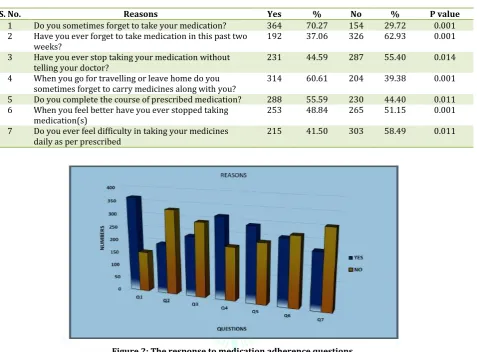
Table 5: Response to medication adherence questions
Figure 2:The response to medication adherence questions
Table 5 and Figure 2 depicts that out of 518 participants, 364 (70.27%) said they will forget to take medication as prescribed, and 124 (29.27%) said they take medication as prescribed. 192 (37.06%) participants have forgotten to take their medicines in last 2 weeks. Whereas, 326 (62.93%) are adhered to medications since past 2 weeks. 231(44.59%) have stop taking medicines without telling their Doctor. 287 (55.40%) participants taking medicines as prescribed. 314 (60.61%) participants agreed that they forget to carry their medication with them when they go out of home. Whereas, 204 (39.38%) said they carry their medicines when they go out. 288 (55.59%) participants claimed that they complete the course of prescribed medication. Whereas, 230 (44.40%) claimed that they didn’t complete the course of prescribed
medication. 253 (48.84%) participants said they stopped taking medicine when they feel better. 265 (51.15%) said they did not stop their medication when they feel better. 215 (41.50%) participants said they have difficulty in taking medication as prescribed. 303 (58.49%) participants have no difficulty in taking medication as prescribed.
Table 6: Categorization of adherence based on gender
Adherence scale Male Female
Adherence 56 (18.2) 32 (15.2)
Medium adherence 172 (55.8) 108 (51.4)
Non-adherence 80 (25.97) 70 (33.3)
S. No. Reasons Yes % No % P value
1 Do you sometimes forget to take your medication? 364 70.27 154 29.72 0.001
2 Have you ever forget to take medication in this past two
weeks? 192 37.06 326 62.93 0.001
3 Have you ever stop taking your medication without
telling your doctor? 231 44.59 287 55.40 0.014
4 When you go for travelling or leave home do you
sometimes forget to carry medicines along with you? 314 60.61 204 39.38 0.001
5 Do you complete the course of prescribed medication? 288 55.59 230 44.40 0.011
6 When you feel better have you ever stopped taking
medication(s) 253 48.84 265 51.15 0.001
7 Do you ever feel difficulty in taking your medicines
Table 6 and Figure 3 explains that 56 (18.2%) male and 32 (15.2%) female showed adherence. 172 (55.8%) male and 108 (51.4%) female showed medium adherence. 80
(25.97%) male and 70 (33.3%) female showed they are non-adhered to medication.
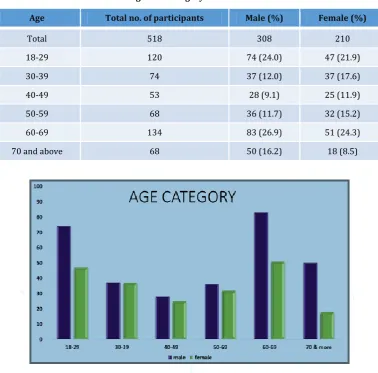
Table 7: Age wise category of male and female
Age Total no. of participants Male (%) Female (%)
Total 518 308 210
18-29 120 74 (24.0) 47 (21.9)
30-39 74 37 (12.0) 37 (17.6)
40-49 53 28 (9.1) 25 (11.9)
50-59 68 36 (11.7) 32 (15.2)
60-69 134 83 (26.9) 51 (24.3)
70 and above 68 50 (16.2) 18 (8.5)
Figure 4: Age wise category of male and female
Table 7 and Figure 4 shows that out of 518 participants 308 are male and 210 are female, in that 120 participants belong to the age group of 18-29, among them 74 (24%) are male and 47 (21.9%) are female. And 74 participants belong to the age group of 30-39 among them 37 (12%) are male and 37(17.6%) are female. And 53 participants belong to the age group of 40-49 among them 28 (9.1%) are male and 25
(11.9%) are female. And 68 participants belong to the age group of 50-59 among them 36 (11.7%) are male and 32(15.2%) are female. And 134 belong to age group of 60-69 among them 83 (26.9%) are male and 51 (24.3%) are female. And 68 participants are above 70 years among them 50 (16.2%) are male and 18 (8.5%) are female.
Table 8: Adherence scale based on age category
Age (years) Adherence (%) Medium Adherence (%) Non-adherence (%)
18-29 16(13.3) 77(64.2) 27(22.5)
30-39 9 (12.2) 40 (54.1) 25 (33.8)
40-49 11 (20.8) 24 (45.3) 18 (34.0)
50-59 10 (14.7) 37 (54.4) 21 (30.9)
60-69 26 (19.4) 80 (59.7) 28 (20.9)
Figure 5: Adherence scale based on age category
Table 8 and Figure 5 represent that in 18-29 age category 16(13.3%) participants are adhered, 77 (64.2%) participants are medium adhered and 27 (22.5%) participants are non-adhered. In 30-39 age category 9 (12.2%) participants are adhered, 40 (54.1%) participants are medium adhered and 25 (33.8%) participants are non-adhered. In 40-49 age category 11 (20.8%) participants are adhered, 24 (45.3%) participants are medium adhered and 18 (34.0%) participants are non-adhered. In 50-59 age category 10
(14.7%) participants are adhered, 37 (54.4%) participants are medium adhered and 21 (30.9%) participants are non-adhered. In 60-69 age category 26 (19.4%) participants are adhered, 80 (59.7%) participants are medium adhered and 28 (20.9%) participants are non-adhered. In 70 and above age category 17 (25%) participants are adhered, 32 (47.1%) participants are medium adhered and 19 (27.9%) participants are non-adhered.
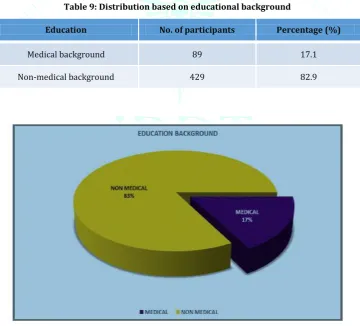
Table 9: Distribution based on educational background
Education No. of participants Percentage (%)
Medical background 89 17.1
Non-medical background 429 82.9
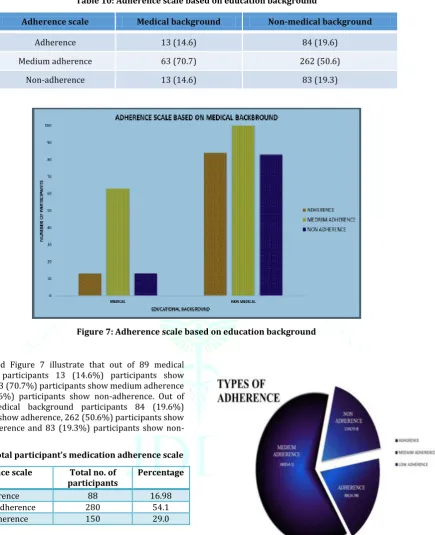
Table 10: Adherence scale based on education background
Adherence scale Medical background Non-medical background
Adherence 13 (14.6) 84 (19.6)
Medium adherence 63 (70.7) 262 (50.6)
Non-adherence 13 (14.6) 83 (19.3)
Figure 7: Adherence scale based on education background
Table 10 and Figure 7 illustrate that out of 89 medical background participants 13 (14.6%) participants show adherence, 63 (70.7%) participants show medium adherence and 13 (14.6%) participants show non-adherence. Out of 429 non-medical background participants 84 (19.6%) participants show adherence, 262 (50.6%) participants show medium adherence and 83 (19.3%) participants show non-adherence.
Table 11: Total participant’s medication adherence scale Adherence scale Total no. of
participants Percentage
Adherence 88 16.98
Medium adherence 280 54.1
Non-adherence 150 29.0
Table 11 and Figure 8 delineating that out of 518 participants, 88 (16.98%) participants are adhered to medication, 280 (54.1%) participants are medium adhered to medication and 150 (29.0%) participants are non-adhered to medication.
Figure 8: Total participant’s medication adherence scale
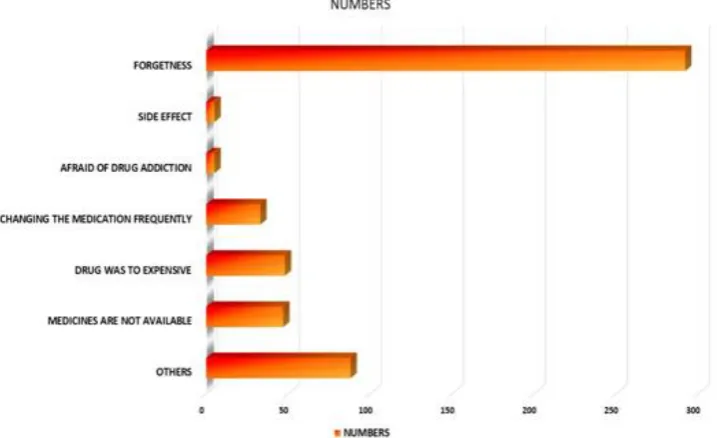
Table 12: Reason for non-adherence
Reasons Numbers Percentage (%) Relative risk
Forgetness 292 56.37 2.42
Side effects 5 0.965 0.597
Afraid of drug addiction 5 0.965 0.800
Changing the medication frequently 33 6.37 1.538
Drug was too expensive 48 9.26 0.800
Medicines not available 47 9.07 0.941
Figure 9: Reason for non-adherence
Table 12 and Figure 9 represent the different reasons for non-adherence to their medication. Out of 518 participants, 292 (56.37%) told they forget to take medication, 5 (0.965%) answered as side effect, 5 (0.965%) are afraid of drug addiction, 33 (6.37%) are non-adhere because of changing the medication frequently, 48 (9.26%) said drugs are too expensive 47 (9.07%) said medications are not available on that particular time. Remaining 88 (16.98%) answered has no reason.
DISCUSSION
A 6 months’ prospective observational study was conducted at various community places in Bangalore. A modified Morisky questionnaire is used to collect the data regarding the medication adherence. The collected data was entered into Microsoft excel sheet according to the answers given by the participants. An informed consent form was taken from every participant before starting the session. We have collected 534 cases. Total number of cases collected were 518 (Physical forms=459 and Google forms=59), 16 were excluded as per exclusion criteria. The collected questionnaire forms were segregated and analyzed.
In our study, Table 3 shows that out of 518 participants, 308 (59.45%) are male and 210 (41.55%) are female.According to the modified Morisky questionnaire, Table 5 shows that 364 (70.27%) said they will forget to take medication as prescribed (P Value=0.001). 192 (37.06%) participants have forgotten to take their medicines in last 2 weeks P Value=0.001). 231 (44.59%) have stop taking medicines without telling their Doctor (P Value=0.014). 314 (60.61%) participants agreed that they forget to carry their medication with them when they go out of home (P Value=0.001). 288 (55.59%) participants claimed that they complete the course of prescribed medication (P Value=0.011). 253 (48.84%) participants said they stopped taking medicine when they feel better (P Value=0.001). 215 (41.50%) participants said they have difficulty in taking medication as prescribed (P Value=0.011).
74 (24%) are male and 47 (21.9%) are female. 74 participants belong to the age group of 30-39 among them 37 (12%) are male and 37 (17.6%) are female. 53 participants belong to the age group of 40-49 among them 28 (9.1%) are male and 25 (11.9%) are female. 68participants belong to the age group of 50-59 among them 36 (11.7%) are male and 32 (15.2%) are female. 134 belong to age group of 60-69 among them 83 (26.9%) are male and 51(24.3%) are female. And 68 participants are above 70 years among them 50 (16.2%) are male and 18 (8.5%) are female.
Table 11 shows that in 18-29 age category 16 (13.3%) participants are adhered, 77 (64.2%) participants are medium adhered and 27 (22.5%) participants are non-adhered. In 30-39 age category 9 (12.2%) participants are adhered, 40 (54.1%) participants are medium adhered and 25 (33.8%) participants are non-adhered. In 40-49 age category 11 (20.8%) participants are adhered, 24 (45.3%) participants are medium adhered and 18(34.0%) participants are non-adhered. In 50-59 age category 10 (14.7%) participants are adhered, 37 (54.4%) participants are medium adhered and 21 (30.9%) participants are non-adhered. In 60-69 age category 26 (19.4%) participants are adhered, 80 (59.7%) participants are medium adhered and 28 (20.9%) participants are non-adhered. In 70 and above age category 17 (25%) participants are adhered, 32 (47.1%) participants are medium adhered and 19 (27.9%) participants are non-adhered.
non-had medium adherence and 244 (54.2%) non-had poor adherence. The reason for not taking medication regularly was shown in Table 9. Out of 518 participants, 292 (56.37%) told they forget to take medication (RR=2.42), 5 (0.965%) answered as side effect (RR=0.597), 5(0.965%) are afraid of drug addiction (RR=0.800), 33 (6.37%) are non-adhere because of changing the medication frequently (RR=1.538), 48(9.26%) said drugs are too expensive (RR=0.800), 47 (9.07%) said medications are not available on that particular time (RR=0.941). Remaining 88 (16.98%) answered has no reason (RR=0.707). A similar study conducted by Rowa al Ramahi8 shows that, the reasons for non-adherence to
medications were recorded as forgetfulness 275 (61.1%), expensive 72 (16.0%), lack of access to medication 66 (14.7%), travelling 53 (11.8%), changing the medication frequently 45 (10.0%), adverse effect 45 (10.0%), fear of getting used to medication 33 (7.3%), and other reasons such as the unavailability of these medications 40 (8.9%).
CONCLUSION
From our study we concluded that males show more adherence than females. Out of all participants many forget to take medication as prescribed in past 2 weeks. Most of them stop taking medicines without telling their Doctor and forget to carry their medication with them when they go out of home. Very few people claimed that they complete the course of prescribed medication and some of them stopped taking medicine when they feel better.40-45 age categories were more adhered than all other age group. 60-69 age group people show highest number of medium adherence. A survey based on education background concluded that participants belong to medical background were more adhere to the medication than the participants from non-medical background. The most dictating reason for not taking medication is forgetfulness. The second most dominating reason for non-adherence is not carrying
medications along with them when they are going out.We counsel the participants regarding the medication adherence, life style modifications and their medication management and also clear their doubt and questions.
ACKNOWLEDGEMENT
The authors wish to thank the management of PES College of Pharmacy, Bengaluru, Karnataka, India for providing necessary equipment for research. We thank our guide Dr. Apoorva Dev and Mr. Biswaranjan Patra, who guided us for statistical analysis, constant encouragement, facilities and support by the faculties.
CONFLICTS OF INTEREST
The author declares that there is no conflict of interest to disclose.
REFERENCES
1. Subho Chakrabarti. What’s in a name? Compliance, adherence and concordance in chronic psychiatric disorders. World J Psychiatry 2014; 4(2):30-6.
2. Lo TO. Aherence to Long- Term Therapies. World Health Organization. 2003; 1-211.
3. Albrecht S. The Pharmacist’s Role in Medication Adherence. US Pharm 2011; 36(5):45-8.
4. Brown MT, Bussell JK. Medication Adherence: WHO Cares?. Mayo Clin Proc 2011; 86(4):304-14.
5. HO PM, Bryson CL, Rumsfeld JS. Medication Adherence Its importance in Cardiovascular outcomes. Circulation 2009; 119:3028-35.
6. Jimmy B, Jose J. Patient Medication Adherence: Measures in Daily Practice 2011; 26(3):155-9.
7. Kripalani S, Henderson LE, Chiu EY, Robertson R, Kolm P, Jacobson TA. Predictors of medication self-management skill in a low-literacy population. J Gen Intern Med 2006; 21(8):852-6. 8. Al-Ramahi R. Adherence to medications and associated factors :