Neto et al. World Journal of Engineering Research and Technology
MODEL OF KNOWLEDGE-INTENSIVE PROCESS FOR
ESTIMATION OF COST OF PRISON WORKS IN BRAZIL
Jamil José Salim Neto*1, Camila Isaton2, Antônio Edésio Jungles3 and Edimeia Liliani Schnitzler4
1
Assistant Professor and PhD Student, MSc in Civil Engineering, Universidade Federal do
Amapá, Coordenação de Engenharia Civil (CEC).
2
PhD Student, MSc in Civil Engineering, Universidade Federal de Santa Catarina, Programa
de Pós-Graduação em Engenharia Civil – PPGEC, Rua João Pio Duarte Silva s/n, Trindade,
CEP: 88040900 - Florianópolis, SC – Brasil.
3
Professor, PhD in Production Engineering, Universidade Federal de Santa Catarina,
Programa de Pós-Graduação em Engenharia Civil – PPGEC, Rua João Pio Duarte Silva s/n,
Trindade, CEP: 88040900 - Florianópolis, SC – Brasil.
4
PhD Student, MSc in Administration, Universidade Federal de Santa Catarina, Programa de
Pós-Graduação em Engenharia Civil – PPGEC, Rua João Pio Duarte Silva s/n, Trindade,
CEP: 88040900 - Florianópolis, SC – Brasil.
Article Received on 24/07/2019 Article Revised on 13/08/2019 Article Accepted on 03/09/2019
ABSTRACT
The research has as its product the modeling of the intensive process of
knowledge of the parametric estimation, called expedite (fast) and
parametric (because it uses the parameters of the project and/or work)
to be used to model the costs of services (foundations, superstructure,
cladding, facilities, etc.) of undertakings for the purpose of
incarceration: prisons, prisons, prisons, juvenile prisons and jails. The
research aims to provide the model of the estimation process with
recommendations for cost professionals to build their estimates. For the execution of this
model, the samples came from 39 enterprises for use as juvenile prisons in a Brazilian state.
The logic of the estimation process model can be reproduced for the other kinds of prisons
mentioned above. The parametric estimation requires a multidisciplinary team; and there is a
World Journal of Engineering Research and Technology
WJERT
www.wjert.org
SJIF Impact Factor: 5.218*Corresponding Author Jamil José Salim Neto
Assistant Professor and PhD student, MSc in Civil Engineering, Universidade Federal do Amapá,
risk of not representing in the equations the real cost of services, when not all variables that
influence costs are considered. Choosing the drivers proves to be one of the most delicate
steps of the estimation.
KEYWORDS: Process management, knowledge-intensive process, parametric estimation, prison works.
1. INTRODUCTION
Brazil ranks 4th among the world's countries with the largest prison population.
(INTERNATIONAL CENTRE FOR PRISON STUDIES, 2014). About 7.4% of the Brazilian
prison population is composed of young people under the age of 18, distributed in 350
prisons for this use in the country. (BRASIL, 2012).
The U. S. Department of Defense (UNITED STATES OF AMERICA DEPARTMENT OF
DEFENSE, 2011) demands, in the context of US government hiring, that the public
administration is tasked with preparing cost estimates, thus positioning itself as a cautious
contractor. The Brazilian Law No. 12.462 (BRASIL, 2011, art. 9), called The Differential
Public Procurement Regime (RDC), states that: “The estimated value of the contract will be
calculated based on the values practiced by the market, on the amounts paid by the public
administration for in similar services and works or on the assessment of the overall cost of the
work, measured by using a synthetic budget or expedited or parametric methodology”.
This research has as its product the modeling of the intensive process of knowledge of
parametric or expedited (fast) parametric estimation (based on project or work parameters).
For this research, the estimate is focused on the costs of services (foundations, superstructure,
coatings, installations, etc.). Cost models refer to Brazilian juvenile prisons.
The article is part of an assignment of a doctoral discipline, where the modeling of the
expeditious cost estimation process is developed, an estimation modality that has as premise
the speed of response to the budget forecast for use in public administration, which bids and
hires these works in Brazil.
The model aims to extract and explain the knowledge of the estimation process, which is not
static, and was developed through the sample of data from the juvenile prison system of a
Brazilian state, which is responsible for holding more than 50 % of young prisoners in the
It is expected, with the present research, to assist the public administration bidding and
construction sectors with respect to the reproduction of parametric expedited estimates,
aiming to create a model of the estimation process, since it enables the construction of cost
equations that enable speed response in forecasting the costs of projects when there are no
complete projects.
Equations, which are the products of the estimation process, apply directly to estimates, even
when the public agent is not an expert in the area, as resource provisioning is often not
necessarily calculated by the sectors responsible for the public administration constructions
but by administrative sectors, which often frame prison projects according to the previously
approved budget available. This justifies the need for equations via easy-to-apply estimation.
The article also aims to draw the attention of the academic community to the development of
research involving prison enterprises in the country, which are little explored in academic
research, but have great social relevance, due to the maintenance of public safety, and the
necessity of housing the population serving a prison sentence in the country.
2. LITERATURE REVIEW
The literature review of this research summarizes, briefly, process management,
knowledge-intensive process, parametric cost estimation, and juvenile prisons works in Brazil.
2.1 Process Management and Knowledge-Intensive Process
The concepts of Process Management and Knowledge Intensive Process (KIP) are important
for both academia and the market and business, as they represent the ultimate source of
competitive advantage. Increasingly, business processes are becoming dependent on the
knowledge acquired by the people who realize it through the tasks and activities that compose
it. (RICHTER VON HAGEN et al., 2005).
Davenport and Prusak (1998); Nonaka and Takeuchi (1995) distinguish knowledge as the
fundamental resource and the most respectable productive factor in the conjuncture of
organizations. Maldonado et al. (2008) mention that “Modeling knowledge-intensive
processes presents an important challenge, as it serves to provide greater understanding and
better management of the activities of the organization. [...] Thus, the processes that contain
the greatest amount and quality of knowledge are fundamental to the achievement of the
processes poses a major challenge for the specialized areas, as they mean a coherent and
logical way of exposing the organization's value stream and focusing on its activities that
integrate greater value. (MALDONADO ET AL.,2008).
However, according to Melão and Pidd (2000), the difficulty of modeling processes brings
the authors of this field a need to reach higher coefficients of efficiency and effectiveness
between modeling and reality, and between what is being modeled and the reality that it is
being modeled.
Maldonado (2008) understands KIP as a type of poorly structured process with a higher
degree of dynamic complexity, which depends heavily on the tacit and the explicit knowledge
present inserted in the players and tasks. KIPs have the following characteristics:
They are sequences of activities and value co-optation dependent on the obtaining and the using of knowledge;
They evolve as they are carried out, based on the knowledge obtained, and are
characterized by poorly structured specifications; the flow of activity is dynamic;
Human agents have an intense influence on the outcome of the process, with high
unpredictability in the implementation of activities; process players have the ability to
reuse and shape knowledge from other domains and different levels of expertise;
The lifetime of the knowledge involved in the process is often short as it is constantly
updated and often requires a long time to be obtained;
KIPs do not follow structured working rules, and performance measures are complicated
to set up and measure;
The support by Information and Communication Technologies (ICT) to KIPs is not
sophisticated, even though they rely heavily on socialization and informal knowledge
exchange;
In general, the costs associated with the management of KIPs and their outcomes are
high.
Therefore, the objective of modeling KIPs is to identify the in-process knowledge
requirements, then to assume and reuse them, in order to promote their representation and
Wielinga (2012) assures that in the last 25 years knowledge modeling is being an
underestimated method, though an important way to reduce the complexity problems that
arise in building knowledge-based applications.
2.2 Parametric Cost Estimation
Public works cost management encompasses all activities that ensure that the enterprises are
completed within the stipulated budgets. (TCU, 2006). Construction costs are interpreted as
the amount of resources employed, resulting from disbursements with services, capital, or
financial operations, indispensable for the carrying out of an enterprise in all its stages, from
the feasibility study, over a determined period of time. (ANDRADE AND SOUZA, 2003).
Parametric estimation is modeling that uses parameters; it is used to forecast construction
costs using data from previous projects. (SONMEZ, 2008; JI ET AL., 2010). Cerea and
Premoli (2010), on the other hand, say that the parametric estimation or parametric modeling
is expressed through an analytical function inserted in a set of variables.
Projects have unique characteristics that should be considered in cost estimates. However,
information related to the scope of the project is most likely to change in the early stages. In
view of this, the estimator should rely on strategies, considering, in the estimation, the
minimum scope information or, preferably, those that do not undergo constant changes. (JI
ET AL., 2010). According to NASA (2015), there is also a barrier to achieving the expected
performance in the production routine, due to unforeseen events related to the resources and
the scheduling of the production process.
NASA (2015) mentions that cost estimates present two types of uncertainties that may impair
accuracy: one of them is related to the problems existing in the employed method, resulting
from the omission of cost variables, poor specification of coefficients, and poor mathematical
relationships, besides the lack or inconsistency of the historical data used.
2.3 Construction of juvenile prisons in Brazil
Public works are "all constructions, renovations, manufacturing, restoration, or expansion,
carried out by direct or indirect execution" (Art. 6, item I of Brazilian Law No. 8.666/1993).
Works of juvenile prisons – the buildings that provided the data for the elaboration of the
model for the estimation process of this research – are funded exclusively by the public
administration in Brazil, and each State of the Brazilian Federation builds, maintains and
Juvenile prisons are intended for young people over 12 and under 21 years of age. They have
functions very different from other kinds of prisons, jails, penitentiaries, and temporary
detention centers: these ones house male and female prison population over 21 years of age in
Brazil.
Using the Brazilian Law on Access to Information, the newspaper Carta Capital (2014)
published that, among the 148 custody units that were part of the socio-educational system of
the State of São Paulo in 2014 (largest state in population and wealth in the country), 54%
were overcrowded.
The legal website JusBrasil (2012) revealed that, in the State of Minas Gerais, only the young
perpetrators of serious crimes were admitted in the 22 state custody units. Young suspects of
homicide, armed robbery and rape relied on the system's inability to receive them to serve
their sentences, and the State's detention facilities were overcrowded by 48.7% in 2012.
According to the Ricmais news website (2015), the state of Santa Catarina had only 29
custody units in 2015, and 627 young people were waiting, in freedom, for vacancies to serve
their socio-educational sentences.
The juvenile prison buildings usually have dormitories (cells), multi-sport courts, classrooms,
medical and psychosocial care rooms, professional training rooms and libraries. These spaces
are part of the security of the unit; whereas kitchen, laundry and unit management rooms are
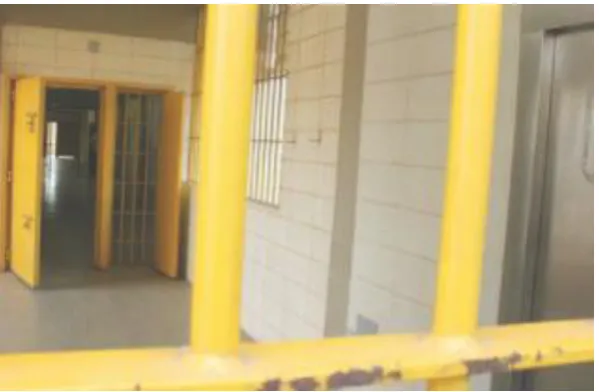
separate, for security management purposes. The photo in Figure 1 shows the entrance to one
of the dormitory wings of a juvenile prison.
The units are surrounded by at least two layers of security walls and ramparts (the latter,
more than 6 meters high), and also have other security devices such as concertinas (arranged
on the top of the walls), nets with anti-escape meshes (with cutting edges) above the walls,
and walls plated with flat and/or cutting plates, and other devices to make difficult climbing
and escaping the units.
Brazilian juvenile prisons are smaller than penitentiaries (on average they house 2,000
inmates). The older Brazilian units, prior to 2006, do not follow this model, having layout
and capacity similar to the penitentiaries, but this model fell in disuse in Brazil.
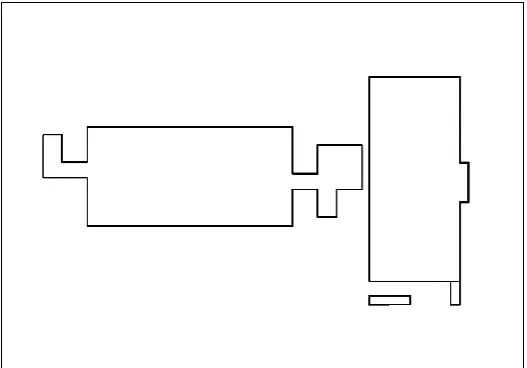
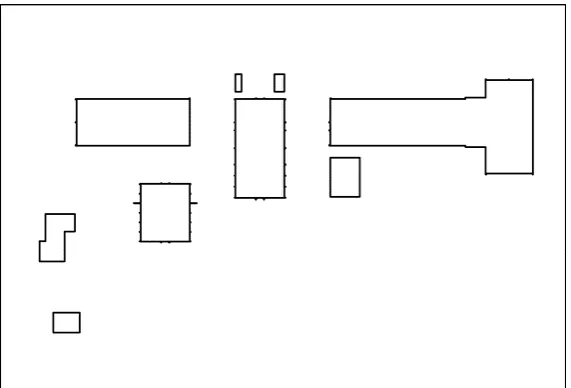
Figures 2, 3, 4 and 5 present a summary of the current layouts of these buildings. For security
purposes and at the request of the project provider, the building details, as well as of the
walls, ramparts and sentry boxes have been erased in the drawings since they follow a
standard security layout and their full publication is not allowed.
The size of the units built from 2006 onwards ranges from 2,000 m² to 6,000 m². Units prior
to this date may reach more than 10,000 m². The change in the size of the buildings aimed at
increasing the number of units, so that the young people could serve their sentences near their
families or their city of origin. There was also an effort to humanize these spaces with a view
to the recovery of inmates and their resocialization.
Figure 3: Example of blueprint of a juvenile prison (source: Isaton, 2016).
Figure 4: Example of blueprint of a juvenile prison (source: Isaton, 2016).
Prior to the creation of the Brazilian Child and Adolescent Statute (ECA), Brazil went
through several stages and changes regarding the evolution of care policies for this public.
Before the Statute, for example, there was no distinction between underprivileged children
and underage offenders. (FUNDAÇÃO CASA, 2010). With the emergence of the ECA in the
1990s, the Brazilian Doctrine of Integral Protection was born. (FUNDAÇÃO CASA, 2010).
From that moment on, children and adolescents are assured of their rights, declared as a legal
priority.
In 2006, the Brazilian socio-educational system is marked by the publication of the National
Socio-Educational Service System (SINASE), launched by the Special Secretariat of Human
Rights of the Presidency of the Republic in partnership with the National Socio-Educational
Council. (SINASE, 2012).
The publication of SINASE has led to positive changes in the system that receives minors in
all states of Brazil, since after its publication the states are required to invest in
socio-educational policies. In the context of the juvenile prisons, efforts for the construction and
revitalization of buildings are initiated in accordance with the guidelines recommended by
law.
For instance, the State Council for the Rights of Children and Adolescents of the State of
Santa Catarina warned of the need to comply with the ECA and the SINASE, justifying the
need for investments in the sector – that so far has not been able to receive the young people
already tried – aiming at the achievement of crime reduction in the state. (RICMAIS, 2015).
3. METHOD
This research aims to provide the estimation process model, with recommendations for cost
professionals to build their estimates. The logic of the estimation process model can be
reproduced in other prison enterprises, such as temporary detention centers, jails,
semi-confinement units, and female and/or male penitentiaries.
To perform the estimation equations, which is the final product of the estimate, detailed
budgets, descriptive memorials, measurements, and other documentation of works, which we
will call sample information, are required. The enterprise is treated similarly to a patient
history, where the enterprise design and other information needs to be retrieved in as much
It is recommended to gather information on a considerable number of enterprises with
characteristics that allow them to be grouped. Over 30 projects are recommended when
working with costs at a global level, and this number can be reduced and the more punctual is
the necessary estimation of costs, for example, at the level of one service, input or place of
project implementation, this number may be reduced.
The variables for the development of the cost analysis through parameterization become data,
and these are taken from the samples (enterprises and/or buildings) through project readings,
detailed budget partitioning, and the checking of work diaries and descriptive memorials. The
partitioning of information is a judicious and non-static job, and depends on what the
estimation client requires.
All the documents that make up the samples (juvenile prisons already built) that provided the
data were elaborated by the agency that builds the juvenile prisons, which also maintains the
units after their completion, being responsible for the conception of the designs, estimations,
budgets, descriptive memorials, contract documents and other technical documentation.
The agent responsible for making the expedite cost estimation needs to get the proper
information from design architects, construction engineers, people responsible for the bidding
process, and responsible for the system of conditioning of resources, as the kind of equations
that will be provided depends on this information. This ranges from the most general
equations (which show the global costs), which make it possible to know the total cost of a
juvenile prison less than 15 min of applying the equations, up to the specific equations by
cost of service, cost of environment to be built, or cost per juvenile prison location.
To begin the elaboration of the equations for the parametric estimation, the data
standardization is the first step, which precedes the entering of these data into the modeling
software chosen by the estimator. In this phase, the player responsible for the estimation
starts the partitioning of the information on the works, which, depending on the time for the
delivery of the equations, requires a team to analyze the information on the works since their
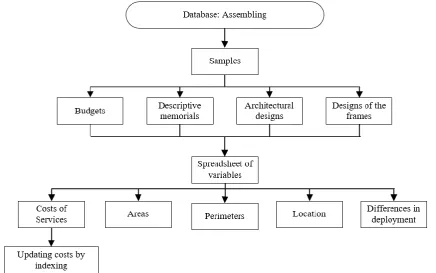
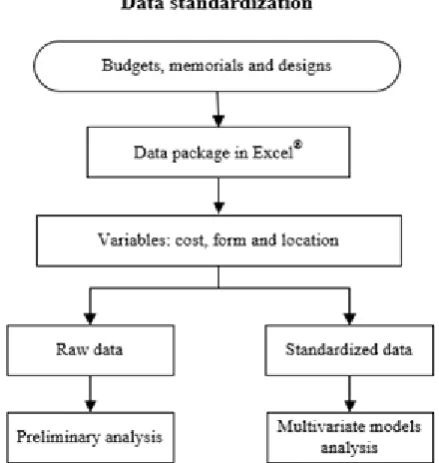
Figure 6: Schematic diagram of the information withdrawal from documentation and start of data assembly (source: Isaton, 2016).
Figure 6 shows how the parametric estimation process is started. Besides advanced statistical
domain or other methodology, according to the estimator preferences, such as artificial neural
networks, Bayesian statistics and other techniques, the estimator needs to identify the
variables that will be used, always in accordance with the response needs of the organization
that needs the equations for use in cost estimates.
Figure 7 works with the costs of services (such as structures, coatings, foundations, etc.). To
accomplish this, the mapping of the total effective areas of the prisons, their internal and
external perimeters, their location (since this directly influences the cost, and they are
grouped according to their regions) and differences of implementation (for example, if
implemented in cities with available public systems of water supply and sewage collection
services, or if it is built in a rural area where their water supply and sewage treatment systems
will be individual and self-sufficient, and thus must be built to meet the needs of the new
unit).
The indexing of costs and their update to the current date is a very important step, because if
it is not performed, it will not reflect the resources at the current date that the services that
For the carrying out of the parametric estimation, the data can be organized using the Excel®
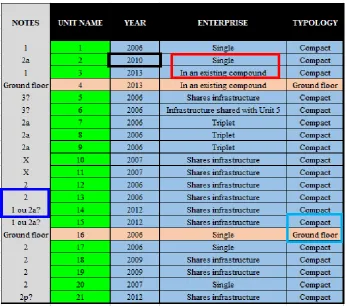
software. In Figure 7, it is exposed how to start collecting information from the projects and
descriptive memorials. This will assist in the organization of the data that will be taken from
the samples.
The samples were organized and numbered in the first column of Figure 7. The other
columns show the date of construction of the buildings and also important details that
influence costs, such as the sharing of the sewage treatment system between 1, 2 or 3 custody
units.
The general characterization of the enterprises is presented in the fifth column of Figure 7.
This is how the buildings are classified, whether compact (one-story, two-story or three-story
buildings) or ground floor units, for example. It is important to classify whether the building
is for female or male use, since in women's penitentiary units there are, for example, babies
nurseries, daycare centers and differentiated cells with cradles for nursing mothers, i.e., it is
important to classify according to the usual nomenclature of the type of institution with which
the estimator is working, in order to facilitate the application of the equations by the
professionals who will use them.
The independent variables of the estimation equations can be geometric parameters such as:
areas, perimeters, or even number of floors, number of security cages, number of wings,
bathrooms, dining rooms, coordination rooms, etc., which can be organized as suggested
above in Figure 7.
The measuring units should always be accurately defined: for example, in an estimation, the
safety steel can have its cost equation in kg (kilograms) or in m², depending on the dynamics
of the works sector and the applicability of the equations.
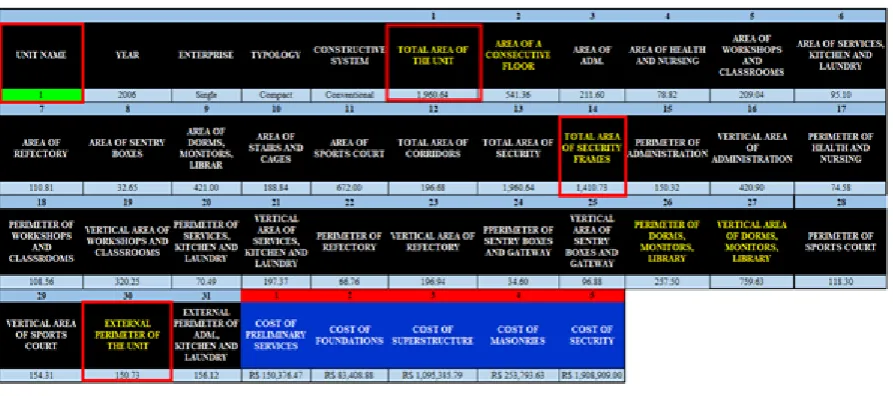
In Figure 8, each item has a number for the organization and systematization of the
information. The organization is simple, and it is emphasized that it changes according to the
purpose of the estimation, as well as according to the volume of data to be organized and
analyzed. For the construction of the model, 39 enterprises were used out of a total of 46
available for the assembly of the database, an information volume of 60 gigabytes.
Figure 8: Organizing the parameters of each enterprise (source: Isaton, 2016).
Each sample (prison enterprise) has its own spreadsheet such as a patient's chart, where all
the information is organized, and then transferred to the general spreadsheet containing all the
parameters of all the enterprises of the sampling, with parameters that will be the variables of
Figure 9: Organizing the quantitative (source: Isaton, 2016).
The flowchart shown in Figure 10 complements the assembling of the database. In this step,
each service group becomes a database with 39 enterprises and their parameters which are
candidate to be independent variables. For the application in this research, were used the
external perimeter, total area, internal perimeter, and others that had a strong correlation with
the cost-dependent variable of the services that make up the project analytical structure and
the scope of the enterprises.
As for the data relating to the costs of the service groups, they were normalized by indexing
to a common date. In this survey the index used was the Brazilian National Civil
Construction Index (INCC).
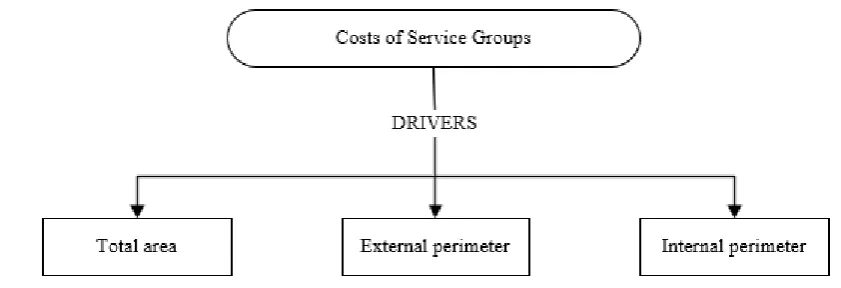
The drivers established for this research were: total area, external perimeter and internal
perimeter, which are defined according to the degree of correlation between them and the
variable cost.
In residential and commercial works, for example, the total area frequently is strongly
correlated to costs, but for prison works this changes, and it is verified that the perimeters
have a higher correlation. One of the possible causes is the high cost of the prison frames
(bars), because they are made of high-performance safety steel, thus, the more internal walls
there are, i. e., the more compartmentalized is the prison (compactness index), the higher is
its cost.
Figure 11: Drivers for the Service Groups (source: Isaton, 2016).
4. RESULTS AND DISCUSSION
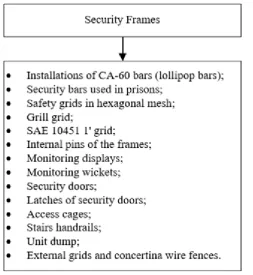
Figure 12 shows an example of a group of services to be analyzed, one of the services that
make up the scope of the enterprise. It is up to the player responsible for the estimation, in
partnership with the planning engineer and the production engineer of the construction site, to
gather the activities that make up a macro-service to be estimated. As can be seen, the
security frames service includes the installation of bars, security bars used in prisons,
monitoring displays, handrails, access cages and other items that are executed by the
Figure 12: Security Frames Service (source: Isaton, 2016).
The basic rule in parametric modeling is to start from the simplest up to the most complex, in
order to check the trends and behaviors of the data set, including assembling and grouping the
service under analysis, and its correlation with costs. At the end of the modeling, the
equations to be used in the estimations are delivered to the client. As an example, we present
Equation 1, relating to the Security Frames Service shown in Figure 12:
CESEG = 43,328.75 + 77.40 * PE + 264.40 * PI + 33.60 * AT Where:
CESEG: Costs of security frames PE: External perimeter
PI: Internal perimeter AT: Total area
This equation is applied using only the architectural design of the new prison, that is, it is not
necessary the design of frames, which is elaborated after the basic design is approved, i. e.,
complex services were estimated in a simple way by dividing the total cost of the work by the
total area, which brings considerable cost deviations, since complex services ended up having
their costs decreased in this division, when treated in a similar way to a service of lower cost
Through the equation above, presented as an example, those responsible for the provision of
resources can know what size of prison can be erected when the budget has costs as a
restriction. The service presented as an example is the second most expensive of a prison
work. It is classified as category A in the Services ABC Curve, and the equation presented
makes the estimation within a 30% probability, plus or minus.
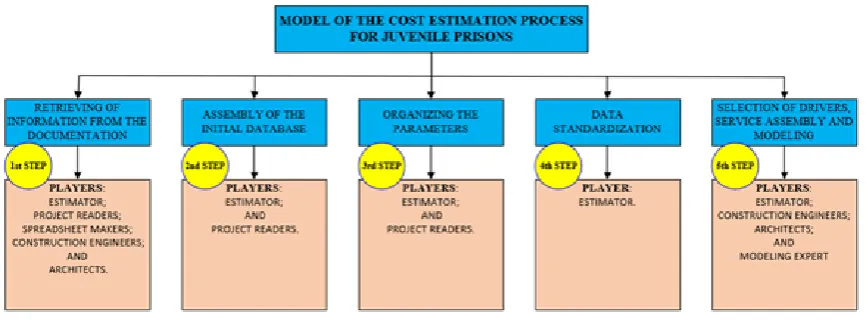
The estimation process model presented in Figure 13 describes the step-by-step process of
constructing a cost estimate synthetically. The detailed breakdown of the steps is explained in
the methodology of this article.
Figure 13: Cost Estimate Model (source: Prepared by the authors, 2019).
The estimation process is characterized as knowledge intensive because it is not static,
predictable, and has variables that change according to the context where the estimate will be
developed. It is correlated with the size, location, shape, geometric distribution of the prison,
index of internal walls, and infrastructure of the place of implementation.
For buildings with the purpose of restricting freedom, the estimate is developed with a focus
on the services that present the greatest risk to the executor (the company that wins the
bidding). These are also analyzed by the public administration during the design phase of this
kind of building.
5. CONCLUSION
This research provides as contribution the intensive knowledge model of the parametric cost
estimation process presented in figure 13 (results and discussions). This model shows the
processes that make up the estimate and the players involved, as well as the order for the
buildings. Previous researches has approached the parametric estimation with the objective of
producing cost models but have not presented the construction of the estimation here called
knowledge model, which is applicable for future parametric estimates.
As shown in the model (Figure 13) the parametric estimation consists of a multidisciplinary
team, considering the different profiles of the players involved. It is classified as a
knowledge-intensive process because it presents activities that depend on the objective of the
estimation. To achieve the global costs of the works services the quantitative are withdrawn
and correlated with the costs to perform the service.
The first step of the model, presented in figure 13, addresses the removal of information from
the work documentation. In this step we have as players: engineers, architects and project
readers. This process unfolds in Figure 6, called the systematic of information withdrawal
from the documentation and beginning of data assembly, that is, the model presents the
suggestion of how to start the organization of the work data, as well as the services that
compose it and will be estimated in the parametric estimate.
The second step of the model, called initial database assembly, has as its players the estimator
and the project readers. This activity is explained in detail in Figure 7, where the initial
database assembly is exemplified.
The third step (organizing the parameters) presents the estimators and the project readers as
players. The activity is presented in detail in figure 8 and organizes the parameters of each of
the enterprises. At this stage it is recommended to know which parameters will be analyzed,
for example, total area, internal and external perimeters, location of the project, finishing
patterns etc. From this choice, the data are organized according to the objectives of the
parametric estimate. Figure 9 (organizing the quantitative) is also part of this stage, because
to perform multiple linear regression it is necessary that the parameters are organized in unit
with the respective quantitative values, which correlate in the linear regression with the
parameters, whether these are the amount of building material, or amount of labor, or amount
of service (labor with material).
The fourth step of the process deals with the data standardization, where we have as player
the estimator, the professional who will build the equations or cost models. At this stage, with
normalization of the data and the multivariate analysis, in order to test the correlation
between the variables and the previously chosen parameters, so that the estimator choose the
best adjustment for the cost equation.
The fifth step is the choice of cost drivers, service assembly and modeling, and it has as
players engineers, estimator, architect etc. Figure 11 presents the choice of cost drivers as the
total area, the inner perimeter and the outer perimeter. The assembly of the service is shown
in Figure 12, where we have the safety frame service. At this stage it is up to the professional
to gather all similar elements to compose the service. When modeling, the selection of the
dependent variable is based on the objective of the estimate, which is to quickly know the
cost from some easily accessible parameter at the beginning of projects. In this research, the
cost of safety frames is the objective of the estimate, that is, it is the dependent variable,
having as independent variables the total area, the outer perimeter and the inner perimeter,
information available before the frame design and which make it possible to assume the cost
of this service before the budgeting phase (deterministic method).
REFERENCES
1. Andrade AC and Souza Uel (2003), Críticas ao processo orçamentário tradicional e
recomendações para confecção de um orçamento integrado ao processo de produção de
um empreendimento. In: Simpósio Brasileiro de Gestão e Economia da Construção, III
Encontro Latino-Americano de Gestão e Economia da Construção, São Carlos. Anais.
São Carlos: UFSCAR, 1-11.
2. Brasil (2011), Lei Nº 12.462, de 4 de agosto de 2011. Institui o Regime Diferenciado de
Contratações Públicas – RDC.
3. Brasil (1993), Lei nº 8.666, de 21 de junho de 1993. Regulamenta o Art. 37, inciso XXI,
da Constituição Federal institui normas para licitações e contratos da Administração
Pública e dá outras providências.
4. Brasil (2012), Sistema Nacional de Atendimento Socioeducativo - SINASE. Secretaria
Especial dos Direitos Humanos.
5. Carta Capital (2017), Disponível em:
<http://www.cartacapital.com.br/sociedade/um-em-
6. Carta Capital (2014), Disponível em:
<https://www.cartacapital.com.br/sociedade/o-que-os-dados-da-fundacao-casa-dizem-sobre-maioridade-penal-9732.html> Acesso em 31
mai. 2017.
7. Cerea AP and Premoli C (2010), Stima parametrica del costo di costruzione.
Individuazione di un metodo di stima, in fase di progettazione preliminare, del costo di
costruzione tramite l’uso delle regressioni lineari. Tese (Doutorado em Engenharia Civil).
Politecnico di Milano - Facoltà di Ingegneria Edile/Architettura, Milano (Itália).
8. Department of Defense United States of America (2011), Parametric Cost Estimating
Handbook. Sine loco, Sine nomine.
9. Fundação Casa (2010), Centro de Atendimento Socioeducativo ao Adolescente - História.
Disponível em:
<http://www.fundacaocasa.sp.gov.br/View.aspx?title=a-fundacao-historia&d=83>. Acesso em 25 mai. 2017.
10.JI SH, Park M, Lee HS (2010), “Data Preprocessing - Based Parametric Cost Model for
Building Projects: case Studies of Korean Construction Projects”, Journal of Construction
Engineering and Management, 136(8): 844-853.
11.International Centre for Prison Studies (2014), Word Prison Brief Available from:
http://www.prisonstudies.org/ [Accessed 20 Sept 2017].
12.Isaton C (2016), Análise de custos paramétricos para dados orçamentários de unidades de
internação socioeducativas. Dissertação (Programa de pós-graduação em Engenharia
Civil). Universidade Federal de Santa Catarina. Florianópolis.
13.Jusbrasil (2012), Disponível em: <http://amp-mg.jusbrasil.com.br/noticias
/3050086/numero-de-infratores-em-centros-socioeducativos-supera-em-48-7-a-quantidade-de -vagas>. Acesso em: 15 mai. 2017.
14.Maldonado MU, Donadel AC, Varvakis G (2008), Modelagem de Processos Intensivos
em Conhecimento: Um estudo comparativo. Sexto Congresso Latino americano de
Dinâmica de Sistemas. Universidade de Talca. Chile.
15.Melão N and PIDD MA (2000), “Conceptual framework for understanding business
processes and business process modeling”, Info Systems J, 10: 105-129.
16.Nasa (2015), Cost Estimating Handbook. Version 4.0. Disponível em
<http://www1.jsc.nasa.gov/bu2/PCEHHTML/pceh.htm>. Acesso em 10 jul. 2017.
17.Richter Von Hagen C, Ratz D and Povalej R (2005), “Towards self-organizing
Knowledge Intensive Processes”, Journal of Universal Knowledge Management, 0(2):
18.Ricmais (2015), Disponível em:
<http://ndonline.com.br/florianopolis/noticias/266759-
santa-catarina-tem-627-jovens-infratores-na-fila-para-cumprir-medidas-socioeducativas.html > Acesso em 28 maio 2017.
19.Sonmez R (2008), “Parametric Range Estimating of Building Costs Using Regression
Models and Bootstrap”, Journal of Construction Engineering and Management, 134(12):
1011-1016.
20.Tcu (2006), Manual de Gestão de Projetos. 110 p. Sine nomine. Brasília.
21.Wielinga BJ (2013), “Reflections on 25+ years of knowledge acquisition”, International