www.ijiset.com
Persistent and Clear User Biometric Authentication for Secure Web
Services
P.Hevani1, Ms. B. Sumalatha2
1
Dept.of CSE, JNTUA, Andhra Pradesh, India, [email protected]
2
Dept.of CSE, JNTUA, Andhra Pradesh, India
Abstract
Session administration in allocated web administrations is by and large in view of username and watchword, express logouts and instruments of individual session termination using great timeouts. Rising biometric choices empower substituting username and secret key with biometric learning over the span of session foundation, however in such a procedure still a solitary check is esteemed abundant, and the distinguishing proof of a client is viewed as changeless all through the complete session. Also, the span of the session timeout may simply influence on the convenience of the administration and subsequent client pride. This paper investigates promising conceivable decisions outfitted by method for making utilization of biometrics inside the administration of sessions. A safe convention is characterized for interminable validation through persistent client confirmation. The convention decides versatile timeouts fixated on the charming, recurrence and type of biometric data straightforwardly got from the shopper. The sensible conduct of the convention is outlined by means of Mat lab recreations, even as model headquartered quantitative assessment is actualized to analyze the limit of the convention to refinement security assaults practiced through selective sorts of assailants. Sometime, the present model for PCs and Android advanced cells is talked about.
Keywords: CASHMA, Web service, Verification, Protocol, Session Foundation.
1. Introduction
Loose purchaser confirmation is essential in the vast majority of today's ICT programs. Individual confirmation strategies are quite often in light of sets of username and secret key and affirm the distinguishing proof of the client best at login stage. No evaluations are done all through working sessions that are ended by method for an express logout or lapse after an unmoving action time of the individual. Security of web-established applications is a critical test, due to the breakthrough create inside the recurrence and many-sided quality of digital strikes; biometric strategies [10] present rising answer for quiet and relied on upon confirmation, where username and secret key are changed by method for biometric learning. Nonetheless, parallel to the spreading use of biometric projects, the inspiration in their abuse can likewise be developing, particularly because of the way that their
plausible utility inside the financial and keeping money segments [2], [1].
Such perceptions result in belligerence that a solitary validation point and solitary biometric information CANNOT promise an abundant level of wellbeing [5], [7]. Really, likewise to run of the mill confirmation methodology which rely on upon username and watchword, biometric buyer validation is doubtlessly defined as a "solitary shot" [8], giving individual check handiest to the time of login area when one or more biometric qualities is additionally required. When the individual's character has been set up, the methodology resources are close by for a consistent interim of time or unless express logout from the client. This procedure accepts that a solitary check (on the setting up of the session) is plentiful, and that the personality of the purchaser is predictable for the time of the entire session. For example, we check this basic situation: a client has as of now logged directly into a security important bearer, after which the shopper leaves the PC unattended inside the work subject for some time. This dilemma is significantly trickier inside the connection of cell instruments, presumably utilized as a part of open and swarmed situations, the spot the device itself can likewise be lost or persuasively stolen in the meantime the client session is dynamic, allowing impostors to imitate the individual and get to entirely private learning. In these circumstances, the offerings the spot the clients are verified will likewise be abused advantageously [8], [5]. An essential answer is to make utilization of speedy session timeouts and occasionally ask for the purchaser to enter his/her qualifications over and over, however this is not a conclusive answer and nearly punishes the transporter ease of use lastly the delight of clients.
1.1 Existing System
www.ijiset.com
In existing, a multi-modular biometric confirmation strategy is outlined and created to see the physical nearness of the customer signed in a PC.
The work in one more present paper, proposes a multi-modular biometric unfaltering validation answer for adjacent access to high-security techniques as ATMs, where the uncooked data got are weighted inside the client confirmation process, set up on i) style of the biometric attributes and ii) time, because of the way that exceptional sensors are prepared to outfit uncooked information with uncommon timings. Point ii) presents the need of a transient coordination strategy which is controlled by the supply of past perceptions: built up on the possibility that over the long haul, the strength inside the purchased (getting more established) qualities diminishes. The paper applies a decline play out that measures the vulnerability of the rating processed by means of the check perform.
1.2
Disadvantages of Existing System
None of current systems supports consistent affirmation.
Rising biometric courses of action grant substituting username and mystery word with biometric information in the midst of session foundation, however in such a technique still a lone affirmation is regarded sufficient, and the conspicuous confirmation of a client is seen as invariable in the midst of the complete session.2. Proposed System
This paper introduces a fresh out of the box new procedure for client confirmation and session administration that is used in the setting cognizant security by utilizing progressive multilevel models (CASHMA) framework for comfortable biometric verification on the net.
CASHMA is proficient to work safely with a net supplier, incorporating administrations with high security needs as web saving money offerings, and it is intended to be utilized from outstanding buyer contraptions, e.g., advanced cells, PC PCs and even biometric booths set at the passage of comfortable ranges. Depending on the inclinations and guidelines of the proprietor of the online administration, the CASHMA validation supplier can
supplement a typical confirmation benefit, or can supplant it.
Our consistent validation system is grounded on evident securing of biometric information and on versatile timeout organization on the foundation of the trust postured in the individual and in the diverse subsystems utilized for verification. The individual session is open and comfortable paying little respect to conceivable unmoving activity of the purchaser, in the meantime gifts abuses are recognized by continually affirming the nearness of the fitting shopper.
Our strategy does not require that the response to a man confirmation confound is finished by the customer contraption (e.g., the logout technique), however it is straightforwardly treated by method for the CASHMA validation administration and the net offerings, which rehearse there have response frameworks. Gives a tradeoff amongst convenience and security.
www.ijiset.com
This paper allows a fresh out of the plastic new process for individual check and session organization that is used inside the connection cognizant security by progressive multilevel models (CASHMA) [1]) approach for comfortable biometric validation on the web. CASHMA is able to work safely with any assortment of web bearers, together with administrations with unreasonable security needs as web managing account administrations, and it's intended to be utilized from unique buyer contraptions, e.g., advanced mobile phones, tablet PCs or even biometric stands situated at the passageway of loose territories. Depending on the inclinations and prerequisites of the proprietor of the net supplier, the CASHMA validation administration can supplement a normal confirmation supplier, or can substitute it. The system we presented in CASHMA for usable and profoundly agreeable client classes is a consistent successive (a solitary biometric methodology specifically is introduced to the strategy [2]) multi-modular biometric validation convention, which adaptively figures and revives session timeouts on the basis of the trust put inside the client. Such worldwide trust is assessed as a numeric worth, processed with the guide of reliably assessing the trust each inside the buyer and the (biometric) subsystems utilized for getting biometric information. In the CASHMA connection, every subsystem includes the whole equipment/program elements quintessential to aggregate and confirm the genuineness of one biometric characteristic, together with sensors, evaluation calculations and the greater part of the civilities for information transmission and administration. Trust inside the individual is chosen the basis of recurrence of overhauls of new biometric tests, in the meantime have confidence in each subsystem is figured on the establishment of the wonderful and assortment of sensors utilized for the securing of biometric tests, and on the risk of the subsystem to be meddled.
3. System Architecture
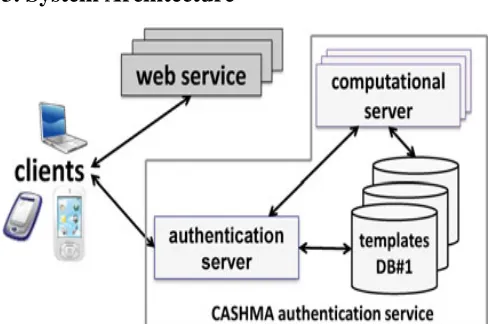
Fig. 1 General point of view of the CASHMA designing.
The general methodology comprises of the CASHMA confirmation supplier, the clients and the web offerings (Fig. 1), related through verbal trade channels. Each report divert in Fig. 1 executes particular efforts to establish safety which are not examined right here for curtness.
The CASHMA confirmation supplier involves: i) a validation server, which associates with the clients, ii) an accumulation of high-performing computational servers that perform examinations of biometric data for check of the selected clients, and iii) databases of formats that contain the biometric layouts of the enlisted clients (these are required for customer validation/confirmation). The net administrations are the considerable amount of administrations that utilization the CASHMA verification transporter and interest the confirmation of enlisted clients to the CASHMA validation server. These offerings are most likely any style of web supplier or application with necessities on purchaser validness. They must be enlisted to the CASHMA confirmation bearer, communicating additionally their trust limit. On the off chance that the online offerings embrace the constant confirmation convention, over the span of the enrollment approach they might concur with the CASHMA enlistment regulatory focus on qualities for parameters h; alright and s.
At last, by method for customers we infer the clients' gadgets (desktop and portable workstation PCs, advanced mobile phones, tablet, and so on.) that gather the biometric learning (the uncooked data) like the a considerable amount of biometric attributes from the clients, and transmit these data to the CASHMA confirmation server as a part of the verification technique toward the objective web administration. A customer incorporates i) sensors to gather the crude information, and ii) the CASHMA utility which transmits the biometric learning to the validation server. The CASHMA confirmation server adventures such information to utilize individual validation and progressive check procedures that contrast the crude learning and the put away biometric layouts.
www.ijiset.com
enrollment; assurance of the got information amid its transmission to the validation and computational servers and its stockpiling; power development of the calculation for biometric check [4]. Privatives issues regardless exist as an aftereffect of the obtaining of information from the encompassing environment as, for instance, voice of men and ladies neighborhood the CASHMA customer, however are considered out of degree for this paper.
4. The Continuous Authentication Protocol
The consistent confirmation convention makes it workable for conveying versatile session timeouts to a web supplier to snare and save a protected session with a benefactor. The timeout is customized on the establishment of the trust that the CASHMA validation strategy places in the biometric subsystems and inside the client. The proposed convention requires a successive multi-modular biometric strategy made out of n unmoral biometric subsystems that can go to a choice autonomously on the credibility of a customer. For example, these subsystems may likewise be one subsystem for keystroke acknowledgment and one for face cognizance. The execution of the convention comprises of two back to back stages: the preparatory area and the support segment. The preparatory segment intends to confirm the client into the methodology and set up the session with the net bearer. Over the span of the conservation area, the session timeout is adaptively upgraded when client recognizable proof check is done utilizing contemporary crude information outfitted by method for the purchaser to the CASHMA validation server.
4.1 Authentication Phase
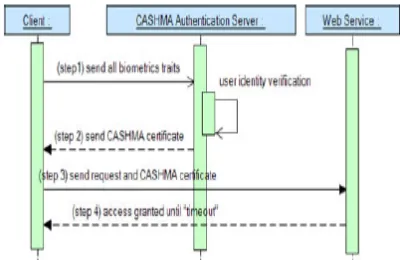
Fig.2. Initial stage if there should be an occurrence of fruitful client verification.
This section is organized as takes after:
The client (the supporter) contacts the net administration for a supplier demand; the online transporter answers that a honest to goodness testament from the CASHMA verification bearer is required for validation.
Utilizing the CASHMA application, the benefactor contacts the CASHMA confirmation server. The initial step comprises in getting and sending at time t0 the information for the diverse biometric qualities, most importantly played out a solid validation technique (step 1). The apparatus expressly shows to the client the biometric attributes to be outfitted and reasonable retries.
The CASHMA verification server dissects the biometric information purchased and plays out a validation approach. Two interesting possibilities emerge right here. On the off chance that the purchaser character shouldn't be illustrated (the worldwide trust stage is under the trust limit gmin), new or further biometric learning are asked for (back to step 1) aside from the base trust edge gmin is come to. On the other hand if the client character is effectively checked, the CASHMA verification server verifies the client, figures an underlying timeout of length T0 for the client session, set the lapse time at T0 +t0, makes the CASHMA declarations and sends it to the buyer (step 2).
The benefactor advances the CASHMA declarations to the web bearer (step 3) coupling it with its solicitation.
The online bearer peruses the endorsement and approves the client to make utilization of the asked for supplier (step 4) unless time t0 + T0.
www.ijiset.com
4.2 Maintenance Phase
Fig.3. Maintenance stage if there should be an occurrence of fruitful client confirmation.
It is made out of three stages rehashed iteratively:
At the point when at time ti the client programming gains late (new) crude data (comparing to no less than one biometric characteristic), it conveys them to the CASHMA verification server (step 5). The biometric data may likewise be obtained straightforwardly to the client; the client may simply in any case go to a choice to outfit biometric information which is impossible got in a straightforward way (e.g., unique mark). At last when the session timeout goes to terminate, the supporter could expressly advise to the customer that contemporary biometric learning is needed.
The CASHMA validation server gets the biometric data from the buyer and checks the character of the client. In the event that confirmation shouldn't be successful, the individual is set apart as not legitimate, and subsequently the CASHMA verification server does not capacity to invigorate the session timeout. This doesn't propose that the client is lessening off from the present session: if distinctive biometric data is outfitted sooner than the timeout terminates, it's still suitable to get a fresh out of the plastic new declaration and revive the timeout. On the off chance that check is triumphant, the CASHMA confirmation server applies the calculation determined partially 4.2 to adaptively figure another timeout of size Ti, the
close time of the session at time Ti + ti after which it makes and sends a fresh out of the box new testaments to the customer (step 6).
The client gets the endorsements and advances it to the web supplier; the online supplier peruses the testaments.
The progressions of the redesign portion are spoken to in Fig. 3 for the instance of successful individual confirmation (step 6b).
5. Literature Survey
5.1 Study about Assessing and Improving the
Effectiveness of Logs for the Analysis of Software
faults
Occasion logs are the essential wellspring of information to describe the reliability conduct of a figuring framework amid the operational stage. Be that as it may, they are deficient to give confirmation of programming flaws, which are these days among the fundamental driver of framework blackouts. This paper proposes a methodology in view of programming issue infusion to evaluate the adequacy of logs to monitor programming shortcomings activated in the field. Infusion results are utilized to give rules to enhance the capacity of logging systems to report the impacts of programming flaws. The advantages of the methodology are appeared by method for test results on three broadly utilized programming frameworks.
5.2 Study about Tuning Cost and Performance in
Multi-Biometric Systems: A Novel and Consistent
View of Fusion Strategies Based on the Sequential
Probability Ratio Test (SPRT)
www.ijiset.com
6. Simulated Result
The reenacted aftereffect of Protection dangers to the CASHMA strategy have been broke down both for the enlistment approach (i.e., starting enrollment of a man inside the methodology), and the confirmation approach itself. We record here just on verification. The biometric framework has been considered as deteriorated in capacities from [10]. For validation, we considered accumulation of biometric components, transmission of (crude) information, components extraction, coordinating perform, layout pursuit and vault organization, transmission of the coordinating positioning, determination work, verbal trade of the mindfulness results (take conveyance of/reject determination).
Fig.4 Global trust degree and forty verifications for a bearer with over the top security norms.
7. Conclusion
It should be seen that the administrations proposed for the assessment of the session timeout are chosen amongst a terribly huge arrangement of conceivable decisions. In spite of the fact that in writing we would now not set up related capacities used in extremely proportional settings, we recognize that particular administrations is likewise perceived, when put next and favored under specific conditions or clients details; this investigation is not noted as goes past the extent of the paper, which is the presentation of the relentless verification approach for web administrations.
References
[15] T. Courtney, S. Gaonkar, L. Keefe, E.W.D. Rozier, and W.H.Sanders, “M€obius 2.3: An Extensible Tool for Dependability, Security, and Performance Evaluation of Large and Complex System Models,” Proc. IEEE/IFIP Int’l Conf. Dependable Systems & Networks (DSN ’09), pp. 353-358, 2009. [16] W.H. Sanders and J.F. Meyer, “Stochastic Activity Networks: Formal Definitions and Concepts,” Lectures on Formal Methods and Performance Analysis, pp. 315-343, Springer-Verlag, 2002.
[17] T. Casey, “Threat Agent Library Helps Identify Information Security Risks,,” White Paper, Intel Corporation, Sept. 2007. [18] A. Ceccarelli, A. Bondavalli, F. Brancati, and E. La Mattina, “Improving Security of Internet Services through Continuous and Transparent User Identity Verification,” Proc. Int’l Symp. Reliable Distributed Systems (SRDS), pp. 201-206, Oct. 2012. [19] Adobe Products List, http://www.adobe.com/products, 2014.
[20] T.F. Dapp, “Growing Need for Security in Online Banking: Biometrics Enjoy Remarkable Degree of Acceptance,,” Banking & Technology Snapshot, DB Research, Feb. 2012.
[21] A.K. Jain, A. Ross, and S. Pankanti, “Biometrics: A Tool for Information Security,” IEEE Trans. Information Forensics and Security, vol. 1, no. 2, pp. 125-143, June 2006.
[22] L. Allano, B. Dorizzi, and S. Garcia-Salicetti, “Tuning Cost and Performance in Multi-Biometric Systems: A Novel and Consistent View of Fusion Strategies Based on the Sequential Probability Ratio Test (SPRT),” Pattern Recognition Letters, vol. 31, no. 9, pp. 884-890, 2010.
[23] S. Evans and J. Wallner, “Risk-Based Security Engineering through the Eyes of the Adversary,” Proc. the IEEE Workshop Information Assurance, pp. 158-165, June 2005.
[24] M. Afzaal, C. Di Sarno, L. Coppolino, S. D’Antonio, and L. Romano, “A Resilient Architecture for Forensic Storage of Events in Critical Infrastructures,” Proc. Int’l Symp. High-Assurance Systems Eng. (HASE), pp. 48-55, 2012.
[25] M. Cinque, D. Cotroneo, R. Natella, and A. Pecchia, “Assessing and Improving the Effectiveness of Logs for the Analysis of Software faults,” Proc. Int’l Conf. Dependable Systems and Networks (DSN), pp. 457-466, 2010.
P.Hevani received the B.Tech Degree in Computer Science and Engineering from Sri Venkateswara Engineering College for Women , JNTUA in 2014. She is currently working towards the Master’s Degree in Computer Science and Engineering, in Chadalawada Ramanamma Engineering College, JNTUA. She interest lies in the areas of Web Development Platforms, SQL, and Cloud Computing Technology.