© 2017, IRJET | Impact Factor value: 5.181 | ISO 9001:2008 Certified Journal | Page 84
REPLACEMENT OF CEMENT FROM CONCRETE TO AN EXTENT USING
FLY ASH AND MICRO SILICA
Harishav
1, Mukesh Pandey
2, Sohit Agrawal
31
PG Scholar, Department of Civil Engineering, ITM University, Gwalior, MP, India
2
Professor & Head, Department of Civil Engineering, ITM University, Gwalior, M.P, India
3
Assistant Professor, Department of Civil Engineering, ITM University, Gwalior, M.P, India
---***---Abstract -
Generally the production of Portland cement isquite expensive not only from the aspect of its price but also the energy being used in its production, its influence on environment and many other aspects. Manufacturing of cement involves the steps like crushing its raw materials to heating it in a kiln at a high temperature and then cooling and mixing with gypsum etc also during every tones of its production a lot amount of carbon dioxide a green house gas is Emitted to the environment which results in greenhouse effect. So due to its high prices and negative impact on environment we need an alternative to minimize the use of cement as far as possible. One of its solution is use of supplementary cementitious material i.e. puzzolonas materials. Puzzolona can be defined as a segment of siliceous materials with negative or very little cementitious value of its own but in the presence of water react chemically with Ca (OH) 2 to form
compounds containing cementious properties during hydration of cement at normal temperature . This experimental investigation is for research purpose for strength properties of concrete using fly ash and micro silica as partial replacement of cement. In this study cement is partially replaced by 5%, 10%, 15%, 20% and 25% of fly ash with 2%, 5%, 8%, 11% and 14% of micro silica for M60 grade of concrete. The effect of these different proportions of fly ash and micro silica on compressive and flexural strength is observed and compared with normal cement concrete.
Key Words:Compressive Strength, Flexural Strength, Fly
Ash, Micro Silica, Cement Replacement.
1.
INTRODUCTION
With the new constructional concept of 98 smart towns and cities in India in some days cement production and its requirement will surely go on its peak. India emerged as the second cement production country in the world. Despite of the need of cement manufacturing process of cement causing a lot of harm to the environment. We all know Co2 is liable for about 60-70% of total greenhouse gases for every tons of Portland cement manufactured tons of Co2 is released during the process of production. Cement manufacturing plants emit emissions which cause greatest concerns. Not only carbon dioxide Dust, nitrogen oxides and sulphur dioxide are the other main threats to the environment. So the main concern should be reducing the use of cement in mortar and concrete production. Also we need a material which can be
used as an alternative to obtain high strength concrete by replacing cement. (1)Using pozzolonas I n concrete makes its mixtures more economical, less permeable, increase in its strength, acts as obstruction to chemical attacks and salts and sulphates from soil and sea water with less amount of water used. Heat of hydration caused due to mixing of cement with water also can be lowered to its minimum limits.
The objective is also to make concrete that can develop enough strength without much use of cement.
Pozzololanic materials stated above are fly ash, micro silica, granulated blast-furnace slag, rice husk ash etc. Out of all these materials fly ash and micro silica are considered as waste materials or also can be called as secondary products. These secondary products are liberated at a high rate from factories and furnances.
Constant working of these furnaces at a very large scale led to production of these secondary products at higher rate every year. For e.g. earlier fly ash were disposed off either on a land or in a lake. Disposing of fly ash in this manner will neither be economical nor be nature friendly as disposing them off can contaminate land as well as ground water table. Their practical and effective uses must be followed. As they are by products they are easily available at low rates in electric arc furnaces and power plants so using them as cement replacement in concrete is an economical or nature friendly.
1.1 Objective
The objective of the experimental trial is to observe the combine effects of fly ash and micro silica under different combinations and its comparison with normal or ordinary concrete on the strength properties like compressive strength and flexural strength. All of the tests conducted would be of standard curing durations of 7, 14 and 28 days for compressive strength and 28 days for flexural strength.
1.2 Experimental Programe:
© 2017, IRJET | Impact Factor value: 5.181 | ISO 9001:2008 Certified Journal | Page 85 decided through reviewing previous articles. The tests
performed at an ambient temperature of 18 degree Celsius.
Characteristics of materials
Cement
Cement is the basic binding material. In this study cement used is ultratech ordinary Portland cement (OPC). Grade of cement is 53 grades. Cement for 53 grades is tested according to Indian standard 12269. Nugget free and recent cement is used.
Fly ash
Coal produced in India in year 2015-16 is 528.75 million tons (2). Many countries have their main or alternative sources for power productions. These sources can be wind energy, solar energy and hydro energy. Unlike these countries majority of power produced in India is through the thermal stations. The process of power production in these stations carried through many operations like transporting the coal in its raw position to its breaking down then passing through precipitators undergoing hopers finally left over like dregs. These dregs are FA (fly ash). Because they are the tail ends they are considered as unintended results.
FA integrants are:
i. So3 - little amount
ii. Mgo - little amount
iii. Cao - from 1 up to 7 percentage
iv. Carbon - up to ferrosilicon alloys 30 percentage
v. Al2o3 - from 15 up to 30 percentage
vi. Sio2 - from 30 up to 60 percentage
A succeeding and wide range of academic works makes FA a serviceable product from a by- product.
In fly ash amount of carbon should be as low as possible and silica should be as high as possible.
Fly ash used in the experiment is from Dadri plant comprises of Indian standard IS-3812
Silica fume
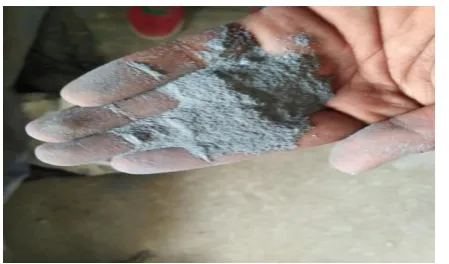
[image:2.595.324.549.96.228.2]MS can also be called as pyrogenic silica, fumed silica and silica fume. The shape of the substance cannot be sharply designated. Nature of this matter is polymorphic i.e. substance that occurs in diverse forms. It is also not a first product it is another secondary product. MS is assembled in operation of electric arc furnance in industries. People often cannot simplify silica fume with one fumed silica. The heterogeneity is its steps in making, action of making it practically workable in scenarios and fragments.
Fig. 1.2.1 extreme small size of MS
In the same way as FA a succeeding and wide range of academic works makes MS a serviceable product from a by- product.
The composition and texture makes MS very tiny in size. It has very less average size of grain particles. If we compare size of an average cement particle with an average MS particle size of the MS particle will be 100 times smaller than cement. According to verma ajay “These fumes is produced when quartz present in highly pure form is reduced with coal, coke or wooden chips during process of silicon metal production silica fume is obtained as byproduct”.
Due to its low price, availability as a secondary product and environmental advantages it is being utilized widely. Negative segregation negative bleeding in concrete are some other utilities with less permeability’s characteristics as tight bonding between the particles in the concrete do not allow anything to flow freely.
The source of micro silica used in the experiment is Elkem and is tested according to the Indian standard IS388.
Water
PH of water is 7.0 and is free from chemicals, impurities, different organic and inorganic matter, solids which could have bad effects on strength of concrete. From making of concrete to curing the samples same water is used. The temperature of water before mix was 17 degree Celsius.
[image:2.595.310.555.598.750.2]© 2017, IRJET | Impact Factor value: 5.181 | ISO 9001:2008 Certified Journal | Page 86
Sand
Sand used in the experiment is natural sand (Nsand). Source of the sand is kothputli (Rajasthan). It is conforming IS 383& zone acquired is Zone 2.
Aggregates
Aggregates used are 10mm and 20 mm in size from the source kothputli (Rajasthan). Aggregates are conforming to IS 383-1970.
Table 1.2.3 Properties of aggregates
AGGREGATES
PROPERTY 10 mm 20 mm Water
absorption 0.50(percentage) 0.41(percentage) Specific gravity 2.677 2.812
Admixtures
Admixtures are the distinct compounds used to assist the properties of concrete They are of various types and for various purposes Admixture is named as BASF masterglenium sky 8777 according to IS 9103-1999.
Water cement ratio
Water cement ratio for the experiment is 0.26 and is according to IS 456-2000.
PROPERT
Y Cement FA MS Sand Water
absorptio n
_ _ _ 1.20(percentage)
Specific
gravity 3.150 2.200 2.200 2.677
Tab. 1.2.4 properties of the materials
2. TESTS ON CONCRETE
Workability testWhen the workability test performed instability with rise and fall of values were recorded. For distinct segments of FA and MS instability in slump value were discovered. The tests performed were according to Indian standard IS 456:2000.
Compressive strength
Specimens needed for these tests are cubes. Integrate effects of FA and MS were performed for curing duration of 7 days, 14 days and 28 days. Standard size of cubes (150mm×150mm×150mm) are used in the experiment A total number of 54 cubes were made i.e. 3 cubes per proportion per curing duration of 7 , 14 and 28 days.
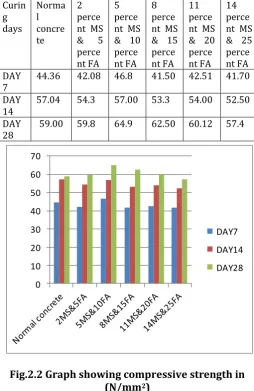
[image:3.595.306.561.156.548.2]Averages of these different values for different mixes are shown in table below.
Table 2.1 Results of compressive strength
Curin g days
Norma l concre te
2 perce nt MS & 5 perce nt FA
5 perce nt MS & 10 perce nt FA
8 perce nt MS & 15 perce nt FA
11 perce nt MS & 20 perce nt FA
14 perce nt MS & 25 perce nt FA DAY
7 44.36 42.08 46.8 41.50 42.51 41.70 DAY
14 57.04 54.3 57.00 53.3 54.00 52.50 DAY
28 59.00 59.8 64.9 62.50 60.12 57.4
0 10 20 30 40 50 60 70
DAY7
DAY14
[image:3.595.51.286.472.566.2]DAY28
Fig.2.2 Graph showing compressive strength in
[image:3.595.317.551.537.707.2](N/mm
2)
© 2017, IRJET | Impact Factor value: 5.181 | ISO 9001:2008 Certified Journal | Page 87
Fig.2.4 Cubes after compression testing
Flexural strength
Specimens needed for tests are prisms. Integrate effects of FA and MS were performed for curing duration of 28 days. A total number of 18 prisms were made for six proportions i.e. 3 prisms per proportion for 28 days curing duration. Prisms used are of size (100mm×100mm×500mm). The average of these different values of flexural strength were calculated and are shown below
Serial numb er
Micro silica (percent age)
Fly ash (percent age)
Numb er of prism s
Day s of curi ng
Result(N/ mm2)
1 0 0 3 28 9.87
2 2 5 3 28 10.11
3 5 10 3 28 8.16
4 8 15 3 28 11.66
5 11 20 3 28 8.20
6 14 25 3 28 7.36
Table.2.2 Results of flexural strength in (N/mm2)
Fig.2.5 Prism placed in testing appartus
Fig.2.6 Prism after testing
0 2 4 6 8 10 12 14
DAY 28
.Tab.2.7 Graph showing flexural strength (N/mm2)
3. CONCLUSIONS
The topmost value for compressive strength for M60 grade is 64.9N/mm2 marked at 5%MS & 10%FA and the Lowest value marked is 57.4N/mm2 at 14%MS & 25%FA.
Normal concrete for compressive strength marked 59 N/mm2 strength at 28 days.
The topmost value for flexural strength marked at 8%MS & 15%FA is 11.66N/mm2 and lowest value marked is 7.36N/mm2 at percentage of 14%MS & 25% FA.
Normal concrete for flexural strength marked 9.87N/mm2.
The evaluations prove that at some proportions combine effects of FA and MS can raise the strength of concrete. Hence cement scarcity can be minimized.
© 2017, IRJET | Impact Factor value: 5.181 | ISO 9001:2008 Certified Journal | Page 88
Recommendations
Other strength tests like split tensile and workability tests must be performed for M60 grade of concrete to know its considerable effects.
These strength properties must be done for curing period of 56 and 128 days for
Some more waste materials must be experimentally tested and must be replaced to cement for future references.
More trials are needed for better observations and for superior conclusions.
REFERENCES
1.Ml gambhir concrete technology “admixtures and additives” pg 79
2. Pib.nic.in
3. http://en.wikipedia.org 4. Civil-resources .blogspot.in
5. Verma ajay, chandak Rajeev,yadav R.K effect of microsilica on the strength of concrete with ordinary Portland cement (RJES) Research Journal of Engineering Sciences Vol1 (3),1-4, 2012.
6. Manoj kumar tiwari, Fly ash utilization a brief review in Indian context
7. Md. Ghazali, Characterstics of fly ash from thermal power plants and its mansgment along with settling pond design 8. Standard specifications of Indian code IS 456 (2000), Bureau of Indian Standardplain and Reinforced Concrete-Code of Practice, Fourth Revision.