Epigenome-wide association of PTSD from heterogeneous
cohorts with a common multi-site analysis pipeline
Andrew Ratanatharathorn
1|
Marco P. Boks
2|
Adam X. Maihofer
3|
Allison E. Aiello
4|
Ananda B. Amstadter
5|
Allison E. Ashley-Koch
6|
Dewleen G. Baker
3,7,8|
Jean C. Beckham
9,10,11|
Evelyn Bromet
12|
Michelle Dennis
9,11|
Melanie E. Garrett
6|
Elbert Geuze
2,13|
Guia Guffanti
14,15|
Michael A. Hauser
6|
Varun Kilaru
16|
Nathan A. Kimbrel
9,10,11|
Karestan C. Koenen
17,18,19|
Pei-Fen Kuan
20|
Mark W. Logue
21,22|
Benjamin J. Luft
23|
Mark W. Miller
22,24|
Colter Mitchell
25|
Nicole R. Nugent
26|
Kerry J. Ressler
14,15,27|
Bart P. F. Rutten
28|
Murray B. Stein
3,7,29|
Eric Vermetten
2,30,31,32|
Christiaan H. Vinkers
2|
Nagy A. Youssef
33|
VA Mid-Atlantic MIRECC Workgroup
9|
PGC PTSD Epigenetics Workgroup
|
Monica Uddin
34,35|
Caroline M. Nievergelt
3,7,8|
Alicia K. Smith
16,271Department of Epidemiology, Columbia University, New York, New York
2Brain Center Rudolf Magnus, University Medical Center Utrecht, Utrecht, Netherlands 3Department of Psychiatry, University of California San Diego, San Diego, California 4Department of Epidemiology, UNC Chapel Hill, Chapel Hill, North Carolina 5Department of Psychiatry, Virginia Commonwealth University, Richmond, Virginia 6Duke Molecular Physiology Institute, Durham, North Carolina
7Veterans Affairs San Diego Healthcare System, San Diego, California
8Veterans Affairs Center of Excellence for Stress and Mental Health, San Diego, California 9Mental Illness Research, Education, and Clinical Center, VA Mid-Atlantic, Durham, North Carolina 10Durham VA Medical Center, Durham, North Carolina
11Department of Psychiatry and Behavioral Sciences, Duke University Medical Center, Durham, North Carolina 12Epidemiology Research Group, State University of New York, New York
13Military Mental Healthcare-Research Centre, Ministry of Defence, Utrecht, Netherlands 14Neurobiology of Fear Laboratory, McLean Hospital, Belmont, Massachusetts
15Department of Epidemiology and Massachusetts General Hospital, Department of Psychiatry, Harvard T.H. Chan School of Public Health, Belmont, Massachusetts
16Department of Gynecology and Obstetrics, Emory University, Atlanta, Georgia
17Department of Epidemiology, Harvard T.H. Chan School of Public Health, Boston, Massachusetts
18Center for Human Genetic Research, and Department of Psychiatry, Psychiatric and Neurodevelopmental Genetics Unit, Massachusetts General Hospital, Boston, Massachusetts
23Department of Medicine, State University of New York, New York
24Department of Psychiatry, Boston University School of Medicine,, Boston, Massachusetts 25Institute for Social Research, University of Michigan, Ann Arbor, Michigan
26Department of Pediatric Research, Psychiatry and Human Behavior, Brown University, Providence, Rhode Island 27Department of Psychiatry and Behavioral Sciences, Emory University, Atlanta, Georgia
28Department of Psychiatry and Neuropsychology, School for Mental Health and Neuroscience, Maastricht University Medical Centre, Maastricht,, Limburg, Netherlands
29Department of Family Medicine and Public Health, University of California San Diego, San Diego, California 30Department of Psychiatry, Leiden University Medical Center, Utrecht, Netherlands
31Military Mental Healthcare, Ministry of Defence, Utrecht, Netherlands 32Arq Psychotrauma Expert Group, Diemen, Netherlands
33Department of Psychiatry and Human Behavior and Office of Academic Affairs, Medical College of Georgia at Augusta University, Augusta, Georgia 34Department of Psychology, University of Illinois Urbana-Champaign, Urbana, Illinois
35Carl R. Woese Institute for Genomic Biology, University of Illinois Urbana-Champaign, Urbana, Illinois
Correspondence
Alicia K. Smith, PhD, Department of Gynecology and Obstetrics, Emory University School of Medicine, 101 Woodruff Circle NE, Ste 4217, Atlanta 30322, GA.
Email: [email protected]
Funding information
U.S. Department of Veterans Affairs,
Grant numbers: 11S-RCS-009, 5I01CX000431, B9254-C, IK2CX000525; National Institute of Mental Health, Grant numbers: MH071537, MH096764, R01MH093500, R01MH108826, RC1MH088283, RO1MH079806; National Institute on Drug Abuse, Grant numbers: R01DA022720, R01DA022720-S1; Biomedical Laboratory Research and Development, VA Office of Research and Development,
Grant numbers: 1I01BX002150, I01BX002577; Centers for Disease Control and Prevention, Grant number: U01OH010416,
U01OH010718, and 200-2011-39410; Nederlandse Organisatie voor Wetenschappelijk Onderzoek, Grant number: 916.11.086
Compelling evidence suggests that epigenetic mechanisms such as DNA methylation
play a role in stress regulation and in the etiologic basis of stress related disorders
such as Post traumatic Stress Disorder (PTSD). Here we describe the purpose and
methods of an international consortium that was developed to study the role of
epigenetics in PTSD. Inspired by the approach used in the Psychiatric Genomics
Consortium, we brought together investigators representing seven cohorts with a
collective sample size of
N
= 1147 that included detailed information on trauma
exposure, PTSD symptoms, and genome-wide DNA methylation data. The objective
of this consortium is to increase the analytical sample size by pooling data and
combining expertise so that DNA methylation patterns associated with PTSD can be
identified. Several quality control and analytical pipelines were evaluated for their
control of genomic inflation and technical artifacts with a joint analysis procedure
established to derive comparable data over the cohorts for meta-analysis. We
propose methods to deal with ancestry population stratification and type I error
inflation and discuss the advantages and disadvantages of applying robust error
estimates. To evaluate our pipeline, we report results from an epigenome-wide
association study (EWAS) of age, which is a well-characterized phenotype with
known epigenetic associations. Overall, while EWAS are highly complex and subject
to similar challenges as genome-wide association studies (GWAS), we demonstrate
that an epigenetic meta-analysis with a relatively modest sample size can be
well-powered to identify epigenetic associations. Our pipeline can be used as a framework
for consortium efforts for EWAS.
K E Y W O R D S
EWAS, meta-analysis, stress, trauma
1
|I N T R O D U C T I O N
Traumatic events are reported by over 70% of individuals during their
lifetime (Benjet et al., 2016). They have been associated with a number
of deleterious outcomes, including posttraumatic stress disorder
(PTSD), a psychiatric disorder characterized by cognitive intrusions,
avoidance, negative alterations in thoughts and mood, and alterations
in physiological arousal and reactivity (American Psychiatric
Associa-tion, 2000). PTSD can be severe and disabling and is often associated
with a range of comorbid psychiatric conditions such as depression and
substance use disorders (Brady, Killeen, Brewerton, & Lucerini, 2000;
with a 2.8-fold increase in suicidal thoughts and behaviors (Sareen,
Houlahan, Cox, & Asmundson, 2005) as well as with a number of
chronic medical conditions (Boscarino, 2008; Coughlin, 2011; David,
Woodward, Esquenazi, & Mellman, 2004; Heppner et al., 2009;
Jakovljevic et al., 2008; Kubzansky, Koenen, Jones, & Eaton, 2009;
Kubzansky, Koenen, Vokonas, & Sparrow, 2007; Luft et al., 2012).
While the risk of developing PTSD depends in part on the nature of the
trauma (Kessler, 2000), only a minority of those exposed to trauma
develop PTSD. As a result, despite the high prevalence of lifetime
trauma, the overall lifetime prevalence of PTSD in the United States is
6.8%, (Breslau et al., 1998; Kessler et al., 2005; Resnick, Kilpatrick,
Dansky, Saunders, & Best, 1993), which suggests there are individual
differences in resilience that, if better understood, might inform the
development of new approaches to prevention and treatment.
Genetic epidemiological studies suggest that both genetic and
environmental factors contribute to PTSD risk. Twin studies estimate
the heritability of PTSD to be between 30% and 70%, (Sartor et al.,
2012; Sartor et al., 2011; Stein, Jang, Taylor, Vernon, & Livesley, 2002;
True et al., 1993; Xian et al., 2000) with the remaining variance being
attributed to environmental factors. Genetic research, based on both
candidate gene and genome-wide association studies (GWAS), has
provided support for the role of genetics in the development and
severity of PTSD and has begun to identify variants that account for
some of the genetic influence on PTSD. The genetic loci identified in
the extant GWAS have been implicated in a variety of processes,
including neuroprotection, actin polymerization, neuronal function,
and immune function (Almli et al., 2014; Guffanti et al., 2013; Logue
et al., 2013; Xie et al., 2013). Although promising, no robust genetic
variants associated with PTSD have been identified and much work
remains to be done to understand the biological basis of PTSD risk
(Logue et al., 2015).
A growing body of work has explored the role of environmental
influences on an individual’s response to trauma. Given the
depen-dence of PTSD development on exposure to environmental (i.e.,
traumatic) events, clarifying the ways in which environmental
influences might affect biological function are critical to understanding
the etiology of PTSD. In this regard, epigenetic mechanisms, which can
mediate environmental influences on gene function, are particularly
relevant. Epigenetic modifications, such as DNA methylation at
cytosine-guanine dinucleotides (CpG sites), induce changes in gene
expression in part through structural alterations of DNA that are
maintained through each round of cell division; they respond to
changes in the environment, are potentially reversible, and can be
targeted for disease therapies (Feinberg, 2007). DNA methylation
regulates gene expression by influencing the recruitment and binding
of regulatory proteins to DNA. Typically, higher methylation at gene
promoter regions correlates with decreased expression of that gene,
while intragenic methylation can regulate alternative promoters and
enhancers (Bonasio, Tu, & Reinberg, 2010; Maunakea et al., 2010).
Animal studies have demonstrated that epigenetic changes—
particularly alterations in DNA methylation in response to nurturing—
are related to altered responses to stress (Jirtle & Skinner, 2007;
Weaver et al., 2004). Similar alterations have been reported in the
human literature, in both central and peripheral tissues (McGowan
et al., 2009; Tyrka, Price, Marsit, Walters, & Carpenter, 2012).
Considering the influence of traumatic stress on DNA methylation
seen in some studies (Vinkers et al., 2015), epigenetic-based
investigations may extend genetic research findings. For example,
research reporting an association of PTSD with a genetic variant in the
PAC1 receptor (ADCYAP1R1; rs2267735) went beyond this finding to
observe that PTSD severity was also correlated with methylation levels
of the gene (Ressler et al., 2011). Other work has suggested an
interactive effect between trauma burden and DNA methylation in the
serotonin transporter locus (SLC6A4) on PTSD risk, independent of the
widely studied length polymorphism at this same locus (Koenen et al.,
2011) and a potentially interacting effect of genetic and epigenetic
variation at the dopamine receptor (SLC6A3) on PTSD risk (Chang et al.,
2012). Indeed, stress exposure itself has been shown to alter
epigenetic patterns in both animal and human studies (Moser et al.,
2015; Roth, Lubin, Funk, & Sweatt, 2009; Sipahi et al., 2014). In
addition to candidate gene methylation studies, a small number of
studies have examined genome-wide DNA methylation patterns in
PTSD (Mehta et al., 2013; Smith et al., 2011; Uddin et al., 2010). In
these first genome-wide studies of DNA methylation, immune
dysregulation figured prominently among the biological networks
associated with PTSD and, at a CpG site level, DNA methylation levels
in several CpGs showed suggestive evidence of replication between
these studies (Mehta et al., 2013; Smith et al., 2011; Uddin et al., 2010).
Although the emerging literature on epigenetic influences on
PTSD is promising, the majority of research to date has been
conducted with modest sample sizes, with inherent limited statistical
power. Furthermore, studies of DNA methylation have been hampered
by technical issues including batch effects (Harper, Peters, & Gamble,
2013) and blood cell composition (Houseman et al., 2012). Experience
from large-scale genetic studies, such as the Psychiatric Genomics
Consortium (PGC), underscores how large collaborative endeavors can
provide the adequate sample sizes and the statistical power necessary
to produce significant and replicable results (Logue et al., 2015). Based
on this experience, the PGC-PTSD formed the epigenetics working
group to organize an expansive network of investigators and their
collection of samples with genome-wide DNA methylation data
available for joint analyses.
Although there are many advantages to this collaborative
approach, there are also challenges. First, methods for assessment
of trauma exposure and PTSD symptoms/diagnosis differ among
cohorts, requiring harmonization of the phenotypic data. Participating
cohorts have assessed PTSD using clinical interviews and self-report
measures with possible case diagnoses of lifetime PTSD, current PTSD,
or“probable”PTSD available in across different studies. The larger
PGC-PTSD has made substantial progress harmonizing phenotypes
across studies and a similar approach will be adopted by the PGC-PTSD
epigenetics group in its analyses. A second challenge of consortia is to
address complications in the data sharing that is a prerequisite to
increasing the power and reproducibility of the study. The trend in
psychiatric genetics has been to establish large-scale consortia for the
the data from any one group. Almost universally used in current
large-scale genomic consortia is meta-analysis, through which the data from
individual sites are analyzed separately and combined based on
summary statistics. In many cases, meta-analysis of individual-level
results yields results comparable to those of a “mega-analysis” of
pooled data from different studies, (Lin & Zeng, 2010; Mathew &
Nordstrom, 1999; Olkin & Sampson, 1998). However, there have been
important distinctions in the way the meta-analysis strategy has been
implemented across consortia, including variations in the degree to
which the cleaning and analysis of the individual-level data occurs (i.e.,
centralized vs. distributed). The analysis of individual data in a
centralized manner allows a high degree of control over the quality
control (QC) process and an ability to quickly perform follow-up
analyses, but poses difficulties of requiring a larger degree of
computational resources and storage at the consortium level and
permission from all groups to share data.
The PGC-PTSD epigenetics group uses many of the same
protocols and tools developed by the PGC (Logue et al., 2015), with
the difference that not all data are centrally stored and managed since
some constituent samples that originate from US military, US Veteran
(VA), or foreign countries are subject to additional regulatory
oversight, which do not allow the sharing of individual-level genomic
data. To enable participation for these studies, the PGC-PTSD
epigenetics group follows a strategy similar to that of the ENIGMA
consortium (Thompson et al., 2014), in which a set of protocols and
scripts are created, in this case to implement standardized QC and
analysis pipelines for the Illumina HumanMethylation450 BeadChip.
These scripts are performed at each participating site and analysis
results are submitted to the consortium where they are assessed,
collated, and meta-analyzed. In this study, we compare the
perfor-mance of two QC and two analytical pipelines to control for genomic
inflation, present the final PGC-PTSD epigenetics pipeline, and assess
the performance of the PGC-PTSD epigenetics pipeline in a
meta-analysis of age.
2
|M A T E R I A L S A N D M E T H O D S
2.1
|The PGC EWAS cohorts
The participating cohorts, presented in Table 1, consisted of four
military cohorts (MRS, PRISMO, VA-M, and VA-NCPTSD) and three
civilian cohorts (DNHS, GTP, and WTC) that all measured DNA
methylation (DNAm) with the Illumina HumanMethylation450k
BeadChip. Descriptions of the cohorts are in the supplemental
information. Each cohort consists of PTSD cases as well as
trauma-exposed controls. A total of 1,147 subjects (∼50% cases) were selected
for inclusion in the EWAS and were subjected to the quality control
and analytical pipelines.
2.2
|Posttraumatic stress disorder assessment
Similar to other analyses conducted by the PGC-PTSD, our analysis
required consistently defining and harmonizing PTSD diagnoses across
cohorts that used different instruments and methods of diagnosis
(Logue et al., 2015). We used a diagnosis of current PTSD based on the
diagnostic criteria defined by each cohort’s principal investigator (see
supplemental information). Individuals with lifetime diagnoses of PTSD
but not current PTSD were excluded from analysis.
2.3
|Quality control procedures
We tested two quality control protocols: the eventually proposed PGC
pipeline and a Functional Normalization (Funnorm) pipeline. In the PGC
pipeline (Supplemental Figure S1), study investigators first conducted a
visual inspection of control-probes designed to report on each step of
the Infinium protocol such as bisulfite conversion and hybridization
efficiency. In addition, samples with probe detection call rates <90%
and those with an average intensity value of either <50% of the
experiment-wide sample mean or <2,000 arbitrary units (AU) were
excluded. Probes with detectionp-values > 0.001 or those based on
less than three beads were set to missing as were probes that
cross-hybridized between autosomes and sex chromosomes (Teschendorff
et al., 2013). CpG sites with missing data for >10% of samples within
cohorts were excluded from analysis. Probes containing single
nucleotide polymorphisms (SNPs; based on 1000 Genomes) within
10 base pairs of the target CpG were maintained in each dataset, but
flagged and tracked throughout the analysis pipeline. This decision was
based on the growing recognition that sequence variants can influence
DNA methylation patterns throughout the genome (Smith et al., 2014).
Even if an associated CpG site is influenced by genetics, such as is the
case forSKA2(Boks et al., 2016; Rice et al., 2008), maintaining such
probes is informative to our overall goal of identifying genes important
for PTSD (Gibbs et al., 2010; Guintivano et al., 2014; Heyn et al., 2013).
Normalization of probe distribution and background differences
between Type I and Type II probes was conducted using Beta Mixture
Quantile Normalization (BMIQ) (Teschendorff et al., 2013) after
background correction. We chose BMIQ after comparing distributions
of BMIQ normalized Type II probes in the Detroit Neighborhood
Health Study (DNHS) with the raw distributions and distributions after
applying the DASEN procedure in the R package watermelon
(Supplemental Figure S2) (Pidsley et al., 2013). Following
normaliza-tion, batch effect removal as implemented in the ComBat procedure of
the SVA package in bioconductor was used to account for sources of
technical variations including batch and positional effects, which can
cause spurious associations (Johnson, Li, & Rabinovic, 2007). Individual
cohorts also controlled for additional covariates that may not have
been balanced within chips but that were of interest in downstream
analyses, such as case designation and sex (if relevant). Following
completion of this QC pipeline, each cohort confirmed that there were
no remaining sources of technical variation by examining the
association of PCs of the methylation levels with chip and position
using multivariate linear regression, bar plots, and heat maps.
The second QC protocol used the Functional Normalization
procedure implemented in the R package minfi, which has been
reported to remove technical variation more effectively than ComBat
Briefly, raw IDATs were loaded into R and Functional Normalization
applied using the default of two principal components (PCs) as
covariates. The resulting normalized beta matrix was then extracted
and used for analysis.
2.4
|Cellular heterogeneity
DNA methylation is known to vary by cell type which impacts the
measured whole blood methylation as a result of the amalgamation of
the cell type proportions in each individual’s sample. To control for
possible confounding by individuals’underlying cell type
heterogene-ity, proportions of CD8, CD4, NK, B cells, monocytes, and granulocytes
were estimated using each individual’s DNA methylation data, publicly
available reference data (GSE36069), and the method described by
Jaffe and Irizarry (2014) (Reinius et al., 2012), based on the Houseman
algorithm (Houseman et al., 2012). CD8, CD4, NK, B cell, and
monocyte cell proportions were included as covariates in our statistical
analyses.
2.5
|Ancestry
Accounting for population stratification has become routine practice
for genetic association studies, and most recently has also been shown
to be of importance in DNA methylation studies (Barfield et al., 2014;
Nielsen et al., 2010). GWAS methods such as principal components
(PCs) derived from SNPs can be incorporated into EWAS, but were not
always available for all cohorts, or all samples within a cohort. An
alternative based on methylation probes that proxy nearby SNPs was
developed by Barfield et al. (2014) for use in European and African
American subjects. Here we evaluated and extended this approach to
other ancestral populations as part of the PGC-PTSD EWAS pipeline.
A subset of ancestry-diverse subjects (N= 128, including
Euro-pean Americans, African Americans, Latinos/Native Americans, and “others”including East Asians) from the Marine Resiliency study (MRS) were selected based on available genome-wide genotype data
(Illumina HumanOmniExpressExome array) and matching Illumina
450K methylation data (Nievergelt et al., 2015). Ancestry using GWAS
data was inferred as described in Nievergelt et al. (2013). In brief,
genotypes of 1,783 ancestry-informative markers (AIMs) were used to
determine a subject’s ancestry at the continental level using
STRUCTUREv2.3.2.1, including prior population information of the
HGDP reference set (Falush, Stephens, & Pritchard, 2003; Li et al.,
2008). Based on these ancestry estimates, subjects were placed into
one of four groups: European Americans, African Americans, Latinos/
Native Americans, and“Others.”PCs were derived using Eigenstrat
(Price et al., 2006).
Ancestry estimates using methylation data were derived using
subsets of methylation probes in close proximity to SNPs identified by
Barfield et al. (2014). Probe sets with 0 bp distance (N= 7,703 CpG
probes), within 1 bp distance (17,995 CpG probes), and within 10 bp
distance (N= 50,319 CpG probes) were compared. GWAS-derived PCs
were visually compared to methylation-probe derived PCs and
genotypes of SNPs in proximity of CpG sites were compared with
respective CpG methylation values using Pearson correlation (r).
2.6
|Statistical analysis
Within each cohort, logit transformedßvalues (M-values) (Du et al.,
2010) were modeled by linear regression as a function of PTSD,
adjusting for sex, age, the estimated cell proportions, and ancestry
using PCs. For cohorts with available GWAS data, the first three PCs
from the GWAS were used. For cohorts without GWAS data, the
method described by Barfield et al. was used to generate ancestry PCs
directly from the EWAS data. Consistent with the original paper and
our analysis (full results below), the second through fourth PCs were
used as covariates in the model to control for ancestry. Note that while
ancestry is a primary source for variation in GWAS, other potentially
confounding factors such as cellular heterogeneity are a primary
source for variation in EWAS data. Comparison with SNP data showed
that ancestry inference is strongest when excluding EWAS-derived
PC1. QQ-plots of the PTSDp-values were examined for evidence of
genomic inflation due to unaccounted technical variation or other
TABLE 1 PGC-PTSD EWAS Cohorts
Civilian Military
Total DNHS GTP WTC MRS PRISMO VA-M VA-NCP
N 1147 100 270 180 126 62 176 233
Mean age (SD) 38.0 (–) 53.6 (14.0) 41.7 (12.4) 49.7 (8.3) 22.2 (3.0) 27.1 (9.2) 34.9 (9.9) 32.0 (8.4)
Current PTSD (%) 50 40 39 47 50 50 49 69
Male (%) 73 38 30 100 100 100 78 90
Race (%)
White 56 15 5 76 57 100 100 74
Hispanic 6 0 0 0 25 0 0 14
Black 33 85 94 4 8 0 0 9
Asian 1 0 0 0 3 0 0 2
confounders. In addition, the genomic inflation factors (λ) were
calculated for each study. Two adjustments were considered to
improve the precision of the estimated variances. First, moderated
t-statistics were calculated using the empirical Bayes method
implemented in the R package limma (Smyth, 2005). Second, HC3
robust standard errors, which have been shown to be the most
effective in samples smaller than 250, were calculated using the R
package sandwich (Long & Ervin, 2000; Zeileis, 2004).
Cohort-level analysis results were combined using the inverse normal
method (Marot, Foulley, Mayer, & Jaffrézic, 2009). Briefly, one-sided
p-values for each CpG site in each study were calculated from the
t-statistics. Nextz-scores were calculated from the one-sidedp-values and
weighted by the number of subjects in each study relative to the total in the
meta-analysis. Two-sidedp-values of thez-score were then calculated and
genomic inflation examined. Finally,p-values were adjusted for
multiple-testing using the False Discovery Rate (FDR) procedure at the type I error
rate level of 5% (Benjamini & Hochberg, 1995).
2.7
|Sensitivity analysis
Numerous robust associations between age and DNAm have been reported
(Bocklandt et al., 2011; Hannum et al., 2013; Horvath, 2013; Horvath et al.,
2012; Weidner et al., 2014). Because we expect that age will be associated
similarly with DNAm in each cohort, we can leverage this highly
reproducible relationship to evaluate the pipeline’s performance. In each
cohort, we modeled methylation as a function of age along with covariates
for ancestry and gender (if applicable) and meta-analyzed the results as
outlined above. In addition, we measured concordance between studies by
estimating the correlation between thet-statistics of the age variable.
2.8
|Power
Power for EWAS is more favorable compared to GWAS as a result of the
continuous nature of the DNA methylation measures, but instead suffers
from poor distribution including low variances and heteroscedasticity (Du
et al., 2010). The power to detect a differentially methylated CpG site
depends on the percent difference in methylation between cases and
controls, the pooled variation in methylation (σ) across CpG sites, and the
number of cases and controls (Liu & Hwang, 2007). We conducted
simulations to test the smallest mean difference between PTSD cases and
controls we could detect based on our projected sample size and a σ= 0.43, which represents the highest variation reported in one of our cohorts, and thus a very conservative estimate (Orr & Liu, 2009).
3
|R E S U L T S
3.1
|Participating cohorts
Sample characteristics for studies that have contributed data to this
first PGC-PTSD EWAS study are listed in Table 1 (N= 1,147). Three of
the seven studies are composed of civilians, while the remaining
studies include active duty and veteran military populations. The
majority of participants, especially from the military cohorts, were male
(73%) and of European American (EA) descent (56%). All participants
were exposed to trauma and half of participants suffered from current
PTSD (50%). Data collection occurred across the United States (e.g.,
Atlanta, Detroit, San Diego, Durham, Boston, and New York) and
Europe. While a few studies used clinical interviews, the majority of
studies used self-report ratings of PTSD symptoms that relied on
established cutoffs to assign caseness. A detailed description of
participating cohorts is provided in the supplementary information.
3.2
|Power
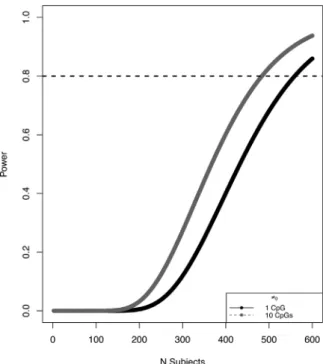
The power analysis shows that with our sample of 573 cases and 574
controls (N= 1147), we are sufficiently powered to find at least one
CpG site with a mean methylation difference of 0.08 between cases
and controls (Figure 1).
3.3
|Ancestry
We investigated the utility of DNA methylation-based ancestry
estimates based on CpGs with nearby genetic variants in cis as
proposed by Barfield et al. (2014). A comparison of CpG probes with
SNPs within 1 bp distance (N= 17,995) and CpG probes with SNPs
within 10 bp distance (N= 50,319) showed a higher
genotype-methylation correlation for the 1 bp probes (r= 0.29,p= 1.8 × 10⁻¹⁵)
than the 10 bp probes (r= 0.06,p= 0.0015). Figure 2 shows a SNP
derived PC plot based on available GWAS data including PCs 1 and 2
(panel A), PCs 2 and 3 from the methylation-based CpGs with a SNP
1 bp from the probes (panel B), and the PCs from CpG probes within
FIGURE 1 Sample size vs. power to to detect differentially
10 bp of a SNP (panel C). Supplemental Figure S5 shows PCs 2, 3, 4,
and PCs 2, 3, and 6 for, respectively, CpGs within 1 bp and 10 bp of a
SNP. These results along with the genotype-methylation correlations
show that the use of DNA methylation ancestry estimates (PCs 2–4)
using probes within 1 bp of a SNP provide reliable results and are
suitable as ancestry covariates in our analyses.
3.4
|Quality control results
The number of samples and probes, not including cross-reactive probes)
removed in our proposed PGC-EWAS pipeline ranged from 677 to
10,218 across studies (Supplemental Table S3). Figure 3 presents the
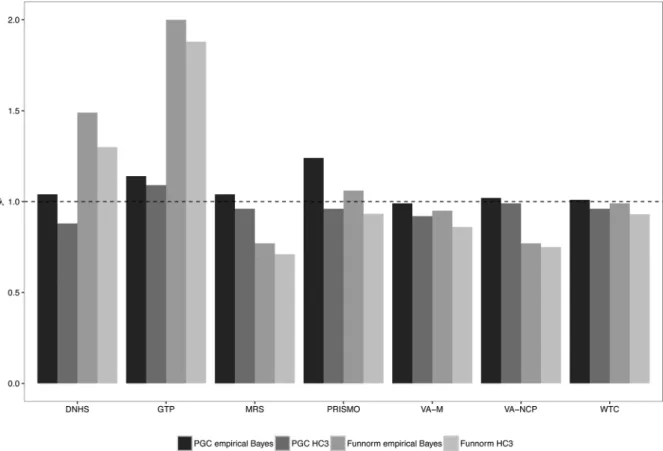
genomic inflation factors from the analysis of PTSD for each individual
study using two different quality control methods as well as two
different analysis pipelines: (1) our proposed PGC-EWAS pipeline,
described in detail in the Methods section above, as well as (2) the
Functional Normalization (Funnorm) QC pipeline. Resulting data from
each QC pipeline were then subjected to linear regression analysis,
performed with empirical Bayes and HC3 standard errors, respectively.
In studies using the Funnorm pipeline there were large variations in the
genomic inflation factor with two studies showing high inflation (DNHS,
GTP) and two studies showing substantial deflation (MRS, VA-NCP)
regardless of whether empirical Bayes or HC3 standard errors were
used. Using the PGC-EWAS pipeline and HC3 standard errors, six of the
seven studies showed genomic deflation with (λ< 1.0), while only one
study was deflated when using empirical Bayes standard errors
(Supplemental Table S1). These results indicate that the PTSD-PGC
EWAS pipeline, combined with empirical Bayes standard errors, is the
preferred method for cohorts participating in our meta-analysis.
3.5
|Sensitivity analysis: Age meta-analysis results
Results for the age analysis using our pipeline and no standard error
adjustment are presented in Table 2. All studies reported numerous
FIGURE 2 Ancestry inference using SNPs versus methylation probes in 128 participants of the Marine Resiliency Study (MRS). (a)
FDR-significant CpG sites but substantially more significant results
were reported for the combined meta-analysis. MRS and PRISMO
reported the fewest significant sites. However the age range for
participants in these studies was narrower as both studies included
active military personnel. The correlations of thet-statistics ranged
from 0.171 to 0.692 when all sites were analyzed and from 0.441 to
0.886 among the FDR significant sites (Supplemental Figure S3). The
strong correlations of the most significant sites indicate that each
cohort retained the biological signal of age after QC. Of the 494 CpG
sites reported to have been associated with age, 326 were significant
after FDR-correction (Supplemental Table S2). In addition, a forest plot
of the most significant CpG site representative of the FDR significant
sites, shows a consistent direction of effect in each study
(Supplemental Figure S4).
4
|D I S C U S S I O N
PTSD is unique among psychiatric disorders in that its occurrence
requires exposure to a significant traumatic event. With an
environ-mental exposure embedded into the etiology of the disorder, the PTSD
diagnosis affords an unusual opportunity to identify individual
differences in the biological response to trauma to increase risk for,
or resilience to, the disorder. Here we have introduced an international
FIGURE 3 PTSD genomic inflation factors (λ) by quality control pipeline (PGC vs. Funnorm) and standard error adjustment method
(empirical Bayes vs. HC3)
TABLE 2 Age associations using the PGC-PTSD epigenetics QC and analysis pipeline
Sites with Sites with Sites with Sites with
Study Sites (FDR < 0.05) (p< 5 × 10⁻⁵) (p< 5 × 10⁻⁶) (p< 5 × 10⁻⁷)
DNHS 455,079 4,766 1,744 678 299
GTP 453,351 59,100 21,562 14,299 9,586
MRS 455,601 210 311 99 34
PRISMO 446,688 246 316 121 41
VA-M 455,641 42,474 12,913 7,213 4,159
VA-NCPTSD 453,747 35,217 10,522 6,331 3,991
WTC 455,340 14,239 5,013 2,730 1,525
collaboration that has been established to identify epigenetic
associations—specifically, DNA methylation—related to risk for, or
resilience to, PTSD. We presented the development of a consistent
pipeline for processing and quality-control of epigenome-wide
association data comparing two quality control approaches and
statistical pipelines. In our analysis of PTSD, we found that our
proposed PGC-EWAS pipeline controlled for genomic inflation and
deflation more consistently than Functional Normalization, regardless
of the standard error correction used. In light of these findings, we
encourage consortia with epigenome-wide methylation data to
implement our quality control pipeline including checks for genomic
inflation and strengthened associations with age before
meta-analyzing across studies.
Through these collaborative efforts to analyze existing DNA
methylation data from blood obtained from both military and civilian
cohorts, we are poised to collectively address one of the main
challenges of psychiatric genomics, namely the need for large,
harmonized samples to adequately power genome-scale analyses.
The current collaborative dataset allows detection of methylation
differences around seven percent, larger than most reported
methylation differences, (Vinkers et al., 2015). Additional EWAS
datasets that are forthcoming will likely prove essential to detecting
PTSD-associated DNA methylation differences in our planned
meta-analyses. Moving forward, we anticipate that our collaborative efforts
will grow to include additional cohorts from around the world; indeed,
in the last year alone, several new studies have expressed interest in
participating in future EWAS analyses as their data become available.
In addition to the DNA methylation analysis the close allegiance with
the PGC-PTSD group has laid the foundation for integrating data from
GWAS, EWAS, and gene expression/transcriptome analyses. In
combination with other biological measures and coordinated
neuro-imaging efforts (Logue et al., 2015) that may become accessible
through this collaboration, these system-wide integrations will
facilitate a more complete understanding of the molecular architecture
and biological underpinnings of PTSD.
The harmonization of some study characteristics paired with the
demographic and clinical diversity of the samples, including
the differences between military and civilian trauma, allows us the
opportunity to identify DNA methylation patterns predictive for
specific groups of individuals and types of trauma. This will not only
provide insight into the heterogeneity of PTSD, but may also help
explain mechanisms for the variation in conditional effects of different
types of trauma on PTSD (Wisco et al., 2014). Additionally, it will also
provide a framework from which DNA methylation may be informative
for early risk prediction and treatment stratification.
Looking ahead, we are optimistic that our PTSD EWAS
collaboration will identify blood-based DNA methylation signatures
that associate reliably with PTSD. Identification of robust peripheral
biomarkers is an important first step and has potential for early
detection and prevention. The ultimate goal is to provide new insights
into the etiology of PTSD. To truly understand the mechanistic basis of
PTSD, it will be critical to compare our blood-derived epigenetic
biomarkers with those from other tissues, in particular brain tissue. As
a first pass, DNA methylation-based biomarkers that associate with
PTSD at particular CpG sites in blood can, at this time, be compared to
CpG site derived from brain tissues, thanks to the Epigenomic
Roadmap datasets (Bernstein et al., 2010; Kundaje et al., 2015).
However, these comparisons will be limited to a comparison of DNA
methylation levels in brain and blood in general, as the current data are
not representative of PTSD. Over time, however, the development of
PTSD brain biobanks of brain and other tissue types including blood
cells, will help us to pinpoint whether blood-derived, DNA methylation
biomarkers of PTSD reflect similar alterations in brain tissue, as recent
work suggests may be possible for certain pathways (Daskalakis,
Cohen, Cai, Buxbaum, & Yehuda, 2014). Collectively, these
cross-tissue efforts will provide insight into the biological pathways
underlying PTSD vulnerability and will ultimately facilitate new
treatment and modes of prevention.
A C K N O W L E D G M E N T S
This work was supported by the U.S. Army Medical Research and
Materiel Command and the National Institute of Mental Health (NIMH;
R01MH108826) as well as the Biomedical and Laboratory Research and
Development (#I01BX002577). We appreciate the technical support of
all of the staff, volunteers and participants from the Grady Trauma
Project, supported by the National Institutes of Mental Health
(MH096764 and MH071537). DNHS, which is grateful to all of the
participants and staff for their contributions, was funded by NIH Awards
R01DA022720, R01DA022720-S1, and RC1MH088283. The Marine
Corps, Navy Bureau of Medicine and Surgery (BUMED) and VA Health
Research and Development (HSR&D) provided funding for MRS data
collection and analysis and NIH R01MH093500 funded the GWAS
assays and analysis. Acknowledged are Victoria B. Risbrough Ph.D (VA
San Diego Healthcare System & UCSD), Mark A. Geyer (UCSD), Daniel T.
O’Connor (UCSD), all MRS investigators, and all MRS investigators, as
well as the MRS administrative core and data collection staff listed in the
Methods article (Baker et al. Prev Chronic Dis. 2012;9(10):E97). The
authors also thank the Marine and Navy Corpsmen volunteers for
military service and participation in MRS. Data collection of PRISMO
was funded by the Dutch Ministry of Defence, and DNA methylation
analyses were funded by the VENI Award fellowship from the
Netherlands Organisation for Scientific Research (NWO, grant number
916.11.086). The VA Boston-National Center for PTSD Study research
was supported in part by National Institute of Mental Health Award
RO1MH079806, Department of Veterans Affairs, Clinical Science
Research & Development Program Award 5I01CX000431-02,
Depart-ment of Veterans Affairs, Biomedical Laboratory Research &
Develop-ment Program Award 1I01BX002150-01, the Translational Research
Center for TBI and Stress Disorders (TRACTS), a VA Rehabilitation
Research and Development Traumatic Brain Injury Center of Excellence
(B9254-C), and the Cooperative Studies Program, Department of
Veterans Affairs. This research is the result of work supported with
resources and the use of facilities at the Pharmacogenomics Analysis
Laboratory, Research and Development Service, Central Arkansas
supported by a Career Development Award to E. J. Wolf from the
Department of Veterans Affairs, Clinical Sciences Research, and
Development Program. Dr. Kimbrel was supported by a Career
Development Award (#IK2CX000525) from the Clinical Science
Research and Development (CSR&D). Dr. Beckham was supported by
a Research Career Scientist Award (#11S-RCS-009) from the CSR&D
Service of VA ORD. This research was also supported, in part, by a Merit
Award (#I01BX002577) from the Biomedical Laboratory Research and
Development (BLR&D) Service of VA ORD. The VA Mid-Atlantic Mental
Illness Research, Education, and Clinical Center Workgroup includes
John A. Fairbank, Mira Brancu, Patrick S. Calhoun, Eric A. Dedert, Eric B.
Elbogen, Kimberly T. Green, Robin A. Hurley, Angela C. Kirby, Jason D.
Kilts, Christine E. Marx, Gregory McCarthy, Scott D. McDonald, Marinell
Miller-Mumford, Scott D. Moore, Rajendra A. Morey, Jennifer C. Naylor,
Treven C. Pickett, Jared Rowland, Jennifer J. Runnals, Cindy Swinkels,
Steven T. Szabo, Katherine H. Taber, Larry A. Tupler, Elizabeth E. Van
Voorhees, H. Ryan Wagner, Richard D. Weiner, and Ruth Yoash-Gantz.
Data collection from the World Trade Center (WTC) cohort was
supported by CDC awards U01OH010416, U01OH010718, and
200-2011-39410. The views expressed in this article are those of the
authors and do not necessarily reflect the position or policy of the VA,
NIH, or the United States government.
C ON F LI C T S OF I N T ER ES T
Dr. Youssef’s disclosures include Speaker CME honoraria from
the Georgia Department of Behavioral Health and Developmental
Disabilities (DHBDD). Dr. Youssef received research support
from the Department of Veteran Affairs and The Augusta
Biomedical Research Corporation. Dr. Stein has in the past
3 years received payments for editorial work from UpToDate,
Biological Psychiatry, and Depression and Anxiety. He has also in
the past 3 years been paid as a consultant for Actelion
Pharmaceuticals, Janssen, Pfizer, Resilience Therapeutics, and
Tonix Pharmaceuticals. No other author declares any conflict of
interest.
R E F E R E N C E S
Almli, L. M., Srivastava, A., Fani, N., Kerley, K., Mercer, K. B., Feng, H.,. . . Ressler, K. J. (2014). Follow-up and extension of a prior genome-wide association study of posttraumatic stress disorder: Gene x environ-ment associations and structural magnetic resonance imaging in a highly traumatized African-American civilian population. Biological Psychiatry,76(4), e3.
Aryee, M. J., Jaffe, A. E., Corrada-Bravo, H., Ladd-Acosta, C., Feinberg, A. P., Hansen, K. D., & Irizarry, R. A. (2014). Minfi: A flexible and comprehensive bioconductor package for the analysis of infinium DNA methylation microarrays.Bioinformatics,30(10), 1363–1369. American Psychiatric Association. (2000). DSM-IV-TR: Diagnostic and
statistical manual of mental disorders, text revision. Washington, DC: American Psychiatric Association 75.
Barfield, R. T., Almli, L. M., Kilaru, V., Smith, A. K., Mercer, K. B., Duncan, R.,. . .Conneely, K. N. (2014). Accounting for population stratifica-tion in DNA methylastratifica-tion studies. Genetic Epidemiology, 38(3), 231–241.
Benjamini, Y., Hochberg, Y. (1995). Controlling the false discovery rate: A practical and powerful approach to multiple testing.Journal of the Royal Statistical Society Series B (Methodological),57(1), 289–300.
Benjet, C., Bromet, E., Karam, E. G., Kessler, R. C., McLaughlin, K. A., Ruscio, A. M., . . . Koenen, K. C. (2016). The epidemiology of traumatic event exposure worldwide: Results from the World Mental Health Survey Consortium.Psychological Medicine,46(2), 327–343.
Bernstein, B. E., Stamatoyannopoulos, J. A., Costello, J. F., Ren, B., Milosavljevic, A., Meissner, A.,. . . Thomson, J. A. (2010). The NIH roadmap epigenomics mapping consortium. Nature Biotechnology, 28(10), 1045–1048.
Bocklandt S., Lin W., Sehl M. E., Sánchez F. J., Sinsheimer J. S., Horvath S., & Vilain E. (2011). Epigenetic predictor of age.
Boks, M. P., Rutten, B. P., Geuze, E., Houtepen, L. C., Vermetten, E., Kaminsky, Z., & Vinkers, C. H. (2016). SKA2 methylation is involved in cortisol stress reactivity and predicts the development of post-traumatic stress disorder (PTSD) after military deployment. Neuropsychopharmacology,41(5), 1350–1356.
Bonasio, R., Tu, S., & Reinberg, D. (2010). Molecular signals of epigenetic states.Science,330(6004), 612–616.
Boscarino, J. A. (2008). A prospective study of PTSD and early-age heart disease mortality among Vietnam veterans: Implications for surveillance and prevention.Psychosomatic Medicine,70(6), 668–676.
Brady, K. T., Killeen, T. K., Brewerton, T., & Lucerini, S. (2000). Comorbidity of psychiatric disorders and posttraumatic stress disorder.Journal of Clinical Psychiatry,61(Suppl7), 22–32.
Breslau, N., Kessler, R. C., Chilcoat, H. D., Schultz, L. R., Davis, G. C., & Andreski, P. (1998). Trauma and posttraumatic stress disorder in the community: The 1996 Detroit Area Survey of Trauma. Archives of General Psychiatry,55(7), 626–632.
Chang, S.-C., Koenen, K. C., Galea, S., Aiello, A. E., Soliven, R., Wildman, D. E., & Uddin, M. (2012). Molecular variation at the SLC6A3 locus predicts lifetime risk of PTSD in the Detroit Neighborhood Health Study.PLoS ONE,7(6), e39184.
Coughlin, S. S. (2011). Post-traumatic stress disorder and cardiovascular disease.The Open Cardiovascular Medicine Journal,5, 164–170. Daskalakis, N. P., Cohen, H., Cai, G., Buxbaum, J. D., & Yehuda, R. (2014).
Expression profiling associates blood and brain glucocorticoid receptor signaling with trauma-related individual differences in both sexes. Proceedings of the National Academy of Sciences of the United States of America,111(37), 13529–13534.
David, D., Woodward, C., Esquenazi, J., & Mellman, T. A. (2004). Comparison of comorbid physical illnesses among veterans with PTSD and veterans with alcohol dependence. Psychiatric Services, 55(1), 82–85.
Du, P., Zhang, X., Huang, C.-C., Jafari, N., Kibbe, W. A., Hou, L., & Lin, S. M. (2010). Comparison of Beta-value and M-value methods for quantifying methylation levels by microarray analysis.BMC bioinformatics,11(1), 587.
Falush, D., Stephens, M., & Pritchard, J. K. (2003). Inference of population structure using multilocus genotype data: Linked loci and correlated allele frequencies.Genetics,164(4), 1567–1587.
Feinberg, A. P. (2007). Phenotypic plasticity and the epigenetics of human disease.Nature,447(7143), 433–440.
Fortin, J.-P., Labbe, A., Lemire, M., Zanke, B. W., Hudson, T. J., Fertig, E. J., . . .Hansen, K. D. (2014). Functional normalization of 450k methylation array data improves replication in large cancer studies.Genome Biology, 15(11), 503.
Gibbs, J. R., van der Brug, M. P., Hernandez, D. G., Traynor, B. J., Nalls, M. A., Lai, S.-L.,. . .Troncoso, J. (2010). Abundant quantitative trait loci exist for DNA methylation and gene expression in human brain. PLoS Genetics,6(5), e1000952.
novel RNA gene, the lincRNA AC068718.1, as a risk factor for post-traumatic stress disorder in women.Psychoneuroendocrinology,38(12), 3029–3038.
Guintivano, J., Brown, T., Newcomer, A., Jones, M., Cox, O., Maher, B. S.,. . . Kaminsky, Z. A. (2014). Identification and replication of a combined epigenetic and genetic biomarker predicting suicide and suicidal behaviors.American Journal of Psychiatry,171(12), 1287–1296. Hannum, G., Guinney, J., Zhao, L., Zhang, L., Hughes, G., Sadda, S.,. . .Gao,
Y. (2013). Genome-wide methylation profiles reveal quantitative views of human aging rates.Molecular Cell,49(2), 359–367.
Harper, K. N., Peters, B. A., & Gamble, M. V. (2013). Batch effects and pathway analysis: Two potential perils in cancer studies involving DNA methylation array analysis.Cancer Epidemiology Biomarkers & Preven-tion,22(6), 1052–1060.
Heppner, P. S., Crawford, E. F., Haji, U. A., Afari, N., Hauger, R. L., Dashevsky, B. A., . . . Baker, D. G. (2009). The association of posttraumatic stress disorder and metabolic syndrome: A study of increased health risk in veterans.BMC Medicine,7, 1.
Heyn, H., Moran, S., Hernando-Herraez, I., Sayols, S., Gomez, A., Sandoval, J.,. . .Wang, L. (2013). DNA methylation contributes to natural human variation.Genome Research,23(9), 1363–1372.
Horvath, S. (2013). DNA methylation age of human tissues and cell types. Genome Biology,14(10), R115.
Horvath, S., Zhang, Y., Langfelder, P., Kahn, R. S., Boks, M., van Eijk, K.,. . . Ophoff, R. A. (2012). Aging effects on DNA methylation modules in human brain and blood tissue.Genome Biology,13(10), R97. Houseman, E. A., Accomando, W. P., Koestler, D. C., Christensen, B. C.,
Marsit, C. J., Nelson, H. H.,. . .Kelsey, K. T. (2012). DNA methylation arrays as surrogate measures of cell mixture distribution. BMC Bioinformatics,13(1), 1.
Jaffe, A. E., Irizarry, R. A. (2014). Accounting for cellular heterogeneity is critical in epigenome-wide association studies.Genome Biology,15(2), R31.
Jakovljevic, M., Babic, D., Crncevic, Z., Martinac, M., Maslov, B., & Topic, R. (2008). Metabolic syndrome and depression in war veterans with post-traumatic stress disorder.Psychiatria Danubina,20(3), 406–410. Jirtle, R. L., Skinner, M. K. (2007). Environmental epigenomics and disease
susceptibility.Nature Reviews: Genetics,8(4), 253–262.
Johnson, W. E., Li, C., & Rabinovic, A. (2007). Adjusting batch effects in microarray expression data using empirical Bayes methods.Biostatistics, 8(1), 118–127.
Kessler, R. C. (2000). Posttraumatic stress disorder: The burden to the individual and to society.The Journal of Clinical Psychiatry,61(suppl 5), 4–12.
Kessler, R. C., Berglund, P., Demler, O., Jin, R., Merikangas, K. R., & Walters, E. E. (2005). Lifetime prevalence and age-of-onset distributions of DSM-IV disorders in the National Comorbidity Survey Replication. Archives of General Psychiatry,62(6), 593–602.
Koenen, K. C., Uddin, M., Chang, S. C., Aiello, A. E., Wildman, D. E., Goldmann, E., & Galea, S. (2011). SLC6A4 methylation modifies the effect of the number of traumatic events on risk for posttraumatic stress disorder.Depression and Anxiety,28(8), 639–647.
Kubzansky, L. D., Koenen, K. C., Jones, C., & Eaton, W. W. (2009). A prospective study of posttraumatic stress disorder symptoms and coronary heart disease in women. Health Psychology, 28(1), 125–130.
Kubzansky, L. D., Koenen, K. C., Spiro, A., 3rd, Vokonas, P. S., & Sparrow, D. (2007). Prospective study of posttraumatic stress disorder symptoms and coronary heart disease in the Normative Aging Study.Archives of General Psychiatry,64(1), 109–116.
Kundaje, A., Meuleman, W., Ernst, J., Bilenky, M., Yen, A., Heravi-Moussavi, A.,. . .Kellis, M. (2015). Integrative analysis of 111 reference human epigenomes.Nature,518(7539), 317–330.
Li, J. Z., Absher, D. M., Tang, H., Southwick, A. M., Casto, A. M., Ramachandran, S., . . . Myers, R. M. (2008). Worldwide human
relationships inferred from genome-wide patterns of variation.Science, 319(5866), 1100–1104.
Lin, D. Y., Zeng, D. (2010). On the relative efficiency of using summary statistics versus individual-level data in meta-analysis.Biometrika,97(2), 321–332.
Liu, P., Hwang, J. G. (2007). Quick calculation for sample size while controlling false discovery rate with application to microarray analysis. Bioinformatics,23(6), 739–746.
Logue, M. W., Amstadter, A. B., Baker, D. G., Duncan, L., Koenen, K. C., Liberzon, I., . . . Ressler, K. J. (2015). The psychiatric genomics consortium posttraumatic stress disorder workgroup: Posttraumatic stress disorder enters the age of large-scale genomic collaboration. Neuropsychopharmacology,40(10), 2287–2297.
Logue, M. W., Baldwin, C., Guffanti, G., Melista, E., Wolf, E. J., Reardon, A. F., . . .Koenen, K. C. (2013). A genome-wide association study of post-traumatic stress disorder identifies the retinoid-related orphan receptor alpha (RORA) gene as a significant risk locus.Molecular Psychiatry,18(8), 937–942.
Long, J. S., Ervin, L. H. (2000). Using heteroscedasticity consistent standard errors in the linear regression model.The American Statistician,54(3), 217–224.
Luft, B., Schechter, C., Kotov, R., Broihier, J., Reissman, D., Guerrera, K.,. . . Friedman-Jimenez, G. (2012). Exposure, probable PTSD and lower respiratory illness among World Trade Center rescue, recovery and clean-up workers.Psychological Medicine,42(05), 1069–1079. Marot, G., Foulley, J.-L., Mayer, C.-D., & Jaffrézic, F. (2009). Moderated
effect size and P-value combinations for microarray meta-analyses. Bioinformatics,25(20), 2692–2699.
Mathew, T., Nordstrom, K. (1999). On the equivalence of meta-analysis using literature and using individual patient data. Biometrics,55(4), 1221–1223.
Maunakea, A. K., Nagarajan, R. P., Bilenky, M., Ballinger, T. J., D’Souza, C., Fouse, S. D.,. . .Zhao, Y. (2010). Conserved role of intragenic DNA methylation in regulating alternative promoters. Nature,466(7303), 253–257.
McGowan, P. O., Sasaki, A., D’Alessio, A. C., Dymov, S., Labonté, B., Szyf, M., . . .Meaney, M. J. (2009). Epigenetic regulation of the glucocorticoid receptor in human brain associates with childhood abuse. Nature Neuroscience,12(3), 342–348.
Mehta, D., Klengel, T., Conneely, K. N., Smith, A. K., Altmann, A., Pace, T. W., . . .Mercer, K. B. (2013). Childhood maltreatment is associated with distinct genomic and epigenetic profiles in posttraumatic stress disorder. Proceedings of the National Academy of Sciences,110(20), 8302–8307.
Moser, D. A., Paoloni-Giacobino, A., Stenz, L., Adouan, W., Manini, A., Suardi, F.,. . .Rusconi-Serpa, S. (2015). BDNF methylation and maternal brain activity in a violence-related sample.PLoS ONE,10(12). Najt, P., Fusar-Poli, P., & Brambilla, P. (2011). Co-occurring mental and
substance abuse disorders: A review on the potential predictors and clinical outcomes.Psychiatry Research,186(2), 159–164.
Nielsen, D. A., Hamon, S., Yuferov, V., Jackson, C., Ho, A., Ott, J., & Kreek, M. J. (2010). Ethnic diversity of DNA methylation in the OPRM1 promoter region in lymphocytes of heroin addicts.Human Genetics, 127(6), 639–649.
Nievergelt, C. M., Maihofer, A. X., Mustapic, M., Yurgil, K. A., Schork, N. J., Miller, M. W.,. . .O’Connor, D. T. (2015). Genomic predictors of combat stress vulnerability and resilience in US Marines: A genome-wide association study across multiple ancestries implicates PRTFDC1 as a potential PTSD gene.Psychoneuroendocrinology,51, 459–471. Nievergelt, C. M., Maihofer, A. X., Shekhtman, T., Libiger, O., Wang, X., Kidd,
K. K., & Kidd, J. R. (2013). Inference of human continental origin and admixture proportions using a highly discriminative ancestry informa-tive 41-SNP panel.Investigative Genetics,4(1), 13.
Orr, M., Liu, P. (2009). Sample size estimation while controlling false discovery rate for microarray experiments using the ssize. fdr package. R Journal,1, 47–53.
Pidsley, R., Wong, C. C., Volta, M., Lunnon, K., Mill, J., & Schalkwyk, L. C. (2013). A data-driven approach to preprocessing Illumina 450K methylation array data.BMC Genomics,14(1), 293.
Price, A. L., Patterson, N. J., Plenge, R. M., Weinblatt, M. E., Shadick, N. A., & Reich, D. (2006). Principal components analysis corrects for stratification in genome-wide association studies.Nature Genetics,38(8), 904–909. Reinius, L. E., Acevedo, N., Joerink, M., Pershagen, G., Dahlén, S.-E., Greco,
D.,. . .Kere, J. (2012). Differential DNA methylation in purified human blood cells: Implications for cell lineage and studies on disease susceptibility.PLoS ONE,7(7), 41361.
Resnick, H. S., Kilpatrick, D. G., Dansky, B. S., Saunders, B. E., & Best, C. L. (1993). Prevalence of civilian trauma and posttraumatic stress disorder in a representative national sample of women.Journal of Consulting and Clinical Psychology,61(6), 984.
Ressler, K. J., Mercer, K. B., Bradley, B., Jovanovic, T., Mahan, A., Kerley, K., . . .May, V. (2011). Post-traumatic stress disorder is associated with PACAP and the PAC1 receptor.Nature,470(7335), 492–497. Rice, L., Waters, C. E., Eccles, J., Garside, H., Sommer, P., Kay, P., . . .
Stratford, I. (2008). Identification and functional analysis of SKA2 interaction with the glucocorticoid receptor.Journal of Endocrinology, 198(3), 499–509.
Roth, T. L., Lubin, F. D., Funk, A. J., & Sweatt, J. D. (2009). Lasting epigenetic influence of early-life adversity on the BDNF gene.Biological Psychiatry, 65(9), 760–769.
Sareen, J., Houlahan, T., Cox, B. J., & Asmundson, G. J. (2005). Anxiety disorders associated with suicidal ideation and suicide attempts in the National Comorbidity Survey. The Journal of Nervous and Mental Disease,193(7), 450–454.
Sartor, C. E., Grant, J. D., Lynskey, M. T., McCutcheon, V. V., Waldron, M., Statham, D. J.,. . .Nelson, E. C. (2012). Common heritable contributions to low-risk trauma, high-risk trauma, posttraumatic stress disorder, and major depression.Archives of General Psychiatry,69(3), 293–299. Sartor, C. E., McCutcheon, V. V., Pommer, N. E., Nelson, E. C., Grant, J. D.,
Duncan, A. E., . . . Heath, A. C. (2011). Common genetic and environmental contributions to post-traumatic stress disorder and alcohol dependence in young women.Psychological Medicine,41(7), 1497–1505.
Sipahi, L., Wildman, D. E., Aiello, A. E., Koenen, K. C., Galea, S., Abbas, A., & Uddin, M. (2014). Longitudinal epigenetic variation of DNA methyl-transferase genes is associated with vulnerability to post-traumatic stress disorder.Psychological Medicine,44(15), 3165–3179.
Smith, A. K., Conneely, K. N., Kilaru, V., Mercer, K. B., Weiss, T. E., Bradley, B., . . . Ressler, K. J. (2011). Differential immune system DNA methylation and cytokine regulation in post-traumatic stress disorder. American Journal of Medical Genetics Part B: Neuropsychiatric Genetics, 156(6), 700–708.
Smith, A. K., Kilaru, V., Kocak, M., Almli, L. M., Mercer, K. B., Ressler, K. J.,. . . Conneely, K. N. (2014). Methylation quantitative trait loci (meQTLs) are consistently detected across ancestry, developmental stage, and tissue type.BMC Genomics,15(1), 145.
Smyth, G. K. (2005). Limma: Linear models for microarray data. Bioinformatics and computational biology solutions using R and Bioconductor. Springer, (pp. 397–420).
Stein, M. B., Jang, K. L., Taylor, S., Vernon, P. A., & Livesley, W. J. (2002). Genetic and environmental influences on trauma exposure and posttraumatic stress disorder symptoms: A twin study.American Journal of Psychiatry,159(10), 1675–1681.
Teschendorff, A. E., Marabita, F., Lechner, M., Bartlett, T., Tegner, J., Gomez-Cabrero, D., & Beck, S. (2013). A beta-mixture quantile
normalization method for correcting probe design bias in Illumina Infinium 450k DNA methylation data.Bioinformatics,29(2), 189–196.
Thompson, P. M., Stein, J. L., Medland, S. E., Hibar, D. P., Vasquez, A. A., Renteria, M. E., . . . Alzheimer’s Disease Neuroimaging Initiative ECICSYSG(2014). The ENIGMA Consortium: Large-scale collaborative analyses of neuroimaging and genetic data.Brain Imaging and Behavior, 8(2), 153–182.
True, W. R., Rice, J., Eisen, S. A., Heath, A. C., Goldberg, J., Lyons, M. J., & Nowak, J. (1993). A twin study of genetic and environmental contributions to liability for posttraumatic stress symptoms.Archives of General Psychiatry,50(4), 257–264.
Tyrka, A. R., Price, L. H., Marsit, C., Walters, O. C., & Carpenter, L. L. (2012). Childhood adversity and epigenetic modulation of the leukocyte glucocorticoid receptor: Preliminary findings in healthy adults. PLoS ONE,7(1), 30148.
Uddin, M., Aiello, A. E., Wildman, D. E., Koenen, K. C., Pawelec, G., de Los Santos, R.,. . .Galea, S. (2010). Epigenetic and immune function profiles associated with posttraumatic stress disorder. Proceedings of the National Academy of Sciences of the United States of America,107(20), 9470–9475.
Vinkers, C. H., Kalafateli, A. L., Rutten, B. P., Kas, M. J., Kaminsky, Z., Turner, J. D., & Boks, M. P. (2015). Traumatic stress and human DNA methylation: A critical review.Epigenomics,7(4), 593–608.
Weaver, I. C. G., Cervoni, N., D’Alessio, A. C., Champagne, F. A., Seckl, J. R., Szyf, M., & Meaney, M. J. (2004). Epigenetic programming through maternal behavior.Nature Neuroscience,7, 847–854.
Weidner, C. I., Lin, Q., Koch, C. M., Eisele, L., Beier, F., Ziegler, P.,. . . Mühleisen, T. W. (2014). Aging of blood can be tracked by DNA methylation changes at just three CpG sites.Genome Biology, 15(2), 1.
Wisco, B. E., Marx, B. P., Wolf, E. J., Miller, M. W., Southwick, S. M., & Pietrzak, R. H. (2014). Posttraumatic stress disorder in the US veteran population: Results from the National Health and Resilience in Veterans Study.The Journal of Clinical Psychiatry,75(12), 1338–1346. Xian, H., Chantarujikapong, S. I., Scherrer, J. F., Eisen, S. A., Lyons, M. J.,
Goldberg, J., . . . True, W. R. (2000). Genetic and environmental influences on posttraumatic stress disorder, alcohol and drug dependence in twin pairs. Drug and Alcohol Dependence, 61(1), 95–102.
Xie, P., Kranzler, H. R., Yang, C., Zhao, H., Farrer, L. A., & Gelernter, J. (2013). Genome-wide association study identifies new susceptibility loci for posttraumatic stress disorder.Biological Psychiatry,74(9), 656–663. Zeileis A. (2004). Econometric computing with HC and HAC covariance
matrix estimators.
SUPPORTING INFORMATION
Additional Supporting Information may be found online in the
supporting information tab for this article.
How to cite this article:Ratanatharathorn A, Boks MP,
Maihofer AX, et al. Epigenome-wide association of PTSD
from heterogeneous cohorts with a common multi-site
analysis pipeline.Am J Med Genet Part B.