Available Online at www.ijpret.com 31
INTERNATIONAL JOURNAL OF PURE AND
APPLIED RESEARCH IN ENGINEERING AND
TECHNOLOGY
A PATH FOR HORIZING YOUR INNOVATIVE WORK
A REVIEW ON STATIC LOAD BALANCING ALGORITHMS IN CLOD COMPUTING
SUNIL SAINI
Assistant Professor, Deptt. of Computer Sc. & Engg, Kurukshetra Institute of Technology & Management, Kurukshetra, Haryana. Accepted Date: 15/11/2017; Published Date: 01/12/2017
\
Abstract: - Cloud computing is new for IT industries that defining the paths ahead in current digital world. It changes the complete consequences. Cloud computing reduces different cost of computation & storage in a great manner. It provides a secure and convenient data storage with computing service with the help of internet. During providing services, cloud computing faces various challenges. Load balancing is such a main challenge in cloud computing. Load balancing requires distributing the workload uniformly across all nodes. Load is a measure as amount of work that a system performs which can be ordered as CPU load, network load and storage capacity. It helps in achieving a great user satisfaction and resource utilization ratio. This paper describes a review on static load balancing algorithms in cloud computing.
Keywords: Static Algorithm, RRA, OLBA, Min-Min LBA, Max-Min LBA
Corresponding Author: SUNIL SAINI Access Online On:
www.ijpret.com
How to Cite This Article:
Sunil Saini, IJPRET, 2017; Volume 6 (4): 31-37
Available Online at www.ijpret.com 32 INTRODUCTION
Cloud computing is a new technology where different virtual resources are provided various services over the internet. It’s a growing area that allow user to organize application with improved fault tolerance and scalability. Cloud computing describe the diversity of computing concept [1]. Cloud computing is just like a utility like electricity that is sold as per demand of any volume and it is charged by service provider as per usage [2]. Cloud computing gather all resources and also manage them accordingly. All the public and personal information can be stored through cloud computing. As per user requirement, cloud computing can provide hardware, software and services to the users. If we compare traditional technique of own and use of resources with clod computing then it is observed that the purchasing and maintenance cost in cloud computing is negligible. In cloud computing, as users need any resources it is available to them in real time. In cloud computing resources are provided in virtualized and abstract manner.
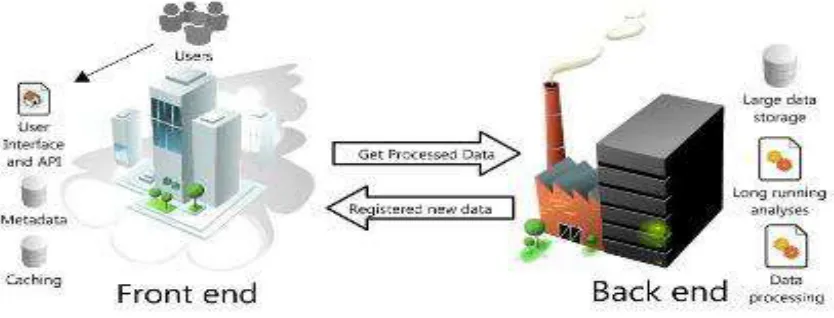
I. CLOUD COMPUTING ARCHITECTURE
As far as the architecture of cloud computing is concern it is dived into following two parts:-
a) Front End Part
b) Back End Part
Available Online at www.ijpret.com 33 Figure 1 Architecture of Cloud Computing
Deployment model of cloud computing
In cloud computing there are following four types of deployment models:-
a) Private Cloud – It is used by any single organization for its functioning.
b) Public Cloud – It is used by anyone for its use and functioning and it is open for all.
c)Community Cloud – It is being shared by various organization with have same purposes.
Services provided by cloud computing (SaaS, PaaS, IaaS)
The services provided by cloud computing can be larger or smaller and it can be categorize into following three basic service models:-
a) SaaS (Software as a service) – In this customer leasing the software provided by cloud provider according to a particular needs.
b) PaaS (Platform as a service) - In this customer leasing the various programming tools provided by cloud provider according as per needs.
Available Online at www.ijpret.com 34
II.LOAD BALANCING
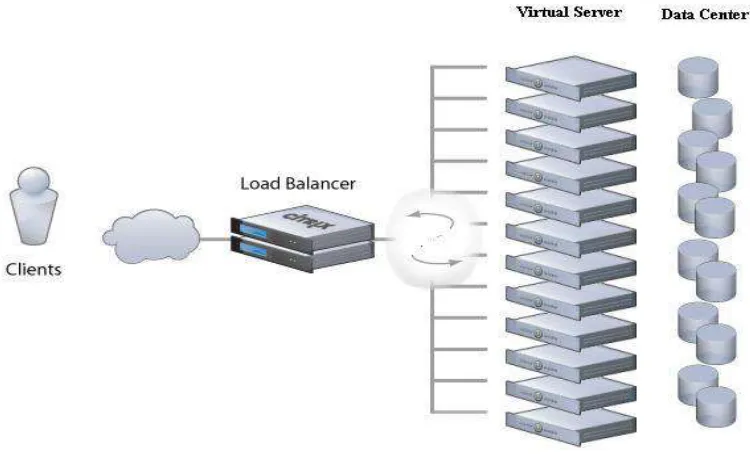
Load balancing is a technique by which the entire load is redistributing to different nodes for better resource utilization and efficiency. As at different instead of time the demand increases then new servers will be added to resource pool then the load balancer will direct the new load to new servers directly. In following section two main category of load balancing algorithm are mentioned and the following figure 2 successfully shows how the load balancing is occurs in cloud computing.
Figure 2 Load balancing in Cloud Computing
Static Algorithm
Static algorithm is best suited where variation of load is very low [3]. In this category traffic is distributed evenly among the servers. In this algorithm prior knowledge of system resources is required. The performance of processor is firmed in the beginning of execution hence the choice of shifting of load doesn’t depend on current state of system [4].
Dynamic Algorithm
Available Online at www.ijpret.com 35 Benefits of Load Balancing
a) Resource optimization- Through load balancing the optimization of load to the resources can be done efficiently.
b) Redundancy – When two or more processes running together and demand for a server then it guarantee that one server is occupied.
c)Security- It describes that only one IP address is exposed to the web that make reduce of chances of attack through web.
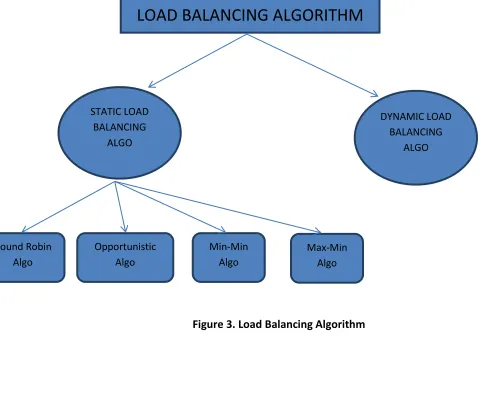
Figure 3 shows the different static load balancing algorithms
Figure 3. Load Balancing Algorithm
LOAD BALANCING ALGORITHM
Round Robin Algo
Opportunistic Algo
Min-Min Algo
Max-Min Algo STATIC LOAD
BALANCING ALGO
DYNAMIC LOAD BALANCING
Available Online at www.ijpret.com 36
III.STATIC LOAD BALANCING ALGORITHMS
Round Robin Algorithm [5]
Round robin load balancing algorithm is a type of statics load balancing algorithm. It follows round robin scheme for job allocation. In this it select the first node randomly and then allocate job to all other nodes in round robin manner. Without any priority dissimilar tasks are allotted to dissimilar processor in round manner. As the workload is distributed non-uniformly so that this algorithm is not best suited for cloud computing. This drawback is overcome in weighted round robin algorithm. In weighted round robin algorithm some particular weight is assigned to node and on the basis of that weight it would receive appropriate number of requests. This algorithm is not recommended because it is not possible for prior prediction of execution time.
Opportunistic Load Balancing Algorithm [6]
Opportunistic load balancing algorithm is another type of statics load balancing algorithm. It doesn’t consider the present workload on virtual machine. This algorithm quickly deals with the unexecuted task in random manner to presently available node so that it keeps each node busy. The task will process in very slow way because it doesn’t calculate the present execution time of the node so it provides load balancing without any good result.
Min-Min Load Balancing Algorithm [7]
Min-Min load balancing algorithm is a type of static load balancing algorithm. In this the cloud manager identifies, tasks from waiting queue, the execution and compilation time of unassigned task. Cloud manager primarily deals only with that tasks that has minimum execution time and assigned the processor to those tasks according to ability to completing the job in defined completion time. The task having maximum execution time has to wait for undefined period of time. This algorithm performs better when the number of tasks having small execution time is more than the tasks having more execution time.
Max-Min Load Balancing Algorithm [7]
Available Online at www.ijpret.com 37 performs better when the number of tasks having large execution time is more than the tasks having more execution time.
IV.Conclusion
Cloud computing provides many things to its user over internet. The major issue of cloud computing is load balancing. Through this review paper we observe the different static load balancing algorithm that are helpful for balancing load in cloud computing.
VI. REFERENCES
1. Khiyaita et al.” Load Balancing Cloud Computing: State Of Art”, IEEE, 2010.
2. Citrix Net Scaler - White Paper. Press release "Gartner EXP Worldwide Survey of Nearly 1,600 CIOs Shows IT Budgets in 2010 to be at 2005 Levels," pp. 1-9, 2010.
3. N. S. Raghava and D. Singh, "Comparative Study on Load Balancing Techniques in Cloud Computing," vol. 1, no. 1, pp. 18-25, 2014. (9).
4. Y. Sahu and R. K. Pateriya, "Cloud Computing Overview with Load Balancing Techniques," vol. 65, no. 24, pp. 40-44, 2013.
5. Pooja Samal, Pranati Mishra, ‖Analysis of variants in Round Robin Algorithms for load balancing in Cloud Computing‖ (IJCSIT) International Journal of Computer Science and Information Technologies, Vol. 4 (3) , 2013, 416-419.
6. Che-Lun Hung1, Hsiao-hsi Wang2 and Yu-Chen Hu2, ―Efficient Load Balancing Algorithm for Cloud Computing Network‖. IEEE Vol. 9, pp: 70-78, 2012.