Biogeosciences, 10, 2089–2103, 2013 www.biogeosciences.net/10/2089/2013/ doi:10.5194/bg-10-2089-2013
© Author(s) 2013. CC Attribution 3.0 License.
EGU Journal Logos (RGB)
Advances in
Geosciences
Open Access
Natural Hazards
and Earth System
Sciences
Open AccessAnnales
Geophysicae
Open AccessNonlinear Processes
in Geophysics
Open AccessAtmospheric
Chemistry
and Physics
Open AccessAtmospheric
Chemistry
and Physics
Open Access DiscussionsAtmospheric
Measurement
Techniques
Open AccessAtmospheric
Measurement
Techniques
Open Access DiscussionsBiogeosciences
Open Access Open Access
Biogeosciences
DiscussionsClimate
of the Past
Open Access Open Access
Climate
of the Past
Discussions
Earth System
Dynamics
Open Access Open Access
Earth System
Dynamics
DiscussionsGeoscientific
Instrumentation
Methods and
Data Systems
Open Access
Geoscientific
Instrumentation
Methods and
Data Systems
Open Access DiscussionsGeoscientific
Model Development
Open Access Open Access
Geoscientific
Model Development
DiscussionsHydrology and
Earth System
Sciences
Open AccessHydrology and
Earth System
Sciences
Open Access DiscussionsOcean Science
Open Access Open Access
Ocean Science
DiscussionsSolid Earth
Open Access Open Access
Solid Earth
Discussions
The Cryosphere
Open Access Open Access
The Cryosphere
Discussions
Natural Hazards
and Earth System
Sciences
Open Access
Discussions
Priming and substrate quality interactions in soil organic
matter models
T. Wutzler and M. Reichstein
Max Planck Institute for Biogeochemistry, Hans-Kn¨oll-Straße 10, 07745 Jena, Germany
Correspondence to: T. Wutzler ([email protected])
Received: 18 October 2012 – Published in Biogeosciences Discuss.: 6 December 2012 Revised: 28 February 2013 – Accepted: 5 March 2013 – Published: 26 March 2013
Abstract. Interactions between different qualities of soil
or-ganic matter (SOM) affecting their turnover are rarely re-presented in models. In this study, we propose three math-ematical strategies at different levels of abstraction to rep-resent those interactions. By implementing these strategies into the Introductory Carbon Balance Model (ICBM) and applying them to several scenarios of litter input, we show that the different levels of abstraction are applicable at dif-ferent timescales. We present a simple one-parameter equa-tion of substrate limitaequa-tion that can straightforwardly be im-plemented into other models of SOM dynamics at decadal timescale. The study demonstrates how substrate quality in-teractions can explain patterns of priming effects, accelerate turnover in FACE experiments, and the slowdown of decom-position in long-term bare fallow experiments as an effect of energy limitation of microbial biomass. The mechanisms of those interactions need to be further scrutinized empirically for a more complete understanding. Overall, substrate qual-ity interactions contribute to both understanding and quanti-tatively modelling SOM dynamics.
1 Introduction
The priming effect, i.e. the enhanced or retarded soil organic matter (SOM) decomposition due to amendment of fresh SOM or mineral nitrogen (Jenkinson et al., 1985; Kuzyakov et al., 2000), and the role of microbial biomass controlling decomposition rates have received increasing attention dur-ing the last years (Todd-Brown et al. 2012; Treseder et al. 2011; Allison et al. 2010; Guenet et al. 2010; Blagodatskaya and Kuzyakov 2008; Fontaine et al. 2003, but see also older works of L¨ohnis 1926; Parnas 1975; Smith 1979; Panikov
1995; ˚Agren and Bosatta 1996). Reasons are that, first, un-derstanding its causes opens perspectives on SOM decom-position and SOM stabilization and, second, because of its potential relevance for understanding feedback to climate warming. Enhanced primary production associated with en-vironmental change may increase decomposition of the large amount of old carbon stored in soils (Jobbagy and Jackson, 2000), as this fraction is especially vulnerable to priming (Fontaine et al., 2007). Hence, the increase in SOM inputs by plant litter with enhanced primary productivity may lead to net loss of SOM due to positive priming effects. The prim-ing effect highlights the issue that the decomposition rate of SOM of one quality depends on the amount of SOM of other qualities. This means that there are substrate quality interac-tions.
S_High Quality
S_Low
Quality D: Assi-milable MicrobesA: Active
Lim Assimilable and microbial explicit
Microbial steady state Substrate limitations Microbial steady state
S_High
S_Low S_Low
S_High
A* A* Input
Decomposition
Dec Uptake
Turnover
Resp
Turnover Dec Dec Decompostion
& Uptake
Turnover
Respiration
[image:2.595.54.282.64.290.2]Resp
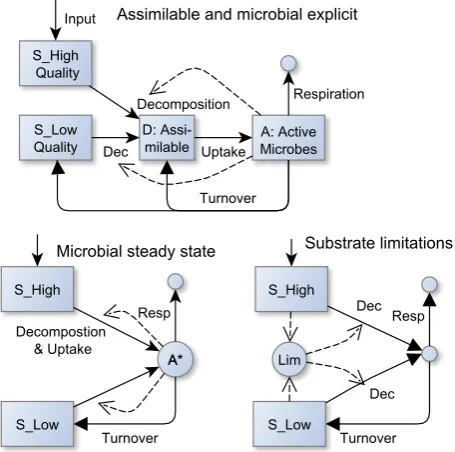
Fig. 1. Basic strategies of implementing substrate interactions. Solid arrows represent carbon fluxes. Dashed arrows highlight further controls. Boxes represent state variables, and circles represent val-ues that are derived from state variables.
details of active microbial biomass in components of global land-surface models running on large spatial extents, how-ever, will increase uncertainty because of additional uncer-tain model parameters (Hilborn and Mangel, 1997). Hence, an abstraction of those processes is required that still cap-tures the main effects of the interactions of different SOM qualities.
The aims of this paper are as follows: first, to propose basic strategies of representing SOM quality interactions in models (Sect. 1.1); second, to exemplify their implementa-tion (Sect. 2.1); and, third, to compare their advantages and disadvantages for different modelling purposes and settings (remainder of the paper).
1.1 Basic strategies
The most detailed strategy we propose explicitly models as-similable organic matter (OM) and active microbial biomass (Fig. 1). By contrast, the most abstract strategy lets the de-composition rate of the lower quality SOM, i.e. with slower decomposition, depend on the amount of high-quality SOM. An intermediate strategy assumes that microbial biomass dy-namics are fast compared to other processes and assumes mi-crobial activity to be in steady state with the mineralization flux.
1.1.1 Explicit assimilable OM and active microbial biomass representation
Co-metabolization of different substrate qualities is hypoth-esized to be the main mechanism of substrate interactions (Wutzler and Reichstein, 2008). Decomposition of substrate is not only dependent on the amount of substrate but also on the activity of decomposers. Independent decomposition of SOM qualities is coherent with the assumption that each quality of SOM is decomposed by a specific microbial com-munity and that this comcom-munity is in steady state with the current pool. In contrast, assuming that the microbial com-munity is able to decompose SOM of different qualities, or that there are interactions between the communities degrad-ing SOM of different qualities, links the decomposition of SOM of one quality to the decomposition of SOM of other qualities. When the microbial community is stimulated by increased availability of high-quality SOM, the decomposi-tion of low-quality SOM can be enhanced too. Hence, the first strategy to implement substrate interactions is to explic-itly model microbial activity (Sect. 4.6), or active microbial biomass as a dynamic state variable. The most detailed strat-egy (Fig. 1 top) assumes that different SOM qualities are de-composed into smaller assimilable compounds, and assumes that microbial growth can be modelled with a single substrate (Monod, 1949). Turnover of microbial biomass can be mod-elled as the difference between uptake of carbon and respira-tory carbon requirements for energy and additional turnover by predation or disturbances that usually increase with mi-crobial biomass.
substrate: dSj
dt =ij+pjτ−dj
assimilable OM: dD dt =
X
j
dj+pDτ−u
active microbial biomass: dA
dt =u−rg−τ
decomposition: dj =le,j(t ) fd Sj, A uptake: u=fu(D, A)
growth respiration: rg=(1−)u microbial turnover: τ =fτ(A)
Wherej denotes the quality of a given substrate,ij is the external input to the system,pj the proportion of microbial turnover feeding to pool j, and the microbial efficiency or yield.le,j(t )is a model driver that modifies decomposi-tion fluxes based on time-dependent environmental condi-tions such as temperature or moisture.
Y
O A* A* Y
O A
Y
O Lim
Y
O Lim
MicExplicit MicSteady LimUptake LimFresh Independent
O Y Y
O A AssimExplicit
D
Input
Dec
Dec Turnover
Resp Input
Dec
Dec Turnover
Resp
Dec
Dec Turn over Input
Dec
Dec Turn over
Input Resp
Transfor-mation
(1-εF) Dec Input
Dec Input
Turnover Respiration
Decomposition
[image:3.595.59.535.63.203.2]Decomposition Uptake
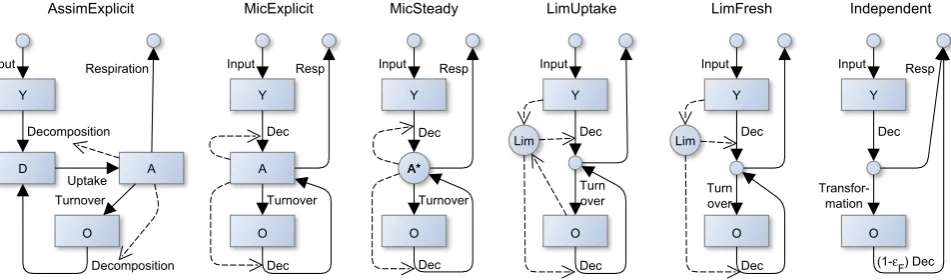
Fig. 2. Structure of the ICBM model variants. Solid arrows denote carbon flows; dashed arrows represent further controls.
actually drive short-term dynamics when monitoring micro-bial growth over a few days as is commonly done in priming experiments. However, our goal here is to capture the basic dynamics, and we seek to obtain an abstract understanding instead of including more detail.
1.1.2 Quasi-steady-state active microbial biomass
Another strategy is to successively increase abstraction from details of the microbial explicit model. The assimilable pool quickly approaches a state where its input equals micro-bial uptake. Hence, we may set uptakeu=P
jdj+pDτ. Further, also active microbial biomass approaches a state where growth (depending on mineralization fluxes) equals its turnover. Hence, we can calculate a quasi-steady state (Segel and Slemrod, 1989) of the active microbial biomass for given amounts of available substrates A∗=f (Sj). Next, we re-place microbial biomass by this steady state in the equations of respiration, microbial turnover, and decomposition (Fig. 1 bottom left). The resulting microbial steady-state model can be reformulated, so that the limitation of decomposition by decomposer activity can be directly expressed by model pa-rameters.
1.1.3 Substrate limitations
A coarse strategy is to directly formulate substrate interac-tions in the decomposition equainterac-tions as
substrate: dSj
dt =ij(t )−dj+
X
i6=j
aijdi, decomposition: dj =le,j(t ) fj(S1, . . . , Sn),
whereaij is the portion of carbon decomposed of poolithat is transferred to poolj.
One specialization of this general decomposition formula
djis to specify one common limitation factor,lA, for all sub-strate qualitiesj. This factor depends on the amount of all substrate in all qualities or alternatively depends only on the
amount of the high-quality substrate (Fig. 1 bottom right). decomposition: dj =lAle,j(t )fd,j(Sj) (1) substrate limitation: lA=fA(S1, . . . , Sn) (2) The substrate interaction strategy can be applied with-out any consideration of decomposers. Alternatively, it can also be derived as a further level of abstraction of the quasi-steady-state active microbial biomass strategy.
2 Methods
2.1 Implementations to the ICBM
The basic strategies (Sect. 1.1) are exemplified by imple-menting them into a series of models that are versions of the Introductory Carbon Balance Model (ICBM) (Andr´en and K¨atterer, 1997).
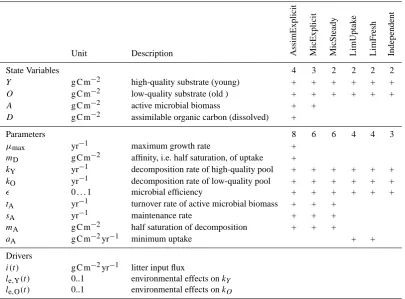
The ICBM is a simple two-pool model that shares the basic structure and captures most of the dynamics of more complex pool models for SOM turnover such as RothC and Century. In this study, several variants of the model were developed (Fig. 2), which varied in structural complexity. A more de-tailed explanation of the model variants and the differential equations are given in Appendix A. Pool names and parame-ters are described in Table 1. The following text summarizes the main characteristics of the model variants.
2.1.1 AssimExplicit
Table 1. Parameters of the ICBM model variants.+indicates usage in respective model variant.
Unit Description AssimExplicit MicExplicit MicSteady LimUptak
e
LimFresh Independent
State Variables 4 3 2 2 2 2
Y g C m−2 high-quality substrate (young) + + + + + +
O g C m−2 low-quality substrate (old ) + + + + + +
A g C m−2 active microbial biomass + +
D g C m−2 assimilable organic carbon (dissolved) +
Parameters 8 6 6 4 4 3
µmax yr−1 maximum growth rate +
mD g C m−2 affinity, i.e. half saturation, of uptake +
kY yr−1 decomposition rate of high-quality pool + + + + + + kO yr−1 decomposition rate of low-quality pool + + + + + +
0. . .1 microbial efficiency + + + + + +
tA yr−1 turnover rate of active microbial biomass + + +
sA yr−1 maintenance rate + + +
mA g C m−2 half saturation of decomposition + + +
aA g C m−2yr−1 minimum uptake + +
Drivers
i(t ) g C m−2yr−1 litter input flux
le,Y(t ) 0..1 environmental effects onkY le,O(t ) 0..1 environmental effects onkO
of substrate degrading enzymes, this decomposition equation corresponds to the model of Schimel and Weintraub (2003). Microbial uptake from the assimilable pool was modelled ac-cording to Monod kinetics. In addition to growth respiration, we included also maintenance respiration, which linearly in-creased with active microbial biomass. As a first approxi-mation, the entire turnover of the microbial biomass was as-signed to the low-quality pool.
The termle,j(t )=f (T ,M, . . .)incorporates how decom-position rates depend on environmental factors such as tem-perature and moisture that can vary with time.
2.1.2 MicExplicit
As a first step we abstracted from fast dynamics of the assim-ilable pool, using the quasi-steady-state assumption. Specifi-cally, we replaced the Monod uptake kinetics with the influx to the assimilable pool, i.e. the sum of decomposition fluxes.
2.1.3 MicSteady
As a second step we abstracted from the short-term dynam-ics of the active microbial biomass pool. We used the same equations as in the MicExplicit variant, but replaced active microbial biomass by its steady-state formulation, which de-pended on the current amount of substrates.
2.1.4 LimUptake
Further, we abstracted from several sources of respiration, keeping only an effective growth respiration in the system of equations. With this change the microbial efficiency, , corresponded to the amount of uptake that is transformed to lower quality substrate, i.e. the humification coefficienthin the original ICBM. Further, we lumped all microbial param-eters into a single parameteraA. The limitation factorlAfor decomposition could then be reformulated based on potential uptake. The potential uptakeuPotcorresponded to the uptake with no microbial limitation, i.e. lA=1, from all substrate qualities (hereY andO).
lA=max
0,1− aA
uPot
(3)
uPot= X
j
le,j(t )kjSj
2.1.5 LimFresh
An alternate application of the substrate limitation strategy is to make decomposition depend on the high-quality OM only. Hence we implemented another abstraction, where we neglected the contribution of uptake from the low-quality or-ganic matter in the formulation of the limitation factor.
2.1.6 Independent
This variant is equivalent to the original ICBM, where de-composition fluxes of SOM of different qualities are inde-pendent of each other. Here it is presented as a further ab-straction of the LimUptake model variant where we fully ne-glected the substrate limitation in decomposition equations.
2.2 Simulation scenarios
The model variants presented in Sect. 2.1 have been ap-plied to different scenarios of litter inputs. In all scenarios all model variants started from steady state for a litter in-put of 400 g C m−2yr−1. Parameters were derived from the following constraints: (1) prescribed initial carbon stocks in steady state before the change of litter input –Y0andO0; (2) prescribed initial apparent substrate turnover times; (3) to-tal microbial biomass of 2 % of organic matter; and (4) pre-scribed initial activity of microbial biomass as expressed by the microbial limitation factorlA. Initial microbial limitation factor was set to 5 % for the LabPriming scenario, 20 % for the FaceLim scenario and 80 % for the other scenarios. The details of litter inputs over time and calculation of parame-ter values and initial stocks from the constraints above are given in Appendix B. As the scenarios explore consequences of different litter inputs, the environmental limitation factors were kept constant:le,Y(t )=le,O(t )=0.8.
2.2.1 LabPriming
Half of the accumulated yearly litter was added at once at the beginning and no litter was added thereafter. This emulates a laboratory priming experiment, where labelled fresh sub-strate is added at the beginning of a soil incubation and the label in the respiration flux is monitored over time without any further litter inputs.
2.2.2 FaceAct
Inputs increased by 25 % and initial microbial biomass had a high activity (limitation factor of 80 %). This simulates a CO2enrichment experiment (Norby et al., 2005). With this scenario litter input increased in the first year and stayed at this level thereafter.
2.2.3 FaceLim
Inputs increased by 25 % and initial microbial biomass was energy-limited (limitation factor of 20 %) This is the same
0.00 0.25 0.50 0.75
0 50 100 150
Time (day)
Respir
ation from soil (kgC/m2/yr)
[image:5.595.311.545.61.222.2]AssimExplicit MicExplicit MicSteady Independent
Fig. 3. Time series of respiration from autochthonous SOC, i.e. soil organic carbon present before substrate addition, in the LabPriming scenario.
as FaceAct scenario, except that initial microbial limitation factor was set to 20 %.
2.2.4 DeadRoot
Input decayed exponentially to 8 g C m2yr. This simulates stabilization of organic matter based on the energy-limitation of the decomposers when the supply of high-quality organic matter diminishes. This may happen in the subsoil when the rooting system dies and fresh OM input is small because of absence of root exudates.
3 Results of simulation studies
In the course of this paper we discuss the effects of model simplifications and abstractions by comparing simulated tra-jectories to predictions of the more detailed model variants. Hence, we treat the predictions of the most detailed Assim-Explicit model variant as the target to compare to.
3.1 LabPriming scenario
7.0 7.5 8.0 8.5
0 50 100 150 200
Time (yr)
T
otal carbon stock (kgC/m2)
[image:6.595.52.285.59.222.2]MicExplicit MicSteady LimUptake LimFresh Independent
Fig. 4. Time series of total carbon stocks in the FaceAct scenario. Overplotting represents very close agreement.
400 425 450 475 500
0 1 2 3 4
Time (yr)
Carbon stock Y
oung (gC/m2)
[image:6.595.311.545.61.221.2]MicExplicit MicSteady LimUptake LimFresh Independent
Fig. 5. Time series of carbon in the high-quality pool in the FaceLim scenario.
The AssimExplicit model predicted a very short (2 days) phase of negative priming, i.e. decreased respiration from au-tochthonous soil.
The MicExplicit model variant did not represent this negative priming effect. However, the overall dynamics at monthly timescale were described very well with the MicEx-plicit variant, despite abstracting from the dynamics of the assimilable pool.
The MicSteady model variant strongly overestimated the initial microbial biomass (see electronic supplement Prim-ingMic.pdf) and hence also the decomposition of the au-tochthonous SOM at the beginning of the incubation. Sim-ulations of the LimUptake and LimFresh variants have not been conducted, as the abstraction level was already too high for this scenario.
There was no priming effect in the substrate independent model variant in which the autochthonous SOM decomposed independently from the added label.
0 2 4 6
0 50 100 150 200
Time (yr)
T
otal carbon stock (kgC/m2)
MicExplicit MicSteady LimUptake LimFresh Independent
Fig. 6. Time series of total carbon stocks in the DeadRoot scenario.
3.2 FaceAct and FaceLim scenarios
At longer timescales, with continuous litter inputs that do not change abruptly, there was no discernible difference be-tween predictions of the AssimExplicit and the MicExplicit model variants. There were also no discernible differences between predictions after 3 years of the MicExplicit and the MicSteady and LimUptake variants (Figs. 4–6).
All the variants of substrate interactions agreed remark-ably well in the FaceAct scenario (Fig. 4). In contrast, the model in which substrates decompose independently pre-dicted higher long-term carbon stocks. This difference be-came more pronounced when a more strongly substrate-limited decomposer community was prescribed at the begin-ning of the incubation with the FaceLim scenario. All the models that accounted for substrate interactions predicted a smaller change in carbon stocks. This was because the in-creased litter input relieved the microbial limitation causing a faster SOM cycling.
In the first year after increasing litter inputs, the microbial activity was transiently smaller than its potential quasi-steady state. This effect was not represented with the more simpli-fied model variant. The effect of this transition on predicted carbon dynamics, however, was so small that it was only seen when plotting the first years of the fast carbon stock (Fig. 5). The slight deviation of the LimFresh variant from the more detailed variants was due to neglecting the uptake of low-quality organic matter as explained below.
3.3 DeadRoot scenario
[image:6.595.50.287.281.439.2]The LimFresh model variant, which was based solely on high-quality organic matter, predicted lower microbial activ-ity and decomposition.
The substrate independent model did not account for the microbial energy-limitation at all and predicted a more rapid decomposition of the substrate.
4 Discussion
This study presents an approach of successively abstracting from detailed fast dynamics in complex models. It derives less complex formulations that still capture the important dy-namics at a given timescale. Moreover, the derived lumped parameters can be traced back to the underlying more com-plex mechanisms.
The application of the model variants to various scenar-ios of changing litter input reveals pronounced differences in their dynamics. Distinct abstraction levels are appropriate at particular settings.
4.1 Timescale
The most important factor for choosing an appropriate ab-straction level is timescale. When investigating the dynamics at longer scales, we assumed that the detailed description of the dynamics of fast processes can be replaced by an approx-imation based on a quasi-steady-state assumption (QSSA) (Segel and Slemrod, 1989). This is applicable where, after an initial fast transient period, the assimilable substrate and the microbial biomass can be regarded in steady state with respect to the instantaneous values of the available substrate. The fast relaxation of the assimilable pool to steady state was caused by the fast uptake of substrate by microbes. The length of the transient period, where the assimilable pools differed from steady state (seen as difference between As-simExplicit and MicExplicit in Fig. 3) was of order of 1/(mi-crobial growth rate). In this study, we assumed a maximum microbial growth rate of 1/(24 h). This is already a quite slow growth rate compared to priming experiments, where micro-bial communities respond to glucose with rates of about 1/(5 h) (Wutzler et al., 2012). Hence, we argue that the details of microbial uptake are not important at timescales longer than weeks.
The non-steady-state dynamics of microbial biomass are most important at the daily to monthly scale (Fig. 3) and are still visible over about two years (Fig. 5). With the MicEx-plicit model, decomposition of substrate is limited by the current activity, which is lagging behind its steady state. The timescale of this transient period is in the order of the turnover time of the changing substrate pool. Hence, the simplified models differed strongly from the microbial ex-plicit model in the LabPriming scenario, which has studied monthly dynamics. Note, however, that in this study we used a turnover time of one year for the fastest pool, whereas a big
part of the litter turns over faster. By using a shorter turnover time of the fast pool or a more fine-grained resolution of the substrate quality continuum ( ˚Agren and Bosatta, 1996), we expect the differences between the model variants to be smaller.
When looking at decadal to centurial timescale with as-suming continuous change of litter input, the quasi-steady-state assumption of microbial activity is a very effective model simplification compared to the more complex micro-bial explicit model variants (Figs. 4–6).
4.2 Short-term environmental fluctuations
An assumption of the used model simplifications is that strate availability changes continuously. By contrast, sub-strate availability can change abruptly with fluctuations of environmental conditions. For example, a large amount of high-quality substrate can become available in a short time during rewetting events (Borken and Matzner, 2008). In these circumstances, as seen in Fig. 3, the simplified models over-estimate initial microbial biomass and respiration and un-derestimate respiration at later times. They give wrong pre-dictions for short timescale dynamics under these condi-tions. They are intended, however, for application at longer timescales. Hence, the more important problem is whether the errors average out or whether they will result in a bias in the mean rates on timescales from months to decades.
4.3 Proportion of uptake from low-quality substrates
Dynamics of microbial activity are usually dominated by the availability of high-quality substrate. This leads to the model simplification of only relating microbial activity or substrate limitation of decomposition to the availability of high-quality substrate (e.g. Guenet et al., 2012).
We argue that this simplification is only valid if the pro-portion of uptake from low-quality substrates compared to uptake from high-quality substrates is low.
The discussed simplification is represented by the Lim-Fresh model variant. It predicts similar dynamics as the slightly more detailed LimUptake variant in all scenarios of high litter inputs. However, predictions for the DeadRoot scenario of diminished litter inputs (Fig. 6) differ consider-ably. This is because the high-quality OM is consumed and depleted faster than the low-quality OM. Hence, under such conditions, the proportion of low-quality OM to microbial uptake is so high that it cannot be neglected.
This scenario demonstrates the importance of distinguish-ing between hot spots, sites of low input of high-quality OM, and the transitions between them. For further model devel-opment, we propose to first start accounting for the vertical heterogeneity of the inputs: high in top soil and low at most sites in subsoil (Braakhekke et al., 2013).
4.4 OM stabilization by energy limitation
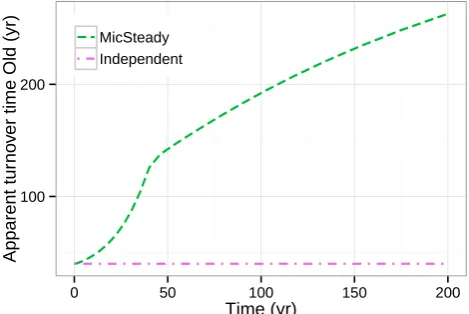
In the DeadRoot scenario, the long-term predictions of the model with substrate interactions differ notably from the predictions of the model with independent substrate de-composition. This is because the substrate interactions can explain OM stabilization by energy limitation of decom-posers (Fontaine et al., 2007). With decreasing supply of high-quality substrate (young pool in the ICBM), the micro-bial limitation to decomposition increases. This results in a turnover acceleration of the low-quality substrate (Fig. 7).
In addition, this mechanism also provides an alternative explanation of the observed deceleration of decomposition at long-term bare fallow experiments (e.g. Barr´e et al., 2010, Fig. 1). Traditionally, additional very slowly decaying OM pools have been included in the SOM models (McGill, 1996) to explain those patterns. However, recent studies have shown that the old OM associated with these pools is vul-nerable to priming effects (Fontaine et al., 2007). Hence, the emerging view is that the observed long turnover times are properties of the environment instead of being associated with the conceptual OM pools (Schmidt et al., 2011). This is in line with the predictions of those model variants in this study that included substrate interactions.
While the traditional substrate independent models are quite successful in explaining effects of changing litter in-puts under one land use at one site, they often need to be re-parametrized to other sites. Moreover, data on forest– grassland transition could be modelled much better with a
100 200
0 50 100 150 200
Time (yr)
Apparent tur
no
v
er time Old (yr)
[image:8.595.311.546.69.226.2]MicSteady Independent
Fig. 7. Increase of apparent turnover time 1/ kapp, Old=1/(lAkOld)
in the DeadRoot scenario.
redistribution of carbon between different SOM-qualities af-ter the disturbance instead of modifying model parameaf-ters (Gottschalk et al., 2010). It will be interesting to test if changed substrate interactions can better explain such data.
4.5 Acceleration of SOM turnover instead of SOM accumulation
A second major difference in dynamics with regard to sub-strate interactions was seen in the FaceLim simulation sce-nario (Fig. 5). With the substrate independent model, a 25 % increase of the input led to 25 % increase of the total OM stock. By contrast, the substrate interaction models predicted a release of microbial limitation. This led to an accelerated decomposition, which resulted in only a slight increase in OM stocks. This prediction is in line with several observa-tions from Free Air Carbon Enrichment (FACE) experiments (Cardon et al., 2001; Carney et al., 2007; Heath et al., 2005; Trueman and Gonzalez-Meler, 2005). These studies observe that an increased net primary productivity and rhizodeposi-tion, especially with nitrogen limitation (Norby et al., 2010; Phillips et al., 2011), is often not accompanied by a corre-sponding increase in soil carbon stocks (Drake et al., 2011).
4.6 Microbial activity
The more complex model variants make use of a pool called the active microbial biomass. Here we discuss why we use this concept instead of soil microbial biomass.
0.00 0.25 0.50 0.75 1.00
0 100 200 300 400
Y (gC/m2)
limA
a 5
[image:9.595.50.287.62.223.2]10
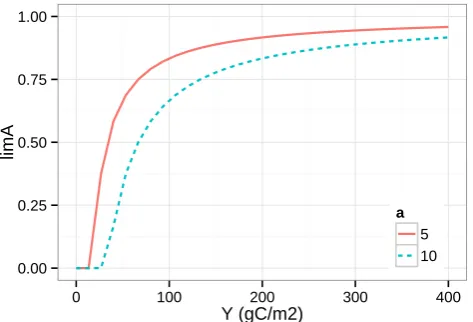
Fig. 8. Microbial limitationlAas a function of amount of a single
substrateY:lA=max
0,1− aA le,YkYY
. With =0.3, le,Y=1,
andkY=1 yr−1.
growth occurs. The observed time lag can be related to the activity state. Hence, amongst all the methods of measur-ing soil microbial biomass, the kinetic respiration analysis (Panikov and Sizova, 1996; Blagodatsky et al., 2000; Wut-zler et al., 2012) might come closest to the modelled pool of active microbial biomass.
In addition to overall activity, the community structure and competition presumably play major roles in regulating OM cycling (Fontaine et al., 2003; Treseder et al., 2011; Todd-Brown et al., 2012). Such community effects were not con-sidered even with the most detailed model in the current study.
At low growth rates, other factors related to the micro-bial energy budget in addition to micromicro-bial substrate use ef-ficiency become important. On reason is maintenance respi-ration, which is required also with low or no uptake of sub-strate (Pirt, 1965; Beeftink et al., 1990; van Bodegom, 2007). Other not considered here but potentially influential factors are dynamics of predation (Raynaud et al., 2006), limitation by resources other than carbon (Fontaine and Barot, 2005), preferential substrate usage (Blagodatskaya and Kuzyakov, 2008), and adaptation (Schmidt et al., 2007).
Further studies can start from models of more complex mi-crobial interactions and use the presented approach of suc-cessively abstracting from the details.
4.7 Microbial limitation factor
Results show that the abstraction level in the LimUptake model variant is able to account for the effects of microbial activity at timescales of seasons to decades. Therefore, we discuss the derived one-parameter Eq. (3) in more detail.
For a single substrate pool, the equation is plotted in Fig. 8. Parameter aA corresponds to the minimum carbon uptake
flux that can support active microbial biomass. Below this threshold, the microbial community has more carbon costs in sustaining growing compartments than what can be obtained from degrading the substrate. With larger concentrations of available substrate, the investments in synthesizing enzymes yield higher returns. Hence, with more and more available substrate, a bigger part of the community can be active.
Note that the decomposition and uptake flux also depend on current environmental conditions (le) and the substrate limitation factor fluctuates with environmental drivers.
4.8 Priming effects
The AssimExplicit model variant simulates a short phase of negative priming in the LabPriming scenario. This is in line with the hypothesis that microbial dynamics cause the prim-ing effect (Blagodatskaya and Kuzyakov, 2008). However, while negative priming is usually attributed to preferential substrate usage, in this model it is solely caused by a dilution of the assimilable pool with the carbon from the amendment. Right after the amendment, microbes take up and respire the same total amount of carbon as before, but a part of it origi-nates from the amendment instead of the autochthonous soil carbon.
There is a discussion about apparent and real priming effects (e.g. see review by Blagodatskaya and Kuzyakov, 2008). The priming effect is defined as the increased or di-minished mineralization of soil organic matter after treat-ing soil with an amendment, compared to a control without amendment (Kuzyakov et al., 2000). Apparent priming is an increased respiration originating from increased turnover of microbial biomass without additional mineralization of soil organic matter (Blagodatskaya and Kuzyakov, 2008). We ar-gue that the distinction between apparent and real priming is not as important on longer timescales as on the short term. Microbial biomass is usually only a small fraction of 2–4 % (Anderson and Domsch, 1989) of organic matter. The active part can again be an order of magnitude smaller (Wutzler et al., 2012). Hence, the turnover of one complete pool of active microbial biomass contributes only a small part to res-piration integrated over seasons and years. If we detect sig-nificant priming effects over this timescale, the contribution of primed carbon originating from initially present microbial biomass will be small compared to the overall effect.
4.9 Outlook
by differences in elemental composition of litter and trans-formed soil organic matter (Fontaine et al., 2003). Second, substrate interactions can influence the temperature sensitiv-ity of decomposition (Thiessen et al., 2012). Third, the avail-ability of substrate and oxygen is strongly influenced by soil moisture (Davidson et al., 2012). And, fourth, we discussed several aspects of microbial dynamics such as preferential substrate usage and predation, which are not considered in this study.
Further simulation experiments should be designed to study whether the bias introduced by the quasi-steady-state assumption with rapidly changing environmental conditions is indeed negligible.
A bottom-up strategy of successively integrating effects of microbial dynamics into lumped models is the following. First set up more detailed models that include refined pro-cesses and compare model predictions to data of short-term experiments. The detailed models can then be simplified sim-ilarly as it has been done with the assimilable and microbial explicit ICBM of this study.
A complementary strategy is to implement several forms of substrate interactions such as Eq. (3) directly into lumped SOM cycling models that already account for stoichiome-try and environmental constraints. Model predictions can be compared to data from FACE experiments or long-term ex-periments of changes in C3/C4 vegetation, or long-term ob-servation of carbon stocks and fluxes at specific sites (Smith et al., 1996).
5 Conclusions
There are several basic strategies of incorporating interac-tions of SOM qualities into SOM cycling models. Different abstraction levels are appropriate at different timescales and different magnitudes of changes in litter input. The substrate interaction strategy is appropriate at decadal scale applica-tion. Out of the five model variants presented in this paper, the LimUptake variant is more parsimonious than the Lim-Fresh variant. It has only one additional parameter but in-cludes more microbial detail. By contrast, the strategy of ex-plicitly representing microbial dynamics (MicExplicit vari-ant) is appropriate for applications involving fast changes in litter inputs where the transient microbial dynamics and de-tails of microbial energy budget become important.
The derived simple one-parameter equation of micro-bial limitation Eq. (3) can be directly transferred to other SOM cycling models. Incorporating substrate interactions into SOM models, as exemplified by the current study, re-sults in qualitatively different dynamics both on the short as well as on the long timescale.
Substrate interactions offer an explanation for the acceler-ation of SOM cycling instead of extensive SOM accumula-tion as observed in several FACE experiments. They offer an alternative explanation of the deceleration of decomposition with time in bare fallow long-term experiments compared to the explanation of a continuing decrease of substrate quality. Integration of perspective with other aspects of SOM cycling such as other nutrients and environmental influences requires further work both on short-term controlled experiments as well as model data integration with long-term datasets. Over-all, substrate interactions help us to understand and quantita-tively model SOM dynamics and stabilization.
Appendix A
ICBM variants
This appendix describes the model abstraction process in more detail and reports the differential equations used in the variants of the ICBM. State variables and parameters are ex-plained in Table 1.
A1 AssimExplicit
We started with a detailed assimilable and microbial ex-plicit model similar to several published ones (Blagodatsky and Richter, 1998; Schimel and Weintraub, 2003; Blago-datsky et al., 2010). Carbon input flux i enters the high-quality pool Y. Microbial uptake of assimilable substrate was modelled by Monod kinetics (Monod, 1949; Madigan and Martinko, 2006). Decomposition of non-assimilable sub-strate was modelled by an equation that was first order to substrate but was a saturating function with active microbial biomass (Schimel and Weintraub, 2003; Wutzler and Reich-stein, 2008). This represented the declining probability of en-zyme substrate encounters with decreasing concentration of active microbial biomass. As a first approximation we as-sumed that all microbial turnover is added to the low-quality pool. Microbial turnover was modelled first order to active microbial biomass.
high-quality substrate: dY
dt =i(t )−dY
low-quality substrate: dO
dt =τ−dO
assimilable: dD
dt =dY+dO−u
active microbial biomass: dA
dt =u−rg−rm−τ
microbial limitation: lA=
A mA+A decomposition of Y: dY=lAle(t ) kYY decomposition of O: dO=lAle(t ) kOO uptake: u=µmaxA
D mD+D growth respiration: rg=(1−)u maintenance respiration: rm=sAA microbial turnover: τ =tAA
A2 MicExplicit
First, we abstracted from the fast dynamics of the assimil-able pool. Near its quasi-steady state, the change of the pool is small compared to its inflow and outflow. Hence we mod-elled the microbial uptake as the sum of the inputs to this pool, i.e. the sum over all decomposition fluxes. The equa-tions are the same as in the AssimExplicit variant, except for the uptakeu.
uptake: u=dY+dO
A3 MicSteady
Second, we abstracted from the fast dynamics of the active microbial biomass. Again we made use of the quasi-steady-state approximation. Equations were the same as in the Mic-Explicit variant, unless microbial biomassAwas replaced by its quasi-steady stateA∗in all equations.
Quasi-steady state of active microbial biomassA∗was de-rived by setting the derivative to time to zero.
dA∗
dt =u−rg−rm−τ =0 (A1)
A∗=max
0, (le,Y(t )kYY+le,O(t )kOO) sA+tA
−mA
(A2) By substituting the steady-state biomassA∗into the other equations, we could express them directly as a function of microbial parameters. For example, for the microbial limita-tion we derived the following equalimita-tion.
lA=max
0,1− mA(sA+tA)
(le,Y(t )kYY+le,O(t )kOO)
A4 LimUptake
We further abstracted from different kinds of respiration and assumed that respiration could be expressed solely by the mi-crobial efficiency . This corresponds to including mainte-nance respiration into an effective growth respiration term.
By lumping the microbial parameters into an effective parameter aA, we reformulated the microbial limitation. This resulted in an expression that was dependent on a minimum potential uptake, rendering microbial mechanisms completely implicit. Decomposition dY and dO were the same as in the AssimExplicit variant.
substrate Young: dY
dt =i−dY
substrate Old: dO
dt =(dY+dO)−dO
respiration: r=(1−)(dY+dO)
lumped biomass parameter: aA=mA(sA+tA) uptake limitation:lA=
max
0,1− aA
(le,Y(t )kYY+le,O(t )kOO)
A5 LimFresh
Usually, the uptake of high-quality substrate (hereY) is much larger than the uptake of low-quality substrate (here O). Hence, we further explored the simplified model variant that neglected the uptake of low-quality substrate in the limita-tion factor lA. All other equations were the same as in the LimUptake variant.
uptake limitation: lA=max
0,1− aA
le,Y(t )kYY
A6 Independent
Finally we abstracted the model by neglecting substrate lim-itations at all and omitted the limitation factor in the de-composition equations. All other equations were the same as in the LimUptake variant. Decomposition fluxes of the sub-strate qualities were independent of each other.
decomposition of Y: dY=le,Y(t )kYY decomposition of O: dO=le,O(t )kOO
Appendix B
Model parameterization
This appendix reports the calculation of parameters used in running the simulation scenarios in Sect. 2.2. Parame-ters were chosen so that all variants predicted the same steady-state carbon stocks before the change of litter input:
Y0=400 g C m−2,O0=6400 g C m−2. All apparent turnover times corresponded to 1 and 40 yr for theY andOpool re-spectively. Other model parameters were derived from these constrained apparent turnover rates, the steady-state assump-tions, and other reasonable constraints, e.g. that total micro-bial biomass was 2 % of organic matter.
B1 LabPriming
The amount of amendment was on the order of soil mi-crobial biomass: 2% CTot≈140 g m−2 (Blagodatskaya and Kuzyakov, 2008).
Input:i(t≥0)=0 g m−2yr−1
Average input before the experiment:i0=400 g m−2yr−1 Added label att=0:Ylabel=12i01 yr=200 g m−2
B1.1 Independent
Initial apparent decomposition rates:
– kY,app=le,Y(0)kY=1 yr1
– kO,app=le,O(0)kO=40 yr1
Dividing the apparent decomposition rates by the mean en-vironmental limitationle,jresulted in decomposition rates.
Microbial efficiency is =0.4. Initial pools then result from steady state:
– Y0=ki0 Y,app,
– O0=k i0 O,app.
B1.2 MicExplicit and MicSteady
Apparent decomposition rates, and microbial efficiency, and calculation of initial pools were the same as with the inde-pendent model variant.
Initial microbial limitation was set tolA(0)=0.05 corre-sponding to low activity due to some time of storage before the experiment.
Dividing the apparent decomposition rates by(l0le,j) re-sulted in decomposition rateskYandkO.
Given an initial active microbial biomassA0=0.02(Y0+
O0)l0, the other rates were defined by the initial steady-state condition:
Affinity:ma=A0
1 lA(0)−1
, Microbial turnover rate:tA=
lA(0)le,O(0)kO0O
A0 ,
Maintenance rate: lA(0)(le,Y(0)kYY0+le,O(0)kOO0)
A0 −tA.
B1.3 AssimExplicit
Same as MicExplicit variant. In addition maximum growth rate was set to µmax=1/(24 h). Typical maximum growth rates in priming experiments are higher than 1/day (Wutzler et al., 2012) but correspond to communities growing on sub-strates that are mineralized faster. With higher growth rates, microbial dynamics would be even faster near steady state.
Initial assimilable pools were set toD0=1 g m−2, which corresponds to 10 mg l−1 (Borken et al., 2011) for a 40 cm deep soil and 25 % of the volume occupied by water. Half-saturationmS was calculated from steady-state assumption of the assimilate pool prior to change of litter inputs asmS=
D0
µ
maxA0
lA(0)(le,Y(0)kYY0+le,O(0)kOO0)−1
.
B2 FaceAct
Soil carbon input increased from steady-state values ofi0= 400 g C m−2yr−1rapidly (eFold=0.5 yr) levelling out atr= 25 % abovei0(Phillips et al., 2011).
i(t )=i0+ri0(1−exp(−1/eFoldt ))
Parameters for independent, MicExplicit, and MicSteady variants were the same as with the LabPriming scenario, un-less initial microbial limitation was set tol0=0.8 assuming high microbial activity adapted to high-quality inputs from rhizodeposition.
The LimUptake and the LimFresh model variant neglected maintenance respiration. In order to match the same initial to-tal stocks, the growth respiration had to compensate for this. Hence the effective microbial efficiency was set to 0.7143 times the true.
The lumped limitation parameters of the LimUptake and the LimFresh variants were calculated from steady-state assumption before the change of litter input: aA=(1−
lA(0))(le,Y(0)kYY0+le,O(0)kOO0).
B3 FaceLim
This scenario was the same as the FaceAct scenario, unless initial microbial limitation was set tolA(0)=0.2
B4 DeadRoot
Input decreased from steady-state values of i0= 400 g C m−2yr−1 slowly (eFold=10 yr) to a minimum arbitrary low value of imin=i0/50. The timescale was chosen to match a decomposing coarse root.
i(t )=max(imin, i0exp(−1/eFoldt )
Acknowledgements. This work was supported by the ERC starting
grant QUASOM (ERC-2007-StG-208516). We thank B. Guenet, another anonymous reviewer, and colleagues S. Z¨ahle, C. Sierra, B. Ahrens and M. Braakhekke for valuable comments on the manuscript.
The service charges for this open access publication have been covered by the Max Planck Society.
Edited by: P. Stoy
References
˚
Agren, G. and Bosatta, E.: Theoretical ecosystem ecology – Un-derstanding element cycles, Cambridge University Press, Cam-bridge, 1996.
Allison, S., Wallenstein, M., and Bradford, M.: Soil-carbon re-sponse to warming dependent on microbial physiology, Nature Geoscience, 3, 336–340, 2010.
Anderson, T.-H. and Domsch, K.: Ratios of microbial biomass car-bon to total organic carcar-bon in arable soils, Soil Biol. Biochem., 21, 471–479, doi:10.1016/0038-0717(89)90117-X, 1989. Andr´en, O. and K¨atterer, T.: ICBM: The introductory carbon
bal-ance model for exploration of soil carbon balbal-ances, Ecological Applications, 7, 1226–1236, 1997.
Barr´e, P., Eglin, T., Christensen, B. T., Ciais, P., Houot, S., K¨atterer, T., van Oort, F., Peylin, P., Poulton, P. R., Romanenkov, V., and Chenu, C.: Quantifying and isolating stable soil organic car-bon using long-term bare fallow experiments, Biogeosciences, 7, 3839–3850, doi:10.5194/bg-7-3839-2010, 2010.
Beeftink, H. H., Vanderheijden, R. T. J. M., and Heijnen, J. J.: Maintenance Requirements – Energy Supply From Simultane-ous EndogenSimultane-ous Respiration And Substrate Consumption, Fems Microb. Ecol., 73, 203–209, 1990.
Blagodatskaya, E. and Kuzyakov, Y.: Mechanisms of real and ap-parent priming effects and their dependence on soil microbial biomass and community structure: critical review, Biol. Fert. Soils, 45, 115–131, doi:10.1007/s00374-008-0334-y, 2008. Blagodatsky, S., Blagodatskaya, E., Yuyukina, T., and Kuzyakov,
Y.: Model of apparent and real priming effects: Linking micro-bial activity with soil organic matter decomposition, Soil Biol. Biochem., 42, 1275–1283, doi:10.1016/j.soilbio.2010.04.005, 2010.
Blagodatsky, S. A. and Richter, O.: Microbial growth in soil and nitrogen turnover: A theoretical model considering the activity state of microorganisms, Soil Biol. Biochem., 30, 1743–1755, 1998.
Blagodatsky, S. A., Heinemeyer, O., and Richter, J.: Estimating the active and total soil microbial biomass by kinetic respiration analysis, Biol. Fert. Soils, 32, 73–81, 2000.
Borken, W. and Matzner, E.: Reappraisal of drying and wet-ting effects on C and N mineralization and fluxes in soils, Glob. Change Biol., 15, 808–824, doi:10.1111/j.1365-2486.2008.01681.x, 2008.
Borken, W., Ahrens, B., Schulz, C., and Zimmermann, L.: Site-to-site variability and temporal trends of DOC concentrations and fluxes in temperate forest soils, Glob. Change Biol., 17, 2428– 2443, doi:10.1111/j.1365-2486.2011.02390.x, 2011.
Braakhekke, M. C., Wutzler, T., Beer, C., Kattge, J., Schrumpf, M., Ahrens, B., Sch¨oning, I., Hoosbeek, M. R., Kruijt, B., Kabat, P., and Reichstein, M.: Modeling the vertical soil organic matter profile using Bayesian parameter estimation, Biogeosciences, 10, 399–420, doi:10.5194/bg-10-399-2013, 2013.
Cardon, Z. G., Hungate, B. A., Cambardella, C. A., ChapinIII, F. S., Field, C. B., Holland, E. A., and Mooney, H. A.: Contrasting effects of elevated CO2on old and new soil carbon pools, Soil
Biol. Biochem., 33, 365–373, 2001.
Carney, K. M., Hungate, B. A., Drake, B. G., and Megoni-gal, J. P.: Altered soil microbial community at elevated CO2
leads to loss of soil carbon, P. Natl. A. Sci., 104, 4990–4995, doi:10.1073/pnas.0610045104, 2007.
Davidson, E. A., Samanta, S., Caramori, S. S., and Savage, K. E.: The Dual Arrhenius and Michaelis-Menten (DAMM) kinetics model for decomposition of soil organic matter at hourly to seasonal time scales, Glob. Change Biol., doi:10.1111/j.1365-2486.2011.02546.x, 2012.
Drake, J. E., Gallet-Budynek, A., Hofmockel, K. S., Bernhardt, E. S., Billings, S. A., Jackson, R. B., Johnsen, K. S., Lichter, J., McCarthy, H. R., McCormack, M. L., Moore, D. J. P., Oren, R., Palmroth, S., Phillips, R. P., Pippen, J. S., Pritchard, S. G., Treseder, K. K., Schlesinger, W. H., DeLucia, E. H., and Finzi, A. C.: Increases in the flux of carbon belowground stimulate nitrogen uptake and sustain the long-term enhancement of for-est productivity under elevated CO2, Ecol. Lett., 14, 349–357, doi:10.1111/j.1461-0248.2011.01593.x, 2011.
Fang, C., Smith, P., Smith, J. U., and Moncrieff, J. B.: Incorporat-ing microorganisms as decomposers into models to simulate soil organic matter decomposition, Geoderma, 129, 139–146, 2005. Fontaine, S. and Barot, S.: Size and functional diversity of microbe
populations control plant persistence and long-term soil carbon accumulation, Ecol. Lett., 8, 1075–1087, 2005.
Fontaine, S., Mariotti, A., and Abbadie, L.: The priming effect of organic matter: a question of microbial competition?, Soil Biol. Biochem., 35, 837–843, 2003.
Fontaine, S., Barot, S., Barr´e, P., Bdioui, N., Mary, B., and Rumpel, C.: Stability of organic carbon in deep soil layers controlled by fresh carbon supply, Nature, 450, 277–281, 2007.
Gottschalk, P., Bellarby, J., Chenu, C., Foereid, B., Smith, P., Wat-tenbach, M., Zingore, S., and Smith, J.: Simulation of soil or-ganic carbon response at forest cultivation sequences using 13C measurements, Org. Geochem., 41, 41–54, 2010.
Guenet, B., Danger, M., Abbadie, L., and Lacroix, G.: Priming ef-fect: bridging the gap between terrestrial and aquatic ecology, Ecology, 91, 2850–2861, doi:10.1890/09-1968.1, 2010. Guenet, B., Eglin, T., Vasilyeva, N., Peylin, P., Ciais, P., and Chenu,
C.: The relative importance of decomposition and transport mechanisms in accounting for C profiles, Biogeosciences Dis-cuss., 9, 14145–14173, doi:10.5194/bgd-9-14145-2012, 2012. Heath, J., Ayres, E., Possell, M., Bardgett, R. D., Black, H. I. J.,
Grant, H., Ineson, P., and Kerstiens, G.: Rising atmospheric CO2
reduces sequestration of root-derived soil carbon, Science, 309, 1711–1713, 2005.
Hilborn, R. and Mangel, M.: The ecological detective. confronting models with data, Princeton Univesity Press, Princeton, NJ., 1997.
“prim-ing” effect, J. Soil Sci., 36, 425–444, doi:10.1111/j.1365-2389.1985.tb00348.x, 1985.
Jenkinson, D. S. and Coleman, K.: The turnover of organic carbon in subsoils, Part 2, Modelling carbon turnover, Europ. J. Soil Sci., 59, 400–413, doi:10.1111/j.1365-2389.2008.01026.x, 2008. Jobbagy, E. G. and Jackson, R. B.: The vertical distribution of soil
organic carbon and its relation to climate and vegetation, Ecol. Appl., 10, 423–436, 2000.
Kuzyakov, Y., Friedel, J. K., and Stahr, K.: Review of mechanisms and quantification of priming effects, Soil Biol. Biochem., 32, 1485–1498, 2000.
Liski, J., Palosuo, T., Peltoniemi, M., and Sievanen, R.: Carbon and decomposition model Yasso for forest soils, Ecol. Modell., 189, 168–182, 2005.
L¨ohnis, F.: Nitrogen availability of green manures, Soil Sci., 22, 253–290, 1926.
Madigan, M. and Martinko, J.: Brock Biology Of Microorganisms 11 Edn., Prentice Hall, 11 Edn., 2006.
Manzoni, S. and Porporato, A.: Soil carbon and nitrogen mineral-ization: Theory and models across scales, Soil Biol. Biochem., 41, 1355–1379, doi:10.1016/j.soilbio.2009.02.031, 2009. McGill, W. B.: Review and classification of ten soil organic
mat-ter (SOM) models, in: Evaluation of soil organic matmat-ter mod-els using existing, long-term datasets, edited by: Powlson, D. S., Smith, P., and Smith, J. U., 38, NATO ASI series I, 111–132, Springer, Berlin Heidelberg New York, 1996.
Monod, J.: The growth of bacterial cultures, Annual Review of Mi-crobiology, 3, 371–394, 1949.
Moorhead, D. L. and Sinsabaugh, R. L.: A theoretical model of lit-ter decay and microbial inlit-teraction, Ecol. Monogr., 76, 151–174, 2006.
Neill, C. and Gignoux, J.: Soil organic matter decomposition driven by microbial growth: A simple model for a complex network of interactions, Soil Biol. Biochem., 38, 803–811, 2006.
Norby, R. J., DeLucia, E. H., Gielen, B., Calfapietra, C., Giar-dina, C. P., King, J. S., Ledford, J., McCarthy, H. R., Moore, D. J. P., Ceulemans, R., Angelis, P. D., Finzi, A. C., Karnosky, D. F., Kubiske, M. E., Lukac, M., Pregitzer, K. S., Scarascia-Mugnozza, G. E., Schlesinger, W. H., and Oren, R.: Forest response to elevated CO2 is conserved across a broad range
of productivity, P. Natl. A. Sci. USA, 102, 18052–18056, doi:10.1073/pnas.0509478102, 2005.
Norby, R. J., Warren, J. M., Iversen, C. M., Medlyn, B. E., and McMurtrie, R. E.: CO2enhancement of forest productivity con-strained by limited nitrogen availability, P. Natl. A. Sci., 107, 19368–19373, doi:10.1073/pnas.1006463107, 2010.
Panikov, N. S.: Microbial growth kinetics, Chapman Hall, London, 1995.
Panikov, N. S. and Sizova, M. V.: A kinetic method for estimating the biomass of microbial functional groups in soil, J. Microbiol. Meth., 24, 219–230, 1996.
Parnas, H.: Model for decomposition of organic material by microorganisms, Soil Biol. Biochem., 7, 161–169, doi:10.1016/0038-0717(75)90014-0, 1975.
Parton, W. J., Stewart, J. W. B., and Cole, C. V.: Dynamics of C, N, P and S in grassland soils – a model, Biogeochemistry, 5, 109– 131, 1988.
Phillips, R. P., Finzi, A. C., and Bernhardt, E. S.: Enhanced root exudation induces microbial feedbacks to N cycling in a pine
forest under long-term CO2fumigation, Ecol. Lett., 14, 187–194, doi:10.1111/j.1461-0248.2010.01570.x, 2011.
Pirt, S.: The maintenance energy of bacteria in growing cultures, Proc. Roy. Soc. Lond. B, Biol. Sci., 163, 224–231, 1965. Poll, C., Pagel, H., Devers-Lamrani, M., Martin-Laurent, F.,
Ingw-ersen, J., Streck, T., and Kandeler, E.: Regulation of bacterial and fungal MCPA degradation at the soil-litter interface, Soil Biol. Biochem., 42, 1879–1887, doi:10.1016/j.soilbio.2010.07.013, 2010.
Potter, C. S., Randerson, J. T., Field, C. B., Matson, P. A., Vitousek, P. M., Mooney, H. A., and Klooster, S. A.: Terrestrial ecosystem production: a process model based on global satellite and surface data, Global Biogeochem. Cy., 7, 811–841, 1993.
Raynaud, X., Lata, J. C., and Leadley, P. W.: Soil microbial loop and nutrient uptake by plants: a test using a coupled C : N model of plant-microbial interactions, Plant Soil, 287, 95–116, doi:10.1007/s11104-006-9003-9, 2006.
Schimel, J. P. and Weintraub, M. N.: The implications of exoen-zyme activity on microbial carbon and nitrogen limitation in soil: a theoretical model, Soil Biol. Biochem., 35, 549–563, 2003. Schmidt, M. W. I., Torn, M. S., Abiven, S., Dittmar, T.,
Guggen-berger, G., Janssens, I. A., Kleber, M., Kogel-Knabner, I., Lehmann, J., Manning, D. A. C., Nannipieri, P., Rasse, D. P., Weiner, S., and Trumbore, S. E.: Persistence of soil or-ganic matter as an ecosystem property, Nature, 478, 49–56, doi:10.1038/nature10386, 2011.
Schmidt, S. K., Costello, E. K., Nemergut, D. R., Cleveland, C. C., Reed, S. C., Weintraub, M. N., Meyer, A. F., and Mar-tin, A. M.: Biogeochemical consequences of rapid microbial turnover and seasonal succession in soil, Ecology, 88, 1379– 1385, doi:10.1890/06-0164, 2007.
Segel, L. A. and Slemrod, M.: The quasi-steady-state assumption: a case study in perturbation, SIAM review, 446–477, 1989. Smith, O. L.: Analytical model of the decomposition of soil
organic-Matter, Soil Biol. Biochem., 11, 585–606, doi:10.1016/0038-0717(79)90027-0, 1979.
Smith, P., Smith, J., and Powlson, D.: Soil organic matter network (SOMNET):1996 model and experimental metadata, 1996. Thiessen, S., Gleixner, G., Wutzler, T., and Reichstein, M.: Both
priming and temperature sensitivity of soil organic matter de-composition depend on microbial biomass – An incubation study, Soil Biol. Biochem., doi:10.1016/j.soilbio.2012.10.029, 2012. Todd-Brown, K. E. O., Hopkins, F. M., Kivlin, S. N., Talbot, J. M.,
and Allison, S. D.: A framework for representing microbial de-composition in coupled climate models, Biogeochemistry, 109, 19–33, doi:10.1007/s10533-011-9635-6, 2012.
Treseder, K., Balser, T., Bradford, M., Brodie, E., Dubinsky, E., Eviner, V., Hofmockel, K., Lennon, J., Levine, U., MacGregor, B., Pett-Ridge, J., and Waldrop, M.: Integrating microbial ecol-ogy into ecosystem models: challenges and priorities, Biogeo-chemistry, 1–12, doi:10.1007/s10533-011-9636-5, 2011. Trueman, R. J. and Gonzalez-Meler, M. A.: Accelerated
below-ground C cycling in a managed agriforest ecosystem exposed to elevated carbon dioxide concentrations, Glob. Change Biol., 11, 1258–1271, 2005.
Wutzler, T. and Reichstein, M.: Colimitation of decomposition by substrate and decomposers – a comparison of model formula-tions, Biogeosciences, 5, 749–759, doi:10.5194/bg-5-749-2008, 2008.