Steady State Visual Evoked Potentials
and the Visual Perception Curve
Jose Gustavo Berumen-Salazar
s1720783Thesis MSc in Psychology
Human Factor and Engineering Psychology
Coordinators
Ir. Tsvetomira K. Tsoneva
Philips Research EuropeDr. Rob H. J. Van der Lubbe
University of TwenteDr. Matthijs Noordzij
University of TwenteSteady State Visual Evoked Potentials
and the Visual Perception Curve
Master’s thesis
to obtain the degree of MSc in Psychology
Human Factors and Engineering Psychology
30 September 2016
Enschede, the Netherlands
Jose Gustavo Berumen-Salazar
s1720783
University of Twente Philips Research Europe
Internal Coordinators
First Coordinator
Dr. Rob H. J. Van der Lubbe
University of Twente
Second Coordinator
Dr. Matthijs Noordzij
University of Twente
External Coordinators
Ir. Tsvetomira K. Tsoneva
Philips Research Europe
Dr. Gary Garcia Molina
iv
Abstract
Repetitive visual stimulation (RVS), also known as flicker, induces oscillatory responses in
the human visual cortex at the same, or harmonics of, the frequency of the stimulation. These
responses are called Steady State Visual Evoked Potentials (SSVEP) are considered to be a
strong and objective response of brain activity. SSVEP are used in research, clinical
neuroscience and brain computer interfaces.
The amplitude of the SSVEP is influenced by the frequency and modulation depth
(MD), contrast in light change, of the RVS. However, besides two studies conducted at
Philips Research (Van de Sant, et al., 2011; Lazo, et al., 2013) we have no knowledge of
research addressing the effect of frequency and MD on SSVEP. In particular the lowest MDs
necessary to elicit SSVEP are unknown. Such knowledge could help developing better tasks
eliciting SSVEP at different amplitudes which could increase the accuracy of SSVEP
detection, their use for the evaluation of the visual system, and also increase their
applications.
In order to study the effect of frequency and MD on SSVEP and to find the lowest
MD necessary to elicit SSVEP we decided to use MDs around the Visual Perception
Thresholds (VPT). The VPT are the lowest MD for a frequency at which people are able
perceive flicker in RVS (Kelly, 1961; Perz, et al., 2011). We conducted an exploratory
research where we evaluated a variety of frequencies (7-60 Hz) in combinations with MD
at proportions (0.6 to 1.4) of the VPT in a RVS task. In addition, we combined the results
of the two previously related Philips’s studies in order to increase the possibilities to create
a SSVEP contrast sensitivity curve, a curve with the values of the lowest MD necessary to
elicit SSVEP.
We detected SSVEP for MDs around the VPT only for frequencies higher than 24
Hz and for MD lower the VPT. These SSVEP show an increase in amplitude with an
increase in MD. We also created a SSVEP contrast sensitivity curve, which has a very
similar shape to the VPC, especially for high frequencies. However, we did not find SSVEP
at frequencies lower than 24 Hz, neither in our study nor in the two previous related studies.
Our results indicate a close relationship between the VPC and the SSVEP contrast sensitivity
v
Acknowledgements
I would like to express my most sincere appreciation to Tsvetomira for her continuous
support during the entire project and for her great kindness. I am so grateful to have a
supervisor who cared so much about my work, and who responded to my questions and
troubles so promptly.
I would like to express my most sincere gratitude to Prof. Rob van der Lubbe for his always
useful, accurate and constructive feedback, his thoughtful questions, and his kind and caring
attitude towards me.
I would like to thank Prof. Matthijs Noordzij for his insightful comments and suggestions. I
would also like to thank Prof. Gary Garcia-Molina, Björn Vlaskamp, Dragan Sekulovski
and Gossia Perz, for their useful recommendations and feedback.
To the University of Twente for having granted me with the University of Twente
Scholarship. This thesis and the completion of my master would have been impossible
without it.
To Philips Research Europe for providing me all the facilities and resources to conduct this
project and let me be part of their efforts.
To all my friends and colleagues at Philips: Andra, Kostas, Suvadeep, Tijmen, Kenta, Ada,
Ioanna, Iris, and Yorick among others for making work fun.
To the participants who having more fun and less torturous things to do, they took selflessly
part in the experiment with a big smile.
To my family, a mis padres y hermanas que siempre me han apoyado y dado más de lo que
vi
Table of contents
Abstract ... iv
Acknowledgements ... v
Table of contents ... vi
List of figures ... viii
List of tables ... ix
Abbreviations ... x
1 INTRODUCTION ... 1
1.1 Steady State Visual Evoked Potentials ... 1
1.2 SSVEP mechanisms ... 2
1.3 SSVEP neurophysiology... 3
1.4 SSVEP characteristics... 3
1.5 SSVEP applications ... 4
1.6 SSVEP limitations ... 5
1.7 SSVEP tradeoff strength and discomfort ... 5
1.8 Visual perception and SSVEP ... 6
1.9 The Visual Perception Curve and SSVEP ... 8
2 PURPOSE OF THE STUDY ... 9
2.1 Objectives of the study ... 9
2.2 Research questions ... 10
2.3 Hypothesis ... 10
3 METHODS ... 11
3.1 Participants ... 11
3.2 Inclusion and exclusion criteria ... 11
3.3 Ethical considerations ... 11
3.4 Materials ... 11
3.5 Stimuli... 12
3.6 Stimulus selection and design ... 12
3.7 Experimental Task ... 14
3.8 Experimental session ... 15
4 DATA COLLECTION ... 16
4.1 Data pre-processing ... 16
4.1.1 Notch filter (50 Hz)... 17
4.1.2 Resampling ... 17
vii
4.1.4 Independent Component Analysis (ICA)... 18
4.1.5 Common Average Reference (CAR) ... 19
4.1.6 Data segmentation and averaging ... 20
4.1.7 Identify events in photodiode signal ... 20
4.1.8 Epochs segmentation ... 21
4.1.9 Reject epochs ... 21
5 DATA ANALYSIS... 23
5.1 Power Spectral Density (PSD) ... 23
5.2 Z-scores... 23
5.3 Equal Error Rate (EER) ... 24
5.4 Z-score at the Equal Error Rate (ZEER) ... 24
5.5 Estimation methods for sensitivity curves ... 25
5.5.1 Absolute Modulation Depth (AMD) method ... 25
5.5.2 Psychometric method (PM) ... 26
6 RESULTS ... 27
6.1 SSVEP analysis ... 27
6.2 PSD ... 27
6.3 Z-scores... 29
6.4 EER ... 31
6.5 ZEER ... 32
6.6 Sensitivity curves estimation for behavioral responses ... 34
6.6.1 AMD method for behavioral responses ... 34
6.6.2 Psychometric method for behavioral responses ... 35
6.7 Sensitivity curves estimation for SSVEP ... 37
6.7.1 AMD method for SSVEP ... 37
6.7.2 Psychometric method for SSVEP ... 38
6.7.3 SSVEP and Behavioral curves ... 39
6.8 SSVEP curves in the current and previous studies ... 40
6.8.1 SSVEP AMD curves for current and previous studies ... 40
6.8.2 SSVEP-Psychometric curves for current and previous studies ... 41
7 DISCUSSION ... 43
8 REFERENCES ... 46
viii
List of figures
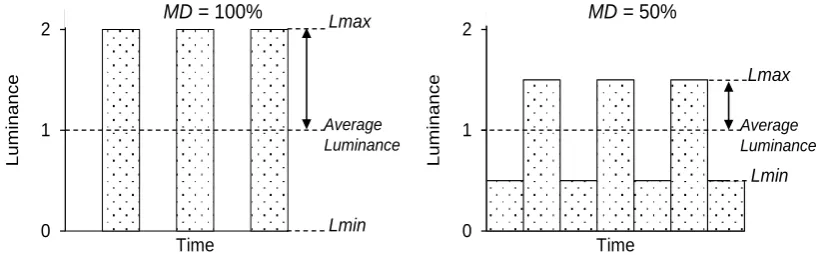
Figure 1.1 Fluctuation of luminance as a function of time for modulation depths of 100 and 50
percent. ... 6
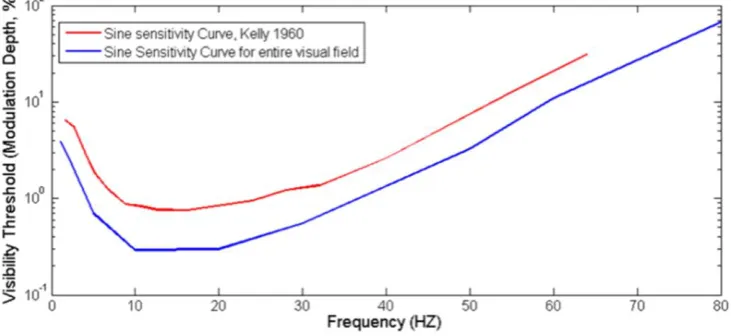
Figure 1.2 Visual Perception Curves (VPC) for the flickering light. ... 7
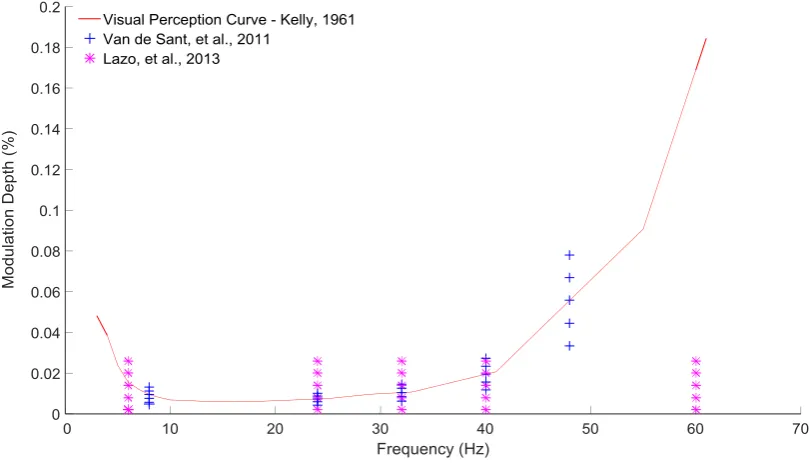
Figure 1.3 The Visual Perception Curve and conditions in two previous related studies ... 8
Figure 3.1 Conditions employed in the current and two related experiments and the Visual Perception Curve ... 13
Figure 3.2 Structure of a trial in the flicker perception task. Repetitive Visual Stimulation (RVS) ... 14
Figure 3.3 A participant wearing the EEG cap and the experimental setup. ... 15
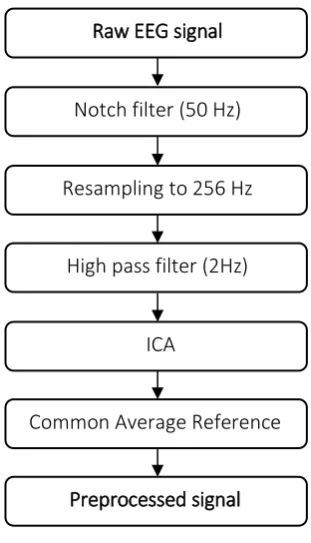
Figure 4.1 Steps in the pre-processing of EEG signal ... 17
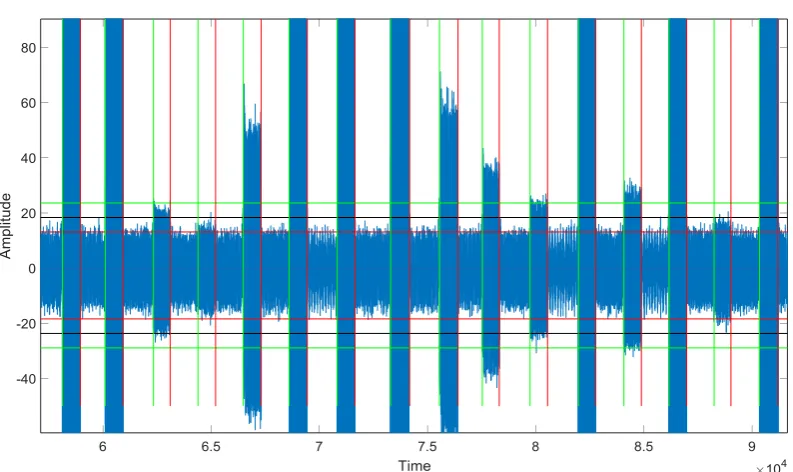
Figure 4.2 Detection of the stimulation events in the photodiode signal. ... 21
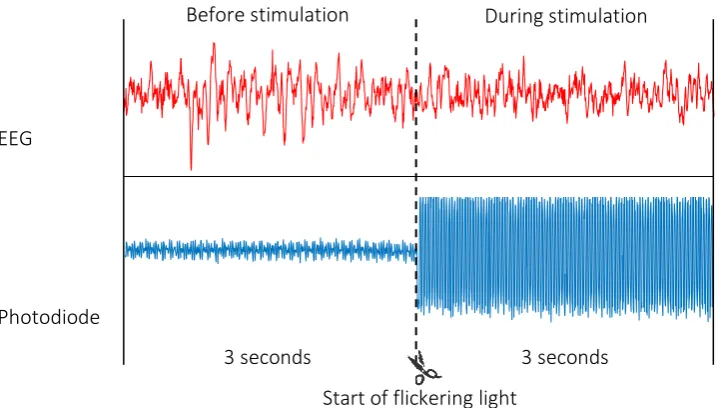
Figure 4.3 Method to segment the epochs. ... 22
Figure 6.1 Power spectrum density average across all participants for each of the conditions at Pz site. ... 28
Figure 6.2 Power Spectrum Density of Pz site averaged for all the participants at the frequency 60 Hz and Modulation Depth 1.4 times the Visual Perception Threshold. ... 30
Figure 6.3 Z-scores score average across subjects at channel Pz channels. Black vertical line represents the frequency of stimulation. ... 28
Figure 6.4 Z-scores topo-plots average for all the participants for the 32 channels. ... 31
Figure 6.5 Distribution of EER values for Pz site for all the participants by frequency. ... 32
Figure 6.6 Distribution of ZEER values for Pz site for all the participants by frequency. ... 33
Figure 6.7 ZEER topo-plots average for all the participants for the 32 channels. ... 34
Figure 6.8 Psychometric function and the underlying binomial distribution for all the frequencies and their corresponding modulation depths (MD). ... 36
Figure 6.9. Visual Perception Curve and the Absolute Modulation and Psychometric Method curves for behavioral responses ... 37
Figure 6.10 ZEER-Psychometric function and the underlying binomial distribution for all the frequencies and their corresponding modulation depths (MD) for the Pz channel. ... 39
Figure 6.11 Visual Perception Curve, Absolute Modulation Depth Curve, Psychometric Curve, and SSVEP Psychometric Curve for Pz. ... 40
Figure 6.12 Visual Perception Curve, and Absolute Modulation Depth Method Curves of Van de Sant, et al., (2011); Lazo, et al., (2013); and Current study. ... 41
ix Figure 9.1 Power spectrum density average across all the subject for each of the conditions at Oz
site ... 51
Figure 9.2 Z-scores score average across subjects at channel Oz channels ... 52
Figure 9.3 Distribution of EER values for Oz site for all the participants by frequency. Boxplots ... 53
Figure 9.4 Distribution of ZEER values for Oz site for all the participants by frequency ... 54
Figure 9.5 ZEER-Psychometric function and the underlying binomial distribution for all the frequencies and their corresponding modulation depths (MD) for the Oz channel ... 56
Figure 9.6 SSVEP-Psychometric Curve for Oz and the Visual Perception Curve ... 57
List of tables
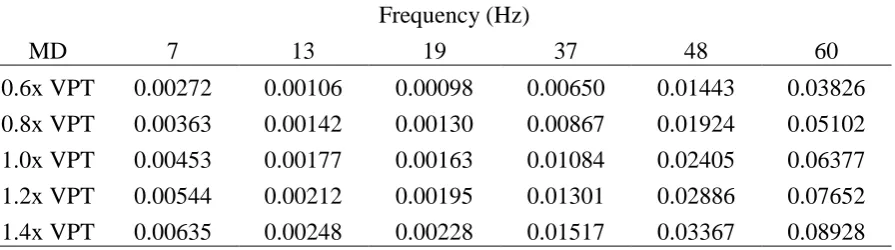
Table 3.1 Absolute values of modulation depth for each frequency in the experimental task ... 13Table 6.1 Average number of “yes” for all participants per condition ... 35
Table 6.2 Average number of trials with ZEER values greater than 0 for Pz site ... 38
x
Abbreviations
AMD Absolute Modulation Depth BCI Brain Computer Interfaces CAR Common Average Reference DC Direct Current
EEG Electroencephalography EER Equal Error Rate
FFT Fast Fourier Transforms
ICA Independent Component Analysis MD Modulation Depth
PSD Power spectrum density RVS Repetitive Visual Stimulation
SSVEP Steady State Visual Evoked Potentials VPC Visual Perception Curve
1
1 Introduction
The Steady State Visual Evoked Potentials (SSVEP) are electrical responses of the brain to
rapid repetitive stimulation (RVS), also known as flicker. SSVEP are used in research and
practical applications because it is a stable response and reflects characteristics of the
stimulation. The SSVEP is detected at the same frequency, or harmonics, of the driving
stimulation. One way to elicit SSVEP is by flickering light tasks where variations in the
frequency and modulation depth (MD), a measure of light change, of the stimuli are associated
with changes in the SSVEP. However, despite the long history of research on visual perception
and on SSVEP, the effects of frequency and MD on SSVEP are not well addressed and in
particular it still unknown the lowest MD at which SSVEP can be elicited. Such knowledge
will allow to create better tasks to elicit SSVEP and with that potentially increase the accuracy
of SSVEP detection, their use to study the visual system and increase their applications.
This work aimed to find the lowest MD necessary to elicit SSVEP for a variety of
frequencies between 7 and 60 Hz. For this pursue, we used MD proportions (0.6 to 1.4) of the
Visual Perception Thresholds (VPT), the lowest MD at which people can perceive flicker in
the light stimulation. During the task participants had to indicate whether or not they perceived
flicker in light stimulation while simultaneously an electroencephalogram (EEG) was recorded.
We analyzed the EEG data to characterize and measure the strength of the SSVEP. In addition,
we incorporated the results of two earlier related studies in order to increase the number of
frequencies and contribute to create a curve with the lowest MD necessary to elicit SSVEP.
1.1 Steady State Visual Evoked Potentials
Steady State Visual Evoked Potentials (SSVEP) are electrical brain responses associated with
the stimulation of the retina by rapid repetitive visual stimulation (RVS), e.g., flickering light
(Regan, 1977). The main distinctive characteristic of SSVEP is that they contain high power at
the same at the frequency of stimulation and/or harmonics thereof (Regan, 1989). SSVEP have
a very stable amplitude (size) and phase (temporal shift) over time (Regan, 1966) and are most
prominent over occipital cortical areas (Vialatte, Maurice, Dauwels, & Cichocki, 2010).
SSVEP are usually obtained by means of electroencephalographic (EEG) recordings, however
they are also obtained by means of magnetoencephalogram (Thorpe, Nunez, & Srinivasan,
2 elicited in the absence of a behavioral response and even when participants are not able to
consciously perceive the flicker (Skrandies, & Raile, 1989).
1.2 SSVEP mechanisms
The nature of the mechanisms that generate SSVEP is still unknown. However, there are two
hypothesis that attempt to explain the possible mechanisms underlying SSVEP. These
hypothesis have two different perspectives of SSVEP; they considered SSVEP to be either the
result of spontaneous or evoked oscillations in the brain.
One hypothesis suggests that SSVEP are the result of the enhancement of the
spontaneous oscillations of the brain. This proposes that with RVS stimulation the brain stops
producing its spontaneous neural activity and enters into an entrained state where neurons
synchronize their firing to the stimuli frequency preventing the brain to return to its spontaneous
activity while the stimulation its present (Regan, 1989). This could be explained by the
resonance phenomena, the behavior of neural oscillators of the brain to match stronger some
of their ongoing responses to certain frequencies of period stimulation (Silberstein, 1995, as
cited in Bayram, et al., 2011).In one study, dedicated to evaluate this hypothesis, frequencies
from 1 to 100 Hz with an increase of 1 Hz were tested in a flicker perception task (Herrmann,
2001). It was found that participants present stronger responses to 10, 20, 40 and 80 Hz
compared to the other frequencies, even when the stimuli at these frequencies were not different
to the rest of the stimuli. This results suggest that SSVEP could be the result of tuning of
ongoing oscillations of the brain to certain frequencies.
The second hypothesis suggests that SSVEP are the result of induced responses
provoked by stimulation. According to this this hypothesis SSVEP might be the result of the
addition of individual and small transient responses, such as Event-Related Potentials (ERPs),
generated by each stimulus (Capilla, Pazo-Alvarez, Darrriba, Campo & Grosss, 2011). This is
similar to explanation of the generation of early ERPs by phase resetting behavior of neurons
(shifts in their dynamic oscillations) instead of additive amplitude changes (Makeig et al.,
2002). A recent study found that SSVEP could be explained by phase resetting (Moratti,
Clementz, Gao, Ortiz, & Keil, 2007). In that study the changes on amplitude and phase,
associated with SSVEP, before and after the start of stimulation were tracked. They found few
changes in amplitude but a strong phase alignment, which suggest that phase alignment could
3
1.3 SSVEP neurophysiology
The three components of the visual system - the retina, the visual path and the visual cortex-
are expected to be involved in the generation of the SSVEP. However, due to the low spatial
resolution of the EEG, which is the main technique for obtaining SSVEP, the mechanisms in
the visual cortex and in the rest of the visual system are vastly unknown. According to Vialatte
and colleagues (2010) the three main visual pathways - the magnocellular, the parvocellular
and the koniocellular – take part in the generation of the SSVEP. The three pathways start in
the retina continue to the lateral geniculate nuclei and project to the visual areas, an in particular
the striate cortex (V1), which is considered to be the strongest local source for SSVEP (Vialatte,
et al, 2010). LGN activation has been found to be associated with the generation of SSVEP
(Krolak-Salmon et al., 2003).
SSVEP could also have contribution from other cortical and subcortical regions, from
the primary visual cortex the SSVEP could propagate to other brain areas. This idea is
supported by the findings that regions beyond the visual system are activated during SSVEP,
these areas include parietal and frontal brain areas (Srinivasan, Bibi, & Nunez, 2006; Pastor,
Valencia, Artieda, Alegre, & Masdeu, 2007) and the cerebellum (Pastor, Artieda, Arbizu,
Valencia, & Masdeu, 2003). It appears that SSVEP manifest in an occipito-frontal network
that is connected to certain extra-cortical structures (Srinivasan, Fornari, Knyazeva, Meuli, &
Maeder, 2007).
1.4 SSVEP characteristics
SSVEP have several distinctive properties that make them a strong and objective measure of
brain response: a) the experimenter has control over the SSVEP as one can manipulate variables
that affect the SSVEP such as spatial frequency, luminance, and hue (Di Russo, Spinelli, &
Morrone, 2001), b) SSVEP are less susceptible than ERPs to artifacts produced by eye
movements (Perlstein, et al., 2003) and to electromyographic noise contamination (Gray,
Kemp, Silberstein, & Nathan, 2003) c) SSVEP are an implicit response as they do not require
a motor response to be elicited and as a result are not highly influenced by effects after sensory
or perceptual encoding stages (Skrandies, & Raile, 1989), d) they have a high signal to noise
ratio (SNR) particularly in occipital sites as only a fraction of the noise contained in the EEG
affects the SSVEP frequency related to the stimulus and at high frequencies the noise is lower
4 valid measure of brain activity as they are elicited by a continuous sustained visual experience
rather than by an isolated stimulus (Di Russo, et al., 2007).
1.5 SSVEP applications
The above distinctive characteristics make SSVEP very useful for research and also practical
purposes. In cognitive neuroscience, SSVEP are often used to indirectly estimate the
propagation of brain activity on a cognitive task (Vialatte, et al., 2010). Some cognitive
processes that have been studied through the use of SSVEP include visual attention (Morgan,
Hansen, & Hillyard, 1996), binocular rivalry (Müller, et al., 1998) and working memory
(Perlstein et al., 2003). In clinical neuroscience SSVEP are used as a diagnostic tool to study
pathological brain dynamics. For instance, it was found that the magnocellular pathway is
affected in patients with Alzheimer. This was found by evaluating the visual system with the
use of SSVEP elicited by stimulation at high frequencies (Sartucci, et al., 2010).
However, by far the main practical application of SSVEP is in the field of Brain
Computer Interfaces (BCI). The objective of BCI is to establish a direct communication
between a brain and a computer that allows a person to control or communicate with a device
without muscular intervention (Van Erp, Lotte, Tangermann, 2012). The main reason SSVEP
are used in BCI is because the frequency of the stimulation can be reliably and quickly
recognized in the SSVEP frequency domain. Other characteristics that make SSVEP very
suitable for BCI are that they have a very high temporal resolution for data acquisition (~0.05
seconds; Nicolas-Alonso, & Gomez-Gil, 2012), people require minimal training to perform a
SSVEP task (Vialete, et al., 2010), the cost of the SSVEP necessary equipment is low compared
with other neuroscience techniques (Luck, 2014), there are years of research on SSVEP and
BCI (Norcia, et al., 2015), and SSVEP allow people a relatively free movement of their head
and eyes compared with other neuroscience methods such as eye tracking.
A common example of a SSVEP-based BCI application is the control of a wheelchair.
In a BCI-controlled wheelchair system, four sources of light can be associated with four
directions: up, down, right and left. When a person wants to move the chair in a certain direction
they need to attend the light stimulus associated with that command. The computer program
would analyze the brain activity, identify the frequency of the SSVEP and send the command
5
1.6 SSVEP limitations
Despite the strengths of the SSVEP, they also have some side effects and disadvantages. One
disadvantage of SSVEP is the possibly harmful side effects of the exposure to fluctuating light.
It has been documented that a few seconds of exposure to flickering light with bright colors at
low to medium frequencies can trigger epileptic seizures (Fisher, Harding, Erba, Barkley, &
Wilkins, 2005). One of the most infamous cases is the one of the Japanese cartoon "Pokémon”.
In an episode repetitive visual stimuli induced photosensitive epileptic seizures in hundreds of
viewers (Ishiguro, et al., 2004). Furthermore, high frequencies may also have other undesirable
effects. It has been reported that long (5 minutes or more) and continuous exposure to flickering
light at unperceivable high frequencies can induce migraines (Vanagaite, et al., 1997) or
impaired visual performance in an office environment (Kuller, & Laike, 1998).
The influence of sensorial and cognitive processing on the perception of RVS and
subsequently on SSVEP are also not very well addressed. Habituation and attention are only
two examples of processes that can influence SSVEP. Prolonged view of flickering stimulation
at a particular frequency causes adaptation (Pantle, 1971), which can already reduce the EEG
amplitude (Bergholz, Lehmann, Fritz & Rüther, 2008). The perception sensitivity to RVS at
low or medium frequency (e.g., 30 Hz) can be reduced to by adaptation to a higher
unperceivable flickering stimulation (e.g., 60 Hz) (Shady, MacLeod, & Fisher, 2004). Visual
attention is also associated with pupil dilation which could increase retinal luminance and affect
the effectiveness of an SSVEP stimulus (Janisse 1997 in Silberstein, et al., 1990). SSVEP are
also enhanced by selective attention to an attended versus and unattended stimulus (Morgan,
Hansen, & Hillyard, 1996).
1.7 SSVEP tradeoff strength and discomfort
For SSVEP based BCI applications and to reduce the possible side effects of flickering light,
the RVS is preferred to elicit strong SSVEP responses, while not causing visual discomfort to
people. It should be pointed out that this is not always the case, for instance in for clinical
applications where the goal is to test integrity of the visual pathway like in patients who suffered
epileptic seizures, RVS may be preferred to cause discomfort to people (Trenité, Binnie, &
Meinardi, 1987). The case of RVS for SSVEP-based BCI is a difficult endeavor, due to the fact
that both stimulation at low and high frequencies have their advantages and disadvantages.
6 discomfort as people can perceive the flicker, however the SSVEP amplitude is greater for low
frequencies stimulation, particularly around the EEG alpha range (8–13 Hz), where the SSVEP
signal has the highest amplitude (Regan, 1989). On the other hand stimulation at high
frequencies and at medium to low MD (smaller than the MD at the VPT) are less uncomfortable
to people as the stimulation is perceived as continuous, but this frequency range and MD
induces weaker or no SSVEP responses (Van de Sant, et al., 2011).
1.8 Visual perception and SSVEP
SSVEP are very sensitive to characteristics of the stimulus such as spatial frequency,
luminance, and color (Di Russo, Spinelli, & Morrone. 2001). Among those characteristics, the
frequency and MD are particularly relevant as they modulate the amplitude of SSVEP (Regan,
1989). The frequency measured in (Hz) is the number of repetitions of the stimulus per unit of
time (seconds). MD is a measure of light variation that quantifies the relation between the
spread and sum of two luminances during period oscillations (Perz, et al., 2011). For a
time-varying luminance, such as flickering light, MD is an indication of the ratio between the
average light level and the amount of change in the light and can be calculated according to the
equation 1.1. In addition, the concept can be visualized in Figure 1.1.
MD = * 100 Lmax - Lmin
Lmax + Lmin
where:
MD = Modulation Depth
Lmax = maximum luminance
Lmin = minimum luminance
Eq. 1.1 0 1 2 Lu m ina nce Time Lmax
MD = 100%
Lmin Average Luminance 0 1 2 Lu m ina nce Time Average Luminance Lmax
MD = 50%
[image:17.595.84.502.570.697.2]Lmin
7 In addition, frequency and MD determine the human perception of RVS and such
relationship is described by the temporal contrast sensitivity function (Kelly, 1961). The curve
is known as Visual Perception Curve (VPC) and it defines the Visual Perception Threshold
(VPT)in terms of frequency and MD. A VPT is the lowest MD for a particular frequency at
which people can perceive RVS as discontinuous. Usually people perceive as discontinuous
stimulation RVS with MD on and above the VPT and as continuous stimulation RVS with MD
below the VPT. From frequencies above 10 Hz the VPC has an increase in MD with an increase
in frequency. For instance, at low frequencies (e.g., 10 Hz) only small changes in MD are
necessary for people to detect the RVS as discontinuous. While at high frequencies (e.g., above
40 Hz), higher MD are required for people to detect the RVS as discontinuous (Figure 1.2).
A more recent version of the VPC, using the entire visual field and controlling for
adaptation was created recently at Philips Research (Perz, Sekulovski, & Vogels, 2011). The
recent VPC has a similar shape to the Kelly’s curve (1961), but it has lower VPTs. The two
curves can be seen in Figure 1.2.
We consider the VPC by Perz and colleagues (2011) to be more appropriate than the
VPC by Kelly (1961) for our study because of the following reasons: Perz and colleagues
evaluated the a visual field of 137° in a binocular experiment instead of the only 65 ° in Kelly’s
monocular experiment, they controlled for adaptation in the experimental task as they used a
staircase detection task, instead of the tuning methodology of Kelly. In the Perz and colleagues Figure 1.2. Visual Perception Curves (VPC) for the perception of
[image:18.595.118.484.392.560.2]8 detection task MD increased or decreased until the participant response change from “yes” to
“no” or vice-versa which prevent for adaptation. In both studies stimuli were presented centrally on the retina. Moreover, the Perz’s study has an additional advantage for our study,
we can use the same setup they used because their equipment is at our disposal at Philips
Research, and that set up has been used in related relevant studies.
1.9 The Visual Perception Curve and SSVEP
To our knowledge there are few studies that investigated how the frequency and MD of the
RVS affect the SSVEP (Van de Sant, et al., 2011; Lazo, et al., 2013). Van de Sant et al. (2011)
exposed participants to RVS light at frequencies of 8, 24, 32, 40 and 48 Hz and MD of 0.6, 0.8,
1.0, 1.2, 1.4 times the VPT in Kelly’s VPC (1961). They found SSVEP for all the frequencies,
except 8 Hz, at MD starting below the VPT. In the second study, Lazo et al. (2013) investigated
five frequencies 6, 24, 32, 40, 60 Hz at five absolute MDs 0.002, 0.008, 0.014, 0.020, and 0.026.
They found SSVEP only for the frequencies 24 and 32 Hz at MD starting at 0.008 and for 40
Hz at MD starting at 0.002. SSVEP were not found for the lowest frequency 7 Hz, nor for the
highest frequency 60Hz. A visual representation of the conditions in these two studies can be
seen in Figure 1.3.
[image:19.595.82.487.465.696.2]9
2 Purpose of the study
Since the first time SSVEP were characterized (Adrian & Matthews, 1934), they have been a
useful tool to study the brain activity associated to visual perception (Reagan, 1989) and in the
last decade their use have increased to more practical applications (see a review Norcia, et al,
2015). However, one issue concerning SSVEP that has not been addressed is regarding the
neural model describing the human sensitivity to the perception of RVS. The effect of
frequency and MDs and in particular the value of the lowest MD necessary to elicit SSVEP are
unknown. That knowledge could help increasing the accuracy of SSVEP detection and help to
develop better models to evaluate the visual system and also increase their applications.
However, besides the two studies conducted at Philips Research we have no knowledge of
research addressing this issue.
We considered that investigating the effect of the driving frequency on SSVEP and in
particular finding the lowest MD necessary to elicit SSVEP are particularly relevant for the
research and the practical application of SSVEP. That can help to develop better task
minimizing any adverse effect from RVS.
2.1 Objectives of the study
We aimed to study the effect of frequency and MD on SSVEP and to find the lowest MDs
necessary to elicit SSVEP for frequencies in the range of the VPC (1 to ~70 Hz) and with that
help to create a SSVEP contrast sensitivity curve, a curve with the values of the lowest MD
necessary to elicit SSVEP for a wide range of frequencies. We also aim at examining the
interaction between different range of frequencies (low, medium and high) and MD (below, at
and above the VPT) and find if they affect SSVEP in a similar manner as in the visual
perception research: an increase in frequency requires an increase in MD.
Thus, we have three goals in this study. The first goal is to investigate it is possible to
elicit SSVEP around the VPC, and if so for what frequencies and MDs. In particular we are
interested to find the lowest MD necessary to elicit SSVEP. The second goal is to examine how
the interaction between frequency and MD affect SSVEP. The third goal is to create a SSVEP
contrast sensitivity curve by combining our results with the two previous related studies.
We intend to use the Perz’s VPC (Perz, et al, 2011) as we mentioned in the introduction
section is better suited for our study than the Kelly’s VPC (Kelly, 1961). From here on, we will
10
2.2 Research questions
1. Is it possible to elicit SSVEP with MDs proportions (0.6 to 1.4) of the VPT for
frequencies in the range of 7 to 60 Hz by RVS light? If yes, for what frequencies and
MDs and what are the lowest MDs necessary to elicit SSVEP?
2. How do the frequency and MD of the RVS affect SSVEP?
3. Is the SSVEP contrast sensitivity curve similar to the VPC?
2.3 Hypothesis
1. SSVEP are elicited by RVS with MDs around the VPT. However this occur only for
MDs that are equal of higher than the VPT for SSVEP. The lowest MDs necessary to
elicit SSVEP are above the VPT of the VPC.
2. There is an interaction between frequency of stimulation and MD: an increase in
frequency requires an increase in MD to elicit SSVEP. We expected the SSVEP-VPC
follows a similar pattern to the VPC.
1. The MD necessary to elicit SSVEP at high frequencies is higher than the VPT
at low frequencies.
2. There is a high increase in MD necessary to elicit SSVEP for frequencies higher
than 30 Hz as in the VPC.
3. The SSVEP contrast sensitivity curve has a similar shape to the VPC. However, the
11
3 Methods
We created RVS light perception task with 6 different frequencies in three frequency ranges
low, medium and high (7, 13, 19, 37, 48 and 60 Hz ) combined with 5 MD proportions of the
VPT (0.6, 0.8, 1.0, 1.2, and 1.4).
3.1 Participants
The group of participants consisted of 24 healthy volunteers (17 males and 7 females, Mean
age = 26.4; SD = 6.0). The participants were recruited among the Philips Research employee
population at High Tech Campus, Eindhoven. All participants had normal or corrected to
normal vision. At the end of the experiment participants were rewarded with chocolate and a
hair wash coupon to remove the gel used during EEG recording. Three additional participants
were excluded from the final group due to problems with the EEG recording (n =2) or recording
the RVS events (n = 1).
3.2 Inclusion and exclusion criteria
In order to be included in the study, participants had to be between 20 to 50 years old. They
also had to be healthy: no vision related problem, no history of epilepsy, neurophysiological
disorder, migraine, or sleep problems. Participants were excluded in case of: colorblindness,
suspicion or report of an aberrant light sensitivity, photosensitizing medication, sleep disorders
or visual impairments.
3.3 Ethical considerations
The research protocol was approved by the Philips Research Ethics committee board (Internal
Committee Biomedical Experiments). Prior to the study, participants received a consent letter
with all details related to their involvement in the study. At the start of the study the participants
signed the letter.
3.4 Materials
The experimental setup consisted of the following hardware: a) 2 LED panels 57.5 cm x 57.5
cm equipped strips of white lamps, b) Agilent N3300A System DC Electronic Load, c) Agilent
12 electrode setup placed on a textile cap according to the international 10-20 system, f)
Photodiode, g) Laptop with Windows 7 operating system, h) 18-Key USB Numeric Keypad.
The RVS light was presented via a custom made program in JAVA. The waveform
specifications were sent to the Agilent 33522A function generator and then to the LED panels
using the TCP/IP interface. Once the waveforms were created, they passed through the Agilent
N3300A System DC Electronic Load in order to regulate the current load before they reached
the lamps. The light stimulation was reflected on a white wall with a fixation cross in the
middle. The participants were instructed to look at the fixation cross during the experiment.
The USB numeric Keypad was connected to the Laptop to receive the input from the
participants. The BioSemi ActiveTwo EEG Acquisition System recorded the EEG and the light
stimulation signals via the use of an EEG cap and a photodiode respectively. All data were
saved on the laptop.
3.5 Stimuli
The light stimulation was delivered via two LEDs panels with a size of 57.5 cm x 57.5 cm and
equipped with four rows of cold warm white LEDs. For this experiment only the cold LEDs
were used. The LEDs panels were suspended on a stand at a height of 2.5 and illuminated a
white wall in front of the participant. The LEDs panels were controlled via an Agilent function
generator. The system was calibrated to ensure that the correct output was delivered. The light
stimulation covered a total area of approximately 210 cm x 360 cm (vertically x horizontally).
Participants were at a distance of 70 cm and have a visual angle of 137°. These devices for light
stimulation resemble the conditions of a typical office and have worked properly in previous
experiments at Philips Research.
3.6 Stimulus selection and design
The 30 conditions were created from the combination of 6 frequencies (7, 13, 19, 37, 48 and
60 Hz) and 5 MD (0.6, 0.8, 1.0, 1.2, and 1.4) times the corresponding VPT of each frequency
at the VPC. The absolute values of the MD are listed in Table 3.1.
The selection of these frequencies and MDs was motivated by our aim to combine our
results with the two previous related studies (Van de Sant, et al., 2011; Lazo, et al., 2013), which
allowed us to have more conditions around the VPC. The conditions of the previous and our
13 medium (12-30 Hz) and high frequencies (>30 Hz), and to cover areas that were not covered
in the previous studies.
We chose in this study square waves, instead of sine waves, because square waves were
[image:24.595.78.526.180.305.2]used in the two previous related studies we intended to combine our results and because square Table 3.1
Absolute values of modulation depth for each frequency in the experimental task
Frequency (Hz)
MD 7 13 19 37 48 60
0.6x VPT 0.00272 0.00106 0.00098 0.00650 0.01443 0.03826
0.8x VPT 0.00363 0.00142 0.00130 0.00867 0.01924 0.05102
1.0x VPT 0.00453 0.00177 0.00163 0.01084 0.02405 0.06377
1.2x VPT 0.00544 0.00212 0.00195 0.01301 0.02886 0.07652
1.4x VPT 0.00635 0.00248 0.00228 0.01517 0.03367 0.08928
Note. MD = Modulation Depth; VPT = lowest MD at which participants perceive RVS as discontinuous, the values were obtained from the Visual Perception Curve (Perz, et al., 2011); x = times, for instance 0.6x VPT is equal to 0.6 times the VPT
[image:24.595.111.505.386.614.2]14 waves have a higher accuracy than sine waves for eliciting SSVEP at the frequency of
stimulation (Teng, et al., 2011). The waves had a duration of 3 seconds (6248 samples at a
sample rate of 2048Hz). The average light luminance level was 1000 Lux and the color
temperature was 4000 K. The waveforms were created using the following equation:
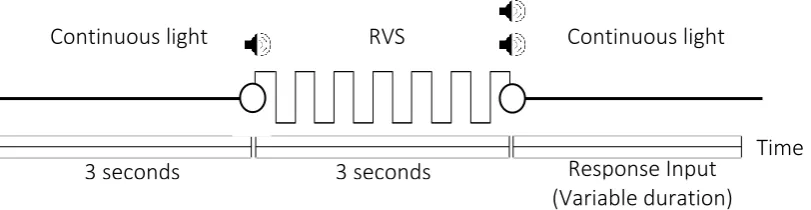
3.7 Experimental Task
The experimental task consisted of 300 trials that were the result of 30 RVS waveforms that
were repeated 10 times each. A trial consisted of 3 seconds of continuous light, followed by a
beep and 3 seconds of RVS which were followed by 2 beeps and a period of continuous light
that continued until the participant gave a response. See Figure 3.2 for a visual representation
of one trial.
The trials were randomly organized for each participant in three blocks of 100 stimuli.
Each block lasted approximately 14 minutes and was followed by a break of a variable duration
(3-10 minutes). Participants respond whether or not they perceived flicker by pressing “yes” or
“no” stickers over the buttons on a number pad (6 for “yes” and 4 for “no”).
Waveform = AvLL + square (T* F) * MD * AvLL
where:
AvLL = Average Light Level
square () = square waves T = Time (seconds) F = Frequency (Hz)
MD = Modulation Depth (%)
Eq. 3.1
3 seconds 3 seconds Response Input
(Variable duration)
[image:25.595.97.503.473.578.2]Continuous light RVS Continuous light
Figure 3.2. Structure of a trial in the flicker perception task. Repetitive Visual Stimulation (RVS).
15
3.8 Experimental session
The study consisted of one experimental session of approximately one hour and fifteen minutes.
At the beginning of the session the experimental leader explained the goal of the study and
answered any questions that participants had regarding the procedures to be conducted during
the session. After that participants were seated comfortably on a chair in front of the white wall
where the light was reflected. Then, we proceeded with placing an EEG cap on the head of the
participant, and added conductive gel to the electrodes. Next, we measured the impedances of
the EEG signal, and made sure the impedances of all the channels were below 20 µV.
Once the EEG cap was set, participants were again explained the task they needed to
perform and were allowed to do a short practice run. During the experiment participants were
instructed to look with their two eyes open at a fixation cross on the middle of the wall. Between
blocks participants had a break where they had the opportunity to relax and drink some water.
At the end of the session the experimental leader answered any questions that the participants
had regarding the experiment. Also, the experimental leader gave the participants a chocolate
[image:26.595.171.432.419.606.2]and a hair wash coupon to remove the gel left in their hair.
16
4 Data collection
Electrical brain activity was recorded from 32 scalp sites (Fp1, AF3, F7, F3, FC1, FC5, T7,
C3, CP1, CP5, P7, P3, Pz, PO3, O1, Oz, O2, PO4, P4, P8, CP6, CP2, C4, T8, FC6, FC2, F4,
F8, AF4, Fp2, Fz, and Cz) positioned according to the international 10-20 system using an
elastic cap. The signals were recorded at a sampling rate of 2048 Hz using the BioSemiTM
ActiveTwo signal acquisition system (BioSemi products, 2016, July 16). Two additional
electrodes, a Common Mode Sense active electrode and Driven Right Leg passive electrode
were used to replace the ground and references electrodes respectively.
The flickering light was recorded using a photodiode that recorded the variations of the
light reflected in the wall. Large variations in the average light were used to identify the start
and the end of the trials. After the experiment, the events were detected in the photodiode.
Then, the time of the start and the end of the events were marked in the EEG signal. This
process is explained later in the preprocessing section. The photodiode was placed in a small
table at the left side of the participants at a distance of approximately 70 cm to the wall. In
addition, the behavioral responses of the participants were logged in a text file together with
the frequency and MD of the corresponding trial.
4.1 Data pre-processing
EEG and light signals were preprocessed using EEGLAB (Delorme & Makeig, 2004) and
custom-made MATLAB scripts. We followed the procedures employed in the two previous
related studies (Van de Sant, et al., 2011; Lazo, et al., 2013). Signals were notch filtered at
power-line frequency (50Hz) and then re-sampled at 256 Hz. Then, signals were high pass
filtered at 2Hz and blinks components were removed by Independent Component Analysis
(ICA). After that signals were referenced to common average reference (CAR) excluding T7
and T8 channels. Finally, the data was separated into non overlapping epochs. The
17
4.1.1 Notch filter (50 Hz)
The preprocessing started by removing the external noise that comes from the AC power line.
For this purpose we applied a notch filter at 50 Hz to remove the external noise coming from
the AC power line.
4.1.2 Resampling
The original rate of the recording of each measurement point, called sample, was at 2048 Hz.
This implies that for each second we had 2048 points of information, which requires a long
time for processing. So as to reduce the time necessary to process the signal, we resample from
the original 2048 Hz to 256 Hz.
4.1.3 High pass filter (2 Hz)
The EEG signal below 2 Hz is often affected by drifts in the impedance of electrodes and
sweating. In order to reduce those effects a high pass filter with a cutoff at 2 Hz was applied by
a linear-phase finite impulse response (FIR) filter to eliminate DC shifts (Widmann, Schröger,
& Maess, 2015).
Raw EEG signal
Notch filter (50 Hz)
Resampling to 256 Hz
High pass filter (2Hz)
Common Average Reference ICA
[image:28.595.217.373.67.339.2]18
4.1.4 Independent Component Analysis (ICA)
The EEG signal is susceptible to eye blinks and other artifacts, which represents an issue to its
adequate interpretation and analysis. The ICA technique separates the different sources of the
EEG signal and with that helps to remove the contribution of these artifacts. For ICA we
followed the procedure employed by Lazo, et al., (2013), the equations presented below were
taken and adapted from their study. The artifact correction extracts from the recorded signal
the information that corresponds exclusively to cerebral sources. The signal can be represented
as the following equation:
ICA is a blind source separation method that enables representing the data as a linear
combination of statistically independent signals (sources). The artifact components of an EEG
signal can be estimated by ICA, if we assume that the potentials of artifacts in EEG are
independent from cerebral EEG potentials, the artifacts and signals. ICA can be explained with
the cocktail-party problem (Hyvärinen, Karhunen, & Oja, 2001) and the signal can be modeled
according to the following equation:
The goal is to estimate the mixing components and coefficient from the recorded signal. The model can be written as follows:
𝐸𝐸𝐺𝑟𝑒𝑐 𝑡 = 𝐸𝐸𝐺𝑐 𝑡 + 𝐸𝐸𝐺𝑛 𝑡 𝑁
𝑛=1
where:
𝐸𝐸𝐺𝑟𝑒𝑐 𝑡 = recorded EEG signal 𝐸𝐸𝐺𝑐 𝑡 = signal from cerebral sources 𝐸𝐸𝐺𝑛 𝑡 = signal from artifactual sources
Eq. 4.1
𝑥𝑖 𝑡 = 𝑎𝑖1𝑠1 𝑡 + 𝑎𝑖2𝑠2 𝑡 + ⋯ + 𝑎𝑖𝑛𝑠𝑛 𝑡 for all 𝑖 = 1, … , 𝑛,
where:
n: number of people speaking simultaneously in a room and number of microphones
𝑥𝑖 𝑡 : microphone measure
𝑠𝑛 𝑡 : speech signal emitted by the speaker
𝑎𝑖𝑗: distance (parameter) between the microphones and speakers
Eq. 4.2
Eq. 4.3
19 The components 𝑠𝑖 𝑡 are inversely given by:
Then, by assuming certain restrictions on s and M it is possible to estimate them. The assumptions of ICA on the sources sn are:
1. All the sources are mutually independent to estimate W
2. All but one component must have non-Gaussian distributions
3. The number of independent components is equal to the number of observed mixtures
4.1.5 Common Average Reference (CAR)
CAR is a spatial filter that creates a common average with the values of all the electrodes and
subtract that value from each channel. CAR works as a filter that reduces the activity that is
present in large sections of the electrodes. The CAR method has proved to be comparable with
the ear-reference method for referencing (McFarland, McCane, David, & Wolpaw, 1997). The
CAR was computed with the following equation:
After these steps the pre-processed signal was saved in separated files for each participant.
ViCAR = V iER−
VjER n j=1
n
where:
𝑉𝑖𝐸𝑅 = to the potential between the ith channel and the reference
n = to the number of channels in the montage.
Eq. 4.6 Eq. 4.5
s=Wx,
where:
W = to the M (unmixing matrix) where:
x = is a vector with 𝑥1 𝑡 , … 𝑥𝑛 𝑡 as elements
M = is an n x n Matrix with 𝑎1 𝑡 , … 𝑎𝑛 𝑡 as elements
s = is a vector with 𝑠1 𝑡 , … 𝑠𝑛 𝑡 as elements
𝑥 = 𝑎𝑖𝑠𝑖
𝑛
𝑖=1
20
4.1.6 Data segmentation and averaging
Once the signal was preprocessed, first we identify the start and the end of the 3 seconds of
RVS stimulation in the photodiode signal. Then we saved the information regarding the start
and the end of the events detected in the light signal and added that info to the EEG signal.
Then, these epochs on the EEG signal were segmented.
4.1.7 Identify events in photodiode signal
With the use of a photodiode we recorded the light stimulation during the entire session
simultaneously and at the same sampling rate as the EEG signal. In the light signal we identify
the stimuli by finding large changes in the average signal that correspond to the presentation of
the stimuli.
With a custom made script we set a threshold, line red in Figure 4.2, and searched for
peaks that crossed that threshold. Once we found a peak that crossed the threshold we evaluated
if the 767 following consecutive points also crossed the threshold (768 in total which
correspond to the length of the 3 seconds of stimulation). If any of the 767 following points did
not cross the threshold we searched for the next point that crossed it and repeated the procedure.
If 768 consecutive points crossed the threshold, we consider them to be an event, and we
marked the first (green vertical line) and the last (red vertical line) point, that match to the start
and the end of the stimuli. We saved that data to later overlap with the EEG signal and use it
as a reference for EEG processing.
Most of the 300 trials during the experiment were detected automatically with the above
mentioned script that searched for differences in the average light. However, some events were
not detected because the change in the signal was small compared with the average light
(continuous light). These events were usually events in the low frequencies and low MD
conditions of the experiment. This happened in around 10 percent of the total events per
participant. For those not detected events, we proceeded to manual detection that consisted on
visual inspection for variation in the signal and manual noting the start and the end of each
event and then merging those with the automatically detected events. This manual correction
was very time consuming and required a considerable amount effort, but we were able to detect
21
4.1.8 Epochs segmentation
The events detected in the previous step were used to extract epochs from the EEG signal
corresponding to the RVS. The EEG signal was separated into non-overlapping epochs of 6
seconds. This period correspond to 3 seconds after the start of stimulation and 3 seconds before
the start of stimulation (see Figure 4.3).
4.1.9 Reject epochs
The artifacts were rejected after analyzing the energy of the signal. EEG signal with peaks
higher than the sum of the mean of the signal and four times the standard deviation of the signal
were rejected in order to exclude trials contaminated with motor or other artifacts. This criteria
is represented in the equation 4.7.
[image:32.595.99.496.81.317.2]22 EEG
Photodiode
Start of flickering light
Figure 4.3. Method to segments the epochs. The method consists of detecting the start of the flickering light (stimulation) in the photodiode signal and using it as a reference. Two sets of epochs are created with the reference of 3 seconds, before and after the stimulation.
Before stimulation During stimulation
3 seconds 3 seconds
Eq. 4.7
EpochVar < {meanVar(channel) + 4*stdVar(channel)} where:
channel = channel number
EpochVar = variance of the current epoch
meanVar(channel) = variance of the mean of the current channel across all conditions
[image:33.595.99.459.75.279.2]23
5 Data Analysis
In the data analysis we followed the procedures employed in the two previous related studies
(Van de Sant, et al., 2011; Lazo, et al., 2013) that has been developed in Philips Research
because they proved to be effective to detect SSVEP and because this facilitates the
combination of their results with ours. The data analysis consisted of the following steps: 1)
Power spectral density, 2) Z-score, 3) Equal Error Rates, and 4) Z-score at the Equal Error Rate.
This analysis allowed us to estimate the strength of the SSVEP and investigate their relationship
with visual perception. This section gives a brief explanation of each method.
5.1 Power Spectral Density (PSD)
PSD is a measure of the power of a signal in the frequency domain. PSD is calculated from the
Fast Fourier Transform (FFT) of a signal and it provides a way to characterize the amplitude
versus frequency content of the EEG signal.
We applied the FFT into segmented successive time block windows instead of the full
epochs. Our epochs had a duration of 3 seconds (768 samples at a sampling rate of 256 Hz): 3
seconds before the start stimulation onset (baseline) and 3 seconds after the start of stimulation
(RVS). We used a window of length of 256 samples and an overlap of 128 samples (0.5
seconds). This procedure resulted in 5 half overlapping windows with a length of 256 samples
for each 3-second long interval (before and during stimulation).
To plot the data, we selected a channel of interest and take the PSD MATLAB structure,
where the values are stored in a 129 length vector. Each data point correspond to one frequency
from 1 to 1-128 Hz. Next, we took the mean of the all the PSD epochs that correspond to a
condition and we plotted the conditions in the frequency domain. The same procedure was
applied for the segments before and after the start of the stimulation. The power of PSD in the
plots is represented in microVolt^2/Hz. The Hz unit depends on the frequency resolution, and
in our case it was 0.333 Hz the resolution, so our unit for PSD is uV^2/0.33 Hz.
5.2 Z-scores
Z-scores (standardized scores) were used to estimate the intensity of the SSVEP response. An
individual Z-score was calculated for each trial during stimulation by comparing the PSD log
24 of their trials was subtracted by the mean of all baseline trials and then divided by the standard
deviation of all the baseline trials (see equation below):
5.3 Equal Error Rate (EER)
To determine whether or not SSVEP were elicited due to the RVS, we found the point at which
the probability of type I error is equal to the probability of type II error. This point is the one at
which the False Positive (FP) and False Negative (FN) rates are the same. We call this point
the Equal Error Rate (EER) and it is calculated according to the equation 5.2 shown below.
EER are very useful for biometric systems, like the EEG, to have an optimal identification of
the information collected by the device. The lower the equal error rate value, the higher the
accuracy of the measurement.
5.4 Z-score at the Equal Error Rate (ZEER)
The Z-scores allow to determine the existence of statistically significant difference between
two samples that are normally distributed (in our case the log PSD). The multiplication of the
standard score and EER gives us a balanced combination of both extracted features to define
the measure of the SSVEP intensity.
Zscore = x -
where:
x= log PSD’s epochs of one trial during stimulation
= mean of log PSD’s epochs of all trials before stimulation
= standard deviations of log PSD’s epochs of all trials
before stimulation
Eq. 5.1
Eq. 5.2
where:
1= mean of log PSD’s epochs of all trial during stimulation
2 = mean of log PSD’s epochs of all trials before stimulation
= standard deviations of log PSD’s epochs of all trials
); * 2 ( 1 2
p
25 The measure of the intensity of SSVEP, based on a low standard score can be boosted
by the EER in case that the distribution of the samples during and before stimulus has a small
overlap. On the contrary, a high SSVEP intensity measure based on a high standard score can
be reduced if there is a big overlap in the distributions. The ZEER unit (z-scores at the EER)
was computed as follows:
5.5 Estimation methods for sensitivity curves
We created sensitivity curves with the use of the behavioral data and the SSVEP signal. The
sensitivity curves we created are our approximations to the VPC (Perz, et al., 2011). The
sensitivity curves contains the lowest MD necessary for people to perceive the flicker for the
behavioral data and to elicit SSVEP for the SSVEP signal. To create these curves we made use
of the absolute modulation depth and the psychometric method. We provide a description of
these methods in the following paragraphs.
5.5.1 Absolute Modulation Depth (AMD) method
The AMD method finds the lowest MD for a certain frequency that passes a predefined
threshold. We set this threshold at 50% of the total responses for a condition (a frequency and
a MD) for both behavioral responses and SSVEP. This 50% detection rate in “yes/no” task is
often called detection threshold and it is considered not to be reached by guessing (Rose, Teller,
& Rendleman, 1970). Moreover, this threshold has used in previous related studies (Lazo, et
al., 2013; Perz, et al., 2011; Van de Sant, et al., 2011).
In the case of behavioral responses, for a condition, the threshold was reached when in
at least half of the trials participants indicated that they perceived flicker (i.e. 5 out of 10 trials).
In the case of the SSVEP the threshold was reached when in half of the trials the ZEER values
where higher than 0. A ZEER values higher than 0 is an indication than the SSVEP was detected
by our method.
if EER ≥ 0.5 or Z-score ≤ 0 then ZEER = 0
if EER ≤ 0.5 or Z-score ≥ 0 then ZEER = Z-score * (1 – EER)
26
5.5.2 Psychometric method (PM)
The Psychometric method makes use of the non-linear square regression model. With the use
of regression analysis the observed data is modeled by a parametric function in order to estimate
the coefficients of the nonlinear regression function. As in the case of the AMD we set the
selection threshold at 50 % of the trials for a condition “yes” responses for behavioral data and
50 % of ZEER values greater than 0 for SSVEP data. The equation for the Psychometric
function is shown below:
Eq. 5.4
L(x; α, β) = 1 1 + 𝑒𝑎−𝑥𝛽 where:
definition range: x ϵ (-∞, +∞) parameter set: θ = (α, β)
with:
α ϵ (-∞, +∞) position parameter
27
6 Results
In this section we present the results of the analysis of the behavioral and EEG data. The section
is divided in three parts corresponding to three different analysis sections. First, we analyzed
the electrical brain activity and characterized the SSVEP. Then, we analyzed the behavioral
responses, and created sensitivity curves. After that, we created sensitivity curves for the
SSVEP data. Finally, we combined our results with the two previously related studies
conducted at Philips. The results are organized in the following three sections: 1) SSVEP
analysis, 2) Behavioral responses analysis and 3) SSVEP and visual perception.
6.1 SSVEP analysis
The SSVEP analysis included four steps: 1) PSD estimation, 2) Z-score calculation, 3) EER
estimation, and 4) ZEER calculation. The analysis allowed us to characterize the SSVEP and
have a measure of their strength.
We analyzed our data with three arrangement of electrodes: 1) Average of P3, Pz, P4,
O1, Oz and O2; 2) Individual Pz, and 3) Individual Oz. We selected and presented the results
of only Pz as it shows most consistent results and strong SSVEP response in the middle
compared to the other arrangements: SSVEP were stronger in Oz and weaker on the average
arrangement of electrodes. However, we also included the results corresponding to the analysis
of Oz in the Appendix A.
6.2 PSD
We compared the PSD during stimulation against the PSD before stimulation, which is
regarded as the baseline. Peaks during stimulation compared with the baseline indicate higher
PSD power as a result of the stimulation (Figure 6.1).
Peaks were observed at 37, 48 and 60 Hz for the MD 0.6x and 0.8x the VPT. The three
lowest frequencies (7, 13, and 19 Hz) did not have noticeable peaks for any of the MDs. In
addition, it can be seen that for frequencies below 20 Hz there is a decrease in power during
28
[
uV
2 /0
.3
3
[image:39.792.86.748.69.469.2]Hz]
Figure 6.1. Power spectrum density (PSD) averaged across all participants for each of the conditions at Pz site. Columns show different Modulation Depths and rows show different frequencies. The unit in vertical axis is [uV2/0.33Hz] and in the horizontal axis is [Hz]. Red and blue line represent the PSD before and during stimulation respectively. Black dotted line represents the frequency of stimulation.
29 In order to provide a more precise visualization the PSD, a single condition is depicted
in the Figure 6.2. The Figure correspond to the Pz site at 60 Hz and at the MD 1.4x VPT. It can
be seen that during stimulation there is a peak at 60 Hz, which is the frequency of stimulation.
In addition, there is a decreased at frequencies below 20 Hz as the result of stimulation.
6.3 Z-scores
Z-scores were calculated from the PSD during and before stimulation to estimate the strength
of the SSVEP. Z-scores peaks above 0 indicate deviations in PSD during stimulation from the
PSD baseline as the result of the perception of flickering light (Figure 6.3). For example, at 48
Hz and MD 1.2x VPT, a positive peak is observed at 48 Hz, which correspond to the frequency
of stimulation.
Z-scores were larger for higher frequencies and for the higher MDs. Peaks above 0 are
observed for frequencies 37, 48 and 60 Hz for MD that are even below 1.0x VPT. For instance,
at 48 Hz a peak above 0 is present for MD 0.6x VPT. However, the lowest frequencies 7, 13,
19 Hz, despite that they have peaks at the frequency of the stimulation, they do not have peaks
above 0. This can be seen at 13 Hz and for the MD 1.4x VPT. Figure 6.2. Power Spectrum Density of Pz site averaged for all the participants at the frequency 60 Hz and Modulation Depth 1.4 times the Visual Perception Threshold.
[image:40.595.100.513.161.381.2]30
Z-Sco
res
Frequency
Figure 6.3. Z-scores score average across subjects at channel Pz channels. Black vertical line represents the frequency of stimulation. Columns show different Modulation Depths and rows show different frequencies. The unit in vertical axis is [Z-scores] and in the horizontal axis is [Hz]. Horizontal dotted line was set at the Z-score equal to 0 to help to identify the peaks above 0. Vertical dotted line is at the frequency of stimulation.
Z-scores
[image:41.792.99.746.61.470.2]31 To have a visual representation of the spatial distribution of the Z-scores we created a
topographic map of these values (Figure 6.4). The plot shows the Z-scores for all channels
averaged over all participants and trials for each frequency and MD. The intensity of the colors
represent the value of the Z-scores. While colors closer to red represent Z-scores values greater
than 0, which represent no change in Z-scores associated to stimulation, colors closer to blue
represent Z-scores values less than or equal to 0, which represents no change in Z-scores
associated to stimulation.
Sites around the occipital and parietal areas have the higher Z-score values, particularly
for the frequencies 37, 48, and 60 Hz and for their highest MDs. The Z-scores in these
frequencies show an increase with an increase in MD. Frequencies 7, 13 and 19 Hz do not show
Z-score greater than zero across all the frequencies and MD.
6.4 EER
To determine whether the effect of the stimulation is significant, we set a criteria base on the
EER. EER were obtained analyzing the distributions of the power at the frequency of the Figure 6.4. Z-scores topo-plots average for all the participants for the 32 channels.
[image:42.595.68.521.324.608.2]32 stimulation during stimulation and baseline. As mentioned in the data analysis section the lower
the EER the higher the accuracy of the SSVEP detection.
The EERs are displayed in the boxplots in the Figures 6.5, the median is depicted with
a red bar and the outliers with blue circles, the box represent the interquartile range between
the 25th and 75th percentile. Overall, the three low frequencies 7, 13 and 19 Hz have higher
EER than the three high frequencies, as confirmed by their higher medians. There are few
outliers across all the conditions. The dispersion of the data is higher in the three highest
frequencies compared with the three lowest frequencies. An increase in MD was not associated
with either an increase or decrease in the EER values for all the frequencies. For instance, at
60 Hz the EER median is smaller for the highest MD compared with its lowest, but at 19 Hz
there are no differences between them.
6.5 ZEER
The Z-scores and EER values were combined to create ZEER, a unit that gives a measurement
of the strength of the SSVEP on a scale where higher values indicate higher intensity of the Figure 6.5. Distribution of EER values for Pz site for all the participants by frequency. Boxplots incrementally ordered from left to right. In each boxplot, the distribution and median value for each MD represented by blue color boxes and horizontal red lines respectively. On each box, the edges of the box are the 25th and 75th percentiles. Outliers are plotted individually by small blue circles.
EER
[image:43.595.96.487.314.596.2]