Timely and Efficient Facilitation of Coordination of Software Developers’ Activities
A Thesis
Submitted to the Faculty of
Drexel University by
Kelly Coyle Blincoe in partial fulfillment of the requirements for the degree
of
Doctor of Philosophy January 2014
© Copyright 2014
Dedications
Acknowledgements
I would like to express my deepest gratitude and appreciation to my advisors, Dr. Giuseppe “Peppo” Valetto and Dr. Daniela Damian. Thank you for helping me to grow as a researcher and for your encouragement. I would not have been able to accomplish all that I did without your motivation, ideas, and suggestions. I would also like to thank the other members of my thesis committee, Dr. Sean Goggins, Dr. Spiros Mancoridis, and Dr. Dario Salvucci. Thank you for the time you dedicated to my thesis and for your feedback.
This thesis would not have been possible without the support and encouragement of my family, for which I cannot begin to express my gratitude. A special thanks to my wonderful husband, Adrian, who encouraged me to start this journey and supported me in many ways throughout the journey. Also, thanks to my parents, Frank Coyle and Dr. Joanne Coyle, who always believed in me and instilled in me the belief that I can achieve anything I set my mind to. Finally, thanks to my daughter, Ella, who inspires me everyday.
Table of Contents
List of Tables ... viii
List of Figures ... ix
Abstract ... x
CHAPTER 1: INTRODUCTION ... 1
1.1 Research Problem ... 1
1.2 Research Questions and Methodology ... 4
1.3 Contributions ... 7
1.3 Dissertation Roadmap ... 8
CHAPTER 2: BACKGROUND ... 9
2.1 Coordination in Software Engineering ... 9
2.1.1 Need for Coordination ... 9
2.1.2 Types of Coordination ... 11
2.1.3 Coordination Problems ... 18
2.2 Modularity ... 19
2.3 Awareness ... 24
2.4 Providing Awareness of Coordination Needs ... 27
2.4.2 Conceptualization of Coordination Requirements and Socio-Technical
Congruence ... 32
2.4.3 Applications of Coordination Requirements ... 36
CHAPTER 3: RESEARCH QUESTIONS, SETTING, AND METHODOLOGY ... 39
3.1 Research Questions ... 39
3.2 Research Setting ... 39
3.3 Research Methods ... 43
CHAPTER 4: TIMELY COORDINATION REQUIREMENT DETECTION ... 45
4.1 Approach ... 45
4.1.1 Proximity Method ... 45
4.1.2 ProxiScientia Tool ... 47
4.2 Evaluation Methodology ... 49
4.3 Analysis and Results ... 49
4.3.1 Description of Data Set ... 49
4.3.2 Accuracy of Proximity Scores ... 52
4.3.3 Timeliness of Proximity Scores ... 58
4.3.4 Proximity Applied to Groups ... 60
4.4 Discussion ... 62
4.4.1 Threats to Validity ... 63
CHAPTER 5: EFFICIENT COORDINATION REQUIREMENT DETECTION ... 65
5.1 Approach ... 65
5.1.1 Applying Proximity to Identify Coordination Needs Between Tasks ... 65
5.1.2 Detecting the More Critical Coordination Needs ... 69
5.2 Evaluation Methodology ... 79
5.3 Analysis and Results ... 80
5.3.1 Accuracy of ProximityML ... 80
5.3.2 Evaluating Criticality of Coordination Needs with ProximityML ... 83
5.4 Discussion ... 85
5.4.1 Threats to Validity ... 86
5.5 Conclusion ... 87
CHAPTER 6: TIMELY DETECTION OF CRITICAL COORDINATION REQUIREMENTS ... 88
6.1 Evaluation Methodology ... 88
6.2 Analysis and Results ... 89
6.2.1 Reliability of ProximityML ... 89
6.2.2 Timeliness of ProximityML ... 91
6.2.3 Usefulness of ProximityML: Developer Interviews ... 94
6.3 Discussion ... 97
6.3.1 Threats to Validity ... 98
6.4 Conclusion ... 99
CHAPTER 7: DISCUSSION OF RESEARCH CONTRIBUTIONS ... 100
7.1 Summary ... 100
7.2 Contributions ... 102
7.3 Using our Approach in Other Projects ... 103
7.4 Threats to Validity ... 104
CHAPTER 8: CONCLUSIONS ... 105
8.1 Implications for Coordination Research ... 105
8.2 Implications for Tool Support ... 107
8.3 Future Work ... 111
8.3.1 Continue Investigation of Task Properties ... 111
8.3.2 Implement and Deploy Recommender Tool ... 112
8.3.3 Increase Understanding of Implicit Coordination ... 113
8.4 Conclusion ... 113
List of References ... 115
List of Tables
Table 1 Mylyn Releases. ... 41
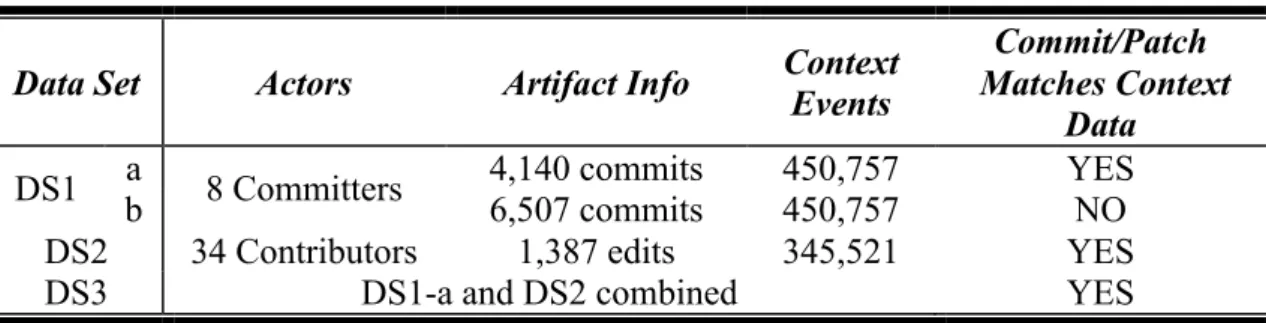
Table 2 Summary of RQ1 Data Sets. ... 52
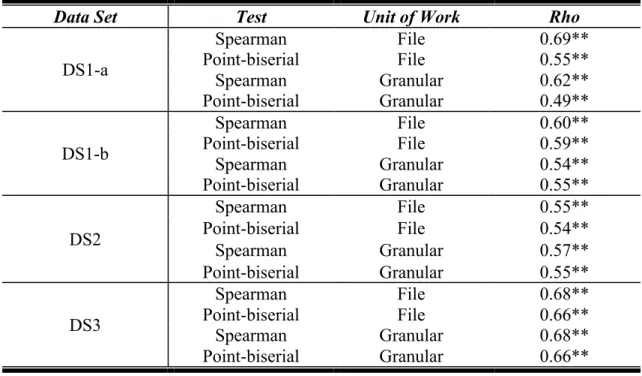
Table 3 Proximity vs. Cataldo et al. Correlations ... 54
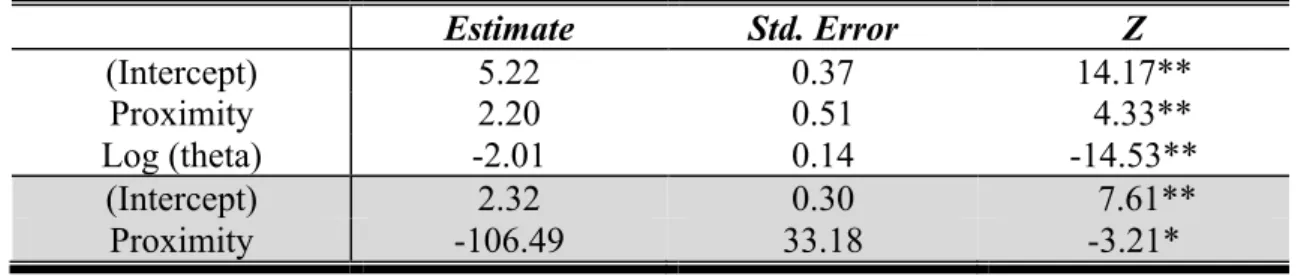
Table 4 ZINB Regression: Proximity vs. Cataldo et al. Correlations ... 55
Table 5 Proximity vs. Cataldo et al. Precision/Recall (Granular Unit of Work) ... 56
Table 6 Criticality of Potential Coordination Requirements Identified by Proximity 68 Table 7 Manual Coding Guidelines ... 72
Table 8 Criticality: Manual Coding Results ... 74
Table 9 Task Property Comparison ... 76
Table 10 Accuracy: Ground Truth Critical Coordination Needs vs. Proximity and ProximityML Coordination Needs ... 80
Table 11 Criticality: ProximityML Coordination Requirements vs. ProximityML Non-Coordination Requirements ... 84
List of Figures
Figure 1: Design Rule Hierarchy Example. ... 22
Figure 2: Representation of a Coordination Requirement. ... 33
Figure 3: Proximity Algorithm Example. ... 47
Figure 4: ProxiScientia Visualization Example. ... 48
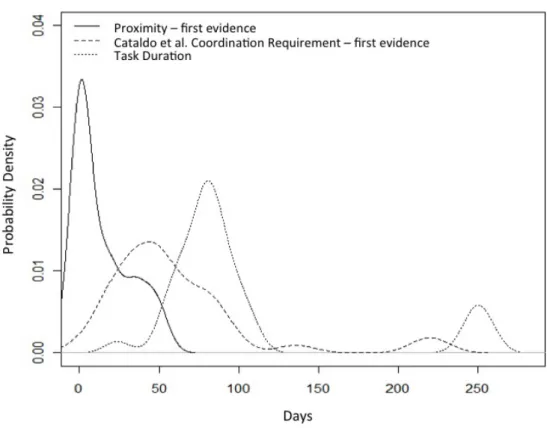
Figure 5: Proximity Algorithm Timeliness. ... 60
Figure 6: Grid Search Parameter Selection Results. ... 82
Figure 7: ROC Curve. ... 83
Figure 8: Evolution of ProximityML Coordination Requirements Over Time. ... 90
Figure 9: Coordination Need Detection Timeliness for Recognized Dependencies. .. 92
Abstract
Timely and Efficient Facilitation of Coordination of Software Developers’ Activities
Kelly Coyle Blincoe
Advisors: Giuseppe Valetto, Ph.D. and Daniela Damian, Ph.D.
When software developers fail to coordinate, build failures, duplication of work, schedule slips and software defects can result. However, developers are often unaware when they need to coordinate, and existing methods and tools that help make developers aware of their coordination needs do not provide timely awareness or efficient recommendations. Without timely awareness, developers cannot act on their coordination needs while development is underway. Further, existing tools recommend only which developers should coordinate. This introduces inefficiencies since developers are often working on multiple tasks in parallel. This dissertation describes a set of techniques that aim at improving the timeliness and efficiency of coordination recommendations. It introduces a method that provides timely coordination recommendations by analyzing developer actions as they occur using IDE monitoring facilities. It presents an approach that identifies coordination needs between pairs of tasks and leverages additional task properties and machine learning to identify a subset of the coordination needs that are more critical for the developers’ work. This dissertation describes a series of investigations of coordination needs on eight releases of the Mylyn project. Our techniques were validated through a mixed methods approach including statistical analysis, in-depth examination of task records, and developer interviews. Our research shows that coordination recommendations can be made both timely and efficient by applying the techniques described in this thesis.
CHAPTER 1: INTRODUCTION
This chapter motivates the research described in this dissertation. It introduces the importance of coordination in software development projects and describes how a developer’s lack of awareness of coordination needs can introduce problems and inefficiencies into the development process. It provides a high level summary of the focus of this dissertation and highlights its contributions. It concludes by describing the organization of the remaining chapters.
1.1 Research Problem
Today’s software development projects are becoming increasingly large and complex. Large software projects have a large number of work dependencies [115], which are the technical dependencies that exist in software projects. Examples of technical dependencies are syntactic or semantic dependencies between software artifacts. Dependencies exist between tasks when those tasks involve dependent artifacts. Work dependencies between development tasks can lead to coordination needs between the assignees of those tasks [27], [28], [30], [44], [73]. It is well recognized that work dependencies must be managed in software development projects to avoid integration problems and software failures [29], [73], [120]. Initially, beginning with Parnas’ recognition of the workflow implications of modularization [105], research focused on ways to streamline the technical dependencies between modules as a way to maximize task parallelism [7], [139]. However, it is not possible to eliminate all inter-module dependencies in large software projects. Therefore, research began to focus on ways to satisfy, as opposed to reduce, work dependencies
through coordination [73]. Communication is the main form of coordination in software teams [87], and software developers spend a large amount of time communicating [106]. It has been found that a decrease in communication can cause team members to be unaware of work dependencies resulting in coordination problems [43], [63], [72]. Herbsleb et al. found that when developers are willing to communicate directly, integration problems are reduced [71]. Kwan et al. found that aligning the coordination in software teams based on the tasks they must complete can bring about productivity benefits [89]. This is in line with the intuition by Conway [33], who was the first to describe the possibility of such an alignment in software engineering projects.
However, even if developers are willing and able to coordinate, they may often be unaware of their coordination needs. This can be complicated by the fact that developers’ coordination needs are often fluid and change throughout the course of development [42]. This fluidity contributes to a lack of awareness of coordination needs among developers. Dourish [47] defines awareness as “an understanding of the activities of others, which provides a context for your own activity.”
A lack of awareness of coordination needs can lead to missed coordination, which can result in build failures, duplication of work, schedule slips and software defects [27], [28], [30], [39], [41], [44]. Therefore, providing awareness of coordination needs can help improve software productivity and quality. To be effective, awareness must be timely, and it must provide enough information to allow developers to fully understand their coordination needs and act on them efficiently.
Achieving timely awareness of coordination needs in large software engineering projects remains an open problem. Configuration management conflict
detection tools, like Palantír [111], [112] and CollabVS [45], were among the first attempts to provide such awareness. They help alert developers of possible conflicts by letting them know which other developers are making changes to the files they are currently modifying (direct conflicts). They also provide only limited support for indirect conflicts where one developer makes a change in one artifact that affects another developer’s work in a separate artifact. For example, Palantír includes only one very specific type of indirect conflicts that occur when class signatures are conflicting. However, these conflicts are only a subset of all possible coordination needs, so tools like these do not provide a comprehensive view of coordination needs to developers. Cataldo et al. [27], [28], [30] were the first to introduce a framework for establishing a more comprehensive view of coordination requirements between developers. Many awareness tools [10], [44], [97], [110] have been created based on their method. However, their method relies on commit data. This data is typically available only towards the end of the development work for a task, so the awareness this approach provides may not be timely. Without timely awareness of coordination needs1, developers are not able to focus their coordination to reap the proven performance and quality benefits.
Existing approaches also provide inefficient recommendations since they require developers to take time away from their development efforts to better understand their coordination needs. The configuration management conflict detection tools provide a stream of notifications regarding each potential conflict at the source code level. This approach is likely to cause information overload for developers,
1 The terms “coordination needs” and “coordination requirements” are used interchangeably throughout this dissertation.
especially since any concurrent modification to the same artifact will generate a notification regardless of complexity. This brings about inefficiency since the developers are potentially required to sift through a large number of notifications to determine which conflicts really matter. The coordination requirement detection tools also risk information overload, especially when the team is large [26], [40]. Moreover, they provide awareness of only which pairs of developers should coordinate. Since developers may work on multiple tasks in parallel, coordination requirements at the developer level may encompass the work dependencies of many tasks. This puts the burden on the developers to identify which tasks require coordination and introduce inefficiency.
This work focuses on providing timely and efficient awareness of coordination needs by identifying coordination needs at the task level and focusing on the more critical coordination needs.
1.2 Research Questions and Methodology
This dissertation focuses on solving these issues of current coordination requirement detection methods and providing timely and efficient coordination recommendations. We first sought to explore techniques for providing timely awareness of coordination needs to software developers. Current methods rely on commit data, thus are not timely. Without timely awareness, developers are not able to act on their coordination needs. Our first research question addresses this problem:
RQ1: Is timely coordination requirement detection possible?
We developed a new method and metric, called Proximity, which detects coordination needs between pairs of developers in a timely way. This timely detection of coordination needs provides awareness to developers while their work is still
underway. Developers can act upon and resolve their coordination needs as they surface. In the words of one senior developer that we interviewed, “If you find out next week that you should have talked to this guy last week, that’s not helpful. Real-time collaboration is a better choice.” Chapter 4 describes the Proximity metric in detail, shows how it is timelier than existing methods, and shows how it can be even more accurate in identifying actual coordination requirements.
Developers are often working on many tasks in parallel, so being aware of only which other developers they need to coordinate with does not provide enough context to allow for focused and efficient coordination. We address this with our second research question:
RQ2: Can coordination requirements be identified efficiently at the task level of granularity?
Ko et al. [85] found that developers are especially interested in awareness about what information was relevant to their tasks. Additionally, through developer interviews, we found that developers would prefer awareness of coordination needs that exist between pairs of tasks, since tasks are their unit of work. We adjusted Proximity to identify coordination requirements between pairs of tasks - instead of developers - to provide better-scoped awareness and allow for more efficient coordination. However, current coordination requirement detection algorithms (including Proximity) cast too wide a net when computed at the task level, since they consider all work dependencies between pairs of tasks as potential coordination needs. Therefore, to provide efficient recommendations at the task level, we introduced ProximityML, an approach to reduce the set of coordination recommendations by identifying the more critical
coordination needs. We measure criticality of coordination requirements by task complexity (change size) and task performance (task duration).
To devise ProximityML, we examined several task properties that could enhance measures like Proximity to identify the more critical coordination needs between task pairs. ProximityML uses machine learning on Proximity and those other identified task properties to reduce the set of coordination needs, while focusing on the more critical ones.
To evaluate the accuracy of the ProximityML results, we compared its results to the actual coordination needs experienced by the software development team. Since current software project repositories only partially capture this information [6], we established a method and a set of guidelines to extract the ground truth of coordination requirements experienced by the team from the task records obtained from the software repositories. We used this ground truth to evaluate our results. Chapter 5 describes our ProximityML approach and shows how it is able to detect a set of the more critical coordination needs.
Finally, we analyzed whether the ProximityML approach allows for timely detection of coordination needs as they emerge. This analysis aims at answering our third and final research question:
RQ3: Are the more critical coordination needs actionable?
To answer this research question, we streamed each event (developer actions and task updates) in a time-ordered sequence and re-ran the ProximityML approach after each event. This allowed us to evaluate the exact moment when ProximityML first recognizes a coordination need. Chapter 6 describes this evaluation exercise, which assesses the consistency of the results over the duration of one major project release
as well as the timeliness of the coordination needs detected by ProximityML. It also addresses the usability and actionability of the coordination recommendations made by our approach through developer interviews.
1.3 Contributions
This dissertation describes a set of techniques that aim to provide timely and efficient coordination recommendations. Furthermore, it evaluates those techniques through a mixed-methods approach and describes a number of studies that show that timely and efficient coordination recommendations are possible. The key contributions of this dissertation are:
1. It provides a method for timely and accurate detection of coordination needs between software developers.
2. It provides an approach for timely and accurate detection of coordination needs at the level of tasks to provide more granular and efficient recommendations.
3. It provides an approach to avoid information overload by identifying a set of the more critical coordination needs at the task level.
4. It describes a method for identifying the ground truth of coordination needs experienced during development work by examining task reports. 5. It discusses developer needs gathered through interviews and discusses the
implications of our work for research in coordination within software teams and the design of support tools for collaborative software development.
1.3 Dissertation Roadmap
The rest of this dissertation is organized as follows: Chapter 2 outlines related research on 1) coordination in software engineering, 2) modularity of software design, 3) awareness in software engineering, and 4) providing awareness of coordination needs. Chapter 3 describes our research setting, research questions and methodology. Chapter 4 describes our approach for providing timely coordination recommendations. Chapter 5 describes our approach for efficient coordination recommendations. Chapter 6 evaluates the feasibility and usability of a tool that could be implemented using our methods. Chapter 7 discusses the contributions and how our approach can be applied to larger contexts. Finally, Chapter 8 concludes with a discussion on the implications for research in coordination and tool design and points out opportunities for future work.
CHAPTER 2: BACKGROUND
This chapter provides an overview of the main areas of research that are relevant to the research in this dissertation: 1) coordination in software engineering, 2) modularity of software design, 3) awareness in software engineering, and 4) providing awareness of coordination needs.
2.1 Coordination in Software Engineering
2.1.1 Need for Coordination
In their seminal paper, Kraut and Streeter [87] argued that tight coordination is required among development team members in order to deliver a successful software system. Unfortunately, they found that there are several problems inherent in software development projects that make such coordination difficult. They note several software characteristics – scale, interdependence, and uncertainty – that cause unavoidable coordination problems.
Scale: Software systems are becoming increasingly large, thus making scale a particularly significant characteristic. Often, projects involve millions of lines of code and the development cycle spans multiple years. The size of these projects makes it impossible for any one individual or even a small group of individuals to fully understand all details of the system being developed. When projects become large, it is necessary to divide the development work among several teams of developers. This can create efficiency by allowing teams to work in parallel. However, parallel streams of work must eventually be integrated, which introduces additional coordination
needs. Moreover, developers are often separated by geographic, organizational or social boundaries, and these boundaries can create coordination barriers [87].
Interdependence: Software that has been broken into small components to be developed independently by many teams or developers must eventually be integrated into one deliverable software system. There are often many dependencies between the various components. In order for the end system to function correctly, the components must work together properly. Integration of software must be very precise. Lack of coordination among developers working on dependent components can lead to integration problems [71], [87].
Uncertainty: Software development work is subject to continuous change, which causes many difficulties and produces ongoing coordination needs. Requirements can change over time due to changes in user needs, hardware changes or changing business needs. Requirements also tend to be incomplete, usually due to the requirement engineers’ lack of domain knowledge. The developer responsible for implementing an incomplete requirement frequently interprets the requirement incorrectly. Also, requirement engineers often introduce errors into requirements when translating the many needs and points of view of all the different stakeholders into requirements [87].
These characteristics are inherent in modern software projects and introduce coordination overhead. While steps can be taken to reduce this coordination overhead, the need to coordinate cannot be completely eliminated in any project [87].
2.1.2 Types of Coordination
2.1.2.1 Explicit Coordination
Explicit coordination is direct coordination such as email, chat, face-to-face meetings, or phone calls. Kraut and Streeter [87] found that communication - both formal and informal - is the main form of coordination that occurs during software development. Perry found that software developers spend a large part of their work time communicating [106]. Both formal and informal communications are useful coordination mechanisms. Formal communication, including written documents like requirement specifications and structured meetings, is useful during routine software development. Informal communication is most valuable whenever high levels of uncertainty are present in the project. Informal communication is often more personal and interactive than formal communication, including telephone calls, emails or impromptu face-to-face discussions between a pair of individuals or within a small group. Informal communication is more likely to occur between individuals who are in close physical proximity. While this form of communication is valuable, it can often be inefficient or imprecise [87].
2.1.2.2 Implicit Coordination
Implicit coordination consists of consequential communication – obtaining information about a task by watching another developer as they complete that task – and feedthrough – obtaining information about a task by examining changes to artifacts [66]. The latter is an example of implicit coordination via stigmergy. “A process is stigmergic if the work done by one agent provides a stimulus that entices other agents to continue the job” [74]. In software development, stigmergic
coordination occurs when enough information is contained within a software artifact to enable a new developer to pick up that software artifact and complete a task that is already underway or start a new dependent task without resorting to explicit coordination. This type of coordination happens very frequently in open source development [74]. Elliot [52] argued that stigmergy is most important on large open source development teams (> 25 people).
Stigmergy can be direct or indirect. Direct stigmergy occurs when the content of the software artifact promotes or facilitates later contributions. The simplest example of direct stigmergy in software development is code comments. Indirect stigmergy occurs when the side effects of work being performed cause additional work to be completed [74]. Examples of indirect stigmergy are posting comments on a development task and the modification of its state within a bug tracking tool. Bolici et al. [17] investigated how trading zones and boundary objects are being used as stigmergic forms of coordination on software development teams. A trading zone facilitates cross-boundary coordination by agreeing on common terms and processes [81]. A boundary object is an artifact that allows coordination of different perspectives across multiple stakeholders [122], [123].
Recently, many software development tools have shifted from supporting the work of an individual developer to encouraging team-based and social software development. Features like tags, feeds, and microblogging made popular through social media sites such as Facebook and Twitter have been incorporated into software development tools. Many of these features support implicit coordination.
Tags
A tag is a user-defined keyword that is attached to an item to help describe it. Yew et al. [144] described social tagging as “the collaborative activity of marking shared content with keywords, or tags, as a way to organize content for future navigation, filtering or search.” Tags have been introduced into numerous software development tools. One of the first ways to tag source code was through the use of Java code annotations, such as TODO, FIXME, or HACK. Storey et al. [126] found that developers use these annotations to help manage their tasks.
In the IBM® Rational Team Concert team-oriented software development environment, also known as Jazz, developers can create source code annotations using snippets of chat conversations to help document important decisions made through informal communication channels [77]. Jazz also allows developers to tag work items. A work item is equivalent to a bug report, modification request or change request in other development environments. Work items are assigned to developers as tasks in the Jazz environment. Developers use tags mainly to organize and categorize [129], [130]. While developers indicated that tags are not used to directly communicate with other members of the team, developers tag not only their own work items, but also the work items of other developers [129], [130]. This could indicate that tags are being used for various forms of stigmergic collaboration.
TagSea, an Eclipse plug-in, is another tool that provides a tagging feature through a feature called Waypoints [125]. Waypoints are implemented as a series of tags that can be used to save locations of interest and create a “map” or an itinerary through the code base. A series of Waypoints, called a route, can help guide developers through the code. Developers can share Waypoints as a form of
collaboration. A preliminary evaluation of TagSea found that developers used tags and Waypoints to: 1) temporarily mark areas of code they are changing; 2) relay information about code changes to other team members; and 3) implement similar tasks by following Waypoint routes created by other developers.
One downfall of using user-defined keywords as tags is that different tags can refer to the same concept. This can make searching and filtering on tags more difficult, especially in software engineering where domain specific verbiage is often used. Wang et al. [135] studied the tags associated to 45,470 projects on Freecode2, a project hosting site, and created a similarity metric for the words used in those tags to infer semantically related software terms. They used this similarity metric to group related tags. Through user studies, they found users agreed with their similarity metric and the resulting taxonomy. Other tools, like TagRec [3] and TagCombine [140], have proposed techniques that recommend tags based on similar tags that have previously been used on related objects. These tools could make tagging objects in software development projects easier.
Feeds
Feeds broadcast project-related or user events such as build results, modifications to tasks or incoming tasks. Treude and Storey [128] found that, in Jazz, developers use feeds to track work, get information, and understand common practices. On GitHub, users can subscribe to activity feeds by “watching” a project or “following” a user. These feeds include information on code related changes, issues and comments.
2 Freecode: http://freecode.com
Calefato et al. [23], [24] introduced a tool called SocialCDE whose goal is to increase trust in global software development teams by enhancing the feeds provided by current tools with additional social information. SocialCDE displays developer’s personal social content obtained from sites like Facebook, Twitter and LinkedIn directly within a developer’s development environment.
The amount of information available within feeds can quickly lead to information overload [128]. Yet, Dullemond et al. [48] found distributed software engineers are interested in a diverse set of information and the relevant information changes frequently. Individual developers often have different opinions on the most relevant information [50]. Fritz and Murphy [57] found that developers use four factors in determining the relevancy of information within a feed. These factors are: 1) content, 2) target of content, 3) relation with the creator, and 4) previous interaction. Feeds can be improved by considering all of these factors to include only relevant information.
Dashboards
Jazz also provides web-based dashboards that help keep developers aware of what is happening on a software project or within a software team. The Jazz dashboard provides high-level project health information and makes it easy to navigate and drill down to more complete information. Treude and Storey found that developers use dashboards to achieve a high-level overview of project-status and an understanding of what other developers/teams are working on [128].
Wikis, Blogs and Microblogs
Software developers have adopted other social media tools like wikis, blogs and microblogs for collaboration. Al-asmari and Ya [1] found that wikis are easy to
use, reliable and inexpensive when compared to other coordination methods. Several wiki tools, like WikiDev 2.0 [9], Galaxy Wiki [142], and Wikigramming [69], have been created to specifically support software development activities. Huh et al. [76] found that blogging allows easy access to knowledge and can serve as a coordination mechanism.
Microblogging became popular through Twitter. Many companies have adopted Yammer, a commercial product that provides features similar to Twitter for individual companies. Guzzi et al. [68] created James, an Eclipse plugin, which combines microblogging with developer activities collected through IDE monitoring. In their study, participants used James to communicate future intentions, indicate the status of ongoing and concluded activities, comment, and mark future tasks. They found that developers are willing to microblog and that microblogging is helpful in maintenance tasks. Dullemond et al. [49] found that distributed software developers used microblogging to coordinate. They also found that microblogging helped team members become more connected, and it provided easier access to information. Wang et al. [136] found that microblogging also plays an important role in open source software communities through their analysis of Twitter accounts.
User profiles
On GitHub, user profiles are publicly accessible and include identifying information, a list of projects the user is currently working on, and the user’s recent activity on those projects. SCI [8], a collaborative development environment, also incorporates user profiles including information like project activity, technical interests, currently active sessions, and availability. CARES [67] populates source code files with photos of developers who have recently modified the software artifact.
Each photo is augmented with a tooltip containing user profile type information like previous code commits, position in the organization, physical location, and availability.
Dabbish et al [37] found that GitHub users make use of the social information available in user profiles, in addition to the information collected via feeds, to make “a rich set of inferences around commitment, work quality, community significance and personal relevance. These inferences support collaboration, learning, and reputation management in the community.” Marlow et al [96] found that GitHub users use the information from user profiles to form impressions of each other and make judgments about potential contributors, which then influence whether or not their code contributions are accepted.
All of the features discussed above have potential as means for implicit coordination. The information reported in both feeds and dashboards is generated directly from the work done by developers, and no additional work is required on the part of the developer to populate these information sources. Up-to-date information is then constantly displayed to the rest of the team. Developers are able to gather information from these sources without explicitly communicating with any other team members. Tags, wikis, blogs, microblogs and user profiles need to be created by developers, but this can be done when it is most convenient for the developer. The rest of the team can then use the information contained in these sources without the need for explicit coordination. These coordination methods can help archive important design decisions and task details while development is underway for easy referencing on future tasks. More research is still needed on how implicit coordination
can be encouraged and facilitated to increase awareness in software development teams and reduce the need for more expensive forms of coordination.
2.1.3 Coordination Problems
Brooks [20] observed the problems associated with coordination in software projects. He famously explained that adding more people to project that is already behind schedule further delays the project due to the added project coordination and communication overhead. Coordination can be even more difficult when the involved developers span team boundaries. Sosa et al. [120] found that when cross-boundary dependencies exist, developers often do not coordinate due to a lack of awareness of the importance of the coordination as well as a lack of social relationships across teams. They found that the lack of coordination resulted in integration problems. In an empirical study, Curtis et al. [36] found that coordination is one of the biggest problems in large software projects.
de Souza et al. [44] found that developers are not always aware of their coordination needs and that when developers are unaware of the coordination that is required to manage their work dependencies, problems can occur. Studies have found that unfulfilled coordination needs can result in an increase in task resolution time, an increase in software faults, build failures, redundant work, and schedule slips [27], [28], [30], [39], [41], [44].
The literature described here shows that awareness of coordination needs is a critical concern in large software projects.
2.2 Modularity
Today’s software systems are increasingly large and complex. It is, therefore, necessary to divide the development work among numerous developers. Breaking the implementation of a large software program into independent modules is a well-established software programming technique. Modules are defined as elements of a larger system that are independent yet work together [7]. Simon [121] and Alexander [5] argued that decomposing a system was a logical, and perhaps the only, response to the complexity that was inherent in solving such large problems. Simon [121] said nearly decomposable systems, where interactions between the components are weak but not negligible, were ideal. Parnas [105] recognized that it is possible to reduce coordination needs by minimizing the technical dependencies between software modules. Modules can then be developed independently in parallel and later integrated to form a complete product.
Parnas [105] defined modules as “a work assignment unit rather than a subprogram.” His definition of modules is based on an earlier definition made by Gauthier and Ponto [61], which states “each task forms a separate, distinct program module.” Parnas argued that modularization is a mechanism for improving flexibility and comprehensibility of a system. He provided criteria for decomposing a system into modules based on his information hiding principle.
Parnas’ information hiding principle [105] was very influential, and it forms the foundation for many modern approaches to reduce dependencies between modules. He argued that modules should expose only stable interfaces and should hide anything that is likely to change. By exposing only the stable interfaces that are
not likely to change, changing one module should not impact other parts of the software. Once the interfaces have been defined, modules can then be developed independently. This allows developers to work in parallel without the need for coordination.
Baldwin and Clark [7] defined design rules as the high-level design decisions that secondary decisions depend on. These design rules are stable decisions that are not likely to change throughout the project lifecycle. A design rule can describe the decisions on 1) a product’s architecture, 2) the interfaces between modules, and 3) the integration tests that will ensure modules are working together. Baldwin and Clark [7] argued that modularity of a system increases the value of that system by providing design options. Modules can be easily swapped for one another when unanticipated changes occur to the design. This supports software evolution.
However, it has been found that designers will rarely choose the optimal module decomposition [54]. There are two well-known measures, coupling [32] and cohesion [124], that help assess the modularity of a design. Coupling considers the number of dependencies between modules. Highly coupled modules have many dependencies between them and will result in more coordination needs between the developers who implement those modules. Cohesion considers the number of dependencies within a module. Higher cohesion means the elements within a module are functionally related. The best designs will have low coupling and high cohesion.
Wong et al. [139] created a Design Rule Hierarchy (DRH) metric to identify modules that can be independently assigned to developers for parallel work. DRHs are computed from Design Structure Matrices (DSMs) [7]. A DSM is a square matrix that identifies technical dependencies between software modules. Consistent with
Parnas’ definition of modularization [105], these independent modules can be worked on in parallel without incurring coordination overhead. A DRH clusters modules into “layers” where each layer depends only on the layers above. The layers can be used to differentiate artifacts that represent influential design decisions (design rules) from low-level artifacts that depend on those decisions. Wong et al. [139] established three categories of work that can be used to differentiate between tasks that can be completed independently and those that will require coordination:
1. Same Layer Same Module (SLSM) pairs: Two tasks include edits to artifacts that have a dependency and are in the same module. Tasks that have a SLSM relationship may require coordination.
2. Across Layer (AL) pairs: Two tasks include edits to artifacts that have a dependency and are in different modules and different layers. Tasks that have an AL relationship may require coordination.
3. Same Layer Different Module (SLDM) pairs: Two tasks include edits to artifacts that are in different modules of the same layer. By definition, there are no dependencies between these artifacts, so tasks with only SLDM relationships should be able to be completed independently.
For illustration purposes, Figure 1 shows an example of a hypothetical two-layer DRH. The large thick-bordered boxes represent the two different two-layers while the boxes within the layers represent modules. The X’s show the dependencies between the modules. Tasks 1 and 2 are an example of an SLSM pair since they are operating on the same module. Tasks 2 and 3 are an example of a SLDM pair since they are operating on the same layer but on different modules. Tasks 1 and 3 are an
example of an AL pair since they are operating on modules in different layers with a dependency.
Figure 1: Design Rule Hierarchy Example [139].
The SLSM and AL categories can be seen as potential coordination needs since dependencies exist between these task pairs. Wong et al. [139] observed that developers working on tasks that involve either the same software modules (SLSM) or software modules in different layers of a DRH (AL) tend to communicate (a dominant form of coordination in software development [87]) significantly more than developers working only on modules in the same layer (SLDM). Therefore, Wong et
al.’s DRH approach, given an existing software product or design, provides an automatic way to identify modules that can be developed independently and in parallel, without requiring coordination.
However, not all technical dependencies can be eliminated, and not all modules will be able to be developed in parallel without coordination. Schedule optimization algorithms introduced another approach to dealing with dependencies between software modules. Rather than satisfying the technical dependencies through coordination, modules are developed according to a schedule that will reduce the occurrence of conflicts. di Penta et al. [46] found that optimization of project scheduling can reduce coordination overhead through evaluation of their search-based optimization techniques. More recently, Kasi and Sarma [80] introduced a tool, Cassandra, which identifies potential conflicts between tasks based on the files in their workspaces and suggests optimal scheduling to avoid those conflicts. While these schedule optimization approaches can certainly reduce the coordination needs of a development team, they will not be able to fully eliminate the need for coordination. This is particularly true when the schedule is tight and large amounts of work need to be done in parallel, despite the conflicts that may arise.
When more work can be done in parallel, the team’s productivity can increase. When technical dependencies exist, work is being done in parallel, and the required coordination does not occur, problems can occur when integrating the modules [43]. Herbsleb et al. [73] argued for computing and fulfilling coordination requirements to satisfy these technical dependencies rather than trying to minimize the dependencies themselves. However, developers are not always aware of their coordination needs.
2.3 Awareness
Gutwin et al. [65] argued that team members must maintain awareness of each other to achieve successful collaboration. Awareness is defined as “an understanding of the activities of others, which provides a context for your own activity [47].” Awareness is especially important in Software Engineering since Software Engineering is a collaborative effort that is often performed in large, distributed settings. In large and distributed development projects, it is particularly difficult for developers to stay aware [25]. Kiani [84] found that teams are more aware when teams are smaller in size, have more experienced members, use agile processes, and have frequent interactions between teammates both within and across teams. Awareness is especially difficult when teams span organizational boundaries [102].
In face-to-face settings, team members can naturally become aware of each other and each other’s work. However, in distributed settings, teams need tools to help support awareness [47]. There have been a slew of awareness tools built to help support Software Engineering teams. Portillo-Rodriquez [107] found awareness features exist in nearly all types of Software Engineering tools including requirement, design, development, configuration management, project planning, process, quality, knowledge management and social tools. Some of the awareness features provided by these tools help developers understand the team structure [2], [113], review project history [59], become aware of ongoing file changes and potential conflicts [12], [21], [22], [38], [45], [55], [56], [64], [70], [104], [111], [112], [118], [119], [137], and understand technical dependencies and the coordination they may require [10], [44], [97], [110], [141].
Social- and team-oriented features in software development tools seem to be effective in supporting teams to overcome challenges of distance and promoting awareness. A study of Jazz, one of the first collaborative software development environments, found that task duration is not as strongly impacted by geographic distance as found in previous studies [103]. Another study [13] found that geographic distance between team members did not significantly affect the number of software faults.
van Gameren et al. [133], [134] have a vision that all awareness information can be automatically analyzed, filtered and combined to provide an overall awareness picture to developers similar to the awareness obtained in face-to-face settings. This is in line with the concept of continuous coordination tools described by Sarma et al. [114]. They envision a future where developers will no longer need to use explicit or separate coordination tools since their virtual work environment will seamlessly combine coordination and work. Redmiles et al. [109] described this as “flexible work practices supported by tools that continuously adapt their behavior and functionality so coordination problems are minimized in number and impact.” However, this future vision of seamless awareness will not be achieved quickly and must evolve through incremental improvements in existing tools.
This work focuses on ways to improve awareness of coordination needs in software engineering teams. Herbsleb et al. found that “development work is faster when those performing mutually constraining work 1) are on the same team, 2) are located at the same site, 3) communicate using an asynchronous text tool, or 4) communicate in a chat room.” [73]. This insight suggests that by correctly targeting coordination, a software team can see performance benefits. This is in line with the
original intuition by Conway [33] who was the first to recognize that the social structure of the team plays a role in the design of the software product that team is developing. He said, “any organization that designs a system … will produce a design whose structure is a copy of the organization's communication structure.” This has since been dubbed Conway’s Law. The message behind Conway’s Law is that when a dependency exists between two modules, the developers responsible for those modules must coordinate to ensure the modules interface correctly with each other. Recently, Kwan et al. revisited Conway’s Law, and they found that aligning software development organizations based on the tasks that the developers are working can provide benefits in the team’s ability to work together [89]. Betz et al. [11] describe what they call the “rubber band effect” of Conway’s Law, which states that changes in a team’s organization structure will eventually trigger changes in the design of their software products.
It has been found that an increase in communication can bring greater awareness of work dependencies and reduce coordination problems [43], [63], [72]. Herbsleb et al. found that when developers are willing to communicate directly, integration problems are reduced [71]. However, even if developers are willing and able to coordinate, they may often be unaware of their coordination needs [44]. This can be complicated by the fact that developers’ awareness networks are often fluid and change throughout the course of development [42].
de Souza et al. [44] observed two major types of coordination problems prevalent in software development – a lack of awareness of other team members’ work and a difficulty in identifying other software developers with whom it would be important or interesting to communicate. Specifically, they found that managers lack
an awareness of evolving social dependencies within their teams and developers lack an awareness of evolving technical dependencies. Developers have difficulties finding other developers with the required expertise to answer questions or help guide them in their development tasks. They also have difficultly finding developers whose work has similar dependencies, for example those who depend on the same interface or component. Finding such developers can help, for example, in minimizing duplicate work.
According to Fritz and Murphy, software developers are most interested in awareness tools that will help them understand who is working on what and what changes are made to the code base [58]. A recent survey of developers at Microsoft found that, for a software engineer, the most important form of awareness is locating and keeping up to date with other developers whose work is relevant to their own [10]. Another study conducted by Ko et al. [85] found that developers are most interested in awareness about what information is relevant to their tasks, how artifacts changed, and what their co-workers have been doing.
2.4 Providing Awareness of Coordination Needs
Two main approaches have been proposed to provide awareness of coordination needs in software development teams: 1) configuration management conflict detection and 2) coordination requirement detection.
2.4.1 Conflict Detection
Configuration management tools have been used for a long time in software development to help coordinate concurrent work between developers. Sarma et al. defined two classes of configuration management tools, pessimistic and optimistic
[111]. Pessimistic tools force developers to lock the files that they are editing to ensure that no other developers make edits to that artifact until the lock is released. This approach does not allow for direct conflicts (concurrent edits to the same artifact), but it does limit the amount of concurrent work that can occur. It also still allows indirect conflicts where one developer makes a change in one artifact that affects another developer’s work in a separate artifact. Optimistic tools allow developers to work concurrently on the same artifacts. A merge must be performed when developers are ready to check in their changes into the code repository. Developers remain unaware of who else is working on the same artifacts until they have completed their work. This approach can result in both direct and indirect conflicts. Direct conflicts will be resolved when the merge occurs, but indirect conflicts are not detected.
Gutwin et al. [66] found that distributed software developers obtained awareness through monitoring configuration management system check-in logs. Many configuration management systems send automatic emails with recent changes to subscribed developers. However, the amount of information from check-in logs can be overwhelming and requires a significant time commitment for developers to obtain awareness. In addition to the email notifications, most configuration management tools have commands that allow developers to pull change information for a particular file. For example, Git Blame3 allows a developer to identify who has made changes to a particular file in the Git4 version control system. However, this requires the developer to manually run a command whenever they want to obtain awareness. The
3 Git Blame: http://git-scm.com/docs/git-blame 4 Git: http://git-scm.com
awareness obtained from the configuration management system is not timely since development work is often complete, or nearly complete, when code is checked-in; thus, it may be too late for developers to coordinate effectively once that information is obtained. Configuration management conflict detection tools were introduced to provide this type of information in a more continuous, timely way.
Palantír is one of the earliest awareness tools in software engineering and an example of a configuration management conflict detection tool. Palantír was developed to help alert developers of possible conflicts by letting them know which other developers are making changes to the files which they are currently modifying. It changed the flow of information from “pull”, where developers only receive information when they perform certain interactions with the configuration management system, to “push” where information is made continuously available to developers regardless of their actions [111].
Palantír uses notifications to keep a developer abreast with what happens in her colleagues’ workspaces [111], [112]. Palantír detects conflicts by making use of information from the configuration management system. It looks at the artifacts in each developer’s workspace and their state, and it compares them to the state of the “master copy” for the same artifacts maintained in the configuration management repository. It notifies developers of changes occurring to the artifacts they have in their own workspace. While these notifications are timely, they only regard direct conflicts on the same artifact and a very specific type of indirect conflicts that occur when class signatures are conflicting. These are a narrow subset of the many technical reasons that can induce a coordination need.
CollabVS is another awareness system that uses notifications. Compared to Palantír, it has an expanded model of interest. The CollabVS model captures additional conflicts by considering a subset of syntactical dependencies between artifacts [45]. It issues instantaneous warnings to developers as an individual instance of conflict emerges, but it does not offer a model for quantifying the strength of a coordination need. Even with its expanded model of interest, it does not capture all coordination needs. So while they are timely, CollabVS and Palantír provide an incomplete view of coordination needs, which are not prioritized, quantified or filtered in any way. Tukan [118] provides similar conflict support, but it presents information only at certain intervals rather than instantaneously, reducing the timeliness of the awareness it provides.
CollabVS and Palantír provide a stream of notifications regarding each potential conflict at the source code level. This approach is likely to cause information overload [53], [75], [101], [127] for developers, especially since any concurrent modification to the same artifact will generate a notification regardless of complexity. This brings about inefficiency since the developers are required to sift through a large number of notifications to determine which conflicts really matter. Augur [59] is another tool built on top of configuration management systems that visualizes potential conflicts for each line of code in a software artifact. The level of detail that Augur provides does not scale to large projects where it is also likely to cause information overload.
Syde [70] introduced a way to reduce this information overload by reducing false positives through abstract syntax tree (AST) modification analysis. This results in only flagging potential conflicts when the two developers are working on the same
area of code within a large file. However, Syde is limited because it only considers direct conflicts. FASTDash [12], Lighthouse [38], Celine [55], Elvin [56], War Room Command Console [104], and CASI [119] are other configuration management conflict detection tools that provide support for only direct conflicts.
Crystal [21], [22] identifies conflicts in decentralized version control systems like Git. It also finds far fewer false positives than tools like CollabVS and Palantír since it waits for code to be committed to a local repository, but it is not timely. It examines commits made in a developer’s local repository and integrates those local changes into a shadow repository of the main branch. It runs the build and test scripts to identify any problems that would occur when merging a developer’s existing local changes to the main branch. Therefore, Crystal does not report conflicts until changes have already been committed to some repository reducing the timeliness of detection.
WeCode [64] and Safe-Commit [137] employ similar methods in a more timely way. WeCode continuously merges all developers’ uncommitted code into a shadow copy to identify any merge conflicts. Safe-Commit runs test scripts to detect conflicts without waiting for local commits. It looks at the changes in a developer’s local workspace and identifies changes that pass the project’s existing tests. The goal of Safe-Commit is to identify changes that can be checked in early with the belief that frequent check-ins can decrease duplicate work and decrease merge conflicts. Crystal, WeCode and Safe-Commit are still unable to provide a complete view of coordination needs since they rely on test cases to detect conflicts. Conflicts that are not covered by any test case will not be detected. Therefore, their solutions rely on the quality of the test suite of the development team.
2.4.2 Conceptualization of Coordination Requirements and Socio-Technical Congruence
Cataldo et al. [27], [28], [30] introduced a framework to detect and quantify a more complete view of Coordination Requirements between pairs of software developers. They do this by identifying the technical dependencies between software artifacts modified during their assigned tasks. They compute those technical dependencies through logical coupling [60], which tracks files that have been historically checked in together and aims at identifying semantic relationships that may not manifest in the syntax of the programmatic implementation of the software product. While syntactic dependencies can be identified prior to implementation, logical couplings reflect accumulated empirical evidence about how the development work unfolds in the project. Cataldo et al. offer empirical evidence that logical coupling provides a more reliable representation of the technical dependencies relevant for coordination requirement detection than syntactic coupling does [29]. Once technical dependencies between artifacts have been established, they compute coordination requirements using the following formula:
CR = TA x TD x TAt
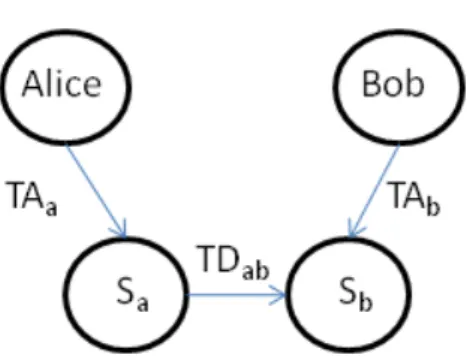
In this formula [27], [28], [30], TA is a people-by-task matrix representing task assignments, and TAt is its transpose. TD is a task-by-task matrix capturing the work dependencies between tasks. Those are established by considering the technical dependencies occurring between artifacts involved in those tasks. CR is the resulting matrix of coordination requirements. According to this formula, a coordination requirement between two developers, Alice and Bob, can be represented graphically as in Figure 2. Arc TDab represents a technical dependency between software artifacts
Sa and Sb. These artifacts are involved in tasks to which Alice and Bob, respectively, are assigned (denoted by arcs TAa, TAb). Empirical evidence suggests that when coordination activities focus on the identified coordination requirements, productivity is likely to improve [27], [28], [30].
Figure 2: Representation of a Coordination Requirement.
The conceptualization of coordination requirements led to the concept of Socio-Technical Congruence (STC) [27], [28], [30], which states that when coordination is focused between the team members with identified coordination requirements the project can see performance benefits. STC measures the extent to which coordination needs and coordination behavior are aligned in practice. STC is expressed as a simple ratio between coordination requirements that are satisfied by actual acts of coordination (fulfilled coordination requirements) and the set of remaining coordination requirements between developer pairs that are unfulfilled (coordination gaps). Recent research has found that having low congruence and many coordination gaps can significantly increase the number of software failures in mature development settings and in new and dynamic settings alike [27].
The method proposed by Cataldo et al. identifies coordination gaps. If developers could be made aware of those gaps in a timely way, they could take action to fulfill those gaps therefore increasing software productivity and quality. Since developers are often limited in the amount of time they can spend coordinating their work, a way to prioritize the list of coordination gaps could be useful. Valetto et al. [131] introduced an alternative graph-based algorithm for detecting coordination requirements. The graph contains dependencies between software artifacts, the connections between the software developers and those artifacts, and the interactions that have occurred between the developers. They created an algorithm for analyzing the graph to rank the coordination requirements. Since the graph contains information on which developer pairs have already engaged in coordination, the gaps can easily be highlighted and ranked, helping to focus coordination efforts where it is most needed. Tesseract [110] is an awareness tool that similarly highlights coordination gaps by considering the developers with evidence of prior coordination.
However, there are several problems with the way coordination gaps are identified. Coordination requirements are counted as fulfilled by any single act of coordination. Developers may only have coordinated on a subset of the technical dependencies that contribute towards a coordination requirement. In those cases, coordination requirements that are considered fulfilled may actually still indicate a coordination gap regarding other technical dependencies. Kwan et al. [91] proposed an enhanced weighted communication model which counts the number of communications that occur and the content of those communications to better understand which technical dependencies have been fulfilled. Wolf et al. [138] introduced an approach for mining large software repositories to identify task-based
communication between developers. However, communications that are not directly linked to a task cannot always be easily associated to a particular task. Another problem with the conceptualization of coordination gaps is that the absence of direct communication between a pair of developers does not always indicate a gap. Ehrlich et al. [51] first introduced the idea of coordination brokers in a software development team. Brokers are people who act as an intermediary between two developers or groups of developers to facilitate coordination. They suggested that brokers may be able to mitigate the effect of gaps. Kwan and Damian [90] later introduced a method to extend the conceptualization of coordination requirements to account for brokers.
These coordination requirement detection methods and the STC measure highlight the importance of coordination in software teams. However, these methods are retrospective and, therefore, not timely. Coordination requirements are identified by examining the artifact commits made by developers in the project’s source control repository. Commit data is typically available only after the majority of development work for a task has been completed. In addition, logical coupling is used to determine technical dependencies between artifacts. Computing dependencies in this way is based on past project history which is only visible after much work is completed. Even when syntactic dependencies are chosen, as done by Ehrlich et al. [51], they only become fully known following a commit since dependencies between artifacts can change throughout the development process. This lack of timeliness limits the potential of coordination requirements as a means to support coordination as the development work unfolds.
In addition, a recent study has shown that in large projects, even when coordination requirements are computed simply between pairs of developers, the
number of potential coordination requirements that are listed for a given developer may be very large [40]. Cataldo and Ehrlich [26] also found that current collaborative tools may be sufficient for small teams, but they risk introducing information overload when used in larger teams.
Identifying coordination needs between pairs of developers may also introduce inefficiencies. Since developers often work on multiple tasks in parallel, coordination requirements at the developer level may encompass the work dependencies of many tasks. This puts the burden on the developers to identify which tasks require coordination. This can increase coordination overhead and reduce efficiency.
2.4.3 Applications of Coordination Requirements
There are many tools that try to achieve awareness by employing abstractions similar to, or derived from, the concept of coordination requirements:
Ariadne [44] pulls data from the configuration management repository and uses Cataldo et al.’s algorithm to detect coordination requirements between developers. It uses those coordination requirements to create visualizations of socio-technical networks including a visualization to alert developers of their coordination needs, a visualization to allow management of a team’s overall coordination needs, and a visualization to show developers that have experience on a given code module.
EEL [97] also pulls data from the configuration management repository and uses Cataldo et al.’s algorithm to detect coordination requirements between developers. EEL uses these coordination requirements to display a suggested buddy list for each developer, that is, a ranked list of other developers with dependencies – and expertise - on the users’ current change set. Ensemble [141] provides a similar
![Figure 1: Design Rule Hierarchy Example [139].](https://thumb-us.123doks.com/thumbv2/123dok_us/382390.2542325/34.892.184.766.276.735/figure-design-rule-hierarchy-example.webp)