
Auditor Skepticism and Client Ill Will
Jared Eutsler University of North Texas 1155 Union Circle #305219
Denton, TX 76203-5017
D. Kip Holderness Jr. West Virginia University
1601 University Avenue, PO Box 6025 Morgantown, WV 26506
Jesse C. Robertson University of North Texas 1155 Union Circle #305219
Denton, TX 76203-5017
Mary B. Curtis, PhD CPA CISA 1155 Union Circle, #305219
Denton, TX 76203
August 2019
Auditor Skepticism and Client Ill Will
Abstract: Professional skepticism is considered an essential component of audit quality. Consequently, research has focused on ways to increase skepticism by identifying factors that either limit or encourage its practice. However, research has yet to explore potential negative consequences of professional skepticism. We conduct two experiments to investigate if high levels of skepticism create ill will in audit clients, and how ill will affects the auditor-client relationship and audit quality. In the first experiment, we find that high skepticism creates ill will in the client, which increases the likelihood the client recommends switching auditors and decreases the amount of evidence provided to the auditor. We find that auditors can ingratiate themselves with the client as an intervention to decrease the development of ill will and mitigate its adverse effects. In our second experiment, we examine if client pressure to persuade the auditor of their accounting position mitigates the relationship between high skepticism and ill will. We find an interaction such that if the evidence does not support the accounting treatment the client recommends, a high level of auditor skepticism does not cause clients to experience as much ill will toward the auditor. We contribute to the literature by investigating a new empirical construct, client ill will, and developing a more nuanced perspective of the interactions between auditors and their clients.
Keywords: Skepticism; client ill will; audit effectiveness; audit quality; auditor communications; auditor-client relationship
1
Auditor Skepticism and Client Ill Will I. Introduction
Regulators and researchers emphasize the relation between auditors’ professional
skepticism and audit quality (Nelson 2009; PCAOB 2019a [AS 1015]; PCAOB 2019b [AS
2201.04]), and in general, extant literature recommends that skepticism should be increased, where
possible, to ensure a high-quality audit. Consequently, much of the recent academic research on
auditor skepticism studies the antecedents of skepticism (see Hurtt, Brown-Liburd, Earley, and
Krishnamoorthy 2013 for a review), including potential interventions that increase auditor
skepticism or the identification of factors that may limit skepticism (e.g., Bennett and Hatfield
2018; Brazel, Jackson, Schaefer, and Stewart 2016; Kadous and Zhou 2019; Wolfe, Christensen,
and Vandervelde 2014). However, little is known about the potential consequences of skepticism.
In his literature review on professional skepticism, Nelson (2009, 4) states that excessive
skepticism, “may be inefficient and may produce excessive client ill will.” As a result, we examine potential negative consequences of professional skepticism, including how auditor skepticism
affects auditor-client relationships through the creation of ill will (Nelson 2009). Specifically, the
purpose of this study is to examine and document how auditor and client factors affect client ill
will, and how ill will can influence audit outcomes such as the likelihood the client will consider
switching audit firms and the amount of evidence provided to the auditor. These outcomes directly
relate to client satisfaction, and audit quality, respectively.
External auditors face conflicting incentives when it comes to exercising professional
skepticism. On the one hand, a lack of skepticism can lead to regulatory penalties and censure
(Nelson 2009). On the other hand, auditors face commercial pressure to “keep their clients happy”
in order to retain clients (Nelson 2009). Based on expectancy violation theory (EVT; Burgoon,
2
is expected by the client, the client will experience a negative expectancy violation, resulting in
client ill will toward the auditor. This ill will is likely to damage auditor-client relationships, and
could threaten future revenue prospects for the auditors. Additionally, the damaged relationship
may result in decreased client cooperation and lower audit quality. For example, because auditors
often rely on clients to provide documentation and evidence, ill will toward the auditor may lead
to a reduction in the evidence provided to the auditor, which could diminish audit quality. Thus, it
is imperative that auditors understand the potential negative consequences of skepticism, including
the creation of ill will and the possible adverse relationships ill will can have with regards to client
retention and audit quality. It is also important to understand factors that may influence client ill
will. This study examines two such factors. From the auditor’s perspective, we examine whether
engaging in one of several strategic communication tactics mitigates the potential adverse
consequences of high skepticism without harming audit quality or client relationships. From the
client’s perspective, we examine how ill will is dependent on the level of support the client has for
the financial positions presented to auditors.
We conduct two experiments to examine these issues. Experiment 1 uses a 1 x 4 + control
(i.e., an incomplete 2 x 4) nested design with 137 individuals who have experience working with
external auditors. In this experiment, we examine whether a high-level of professional skepticism
results in client ill will, potential interventions the auditor could use to mitigate ill will when
applying a high level of skepticism, and ill will’s effect on audit outcomes. We manipulate
skepticism (high or low), and within the high skepticism condition, examine various interventions
3
interventions are an apology, ingratiation of the client, or a justification.1 We also investigate the
extent to which ill will leads to adverse outcomes in the audit including the likelihood of the client
recommending termination of the auditor-client relationship and the amount of evidence the client
provides to the auditor, a precursor to audit quality.
The results are consistent with our prediction that a high level of skepticism causes client
ill will, which leads to stronger recommendations to terminate the auditor-client relationship and
a decrease in the amount evidence provided by clients to auditors. We also find that auditors who
engage in ingratiation mitigate the possible adverse outcomes of high skepticism on ill will,
allowing them to conduct the audit with high skepticism and reduce the likelihood of negative
outcomes.
The findings from Experiment 1’s are consistent with EVT—higher than expected
skepticism is a negative violation of the client’s expectations and results in clients responding
negatively toward auditors. In Experiment 2, we evaluate how client-side factors impact the
development of ill will by updating the client’s expectations. Specifically, we investigate if the
extent to which the client’s evidence supports their accounting position affects the development of
ill will toward the auditor. We conduct a 2 x 2 experiment of 183 employees with experience
interacting with external auditors in which we manipulate skepticism (high or low) and the
non-supportiveness of evidence.
Importantly, these results replicate Experiment 1 in that they demonstrate higher
skepticism increases client ill will. Furthermore, we find that non-supportiveness of the evidence
1 An apology is a strategic, interpersonal communication tactic that improves relationships by expressing remorse and implicitly indicating the other party has worth who is deserving of an apology (Struthers, Eaton, Santelli, Uchiyama, and Shirvani 2008). Ingratiation is a persuasion tactic that attempts to generate positive affect to influence judgments (e.g., Cialdini and Goldstein 2004), for instance by complimenting the target (Jones and Pittman 1982; Gordon 1996). A justification asserts the action is legitimate under the circumstances (e.g., Schonbach 1990).
4
interacts with skepticism such that, when clients are aware that the information they present to
auditors is not supportive of the client’s position, there is a decrease in ill will caused by high
levels of auditor skepticism. Similar to Experiment 1, the findings are consistent with EVT; the
results for Experiment 2 provide support that client reactions to increased professional skepticism
is influenced by private information held by the client regarding the extent the evidence supports
their accounting position.
This study contributes to the literature on audit quality by examining negative
consequences of professional skepticism. First, we find empirical support for Nelson’s (2009)
conjecture that excessive skepticism can create ill will. We also find that client ill will leads to
adverse consequences for the auditor such as an increased likelihood of losing a client and
diminished client-provided evidence, which can reduce audit effectiveness and audit quality.
While prior research has described how insufficient professional skepticism can lead to an
ineffective audit (Nelson 2009), we document that excessive skepticism can also lead to a less
effective audit. This important finding highlights the tension that firms face in attempting to
conduct a rigorous audit consistent with auditing standards while also maintaining client
relationships. As a result, we help develop a more nuanced perspective of auditor-client
communications.
Second, our findings suggest that auditors can engage in ingratiation to decrease ill will
and its negative effects. This finding extends prior accounting research, which has focused on the
client’s attempts to use ingratiation to influence auditor judgments (Robertson 2010; Messier,
Robertson, and Simon 2015). As a result, this is a mechanism that auditors can implement to either
increase or maintain high levels of professional skepticism and provide high-quality audits while
5
ill will and its effects are not unique to the actions of the auditor but are also impacted by factors
inherent to the client. The degree to which the client’s evidence supports their accounting position
moderates the effect of auditor skepticism on client ill will toward the auditor. From a practical
perspective, we offer insights to audit firms and regulators about the importance of auditor-client
relations to audit quality and offers preliminary evidence of an intervention auditors can use to
limit negative outcomes associated with increased skepticism.
II. Hypotheses Development Ill Will
Professional Skepticism and Ill Will
Auditors frequently interact with their clients to gather information on internal controls,
accounting policies, and financial transactions (Ariail, Blair, and Smith, 2010; Hirst and Koonce,
1996; Trompeter and Wright, 2010; Eutsler, Norris, and Trompeter 2018). A good working
relationship between auditors and their clients helps facilitate an efficient and effective audit by
improving auditors’ ability to gather evidence during these interactions. When interacting with
clients, standards require the auditor to exercise professional skepticism, which is characterized by
the need to obtain a relatively high degree of persuasive evidence supporting client assertions
(Nelson 2009). As a result, regulators have stressed that appropriate professional skepticism is an
integral component of a high-quality audit (Franzel 2017; IAASB 2012; PCAOB 2012).
Our first hypothesis relates to client reactions to what they perceive is an “appropriate”
level of auditor skepticism. Clients typically understand the purpose of an audit and expect auditors
to perform their job according to auditing standards. Consequently, clients likely expect some level
of auditor skepticism. However, the auditor’s perception of the appropriate level of skepticism
6
sources and reliability of evidence, regulatory guidance, and the acceptable level of audit risk. This
begs the question: what happens when the client’s view of appropriate skepticism diverges from
that of the auditor? Nelson (2009) asserts that it is possible that too much auditor skepticism may
result in client ill will. Consistent with this assessment, Behn, Carcello, Hermanson, and
Hermanson’s (1997) found a negative correlation between auditor skepticism and client
satisfaction. We propose that if auditor skepticism exceeds what the client perceives as appropriate,
it will create client ill will, damaging the auditor-client relationship and, ultimately, audit quality.
We rely on expectancy violations theory (EVT; Burgoon, 1993; Burgoon and Jones 1976)
to develop our hypotheses for client reactions to auditor skepticism. According to EVT, individuals
form expectations regarding norms and behavior. Violations of expectations are cognitively
evaluated, and these evaluations depend on the valence of the violation; positive violations lead to
positive outcomes, negative violations lead to negative outcomes (Burgoon 1993). In an audit
context, a client has certain expectations of auditor skepticism based on auditing standards and
history with the auditor. A client employee who interacts with an auditor who is more skeptical
than the client expects will experience a negative violation of their expectancy, which according
to EVT, can lead to negative outcomes such as resentment (Burgoon 1993). We expect that the
application of a high level of skepticism likely will create a perception that the auditor is overly
skeptical, creating negative feelings or ill will. In contrast, the application of a low level of
skepticism likely will be interpreted as a positive expectancy violation, which will lead to positive
outcomes (e.g., civility or amiability). Accordingly, we propose the first hypothesis:
H1: Audit clients who experience a high level of skepticism will develop greater ill will toward their auditors than clients who do not experience a high level of skepticism.
7 Decreasing the Development of Ill Will
Auditors have professional incentives to perform high-quality audits, which includes the
application of skepticism throughout the audit (PCAOB 2019a, AS 1015). Conversely, auditors
have commercial incentives to retain clients and creating ill will through skepticism can increase
the likelihood clients will consider switching auditors (Nelson 2009). Moreover, ill will can affect
other components of the auditor-client relationship such as client cooperation during the audit.
Therefore, due to the possible negative effects of client ill will, it is understandable that auditors
might engage in, or be interested in developing, interventions to reduce client ill will caused by
high skepticism. We consider three such impression management tactics auditors can use before
the application of skepticism to mitigate ill will: offering an apology, ingratiating the client
employee, and offering a justification.
Apology
An apology is a strategic, interpersonal communication tactic that improves relationships,
fosters impression management, and resolves interpersonal conflict by expressing remorse and
implicitly indicating the other party has worth and is deserving of an apology (Holtgraves 1989;
Struthers et al. 2008; Weiner 1995). While apologies express remorse, they do not require an
expression guilt or wrongdoing (Cornell, Warne, and Eining 2009), which would occur in a
confession, or “full-blown apology” (Weiner 1995, 239). Auditors who will be applying a high
level of skepticism can apologize to the client employee for the inconvenience of taking up their
time, without indicating they are behaving inappropriately.
Prior accounting research is limited concerning the use of apologies as an impression
management tactic. Cornell et al. (2009) found that auditors who apologize to juries for not
8
who do not offer apologies. While negative affect toward auditors increases jurors’ propensity to
blame auditors (Kadous 2000), Cornell et al. (2009) did not address whether the apology worked
because it generated positive affect toward the auditor. Our focus is whether an apology can reduce
negative affect in the form of client ill will. Thus, we turn to other disciplines to gain insights on
the effect of apologies on relationships in general, and specifically on interpersonal affect.
Apologies express remorse and demonstrate the other party is of value (Struthers et al.
2008), indicating that the apologizer is attempting to address the needs of the recipient (Gonzales,
Manning, and Haugen 1992). Perhaps this is one reason that apologies are especially useful in
resolving interpersonal conflicts (Hodgins, Liebeskind, and Schwartz 1996) relative to more
defensive responses (Schonbach 1990). In terms of how apologies facilitate conflict resolution,
they result in more favorable character evaluations (Ohbuchi, Kameda, and Agarie 1989; Schmitt,
Goltzwater, Forster, and Montada 2004), reduce negative responses such as aggressive behaviors
toward the apologizer (Ohbuchi et al. 1989), and promote both forgiveness (Eaton and Struthers
2006) and reconciliation (Schumann 2018).
These benefits imply that apologies yield positive interpersonal affective reactions. For
example, it is unlikely that forgiveness and reconciliation occur without some level of emotional
response. Indeed, a subset of this literature identifies affective responses to apologies, including
an improved mood for the individual receiving the apology (Ohbuchi et al. 1989).2 Of even greater
relevance to our study, apologies facilitate positive affect by increasing apologizer likeability
(Goei, Roberto, Meyer, and Carlyle 2007). This suggests auditors who apologize for the use of a
high level of skepticism can mitigate the negative affect, in the form of client ill will, arising from
2 Unlike interpersonal affect, mood is a general feeling without a target (Curtis 2006; Clore, Schwarz, and Conway 1994).
9
high skepticism. This discussion indicates an apology from auditors before the application of high
skepticism likely will reduce client ill will; stated formally:
H2a: Audit clients who receive an apology before the auditor applies a high level of skepticism will develop less ill will toward the auditor than clients who do not receive an apology.
Ingratiation
Ingratiation is a strategic, impression management tactic intended to create positive
interpersonal affect (e.g., Jones and Pittman 1982; Gordon 1996), which influences the judgment
of the target of ingratiation to be more compliant with the request of the ingratiator (e.g., Cialdini
and Goldstein 2004; Jones 1964). Ingratiation is often applied during the initial stages of an
interaction and is especially powerful because it is socially appropriate to compliment or agree
with others in multiple settings (Treadway, Ferris, Duke, Adams, and Thatcher 2007). The
organizational behavior literature identifies benefits of ingratiation in situations including
performance assessments such as obtaining promotions, raises, better performance reviews,
attaining employment, obtaining help with workplace tasks, and introducing changes in the
workplace (Appelbaum and Hughes 1998; Higgins, Judge, and Ferris 2003; Kipnis, Schmidt, and
Wilkinson 1980; Orpen 1996; Sibunruang, Garcia, and Tolentino 2016; Varma, Toh, and Pichler
2006; Wayne and Ferris 1990; Wayne and Kacmar 1991). In the legal setting, jurors perceive
defense attorneys who use ingratiation during closing statements as more attractive, likable, and
credible, leading to lower defendant guilt assessments (Ziemke and Brodsky 2015).
In the accounting setting, client managers who concede on initial, small adjustments can
gain some degree of the auditor’s trust through ingratiation (Messier et al. 2015). Furthermore,
10
to propose an income-decreasing adjustment when the manager has low incentives to manipulate
earnings than when the manager has high incentives. Neither of these studies found a main effect
of ingratiation on auditor judgments, possibly due to the auditor’s relatively unique responsibility
to remain skeptical. This obligation is not a professional standard in most contexts in which the
literature has investigated ingratiation. For example, employees who use ingratiation to request
help with workplace tasks target peers who have no professional obligation to be skeptical.
However, Robertson (2010) found that auditors liked the manager who ingratiated more
than the manager who did not ingratiate, consistent with research indicating ingratiation often
succeeds because it induces positive affect (Cialdini 1993; Cialdini and Goldstein 2004; Wayne
and Ferris 1990; Ziemke and Brodsky 2015). Given that clients have no professional obligation to
be skeptical of auditors, we expect ingratiation can succeed when the auditor uses it as an
impression management tactic. As a result, ingratiation likely will be an effective, strategic
intervention that auditors can use to reduce the adverse affective reaction of ill will in response to
high levels of skepticism; stated formally:
H2b: Audit clients who receive an ingratiation attempt before the auditor applies a high level of skepticism will develop less ill will toward the auditor than clients who do not receive an ingratiation attempt.
Justification
A justification is a strategic impression management tactic provided to acknowledge
responsibility while minimizing or refuting that the action or event has a negative quality
(Schlenker 1980; Tedeschi and Reiss 1981). The purpose of justification is to facilitate ongoing
11
auditors who will be applying a high level of skepticism might offer justifications to attempt to
avoid client ill will and to maintain a positive, continuing relationship with the client.
One form of justification asserts the action is legitimate under the circumstances by
appealing to higher goals or values, thereby reframing the event as positive rather than negative
because it serves a higher purpose (e.g., Schlenker 1980; Schonbach 1990).3 This type of
justification allows the individual offering the account to reinterpret the event in a more positive
manner (Riordan, Marlin, and Kellogg 1983). For example, auditors who know they will be
applying a high level of skepticism could inform the client that their actions are reasonable because
they are required by auditing standards, thereby legitimizing the behavior by introducing a higher
purpose (Tedeschi and Reiss 1981).
As with apologies, there is limited accounting research on the use of justification as an
impression management tactic. Cornell et al. (2009) found that auditors who justify their actions
to juries by stating they complied with auditing standards receive lower negligence assessments
than auditors who do not offer a justification. Similarly, psychology research suggests that
justifications reduce perceived blame and wrongness of actions (Hale 1987; Riordan et al. 1983).
This literature also provides evidence on how justifications influence variables related to
interpersonal affect. Hale (1987) found that individuals offering justifications that appeal to higher
goals/values are perceived as more friendly, sincere, and honest relative to individuals offering
confessions, apologies, and excuses. This suggests that auditors who offer a justification that
appeals to auditing standards as the reason for the use of a high level of skepticism can mitigate
negative affect, in the form of client ill will. Stated formally:
3 Given that there are multiple variants of justifications (e.g., Schlenker 1980), it is important to consider how prior studies operationalized this construct. Similar to our study, Hale (1987) operationalized justification as appealing to higher loyalties. Conversely, Holtgraves (1989) operationalized justification as minimizing harm, and found it was not an effective strategy (cf. Benoit and Drew 1997).
12
H2c: Audit clients who receive a justification before the auditor applies a high level of skepticism will develop less ill will toward the auditor than clients who do not receive a justification.
Effects of Skepticism and Ill Will on Audit Outcomes
Whereas H1 and H2 examine the link between auditor skepticism and client ill will, and
ways of mitigating ill will, H3a and H3b examine the consequences of skepticism-induced client
ill will on audit outcomes. Perhaps the most obvious of these outcomes is the potential for lost
future revenue (Nelson 2009). Auditors rely on audit fees to fund firm operations, and individual
auditors’ compensation and advancement opportunities are a function of the audit fees brought
into the firm (Nelson 2009). EVT suggests that when expectations are violated, individuals may
“reciprocate” the behavior that violated the expectations. In the audit context, a violation perceived
as negative (positive) by the client will be reciprocated to the auditor through negative (positive)
client behavior (Burgoon, Stern, and Dillman 1995). When auditors exercise too much skepticism,
as perceived by the client, clients may respond to the negative violation by recommending the
termination of the relationship with the auditor. Stated formally:
H3a: Client ill will mediates the relationship between auditor skepticism and the client’s intentions to switch auditors such that increased ill will increases the client’s intention to switch auditors.
While there is a logical connection between client ill will and the likelihood of switching
auditors, we believe the potential impact of ill will on audit effectiveness (audit quality) is less
clear. Obviously, auditors cannot simply reduce skepticism to avoid client ill will and its negative
effects. Other factors, particularly regulatory oversight and the potential for reputation loss (Nelson
13
For example, both the PCAOB (2012) and IAASB (2012) have emphasized the importance of
skepticism. Also, the PCAOB (2017a, 2017b) has censured firms for violating auditing standards
by failing to exercise appropriate skepticism. Thus, regulator actions suggest a perspective that
there is a positive relationship between professional skepticism and audit effectiveness.
However, we expect that client ill will caused by unexpectedly high levels of auditor
skepticism may decrease audit effectiveness. Auditors benefit from cooperative clients, and reduced client cooperation can damage audit quality. For example, uncooperative clients may be
less forthcoming with audit evidence, hindering the progression of the audit. As discussed
previously, client employees may regard excess skepticism as a negative expectancy violation
which can lead to ill will. In the case of a perceived inappropriate levels of high skepticism, the
client is likely to reciprocate by being less cooperative (i.e., providing less information to the
auditor), which reduces audit quality. In contrast, if the client perceives less-than-expected
skepticism as a signal that the auditors view him/her as trustworthy and competent, the client is
more likely to reciprocate by being more cooperative and providing more information to auditors,
which can increase audit quality. Thus, we anticipate that high skepticism will have an impact on
client cooperation, as mediated by client ill will. Stated formally:
H3b: Client ill will mediates the relationship between auditor skepticism and client cooperation such that increased ill will decreases the amount of evidence clients provide to auditors.
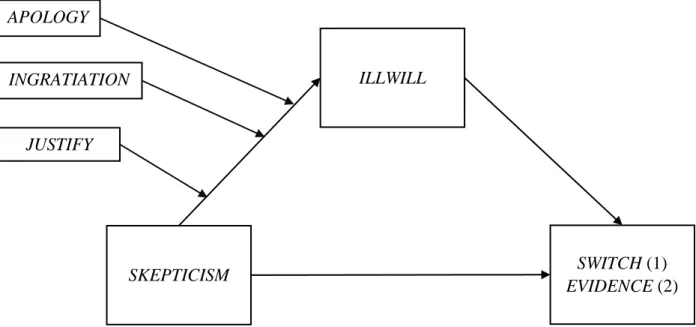
Figure 1 provides the predicted model for H1-H3, highlighting the moderation of the
interventions on the effect of skepticism on ill will, and the mediating impact of ill will on potential
negative audit outcomes. These outcomes include potential deleterious effects on audit quality and
14
<Insert Figure 1 Here>
Non-Supportive Evidence and Ill Will
As described earlier in the hypotheses development section, we expect that there could be
different perceptions between auditors and clients as to what constitutes “appropriate” skepticism.
Clients have expectations of auditor skepticism, and when the auditor violates these expectations
with higher-than-anticipated skepticism, the client experiences feelings of ill will. To further
examine this issue, we look at one factor that may influence the client’s views of appropriate
skepticism—the degree to which the client’s evidence either supports or does not support their
accounting position. We believe that the client will update their expectations of the auditor’s
appropriate skepticism even when such information is private and not known by the auditor.
Clients often have incentives to convince the auditor of their preferred accounting position
because of the presence of earnings-based compensation and in order to make the financial
statements more attractive to stakeholders. This may put pressure on accountants to convince
auditors of accounting positions that align with client incentives even when the evidence for their
position is weak. We predict that when a client knows that financial statements do not accurately
portray the company’s financial position, the client will expect increased auditor skepticism—even
if the information is unknown to the auditor. As a result of the client’s increased expectations of
auditor skepticism, skeptical auditors cause less client ill will for clients who believe that auditor
skepticism is warranted relative to clients who believe that financial statements are strongly
supported by evidence. Stated formally:
H4: The extent to which clients’ evidence either supports or does not support their accounting position will moderate the relationship between auditor skepticism and ill will such that, when interacting with a skeptical auditor, ill will is greater for clients who
15
believe evidence supports their company’s accounting position compared to clients who believe evidence does not support their company’s accounting position.
Similarly, we expect that retaliatory behaviors (i.e., switching auditors and withholding
evidence) predicted by EVT are predicated on ill will, and are therefore likely to be the highest for
clients who are defending strong financial positions against skeptical auditors. In contrast, while
dealing with skeptical auditors, a client with weaker evidence to support their position will not
react as harshly against the auditors.
III. Experiment 1 Method and Results Participants
We conducted Experiment 1 online via Qualtrics, using 137 participants recruited through
Amazon’s Mechanical Turk (MTurk). MTurk workers (MTurkers) are a reliable population
representative of working individuals (Berinsky, Huber, and Lenz, 2012; Farrell, Grenier, and
Leiby 2017). As Wang and Murnighan (2017) note, MTurkers provide data with external validity
and quality of equal or better than laboratory and other online platforms (e.g., Buhrmester, Kwang,
and Gosling, 2011; Horton, Rand, and Zeckhauser, 2011; Paolacci, Chandler, and Ipeirotis, 2010).
Many experimental studies have used MTurkers or provide evidence of the benefits of using
MTurkers (e.g., Brasel, Doxey, Grenier, and Reffett 2016; Brown, Majors, and Peecher 2018;
Buchheit, Doxey, Pollard, and Stinson 2018; Buhrmester et al. 2011; Farrell et al. 2017; Grenier,
Lowe, Reffett, and Warne 2015; Horton et al. 2011; Paolacci et al. 2010; Vinson, Robertson, and
Cockrell 2018).
We recruited MTurkers using steps outlined by Hunt and Scheetz (2018) to maintain
experimental control. For example, we validate responses by providing each participant a unique
16
collected data from qualified participants (i.e., office workers with experience interacting with
external auditors. Specifically, participants needed to indicate that they had interacted with an
external auditor in the past, that they have not worked as an external or internal auditor, that they
currently work in a professional office setting, and demonstrate knowledge about accounting for
inventory that is a fundamental basis for the case. We interspersed seven non-screening questions
within the four screening questions to prevent MTurkers from guessing the screening criteria. We
also limited our participants to MTurkers with a high approval rate (Buchheit et al. 2018); we used
a 90 percent cutoff on prior HITs (Human Intelligence Tasks).
In total, 157 participants passed the screening questions and correctly responded to four
out of our five comprehension check questions. We delete 20 participants with duplicate GPS
locations (Dennis, Goodson, and Pearson 2019), resulting in 137 total usable participants. We paid
each participant $2.00, and on average, participants took 25 minutes to complete the task.
We provide demographic data for Experiment 1 in Table 1. The participants have an
average (SD) age of 38.11 (10.80) years, and 54 percent are male. Approximately 41 percent
reported that they currently work in a managerial role (35 percent middle and 6 percent upper).
Within these roles, they have approximately 5 years of management experience. The majority of
participants (61 percent) work for private companies and 37 percent work for public companies.
They have been audited an average (SD) of 4.69 (4.90) times. The participants classify their audit
firms as: regional (61 percent), local (33 percent), and Big 4 (19 percent).4 There are no significant
differences in participant demographics by condition.
<Insert Table 1 Here>
4 These percentages exceed 100 percent because participants could check all that apply, indicating some participants had worked with multiple sizes of CPA firms.
17 Experiment 1 Setting
We adapt our experimental materials from Noteberg and Hunton (2005). During the study,
participants assume the role of a manager at a computer processor manufacturer. We instruct
participants that the auditor is concerned about the potential for impairment due to inventory
obsolescence caused by the launch of a new product while the manufacturer still has a substantial
inventory of an older generation of processors. The case explains that the company’s management
does not agree that an impairment is necessary. The participants are tasked with responding to the
auditors and addressing their questions about a potential write down. We instruct participants to
assume that if they cannot persuade the auditors that a write-down is unnecessary, neither they nor
their boss will receive a bonus this year.
Independent Variables
We manipulate the level of skepticism the auditor applies, and in the high skepticism
condition, potential interventions the auditor uses to alleviate potential ill will resulting from
increased skepticism. Accordingly, we conduct a nested design, consistent with a 4x1+1 (or an
incomplete 4 x 2) design. We manipulate SKEPTICISM at two levels, high and low. Within the high skepticism condition, there are four conditions. These include a no intervention condition
(consistent with the low skepticism condition) and three interventions predicted to decrease ill will
(APOLOGY, INGRATIATION, and JUSTIFY). These manipulations are provided in detail below. Skepticism Manipulation The SKEPTICISM manipulation appears after the introduction of the auditor and the intervention manipulations (described below). Due to the myriad experiences
our participants are likely to have as professionals, we hold consistent the expectations of
professional skepticism (as a basis of EVT) by instructing them of the valence in which the auditor
18
EVT in that prior experiences are a common source of expectations (Burgoon and Jones 1976).
Specifically, participants are told that they received an e-mail with “questions from the auditor
(Joe) about the finished goods inventory for you to address. Joe is expecting responses, and
corroborating evidence, to address the questions.” In the high (low) skepticism condition, the
participant is instructed that the number of questions asked this year is much greater (much less)
than the number of questions the auditors have asked in previous years, and that it appears the
auditors are questioning the inventory account balance much more (less) this year than in the past.
Regardless of the skepticism manipulation, the auditor asks the same seven questions, ensuring
the reaction to the auditor is based on the perception of how skeptical the auditor is, not the number
of questions asked by the auditor.
Intervention Manipulation The intervention manipulation precedes the manipulation of
SKEPTICISM to allow the auditor to attempt to head off any ill will before asking questions of the client. This manipulation is nested within the high skepticism condition because, since the
interventions are designed to moderate the effect of high professional skepticism on ill will, we do
not test them in the low skepticism condition. After reading base case materials, participants are
informed that “the auditor (Joe) stops by your office to introduce himself.” Next, we randomly
assigned participants to one of four conditions. Specifically, at the end of his visit, the auditor says:
NO INTERVENTION: “I'm sure I'll need to ask you some questions during the audit. You can expect me to reach out via email with any questions.”
APOLOGY: “I'm sure I'll need to ask you some questions during the audit. I'd like to apologize in advance for any time and trouble that may cause. You can expect me to reach out via email with any questions.”
INGRATIATION: “I'm sure I'll need to ask you some questions during the audit. I feel very fortunate to have met you because you seem to really understand how this company works. I’m sure I’ll enjoy working with you. You can expect me to reach out via email with any questions.”
19
JUSTIFY: “I'm sure I'll need to ask you some questions during the audit. Auditing standards require these questions. You can expect me to reach out via email with any questions.”
We adapt the APOLOGY condition on Cornell et al. (2009)’s manipulation; in their study, an auditor apologized in a jury trial for not detecting a misstatement to show remorse for a negative
outcome. Taking up a client manager’s time is not as severe an offense as not detecting
misstatements, although there are some parallels in the sense that both can result in some negative
outcome affecting the auditor. In our setting, the auditor has the opportunity to apologize in
advance, potentially reducing ill will by showing remorse when the auditor knows they will apply
an increased level of skepticism. We also adapt the JUSTIFY condition from Cornell et al. (2009). In their study, the auditor stated that, since they followed professional standards in performing the
audit, they are not responsible for the negative outcome. In our study, the auditor appeals to
standards as a justification for having to ask additional questions, implicitly indicating the client
should not hold ill will toward the auditor.
We adapt the INGRATIATION manipulation in part from Robertson (2010), which is based on prior research that describes how ingratiation attempts can generate positive affect (Cialdini
1993; Eastman 1994). Consistent with prior accounting research (Messier et al. 2015; Robertson
2010) and many prior studies of ingratiation (cf. Cialdini and Goldstein 2004), we operationalize
ingratiation by having the auditor flatter/compliment the client employee on their understanding
of how the company works. In our case, we expect the INGRATIATION attempt to reduce the negative emotional response of ill will.5
Dependent Variables Ill Will
5 Ingratiation can take many forms, including opinion conformity, flattery/compliments, and doing favors (Jones 1964; Jones and Pittman 1982).
20
The first, and primary, dependent variable is ill will (ILLWILL). We hypothesize that increased skepticism will lead to increased ill will. While the term “ill will” has been used by prior
researchers, we could not find a prior operationalization for the basis of this experiment.
Accordingly, we examined prior literature to better define and operationalize the construct.
Pearson, Andersson, and Wegner (2001) describe ill will in the context of incivility as common in
the workplace and representing a construct less severe than revenge or vengeance. Their examples
range from lashing out with rude remarks to a feeling of justification for “taking the last drop of
coffee from the departmental coffee pot, leaving it for someone else to refill (p, 1406)”. George,
Jones, and Gonzalez (1998) describe negative affect as an immediate precursor to ill will.
Otherwise, ill will is commonly linked with hostility or negative affect (e.g., Aron 1991; Mayne
1999). As a result of limited research, we also review dictionary definitions of the term in which,
Merriam-Webster defines it as an “unfriendly feeling”, the Cambridge Dictionary “to be angry
with someone because of something they have done”, while Oxford, “bad and unkind feelings
toward someone”. Taken together, we believe that the construct of ill will generally describes
negative affect toward another individual.
As a result, we examine ill will as an equivalent construct to negative affect (i.e., anger)
and the inverse of positive affect (i.e., not friendly) and we construct this variable based on
different affect measures used by prior literature directed toward another individual. The initial
items we tested for this construct included items adapted from Moreno, Kida, and Smith (2002),
Kida, Moreno, and Smith (2001), Robertson (2010), Robertson, Stefaniak, and Curtis (2011),
Bhattacharjee and Moreno (2002), and Wayne and Ferris (1990). In pre-testing, we began with
21
Experiment 1, these items have a Cronbach’s alpha of 0.85. Specifically, these items relate to Joe,
the auditor, and consist of the following:6
• Joe made me angry.
• Joe made me frustrated.
• Working with Joe was annoying.
• Joe is one of the most likeable people I know. (R)
• Most people would react favorably to Joe after a brief acquaintance. (R)
• I got along well with Joe. (R) Likelihood to switch
We capture measures of two client behavioral constructs: actions impacting client retention
and actions impacting audit quality. Regarding client retention, we assess the likelihood that the
managers would voice concern about the auditor to his/her supervisor, due to the auditors’
requests, and recommend switching auditors in the future. Nelson (2009) suggests that auditors
fear that high skepticism may jeopardize client relationships and have a negative economic impact.
In this regard, we create the dependent variable SWITCH, based on participant response to the question: “Assume your CFO asks if you believe the company should consider switching auditors.
What is the likelihood you will recommend that the company consider switching auditors?” The
scale endpoints are 1=“Very Low” and 9=“Very High.”
Audit Quality – Amount of Evidence
Our second dependent variable measures the managers’ willingness to provide certain
evidential information to the auditor. Nelson (2009, 6) states that “Skeptical action can change the
amount or nature of evidence available to the auditor.” While increased skepticism should lead to
more evidence because the auditor requests additional information, the degree to which clients
cooperate with such requests is likely a function of ill will. Specifically, ill will may cause the
22
client to be less helpful when providing documentation. This is an important variable as the
auditors must seek to accumulate sufficient, appropriate evidence to complete the audit.
In the experiment, we ask participants to select up to ten pieces of evidence to provide the
auditor in order to address the auditor’s seven questions. Eight (two) of these pieces of evidence
support the client’s (auditor’s) position.7 Participants are first asked to rank the ten pieces of
evidence based on how well they supported the company’s inventory valuation. Evidence is then
presented back to the participants in the order they ranked each piece, and participants are asked,
one piece of evidence at a time, if they wished to provide this evidence to the auditor. We
embedded a cost for giving each piece of evidence to the auditor to represent the time an auditee
would have to spend in producing the information. Specifically, for each item the participant
indicates they would like to give to the auditor, they have to wait 15 seconds before continuing
through the experiment. This delay likely is significant for MTurkers who are incentivized to
maximize their hourly earnings. The dependent variable EVIDENCE is the sum of the number of pieces of evidence provided to the auditor.
Results
Manipulation Checks
We ask two manipulation check questions indicating participant perceptions of whether
Joe, the auditor, asked a lot of questions and whether he was skeptical. The responses, which used
9-point Likert scales, indicate that the manipulation was effective. There is a significant difference
in the degree to which participants perceive the auditor is skeptical (low = 4.88; high = 6.60;
7 An example for one supporting the client: “Our 5th generation processors are more expensive than previous models due to enhanced product features. Marketing analysis suggests that there will be steady demand for the 4th
generation because many of our customers won’t buy at the higher price point. [Forward Marketing Analysis Memo to Joe]”. An example for one supporting the auditor: “ProCore recently hired consultants to analyze the industry in order to provide strategic recommendations to management. The finalized report suggests that the growth for processors will decline in the near future as cloud computing becomes cheaper and more popular. This supports the auditor’s proposal of a lower inventory valuation. [Forward Consulting Report to Joe]”.
23
t=5.18, p<0.001) and the number of questions asked by the auditor (low = 4.00; high = 6.93; t=7.44,
p<0.001). Next, we assess the effectiveness of the intervention. Specifically, we ask the
participants whether the auditor justified, apologized, or ingratiated as part of their conversation.
This manipulation check reveals that 107 out of 137 (78 percent) responded correctly.8 We retain
all 137 participants for analyses; excluding responses of participants who failed the manipulation
check does not alter the conclusions presented below.
Tests of Hypotheses
Panel A of Table 2 provides the descriptive statistics for ill will across the five conditions.
Consistent with our expectations, ill will is highest in the high skepticism/no intervention
condition. Further, the means across the interventions are lower than in the no intervention
condition; dropping from 27.15 in the high skepticism/no intervention condition to 24.26 when the
auditor apologizes, 22.16 when the auditor ingratiates, and 24.48 when the auditor justifies. We
test H1 with a t-test, untabulated. Panels B and C of Table 2 provide the ANOVA results for the
formal tests of H2a-c.
<Insert Table 2 Here>
H1 predicts that high skepticism will cause increased ill will. Consistent with this
hypothesis, we find that ILLWILL increases from 22.18 to 27.15 from the low to high
SKEPTICISM conditions. We use a t-test to evaluate the effect of SKEPTICISM in the no intervention condition by comparing the effect of high vs. low skepticism when the auditor does
not engage in any interventions to decrease ill will. The t-test indicates a significant main effect
8 Recall that all of our participants successfully answered four out of five comprehension check questions and the scaled skepticism manipulation checks are highly effective, which suggests participants attended to case
information. Also, the multiple choice intervention manipulation check was near the end of the study, providing sufficient cognitive load between the manipulation and the check for participants to forget their assigned conditions after a series of tasks, including time delays between evaluating which pieces of evidence to send to the auditor.
24
for SKEPTICISM (p=0.027) and provides support for H1. This provides evidence that high perceived skepticism can cause clients to develop ill will.
Next, we examine whether an auditor can engage in behaviors that might limit the client’s
development of ill will, while the auditor can still maintain high skepticism. H2a-c predict that the
auditor interventions (i.e., apologizing, ingratiating, and justifying, respectively) will moderate the
effect of high skepticism on ill will. Variables APOLOGY, INGRATIATION, JUSTIFY are included as interventions with the high skepticism/no intervention condition in a 4x1 ANOVA presented in
Panel A of Table 2. This ANOVA does not find an overall main effect for the interventions
(p=0.236). We test the hypotheses by examining the effects of each intervention against the high
skepticism/no intervention condition as contrasts in Panel C. The results indicate that APOLOGY
(H2a; p=0.244) and JUSTIFY (H2c; p=0.254) are not significant. Thus, apologies and justifications do not to appear to be effective interventions for decreasing ill will. However, INGRATIATION is significant (p=0.041). This result supports H2b, which predicts that ingratiation can decrease client
ill will when auditors engage in high skepticism and suggests that ingratiation attempts may enable
auditors to exercise appropriate skepticism without causing unnecessary client ill will.9
<Insert Table 2 Here>
Mediation Analysis
H3a and H3b predict that ill will caused by high skepticism and will have a mediating effect
on potential adverse outcomes (SWITCH and EVIDENCE, respectively). Specifically, we predict that ill will (a) decreases the amount of evidence provided to the auditor, and (b) increases the
likelihood to recommend switching the auditor. To test these hypotheses, we use the PROCESS
9 We test our demographic variables in our ANOVA and find that age and years of experience in upper management are significant at p<0.05 (all other demographic variables are not significant). Our results are robust to all of these control variables and we present our results without these controls for parsimony.
25
macro (Hayes 2018) by implementing the multicategorical approach described by Hayes and
Preacher (2014), in which a model with a multicategorical predictor with k categories is estimated
k-1 times with each estimation switching predictors entered as independent variables and covariates against a reference condition. In our estimation, we estimate the Process model with the
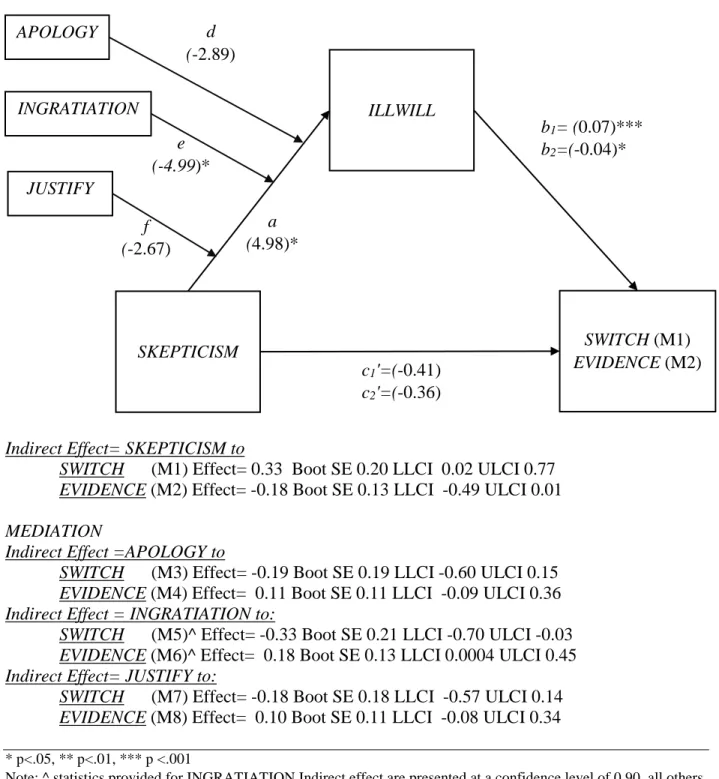
SKEPTICISM/control condition as the reference. Using a Process model also allows us to test the indirect effects of SKEPTICISM on the two audit outcome variables through ILLWILL. We test this prediction with two moderated mediation models, one for each of the audit outcome
variables.10 We illustrate our model in Figure 1 and provide results in Figure 2. We estimate this
model with 10,000 bootstraps.
<Insert Figure 2 Here>
Figure 2 presents the two moderated mediation models (one for each outcome variable) as
one figure, even though they are run as separate models, because the results of the regressions to
ILLWILL (including the main effect of skepticism and the effects of the three interactions) are the same across both models. Accordingly, we present the results, with two different coefficients
representing the links between SKPETICISM, ILLWILL, and audit outcomes with two different coefficients, labeled M1 and M2, for the audit outcome measures. The coefficients and mediation values are presented in Table 3, wherein Panel A presents the results to ILLWILL as the DV, Panel B presents the results for likelihood to switch (SWITCH), and Panel C presents results for the amount of evidence provided (EVIDENCE). Consistent with the results for H1 and H2a-c above,
SKEPTICISM has a positive and significant relationship on ILLWILL (H1, path a, β=4.98,
10 Specifically, a limitation of PROCESS is that we cannot run Model 8 (the model which most closely resembles our theoretical model) because our model is not fully crossed; the apology, justification, and ingratiation
manipulations only occur in the high skepticism condition. Model 4 (with both DV’s) allows us to introduce these variables as “control variables” wherein they behave like interactions, and the PROCESS output provides the same information except for the indexes of moderated mediation, however, using the Hayes (2014) multicategorical approach, we obtain indirect effects for each of these moderators and present them in figure 2.
26
p=0.022) and out of the three interventions, it is only moderated by INGRATIATION (H2b, path e,
β=-4.99, p=0.033).
H3a predicts a positive path from ILLWILL likelihood to SWITCH (b1) and H3b predicts a negative path to EVIDENCE (b2). The results of these regressions are presented in Panels B and C in Table 3, respectively. Consistent with our predictions in H3, we find ill will leads to negative
audit outcomes. Specifically, greater ILLWILL leads to increased recommendations to switch auditors (H3a, path b1), β=0.07, p=0.001) and a lower amount of evidence provided to the auditor (H3b, path b2, β=-0.04, p=0.043).
<Insert Table 3 Here>
Next, we examine the direct and indirect mediation effects of INGRATIATION (e) on the audit outcomes. First, we do not find a direct effect from SKEPTICISM to either of our audit outcomes (i.e., paths c1'-c2' are not significant). Second, we analyze the indirect effects of
SKEPTICISM on SWITCH and EVIDENCE through ILLWILL. These indirect effects (M1 and M2) are provided in Figure 2 and Table 3. First, the indirect effect for SWITCH does not include 0, indicating mediation (M1, LLCI=0.02, ULCI=0.77), and providing support for H3a. The
confidence interval for the mediation of EVIDENCE does include zero near the ULCI when using a 95% confidence level (M2, LLCI=-0.49, ULCI=0.01), but not at a 90% confidence level
(LLCI=-0.43, ULCI=-0.01, untabulated). Given that we use a directional hypothesis, we interpret this as
providing support for mediation, supporting H3b. Likewise, the indirect effect of our moderator,
INGRATIATION, is also significant using a confidence level of 90%. Figure 2 provides the results of this indirect effect wherein, the confidence interval for INGRATIATION to SWITCH (M5: Effect= -0.33 Boot SE 0.21 LLCI -0.70 ULCI -0.03) and to EVIDENCE (M6: Effect= 0.18 Boot
27
SE 0.13 LLCI 0.0004 ULCI 0.45) both do not contain zero. All of the other indirect effects of the
moderators, and direct effects contain zero in their confidence intervals.
Overall, our results suggest that high SKEPTICISM may impede the effectiveness of the auditor to obtain evidence during the audit (EVIDENCE) and threaten the auditor’s likelihood to retain the client in the future (SWITCH). These findings are consistent with warnings by Nelson (2009) of possible negative effects of skepticism. However, the auditor can engage in ingratiating
behaviors, such as compliments or flattery, which can decrease ill will and its negative effects.
IV. Experiment II Methods and Results
This study examines a new construct, ill will, which we predict may be a consequence of
auditor skepticism and lead to negative audit outcomes. In Experiment 1, we test auditor behaviors
as antecedents of ill will (i.e., high skepticism and the three interventions) and find that the results
support EVT, high skepticism can be a negative violation of expectancies which lead to negative
outcomes. In Experiment 2, we evaluate a client-side attribute that might affect the development
of ill will, the extent to which the client’s evidence does not support their accounting treatment
(i.e., non-supportiveness of evidence). Consistent with EVT, we believe that the client’s will adjust
their expectations for auditor skepticism with this private information. Thus, when the evidence
does not support the client’s accounting position, auditor skepticism is less likely to violate the
client’s expectations and result in ill will. As a result, we predict that when interacting with
skeptical auditors, clients who believe evidence supports their company’s accounting position will
feel more ill will than clients who do not believe evidence supports their company’s accounting
position.
Participants
28
Experiment 1.11 In Experiment 2, we require participants to respond to screening questions
correctly and successfully pass five out of six comprehension checks—197 did so. The final
sample reduced to 183 participants after removing 14 participants who did not pass the GPS test
(Dennis et al. 2019). The demographics for Experiment 2 participants are similar to those in
Experiment 1. The average (SD) age was 37.74 (10.28) and 52 percent are male. They have been
audited an average of 4.49 times (8.05). Most work for private organizations (62 percent), are
audited by regional firms, and have about 4.64 years of middle and 1.47 years of upper
management experience. Complete demographics are provided in Table 4. We do not identify any
significant differences of the demographic information between the conditions.
<Insert Table 4 Here>
Experiment 2 Setting
The setting for Experiment 2 is based on Experiment 1, including the same manipulation
of SKEPTICISM (high and low) and the same dependent variables (ILLWILL, SWITCH, and
EVIDENCE). However, in this study we replace the intervention manipulation and replace it with evidence non-supportiveness (NON-SUPPORTIVE; whether the client’s evidence does or does not support the client’s accounting position), creating a fully-crossed 2x2 ANOVA. We focus on the
NON-SUPPORTIVE valence of the construct because we believe that this condition will change our participants’ expectations of increased skepticism (as demonstrated in Experiment 1) and
inhibit the development of ill will. In the non-supportive (supportive) condition, participants are
told that they conducted inquiries of other employees about the auditor’s request. This yielded ten
pieces of evidence, and that overall, the evidence does not support (supports) the client’s position.
In all conditions, participants are told that they can earn a $0.50 bonus by convincing an actual
29
person with audit expertise that the company’s position for accounting for inventory was correct.12
This bonus proxies for the impact that corporate incentives’ would have on client behavior such
that our participants face similar pressures to convince the auditor of the client’s accounting
position. Thus, all participants had an incentive to convince the auditor of the company’s position.
We expect that NON-SUPPORTIVE will moderate the relationship between SKEPTICISM and
ILLWILL (H4), which as a client side factor could also affect auditor outcomes—accordingly, we also re-evaluate H3a-b).
Results
Manipulation Checks
Consistent with Experiment 1, we ask the same two questions to assess the effectiveness
of the skepticism manipulation. The participants’ perception of auditor skepticism is significantly
higher in the high SKEPTICISM condition than the low (high = 6.64; low = 4.50; t=7.84, p<0.001). Also, the participants’ perceptions of the auditor asking a lot of questions was higher in the high
SKEPTICISM condition (high = 6.66; low = 3.70; t=9.86, p<0.0001).
We assess the effectiveness of the NON-SUPPORTIVE manipulation using items created from Interpersonal Deception Theory (Buller and Burgoon 1996).13 The following analysis
provides evidence of the effectiveness of the NON-SUPPORTIVE manipulation as all of these measures are significant in the predicted direction. Relative to the non-supportive condition,
participants in the supportive condition indicate that they were less likely to agree with auditor’s
12 An individual with audit expertise who was not part of the research team took on this role. This individual selected a rule to disseminate bonuses. The rule was that the participant could not give one of the two pieces of evidence which supported the auditor’s position, and they had to provide at least three pieces of evidence. Approximately 75 percent of participants met this criteria and received the bonus.
13 We also evaluated the NON-SUPPORTIVE manipulation by asking if they could recall whether the information supported or did not support the company’s position. Sixty-two percent of participants correctly answered the question. We believe that the increased incorrect response rate to this question is due to the question being asked toward the end of the experiment. The items provided above better portray the effectiveness of the manipulation.
30
position that an asset write-down was necessary (means of 2.80 vs 4.69; t=6.16, p<0.001), that
their reasons provided to the auditor were more truthful (7.77 vs 6.77; t=3.96, p<0.001), and that
the information they provided to the auditor was more accurate (7.96 vs 6.92; t=4.67, p<0.001). In
addition, participants in the supportive condition indicate that they felt less guilty about the
information provided to the auditor (1.98 vs. 2.81; t=2.94, p=0.004), that they were less
anxious/nervous about providing the information (3.36 vs. 4.18; t=2.20, p=0.030), and that they
perceived the value of the inventory to be higher (7.41 vs. 5.12; t=5.77, p<0.001).
Tests of Hypotheses
The results for our 2x2 ANOVA examining the impact of NON-SUPPORTIVE (non-supportive/supportive) and SKEPTICISM (high/low) on ILLWILL is provided in Table 5. Panel A of provides the descriptive statistics for ill will across the four conditions. ILLWILL is highest in the high skepticism/supportive condition (mean of 26.37) and lowest in the low skepticism/
supportive condition (21.43). Accordingly, there is a significant main effect for SKEPTICISM
(p=0.024) in the ANOVA—providing additional support for H1 and replicating Experiment 1 for
this hypothesis. The main effect of NON-SUPPORTIVE is not significant (p=0.770). H4 predicts that NON-SUPPORTIVE will interact with SKEPTICISM such that clients defending financial positions supported by evidence will develop more ill will toward skeptical auditors than those
defending non-supported accounting positions or interacting with less skeptical auditors. The
interaction between SKEPTICISM and NON-SUPPORTIVE is significant (p=0.030). The means are consistent with our predictions that clients with evidence that does not support their accounting
treatment will not have increased ill will against skeptical auditors. In the high skepticism
condition, ILLWILL is lower for the non-supported condition than the supported condition (means of 23.63 vs. 26.37). This contrast is significant (t=1.73, p=0.044, one-tailed for a directional
31
hypothesis), providing support for H4.
<Insert Table 5 Here>
Mediation Analysis
We repeat a mediation model for Experiment 2, in which we examine the interaction
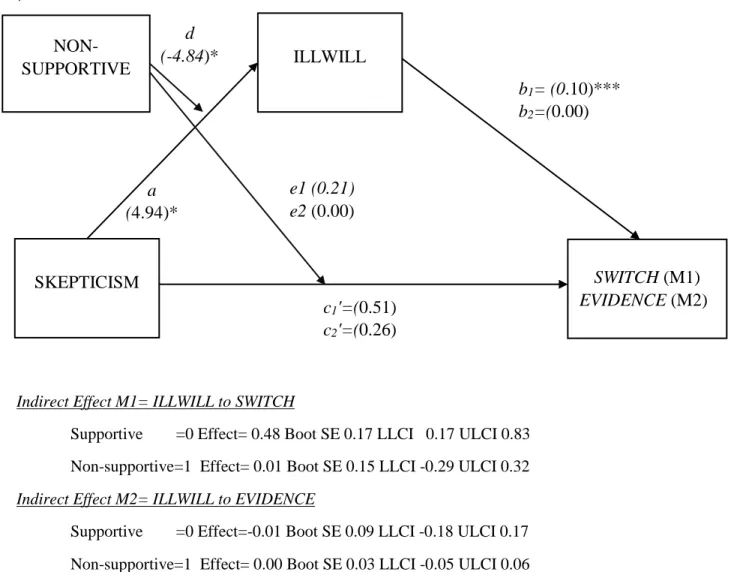
between SKEPTICISM and NON-SUPPORTIVENESS on ill will, and ill will’s effect on audit outcomes. The coefficients are provided in Figure 3 and Table 6. In this mediation analysis, we
examine the coefficients between ill will and the two audit outcomes (SWITCH and EVIDENCE), and the indirect effect of SKEPTICISM on these variables and we consider H3a-b as they may be affected differently by a client-side factor. To do this, we use two of Process’s moderated
mediation models (model 8; Hayes 2018) using 10,000 bootstraps.14
<Insert Figure 3 and Table 6 Here>
Consistent with the ANOVA results, we find that SKEPTICISM increases ill will (β=4.94, p=0.002), but evidence non-supportiveness does not (β=2.09, p=0.196). We examine a mediation model similar to that used for Experiment 1 to investigate the impact that a client-side factor might
have on H3a-b, which examine the audit outcomes of client ill will. We note that the path
coefficient from ILLWILL to SWITCH is significant (β=0.10, p<0.001), again supporting H3a. The effect of ILLWILL on EVIDENCE, as caused by our client-side factor for non-supportive evidence is not significant, and does not support H3b. We discuss this finding below.
We also examine the direct and indirect mediation effects of the manipulations on the audit
outcome variables through ill will. Neither of the direct effects between SKEPTICISM and the audit outcome variables are significant (i.e., both their respective confidence intervals include 0).
As for the indirect effects through ILLWILL, we find significance for SWITCH. Specifically, for
32
participants in the supportive condition, the confidence interval does not include zero (LLCI=0.17,
and ULCI=0.83), while it does when in the non-supportive condition (LLCI=-0.29, and
ULCI=0.32). This pattern of response is indicative of moderated mediation. However, the indirect
effects are not significant for EVIDENCE.
The weaker results for EVIDENCE (H3b) in Experiment 2 may stem from the idea that while clients in the non-supportive condition do not feel as much ill will for clients as those in the
supportive condition, they are still responsible for trying to convince the auditor of the company’s
position. This task entails preventing the auditor from discovering that the company’s financial
position regarding inventory is tenuous. Extant literature on deception finds that individuals who
are engaging in deception are less forthcoming or provide less detail that individuals who are
telling the truth (DePaulo et al. 2003; Holderness 2018). This explanation is consistent with the
results in the PROCESS model, where there is marginal significance for participants in the
non-supportive condition providing less evidence to the auditor (β=-0.59, p=0.103). Thus, although they experience less ill will, individuals who recognize their evidence does not support their
position still attempt to withhold evidence.
Like Experiment 1, Experiment 2 provides evidence of the potential effects that increased
levels of professional skepticism have on the audit. Within these two experiments, we develop a
nuanced perspective of different client reporting behaviors that can affect client ill will and the
audit which support EVT. Specifically, with the first experiment we find that auditor skepticism
exceeding the clients expectations can be a negative violation of the client’s expectation which
leads to a negative outcome—ill will. Our second experiment shows that the client’s expectation
changes with private information suggesting that the evidence supporting their accounting
33
expect more skepticism from the auditor and will not react as negatively as clients who are
confident in the information they are portraying to auditors.
V. Discussion and Conclusion
External auditors face mixed incentives when it comes to exercising professional
skepticism. On the one hand, a lack of skepticism can lead to regulatory penalties and censure
(Nelson 2009); on the other hand, auditors face commercial pressure to “keep their clients happy”
in order to retain the engagement (Nelson 2009). While the former is a frequent topic of accounting
research, the latter has received scant attention. This study examines a new construct in the
accounting literature, ill will. Nelson (2009) suggested that auditors who are too skeptical could
create ill will within their clients. Accordingly, we develop a measure of ill will and find evidence
that high skepticism does, in fact, create ill will. Furthermore, we demonstrate that client ill will
may have negative consequences for audit firms. Not only can ill will damage the working
relationship by leading to recommendations to change auditors, but it can also decrease the amount
of evidence clients pro
![Table 6 presents the detailed results pictured in Figure 3 of the model assessing the impact of high skepticism on ill will, and ill will’s impact on audit outcomes (likelihood to switch, represented with the 1’s [SWITCH], and amount of evidence, represe](https://thumb-us.123doks.com/thumbv2/123dok_us/328076.2535850/44.918.243.822.114.532/presents-detailed-pictured-assessing-skepticism-outcomes-likelihood-represented.webp)
![Table 6 presents the detailed results pictured in Figure 3 of the model assessing the impact of high skepticism on ill will, and ill will’s impact on audit outcomes (likelihood to switch, represented with the 1’s [SWITCH], and amount of evidence, represe](https://thumb-us.123doks.com/thumbv2/123dok_us/328076.2535850/48.918.90.823.135.551/presents-detailed-pictured-assessing-skepticism-outcomes-likelihood-represented.webp)
